R E V I E W
Recent Progress in Rare Oncogenic Drivers and
Targeted Therapy For Non-Small Cell Lung Cancer
This article was published in the following Dove Press journal: OncoTargets and Therapy
Yijia Guo Rui Cao
Xiangyan Zhang Letian Huang Li Sun
Jianzhu Zhao Jietao Ma Chengbo Han
Department of Oncology, Shengjing Hospital of China Medical University, China Medical University, Shenyang, People’s Republic of China
Abstract: Non-small cell lung cancer (NSCLC) is frequently associated with oncogenic driver mutations, which play an important role in carcinogenesis and cancer progression. Targeting epidermal growth factor receptor (EGFR) mutations and anaplastic lymphoma kinase rearrangements has become standard therapy for patients with these aberrations because of the greater improvement of survival, tolerance, and quality-of-life compared to chemotherapy. Clinical trials for emerging therapies that target other less common driver genes are generating mixed results. Here, we review the literature on rare drivers in NSCLC with frequencies lower than 5% (e.g., ROS1, RET, MET, BRAF, NTRK, HER2, NRG1, FGFR1, PIK3CA, DDR2, and EGFR exon 20 insertions). In summary, targeting rare oncogenic drivers in NSCLC has achieved some success. With the development of new inhibitors that target these rare drivers, the spectrum of targeted therapy has been expanded, although acquired resistance is still an unavoidable problem.
Keywords:non-small cell lung cancer, oncogenic driver, targeted therapy
Introduction
Lung cancer is the most common malignant disease with poor survival; the vast majority of cases are non-small cell lung cancer (NSCLC). The treatment strategy for NSCLC has been revolutionized by the discovery of molecular alterations that drive tumor initiation and progression. Epidermal growth factor receptor (EGFR), anaplastic lymphoma kinase (ALK), and KRAS are the most frequent oncogenic
drivers of NSCLC, and the targeting of EGFR mutations andALK rearrangements
has achieved great success. To date, the US Food and Drug Administration (FDA)
has approvedfive EGFR tyrosine kinase inhibitors (TKIs) as the standard treatment
for patients with activating EGFR mutations in NSCLC, includingfirst-generation
gefitinib and erlotinib, second-generation afatinib and dacomitinib, and
third-generation osimertinib. There are also currently five FDA-approved inhibitors of
ALK rearrangements, includingfirst-generation crizotinib, second-generation
ceri-tinib, alecceri-tinib, and brigaceri-tinib, and third-generation lorlatinib. The second- and third-generation inhibitors have exhibited enhanced activity against central nervous system (CNS) lesions and acquired resistance to crizotinib resulting from secondary ALK mutations. These achievements have led to clinical trials targeting less common driver genes, such as ROS1, RET, MET, BRAF, NTRK, HER2, NRG1, FGFR1, PIK3CA, DDR2, and EGFR exon 20 insertions (ins). In this review, we focus on these rare drivers and summarize their molecular biology, clinical features, targeted therapy, and acquired resistance.
Correspondence: Chengbo Han
Department of Oncology, Shengjing Hospital of China Medical University, Shenyang 110022, People’s Republic of China Tel +86 189 4025 9860
Email [email protected]
OncoTargets and Therapy
Dove
press
open access to scientific and medical research
Open Access Full Text Article
OncoTargets and Therapy downloaded from https://www.dovepress.com/ by 118.70.13.36 on 25-Aug-2020
ROS1 Rearrangements
Human proto-oncogene ROS1, which is located on
chromo-some band 6q22.1, is also known as MCF3 or c-ros-1.1,2It
encodes a receptor tyrosine kinase (RTK) that contains an extracellular or ectodomain, a single-pass transmembrane region with a hydrophobic stretch, and an intracellular
car-boxyl-terminal tyrosine kinase domain.3Although the exact
mechanisms by whichROS1rearrangements promote
carci-nogenesis remain unclear, because most fusion partners of
ROS1 lack dimerization domains,4ROS1rearrangements are
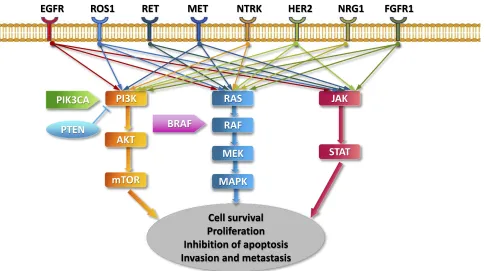
believed to promote signal transduction programs, prolifera-tion, and cell survival through the upregulation of SHP-1 and SHP-2 and activation of the PI3K/AKT/mTOR, JAK/STAT,
and MAPK/ERK pathways5–7(Figure 1).
ROS1 fusion detection methods include fluorescence
in situ hybridization (FISH), immunohistochemistry
(IHC), reverse transcription-polymerase chain reaction (RT-PCR), and next-generation sequencing (NGS). FISH is the most common method, but formal screening
recom-mendations for ROS1 fusions have not been established.4
ROS1 rearrangements are found in 1 to 2% of NSCLC.
Over 14 types of ROS1 fusion partner genes have been reported, including CD74, SLC34A2, SDC4, EZR, FIG, TPM3, LRIG3, KDELR2, CCDC6, MSN, TMEM106B,
TPD52L, CLTC, and LIMA1, with the most frequent
fusion partner being CD74 (40 to 45%).4,8Recent research
found that patients with the CD74-ROS1 fusion were more susceptible to brain metastases and had lower objective response rates (ORR) to crizotinib than non-CD74-ROS1
patients, suggesting that the efficacy and prognosis of
patients with advancedROS1-rearranged NSCLC may be
influenced by the type of ROS1 fusion partner.9 ROS1
fusions rarely overlap with other driver mutations, such
as EGFR, ALK, or KRAS.10ROS1 and ALK share a 49%
amino acid sequence identity in the kinase domain and 77% identity in the adenosine triphosphate (ATP)-binding
site,11suggesting that ALK-TKIs may also inhibit ROS1.
Similar to ALK, patients with ROS1-rearranged NSCLC
are often younger, Asian ethnicity, have a non-smoking or light-smoking history, and advanced-stage disease with
adenocarcinoma histology.12
Crizotinib
Crizotinib is a drug that targets ALK, ROS1, and MET, which has been used successfully to treat patients with
advanced ALK-rearranged NSCLC.13,14In a phase I study
(PROFILE 1001) consisting of 50 patients with ROS1
-rearranged advanced NSCLC, the ORR for crizotinib was
PIK3CA
Cell survival Proliferation Inhibition of apoptosis Invasion and metastasis BRAF
RAS
RAF
MEK PI3K
AKT
JAK
MAPK mTOR
STAT PTEN
EGFR ROS1 RET MET NTRK HER2 NRG1 FGFR1
Figure 1Key signaling pathways of oncogenic drivers in NSCLC.
OncoTargets and Therapy downloaded from https://www.dovepress.com/ by 118.70.13.36 on 25-Aug-2020
72% with three complete responses and 33 partial responses, the median progression-free survival (PFS) was
19.2 months, and the safety profile of crizotinib was similar
to that of patients withALK-rearranged NSCLC11(Table 1).
Based on the study, crizotinib became the first targeted
agent approved by the FDA for the treatment of advanced
ROS1-rearranged NSCLC in March 2016. Crizotinib also
demonstrated high response rates (71% to 80%; median
PFS 9 to 10 months) in ROS1-rearranged NSCLC in two
additional studies.15,16Since 2017, National Comprehensive
Cancer Network (NCCN) guidelines recommend that
crizo-tinib be used for patients with knownROS1rearrangements
(grade 2A recommendation).17
Similar to ALK or EGFR inhibition, acquired resistance is an important issue for the inhibition of ROS1. Mechanisms of acquired crizotinib resistance include acquired secondary mutations in the ROS1 kinase domain, bypassing signaling activation, and phenotypic changes. Mutations within the ROS1 kinase domain occur in 50 to 60% of
crizotinib-resistant tumors.18 The ROS1 G2032R mutation, which is
analogous to ALK G1202R, has been the most frequent
mutation identified.18–20 Additional mutations reported in
clinical samples include D2033N (analogous to ALK
D1203N), S1986Y/F (analogous to ALK C1156Y),18,21
L2026M (analogous to ALK L1196M), and L1951R (no
known analogous mutation in ALK).22
Ceritinib
Ceritinib is a potent and selective ALK inhibitor that also inhibits ROS1. In a phase II study (NCT01964157), 32
patients withROS1-rearranged advanced NSCLC were
trea-ted with ceritinib, the ORR was 62% and disease control rate (DCR) was 81%. The median PFS in this study was 9.3 months for all patients and 19.3 months for crizotinib-naïve patients with a median OS of 24 months. In eight patients with brain metastases, the intracranial ORR was 25% with an
intracranial DCR of 63%.23Based on the efficacy and safety
demonstrated in this study, ceritinib became the second tar-geted agent recommended by the NCCN Guidelines for the
treatment of advanced ROS1-rearranged NSCLC since
November 2017. However, the toxicities of ceritinib should be taken into consideration due to the higher frequency of adverse events, such as diarrhea, nausea, anorexia, and
vomiting compared to crizotinib.10
Entrectinib (RXDX-101)
Entrectinib is a multikinase inhibitor that targets ROS1, ALK, and tropomyosin receptor kinase (TRK) rearrangements and
can effectively penetrate the blood-brain barrier.24,25An
inte-grated analysis of three studies (the phase II STARTRK-2 trial, phase I STARTRK-1 study, and the phase I ALKA-372-001
trial) for entrectinib inROS1-positive NSCLC was presented at
the 2018 World Conference on Lung Cancer (WCLC). For this
analysis, 53 ROS1-rearranged and ROS1-inhibitor-naive
NSCLC patients were evaluated, and the ORR was 77.4%, the intracranial ORR was 73.9%, the median duration of response (DOR) was 24.6 months, and the median PFS was 19.0 months (without CNS metastases: 26.3 months; with CNS
metastases: 13.6 months).26Early research found that
entrecti-nib did not show activity against the ROS1 resistance
muta-tions L2026M, G2032R, and D2033N.24,25 Based on these
results, entrectinib has recently been recommended by the
NCCN Guidelines for the first-line treatment of advanced
ROS1-rearranged NSCLC.27The global phase II
STARTRK-2 trial (NCT0STARTRK-2568STARTRK-267) is still ongoing.
Lorlatinib
Second-line TKIs are being developed, such as lorlatinib,
which was developed to target crizotinib-resistant ALK
-rearranged NSCLC. It has in vitro activity against several
crizotinib-resistant mutations, including L2026M,28,29
S1986Y/F,28 and D2033N.21 In a phase I trial for ALK
-andROS1-rearranged NSCLC, the 12 patients withROS1
-rearranged lung adenocarcinomas had an ORR of 50%
with a median PFS of seven months.30 In a phase II trial
ofROS1-positive patients, 70% of which were
crizotinib-resistant, lorlatinib produced an overall ORR of 36.2%, intracranial ORR of 56%, and a median PFS of 9.6
months.31 Thus, lorlatinib has been recommended by the
NCCN Guidelines for the treatment of advanced ROS1
-rearranged NSCLC that progressed after crizotinib,
entrec-tinib or cerientrec-tinib.27
DS-6051b
DS-6051b is an oral, small molecule TKI with high affi
-nity for ROS1 and NTRK kinases. In a phase I study (NCT02675491) evaluating DS-6051b in 15 Japanese
patients with ROS1-rearranged NSCLCs, the ORR was
58.3% in patients with assessable target lesions and 66.7% in crizotinib-naïve patients, and the DCR was
100%.32 Another phase I/Ib study (NCT02279433) of
DS-6051b in advanced solid tumors is ongoing.
Repotrectinib (TPX-0005)
Repotrectinib (TPX-0005) is a potent ALK/ROS1/TRK inhibitor that demonstrated encouraging clinical activity
OncoTargets and Therapy downloaded from https://www.dovepress.com/ by 118.70.13.36 on 25-Aug-2020
T able 1 Clinical T rials for the T reatment of Advanced NSCLC with T argetable Oncogenic Driv ers and T argeted Therapies Recommended by NCCN, or Appr ov ed by FD A or EMA T arg etable Driver genes Incidence T arg eted Agen t Clinical T rials Phase P atients Included Results Appr o v ed or Recommended by R OS1 rearrangements 1 – 2% Crizotinib 11 PR OFILE 1001 (NCT00585195) I R OS1-re arranged NSCLC n=50, ORR 72%, mPFS 19.2 mo NCCN, FD A, EMA Ceritinib 23 NCT01964157 II R OS1-re arranged NSCLC n=32, ORR 62%, DCR 81%, mPFS 9.3 mo for all pts, 19.3 mo for crizotinib-naïv e pts NCCN Entr ectinib (RXDX-101) 26 ALKA-372-001 (EudraCT 2012 – 0001), ST AR TRK-1 (NCT02097810), ST AR TRK-2 (NCT02568267) I/II R OS1-re arranged NSCLC n=53, ORR 77.4% (intracranial ORR, 73.9%), mDOR 24.6 mo , mPFS 19.0 mo (without CNS metastases: 26.3 mo; with CNS metastases: 13.6 mo) NCCN, FD A Lorlatinib 31 NCT01970865 II R OS1-re arranged NSCLC n=47, ORR 36.2%, mPFS 9.6 mo NCCN DS-6051b 32 NCT02675491 I A d va n ce d so lid m al ig n an t tu m or s h ar b or in g e it h e r R O S1 or N T RK fu si on . n=15, ORR 58.3% in pts with target lesions, 66.7% in crizotinib-naïve pts, DCR 100%. DS-6051b NCT02279433 I/Ib Solid tumors harboring R OS1 or NTRK1, NTRK2, or NTRK3 rearrangements Ongoing Repotr ectinib (TPX-0005) 33 TRIDENT -1 (NCT03093116) I/II Solid malignancies harboring ALK, R OS1, NTRK1, NTRK2, or NTRK3 gene rearrangements n=11, ORR 82% for TKI-naiv e pts, n=18, ORR 39% for pts pr etre ated with one TKI. RET rearrangements 1 – 2% V andetanib 48 NCT01823068 II RET -r earranged NSCLC n=18, ORR 18%, mPFS 4.5 mo , mOS 11.6 mo NCCN* V andetanib 46 UMIN000010095 II RET -r earranged NSCLC n=19, ORR 53%, mPFS 4.7 mo , mOS 11.1 mo NCCN* Cabozantinib 45 NCT01639508 II RET -r earranged NSCLC n=26, ORR 28%, mPFS 5.5 mo , mOS 9.9 mo NCCN* Len vatinib 47 NCT01877083 II RET -r earranged NSCLC n=25, ORR 16%, mPFS 7.3 mo Alectinib NCT03131206 I/II RET -r earranged NSCLC Ongoing Selper catinib (LO XO-292) 51 LIBRETT O-001 (NCT03157128) I/II RET -r earranged NSCLC n=30, ORR 77% FD A
OncoTargets and Therapy downloaded from https://www.dovepress.com/ by 118.70.13.36 on 25-Aug-2020
Selper catinib (LO XO-292) 52 LIBRETT O-001 (NCT03157128) I/II RET -r earranged NSCLC n=105, ORR 68%, CNS ORR 91%, mDOR 20.3 mo , mPFS 18.4 mo for pr e-trea ted pts. n=34, ORR 85%, mDOR, mPFS w er e not reached for tr eatment-naiv e pts. FD A BLU-667 54 NCT03037385 I RET -r earranged NSCLC n=11, ORR 45% MET exon 14 skipping mutation 3% Crizotinib 62 PR OFILE 1001 I MET exon 14 skipping mutant NSCLC n=65, ORR 32%, mPFS 7.3 mo , mOS 20.5 mo NCCN*, FD A Capmatinib (INC280) 67 GEOMETR Y mono-1 (NCT02414139) II MET exon 14 mutant or MET ampli fi ed NSCLC n=69, ORR 40.6%, mPFS 5.4 mo for pr etr eated pts. n=28, ORR 67.9%, mPFS 9.7 mo for tr eatment-naïv e pts FD A Tepotinib 68 NCT02864992 II MET exon 14 skipping mutant NSCLC n=41, ORR 35% FD A Sa volitinib 69 NCT02897479 II MET exon 14 skipping mutant PSC or other types of NSCLC n=31, ORR 51.6%, mPFS was not reached. MET ampli fi cation 1 – 5% Tepotinib + ge fi tinib 70 NCT01982955 Ib/II MET ampli fi ed NSCLC n=12, ORR 66.7%, mPFS 21.2 mo Tepotinib + ge fi tinib 70 NCT01982955 Ib/II High MET -expre ssing NSCLC n=19, ORR 33.3%, mPFS 8.3 mo Sa volitinib + osimertinib 71 T A TT ON (NCT02143466) Ib EGFR-mutant NSCLC that had dev eloped resistance to fi rst-or second-generation EGFR-TKI thr ough MET gene ampli fi cation n=46, ORR 52%, mDOR 7.1 mo Sa volitinib + osimertinib 71 T A TT ON (NCT02143466) Ib EGFR-mutant NSCLC that had dev eloped resistance to thir d-generation EGFR-TKI thr ough MET gene ampli fi cation n=48, ORR 28%, mDOR 9.7 mo Sa volitinib + osimertinib SA V ANNAH (NCT03778229) II EGFRm+ MET+, NSCLC pr ogr essed following osimert inib tr eatment Ongoing BRAF mutation 2 – 4% Dabrafenib 77 NCT01336634 II T rea ted and untr eated BRAFV600E + NSCLC n=78, ORR 33%, mPFS 5.5 mo , mOS of 12.7 mo ( Continued )
OncoTargets and Therapy downloaded from https://www.dovepress.com/ by 118.70.13.36 on 25-Aug-2020
T able 1 (Continued). T arg etable Driver genes Incidence T arg eted Agen t Clinical T rials Phase P atients Included Results Appr o v ed or Recommended by Dabrafenib + trametinib 78 NCT01336634 II Untr eated BRAFV600E+ NSCLC n=36, ORR 64%, mPFS 10.9 mo , mOS 24.6 mo NCCN, FD A, EMA Dabrafenib + trametinib 79 NCT01336634 II Chemotherap y-pr etr eated BRAFV600E+ NSCLC n=57, ORR 63%, mPFS 10.2 mo , mOS 18.2 mo NCCN, FD A, EMA NTRK rearrangements 3 – 4% Lar otr ectinib (LO XO-101) 92 NCT02576431 II NTRK fusion-positiv e solid tumors n=55, ORR 75% regar dless of tumor type, mDOR and mPFS w er e not reached. NCCN, FD A, EMA LO XO-195 NCT03215511 I/II NTRK fusion cancers tr eated with a prior TRK inhibitor Ongoing Entr ectinib (RXDX-101) 96 ALKA-372-001 (EudraCT 2012 – 0001), ST AR TRK-1 (NCT02097810), ST AR TRK-2 (NCT02568267) I/II NTRK fusion-positiv e solid tumors n=54, ORR 57.4%, mPFS 11.2 mo , mOS 20.9 mo NCCN, FD A, EMA HER2 mutation 2 – 4% Afatinib 102 A retr ospectiv e international multicentre study HER2-mutant lung adenocar cinomas n=27, mTTF 3 mo , mDOR 6 mo , OS 23 mo Afatinib 103 Supported by Boehringer Ingelheim. No grant number is applicable. Hea vily pr etr eated exon 20 ins NSCLC n=10, mTTF 9.6 mo , ORR 33%, DCR 100% T rastuzumab in combination with chemotherap y or ado-trastuzumab emtansine (T -DM1) 101 A retr ospectiv e study HER2-mutant NSCLC n= 58, ORR 50.9%, mPFS 4.8 mo , mOS 13.3 mo . Neratinib, lapatinib or afatinib 101 A retr ospectiv e study HER2-mutant NSCLC n= 29, ORR 7.4%, mPFS 3.4 mo , mOS 6.5 mo . Ad o-tr as tu zu ma b e mt an si ne (T -DM1) 104 NCT02675829 II HER2-mutant NSCLC n=18, ORR 44%, mPFS 5 mo NCCN* P oziotinib 106 NCT03066206 II HER2 exon 20 ins NSCLC n=12, mPFS 5.1 mo T rastuzumab deruxtecan (DS-8201a) 107 NCT03505710 II HER2-ov er expr essing or mutated, unr esectable, and/or metastatic NSCLC Ongoing
OncoTargets and Therapy downloaded from https://www.dovepress.com/ by 118.70.13.36 on 25-Aug-2020
EGFR exon 20 ins 1.80% P oziotinib 106 NCT03066206 II EGFR or HER2 exon 20 ins NSCLC n=44, ORR 55%, mPFS 5.5 mo P oziotinib 114 NCT03318939 II EGFR or HER2 exon 20 ins NSCLC n=30, ORR 40%, mDOR 6.6 mo T AK-788 115 NCT02716116 I/II EGFR exon 20 insertion NSCLC n=28, ORR 43%, mPFS 7.3 mo FGFR1 ampli fi cation
20% squamous- NSCLC
Nintedanib 133 NCT01948141 II FGFR1-ampli fi ed pr etre ated squamous-NSCLC n=6, 6-month PFS was obser ve d within the entir e 6 pts Dovitinib NCT01861197 II FGFR1-ampli fi ed pr etre ated squamous-NSCLC Ongoing BGJ398 134 NCT01004224 I FGFR1-ampli fi ed squamous-NSCLC n=36, ORR 11.1%, DCR 50% Er da fi tinib (JNJ-42756493) NCT02699606 IIa Asian participants with various malignant tumors, including NSCLC Ongoing PIK3C A mutation or ampli fi cation 2 – 5% Pictilisib (GDC-0941) + cytoto xic chemotherap y NCT00974584 Ib Advanced NSCLC Completed, results ha ve not ye t been released Pictilisib (GDC-0941) + cytoto xic chemotherap y NCT01493843 II Pre viously untr eated NSCLC Completed, results ha ve not ye t been released Pilaralisib (SAR245408, XL147) + carboplatin/ paclitax el NCT00756847 I Adults with solid tumors Completed, results ha ve not ye t been released DDR2 mutation 4% Dasatinib 152 NCT01514864 II Advanced cancers harboring DDR2 mutation or inactivating BRAF mutation Terminated due to lack of ef fi cacy Dasatinib + crizotinib NCT01744652 II Advanced cancer Ongoing Note: *A vailable targeted agents with activity against corr esponding drive r e vent in lung cancer . Abbre viations: NSCLC , non-small cell lung cancer ; mPFS, median pr ogr ession-free sur vival; ORR, objectiv e response rates; mo , months; pts, patients; mDOR, median duration of re sponse; mTTF , median time-to-treatment failur e; CNS, central ner vous system; NCCN, National Compr ehensiv e Cancer Netw ork; FD A, the US Food and Drug Administration; EMA, Eur opean Medicines Agency ; ins, insertion.
OncoTargets and Therapy downloaded from https://www.dovepress.com/ by 118.70.13.36 on 25-Aug-2020
in patients with ROS1 fusion-positive NSCLC and in patients with secondary mutations resistant to prior TKI. In an ongoing phase I/II trial (TRIDENT-1, NCT03093116), repotrectinib showed an ORR of 82% in
11 TKI-naive ROS1-positive NSCLC patients, and an
ORR of 39% in 18 patients pretreated with only one
prior TKI. Tumor regression occurred in all five patients
with G2032R mutation resistant to prior crizotinib
treatment.33
RET Rearrangements
The RET (rearranged during transfection) proto-oncogene is located on chromosome 10q11.2, where it encodes
a RTK.34 RET consists of an extracellular domain,
a transmembrane domain, and an intracellular tyrosine
kinase.35 In NSCLC, at least 12 different gene partners
have been described for RET, including KIF5B, CCDC6, NCOA4, MYO5C, EPHA5, TRIM33, CLIP1, ERC1,
PICALM, FRMD4A, RUFY2, TRIM2436 with the most
frequent fusion partner being KIF5B (72%).37 All RET
fusions preserve the tyrosine kinase activity, and each RET partner protein contains a coiled-coil domain, which can promote ligand-independent dimerization and constitutive
activation of RET.38Thus, activation of downstream
path-ways (e.g., JAK/STAT3 and RAS/RAF/MEK/ERK) leads
to cellular proliferation, migration, and differentiation.39
RETrearrangements can be detected by FISH, NGS, and
RT-PCR, but cannot be adequately detected by IHC.40 At
present, there is no gold-standard method for the identifi
ca-tion ofRETrearrangements.RETrearrangements have been
observed in approximately 1 to 2% of NSCLC.41Similar to
ROS-1rearrangements,RETrearrangements in NSCLC are more commonly found among non-smokers or former light smokers less than 60 years of age with adenocarcinoma histology, early lymph node metastases, and advanced
disease.41The majority of patients withRETrearrangements
have stage IV disease at the time of diagnosis, suggesting that
RET-rearranged NSCLC may have a high metastatic
potential.37 In NSCLC, RET rearrangements are mutually
exclusive with other driver mutations, such as ALK or
ROS1 rearrangements or EGFR mutations,39,42,43suggesting
thatRETrearrangements are independent oncogenic drivers
in this disease.
Multikinase RET Inhibitors
Several multikinase inhibitors with nonselective RET
inhi-bitory activity are available for patients with RET-altered
cancers (e.g., vandetanib, cabozantinib, lenvatinib,
alectinib, and sunitinib) with response rates ranging from
16% to 53%, and median PFS from 4.5 to 7.3 months.44–48
The use of multikinase RET inhibitors has often been associated with a high rate of toxicity due to their activity
against VEGFR kinases or EGFR, and their efficacy has
been limited.44 Although cabozantinib and vandetanib
have been recommended for use against RET-rearranged
NSCLC by the NCCN guideline outside the context of a clinical trial, no approved standard therapies have been designed to target RET. Novel and potent inhibitors are being developed to selectively target the RET kinase.
Some resistance mechanisms of RET rearrangements
are being discovered. Different fusion partners seem to have different therapeutic responses, and KIF5B-RET is associated with lower ORR. Other potential resistance mechanisms include missense mutations in RET, activa-tion of downstream pathway molecules (e.g., ERK, AKT),
and the amplification of MDM2.49
Selpercatinib (LOXO-292)
Selpercatinib is a novel, highly selective, ATP-competitive
small molecule RET inhibitor that has significant CNS
pene-tration, and a low potential for drug interactions.50 It was
approved by the FDA for the treatment of advancedRET
-rearranged NSCLC and medullary thyroid cancers with a breakthrough therapy designation in September 2018. This approval was based on the data from a phase I/II trial (LIBRETTO-001, NCT03157128) reported at the 2018 ASCO meeting, in 30 response-evaluable patients with RET fusion-positive NSCLC, tumor regression occurred regardless of the RET fusion partner, with an ORR of 77% and another 13% of the patients experiencing stable
disease.51The updated results of this study have been
pre-sented at the 2019 WCLC. In 105 previously treated patients, selpercatinib demonstrated an overall ORR of 68% and a CNS ORR of 91%. The median PFS and DOR was 18.4 months and 20.3 months, respectively. In 34 treatment-naive patients, the ORR was 85%, and the median DOR and PFS
were not reached.52
BLU-667
BLU-667 (NCT03037385) is another highly potent and selective small-molecule RET inhibitor that has increased potency and decreased toxicity against RET alterations
compared to multikinase inhibitors.53The preliminary
ana-lysis of a phase 1 BLU-667 clinical trial for RET-altered
NSCLC, medullary thyroid cancers, and other advanced solid tumors was presented at the 2018 American
OncoTargets and Therapy downloaded from https://www.dovepress.com/ by 118.70.13.36 on 25-Aug-2020
Association for Cancer Research (AACR) annual meeting. An ORR of 45% was observed among the 11 evaluable NSCLC patients, including heavily pretreated patients,
who had received prior RET-targeting agents.54
MET Activation
MET (the mesenchymal-to-epithelial transition) is a receptor kinase that activates tyrosine kinases by binding the ligand hepatocyte growth factor (HGF) and inducing MET
dimer-ization and autophosphorylation.55 These effects activate
downstream signaling pathways, including RAS/RAF/
MAPK, PI3K/AKT/mTOR, WNT/β-catenin, and STAT,
that play important roles in cell growth, apoptosis, motility,
and invasiveness.56,57 In NSCLC, several mechanisms of
MET activation have been identified, including mutation,
rearrangement or amplification of the MET gene,
overex-pression of MET or HGF protein.55,58
MET Exon 14 Skipping Mutation
METexon 14 skipping mutations comprise approximately
3% of NSCLC cases and are more commonly found in females, elderly patients, non-smokers, pulmonary sarco-matoid carcinoma (PSC), and are associated with poor
prognosis.59,60 MET exon 14 skipping mutations are
mutually exclusive with other known driver genes (e.g., EGFR, KRAS, and HER2 mutations or ALK, ROS1, and RET rearrangements), suggesting that they are
indepen-dent carcinogenic drivers.61 Clinical trials using
MET-targeted TKIs (e.g., cabozantinib, capmatinib, crizotinib, merestinib, savolitinib, and tepotinib) for NSCLC patients
withMETexon 14 altered-NSCLC are currently ongoing.
Crizotinib
Crizotinib has been approved for the treatment of ALK
-positive or ROS1-positive lung cancers and has significant
antineoplastic activity in patients with MET alteration.61In
the PROFILE 1001 clinical trial, a cohort of 65 patients
withMETexon 14-altered NSCLC were treated with
crizo-tinib and achieved an ORR of 32%, a median PFS of 7.3
months, and a median OS of 20.5 months.62 Secondary
MET tyrosine kinase domain mutations (e.g., MET D1228 and Y1230) acquired after progression during crizotinib therapy are considered as the emerging mechanisms of
resistance to MET inhibition.63–65 Subsequent studies
found that these mutations confer resistance to type I MET inhibitors which preferentially bind the active con-formation of MET (e.g., crizotinib, savolitinib, and capma-tinib) through impaired drug binding, while sensitivity to
type II inhibitors, which bind the inactive conformation
(e.g., glesatinib and cabozantinib), is maintained.66
Capmatinib (INC280)
Another MET-selective agent, capmatinib, has demonstrated a clinically meaningful response rate and a manageable
toxi-city profile in patients with advanced-stage NSCLC that
contain MET exon 14 mutations in an ongoing study
(GEOMETRY mono-1, NCT02414139). Results demon-strated an ORR and median PFS of 40.6% and 5.4 months, respectively, among 69 pretreated patients and 67.9% and 9.7 months, respectively, for 28 treatment-naïve patients. Preliminary activity in patients with brain metastases was also observed with an intracranial ORR of 54% in 13
evalu-able patients.67 Based on these results, the FDA granted
breakthrough therapy designation to capmatinib (INC280)
as a first-line treatment for patients with metastatic MET
exon14 skipping-mutated NSCLC in September 2019.
Tepotinib
Tepotinib, a MET-selective oral inhibitor, has demonstrated promising antitumor activity in patients with advanced
NSCLC that harbor aMETexon 14 skipping mutation and
a favorable safety profile with an ORR of 35% in 41 patients
in an ongoing phase II study (VISION, NCT02864992).68
Tepotinib was approved by the FDA with a breakthrough therapy designation in September 2019, for the treatment of
patients with metastatic NSCLC harboring METexon 14
skipping alterations who progressed following platinum-based chemotherapy.
Savolitinib
Savolitinib (AZD6094, HMPL-504, volitinib) is a potent and highly selective inhibitor of MET tyrosine kinase. The preliminary data from a phase II study of savolitinib in
MET exon 14 skipping mutant PSC or other types of
NSCLC (NCT02897479) were reported at the 2019 AACR Annual Meeting. Savolitinib showed encouraging
antitumor activity and an acceptable safety profile. In 31
evaluable patients, the ORR was 51.6%, and the median
PFS was not reached.69
MET Ampli
fi
cation
METgene amplification occurs in 1 to 5% of
treatment-naïve NSCLC,56but more often mediates bypass pathway
activation in patients with acquired resistance to EGFR-TKIs. The combinations of EGFR- and MET-targeted therapeutics may be effective against these conditions.
OncoTargets and Therapy downloaded from https://www.dovepress.com/ by 118.70.13.36 on 25-Aug-2020
Tepotinib + Gefitinib
A phase II trial showed that the combination of tepotinib
and gefitinib improved the PFS and OS versus
chemother-apy in patients withMET-amplifiedEGFR-mutant NSCLC
that was resistant to prior EGFR-TKI therapy. The
combi-nation of tepotinib and gefitinib in MET amplification
subgroups had an ORR of 66.7% and a median PFS of 21.2 months whereas chemotherapy had an ORR of 42.9% and a median PFS of 4.2 months. This combination also had an ORR of 68.4% and a median PFS of 8.3 months for patients with high MET-expressing tumors compared to
33.3% and 4.4 months with chemotherapy, respectively.70
Savolitinib + Osimertinib
The TATTON trial is a phase Ib clinical trial that is investigating the clinical response of adding MET inhibitor
savolitinib to osimertinib in patients with EGFR-mutant
NSCLC that developed resistance to prior EGFR-targeted
therapies throughMETgene amplification. The data were
presented at the 2019 AACR Annual Meeting. This treat-ment regimen caused an ORR of 52% and a median DOR of 7.1 months in 46 patients, who were previously treated
with a first- or second-generation EGFR-TKI. The ORR
was 28%, and the median DOR was 9.7 months in 48 patients who received a prior third-generation
EGFR-TKI.71 A phase II SAVANNAH trial will further explore
the combination in patients withMET-positive disease that
has progressed on osimertinib.
BRAF Mutation
The B-Raf proto-oncoprotein (BRAF) is a serine/threonine kinase that regulates cell proliferation, differentiation, angiogenesis, and cell death. It functions downstream of
RAS and signals through the MAPK/ERK pathway.72
BRAF mutations appear in approximately 2 to 4% of
NSCLC and are more commonly found in current or for-mer smokers and female patients. V600E is the most common mutation and accounts for 1 to 2% of lung
adenocarcinomas and roughly 50% of BRAF-mutant
NSCLC. Compared with non-V600E genotypes, V600E is associated with more aggressive tumor histology and
a poorer prognosis.73,74 BRAF mutations are also
com-monly found in melanoma with a prevalence of 50%, and V600E is the most common mutation. Targeting BRAF has made some progress in the treatment of melanoma. Single-agent BRAF inhibitors (vemurafenib, dabrafenib) and the combination of dabrafenib and the mitogen-activated protein kinase (MEK) inhibitor, trametinib,
have already been approved by the FDA for metastatic
BRAF V600E-mutant melanoma and are being explored
for BRAF-mutated NSCLC.75
A retrospective study EURAF evaluated the efficacy of
different BRAF inhibitors, including vemurafenib, dabra-fenib, and soradabra-fenib, against advanced NSCLC harboring
BRAF mutations. The PFS and median OS for BRAF
inhibition therapy were five months and 10.2 months,
respectively.76 In chemotherapy-pretreated patients with
NSCLC harboringBRAFV600E, the combination of
dab-rafenib and trametinib had an ORR of 63%, median PFS of 9.7 months, and median OS of 18.2 months. In
treat-ment-naïve BRAFV600E-mutant metastatic NSCLC, this
combination showed an ORR of 64%, median PFS of 10.9 months, and median OS of 24.6 months compared to an ORR of 33%, median PFS of 5.5 months, and median OS
of 12.7 months for dabrafenib monotherapy.77–79Based on
these results, the combination of dabrafenib and trametinib was approved in June 2017 by the regulatory authorities of both the US and European Union for treatment of
advanced NSCLC harboring the BRAF V600E mutation
regardless of the previous therapy.80 Belvarafenib, a
pan-RAF kinase inhibitor, was well-tolerated and exhibited antitumor activity in patients with advanced solid tumors harboring RAS or RAF mutations, and further investiga-tion of its combinainvestiga-tion with the MEK inhibitor
cobimeti-nib is ongoing (NCT02405065, NCT03118817).81
Several possible secondary resistance mechanisms to BRAF inhibitors have been proposed, including reactiva-tion of ERK signaling through the MAPK pathway, bypassing of the MAPK pathway via the activation of alternative signaling pathways and other uncharacterized
mechanisms.82The secondary resistance mechanism to the
dual inhibition is more complex and requires further investigation.
NTRK Rearrangements
The neurotrophic tropomyosin receptor kinase (NTRK)
genes (NTRK1, NTRK2, and NTRK3) encode three TRK
proteins (TRKA, TRKB, and TRKC), which play an important role in the cell growth, differentiation, and apoptosis of peripheral and central nervous system
neurons.83 They activate downstream PI3K/AKT/mTOR,
RAS/RAF/MAPK, PLC-γ, and protein kinase C pathways
to control cell cycle progression, proliferation, apoptosis,
and survival.84–87 NTRK1 and NTRK2 rearrangements
occur in 3 to 4% NSCLC,88,89 and CD74, MPRIP,
SQSTM1, TRIM24 are their known fusion partners.90
OncoTargets and Therapy downloaded from https://www.dovepress.com/ by 118.70.13.36 on 25-Aug-2020
The clinical and pathologic features of patients with
NTRK1 and NTRK2 rearrangements are not well characterized.
Larotrectinib (LOXO-101)
Larotrectinib (LOXO-101) is a highly selective pan-TRK
inhibitor.91 In an ongoing study of 55 patients with
a variety of NTRK fusion-positive cancers, the ORR is
75% regardless of tumor type.92 The results for four
NSCLC patients enrolled in this study were reported at the 2018 WCLC. At the time of analysis, three of the four patients had ongoing responses to the drug (ranging from 5.7 to 12 months) whereas one patient had stable disease
that finally progressed after 300 days of treatment.93 The
success of this trial led to FDA approval of larotrectinib for adult and pediatric patients with solid tumors harboring
NTRK gene fusions in May 201894 Three different
cate-gories of mutations were observed after larotrectinib pro-gression and may represent resistance mechanisms, including substitutions in the solvent front (NTRK1 p. G595R, NTRK3 p.G623R), the gatekeeper position (NTRK1 p.F589L), and the xDFG position (NTRK1 p.
G667S, NTRK3 p.G696A).92
LOXO-195
LOXO-195 is a second-generation TRK-selective inhibitor
that was developed to overcome NTRK1
p.G595R-mediated resistance.95 It has been used in two patients
with NTRK fusion-positive cancer (colon and infantile
fibrosarcoma) that progressed after larotrectinib treatment.
Both patients achieved objective responses from
LOXO-195 therapy.95 Furthermore, a multicenter phase 1/2
clin-ical trial of LOXO-195 in patients with solid tumors
har-boring NTRKfusion is now underway (NCT03215511).
Entrectinib (RXDX-101)
The multi-kinase inhibitor entrectinib also showed anti-NTRK activity. The integrated analysis of STARTRK-1, STARTRK-2, and ALKA-372-001 trials we mentioned in
ROS1 rearrangements also reported the efficacy of
entrec-tinib inNTRKfusion-positive solid tumors. In 54 patients,
it showed an ORR of 57.4%, a median PFS of 11.2
months, and a median OS of 20.9 months.96It was
recom-mended by the NCCN Guidelines for the treatment of
advanced NTRK fusion-positive NSCLC, and approved
by FDA with breakthrough therapy designation.27
HER2 Mutation
As a membrane-bound tyrosine kinase in the ERBB family, human epidermal growth factor receptor 2 (HER2 or ERBB2) differs from EGFR (ERBB1) due to its lack of endogenous ligand. HER2 activates signal transduction pathways, including PI3K, MAPK, and JAK/STAT, through heterodimerization with other members of the ERBB family, which promotes cell proliferation and
survival.97In NSCLC, HER2amplification is not
consid-ered to be oncogenic driver mutation, but one of the
secondary mechanisms of resistance to EGFR-TKIs.98
HER2mutation is regarded as potential drivers of
onco-genesis which have been identified in approximately 2 to
4% of NSCLC and are associated with adenocarcinoma histology, female gender, Asian ethnicity, and
never-smoked status, and the YVMA 776–779 ins in exon 20
is the most frequentHER2mutation.99
HER2-targeted therapies have had great success against breast cancer, including trastuzumab, pertuzumab, ado-trastuzumab emtansine (T-DM1), and lapatinib, which
have been approved by the FDA forHER2-positive breast
cancer.100 However, currently available targeted drugs
have limited activity inHER2-mutant NSCLC, and there
are no HER2-targeted drugs approved for NSCLC.101
A retrospective international multicenter study analyzed
27 patients with stage IV or recurrentHER2-mutant lung
adenocarcinoma treated with afatinib and found a median time-to-treatment failure (TTF) of three months, and
a median DOR of six months.102The responses appeared
to be better in the exon 20 ins subgroups. A recent study of afatinib in heavily pretreated NSCLC patients showed a median TTF of 9.6 months, an ORR of 33%, and
a DCR of 100% among ten patients withHER2 exon 20
ins.103 In a retrospective study of 101 NSCLC patients
withHER2 mutations, for 29 patients who received
ner-atinib, lapatinib or afner-atinib, the ORR was 7.4%, and med-ian PFS was 3.4 months; for 58 patients who received T-DM1 alone or trastuzumab in combination with che-motherapy, the ORR was 50.9%, and median PFS was
4.8 months.101A phase II basket trial assessed the activity
of T-DM1 in 18 HER2-mutant NSCLC patients and
showed an ORR of 44% with a median PFS of 5
months.104 Poziotinib showed promising preclinical and
early clinical activity in NSCLC patients with HER2 or
EGFR exon 20 ins,105 in an ongoing phase II study
(NCT03066206), initial responses of 50% and a median PFS of 5.1 months were observed in 12 evaluable
OncoTargets and Therapy downloaded from https://www.dovepress.com/ by 118.70.13.36 on 25-Aug-2020
advanced HER2 exon 20 ins NSCLC patients.106 An ongoing phase I study of another novel HER2-targeted drug, trastuzumab deruxtecan (DS-8201a), demonstrated an ORR of 62.5% and DCR of 75% in 12 patients with
HER2-expressing or -mutated NSCLC.107A phase II study
for this drug against the same condition recently began accrual (NCT03505710).
The resistance mechanisms upon progression on HER2 targeted therapies are not fully understood. A recent study of trastuzumab in combination with chemotherapy or
afa-tinib in 9 patients withHER2-mutant metastatic lung
ade-nocarcinoma suggested that PIK3CA mutation and
increased HER2 copy number may be potential resistance
mechanisms.108
EGFR Exon 20 Ins
EGFR exon 20 ins mutations occur in about 1.8% of all
NSCLC and 12% of cases withEGFRmutants.109Similar
to classical activatingEGFRmutations,EGFRexon 20 ins
mutations are enriched in women, non-smokers, Asian
populations, and tumors with adenocarcinoma histology.110
EGFR exon 20 ins patients respond poorly to targeted
EGFR inhibitors, including the third-generation inhibitor,
osimertinib.111–113
Poziotinib
Poziotinib is a potent and clinically active inhibitor of
EGFR and HER2 exon 20 ins.105 In a phase II trial for
cancers containing these mutations, poziotinib treatment resulted in an ORR of 55% and a median PFS of 5.5
months for 44 advanced NSCLC patients with EGFR
exon 20 ins. Responses were also observed in 62% of
TKI-refractory patients (NCT03066206).106 Although the
FDA refused to grant breakthrough therapy designation to poziotinib for the treatment of patients with metastatic
NSCLC containing EGFR exon 20 mutations, the
preli-minary results of poziotinib from an ongoing phase II clinical trial (NCT03318939) demonstrated an ORR of
40% and a median DOR of 6.6 months.114
TAK-788
TAK-788 is an oral inhibitor with potent, selective precli-nical activity against EGFR/HER2, including exon 20 ins. Results from a Phase 1/2 (NCT02716116) showed TAK-788 yielded a median PFS of 7.3 months and an ORR of 43% in 28 patients with locally advanced or metastatic
NSCLC with EGFR exon 20 ins. In a patient subgroup
without brain metastases at baseline, the ORR was 56% (n
= 9/16), and the median PFS was 8.1 months.115
NRG1 Fusion
The neuregulin 1 gene (NRG1) is located on chromosome
10q23.1.116NRG1 fusion is a novel driver gene identified
in many cancer types.117It can induce the expression of
the extracellular EGF-like domain of NRG1, which binds to HER3 (ERBB3), thereby stimulating heterodimerization of HER3 with HER2, and subsequently actives the AKT
and MAPK pathways.118
NRG1 fusion occurs in 1–2% of NSCLC,119 and is
mutually exclusive with other oncogenic alterations.120 It
is mainly identified using RNA-based assays. CD74 and
SCLA3A2 are the most common upstream partners, and other partners include SDC4, SLC3A2, TNC, MDK, ATP1B1, DIP2B, RBPMS, MRPL13, ROCK1, DPYSL2,
and PARP8.117NRG1 fusion is more common in women,
never smokers and adenocarcinoma histology, especially
mucinous subtypes.117,121
Based on the activation mechanism, targeting the HER2/HER3 signaling pathway is a possible therapeutic strategy for NRG1 fusion. The pan-ERBB inhibitor afati-nib has been reported to have anti-tumor activity in several
patients with NSCLC harboring NRG1 fusion. In 2017,
two patients with NRG1 fusion-positive stage IV NSCLC were reported to have a durable clinical response to
afati-nib of 10 and 12 months, respectively.122Another report
presented at the 2019 WCLC showed four NSCLC
patients withNRG1gene fusion achieved a certain degree
of response or tumor stabilization when treated with
afatinib.123Response to anti-ERBB3 monoclonal antibody
GSK2849330 has also been reported.120 Further studies
are needed to explore targeted therapies forNRG1 fusion.
FGFR1 Ampli
fi
cation
FGFR1 (fibroblast growth factor receptor 1) belongs to
a family of four transmembrane tyrosine kinase receptors (FGFR1-4) that regulates angiogenesis, embryogenesis,
inflammation, and malignant tumor cell proliferation through
the downstream activation of the RAS/RAF/MAPK, PI3K/
AKT/mTOR, STAT, and PLCγpathways.124,125TheFGFR1
gene, located on chromosome 10q, is amplified in about 20%
of squamous NSCLC, more common in males and active smokers, and may be a negative prognostic marker in
early-stage NSCLC patients treated with surgery.126 A 3.5-fold
amplification of this gene was recognized as the distribution
cut-off for patient survival and may represent a stratification
OncoTargets and Therapy downloaded from https://www.dovepress.com/ by 118.70.13.36 on 25-Aug-2020
factor for clinical trials.127–129 In addition, a recent study
demonstrated that FGFRmutations might increase the risk
of lymph node metastasis in squamous NSCLC and be an
independent predictive factor for inferior survival.130There
are currently two types of FGFR inhibitors: 1) molecules directed against the FGFR domain, which are selective FGFR TKIs; 2) multitarget inhibitors that are nonselective FGFR TKIs.
Nonselective FGFR TKIs
Clinical trials using nonselective FGFR TKIs (e.g., lucita-nib, lenvatilucita-nib, dovitilucita-nib, nintedalucita-nib, ponatilucita-nib, cediralucita-nib, pazopanib, regorafenib, and brivanib) have demonstrated limited activity and undesired side toxicities, such as hyper-tension, proteinuria, cardiovascular events, and
hypothyr-oidism due to VEGF inhibition.131,132 Nintedanib is the
only FGFR inhibitor approved by the European Medical Agency (EMA) for second-line treatment in combination with docetaxel for NSCLC patients with locally advanced, recurrent, or metastatic disease and adenocarcinoma
histology.132 In a phase II trial of nintedanib in patients
with FGFR1-amplified pretreated squamous NSCLC,
a 6-month PFS was observed for the sixFGFR1-amplified
patients (NCT01948141).133 A phase II trial for another
nonselective FGFR TKI, dovitinib, is ongoing in pretreated
squamous NSCLC patients with FGFR1 amplification
(NCT01861197).
Selective FGFR TKIs
Clinical trials with selective FGFR TKIs, including BGJ398,
AZD4547, debio-1347, LY2874455, ARQ-087, erdafitinib,
and TAS-120, have had a range of activity.131,132An ORR of
11.1% and DCR of 50% were reported for 36 FGFR1
-amplified squamous NSCLC patients treated with
BGJ398.134 Erdafitinib (JNJ-42756493) has demonstrated
antitumor activity against urothelial carcinoma. In April 2019, it received accelerated approval from the FDA for the treatment of adults with locally advanced or metastatic
urothe-lial carcinoma withFGFR3orFGFR2genetic alterations, who
have progressed during or following at least one line of prior platinum-containing chemotherapy, including within 12 months of neoadjuvant or adjuvant platinum-containing
chemotherapy.135 A phase IIa study of erdafitinib in Asian
participants with various malignant tumors, including NSCLC, is ongoing (NCT02699606).
PI3KCA Mutation or Ampli
fi
cation
Phosphatidylinositol-3 kinases (PI3K) belong to a family of heterodimeric kinases, which play an important role in the regulation of cell growth, survival, and motility. There are three classes of PI3K (I, II, and III), which impact cellular signal transduction in different roles. Phosphatidylinositol 3-kinase, catalytic (PI3KCA) is a catalytic subunit of the class IA PI3K. Aberrant activation of PI3KCA through
gene mutation or amplification is associated with human
carcinogenesis.136 PI3KCA can also be activated by
upstream growth factor receptors followed by subsequent activation of its downstream pathways, including AKT/ mTORC1/p70S6K. Tumor suppressor PTEN is a key nega-tive regulator of PI3K/AKT/mTOR activation through
PIK3CA.137,138
PI3KCA amplification is more common in squamous NSCLC (33 to 37%) than adenocarcinoma (5 to 6%).139,140 PI3KCA mutations occur in about 2 to 5% NSCLC and are also more prevalent in squamous
NSCLC.139–141 In adenocarcinoma, these mutations are
associated with a poorer prognosis,142have been reported
to be concurrent with other oncogenic drivers and may be related to resistance mechanisms against TKIs because
they have also been found inEGFR-mutant NSCLC that
has developed acquired resistance to EGFR-TKIs.143,144
The pan PI3K inhibitor Buparlisib (BKM120) did not
demonstrate sufficient clinical activity in patients with
relapsed NSCLC with PI3KCA mutation in a phase II
study but had activity when combined with the mTOR inhibitor everolimus in NSCLC preclinical models. It also had activity in pretreated head and neck squamous cell carcinoma patients when combined with paclitaxel in
a phase II study.144–146These trials suggest that the
anti-tumor activity of a single PI3KCA-targeted agent may be limited, but combined therapy may provide better results. Additional clinical trials with other PI3K inhibitors com-bined with targeted agents and/or cytotoxic chemotherapy, such as pictilisib (GDC-0941) in combination with cyto-toxic chemotherapy (e.g., paclitaxel, carboplatin, peme-trexed, and cisplatin) (NCT00974584, NCT01493843); pilaralisib (SAR245408, XL147) combined with carbopla-tin/paclitaxel (NCT00756847) have been completed, but the results have not yet been released.
DDR2 Mutation
Activating discoidin domain receptor 2 gene (DDR2)
muta-tions have mainly been identified in approximately 4% of
OncoTargets and Therapy downloaded from https://www.dovepress.com/ by 118.70.13.36 on 25-Aug-2020
squamous NSCLC. These mutations can promote
carcinogen-esis through cell migration and proliferation.147,148Dasatinib
and its combination with erlotinib have demonstrated activity
in NSCLC patients with DDR2 mutations.148–150 However,
several dasatinib clinical trials were terminated prematurely
due to intolerable toxicities, lack of efficacy, and slow
accrual.151,152 Because excessive toxicity could hinder the
potential benefit of this drug, an ongoing phase II trial
(NCT01744652) is currently trying to identify the highest tolerable drug doses for the combination of dasatinib and crizotinib that can be given to patients with advanced cancer.
Conclusion
With the rapid development of precision medicine over the past decade, many oncogenic drivers have been discov-ered, and a paradigmatic change has occurred in the diag-nosis and treatment of patients with advanced NSCLC. EGFR- and ALK-targeted therapy has become standard therapy for patients with these mutations. In this review, we discussed the rare driver genes in NSCLC, focusing on the clinical characteristics, currently approved therapies, and resistance mechanisms. Although targeted therapies
have been greatly successful in recent years, the benefits
obtained are limited due to the inevitable development of
drug resistance. To improve efficacy, overcome resistance,
and minimize toxicity, further studies are needed to explore the resistance mechanisms and discover more effective targeted therapies.
Acknowledgment
This study was supported by grants from the National Natural Science Foundation of China (grant no. 81501990).
Disclosure
The authors report no conflicts of interest in this work.
References
1. Nagarajan L, Louie E, Tsujimoto Y, Balduzzi PC, Huebner K, Croce CM. The human c-ros gene (ROS) is located at chromosome region 6q16—-6q22. Proc Natl Acad Sci U S A. 1986;83 (17):6568–6572. doi:10.1073/pnas.83.17.6568
2. Satoh H, Yoshida MC, Matsushime H, Shibuya M, Sasaki M. Regional localization of the human c-ros-1 on 6q22 and flt on 13q12. Jpn J Cancer Res.1987;78(8):772–775.
3. Acquaviva J, Wong R, Charest A. The multifaceted roles of the receptor tyrosine kinase ROS in development and cancer. Biochim Biophys Acta.2009;1795(1):37–52. doi:10.1016/j.bbcan.2008.07.006 4. Gainor JF, Shaw AT. Novel targets in non-small cell lung cancer:
ROS1 and RET fusions. Oncologist. 2013;18(7):865–875. doi:10.1634/theoncologist.2013-0095
5. Charest A, Wilker EW, McLaughlin ME, et al. ROS fusion tyrosine kinase activates a SH2 domain-containing phosphatase-2/phospha-tidylinositol 3-kinase/mammalian target of rapamycin signaling axis to form glioblastoma in mice. Cancer Res. 2006;66 (15):7473–7481. doi:10.1158/0008-5472.CAN-06-1193
6. Davies KD, Le AT, Theodoro MF, et al. Identifying and targeting ROS1 gene fusions in non-small cell lung cancer.Clin Cancer Res.
2012;18(17):4570–4579. doi:10.1158/1078-0432.CCR-12-0550 7. Jun HJ, Johnson H, Bronson RT, de Feraudy S, White F, Charest A.
The oncogenic lung cancer fusion kinase CD74-ROS activates a novel invasiveness pathway through E-Syt1 phosphorylation.
Cancer Res. 2012;72(15):3764–3774. doi:10.1158/0008-5472. CAN-11-3990
8. Lin JJ, Shaw AT. Recent advances in targeting ROS1 in lung cancer. J Thorac Oncol. 2017;12(11):1611–1625. doi:10.1016/j. jtho.2017.08.002
9. Li Z, Shen L, Ding D, et al. Efficacy of crizotinib among different types of ROS1 fusion partners in patients with ROS1-rearranged non-small cell lung cancer.J Thorac Oncol.2018;13(7):987–995. doi:10.1016/j.jtho.2018.04.016
10. Lin JJ, Ritterhouse LL, Ali SM, et al. ROS1 fusions rarely overlap with other oncogenic drivers in non-small cell lung cancer. J Thorac Oncol. 2017;12(5):872–877. doi:10.1016/j. jtho.2017.01.004
11. Shaw AT, Ou SH, Bang YJ, et al. Crizotinib in ROS1-rearranged non-small-cell lung cancer. N Engl J Med. 2014;371 (21):1963–1971. doi:10.1056/NEJMoa1406766
12. Bergethon K, Shaw AT, Ou SH, et al. ROS1 rearrangements define a unique molecular class of lung cancers.J Clin Oncol.2012;30 (8):863–870. doi:10.1200/JCO.2011.35.6345
13. Shaw AT, Kim DW, Nakagawa K, et al. Crizotinib versus che-motherapy in advanced ALK-positive lung cancer.N Engl J Med.
2013;368(25):2385–2394. doi:10.1056/NEJMoa1214886
14. Solomon BJ, Mok T, Kim DW, et al. First-line crizotinib versus chemotherapy in ALK-positive lung cancer. N Engl J Med.
2014;371(23):2167–2177. doi:10.1056/NEJMoa1408440
15. Moro-Sibilot D, Faivre L, Zalcman G, et al. Crizotinib in patients with advanced ROS1-rearranged non-small cell lung cancer (NSCLC). Preliminary results of the ACSé phase II trial.J Clin Oncol.2015;33 (15_suppl):8065. doi:10.1200/jco.2015.33.15_suppl.8065
16. Mazieres J, Zalcman G, Crino L, et al. Crizotinib therapy for advanced lung adenocarcinoma and a ROS1 rearrangement: results from the EUROS1 cohort. J Clin Oncol. 2015;33(9):992–999. doi:10.1200/JCO.2014.58.3302
17. NCCN Clinical Practice Guidelines in Oncology (NCCN Guidelines). Non-small cell lung cancer. Version 2.2017. Available from: www.nccn.org. Published 2017. Accessed April 4, 2019..
18. Gainor JF, Tseng D, Yoda S, et al. Patterns of metastatic spread and mechanisms of resistance to crizotinib in ROS1-positive non-small-cell lung cancer.JCO Precis Oncol.2017;1:1–13.
19. Awad MM, Katayama R, McTigue M, et al. Acquired resistance to crizotinib from a mutation in CD74-ROS1. N Engl J Med.
2013;368(25):2395–2401. doi:10.1056/NEJMoa1215530
20. Song A, Kim TM, Kim DW, et al. Molecular changes associated with acquired resistance to crizotinib in ROS1-rearranged non-small cell lung cancer. Clin Cancer Res. 2015;21 (10):2379–2387. doi:10.1158/1078-0432.CCR-14-1350
21. Drilon A, Somwar R, Wagner JP, et al. A novel crizotinib-resistant solvent-front mutation responsive to cabozantinib therapy in a patient with ROS1-rearranged lung cancer. Clin Cancer Res.
2016;22(10):2351–2358. doi:10.1158/1078-0432.CCR-15-2013 22. McCoach CE, Le AT, Gowan K, et al. Resistance mechanisms to
targeted therapies in ROS1(+) and ALK(+) non-small cell lung cancer. Clin Cancer Res. 2018;24(14):3334–3347. doi:10.1158/ 1078-0432.CCR-17-2452
OncoTargets and Therapy downloaded from https://www.dovepress.com/ by 118.70.13.36 on 25-Aug-2020
23. Lim SM, Kim HR, Lee JS, et al. Open-label, multicenter, phase II study of ceritinib in patients with non-small-cell lung cancer har-boring ROS1 rearrangement. J Clin Oncol. 2017;35 (23):2613–2618. doi:10.1200/JCO.2016.71.3701
24. Ardini E, Menichincheri M, BanfiP, et al. Entrectinib, a Pan-TRK, ROS1, and ALK Inhibitor with activity in multiple molecularly defined cancer indications. Mol Cancer Ther. 2016;15 (4):628–639. doi:10.1158/1535-7163.MCT-15-0758
25. Menichincheri M, Ardini E, Magnaghi P, et al. Discovery of entrectinib: a new 3-aminoindazole as a potent Anaplastic Lymphoma Kinase (ALK), c-ros oncogene 1 kinase (ROS1), and pan-tropomyosin receptor kinases (Pan-TRKs) inhibitor. J Med Chem.2016;59(7):3392–3408. doi:10.1021/acs.jmedchem.6b00064 26. Doebele RC, Ahn MJ, Siena S, et al. Efficacy and safety of entrectinib in locally advanced or metastatic ROS1-positive Non-Small Cell Lung Cancer (NSCLC). In: IASLC 19th World Conference on Lung Cancer;2018. Toronto, Canada.
27. NCCN Clinical Practice Guidelines in Oncology (NCCN Guidelines). Non-small cell lung cancer. Version 7.2019. Available from:www.nccn. org. Published 2019. Accessed October 4, 2019.
28. Facchinetti F, Loriot Y, Kuo MS, et al. Crizotinib-resistant ROS1 mutations reveal a predictive kinase inhibitor sensitivity model for ROS1- and ALK-rearranged lung cancers. Clin Cancer Res.
2016;22(24):5983–5991. doi:10.1158/1078-0432.CCR-16-0917 29. Zou HY, Li Q, Engstrom LD, et al. PF-06463922 is a potent and
selective next-generation ROS1/ALK inhibitor capable of blocking crizotinib-resistant ROS1 mutations. Proc Natl Acad Sci U S A.
2015;112(11):3493–3498. doi:10.1073/pnas.1420785112
30. Shaw AT, Felip E, Bauer TM, et al. Lorlatinib in non-small-cell lung cancer with ALK or ROS1 rearrangement: an international, multicentre, open-label, single-armfirst-in-man phase 1 trial.Lancet Oncol.2017;18 (12):1590–1599. doi:10.1016/S1470-2045(17)30680-0
31. A study of PF-06463922 an ALK/ROS1 inhibitor in patients with advanced non small cell lung cancer with specific molecular alterations. Available from: https://clinicaltrials.gov/ct2/show/ results/NCT01970865. Accessed April 4,2019.
32. Fujiwara Y, Takeda M, Yamamoto N, et al. Safety and pharmaco-kinetics of DS-6051b in Japanese patients with non-small cell lung cancer harboring ROS1 fusions: a phase I study. Oncotarget.
2018;9(34):23729–23737. doi:10.18632/oncotarget.v9i34 33. Cho BC, Drilon AE, Doebele RC, et al. Safety and preliminary
clinical activity of repotrectinib in patients with advanced ROS1 fusion-positive non-small cell lung cancer (TRIDENT-1 STUDY).
J Clin Oncol.2019: 9011.
34. Ishizaka Y, Itoh F, Tahira T, et al. Human ret proto-oncogene mapped to chromosome 10q11.2.Oncogene.1989;4(12):1519–1521.
35. Eng C. RET proto-oncogene in the development of human cancer.
J Clin Oncol.1999;17(1):380–393. doi:10.1200/JCO.1999.17.1.380 36. Ferrara R, Auger N, Auclin E, Besse B. Clinical and translational implications of RET rearrangements in non-small cell lung cancer.
J Thorac Oncol.2018;13(1):27–45. doi:10.1016/j.jtho.2017.10.021 37. Gautschi O, Milia J, Filleron T, et al. Targeting RET in patients with RET-rearranged lung cancers: results from the global, multi-center RET registry. J Clin Oncol. 2017;35(13):1403–1410. doi:10.1200/JCO.2016.70.9352
38. Soda M, Choi YL, Enomoto M, et al. Identification of the trans-forming EML4-ALK fusion gene in non-small-cell lung cancer.
Nature.2007;448(7153):561–566. doi:10.1038/nature05945 39. Kohno T, Ichikawa H, Totoki Y, et al. KIF5B-RET fusions in lung
adenocarcinoma. Nat Med. 2012;18(3):375–377. doi:10.1038/ nm.2644
40. Go H, Jung YJ, Kang HW, et al. Diagnostic method for the detec-tion of KIF5B-RET transformadetec-tion in lung adenocarcinoma.Lung Cancer.2013;82(1):44–50. doi:10.1016/j.lungcan.2013.07.009
41. Wang R, Hu H, Pan Y, et al. RET fusions define a unique molecular and clinicopathologic subtype of non-small-cell lung cancer.J Clin Oncol.2012;30(35):4352–4359. doi:10.1200/JCO.2012.44.1477 42. Lipson D, Capelletti M, Yelensky R, et al. Identification of new
ALK and RET gene fusions from colorectal and lung cancer biopsies.Nat Med.2012;18(3):382–384. doi:10.1038/nm.2673 43. Takeuchi K, Soda M, Togashi Y, et al. RET, ROS1 and ALK
fusions in lung cancer. Nat Med. 2012;18(3):378–381. doi:10.1038/nm.2658
44. Mendoza L. Clinical development of RET inhibitors in RET-rearranged non-small cell lung cancer: update. Oncol Rev.
2018;12(2):352.
45. Drilon A, Rekhtman N, Arcila M, et al. Cabozantinib in patients with advanced RET-rearranged non-small-cell lung cancer: an open-label, single-centre, phase 2, single-arm trial.Lancet Oncol.
2016;17(12):1653–1660. doi:10.1016/S1470-2045(16)30562-9 46. Yoh K, Seto T, Satouchi M, et al. Vandetanib in patients with previously
treated RET-rearranged advanced non-small-cell lung cancer (LURET): an open-label, multicentre phase 2 trial.Lancet Respir Med.2017;5 (1):42–50. doi:10.1016/S2213-2600(16)30322-8
47. Dutcus CE, Nokihara H, Yang JC, et al. Phase 2 study of lenvatinib (LN) in patients (Pts) with RET fusion-positive adenocarcinoma of the lung. Ann Oncol. 2016;27(suppl_6). doi:10.1093/annonc/ mdw141
48. Lee SH, Lee JK, Ahn MJ, et al. Vandetanib in pretreated patients with advanced non-small cell lung cancer-harboring RET rearran-gement: a phase II clinical trial.Ann Oncol.2017;28(2):292–297. doi:10.1093/annonc/mdw559
49. Bronte G, Ulivi P, Verlicchi A, Cravero P, Delmonte A, Crinò L. Targeting RET-rearranged non-small-cell lung cancer: future prospects. Lung Cancer (Auckl). 2019;10:27–36. doi:10.2147/ LCTT.S192830
50. Subbiah V, Velcheti V, Tuch BB, et al. Selective RET kinase inhibition for patients with RET-altered cancers. Ann Oncol.
2018;29(8):1869–1876. doi:10.1093/annonc/mdy137
51. Dolgin E. LOXO-292 reins in RET-driven tumors.Cancer Discov.
2018;8(8):904–905.
52. Drilon A, Oxnard G, Wirth L, et al. Registrational results of LIBRETTO-001: a phase 1/2 trial of selpercatinib (LOXO-292) in patients with RET fusion-positive lung cancers. 2019 international association for the study of lung cancer world conference on lung cancer; September 7 to 10, 2019; Barcelona, Spain. J Thorac Oncol.2019;14:S6–S7. doi:10.1016/j.jtho.2019.08.059
53. Subbiah V, Gainor JF, Rahal R, et al. Precision targeted therapy with BLU-667 for RET-driven cancers. Cancer Discov. 2018;8 (7):836–849. doi:10.1158/2159-8290.CD-18-0338
54. Subbiah V, Taylor M, Lin J, et al. Abstract CT043: Highly potent and selective RET inhibitor, BLU-667, achieves proof of concept in a phase I study of advanced, RET-altered solid tumors. Cancer research.2018;78 (13 Supplement):CT043-CT043.
55. Cipriani NA, Abidoye OO, Vokes E, Salgia R. MET as a target for treatment of chest tumors. Lung Cancer. 2009;63(2):169–179. doi:10.1016/j.lungcan.2008.06.011
56. Drilon A, Cappuzzo F, Ou SI, Camidge DR. Targeting MET in lung cancer: will expectationsfinally be MET?J Thorac Oncol.2017;12 (1):15–26. doi:10.1016/j.jtho.2016.10.014
57. Frampton GM, Ali SM, Rosenzweig M, et al. Activation of MET via diverse exon 14 splicing alterations occurs in multiple tumor types and confers clinical sensitivity to MET inhibitors.Cancer Discov.2015;5(8):850–859. doi:10.1158/2159-8290.CD-15-0285 58. Gelsomino F, Facchinetti F, Haspinger ER, et al. Targeting the
MET gene for the treatment of non-small-cell lung cancer.Crit Rev Oncol Hematol. 2014;89(2):284–299. doi:10.1016/j.critrev onc.2013.11.006
OncoTargets and Therapy downloaded from https://www.dovepress.com/ by 118.70.13.36 on 25-Aug-2020
59. Tong JH, Yeung SF, Chan AW, et al. MET amplification and exon 14 splice site mutation define unique molecular subgroups of non-small cell lung carcinoma with poor prognosis. Clin Cancer Res. 2016;22(12):3048–3056. doi:10.1158/1078-0432. CCR-15-2061
60. Vuong HG, Ho ATN, Altibi AMA, Nakazawa T, Katoh R, Kondo T. Clinicopathological implications of MET exon 14 mutations in non-small cell lung cancer - A systematic review and meta-analysis.
Lung Cancer.2018;123:76–82. doi:10.1016/j.lungcan.2018.07.006 61. Cortot AB, Kherrouche Z, Descarpentries C, et al. Exon 14 deleted
MET receptor as a new biomarker and target in cancers.J Natl Cancer Inst.2017;109:5. doi:10.1093/jnci/djw262
62. Drilon A, Clark J, Weiss J, et al. OA12.02 updated antitumor activity of crizotinib in patients with MET exon 14-altered advanced non-small cell lung cancer. J Thorac Oncol. 2018;13 (10):S348. doi:10.1016/j.jtho.2018.08.300
63. Dong HJ, Li P, Wu CL, Zhou XY, Lu HJ, Zhou T. Response and acquired resistance to crizotinib in Chinese patients with lung adenocarcinomas harboring MET exon 14 splicing alternations. Lung Cancer.
2016;102:118–121. doi:10.1016/j.lungcan.2016.11.006
64. Heist RS, Sequist LV, Borger D, et al. Acquired resistance to crizotinib in NSCLC with MET exon 14 skipping. J Thorac Oncol.2016;11(8):1242–1245. doi:10.1016/j.jtho.2016.06.013 65. Schrock AB, Lai A, Ali SM, Miller VA, Raez LE. Mutation of
MET Y1230 as an acquired mechanism of crizotinib resistance in NSCLC with MET exon 14 skipping.J Thorac Oncol.2017;12(7): e89–e90. doi:10.1016/j.jtho.2017.02.017
66. Bahcall M, Sim T, Paweletz CP, et al. Acquired METD1228V mutation and resistance to MET inhibition in lung cancer.Cancer Discov.2016;6 (12):1334–1341. doi:10.1158/2159-8290.CD-16-0686
67. Wolf J, Seto T, Han J-Y, et al. Capmatinib (INC280) in METΔex14-mutated advanced non-small cell lung cancer (NSCLC): efficacy data from the phase II GEOMETRY mono-1 study. Journal of Clinical Oncology. 2019;37(15_suppl):9004-9004. 68. Felip E, Sakai H, Patel J, et al. OA12.01 phase II data for the MET inhibitor tepotinib in patients with advanced NSCLC and MET exon 14-skipping mutations.J Thorac Oncol. 2018;13(10):S347. doi:10.1016/j.jtho.2018.08.299
69. Preliminary efficacy and safety results of savolitinib treating patients with pulmonary sarcomatoid carcinoma (PSC) and other types of non-small cell lung cancer (NSCLC) harboring MET exon 14 skipping mutations. Available from:http://cancerres.aacrjournals.org/content/79/ 13_Supplement/CT031. Published 2019. Accessed July 14, 2019. 70. Wu Y, Zhou J, Lu S et al. Educatioanal portal for oncologists. Phase II
study of tepotinib + gefitinib (TEP+GEF) in MET-positive (MET+)/epi-dermal growth factor receptor (EGFR)-mutant (MT) non-small cell lung cancer (NSCLC). OncologyPRO. Available from:https://oncologypro. esmo.org/Meeting-Resources/ESMO-2018-Congress/Phase-2-study-of -tepotinib-gefitinib-TEP-GEF-in-MET-positive-MET-epidermal-gro wth-factor-receptor-EGFR-mutant-MT-non-small-cell-lung-cancer-NS CLC. Published 2018. Accessed April 15, 2019..
71. Adding the MET inhibitor savolitinib to osimertinib was beneficial for certain pretreated lung cancer patients in TATTON trial. Available from:
https://www.aacr.org/Newsroom/Pages/News-Release-Detail.aspx? ItemID=1294. Published 2019. Accessed July 14, 2019.
72. Roberts PJ, Der CJ. Targeting the Raf-MEK-ERK mitogen-activated protein kinase cascade for the treatment of cancer.Oncogene.2007;26 (22):3291–3310. doi:10.1038/sj.onc.1210422
73. Leonetti A, Facchinetti F, Rossi G, et al. BRAF in non-small cell lung cancer (NSCLC): pickaxing another brick in the wall.Cancer Treat Rev.2018;66:82–94. doi:10.1016/j.ctrv.2018.04.006 74. Tissot C, Couraud S, Tanguy R, Bringuier PP, Girard N,
Souquet PJ. Clinical characteristics and outcome of patients with lung cancer harboring BRAF mutations. Lung Cancer.
2016;91:23–28. doi:10.1016/j.lungcan.2015.11.006
75. Khunger A, Khunger M, Velcheti V. Dabrafenib in combination with trametinib in the treatment of patients with BRAF V600-positive advanced or metastatic non-small cell lung cancer: clinical evidence and experience. Ther Adv Respir Dis.
2018;12:1753466618767611. doi:10.1177/1753466618767611 76. Gautschi O, Milia J, Cabarrou B, et al. Targeted therapy for patients
with BRAF-mutant lung cancer: results from the European EURAF cohort. J Thorac Oncol. 2015;10(10):1451–1457. doi:10.1097/ JTO.0000000000000625
77. Planchard D, Kim TM, Mazieres J, et al. Dabrafenib in patients with BRAF(V600E)-positive advanced non-small-cell lung cancer: a single-arm, multicentre, open-label, phase 2 trial.Lancet Oncol.
2016;17(5):642–650. doi:10.1016/S1470-2045(16)00077-2 78. Planchard D, Smit EF, Groen HJM, et al. Dabrafenib plus trametinib in
patients with previously untreated BRAF(V600E)-mutant metastatic non-small-cell lung cancer: an open-label, phase 2 trial.Lancet Oncol.
2017;18(10):1307–1316. doi:10.1016/S1470-2045(17)30679-4 79. Planchard D, Besse B, Kim TM, et al. Updated survival of patients
(pts) with previously treated BRAF V600E–mutant advanced non-small cell lung cancer (NSCLC) who received dabrafenib (D) or D + trametinib (T) in the phase II BRF113928 study.J Clin Oncol.
2017;35(15_suppl):9075. doi:10.1200/JCO.2017.35.15_suppl.9075 80. U. S. FOOD & DRUG ADMINISTRATION. FDA grants regular approval to dabrafenib and trametinib combination for metastatic NSCLC with BRAF V600E mutation. Updated June 22, 2017. Available from: https://www.fda.gov/Drugs/InformationOnDrugs/ ApprovedDrugs/ucm564331.htm. Published 2017. Accessed April 4, 2019.
81. Kim TW, Lee J, Shin SJ, et al. Belvarafenib, a novel pan-RAF inhibitor, in solid tumor patients harboring BRAF, KRAS, or NRAS mutations: Phase I study. Journal of Clinical Oncology.
2019;37(15_suppl):3000-3000.
82. Chan XY, Singh A, Osman N, Piva TJ. Role played by signalling pathways in overcoming BRAF inhibitor resistance in melanoma.
Int J Mol Sci.2017;18(7):1527. doi:10.3390/ijms18071527 83. Nakagawara A. Trk receptor tyrosine kinases: a bridge between
cancer and neural development.Cancer Lett.2001;169(2):107–114. doi:10.1016/S0304-3835(01)00530-4
84. Asakura K, Ueda A, Kawamura N, Ueda M, Mihara T, Mutoh T. Clioquinol inhibits NGF-induced Trk autophosphorylation and neurite outgrowth in PC12 cells.Brain Res.2009;1301:110–115. doi:10.1016/j.brainres.2009.09.011
85. Kaplan DR, Stephens RM. Neurotrophin signal transduction by the Trk receptor. J Neurobiol. 1994;25(11):1404–1417. doi:10.1002/ (ISSN)1097-4695
86. Stephens RM, Loeb DM, Copeland TD, Pawson T, Greene LA, Kaplan DR. Trk receptors use redundant signal transduction path-ways involving SHC and PLC-gamma 1 to mediate NGF responses.
Neuron.1994;12(3):691–705. doi:10.1016/0896-6273(94)90223-2 87. Vaishnavi A, Le AT, Doebele RC. TRKing down an old oncogene
in a new era of targeted therapy.Cancer Discov.2015;5(1):25–34. doi:10.1158/2159-8290.CD-14-0765
88. Vaishnavi A, Capelletti M, Le AT, et al. Oncogenic and drug-sensitive NTRK1 rearrangements in lung cancer.Nat Med.
2013;19(11):1469–1472. doi:10.1038/nm.3352
89. Wang W, Xu C, Zhu Y, et al. P2.03-09 the real world of NTRK fusion data in the chinese lung cancer populations: a multicenter study.J Thorac Oncol.2018;13(10):S719.
90. Kheder ES, Hong DS. Emerging targeted therapy for tumors with NTRK fusion proteins.Clin Cancer Res.2018;24(23):5807–5814. doi:10.1158/1078-0432.CCR-18-1156
91. Berger S, Martens UM, Bochum S. Larotrectinib (LOXO-101).
Recent Results Cancer Res.2018;211:141–151.
92. Drilon A, Laetsch TW, Kummar S, et al. Efficacy of larotrectinib in TRK fusion-positive cancers in adults and children.N Engl J Med.
2018;378(8):731–739. doi:10.1056/NEJMoa1714448
OncoTargets and Therapy downloaded from https://www.dovepress.com/ by 118.70.13.36 on 25-Aug-2020