R E S E A R C H A R T I C L E
Open Access
Effectiveness of distance learning strategies
for continuing professional development
(CPD) for rural allied health practitioners: a
systematic review
Angela Berndt
*, Carolyn M. Murray, Kate Kennedy, Mandy J. Stanley and Susan Gilbert-Hunt
Abstract
Background:Allied health professionals working in rural areas face unique challenges, often with limited access to resources. Accessing continuing professional development is one of those challenges and is related to retention of workforce. Effectiveness of distance learning strategies for continuing professional development in rural allied healthcare workers has not been evaluated.
Methods:We searched 17 databases and the grey literature up to September 2016 following the PRISMA guidelines. Any primary studies were included that focussed on allied health and distance delivery regardless of education topic or study design. Two independent reviewers extracted data and critically appraised the selected studies.
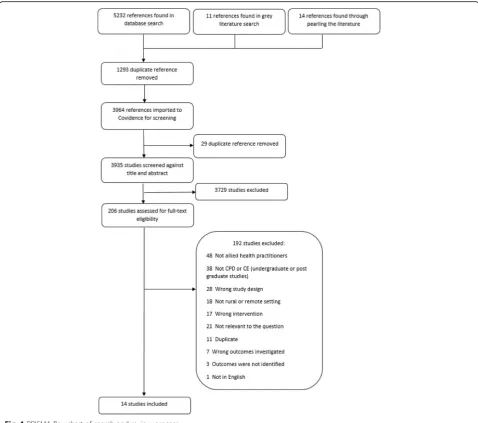
Results:The search returned 5257 results. With removal of duplicate references, we reviewed 3964 article titles and abstracts;n= 206 appeared potentially eligible and were scrutinised via full text screening;n= 14 were included. Studies were published between 1997 and 2016, were of varied methodological quality and were predominantly from Australia, USA and Canada with a focus on satisfaction of learners with the delivery method or on measures of educational outcomes. Technologies used to deliver distance education included video conference, teleconference, web based platforms and virtual reality. Early papers tended to focus more on the technology characteristics than educational outcomes. Some studies compared technology based delivery to face to face modes and found satisfaction and learning outcomes to be on par. Only three studies reported on practice change following the educational intervention and, despite a suggestion there is a link between the constructs, none measured the relationship between access to continuing professional development and workforce retention.
Conclusion:Technology based options of delivery have a high utility, however the complex inter-relatedness of time, use, travel, location, costs, interactivity, learning outcomes and educational design suggest a need for more sophisticated consideration by educational providers.
Trial registration:Registration with PROSPERO 30 June 2016: CRD42016041588.
Keywords:Continuing professional development, Allied health professionals, Distance education, Rural health workforce, Education technology
* Correspondence:[email protected]
University of South Australia, School of Health Sciences, Adelaide, Australia
Background
The context of working in rural allied health is unique. Rural allied health practitioners (AHP) are confronted with a broad range of challenges in daily practice requiring an extensive general skill-base to cope with the diversity and demands of clients, often in an environment where resources are scarce and there are minimal support struc-tures [1–6]. In addition, delivery methods for health ser-vices are constantly changing, requiring AHP to be adaptable and responsive to new demands placed upon them. A recent example of changes to health services is the introduction of the National Disability Insurance Scheme (NDIS) in Australia. The NDIS is expected to generate a responsive, person centred service which en-ables people with disability to choose when and how they receive support from health professionals [7]. In the new scheme, rural AHP may be required to assess individual’s needs that previously may not have been part of their practice experience, leading to an even greater need for training and continuing professional development (CPD) opportunities in this group.
CPD is offered by employers or other providers and taken up by AHP to enhance knowledge, skills compe-tence and performance in order to improve patient and client outcomes [8]. CPD is typically offered via educa-tional meetings that are either interactive or didactic and usually utilise printed educational materials or other re-sources as a component of the intervention [8]. Educa-tional meetings are defined as conferences, lectures, workshops, seminars, symposia and courses with evidence suggesting that mixed interactive and didactic education is more effective than either alone [8]. Lack of access to CPD is known to be problematic for rural AHP [9, 10]. In particular, rural AHP cite additional costs of travel to at-tend CPD [11], expensive registrations [12] and not being provided with a car or time to travel [9].
Attracting and then retaining a rural AHP work force is itself a challenge [11, 13] with reasons cited including the requirement to be generalist AHP and the need to be both administrators and health service providers [9]. Different methods have been considered for provision of CPD to rural AHP [14] to support recruitment and retention [15]. In particular, transdisciplinary and interdisciplinary ap-proaches have been promoted as there may only be one person from each discipline in rural centres and these ap-proaches allow the exchange of ideas, skills and informa-tion amongst the team [16, 17]. CPD provided by distance education is another response to overcome the barriers as-sociated with travel distance and cost.
The availability of distance education, subsidised CPD and use of technology to deliver education or training to rural Australia was thought to allow cost-effective and equitable access to CPD for rural AHP [5, 18, 19]. How-ever, other research suggested that methods utilising
technologies for delivery of CPD, while helpful in enabling AHP to learn locally, may not fully meet their needs [4] as they needed ‘time out’ to learn [10] and it could not re-place face-to-face contact [11]. Therefore, while email, video-conferencing and internet-based programs have some place in CPD for AHP, they may not allow full inter-action and collaborative learning between the educator and AHP. These limitations of distance education may ac-count for limited uptake in the past [4] and current vari-ability amongst rural AHP [20].
Due to the uniqueness of the experiences and the de-mands placed on rural AHP, more needs to be known about what technological and learning strategies are most beneficial for supporting the CPD of AHP working in rural settings. For this reason, we undertook a systematic review with the aim of evaluating the effectiveness of dis-tance learning strategies to provide CPD to rural AHP. There are two aspects to this review question; what dis-tance learning strategies are currently used to provide CPD for rural AHP and; how effective are these strategies in improving rural AHP outcomes. Outcomes of interest were practitioner knowledge change; practitioner confi-dence change; practice change; and practitioner satisfac-tion with the CPD distance learning model used.
Methods
The systematic review of the effectiveness of distance learning strategies for rural AHP followed the PRISMA statement guidelines [21], and the search protocol was prospectively registered with PROSPERO (registration number CRD42016041588, 30 June 2016). The following databases were searched: Informit health collection; Med-line; AMED; Academic Search Premier; Australian and New Zealand Reference Centre; CINAHL; Health Source: Nursing/academic edition; Cochrane library; Scopus; Web of Science; Google Scholar; ERIC; SAGE Health sciences; ProQuest nursing and allied health source; OT Seeker; PEDro. A grey literature search was conducted of the fol-lowing websites: The Australian Institute of Health and Welfare; Australian College of Rural and Remote Medi-cine; Australian Rural Health Education Network; Allied Health Professions Australia; CRANAPlus; Health Con-sumers of Rural and Remote Australia; Health Workforce Australia; National Rural Health Alliance; Rural Health Workforce Australia; Services for Australian Rural and Remote Allied Health. See Appendix for the full search terms as used in the Medline search. These terms were adjusted as necessary to suit each database searched.
must have over 50% AHP or must report results for AHP separately to other health professionals. Continuing medical education designed for physicians, doctors or nurses were excluded. We included any primary study designs (quanti-tative, qualitative and mixed methods) that offered distance education via lectures, workshops, seminars, symposia and courses by didactic or interactive means. The reference lists of opinion papers, commentaries and literature reviews were pearled for further relevant articles. Non-English lan-guage literature was excluded; no date restrictions were ap-plied. EndNote software [23] and Covidence software [24] was utilised to manage the search results.
Each article was read for relevant data which was extracted into a customised data extraction table that was developed specifically for this systematic review. The extraction table contained key data domains, which were pertinent to the objectives and questions of this review including 1) study design; 2) sample size; 3) setting; 4) health discipline; 5) description of intervention; 6) technology used; 7) method of data collection; 8) outcomes reported and 9) results. The methodological quality of the included intervention studies was assessed using the Critical Appraisal Checklist for an Article on an Educational Interven-tion Tool [25].
The findings from individual studies were summarised depending on the types of evidence found for each ques-tion. Because the studies were heterogenous including qualitative, quantitative and mixed method designs, their findings were synthesised descriptively and emergent findings reported narratively [26]. All stages of the art-icle selection and critical appraisal process were con-ducted by two independent reviewers; any discrepancies were resolved by discussion. A third independent re-viewer made the final decision where discrepancies were not resolved.
Search results
The search of peer reviewed databases returned 5232 ar-ticles, a further 14 were found through reference list pearling and 11 reports were found in the grey literature search. After duplicate references were removed, the title and abstracts of 3964 articles were scanned to identify potentially relevant papers of which 206 full text were retrieved for a more detailed examination, and to ensure they met the inclusion criteria. Removal of duplicate publications and those that failed to meet the inclusion criteria resulted in 14 studies being included in this re-view (see Fig. 1 for PRISMA flow chart).
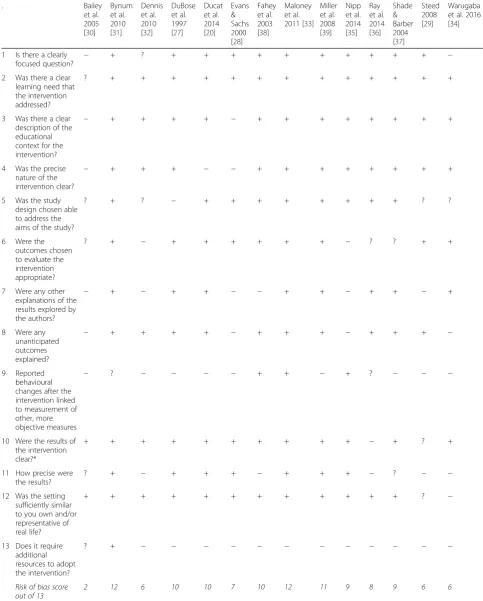
The 14 included papers were assessed for methodo-logical quality of the study design [25].
The 14 included papers were assessed for methodo-logical quality of the study design [25] (see Table 1 for details).
Findings
Study characteristics
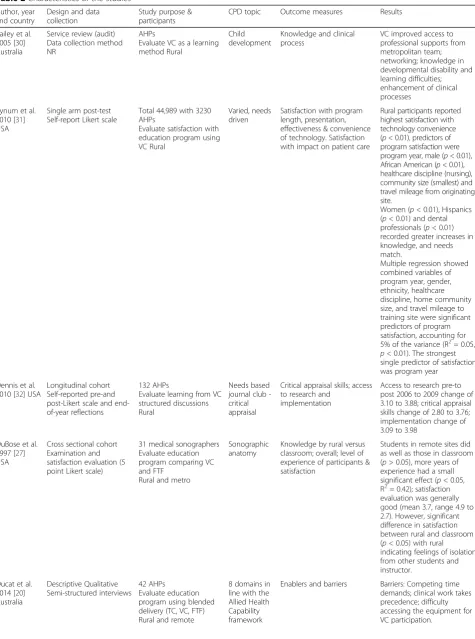
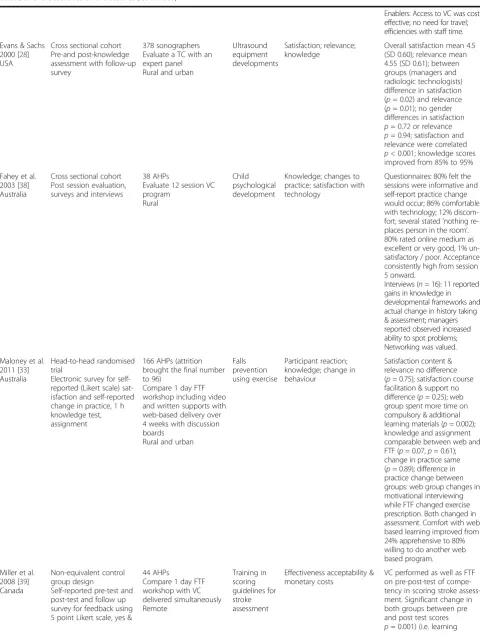
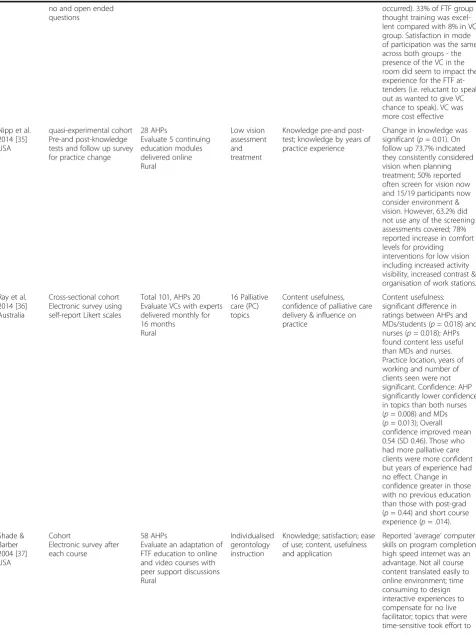
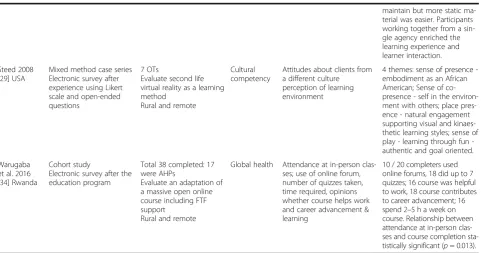
The 14 included studies were published over a 19-year period from 1997 to 2016 (see Table 2). There were mul-tiple studies conducted in Canada, Australia and the USA, while one focused on the needs of rural AHP in Rwanda. All but three studies [27–29] offered education to multi-disciplinary groups. CPD offerings varied and were either needs based, typically within health services or across health networks where topics were identified via surveys [30–32] or via topics selected by the Univer-sity hosting the course [27]. Studies published prior to 2010 devoted large sections of their paper to describing the technology used for delivery of the education pro-grams compared to more recent papers, which tend to discuss learning outcomes or pedagogies in more detail. All of the interventions were considered resource inten-sive and would require expense to establish and repli-cate. The most resource intensive intervention appeared to be Maloney et al. [33] who offered face to face ses-sions and compared learning outcomes with online de-livery. They gave telephone support in addition to web based tutoring and access to the university technology support helpline 12 h a day, five days per week. Also re-source intensive was Warugaba et al. [34] who collabo-rated with a university course design team to convert Massive Online Open Courses (MOOC) resources back into more basic technologies such as USBs and videos that were hand delivered to remote locations. Due to the heterogeneity of the studies, it was not possible to complete a meta-analysis of results and data were syn-thesised in a narrative form, with descriptive statistics (mean, standard deviation, standard error, number of students before and after intervention, effect size, p -value, t-value) reported where available (refer to Table 2 for the included study characteristics).
Critical appraisal
explanations of results lacked deeper analysis which limited the usefulness of the research.
Outcome measures and methods of distance education
Primarily the studies evaluated domains of knowledge and satisfaction with learning processes or technologies used, while some also measured self-reported practice change. The main method of data collection was through course evaluations conducted by online or pen and paper surveys after the completion of the education. Some studies had both a course evaluation and a pre and post-test evaluation of self-reported knowledge change on a Likert type scale [28, 29, 32] and with open questions [33]. Some had an examination following the intervention [27, 33, 35], or for-mal assessment of knowledge before and after intervention [28]. Simpler study designs reported on findings from evaluation instruments administered only after delivery of
the education [27, 29, 31, 36, 37]. In addition, three studies gathered qualitative data to evaluate learning and the utility of the methods of e-learning [20, 29, 38]. All evaluation in-struments were bespoke, designed to ask about learning and specific aspects of the education that the participants did or did not find useful.
Those studies that tested knowledge found positive outcomes from the education programs regardless of method of delivery [28, 33, 35]. When video-conference was compared with face-to-face delivery of material there was a significant change in knowledge for both groups [33, 39]. However, those participating in a day long video-conference reported feeling fatigued, with sore eyes from looking at the screen [39].
Table 1Risk of bias appraisal of included papers
. Bailey
et al. 2005 [30]
Bynum et al. 2010 [31]
Dennis et al. 2010 [32]
DuBose et al. 1997 [27]
Ducat et al. 2014 [20]
Evans & Sachs 2000 [28]
Fahey et al. 2003 [38]
Maloney et al. 2011 [33]
Miller et al. 2008 [39]
Nipp et al. 2014 [35]
Ray et al. 2014 [36]
Shade & Barber 2004 [37]
Steed 2008 [29]
Warugaba et al. 2016 [34]
1 Is there a clearly focused question? −
+ ? + + + + + + + + + + −
2 Was there a clear learning need that the intervention addressed?
? + + + + + + + + + + + + +
3 Was there a clear description of the educational context for the intervention?
− + + + + − + + + + + + + +
4 Was the precise nature of the intervention clear?
− + + + − − + + + + + + + +
5 Was the study design chosen able to address the aims of the study?
? + ? − + + + + + + + + ? ?
6 Were the outcomes chosen to evaluate the intervention appropriate?
? + − + + + + + + − ? ? + +
7 Were any other explanations of the results explored by the authors?
− + − + + − − + + − + + − +
8 Were any unanticipated outcomes explained?
− + + + + − + + + − + + + −
9 Reported behavioural changes after the intervention linked to measurement of other, more objective measures
− ? − − − − + + − + ? − − −
10 Were the results of the intervention clear?*
+ + + + + + + + + + − + ? +
11 How precise were the results?
? + − + + + − + + + − ? − −
12 Was the setting sufficiently similar to you own and/or representative of real life?
+ + + + + + + + + + + + ? −
13 Does it require additional resources to adopt the intervention?
? + − − − − − − − − − − − −
Risk of bias score out of 13
2 12 6 10 10 7 10 12 11 9 8 9 6 6
Table 2Characteristics of the studies
Author, year and country
Design and data collection
Study purpose & participants
CPD topic Outcome measures Results
Bailey et al. 2005 [30] Australia
Service review (audit) Data collection method NR
AHPs
Evaluate VC as a learning method Rural
Child development
Knowledge and clinical process
VC improved access to professional supports from metropolitan team; networking; knowledge in developmental disability and learning difficulties; enhancement of clinical processes
Bynum et al. 2010 [31] USA
Single arm post-test Self-report Likert scale
Total 44,989 with 3230 AHPs
Evaluate satisfaction with education program using VC Rural
Varied, needs driven
Satisfaction with program length, presentation, effectiveness & convenience of technology. Satisfaction with impact on patient care
Rural participants reported highest satisfaction with technology convenience (p< 0.01), predictors of program satisfaction were program year, male (p< 0.01), African American (p< 0.01), healthcare discipline (nursing), community size (smallest) and travel mileage from originating site.
Women (p< 0.01), Hispanics (p< 0.01) and dental professionals (p< 0.01) recorded greater increases in knowledge, and needs match.
Multiple regression showed combined variables of program year, gender, ethnicity, healthcare discipline, home community size, and travel mileage to training site were significant predictors of program satisfaction, accounting for 5% of the variance (R2= 0.05,
p< 0.01). The strongest single predictor of satisfaction was program year
Dennis et al. 2010 [32] USA
Longitudinal cohort Self-reported pre-and post-Likert scale and end-of-year reflections
132 AHPs
Evaluate learning from VC structured discussions Rural
Needs based journal club -critical appraisal
Critical appraisal skills; access to research and
implementation
Access to research pre-to post 2006 to 2009 change of 3.10 to 3.88; critical appraisal skills change of 2.80 to 3.76; implementation change of 3.09 to 3.98
DuBose et al. 1997 [27] USA
Cross sectional cohort Examination and satisfaction evaluation (5 point Likert scale)
31 medical sonographers Evaluate education program comparing VC and FTF
Rural and metro
Sonographic anatomy
Knowledge by rural versus classroom; overall; level of experience of participants & satisfaction
Students in remote sites did as well as those in classroom (p> 0.05), more years of experience had a small significant effect (p< 0.05, R2= 0.42); satisfaction evaluation was generally good (mean 3.7, range 4.9 to 2.7). However, significant difference in satisfaction between rural and classroom (p< 0.05) with rural indicating feelings of isolation from other students and instructor.
Ducat et al. 2014 [20] Australia
Descriptive Qualitative Semi-structured interviews
42 AHPs
Evaluate education program using blended delivery (TC, VC, FTF) Rural and remote
8 domains in line with the Allied Health Capability framework
Table 2Characteristics of the studies(Continued)
Enablers: Access to VC was cost effective; no need for travel; efficiencies with staff time.
Evans & Sachs 2000 [28] USA
Cross sectional cohort Pre-and post-knowledge assessment with follow-up survey
378 sonographers Evaluate a TC with an expert panel Rural and urban
Ultrasound equipment developments
Satisfaction; relevance; knowledge
Overall satisfaction mean 4.5 (SD 0.60); relevance mean 4.55 (SD 0.61); between groups (managers and radiologic technologists) difference in satisfaction (p= 0.02) and relevance (p= 0.01); no gender differences in satisfaction
p= 0.72 or relevance
p= 0.94; satisfaction and relevance were correlated
p< 0.001; knowledge scores improved from 85% to 95%
Fahey et al. 2003 [38] Australia
Cross sectional cohort Post session evaluation, surveys and interviews
38 AHPs
Evaluate 12 session VC program
Rural
Child psychological development
Knowledge; changes to practice; satisfaction with technology
Questionnaires: 80% felt the sessions were informative and self-report practice change would occur; 86% comfortable with technology; 12% discom-fort; several stated‘nothing re-places person in the room’. 80% rated online medium as excellent or very good, 1% un-satisfactory / poor. Acceptance consistently high from session 5 onward.
Interviews (n= 16): 11 reported gains in knowledge in developmental frameworks and actual change in history taking & assessment; managers reported observed increased ability to spot problems; Networking was valued.
Maloney et al. 2011 [33] Australia
Head-to-head randomised trial
Electronic survey for self-reported (Likert scale) sat-isfaction and self-reported change in practice, 1 h knowledge test, assignment
166 AHPs (attrition brought the final number to 96)
Compare 1 day FTF workshop including video and written supports with web-based delivery over 4 weeks with discussion boards
Rural and urban
Falls prevention using exercise
Participant reaction; knowledge; change in behaviour
Satisfaction content & relevance no difference (p= 0.75); satisfaction course facilitation & support no difference (p= 0.25); web group spent more time on compulsory & additional learning materials (p= 0.002); knowledge and assignment comparable between web and FTF (p= 0.07,p= 0.61); change in practice same (p= 0.89); difference in practice change between groups: web group changes in motivational interviewing while FTF changed exercise prescription. Both changed in assessment. Comfort with web based learning improved from 24% apprehensive to 80% willing to do another web based program.
Miller et al. 2008 [39] Canada
Non-equivalent control group design
Self-reported pre-test and post-test and follow up survey for feedback using 5 point Likert scale, yes &
44 AHPs
Compare 1 day FTF workshop with VC delivered simultaneously Remote
Training in scoring guidelines for stroke assessment
Effectiveness acceptability & monetary costs
VC performed as well as FTF on pre-post-test of compe-tency in scoring stroke assess-ment. Significant change in both groups between pre and post test scores
Table 2Characteristics of the studies(Continued)
no and open ended questions
occurred). 33% of FTF group thought training was excel-lent compared with 8% in VC group. Satisfaction in mode of participation was the same across both groups - the presence of the VC in the room did seem to impact the experience for the FTF at-tenders (i.e. reluctant to speak out as wanted to give VC chance to speak). VC was more cost effective
Nipp et al. 2014 [35] USA
quasi-experimental cohort Pre-and post-knowledge tests and follow up survey for practice change
28 AHPs
Evaluate 5 continuing education modules delivered online Rural
Low vision assessment and treatment
Knowledge pre-and post-test; knowledge by years of practice experience
Change in knowledge was significant (p= 0.01). On follow up 73.7% indicated they consistently considered vision when planning treatment; 50% reported often screen for vision now and 15/19 participants now consider environment & vision. However, 63.2% did not use any of the screening assessments covered; 78% reported increase in comfort levels for providing interventions for low vision including increased activity visibility, increased contrast & organisation of work stations.
Ray et al. 2014 [36] Australia
Cross-sectional cohort Electronic survey using self-report Likert scales
Total 101, AHPs 20 Evaluate VCs with experts delivered monthly for 16 months
Rural
16 Palliative care (PC) topics
Content usefulness, confidence of palliative care delivery & influence on practice
Content usefulness: significant difference in ratings between AHPs and MDs/students (p= 0.018) and nurses (p= 0.018); AHPs found content less useful than MDs and nurses. Practice location, years of working and number of clients seen were not significant. Confidence: AHP significantly lower confidence in topics than both nurses (p= 0.008) and MDs (p= 0.013); Overall confidence improved mean 0.54 (SD 0.46). Those who had more palliative care clients were more confident but years of experience had no effect. Change in confidence greater in those with no previous education than those with post-grad (p= 0.44) and short course experience (p= .014). Shade &
Barber 2004 [37] USA
Cohort
Electronic survey after each course
58 AHPs
Evaluate an adaptation of FTF education to online and video courses with peer support discussions Rural
Individualised gerontology instruction
Knowledge; satisfaction; ease of use; content, usefulness and application
changes in knowledge or confidence, it cannot be assumed that there were resultant changes in practice. One study found that only half of their occupational therapy partici-pants screened vision during assessments following educa-tion, meaning that whilst they were reported to be more confident, there was limited change in practice [35]. Nipp et al. [35] suggested that the limited change in practice could be due to the lack of interaction with facilitators and other students to promote learning. They recom-mended adding more interactive elements to e-learning courses to improve this outcome [35].
Some studies focused on evaluation of satisfaction with the CPD delivery method rather than the learning outcomes as their aim [20, 29, 30, 39]. Satisfaction with access, experi-ence or usefulness of technology and subsequent learning processes varied across studies. Participants reported that they appreciated education that had an interactive compo-nent including contact with facilitators and other learners because it mirrored the kind of learning that occurs in the classroom and supported their engagement [29, 34, 36, 37]. The comparison of satisfaction with videoconference groups and face to face groups found no difference [39]. However, DuBose et al. [27] found there was a difference in satisfac-tion between rural participants and those in the classroom, with rural learners feeling isolated from the instructor and other students. In the Warugaba et al. [34] example, course completion was significantly related to attendance at the in-person classes that were an adapted addition to the original MOOC design. Multimedia delivery of content appeared to be favourable, possibly because this suited different learning
styles [37]. The virtual reality experience in Steed [29] ap-peared to create immersion and a playful experience. How-ever, the author indicated further data needed to be collected to determine if improvement in cultural sensitivity of participants occurred potentially highlighting the limita-tions of the education method.
Interactivity between learners supported networking be-tween participants within rural areas or teams [37] and between rural and metropolitan participants [30]. How-ever, interactivity was also cited as a negative indicator of satisfaction in some studies [27, 38], or a perceived con-straint for verbal contribution when participants who were in the room with the facilitators felt the need to hold back to allow those who were at a distance to speak [39]. Shade and Barber [37] cautioned that designing interactive expe-riences that compensate for the absence of a live facilitator was time consuming.
The technologies used to deliver the distance education differed. Video-conference was a popular medium [20, 30– 32, 36, 38, 39] including the oldest study in the review [27]. One study used relatively simple technology via teleconfer-ences [28] with another creating a more complex interven-tion via a virtual reality situated learning experience [29]. Others used stand-alone or one topic offerings that were not administered through the internet such as videos [37] and narrated power-point presentations [35]. Other educa-tion was delivered through the internet using web-based systems that have multiple in built learning tools, such as Blackboard [37] or Moodle [33], to create online courses including asynchronous discussion boards [33, 37] and to
Table 2Characteristics of the studies(Continued)
maintain but more static ma-terial was easier. Participants working together from a sin-gle agency enriched the learning experience and learner interaction.
Steed 2008 [29] USA
Mixed method case series Electronic survey after experience using Likert scale and open-ended questions
7 OTs
Evaluate second life virtual reality as a learning method
Rural and remote
Cultural competency
Attitudes about clients from a different culture perception of learning environment
4 themes: sense of presence -embodiment as an African American; Sense of co-presence - self in the environ-ment with others; place pres-ence - natural engagement supporting visual and kinaes-thetic learning styles; sense of play learning through fun -authentic and goal oriented.
Warugaba et al. 2016 [34] Rwanda
Cohort study
Electronic survey after the education program
Total 38 completed: 17 were AHPs
Evaluate an adaptation of a massive open online course including FTF support
Rural and remote
Global health Attendance at in-person clas-ses; use of online forum, number of quizzes taken, time required, opinions whether course helps work and career advancement & learning
offer MOOCs [34]. In a very remote region of Rwanda the online resources were not a suitable method of sole deliv-ery and face to face supports were also provided [34].
Video-conferencing was found to be cost efficient in comparison to traveling to a larger city to attend a work-shop [20, 39] and the relationship between distance and travel requirement was a finding in several studies. Bynum et al.’s [31] rural participants reported the high-est satisfaction with technology convenience compared to videoconference users’closer to the city from where the content was delivered. However, the duality of saved time, efficiencies and travel savings versus competing clinical demands and precedence when studying in situ was highlighted in Ducat et al.’s [20] analysis of the bar-riers and enablers of blended delivery methods.
Reduction in satisfaction was indicated by issues with readiness of learners to use the technology for education delivered via the internet or when they reported issues with bugs in the program, lag time, having to refresh the internet connection [29, 34, 37] and having limited ac-cess to the equipment needed [20]. This disruption af-fected the experience for learners and required patience for them to be supported in learning the technology as well as the content [29, 33]. Comfort with technology improved markedly in the Maloney [33] study from 24% apprehensive to 80% willing to do another web based program, suggesting offering support for technology use is a helpful addition to the suite of CPD options. How-ever, actual satisfaction comparisons between the course facilitation and support in the face to face and web based offerings in the Maloney [33] study were not different.
Discussion
Through conducting this review, once education targeted at medical practitioners was excluded, we found a surpris-ingly small range of research with variable methodological quality. This finding was surprising because of the many drivers for providing CPD for rural AHP including man-dated professional registration requirements, the need to be professionally current [40], and to manage diverse practice demands [4]. Opportunities for engagement in CPD also minimises professional isolation, enhances qual-ity improvement, and supports staff recruitment and re-tention [17]. In addition, CPD can inform rural AHP about product advancements and advancements in know-ledge via implementation of research outcomes [41].
The research in this review was predominantly cross sec-tional with a mix of pre and post and quantitative measures and qualitative evaluations focusing primarily on knowledge development, satisfaction and utility with methods of edu-cation delivery and to a small degree on behaviour change and client outcomes. The almost 20-year span of the litera-ture indicated that interest in effective modes of distance education is well established yet technology use is no longer
novel. A pertinent observation was the trend of earlier pub-lications to dwell extensively on descriptions of the technol-ogy, perhaps in an effort to enhance replicability, but to the detriment of the detail of the actual educational content or method. Both elements of the educational content and the method of delivery require attention to enhance replicability of the research. However, future efforts may benefit from giving more attention to the match between the method of delivery and the learning objectives of the program. For ex-ample, Evans and Sachs [28] demonstrated that for a straightforward session on new developments in a particu-lar form of reguparticu-larly used equipment, a low technology op-tion of a teleconference could produce both knowledge gains and high satisfaction. Conversely, complex practice based courses may lend themselves more readily to either online or videoconference modes [33, 35, 36]. Similarly, education that requires a change in values and beliefs such as cultural sensitivity may require face-to-face contact for in-depth discussion [29], a finding congruent with studies of continuing medical education that indicate educational meetings alone are not effective for complex behaviour or practice changes [8].
Knowledge gains were a primary outcome of interest and all studies reported positive results regardless of the measures used, mode of technology, teaching and learn-ing method, CPD topic or multi or sole disciplinary con-text. This finding suggests that AHP who opt to undertake CPD are likely to learn regardless, and per-haps the mode of delivery is not the most important as-pect if knowledge alone is the desired outcome. The literature does not advance an understanding of the depth, longevity or application of that knowledge in practice despite efforts to measure practice change in two of the later Australian studies [33, 36].
Similarly, while it is suggested that provision of CPD is a strategy to retain staff [8], and while most studies measured satisfaction, none reported on retention as an outcome. It could be assumed that elements of the design of the differ-ent educational offerings may be of most benefit to retdiffer-ention of AHP in rural sectors. For example, studies with interactiv-ity between participants and the facilitator appeared to have a higher satisfaction outcome, which is consistent with stud-ies asking rural AHP about their CPD needs [10, 11] and evidence of strategies that produce the highest educational impact [8]. Therefore, it could be concluded that education that has an interactive element between the educator and the learner is better regarded by the recipient because they have the opportunity to discuss their learning. However, the nature of interactivity between participants was an intriguing finding of this review that deserves further research to deter-mine which aspects of interactivity are most effective and how they may be facilitated via distance.
[30, 38] but it appeared that if the education included videoconference participants off site as well as in class par-ticipants synchronously, those at a distance felt more iso-lated [27]. Presumably the goal of a CPD strategy for rural AHP is to reduce feelings of isolation rather than increase them therefore there is a need to carefully consider the best location mix of participants in each educational design.
With the exception of one paper, the research was con-ducted in USA, Canada or Australia, which are countries with vast distances between rural and metropolitan cen-tres. The CPD strategies had similar purposes to reduce travel time and costs for rural AHP, which were estab-lished as achievable outcomes. However, the issue of travel is multifaceted; while reduced travel time was valued [20, 31], staying on site at the workplace to study could also be a barrier when competing clinical demands overtook time use [20]. Face to face versus distance modes was the focus of studies with comparative designs, testing the assump-tion that face to face learning produces better outcomes, which was not in fact supported when knowledge and sat-isfaction were both measured [33, 39].
A key new understanding from this review is the no-tion of the dynamic interacno-tion between time use, travel, location, costs, interactivity, learning outcomes and edu-cational design. On the surface, the results indicate dis-tance education is well established and will produce good knowledge outcomes regardless of delivery mode. However, other aligned benefits such as professional net-working opportunities, reducing rural isolation through building communities of practice virtually or in small local clusters deserve further consideration; the latter particularly when seeking to move from knowledge gains to changed practice behaviours and improved client out-comes. Further, simple modifications to design, such as potentially offering education via technology but in off work site locations away from clinical demands (e.g. in libraries or university rural departments) may reap add-itional benefits for recipients.
Limitations and recommendations for future research Given that existing literature supports the notion that access to CPD can aid in the retention of allied health practitioners in the rural workforce [13], it is a limitation of this review that no papers reported on retention as an outcome of engagement in distance CPD. An explor-ation of the relexplor-ationship between availability of distance CPD and workforce retention is an area that is recom-mended for attention in future research. In addition, as this was secondary analysis of published research, we were not in a position to report on the motives of the participants for engagement with CPD and we did not know if participation was self-funded or employer funded. As evidence suggests that attendance is related to education outcomes, those who are most interested
may also be those already performing well, and con-versely those least interested may not attend and may need the CPD most [8] further research into the en-ablers and motivators for participation is important. Similarly, we were not aware of the motives of the CPD providers. This contextual information would be useful to interpretation and analysis of learning outcome data and is recommended for inclusion in reporting of future studies.
This study is limited by the lack of quality studies about distance CPD for rural allied health practitioners. In order to capture sufficient relevant studies, we had no date re-striction on our search. This resulted in studies that spanned a 19 year period during a time of significant technological advancements. Comparisons were made about the different assumptions and emphases of authors from different periods of time, but comparisons between the different technologies need to made with caution and with understanding of the challenges that existed at those times (i.e. slower internet connections). It is recom-mended that future studies report detailed information about both the technology used and the educational inter-vention outcomes to advance understanding of the bene-fits and barriers to use of technology for distance delivery of CPD to rural allied health practitioners.
Schoo et al. [17] suggested that CPD for rural AHP should be based on core principles of professional group needs, adult learning principles and flexible de-livery. The findings of this review suggest that these principles require deeper reflection, particularly the meaning of flexibility. Technology based delivery op-tions appear to have high utility but perhaps flexibility and adult learning principles require more consider-ation above delivering distance educconsider-ation to a rural AHP desk top. Finally, while the studies showed some limited results, the extent and manner in which dis-tance education CPD should be supported by additional knowledge translation strategies for change in practice, is of benefit to clients or improved service quality and whether it does in fact contribute to improve AHP re-tention in rural practice remains equivocal and is ripe for further prospective research.
Conclusion
Appendix
Medline search
T3 Abbreviations
AHP:Allied Health Practitioner(s); CPD: Continuing Professional Development; MOOC: Massive Online Open Course(s); NDIS: National Disability Insurance Scheme; PRISMA: Preferred Reporting Items for Systematic Reviews and Meta-Analyses
Acknowledgements
The authors would like to acknowledge the intellectual contribution of Mr. Hugh Stewart.
Availability of data and materials
Data sharing is not applicable to this article as no datasets were generated or analysed during the current study.
Funding none.
Authors’contributions
All authors made substantial contribution to the conception of the systematic review. KK performed the search, all authors were involved in selection of papers, CM and AB made substantial contributions to the data extraction and interpretation. All authors contributed to drafting and reviewing the manuscript and read and approved the final manuscript.
Ethics approval and consent to participate not applicable.
Consent for publication not applicable.
Competing interests
The authors declare that they have no competing interests.
Publisher’s Note
Springer Nature remains neutral with regard to jurisdictional claims in published maps and institutional affiliations.
Received: 16 November 2016 Accepted: 26 June 2017
References
1. Bailey R, Bell K, Kalle W, Pawar M. Restoring meaning to supervision through a peer consultation Group in Rural Australia. J Soc Work Pract. 2014;28(4):479–95. 2. Bent A. Allied health in Central Australia: challenges and rewards in remote
area practice. Australian Journal of Physiotherapy. 1999;45(3):203–12. 3. Devine S. Perceptions of occupational therapists practising in rural Australia:
a graduate perspective. Aust Occup Ther J. 2006;53(3):205–10. 4. Lannin N, Longland S. Critical shortage of occupational therapists in rural
Australia: changing our long-held beliefs provides a solution. Aust Occup Ther J. 2003;50(3):184.
5. Millsteed J. Factors affecting the retention of occupational therapists in rural services. Occup Ther Health Care. 2002;14(3–4):55–72.
6. Paliadelis P, Parmenter G, Parker V, Giles M, Higgins I. The challenges confronting clinicians in rural acute care settings: a participatory research project. Rural Remote Health. 2012;12(2):1–12.
7. Gallego G, Chedid RJ, Dew A, Lincoln M, Bundy A, Veitch C, Bulkeley K, Brentnall J. Who are they and what do they do? Profile of allied health professionals working with people with disabilities in rural and remote new South Wales. Aust J Rural Health. 2015;23(4):227–34.
8. Forsetlund L, Bjørndal A, Rashidian A, Jamtvedt G, O’Brien MA, Wolf F, Davis D, Odgaard-Jensen J, AD Oxman. Continuing education meetings and workshops: effects on professional practice and health care outcomes (Review). Cochrane Database Syst Rev. 2009;2:1–97.
9. O'Toole KP, Schoo AP, Hernan ABPH. Hp: why did they leave and what can they tell us? Allied health professionals leaving rural settings. Aust Health Rev. 2010;34(1):66–72.
Table 3Medline search. An academic librarian from the University of South Australia independently validated the search strategy
No# Search terms Results
1 ((rural or remote or nonmetropolitan or non metropolitan or suburb*) and (health or health care or health servic*)).mp. [mp = title, abstract, original title, name of substance word, subject heading word, keyword heading word, protocol supplementary concept word, rare disease supplementary concept word, unique identifier]
89,254
2 *Rural Health Services/ or Rural Health/ or Suburban Health.mp. [mp = title, abstract, original title, name of substance word, subject heading word, keyword heading word, protocol supplementary concept word, rare disease supplementary concept word, unique identifier]
29,743
3 1 or 2 89,254
4 (((education or training) and (program or intervention or meeting or session or strategies or workshop or lecture or symposium or course)) or ((education or training) and (distance or remote or online or e-learning)) or Continuing professional education or Continu-ing professional development or CPD or CPE).mp. [mp = title, abstract, original title, name of substance word, subject headContinu-ing word, keyword heading word, protocol supplementary concept word, rare disease supplementary concept word, unique identifier]
249,428
5 *education, continuing/ or education, pharmacy, continuing/ or education, professional, retraining/ 5287
6 4 or 5 252,704
7 ((allied health and (personnel or professional)) or occupational therap* or ((physical or occupational) and (therap* or assista*)) or physical therap* or physiotherapist or (speech and (therap* or patholog*)) or dietitian or dietician or diet* technician or pharmacist or (pharmacy and (technologist or technician))).mp. [mp = title, abstract, original title, name of substance word, subject heading word, keyword heading word, protocol supplementary concept word, rare disease supplementary concept word, unique identifier]
177,831
8 *allied health personnel/ or nutritionists/ or pharmacists’aides/ or physical therapist assistants/ or physical therapists/ or Occupational Therapy/ or Pharmacists/
32,198
9 7 or 8 186,116
10 6 and 9 16,212
11 3 and 10 497
10. Keane S, Lincoln M, Smith T. Retention of allied health professionals in rural new South Wales: a thematic analysis of focus group discussions. BMC Health Serv Res. 2012;12:175.
11. Lincoln M, Gallego G, Dew A, Bulkeley K, Veitch C, Bundy A, Brentnall J, Chedid RJ, Griffiths S. Recruitment and retention of allied health professionals in the disability sector in rural and remote new South Wales, Australia. J Intellect Develop Disabil. 2014;39(1):86–97 12.
12. Keane S, Smith TN, Lincoln M, Wagner SR, Lowe SE. The rural allied health workforce study (RAHWS): background, rationale and questionnaire development. Rural Remote Health. 2008;8(4):1132.
13. Roots RK, Li LC. Recruitment and retention of occupational therapists and physiotherapists in rural regions: a meta-synthesis. BMC Health Serv Res. 2013;13(1):1–13.
14. Buykx P, Humphreys J, Wakerman J, Pashen D. Systematic review of effective retention incentives for health workers in rural and remote areas: towards evidence-based policy. Aust J Rural Health. 2010;18(3):102–9. 15. O'Toole K, Schoo A, Stagnitti K, Cuss K. Rethinking policies for the retention
of allied health professionals in rural areas: a social relations approach. Health Policy. 2008;87(3):326–32.
16. Sheppard L. Work practices of rural and remote physiotherapists. The Australian journal of rural health. 2001;9(2):84–90.
17. Schoo AM, Stagnitti KE, Mercer C, Dunbar J. A conceptual model for recruitment and retention: allied health workforce enhancement in western Victoria, Australia. Rural Remote Health. 2005;5(4):68KB.
18. Mills A, Millsteed J. Retention: an unresolved workforce issue affecting rural occupational therapy services. Aust Occup Ther J. 2002;49(4):170–81. 19. Sheppard L, Mackintosh S. Technology in education: what is appropriate for rural
and remote allied health professionals? Aust J Rural Health. 1998;6(4):189–93. 20. Ducat WH, Burge V, Kumar S. Barriers to, and enablers of, participation in
the allied health rural and remote training and support (AHRRTS) program for rural and remote allied health workers: a qualitative descriptive study. BMC Med Educ. 2014;14(1):194.
21. Moher D, Liberati A, Tetzlaff J, Altman DG. Preferred reporting items for systematic reviews and meta-analyses: the PRISMA statement. Ann Intern Med. 2009;151(4):264–9.
22. REVIEW OF AUSTRALIAN GOVERNMENT HEALTH WORKFORCE PROGRAMS 8. 2 Allied health workforce [http://www.health.gov.au/internet/publications/ publishing.nsf/Content/work-review-australiangovernment-health-workforce- programs-toc~chapter-8-developing-dental-allied-health-workforce~chapter-8-allied-health-workforce].
23. EndNote software version X7.2. Copyright, DISC bv, Haarlem, NL. In: Thomson Reuters; 2016.
24. Covidence systematic review software, Veritas Health Innovation, Melbourne, Australia. Available at www.covidence.org.
25. Critical Appraisal Checklist for an Article on an Educational Intervention Tool [http://www.gla.ac.uk/media/media_64040_en.pdf ].
26. Dixon-Woods M, Agarwal S, Jones DR, Young B, Sutton AJ, Noyes J. Synthesising qualitative and quantitative evidence within a systematic review. Nursing Research Designs and Methods. 2008:89–100. 27. DuBose TJ, Bittengle J, Donaldsont R. Diagnostic medical Sonography,
interactive video, and distance learning. Journal of Diagnostic Medical Sonography. 1997;13(3):146–52.
28. Evans KD, Sachs L. Effectiveness of a Sonography distance-learning event for continuing medical education credit. Journal of Diagnostic Medical Sonography. 2000;16(4):148–55.
29. Steed R. Instruction in cultural competency in a virtual 3D world. Journal of Interactive Instruction Development. 2008;21(2):10–23.
30. Bailey MA, Smith AC, Fitzgerald A, Taylor E. Delivery of child development services by videoconferencing: a review of four years' experience in Queensland. J Telemed Telecare. 2005;11(SUPPL. 2):S2:1–3.
31. Bynum AB, Irwin CA, Cohen B. Satisfaction with a distance continuing education program for health professionals. Telemed J E Health. 2010;16(7):776–86. 32. Dennis RE, Potvin M-C, MacLeod M. Interdisciplinary journal Club: advancing
knowledge translation in a rural state. Physical Disabilities: Education and Related Services. 2010;29(2):20–37.
33. Maloney S, Haas R, Keating JL, Molloy E, Jolly B, Sims J, Morgan P, Haines T. Effectiveness of web-based versus face-to-face delivery of education in prescription of falls-prevention exercise to health professionals: randomized trial. J Med Internet Res. 2011;13(4):e116.
34. Warugaba C, Naughton B, Hedt-Gauthier B, Muhirwa E, Amoroso CL. Experience with a massive open online course in rural Rwanda. International Review of Research in Open & Distance Learning. 2016;17(2):222–31.
35. Nipp CM, Vogtle LK, Warren M. Clinical application of low vision rehabilitation strategies after completion of a computer-based training module. Occup Ther Health Care. 2014;28(3):296–305.
36. Ray RA, Fried O, Lindsay D. Palliative care professional education via video conference builds confidence to deliver palliative care in rural and remote locations. BMC Health Serv Res. 2014;14(1):1.
37. Shade SD, Barber GM. When and where you want it: continuing education from a distance. Gerontology & Geriatrics Education. 2004;24(4):95–114. 38. Fahey A, Day NA, Gelber H. Tele-education in child mental health for rural
allied health workers. J Telemed Telecare. 2003;9(2):84–8.
39. Miller PA, Huijbregts M, French E, Taylor D, Reinikka K, Berezny L, Fry S, Grunin A, Harvey M. Videoconferencing a stroke assessment training workshop: effectiveness, acceptability, and cost. J Contin Educ Heal Prof. 2008;28(4):256–69.
40. Murray C, Lawry J. Maintenance of professional currency: perceptions of occupational therapists. Aust Occup Ther J. 2011;58(4):261–9. 41. Metzler M, Metz G. Translating knowledge to practice: an occupational
therapy perspective. Aust Occup Ther J. 2010;57(6):373–9.
• We accept pre-submission inquiries
• Our selector tool helps you to find the most relevant journal
• We provide round the clock customer support
• Convenient online submission
• Thorough peer review
• Inclusion in PubMed and all major indexing services • Maximum visibility for your research
Submit your manuscript at www.biomedcentral.com/submit