Original Research Article.
216 |P a g e Int J Med Res Prof.2018 Nov; 4(6); 216-20. www.ijmrp.com
A Study on Outcomes of Uterine Rupture among Women with
Prior Caesarean Section
Fahmida Sultana
1*, Gulshan Ara
21*Assistant Professor, 2Professor and Head, Department of Obs & Gynae, Enam Medical College and Hospital, Thana Road, Savar Dhaka, Bangladesh.
ABSTRACT
Introduction: Rupture uterus is a rare and often catastrophic situation. It is related with a high incidence of fetal and maternal mortality and morbidity.
Objective: Our main goal of this study is to evaluate outcomes of uterine rupture among women with prior caesarean section.
Method: This cross-sectional study was carried out at tertiary Medical College and hospital from 2015 January to 2018 January. Total 42 cases of ruptured uterus were recorded in this study and all the cases of ruptured uterus who were either admitted with complain or who developed it in hospital were included in the study.
Results: During the study most occurrences of ruptured uterus was the gestational age 37-40 weeks, (67%) and among 42 patients (63.33%) had no antenatal checkup. (36.67%) had irregular antenatal checkup. Also the rupture was confined to lower segment in (36.67%).
Conclusion: Proper antenatal care, appropriate counseling of patients with history of previous caesarian section for hospital
delivery, training of skilled birth attendant can reduce mortality and morbidity due to rupture uterus.
Keyword: Ruptured uterus, antenatal checkup, caesarian section.
*Correspondence to:
Dr. Fahmida Sultana,
Assistant Professor, Department of Obs & Gynae, Enam Medical College and Hospital, Thana Road, Savar Dhaka, Bangladesh.
Article History:
Received: 06-10-2018, Revised: 02-11-2018, Accepted: 24-11-2018 Access this article online
Website: www.ijmrp.com
Quick Response code
DOI:
10.21276/ijmrp.2018.4.6.046
INTRODUCTION
Uterine rupture is a rare, but serious childbirth complication that
can occur during vaginal birth. It causes a mother’s uterus to tear
so her baby slips into her abdomen. This can cause severe bleeding in the mother and can suffocate the baby. This condition affects less than 1% of pregnant women. It almost always occurs in women with uterine scars from previous cesarean deliveries or
other uterine surgeries. A woman’s risk of uterine rupture
increases with every cesarean section. Several factors are known to increase the risk of ruptured uterus. Risk factors include vaginal birth after cesarean section (VBAC), other uterine scars, obstructed labor, induction of labor, trauma. While typically rupture occurs during labor it may occasionally happen earlier in pregnancy.
Diagnosis may be suspected based on a rapid drop in the baby’s
heart rate during labor. Uterine dehiscence is a less severe condition in which there is only incomplete separation of the old scar.1,2
Rupture during pregnancy is a rare occurrence, whereas uterine scar dehiscence is a more common event. Due to lack of health
education, ignorance or poverty women in our country do not come for regular antenatal checkup, preferring home delivery by traditional birth attendant instead of coming to hospital. They are brought to hospital after prolonged dysfunctional labour when traditional birth attendant fail to deliver them, the result is a chance of rupture uterus and as well as rupture of previous caesarian scar. High maternal mortality and morbidity is a consequence of poor maternal care, inadequate socioeconomic and environmental condition, poor accessibility to health services and poor nutrition.4
Our main goal of this study is to evaluate outcomes of uterine rupture among women with prior caesarean section.
OBJECTIVE General Objective
▪ To access outcomes of uterine rupture among women with prior caesarean section.
Specific Objective
▪ To determine pattern of antenatal care of the patients
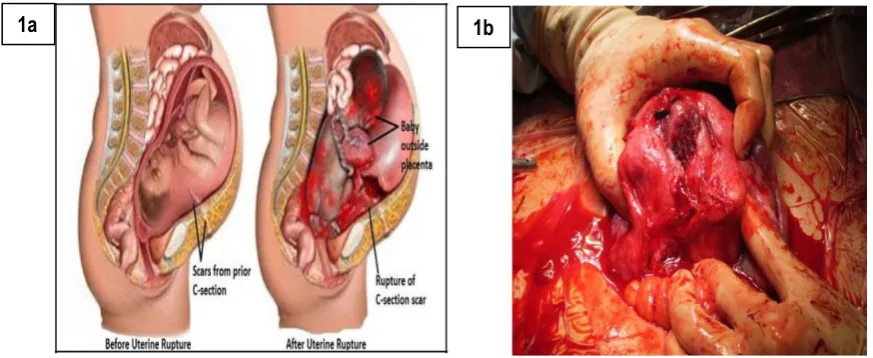
Figure 1a and1b: before and after uterine rapture and its surgery3
MATERIALS AND METHODS Study Type
This study was a cross-sectional study.
Study Place and Period
This study was conducted at tertiary Medical College and hospital from 2015 January to 2018 January.
Method
Total number of delivery during the period was 3606 where total 42 cases of ruptured uterus were recorded. All the cases of ruptured uterus who were either admitted with complain or who developed it in hospital were included in the study. Patients having ruptured uterus due to congenital anomaly were excluded from the study. Patients were initially assessed in labour ward, relevant socio demographic data, previous antenatal obstetric history,
period of gestation, duration of labour pain, history of delivery were recorded. The site of rupture, type of surgery, unit of blood transfusion and maternal and fetal outcome were recorded.
Data Analysis
During the study all the data were checked and edited after collection. Then the data were entered into computer and statistical analyses of the results were obtained by using window-based computer software devised with Statistical Packages for Social Sciences (SPSS-13) (SPSS Inc, Chicago, IL, USA). The results were presented in tables and figures, the statistical terms included in this study were mean, median, standard deviation, percentage.
Table 1: Parity and age distribution of patients
Parity Age 15-20
Years
Age 21-25 Years
Age 26-30 Years
Age 31-35 Years
Age 36-40 Years
1 1 5 5 0 1
2 2 6 6 2 0
3 0 0 4 0 0
4 0 3 1 2 1
5 or more 0 0 2 1 0
Table 2: Pattern of antenatal care of the patients
Variable Frequency Percentage
No previous history of antenatal checkup 0 0
Irregular antenatal checkup 17 40.47%
No antenatal checkup 25 59.53%
Total 42 100
Table 3: Per operative findings
Variable Frequency Percentage
Fetus outside the uterus 30 71.42%
Fetus inside the uterus 12 28.57%
Placental adhesion Previous 1 C/S Previous 2 or more C/S
15 27
35.71 64.28
Hysterectomy need 32 64.28
Repair of uterus 05 11.90
Bladder injury/Bladder Rupture 05 11.90
Table-4: Etiology of ruptured uterus in scarred / unscarred uterus.
Injudicious use of oxytocin Percent
Scarred uterus 43.34%
Unscarred uterus 19.9%
Table 4: Site of rupture of the patients
Site of rupture Number of the patients
Scar 6
Lower segment 15
Extension to upper and lateral segment 11
Injury to urinary Bladder 5
Not explored due to death 5
Table-5: Type of scar
Table 6: Fetal consequence after delivery
Fetal consequence Percent
Still births 78%
NICU 8%
alive 3%
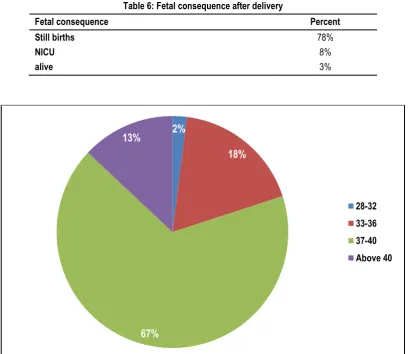
Figure 2: Gestation age (weeks) of patients
2%
18%
67%
13%
28-32 33-36 37-40 Above 40
During Pregnancy n
Classical 1
previous 2 LSCS 1
During labour
Classical 2
previous 1LSCS 22
Figure 3: Risk factor for ruptured uterus
Figure 4: Postoperative complication of mothers
RESULTS
Total deliveries were 2200. Prevalence of ruptured uterus was 42 cases (1.90%). In table-1 shows parity and age distribution of patients where age of patients ranged from 15-40 years. Most of the patients were in the age of 21-30 years.
In figure-2 shows gestation age of patients where most occurrences of ruptured uterus was the gestational age 37-40 weeks, (67%).
In table-2 shows pattern of antenatal care of the patients where among 30 patients total 19 patients (63.33%) had no antenatal checkup. 11 (36.67%) had irregular antenatal checkup and no patients had history of regular antenatal checkup.
In table-3 shows site of rupture of the patients where out of the 42 patients, the rupture was confined to lower segment in 15. In 11 patients had ruptured extended to upper segment and lateral extension. 5 patients had injury to the urinary bladder and not explored in 5 patients due to death before operation. The following table is given below in detail:
In Table-4 shows etiology of ruptured uterus in scarred /unscarred uterus where most common factor was injudicious use of oxytocin (43.34%) in scarred and (19.9%) unscarred uterus.
In figure 3 shows risk factor for ruptured uterus where 67% had previous cesarean section which higher among others. In a recent study showed the types of scar where 27 patients had scar during pregnancy. In figure-4 shows Postoperative complication of mothers who had uterine rupture where most of the patients had wound infection. In figure-5 shows general condition after admission for mother and fetus: where maternal deaths were 10%. In table 6 fetal consequence after delivery where 89% had stillbirths, 8% admitted at NICU.
DISCUSSION
Ruptured uterus still remains one of the severe obstetric complications. Lack of health information, illiteracy, poor antenatal care, poverty, home delivery by traditional birth attendants and delay in referrals all contributes to uterine rupture. Prevalence of uterine rupture in the present study is 0.84%. This study was similar to study done by one article.5 However the incidence is
higher in a study done by another study where they found 1.14%.6
In developing countries like in Ethiopia and Nigeria it is 0.03% and 0.83% respectively.7,8 Studies conducted in developing countries
gives strong evidence that uterine rupture is a major health problem in developing countries, with the rate higher in rural areas. This studies also revealed that socioeconomic condition along with poor health services play a major role in determining the incidence of rupture.9,10 Most of the patients in this study were
between the age of 21-30 years. Which was compared with one study, where most of the women belonged to the age 31-35 years.11 Majority of the patients were no antenatal checkup and
with irregular antenatal checkup 36.67% and similar results were found in other studies.5,10 Injudicious use of oxytocin and trial of
labour was the common cause, whereas prolonged obstructed labour was the second common cause. This is similar to the one study5 and others where rupture of previous caesarian scar was
the most common cause.12 In this study 11 patients had rupture in
the lower segment and 9 had extension in the upper segment or in the vaginal fornices, 2 had injury to urinary bladder.
Fatal event: More hospital stay and more blood transfusion is required for survival of mother.
CONCLUSION
From many analysis and examination we can conclude that lack of antenatal care, inappropriate counseling of patients with history of previous caesarian section for hospital delivery, misuse of oxytocin are the main cause of ruptured uterus in this study. Further study is needed for better outcome.
REFERENCES
1. Alam, Irin Parveen. Uterine rupture-experience of 30 cases at Faridpur Medical College Hospital. Faridpur Medical College Journal;2012; 7(2): 79-81.
2. Leung, Anna S., Eleanor K. Leung, and Richard H. Paul. Uterine rupture after previous cesarean delivery: maternal and fetal consequences. American Journal of Obstetrics & Gynecology 1993; 169(4): 945-50.
3.https://www.google.com/search?q=uterine+rupture&source=lnm
s&tbm=isch&sa=X&sqi=2&ved=0ahUKEwjv-KPdnLreAhUTHXwKHdXoBAkQ_AUIDigB&biw=1366&bih=657#i mgrc=aYsS2FJkyoLitM:
4. Lydon-Rochelle, Mona, Victoria L. Holt, Thomas R. Easterling, and Diane P. Martin. Risk of uterine rupture during labor among women with a prior cesarean delivery. New England Journal of Medicine 2001; 345(1): 3-8.
5. Malik HS. Frequency, Predisposing factors and fetomaternal outcome in uterine rupture. J Coll Physicians Surg Pak. 2006; 16:472-5.
6. Alam I, Khan A, Ahmed R, Begum N. A Two Year Review of Uterine Rupture at Gynaecology Unit-Ayub Teaching Hospital. J Ayub Med Coll Abottabad 2000; 12:21-2.
7. Ekpo EE. Uterine rupture as seen in the University of Calaber Teaching Hospital, Nigeria: a five -year review. J Obstet Gynaecol. 2000; 20:154-6.
8. Lynch JC, Pardy JP. Uterine rupture and scar dehiscence. A five year survey. Anaesth Intensive care 1996; 24:699-704. 9. UNICEF. The state of the Worlds Children Report Oxford University, Press New York,1996.
10. Hasan JA, Zaki M, Kareem K. Rupture of gravid uterus. J Surg Pak. 2005; 10:20-2
11. Khan S, Parveen Z, Begum S, Alam I. Uterine rupture: A review of 34 cases at Ayub Teaching Hospital Abottabad. J Ayub Med Coll Abottabad 2003; 15:50-2.
12. Gul A. Rupture of previously scarred uterus. Ann king Edward Med Coll. 2004; 10:573-5.
[
Source of Support: Nil. Conflict of Interest: None Declared.
Copyright: © the author(s) and publisher. IJMRP is an official publication of Ibn Sina Academy of Medieval Medicine & Sciences, registered in 2001 under Indian Trusts Act, 1882. This is an open access article distributed under the terms of the Creative Commons Attribution Non-commercial License, which permits unrestricted non-commercial use, distribution, and reproduction in any medium, provided the original work is properly cited.
Cite this article as: Fahmida Sultana, Gulshan Ara. A Study on Outcomes of Uterine Rupture among Women with Prior Caesarean Section. Int J Med Res Prof. 2018 Nov; 4(6): 216-20.