VOLUME 12 | ISSUE 2 | 2017 | 463
The effect of attentional focus in balancing tasks:
A systematic review with meta-analysis
TAEWON KIM1, JUDITH JIMENEZ-DIAZ2 , JING CHEN1
1 Department of Health & Kinesiology, Texas A&M University, United States 2 School Physical Education and Sports, University of Costa Rica, Costa Rica
ABSTRACT
Purpose: The present study was to use the aggregate data meta-analytic approach to examine the effects of attentional focus during balancing tasks in motor learning. Method: A literature search was conducted based on five electronic database searches, cross-referencing and expert review. Studies included randomized trials of external (EF) versus internal focus (IF). Risk of bias was assessed using a self-developed instrument. Random effects models using the standardized mean difference effect size (ES) were used to pooled results. Heterogeneity was examined using the Q statistic and inconsistency using I2. Results: Of 790 studies screened, 16 representing 541 males and females and up to 17 ES met the inclusion criteria. Analyses indicated that the EF groups outperformed the IF groups for acquisition phase (ES= 0.48, n= 16; CI95%= 0.07 to 0.90, Q= 68.7, I2= 78.2%), retention (ES= 0.44, n= 17, CI95%= 0.14 to 0.74; Q= 26.1, I2= 38.6%), and
transfer (ES= 1.41, n= 4, CI95%= 1.00 to 1.82, Q= 22, I2= 0%). Conclusion: The overall results suggest that
EF results in better balance learning when compared to IF.Key words: MOTOR LEARNING, FOCUS OF ATTENTION, BALANCE, STABILITY, SYSTEMATIC REVIEW
1Corresponding author. School Physical Education and Sports, University of Costa Rica, Costa Rica.
E-mail: [email protected] Submitted for publication February 2017 Accepted for publication June 2017
JOURNAL OF HUMAN SPORT & EXERCISE ISSN 1988-5202 © Faculty of Education. University of Alicante
doi:10.14198/jhse.2017.122.22 Cite this article as:
464 | 2017 | ISSUE 2 | VOLUME 12 © 2017 University of Alicante
INTRODUCTION
Enhancing the learning of a motor skill is a common objective in different fields of study such as kinesiology, sports, and physical therapy. One factor to optimize learning and performance of a motor skill is to provide the right instruction to the learner (Wulf, Höß, & Prinz, 1998). One related aspect that has been studied over the past several years is the focus of attention of a learner induced by the instructor (Park, Yi, Shin, & Ryu, 2015; Wulf, 2013). For example, the instructions given can prompt the learner to directly focus on the movement effect on the environment and away from the body (external focus). Alternatively, instructions can induce the learner to focus his or her attention on the body movement (internal focus) (McNevin, Weir, & Quinn, 2013; Peh, Chow, & Davids, 2011; Wulf, 2013; Wulf et al., 1998; Wulf, Shea, & Lewthwaite, 2010).
Research on the role of the performer’s focus of attention has demonstrated that external focus (EF)
enhances motor performance and learning relative to internal focus (IF) (Park, et al., 2015; Wulf et al., 2010). However, some studies have reported no benefit of EF relative to IF or even a benefit of internal focus (Park, et al., 2015; Wulf, 2008). Attentional focus has been studied in different sport tasks such as golf (Bell & Hardy, 2009; Wulf & Su, 2007), basketball (Al-Abood, Bennett, Hernandez, Ashford, & Davids, 2002; Zachry, Wulf, Mercer, & Bezodis, 2005), football (Zachry, 2005), and tennis (Maddox, Wulf, & Wright, 1999). In addition, attentional focus has been tested in balance tasks (De Bruin, Swanenburg, Betschon, & Murer, 2009; Wulf et al., 1998; Wulf & McNevin, 2003; Wulf, Shea, & Park, 2001).
In balancing tasks, evidence has shown that inducing an EF of attention enhances learning more than IF (McNevin, Shea, & Wulf, 2003; Wulf et al., 1998; Wulf, McNevin, & Shea, 2001; Wulf, Shea, et al., 2001). For example, Wulf and colleagues (1998) found that an EF condition allowed them to perform better balancing skill and learning compared to an IF of attention when performed using ski-simulator and stabilometer task. Similarly, when balancing using a stabilometer, more effective learning was shown when participants attention was directed to an external versus internal focus (Wulf, Shea, et al., 2001). In contrast, other studies have reported no superior benefit of EF versus IF (De Bruin et al., 2009; Wulf, 2008). For instance, no difference was found on balance learning when attention was directed to an external or internal focus when standing on a moving platform (De Bruin et al., 2009).
Previous research have suggested that a plausible explanation for external focus outperforming internal focus is the constrained-action hypothesis. This hypothesis states that external focus encourages automatic information processing while internal focus hinders the process (Park, et al., 2015; Wulf, McNevin, et al., 2001). Thus, external focus of attention can promote to faster postural perturbations, enhancing a balance performance and learning in conjunction with more automatic motor control processes than internal focus condition (Wulf, McNevin, et al., 2001).
VOLUME 12 | ISSUE 1 | 2017 | 465
Balance is a result of the postural control system, a system that functions continuously to coordinate the body in relation to other people, objects, and surfaces. Its role, fundamental for performing skilled movements (Chew-Bullock et al., 2012), is affected by proprioception, vision, vestibular function, and others factors (Park, et al., 2015). Balance is classified into two types, static and dynamic balance. Static balance, also known as
postural balance, is the ability to maintain the body’s center of gravity over a base of support with minimal
movement without falling (Bressel, Yonker, Kras, & Heath, 2007; Hrysomallis, 2007; Meyer & Ayalon, 2006). Dynamic balance is the ability to perform a movement without falling while the base of support and the center of mass are in motion. Consequently, the control of balance is required to perform different motor tasks in sports (e.g. skiing, football, surfing) and activities of daily living (e.g. standing, walking) (Meyer & Ayalon, 2006; Chew-Bullock et al., 2012; Winter, 1995).
Recently, Wulf (2013) provided an extensive review that included studies of the last 15 years on attentional focus and its benefits on movement effectiveness and efficiency. In addition, Park et al. (2015) also provided a short review of attentional focus on balance. However, while Wulf (2013) and Park et al. (2015) concluded that adopting an EF of attention enhances motor performance and learning relative to an IF, no quantitative approach (i.e., meta-analysis) was performed. Meta-analysis is a quantitative approach in which studies on the same topic are combined and synthesized to report a general conclusion based on empirical data (Thomas & French, 1986). The strengths of meta-analysis include increased statistical power for primary outcomes and subgroups, ability resolve uncertainty when individual studies reach conflicting conclusions, improved estimates of effect size for primary outcomes, and ability to answer questions not established at the start of an individual study (Sacks, Berrier, Reitman, Ancona-Berk, & Chalmers, 1987).
Given the former, the purpose of the present work was to use the aggregate data meta-analytic approach to determine the effect of attentional focus (external and internal focus), during a balancing task on acquisition, retention, and transfer phase as well as explore how the focus of attention may vary among different variables or factors.
METHODS
This aggregate data meta-analysis was conducted by following the general guidelines from the Preferred Reporting Items for Systematic Reviews and Meta-Analysis (PRISMA) statement (Liberati, et al., 2009).
Study Eligibility Criteria
To be included in the meta-analysis, studies needed to meet the following a priori criteria: 1. Randomized intervention trials that included an external and internal focus group. 2. Participants of any age, sex, skill ability and health status. 3. Assessment of balancing performance in acquisition, retention and/or transfer as a dependent variable. 4. Adequate statistical data reported for the calculation of a standardized mean difference effect size (means, standard deviations, sample sizes, F-values). Studies of any year of publication were included. In addition, the language was limited to English.
Data Sources
466 | 2017 | ISSUE 2 | VOLUME 12 © 2017 University of Alicante Study Selection and Data Abstraction
The first two authors (TK and JJ) independently participated in all the studies selection and data abstraction. Disagreements regarding the inclusion of studies and abstraction of data were resolved by consensus and when necessary, the help of the third author (JC). Prior to data abstraction, all authors developed a codebook in Excel spreadsheet (Excel 2013; Microsoft). To assess the study quality, sources of potential moderating variables were selected and coded in order to identify our primary results from included studies (Table 3 & 4).
Risk of Bias
Risk of bias (quality of studies) was assessed by a self-developed scale that included four items coded as either absent (0) or present (1). The four items included: randomized assignment to condition, control group included, sample size greater than 20, and data on dropouts reported. The sum of the items (ranged from 0 to 4) indicates the quality of the study. Risk of bias was assessed by two authors (TK, JJ).
Calculation of Effect Sizes from Each Study
The primary outcome for this study was calculated as the between-group effect size (ES) g. To obtain the attentional focus ES for a balance task, each ES was calculated by subtracting the mean (M) of the external focus group from the mean of the internal focus group and then dividing by the pooled standard deviation (SDpooled) (Borenstein et al., 2009). When the M and SD were not reported but the F value with one degree of freedom was available, the ES was calculated as suggested by Mazzardo (2004), where F is the F-value and DFerror is the degrees of freedom for the error (see Equation 1 below).
Equation 1
All ES were checked individually by the authors, thus a positive ES indicated that the EF group performed better than the IF group.
Pooled Estimates for Individual Effect Size
A random effects model (DerSimonian-Laird) was used to calculate the overall effect size following the guidelines of Borenstein et al. (2009). Overall ES were calculated for the practice, retention and transfer phase. All analyses were conducted using Excel spreadsheet (Excel 2013; Microsoft). Confidence Intervals (CI) were calculated at 95%.
Heterogeneity and Publication Bias
Heterogeneity across included studies were measured by Cochran’s Q test while inconsistency was
assessed using the I2 statistic (Borenstein et al., 2009). Statistical significance for Q was set at p ≤ 0.10. I2
values <25% was considered to represent very low, 25% to <50% to represents low, 50% to <75% represent moderate, and 75% or more to represent large amounts of inconsistency. To assess the possible presence of small-study effects (publication bias, etc.) we used a funnel plot, Egger’s regression test, and a fail-safe N test (Orwin, 1983).
Moderator Variables
error
DF F
VOLUME 12 | ISSUE 1 | 2017 | 467
Year of publication, age, sex, and health condition of the sample, type of task, total trials during practice, feedback, type of measurement of the dependent variable, and the type of ES were analyzed as possible moderating variables in each phase. Continuous variables were analyzed by Pearson Correlation and categorical variables were analyzed by one-way ANOVA. Categorical variables during the practice, retention, and transfer phase were analyzed if there were more than two effect sizes in the category. Statistical analyzes for moderating variables were performed using IBM-SPSS Version 23.0 (Armonk, NY: IBM Corp). For statistical significance, two side of alpha level was set at p = 0.05.
RESULTS
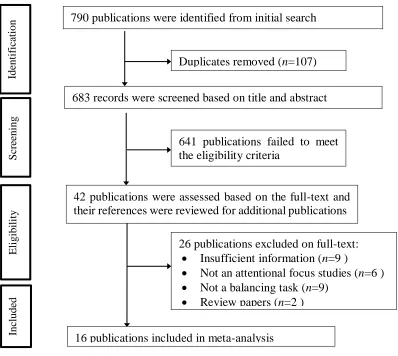
Sixteen published studies between 1998 and 2014 were included in the meta-analysis. After screening 683 publications based on title and abstract, 42 publications were assessed based on the full-text. A flow diagram that depicts the search process is shown in Figure 1 while a list of excluded studies is shown in Appendix 1. Across all studies and categories, the risk of bias was M ± SD = 1.73 ± 0.45.
Figure 1. Flowchart of the studies selection
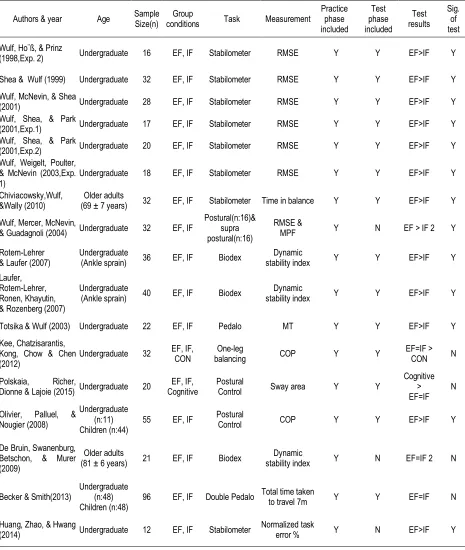
Table 1 presents the main characteristics of the studies included in the meta-analysis along with the age, sample size, experimental group conditions (EF, IF, and control), type of task, type of measurement, and statistical significance of the individual studies’ outcome(s).
790 publications were identified from initial search
Duplicates removed (n=107)
641 publications failed to meet the eligibility criteria
42 publications were assessed based on the full-text and their references were reviewed for additional publications
26 publications excluded on full-text: • Insufficient information (n=9 )
• Not an attentional focus studies (n=6 ) • Not a balancing task (n=9)
• Review papers (n=2 )
16 publications included in meta-analysis
683 records were screened based on title and abstract
Ide
nt
if
ic
at
ion
S
cr
ee
ni
ng
Eli
gi
bi
li
ty
Inc
lude
468 | 2017 | ISSUE 2 | VOLUME 12 © 2017 University of Alicante Table 1. Main Characteristics of Studies Included in the Meta-Analyses on Attentional Focus of a Balance Task
Authors & year Age Sample Size(n) conditions Group Task Measurement Practice phase included Test phase included Test results Sig. of test Wulf, Ho¨ß, & Prinz
(1998,Exp. 2) Undergraduate 16 EF, IF Stabilometer RMSE Y Y EF>IF Y Shea & Wulf (1999) Undergraduate 32 EF, IF Stabilometer RMSE Y Y EF>IF Y Wulf, McNevin, & Shea
(2001) Undergraduate 28 EF, IF Stabilometer RMSE Y Y EF>IF Y Wulf, Shea, & Park
(2001,Exp.1) Undergraduate 17 EF, IF Stabilometer RMSE Y Y EF>IF Y Wulf, Shea, & Park
(2001,Exp.2) Undergraduate 20 EF, IF Stabilometer RMSE Y Y EF>IF Y Wulf, Weigelt, Poulter,
& McNevin (2003,Exp.
1) Undergraduate 18 EF, IF Stabilometer RMSE Y Y EF>IF Y Chiviacowsky,Wulf,
&Wally (2010) (69 ± 7 years) Older adults 32 EF, IF Stabilometer Time in balance Y Y EF>IF Y Wulf, Mercer, McNevin,
& Guadagnoli (2004) Undergraduate 32 EF, IF
Postural(n:16)& supra postural(n:16)
RMSE &
MPF Y N EF > IF 2 Y Rotem-Lehrer
& Laufer (2007) Undergraduate (Ankle sprain) 36 EF, IF Biodex stability index Dynamic Y Y EF>IF Y Laufer,
Rotem-Lehrer, Ronen, Khayutin, & Rozenberg (2007)
Undergraduate
(Ankle sprain) 40 EF, IF Biodex stability index Dynamic Y Y EF>IF Y Totsika & Wulf (2003) Undergraduate 22 EF, IF Pedalo MT Y Y EF>IF Y Kee, Chatzisarantis,
Kong, Chow & Chen
(2012) Undergraduate 32
EF, IF,
CON balancing One-leg COP Y Y EF=IF > CON N Polskaia, Richer,
Dionne & Lajoie (2015) Undergraduate 20 Cognitive EF, IF, Postural Control Sway area Y Y
Cognitive >
EF=IF N Olivier, Palluel, &
Nougier (2008)
Undergraduate (n:11)
Children (n:44) 55 EF, IF
Postural
Control COP Y Y EF>IF Y
De Bruin, Swanenburg, Betschon, & Murer (2009)
Older adults
(81 ± 6 years) 21 EF, IF Biodex stability index Dynamic Y N EF=IF 2 N Becker & Smith(2013) Undergraduate (n:48)
Children (n:48) 96 EF, IF Double Pedalo
Total time taken
to travel 7m Y Y EF=IF N Huang, Zhao, & Hwang
(2014) Undergraduate 12 EF, IF Stabilometer Normalized task error % Y N EF>IF Y Overall Effect Size: External Focus versus Internal Focus
VOLUME 12 | ISSUE 1 | 2017 | 469
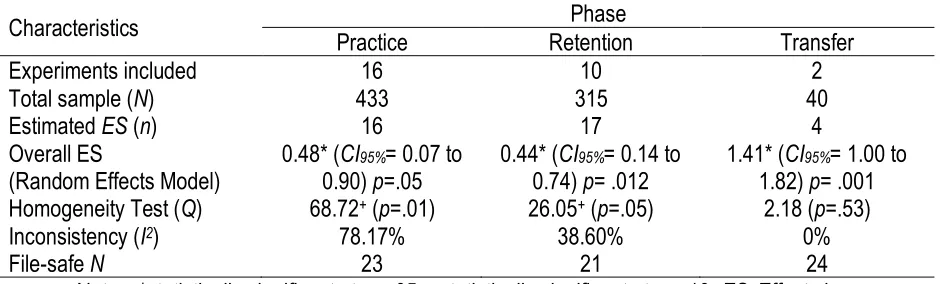
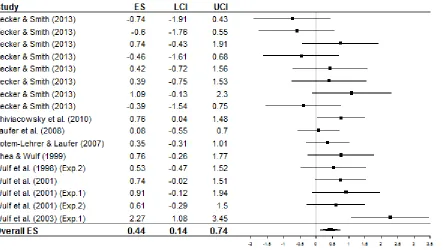
0.48, n= 16, CI95%= 0.07 to 0.90, p= 0.05), retention, (ES= 0.44, n= 17, CI95%= 0.14 to 0.74, p= 0.01), and transfer phases (ES= 1.41, n= 4; CI95%= 1.00 to 1.82, p= 0.001). One-way ANOVA indicated that there was not a statistically significant difference between the overall ES for each phase (F(2, 34)= 1.790; p= .182). Figures 2, 3, and 4 show the study-level results for the practice, retention and transfer phases, respectively.
Table 2. Summary Results from Statistical Analyses for the Included Studies
Characteristics Practice Retention Phase Transfer
Experiments included 16 10 2
Total sample (N) 433 315 40
Estimated ES (n) 16 17 4
Overall ES
(Random Effects Model) 0.48* (CI
95%= 0.07 to
0.90) p=.05 0.44* (CI
95%= 0.14 to
0.74) p= .012 1.41* (CI
95%= 1.00 to
1.82) p= .001 Homogeneity Test (Q) 68.72+ (p=.01) 26.05+ (p=.05) 2.18 (p=.53)
Inconsistency (I2) 78.17% 38.60% 0%
File-safe N 23 21 24
Notes: *statistically significant at p< .05; + statistically significant at p< .10; ES, Effect size.
Heterogeneity: Q= 68.72 (p=.001) Favors IF Favors EF
470 | 2017 | ISSUE 2 | VOLUME 12 © 2017 University of Alicante Figure 3. Forest plot showing ES with 95% confidence interval for retention phase. Note: ES= Effect Size; LCI= Lower Confidence Interval; UCI= Upper Confidence Interval; IF= Internal Focus; EF= External Focus. Becker & Smith (2013) included several subgroups.
Heterogeneity: Q = 2.18 (p = .53) Favors IF Favors EF
Figure 4. Forest plot showing ES with 95% confidence interval for transfer phase. Note: ES= Effect Size; LCI= Lower Confidence Interval; UCI= Upper Confidence Interval; IF= Internal Focus; EF= External Focus.
When a single study report data for several cohorts of participants, the overall ES can be estimated using each group as unit of analysis (as results presented above); or each study can be average in one ES, and estimate the overall ES using each study as unit of analysis (Borenstein et al., 2009). We performed both analyses, to assess if a violation of the assumption of independent and identically distributed data was present. For these second analysis results suggests that the EF condition was superior to the IF condition in the practice (ES= 0.47, n= 15, CI95%= 0.03 to 0.91, p= 0.05), retention, (ES= 0.61, n= 10, CI95%= 0.29 to 0.74, p= 0.01), and transfer phases (ES= 1.45, n= 2; CI95%= 0.85 to 2.06, p= 0.001).
VOLUME 12 | ISSUE 1 | 2017 | 471
Heterogeneity
There was evidence of statistically significant heterogeneity for the practice phase (Q= 68.72, p=.01) as well as a large amount of inconsistency (I2 =78.17%). Heterogeneity during the retention phase was also
statistically significant (Q= 26.05, p= .05) but low inconsistency was observed (I2 = 38.6%). No statistically
significant heterogeneity (Q= 2.18, p=.53) or inconsistency (I2 = 0%) were observed during the transfer phase.
Small-Study Effects and Fail-Safe Analysis
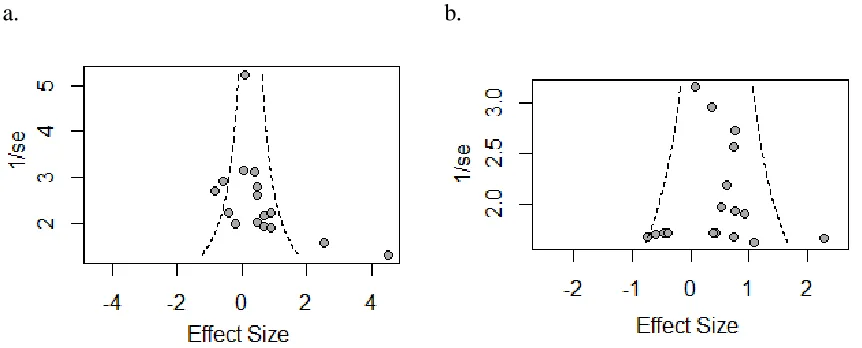
For the practice phase, potential small-study effects were observed as indicated by both funnel plot asymmetry (Figure 5) and Egger’s regression test bias (p= .03). For the transfer phase, potential small-study
effects were not observed as indicated by both funnel plot symmetry (Figure 5) and Egger’s regression test bias (p= .96). Potential small-study effects were not analyzed in the transfer phase due to the small amount of ES. The Fail-safe N calculation revealed that for the practice phase, 23 non-significant ES are needed to obtain a small (ES= 0.20), non-significant overall ES. In other words, a change in ES from moderate to small. For the retention and transfer phases, 21 and 24 non-significant ES would be needed to obtain a small overall ES, respectively.
a. b.
Figure 5. a. Funnel plot shows potential small-study effects (publication bias, etc.). Egger’s regression test
indicates potential small-study effect (t = 2.46, df = 14, p = 0.03) for practice phase. b. Funnel plot shows no potential small-study effects. Egger’s regression test indicates no potential small-study effect (t = 0.0.45, df = 15, p = 0.96) for retention phase. Note: 1/se = inverse of the standard error of the ES (precision).
Moderator Variables Practice phase.
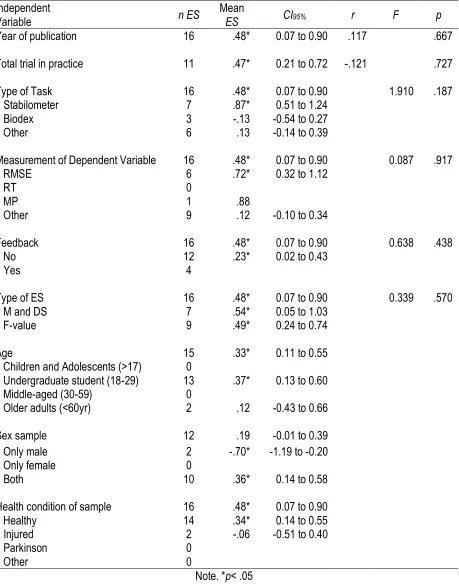
472 | 2017 | ISSUE 2 | VOLUME 12 © 2017 University of Alicante Table 3. Statistical Analysis for Each Independent Variable for Practice Phase
Independent
Variable n ES Mean ES CI95% r F p
Year of publication 16 .48* 0.07 to 0.90 .117 .667
Total trial in practice 11 .47* 0.21 to 0.72 -.121 .727
Type of Task 16 .48* 0.07 to 0.90 1.910 .187
Stabilometer 7 .87* 0.51 to 1.24
Biodex 3 -.13 -0.54 to 0.27
Other 6 .13 -0.14 to 0.39
Measurement of Dependent Variable 16 .48* 0.07 to 0.90 0.087 .917
RMSE 6 .72* 0.32 to 1.12
RT 0
MP 1 .88
Other 9 .12 -0.10 to 0.34
Feedback 16 .48* 0.07 to 0.90 0.638 .438
No 12 .23* 0.02 to 0.43
Yes 4
Type of ES 16 .48* 0.07 to 0.90 0.339 .570
M and DS 7 .54* 0.05 to 1.03
F-value 9 .49* 0.24 to 0.74
Age 15 .33* 0.11 to 0.55
Children and Adolescents (>17) 0
Undergraduate student (18-29) 13 .37* 0.13 to 0.60
Middle-aged (30-59) 0
Older adults (<60yr) 2 .12 -0.43 to 0.66
Sex sample 12 .19 -0.01 to 0.39
Only male 2 -.70* -1.19 to -0.20
Only female 0
Both 10 .36* 0.14 to 0.58
Health condition of sample 16 .48* 0.07 to 0.90
Healthy 14 .34* 0.14 to 0.55
Injured 2 -.06 -0.51 to 0.40
Parkinson 0
Other 0
Note. *p< .05
Retention phase
VOLUME 12 | ISSUE 1 | 2017 | 473
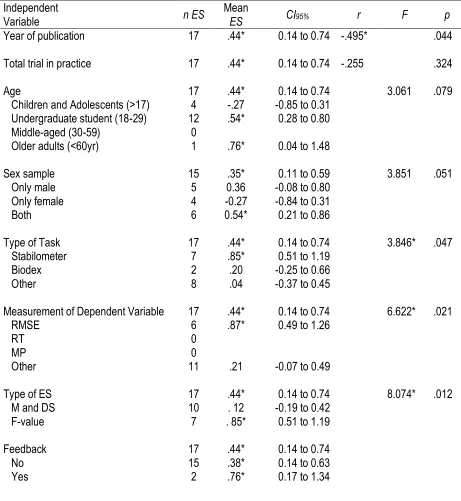
and year of publication (n= 17, r= -.495, p= .044), suggesting smaller effects with more recent studies. In addition, the type of task was shown to moderate the effect on balancing tasks (F(2,15)= 3.846, p= .047). When the task consisted of using a stabilometer (n= 7) the difference was greater when compared to using other methods (n= 8). However, both categories demonstrated that EF was better than IF. Furthermore, the way that the dependent variable was measured (F(1,16)= 6.622, p= .021) suggested that when the variable was measured using the RMSE (n= 6), the difference between EF and IF was greater than when measured using other methods (n= 11). However, both methods demonstrated that EF was better than IF. The type of ES (F(1,16)= 8.074, p= .012) indicated that when the ES was calculated by F-value (n= 7), the difference between EF and IF was greater than when calculated with M and SD (n= 10); but in both types EF better than IF.
Table 4. Statistical Analysis for Each Independent Variable for Retention Phase Independent
Variable n ES Mean ES CI95% r F p
Year of publication 17 .44* 0.14 to 0.74 -.495* .044
Total trial in practice 17 .44* 0.14 to 0.74 -.255 .324
Age 17 .44* 0.14 to 0.74 3.061 .079
Children and Adolescents (>17) 4 -.27 -0.85 to 0.31 Undergraduate student (18-29) 12 .54* 0.28 to 0.80
Middle-aged (30-59) 0
Older adults (<60yr) 1 .76* 0.04 to 1.48
Sex sample 15 .35* 0.11 to 0.59 3.851 .051
Only male 5 0.36 -0.08 to 0.80
Only female 4 -0.27 -0.84 to 0.31
Both 6 0.54* 0.21 to 0.86
Type of Task 17 .44* 0.14 to 0.74 3.846* .047
Stabilometer 7 .85* 0.51 to 1.19
Biodex 2 .20 -0.25 to 0.66
Other 8 .04 -0.37 to 0.45
Measurement of Dependent Variable 17 .44* 0.14 to 0.74 6.622* .021
RMSE 6 .87* 0.49 to 1.26
RT 0
MP 0
Other 11 .21 -0.07 to 0.49
Type of ES 17 .44* 0.14 to 0.74 8.074* .012
M and DS 10 . 12 -0.19 to 0.42
F-value 7 . 85* 0.51 to 1.19
Feedback 17 .44* 0.14 to 0.74
No 15 .38* 0.14 to 0.63
Yes 2 .76* 0.17 to 1.34
474 | 2017 | ISSUE 2 | VOLUME 12 © 2017 University of Alicante Health condition of sample 17 .44* 0.14 to 0.74
Healthy 15 .52 0.25 to 0.78
Injured 2 .20 -0.25 to 0.66
Parkinson 0
Other 0
Note. *p< .05
Transfer phase
Due to the small number of ES (n= 4) moderator analyses were not performed.
DISCUSSION AND CONCLUSIONS
To the best of our knowledge, this is the first meta-analysis to examine the effects of external and internal focus on balance during the practice, retention, and transfer phases. Our results suggest that external focus can be more beneficial than internal focus for improving balancing performance during all phases. Thus, providing cues to participants to direct their attention away from their movement appears to enhance performance more so then directing their attention to their movement.
Similar to our findings, a recent short review of attentional focus and balance showed that 83.3% of the studies concluded that external focus, when compare to internal focus, resulted in better performance (Park, et al., 2015). In addition, several studies have reported that instructions that induced external focus resulted in better performance than instructions that induced internal focus on a balancing task (Becker & Smith, 2013; Shea & Wulf, 1999; Rotem-Lehrer & Laufer, 2007; Totsika & Wulf, 2003). The present findings appear to be clear for the practice and retention phase, as stated by Wulf, McNevis and Shea (2001). However, additional research is needed for the transfer phase.
While external focus, overall, seems to be better than internal focus, results may vary according to specific conditions (Park, et al., 2015). Our moderator analyses suggest that the type of task, measurement of the dependent variable, year of publication, and type of ES estimated may affect results during the retention phase. In contrast, no moderator variables analyses were statistically significant during the practice phase. When balance was assessed with a stabiliometer, benefits from external focus were greater than when assessed with Biodex or other types of methods. In addition, when balance was measured with RMSE, external focus results were greater than when measured with other techniques.
Furthermore, year of publication seemed to influence the effects of external focus, suggesting a negative relationship. Finally, when the ES was estimated from the M and SD, there was no difference between internal and external focus. However, when estimated from F-values, external focus was superior to internal focus.
Implication for practice
VOLUME 12 | ISSUE 1 | 2017 | 475
Implication for research
Based on our included studies, there are areas on attentional focus that need to be clarified, especially
considering the lack of information available for our moderator analyses (feedback, learners’ health condition,
time for the retention test). In addition, researchers should report detailed information for the protocol used, for moderator analyses, and include descriptive data (M, SD, and n), for records to be included in a meta-analysis. As a result, a greater number of eligible studies can be included in meta-analysis, thus resulting in more reliable conclusions.
Strengths and limitations
The major strength of the current meta-analysis is that it appears to be the first to compare external and internal focus of attention during the practice, retention and transfer phases in balancing tasks. Previous systematics reviews (without meta-analysis) of focus of attention in motor performance and balance task have been performed (Park, et al., 2015; Wulf, 2013). However, considering the limitations of systematic reviews without meta-analysis, the overall ES estimated in the current study provided more objective, quantitative data regarding the beneficial effects of external focus over internal focus during the practice, retention and transfer phases. A second potential strength is that the analysis of moderator variables can help practitioners to better understand the influence of different factors on attentional focus.
There are several potential limitations to this meta-analysis. First, several studies were excluded because they did not report sufficient data for the calculation of an ES. Thus, the results of the current study may not be representative of the entire body of literature. Second, we cannot confirm if IF or EF practice improved performance in balancing tasks give the lack of a comparison group, therefore we can only suggest which attentional focus was better.
In conclusion, the overall results showed that external focus group had better performance in balance task compared to the internal focus group in acquisition, retention and transfer phases.
REFERENCES
References preceded by an asterisk were included in the meta-analysis.
1. Al-Abood, S. A., Bennett, S. J., Hernandez, F. M., Ashford, D., & Davids, K. (2002). Effect of verbal instructions and image size on visual search strategies in basketball free throw shooting. Journal of Sports Sciences, 20(3), 271-278. http://dx.doi.org/10.1080/026404102317284817
2. *Becker, K., & Smith, P. J. (2013). Age, task complexity, and sex as potential moderators of attentional focus effects. Perceptual Motor Skills, 117, 1172-1186. http://dx.doi.org/10.2466/23.25.pms.117x14z3
3. Bell, J. J., & Hardy, J. (2009). Effects of attentional focus on skilled performance in golf. Journal of Applied Sport Psychology, 21(2), 163-177. http://dx.doi.org/10.1080/10413200902795323
4. Borenstein, M., Hedges, L. V., Higgins, J. P., & Rothstein, H. R. (2009). Introduction to meta-analysis. United Kingdom: John Wiley & Sons.
5. Bressel, E., Yonker, J. C., Kras, J., & Heath, E. M. (2007). Comparison of static and dynamic balance in female collegiate soccer, basketball, and gymnastics athletes. Journal of Athletic Training, 42(1), 42.
476 | 2017 | ISSUE 2 | VOLUME 12 © 2017 University of Alicante 7. *Chiviacowsky, S., Wulf, G., & Wally, R. (2010). An external focus of attention enhances balance
learning in older adults. Gait & Posture, 32(4), 572-575. http://dx.doi.org/10.1016/j.gaitpost.2010.08.004
8. *De Bruin, E. D., Swanenburg, J., Betschon, E., & Murer, K. (2009). A randomised controlled trial investigating motor skill training as a function of attentional focus in old age. BMC Geriatrics, 9(1), 15. http://dx.doi.org/10.1186/1471-2318-9-15
9. Giagazoglou, P., Kokaridas, D., Sidiropoulou, M., Patsiaouras, A., Karra, C., & Neofotistou, K. (2013). Effects of a trampoline exercise intervention on motor performance and balance ability of children with intellectual disabilities. Research in Developmental Disabilities, 34(9), 2701-2707. http://dx.doi.org/10.1016/j.ridd.2013.05.034
10. Horlings, C. G., van Engelen, B. G., Allum, J. H., & Bloem, B. R. (2008). A weak balance: the contribution of muscle weakness to postural instability and falls. Nature Clinical Practice Neurology, 4(9), 504-515. http://dx.doi.org/10.1038/ncpneuro0886
11. Hrysomallis, C. (2007). Relationship between balance ability, training and sports injury risk. Sports Medicine, 37(6), 547-556. http://dx.doi.org/10.2165/00007256-200737060-00007
12. *Huang, C. Y., Zhao, C. G., & Hwang, S. (2014). Neural basis of postural focus effect on concurrent postural and motor tasks: phase-locked electroencephalogram responses. Behavioural Brain Research, 274, 95-107. http://dx.doi.org/10.1016/j.bbr.2014.07.054
13. *Kee, Y. H., Chatzisarantis, N., Kong, V. P. W., Chow, J. Y., & Chen, L. H. (2012). Mindfulness, movement control, and attentional focus strategies: effects of mindfulness on a postural balance task. Journal of Sport and Exercise Psychology, 34(5), 561-579. http://dx.doi.org/10.1123/jsep.34.5.561
14. *Laufer, Y., Rotem-Lehrer, N., Ronen, Z., Khayutin, G., & Rozenberg, I. (2007). Effect of attention focus on acquisition and retention of postural control following ankle sprain. Archives of Physical Medicine and Rehabilitation, 88(1), 105-108. http://dx.doi.org/10.1016/j.apmr.2006.10.028
15. Liberati, A., Altman, D. G., Tetzlaff, J., Mulrow, C., Gøtzsche, P. C., Ioannidis, J. P. A., … Moher, D. (2009). The PRISMA statement for reporting systematic reviews and meta-analyses of studies that evaluate healthcare interventions: explanation and elaboration. BMJ, 339, b2700. http://doi.org/10.1136/bmj.b2700
16. Maddox, M., Wulf, G., & Wright, D. (1999). The effect of an internal vs. external focus of attention on the learning of a tennis stroke. Journal of Sport and Exercise Psychology, 21, 78.
17. Mazzardo Jr, O. (2004). Contextual Interference: Is it supported across studies? (Master's Thesis). University of Pittsburgh, PA.
18. McNevin, N., Weir, P., & Quinn, T. (2013). Effects of attentional focus and age on suprapostural task performance and postural control. Research Quarterly for Exercise and Sport, 84(1), 96-103. http://dx.doi.org/10.1080/02701367.2013.762321
19. McNevin, N. H., Shea, C. H., & Wulf, G. (2003). Increasing the distance of an external focus of attention enhances learning. Psychological Research, 67(1), 22-29.
20. Meyer, G., & Ayalon, M. (2006). Biomechanical aspects of dynamic stability. European Review of Aging and Physical Activity, 3(1), 29-33. http://dx.doi.org/10.1007/s11556-006-0006-6
21. *Olivier, I., Palluel, E., & Nougier, V. (2008). Effects of attentional focus on postural sway in children and adults. Experimental Brain Research, 185(2), 341-345. http://dx.doi.org/10.1007/s00221-008-1271-6
22. Orwin, R. G. (1983). A fail-safe N for effect size in meta-analysis. Journal of Educational Statistics, 157–159. http://dx.doi.org/10.2307/1164923
VOLUME 12 | ISSUE 1 | 2017 | 477
aged 63–76 years. The Journals of Gerontology Series A: Biological Sciences and Medical Sciences, 63(2), 171-178. http://dx.doi.org/10.1093/gerona/63.2.171
24. Park, S. H., Yi, C. W., Shin, J. Y., & Ryu, Y. U. (2015). Effects of external focus of attention on balance: a short review. Journal of Physical Therapy Science, 27(12), 3929. http://dx.doi.org/10.1589/jpts.27.3929
25. Peh, S. Y.-C., Chow, J. Y., & Davids, K. (2011). Focus of attention and its impact on movement behaviour. Journal of Science and Medicine in Sport, 14(1), 70-78. http://dx.doi.org/10.1016/j.jsams.2010.07.002
26. *Rotem-Lehrer, N., & Laufer, Y. (2007). Effect of focus of attention on transfer of a postural control task following an ankle sprain. Journal of Orthopaedic & Sports Physical Therapy, 37(9), 564-569. http://dx.doi.org/10.2519/jospt.2007.2519
27. *Polskaia, N., Richer, N., Dionne, E., & Lajoie, Y. (2015). Continuous cognitive task promotes greater postural stability than an internal or external focus of attention. Gait & Posture, 41(2), 454-458. http://dx.doi.org/10.1016/j.gaitpost.2014.11.009
28. Sacks, H. S., Berrier, J., Reitman, D., Ancona-Berk, V. A., & Chalmers, T. C. (1987). Meta-analyses of randomized controlled trials. New England Journal of Medicine, 316(8), 450-455. http://dx.doi.org/10.1056/nejm198702193160806
29. *Shea, C. H., & Wulf, G. (1999). Enhancing motor learning through external-focus instructions and feedback. Human Movement Science, 18(4), 553-571. http://dx.doi.org/10.1016/s0167-9457(99)00031-7
30. Thomas, J. R., & French, K. E. (1986). The use of meta-analysis in exercise and sport: A tutorial.
Research Quarterly for Exercise and Sport, 57(3), 196-204.
http://dx.doi.org/10.1080/02701367.1986.10605397
31. *Totsika, V., & Wulf, G. (2003). The influence of external and internal foci of attention on transfer to novel situations and skills. Research Quarterly for Exercise and Sport, 74(2), 220-232. http://dx.doi.org/10.1080/02701367.2003.10609084
32. Tsigilis, N., Zachopoulou, E., & Mavridis, T. (2001). Evaluation of the Specificity of Selected Dynamic Balance Tests. Perceptual and Motor Skills, 92(3), 827–833. https://doi.org/10.2466/pms.2001.92.3.827
33. Winter, D. A. (1995). Human balance and posture control during standing and walking. Gait & Posture, 3(4), 193-214. http://dx.doi.org/10.1016/0966-6362(96)82849-9
34. Wulf, G. (2008). Attentional focus effects in balance acrobats. Research Quarterly for Exercise and Sport, 79(3), 319-325. http://dx.doi.org/10.1080/02701367.2008.10599495
35. Wulf, G. (2013). Attentional focus and motor learning: A review of 15 years. International Review of Sport and Exercise Psychology, 6(1), 77-104. http://dx.doi.org/10.1080/1750984x.2012.723728 36. *Wulf, G., Höß, M., & Prinz, W. (1998). Instructions for motor learning: Differential effects of internal
versus external focus of attention. Journal of Motor Behavior, 30(2), 169-179. http://dx.doi.org/10.1080/00222899809601334
37. Wulf, G., & McNevin, N. (2003). Simply distracting learners is not enough: More evidence for the learning benefits of an external focus of attention. European Journal of Sport Science, 3(5), 1-13. http://dx.doi.org/10.1080/17461390300073501
38. *Wulf, G., McNevin, N., & Shea, C. H. (2001). The automaticity of complex motor skill learning as a function of attentional focus. The Quarterly Journal of Experimental Psychology: Section A, 54(4), 1143-1154. http://dx.doi.org/10.1080/713756012
478 | 2017 | ISSUE 2 | VOLUME 12 © 2017 University of Alicante 40. Wulf, G., Shea, C., & Lewthwaite, R. (2010). Motor skill learning and performance: A review of
influential factors. Medical Education, 44(1), 75-84. http://dx.doi.org/10.1111/j.1365-2923.2009.03421.x
41. *Wulf, G., Shea, C., & Park, J.-H. (2001). Attention and motor performance: Preferences for and advantages of an external focus. Research Quarterly for Exercise and Sport, 72(4), 335-344. http://dx.doi.org/10.1080/02701367.2001.10608970
42. Wulf, G., & Su, J. (2007). An external focus of attention enhances golf shot accuracy in beginners and experts. Research Quarterly for Exercise and Sport, 78(4), 384-389. http://dx.doi.org/10.5641/193250307x13082505158336
43. *Wulf, G., Weigelt, M., Poulter, D., & McNevin, N. (2003). Attentional focus on suprapostural tasks affects balance learning. The Quarterly Journal of Experimental Psychology: Section A, 56(7), 1191-1211. http://dx.doi.org/10.1080/02724980343000062
44. Zachry, T.L., Wulf, G., Mercer, J., & Bezodis, N. (2005). Increased movement accuracy and reduced EMG activity as the result of adopting an external focus of attention. Brain Research Bulletin, 67(4), 304-309. http://dx.doi.org/10.1016/j.brainresbull.2005.06.035
45. Zachry, T. L. (2005). Effects of attentional focus on kinematics and muscle activation patterns as a function of expertise. University of Nevada, Las Vegas.
Appendix 1. List of Excluded Studies
Reference Reason
Boisgontier, M. P., Beets, I. A., Duysens, J., Nieuwboer, A., Krampe, R. T., & Swinnen, S. P. (2013). Age-related differences in attentional cost associated with postural dual tasks: increased recruitment of generic cognitive resources in older adults. Neuroscience & Biobehavioral
Reviews,37(8), 1824-1837.
4
Chiviacowsky, S., Wulf, G., Lewthwaite, R., & Campos, T. (2012). Motor learning benefits of
self-controlled practice in persons with Parkinson's disease. Gait & Posture, 35(4), 601-605. 3
Cluff, T., Gharib, T., & Balasubramaniam, R. (2010). Attentional influences on the performance
of secondary physical tasks during posture control. Experimental brain research, 203(4),
647-658.
3
Flores, F. S., Gomes Schild, J. F., & Chiviacowsky, S. (2015). Benefits of external focus instructions on the learning of a balance task in children of different ages. International Journal
of Sport Psychology, 46(4), 311-320.
1
Jackson, B. H., & Holmes, A. M. (2011). The effects of focus of attention and task objective
consistency on learning a balancing task. Research Quarterly for Exercise and Sport, 82(3),
574-579.
1
James, E. G. (2012). Body movement instructions facilitate synergy level motor learning,
retention and transfer. Neuroscience letters, 522(2), 162-166. 2
Kakar, C., Zia, N., Sehgal, S., & Khushwaha, S. (2013). Effect of external and internal focus of attention on acquisition, retention, and transfer phase of motor learning in Parkinson's
disease. Hong Kong Physiotherapy Journal,31(2), 88-94.
2
Kal, E. C., Van der Kamp, J., & Houdijk, H. (2013). External attentional focus enhances
movement automatization: A comprehensive test of the constrained action hypothesis. Human
Movement Science, 32(4), 527-539.
2
Landers, M., Wulf, G., Wallmann, H., & Guadagnoli, M. (2005). An external focus of attention attenuates balance impairment in patients with Parkinson's disease who have a fall history. Physiotherapy, 91(3), 152-158.
VOLUME 12 | ISSUE 1 | 2017 | 479
Lohse, K. R., Sherwood, D. E., & Healy, A. F. (2014). On the advantage of an external focus of
attention: a benefit to learning or performance? Human movement science, 33, 120-134. 2
Lohse, K. R. (2012). The influence of attention on learning and performance: Pre-movement
time and accuracy in an isometric force production task.Human Movement Science, 31(1),
12-25.
2
Lohse, K. R., & Sherwood, D. E. (2012). Thinking about muscles: The neuromuscular effects of
attentional focus on accuracy and fatigue. Acta psychologica, 140(3), 236-245. 2
McNevin, N. H., & Wulf, G. (2002). Attentional focus on supra-postural tasks affects postural
control. Human movement science, 21(2), 187-202. 1
McNevin, N. H., Shea, C. H., & Wulf, G. (2003). Increasing the distance of an external focus of
attention enhances learning. Psychological research,67(1), 22-29. 1
McNevin, N., Weir, P., & Quinn, T. (2013). Effects of attentional focus and age on suprapostural
task performance and postural control. Research quarterly for exercise and sport, 84(1),
96-103.
1
Nafati, G., & Vuillerme, N. (2011). Decreasing internal focus of attention improves postural control during quiet standing in young healthy adults.Research quarterly for exercise and
sport, 82(4), 634-643.
3
Orrell, A. J., Eves, F. F., & Masters, R. S. W. (2006). Implicit motor learning of a balancing
task. Gait & posture, 23(1), 9-16. 3
Peh, S. Y. C., Chow, J. Y., & Davids, K. (2011). Focus of attention and its impact on movement
behaviour. Journal of Science and Medicine in Sport, 14(1), 70-78. 4
Remaud, A., Boyas, S., Lajoie, Y., & Bilodeau, M. (2013). Attentional focus influences postural control and reaction time performances only during challenging dual-task conditions in healthy
young adults. Experimental brain research, 231(2), 219-229.
3
Shafizadeh, M., Platt, G. K., & Mohammadi, B. (2013). Effects of different focus of attention
rehabilitative training on gait performance in Multiple Sclerosis patients. Journal of bodywork
and movement therapies, 17(1), 28-34.
2
Wulf, G., Töllner, T., & Shea, C. H. (2007). Attentional focus effects as a function of task
difficulty. Research Quarterly for Exercise and Sport, 78(3), 257-264. 1
Wulf, G. (2008). Attentional focus effects in balance acrobats. Research Quarterly for Exercise
and Sport, 79(3), 319-325. 1
Wulf, G., Landers, M., Lewthwaite, R., & Töllner, T. (2009). External focus instructions reduce
postural instability in individuals with Parkinson disease.Physical therapy, 89(2), 162-168. 1
Wulf, G., & Lewthwaite, R. (2009). Conceptions of ability affect motor learning. Journal of Motor
Behavior, 41(5), 461-467. 3
Zachry, T., Wulf, G., Mercer, J., & Bezodis, N. (2005). Increased movement accuracy and
reduced EMG activity as the result of adopting an external focus of attention. Brain Research
Bulletin, 67(4), 304-309.
2
Zentgraf, K., & Munzert, J. (2009). Effects of attentional-focus instructions on movement
kinematics. Psychology of Sport and Exercise, 10(5), 520-525. 2