1535-9778/07/$08.00
⫹
0
doi:10.1128/EC.00414-06
Copyright © 2007, American Society for Microbiology. All Rights Reserved.
Development of a Highly Efficient Gene Targeting System Induced by
Transient Repression of
YKU80
Expression in
Candida glabrata
䌤
†
Keigo Ueno,
1Jun Uno,
1Hironobu Nakayama,
2Kaname Sasamoto,
1Yuzuru Mikami,
1and Hiroji Chibana
1*
Research Center for Pathogenic Fungi and Microbial Toxicoses, Chiba University, 1-8-1 Inohana, Chuo-ku, Chiba 260-8673,
Japan,
1and Suzuka National College of Technology, Shiroko, Suzuka, Mie 510-0294, Japan
2Received 30 December 2006/Accepted 4 May 2007
In the pathogenic yeast
Candida glabrata
, gene targeting to generate knockouts and “knockins” is a
poten-tially powerful method for the analysis of gene function. Its importance increased after the
C. glabrata
genome
sequence project, but progress in the field is hampered by inefficient mechanisms for gene targeting. With the
use of 40-bp homologous flanking DNA, no gene targeting was identified. To address this issue,
YKU80
was
disrupted, leading to an increase in targeting efficiency of 5.1% using 40-bp flanking homologous DNA. To
harness the beneficial effects of
YKU80
inactivation on gene targeting frequency without incurring any negative
effects, such as synthetic sickness or lethality, we developed a new system whereby the expression of
YKU80
was
restored following a transient knockdown of expression during transformation. Strains used for this new
system carried a
SAT1
flipper in the
YKU80
promoter region, which was used to repress expression during
transformation but was spontaneously excised from the locus after the transformation. By using this strain,
DNA damage induced by methyl methane sulfonate, H
2O
2, UV irradiation, and hydroxyurea before and during
gene targeting was evaluated and the mutation rate of
URA3
was determined. No significant effects of the
SAT1
flipper on these processes have been identified. After the
SAT1
flipper is excised, a 34-bp FLP recombination
target sequence is left in the promoter region. However, the levels of mRNA transcription were restored and
no difference in the survival ratio in vivo compared to that with the
YKU80
wild-type strain was identified.
The incidence of opportunistic fungal infection has been
increasing, particularly in patients who are
immunocompro-mised by human immunodeficiency virus infection or leukemia
or who are receiving immunosuppressive therapy for organ
transplantation or chemotherapy for cancer. Systemic fungal
infections in such patients are often life threatening.
Candida
albicans
and
Candida glabrata
are among the opportunistic
pathogenic fungi that cause candidiasis (7).
C. albicans
remains
the most commonly encountered species in clinical practice but
other species (non-
C. albicans
species), such as
C. glabrata
,
now cause significant levels of disease (35). In one study,
C.
glabrata
was the second most commonly documented species,
isolated from up to 20% of all candidiasis patients (31). It is
known that
C. glabrata
has a low susceptibility to fluconazole,
which is the first drug administered in clinical situations (12);
thus, candidiasis caused by
C. glabrata
is associated with high
mortality (17). Despite this increase in incidence, little is
known about the molecular basis of
C. glabrata
virulence in
contrast to that of
C. albicans
.
C. glabrata
offers some advantages for the study of fungal
pathogenesis. It is more closely related to
Saccharomyces
cer-evisiae
than to
C. albicans
(2, 12), suggesting that more of the
wealth of information accumulated by decades of study of
S.
cerevisiae
might be transferable to
C. glabrata
.
C. glabrata
is a
haploid fungus, whereas
C. albicans
is diploid, making gene
targeting in
C. albicans
at least twice as difficult as that in
C.
glabrata
(4). The whole genome sequence of
C. glabrata
has
been completed, thus allowing the comprehensive
identifica-tion of all genes (10). Taking these attributes together,
C.
glabrata
has now come of age as a feasible model organism for
the genome-wide study of pathogenicity in fungi and for the
identification of antifungal drug targets.
Gene targeting is one of the most important approaches for
analysis of gene function. Genome-wide functional analyses
are facilitated by efficient gene targeting using constructs
flanked at each end with short homologous sequences, the
lengths of which are typically 40 to 60 bp. These short
homol-ogous sequences can be easily produced by single-step PCR
using a pair of oligonucleotide DNA primers containing
ho-mologous flanking sequences. However, targeted integration
with short homologous sequences is relatively inefficient in
C.
glabrata
, a characteristic it shares with higher eukaryotes and
most fungi except
S. cerevisiae
(8, 22, 28, 40).
S. cerevisiae
has
highly efficient gene targeting, with exogenous DNA fragments
correctly integrated into the targeted locus with an efficiency
close to 100% and requiring only short target sequences of 40
bp in length (3, 40). As a consequence, a complete set of gene
knockout strains of
S. cerevisiae
has been successfully
con-structed (13).
The targeted integration of a DNA fragment requires
ho-mologous recombination, which is one of the repair
mecha-nisms for DNA double-strand breaks (DSB). Nonhomologous
end joining (NHEJ) is another mechanism of DSB repair, but
it does not require such homologous DNA sequences (9, 30).
We observed that in
C. glabrata
, NHEJ seems to predominate
* Corresponding author. Mailing address: Research Center for
Pathogenic Fungi and Microbial Toxicoses, Chiba University, 1-8-1
Inohana, Chuo-ku, Chiba 260-8673, Japan. Phone: 81-43-226-2792.
Fax: 81-43-226-2486. E-mail: [email protected].
† Supplemental material for this article may be found at http://ec
.asm.org/.
䌤
Published ahead of print on 18 May 2007.
1239
on September 8, 2020 by guest
http://ec.asm.org/
at integration events involving DNA fragments with flanking
short homologous sequences. Therefore, we reasoned that if
the activity of NHEJ could be suppressed, then the frequency
of homologous recombination should increase. Several genes,
such as
KU70
,
KU80
, and
LIG4
and their homologues, have
been identified as key genes for NHEJ in eukaryotes, including
mammals, plants, and fungi. Recently, mutants have been
con-structed in which the genes homologous to human
KU70
or
KU80
were disrupted in
Neurospora crassa
(28);
Kluyveromyces
lactis
(22);
Aspergillus fumigatus
(8); koji molds, including
As-pergillus niger
(25),
Aspergillus sojae
, and
Aspergillus oryzae
(38);
Cryptococcus neoformans
(16); and
Sordaria macrospora
(32).
Drastically improved efficiency of gene targeting was found in
these Ku mutants. It has also been shown that when NHEJ was
suppressed, it led to sensitization to some DNA-damaging
agents, including methyl methane sulfonate (MMS) (5, 16, 37).
These findings have enabled important advances in meeting
the objective of high-throughput construction of targeted
re-combinant fungal strains. After construction of the desired
recombinant strain, the NHEJ genes are usually returned to
the cell via mating. Although the sexual cycle has not been
identified in
C. glabrata
, here we have developed a new system
that delivers efficient gene targeting and restores the
expres-sion of
YKU80
with a single transformation.
MATERIALS AND METHODS
Strains and media.All strains used in this study are described in Table 1. C. glabratastrains were grown routinely at 37°C on YPD (1% [wt/vol] yeast extract, 2% [wt/vol] Bacto peptone, 2% [wt/vol] dextrose) and SD (0.67% [wt/vol]
yeast nitrogen base without amino acids, 2% [wt/vol] dextrose) media. Various growth supplements were added to SD medium as described in a standard experimental manual (6). For the screening of sulfometuron methyl (SM) resis-tance as was performed for HET80, the cells were plated onto SD plates plus 20 g/ml histidine with 20g/ml SM (Wako, Inc.; dissolved in dimethyl sulfoxide to prepare 2 mg/ml stock solution). For the selection of nourseothricin (NSTC)-resistant strains, cells were plated onto YPD plates containing 100g/ml NSTC (HKI Jena, Germany; 10 mg/ml in water as stock solution). In order to test for the recovery of liveC. glabratafrom infected mice, homogenized kidney was spread on agar plates consisting of 1.5% (wt/vol) agar, 0.5% (wt/vol) yeast extract, 1% (wt/vol) polypeptone, 1% (wt/vol) dextrose, 1,000 units/ml penicillin G, and 100g/ml streptomycin sulfate (Wako Chemicals, Japan). For the re-pression of genes of interest, inactivation of the tetracycline regulatable pro-moter (Tet-P) was carried out in appropriate medium with 20g/ml doxycycline ([ICN Biomedicals Inc.] dissolved in 50% ethyl alcohol to prepare 2 mg/ml stock solution).
Escherichia coliDH5␣was used for DNA manipulation. General recombinant DNA procedures were performed as described previously (15, 36).
Primers.For a list of the primers used in this study, see Table S1 in the supplemental material.
Plasmid construction.The plasmids used in this study are listed in Table 2. All plasmids were based on pBluescriptII SK(⫹) (Stratagene).
pKUILV2-1.A 6-kb DNA fragment, includingYKU80-ILV2regions, was am-plified by PCR using primer pair preKu80HindIII and preILV2HindIII and genomic DNA of tADE2-38 as a template. After the PCR, the product was digested with HindIII and inserted into pBluescriptII SK(⫹) cleaved by HindIII to yield the plasmid pKUILV2-1.
pILV2-7. PCR was carried out with pKUILV2-1 and the primer pair of preKuR2 and preILV2F2. The primers anneal to sites flanking the open reading frame (ORF) ofYKU80toward the outside of the ORF in pKUILV2-1. The PCR product was circularized by self-ligation, and the ORF ofYKU80was removed from the plasmid to produce pILV2-7.
pBS-SF.4.PCR was carried out with the primer pair of pSFS2AF6(Bgl-Kpn) and pSFS2AR5(Nhe-Sac) and plasmid pSFS2A (34) as a template DNA, includ-ing theSAT1flipper. The PCR product was digested with KpnI and SacI and
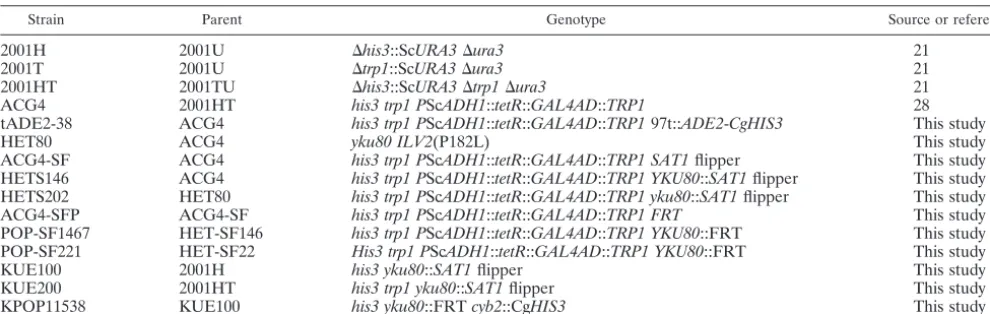
TABLE 1. Strains used in this study
Strain Parent Genotype Source or reference
2001H
2001U
⌬
his3
::Sc
URA3
⌬
ura3
21
2001T
2001U
⌬
trp1
::Sc
URA3
⌬
ura3
21
2001HT
2001TU
⌬
his3
::Sc
URA3
⌬
trp1
⌬
ura3
21
ACG4
2001HT
his3 trp1 P
Sc
ADH1
::
tetR
::
GAL4AD
::
TRP1
28
tADE2-38
ACG4
his3 trp1 P
Sc
ADH1
::
tetR
::
GAL4AD
::
TRP1
97t::
ADE2
-
CgHIS3
This study
HET80
ACG4
yku80 ILV2
(P182L)
This study
ACG4-SF
ACG4
his3 trp1 P
Sc
ADH1
::
tetR
::
GAL4AD
::
TRP1 SAT1
flipper
This study
HETS146
ACG4
his3 trp1 P
Sc
ADH1
::
tetR
::
GAL4AD
::
TRP1 YKU80
::
SAT1
flipper
This study
HETS202
HET80
his3 trp1 P
Sc
ADH1
::
tetR
::
GAL4AD
::
TRP1 yku80
::
SAT1
flipper
This study
ACG4-SFP
ACG4-SF
his3 trp1 P
Sc
ADH1
::
tetR
::
GAL4AD
::
TRP1 FRT
This study
POP-SF1467
HET-SF146
his3 trp1 P
Sc
ADH1
::
tetR
::
GAL4AD
::
TRP1 YKU80
::FRT
This study
POP-SF221
HET-SF22
His3 trp1 P
Sc
ADH1
::
tetR
::
GAL4AD
::
TRP1 YKU80
::FRT
This study
KUE100
2001H
his3 yku80
::
SAT1
flipper
This study
KUE200
2001HT
his3 trp1 yku80
::
SAT1
flipper
This study
KPOP11538
KUE100
his3 yku80
::FRT
cyb2
::Cg
HIS3
This study
TABLE 2. Plasmids used in this study
Plasmid Description Source or reference
pBluescriptII SK(
⫹
)
Cloning vector
Stratagene
pCGH97
Carries Cg
HIS3
marker and Tet-P
28
pKUILV2-1
YKU80
-
ILV2
region cloned into pBluescriptII SK(
⫹
)
This study
pILV2-7
YKU80
ORF eliminated from pKUILV2
This study
pBS-SF.4
SAT1
flipper cloned into pBluescriptII SK(
⫹
)
This study
pKU-self.5
pKUILV2-1 containing the BglII site and NheI site
This study
pKU-self(ORF2)
pKUILV2-1 containing the BglII site and NheI site
This study
pSFS2A
Contains FRT site,
FLP1
, and Ca
SAT1
as
SAT1
flipper
34
pKUSF-18
SAT1
flipper integrated into pKUILV2-1
This study
pKUSForf2-10
SAT1
flipper integrated into pKUILV2-1
This study
on September 8, 2020 by guest
http://ec.asm.org/
inserted into pBluescriptII SK(⫹) that had been cleaved by KpnI and SacI to generate pBS-SF.4.
pKU-self.5.The plasmid pKU-self.5 was constructed to add BglII and NheI sites onYKU80. PCR was carried out with the primer pair of pYKU80F2 (Bgl) and pYKU80R2 (Nhe) and plasmid pKUILV2-1 as a template. The PCR prod-ucts were treated with T4 polynucleotide kinase and circularized by self-ligation to construct pKU-self.5.
pKU-self(ORF2).PCR was carried out with the primer pair pYKU80ORF2.F (Bgl) and pYKU80ORF2.R (Nhe-Bgl) and plasmid pKUILV2-1 as a template. PCR products were digested and circularized by self-ligation.
pKUSF-18 and pKUSForf2-10.pBS-SF4 was digested with BglII and NheI and the inserted DNA, including theSAT1flipper, was isolated from the plasmid. The isolated fragment was then ligated with plasmids self.5 and pKU-self(ORF2) cleaved by BglII and NheI to yield pKUSF-18 and pKUSForf2-10, respectively.
Genomic DNA isolation fromC. glabrataand DNA manipulation.Cells were suspended in 40 to 70l of TE (10 mM Tris, pH 7.5, 1 mM EDTA), and an equal volume of 0.5-mm glass beads was added to the 2-ml collection tube. The cells were disrupted with Multi-Beads Shocker (Yasui Kikai, Inc.) by using five cycles of 2,700 rpm for 15 s with a 3-s brake time and then boiled for 10 min. From the resulting suspension, 1l was added for a 25-l PCR mixture.
DNA amplification was performed using KOD-plus-DNA polymerase (Toyobo), GoTaq green master mix (Promega), or ready-to-go PCR beads (Am-ersham Biosciences) according to the manufacturers’ protocols. BigDye Termi-nator cycle sequencing kits (version 3.1; Applied Biosystems, Inc.) and an Ap-plied Biosystems model 3100 automated capillary sequencer were used for nucleotide sequencing. Other standard recombinant-DNA procedures were per-formed as described previously (15, 36).
RNA manipulations for quantitative real-time RT-PCR.For RNA extraction, the hot-phenol method was performed as described previously (18). For quan-titative real-time reverse transcription-PCR (RT-PCR), mRNA was purified from total RNA extracted with the Oligotex-dT(Super) mRNA purification kit (TaKaRa, Japan) according to the manufacturer’s protocol. To quantify mRNA, we used the Syber RT-PCR kit (TaKaRa) for the synthesis of cDNA and real-time PCR. The real-time PCR forACT1was performed with primers ACT1 59F and ACT1 249R; that forYKU80was performed with primers YKU80 622F and YKU80 798R (see Table S1 in the supplemental material) using an ABI PRISM 7000 (Applied Biosystems).
5ⴕRACE.5⬘RACE (rapid amplification of cDNA ends) was performed using the GeneRacer kit (Invitrogen). Briefly, total RNA from parent strain ACG4 was treated with calf intestinal phosphatase and then treated with tobacco acid pyrophosphatase to remove the 5⬘cap structure from intact, full-length mRNA. The GeneRacer RNA oligonucleotide, with a known priming site, was ligated to the 5⬘end of the mRNA by using T4 RNA ligase. The ligated mRNA was reverse transcribed into cDNA by random primers (N6). To obtain 5⬘ends, the
first-strand cDNA first-strands were amplified using the GeneRacer 5⬘nested primer and primer kdyku80checkR1. Purified RACE PCR products were cloned into the pCR4-TOPO vector (Invitrogen) for sequencing.
C. glabrata transformation.The C. glabrata transformation protocol is a slightly modified version of the transformation protocol described in previous studies (20). Cells were streaked on a YPD agar plate and grown for 2 to 3 days at 37°C. A few colonies were then incubated in 10 ml of YPD liquid medium and cultured overnight with shaking at 37°C. The cells were resuspended in 10 ml of fresh YPD (starting optical density at 600 nm [OD600] of 0.4) and shaken to an
OD600of 1.0, approximately 2 to 3 h at 37°C. The cells were harvested by
centrifugation at 6,000⫻g for 5 min. The pellets were rinsed with 10 ml of TE buffer and harvested by centrifugation. The cells were resuspended in 10 ml of 0.15 M lithium acetate dissolved in TE buffer (LiOAc/TE) and shaken lightly for 1 h at 30°C. The cells were again harvested and resuspended in 400l of 0.15 M LiOAc. Sixty microliters of the suspension was dispensed to a new 1.5-ml tube, supplemented with 5 to 10g (3l) of the disruption cassettes and 20g (2l) of carrier DNA (salmon sperm DNA [Wako], boiled before use for 10 min and chilled for 10 min to denature double-strand DNA) and mixed gently. This solution was incubated for 30 min at 37°C and then added to 120l of 52.5% polyethylene glycol 4000-0.15 M LiOAc and mixed entirely by pipetting. The cells were incubated for 45 min at 37°C. After mixing carefully, the cells were heat shocked by incubating for 45 min at 42°C and then spread onto appropriate selection plates and incubated at 37°C for a few days. For NSTC-resistant strains like HETS202, the cells were harvested and resuspended in 1 ml of fresh YPD liquid medium after the 42°C heat shock and this suspension was shaken at 37°C for 12 or 24 h. The cells were then harvested, washed in YPD liquid medium, and resuspended in 400l of YPD liquid medium. The suspension was spread onto
four YPD plates containing 100g/ml of NSTC, and the plates were incubated at 37°C for 1 day.
Strain construction.Strain tADE2-38, in whichADE2expression is able to be controlled by the Tet-P, was constructed from ACG4 (26) by the integration of the Tet-P cassette into theADE2promoter locus (Table 1). The Tet-P cassette was amplified by PCR with the following primers and template: pCGHade2F2 and pCgTETade2R1 as primers and plasmid DNA p97CGH (26) as a template. tADE2-38 was screened on an SD plate without histidine and then streaked on an SD plate containing adenine and doxycycline to verify that the red colony color resulted from the knockdown ofADE2expression. To confirm the correct integration of the Tet-P cassette, PCR was carried out using the primers pCgADE2checkF1 and pCgADE2checkR1.
A disruption cassette was amplified by PCR using pILV2-7 as a template and using preKU80HindIII and pILV2mR2 as primers (see Table S1 in the supple-mental material). This cassette included the point mutation inILV2that changed amino acid 182 (proline) to leucine. The cassettes were used for the transfor-mation of parent strain ACG4 and integrated into theYKU80-ILV2locus by homologous recombination after the cassette entered into the cell. The trans-formant designated HET80 was screened on plates containing 20g/ml SM, and genomic DNA was extracted in order to check for theYKU80deletion. The verification ofYKU80deletion was performed by PCR with three sets of primers; check PCR 1 used preKU80checkR2 and pKU80checkF2, check PCR 2 used pKU80checkR1 and pmILV2checkR1, and check PCR 3 used preKU80HindIII and Ku80checkmidR3.
SAT1flipper inC. glabrata.TheSAT1flipper module was 4.3 kb long and contained the following DNA elements: the NSTC resistance geneSAT1,FLP1 encoding a site-specific recombinase, and two FLP recombination target (FRT) (34-bp) sites that are recognized by Flp1 recombinase (34). To examine the utility of the module inC. glabrata, ACG4 was transformed with the SAT1 flipper, leading first to illegitimate integration. The transformant ACG4-SF was confirmed by PCR and grown under permissive conditions (YPD plate without NSTC). NSTC-sensitive clones were screened by subsequent testing for growth under restrictive conditions on YPD plates with NSTC. Those clones have lost theSAT1flipper, as confirmed by PCR analysis. To examine the efficiency of the SAT1flipper module inC. glabrata, cells of HETS202, in which theSAT1flipper was integrated, were cultured in the permissive liquid medium overnight at 37°C, spread on YPD plates, and then replicated on the restrictive plates (YPD, including 100g/ml of NSTC). Only 0.5% of the colonies could grow on the restrictive medium. Twelve colonies that could not grow on the selective plates were checked by PCR, and all of the strains produced a PCR product that proved the loss of theSAT1flipper.
Knockdown system usingSAT1flipper.To knock down theYKU80gene, the YKU80knockdown cassette (Y-kd cassette) was integrated just upstream of either the first or the second ATG codon, yielding HETS146 and HETS202, respectively. The two Y-kd cassettes comprising theSAT1flipper flanked by long homologous sequences were amplified by PCR using the following templates and primers. For the amplification of the first Y-kd cassette, pKUSF-18 was used as a template, and kdYKU80-1 and kdYKU80-4 were used as primers. For the amplification of the second Y-kd cassette, pKUSForf2-10 was used as a template, and preKU80HindIII and pILV2mR2 were used as primers. After the selection of transformants on YPD plates containing 100g/ml NSTC, PCR analysis was performed to confirm the site-specific integration of these Y-kd cassettes. Check PCR 1 used primers pSFS-2AF2(PacI) and kdYKU80checkF1; check PCR 2 used primers preku80checkR2 and ku80checkmidR3.YKU80knockdown strains for gene disruption, HETS202, KUE100, and KUE200, were constructed by usingC. glabratastrains 2001H and 2001HT (21).
POP-SF1467 and POP-SF221 were isolated by the following procedure. Trans-formants derived from HETS146 and HETS202 were incubated in YPD liquid medium without NSTC at 37°C for 24 h with shaking. Under this condition, the FLP1-mediated excision of theSAT1flipper occurs automatically. The cells were spread onto YPD agar plates without NSTC and incubated at 37°C for 24 h. The colonies were replicated to YPD plates with and without 100g/ml NSTC. Clones, which did not grow on the plate containing NSTC, were confirmed to have excised theSAT1flipper by PCR: check PCR 3 used primers pFRT1 F1 and kdYKU80checkF1; check PCR 4 used primers kdYKU80checkF1 and kdYKU80checkR1. POP-SF1467 and POP-SF221 were derived from HETS146 and HETS202, respectively.
Determination of gene targeting efficiency.The inactivation ofADE2, which is one of the genes required for adenine biosynthesis, induces the color of colonies to turn red due to the accumulation of the intermediate metabolite phosphori-bosyl aminoimidazole (19). On an agar plate containing doxycycline, the trans-formant (tADE2), in which the Tet-P was integrated into the promoter region of ADE2via homologous recombination, forms colonies that turn red. On the other
on September 8, 2020 by guest
http://ec.asm.org/
hand, transformants in which the Tet-P was integrated into any other region form colonies that remain white. The gene targeting efficiency (%) was calculated by the following formula: number of tADE2 strains obtained from the transforma-tion/total transformants⫻100%. For a list of the primer pairs used to attach homologous tags to the Tet-P cassette, see Table S1 in the supplemental mate-rial. The calculation of the targeting efficiency using the other loci was carried out with PCR using appropriate primer sets.
Evaluation of DNA damage in⌬yku80mutants in vitro.To measure the sensitivity of strains to DNA-damaging agents, we employed the microdilution method based on the CLSI (formerly NCCLS) standard M27-A (27). Drop titer tests and spread titer tests for sensitivity were also carried out. Cells from an overnight culture were harvested, rinsed with YPD, and then adjusted to an OD600of 0.3. This suspension was diluted 10⫺
3
, and 3l of each dilution was dropped onto a plate containing a reagent. The plates were incubated at 37°C for 2 days. The spread titer test to measure the sensitivity to UV rays was performed as follows. Cells of an overnight culture were harvested, rinsed with YPD, and adjusted to an OD600of 4. This suspension was diluted 10⫺
4
. Fifty microliters of the diluted suspension was spread onto two plates. These plates were exposed to 0, 20, 40, or 60 J/m2
254-nm UV rays (CL-1000 UV cross-linker [UV Products]) and then incubated at 37°C for 1 day. The CFU were determined on each exposed plate, and the survival rate (%) was calculated by the following formula: CFU on each exposed plate/CFU on the unexposed plate⫻100%.
Infection experiment.Seven male CD-1 (ICR) mice, 5 weeks old and weighing 28.5 to 30.9 g, were used for virulence studies for each group. Cyclophosphamide (Shionogi & Co., Ltd., Japan) and hydrocortisone sodium phosphate (Banyu Pharmaceutical Co., Ltd., Japan) were concomitantly administered to the lateral tail vein at doses of 200 mg/kg of body weight and 125 mg/kg, respectively. Three days after the first administration, 100 mg/kg and 125 mg/kg of cyclophospha-mide and hydrocortisone, respectively, and 1⫻107
cells ofC. glabratawere administered into the lateral tail veins of the mice. The same amounts of the immunosuppressive agents were administered once every 4 days. The cells were suspended with saline to a final volume of 250l prior to their administration to the mice. Out of the seven mice allocated for each date, the heaviest and the lightest mice were removed and the five remaining mice were etherized and
killed by cervical dislocation. Both kidneys were extirpated, homogenized, di-luted with saline, and spread onto agar plates to determine the number of CFU ofC. glabratain the kidneys. This analysis was carried out at days 1, 7, and 14 after the injection ofC. glabrata.The animal experiment complied with all relevant guidelines and policies of the Animal Welfare Committee of the Faculty of Medicine of Chiba University, Japan.
RESULTS
Length of homologous sequence required for efficient gene
targeting to the correct locus in ACG4.
The length
require-ment for the homologous sequence to induce correct gene
targeting was measured in ACG4 (Fig. 1). The DNA cassette
consists of the Tet-P, the
HIS3
gene as a selection marker, and
homologous sequences ranging in size from 40 to 1,000 bp on
either side. When the flanking sequences were 40 bp, no
cor-rectly targeted integrants were identified. The highest
effi-ciency of gene targeting was 63.5% when the length of the
flanking sequences was 500 bp. The efficiency was decreased to
16.3% when the homologous sequence of the 5
⬘
side was 80 bp,
even if the 3
⬘
side had a 500-bp homologous sequence (Fig. 1).
Unexpectedly, when the length of the homologous sequences
FIG. 1. Gene targeting efficiency depends on the length of the
homologous flanking sequence. The numbers shown on the right side
describe the number of correct integrants per total number of colonies
tested. The lengths of homologous tags are shown on the left side. The
designation 80-500 means that an 80-bp flanking sequence and a
500-bp flanking sequence were attached to the 5
⬘
and 3
⬘
sides,
respec-tively, of the DNA cassette. The efficiency of gene targeting
accompa-nied by homologous recombination was measured by determining the
frequency of integration of a DNA cassette bearing a Tet-P into the
endogenous promoter region of
ADE2
. When the Tet-P is integrated
into the correct locus, the colonies turn red on plates supplemented
with doxycycline. As in
S. cerevisiae
, red colony color is caused by
inactivation of the
ADE2
gene in
C. glabrata
(19). Closed and open
boxes represent the gene targeting efficiency of HET80 and ACG4,
respectively.
FIG. 2. Construction of
YKU80
deletion mutant using SM
resis-tance. (A) Procedure for the construction of the
YKU80
deletion
strain, HET80, with a PCR-mediated cassette. On chromosome K in
C.
glabrata
,
YKU80
(CAGL0K03443g) is adjacent to
ILV2
(CAGL0K
03465g), followed by 1 kb of intergenic space. A point mutation in
Ilv2p, in which proline 182 is replaced by leucine, confers resistance to
SM in
S. cerevisiae
(41). The cassette DNA fragment contained the 5
⬘
homologous flanking region of the
YKU80-ILV2
locus and a part of the
ILV2
gene carrying a point mutation that changed proline182 to
leucine. Integration of the cassette removes
YKU80
and induces the
point mutation in Ilv2p, which confers SM resistance. The parent strain
ACG4 was transformed with this deletion cassette, and transformants
were selected on plates containing SM. The asterisks indicate the point
mutation. (B) PCR analysis of the
yku80
deletion strain with the three
sets of primers. Lanes a and h show results for ACG4 and HET80,
respectively. The lengths of the expected PCR products are shown on
the right-hand side of panel A.
on September 8, 2020 by guest
http://ec.asm.org/
was 1,000 bp, the targeting efficiency was lower than the
effi-ciency when the length was 500 bp. From those results, it was
suggested that efficient gene targeting required a few hundred
base pairs of homologous flanking sequence in ACG4.
Effect of carrier DNA concentration on transformation
effi-ciency.
Denatured salmon sperm DNA is used as carrier DNA
for experiments with
S. cerevisiae
and
K. lactis
(14, 22). The
requirement for the amount of carrier DNA for efficient gene
targeting in
C. glabrata
was investigated in this work. The
efficiency was measured by the integration rate of the Tet-P
cassette into the
ADE2
promoter with a 200-bp homologous
sequence. The highest efficiency was identified when 20
g of
carrier DNA was used. About two-times-higher efficiency was
achieved when using this amount of carrier DNA than when no
carrier DNA was used.
Construction of the
YKU80
deletion mutant for efficient gene
targeting.
A search of the
C. glabrata
genomic sequences in
Genolevures (http://cbi.labri.fr/Genolevures/) revealed that one
gene has homology to
S. cerevisiae YKU80
. It is designated
YKU80
(CAGL0K03443g) in
C. glabrata
. The amino acid sequences
de-duced from these genes shared 39% identity and 58% similarity.
A DNA cassette was designed to delete
YKU80
and
simulta-neously confer resistance to sulfometuron methyl. Recipient
strain ACG4 was transformed with the cassette to construct
yku80
mutant HET80. To confirm construction of the
yku80
deletion,
PCR analysis was performed using three sets of primers (Fig. 2).
Gene targeting efficiency with short homologous sequences
in HET80.
The
yku80
deletion mutant HET80 was evaluated
for gene targeting efficiency (Fig. 1). The DNA cassette,
in-cluding the Tet-P with the homologous flanking sequences
ranging from 40 to 200 bp, was integrated into the promoter
region of
ADE2
. The efficiency of gene targeting was 5.1% with
40 bp of homologous flanking sequence in HET80, while this
length of homologous sequences provided no correct integration
in ACG4. Likewise, with 80-bp flanking homologous sequences,
the efficiency of gene targeting was 8.6% in HET80,
approxi-mately sevenfold more efficient than in ACG4. The efficiency rose
to 80% with 500 bp of homologous flanking sequence in HET80.
The relative increase in the rate of gene targeting efficiency
caused by
YKU80
deletion was greater with the shorter length of
homologous flanking sequence in HET80 (Fig. 1).
To evaluate the targeting efficiency for various targets in
C.
glabrata
, DNA cassettes for targeting to 27 different loci were
produced and introduced into HET80. Between 5 and 30
col-onies of the transformants were checked for the correct
inte-gration site by PCR. The average efficiency was 13% with 60 bp
of homologous flanking sequence. These results suggest that
gene targeting in HET80 was effective at various loci.
Susceptibilities of
yku80
mutant to DNA-damaging agents.
To characterize the
yku80
deletion mutant of
C. glabrata
, the
effects of temperature and DNA-damaging agents were
exam-ined in HET80. Since
C. glabrata
grows well at 37°C, 37°C and
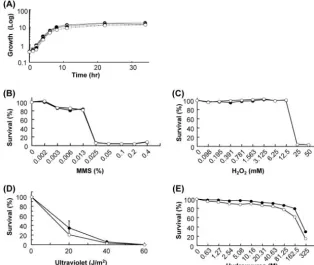
FIG. 3. Phenotypic characterization of the
⌬
yku80
mutant using DNA-damaging agents. The experiment was conducted by measuring the
OD
600at each time point. Closed circles and open circles indicate results for ACG4 and HET80 (
⌬
yku80
), respectively, in all panels. (A) The results
of the growth rate analyses at 37°C and 42°C are indicated by solid and dotted lines, respectively. The vertical axis is represented by a logarithm
scale. Sensitivity to each reagent and UV radiation was evaluated by determining the cell survival ratio and described as a percentage compared
to cells grown without DNA-damaging reagents or UV radiation. The panels were assigned for sensitivities against (B) MMS, (C) hydrogen
peroxide, (D) UV radiation, and (E) hydroxyurea. The sensitivity to UV radiation was calculated from three independent experiments and is shown
as means
⫾
standard deviations.
on September 8, 2020 by guest
http://ec.asm.org/
42°C were chosen as permissive and restrictive temperatures,
respectively. Whereas the growth seemed slightly delayed at
42°C in HET80, no distinct growth defect relative to the
wild-type strain was identified. No valid differences between HET80
and ACG4 were recognized in the mortality of cells exposed to
UV irradiation, MMS, H
2O
2, or hydroxyurea (Fig. 3). These
results suggest that the
YKU80
deletion mutant of
C. glabrata
is not disabled in general cellular functions or DNA repair.
Construction of
YKU80
knockdown strain with insertion of
SAT1
flipper.
To employ the beneficial effects of
YKU80
inac-tivation on gene targeting without any complicating effects,
including possible synthetic sickness or lethality, it is necessary
to construct a strain in which the expression of
YKU80
is
restored following transient knockdown during
transforma-tion. To realize such a convenient strain, the module
SAT1
flipper was integrated just before the first ATG of the
anno-tated open reading frame of
YKU80
, creating the strain
HETS146. Unfortunately, the gene targeting efficiency was
greatly decreased in this strain (Fig. 4 and 5). This was an
unexpected result, and we constructed another strain,
HETS202, in which the
SAT1
flipper was integrated just before
the second ATG, which is 81 nucleotides downstream from the
first ATG on the same frame. During incubation under
non-selective conditions, HETS146 and HETS202 lost the
SAT1
flipper and produced POP-SF1467 and POP-SF221,
respec-tively.
Evaluation of gene targeting efficiency in the
YKU80
knock-down strains.
The efficiency of gene targeting was measured by
the integration into the promoter region of
ADE2
of a DNA
cassette containing the Tet-P with a flanking 200-bp
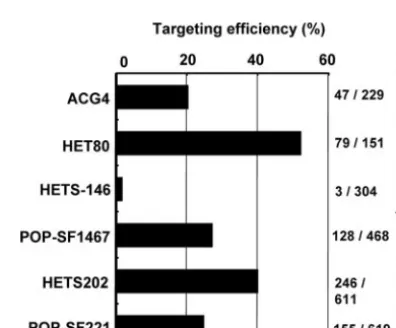
homolo-gous sequence. With the use of HETS146 and POP-SF1467,
the efficiency rates were 1.97 and 27.4%, respectively,
unex-pectedly lower when the recipient included the
SAT1
flipper
than after it lost it. On the other hand, using HETS202 and
POP-SF221, the rates were 40.3 and 25.0%, respectively. These
results indicate that the expression of
YKU80
was repressed
FIG. 4. Insertion and pop-out of
SAT1
flipper. The first ATG of
YKU80
was shown in Genolevures (http://cbi.labri.fr/Genolevures/). A second
ATG has been identified 81 bp downstream from the first ATG codon in the same frame. To construct
yku80
knockdown strains (HETS strains),
the
SAT1
flipper was integrated into sites 5
⬘
of either the first or the second ATG of the
YKU80
ORF to yield HETS146 and HETS202, respectively.
The
SAT1
flipper was removed from the HETS146 and HETS202 strains, producing POP-SF1467 and POP-SF221, respectively, which were
generated under the following permissive conditions: YPD medium without NSTC with overnight shaking at 37°C. The 34-bp of palindrome DNA,
the FRT, which is presented as two arrowheads face to face, remains behind in POP-SF1467 and POP-SF221.
FIG. 5. Gene targeting efficiency in the
yku80
knockdown strains
and revertant strains. The determination of the gene targeting
effi-ciency in each construct was measured as shown in Fig. 1. Targeting
efficiency with 200 bp of homologous flanking sequence corresponding
to the
ADE2
promoter region was measured.
on September 8, 2020 by guest
http://ec.asm.org/
when the
SAT1
flipper was located before the second ATG and
restored when it was lost (Fig. 5).
Transcription initiation site of
YKU80
.
To confirm the site of
the promoter region of
YKU80
, the initiation site of
transcrip-tion of
YKU80
was investigated by a 5
⬘
RACE experiment. The
sequences of nine clones, including the 5
⬘
RACE products,
were determined. This showed that all transcription was
initi-ated downstream of the first ATG (data not shown). These
results indicated that the first ATG is not an initiation codon of
YKU80
.
Evaluation of the
yku80
knockdown effect on gene targeting
to various loci.
The gene targeting efficiency was 3.5% (4/114)
in HETS202 with 40 bp of homologous sequence
correspond-ing to the
ADE2
promoter region. To extend these results to
other loci, the gene targeting efficiency was measured at 15 loci
using KUE200 in which the
SAT1
flipper integrated upstream
of the second ATG. The DNA cassettes included, in all cases,
56 bp of homologous flanking sequence on either side of the
HIS3
selective marker. After each transformation, 3 to 30
colonies were checked by PCR. The efficiency of gene targeting
was approximately 5 to 10% in three genes and higher than
30% in other genes. The results suggest that gene targeting
with short homologous sequences in
yku80
knockdown strains
is effective at multiple loci.
Effect of the remaining FRT on repression of
YKU80
tran-scription.
After the
SAT1
flipper is removed from the genome,
the FRT sequence, which is a 34-bp short palindrome, remains
in the sequence upstream of the second ATG of
YKU80
in
POP-SF221. The effect on gene expression caused by the FRT
remaining in the 5
⬘
end of the
YKU80
ORF was quantified by
real-time PCR. Since much more mRNA of
YKU80
is
tran-scribed during stationary growth phase than during
exponen-tial growth phase (K. Ueno et al., unpublished data), mRNA
was harvested from the cells at stationary phase. The amount
of mRNA relative to ACG4 is shown in Fig. 6. The
YKU80
mRNA level was 0.38-fold in HETS202, but POP-SF221 had
1.09-fold, whereas no mRNA was identified in HET80. Thus,
no effect of FRT on transcription was identified in POP-SF202
in comparison to its wild-type progenitor.
Mutation rate measured by spontaneous 5-FOA resistance
in HETS202.
It is an important criterion of a transformation
host strain that the strain be genetically stable, without
ele-vated mutation frequency occurring during maintenance. In
order to confirm the genetic stability of the
YKU80
knockdown
strain, the mutation rate of HETS202 was investigated. The
mutation rates in HETS202 and ACG4 (as a control) were
measured as the frequency of 5-fluoroorotic acid (5-FOA)
resistance. The strains were subcultured on YPD plates
con-taining 100
g/ml NSTC 10 times, and the number of CFU was
determined on YPD plates containing 0.2% 5-FOA. The
mu-tation rates of ACG4 and HETS202 were (2.97
⫾
1.38)
⫻
10
⫺7and (4.15
⫾
1.08)
⫻
10
⫺7(
P
⫽
0.31), respectively, indicating
no significant difference in mutation rate caused by the
repres-sion of
YKU80
.
In vivo survival of stains carrying FRT in
YKU80
promoter.
To evaluate the virulence of strains in which FRT remains
before the ORF of
YKU80
, an in vivo experiment was carried
out. Cells of ACG4 and POP-SF221 and KPOP11538 were
administered into the lateral tail veins of mice. KPOP11538
has a
cyb2
mutation and was used as a control because growth
defects have been previously identified in vitro (Ueno,
unpub-lished). The fungal burdens of ACG4 and POP-SF221 were
transiently decreased at day 7 and increased at day 14, while
the fungal burden of KPOP11538 gradually decreased and
eventually fell below the limit of detection. The pattern of the
survival curve was not different for ACG4 and POP-SF221
(Fig. 7). These results indicate that FRT located in the
YKU80
promoter region has no effect on the survival of
C. glabrata
in
vivo.
DISCUSSION
To facilitate systematic
C. glabrata
mutant construction in a
high-throughput manner, a new recipient strain that permits
efficient gene targeting is required. As a first step, we
demon-strated that the targeting efficiency with short homologous
sequences is increased in a
yku80
deletion mutant. This made
the strain useful for efficient gene targeting, but leaving the
gene crippled could give misleading results in disruptants. In
S.
cerevisiae
, many genetic interactions of
YKU80
with other
genes, including synthetic lethal combinations, have been
re-FIG. 6. Relative quantification of
YKU80
transcription by real-time
RT-PCR. mRNA was harvested from the cells of overnight culture at
37°C. Data are shown as means
⫾
standard deviations from three
independent experiments. Transcription was not detected in HET80,
the
yku80
-deleted strain.
*
,
P
was 0.042 versus HETS202 for that
particular condition. #,
P
was 0.581 versus ACG4 for that particular
condition.
FIG. 7. Effect of FRT sequence for survival ratio in vivo. A total of
1
⫻
10
7cells of each strain were administered into the lateral tail veins
of mice. Fungal burden on the kidney was measured at days 1, 7, and
14 after the infection. Outliers were statistically dismissed using the
Thompson test for colony counting, and
P
values of less than 0.05 were
considered significant. ACG4, POP-SF221, and KPOP11538 are
indi-cated by closed circles, open circles, and open squares (
cyb2
was a
positive control), respectively. Error bars indicate standard deviations.
on September 8, 2020 by guest
http://ec.asm.org/
ported (29, 33). There may be some effects, including unknown
synthetic sickness or lethality, induced by
YKU80
inactivation.
Therefore,
YKU80
should be restored to full activity for the
analysis of the specific function of each gene after the mutant
construction. Cotransformation of the DNA cassette for Tet-P
integration and a DNA cassette for
YKU80
restoration did not
succeed (data not shown), so we decided to construct a strain
in which the expression of
YKU80
could be repressed during
transformation for optimal gene targeting and the expression
easily restored after the gene targeting.
The
SAT1
flipper is an
FLP1-
mediated pop-out system that
is efficiently removed from chromosomal sites in
C. albicans
(34). In this work, we have used the
SAT1
flipper for the
repression of
YKU80
expression in
C. glabrata
. The
SAT1
flip-per has not previously been reported to be useful for gene
manipulation in
C. glabrata
. The maltose promoter is not likely
to regulate transcription in
C. glabrata
as well as in
C. albicans
,
because the DNA cassette
SAT1
flipper was frequently lost in
medium, including glucose. Even when the cells were cultured
in YPD, including NSTC, 26.3% of them lost the
SAT1
flipper.
The high frequency of the pop-out is convenient for this work,
since a step in which the strain is plated on maltose medium to
induce the pop-out can be skipped. For other uses, however,
the promoter needs to be replaced with a controllable
pro-moter in order to obtain better regulation of
FLP1
. These
results suggest that the
MAL2
promoter in the
SAT1
flipper
cassette can’t be repressed in medium, including glucose, since
it is adequately leaky to generate derivatives in which the
SAT1
flipper is removed.
In
yku80
mutants of
S. cerevisiae
, a severe growth defect at
37°C had been identified due to telomere shortening, among
other causes (1, 5, 9, 11). These cells also exhibit
hypersensi-tivity to DNA-damaging agents, such as MMS, but not to UV
radiation or hydroxyurea (5, 16, 37). In the
⌬
yku80
mutant of
C. glabrata
, no obvious growth delay was identified at 37°C or
42°C. No sensitization to MMS, H
2O
2, UV radiation, or
hy-droxyurea was identified in this study (Fig. 3). These results
suggest that DNA repair and other essential cell functions are
not critically affected by the deletion of
yku80
in
C. glabrata
. It
seems likely that DSB repair is supported by another
path-way(s) independent of
YKU80
, such as microhomology end
joining (23). In
Schizosaccharomyces pombe
, although
sensitiv-ity to MMS did not occur in Ku single mutants, NHEJ was
almost suppressed, which was verified by a plasmid repair assay
(24, 39).
The single deletion of
yku80
in
C. glabrata
had no obvious
effect on the growth rate, DNA repair ability, and mutation
rate (Fig. 3). The
SAT1
flipper could be maintained in
YKU80
knockdown strains under selection with 100
g/ml of NSTC
and then automatically lost from the cells under nonselective
conditions. This construct allows efficient gene targeting and
restoration of the expression of
YKU80
by a single
transforma-tion. Although the FRT has been left at the promoter region of
YKU80
after the
SAT1
flipper was excised from chromosome,
the FRT has no detectable effect on the survival of
C. glabrata
in vivo (Fig. 7). The
YKU80
knockdown strain, HETS202, is a
new recipient strain that enables rapid construction of desired
recombinants via high-efficiency gene targeting; furthermore,
strains deploying NHEJ regulation, e.g., HETS202, will
facili-tate gene manipulation and contribute to comprehensive gene
function analyses, elucidating pathogenicity and facilitating the
identification of antifungal drug targets in
C. glabrata
.
ACKNOWLEDGMENTS
We thank P. T. Magee (University of Minnesota) for critical reading
of the manuscript, O. Reuss (Universitat Wurzburg, Germany) for the
gift of plasmid pSFS2A, and K. Kitada for sharing
C. glabrata
strains
2001H, 2001T, and 2001HT.
This work was supported by a grant-in-aid for scientific research for
the following priority areas, infection and host response, genome
bi-ology and microbial genome, from the Ministry of Education, Culture,
Sports, Science and Technology, Japan.
REFERENCES
1.Barnes, G., and D. Rio.1997. DNA double-strand-break sensitivity, DNA replication, and cell cycle arrest phenotypes of Ku-deficientSaccharomyces cerevisiae. Proc. Natl. Acad. Sci. USA94:867–872.
2.Barns, S. M., D. J. Lane, M. L. Sogin, C. Bibeau, and W. G. Weisburg.1991. Evolutionary relationships among pathogenicCandidaspecies and relatives. J. Bacteriol.173:2250–2255.
3.Baudin, A., O. Ozier-Kalogeropoulos, A. Denouel, F. Lacroute, and C. Cul-lin.1993. A simple and efficient method for direct gene deletion in Saccha-romyces cerevisiae. Nucleic Acids Res.21:3329–3330.
4.Berman, J., and P. E. Sudbery.2002.Candida albicans: a molecular revolu-tion built on lessons from budding yeast. Nat. Rev. Genet.3:918–930. 5.Boulton, S. J., and S. P. Jackson.1996. Identification of aSaccharomyces
cerevisiaeKu80 homologue: roles in DNA double strand break rejoining and in telomeric maintenance. Nucleic Acids Res.24:4639–4648.
6.Burke, D., D. Dawson, and T. Stearn.2000. Methods in yeast genetics: a Cold Spring Harbor Laboratory course manual, 2000 ed. Cold Spring Harbor Laboratory Press, Cold Spring Harbor, NY.
7.Calderone, R. A.2002.Candidaand candidiasis. ASM Press, Washington, DC. 8.da Silva Ferreira, M. E., M. R. Kress, M. Savoldi, M. H. Goldman, A. Hartl, T. Heinekamp, A. A. Brakhage, and G. H. Goldman.2006. TheakuBKU80
mutant deficient for nonhomologous end joining is a powerful tool for analyzing pathogenicity inAspergillus fumigatus. Eukaryot. Cell5:207–211. 9.Duda´sova´, Z., A. Dudas, and M. Chovanec.2004. Non-homologous
end-joining factors ofSaccharomyces cerevisiae. FEMS Microbiol. Rev.28:581– 601.
10.Dujon, B., D. Sherman, G. Fischer, P. Durrens, S. Casaregola, I. Lafontaine, J. De Montigny, C. Marck, C. Neuveglise, E. Talla, N. Goffard, L. Frangeul, M. Aigle, V. Anthouard, A. Babour, V. Barbe, S. Barnay, S. Blanchin, J. M. Beckerich, E. Beyne, C. Bleykasten, A. Boisrame, J. Boyer, L. Cattolico, F. Confanioleri, A. De Daruvar, L. Despons, E. Fabre, C. Fairhead, H. Ferry-Dumazet, A. Groppi, F. Hantraye, C. Hennequin, N. Jauniaux, P. Joyet, R. Kachouri, A. Kerrest, R. Koszul, M. Lemaire, I. Lesur, L. Ma, H. Muller, J. M. Nicaud, M. Nikolski, S. Oztas, O. Ozier-Kalogeropoulos, S. Pellenz, S. Potier, G. F. Richard, M. L. Straub, A. Suleau, D. Swennen, F. Tekaia, M. Wesolowski-Louvel, E. Westhof, B. Wirth, M. Zeniou-Meyer, I. Zivanovic, M. Bolotin-Fukuhara, A. Thierry, C. Bouchier, B. Caudron, C. Scarpelli, C. Gaillardin, J. Weissenbach, P. Wincker, and J. L. Souciet.2004. Genome evolution in yeasts. Nature430:35–44.
11.Feldmann, H., L. Driller, B. Meier, G. Mages, J. Kellermann, and E. L. Winnacker.1996.HDF2, the second subunit of the Ku homologue from Saccharomyces cerevisiae. J. Biol. Chem.271:27765–27769.
12.Fidel, P. L., Jr., J. A. Vazquez, and J. D. Sobel.1999.Candida glabrata: review of epidemiology, pathogenesis, and clinical disease with comparison toC. albicans. Clin. Microbiol. Rev.12:80–96.
13.Giaever, G., A. M. Chu, L. Ni, C. Connelly, L. Riles, S. Veronneau, S. Dow, A. Lucau-Danila, K. Anderson, B. Andre, A. P. Arkin, A. Astromoff, M. El-Bakkoury, R. Bangham, R. Benito, S. Brachat, S. Campanaro, M. Cur-tiss, K. Davis, A. Deutschbauer, K. D. Entian, P. Flaherty, F. Foury, D. J. Garfinkel, M. Gerstein, D. Gotte, U. Guldener, J. H. Hegemann, S. Hempel, Z. Herman, D. F. Jaramillo, D. E. Kelly, S. L. Kelly, P. Kotter, D. LaBonte, D. C. Lamb, N. Lan, H. Liang, H. Liao, L. Liu, C. Luo, M. Lussier, R. Mao, P. Menard, S. L. Ooi, J. L. Revuelta, C. J. Roberts, M. Rose, P. Ross-Macdonald, B. Scherens, G. Schimmack, B. Shafer, D. D. Shoemaker, S. Sookhai-Mahadeo, R. K. Storms, J. N. Strathern, G. Valle, M. Voet, G. Volckaert, C. Y. Wang, T. R. Ward, J. Wilhelmy, E. A. Winzeler, Y. Yang, G. Yen, E. Youngman, K. Yu, H. Bussey, J. D. Boeke, M. Snyder, P. Philippsen, R. W. Davis, and M. Johnston.2002. Functional profiling of the Saccharo-myces cerevisiaegenome. Nature418:387–391.
14.Gietz, R. D., R. H. Schiestl, A. R. Willems, and R. A. Woods.1995. Studies on the transformation of intact yeast cells by the LiAc/SS-DNA/PEG pro-cedure. Yeast11:355–360.
15.Glover, D. M., and B. D. Hames.1995. DNA cloning 1, a practical approach: core techniques, 2nd ed. Oxford Universiy Press, Oxford, United Kingdom. 16.Goins, C. L., K. J. Gerik, and J. K. Lodge.2006. Improvements to gene deletion in the fungal pathogenCryptococcus neoformans: absence of Ku
on September 8, 2020 by guest
http://ec.asm.org/
proteins increases homologous recombination, and cotransformation of in-dependent DNA molecules allows rapid complementation of deletion phe-notypes. Fungal Genet. Biol.43:531–544.
17.Gumbo, T., C. M. Isada, G. Hall, M. T. Karafa, and S. M. Gordon.1999. Candida glabratafungemia. Clinical features of 139 patients. Medicine (Bal-timore)78:220–227.
18.Hanaoka, N., T. Umeyama, K. Ueno, K. Ueda, T. Beppu, H. Fugo, Y. Uehara, and M. Niimi.2005. A putative dual-specific protein phosphatase encoded by YVH1controls growth, filamentation and virulence in Candida albicans. Microbiology151:2223–2232.
19.Hanic-Joyce, P. J., and P. B. Joyce. 1998. A high-copy-number ADE2-bearing plasmid for transformation ofCandida glabrata. Gene211:395–400. 20.Ito, H., Y. Fukuda, K. Murata, and A. Kimura.1983. Transformation of
intact yeast cells treated with alkali cations. J. Bacteriol.153:163–168. 21.Kitada, K., E. Yamaguchi, and M. Arisawa.1995. Cloning of theCandida
glabrata TRP1andHIS3genes, and construction of their disruptant strains by sequential integrative transformation. Gene165:203–206.
22.Kooistra, R., P. J. Hooykaas, and H. Y. Steensma.2004. Efficient gene targeting inKluyveromyces lactis. Yeast21:781–792.
23.Ma, J. L., E. M. Kim, J. E. Haber, and S. E. Lee.2003. Yeast Mre11 and Rad1 proteins define a Ku-independent mechanism to repair double-strand breaks lacking overlapping end sequences. Mol. Cell. Biol.23:8820–8828. 24.Manolis, K. G., E. R. Nimmo, E. Hartsuiker, A. M. Carr, P. A. Jeggo, and
R. C. Allshire.2001. Novel functional requirements for non-homologous DNA end joining inSchizosaccharomyces pombe. EMBO J.20:210–221. 25.Meyer, K., M. Arentshorst, A. El-Ghezal, A. C. Drews, R. Kooistra, C. A. van
den Hondel, and A. F. Ram.2007. Highly efficient gene targeting in the Aspergillus nigerkusA mutant. J. Biotechnol.128:770–775.
26.Nakayama, H., M. Izuta, S. Nagahashi, E. Y. Sihta, Y. Sato, T. Yamazaki, M. Arisawa, and K. Kitada.1998. A controllable gene-expression system for the pathogenic fungusCandida glabrata. Microbiology144:2407–2415. 27.NCCLS.1997. Reference methods for broth dilution antifungal susceptibility
testing of yeasts. Approved standard M27-A. NCCLS, Wayne, PA. 28.Ninomiya, Y., K. Suzuki, C. Ishii, and H. Inoue.2004. Highly efficient gene
replacements inNeurosporastrains deficient for nonhomologous end-join-ing. Proc. Natl. Acad. Sci. USA101:12248–12253.
29.Nugent, C. I., G. Bosco, L. O. Ross, S. K. Evans, A. P. Salinger, J. K. Moore, J. E. Haber, and V. Lundblad.1998. Telomere maintenance is dependent on activities required for end repair of double-strand breaks. Curr. Biol.8:657– 660.
30.Pastink, A., J. C. Eeken, and P. H. Lohman.2001. Genomic integrity and the repair of double-strand DNA breaks. Mutat. Res.480–481:37–50. 31.Pfaller, M. A., R. N. Jones, G. V. Doern, H. S. Sader, S. A. Messer, A.
Houston, S. Coffman, and R. J. Hollis.2000. Bloodstream infections due to Candidaspecies: SENTRY Antimicrobial Surveillance Program in North America and Latin America, 1997–1998. Antimicrob. Agents Chemother.
44:747–751.
32.Po¨ggeler, S., and U. Kuck.2006. Highly efficient generation of signal trans-duction knockout mutants using a fungal strain deficient in the mammalian ku70 ortholog. Gene378:1–10.
33.Polotnianka, R. M., J. Li, and A. J. Lustig.1998. The yeast Ku heterodimer is essential for protection of the telomere against nucleolytic and recombi-national activities. Curr. Biol.8:831–834.
34.Reuss, O., A. Vik, R. Kolter, and J. Morschhauser.2004. TheSAT1flipper, an optimized tool for gene disruption inCandida albicans. Gene341:119– 127.
35.Richardson, M. D.2005. Changing patterns and trends in systemic fungal infections. J. Antimicrob. Chemother.56(Suppl. 1):i5–i11.
36.Rolfs, A., I. Schuller, U. Finckh, and I. Weber-Rolfs.1992. PCR: clinical diagnostics and research. Springer-Verlag, Berlin, Germany.
37.Siede, W., A. A. Friedl, I. Dianova, F. Eckardt-Schupp, and E. C. Friedberg.
1996. TheSaccharomyces cerevisiaeKu autoantigen homologue affects radio-sensitivity only in the absence of homologous recombination. Genetics142:
91–102.
38.Takahashi, T., T. Masuda, and Y. Koyama.2006. Enhanced gene targeting frequency in ku70andku80 disruption mutants ofAspergillus sojaeand Aspergillus oryzae. Mol. Genet. Genomics275:460–470.
39.Tomita, K., A. Matsuura, T. Caspari, A. M. Carr, Y. Akamatsu, H. Iwasaki, K. Mizuno, K. Ohta, M. Uritani, T. Ushimaru, K. Yoshinaga, and M. Ueno.
2003. Competition between the Rad50 complex and the Ku heterodimer reveals a role for Exo1 in processing double-strand breaks but not telomeres. Mol. Cell. Biol.23:5186–5197.
40.Wach, A., A. Brachat, R. Pohlmann, and P. Philippsen.1994. New heterol-ogous modules for classical or PCR-based gene disruptions inSaccharomyces cerevisiae. Yeast10:1793–1808.
41.Xie, Q., and A. Jimenez.1996. Molecular cloning of a novel allele ofSMR1 which determines sulfometuron methyl resistance inSaccharomyces cerevi-siae. FEMS Microbiol. Lett.137:165–168.