A new start with fMRI
Win Mar @ Salmah
J
alaluddin1, Ahmad Helmy
a
bdulK
arim1, Munirah
C
hea
bdullah1, Mohd
Shafie
a
bdullah1, Siti Afidah
h
amat1, Wan
Nazyrah
a
bdulh
alim1, Alwani Liyana
a
hmad2,
Nor Safira Elaina
m
ohdn
oor2, Aini Ismafairus
a
bdh
amid2, Hoshiang
C
hueh31 Department of Radiology, School of Medical
Sciences, Universiti Sains Malaysia, 16150 Kubang Kerian, Kelantan, Malaysia
2 Department of Neurosciences, School of Medical
Sciences, Universiti Sains Malaysia, 16150 Kubang Kerian, Kelantan, Malaysia
3 Business Unit MRI, Philips Healthcare Asia Pacific,
620A, Lorong 1, Toa Payoh, Singapore 319762
Dear Editor,
Neurotechnology, which involves information obtained from magnetic and electrical based images, is at its growing phase in Malaysia. The article titled “Coping with Brain Disorders using Neurotechnology”, published in the Malaysian Journal of Medical Sciences, Volume 19, Issue 1, 2012 (1), has caught our interest. Although functional magnetic resonance (fMRI) is not a new tool in neuroimaging, it is relatively new in our Hospital Universiti Sains Malaysia, which has begun to use the technology for patients’ care and research. This particular technology is used solely in nervous system diseases for either medical or surgical-related purposes. Two of the major applications in neurosurgery are pre- and post-operative assessments of diseases (2–4). The pre-operative assessment is essential to obtain best operative results, especially when the eloquent areas of the brain are involved.
The fMRI has been in place for more than a decade; until now, it is used more in the research field. However, there are many useful clinical applications of fMRI, although they are not done routinely. The minimal machine strength for an fMRI study is 1.5 Tesla. In Malaysia, even though there are many centres with fMRI system of either 1.5 or 3.0 Tesla, the application of fMRI is still minimal and at an early stage.
The fMRI examination requires proper training for both radiographers and radiologists: the usage technique is important, and so is the result interpretation. Interpretation of fMRI images requires knowledge of radiology, neurology, as well as some technical MRI physics and its limitations.
Pre-operative localisation of eloquent cortices adjacent to the brain tumours is the most common clinical application of fMRI along with diffusion tensor imaging. In most assessment, there are paradigms to assess for motor, sensory, visual, and auditory functions.
The Philips Achieva 3 Tesla MRI was recently installed in the Department of Radiology. With the incorporation of the fMRI software and paradigms, at least 10 functional assessments can be performed. It is also incorporated with high intensity focused ultrasound system. We are pleased, as at this moment our machine is equipped with full fMRI facility.
Initial clinical assessments determine which functional assessments are required. The patient should be able to stand the long examination period.The patient should also understand how the examination is carried out and should be able to complete the fMRI paradigm appropriately. There is an MR simulator machine where the patient can do practical sessions with the planned paradigms. Paradigms can be modified according to the patient’s clinical assessment and ability.
Letter to The Editor:
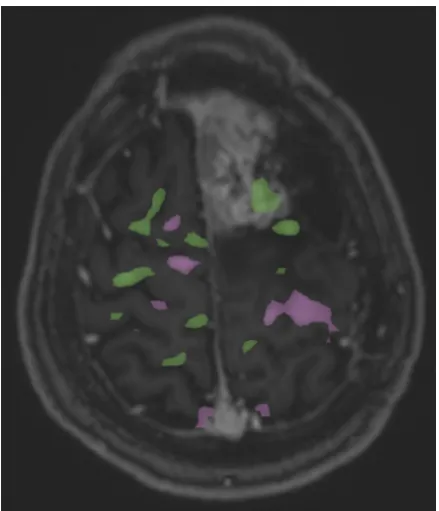
Recently, we have done fMRI with several paradigm tasks performed on a meningioma patient . y p a r e h t o i d a r d n a y r e g r u s e n o g r e d n u d a h o h w
foot and hand motor tasks, respectively.
With this advanced facility, we are aiming to boost our centre to become a centre of excellence in neuroimaging.
References
1. Valdes-Sosa PA. Coping with brain disorders using neurotechnology. Malays J Med Sci. 2012;19(1) : 1–3.
2. Smits M, Visch-Brink E, Schraa-Tam CK, Koudstaal PJ, van der Lugt A. Functional MR imaging of language processing: An overview of easy-to-implement paradigms for patient care and clinical research. Radiographics. 2006;26:S145–158. 3. Wood JM, Kundu B, Utter A, Gallagher TA, Voss J,
Nair VA, et al. Impact of brain tumor location on morbidity and mortality: A retrospective functional MR imaging study. AJNR Am J Neuroradiol. 2011;32(8):1420–1425.
4. Haberg A, Kvistad KA, Unsgard G, Haraldseth O. Preoperative blood oxygen level-dependent functional magnetic resonance imaging in patients with primary brain tumors: Clinical application and outcome. Neurosurgery. 2004;54(4):902–914.
Authors’ Contributions
Conception and design, drafting, critical revision, and
Analysis and interpretation of the data: WMSJ, AHAK, , N M E S N , A L A , H A N W , H A S , A C M C , A S M , A C M
AIAH, HC
, A C M C : s t n e i t a p r o s l a i r e t a m y d u t s f o n o i s i v o r P SAH, WNAH
Correspondence
Win Mar @ Salmah Jalaluddin
MMed Radiology (Universiti Sains Malaysia) Department of Radiology, School of Medical Sciences Universiti Sains Malaysia
16150 Kubang Kerian Kelantan, Malaysia Tel: +609-767 6729 Email: [email protected]
Comparative Cognitive Neuroscience:
Non-Human Primate Study in the
Understanding of Human appreciation
of colours
Mohamed Faiz Mohamed MUSTAFAR
Department of Psychology, Kulliyyah of Islamic Revealed Knowledge and Human Sciences, International Islamic University Malaysia, 50728 Kuala Lumpur, Malaysia
Dear Editor,
was presented. I would like to highlight the use of primates in cognitive neurosciences, where the aims of cognitive neuroscience research are to improve understanding of normal and pathological functions and to develop therapeutic strategies and tools that eventually will help cure and control disease progression in humans.
Cognitive neurosciences utilise a variety of elegant techniques including electrophysiology, magnetic resonance imaging, neuroinformatics, and computational modelling, and these techniques interact with clinical studies in a transdisciplinary manner. Non-human primates are probably the closest species to humans in terms of physiological, biological, and major neurological characteristics;
Figure 2: Functional magnetic resonance image of the
hand motor task showed cortical activation in the middle part of left precentral gyrus (purple colour).
Malays J Med Sci. Apr-Jun 2012; 19(2): 96-102
these similarities provide a reason for utilising the non-human primates in important biomedical studies following the conventional ethics in animal research. The brains of non-human primates are like the human brain; they share similarities in terms of physiological characteristic and functioning. This makes non-human primates—for example, those found in Malaysia such as macaques (Macaca fascicularis)—accurate models of neurological as well as psychiatric diseases. Non-human primate models offer a unique contribution in the translation of fundamental research findings into clinical applications and in the development of new treatments for neurological diseases (2).
Basic cognitive neuroscience aims to integrate cellular biology (neuron structure and functions) and experimental therapeutics for psychology, neuroanatomy, neurophysiology, and neuropharmacology researches. The study of primates is also an area of interest in fundamental research that bridges the studies of rodent and human cognitive as well as physiological characteristics. Understanding visually based processes that rely on perception, learning, motor response, and behaviour as well as their relationships with regions of the primate brain is the focus of comparative neuroscientists in the next few years (3,4).
The study of colour visual system has brought the interest of neuroscience and psychology researchers to explore how the colours can improve perception, learning, and memory retention in both human and non-human primates. Studies on how animal visual system reacts to a specific type of colour have revealed interesting findings similar to the visual pattern of interaction in human cognition system. Warm colours such as red or yellow were found to have greater impact on attention, which later lead to better retention of information (5). Besides the type of colour used, a recent research on this area has suggested that the combination of colours and the contrast level are also vital to produce such as an effect (5). A study by Osorio et al. (6) on colour and memory in chicks found better memory accuracy when the chicks were given attentive colour and higher level of contrast stimuli. The colour that was used to train the chicks was likely to be chosen in the test phase; the pattern with higher contrast was found to attract the chicks better than the familiar pattern that was used in training. A comparative study of non-human primate (6) also disclosed the similar pattern of interaction in higher-level vision tasks such as visual recognition. An improvement of 6%–8% as well as impairment in visual recognition were observed in both human and non-human primate when the manipulation of the experimental stimuli was conducted using colour noise (6). Specific area of the non-human primate brain responsible for colour information has
been revealed, and it matches the colour area in human brain. The posterior inferior temporal cortex and the region of ventromedial occipital of non-human primate were activated in colour discrimination task (7). Even though comparison is difficult, this finding might correspond to the human brain areas related to the knowledge of colour, which was recently found in the ventral temporal lobe (7). These studies have shown that the non-human primate system is comparable to that of humans, and its understanding is crucial in order to present an extensive comprehension of the human cognitive system.
These are some of the areas where non-human primate or animal studies can be very useful in neurosciences. Even though it is not easy to make a comparison between human and non-human primate, I believe this approach of using non-human primate models has a huge potential in understanding the complicated functions and disorders of the human brain so that preventive actions can be put in practice.
Correspondence
Mr Mohamed Faiz Mohamed Mustafar MHS Psychology (IIUM)
Department of Psychology
Kulliyyah of Islamic Revealed Knowledge and Human Sciences
International Islamic University Malaysia 50728 Kuala Lumpur, Malaysia
Tel: +017-900 6876 Fax: +609-767 3833 Email: [email protected]
References
1. Valdes-Sosa PA. Coping with brain disorders using neurotechnology. Malays J Med Sci. 2012;19(1): 1–3.
2. Capitanio JP, Emborg ME. Contributions of non- human primates to neuroscience research. Lancet. 2008;371(9618):1126–1135.
3. Busse L, Katzner S, Treue S. Temporal dynamics of neuronal modulation during exogenous and endogenous shifts of visual attention in macaque area MT. Proc Natl Acad Sci U S A. 2008;105(42):16380–16385.
4. Westendorff S, Klaes C, Gail A. The cortical timeline for deciding on reach motor goals. J Neurosci. 2010;30(15):5426–5436.
5. Hall RH, Hanna P. The impact of web text-background color combination on readability, retention, aesthetics and behavioural intention.
Behav Inform Technol. 2004;23(3):183–195. 6. Osorio D, Jones CD, Vorobyev M. Accurate memory
7. Liebe S, Fischer E, Logothetis NK, Rainer G. Color and shape interactions in the recognition of natural scenes by human and monkey observers. J Vis. 2009;9(5):14.1–16.
Introducing Physician Assistants to
Thailand’s Rural Health
Luppo
K
uilman, Viroj
W
iWanitKitHanze University of Applied Sciences Groningen, Eyssoniusplein 18, 9714 CE Groningen, The Netherlands
Dear Editor,
We read with interest the paper by Thira and Patarawan Woratanarat, titled “Assessment of Prospective Physician Characteristics by SWOT Analysis”, published in the Malaysian Journal of Medical Sciences, Volume 19, Issue 1, January 2012 (1). It reports outcomes of a SWOT analysis conducted among 568 medical students at Chulalongkorn University with the objective of becoming “a good physician in the future”. In the last cohort measured (i.e., 2010), it turned out to be that 12.56% of the surveyed students did not want to be a doctor at all. The authors further indicate that despite the growth towards 18 medical schools in Thailand, still, the demand for medical doctors cannot be supplied. Can these results be extrapolated to the Thai medical student population in general? If so, which more measures, besides increasing the number of medical schools, would finally halt the medical workforce shortage? As shown, not only will there be an absolute shortage of physicians (i.e., due to a lower influx of junior doctors and retirement of seniors), but also in the relative count (i.e., due to feminisation of the profession and maldistribution of the medical workforce throughout Thailand). Even though not statistical significant (P = 0.553), a positive trend had been demonstrated from 2008 to 2010 (25.00%, 25.95%, and 29.65%, respectively) that 5th year medical students were increasingly not willing to work in rural area or community after graduation (1). Herewith, Thailand has a looming (rural) health care crisis at hand.
With the knowledge that the majority (i.e., > 60%) of Thailand’s population largely resides in rural areas (2) and an increasing number of students appear not willing to work in these areas, it may be suggested that it is time to consider reforming the supply of medical health care by introducing a new type of medical care provider. This new provider, who will be able to practise medicine under supervision of an attending medical doctor, may ensure a better access to care in the rural underserved areas of Thailand.
One of such a provider of interest is the physician assistant (PA). The PA profession originated from the United States, where in the mid 60’s, a solution was sought to address the medical workforce shortage. A PA is trained to the medical model and is competent to take medical history, do physical examination, render diagnosis, and perform a whole range of (surgical) interventions, next to the capability of prescribing medication. The advantages of adding PAs to medical teams have caused a global movement, and increasingly more countries, such as Australia, Canada, Germany, Ghana, India, the Netherlands, the United Kingdom, and Scotland, now train and deploy PAs to enable medical task shifting (3). The role of PAs in rural health care has been reported and underlines the value of deploying such a provider in terms of ensuring continuous access to care to consumers whom, without PAs, would likely be deprived of medical care. The main conclusion of a systematic review (4) conducted in 2010 concerning American PAs working in rural health care shows that PA deployment is cost-efficient and their services are valued.
How can PAs solve the imbalance between demand and supply of medical care in Thailand? At the district-level health post, a PA should have the role as the provider of first medical contact. This can be an improvement of the present system of village health volunteer, who is usually a layperson with little knowledge in medicine. Factors that may contribute to the retention of PAs serving their rural communities after their training were suggested in an article by Coombs et al. (5); from their survey, it is clear that students who had a rural upbringing were more likely to practise in rural care after graduation (OR = 2.29, 95% CI = 0.89–5.85, P = 0.001). This fact could be made a condition for matriculation to minimise the risk of brain drain.
Malays J Med Sci. Apr-Jun 2012; 19(2): 96-102
Correspondence
Mr Luppo Kuilman
Master Physician Assistant Program School of Health Care Studies
Hanze University of Applied Sciences Groningen Eyssoniusplein 18
9714 CE Groningen The Netherlands
Phone: +31 (0)50 5957750 (secretary) Email: [email protected]
References
1. Woratanarat T, Woratanarat P. Assessment of prospective physician characteristics by SWOT analysis. Malays J Med Sci. 2012;19(1):60–64.
2. Sakunphanit T. Thailand: Universal health care coverage through pluralistic approaches [Internet]. Bangkok (TH): International Labour Organization subregional office for East Asia; 2006 [cited 2012 Apr 1]. Available from: http://www.ilo.org/public/ english/region/asro/bangkok/events/sis/download/ paper31.pdf.
3. Hooker RS, Kuilman L. Physician assistant education: Five countries. J Physician Assist Educ.
2011;22(1):53–58.
4. Henry LR, Hooker RS, Yates KL. The role of physician assistants in rural health care: A systematic review of the literature. J Rural Health. 2011;27(2):220–229.
5. Coombs JM, Morgan P, Pedersen DM, Koduri S, Alder SC. Factors associated with physician assistant practice in rural and primary care in Utah. Int J Family Med. 2011;2011:879036.
6. Pannarunothai S, Patmasiriwat D, Srithamrongsawat S. Universal health coverage in Thailand: Ideas for reform and policy struggling. Health Policy.
2004;68(1):17–30.
Syphilis Seroreactivity: Determining the
Importance during Routine Screening
Nidhi
s
ingla, Hena
r
ani, Jagdish
C
handerDepartment of Microbiology, Government Medical College Hospital, Chandigarh, PIN-160030, India
Dear Editor,
There are an estimated 12 million syphilis cases worldwide, and 2 million of these cases are among pregnant women. There is paucity of data from the South–East Asia on the adverse outcomes of untreated syphilis during pregnancy and on the incidence of congenital syphilis among live-born infants. The reasons for this lack of data could be the difficulty of diagnosis,
infections, or the absence of surveillance or reporting systems along with the lack of availability of trained personnel. As a result, the routine screening for syphilis starts at the district level and is not conducted at lower levels (1). According to the US Preventive Services Task Force, screening for syphilis is considered imperative during pregnancy because there is a substantial net benefit of the screening in pregnant women in the form of a reduced incidence of congenital syphilis in neonates (2). Congenital syphilis is preventable if adequate screening for syphilis is performed during pregnancy. Additionally, the prevalence of syphilis is a good indicator of the effectiveness of ongoing prenatal screening and control programmes in the area.
The present study was conducted retrospectively in the Government Medical College Hospital, Chandigarh, over a period of 6 months (January 2008 to June 2008) on 2088 non-duplicate sera received by the Microbiology Laboratory for syphilis screening. Out of the 2088 samples, 1999 were from the Department of Obstetrics and Gynaecology, 11 were from the Sexually Transmitted Diseases Clinic, and 78 were from other departments of the hospital. All sera were subjected to the rapid plasma reagin (RPR) test (using a kit procured from SPAN Diagnostics Limited, Surat, India) for qualitative and quantitative estimation. The sensitivity and specificity of the kit are equivalent to those of the classical Venereal Disease Research Laboratory (VDRL) test, according to the manufacturer. The greatest dilution of the sera at which the RPR test was positive was taken as the titre.
with 3 doses of benzathine penicillin intramuscularly at a dosage of 2.4 million units, and their RPR titres became negative. Both females delivered their babies normally, with normal birth weights and negative RPR titres 2 days after birth. Further follow-up of the babies could not be performed. Three other women had titres of 4 dils, two had 8 dils, and another two had 16 dils. Further follow-up information was not available. It is worth mentioning here that most of the cases were asymptomatic at the time of presentation. It was only the serological diagnosis and their antenatal status that led to the treatment.
The seroprevalence of syphilis in patients visiting antenatal clinics was found to be low in our study. Previously, another study from our geographic area reported similar results (3). The reason for the low prevalence of syphilis could be that the study was conducted in a well-educated city in India. These women receive informative health education and are aware of the benefits of antenatal screening. Further, the control of sexually transmitted diseases (among which syphilis is very important) is one of the main strategies for the prevention of human immunodeficiency virus (HIV) infection. It is recommended that all patients newly diagnosed with HIV infection should be tested for syphilis, and vice versa. As a result, syphilis is better monitored. Overall, in India, the prevalence is reported to vary from 2.5% to 3.4% (3). However, as congenital syphilis can be the outcome of untreated syphilis in pregnant women, screening for syphilis is an imperative cost-effective tool during pregnancy even when the prevalence of RPR positivity is as low as 2% (4).
The patient from the Eye Outpatient Department had a titre of 128 dils. He was a 44-year-old male with a history of recurrent uveitis. A study by Kunkel et al. (5) revealed that ocular syphilis could even be an indicator of previously unknown HIV infection, which emphasises that patients with ocular syphilis must be screened for HIV co-infection. Additionally, Kunkel et al. (5) were able to successfully treat all but 1 of the patients with ocular syphilis .
The VDRL/RPR test has a standard cut-off value for the uniform interpretation of results. A reactive non-treponemal test indicates a present infection or a recently treated or untreated infection. Ideally, patients for whom the non-treponemal test is positive should be evaluated using a specific treponemal test. However, there are studies that indicate that caution is required when interpreting positive treponemal test results (6). Low reactivity in a treponemal test may be a false positive, which may occur in association with a low titre or a negative result for the non-treponemal tests. Low reactivity may also be observed in cases of late syphilis or adequately treated syphilis (the treponemal tests remain reactive, sometimes for life, even after
treatment). The results of the study by Rajendran et al. (7) demonstrate that no single serological test for syphilis can act as a marker of ongoing acute infection in an apparently healthy population. All laboratory findings should be interpreted with regard to the medical history of the patient, including the course of infection, previous therapy, and the responses to clinical questioning (8). Recently, a new test, the colloidal gold-immunochromatography assay, has been developed, and this assay helps in identifying relapses of and infection with syphilis. This assay is fast and convenient to use and has very low biological false-positive rate. It is also inexpensive compared with other specific tests for syphilis (9).
In developing countries such as India, people are often lost during follow-up. Most of the time, they do not agree to undergo comparatively expensive specific confirmatory tests, and therefore, the results of non-specific tests are routinely used as a guide to start treatment, especially in community settings. We conclude that congenital syphilis is still prevalent and that effective surveillance during pregnancy can go a long way towards eradicating this potentially preventable disease.
Authors’ Contributions
Conception and design: NS
Analysis and interpretation of the data, drafting of the article: HR
Critical revision of the article, administrative, technical, or logistic support: NS, JC
Final approval of the article: JC
Correspondence
Dr Nidhi Singla
MD (Baba Farid University of Health Sciences) Department of Microbiology
Government Medical College Hospital Chandigarh, PIN-160030, India Tel: +91-0172-2665253
Fax: +91-0172-2609360
Email: [email protected]
References
1. World Health Organization, Regional Office for South East Asia. Regional strategy for the elimination of congenital syphilis [Internet]. India: World Health Organization; 2009 [cited 2011 Jul 19]. Available from: www.searo.who.int/LinkFiles/ Publications_RS-elimination-syphilis.pdf.
Malays J Med Sci. Apr-Jun 2012; 19(2): 96-102
3. Sethi S, Sharma K, Dhaliwal LK, Banga SS, Sharma M. Declining trends in syphilis prevalence among antenatal women in northern India: A 10-year analysis from a tertiary healthcare centre. Sex Transm Inf. 2007;83(7):592.
4. Terris-Prestholt F, Watson-Jones D, Mugeye K, Kumaranayake L, Ndeki L, Weiss H, et al. Is antenatal syphilis screening still cost effective in sub-Saharan Africa. Sex Transm Infect. 2003;79(5):375–381.
5. Kunkel J, Schurmann D, Pleyer U, Ruther K, Kneifel C, Krause L, et al. Ocular syphilis—Indicator of previously unknown HIV-infection. J Infect. 2009;58(1):32–36.
6. Hart G. The role of treponemal tests in therapeutic decision making. Am J Public Health. 1983;73(7):
739–743.
7. Rajendran P, Thyagarajan SP, Pramod NP, Joyee AG, Murugavel KG, Balakrishnan P, et al. Serodiagnosis of syphilis in a community: An evaluatory study.
Indian J Med Microbiol. 2003;21(3):179–183. 8. Lin LR, Fu ZG, Dan B, Jing GJ, Tong ML,
Chen DT, et al. Development of a colloidal gold-immunochromatography assay to detect immunoglobulin G antibodies to Treponema pallidum with TPN17 and TPN47. Diagn Microbiol Infect Dis. 2010;68(3):193–200.