Modeling Clausal Complementation for a Grammar Engineering
Resource
Olga Zamaraeva University of Washington
Kristen Howell University of Washington
Emily M. Bender University of Washington
Abstract
We present a grammar engineering library for modeling objectival declarative clausal complementation patterns attested cross-linguistically. Our primary contribution is positing a set of syntactico-semantic analyses couched within a variant of the HPSG syntactic formalism and integrating them with a variety of phenomena already implemented in a gram-mar engineering toolkit. We evaluate the addi-tion to the system on testsuites from genetically diverse languages that were not considered dur-ing development.
1 Introduction
Grammar engineering is the modeling of language rules in a machine-readable fashion, such that the resulting system (thegrammar) can parse gram-matical strings while notovergenerating(licensing incorrect or spurious analyses). Linguistic gram-mar engineering prioritizesprecision(how many parses are syntactically and semantically correct with respect to the linguistic formalism) over re-call(how many input strings get parsed).
A precision grammar documents and models linguistic phenomena on the one hand, and is a pro-gram that parses and generates, on the other. This makes precision grammars a resource for rigorous linguistic hypothesis testing as well as for NLP tasks. While precision grammars are expensive— broad-coverage grammars like Flickinger 2000,
2011or Siegel et al. 2016 take years to build—
there are efforts to automate this process. We present a contribution to one such initiative, adding a clausal complements library to a grammar engi-neering starter toolkit.
Clausal complements are a kind of subordinate clause. Modeling subordinate clauses in general and clausal complements in particular is important not only because of their corpus frequency, but also
because of their interaction with other phenomena. A grammar that cannot support subordinate clauses will fail to provide analyses for a big portion of a typical corpus and will not support the grammar engineer in exploring how well the analyses used for modeling simple clauses generalize.
To fill this gap, we incorporate a cross-linguistic account of clausal complements into a grammar engineering questionnaire and customization sys-tem. The questionnaire elicits typological infor-mation about hypothetically any language and the customization system outputs a starter precision grammar to specifications. In this way, the toolkit supports the rapid development of precision gram-mars, giving both novice and experienced grammar developers a means to create a grammar fragment customized to their language of interest and ready for extension to broader coverage.
In the meta-grammar engineering context, an analysisis a set of theoretically-grounded elements which comply with the requirements of the spe-cific implementation framework and are used by the grammar engineering system so as to produce functioning grammars. In our case, the analysis is couched within Head-Driven Phrase Structure Grammar (HPSG; Pollard and Sag, 1994) and Minimal Recursion Semantics (MRS; Copestake
et al.,2005) and is implemented as an extension to
the LinGO Grammar Matrix (Bender et al.,2002,
2010). Our main challenges lie in accounting for a large space of typological possibilities while at the same time integrating our analysis of clausal complements into a complex system which out-puts streamlined grammars. We start by motivat-ing the choice of the grammar engineermotivat-ing system and briefly summarizing the formal underpinnings associated with this choice (§2). We then present a concise summary of the typological literature on clausal complementation (§3), and describe our analysis and implementation in §4. The evaluation
results featuring held-out languages from different families are given in §5. All of the resources men-tioned in the paper are freely available.1
2 Background
2.1 The Grammar Matrix
We develop a cross-linguistic analysis of clausal complements as part of the LinGO Grammar
Ma-trix2(Bender et al.,2002,2010). Other examples
of multilingual grammar engineering projects in-clude ParGram (Butt and King, 2002) and Core-Gram (Müller, 2015). What is unique about the Grammar Matrix, however, is that it allows the user to obtain a starter grammar customized from typological choices, making it possible to easily test the analysis on multiple languages, including systematic testing of each part of the analysis using artificially constructed languages (see §4.3).
The Grammar Matrix consists of a web-based questionnaire and a back-end customization sys-tem. The input to the system is user answers to the typological questions (elicited in the question-naire and serialized as achoices file) and the out-put is an implemented starter precision grammar. There are currently multiple libraries, including word order (Bender and Flickinger,2005;Fokkens,
2014); person, number, gender, and case systems
(Drellishak,2009); tense, aspect, and mood (
Poul-son,2011); argument optionality (Saleem and Ben-der,2010); matrix yes/no questions, lexicon, (
Ben-der and Flickinger,2005); morphotactics (O’Hara,
2008; Goodman and Bender,2010); nominalized
clauses (Howell et al.,2018), and clausal modifiers
(Howell and Zamaraeva,2018).3 The contribution
of this paper is the clausal complements library. In the context of the Grammar Matrix, our analysis consists of a new web questionnaire page with a set of choices describing clausal complements cross-linguistically, a set of new types available for the back-end customization logic, and revisions to the types already existing in the system.
Building on the existing resource of the Gram-mar Matrix to develop our library has dual bene-fits: On the one hand, we can reuse existing im-plementations of phenomena that occur in embed-ded clauses and focus our attention primarily on
1svn://lemur.ling.washington.edu/shared/ matrix/trunk, revision 42067 (code and testsuites).
2http://matrix.delph-in.net/customize/ matrix.cgi
3The nonexhaustive list of cited libraries includes the ones with which we tested the interaction of our library.
clause embedding itself. On the other hand, we are able to explore the interaction of our analyses with the existing analyses of other phenomena in or-der to validate both the existing and new libraries. Finally, because we contribute our library to the Grammar Matrix code base, it can in turn serve as part of the background infrastructure for future library development.
2.2 DELPH-IN Joint Reference Formalism, HPSG and MRS
The Grammar Matrix uses the DELPH-IN Joint Reference Formalism (Copestake,2000), a version of the HPSG syntactic formalism (Pollard and Sag,
1994), developed to balance expressive power with computational efficiency. Every part of the gram-mar (lexical items, lexical rules, and phrase ture rules) is encoded with typed feature struc-tures.4 Phrase structure rules can have any fixed
number of daughters in a fixed order,5but are
typ-ically either binary branching or unary construc-tions. Lexical rules are always unary projections and are furthermore restricted to the lower parts of the tree, i.e. below any phrase structure rules.
A customized grammar consists of a type hier-archy where typed feature structures (types) inherit constraints from other types and add their own con-straints. The typed feature structures defined by the grammar are combined using the operation of uni-fication in order to build analyses of sentences. If no analysis can be found for a string using a gram-mar, then the string is deemed ungrammatical by that grammar. Because the feature structures en-code both syntactic and semantic constraints, any derivation tree produced by the grammar also in-cludes an MRS semantic representation (
Copes-take et al., 2005). When evaluating a grammar
created via the Grammar Matrix customization sys-tem, the correctness of both syntactic and semantic representations of strings is taken into account.
2.3 Clausal Complements in HPSG
To our knowledge, there is no previous cross-linguistic account of clausal complements in HPSG. Language-specific analyses include
Ginzburg and Sag 2000for English andCrysmann
2013for German, among others. We could not
di-4These are exemplified in §4.2in (4)-(10).
rectly incorporate them for two reasons. First, most of the existing theoretical analyses are not within the DELPH-IN JRF. Second, the literature mostly concerns itself with the level of clause complex-ity which is beyond the Grammar Matrix’s cur-rent scope. The analyses which informed us the most are actual grammar implementations within the DELPH-IN JRF and includeSiegel et al. 2016
for Japanese andFlickinger 2000,2011for English.
3 The Typology of Clausal Complements Clausal arguments are clauses which serve as core arguments to verbs (Noonan,2007). They can be subjects or complements (objects) and typically oc-cur with verbs of thought, perception, knowledge, etc. An example of an objectival clausal argument is given in (1).
(1) Kim thinks [that Sandy left]. [eng] Clausal complements can be finite clauses that can occur on their own (1) or they can bereduced. Reduced clauses can share the subject with the matrix clause, have the verb in a dependent form or have case marking on the arguments that dif-fers from what is normal for finite clauses in the language (ibid.). Complementation strategies in-clude parataxis (several clauses joined without sub-ordination); complementizer + finite complement; nominalization; infinitival and participial comple-ments.
Here we focus on the complementation phe-nomena which involve embedded clauses that are declarative, objectival and clearly marked as subor-dinate, and that contain a full proposition. Embed-ded clauses that are subjects, interrogative clauses, subject sharing, paratactic, infinitival or participial complements are not covered at this point. Our library supports clausal complements marked by special morphology on the verb, special word or-der, and/or a complementizer attaching to one of the edges of the embedded clause. Special mor-phology on the embedded verb is illustrated in (2), a Turkish example with nominalization. Special word order in the matrix clause6 is illustrated by
(3): Uzbek is a SOV language, but clausal com-plements can be extraposed to the end of the sen-tence. Note that the order of the complementizer and the embedded clause here also does not follow the same rule as, for example, a transitive verb and
6See §4.2.4 regarding the word order in subordinate clauses in German.
its nominal object. Complementizers can be seen in both (3) and (1).
(2) [senin
[2 . sinema-yacinema- gel-me-n-i]come- -2 - ] isti-yor-um
want- -1
‘I want you to come to the movies.’ [tur] (adapted fromKornfilt 2013, p. 48)
(3) Men
I bilamenknow-1 [ki[ buthisOmandam˘o˘a-ni chicken-o irladi]
stole-3 ]
‘I know that the man stole the chicken.’ [uzb] ( Noo-nan,2007)
4 Developing the Library
Development starts with mapping typological de-scriptions of the phenomenon to a set of choices to be presented to the user via the web questionnaire (§4.1). This characterizes our analysis in the broad sense. In particular, upon reviewing the typologi-cal literature and restricting the scope of the library as outlined in §3, we provide an analysis for lan-guages that mark clausal complements in a set of certain ways, e.g. with complementizers, nominal-ization, aspect or other marking on the embedded verb.7 We posit HPSG analyses for all
combina-tions of the choices we target, without claiming to have identified or modeled all dimensions of variation. We start with basic analyses for com-plementizers and clause-embedding verbs (§4.2) and implement a holistic analysis in a test-driven fashion (§4.3).
4.1 Web Questionnaire
As summarized in §3, clausal complements can be marked with a complementizer, special morphol-ogy on the embedded verb, or word order changes in either the matrix or the embedded clause. Com-binations of these phenomena are also possible. There may be several distinct strategies in a lan-guage and clausal complement-taking verbs may select for specific ones. We add a web page to the questionnaire which elicits all the relevant choices from the user.
A language may have multiple complementizers which belong to distinct complementation strate-gies (i.e. with different word order consequences, different selecting verbs, or different morphologi-cal requirements on the embedded verb). To
count for this, we generalize the feature, pre-viously available for verbs to distinguish different syntactically relevant inflected forms, to comple-mentizers, and reflect this in the questionnaire.
To handle complementation strategies that re-quire specific morphology on the embedded verb, we leverage several existing libraries: The mor-photactics library (Goodman, 2013) provides a means of associating morphological features with inflected forms of verbs; the tense/aspect/mood li-brary (Poulson,2011) allows users to define mor-phology associated with those features (as well as additional arbitrary features on the ‘Other Features’ page) and the nominalization library (Howell et al.,
2018) accounts for nominalized clauses. In all cases, the lexical rules defined by these libraries include morphosyntactic or morphosemantic fea-tures which allow an embedding verb or comple-mentizer to select for a clausal complement headed by a verb with appropriate morphology. This lex-ically introduced information is available at the clause level thanks to constraints in the shared core grammar that pass the information up the tree.
We also provide an analysis of clause-bounded extraposition of clausal complements. One of the salient syntactic characteristics of clausal com-plements is that they tend to be dispreferred in sentence-medial position, as seen in (3). We allow the user to choose this type of extraposition and indicate whether it is obligatory or optional.8
Finally, the user must add lexical types for clause-embedding verbs, at least one per comple-mentation strategy, as we operate within a lexicalist view of syntax and the lexical type of the clause-embedding verb is therefore responsible for choos-ing which type of clausal complement to take. Here, we extended an already existing part of the questionnaire (the Lexicon) so that verb types can select for a complementation strategy.
4.2 Syntactic Analysis
As discussed in §2.3, there appears to be little in the theoretical HPSG literature focused on a cross-linguistic account of basic complementation that can be directly incorporated into our library. How-ever, we can leverage the existing Grammar Matrix analyses of various phenomena as well as those from other implemented grammars and extend or adapt them to cover clausal complementation; the
8Displacement to sentence-initial position is less men-tioned in the typological literature, though it appears to be possible. We leave it to future work.
Grammar Matrix provides us with a theoretical as well as an engineering basis. As is consistent with the Grammar Matrix’s overarching goal, the main goal of our analysis is to provide the user-linguist with a range of typologically motivated possibil-ities rather than to focus on specific predictions of what is possible vs. what is not possible in the world’s languages. In this section, we describe the building blocks of our analysis.
4.2.1 Lexical Types
Complementizers can be treated as semantically empty elements that take a proposition as a com-plement (e.g.Siegel et al. 2016). The Grammar Matrix already had a complementizer type which did not contribute its own predication but raised its complement’s semantic identifier via the identity, as shown in (4).9
(4) 26 66 66 66 66 66 66 66 66 66 66 66 64
comp-lex-item
HEAD
"
comp
MOD h i #
SUBJ h i
COMPS h1
26 66 66 66 4
HEAD verb
SUBJ h i COMPS h i HOOK 2
37 77 77 77 5 i
ARG-ST h1 i
RELS h! !i
HOOK 2
37 77 77 77 77 77 77 77 77 77 77 77 75
While posited originally for question parti-cles in the yes/no questions library (Bender and
Flickinger, 2005), it was intended to generalize
to clausal complementizers. In order to have clausal complementizers inherit from this super-type we move the (‘main clause’) value from the supertype (4) where it was posited originally to the clausal complementizer subtypes (5). This way question particles (not shown) can take main clauses as their complements but clausal comple-mentizers cannot. Another change implemented to support our analysis is that complementizers now have the feature (with user-specified array of values). This is used to license certain comple-mentizers only in combination with certain verb types. 10
9Empty semantic relations ( ) lists and identities as in (4) are characteristic of semantically empty elements.
(5) 26 66 66 66 4
ccomp-lex-item
HEAD hFORM formi
COMPS hhMC ii 37 77 77 77 5
To model clausal complement-taking verbs,11
we introduce new lexical types. Lexical types in the Grammar Matrix typically specify both syntac-tic and semansyntac-tic requirements on their dependents. Because cross-linguistically clausal complement-taking verbs can take both verbal and nominal-ized complements, our supertype in this space (6) leaves both underspecified. Otherwise, it is simi-lar totransitive-verb-lex, which also specifies two arguments.12
(6) 26 66 66 66 66 66 4
cl-verb-lex
SUBJ h1 i
COMPS h2 "
SUBJ h i COMPS h i #
i
ARG-ST h1hHEAD nouni, 2i 37 77 77 77 77 77 5
Further subtypes inheriting fromcl-verb-lexare based on the specific choices made by the user and make use of one of two already existing types: ei-ther transitive-lex-item, for nominalized comple-ments, or clausal-second-arg-trans-lex-item, for all other types of clausal complements. This al-lows us to model the primary semantic effect of nominalization: the introduction of an individual-type variable corresponding to the nominalized clause, which in turn allows for e.g. adjectival modifiers of that clause. In the semantic com-position, transitive-lex-item takes the individual-type index of its complement as a semantic argu-ment. Clausal-second-arg-trans-lex-item, on the other hand, expects an argument with anevent-type index and combines with it semantically via a han-dle constraint to accommodate the MRS analysis of quantifier scope (Copestake et al.,2005).
For proper interaction with the case library
(Drellishak, 2009), clausal complement-taking
verbs require a hierarchy which is aware of various case frames. In modeling a language with case, the user must specify a case frame for each verb type. For example, a verb can have nominative-accusative argument structure, meaning the type will constrain its syntactic subject to bear nomi-native case and its object accusative. We added
11Often called the , complement-taking predicate, in syntactic and typological literature.
12In future work, we will extend the lexical types available to provide for more valence patterns with clausal comple-ments, such asKim told me that Sandy left.
clausal complement strategies as argument struc-ture choices and allowed the case frames that are available for non-clause-embedding verbs to be available for clausal complement strategies as well. The option which specifies a case constraint on the verb’s object is not always available: it only makes sense for nominalized clausal objects.
4.2.2 Lexical Rules, Features, Nominalization As noted in §4.1 above, we leverage existing li-braries to account for constraints on the morphol-ogy of embedded verbs imposed by complemen-tizers or clausal-complement verbs. The result is that users can specify, for example, that the clausal complement be nominalized, at which point the re-sulting clausal-complement verb type will include the constraint shown in (7). We also extended the Morphotactics library to allow nominalized verbs to bear case inflections.
(7) 26 66 64
cl-verb-lex
COMPS hhNMZ +ii 37 77 75
For a specific example of how we accommo-date lexical variation in complementation, consider Turkish, which has several complementation strate-gies. The verbisti(‘want’) can not only take nom-inalized complements like in (2) but also clauses headed by verbs in the optative form, as in (8).
(8) herkes
everybody[yarin[tomorrowben-im-leI- - sinema-ya cinema-gel-esin]
come-2 . ]isti-yorwant- .
‘Everybody wants you to come along to the movies with me tomorrow.’ [tur] (fromKornfilt 2013, p. 48)
To model this, the user can add separate comple-mentation strategies in the questionnaire for nom-inalization and for optative on the embedded verb, and a corresponding clausal complement-taking verb type to go with each strategy. The resulting grammar will include two lexical entries foristi, each belonging to a different type. One will only take complements with [ +, nonfinite] and the other [ , opt].
When the complementizer or the main verb par-ticipates in a word order that is different from other verbs, we posit an additional head-complement rule (HCR) and, in some cases, an additional head-subject rule (HSR). Then we constrain them (as well as all lexical types that use the HCRs and HSRs) for one or both Boolean features, and . While similar features have been used be-fore (Keller 1995;Crysmann 2013; see alsoSiegel
et al. 2016, 59), we incorporate them into a new
customization logic so that sets of correct con-straints are emitted automatically based on user choices. Examples (9)–(10) illustrate the general HCR and the additional one for extraposition that are emitted for one of many possible user-defined languages: an OVS language with extraposition.
(9) 26 66 66 66 66 66 66 66 4
HCR1
COMPS 1
H-DTR 2666 66 4
INIT SUBJ h i COMPS h3i 1
37 77 77 5 NH-DTR 3
ARGS h 3, 2i
37 77 77 77 77 77 77 77 5
TopHC R1
O VH SR
V S
(10) 26 66 66 66 66 66 66 66 4
HCR2
COMPS 1
H-DTR 2666 66 4
INIT + SUBJ h i COMPS h3i 1
37 77 77 5 NH-DTR 3
ARGS h 2, 3i
37 77 77 77 77 77 77 77 5
TopHC R2
VH SR
V S
O
We use (a feature) on lexical types and on the head daughters of phrase structure rules to account for word order variations associated with subordinator attachment and with extraposition of objects from OV languages. [ +] is associ-ated with head-initial rules and [ ] with head-final rules. We need a separate feature, (not shown), to handle extraposition in VOS and V-initial languages, because the order in these lan-guages remains head-initial despite extraposition to the end of sentence. is constrained on list elements of clausal-complement select-ing heads and on the non-head daughter of head-initial HCRs.13
4.2.4 German-like V2/V-final Variation In German, the word order is verb second (V2), but in clausal complements marked by a
comple-13For an example of how is used, seeZamaraeva et al. 2018.
mentizer the order is verb final. Fokkens(2014) implemented this type of word order variation in the Grammar Matrix framework but did not fully integrate it into the customization system. We in-corporate part of her analysis so that the user can choose this type of word order variation directly via the questionnaire.
4.3 Implementation
Encoding any particular structure is straightfor-ward; the challenge is in emitting the right sets of structures with the right constraints given user choices, where the space of possible combinations is large. Furthermore, any additions need to be well integrated so that the constraints the new code emits should not interfere with what other libraries create. At the same time, it is not desirable to add unique structures where an existing one can be adapted, since this leads to unnecessarily large, complex and potentially overgenerating grammars. The goal is to implement an analysis that is suffi-ciently general to handle any typologically plausi-ble language while at the same time emitting rea-sonably streamlined grammars.
4.3.1 Test-driven Development
We begin by describing the procedure we use for creating test cases, both in development and in evaluation (§5). Test-driven development in the context of the Grammar Matrix relies on two com-ponents: the testsuites and the test choices files (i.e. grammar specifications). There is a testsuite and a choices file for each language that is used in development or evaluation. While the testsuite and the choices file are created separately, both are based on the descriptive grammar for the lan-guage in question (with the exception of artificial pseudolanguages discussed below which function more like ‘unit tests’ for the bits of our analysis). Specifically, we first collect the sentences illustrat-ing clausal complementation from the descriptive grammar to compile the testsuites. Then, in a sep-arate iteration, we read the descriptive grammar to the extent necessary to fill out the Grammar Matrix questionnaire for this language.
work with a 50 language sample which includes several languages with more than one complemen-tation strategy. A testsuite consists of grammatical and ungrammatical sentences illustrating what is possible/impossible with respect to clausal com-plements in a given language.
For pseudolanguages testsuites, we construct all possible nonrecursive sentences14 illustrating the
clausal complementation strategies that this lan-guage has. For development lanlan-guages, the sen-tences either come directly or are adapted from the sections in descriptive grammars explaining how clausal complements work in this language. Here the sentences feature interacting phenomena such as tense and case.15 Crucially, we include
cor-responding impossible (ungrammatical) sentences to make sure they are not parsed. Consider a language with one strict strategy: SOV word or-der, obligatory complementizer attaching before the embedded clause, and obligatory extraposition of clausal complements. The testsuite will con-sist of 2 grammatical sentences, one for a simple SOV sentence and another that has an extraposed clausal complement with the complementizer. The ungrammatical sentences will include: a complex sentence with no complementizer, one with a com-plementizer attaching after the clause, one with a non-extraposed clausal complement, and a simple clause with SVO order. The more flexible the lan-guage, the more grammatical and fewer ungram-matical examples the testsuite will have.
From the choices files which are created inde-pendently from the testsuites, grammar fragments are created with the original customization sys-tem. The grammars are loaded into the LKB soft-ware(Copestake, 2002) which can parse strings. Then we edit these grammars by hand until they be-have correctly with respect to the yet unsupported clausal complements choices (as reflected by the grammars’ coverage and overgeneration over the corresponding testsuites). Then we generalize the solutions in the resulting grammars and incorpo-rate them in the customization system, continually testing with the regression tests. The result of this development is frozen before evaluation on
held-14The vocabulary is minimal.
15In developing these testsuites, we sometimes must adapt the sentences to exclude phenomena that are not supposed to be supported by the system or to capture the full spectrum described by the grammar’s author in prose but not fully il-lustrated by examples. This, along with the initial selection of which sentences to include in the grammar, introduces a certain amount of bias to the testsuites.
out languages, described in §5below. 4.3.2 Adding Types
We update the customization system as follows. A supertype for clausal-complement verbs (de-scribed in §4.2) is now added in all cases when any clausal complement strategy is specified. A supertype for a complementizer is added whenever the user says there is a complementizer associated with any of the strategies. Appropriate subtypes are added based on the user choices, one per strat-egy, and constrained as described in §4.3.3.16
Additional phrase structure rules are added ac-cording to the user choices. An additional HSR is added for VOS orders with extraposition. An additional HCR is added whenever the comple-mentizer or the clause-embedding verb cannot use the basic HCR. In general, this means all situations when the basic order is e.g. head-final but there is either extraposition or the complementizer can at-tach clause-initially (or symmetrically, if the basic order is head-initial but the complementizer can at-tach clause-finally). In practice, it means checking combinations of choices: 8 for the word orders;17
3 for complementizer (obligatory, no, optional); 3 for complementizer attachment (before the clause, after, or both); 3 for extraposition (obligatory, no, optional).
4.3.3 Adding Constraints
After adding the types, we constrain them for the grammar to generate only grammatical strings (e.g. for features , , , ). We need to add constraints so that they do not clash with those placed by other libraries while not positing new types unless necessary.
The information about whether or (nominalization) constraints are needed on the rel-evant types comes directly from the choices files: the user would have specified a value or a nominalization strategy associated with the com-plementation strategy. The treatment of and however must be inferred from a fairly large space of choices combinations.
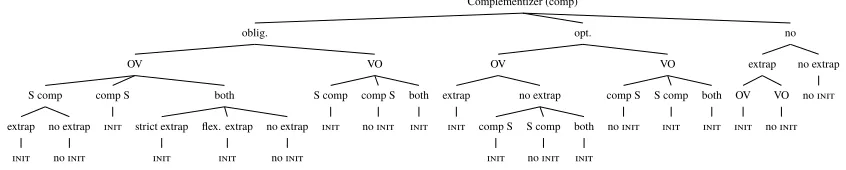
Figure1shows the logic that we add to the cus-tomization system that lets it decide whether to use the feature.18 The decision depends on
16A type can be instantiated by multiple lexical entries. 17Excluding V2 and free.
pre-Complementizer (comp)
oblig.
OV
S comp
extrap no extrap
no
comp S both
strict extrap flex. extrap no extrap
no
VO
S comp comp S
no both
opt.
OV
extrap no extrap
comp S S comp
no both
VO
comp S
no
S comp both
no
extrap
OV VO
no no extrap
[image:8.612.92.515.63.148.2]no
Figure 1: Decision tree illustrating the logic of using the feature based on user choices
whether there is a complementizer, whether it is obligatory or optional, what is the basic word or-der, is there extraposition and is it strict or flex-ible, and how does the complementizer attach to the clause. If the feature is used, then all HCR and all lexical items which can go through the HCR must be properly constrained for + or . The logic associated with the feature is simpler: it is used only with VOS and V-initial word orders when there is extraposition.
4.3.4 Summary
This section described the process and the main techniques used to implement the Clausal Com-plements library for the Grammar Matrix. We operate in a large space of theoretically possi-ble user choices combinations (over 2300) where the ultimate goal is to emit streamlined grammars which behave correctly for any valid combination of choices (and a language defined by them). The development was driven by a sample of pseudo-and illustrative (development) languages pseudo-and was evaluated as described in the next section. 5 Testing, Evaluation, and Error
Analysis
To test the typological legitimacy and the rigor of our analysis, we apply a three-stage process where we test grammars against testsuites. The process used in all stages is described in §4.3.1. The first two stages involving 50 pseudolanguages and 5 velopment languages are part of the test-driven de-velopment. We chose the development languages which exhibited the full range of in-scope comple-mentation phenomena and for which we had both some sentences and a description sufficient for us to fill out the questionnaire. Table1summarizes
cedes verb); pos (grammatical sentences); S comp (clause followed by complementizer); strat (strategy); VO (verb pre-cedes object); WO (word order). Language families: AA (Afro-Asiatic); Astrn (Austronesian); Awk (Arawak); IE (Indo-European); NS (Nilo-Saharan); NC (Niger-Congo); PN (Pama-Nyungan); PP (Plateau Penutian); Tur (Turkic).
the phenomena covered by the development lan-guages.19
As for testing the interaction with other libraries, we included all the choices that were relevant to the testsuites. For example, if the language has case and the sentences with clausal complements showed this, we filled out the Case portion of the questionnaire and added appropriate lexical rules on the Morphology page. Case, word order, mor-phology, and tense, aspect and mood choices came up most often.
After addressing a few issues uncovered by the pseudo- and development languages, we achieve 100% coverage and 0% overgeneration on their testsuites (Table 1). Furthermore, we checked that all parses for each sentence are warranted, i.e. there is no unwanted ambiguity. At the same time, the library was used in a course where students implemented grammar fragments for 5 more lan-guages,21which helped us discover an issue in the
interaction with the information structure library (Song,2014).
Finally, we evaluate the library on 5 held-out languages from different language families than the development languages.22 The results are
pre-sented in Table2. Coverage and overgeneration are given in numbers of sentences in the testsuite (4/8 means 4 out of 8 were parsed).
In Jalkunan (SOV), there is a kind of clausal
19German (Sapp, 2006), Tagalog (Hoenigswald et al., 1975), Lango (Noonan,2007), Turkish (Kornfilt,2013). The first author, a native speaker of Russian, provided the testsuite and the choices for Russian.
20We targeted a fragment of German with obligatory com-plementizers and V2/V-final word order variation.
21Akuntsu [aqz] (Tupian); Lhasa Tibetan [bod] (Tibeto-Burman), Dzongkha [dzo] (Tibeto-(Tibeto-Burman), Dagaare [gur] (Niger-Congo), Yolmo [scp] (Tibeto-Burman).
Language iso639-3 fam WO comp order morph extrap # strat pos neg
Russian rus IE free opt comp S nmz,form - 3 6 11
German deu IE V2/V-fin oblig20 comp S. - - 1 6 4
Tagalog tgl Astrn. V-in oblig comp S - flexible 1 3 4
Lango laj NS SVO oblig comp S mood - 3 4 4
[image:9.612.109.509.58.118.2]Turkish tur Tur SOV opt both nmz, form strict 4 7 9
Table 1: Phenomena covered in the development languages. Coverage is 100%, overgeneration is 0%.
Language iso639-3 fam WO comp order morph extrap # strat. Cov. Overgen.
Jalkunan bxl NC SOV opt comp S - strict 1 4/8 0/12
Paresi-Haliti pab Awk SOV - - nmz strict 1 5/5 0/5
Yakima Sahaptin yak PP free - - nmz - 1 10/10 0/6
Modern Hebrew heb AA SVO oblig comp S - - 1 2/2 0/9
Wangkangurru wgg PN free - - aspect - 1 10/10 0/3
Table 2: Coverage and overgeneration on sentences from held-out language families.
complement extraposition where a “dummy” 3 pronoun (similar to it in English) stays in the sentence-medial position while the clausal com-plement is extraposed (Heath,2017). We had not considered this strategy during the development since we hadn’t come across it in the literature, so we could not parse those items. In addition, we discovered a bug in the interaction with the word order library which places constraints on the or-der of auxiliaries and their complements. Some of the Jalkunan sentences had auxiliaries, and we also could not parse them due to the bug; hence the 50% coverage. On all other languages we achieve 100% coverage and 0% overgeneration (again, with no spurious ambiguity).
The testsuites represent typologically diverse languages, and so one testsuite may emphasize word order variation, another morphology, etc. The descriptive grammars for held-out languages only included one in-scope strategy per language. In general, our held-out grammars contain rela-tively few examples which illustrated basic com-plementation.23 Our source for Modern Hebrew,
Zuckermann 2006, for example, identified a
sin-gle strict complementation strategy, and so for that language we have just one grammatical sentence illustrating simple noun complementation and one grammatical sentence illustrating clausal comple-mentation. The more strategies in a language, the more flexible they are, and the clearer the author of the grammar describes them in isolation from other phenomena, the more sentences we can in-clude. The point of the evaluation is to
approx-23Descriptive grammars seem to prioritize complicated ex-amples of complex clauses. This differs from the data from development languages which were picked so as to better in-form the implementation of the library.
imate quantitatively how well a system would do for a linguist working from a reasonably thorough description of a language we had not worked with.
6 Conclusion
We presented a clausal complements library for the LinGO Grammar Matrix. To this end, we im-plemented an HPSG-based analysis of a range of complementation phenomena attested in the typo-logical literature. The library allows the grammar engineer to include basic clausal complements in their starter grammar in a streamlined system with appropriate interaction with other phenomena, thus extending the initial coverage of the grammar frag-ment that can be obtained automatically. Available choices define thousands of possible combinations for which the library needs to emit correct code. We make sure we have correct behavior on a sam-ple of 50 choices combinations and 5 development languages; on testsuites from 5 held-out languages, we achieve 88% coverage and no overgeneration.
In the future, we plan to extend the system to handle such related phenomena as subject shar-ing, sentential subjects, embedded questions, and displacement to the beginning of the clause. In terms of interactions with other libraries, we will look at complex sentences combining clausal com-plements and clausal modifiers and coordinated clausal complements. Our library will also serve as a foundation for testing future additions to the Grammar Matrix for their interaction with subor-dinate clauses, e.g.wh-questions. Finally, we plan to explore how to infer answers to our additions to the questionnaire from collections of interlinear glossed text, along the lines ofBender et al.(2013)
[image:9.612.101.518.150.210.2]Acknowledgements
We thank the anonymous reviewers for SCiL 2019 for helpful discussion.
This material is based upon work supported by the National Science Foundation under Grant No. BCS-1561833. Any opinions, findings, and con-clusions or recommendations expressed in this ma-terial are those of the authors and do not necessarily reflect the views of the National Science Founda-tion.
References
Emily M. Bender, Joshua Crowgey, Michael Wayne Goodman, and Fei Xia. 2014. Learning grammar specifications from IGT: A case study of Chintang. InProceedings of the 2014 Workshop on the Use of Computational Methods in the Study of Endangered Languages, pages 43–53. Association for Computa-tional Linguistics.
Emily M Bender, Scott Drellishak, Antske Fokkens, Laurie Poulson, and Safiyyah Saleem. 2010. Gram-mar customization. Research on Language & Com-putation, 8(1):23–72. 10.1007/s11168-010-9070-1. Emily M. Bender and Dan Flickinger. 2005. Rapid
prototyping of scalable grammars: Towards modu-larity in extensions to a language-independent core. InProceedings of the 2nd International Joint Con-ference on Natural Language Processing IJCNLP-05 (Posters/Demos), Jeju Island, Korea.
Emily M. Bender, Dan Flickinger, and Stephan Oepen. 2002. The Grammar Matrix: An open-source starter-kit for the rapid development of cross-linguistically consistent broad-coverage precision grammars. In Proceedings of the Workshop on Grammar Engineer-ing and Evaluation at the 19th International Con-ference on Computational Linguistics, pages 8–14, Taipei, Taiwan.
Emily M. Bender, Michael Wayne Goodman, Joshua Crowgey, and Fei Xia. 2013. Towards creating pre-cision grammars from interlinear glossed text: Infer-ring large-scale typological properties. In Proceed-ings of the 7th Workshop on Language Technology for Cultural Heritage, Social Sciences, and Human-ities, pages 74–83, Sofia, Bulgaria. Association for Computational Linguistics.
Ana Paula Barros Brandão. A Reference Grammar of Paresi-Haliti (Arawak). Ph.D. thesis, The University of Texas at Austin.
Miriam Butt and Tracy Holloway King. 2002. Urdu and the Parallel Grammar project. InProceedings of the 3rd workshop on Asian language resources and international standardization-Volume 12, pages 1–3. Association for Computational Linguistics.
Ann Copestake. 2000. Appendix: Definitions of typed feature structures. Natural Language Engineering, 6(01):109–112.
Ann Copestake. 2002. Implementing typed feature structure grammars. CSLI publications Stanford. Ann Copestake, Dan Flickinger, Carl Pollard, and
Ivan A Sag. 2005. Minimal recursion semantics: An introduction.Research on language and compu-tation, 3(2-3):281–332.
Berthold Crysmann. 2013. On the locality of com-plement clause and relative clause extraposition. Rightward movement in a comparative perspective, 200:369–395.
Scott Drellishak. 2009.Widespread but Not Universal: Improving the Typological Coverage of the Grammar Matrix. Ph.D. thesis, University of Washington. Judith Engelkamp, Gregor Erbach, and Hans
Uszko-reit. 1992. Handling linear precedence constraints by unification. In Proceedings of the 30th annual meeting on Association for Computational Linguis-tics, pages 201–208. Association for Computational Linguistics.
Dan Flickinger. 2000. On building a more efficient grammar by exploiting types.Natural Language En-gineering, 6(01):15–28.
Dan Flickinger. 2011. Accuracy v. robustness in gram-mar engineering. In Emily M. Bender and Jennifer E. Arnold, editors,Language from a Cognitive Perspec-tive: Grammar, Usage and Processing, pages 31–50. CSLI Publications, Stanford, CA.
Antske Sibelle Fokkens. 2014. Enhancing Empiri-cal Research for LinguistiEmpiri-cally Motivated Precision Grammars. Ph.D. thesis, Department of Computa-tional Linguistics, Universität des Saarlandes. Jonathan Ginzburg and Ivan Sag. 2000. Interrogative
investigations. Stanford: CSLI publications. Michael Wayne Goodman. 2013. Generation of
machine-readable morphological rules from human-readable input. Seattle: University of Washington Working Papers in Linguistics, 30.
Michael Wayne Goodman and Emily M. Bender. 2010. What’s in a word? Refining the morphotactic infras-tructure in the LinGO Grammar Matrix customiza-tion system. InWorkshop on Morphology and For-mal Grammar, Paris.
Jeffrey Heath. 2017. A grammar of Jalkunan (Mande, Burkina Faso). Language Description Heritage Li-brary.
Luise A Hercus. 1994. A grammar of the Arabana-Wangkangurru language: Lake Eyre Basin, South Australia. Australian National Univ.
Kristen Howell and Olga Zamaraeva. 2018. Clausal modifiers in the grammar matrix. InProceedings of the 27th International Conference on Computational Linguistics, pages 2939–2952.
Kristen Howell, Olga Zamaraeva, and Emily M. Bender. 2018. Nominalized clauses in the Grammar Matrix. InProceedings of the 25th International Conference on Head-Driven Phrase Structure Grammar, pages 68–88.
Joana Worth Jansen. 2010. A Grammar of Yakima Ichishkíin/Sahaptin. Ph.D. thesis, University of Ore-gon.
Frank Keller. 1995. Towards an account of extraposi-tion in HPSG. InProceedings of the seventh con-ference on European chapter of the Association for Computational Linguistics, pages 301–306. Morgan Kaufmann Publishers Inc.
Jaklin Kornfilt. 2013.Turkish. Routledge, London. Stefan Müller. 2015. The CoreGram project:
Theoreti-cal linguistics, theory development and verification. Journal of Language Modelling, 3(1):21–86. Michael Noonan. 2007. Complementation. In Timothy
Shopen, editor, Language Typology and Syntactic Description, volume 2. Cambridge University Press, Cambridge, UK.
Kelly O’Hara. 2008.A morphotactic infrastructure for a grammar customization system. Ph.D. thesis, Uni-versity of Washington.
Carl Pollard and Ivan A. Sag. 1994. Head-Driven Phrase Structure Grammar. Studies in Contempo-rary Linguistics. The University of Chicago Press and CSLI Publications, Chicago, IL and Stanford, CA.
Laurie Poulson. 2011. Meta-modeling of tense and as-pect in a cross-linguistic grammar engineering plat-form. University of Washington Working Papers in Linguistics (UWWPL), 28.
Ivan A. Sag, Thomas Wasow, and Emily M. Bender. 2003. Syntactic Theory: A Formal Introduction, second edition. CSLI, Stanford, CA.
Safiyyah Saleem and Emily M Bender. 2010. Argu-ment optionality in the LinGO Grammar Matrix. InProceedings of the 23rd international conference on computational linguistics: posters, pages 1068– 1076. Association for Computational Linguistics. Christopher D Sapp. 2006. Verb order in subordinate
clauses from Early New High German to Modern German. Indiana University.
Melanie Siegel, Emily M. Bender, and Francis Bond. 2016.Jacy: An Implemented Grammar of Japanese. CSLI Studies in Computational Linguistics. CSLI Publications, Stanford CA.
Sanghoun Song. 2014.A grammar library for informa-tion structure. Ph.D. thesis, University of Washing-ton.
Olga Zamaraeva, Kristen Howell, and Emily M Ben-der. 2018. A cross-linguistic account of subordinator and subordinate clause position. Poster presented at The 25th International Conference on Head-Driven Phrase Structure Grammar, Tokyo, Japan.