• No results found

submitted in partial fulfillment of the requirements for the degree of

N/A
N/A
Protected

Academic year: 2020

Share "submitted in partial fulfillment of the requirements for the degree of "

Copied!
88
0
0

Loading.... (view fulltext now)

Full text

(1)

ON VEGETATION AND INSECTS IN SAGEBRUSH HABITATS

by

Ashley T. Rohde

A thesis

submitted in partial fulfillment of the requirements for the degree of

Master of Science in Biology Boise State University

May 2014

(2)

© 2014

Ashley T. Rohde

ALL RIGHTS RESERVED

(3)

DEFENSE COMMITTEE AND FINAL READING APPROVALS

of the thesis submitted by

Ashley T. Rohde

Thesis Title: Influence of Wildfire Disturbance and Post-Fire Seeding on Vegetation and Insects in Sagebrush Habitats

Date of Final Oral Examination: 19 March 2014

The following individuals read and discussed the thesis submitted by student Ashley T.

Rohde, and they evaluated her presentation and response to questions during the final oral examination. They found that the student passed the final oral examination.

Stephen J. Novak, Ph.D. Co-Chair, Supervisory Committee

David S. Pilliod, Ph.D. Co-Chair, Supervisory Committee

James F. Smith, Ph.D. Member, Supervisory Committee

The final reading approval of the thesis was granted by Stephen J. Novak, Ph.D., Co- Chair of the Supervisory Committee and David S. Pilliod, Ph.D., Co-Chair of the Supervisory Committee. The thesis was approved for the Graduate College by John R.

Pelton, Ph.D., Dean of the Graduate College.

(4)

iv

ACKNOWLEDGMENTS

I would like to first sincerely thank both of my major professors, Dr. Stephen Novak and Dr. David Pilliod, for their thoughtful advice and limitless patience

throughout the time I spent working on this project. I was fortunate to have two strong leaders guiding my progress while simultaneously encouraging me to work independently toward my goals. Without the trust and resources that they placed in me, I would not have been able to finish or even begin this project. I am very grateful to have such careful and thoughtful mentors and I look forward to continuing to learn from their experience through our ongoing work together, friendship, and like-minded passion for understanding the natural world.

I would also like to thank Dr. James F. Smith, the final member of my committee.

I depended on Dr. Smith’s knowledge and advice far beyond his obligations as a committee member and he always welcomed my questions with patience. I am deeply grateful for Dr. Smith’s contributions to this project and for his friendship throughout the time we spent working on it.

Thanks to Robert Arkle for all of the time and support that he has provided me during this project and beyond. His mentorship has been invaluable to me in the

development of my skills as a field biologist and a community biologist. His instructions

in sampling technique and data analysis are valuable tools that will help me be successful

(5)

v

throughout my career. He also taught me that you can fix just about anything with a leatherman and a pin flag.

I had many field and lab assistants to whom I am grateful, but none was as cheerful and diligent as Kellie Rey. I owe her my deepest thanks for her insect identification skills, her excellent work ethic in the face of sometimes grueling conditions, and her unwavering friendship.

I owe a debt of gratitude to my parents, Alan and Julia Rohde, who raised me to believe I am capable of anything if I am willing to work and sacrifice to achieve it. I am forever grateful to my grandmother, Julia Moylan, who first inspired my interest in the outdoors when she helped me catch insects in my backyard as a child and supported me throughout my education through prayers, love, and newspaper clippings from home. I am overwhelmed by the support I received from my dear friend Timothy Lewis, who was always available as the volunteer field assistant, field equipment engineer, one-man search and rescue team, dog-sitter, or shoulder to cry on. For all of this and more, I am sincerely grateful to my family.

Finally, thank you to all of the members of my lab group and people at the U.S.G.S. Snake River Field Station for your help and support throughout this process.

Funding for this project was provided by the U.S. Geological Survey and the Idaho

Bureau of Land Management.

(6)

vi ABSTRACT

Disturbance events alter community composition and structure because of

differences in the response of individual taxa, changes in habitat resulting in colonization by new taxa, and alteration of biotic interaction patterns. Recent changes in disturbance types, frequencies, and intensities caused by anthropogenic activities may further alter community composition and structure if these disturbances exceed the tolerances or adaptations of some taxa. In sagebrush steppe habitats of the western United States, wildfire is the current dominant disturbance type, burning millions of hectares annually.

Further, up to 90% of sagebrush-steppe ecosystems are affected by anthropogenic influences such as invasive species. Post-fire seeding treatments are widely used to reduce soil erosion, control the establishment of invasive plant species, and restore habitat for wildlife.

I investigated insect community responses to wildfire and post-fire seeding in

sagebrush-steppe habitats in southwestern Idaho by comparing insect communities

among three condition classes (hereafter treatments): burned-and-seeded (BS), burned-

and-unseeded (BX), and unburned (UX), which served as a control. We also quantified

indirect effects of treatments on insects by assessing vegetation composition and structure

(height) differences among these treatments. We found post-fire seeding changed the

vegetation composition at BS plots compared to the BX plots by increasing the amount

of seeded bunchgrasses and forbs, but these seeding efforts did not achieve the vegetation

(7)

vii

composition of UX plots because sagebrush was not successfully re-established. We found evidence to suggest that differences in vegetation among treatments affected the composition of insect assemblages. The strongest difference was between UX and burned (BS and BX) plots, but we found some evidence that insect communities were influenced by vegetation differences between BS and BX plots when UX plots were removed from the analysis.

Correlations between insect families and vegetation variables provide useful

information for evaluating potential effects of shrubland fires on insects and how best to

support their post-fire recovery. This information could be used to assess the potential for

recovery of insect assemblages to various disturbance types, which could in turn inform

the development of ecological models to potentially predict the threshold of tolerance for

functional groups of insects to disturbances.

(8)

viii

TABLE OF CONTENTS

ACKNOWLEDGMENTS ... iv

ABSTRACT ... vi

LIST OF TABLES ... x

LIST OF FIGURES ... xiii

INTRODUCTION ... 1

METHODS ... 7

Study Sites ... 7

Sampling Design ... 8

Weather ... 9

Vegetation Sampling ... 10

Insect Sampling ... 12

Data Analysis ... 13

RESULTS ... 15

Differences in Vegetation Composition Among Post-Fire Seeding Treatments ... 15

Relationship Between Vegetation Composition and Insects ... 16

Relationship Between Insects and Post-Fire Seeding ... 18

Influence of Landscape-Scale Interactions ... 19

DISCUSSION ... 21

Differences in Vegetation Composition Among Treatments... 21

(9)

ix

The Relationship Between Vegetation Composition and Insects ... 22

The Relationship Between Insects and Post-Fire Seeding ... 24

Implications of the Study ... 29

LITERATURE CITED ... 31

TABLES ... 37

FIGURES ... 52

APPENDIX A ... 65

Seed Mixes for the Clover, Murphy and Big Crow Fires as They Were Recorded by the Jarbidge Field Office, Bureau of Land Management and Catalogued by the Land Treatment Digital Library (Pilliod and Welty 2013) ... 65

APPENDIX B ... 70

Variables That Were Identified Using Samplepoint Measurement Software 1.50 (USDA Agricultural Research Service, Cheyenne, WY/ Fort Collins, CO) and Height Measurements. % Indicates Percent Cover Measurements. These Variables Were Grouped into Vegetation Functional Groups for Some Analyses as Shown in Table 3. ... 70

APPENDIX C ... 72

Insect Families That Were Collected Using Japanese Beetle Flight Traps and

Pitfall Traps at Three Sites in the Jarbidge Field office, ID ... 72

(10)

x

LIST OF TABLES

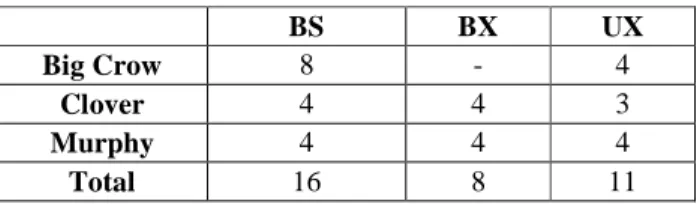
Table 1. The number of 1-ha plots sampled by treatment across study sites. We sampled 24 burned plots (BS + BX), 16 that were seeded (BS) and 8 that were not seeded (BX); 11 nearby unburned plots (UX) served as controls or pre-fire reference conditions. No unburned, but seeded (i.e., US) treatments existed... 37 Table 2. GLM analysis comparing differences in percent cover of vegetation

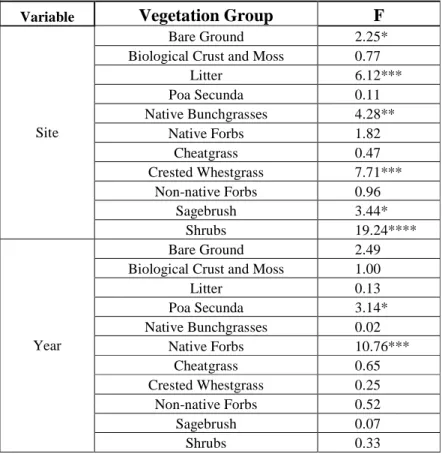
functional groups among sites (Clover, Big Crow and Murphy) and years (2010 and 2011) at UX plots. Asterisks next to F values indicate level of significance: * = P>0.1, **=P>0.05, ***=P>0.01, ****=P>0.001. ... 38 Table 3. Mean percent cover of vegetation functional groups in each treatment type

and GLM analysis comparing the groups among treatments. Asterisks next to F values indicate level of significance: * = P>0.1, **=P>0.05,

***=P>0.01, ****=P>0.001. ... 39 Table 4. MRPP analysis of the effect of treatment type on vegetation composition

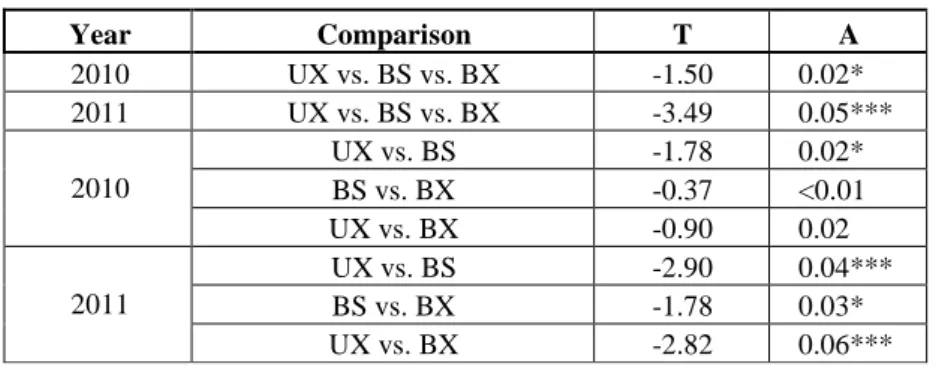
within years including comparisons of all treatment groups together and pairwise comparisons. Asterisks next to F values indicate level of

significance: * = P>0.1, **=P>0.05, ***=P>0.01, ****=P>0.001. ... 40 Table 5. Pairwise comparisons of the significant comparisons found for Simpson’s

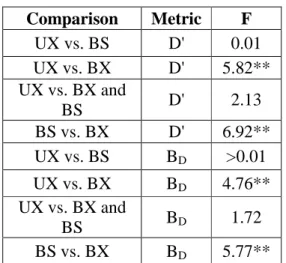
D’ and B

D

for vegetation composition among treatments. Asterisks next to F values indicate level of significance: * = P>0.1, **=P>0.05,

***=P>0.01, ****=P>0.001. ... 41 Table 6. General linear models were used to compare each axis of the NMS

representing insect sample composition to the overall vegetation

composition represented by all NMS values from the vegetation analysis.

One axis from each insect NMS correlated significantly with the vegetation at the sites when alpha = 0.1 or lower. Asterisks next to F values indicate level of significance: * = P>0.1, **=P>0.05, ***=P>0.01,

****=P>0.001. ... 42 Table 7. Correlation analyses were conducted between each family of insects and

the vegetation NMS values to determine the families that had the strongest

relationships with vegetation. Only families with R

2

values above 0.2

were treated as biologically meaningful and are shown here. ... 43

(11)

xi

Table 8. GLM analyses of the insect families found to be meaningful in Table 7 with the percent cover of vegetation functional groups. Non-significant relationships were not included. Numbers next to insect families represent vegetation conditions that may be associated with the vegetation groups preferred by the families: 1= sagebrush dominant, 2=bunchgrass

dominant, 3= annual grass dominant. Asterisks next to F values indicate level of significance: * = P>0.1, **=P>0.05, ***=P>0.01, ****=P>0.001.

... 44 Table 9. MRPP values for the analysis of insects from flight and pitfall traps from

all sites in 2010 and 2011. T describes the degree of separation between groups; groups with more negative scores are more distinctly separated. A represents the homogeneity of the samples within groups; high scores of A indicate high similarity among samples within groups. Asterisks next to A values indicate level of significance: * = P>0.1, **=P>0.05, ***=P>0.01,

****=P>0.001. ... 46 Table 10. MRPP values for the pairwise comparisons of insects from flight and

pitfall traps from all sites in 2010 and 2011. T describes the degree of separation between groups; groups with more negative scores are more distinctly separated. A represents the homogeneity of the samples within groups; high scores of A indicate high similarity among samples within groups. Asterisks next to A values indicate level of significance: * = P>0.1, **=P>0.05, ***=P>0.01, ****=P>0.001. ... 47 Table 11. MRPP analysis of insect assemblages by treatment for all sites separately.

The analysis was run including and excluding the UX treatment at the Clover and Murphy sites. ... 48 Table 12. Summary data for annual sampling using flight and pitfall traps in 2010

and 2011. A) Samples at all three sites including UX plots. B) Samples at all three sites excluding UX plots. The data were analyzed using the concept of alpha, beta and gamma diversity (Whittaker 1972). Alpha values represent the average number of families present in each sampling unit at the site. Gamma values represent the estimated number of families present at the site using the appropriate richness estimator (Chao and Jost 2012, Colwell 2013). Values in parentheses represent the estimated number of families present in each site after adjustment for sampling bias with rarefaction but without correction by a richness estimator. Beta values were calculated by dividing gamma by alpha to give a relative representation of heterogeneity at each site. As with gamma, values in parentheses represent values that were not corrected using a richness estimator. ... 49 Table 13. Simpson’s Diversity (D’) and B

D

, a measure of heterogeneity, were

calculated for each insect trapping type and compared to vegetation

(12)

xii

grouped by treatment using GLM. Asterisks next to F values indicate level of significance: * = P>0.1, **=P>0.05, ***=P>0.01, ****=P>0.001.

... 50

Table 14. Pairwise comparisons of the significant GLM analyses of D’ and B

D

found in insect samples from yellow flight traps in 2010 (Table 13). Asterisks next to F values indicate level of significance: * = P>0.1, **=P>0.05, ***=P>0.01, ****=P>0.001. ... 51

Table A1. Seed mixes for the Clover Complex (1995). ... 66

Table A2. Seed mix for the Big Crow Fire (2002). ... 68

Table A3. Seed mixes for the Murphy Complex (2007). ... 69

(13)

xiii

LIST OF FIGURES

Figure 1. A flow chart describing the known relationships within the study system.

Solid arrows represent relationships that were measured and dashed arrows represent relationships that were not measured but are believed to exist. ... 52 Figure 2. The Northern Basin and Range Ecoregion (shown in green) containing

seven randomly selected hexagon clusters. The cluster in red was used to select sampling sites for this study... 53 Figure 3. Polygons representing all of the fires within the boundaries of the

sampling hexagons (orange). Three burned areas, one within each hexagon, were randomly selected for sampling: the Clover fire, which burned in 1995, the Big Crow fire, which burned in 2002, and the Murphy fire, which burned in 2007. ... 54 Figure 4. The cumulative growing degree days (GDD) at the Clover, Big Crow and

Murphy sampling sites in 2010 and 2011. ... 55 Figure 5. The cumulative precipitation at the Clover, Big Crow and Murphy sites in 2010 and 2011. ... 56 Figure 6. The percent land cover of shrub and annual grasses in a 3-kilometer radius surrounding each sampling site. ... 57 Figure 7. The arrangement of pitfall traps and flight traps within each one-hectare

plot at all sites. Grey circles represent pitfall traps. Blue and yellow squares represent the blue and yellow flight traps. ... 58 Figure 8. The three-dimensional NMS ordination produced by vegetation samples

from 2010. Cubes represent samples. ... 59 Figure 10. The two-dimensional NMS ordination produced by the insect samples

from flight traps in 2010 and 2011. Triangles represent samples. Vertices represent measured vegetation components that were associated with insect assemblage composition. ... 61 Figure 11. The three-dimensional solution of the NMS analysis of pitfall traps from

all sites in 2010 and 2011. Squares represent insect samples. ... 62

(14)

xiv

Figure 12. Axes one and two of the three-dimensional NMS ordination produced by insect samples from pitfall traps in 2010 and 2011. Triangles represent samples. Vertices represent measured vegetation components that were associated with insect assemblage composition. ... 63 Figure 13. Linear regression of the number of insect families associated with

unburned plots at each sampling site and the percent of shrubland cover

within a 3-kilometer radius of the site. Insects from flight traps and pitfall

traps are shown separately. ... 64

(15)

INTRODUCTION

The composition and structure of biotic communities is influenced by the regional species pool and develops as a consequence of interactions between abiotic and biotic elements of ecosystems. Community composition and structure can be altered by changes in the environment associated with disturbance events and other processes. The types and frequencies of disturbances may alter community composition and structure because of differences in responses among taxa and colonization by new taxa that colonize disturbed habitats or vacant niches. Responses of different taxa to disturbance are complicated by ecological complexities of species-habitat associations and inter- specific interactions, such as predation and competition. Facilitation, release, and other inter-specific processes in the post-disturbance environment result in dynamic

communities, which may form novel assemblages that are likely to change through time.

Recent changes in disturbance types, intensities, and frequencies caused by

anthropogenic activities may further alter community dynamics if altered disturbance

regimes exceed the tolerances or adaptations of some taxa. Documenting community

composition in post-disturbance habitats and examining the biotic and abiotic factors that

influence it is important for evaluating the successional state of communities and the

likelihood that they will achieve their historical stable state compositions, especially

following disturbances caused by human activities. This information may be useful for

(16)

biological conservation and restoration efforts that aim to maximize ecosystem or habitat functionality.

At the beginning of the twentieth century, two opposing explanations of the mechanism of post-disturbance succession were developed and vigorously debated.

Fredrick Clements (1916, 1936) described succession as an orderly movement through predictable communities that alter the environment and facilitate subsequent communities until a defined and stable community is achieved. Henry Gleason (1926), however, described communities as haphazard assemblies of species whose colonization of disturbed areas is dependent on interactions with environment and proximity to the disturbed areas. Though there were examples of communities that closely matched both hypotheses (the Intermountain West for Clements’s linear march toward stability and the Great Lakes region for Gleason’s haphazard assemblies), no conclusive argument could be made for a general application of either (Kohler 2008). Ecologists have more recently considered models that combine aspects of both hypotheses (Roundy 2005).

A goal of restoration activities is to re-establish historical climax communities.

Expectations for the recovery of the same communities in the post-disturbance period makes two assumptions that may or may not hold true for anthropogenically altered communities: 1) communities are allowed to reach their historical equilibrium structure before another disturbance event occurs and 2) new species or new dominance

arrangements among populations during successional stages prior to the equilibrium state do not alter the environment in a manner that changes the basic carrying capacity of that environment (Verhulst 1838, Pearl 1925). If either assumption is violated, it is

reasonable to assume that the historical climax community will not be achieved (as

(17)

described by Clements 1916, 1936), a novel climax community consisting of new species or dominance arrangements will likely emerge (Gleason 1926), and consequently, the historical trophic structure of the community will be altered.

Quantitative measurements of the ecological thresholds beyond which

communities can no longer recover from a disturbance or other environmental change have been described by state and transition models (STM’s) (Westoby et al. 1989, Scheffer et al. 2009). State and transition models describe stable and transitory states of communities as they are altered from their native state by disturbance. These models predict a threshold at which recovery to the native state becomes less likely and they are often used to identify which ecosystems are approaching this threshold (Scheffer et al.

2009). These models are used by federal agencies to define rangeland management goals and minimize transitions of landscapes from historical to novel conditions (http://directives.sc.egov.usda.gov/OpenNonWebContent.aspx?content=27123.wba).

However, taxonomic groups are affected in various ways and to varying degrees by changing environmental conditions. Identifying the level of impact of disturbances for any taxon is a vital first step before ecological responses of communities can be measured and mitigation efforts can be implemented.

It is unrealistic to expect the responses to disturbance of all species (or all taxonomic groups) to be measured within a community. As a surrogate for this,

taxonomic assemblages must be chosen that are as representative of the entire community

as is possible. In this context, assemblages represent taxa within communities that can be

classified as a defined group based on major life-history traits or their relatively close

interactions or relationships. Ideally, the assemblages chosen should be widespread,

(18)

common and quick to respond to habitat changes (Brown 1997). Insects have been shown to be a good model for this purpose (McGeoch 1998, Kimberling et al. 2001, Karr and Kimberling 2003, McGeoch 2007). They have short generation times, relatively rapid responses to disturbance (Erhardt and Thomas 1991, Brown 1997, Hodkinson and Jackson 2005, McGeoch 2007), and often consist of large population sizes, allowing robust sample sizes for statistical analysis. Moreover, insects are critically important members of communities around the world because they occupy the widest variety of niches and play more ecological roles than any other group of animals (Longcore 2003).

Habitat destruction and fragmentation through anthropogenic activities and the introduction and establishment of invasive species have contributed greatly to the interruption of many natural disturbance regimes (Mack et al. 2000). Of these, invasive annual grasses and livestock overgrazing practices have arguably caused the most ecological and economic damage in shrub and grass-dominated systems (D’Antonio and Vitousek 1992, Mack et al. 2000, Duncan et al. 2004, Pimentel et al. 2000). Sagebrush- dominated ecosystems cover 6.28 x 10

5

km

2

in the western United States (West 1983, West 1983b). Estimates suggest 80 to 90% of this ecosystem is negatively affected by anthropogenic influences such as agricultural development, urbanization, livestock grazing, and the introduction of invasive species (West 1999, Anderson and Inouye 2001, Knick 2013). Most sagebrush-steppe habitats are vulnerable to invasion by Bromus tectorum (downy brome or cheatgrass; Monsen 1994, Knick 1999, Bradley 2009, Balch

et al. 2013) through the “cheatgrass fire-cycle” (D’Antonio and Vitousek 1992), which

has converted millions of hectares of native shrublands to areas dominated by invasive

annual grasses (Knick 1999, Balch et al. 2013). Although sagebrush habitats in the

(19)

Intermountain West historically experienced range fires, the introduction of B. tectorum has greatly increased the frequency, size, and intensity of fires in this system (Whisenant 1990, Davies et al. 2011, Balch et al. 2013). Larger, more frequent stand replacement fires have been shown to affect sensitive sagebrush-obligate and sagebrush-dependent wildlife species (Knick 1999, Nelle et al. 2000, McGee 1982, Longland and Bateman 2002).

Despite the importance of insects within many ecosystems, studies on the effects of habitat loss and fragmentation on insect communities have mostly been conducted in agriculture-dominated landscapes (Mazerolle & Villard 1999, Jeanneret et al. 2003).

Little information exists on the response of insects to wildfire and habitat restoration in rangelands (but see Wenninger and Inouye 2008; and for insect response to other disturbances in rangelands see Kimberling et al. 2001 and Karr and Kimberling 2003).

We assessed the response of insect assemblage composition to wildfire

disturbance and post-fire rehabilitation activities among three condition classes (hereafter

referred to as treatments), burned-and-seeded (BS), burned-and-unseeded (BX), and

unburned (UX), in sagebrush-steppe habitats. Additionally, we determined how insect

assemblage composition in sagebrush-steppe habitats is influenced by vegetation

composition (Fig. 1). The effects of range fires in sagebrush-steppe habitats varies with

the number and intensity of these events and can change vegetation composition in these

habitats by removing native shrubs, bunchgrasses, and forbs, and allowing non-native

annual grasses and forbs to colonize and dominate the post-fire environment. Reseeding

efforts are conducted in an attempt to rehabilitate as many of the native components in

these habitats as possible. We hypothesized that 1) post-fire seeding treatments would

(20)

successfully restore bunchgrasses to sagebrush-steppe habitats, but the loss of sagebrush and forbs and the slow pace of natural regeneration would prevent the full recovery of the vegetation within the time since burn at these sites. Therefore, we predicted that the UX, BS, and BX treatments would represent different states of vegetation composition (species richness and relative abundance). 2) Presence or absence of specific vegetation functional groups, such as shrubs, bunchgrasses or annual grasses, would be important in determining the quality of these sites for insects with different specific habitat

requirements and, therefore, would be associated with specific insect groups. 3) Post-fire

seeding treatments would lack the structure and diversity of vegetation necessary to

provide adequate habitat to maintain the diversity of insects outside of the burned area,

although the insect diversity of BS sites would likely be higher than that of BX sites.

(21)

METHODS

Study Sites

I conducted this study across three study sites that were randomly selected from all known fire rehabilitation projects (Land Treatment Digital Library [LTDL]; Pilliod and Welty 2013) located within the boundaries of the Northern Basin and Range Ecoregion (U.S. EPA, Level III Ecoregions). Using a geographic information system (GIS) (ESRI, ArcMap 9.3), I first tessellated the entire area using a hexagon grid and then I randomly selected seven clusters of three adjacent hexagons within the boundaries of the Ecoregion (Fig 2). I screened the hexagons to ensure that each contained ≥50%

federal land ownership (largely contiguous) and sufficient roads to allow access to sampling areas. From the seven hexagon clusters in the Northern Basin and Range Ecoregion, I randomly selected one for sampling in this study (Fig. 2). Each hexagon was 64,851 ha in size. Within each of these hexagons, we used a GIS (ESRI, ArcMap 9.3) to randomly choose one burned area from all the known burned and seeded areas within each hexagon (Fig. 3, Land Treatment Digital Library [LTDL]; Pilliod and Welty 2013).

The study sites (hereafter referred to as sites) included burned areas of differing ages: the Clover Fire (1995), the Big Crow Fire (2002), and the Murphy Fire (2007, Fig.

3). The Murphy Fire was a large complex that would have been impractical to sample as

a whole, so I randomly selected a subset of the burned area for sampling by using the

(22)

average area of all other burns to draw a radius around a representative, randomly chosen point along the perimeter of the burn. Because we randomly selected our sampling sites from within a cluster of hexagons, which were randomly selected from within the Northern Basin and Range Ecoregion, the area of inference for this study is the Northern Basin and Range Ecoregion. I intentionally chose study sites with variation in times since fire to maximize the range of vegetation condition typically found in post-fire and post-seeding environments. However, our design did not allow for inferences about ecological responses related to time since fire because of small sample sizes and pseudo- replication of this factor (i.e. time since fire). Following each of these three fires, the majority of burned areas were treated with aerial or rangeland drill seeding treatments (see Appendix A for details about treatments). Potential differences in vegetation between drill and aerial seeding treatments were not examined in this study.

The sites were all located on moderately deep silty- or sandy-loam soils with slopes ranging from one to eight percent (USDA Natural Resources Conservation Service). The elevations of these sites ranged from 1372 to 1617 meters. They were all within the upper supramediterranean isobioclimate (Comer et al. 2003, Cress et al. 2009).

Sampling Design

I further tessellated the study sites plus a 50 m buffer outside each fire perimeter into 1-ha plots using ArcMap 9.3 (ESRI, Redlands, CA, USA) and randomly selected fifteen 1-ha plots within each of three strata: burned-seeded (BS), burned-unseeded (BX), and unburned (UX). During our first on-site visit, we selected for analysis four of the 15 1-ha plots from within each treatment type at each site, rejecting plots that were

inaccessible, included more than one ecological site (e.g., more than one soil type, slope),

(23)

or spanned the boundary of two treatment types. I obtained burn history from the U.S.

Geological Survey historic fire perimeters data from 1980 to 2007 (Connelly et al. 2004) and the Monitoring Trends in Burn Severity (MTBS) database (Eidenshink et al. 2007).

Post-fire seeding data were compiled from the LTDL (Pilliod and Welty 2013,

https://ltdl.wr.usgs.gov/). Treatments included various combinations of drill seeding or aerial seeding of both native-only and mixtures of native and non-native seed (Appendix 1). In the end, I established 12 1-ha sampling plots at Big Crow and Murphy sites and 11 plots at the Clover site (Table 1). The entire burned area of Big Crow had been seeded and thus we were unable to establish the BX treatment type at Big Crow.

Weather

Variability in weather among sites and between years was estimated using

growing degree days (GDD). Temperature data was collected using i-Button data loggers (Onset Computer Corporation, Bourne, MA) at the center of each sampling plot at all of the sites. GDD was calculated using a base temperature of 10 degrees celcius.

Measurements were started on March 1 of each year and continued until August 31, shortly after the last sampling period. This analysis showed little difference in GDD among sites or between years, though the value for 2010 at the Murphy site was slightly higher than the others (Fig. 4).

In addition to GDD, precipitation data was collected from the nearest RAWS

weather station (http://raws.fam.nwcg.gov/) to each of the sites. The Horse Butte

station was used for the Clover fire and the Big Crow fire and the Murphy Desert station

was used for the Murphy fire. Cumulative precipitation data was collected from October

1 of the year prior to sampling through August 31 of the sampling year. The analysis

(24)

indicated striking differences in precipitation between 2010 and 2011 (Fig. 5). Due to the difference in weather, especially precipitation, I analyzed the data from each year

separately,

Vegetation Sampling

I sampled the vegetation at each plot in 2010 and 2011 using a grid-point intercept method as described by Pilliod and Arkle (2013). In each 1-ha plot, I took six 2.5 m x 1 m photos using a Canon Powershot A590 IS digital camera fixed to a 2-meter monopod and aimed downward for a nadir perspective. This is the height recommended by Booth et al. (2006) for use of this technique in sagebrush-steppe habitats. I quantified percent cover of the tallest species or abiotic component (i.e., litter, bare soil, rock) by identifying what object was “hit” by 100 systematically selected points (pixels) per photo using Samplepoint Measurement Software 1.50 (USDA Agricultural Research Service, Cheyenne, WY/ Fort Collins, CO). Six photos per 1-ha plot were found to provide reasonable estimates of cover in similar shrub-steppe habitats, based on a comparison of methods used in other studies such as line-point intercept (Pilliod and Arkle 2013). In addition, I recorded maximum height of several functional groups of vegetation within a 1 m x 1 m frame placed at the center of the sampling plot: shrubs, native forbs (non- woody flowering plants), native bunch grasses, and non-native annual grasses. For a complete list of variables measured, see Appendix B.

To better understand the similarity of the vegetation in my study sites with that of

the surrounding landscape, I analyzed course-scale vegetation cover within a three-

kilometer buffer of the study sites using a land cover GIS layer (LANDFIRE Existing

Vegetation Type Layer. U.S. Department of Interior, Geological Survey. Available:

(25)

http://landfire.cr.usgs.gov [2013, June 26]). Vegetation surrounding the burned area may play a role in determining whether insects were able to survive the fire by escaping to undisturbed suitable habitat and/or whether insects were able to re-colonize the burned habitats quickly after the fire. I identified the percent cover of vegetation functional groups (i.e. shrubs, annual grasses) surrounding the sites using the land cover GIS layer.

I found differences in landscape vegetation cover surrounding our three study sites. The Clover site was surrounded by the most shrub cover (81.0%), followed by Big Crow (41.1%) and Murphy (22.6%). Annual grass cover, which was predominantly cheatgrass, followed the opposite trend with 11.9% annual grass cover at Clover, 47.2%

at Big Crow, and 69.5% at Murphy (Fig. 6).

In addition to measuring the vegetation surrounding the sites, I analyzed differences among the UX plots across sites to determine their similarity using multi- dimensional permutation procedures (MRPP, McCune and Grace 2002). I used this analysis to determine the similarity or dissimilarity among UX plots at our three sites. I found the sites were significantly different from one another (T=-4.46 A= 0.17, p<0.001).

I compared the vegetation composition of the UX plots using general linear models to compare vegetation functional groups (Table 2). I found that the sites differed in the percent cover of litter (F

2,10

=6.12, p<0.01), native bunchgrasses (F

2,10

=4.28, p<0.05), crested wheatgrass (A. cristatum, F

2,10

=7.71, p<0.01), and shrubs (F

2,10

=19.24p>0.0001).

The variability in the unburned plots across sites represents normal variability in

sagebrush-steppe vegetation that can be caused by variation in soil type, weather, land

use history and intensity, and previous fire-disturbance history (values compared to

Knutson et al. 2014). To increase inference from the level of each site to the level

(26)

described above, I analyzed samples from all sites within treatments together to address the main hypotheses of the study. I analyzed sites separately only when this was

necessary to clarify results from the main analyses. This approach allowed me to draw conclusions about our hypotheses within the context of pre-existing site-level variability.

Insect Sampling

I sampled insects in the summers of 2010 and 2011 using pitfall traps (250 mL mason jars) and Japanese beetle flight traps (Great Lakes IPM, Inc.) using a protocol developed by Lowe et al. (2010). I placed five pitfall traps 5 m from the center of each plot at bearings of 36°, 108°, 180°, 252°, and 324° (Figure 7). I filled each pitfall trap with approximately 75 ml of low toxicity antifreeze to kill the insects once trapped. I placed one blue and one yellow flight trap in each plot, 10 m from the center of the plot.

The placement of the first trap was determined by a randomly assigned bearing from the plot center and the second was placed 180º from the first. Each flight trap contained an insecticide that killed insects once trapped. Traps were left open for five nights. After the fifth trapping night, I collected the traps. In the laboratory, I transferred the insects to ethanol and identified and enumerated each insect to family using Triplehorn and Johnson (2005).

All pitfall traps within a plot were pooled to create a single pitfall sample from

each plot. I analyzed each flight trap within a plot separately because color of the trap

attracted different types of pollinators (Rohde, unpublished data). Thus, each 1-ha plot

was represented by a single pitfall sample, a single blue flight trap sample, and a single

yellow flight trap sample, with each analyzed separately. Thus, while I collected insects

in 175 pitfall traps (35 plots x 5 traps per plot) and 70 flight traps (35 plots x 2 traps per

(27)

plot) annually, my analyses used annual sample sizes of 16 BS plots, 8 BX plots, and 11 UX plots (Table 1).

Samples from the Clover and Big Crow fires were collected within a two-week period each year of the study to minimize the effect of seasonal variation. Samples from Murphy fire were collected over a longer period due to logistical constraints.

Data Analysis

To address hypothesis 1, I tested the effect of post-fire seeding on vegetation composition by comparing vegetation percent cover values at plots from each treatment type using MRPP and non-metric multidimensional scaling (NMS, McCune and Grace 2002). I used graphs of NMS ordinations to visualize the relationships among sampling plots and treatments.

To address hypothesis 2, I measured the effect of vegetation composition on insect assemblage composition using NMS ordination. I used separate NMS analyses to simplify multivariate vegetation and insect data into two or three synthetic variables. I then used general linear models to determine if insect composition was related to

vegetation composition. I compared the synthetic NMS variables from the insect dataset to the plot-level percent cover of vegetation functional groups to determine the vegetation functional groups with which the insect assemblages were most strongly associated. I used linear regression analysis to examine the relationship between the synthetic vegetation NMS variables and insect family abundance; this allowed me to determine which insect families were most strongly associated with general vegetation

characteristics. Relationships with a R

2

value of 0.2 or higher were considered

biologically relevant (McCune and Grace 2002). Finally, I used general linear models to

(28)

examine the relationship between insect family abundance and percent cover of specific vegetation functional groups.

To address hypothesis 3, I evaluated the effect of post-fire seeding on insect assemblage composition by comparing insect samples at plots from each treatment type using MRPP and NMS. I used graphs of NMS ordinations to visualize the relationships among sampling plots. Also, I compared measurements of Simpson’s diversity index (D’) and heterogeneity (B

D

) among treatments using general linear models.

I conducted all of my analyses using PC-Ord 6 (MjM Software Design, Gleneden Beach, OR) and SAS 9.3 (SAS Institute Inc., Cary, NC). All data that were more than two standard deviations from the mean were determined to be statistical outliers.

However, I did not remove samples from the analyses unless there was a known

biological reason to believe they were compromised. If removing an extreme statistical outlier changed the results of an analysis, I reported both results. Some of the NMS analyses produced three-dimensional solutions. T wo-dimensional figures are often easier to interpret, therefore in addition to three-dimensional figures, I also included figures representing two of the three dimensions. The two axes we chose sufficiently described the majority of the variability in the analysis and described correlations with

environmental variables.

(29)

RESULTS

Differences in Vegetation Composition Among Post-Fire Seeding Treatments Of all the vegetation functional groups tested, I found only percent cover of sagebrush varied significantly among treatments in 2010 (Table 3). Pairwise

comparisons revealed that this relationship was driven by differences between UX plots and plots from both of the burned treatments (F

1,10

=7.68, P<0.01). There was no significant difference between the percent cover of shrubs for BS and BX plots.

In 2011, however, I found the cover of biological crust and moss, litter, native bunchgrasses and cheatgrass, as well as sagebrush, to be significantly different among treatments (Table 3). Consistent with the data from 2010, pairwise comparisons indicated significant differences in sagebrush cover between UX plots and plots from both of the burned treatments (F

1,10

=28.61, P<0.0001). BX plots were not different from BS plots. This pattern was also found for biological crust and moss (F

1,10

=4.59, P<0.05).

BX plots contained significantly lower percent cover of litter than the other two

treatments (F

1,10

=5.06, P<0.05). Finally, cheatgrass cover was significantly higher at BX plots than at BS or UX plots, which were not significantly different from each other (F

1,10

=6.60, P>0.05).

When I compared all three treatments using MRPP analysis, significant

differences in vegetation composition for 2010 and 2011 were found (Table 4). In 2010,

I found UX plots to be significantly different from BS plots, but not from BX plots.

(30)

However, in 2011, I found all treatment types to be significantly different from one another, with the strongest difference between UX plots and the other two treatments.

The analysis was run twice for 2011, once including an extreme outlier and once excluding it. The removal of the outlier did not affect the significance of the overall treatment or the pattern of significance in the pairwise comparisons, though the effects were weakened with the outlying plots removed (data not shown).

I was able to describe 86.2% of the variability in the vegetation model for 2010 and 89.5% of the variability in the model for 2011 using NMS (final stress values of 12.07 and 14.88 respectively, Fig. 8 and 9). The position of the plots within ordination space indicated overlap in the composition of the vegetation of many plots of the three treatments. This result is in agreement with relatively small T and A values from the MRPP analysis, indicating a small, yet significant, effect of treatment on vegetation composition.

I found that diversity (D’) and heterogeneity (B

D

) differed among treatments in 2011 (F

2,34

=4.17, 3.45 respectively, p>0.05), but not in 2010. When I analyzed samples grouped by treatment from 2011 in pairwise analyses, I found that the significance of these relationships was driven by differences between the BX treatment and the other treatments (Table 5).

Relationship Between Vegetation Composition and Insects

In total, 41,302 individuals from 204 insect families were sorted, identified, and

counted. For a complete list of families, see Appendix C. When I compared NMS values

representing vegetation composition to NMS values representing insect assemblage

composition, I found that, regardless of year or trapping type (i.e., pitfall or flight traps),

(31)

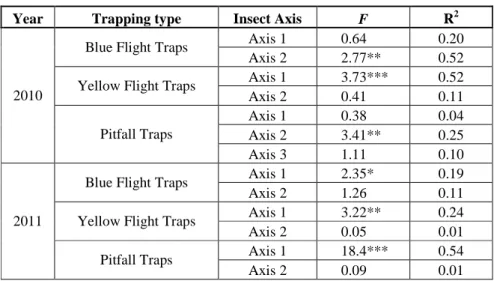
insects were associated with the overall vegetation composition (Table 7). All axes from the NMS of vegetation composition were separately compared to each axis of the insect NMS composition. One axis from each insect sampling type was significantly associated with vegetation (Table 6).

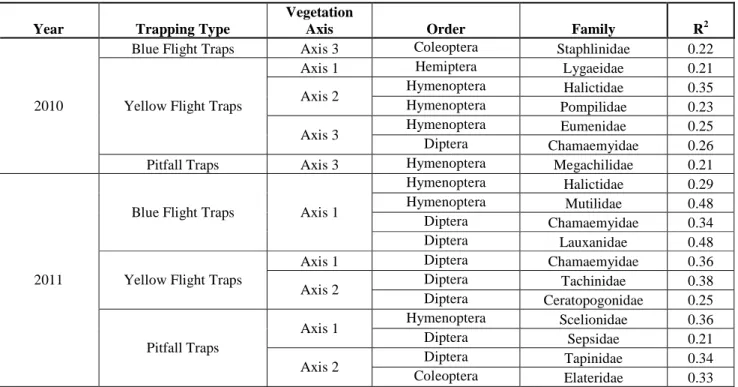
When I compared insect families with vegetation by measuring the eigenvalues of the associations of all 204 insect families collected with the NMS values for the

vegetation composition, I found fifteen families from the orders Hymenoptera, Coleoptera, Diptera, and Hemiptera were meaningfully (R

2

>0.2, McCune and Grace 2002) associated with vegetation composition (Table 7).

The insect families that I identified as strongly associated with vegetation were captured in habitats containing functional groups of vegetation that may be associated with specific vegetation conditions (Table 8). I compared the variance in abundance of the families from Table 7 to the percent cover of vegetation composition of the functional groups of vegetation in Table 8, four families associated clearly with vegetation groups associated with habitat dominated by sagebrush, two associated clearly with habitat dominated by bunchgrasses and four with habitat dominated by annual grasses. Only two families, Staphylinidae and Tapinidae, were associated directly with shrubs, though many more families were associated with well-developed biological crust and moss, which is generally found in undisturbed sagebrush-steppe habitats. Five families were associated with vegetation functional groups that one might expect to find at multiple habitat types.

For example, they may have been associated with well-developed biological crust (UX)

and crested wheatgrass (BS). One family, Megachilidae, was found to be significantly

(32)

associated with overall vegetation composition (Table 7), but no specific vegetation functional groups (Table 8).

Relationship Between Insects and Post-Fire Seeding

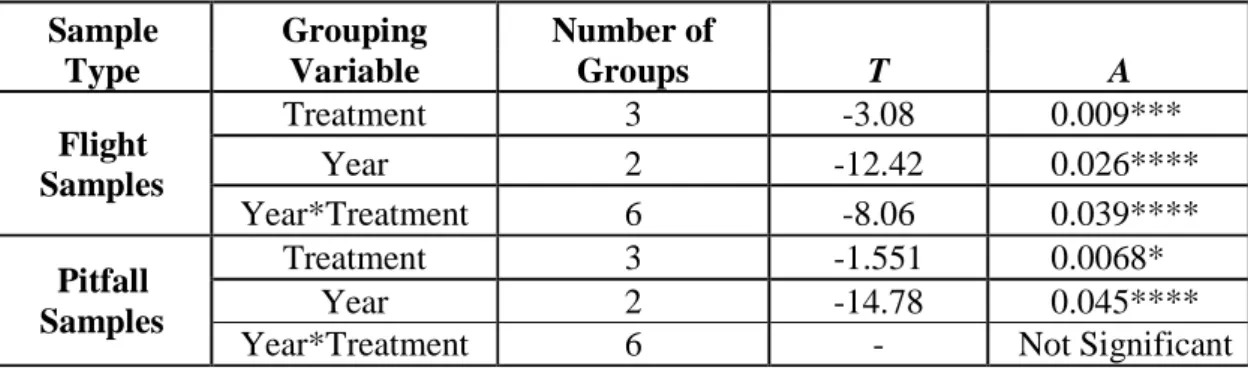
I found a significant difference in insect assemblage composition among treatments for insects captured in flight traps (T=-3.08 A=0.009, p>0.01) and a nearly significant difference for insects captured in pitfall traps (T=-1.551 A=0.0068, p>0.1) using MRPP (Table 9). Variation in insect samples among years that was not associated with vegetation was designated by the term “year” in this analysis. Groups defined by year were also found to be significant for both trapping types (flight: T=-12.42 A=0.026 p>0.001, pitfall: T=-14.78 A=0.045, p>0.001). The strength of separation (T) and homogeneity (A) within groups varied dramatically between variables. Of the original measured variables, groups defined by year were well separated and groups defined by treatment exhibited relatively weak relationships. NMS analysis confirmed the weak definition of treatment groups (Fig. 10-12). Groups defined by the interaction term had values of T and A that were intermediate between the grouping variables included in the interaction.

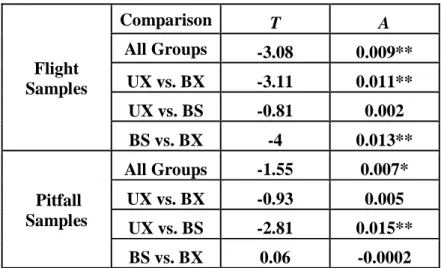
Analysis of the pairwise comparisons of treatments indicated that insects captured

in flight traps were significantly different at BX plots from insect captured at UX and BS

plots, but insects from UX and BS plots were not significantly different from each other

(Table 10). However, for insects captured in the pitfall traps, the only significant

difference was between the UX and BS plots.

(33)

Influence of Landscape-Scale Interactions

MRPP analysis of the three sites separately (Table 11), analysis of the

surrounding landscape (Fig. 6), and analysis of diversity at each site separately (with and without UX plots included, Table 12, Fig 13) indicated that unburned habitat surrounding the sites caused landscape effects that influenced the composition of insects captured in flight and pitfall traps. MRPP analysis of insects from flight traps at the Clover site indicated no significant difference among treatments. However, when samples collected at the UX plots were removed, significant differences between samples from BS and BX plots were detected (T=-1.63 A=0.02 p<0.1). At the Murphy site, removal of UX plots from the analysis of insects from flight traps did not reveal any subtle relationships between insect samples collected at BS and BX plots (T=-0.30 A<0.01 p>0.1). Analysis of pitfall traps with and without UX plots did not affect the significance of the analysis;

no treatments were found to be significantly different from one another.

For the flight traps, diversity analyses of insect composition indicated that estimates of site level (gamma) diversity and heterogeneity (beta) were reduced at the Clover and Big Crow sites when unburned plots were removed from the analysis. These values actually increased slightly at the Murphy site when richness was estimated using the Chao 1 richness indicator (Table 12, Chao and Jost 2012, Colwell 2013). For the pitfall traps, gamma and beta were reduced at all sites when UX plots were removed from the analysis

The separation among groups defined by treatment appeared weak for both flight

and pitfall traps when visualized by NMS ordination. Only a few samples from each

group were situated away from the main cloud of samples (Fig. 10). Of these, samples

(34)

from the BS treatment and the BX treatment tended to be different from each other while samples from the UX treatments tended to contain the most diversity, including insects associated with both of the other treatment types. There was only one vegetation association in this analysis; some of the plots from all treatments were associated with Snake River Wheatgrass (Elymus wawawaiensus), a native bunch grass species. NMS analysis described 78% of the variability in the flying insect samples with a final stress of 14.07.

In the pitfall trap analysis, there was a weak pattern when samples were grouped by treatment in which the distribution of the samples from BS and BX plots were more positively correlated with percent cover of cheatgrass and bunchgrass than the samples from UX plots (Fig. 11 and 12). There was one exception of an outlier sample from the unburned plots. We described 77.5% of the variability in the pitfall trap samples with a final stress of 14.11 in this analysis.

Analysis of the diversity (D’) and heterogeneity (B

D

) of the insect assemblage

compositions showed significant differences only in samples from yellow flight traps in

2010 (Table 13). Pairwise comparisons of samples from the three treatment types

showed that this difference is driven by the UX plots (Table 14).

(35)

DISCUSSION

Differences in Vegetation Composition Among Treatments

The results of my analyses of vegetation composition support my hypothesis that the three treatments represent different vegetation assemblages, though plots that were seeded are more similar to unburned plots than those which were not seeded. As was predicted, differences in the percent cover of sagebrush among UX and burned sites, regardless of treatment, was striking (Table 3).

However, NMS ordination and weak MRPP T and A values indicated that the overall effect of treatments was small due to overlap in the vegetation composition among the three treatments (Table 4, Fig. 8 and 9). Despite their apparent small effect, seeding treatments did appear to reduce the amount of cheatgrass at these sites (Table 3).

Also, significant differences in D’ and B

D

values in 2011 indicated that diversity and heterogeneity of vegetation cover was only different (lower) at BX plots, although I did find some differences between UX and BS plots for biological crust and moss and native forbs in 2011.

Despite an increase in some vegetation groups and despite the inclusion of

sagebrush seed in seeding treatments at all of the sites, recovery of sagebrush was not

achieved by post-fire seeding treatments. In addition, the slow natural growth rate of

sagebrush and environmental alteration of the sites following fire probably contribute to

the poor recovery of this species after wildfires (Whisenant 1990, Knick 1999, Balch et

(36)

al. 2013). Sagebrush forms a complex relationship with micorrhizal fungi that has been shown to aid in establishment and survival (Reeves et al. 1979, Busby et al. 2013). These fungi were not sampled in our study so it is impossible for us to determine whether they were present in the soil after these fires. Finally, even if sagebrush plants did establish at these sites, it is likely that the increased fire frequency associated with the “cheatgrass- fire-cycle” would kill them before they could reach reproductive maturity (Whisenant 1990, Baker 2006, Balch et al. 2013).

My results in combination with previous literature (Whisenant 1990, Balch et al.

2013, Arkle et al. 2014) indicate that it is unlikely that vegetation assemblages at the three study sites will reach the composition and structure associated with historical sagebrush-steppe equilibrium conditions. The BS plots appear to represent a different ecological state from BX plots because they are dominated by native and/or non-native bunchgrasses and forbs seeded into these areas. They also contain much less cheatgrass than BX plots. However, the maintenance of the ecological state associated with BS plots will probably require continued intervention following each wildfire. The purpose of such reseeding efforts is not to re-establish all the components of sagebrush-steppe communities, but to keep the vegetation in these areas from transitioning to the conditions associated with BX plots (http://www.doi.gov/pmb/ouf/es_bar.cfm).

The Relationship Between Vegetation Composition and Insects

Consistent with my hypothesis, insect assemblage composition was found to be

significantly associated with vegetation composition. Comparisons of NMS values from

vegetation analyses at each site compared to individual axes from NMS analyses of insect

samples at the same site showed that insects associated with only one axis from each

(37)

insect sample analysis was driving this relationship. This result indicated that samples that loaded strongly on axes not associated with vegetation composition were composed of insects that were most strongly affected by variables other than vegetation

composition, while samples that loaded strongly on the axis that was significantly correlated with vegetation composition were composed of insect families that depend strongly on vegetation.

Fifteen insect families were strongly associated with vegetation, which supports my hypothesis that the presence or absence of specific vegetation groups determines the quality of habitat for specific insect groups (under certain conditions). In the case of insects that are strongly affected by vegetation, most were found to have specific habitat needs, but it is possible that some generalists (for example Megachilidae) are also dependent on overall vegetation structure for success (Tallany 2004).

Many of the insect families captured (189) were not found to have a strong association with vegetation. However, of these families, 67 had fewer than five individuals captured in both years. It is possible that relationships could not be determined with so few individuals. The remaining 122 families may be strongly

influenced by environmental factors other than vegetation. Wenninger and Inouye (2008) found evidence that moisture plays a role; aspects of weather such as day-to-day

fluctuations in temperature and wind may also be important. Although relationships

between some insect families and environmental influences that were not measured in

this study may mask relationships between those families and vegetation, this is not

necessarily evidence that they do not have an association. This simply indicates that the

insects respond more strongly to other variables. Variability in environmental conditions

(38)

may represent a situation that requires behavioral alterations by most insects; if these conditions did not occur, associations between insects and vegetation might be better resolved.

When insect families were compared to functional groups of vegetation separately, only two families were found to be significantly associated with shrubs.

However, the Nadir photopoint analysis has been shown to underestimate the percent cover of relatively rare plant species or functional groups because they are unlikely to be included in photos (Pilliod and Arkle 2013). A different vegetation measurement technique, such as point-quarter measurements (Pilliod and Arkle 2013), may have provided a more inclusive description of all aspects of the vegetation and revealed

stronger relationships between sagebrush and insects associated with undisturbed habitat.

Despite this potential sampling bias, many families were associated with well-developed biological crust and moss, which is a component associated with undisturbed sagebrush- steppe communities (Peterson 2013). It is likely that families associated with biological crust and moss are also associated with undisturbed sagebrush-steppe habitats, of which sagebrush is a component.

The Relationship Between Insects and Post-Fire Seeding

My third hypothesis, that seeding treatments would lack the structural diversity to maintain the insect assemblage associated with UX habitats, was only partially supported.

I found only weak evidence that post-fire seeding treatments were different or internally

consistent enough to affect the distribution of insects. Differences that were seen among

treatments in the MRPP analysis were driven mostly by differences between UX plots

and all burned plots (BS and BX). Unburned plots were found to be most strongly

(39)

differentiated from burned plots by their percent cover of sagebrush and litter (produced by sagebrush, Table 3). If shrub-cover was the only important factor driving the differences in insect assemblage composition, I would not expect to see differences between BS and BX plots. However, I observed significant differences between the insect compositions at BX and BS plots for flying insects at our study sites in MRPP analysis (Table 11). This indicates a more complex relationship between vegetation and flying insects than can be described by sagebrush cover alone.

When insect families that were strongly correlated with vegetation composition were analyzed with an array of vegetation functional groups, I found them to be

associated with the vegetation found in specific treatments. For example, members of the family Halictidae were significantly associated with Sandberg’s bluegrass (Poa secunda), native forbs, non-native forbs, crested wheatgrass and (only in 2011) cheatgrass (Table 8). The associations with these functional groups indicate that bees in the family

Halictidae were associated with the habitat condition of BS plots. Areas that were seeded (BS plots) contained higher percent cover of native forbs than areas that were not seeded (BX plots) or that never burned (UX plots). These bees are nectivorous and may be attracted by the many flowering forbs available to them at such sites (Triplehorn and Johnson 2005).

Similarly, insects from the family Pompilidae, which are parasitoid wasps, were

found to be associated with vegetation characteristics found in BX plots. This may occur

because these parasitoids are more easily able to find and capture prey in habitats with

less vegetation structure (Triplehorn and Johnson 2005). Eumeninae (a subfamily of

Vespidae that was formerly recognized as a separate family, Eumenidae), mason and

(40)

potter wasps, are associated with vegetation that is typical of UX plots. These wasps often require sticks and twigs to construct their nests and primarily parasitize caterpillars, which are most likely to be found living in vegetation that is structurally complex (UX plots, Triplehorn and Johnson 2005). Comparisons between the percent cover of vegetation characteristics found in each treatment and insect family associations with vegetation functional groups reveal similar patterns for most of the families identified in our study (Table 8).

One family, Megachilidae, did not show any strong associations with any single vegetation functional group, despite being strongly associated with vegetation (Table 8).

This result indicates that no functional group of vegetation alone was sufficient habitat for these bees, but they may require combinations of vegetation components throughout their life cycle. Megachilids are generalists who are strongly dependent on a variety of vegetation types (Sihag 1983, Seivy and Dorn 2014).

The relationship between post-fire seeding (BS plots) and insect assemblages may be weak because the plots we sampled are smaller than the dispersal distances of the populations or even individuals captured in the study (Gathmann and Tscharntke 2002).

If this is the case, the insect diversity in the sampling areas may be driven by insects that are found in the vegetation surrounding the sites. If the dispersal capability of individuals was larger than the study sites, it is possible that insects were captured as they were foraging or resting at intact islands of habitat. In this case, the insects sampled may not have been resident to the sampling site at all (or at least not exclusively).

The data describing insect diversity and composition at plots within sites indicate

that the vegetation on the landscape surrounding the sites may impact our estimate of the

(41)

diversity and composition of flying insects at the sites (Figure 13). The shrub cover around the Clover site was the most extensive, the Big Crow site had an intermediate amount and the Murphy site was surrounded mostly by burned area that no longer contained a shrub component. When insect samples from the flight traps were

manipulated to represent habitat including and excluding UX plots, the Murphy site was found to contain few, if any, insects that were associated with unburned habitat (Table 12). The Big Crow site contained no BX habitat and it consistently had the lowest diversity of all the sites, though the diversity at this site was reduced even more when the UX plots were removed from the analysis. These results indicate that each treatment supports different insect taxa. Changes in habitat composition are most likely to reduce the survival of species typical of the original habitat (Tcharntke et al. 2002) and most strongly affect specialists (Tcharntke and Brandl 2004).

Flying insects are more likely to re-colonize from adjacent intact habitat than crawling insects. Flying insects that are captured in flight traps are more vagile and, therefore, disperse farther and more efficiently than crawling insects, which were primarily captured in pitfall traps. Evidence that flying insects associated with unburned habitat are more common at sites with more sagebrush cover surrounding them combined with their relatively long dispersal ability indicate that the flying insects that are

associated with sagebrush in this study may inhabit a range larger than that of the

sampling sites and, therefore, re-colonize relatively quickly. The relatively high vagility

of flying insects, which are primarily what we captured in our flight traps, make it

possible for such organisms to move among patches of suitable habitat within a region

(Tcharntke and Brandl 2004). The extensive shrub cover around the Clover and Big

(42)

Crow sites may provide source populations for flying insects to utilize the UX plots within the study site as a portion of their range. The Murphy site, however, is surrounded by non-native grasslands that do not provide sufficient habitat for insects associated with sagebrush or dispersal corridors to allow individuals to move among patches of suitable habitat. Despite their relatively long dispersal abilities, flying insects associated with sagebrush were under- or unrepresented at this site. One explanation for this is that the distribution of flying insects across the landscape was limited by the large geographical extent of unsuitable habitat between suitable undisturbed patches.

The beta and gamma diversity of insects captured in the pitfall traps at the Murphy site were reduced when the UX plots were removed from the analysis (Table 12), which is in contrast with the results from the flight traps. These results could indicate that fragmented populations of less vagile crawling insects were trapped on patches of sagebrush-steppe habitat, as they were less likely to cross unsuitable

vegetation than flying insects. Although the crawling insect specialists were apparently unable to escape the remnant patches of suitable habitat, relatively dense populations of such organisms have been found to persist in fragmented habitat (Murphy et al. 1990), no doubt aided by life history characteristics that do not require long distance travel for foraging. These populations are at greater risk of extinction due to stochastic

environmental events and due to their inability to escape a future wildfire that is likely to

remove suitable sagebrush habitats that remain (Murphy et al. 1990).

(43)

Implications of the Study

I found evidence to support my hypotheses that fire disturbance and post-fire seeding alter vegetation composition and that vegetation composition plays a role in determining insect assemblage composition. I found little evidence, however, to suggest that there is a relationship between post-fire seeding treatments and insect assemblage composition. MRPP values for this relationship were significant and as strong as those for our other analyses, but they were mostly driven by differences in shrub-cover between unburned (UX) and burned plots (BS and BX). Furthermore, results from this study indicate that reseeding treatments following range fires alter the vegetation from the state associated with unburned sagebrush-steppe vegetation to a state characterized by the presence of native bunchgrasses and crested wheatgrass. If no reseeding occurs, such disturbed sites are likely to be infested by invasive annuals such as cheatgrass. Our results also indicate that, although reseeding alters the vegetation, these efforts do not effectively rehabilitate insect assemblages to the composition of assemblages found in nearby unburned plots.

Correlations between insect families and vegetation variables may inform future

studies to determine the degree to which insect assemblages are influenced by changes in

vegetation due to fire or other factors occurring in shrublands and grasslands. This

information could be used to assess the response of insect assemblages to various

disturbance types, which could in turn inform the development of state and transition

models that predict the response of other biotic components within sagebrush-steppe

communities to disturbances. In addition, correlations of specific functional groups or

families to environmental variables could be used to predict the distribution of these

(44)

organisms across geographic space or through time as habitats are altered by various drivers of global change, especially climate change (McGill et al. 2006, Sala et al. 2000).

Alteration of vegetation and insect assemblages due to increased fire frequency

and intensity, and the prominence of invasive plant species represents an irreversible

alteration of sagebrush-steppe habitats. The relationships between environmental

parameters such as the disturbance regime, vegetation, and the composition of insect

assemblages are among the most basic trophic-level interactions for entire communities

and ecosystems. Without successfully restoring and maintaining all components of the

vegetation and insect assemblages, animals from higher trophic levels are not likely to

fully utilize disturbed habitats. These conditions may signal the creation of novel habitats

(sensu Hobbs et al. 2013) in the Intermountain West region of the United States.

Figure

Table 1.  The number of 1-ha plots sampled by treatment across study sites. We  sampled 24 burned plots (BS + BX), 16 that were seeded (BS) and 8 that were not  seeded (BX); 11 nearby unburned plots (UX) served as controls or pre-fire reference  conditions
Table 2.  GLM analysis comparing differences in percent cover of vegetation  functional groups among sites (Clover, Big Crow and Murphy) and years (2010 and  2011) at UX plots
Table 3.  Mean percent cover of vegetation functional groups in each treatment  type and GLM analysis comparing the groups among treatments
Table 4.  MRPP analysis of the effect of treatment type on vegetation
+7

References

Related documents