whel"e wel"e tJ0U when
the
telejah0ne
l"an~?
Chances are you weren't anywhere-yet. For it was March 10, 1876 when Alexander Graham Bell made that first historic telephone call to
Mr. Watson ... and another significant milestone in man's attempt to better himself and his environment had been passed.
Now you and your family can enjoy, know better, and relive hundreds of rich and exciting days just like this when you enroll as a Founding Associate of
THE NATIONAL HISTORICAL SOCIETY
If you would relish the experience of being a spectator at the great moments in America's past- from yesterday back; if you would like unique tailor-made vacations to spots where America's heritage is always just around the corner; if you would have a place for authentic, unbelievably priced antique reproductions; and the opportunity to always renew your association with the Society at the same low dues cost; take this opportunity now-before the rolls close- to become a Founding Associate. You'll be pleased and proud, too, to frame and display the handsome Certificate, personally inscribed for you, as a permanent symbol of your role as a Founder.
As an Associate you journey down history's path first through the pages of AMERICAN HISTORY Illustrated, the colorful, authoritative, ten-times-a-year publication of the Society. It's not available except to members of the Society. As you savor each issue you'll be standing by as ...
Alexander Hamilton puts country before his own deep-seated hate to back Jefferson against Burr for the Presi-dency.
A junior Senator from Kansas casts the deciding vote to defeat the impeachment of Andrew Johnson and save Amer-ica's balance of government.
An American dentist suddenly realizing the painkilling potential of an experimental liquid that gave his partying pals a "buzz" ... and medicine one of its greatest gifts- anes-thesia.
David Dickie ends the murderous range wars with common-sense compromise that put cattle and sheep on the same grazing ground and brought peace to the West.
A Negro named Matt Henson stands, and knows he stands, as the first man at the North Pole; then lives out his quiet life in the shadow of the much-honored Peary.
From armchair jaunts like these you have the privilege of parti-cipating in ...
Specially arranged and priced tours for Society Associates (and their guests only) to places in the United States and abroad-England, Ireland, France; Atlanta, Gettysburg; the
Board of Advisors Chairman: The National Historical Society
Dr. Bell I. Wiley, professor of history at Emory University. A noted authority on the common soldier in the Civil War.
Members:
Dr. John F. Bakeless, author of the definitive biography of Daniel Boone and other works of history.
Rear Adm. Ernest M. Eller, author of a number of books and articles on Naval history. Chief of the History Division, U.S. Navy. Dr. Mary Elizabeth Massey, expert on Southern women and life on the home front during the Civil War.
Harold F. Peterson, an authority of world renown on antique weap-ons and other artifacts. Chief Curator of the National Park Service.
Dr. Forrest C. Pogue, official biographer of GeQrge C. Marshall and a pIOneer in the field of oral history. Executive Director of the George C. Marshall Research Foundation.
Dr. George R. Stewart, author of numerous books on the West and other aspects of American history.
Robert M. Utley, a leading authority on western and Indian his-tory. Chief Historian of the National Park Service.
Dr. Charles H. Wesley, a life-long scholar in black studies. Executive Director of The Association for the Study of Negro Life and History, Inc.
fascinating West-anywhere Americans can trace roots or have left a mark for all time.
Three-day seminars featuring presentations by some of the country's most outstanding historians ... and held at actual historical settings, providing both eye-and-ear witness to the way it actually happened.
The opportunity to buy-at discounts up to 25%-the latest and best in new books on history, without the usual commit-ment of belonging to a book club. And, as an added service, the Society staff will locate and obtain for you, on request, any history-related book in print and always at the publish-er's price or less.
The offering of handcrafted reproductions of museum quality antiques, commissioned by the Society and at prices so low purchase must be restricted to Society Associates.
Submission of nominations for the Society's annual $1,000 scholarship award to be given to a college history student, and joining in the awarding of other Society grants and prizes to historianS, laymen, and writers doing important work in the field of history.
Most importantly, your annual dues include a subscription to AMERICAN HISTORY Illustrated, the unique, new road to the past that tells the American story more eloquently, more authoritatively than it has ever been told before; and a bi-monthly newsletter to keep you informed about the Society and the many opportunities and advantages it offers. The cost? You can become a Founding Associate in The National Historical Society, get its publications, map your participation in any of its optional programs for only $10 a year. And, if you act now, you are assured that these dues will not increase for as long as you wish to renew your asso-ciation.
Use this handy coupon to join the distinguished Board of Advisors and the thousands of other Americans, proud of their heritage and dedicated to history as it happened.
r---,
I
N=
P.O. Box 2964I
I
HS:
Clinton, Iowa 52732I
Please enroll me as a Founding Associate in The
I
National Historical Society. I enclose $10 as my duesI
I
for one year. I understand I am to receive 10 issues of AMERICAN HISTORY Illustrated, the Associates'I
I
bi-monthly Newsletter, and all of the optional oppor-I
tunities described. Here's my name and address:I
I
I
I
I
I
I
I
I
I
I
11-448-2-
1111161011 1
I
4
PROGRAMMERS
Automatic Electric Laboratories has imme-diate permanent career opportunities for trainee and experienced computer pro-grammers to join our technica I staff in the research, design and development of new computer controlled electronic telephone switching systems. We are a leading inno-vator of electronic communications sys-tems and the largest producer of switch-ing equipment for the independent tele-phone industry. Numerous positions exist in each of the following areas:
Design and development of computer system diagnostic and recovery grams, real time call processing pro-grams, computer hardware and associ-ated maintenance programs, engineering support programs or data reduction and output processing programs. Utilization of programming, mathemati-cal and statistimathemati-cal techniques in solving engineering problems.
Preparation of block diagrams, machine instructions, flow charts, test data; and planning input and output devices in the area of design automation.
Minimum requirements for trainees: BS Math, Engineering or Physics with pro-gramming aptitude or two years of tech-nical college or trade school with some programming experience.
Additional education and/or experience for advanced positions (one or more of the following):
Programming experience in basic ma-chine and high level languages utilizing magnetic tape and random access de-vices.
BS or MS degree in EE, computer science or related fields with Boolean Algebra and/ or software design experience in higher level language.
Software design experience in real-time, on-line or message switching systems.
We offer a full range of benefits • • • salaries commensurate with education and experience . • • promotion from within . • • modern well-equipped laboratory facilities • . . pleasant suburban location
17 miles west of Downtown Chicago.
Send your resume describing education, experience, job interests and salary con-siderations in confidence to:
Larry Wisniewski
Professional Employment Representative
AUTOMATIC ELECTRIC
General Telephone & Electronics
400 N. Wolf Rd. Northlake, III. 60164
An Equal Opportunity Employer
Letters To The
Editor
Commendation
I just want to take this opportunity to commend
Computers and
Automa-tion
on its part in the Martin Luther King Memorial Prize Contest. [See "Multi-Access Forum" section In this issue] .CARL RUFF
Ruff, Kiek and McAuliffe, Inc. 342 Madison Ave.
New York, N. Y. 10017
Political Convictions
As computer professionals, we are work ing in an area extremely danger-ous for all mankind Your pol itical opinions and mine seem to meet inso-far as both of us try to open the eyes of some of our fellow citizens. There may be differences in our political convictions on a next level, I don't know. But I am glad to know there IS a person of your commitment In the computer field.
Best wishes to you!
DR. FRIEDER NAKE University of Stu ttgart 7 Stuttgart 1
Herdweg 51, Germany
Dog Lover
The cover of your January Issue was the greatest! It goes without say-ing I'm a dog lover.
Could we please have your permis-sion to reprint the story and cover photo and story in our house organ,
The Round Table,
and InThe
Secre-tary's Newsletter,
an external publica-tion of ours? Of course we would want to creditComputers and Automation.
MARIE COFFEY, Advertising Manager Columbia Ribbon and Carbon
Manufacturing Co., Inc. Glen Cove, N. Y. 11542
Ed. Note - Thank you for your kind com-ments We are pleased to grant our permis-sion to reprint the cover story and photo
Ternary Logic
If any of your readers know where I can obtain an explanation of ternary logic, I would very much like to hear from them.
SIDNEY I. PLOTNICK 4542 W. Avocado St. Los A ngeles, Calif. 90027
com~uters
~, and automation
Editor'
·~Associate Editor
Assistant Editors
s
~ftware Editor: Ad!,CI'tising Directof
{1rt Directors
C~17tribtlti17g Editors
, Edmund C. ,Berkeley
Sharry langdale ;
Moses M. Sertln Linda' Ladd Lovett Neil D. Macdonald ;
'Stewart B. Nelson '
Bernard Lane
Ray
W.,
Hass ' ,Daniel T: LangdaleJohn 'Bennett Andrew D. Booth John W. :Cit" III Ned Chapin Arston
S.
HouseholderPete~ Kugel Leslie Mezei Rod E. Packer " Te~ Schoefers Advisory ~Committee T. E. Cheatham, Jr.
Fulfillment Manager
James J. Cryan
Rj~cha~d W: Ham';'ing . Alston S. Householder
Victor : ~a~ehkjs
~ William J: McMillan Advertising Representatives·
BOSTON 02116, Phillip E. ~ufting
1127, Statler Office Bldg., 61.1.5,42-7720" CHICAGO 60611,
Col~, :Ma$~n:
and Deri,ing ;221 N. LaSalle St.,
Ro~m a~6t 312-641.1~53
.-~ NEW YORK 10001, Bernard' ,Lane :
'254 'West 31 'St:t' 212·279·7281 ' PASADENA, CALIF. 91105, Douglas C. lance .; '562 Bellef~otaine St., :213-682-1464 ;
EL~EWHERE, The Publisher , Berkeley Enterprises, l,ne. 815 Washington St., 617-3~32-5453
Newtonville, Mass. 02160
Editorial: 0 [fices
,BERKelEY ENTERPRISE$, )NC.
815 WASHINGTON STREET,' NEWTONVILLE, MASS. 02160 ",
CIRCULATION AUDITED BY AUDIT BUREAU OF CIRCULATIONS
Computers 'and AJtomation Is published 13 times" II
year (12 monthly issues plus an annual directory issue ~
published in June) at SIS Washington Sf., Newtonville, Mass. 02160, by 8erkeley Enterprises" Int. Printed in
U.S.A. Subscription rates. United States, $18.50 for ,1 year, $36.00 ·fOr 2 years, including ~annual di-rectory issue - $9.50 'for 1 year, $18.00, for two years 'without annba I directory; Canada, add '50¢
'. a ost:~~, ,f~dJr~!~a~1i J~eli~6st~~~lo~'~iI a to;eaBerk:~ , ,Fey Enterprises, Inc., 815 Washington Sf'l N'ewtonvllle, Mass. 02160. Second Class Postage paId. at ROston,
~ 'Mass, .. , ,~, ' ,
Postmaster: 'Please send all form$~ ·3579 ,to Berkeley 'Enterprises, Inc., 815' Washington' St., 'Newtonville, , , Mass, 02160. © Copyright 1970, .by Berkeley ,Enter.
, prises, Inc. , " ' . '
Change of address:' If your address changes, please ,send us' both ,your, new address and your old addre4s , , , (as it appears on the magazine address Imprint), and , , al!ow t!:ree ~~k$' ~~~:the ;change ,to, be m;ade., , '
computers
and automation
Vol. 19 No.4 - April, 1970 The magazine of the design, applications, and implications of information processing systems.
Speoial Feature:
Computers and Data Processing in Business
15 THE USES OF DISPLAY TERMINALS FOR BUSINESS APPLICATIONS,
by Alan B. Kamman
A five-year forecast of the use of display terminals in the business fields of finance, brokerage, manufacturing and retail, transportation and travel, utilities and communi-cations, and services.
18 GUIDELINES FOR CONTRACTING FOR COMPUTER RELATED SERVICES
by B. R. Martin
How to cope with the selection and performance problems inherent in contracting for computer related services.
26 THE COMPUTER IN BUSINESS EDUCATION
by Dr. Daniel J. McCarthy
A perspective on why computers are currently being used the way they are in Business School education.
30 DECISION TABLES AS A SYSTEMS TECHNIQUE
by Wilfred C. Chesebrough
How decision tables can be an aid to creative analysis, and can be used to express cause and effect relationships in business.
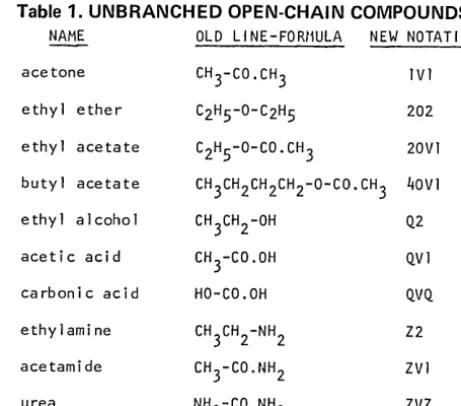
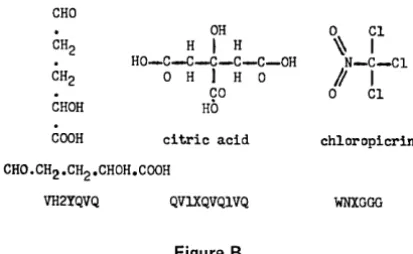
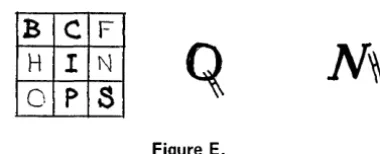
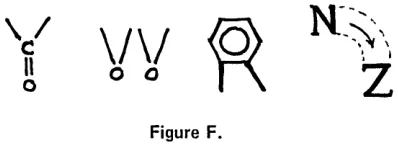
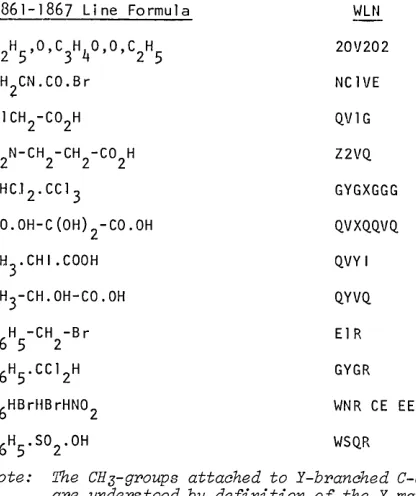
35 liTHE EMPTY COLUMNII REVISITED: A Chemical Notation that Appeared
with Computer Languages in 1950
by William J. Wiswesser
For nearly 300 years users of Roman numerals opposed - even outlawed - the use of Arabic numerals. Is there a similar present-day mathematical blindness regarding
chemical notation?
Regular Features
Editorial
6 The Invasion of Privacy, by Edmund C. Berkeley
C&A Worldwide
34 Report from Great Britain, by Ted Schoeters
The Profession of Information Engineer and His Bridges to Society
42
43 43 44
44
Intolerance, by Robert L. Glass Responsibility, by Joseph F. Rogers, Jr. Conservative vs. Reactionary, by Alden R. Dalzell Social Consciousness, by T. D. C. Kuch
Dictatorships, by Belden Menkus and the Editor
Computers and Education
46 How Computers Can Discover People, by Dr. Loyal W. Joos
Multi-Access Forum
8 Vocal Scientists, from Arthur D. Little, Inc. 9
9
9
10 13 13
14 14
The National Data Bank: Some Proposals for Protecting Privacy, by Dennie Van Tassel
"The Invasion of Privacy and a National Information Utility for Individuals" Comment, by Ronald Sobieraj
"Counter-Conference to ACM 1971" - Comments, by Alden R. Dalzell Automating Poetry, by Richard W. Bailey
DPMA Announces Registered Business Programmer Examination, by R. Calvin Elliott IFIP Congress 71 - Call for Papers, by I. J. Seligsohn
All Forms of Computer Art Sought for 1970 ACM Conference Martin Luther King Memorial Prize Contest - Second Year
COMPUTERS and AUTOMATION for April, 1970
I The front cover picture
shows a supermarket clerk electronically entering or-ders based on his on-the-spot judgments of supplies on the shelves. He
is
using mobile data acquisition equipment made by Digi-tronics Corp. for inventory control. The cart contains an independent power sup-ply. Thus, the process of first writing the order and then recording it is elimi-nated, and the clerk can enter orders while he walks up and down the store aisles. For morein-formation, see page 56.
Departments
48 Across the Editor's Desk-Computing and Data Processing Newsletter
62 Advertising Index
7 As We Go To Press
61 Calendar of Coming Events
4 Letters to the Editor
60 Monthly Computer Census
58
New Contrads59 New Installations
45 Numbles
by Neil Macdonald
45 Problem Corner by Walter Penney, CDP
2S Punch Lines
EDITORIAL
The Invasion
of
Privacy
In the January issue of
Computers and Automation
we published an illuminating article by Richard E. Sprague, "The Invasion of Privacy and a National Information Utility for Individuals". Among other things this article enumerated the kinds of files now being maintained about you, the ordinary American, or you, the American who has begun to engage in some kind of protest about anything:retail credit bureaus bank credit bureaus legal information bureaus
Federal Bureau of Investigation file (if you have ever been fingerprinted, they have your fingerprints) Central I ntell igence Agency file
Social Security Department file
I nternal Revenue Service file (income tax payments and record s)
motor vehicle bureau (motor accidents and vio-lations)
credit card companies who have issued you a credit cWd
Veterans Administration file (if you are a veteran or veteran's dependent)
etc., etc., etc.
A recent article in the "Washington Monthly"! reported that the U. S. Army has begun to keep an extensive file on all persons who have engaged in one way or another in pro-peace or anti-war activities here and there anywhere in the country.
Sprague pointed out that you, the subject of any of these files, have at present no right whatever to:
• see any file kept about you (because the file is the property of the agency collecting the information); • protest untrue information about you and get it
corrected;
• remove from the file information that is irrelevant to its purpose;
• know who consults your file in order to find things out about you; etc.
He advocated a "national information utility" safeguarded by law which would give each person rights in regard to information maintained in the file about him.
Many of our readers, and I also, disagree with him: we have no trust in any data bank system maintained by any central government. It would be just too easy for un-scrupulous people in government to make use of the information.
Take, for example, J. Edgar Hoover, who at the age of 74 - way past official retirement age - is still in charge of the Federal Bureau of Investigation. Why does every presi-dent reappoint him ... exempt him from national com-pulsory retirement ... handle the FBI with kid gloves? Answer: because Hoover knows so much about all govern-ment officials including presidents that leaking the informa-tion to the press could ruin their careers. In a recent, important article in
The New York Times Magazine,
2Tom Wicker reports how J. Edgar Hoover regaled President Lyndon Johnson with stories about government officials from the FBI files.
6
The United States appears to be heading into a period when there will be a substantial conflict between a minority in charge of the government who stand for "law and order" and who are firmly carrying on a most unpopu lar war in Vietnam, and a vocal majority of the people of the country who want domestic change and progress, the stopping of the war in Vietnam, and the diversion of large funds from the military industrial complex to cities, health, environ-mental improvement, and socially useful goods and services. When the government no longer represents or even likes the vocal majority of the country, there is bound to be substantial misuse of any national data bank. Therefore every possible obstruction to its coming into existence should be taken advantage of.
One method of course is to seek the passage of laws by the states and the U. S. government safeguarding privacy and giving the American people rights and rights now -in regard to any personal data file be-ing ma-inta-ined by any agency.
These rights should include power to:
• read what is maintained in any file kept about you by the FBI, or the CIA, or any credit bureau, or any other agency which compiles information about you;
• inform the agency of errors;
• compel the changing of untrue information about you;
• compel the removal of irrelevant information from a file about you; etc.
A business already enjoys some of these rights: when Dun and Bradstreet updates the credit file of our company, Berkeley Enterprises, they always show us their current credit report about us, and listen to and accept our comments and corrections.
According to a newspaper report I saw about a couple of years ago, the FBI maintains a list of over 100,000 persons who in the event of a national emergency declared by the president are to be picked up and sent to concentration camps. I would like to know if I am on such a list. It is an infringement of my rights not to know whether or not I am on such a list. I wrote to the FBI and inquired about such a list; the FBI never replied to my letter (naturally?) and never acknowledged receiving my letter (naturally?). Now is the time for me and 100,000 other people to acquire the right to find out. Is there any existing law whereby I can sue? I doubt it very much. Yet a country which is "the land of the free and the home of the brave" ought never to maintain a list of 100,000 people to be shipped off to concentration camps when the president declares a national emergency. This kind of arrangement is repugnant to a democratic society.
What can we do?
To try to stop a National Data Bank from coming into existence is only a small part of the problem. To refuse to accept unsolicited credit cards is another small step. To seek legislation is a long, uncertain, and :expensive effort.
(Please turn
topage
29 )AS WE GO TO PRESS
A NATIONWIDE STUDY OF DATA BANKS AND PERSONAL PRIV-ACY IS BEING CONDUCTED BY THE NATIONAL ACADEMY OF SCIENCES AND THE RUSSELL SAGE FOUNDATION. The pro-ject will be directed by Alan F. Westin, Professor of Public Law and Government at Columbia University, and author of the book Privacy and Freedom (1967). The Data Bank Project will collect information about computerized data systems, circulate a questionnai re nationally to a broad sample of government and pri-vate data banks, survey the computer hardware and software avai lable to carry out publ ic policies toward citizen rights in computerized record sys-tems, and conduct on-site visits to a sample of data banks.Dr. Westin has summarized the purpose of the 2 1/2-year study as follows: liThe trouble is that the data banks know a great deal about us, but we donlt know enough about them. No one today has systematic information on the number, types, and functions of computerized data banks that have been created; what measures have been installed already in these systems to safeguard citizen rights; how effective these measures are; and how these comput-erized systems plan to expand or are tending to drift in the 19701s.
liThe basic question is whether or not computer-ized data systems are creating patterns of informa-tion collecinforma-tion and circulainforma-tion that are so
differ-ent from precomputer record systems that new publ ic policies and organizational measures may be needed to protect individual liberties.11
Mai ling address for the study group is: Project on Computer Data Banks, Computer Science and Engi-nerring Board, National Academy of Sciences, 2101 Constitution Ave. N.W., Washington, D.C. 20418.
IN WASHINGTON, THE INVASION OF PRIVACY ISSUE WAS RAISED IN DISAPPROVAL OF THE PRESIDENTIS REORGANI-ZATION PLAN NO.1 of 1970 which cal Is for the estab-lishment of an Office of Telecommunications Policy. Rep. Cornelius E. Gallagher, a consultant to Dr. Westinls study group [above] and Chai rman of the House Subcommittee on the Invasion of Privacy,
recommended disapproval of the Presidentls Plan un-less it will clearly focus on the issue of computer privacy. In testimony before the Legislative Reor-ganization Committee, Gallagher proposed the crea-tion of a Federal Data Processing Commission which would clearly have the power to regulate both gov-ernment and private data processing instal lations. The proposed Commission would govern data banks and communication links between repositories of personal information within the government, and make general rules for computerized information systems being
(Please turn to page 44)
[ COMPUTER MARKET RESEARCH AT FIRST HAND
J
COME AND LISTEN; LEARN FACTS AT FIRST HAND; DISCUSS THEM WITH WORLD COMPUTER PIONEERS
AND USE YOUR HEAD.
at
THE PIER PAVILION LLANDUANO, WALES GREAT BRITAIN
WEDNESDAY and THURSDAY
JULY 8 and 9, 1970 8:30 a.m. to 5:00 p.m.
FOR FULL DETAILS WRITE Computer Consultants
(International) Limited, G.P.O. Box 8
Llandudno, Wales, GB
Cables: "Computers, Llandudno"
COMPUTERS and AUTOMATION for April, 1970
•
A
BERKELEY - USA
ECKERT - USA
EDWARDS - GB
FILIPAZZI - ITALY
HARGREAVES - GB
HOPPER - USA
LECLERC - FRANCE
RABINOVITCH - USSR
THOMPSON - GB
ZUSE - GERMANY
-COMPUTER PIONEERS WHO MADE THE PAST AND WILL SHAPE THE FUTURE . . .
MULTI-ACCESS F'ORUM
VOCAL SCIENTISTS
Arthur D. Little, Inc.* Acorn Park
Cambridge, Mass. 02140
T
HE annual meeting of the American Association
for the Advancement of Science, held in Boston at
the end of December, had a different tone from that of
previous meetings. This year, there was considerably
more participation by the general public, and the
sci-entists themselves expressed much more of their own
concern for where science and technology are leading.
One of the objectives of the AAAS is
Utoincrease
public understanding and appreciation of the
impor-tance and promise of the methods of science in human
progress." To this end, Association meetings have
always been open to anyone who wished to register
for a relatively small fee. This year, however, the
public was invited to attend as guests of the
Associa-tion and the response was so great that many of the
lecture rooms were more than filled. As one example,
an address by Margaret Mead on uThe Changing
Sig-nificance of Food," followed by a round table
dis-cussion on the sociological and psychological problems
of nutrition, drew a crowd that expressed considerable
displeasure when the doors had to be closed. There
was also a session in which students and young
scien-tists were invited to offer a critique of science. Not
only was the invitation accepted, but the young
people introduced much comment and criticism at
other sessions as well.
Actually, the scientific community, more than its
critics are often willing to admit, appears eager to turn
more of its collective talents to problems of public
con-cern. While the public -
students and Uthe man in
the street" alike -
asks why a nation that can go to
the moon cannot solve the problems of our own planet,
the scientists had the opportunity to reply that science
and technology can, indeed, offer much help toward
solving the problems that involve the basic needs of
society -
pollution, transportation, population, food,
housing, education, weapons control, conservation,
and health care -
given the national priority and the
financial support. The decisions are essentially
po-litical, and scientific societies have traditionally been
non-political.
It
appears, however, that scientists must
*Reprinted with permission from Industrial Bulletin No. 480, January, 1970.
8
now take active measures to influence public policy
and public opinion; they must have a strong voice in
deciding how science is applied, and must inform the
public of the significance of scientific work, in order
that intelligent decisions can be made.
Resolution passed
Individual leaders of the scientific community have
often headed protests against waste of the world's
re-sources. Scientific societies, however, have been slow
to exert any concerted pressure to influence political
decisions, but this year, for the first time, the
Associa-tion took a step toward supporting redirecAssocia-tion of
national goals. Three years ago, a proposal had been
made to urge that the use of certain herbicides in
Vietnam be stopped, because there was considerable
evidence that they may cause birth defects. The
pro-posal has been under study, and in the carefully
neutral tradition of scientists, data have been
accumu-lating. This year, protests from young demonstrators
coincided with the concern of the senior scientists of
the Association. The Association's Council passed by
a vote of
114to
51a resolution demanding an end
to the use of the two herbicides. The wording of the
resolution is significant both to scientists and to the
public:
UA
new unknown chemical to which' man or
our ecological system is likely to be exposed in any
massive way should be assumed harmful until proven
to be safe." In effect, this attitude reverses the
ap-proach that has prevailed in the past.
Throughout the AAAS meetings, panels, symposia,
and even at the informal get-togethers, as distinguished
scientists spoke with each other and with the public,
the scientific approach was implicit -
no matter how
serious the problem, or how misused technological
advances have been, there is still a need to find
solu-tions through careful reasoning. Yet many of the
participants expressed their feelings of the urgency of
the problems now facing mankind. As science becomes
increasingly involved in public affairs,
it
seems
reason-able that scientists should consider the consequences
of their work, and make appropriate public
recom-mendations for the benefit of people everywhere.
o
THE NATIONAL DATA BANK: SOME PROPOSALS FOR PROTECTING PRIVACY
Dennie Van Tassel Computer Center University of California Santa Cruz, California 95060
The National Data Bank controversy rages on with a completely acceptable solution not yet proposed. New proposals are being offered. However, I feel that the removal of the present abuses of other data ban ks such as credit files, insurance files and police and governmental files is so important that I would like to offer some suggestions applicable to all personal data files with the hope that individual privacy will not become a thing of the 'good old days'. Here are four suggestions:
1. THE NATIONAL DATA BANK SHOULD BE GIVEN NO PRIVACY. Anyone can look up anybody. While this may sound ridiculous it is the only way no single group will gain a privileged power position by control of the information. ThiS way no one will have any privacy either, but much of present day's so-called privacy is just a legend. Today we have a situation where select groups have unlimited, hidden, snooping power.
2. EACH INDIVIDUAL SHOULD BE ABLE TO HAVE HIS COMPLETE COMPUTERIZED DATA FILE ERASED BY H IS OWN REQUEST. It is in the individ-ual's life that the first responsibility for the wise use of that life resides. Allowing people to erase their own data
file gives them a definite means of control on their own life.
One can already see some precedent for this type of action. There is a post office form (PO-125) which can be fi lied out and returned to the post office and, as a result, a junk mailer is required by law to remove the senders name from his mailing list. Having one's own NOB file removed is a similar action. Granted, if some-one has his file erased he will probably have more trouble getting insurance credit, or employment, but this is his business.
3. ALL PIECES OF INFORMATION IN THE NOB SHOULD REQUIRE A RECORDED SOURCE AND
ALL REQUESTS FOR INFORMATION ON
IN-DIVIDUALS SHOU LD BE DOCUMENTED. Instead of the individual bearing the brunt of whatever the file contains about him, the informer could support it. It is important for the individual to know who is providing the information, what is provided, and who looks at it. 4. ALL OTHER PERSONAL DATA FILES SHOULD BE OUTLAWED. The NOB could be put under central control of a non-political information data gathering board. Companies or governmental agencies requiring information could get it from the NOB. If this is done, standards of accuracy and privacy can be easily main-tained and enforced since there is only one data bank. D
liTHE INVASION OF PRIVACY AND A NATIONAL INFORMATION UTILITY FOR
INDIVIDUALS" - COMMENT
Ronald Sobieraj RD 2, Box 3A Kingston, N.V. 12401
Nowhere in his article, "The Invasion of Privacy and a National Information Util ity for I ndividuals" [January, page 48] does Richard E. Sprague define what he means by an "invasion of privacy". If this term means "getting information about an individual without his consent", then obviously the creation of a "National Information Utility for Individuals" will guarantee an invasion of privacy unlike anything now known.
Right now a credit file might contain such items as a record of previous credit and legal actions. But if it were to also contain records from the FBI, CIA, Social Security, I nternal Revenue, insurance companies, motor vehicle bureaus, credit card companies, individual retailers and banks, hospitals, unions, professional societies, VA, Blue Cross, etc., etc., then the mere quantity of different records results in a new kind of record. It will contain more information than the individual himself could probably recall. What other individual or organization has a need to know all this?
Mr. Sprague lists five "bad things" about the current credit record. (1) You probably don't know the file exists; 2) If you do, you probably cannot look at it; 3) If you can, you probably cannot change the information in it, 4) The file contains "negative" rather than "positive" data; and 5) Others can look at your file without you knowing it.] The first is false (if anyone didn't know about credit bureaus before this article, please say so). The second can be changed by the Fair Credit Report Act (S. 823) which will let an individual know that he was being investigated and allow a free report for the asking. Bad things three and four are minor; they can be discussed by the individual and his prospective creditor. Bad thing five is also covered by the Fair Credit Reporting Act, but brings up investigation by governmental agencies. Mr. Sprague hopes that the citizen will be informed when an agency examines his record. It is more likely that examination by a government agency will be done the same way as wiretapping and bugging are done.
Perhaps his proposal would come under the ban of the Anti-Trust Acts.
I hope that there will be more discussion on this subject.
D
"COUNTER-CONFERENCE TO ACM
1971" - COMMENTS
Alden R. Dalzell
Administrative Data Processing Ohio University
Athens, Ohio 45701
I n reaction to the item in "Multi-Access Forum" about the Association for Computing Machinery (ACM) Counter-Conference (February, page 9), I am sorry to see that you are trying to split the ACM. I could write a good deal about what I think of the events in Chicago in 1968 and the resulting actions. But Chicago is no different now than it
COMPUTERS and AUTOMATION for April, 1970
was prior to August 1968. What about' the other cities whose governments and police forces are as bad; should the ACM boycott them as well? Maybe so. But to wait for some trouble to happen before taking such action is like saying that it is all right to do wrong as long as you don't get caught.
Also, the attitude which says, "If you don't agree with me I won't associate with you" is childish. Certainly someone who is promoting an award in the name of Martin
Luther King should be above this! D
AUTOMATING POETRY
Richard W. Bailey Department of English The University of Michigan Ann Arbor, Michigan 48104
The possibility of generating poems - or at least skele-tons of poems' - was raised in the August 1969 issue of
Computers and Automation
by a professor of operations research who has asked that h is name not be mentioned in connection with this essay. His reticence on this matter is not entirely iurprising for in drawing attention to this interesting question, he unfortunately makes a variety of blunders in explaining the background of such work and his attempt to justify his efforts in computerized versification may misdirect people seriously interested in the problem. While there has been widespread experimentation of the kind described in th is essay, few significant advances have been made, partly through an underestimation of the task and partly because few programmers tackle the problem more than once or consider that their research - like all other research - should build on the efforts of others and point toward new problems to be solved.Reducing Complexity
Despite his professional commitment to operations re-search, the author is surprisingly oblivious to the structures inherent in the process he wants to simulate. Describing routines to generate product brand names, for example, he claims that the twenty-six letters in the English alphabet serve as a pool from which groups of six letters are "randomly extracted". The resulting output, he says, is then used by the client as an aid in selecting desirable brand names. Such a procedure would, of course, produce an infinite mountain of output, even if the randomization scheme were modified, the permutations of the letters would produce, as he notes,
308+
million six-letter com-binations. I n the few cases where potential brand names have actually been generated, sensible programmers have designed algorithms to reduce the complexity of the prob-lem. These rules operate either on facts about English spelling ("Q is followed by U+), or are derived from the work of linguists on the sound structure of the language ("The second consonant of measure is not used initially by most Americans"). Thus, when structure is acknowledged by some formulation of "possible English word", the generating scheme turns out a list of names that is of some value to those interested in such novelties.Word Frequency
Though this example is introduced only marginally in the paper, it does represent the author's hasty and some-times careless treatment of both linguistic and poetic problems. Farther on in h is essay, he claims that an ordinary dictionary has word-frequency information that contributes to his research, though dictionaries are almost wholly lacking in useful information of this kind. Likewise he acknowledges a description of American English for information on "preposition usage", though the accourt he mentions only lists the prepositions and says next to nothing about their use. Misleading claims like these are unfortunately quite representative of the work of a nwnber of computer specialists who launch short-range and incon-clusive projects that ignore appropriate resources and skirt questions of genuine interest to I inguists or literary men.
How does the author's scheme work? Apparently he established a syntactic matrix of the following sort as the structural framework for the poem:
10
TITLE: Adjective
+
Noun!LINE ONE: Adjective
+
Noun2+
Adverb+
Verb+
Adjective + Noun3
LINE TWO: Adjective
+
Noun3+
Verb+
Adverb+
Adjective + Noun4
LINE THREE: the
+
Nouns+
Verb+
Preposition+
the
+
Adjective+
Noun6LI N E FOU R: Noun?
+
Verb+
Conjunction+
the+
NounsIn addition to the classes implied in this schematization, some of the nouns were stored in plural form (those subscripted 1, 2, 3, 4, and 7), and the immediately subsequent verbs were drawn from a list containing the proper forms. Further structural constraints on this model were apparently introduced: "the adjectives and verbs were chosen 'at random' among those having reference to that specific noun". His understanding of "having reference" is by no means clear from this or from other parts of his exposition. Judging by h is examples, the association of adjective and noun was apparently quite fully specified, though th is explanation obscures his quoted phrase, "at random". All of the examples given in the paper have a rather depressing inevitability (white blossoms, green fields,
mortal creatures) and lack the novelty that a really random procedure would be likely to produce. An alternative interpretation that would square the discussion with the example poems is that the poems quoted in the essay may have been picked from a mass of randomized texts by someone with a taste for cliche.
"The" Probability
The author hints that some more sophisticated linguistic constraints than those just described were also imposed on the patterns of selection. Though his initial remarks indi-cate that the was specified for the three article positions in the framework, he subsequently claims that the "had 28
times greater probability of being selected than a and an)". Why this constraint was introduced is not at all clear. In a large sample of English prose,
the
has a probability of only about three times that of a; it is not all clear why the choice of the should be weighted by a factor of nine for poetic purposes. In those rare Instances when an indefinite article emerged from the pool, the linguistic context would have to be acknowledged (a computer vs. an automaton), so the inclusion of a and an in the article list wou Id demand considerable refinements in the simple schema outlined above.What value does the author ascribe to his effort? He suggests that a poet may welcome computer-made poetry: "When poems constructed by computer are available, he may change only the last words of the computerized poem in order to provide rhymes, or to vary nouns and verbs with the purpose of restricting the meaning of the lyric to a specific subject." A comparable suggestion in the field of computer graphics would encourage the artist to color in intervals between computer-generated lines with wax crayons! Given the post-Romantic conception of the poetic act that still pervades western poetry, it would be naive to assume that poets will welcome computer-made poetry in any form. Should anyone doubt the hostility of poets to such efforts, I strongly recommend an essay by a former Consultant in Poetry to the Library of Congress, Howard Nemerov, titled "Speculative Equations: Poems, Poets, Computers" (The American Scholar 36(1967):395-414).
The Real Problems
What are the real problems in the field of automating poetry? First, I believe, is the full acknowledgement of the
many "structures" of poetry - grammatical, thematic, metrical, and so on. To attack all of them at once results in the kind of failure just described. Surely the best approach is to leave most of them invariant in a given experiment while the programmer explores one or two at a time. A fixed grammatical schema, like the one described above, may offer a beginning and allow the programmer-poet to explore dimensions of thematic organization. Such a strategy is employed in an essay, "Computerized Japanese haiku" (Studio International [July 1968], 54), in wh ich the semantic networks typical of a particular poetic style are investigated. An alternative approach is suggested in a hypothetical example introduced by Nemerov in which thematic constraints produce something like
Night blindness world. I darken in.
In this case, the semantic connection of night, blind, world, and darken is presented by the a Igorith m, leavi ng the poet the job of providing an acceptable syntactic structure:
Night is the blindness of the world; I darken from within.
Generating similar stimuli to analysis or creativity for metrical pattern or rhyme words would also produce insights into poetic uses of language, or at least greater respect for human craftsmanship.
The Poet's Meaning
One further dimension of structure might also be con-sidered, the purport of the poetic. Mark Adrian has devised an algorithm for concrete poetry in which type size and word placement are randomized to give the appearance of this form of verse (Studio International [July 1968] , 53). Another approach could build on our cultural mythology about the machine and might profit from the "computer" type style devised for a recent circulation campaign by the
Reader's Digest or from the use of an I BM Audio Response
Unit to speak the output of computer-generated verse. Instead of concealing the role of the machine in composing some banal ditty, these experiments would make the medium nearly overwhelm the message.
I n most treatments of computers and poetry, the sig-nificance of the effort is somehow misunderstood. Surely the goal is not to add to the world's stock of poems by producing instant anthologies. Instead we need to use the computer's inexorable talent for random combinations to explore the thin line between what we recognize as bizarre (and welcome) spontaneity and what we regard as un-acceptable gibberish. How can random selection be con-strained to filter possible English sequences from mere lists, imagination from mechanism, poetic madness from genuine
insanity? 0
DPMA ANNOUNCES REGISTERED BUSINESS PROGRAMMER EXAMINATION
R. Calvin Elliott, Executive Director DPMA
505 Busse Highway Park Ridge, III. 60068
A registered business programmer examination has been developed by the DPMA (Data Processing Management Association) for the purpose of setting standards and raising the competency level of programmers in the fields of business and industry. In development since 1967, the new examination is the work of DPMA's certification council and is designed to measure the ability of an applicant at the senior programmer level. The general areas covered by the
IFIP CONGRESS 71 - CALL FOR PAPERS
I.J.
Seligsohnu.s.
Committee for IFIP Congress 71 Box 4197Grand Central Post Office New York, N.Y. 10017
I F I P Congress 71 has issued a call for papers for the fifth global c0nference in the information sciences, to be held August 23-28,1971, in ljubljana, Yugoslavia.
The main objective of the Congress is to foster informa-tion exchange on accomplishments and problems, and to stimulate further research. As an aid in selecting topics for papers, the Program Committee has set up seven major areas of interest: (1) Numerical Mathematics; (2) Mathe-matical Foundations of Information Processing; (3) Com-puter Software; (4) ComCom-puter Hardware and Systems; (5) Systems for Management and Administration; (6) Tech-nological Applications; and (7) Sciences and Humanities.
Submitted papers should be directed not later than November 30, 1970, to the most convenient of the follow-ing addresses:
Academician V. M. Glushkov, Chairman I F I P Congress 71 Program Committee
COMPUTERS and AUTOMATION for April, 1970
exam include: 1) principles of programming; 2) Meta pro-gramming systems; 3) problem-oriented languages - AL-GOL, LISP, SIMSCRIPT, FORTRAN and COBOL; 4) data processing system design; and 5) computational topics.
The exam will consist of 150 questions and will require 2Y2 hours to complete. It will be given annually in approxi-mately 100 test sites across the U.S. and Canada. Eligibility to sit for the exam is not restricted to DPMA members. Study guides are being prepared by DPMA.
The first exam under this new program will be given October 10, 1970. Application forms may be obtained from the DPMA at the address above. Appl ications for the October 10 exams must be filed by August 1. 0
I nstitute of Cybernetics U kran ian Academy of Sciences Kiev - 28, U.S.S.R.
Professor C. C. Gotlieb, Vice Chairman I F I P Congress 71 Program Committee I nstitute of Computer Science University of Toronto Toronto, Ontario, Canada
Professor H. Zemanek, Vice-Chairman IFIP Congress 71 Program Committee I BM laboratory Vienna
Parkring 10
A-1 01 0 Wien 1, Austria
Further information about the Congress, exhibition, and organized travel arrangements is available from the organiz-ing committee: I F I P Congress 71, Congress Office, Mestni TRG 4, ljUbljana, Yugoslavia; or from the U.S. Committee for I F I P Congress 71, Box 4197, Grand Central Post Office,
New York, N.Y. 10017. 0
ALL FORMS OF COMPUTER ART SOUGHT FOR 1970 ACM CONFERENCE
Dr. Monroe M. Newborn Columbia University Dept. of Engineering 1340 S.W. Mudd New York, N.Y. 10027
A program designed to dramatize the impact the com-puter has had on art is being planned as part of the
1970
National Conference of the Association for Computing Machinery (ACM) to be held in New York Sept.1-3.
A mu Iti-media presentation is planned to includecomputer-generated and inspired art and music, a theater for the continuous showing of computer-related fil ms, and a dis-play of computerized sculpture and weaving.
The Art and Music Sub-Committee is searching for outstanding examples of anything that relates to the com-puter and artistic endeavor. Prizes will be awarded to winners in various categories, and entries can be offered for sale by the artist.
Anyone interested in contributing to this presentation is
encouraged to write me at the address above. 0
MARTIN LUTHER KING MEMORIAL PRIZE CONTEST
- SECOND YEAR
14
(Please post this noNce)
Computers and Automation
has received an anon-ymous gift and announces the annual Martin LutherKing Memorial Prize, of
$300,
to be awarded each year for the best article on an important subject in the general field of:The application of information sciences and engineering to the problems of improvement in human society.
The judges in
1970
will be:Dr. Franz L. Alt of the American Institute of Physics; Prof. John W. Carr III of the Univ. of Pennsylvania; Dr. William H. Churchill of How-ard Univ.; and Edmund C. Berkeley, Editor of
Computers and Automation.
The closing date for the receipt of manuscripts this year is April
30, 1970,
in the office ofComputers and
Automation, 815
Washington St., Newtonville, Mass.02160.
The winning article, if any, will be published in the July issue of
Computers and Automation.
The deci-sion of the judges will be conclusive. The prize will not be awarded if, in the opinion of the judges, no sufficiently good article is received.Following are the details: The article should be approximately
2500
to3500
words in length. The article should be factual, useful, and understandable. The subject chosen should be treated practically and realistically with examples and evidence - but also with imagination, and broad vision of possible future developments, not necessarily restricted to one nation or culture. The writings of Martin Luther King should be included among the references used by the author, but it is not necessary that any quotations be in-cluded in the article.Articles should be typed with double line spacing and should meet reasonable standards for publication. Four copies should be submitted. All entries will
become the property of
Computers and Automation.
The article should bear a title and a date, but not the name of the author. The author's name and address and four or five sentences of biographical information about him, should be included in an accompanying letter - which also specifies the title of the article and the date.
"Many people fear nothing more terribly than to take a position which stands out sharply and clearly from the prevailing opinion. The tendency of most is to adopt a view that is so ambiguous that it wi II include everything and so popular that it will include everybody. . .. Not a few men who cherish noble ideals hide them under a bushel for fear of being called different."
"Wherever unjust laws exist, people on the basis of conscience have a right to disobey those laws."
"There is nothing that expressed massive civil disobedience any more than the Boston Tea Party, and yet we give this to our young people and our students as a part of the great tradition of our nation. So I think we are in good company when we break unjust laws, and I think that those who are willing to do it and accept the penalty are those who are a part of the saving of the nation."
- From "/
Have a Dream" - The
Quota-tions of Martin Luther King, Jr.,
compiled and edited by Lotte Haskins, Grosset and Dunlap, New York,1968.
Reverend Martin Luther King, Jr., was 'Swarded the Nobel Peace Prize in
1964,
when he was age35.
He was in jail in the United States more than
60
ti mesoHe was assassinated in Memphis, Tennessee, April 4,
1968.
THE USES OF DISPLAY TE,RMINALS
FOR BUSINESS APPLICATIONS
Alan B. Kamman Arthur D. Little, Inc. Acorn Park
Cambridge, Mass. 02140
"The uses of display terminals, most particularly alphanumeric display
terminals, will have a major effect on the internal operation of businesses in
the next five years. "
The "Roaring Sixties" of nautical fame had nothing on the Roaring 60's of computer fame. Both winds raged with power against which few corporate individuals successfully stood. Those computer winds swept across the land in the "past decade, cutting a broad swath through the existing hardware, and, as in the wake of a tornado, things had changed when they blew themselves out. A third-generation of mainframes grew from its path, and offspring sprouted with names that approached motherhood in sanctity; mini-computers, tape cassettes and display terminals.
The uses of display terminals, most particularly alpha-numeric display terminals, will have a major effect on the internal operation of businesses in the next five years; and we've chosen to examine statistics and uses for this period. Since computer graphics, picture-phones, plasma, electro-luminescence etc., represent specialized forms of display hardware, we have excluded them from the data. We have also excluded projections for devices which, although having a CRT, are used primarily for off-line operations such as key-to-cassette replacement of keypunch opera-tions. These applications also deserve special treatment.
The Forecast
Forecasting of computer peripheral equipment rivals forecasting of economic trends in complexity and varia-tions. One selects a logical method, surveys the field, trends the data, adjusts for variations and receives the result. Then one discovers that another reputable firm has selected a different logical method, performed the proper additional steps and calculated an answer that differs from yours by an order of magnitude. It is somewhat tragic that pro-fessional rivalry and business security prevents rival statis-tical-types from sitting down and revealing secrets or
Alan B. Kamman is a member of the professional staff in the Management Sciences Division at Arthur D. Little, Inc. He consults in the fields of computer peripheral equipment and data communications transmission. He has received recognition for numerous papers, including the Charles Billin Award from the Philadelphia Engineers Club, the Best Paper Award from the Society for I nformation Display's Ninth Symposium and the Freedoms Foundation Award for a sociological treatise on "Age of the Individual". Mr: Kamman is a past chapter chairman for ACM, and a twenty-five year member of the Franklin Institute. He received his Bachelor of Science degree from Swarthmore College in 1952.
COMPUTERS and AUTOMATION for April, 1970
methods to synergistically build a better mousetrap for future forecasting.
Arthur D. Little, I nc., employed several techniques to establish its statistics. First it used the Withington Tables to establish trended computer mainframe statistics for the years 1969 through 1974. (Recently these were calibrated and results showed only a five per cent variation between 1964 forecasts of 1968 and 1968 actual data.) The growth patterns of display terminals in general, as a function of mainframes, were then determined and projected. Nearly ninety companies using or contemplating using display terminals were interviewed, and sixteen of at least forty alphanumeric CRT vendors were investigated. Based on these company interviews and in-house knowledge, sub-market shares of the total sub-market universe were estimated. The statistics, therefore, are presented with confidence, but with the full realization that they fall within a band of five-year estimates made by reputable professional firms ranging from 125,000 to 750,000 CRT's in service.
TABLE ONE
United States Commercial Alphanumeric Display Terminal Market Five-Year Forecast
Installed Units Industrial Category 1/1/69 1/1/74 Growth (%)
Financial 8,000 26,000 225%
Brokerage 30,000 52,000 73
Manufacturing and Sales 7,000 45,000 540 Transportation and Travel 9,000 50,000 455 Utilities and Communication 6,000 23,000 283
Services 91000 54,000 500
Total 69,000 250,000 262%
Source: Arthur D. Little, Inc., Estimates
The Financial Market
Composed primarily of the banking and insurance fields, the financial market has a relatively low number of CRT's installed at this date. Banking terminals are primarily of the type which update passbooks while interfacing directly with a computer, and Touchtone telephones are in vogue on an experimental basis where short, rapid responses are necessary.
Insurance companies have yet to implement many CRT terminals or their equivalents, and this is somewhat sur-prising since money is available, and their investment
departments are not adverse to purchasing entire computer peripheral companies as excellent repositories for excess funds.
Most banks have CRT's included in their long range plans, and while we forecast a moderate 10 - 15 per cent annual growth rate for the next two years, it should increase to approximately 30 per cent annually near the end of the five-year study period. Applications will increase from simple account and credit checking activities to complete one-terminal service for demand deposit and savings account on-line recording of deposits and with-drawals, credit checking for loans and charge-card purposes, stock transfer functions for corporate trust departments and portfolio analysis for personal trust departments. In effect, this "one-stop" terminal will help implement long-range plans for banks striving to integrate banking accounts, loan activities and credit services so a customer exists as one complete entity from the bank's point of view.
Insurance companies in most fields, including those specializing in health, accident, fidelity, fire, marine, casu-alty and life policies, have not yet implemented large numbers of CRT devices. Initially the annual growth rate starts at 13 per cent, then will leap to approximately 33 per cent by January 1, 1975.
Applications include on-line changing of name and ad-dress, additions or deletions of riders, calculation of policy cost and balance-due, and a conversational mode discussion leading to the design of optimum policy for an individual or corporation, based on personal goals and objectives. Be-cause of the specialized editing functions and character capacity necessary to perform these tasks, the CRT's used will represent the top of the available industrial product line. .
Overall, therefore, this category will more than triple in size within the next five years. In addition, complexity of on-line functions will also increase, so the CRT in use in 1975 must have the technical ability and capacity to handle complex operations.
The Brokerage Market
To the brokerage industry, a device to interrogate a computer for stock market statistics is as important as the telephone to accept customer orders. The display terminal is a necessary tool of the business, and exists as an integral part of everyone's daily operation. The market, therefore, has accepted a tremendous number of devices (our statistics exclude the "nixie bulb" terminals), so five-year growth expressed as a percentage appears to be low.
The annual percentage growth will probably remain under ten per cent, reflecting the large base now in existence, then increase near the end of the five-year period. This increase includes new uses of CRT's to help with the clerical problem in back offices.
These clerical problems can cause firms to spend ap-proximately a quarter-million dollars annually to borrow stocks which they already own. Information in the broker's cage can range up to three days old, and although certifi-cates to satisfy trades might exist, records do not show them and shares must be borrowed to cover the transaction at a price.
The New York Stock Exchange's Block Automation System helps set the pace for a different use of CRT's. This system, as well as similar systems under consideration by other financial institutions, help bring together buyers and sellers so that negotiations for trading can occur quickly and efficiently.
As far back as 1965, the Chicago Board of Trade installed its Com-Quote system, which collects commodity
16
quotations from the trading floor, displays current price data to brokers on the floor, and distributes quotations to brokers around the world. Com-Quote gives 1400 members who still trade at open auction in wheat, oats, barley, plywood, silver etc., improved accuracy of price reporting at computer speeds, and provides rapid access to historical prices.
Terminals used primarily for quotations will continue to be relatively unsophisticated, but increased editing func-tions will be needed when the CRT's are used for improving clerical operations. One vendor has just introduced a terminal which can be used either on a nation-wide in-formation system to get quotations, or switched instanta-neously to the customer's own computer for in-house applications such as portfolio analysis. Another vendor uses two small CRT's in the same housing, with different information available on each screen.
In summary, the brokerage industry has, to date, been dominated by basic terminals, dedicated to limited input and output. Complexity will increase as new applications require, and although the market is far from saturated, per cent annual growth remains low because of the large number of existing devices.
The Manufacturing and Retail Market
From a non-regulatory, profit-making, research and development point of view, manufacturing industries should be leading the way toward increased efficiencies through the use of display terminals. Surprisingly, inter-views with scores of corporations, most of them included in the Fortune 500 list, show a relative lack of installations. A number of companies had experimental systems, but few had made major committments.
A large petroleum firm is investigating CRT's as a means of filling the gap between top management information needs and EDP usage. Their experience is now gained from a pilot model where they are experimenting with budgets, project status, market simulation and statistical reporting. One of the leading container manufacturers has over 30 CRT's on-line for order entry, and has an additional 40 scheduled to be installed within the year. A paper manu-facturer has gone one step further by experimenting with an inventory status application. Most of his paper stock is used in the field of paper copiers, and the key to dollar success is the ability to fill an order quickly. If not, another vendor will be contacted, supply the paper, and eventually take away the copier business.
The retail field has also been slow to implement display terminals, but since the industry is noted for low profit margins, the reasons are primarily financial. Growth should occur in this field near the end of the study period when CRT's become less expensive, compatibility problems are closer to being solved, and more standard software packages exist.
A large department store with multiple branches in California has eighteen display terminals in their Accounts Receivable and Charge Authorization areas. Operators of these CRT's provide rapid service to store clerks checking credit for waiting customers. The operators also provide a lookup service for customers who telephone to question their accounts.
Another example which falls primarily in the retail field is the Credit Data Corporation. They use approximately 200 display terminals to interrogate files on 11,000,000 people in response to nearly 100,000 daily inquiries.
The manufacturing and retail fields have just begun to grow, and the results should be startling. By 1975, there will probably be a five-fold increase in installed terminals over current CRT's in service.