warwick.ac.uk/lib-publications
Manuscript version: Author’s Accepted ManuscriptThe version presented in WRAP is the author’s accepted manuscript and may differ from the published version or Version of Record.
Persistent WRAP URL:
http://wrap.warwick.ac.uk/109798
How to cite:
Please refer to published version for the most recent bibliographic citation information. If a published version is known of, the repository item page linked to above, will contain details on accessing it.
Copyright and reuse:
The Warwick Research Archive Portal (WRAP) makes this work by researchers of the University of Warwick available open access under the following conditions.
Copyright © and all moral rights to the version of the paper presented here belong to the individual author(s) and/or other copyright owners. To the extent reasonable and
practicable the material made available in WRAP has been checked for eligibility before being made available.
Copies of full items can be used for personal research or study, educational, or not-for-profit purposes without prior permission or charge. Provided that the authors, title and full
bibliographic details are credited, a hyperlink and/or URL is given for the original metadata page and the content is not changed in any way.
Publisher’s statement:
Please refer to the repository item page, publisher’s statement section, for further information.
A MID-RANGE THEORY OF CONTROL AND COORDINATION IN SERVICE TRIADS
Marko Bastl, Mark Johnson& Max Finne
Article information: Marko Bastl, Mark Johnson& Max Finne (2019), “A Mid-Range Theory of Control and Coordination in Service Triads”, Journal of Supply Chain Management, Vol. 54.
Abstract
The increased frequency of the adoption of service-based business models by manufacturers, such as solution provision, has given rise to service triads. While there is consensus that actors in service triads are relationally and performatively interdependent, less is understood about how service triads are controlled and coordinated. In this study, we use an inductive case-based approach to build an understanding about the roles, approaches, and contextual factors that influence how service triads are controlled and coordinated. We collected and analyzed data from nine companies forming three service triads, each comprising a customer, a manufacturer of an asset, and a service supplier. We synthesized our findings in a theoretical framework, where we show that; first, both, control and coordination are present in service triads rather than just control as previously posited. Second, controlling and coordinating service triads is not a single actor’s responsibility but rather a collective effort shared by two or three actors. Third, we uncovered four contingent factors that influence the dynamics of how service triads are controlled and coordinated: the customer’s risk exposure due to the offering’s failure, the substitutability of the offering, the contractual safeguards, and the relationship closeness.
Keywords: control, coordination, service supply chains, triads and networks, qualitative research
Journal of
INTRODUCTION
The increasing popularity of service-based business models, such as the provision of
integrated solutions (cf. Tuli, Kohli, & Bharadwaj, 2007), combined with firms’ increasing
specialization is giving rise to a network-centric mode of solution delivery (Wynstra, Spring, &
Schoenherr, 2015; Karatzas, Johnson, & Bastl, 2016). This allows firms to respond to customer
demands through increasingly customized and complex offerings, often incorporating
multi-vendor technologies, products, and services (Story et al., 2016). For example, IBM in industrial
computing or General Electric, John Deere, and Caterpillar in complex industrial equipment
strongly rely on the existence of service capabilities in their dealerships or technology suppliers to
create customized solutions that address their customers’ needs (Cusumano, Kahl, & Suarez,
2014).
In this arrangement, the three key actors that form a service triad are: a) the manufacturer of an asset who typically bundles the asset with services and sells the offering as a solution to its
customer; b) the service supplier that supplies the service capability of the solution directly to the
manufacturer’s customer; and c) the manufacturer’s customer, which buys the solution (Wynstra
et al., 2015; Karatzas et al., 2016). In service triads, all three actors are performance and
relationship interdependent (Choi et al., 2002; Wu & Choi, 2005; Lazzarini, Miller, & Zenger,
2008; Li & Choi 2009; Choi & Wu, 2009a; b), which in consequence means that the effectiveness
of the provision of services, and ultimately the customer’s satisfaction, is dependent upon how
effectively the three actors and the relationships between them are controlled (Li & Choi, 2009;
Van der Valk & Van Iwaarden, 2011). In addition to relationships being formally controlled by
managed informally (Poppo and Zenger, 2002) through coordination via “information sharing, decision-making, and feedback mechanisms” (Gulati, Wohlgezogen, & Zhelyazkov, 2011, p. 543).
Managerial practice is replete with challenges to the delivery of services and solutions
(Kreye, 2017), such as the deservitization of customer offerings (Valtakoski, 2017), to termination
of service contracts, such as Intel’s $150 million web-based service unit shut down (Sawhney,
Balasubramanian, & Krishnan, 2004). In many cases, the difficulties are rooted in the naiveté of
the complexity of the control and coordination of the activities of the three actors in a service triad.
Thus, how service triads are controlled and coordinated is of interest to scholars and practitioners
alike.
With few notable exceptions, the extant research on how to control and coordinate service
triads is limited (cf. Wynstra et al., 2015). It has been argued that the responsibility for the control
and coordination of the triad lies, depending on the context, with the prime contractor (e.g.,
Karatzas et al., 2016) outsourcer of services (Li & Choi, 2009; Van der Valk & Van Iwaarden,
2011), or the seller of the solution (Windahl & Lakemond, 2006; Bastl et al., 2012; Karatzas et al.,
2016). Structurally, these are the same actor, whose key role is to retain control and visibility over
the triadic interactions with the aim of facilitating the effective delivery of the offering to the
customer.
Contrary to the extant literature, we argue that the manufacturer of an asset (later on
referred to as ‘manufacturer’ for brevity) is likely not the only actor in a service triad that has an
interest in the coordination and control of triadic interactions. Customers, for example, are not only
the providers of inputs in the service production process (Sampson, 2000), but they also have to
develop a range of capabilities around the internal and external integration and management of
solutions (Story et al., 2016). Due to performance interdependence in service triads, the failure of
the customer offering or a conflict in the relationship between the manufacturer and its customer
can have negative implications for the service supplier, such as difficulties in service delivery, a
decrease in revenues, and reputational damage (Karatzas et al., 2016). Furthermore, we posit that
in order to advance our understanding of control and coordination in service triads, we need to
move beyond some of the limited methodological choices of the extant triadic research, such as
the focus on a single actor (e.g. Van der Valk & Van Iwaarden, 2011, Li and Choi, 2009) or a
single dyad (e.g. Karatzas et al., 2016) within a triad.
In this research we aim to understand how and why activities and relationships are controlled and coordinated within service triads. We do this, by using an inductive theory generation approach. We collected and analyzed data from nine companies forming three service
triads. We captured our findings in nine propositions and synthesized them in a theoretical
framework, which constitutes the theoretical contribution of this work. While the extant literature
on ‘managing’ triads focuses almost exclusively on control in service triads (e.g. Li & Choi, 2009;
Van der Valk & Van Iwaarden, 2011), we show that for the effective functioning of a service triad,
both control and coordination should be present. Related to this, we explicate the role of the
‘mediator’, which displays behavioral traits unique to the context of service triads. Second and
contrary to the extant literature, which focuses only on one actor managing service triads (e.g., Li
& Choi, 2009, Karatzas et al., 2016), the control and coordination of service triads is performed
by at least two actors. Third and finally, we uncovered four contextual factors that influence the
dynamics of the control and coordination of service triads: a) risk exposure due to the customer
offering’s failure, b) the substitutability of the customer offering, c) contractual safeguards, and d)
The remainder of the paper is structured as follows. Firstly, we present a theoretical
background on service triads, interdependence within those and their control and coordination. We
then introduce the methodology explaining our empirical setting, case sampling logic, data
collection and data analysis processes. Following this is the within-case analysis and cross-case
analysis, where we formulate our propositions and synthesize them in a theoretical framework. We
continue with the discussion of our findings and close with limitations and recommendations for
further research.
THEORETICAL BACKGROUND
In this section, we review the literature that defines the characteristics of service triads and
summarizes the extant theoretical understanding on how to manage them.
Service Triads
Service triads have become an important topic in the supply chain management discipline
(Wynstra et al., 2015). In comparison to manufacturing triads, service triads typically involve three
distinct actors—a manufacturer, a service supplier, and a customer (Karatzas et al., 2016)—as
opposed to manufacturing triads, where one manufacturer interacts with two suppliers (Wu &
Choi, 2005; Wu, Choi, & Rungtusanatham, 2010) or with a supplier and a customer (Rossetti &
Choi, 2005, 2008). While we acknowledge that multiple suppliers may provide service to a
manufacturer, similar to how multiple suppliers may supply components or parts in a
manufacturing context, our focus is on a service supplier-manufacturer-customer triad.
In the manufacturing triad, the component supplier normally does not have to interact with
supplier has to have a direct interaction—that is, a relationship—with the manufacturer’s
customer. The service supplier’s direct interaction with the manufacturer’s customer is a key characteristic that defines service triads and distinguishes them from manufacturing triads (Li &
Choi, 2009; Wynstra et al., 2015).
The direct interaction between the customer and the service supplier exists due to the
inseparability of services and the bi-directionality of service exchanges (Sampson, 2000; Sampson
& Froehle, 2006), where “service cannot be divorced from an exchange relationship between specific counterparts” (Wynstra et al., 2015, p. 7). As Sampson and Froehle (2006) posit, the
customer and the service supplier are engaged in a bi-directional service production flow, where
the customer is simultaneously the supplier of significant inputs in service co-production. Thus,
we distinguish the focus of our study from other types of services, such as mixed services—
involving a mix of face-to-face and loosely coupled back office work or quasi-manufacturing
services, which entail virtually no face-to-face contact (Chase, 1981).
While the fundamental nature of service triads is known (Choi & Wu, 2009a; b), studies
that explore the control and coordination of tasks and relationships in manufacturer – service
supplier – customer triads are rare. Few triadic studies have, to date, fully leveraged the unique
characteristics of service triads (Wynstra et al., 2015. Thus, in the following section we provide an
overview of the extant understanding of service triads, control and coordination in service triads,
and conclude with the research question that led to our empirical investigation.
Service triads, as considered here, are transitive triads. They are structurally complete as all three actors (customer, manufacturer, and service supplier) are connected through relationships,
and there are no structural holes (Madhavan, Gnyawali, & Jinyu, 2004). Consequently, all three
actors are performance and relationship interdependent (Li & Choi, 2009; Mena, Humphries, &
Choi, 2013). The reason for this is that in a triad (Choi & Wu, 2009a):
a) A node can affect an indirect link—for instance, the manufacturer’s behavior affects the
relationship between the service supplier and the manufacturer’s customer; and
b) A link can affect another link or a node—for example, the relationship between the
manufacturer and the service supplier can affect the service supplier and/or the relationship
between the service supplier and the customer.
This interdependence was demonstrated in the work of Karatzas et al. (2016), where the authors
showed that the customer’s (third-party logistics provider) satisfaction with a service supplier’s
(service garage) service performance is influenced by the manufacturer’s (commercial vehicle
manufacturer) management of the relationship with the service supplier across multiple
relationship dimensions.
As the actors within service triads are interdependent, the relationships within the triad should
be maintained. Simmel (1950) posits that actors within triads can adopt one of two roles to
maintain the triad, 1) the mediator, and 2) the arbitrator. These roles are similar to those of a Tertius Iungens (cf. Obstfeld, 2005) – or the third that joins. Both the arbiter and the mediator are interested in the unity of the triad, not the interests of the individual. Conversely, actors that adopt the role
of Tertius Gaudens (or the one that enjoys) wish to create discord and separation between the other two actors. However, while the mediator is non-partisan, either through no interest or equal interest
We suggest that within service triads, actors will adopt a role more in line with the non-partisan
mediator as favoring one actor over another would lead to adverse tensions in the
inter-organizational relationships between actors, leading to a decay of relationships within the triad,
reducing interdependence and hence reductions in the overall performance of the triad.
Control and coordination in service triads
As a customer’s satisfaction within service triads is dependent upon the relationship
between the customer and the focal firms supplier (cf. Karatzas et al. 2016) the focal firm has to
be able to control and coordinate the relationships and tasks between the two remaining actors.
However, control and coordination have occasionally been conflated (cf. Fugate, Sahin, &
Mentzer, 2006; Xu & Beamon, 2006; Holweg & Pil, 2008) with little equivocality about their
relationship nor any distinct definitional clarity. In fact, coordination is viewed as a component of
control. Here, we posit that they are related but distinct in the mechanisms through which they are
exerted.
Control is exerted through the managing actor’s ability to maintain communication and
monitor the behavior and performance of the other two actors. In the work of Li & Choi (2009)
and Van der Valk & Van Iwaarden, (2011), this managing actor is a firm – referred to as the buyer,
that subcontracts the provision of services to its customers to a service supplier. However, to
achieve control, the best position in a network is to be in the position of the bridge (Burt, 1992);
this is the actor that is positioned between two isolated agents that are not directly connected with
each other. For example, a manufacturer is a bridge if it has relationships with two suppliers who
are not connected to each other via a relationship. The absence of a connection between the isolated
as it can negotiate and exploit information to its benefit (Burt, 2000; Zaheer & Bell, 2005).
However, in transitive service triads, structural holes do not exist as all actors need to be connected
to ensure the effective delivery of services (Bastl et al., 2012; Karatzas et al., 2016). Thus, there is
no bridge position and control becomes more challenging.
Van der Valk and Van Iwaarden (2011) and Van Iwaarden and Van der Valk (2013)
suggest that a mechanism for the effective retention of control by the buyer (which is structurally
the same actor as the manufacturer in this study) is the deployment of a behavior- and
outcome-based contract mix in direct links, as the buyer has no ability to influence the indirect relationship
(i.e. between the customer and service supplier). Hence, in addition to control being exerted
through an actor’s position, it can also be achieved via formalized mechanisms. This suggests that
control is a proxy of the position of an actor within a network and the actor’s power1 (cf. Simmel,
1950). Power has been shown to be a control mechanism in supply chains (Handley & Benton Jr.,
2012a; 2012b), however control can be exerted through other mechanisms. These include
information monitoring (Handley & Benton Jr., 2012b), operating procedures, and action and
diagnostic controls (Chenhall, 2003) such as Key Performance Indicators (KPIs).
In addition to control within the dyads in the triad, it is important to understand how
coordination between actors (cf. Gulati, 2007; Gulati, Wohlgezogen, & Zhelazkov, 2012) within the triad occurs as coordination is fundamental to supply chain management (Fugate et al., 2006).
Coordination is not well defined within the O&SCM literature. However, a supply chain is said to
be coordinated when “all decisions are aligned to accomplish global system objectives” (Sahin &
Robinson, 2002, p. 507). This aligns with definitions within general management where
coordination is the alignment and adjustment of activities, processes, and roles (Gulati et al., 2012).
Coordination is achieved through information sharing (Sahin & Robinson, 2005), mutual
adjustment of activities (Nassimbeni, 1998), and decision-making and feedback mechanisms
(Gulati et al. 2012). Table 1 compares the different mechanisms for exerting control and
coordination in inter-organizational relationships.
--- Insert Table 1 about here ---
Greater interdependence and higher task and environmental uncertainty are posited to
require more coordination (Xu & Beamon, 2006; Gulati et al., 2012). In service triads
interdependence is high, thus task and environmental uncertainty will require differing levels of
coordination. Task and environment uncertainty is also increased by greater investment in
relationship-specific assets (Handley & Benton Jr., 2012b). Relationship-specific investments in
assets that provide customized support and/or manufacturing processes, have little value outside
of a focal relationship. Asset specificity refers to the degree to which the assets used in support of
the transaction can be redeployed to alternative uses and by alternative users without sacrifice of
productive value (Williamson, 1991; David & Han, 2004). Hence, the greater the asset specificity
the lower the level of available substitutes.
It has been posited that task and environment uncertainty can be reduced by a dominant
actor – through exertion of mediated power - by information monitoring (Handley & Benton Jr.,
2012a) and contractual safeguards (Jones, Hesterly, & Borgatti, 1997). However, we argue that if
actors in a triad act for the benefit of the whole triad, information sharing (cf. Sahin & Robinson,
The mechanisms of control and coordination and what affects their deployment are well
understood within a dyad. However, who does the control and coordination in service triads, and
for what reason, remains unanswered. The role of coordinating and controlling activities and
relationships in the triad is assigned to one actor—the manufacturer, who is in most cases also the
prime contractor (cf. Bastl et al., 2012; Finne & Holmström, 2013). However, we posit that in the
pursuit of the effective provision of services to the end customer, the manufacturer is not the only
actor that coordinates and controls the service triad. As highlighted earlier, the customer is actively
involved in service co-production with the service supplier by providing inputs to the service
production process (Sampson & Froehle, 2006). All three actors are performance-interdependent
due to the unique structural arrangement of service triads (Madhavan et al., 2004) and due to the
complementary capabilities necessary for the service provision (Story et al., 2016). This makes the
provision of services a collective effort by all three actors as well as a potential collective risk if
the offering fails. Moreover, this additional actor “may not be specifically chosen, nor be known or designated as such” (Simmel, 1950, p.148). Hence, within a service triad an additional actor
that coordinates and controls actions may emerge. Thus, there is little in the way of theoretical
clarity as to whether there is only one, or two or more actors that coordinates and controls actions
in a triad.
Given the nascent state of the extant literature, we argue that our understanding of
managing service triads is incomplete and mostly limited to the perspective of one actor.
Accordingly, we have yet to understand the roles of the customer and the service supplier. Thus,
METHODOLOGY
Given the underexplored nature of the research phenomenon under study, we adopted an
inductive case-based approach with abductive reasoning to generate theory (Eisenhardt, 1989;
Meredith, 1998; Yin, 2009; Ketokivi & Choi, 2014). In line with suggestions by Edmondson &
McManus (2007), case research represents a “methodological fit” when used for exploring novel
questions, of how and why (as is the intent of this study), and where the primary contribution of
the work is a suggestive theory, often resulting in the invitation for further work on the issue or set
of issues elucidated by the study. Moreover, case research enables researchers to document
managerial practices, gain greater understanding of the nature and complexity of the phenomenon
under study (Voss, Tsikriktsis & Frohlich, 2002; Yin, 2009), and increase the depth of the research
(Meredith, 1998).
Case Sampling
Following the theoretical sampling logic and recommendations by Eisenhardt (1989),
Meredith (1998), and Patton (2002), we selected our cases based on the set of selection criteria,
which we developed from the extant literature:
Criterion 1—Transitivity: The actors in a service triad must form a transitive triad—that
is, all actors are connected through relationships, hence no structural holes exist between
the actors (Cartwright & Harary, 1956; Madhavan et al., 2004). Transitivity is one of the
basic structural characteristics of service triads (Wynstra et al., 2015).
Criterion 2—Existing relationships: This enables the observation of longer-term
relationships, which tend to mature and accumulate significant relational history (Anderson
more stable with less exposure to the uncertainties of new relationships or ones that were
at the end of their lifespan.
Criterion 3—Presence of different control and coordination mechanisms: As the focus of
our study is on control and coordination mechanisms within service triads, triads were
chosen that used a range of control and coordination mechanisms (Van der Valk & Van
Iwaarden, 2011; Gulati et al., 2012; Van Iwaarden & Van der Valk, 2013).
Criterion 4—Differing levels of task and environment uncertainty: This follows from the
preceding criterion. As we were examining differing levels of control and coordination, we
required cases that had differing levels of task and environmental uncertainty as these are
posited to require different levels of coordination (Xu & Beamon, 2006; Gulati et al.,
2012). Although in each of the three cases, all three actors are connected through the
provision, support, and use of the same offering, they have distinct roles, responsibilities
and exposure to risk. This results in variations in environmental uncertainty to which each
actor is exposed, and consequently variation in the deployment of control and coordination
mechanisms. In Case 2 asset specificity was low as vehicles were interchangeable.
Conversely, in Case 3 the solution was entirely specific to the customer.
Data Collection Process
Each case was comprised of three firms forming a service triad. The unit of reference was
the customer-manufacturer-service supplier triad, where the units of analysis were relationships
within the customer-manufacturer, customer-service supplier, and manufacturer-service supplier
For the purposes of data collection, a semi-structured interview guide was developed. The
guide stipulated triadic relational issues by focusing on the uncovering of control and coordination
mechanisms, interdependence, and how and why the mechanisms were utilized for each actor
within the case service triads.
The data collection for every case started with the identification of a “gatekeeper” firm.
Potential gatekeeper firms were identified on the basis of our knowledge of their involvement in
the provision of solutions sourced from the business press, academic papers, and existing personal
networks. We approached them, introduced the project, and among others explained the sampling
criteria, ensuring they were understood and emphasized the need for all three firms in a triad to
comply with them. Based on this, the gatekeeping firm’s representative first identified potential
participating firms and asked for their willingness to participate. Once the preliminary agreement
to participate was reached, the research team approached the other two firms, briefly explained the
project again, and re-checked the firm’s compliance with the case selection criteria.
The case interviews started with the CEO or VP of the gatekeeper firms. During the
interview, the CEO or VP would mention who else within their firm was involved in relationship
management with the two other firms in the triad. S/he would then introduce us to a knowledgeable
purchasing or key account manager familiar with the solution under study and directly involved in
managing the relationship with the other actors. These interviews were used to learn further about
the other managers involved in the relationship management with the other two participating firms
who are their counterparts. In this way, we identified all relevant participants from all involved
firms per triad. Prior to each interview, we sought permission to electronically record the interview
for the purposes of verbatim transcribing and subsequent data analysis. Permission was granted
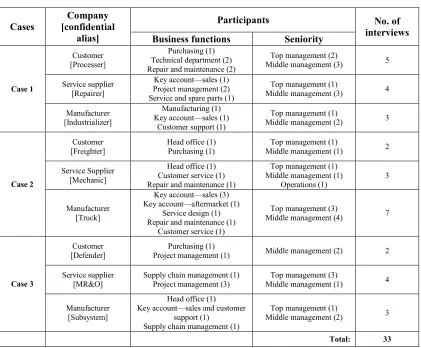
--- Insert Table 2 about here ---
To ensure reliability of the study – i.e., transparency of case study execution and replication
- we developed (Yin, 2009): a) a research protocol, consisting of data collection process and data
collection instrument; and b) case study database for all three cases, which included interview
transcripts, company documentation, and notes from site visits.
To strengthen construct validity - i.e. the correct conceptualization and operationalization
of the relevant constructs - we employed several tactics (cf. Jick, 1979; Yin 2009): Firstly, we
grounded our protocol in the extant literature. We then combined primary and secondary data that
was aligned with these theoretical conceptualizations. Secondary data were collected in the form
of company documents, such as organizational charts, performance reports, and descriptions of
products, services, and solutions. We combined this with site visits to deepen our understanding
of a particular business context. We then established a chain of evidence from the objectives of
the study, from the design of the data collection protocol, to the case study database, on to data
coding, to individual within case study reports. Finally, each within-case study report was verified
for accuracy by case participants and subsequently corrected if necessary.
Internal validity – which is concerned with building plausible relationships between
constructs (Yin, 2009), was ensured by employing pattern matching and identification of
commonalities between quotes, codes and extant theory; leading to identification of common
themes and generalizations across the three cases. Lastly, the generalizations were captured in
propositions and enfolded with the existing body of knowledge in the cross-case analysis and
Given the nascence of the phenomena under study and the inductive nature of our inquiry,
the pursuit of statistical generalizability of our findings was not of primary concern. Dyer and
Wilkins (1991) argue that theories born from deep inquiry will be more accurate and more
appropriately tentative, as researchers must take into account the particularities and qualification
of specific contexts. One way to increase external validity of findings is through generalization to
theory and use of replication logic (Yin, 2009). This is ensured in this study through a careful
selection of the three cases studies based on the predetermined criteria derived from the extant
literature, which allowed us to identify patterns in the data leading to generalizations across the
selected cases.
Data Analysis
Given that the extant literature provides little insight into coordination and control in
service triads, an inductive case research approach was used (Eisenhardt, 1989). In line with
Mantere and Ketokivi’s (2013) suggestions, this allowed us to move from an observation of the
phenomena, to an explanation of why the phenomena occurred, to the prescription of some rules
(in our case propositions) as to how the control and coordination of service triads takes place. Our
analysis was comprised of four-stages (Corbin & Strauss, 1990): 1) micro-analysis of the data
corpus, 2) grouping into open codes, 3) consolidation of the open codes into focused codes, and 4)
collapsing the focused codes into selective or theoretical codes. The actions taken in these stages
are detailed below. While the cases were inductive, our reasoning was abductive, where we sought
inference to the best explanation (Ketokivi & Mantere, 2010). When inferring, we sought to remain
faithful to the meanings of the respondents to our enquiry while maintaining connections to
Given this study elicited responses to enquiry from multiple interviewees in nine
participating firms, we paid particular attention to identify and resolve any differences in opinions.
In line with field observations by John & Rene (1982) and Anderson et al. (2016), we found
participants in significant agreement, due our questions focusing on the structural characteristics
of relationships such as formalization (e.g. formal vs informal controls) and decision-making roles
(which include coordination decisions and roles). In the few situations where we encountered
differences in opinions we: a) compared our interpretations of the data between researchers; b)
triangulated the conflicting interpretations with other participants that were knowledgeable about
the subject matter and c). showed our findings and analysis to the informants to check for accuracy
(Lincoln & Guba, 1984; Yin, 2009).
In the first stage of the data analysis, in vivo coding (Miles, Huberman, & Saldaña, 2014)
was conducted on verbatim transcripts. The purpose of this stage was to provide us with an
understanding of the data and begin to clarify whether there were emergent themes within the data.
In the second stage of the analysis. we generated open codes from the in vivo coding in an
inductive manner. Retaining the thick descriptions allowed us to contextualize our nascent findings
more thoroughly as the data remained connected to the empirical setting (cf. Gioia, Corley, &
Hamilton, 2013).
The third stage of our analysis involved the consolidation of the open codes into focused
codes through further inductive reasoning. To fulfill the prescriptive criterion of inductive case
research (cf. Mantere & Ketokivi, 2013), this stage was conducted independently by the three
researchers to determine the level of inter-rater agreement. In this stage, it was 94%. Table A-1
The fourth and final stage involved collapsing the focused codes into selective (or
theoretical) codes in an abductive manner and determining if there were linkages between the
codes based on our micro-analyses of the data.
RESULTS
Within-Case Descriptions
For each case, a detailed within-case report was written. Reports are based on triangulated
data collected from case participants and secondary data from firm’s documentation and site visits.
Special attention was being paid to provide as internally consistent and as objective descriptions
as possible and to minimize subjective interpretations.
We present each within-case description in the form of a short descriptive background, two
graphics, and a summary table, which are all based on original within-case thick descriptions (cf.
Gioia et al., 2013). For each case, we open with a short background on the roles of individual
actors, the type of solution being sold, and a rationale behind the adoption of a service-based
business model. The first graphic in each case depicts the role of an individual actor, flows, and
contractual agreements between the actors of service triads. Followed by the within-case summary
table, we explicate contextual factors that shaped dynamics between the triadic actors, indirect
influences, and key performance implications for each service triad. The last graphic for each case
is a summary of influences between the actors in a service triad. The title of each case refers to the
orientation of the actors based on Simmel’s (1950) theorizing of whether actors focus is on
self-interest or the well-being of the triad. For example, the first case is named ‘All for One and One
Case 1: “All for One and One for all”
The service triad in Case 1 was comprised of a customer who manufactured durable
consumer goods (Processer), an industrial equipment manufacturer (Industrializer), and a
specialized service supplier (Repairer) - see Figure 1. Processer employed around 1500 people,
Industrializer 2220, and Repairer 45. The companies were bound to each other with long-lasting
contracts and had been trading for several years. Processer was buying a solution from Repairer
for optimizing manufacturing processes and improving the utilization of manufacturing
equipment.
--- Insert Figure 1 about here ---
The solution was crucial for maximizing the uptime of the equipment used in Processer’s
production. The solution was comprised of production equipment manufactured by the
Industrializer and associated services and spare parts. Processer needed to sign two contracts, one
with Repairer and another with Industrializer. Repairer was contractually responsible for ensuring
negotiated levels of Industrializer’s equipment availability for Processer. Services delivered as part
of the solution included preventive and reactive maintenance and associated spare parts and
materials. Processer required Industrializer to supply industrial equipment and spare parts, while
the service provision was performed by Repairer. Industrializer provided Repairer with field
engineer training and technical data and knowledge and assisted in resolving issues that went
beyond Repairer’s expertise. Repairer provided training on the maintenance of Industrializer’s
equipment for Processer’s service engineers. Repairer was the only service supplier able to service
the equipment’s technological complexity and the need for significant expertise to facilitate
effective service provisions.
Table 3, summarizes contextual factors that shaped control and coordination dynamics
between the triadic actors in Case 1, and provides examples of control and coordination in direct
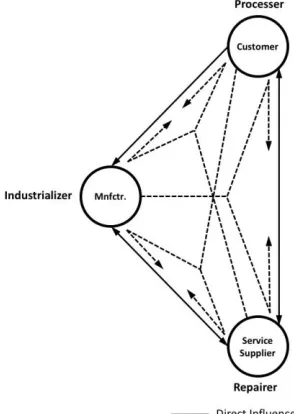
and indirect links. Figure 2 depicts control and coordination paths between the actors in Case 1.
--- Insert Table 3 about here ---
--- Insert Figure 2 about here ---
Case 2: “All for One (Sometimes) - and One for Themselves (Most of the Time)”
The triad in Case 2 consisted of a large third-party logistics provider as the customer
(Freighter), a commercial vehicle manufacturer (Truck), and an independent workshop as the
service supplier (Mechanic)—see Figure 3. Freighter employed 2040 people, Truck 975 and
Mechanic 52. All three companies are engaged in long-term relationships with each other.
Freighter started buying solutions from Truck as a result of a shift in two strategic priorities: a)
re-focus from the purchase price to the total cost of ownership over the asset’s lifecycle and b) re-focus
on the core competences—the provision of logistics services—and, therefore, a subsequent closure
of many of Freighter’s maintenance facilities.
--- Insert Figure 3 about here ---
The solution or vehicle up-time package was comprised of a commercial vehicle and
associated services (maintenance, upgrades, and spare parts) provided by Mechanic to Freighter
Freighter with a contractually agreed level of commercial vehicles available. In this arrangement,
the manufacturer was the prime contractor and had contractual relationships with the customer,
while with the service supplier it had a franchise agreement which was mainly prescribing
infrastructural matters such as the visual identity and cleanliness of the workshop. There was no
contract between the service supplier and the customer.
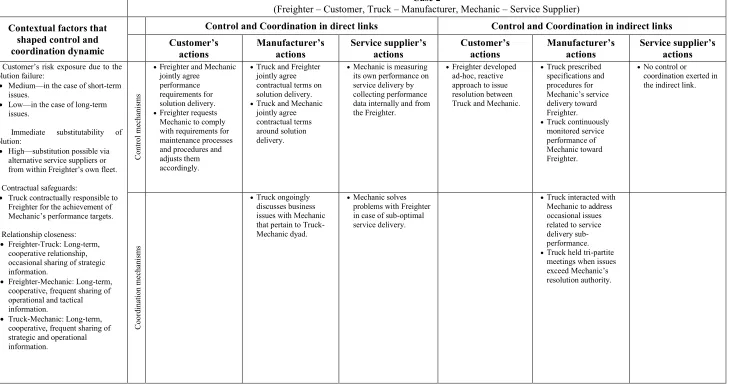
Table 4, summarizes contextual factors that shaped control and coordination dynamics
between the triadic actors in Case 2, and provides examples of control and coordination in direct
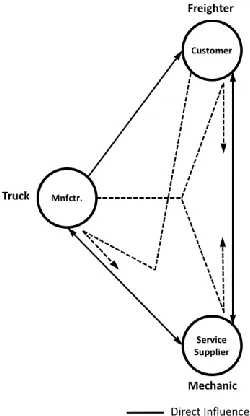
and indirect links. Figure 4 depicts control and coordination paths between the actors in Case 2.
--- Insert Table 4 about here ---
--- Insert Figure 4 about here ---
Case 3: “All for (No)One - One for All”
Case 3 was comprised of a government department responsible for defense as the customer
(Defender), a service supplier of capital assets (MR&O), and a manufacturer and installer of
subsystems and equipment (Subsystem)—see Figure 5. The subdivision of Defender that
interacted with MR&O and Subsystem employed 435 people, MR&O employed 1100 people and
Subsystem 400. All three firms have been engaged in an exchange for over 15 years. In the past,
there were long-term, collaborative agreements in place between all three members of the triad.
However, in the two years preceding the case, MR&O let a long-term agreement lapse with
Subsystem.
The move toward a solution in this triad was due to a cut in defense spending by the national
government of Defender. This meant that Defender outsourced the management of its maintenance
bases and heavily incentivized suppliers to reduce costs and shorten lead-times. Subsystem had
become an approved supplier to Defender by developing a solution that significantly reduced the
through-life costs of maintenance. The contractual arrangements existed between Defender and
M&RO, but there were no contractual agreements in place between Subsystem and Defender and
Subsystem and M&RO.
Table 5, summarizes contextual factors that shaped control and coordination dynamics
between the triadic actors in Case 3, and provides examples of control and coordination in direct
and indirect links. Figure 6 depicts control and coordination paths between the actors in Case 3.
--- Insert Table 5 about here ---
--- Insert Figure 6 about here ---
Cross-Case Analysis and Proposition Development
Each case was systematically scrutinized and then compared (Miles et al., 2014). In the
cross-case analysis, we searched for common patterns to formulate propositions. We organized
propositions around three themes common to all three cases: mediator role and interaction paths,
the customer as a mediator, and the contextual factors.
Mediator role and interaction paths. To understand how interactions occurred in the triad we
focused on how control and coordination occurred, directly, and indirectly, through other actors.
role. This is an extension and refinement of extant theory that posits that triads have one actor who
takes the role of mediator (e.g., Simmel, 1950; Li & Choi, 2009). To complete the theorizing, we
generated propositions from the cross-case analysis.
All actors directly coordinated each other, except for Industrializer in Case 1. This is due
to the need to align resources and approaches for effective service delivery, which is central to
service production (cf. Sampson, 2000; Sampson & Froehle, 2006). Resource alignment took place
in the cases through all customers agreeing on the terms of delivery together with the service
suppliers—even in Case 2 where the manufacturer was the integrator of the offering. In Cases 1
and 2, the customers and service suppliers planned maintenance together and redesigned the
maintenance procedures and/or policies to better fit their particular needs. The use of mutual
adjustment and feedback mechanisms is common to coordination in interorganizational
relationships (cf. Nassimbeni, 1998; Sahin & Robinson, 2005). We also witnessed the exertion of
control mechanisms. In Cases 1 and 3, the customers monitored the service supplier’s delivery
performance, this is a form of information monitoring (cf. Handley & Benton Jr., 2012b). If
equipment failure was identified, the customers requested their service suppliers to fix the issues.
These interactions between customer and service supplier took place over an extended period of
time.
In all three case triads, we observed two or more actors who adopted a mediating (cf.
Simmel, 1950) or Tertius Iungens (cf. Obstfeld, 2005) orientation. These mediators controlled and
coordinated activities and relationships between actors within the triad. Mediators have access to
all of the actors and links (through the actors) in a triad. For example, in all three cases, customers
suppliers via proactive review meetings and performance evaluations (Case 1) or more ad-hoc
approaches to resolve potential issues (Case 2 and Case 3).
Mediators acted in the interest of the triad – rather than being only self-interested - to
improve performance and encourage others to coordinate action and interaction. For example, in
Case 3, the service supplier (Subsystem) actively sought demand information – a form of
information sharing (a coordination mechanism) - from Defender and MR&O to be able to
effectively respond to Defender’s requirements. However, it simultaneously encouraged both
Defender and M&RO to share information with each other. Without the information exchange,
both M&RO and Subsystem would lose visibility and the opportunity to react to Defender’s needs.
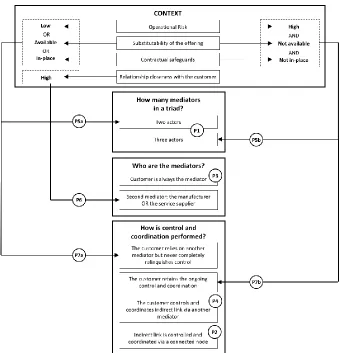
We observed two or more mediators in each triad in our work. Hence,
P1: Service triads can have two or more mediators that act for the benefit of the triad.
Actors control and coordinate indirect links through another actors. In this study, seven out of
nine actors in the triads exerted influence toward the indirect link. This occurred in the service
triads where the interdependence between actors was high. Here, an actor takes action to affect the
way the other actors in the triad interact to improve the performance of the triad as a whole. For
example, the manufacturers in all triads collected performance information on the indirect
relationship between the customer and service supplier. This is a control mechanism (cf. Handley
& Benton Jr., 2012b) that provided the manufacturers with information they could use to tackle
problems. The manufacturers also held tripartite meetings to gain further visibility of the indirect
link. These interactions came from the manufacturers’ desire to enhance customer satisfaction
increased the visibility of the relational and performance status and enabled the monitoring parties
to react in situations where underperformance or emerging relational issues were identified.
The indirect link was always influenced via another actor, independent of the actors
involved. The manufacturers always influenced the indirect link through the service providers or
customers, or in some cases through both. They used the other actor as an intermediary to influence
the relationship they did not have direct access to. There was not a single instance where this
influence would have occurred without going through either of the other nodes. This is in contrast
to what has been previously been suggested in the existing literature (cf. Choi & Wu, 2009a, b).
Accordingly, we propose the following:
P2: The control and coordination of an indirect link always occurs via a connected node
because the node and the link are inseparable.
The customer as mediator in service triads. The influencing of the indirect relationship was
carried out by seven out of nine actors in the case triads. Only the service suppliers in Cases 2 and
3 did not attempt to influence the indirect relationship, despite the service supplier being the
integrator in Case 3. The customers in Cases 2 and 3 reacted whenever performance issues were
identified and requested their service suppliers and manufacturers to work together. Also, the
manufacturers in Cases 2 and 3 monitored their indirect links and influenced those links (i.e.
control). The service suppliers’ positions in Cases 2 and 3 were active only within their own dyads,
while the customers and manufacturers actively controlled and coordinated the whole triad,
including the indirect links. The actors collecting information and exerting control on indirect links
dyads. The advantage was derived from these actors possessing access to all links, both direct and
indirect.
Customers actively took initiative in all three cases to influence their indirect links. This
was an attempt to improve collaboration between the other two actors to ensure that the solution
delivered benefits to the customer. In all three triads, the customers faced issues where the
manufacturer and service supplier needed to collaborate. The customers in Cases 2 and 3
occasionally encountered issues where the performance of the solution deviated from the agreed
performance. Processer, the customer in Case 1, once experienced a major issue with the solution
causing significant production losses. All of the customers required their service suppliers to meet
with the manufacturers to resolve issues.
The actors showed similarities in how they influenced the indirect link. Freighter (Case 2)
exerted control and coordination on the indirect link through Truck (manufacturer), while in Case
1, Processer exerted influence through both Industrializer and Repairer. In Case 3, Defender
influenced the indirect link through both MR&O and Subsystem. In all the cases, the actors
influenced the indirect link through another mediator. When the actors had to exert influence on
an indirect link, they selected another mediator which created a greater influence on the indirect
link. From this we derive the third and the fourth proposition, that go as follows:
P3: In a service triad, one, of the two or three mediators, is always the customer.
P4: To control and coordinate an indirect link, the customer will always prefer to go
through another mediator.
Context and the adoption of the mediator’s role. Using solutions created a risk for the
customers in the three cases, because those were used in their core operations. A possible
or to repair existing equipment. These risks varied from case to case, and the customers utilized
different risk mitigation techniques. In Case 2, the customer’s risk exposure was limited as they
had substitutable resources (i.e., other commercial vehicles) that could be accessed in case of a
solution failure. By hiring a commercial vehicle in the short-term, the risk of solution failure
could be effectively mitigated. The customers in Cases 1 and 3 did not have access to
substitutable resources and alternative offerings, as these assets were unique and customized for
them. This was the first identified means of risk mitigation—substitutability.
In Case 3, the customer had attempted to exert control through contractually specified
sanctions (cf. van der Valk & van Iwaarden, 2011) on the system integrator that would make up
for the financial losses of the customer in case of a solution failure. The second means of risk
mitigation in the cases is through control. Finally, taking an active role in controlling and
coordinating the triadic interactions was identified as the third type of risk mitigation, which was
present when the other two means were not. This occurred in Case 3 where Subsystem actively
sought out information from the other actors in the triad to proactively respond to demand.
One of the mediators was the customer. Moreover, interdependence and asset specificity
required at least one other actor in the triad to become a mediator. This was to gain transparency
on the performance and relationships within the triad for the better coordination of activities. In
case 1, the other mediator was Truck (manufacturer and integrator) and in Case 3 it was Subsystem,
who was MR&O’s (integrator) supplier. The integrator in Case 3 was passive in managing the
indirect link despite the potential contractual sanctions if the solution failed. Common to both of
these triads was that other risk mitigation measures were in place—this being immediate solution
substitutes (Case 2) and control through contractual safeguards (Case 3). We posit that because
link. Thus, two actors in Cases 2 and 3 assumed the mediator role, while in Case 1 all three served
as mediators. Based on this analysis, we propose the following:
P5a: When operational risk is high, there are no immediate substitutes and the exertion of
control through contractual safeguards is not present, all three nodes in the triad will act
as mediators.
P5b: When operational risk is low, there are immediate substitutes or control through
contractual safeguards can be exerted, two nodes in the triad will act as mediators.
In Cases 2 and 3, the solution integrator was a mediator. In Case 3, the integrator was not
a mediator, which was a result of changes within the relationship. All companies in Case 3 were
involved in the triad for a long time and had shared strategic information. However, the situation
had changed within the past few years when Subsystem (manufacturer) redesigned their product.
This significantly reduced service needs and reduced the sales of MR&O (integrator) to Defender
for part of the solution. This reduced trust and interaction between the parties. The integrator also
had employed a large number of Defender’s employees as they transferred across to MR&O when
the deal was signed. These employees found it difficult to adapt to the commercial realm of MR&O
and exhibited a passive behavior toward controlling and coordinating relationships. The
relationships between the parties in Case 3 were not good, and there was considerable strain
between Defender and MR&O. Conversely, Subsystem had a good relationship with Defender.
Because of this, it was the manufacturer (Subsystem) instead of the integrator (MR&O) who
assumed responsibility for coordinating the delivery of the solution and became the other mediator
P6: The other mediator will be the actor with whom the customer has the closest
relationship.
Control and coordination of the indirect link. There were between-case differences in the way in
which the indirect links were controlled and coordinated by customers. All three customers
influenced the indirect link, but some were more active than others. The customers in Cases 2
(Freighter) and 3 (Defender) were passive and only actively influenced the indirect link when
matters arose (see Table 3), a control mechanism through controlling the actions of other actors
within the triad (cf. Chenhall, 2003). They delegated the management of the triad to another actor,
Truck (manufacturer and integrator) in Case 2 and Subsystem (manufacturer) in Case 3. In both
cases, the party to whom management of the triad was delegated was also a mediator. Thus, both
Truck and Subsystem also exerted relational influences on the indirect link. In contrast, the
customer in Case 2 (Processer) retained coordination responsibilities to stay in control of
longer-term developments. Processer saw active coordination through joint decision-making and
feedback as crucial for mitigating its risk exposure, which was significant due to downtime costs
and a lack of both immediate resource substitutability and contractual safeguards. Cases 2 and 3
were different as the customers had mitigated their risk exposure through different means—
resource substitution in Case 2 and contractual safeguards in Case 3. Because of this risk
mitigation, the customers felt comfortable adopting more passive roles, where another mediator
performed the majority of the ongoing relationship management tasks in their triads. They did not
have a similar need for proactivity as Processer and wanted to focus on their efforts. Figure 7
shows the differences in context, actors, roles, and behavior in controlling and coordinating service
P7a: When operational risk is low or there are either contractual safeguards in place or
immediate substitutes available for the solution, the customer relies on another mediator
to coordinate the triad but does not relinquish control completely.
P7b: When operational risk is high and there are neither immediate substitutes nor
contractual safeguards available for the solution, the customer retains the ongoing control
and coordination of the triad.
DISCUSSION AND CONCLUSIONS
Mismanagement of service triads can lead to serious relationship and performance related
issues for all involved actors – a manufacturer, a customer, and a service supplier. While our
knowledge on control and coordination is well developed in dyads, in service triads is at best scarce
and incomplete. By using an inductive theory-building approach, which relied on data from nine
companies, forming three service triads, we developed a mid-range theory of control and
coordination in service triads. With this we make an important theoretical and practical
contribution to the network literature in OSCM. Researchers, to date, have focused almost
exclusively upon control in triads (cf. Li & Choi, 2009; Van der Valk & Van Iwaarden, 2011). Our
study uncovered, however, that while control is necessary, both, in direct and indirect links of a
service triad, on its own is not enough for the ongoing effective ‘functioning’ of service triads.
Both, control and coordination mechanisms, are necessary as there may be a passive actor within the triad that is still perceived to be powerful (i.e. Defender in Case 3) but not engaged in the
control and coordination of the triad. This means that coordination is shared between multiple
collective is dependent on individual actors bonding together, which is why we see mediators
rather than bridges, as for example in the work of Li and Choi, (2009). While the mediator displays
traits of retaining individual control through interaction with and monitoring of the other two actors
and the indirect relationship between them, it simultaneously uses coordination through
information sharing and mutual adjustment. The main concern of the mediator is a risk of
individual and collective failure due to the performance interdependence between the three actors.
Our mid-range theory stems from these critical observations. In Figure 7 we summate the
empirical propositions from which the theoretical framework of control and coordination in service
triads was developed. The theory captures control and coordination in service triads around four
key areas: 1) How many mediators control and coordinates in a service triad; 2) who in a service
triad acts as a mediator; 3) how control and coordination is performed, and; 4) what contextual
factors affect the first three areas.
--- Insert Figure 7 about here ---
The first key area addressed is the contingent nature of control and coordination in service
triads. This is an important insight as to the best of our knowledge, no studies of service triads to
date (e.g. Li and Choi, 2009; Van der Valk & Van Iwaarden, 2011; Van Iwaarden & Van der Valk,
2013), have explored the relationship between the context and control and/or coordination in
service triads. We identified four contextual factors: customer’s exposure to business and
operational risk due to potential failure of the offering (i.e. solution); the offering’s immediate
substitutability; the absence or presence of contractual safeguards, and relationship closeness with
mediators in a service triad, who in a service triad acts as a mediator as well as how is control and
coordination performed.
The extant literature on control and coordination in service triads focuses on one actor; a
service outsourcer (e.g., Li & Choi, 2009) or solution integrator (Van der Valk & Van Iwaarden,
2011; Bastl et al., 2012; Van Iwaarden & Van der Valk, 2013; Finne & Holmström, 2013; Karatzas
et al., 2016). By broadening the empirical focus in this study, from a single actor, to all three actors
and their relationships in a triad, we uncovered that control and coordination is a shared
responsibility of two or three actors, depending on the context, usually involving the manufacturer
and the customer. For example, when the customer’s exposure to risk is low, and immediate
substitutability of the offering on the supply market is high, the intensity of a customer’s efforts in
coordinating the triad decreases, and the primary manufacturer carries a more prominent role (i.e.
Case 2). However, in situations of high-risk exposure and low substitutability of the offering
combined with the absence of contractual safeguards, all three actors—the customer, the
manufacturer, and the service supplier—adopt the role of mediators (i.e. Case 1).
Furthermore, we uncovered that the customers’ role specifically, transcends the role of
providing inputs to the service production process (cf. Sampson, 2000; Sampson & Froehle, 2006)
toward a much more complex role involving coordinating the interaction with manufacturers and
service suppliers as well as monitoring and mediating in direct and indirect relationships. While
the customer always acts as a mediator in a service triad, it is the relationship closeness between
the customer and either, the manufacturer or the service supplier, that dictates who will be the
second mediator in the context of low operational risk, available alternatives and presence of
contractual safeguards. Not only is the role of the customer much more complex than previously
this role allows the customer, as well as any other actor in the service triad, to maintain triad-level
visibility, control and coordination over the provision of the customer offering from the two triadic
actors, the early detection of potential issues in direct and indirect relationships, and the ability to
influence the behavior of individual actors. In addition, we showed that in situations, when only
two actors act as mediators, the customer will prefer to exert the control and coordination via
another mediator.
Lastly, the extant literature on management of transitive triads frequently depicts that an
actor (i.e. a node) in a triad (e.g. the manufacturer) exerts the control, (Li and Choi, 2009) or
manages the indirect link (Choi & Wu, 2009a, b) by directly influencing the indirect link (e.g. the
relationship between the service supplier and the customer). In this way the managing actor
somewhat bypasses’ the two connected actors, suggesting the nodes and the link between them are
separate. We propose a refinement of this logic and posit that any indirect link is controlled and
coordinated via a connected node, because the two – the node and the link are inseparable and in
order to control and coordinate in the indirect link, one has to control and coordinate behavior of
a node displayed in this indirect link. For example, the manufacturer has to control behavior and
coordinate actions of the service supplier, which service supplier then displays in the relationship
towards the customer.
Our study also has important practical implications. Manufacturers who are transitioning
from manufacturing outsourcing models to service-based ones should adopt the role of mediators.
The adoption of this role will likely require a mindset shift from the traditional self-interest role
seen often in manufacturing outsourcing models to a more shared and system-oriented one, where
management is not only focused on the performance-of-self but also on the performance-of-all (i.e.
coordination of service triads requires action to influence both direct and indirect relationships.
Indirect relational influences matter for all actors in the triad. By understanding and influencing
the indirect links, managers can reduce the amount of information asymmetry, leading to reduced
risk on one side as well as improved performance on the other. Lastly, managers should be aware
that the approach to the control and coordination of service triads is not contingency free. In fact,
the identified contingency factors will shape the needs and expectations from all three actors—the
customer, the manufacturer, and the service supplier—on how and to what extent they are going
to be involved in the triadic interactions.
Limitations and Directions for Further Research
Our study is not without limitations. As we adopted a theory-building approach, there is
reduced testing of external validity, leading to limited generalizability. Further research can
move from theory building to theory testing as we have developed the foundations for further
development (cf. Dyer & Wilkins, 1991). Next, we framed service triads and subsequently
selected cases as transitive in which all three actors are connected through relationships and
where significant bi-directional exchange is taking place. In this way, we excluded service triads
involving the provision of mixed services or quasi-manufacturing services (Chase, 1981). Lastly,
given that we developed our mid-range theory on the smallest unit of network – i.e. a triad, a
natural extension of this work would be to test and refine our propositions on a larger network. In
this way we would gain important insights which key areas of our theory hold as the complexity
of a supply network grows and which don’t.
Anderson, J. C., & Narus, J. A. (1990). A model of distributor firm and manufacturer firm working partnerships. Journal of Marketing, 54(1), 42.
Anderson, J. C., Zerrillo, P. C., & Wang, L. O. (2016). Estimating firm-specific and relational properties in interorganizational relationships in marketing. Journal of Business to Business Marketing, 13(4), 29–67.
Bastl, M., Johnson, M., Lightfoot, H., & Evans, S. (2012). Buyer-supplier relationships in a servitized environment: An examination with Cannon and Perreault’s framework. International Journal of Operations & Production Management, 32(6), 650–675. Burt, R. S. (1992). Structural holes: The social structure of competition. Cambridge,
Massachusetts, Harvard University Press, p. 38–40.
Burt, R. S. (2000). The network structure of social capital. Research in Organizational Behavior, 22, 345–423.
Cartwright, D., & Harary, F. (1956). Structural balance: a generalization of Heider’s theory. Psychological Review, 63(5), 277–293.
Chase, R. B. (1981). The customer contact approach to services: Theoretical bases and practical extensions. Operations Research, 29(4), 698–706.
Chenhall, R. H. (2003). Management control systems design within its organizational context: findings from contingency-based research and directions for the future. Accounting, Organizations and Society, 28(2-3), 127-168.
Choi, T. Y., & Wu, Z. (2009a). Go ahead, leap: Triads and their practical and theoretical import. In response to “To leap or not to leap: Triads as arbitrary subsets of networks of connected dyads” by Anna Dubois. Journal of Purchasing and Supply Management, 15(4), 269–270. Choi, T. Y., & Wu, Z. (2009b). Triads in supply networks: Theorizing buyer-supplier-supplier
relationships. Journal of Supply Chain Management, 45(1), 8–25.
Choi, T. Y., Wu, Z., Ellram, L., & Koka, B. R. (2002). Supplier-supplier relationships and their implications for buyer-supplier relationships. IEEE Transactions on Engineering
Management, 49(2), 119–130.
Corbin, J. M., & Strauss, A. (1990). Grounded theory research: Procedures, canons, and evaluative criteria. Qualitative Sociology, 13(1), 3–21.
Cusumano, M. A., Kahl, S. J., & Suarez, F. F. (2015). Services, industry evolution, and the competitive strategies of product firms. Strategic Management Journal, 36(4), 559–575. David, R. J., & Han, S. K. (2004). A systematic assessment of the empirical support for
transaction cost economics. Strategic Management Journal, 25(1), 39-58.
Dyer, W. G., & Wilkins, A. L. (1991). Better stories, not better constructs, to generate better theory: A rejoinder to Eisenhardt. The Academy of Management Review, 16(3), 613-619. Edmondson, A. C. & McManus, S. E. (2007), "Methodological fit in management field
research", The Academy of Management Review,(32)4, 1155-1179.
Eisenhardt, K. M. (1989). Building theories from case study research. Academy of Management Review, 14(4), 532–550.
Fugate, B., Sahin, F., & Mentzer, J. T. (2006). Supply chain management coordination mechanisms. Journal of Business Logistics, 27(2), 129-161.
Finne, M., & Holmström, J. (2013). A manufacturer moving upstream: Triadic collaboration for service delivery. Supply Chain Management: An International Journal, 18(1), 21–33. Gioia, D. A., Corley, K. G., & Hamilton, A. L. (2013). Seeking qualitative rigor in inductive