PROJECT INTEGRATION SERVICES AND THEIR CONTRIBUTION TO SUCCESSFUL
IMPLEMENTATION OF PROJECTS FOR THE REALIZATION OF MILLENNIUM DEVELOPMENT
GOALS: A SURVEY OF ON-GOING CDF PROJECTS IN ELDORET NORTH CONSTITUENCY
Richard Rutto
1
Department of Civil and Structural Engineering, Moi University, P .O Box 3900, Eldoret
2
Department of Development Studies
3
Department of Sociology and Psychology, School of Arts and Social Sciences, Moi University,
ARTICLE INFO ABSTRACT
Development is a multi dimensional process involving the up ward movement in the entire social system. Therefore, the realization of Millennium development goals calls for project management strategies that will lead to project success
reality. For this to be achieved, effective project implementation strategies have to be put in place so as to assure and ensure project success without which the project can not see the light of day. Theref
on the successful implementation of CDF projects. To meet the purpose, the study sought; To find out the project integration services used in CDF projects for
establish the techniques of project integration services used in CDF projects; and to find out the challenges faced in using project integration services. The study had a target population of 540 respondents consisting of proj
of projects funded by CDF. From the target population, a sample size of 162 was selected using stratified and simple random sampling. Data for the study was collected using questionnaires and analysed descriptively by use of percentages and frequencies. The paper found out that project integration services include project appraisal services, risk analysis services, technical specification services and analysis of spill over. It also found out th
appraisal of projects by stakeholders, project proposal by the community, risk analysis by stakeholders and cost estimation through consultations and that the effects of project integration include less costs of eval
that the CDF should implement training to workers, that corporate governance policies should be provided to workers through seminar and that continuous auditing of projects should be d identify problems early enough. It further recommends that politicians should not take part in the project appraisals and that competent managers with proficient knowledge in project management should be actively involved in the management of CDF pr
be provided so as to implement project integration in the constituency.
INTRODUCTION
A project is a one-shot, time-limited, goal
undertaking, requiring the commitment of varied skills and resources and thus it is a combination of human and no resources pooled together in a temporary organization to achieve a specific purpose. The purpose and the set of activities, which can achieve that purpose, distinguish one project from another. On the other hand, project management is an application of good management prac
techniques. Therefore, effective project management must factor in project integration services to enable successful
*Corresponding author:[email protected]
ISSN: 0975-833X
Article History:
Received 27th August, 2011
Received in revised form
29th September, 2011
Accepted 8th October, 2011
Published online 20th November, 2011
Key words:
Project,
Project Integration Services, Projects Implementation, Project Success,
Constituency Development Fund.
RESEARCH ARTICLE
PROJECT INTEGRATION SERVICES AND THEIR CONTRIBUTION TO SUCCESSFUL
IMPLEMENTATION OF PROJECTS FOR THE REALIZATION OF MILLENNIUM DEVELOPMENT
GOING CDF PROJECTS IN ELDORET NORTH CONSTITUENCY
Richard Rutto
1, David M. Kungu
2and Michael Chesire
Department of Civil and Structural Engineering, Moi University, P .O Box 3900, Eldoret
Development Studies, Moi University, P.O Box 3900, Eldoret
Department of Sociology and Psychology, School of Arts and Social Sciences, Moi University,
P. O Box 3900, Eldoret
ABSTRACT
Development is a multi dimensional process involving the up ward movement in the entire social system. Therefore, the realization of Millennium development goals calls for project management strategies that will lead to project success and thus millennium development goals becoming a reality. For this to be achieved, effective project implementation strategies have to be put in place so as to assure and ensure project success without which the project can not see the light of day. Therefore, the purpose of this study was to establish the contribution of project integration services on the successful implementation of CDF projects. To meet the purpose, the study sought; To find out the project integration services used in CDF projects for
establish the techniques of project integration services used in CDF projects; and to find out the challenges faced in using project integration services. The study had a target population of 540 respondents consisting of project managers, project committee members, and community members of projects funded by CDF. From the target population, a sample size of 162 was selected using stratified and simple random sampling. Data for the study was collected using questionnaires and nalysed descriptively by use of percentages and frequencies. The paper found out that project integration services include project appraisal services, risk analysis services, technical specification services and analysis of spill over. It also found out that the common techniques used are joint appraisal of projects by stakeholders, project proposal by the community, risk analysis by stakeholders and cost estimation through consultations and that the effects of project integration include less costs of evaluation and implementation and quality projects. The study recommends that the CDF should implement training to workers, that corporate governance policies should be provided to workers through seminar and that continuous auditing of projects should be d identify problems early enough. It further recommends that politicians should not take part in the project appraisals and that competent managers with proficient knowledge in project management should be actively involved in the management of CDF projects and finally, enough finances should be provided so as to implement project integration in the constituency.
Copy Right, IJCR, 2011, Academic Journals
limited, goal-directed, major undertaking, requiring the commitment of varied skills and resources and thus it is a combination of human and no-human together in a temporary organization to achieve a specific purpose. The purpose and the set of activities, which can achieve that purpose, distinguish one roject management is an application of good management practices and techniques. Therefore, effective project management must
to enable successful
implementation of projects. Equally, it is paramount to have project integration knowledge so as to utilize project integration services for successful implementation of projects (Prasanna, 1988). According to
Integration Management Knowledge Area includes the processes and activities needed to identif
unify and coordinate the various processes and project management activities within the Project Management Process Groups. In the project management context, integration
includes characteristics of unification, consolidation,
articulation, and integrative actions that are crucial to project completion, successfully meeting customer and other stakeholder requirements, and managing expectations. Integration, in the context of managing a project, is making
International Journal of Current Research
Vol. 3, Issue, 11, pp.076-081, November, 2011
INTERNATIONAL
PROJECT INTEGRATION SERVICES AND THEIR CONTRIBUTION TO SUCCESSFUL
IMPLEMENTATION OF PROJECTS FOR THE REALIZATION OF MILLENNIUM DEVELOPMENT
GOING CDF PROJECTS IN ELDORET NORTH CONSTITUENCY
and Michael Chesire
3Department of Civil and Structural Engineering, Moi University, P .O Box 3900, Eldoret
3900, Eldoret
Department of Sociology and Psychology, School of Arts and Social Sciences, Moi University,
Development is a multi dimensional process involving the up ward movement in the entire social system. Therefore, the realization of Millennium development goals calls for project management and thus millennium development goals becoming a reality. For this to be achieved, effective project implementation strategies have to be put in place so as to assure and ensure project success without which the project can not see the light of day. ore, the purpose of this study was to establish the contribution of project integration services on the successful implementation of CDF projects. To meet the purpose, the study sought; To find out the project integration services used in CDF projects for successful implementation; To establish the techniques of project integration services used in CDF projects; and to find out the challenges faced in using project integration services. The study had a target population of 540 ect managers, project committee members, and community members of projects funded by CDF. From the target population, a sample size of 162 was selected using stratified and simple random sampling. Data for the study was collected using questionnaires and nalysed descriptively by use of percentages and frequencies. The paper found out that project integration services include project appraisal services, risk analysis services, technical specification at the common techniques used are joint appraisal of projects by stakeholders, project proposal by the community, risk analysis by stakeholders and cost estimation through consultations and that the effects of project integration uation and implementation and quality projects. The study recommends that the CDF should implement training to workers, that corporate governance policies should be provided to workers through seminar and that continuous auditing of projects should be done to identify problems early enough. It further recommends that politicians should not take part in the project appraisals and that competent managers with proficient knowledge in project management ojects and finally, enough finances should be provided so as to implement project integration in the constituency.
Copy Right, IJCR, 2011, Academic Journals. All rights reserved.
implementation of projects. Equally, it is paramount to have integration knowledge so as to utilize project integration services for successful implementation of projects According to Sapru (1997), Project Integration Management Knowledge Area includes the processes and activities needed to identify, define, combine, unify and coordinate the various processes and project management activities within the Project Management Process Groups. In the project management context, integration
includes characteristics of unification, consolidation,
choices about where to concentrate resources and effort on any given day, anticipating potential issues, dealing with these issues before they become critical, and coordinating work for the overall project good. The integration effort also involves
making trade-offs among competing objectives and
alternatives. The project management processes are usually presented as discrete components with well-defined interfaces while, in practice, they overlap and interact in ways that cannot be completely detailed in any guide (Sapru, 1997).
The need for integration in project management becomes evident in situations where individual processes interact. For instance, a cost estimate needed for a contingency plan involves integration of the planning processes described in greater detail in the Project Cost Management processes, Project Time Management processes, and Project Risk Management processes. When additional risks associated with various staffing alternatives are identified, then one or more of those processes must be revisited. The project deliverables also need to be integrated with ongoing operations of either the performing organization or the customer’s organization, or with the long-term strategic planning that takes future problems and opportunities into consideration (Prasanna, 1988). To carry project integration effectively the project management team requires to: document specific criteria of the product requirements; understand how to take the identified information and transform it into a project management plan using the Planning Process Group; prepare the work breakdown structure. Take appropriate action to have the project performed in accordance with the project management plan, the planned set of integrated processes, and the planned scope; measure and monitor project status, processes and products, and analyze project risks. Among the processes in the Project Management Process Groups, the links are often iterated, the Planning Process Group provides the Executing Process Group with a documented project management plan early in the project and then facilitates updates to the project management plan if changes occur as the project progresses and integration is primarily concerned with effectively integrating the processes among the Project Management Process Groups that are required to accomplish project objectives within an organization’s defined procedures (Prasanna, 1988). Constituency development projects are carried out to improve the economic status of the region and living standards of the people. Most of these projects are geared towards maximizing attainment of the communal needs viz. a viz. individual need. The projects include: construction of public schools, health centres, cattle dips, social facilities such as communal halls and Feeder roads.
Statement of the Problem
Project integration is a new phenomenon in evaluating, controlling, implementing and analyzing the costs and benefits of projects which affect the wide spectrum of stakeholders in
both developing countries and developed countries.
Nowadays, it is a prerequisite to strike a consensus of stakeholders in initiating projects which will improve the living standards of those found in a given region. CDF projects are meant to benefit a given community while at the same time improve their economic standards. This is geared
towards enabling economic growth and economic
development of the country. They are therefore a stimulus for
economic development and they were decided as a package to approach wholesome economic development from a local area approach. Eldoret North Constituency is rated as the best CDF managed constituency with more than 70% of its projects completed within the timeframe allocated and with high quality work. This has been brought about as a result of integration of services (GOK, 2009). However, it is not clear from studies done how services are integrated and to what degree the integration of project services contribute towards the successful implementation of projects since some of the projects which did not integrate the services still performed as well. This study therefore sought to assess the contribution of project integration services on the successful implementation of projects in Eldoret North constituency which has an integration of rural and urban set up. The main objective of the study was to establish the contribution of project integration services on the successful implementation of CDF projects in Eldoret North Constituency. The specific objectives were:
a) To find out the project integration services used to
integrate CDF projects for successful implementation in Eldoret North Constituency.
b) To establish the techniques of project integration
services used to integrate CDF projects for successful implementation in Eldoret North Constituency.
c) To find out the challenges facing projects
management committee in using project integration services to successfully implement CDF projects in Eldoret North Constituency.
Research Questions
The following research questions were formulated to meet the above objectives.
a) What are the project integration services used to
integrate CDF projects for successful implementation in Eldoret North Constituency?
b) What are the techniques used to integrate CDF
projects for successful implementation in Eldoret North Constituency?
c) What are the challenges facing projects management
committee in using project integration services to successfully implement CDF projects in Eldoret North Constituency?
Significance of the study
evaluation. This will motivate them to improve productivity and provide quality service for quality projects. The government will use the findings to formulate policies which will be used in financing CDF project in other Constituencies for equal development and effective utilization of government resources viz. a viz. economic development of the country. This will be as a result of successful completion of projects and improvement of infrastructures. Scholars will use the findings as a basis for further study in the same area. This implies that the current study will be used to supplement future study by scholars who want to carry out research in the same area.
RESEARCH METHODOLOGY AND DESIGN
This study adopted a survey research design. In a survey study, several units are first studied and explored. The research designs helped the researcher extensively and
intensively study the project integration services and their
contribution to successful implementation of CDF funded projects. The survey study was particularly useful in depicting a holistic and wide understanding of the project committee’s experience on integration of services to successfully
implemented projects. Eldoret North comprises two
administrative divisions divided into twenty three locations and thirty-nine sub-locations. According to the CDF Act, each location is expected to develop a list of priority projects. The community through the local meetings convened by the Location Development Committee (LDC) identifies the projects to be submitted to the Constituency Development Committee (CDC). Each implemented project at the location level has Project Management Committees (PMC). To ensure a holistic study was done, the target population of the study comprised ongoing projects in construction of: class rooms, health centres, and cattle dips. A group of 540 individuals in the twenty three locations which comprised of 20 project managers, 100 from the Project Management Committee members from each project at the location level were selected. Twenty (20) contractors and 400 members who comprised the LDC and residents of Eldoret North Constituency were also considered in the survey. This is shown in Table 1. From the target population, a sample size of 162 was selected using stratified sampling technique to sample 6 project managers, 30 project committee members, 6 contractors, and 120 members of CDF funded projects. According to Carmines and Zeller (1979) a sample of 30% is representative if the target population is between 50 and 600. This is shown in Table 2. To get the sample from the target population, the population was stratified into various groups and from each group applied simple random sampling to get the specific respondents. This was by the researcher writing the names of individuals in each stratum, placed them in a basket, shook the basket thoroughly and by random picking, determined the sample size.
To collect the data required for the study, the researcher used questionnaires to collect data, where closed and open ended questions were used. The questionnaires were designed and pre-tested for each of the categories of employees and committee project members under study. The researcher personally administered questionnaires because it allowed an opportunity to explain key areas to the respondents. The questionnaires were given to respondents directly and after two to three days they were collected. The researcher also
sought the assistance of CDF manager, project committee members, project managers and contractors to administer the data collection instruments to the respondents who were not within reach. The data collection results were sorted and captured following the coding in line with a structure designed by the researcher. Using numerical categories the researcher determined the number of respondents corresponding to particular opinions. Tables were used to total the number of respondents and percentages given to each group. The data collected was edited and coded for accuracy and completeness. Descriptive statistics were used to analyze data which was presented using frequency response tables.
RESULTS AND DISCUSSION
Stakeholders to be integrated in projects undertaken by CDF
The study found it paramount to find out the integrative nature of different stakeholders who contributed and are affected in one way by the constituency development projects. The findings as shown in table 3 revealed that respondents indicated that the community is be involved. This was revealed by 70% of the respondents who strongly agreed to that, 20% agreed, 6% neutral and 4% disagreed to the fact. On the government involvement, 60% strongly agreed to the fact that government agencies are involved, 30% agreed, 4% neutral and 6% disagreed to that fact. The respondents were not clear as to whether contractors are or should be involved or not as there were equal responses on the two sides as shown by 10% of the respondents who strongly agreed to the fact that contractors should be involved, 30% agreed, 20% neutral, 30% disagreed and 10% strongly disagreed. On the beneficiaries, there was agreement that they are and should be involved in project management. As 50% of the respondents strongly agreed to that, 20% agreed, 10% neutral, 10% disagreed and 10% strongly disagreed. Finally, respondents agreed that suppliers are not or are rarely involved in projects as revealed by 10% of the respondents strongly agreed that they are involved, 20% agreed and 15% were undecided as 30% disagreed and 35% strongly disagreed. From the findings it is evident that the stakeholders that are mainly integrated in projects include the community, the government and the constituency members in Eldoret North Constituency.
Project integration services required for successful implementation of projects funded by CDF
The study sought to establish integration services so as to
underscore the importance in enabling successful
technical specification services, 40% strongly agreed that it is a project integration service geared towards project success, 40% agreed, 10% neutral, 6% disagreed 4% strongly disagreed; and on analysis of spill-over to the community (benefit analysis) 10% strongly agreed, 20% agreed, 10% neutral, 30% disagreed 30% strongly disagreed. It can therefore be concluded that majority of the respondents identified project appraisal services, risk analysis services, technical specification services as the main project integration services required for successful project implementation of projects. Techniques used to integrate project services for the successful implementation. The study sought to establish the
techniques used to integrate project services for successful implementation of projects since they assist in enabling the projects to be implemented as per the specifications. From the 150 respondents, on joint appraisal of projects by stakeholders 60% strongly agreed, 20% agreed, 6% neutral, 10% disagreed 5% strongly disagreed; On project proposal by CDF community, 50% strongly agreed, 30% agreed, 10% neutral, 6% disagreed 4% strongly disagreed; on brain storming sessions of stakeholders 10% strongly agreed, 20% agreed, 20% neutral, 30% disagreed 20% strongly disagreed; on risk analysis by stakeholders, 30% strongly agreed,50% agreed,7% neutral, 9% disagreed, 5% strongly disagreed; on cost estimation through consultations, 40% strongly agreed, 10% Table 1: Target population
Departments Target population
Project managers 20
Project committee members 100
Contractors 20
Location Development Committee (LDC) Members of Eldoret North Constituency
400
Total 540
Source: Eldoret North Constituency (2010).
Table 2: Sample size
Department Target population Sample size
Project managers 20 6
Project committee members 100 30
Contractors 20 6
Location Development Committee (LDC) Members of Eldoret North Constituency
400 120
[image:4.595.183.411.268.339.2]Total 540 162
Table 3: Stakeholders who need to be integrated in projects undertaken by CDF in Eldoret North constituency
Response in Percentage
Stakeholders SA A N DA SDA
The community 70 20 6 4 0
The government 60 30 4 6 0
The constructors 10 30 20 30 10
Beneficiaries 50 20 10 10 10
Suppliers 10 20 15 30 35
Table 4: Project integration services required for project integration for successful implementation of projects
Response in Percentage
Stakeholders SA A N DA SDA
Project appraisal services 70 25 0 5 0
Project risk analysis 60 25 5 6 4
Environmental compliant services 30 40 6 14 10
Technical specification services 40 40 10 6 4
Analysis of spill-over to the community 10 20 10 30 30
Table 5: Techniques used to integrate project services
Response in Percentage
Stakeholders SA A N DA SDA
Joint appraisal of projects by stakeholders 60 20 6 10 5
Project proposal by community 50 30 10 6 4
Brainstorming sessions 10 20 20 30 20
Risk analysis by stakeholders 30 50 7 9 5
[image:4.595.145.448.553.615.2]Cost estimation through consultations 40 10 30 10 10
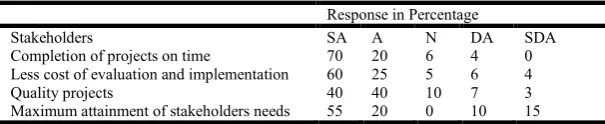
Table 6: Contribution of project integration services on successful implementation of CDF projects
Response in Percentage
Stakeholders SA A N DA SDA
Completion of projects on time 70 20 6 4 0
Less cost of evaluation and implementation 60 25 5 6 4
Quality projects 40 40 10 7 3
agreed, 30% neutral, 10% disagreed 10% strongly disagreed. The results indicate that the common techniques used to integrate project services include: joint appraisal of projects by stakeholders, project proposal by community, project risk analysis by stakeholders and cost estimation through consultations.
Contribution of project integration services to the project successful implementation
The study sought to find out the Contribution of project integration services to successful implementation of CDF projects as to underscore its importance in successful project undertaking. On completion of projects in time, 70% respondents strongly agreed to the fact project integration services leads to timely project completion, 20% agreed, 6% were neutral while 4% disagreed to the fact. The study also found out that project integration leads to less costs of evaluation and implementation as 60% strongly agreed to that fact, 25% agreed, 5% neutral, 6% disagreed 4% strongly disagreed. Project integration also leads to quality projects, 40% strongly agreed to the fact, 40% agreed, 10% neutral, 7% disagreed 3% strongly disagreed. Finally project integration leads to the meeting of stakeholder needs perhaps because the beneficiaries are involved in the project decision making. This was revealed by 55% strongly agreed, 20% agreed, 0% neutral, 10% disagreed 15% strongly disagreed. Therefore, the results show that that majority of the respondents identified completion of projects on time, less costs of evaluation and implementation and quality projects as the contributions of project integration services on successful implementation of CDF projects.
Challenges facing project integration process
The findings in Table 7 reveal that lack of political good is a great factor impacting on the project integration process, 70% of the respondents strongly agreed to that fact, 20% agreed, none neutral, 6% disagreed, 4% strongly disagreed. Also affecting is the low levels of education of committee members, 10% of the respondents strongly agreed to that fact, 20% agreed, 20% neutral, 30% disagreed, 20% strongly disagreed. In some instances, some projects are given inadequate finances leading to the projects not seeing the light of the day. This was revealed by 40% of the respondents strongly agreed lack of adequate finance is a factor negating effective project integration, 30% agreed, 10% neutral, 16% disagreed, 4% strongly disagreed. The perception of community members on the project implemented also affects project integration as 60% of the respondents strongly agreed to that, 30% agreed, 4% neutral, 6% disagreed, none strongly disagreed. Although most CDF projects are single funded, in the cases where there are multiple donors such as conflict between the various donors occur leading interferences on the project as 30% strongly agreed this happens, 40% agreed, 10% neutral, 10% disagreed, 10% strongly disagreed. Finally, there is interference by political leaders, 40% strongly agreed that this happens, 20% agreed, 20% neutral, 4% disagreed, 16% strongly disagreed. Therefore the main challenges facing the carrying on of project integration include: lack of political goodwill, lack of enough finance, perception by community members, and interference by political leaders.
Conclusion
It can be concluded therefore that project appraisal services, risk analysis services, technical specification services and
analysis of spill over to the community is the back bone of project integration services. Further, the common techniques used to integrate project services include: joint appraisal of projects by stakeholders, project proposal by the community, risk analysis by stakeholders and cost estimation through consultations. The majority of the respondents identified completion of projects on time, less costs of evaluation and implementation and quality projects as the contributions of project integration services on successful implementation of CDF projects in the constituency. Finally, the study concludes that the main challenges facing carrying out project integration include: lack of political goodwill, lack of enough finance, perception by community members, and interference by political leaders.
Recommendations
Based on the above findings the researcher therefore recommends the following:-
a) Involvement of all stakeholders should be done at all
stages of the project life cycle right from the initial stage of project initiation to the signing off stage so as to enhance project sustainability
b) Continuous auditing of projects should be done at all
stages of the project life in order to identify problems early enough. This will enable mitigation measures to be taken early enough thus reducing project risks.
c) There is need to avoid political interference in the project
undertakings and particularly in the project appraisals. This will help avoid conflict of politician’s personal interest and that of the community.
d) Project management of CDF projects should involve
competent managers and engineers with proficient knowledge in project management. This will ensure that projects have an input of qualified persons at all stages leading to project success.
e) In all projects being undertaken, there should be provision
of adequate finance. This will ensure that all projects undertaken are completed so as to serve the end user need.
f) The community members should be educated on the
importance of project implementation, monitoring and evaluation. This knowledge will enable all community members to actively participate at all stages of the project life
g) Finally, managers involved in project selection should at
all times involve the stakeholders in identifying the right and viable project for the community.
Suggestion for Further Study
A study of such magnitude cannot be completed without further study in the following areas to supplement and compliment the current study.
a) Effects of successful project implementation on
sustainability of projects.
b) The relationship between project appraisal techniques
and viability of projects.
REFERENCES
Ahonen, P. 1999. General Considerations and User
Experiences of Project: Assessment and Project
Albert, H. 2004. Handbook of Project Management Procedures. TTL Publishing; London.
Baum, W.C. 1982. The Project Cycle. Cycle Management in a
Small Donor-transitional Country Context. Impact. World
Bank; Washington.
Bjarne, K. 2007. Project Management- Theory and practice. Nyt Teknisk Forlag;Bonn.
Carmines, E. G. and Zeller. A. R. 1979. Reliability and Validity Assessment: Quantitative Applications in social Sciences. Sage University Paper.
Chappell, D. 2004. Enterprise Service Bus. O’Reilly Media Publishing.
David I., Cleland, and Roland G. 2006. Global Project
Management Handbook. McGraw-Hill Professional; New
Delhi.
Dennis. L. 2007. Project Management. Gower Publishing Ltd. Dinsmore, P.C., Terence, J. and Davies, C. 2005. The Right
Projects Done Right. John Wiley and Sons, London.
Earl, H., and Julianne J. 2003. Integrated Project Management.
Prentice Hall, New Jersey.
Gittinger, J.P. 1982. Economic Analysis of Agricultural Projects. World Bank; Baltimore and London.
Government of Kenya, (GOK, 2009). National Devolved
Funds Report. Government Printers.
Government of Kenya, (GOK, 2009). National Devolved
Funds Report. Government Printers.
Harrison, F. L., and Dennis L. 2004. Advanced Project Management: A Structured Approach . Gower Publishing, Ltd.
Hurtley, J. L. 2000. Collaboration Value Analysis and Control Systems. Supply Journal; Geneva.
James P.L. 1993. Project Planning Scheduling and Control. Neo publishing company; New Delhi.
Joseph P. 2003. PMP Project Management Professional Study Guide. McGraw-Hill Professional; Paris.
Kothari, C.R. 2004. Research Methodology: Methods and Techniques. New Age International Publishers, New Delhi.
Lewis J. 1971. Project Management Systems and Records.
London
Lewis, R. I. 2006. Project Management. McGraw-Hill Professional, New Delhi.
Maendo, M. 2007. Enterprise and Project Integration Services; A Kenyan perspective. Macmillan; Nairobi. .
Potts, D. 2002. Project Planning and Analysis for Development. Lynne Rienner Publishers; London. Prasanna, C. 1988. Project Preparation, Appraisal, Budgeting
and Implementation. Tata McGraw-Hill New Delhi.
Sapru, R.K. 1997. Project Management. Excel books; New
Delhi.
Shapiro, R.D. 2004. Logistics Strategy, Cases and Concept .St. Paul NN West Publishing Company; Geneva.
Pankaj, J. 2002. Software Project Management in Practice. Addison Wesley Publisher.