L e a r n i n g P r o b a b i l i s t i c S u b c a t e g o r i z a t i o n P r e f e r e n c e
by I d e n t i f y i n g Case D e p e n d e n c i e s and
O p t i m a l N o u n Class G e n e r a l i z a t i o n Level*
Takehito Utsuro
Yuji Matsumoto
Graduate School of Information Science, Nara Institute of Science and Technology
8916-5, Takayama-cho, Ikoma-shi, Nara, 630-01, JAPAN
{ u t s u r o , m a t s u } l ~ i s . a i s t - n a r a , a c . j p
A b s t r a c t
This paper proposes a novel method of learning probabilistic subcategorization preference. In the method, for the purpose of coping with the ambi- guities of case dependencies and noun class gen- eralization of a r g u m e n t / a d j u n c t nouns, we intro- duce a d a t a structure which represents a tuple of independent partial subcategorization frames. Each collocation of a verb and a r g u m e n t / a d j u n c t nouns is assumed to be generated from one of the possible tuples of independent partial subcatego- rization frames. Parameters of subcategorization
preference are then estimated so as to maximize the subcategorization preference function for each collocation of a verb and a r g u m e n t / a d j u n c t nouns in the training corpus. We also describe the results of the experiments on learning probabilistic sub- categorization preference from the E D R Japanese bracketed corpus, as well as those on evaluating the performance of subcategorization preference.
1 Introduction
In corpus-based NLP, extraction of linguistic knowl- edge such as lexical/semantic collocation is one of the
most i m p o r t a n t issues and has been intensively stud- ied in recent years. In those research, extracted lex- ical/semantic collocation is especially useful in terms of ranking parses in syntactic analysis as well as au- tomatic construction of lexicon for NLP.
For example, in the context of syntactic disam- biguation, Black (1993) and Magerman (1995) pro- posed statistical parsing models based-on decision- tree learning techniques, which incorporated not
only syntactic but also lexical/semantic information in the decision-trees. As lexical/semantic informa- tion, Black (1993) used a b o u t 50 semantic categories, while Magerman (1995) used lexicai forms of words. Collins (1996) proposed a statistical parser which is based on probabilities of dependencies between head-words in the parse tree. In those works, lexi- cal/semantic collocation are used for ranking parses in syntactic analysis.
*The authors would like to thank Dr. Hang Li of NEC C&:C Research Laboratories, Dr. Kentaro Inui of Tokyo Institute of Technology, Dr. Koiti Hasida of Electrotech- nical Laboratory, Dr. Tak_ashi Miyata of Nara Institute of Science and Technology, and also anonymous reviewers of ANLP97 for valuable comments on this work.
On the other hand, in the context of automatic lex- icon construction, the emphasis is mainly on the ex- traction of lexical/semantic collocational knowledge of specific words rather than its use in sentence parsing. For example, Haruno (1995) applied an information- theoretic d a t a compression technique to corpus-based case frame learning, and proposed a m e t h o d of find- ing case frames of verbs as compressed representation of verb-noun collocational d a t a in corpus. T h e work concentrated on the extraction of declarative repre- sentation of case frames and did not consider their performance in sentence parsing.
This paper focuses on extracting lexical/semantic collocational knowledge of verbs for the purpose of ap- plying it to ranking parses in syntactic analysis. More specifically, we propose a novel m e t h o d for learning parameters for calculating subcategorization prefer- ence functions of verbs. In general, when learning lex- ical/semantic collocational knowledge of verbs from corpus, it is necessary to cope with the following two types of ambiguities:
1) The ambiguity of case dependencies 2) The ambiguity of noun class generalization
1) is caused by the fact that, only by observing each verb-noun collocation in corpus, it is not decidable which cases are dependent on each other and which cases are optional and independent of other cases. 2) is caused by the fact that, only by observing each verb- noun collocation in corpus, it is not decidable which superordinate class generates each observed leaf class in the verb-noun collocation.
were discovered only at the slot-level a n d n o t at t h e class-level.
C o m p a r e d with those previous works, this p a p e r proposes to cope with the above two ambiguities in a uniform way. First, we i n t r o d u c e a d a t a s t r u c t u r e which represents a tuple of i n d e p e n d e n t partial sub- c a t e g o r i z a t i o n frames. E a c h collocation of a verb a n d a r g u m e n t / a d j u n c t n o u n s is a s s u m e d to be g e n e r a t e d from one of the possible tuples of i n d e p e n d e n t par- tim s u b c a t e g o r i z a t i o n frames. T h e n , p a r a m e t e r s of s u b c a t e g o r i z a t i o n preference are e s t i m a t e d so as to maximize the s u b c a t e g o r i z a t i o n preference function for each collocation of a verb and a r g u m e n t / a d j u n c t nouns in the training corpus. We describe the results of the e x p e r i m e n t s on learning probabilistic subcate- gorization preference from the E D R J a p a n e s e brack- eted corpus (EDR, 1995), as well as those on evaluat- ing the p e r f o r m a n c e of s u b c a t e g o r i z a t i o n preference.
2
D a t a S t r u c t u r e2.1 V e r b - N o u n C o l l o c a t i o n
Verb-noun collocation is a d a t a s t r u c t u r e for the collo- cation of a verb a n d all of its a r g u m e n t / a d j u n c t nouns. A v e r b - n o u n collocation e is represented by a feature s t r u c t u r e which consists of t h e verb v a n d all t h e pairs of co-occurring case-markers p a n d t h e s a u r u s classes c of case-marked nouns: 1
e
pred : v
pl : cl
p~ : ck
(1)
We assume t h a t a thesaurus is a t r e e - s t r u c t u r e d t y p e hierarchy in which each n o d e represents a s e m a n t i c class, a n d each t h e s a u r u s class c l , . . . , Ck in a verb- n o u n collocation is a leaf class. We also i n t r o d u c e __c as the s u p e r o r d i n a t e - s u b o r d i n a t e relation of classes in a thesaurus: Cl ~c c2 means t h a t cl is s u b o r d i n a t e to
C2.
2 . 2 S u b c a t e g o r i z a t i o n F r a m e
A subcategorization frame f is represented by a feature s t r u c t u r e which consists of a verb v a n d t h e pairs of case-markers p a n d sense restriction c of case-marked a r g u m e n t / a d j u n c t nouns:
pred : v
pl : C1
/ =
Pt : el
Sense restriction C l , . . . , c t of case-marked argu- m e n t / a d j u n c t nouns are represented by classes at ar- b i t r a r y levels of the thesaurus. A s u b c a t e g o r i z a t i o n frame f can be divided into two parts: one is the verbal p a r t fv c o n t a i n i n g the verb v while the o t h e r is the nominal p a r t fp containing all the pairs of
1Although we ignore sense ambiguities of case-marked nouns in this definition, in section 5.2, we briefly mention how we deM with sense ambiguities of case-marked nouns in the current implementation.
case-markers p a n d sense restriction c of c a s e - m a r k e d nouns.
f = f v A f p - - - - [ p r e d : v ] A [
plpl ctCl
]2 . 3 S u b s u m p t i o n R e l a t i o n
We i n t r o d u c e subsumption relation -~ y of a verb-noun collocation e a n d a subcategorization frame f:
e ___i f iff. for each case-marker Pi in f a n d its n o u n class cii, there exists the same case-marker pi in e and its n o u n class cie is s u b o r d i n a t e to
elf, i.e. cle ~c cly
T h e s u b s u m p t i o n relation ___y is applicable also as a s u b s u m p t i o n relation of two s u b c a t e g o r i z a t i o n frames.
3
A M o d e l of G e n e r a t i n g
V e r b - N o u nC o l l o c a t i o n
In this section, we i n t r o d u c e a model of generat- ing a v e r b - n o u n collocation from s u b c a t e g o r i z a t i o n frame(s). In order to cope with the ambiguities of
case dependencies and noun class generalization in this model, we i n t r o d u c e a d a t a s t r u c t u r e which repre- sents a tuple of independent partial subcategorization frames.
3.1 G e n e r a t i n g a V e r b - N o u n C o l l o c a t i o n from I n d e p e n d e n t P a r t i a l
S u b c a t e g o r i z a t i o n F r a m e s
First, we describe the idea of g e n e r a t i n g a v e r b - n o u n collocation f r o m a s u b c a t e g o r i z a t i o n frame, or a tuple of partial s u b c a t e g o r i z a t i o n frames.
G e n e r a t i o n from a S u b c a t e g o r i z a t i o n F r a m e Suppose a v e r b - n o u n collocation e is given as:
pred : v pl : Cle e
Pk :
CkeT h e n , let us consider a s u b c a t e g o r i z a t i o n f r a m e f which can generate e. We assume t h a t f has exactly the same case-markers as e has, 2 a n d each s e m a n t i c class ci.f of a c a s e - m a r k e d n o u n of f is s u p e r o r d i n a t e to the c o r r e s p o n d i n g leaf semantic class eie of e:
pred : v pl ::clf
/ = , cie _~c ciy ( i = l , . . . , k ) (2)
L pk : Ckf J
Then, we denote the generation of the verb-noun collocation e from the subcategorization frame f as:
f ~ e
Next, we describe the idea of g e n e r a t i n g a v e r b - n o u n collocation from a tuple of partial s u b c a t e g o r i z a t i o n frames which are i n d e p e n d e n t of each other.
2Since we do not consider ellipsis of argument nouns when generating a verb-noun collocation from a subcate- gorization frame, the subcategorization frame f is required
P a r t i a l S u b c a t e g o r i z a t i o n F r a m e
First, we define a partial subcategorization frame
fi
of f as a subcategorization frame which has the same verb v as f as well as some of the case-markers of f and their semantic classes. Then, we can find a division of f into a tuple (fl, - . - , f~) of partial subcategoriza- tion frames of f , where any pair fi and
fi' (i ~£ i')
do not have common case-markers and the unification f~ A.. • A f~ of all the partial subcategorization frames equals to f :f = f z A . . . A f . (3)
pred : v
VjYj' pij # Pi,j,
fl---- pij:cij ' ( i , i ' = l , . . . , n , i C i ' ) (4)
I n d e p e n d e n c e o f P a r t i a l S u b c a t e g o r i z a t i o n F r a m e s
We allow the division of f into a tuple (f], . . . , fn)
of partial subcategorization frames as in the equation (3) only when the partial subcategorization frames f l ,
• .., fn can be regarded as events occurring indepen- dently of each other. With some corpus, usually we can estimate the conditional probabilities p ( f I v) and
p(], I v) of the (partial) subcategorization frames ]
and fi (i = 1 , . . . , n ) given the verb v. According to the estimated probabilities, we can judge whether f l , . . . , fn are independent of each other as follows.
First, we estimate the conditional probability p ( f I
v) of a (partial) subcategorization frame f by sum- ming up the conditional probabilities p(e [ v) of all the verb-noun collocations e given the verb v, where e is subsumed by f (e _ / f ) 3
p ( f l v ) ~ ~ p ( c l ~ ) (5)
e~_ff
The conditional joint probabilityp(fl,..., f , I v) is
also estimated by summing up p(e I v) where e is subsumed by all of f l , . . . , fn (e _ y f l , . . . , f , ) :
p(fl .... ' f " Iv) ~" E p(e l v) (6)
e~_ffl ... fn
Then, we give a formal definition of independence
of partial subcategorization frames according to the estimated conditional probabilities:
partial subcategorization frames f l , - - ' , fn are in- dependent if, any pair fi and f j (i # j ) do not have common case-markers, and for every sub- set f i ~ , . . . , fir of j of these partial subcategoriza- tion frames (j = 2 , . . . , n), the following equation holds:
P ( f i l , ' ' ' , f i r I v ) = P ( f i l l v) " ' ' p ( f i r I v ) (7) Since it is too strict to judge the independence of partial subcategorization frames by the equation (7),
3The probability p(e I v) can be estimated as
freq(e)/freq(v) by M.L.E. (maximum likelihood estima- tion) directly from the training corpus.
we relax the constraint of independence using a re- laxation parameter c~ (0 < a < 1). Partial subcatego- rization frames f l , . . . , fn are judged as independent
if, for every subset f i l , - - . , fit of j of these partial subcategorization frames (j = 2 , . . . , n), the following inequalities hold:
< P ( / ' l , - . . , f ' r I v ) < 1 (s) - p(l,1 I v ) - - P ( Y ~ J I v ) -
G e n e r a t i o n f r o m I n d e p e n d e n t P a r t i a l S u b c a t e g o r i z a t i o n F r a m e s
Now, as in the case of the generation from a sub- categorization frame f , we denote the generation of e from a tuple (fl, . . . , fn) of independent partial sub- categorization frames of f as below:
( f l , . . , f , ) , e
3.2 T h e A m b i g u i t y o f Case D e p e n d e n c i e s
This section describes the problem of the ambiguity of case dependencies when observing verb-noun collo- cation in corpus. This problem is caused by the fact that, only by observing each verb-noun collocation in corpus, it is not decidable which cases are dependent on each other and which cases are optional and inde- pendent of other cases.
For example, consider the following example: E x a m p l e 1
Kodomo-ga kouen-de juusu-wo nomu.
child-NOM park-at juice-ACC drink
(A child drinks juice at the park.)
T h e verb-noun collocation is represented as a feature structure e below:
e = ga : Cc wo : cj de : %
In this feature structure e, co, cp, and cj repre- sent the leaf classes (in the thesaurus) of the nouns
"kodomo(child)", "kouen(park)", and "juusu(juice)".
Next, we assume that the concepts "human", "place
", and "beverage" are superordinate to "kodomo(child) ", "kouen(park)", and '~uusu(juice)", respectively, and introduce the corresponding classes Chum, Cplc, and Cbe~. Then, the following superordinate- subordinate relations hold:
Cc "~c Churn~ Cp "~c Cplc~ Cj "~c Cbev
Allowing these superordinate classes as sense restric- tion in subcategorization frames, let us consider the several patterns of subcategorization frames which can generate the verb-noun collocation e. Those patterns of subcategorization frames vary according to the de- pendencies of cases within them.
If the three cases "ga(NOM)", "wo(ACC)", and "de(at)" are dependent on each other and it is not possible to find any division into a tuple of several in- dependent partial subcategorization frames, e can be regarded as generated from a subcategorization frame containing all of the three cases:
ga : ch,m ~ e (9)
Otherwise, if only the two cases
"ga(NOM)" and
"wo(ACC)"
are dependent on each other and the"de(at)"
case is independent of those two cases, e can be regarded as generated from the following tuple of independent partial subcategorization frames:ga : C h u m ~
de
: Cplc W O : Cbev¢ (10)
Otherwise, if all the three cases
"ga(NOM)",
"wo(ACC)",
and"de(at)"
are independent of each other, e can be regarded as generated from the fol- lowing tuple of independent partial subcategorization frames, each of which contains only one case:ga : C h u r n '
L
w o : Cbev ~ d e : Cplc e(11)
3.3 T h e A m b i g u i t y o f N o u n C l a s s G e n e r a l i z a t i o n
This section describes the problem of the ambiguity of noun class generalization when observing verb-noun collocation in corpus. This problem is caused by the fact that, only by observing each verb-noun colloca- tion in corpus, it is not decidable which superordinate class generates each observed leaf class in the verb- noun collocation.
For example, let us again consider E x a m p l e 1. We assume t h a t the concepts
"animal"
and"liquid"
are superordinate to
"human"
and"beverage",
re- spectively, and introduce the corresponding classes Cani andctiq.
Then, the following superordinate- subordinate relations hold:C h u m "~c C a n i ~ C b t v -~c Cliq
If we additionally allow these superordinate classes as sense restriction in subcategorization frames, we can consider several additional p a t t e r n s of subcate- gorization frames which can generate the verb-noun collocation e, along with those p a t t e r n s described in the previous section.
Suppose t h a t only the two cases
"ga(NOM)"
and"wo(ACC)"
are dependent on each other and the"de(aQ"
case is independent of those two cases as in the formula (10). Since the leaf classCc ("child")
can be generated from eitherChum
or Cani, and also the leaf classcj ("juice")
can be generated from either Cbe v o r e l i q , e c a n be regarded as generated according to either of the four formulas (10) and (12),~(14):ga:ca~i
~ e (12)W O : Cbe v
ga:ch,m
~ e (13)W O : Cliq
ga:c~.i
, e (14)W O : Cliq
3 . 4 A M o d e l o f G e n e r a t i n g V e r b - N o u n C o l l o c a t i o n
W h e n observing each verb-noun collocation e, as we described in the previous two sections, the ambiguities of case dependencies and noun class generalization re- main, and it is necessary to consider every possible tuple of independent partial subcategorization frames which can generate the observed verb-noun collocation e. In order to cope with these ambiguities, we intro- duce two sets: one is a set F of tuples ~ f l , . . . , f n > of independent partial subcategorization irames and the other is a set E of verb-noun collocations e. T h e generation of a verb-noun collocation from a tuple of independent partial subcategorization frames can be regarded as a m a p p i n g ~r from F to E:
r : F ~ E (15)
Usually, for each given verb-noun collocation in E, there exist several possible tuples of independent partial subcategorization frames in F. Thus, lr is a many-to-one mapping. T h e m a p p i n g from a tuple ( f ] , - . - ,
fn)
of independent partial subcategorization frames to a verb-noun collocation e can be denoted also as follows:( f l , . . . , f , ) ~ e (16)
When observing a verb-noun collocation e, we as- sume this many-to-one mapping Ir and consider every possible tuple of independent partial subcategoriza- tion frames which can generate e, according to the ambiguities of case dependencies and noun class gen- eralization.
3.5 P a r a m e t e r s o f G e n e r a t i n g V e r b - N o u n C o l l o c a t i o n
Before we give definitions of subcategorization prefer- ence functions in the next section, we introduce
the
parameter q(fk ] v)
of generating verb-noun colloca- tion, which is used in the calculation of the subcate- gorization preference. T h e p a r a m e t e r q(fk ] v) can be regarded as the conditional probability of the partial subcategorization framefk
and could be estimated in the similar way as thep(f [ v)
in the formula (5). However, it is the p a r a m e t e r ofgenerating verb-noun
collocation
and have to be estimated so as to maxi- mize the subcategorization preference function for the training corpus.between their sense restrictions, they may have over- lap and the requirement that parameters sum up to 1 is not satisfiable. Therefore, it is not so straightfor- ward to apply EM algorithm to the task of parameter estimation of generating verb-noun collocation.
Instead of introducing a probabilistic model of gen- erating verb-noun collocation 4, in this paper, we em- ploy more general framework which is applicable to various measures of subcategorization preference in- cluding the probability of generating verb-noun collo- cation. In the framework, the process of parameter estimation is regarded as a general optimization prob- lem of maximizing the subcategorization preference function for the training corpus.
In order to describe the framework, first we intro- duce the probability P ( ( f l , . . . ,
fn)j
" ' *el [ el)
of gen-erating a verb-noun collocation
ei
in the set E from a tuple ( f x , . . . ,f~)j
in the set F, givenei,
and denote it as a conditional probability P ( ( f l , . - . , f n ) j[ ei).
Then, for each
ei
in E, we can consider a probability distribution P ( ( f l , . . . ,f , ) j [ ei)
over the set F of tu- pies of independent partial subcategorization frames:E
e l " " " e l
( f l , . . . , f n ' ) l
"'"
F p((fl, ..-, fn)i l e d
( f l . . . f n " ) m "'"
Each probability distribution
P( ( f l , . . . , fn)j I ei)
sat- isfies the following axiom of the probability:Y 2 v ( f f l , - . . , f , b
I
ei) =
1 for all i• J . . . . .
According to the probabxhty distribution
P ( ( f l , . . . ,
f n ) j [ ei) of generating
ei
from (A, • :" , fn)-, we esti- . $mate the frequency of the subcategonzatlon frame fk and then estimate the parameter
q(fk I v) as
below:E 1 • p((fl . . . .
, f k , . . . , f , ) i l e i )
freq(fk)
i,j
q(fk
Iv) ~ -freq(v)
-freq(v)
(17)
When learning probabilistic subcategorization pref- erence (section 5), we estimate the probability distri- bution P ( ( f l , . . . ,
fn)j [ ei)
for eachei
so as to maxi- mize the subcategorization preference function forel.
4
Subcategorization Preference
Functions
This section introduces a function ¢ which measures the subcategorization preference when generating a verb-noun collocation e from a tuple ( f l , . . - , f ~ ) of independent partial subcategorization frames:
¢ ( ( / a . . . f . ) ---* e) (18)
In this paper, we introduce a subcategorization pref- erence function which is based-on the idea of
Kullback
Leibler distance. 5
4Another alternative of solving the problem of learn- ing probabilistic subcategorization preference based-on a probabilistic model is to .regard the problem as the con- struction of probabilistic models from the training sample. We will discuss this issue in section 7.
5In Utsuro and Matsumoto (1997), we defined another subcategorization preference function ev which is based-
4.1 N o m i n a l P a r t s o f ( P a r t i a l ) S u b c a t e g o r i z a t i o n F r a m e s
First, let
fp, f p l , ' " , f p n
be the nominal parts of (partial) subcategorization fl'ames f, f l , - . . , fn in the equations (2) and (4), respectively:fp = -
Pk : Ck$
fP = fPl A"" Afp.
fPi =
pij : cij
'VjVj' PO # Pc j,
(i, i ' = 1.... ,n, i # i ' )
As in the case of the parameters
q(fi [ v)
offi
given the verb v, we estimate the probability
P(fpi)
of the nominal part
fpi
in the whole corpus and call itthe parameter q(fpi) of fpi in the whole training cor-
pus.
We estimate the frequency offpi
throughout the whole training corpus and then estimate the parame- terq ( h i )
offpl as
below:E freq(fk)
q ( f , p ~
N
~ 1. p(ffl .... , h , . . . , S , b I ~,)
i,j (19)
N
4.2 ¢kt: K u l l b a c k L e i b l e r D i s t a n c e
Rather than the simple conditional probability, this preference function is intended to measure the information-theoretic association of the verb v and the nominal part of the subcategorization frame.
The Kullback Leibler (KL) distance is a measure of the distance between two probability distribution. Given a random variable X and two probability dis- tributions p ( X ) and q(X), the KL distance D(p[[q) of p ( X ) and q(X) is defined as below(Cover and Thomas, 1991), where each term can be regarded as the dis- tance of two probabilities
p(z)
andq(x)
of an event x:D(Pllq) = Y2 p(x)" log
p(x)
q(x)
xEX
In order to apply the idea of the KL distance to mea- suring the association of the verb v and the nominal part
fp
of f , we introduce a random variable F p which takesfp as
its value• We also introduce the probability distribution p ( F p ) of F p and the conditional proba- bility distribution p ( F p [ v) of F p given the verb v. Then, the KL distance of p ( F p [ v) and p ( F p ) is denoted as D ( p ( F p [ v)Hp(Fp) ) and each term of it can be regarded as the distance of two probabilitiesp(fp ] v)
andp(fp).
We assume t h a t the larger this distance is, the stronger the association offp
and v is, and measure the association offp
and v with thisdistance of the two probabilities
P(fv
[ t') andP(fv)"
With this idea. the subcategorization preference func- tionokt
is now formally defined as below: 6 7oktf(fl . . . f . ) - ' * e)
= P(fp I
t,)log p(fp Jr) (20)P( fv)
n
1-I P(fpi l V)
n
,~ rip(fpi
[ t,) × log i=1, (21)~=1 H p(fvl )
i = 1 n
1-Iq(fpi
I t')n
"~ 1-I q(fP'
t v) × log i=1~ (22)i=1
Y I q(fPi)
i = 1
(21) is derived from the independence of the partial subcategorization frames
f l , . . . , fn.
In (22), we use the p a r a m e t e r sq(fvi I v)
andq(fvi)
as an approxima- tion of the probabilitiesP(fpi I
r) andP(fpi)"
5 Learning Probabilistic
Subcategorization
P r e f e r e n c e
T h e problem of learning subcategorization preference can be formalized as an optimization problem of es- timating the probability distribution P ( ( f l , . . . ,
fn)j [
el)
(in section 3.5) of generatingei
from ( f x , . . . ,fn)j
(and then the p a r a m e t e r sq(fpk
I v ) andq(fPk))
so as to maximize the value of the subcategorization pref- erence function for the whole training corpus. In this paper, we give only an a p p r o x i m a t e solution to this problem: we estimate the probability distribu- tion P ( ( f l , . - . ,fn)j [ el)
for eachei
so as to maximize the value of the subcategorization preference functiononly
forel,
not for the whole training corpus.5.1 P r o b l e m S e t t i n g
Let the training corpus C be the set of verb-noun col- location e. We define the subcategorization preference ¢(e) of a verb-noun collocation e as the m a x i m u m of the subcategorization preference function ¢ (the for- mula (18)) of generating e from a tuple ( f a , . . . ,
fn).
(~(e) = max ¢((fl . . . . ,f~) ~ e) (23) (11 ... Y~)
Now, the problem of
learning probabilistic subcate-
gorization preference
is stated as:for every verb-noun collocation e in C, es- timating the probability distribution
P((fl,
6Resnik (1993) applys the idea of the KL distance to measuring the association of a verb v and its object noun class c. Our definition of ekt corresponds to an extension of Resnik's association score, which considers dependencies of more than one case-markers in a subcategorization frame. 7Another related measure is Dunning (1993)'s likeli- hood ratio tests for binomial and multinomial distribu- tions, which are claimed to be effective even with very much smaller volumes of text than is necessary for other tests based on assumed normal distributions.
. . . . f ~ ) j I e) of generating e from ( f l .
.... f~)j.
under the constraint t h a t the value of the subcategorization preference o(e) ismaximized.
5.2 L e a r n i n g A l g o r i t h m
First. we identi~,
independent
partial subcategoriza- tion frames according to the condition of (8). Then, let E(t') be the set of verb-noun collocations contain- ing the verb v in the training corpus ~. LetF(e)
be the set of tuples(fl . . . fn)
of independent partial sub- categorization frames which can generate e and satisfy the independence condition of (8). 8F(e) = { ( f , , . . . , f . ) (fl ...
f , ) - - e } (24)F(e)
contains a tuple ( f ) consisting of only one subcategorization frame f only if f can not be di- vided into several independent partial subcategoriza- tion frames.Then, we assume t h a t each element of F ( e ) occurs evenly and estimate the initial conditional probability distribution P ( ( f l , . . . ,
f , ) j I e)
of generating e from( f l , . . . , fn)j
as an approximation below:1
P((fl,... ,fn)j
[e) ,~ IF(e)l (25)5 . 2 . 1 A p p r o x i m a t e E s t i m a t i o n o f V e r b - I n d e p e n d e n t P a r a m e t e r s
Using the initial conditional probability distribution of P ( ( f i , . . . ,
fn)j I e) as
in the formula (25), the ini- tial values of the verb-independent p a r a m e t e r sq(fPk)
are estimated by the formulas (19). In the current im- plementation of the learning algorithm, we use these initial values as a p p r o x i m a t e estimation of those verb- independent p a r a m e t e r s and probabilities throughout the learning process.5 . 2 . 2 I t e r a t i v e R e e s t i m a t i o n o f V e r b - D e p e n d e n t P a r a m e t e r s
Verb-dependent p a r a m e t e r s
q(fk
I v)(=q(fpk [ v))
are iteratively estimated so as to maximize the sub- categorization preference ¢(e) for every verb-noun col- location e in the training corpus C. As a learning al- gorithm, we employ the followingstingy algorithm:
1. I n i t i a l i z a t i o n
As with the case of the verb-independent p a r a m - eters, for each verb-noun collocatoin e in C, the set
F(e)
is initially constructed according to the defini- tion in (24). Then, the initial conditional probability distribution ofP ( ( f l , . . . , fn)j
[e) and the initial val- ues of the verb-dependent p a r a m e t e r sq(fk [ v) are
estimated as (25) and (17), respectively.
Sin the current implementation, we deal with sense am- biguities of case-marked nouns and case ambiguities of Japanese topic-marking post-positional particles such as
"ha(TOPIC)", "too(ALSO)", and "dake(ONLY)".
When constructing the setF(e),
we consider all the possible com- bination of senses of semantically ambiguous nouns and cases of topic-marking post-positional particles. These ambiguities can be resolved by maximizing the subcate- gorization preference function (section 5.2.2).Table 1: T h e Result of Learning Probabilistic Sub- categorization Preference for "kau(buy, i n c u r ) " (¢kl, a = 0 . 9 )
I
II
. . . .,sp./}/Eg)
I
'~,,,
leg s. I
1 [wo(AOO):14(Products)] 1.88 158
2 [wo(ACC):13721-8(kabu(s~ock))] 0.27 15
3 [ga(NOM):12(Human)] 0.27 40
4 [wo(ACC):lh(Nature)] 0.21 25
5 [kara(from):12(Human)] 0.19 14
6 [de(at): 12(Shop,Place)] 0.17 18
7 [ga(NOM):12(Human), 0.16 6
wo( ACC):13721-8( kabu(stock))]
8 [wo(ACC):13OlO(hukyou(disgust))] 0.12 6
9 [wo(ACC): 11961-1(Currency)] 0.10 6
10 [ga(NOM):12(Human),wo(ACC): 0.09 4
1456(Musical Instruments)]
(llth,~lh0th) - - 196
2. Iterative R e e s t i m a t i o n
T h e subcategorization preference ¢(e) are maxi- mized by repeatedly searching the set F ( e ) for tuples ( f l , . . . , f n ) which give the m a x i m u m subcategoriza- tion preference and removing other tuples from F ( e ) . T h e following two steps are repeated until the values of the p a r a m e t e r s q(fk I v) converge.
(2a) For each verb-noun collocatoin e in £, set -~(e) as the set of tuples ( f l , . . . , fn) of independent partial subcategorization frames which can gen- erate e and give the m a x i m u m subcategorization preference in the equation (23).
(2b) Set the values of the conditional probabilities P ( ( f l , . . . , f n ) j [ e) as below and the p a r a m e t e r s q(fk I v ) as (17), respectively: 1
P((fl,...,f,~)j
I~) ' - IF(e)l6
Experiments and Evaluation
6.1 C o r p u s a n d T h e s a u r u s
As the training and test corpus, we used the E D R J a p a n e s e bracketed corpus (EDR, 1995), which con- thins a b o u t 210,000 sentences collected from newspa- per and magazine articles. From the E D R corpus, we extracted 153,014 verb-noun collocations of 835 verbs which a p p e a r more t h a n 50 times in the cor- pus. These verb-noun collocations contain a b o u t 270 case-markers. We constructed the training set C from these 153,014 verb-noun collocations.
We used ' B u n r u i Goi H y o u ' ( B G H ) (NLRI, 1993) as the J a p a n e s e thesaurus. B G H has a six-layered abstraction hierarchy and more t h a n 60,000 words are assigned at the leaves and its nominal p a r t contains a b o u t 45,000 words. Five classes are allocated at the next level from the root node.
6.2 E x p e r i m e n t s and R e s u l t s
From the training set C, we first estimated the values of verb-independent p a r a m e t e r s as in section 5.2.1, and then iteratively reestimated verb-dependent pa- r a m e t e r s of the subcategorization preference function Okl for 10 verbs as in section 5.2.2. For each of the
10 verbs, the numbers of verb-noun collocations are 100 ~ 500. We made experiments with the indepen- dence p a r a m e t e r a = 0.5/0.7/0.9. In the iterative rees- timation procedure, the values of the verb-dependent p a r a m e t e r s converged after 2 -~ 5 iterations.
For the 10 verbs, a b o u t 75% of the verb-noun collo- cations have only one case-marked noun. T h e rate t h a t tuples of partial subcategorization frames are judged as independent increases as the value of the independence p a r a m e t e r a decreases. This rate in- creases from 1.4% ( a = 0 . 9 ) to 12.1% ( a = 0 . 5 ) .
As an example, for the verb "kau(buy, incur)", Ta- ble 1 shows the set _~(e) of tuples of independent partial subcategorization frames which give m a x i m u m subcategorization preference. T h e table lists the sets F ( e ) with 10 highest preference values of Ckl, along with the numbers (the column 'Egs.') of verb-noun collocations for each F ( e ) , which are judged as gen- erated from it 9. Since a b o u t 75% of the verb-noun collocations have only one case-marked noun, most of the 10 high-scored sets have only one case-marked noun. However, the 10 high-scored sets cover a b o u t 60% of the verb-noun collocations in the training set, and they can be regarded as typical subcategorization frames of the verb "kau(buy, incur)".
6.3 E v a l u a t i o n o f S u b c a t e g o r i z a t i o n
P r e f e r e n c e
We evaluate the performance of the estimated p a r a m - eters of the subcategorization preference as follows.
Suppose t h a t the following word sequence repre- sents a verb-final J a p a n e s e sentence with a subordi- nate clause, where N x , . . . , N2k are nouns, p ~ , . . . ,P2k are case-marking post-positional particles, Vl, v2 are verbs, and the first verb vl is the head verb of the subordinate clause.
N~-p=- N11-p11 . . . N11-pl t-vl- N21-p21 ... N2k-p2k-V2
We consider the subcategorization ambiguity of the post-positional phrase N=-p,: i.e, whether N , - p , is subcategorized by Vl or v2.
We use held-out verb-noun collocations of the verbs vl and v2 which are not used in the training. T h e y are like those verb-noun collocations %1 and %2 in the left side below. Next, we generate erroneous verb- noun collocations e~l of vl and %2 of v2 as those in the right side below, by choosing a case element p , : N , at r a n d o m and moving it from vl to v2.
pred : vl w e d : vl
p l l : N l l pll : Nll
e e l =
e c l =
p l l : N i l ~ p i t : N i l
p~ : N= pred : v2
pred : v2 p21 : N21
P21 : N 2 1 ee2 = "
e c 2 =
p2k : N2k
t)21 : N2k Px : Nx
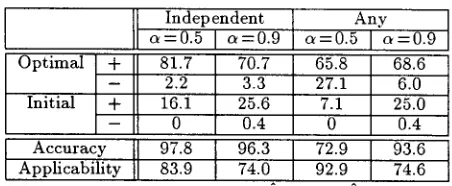
[image:7.612.341.556.560.682.2]Table 2: with tkl (%)
Accuracies of Subcategorization Preference
Independent Any
c~=0.5 a=O.9 ~=0.5 (~=0.9
Optimal + 81.7 70.7 65.8 68.6
- 2.2 3.3 27.1 6.0
Initial + 16.1 25.6 7.1 25.0
- 0 O.4 0 0.4
I Accuracy 97.8 96.3 72.9 93.6 t
Applicability 83.9 74.0 92.9 74.6
Then, we compare the sum ¢(ecl) + q~(ec2) of the maximums (in the definition (23)) of ¢kl for the cor- rect pair with the sum ¢ ( e e l ) + ¢(ee2) of those for the erroneous pair, and calculate the rate that the correct pair has the greater value.
For the purpose of evaluating the effectiveness of factors of learning probabilistic subcategorization preference, we perform experiments with different set- tings and compare their results. The following two options are examined:
* W h e t h e r the subcategorization preference func- tion uses tuples of partial subcategorization frames judged as independent ("Independent"), or
any tuples ("Any").
* The independence parameter c~=0.5/0.9.
For three Japanese verbs "kau (buy, incur)", "nomu (drink)", and "kasaneru (pile up, repeat)", we ex- tracted pairs of correct verb-noun collocations and evaluated the performance of subcategorization pref- erence. Table 2 gives the results averaged over ex- tracted pairs, including the accuracies of subcat- egorization preference. The difference of "Opti- m a l ' / " I n i t i a l " means that initial values of the pa- rameters are used instead of optimized values (section 5.2.2) when the subcategorization preference function is not applicable to the given verb-noun collocation and returns zero. The line "Accuracy" lists the sums of both "Optimal" and "Initial" accuracies, while the line "Applicability" lists the percentages of positive values of the subcategorization preference function with optimized parameters.
It is natural that the settings with more weak con- ditions on the independence judgment of partial sub- categorization frames result in higher applicabilities. The setting with independent tuples of partial subcat- egorization frames achieves higher accuracy than that with any tuples, and this result claims that the result of the independence judgment is effective when apply- ing the estimated parameters to the task of subcate- gorization preference. Even in the case of the setting with any tuples, the setting with c~=0.5 gives poorer accuracy than that of ce = 0.9. In this case, the differ- ence of the independence parameter ~ affects only the parameter estimation stage. This result claims that the independence judgment process is effective also when estimating parameters from the training corpus.
7
Conclusion
This paper proposed a novel method of learning probabilistic subcategorization preference of verbs.
We described a part of the results of the exper- iments on learning probabilistic subcategorization preference from the E D R Japanese bracketed cor- pus, as well as those on evaluating the performance of subcategorization preference. Although the scale of the evaluation experiment was relatively small, we achieved accuracies higher than 96%. The de- tails of the experimental results are available in Utsuro and Matsumoto (1997). As we mentioned in section 3.5, probabilistic model construction methods might be also applicable to the task of learning prob- abilistic subcategorization preference. We have al- ready applied the maximum entropy methods(Pietra, Pietra, and Lafferty, 1995; Berger, Pietra, and Pietra, 1996) to this task(Utsuro, Miyata, and Matsumoto, 1997) and are also planning to evaluate the effective- ness of the MDL principle(Rissanen, 1989) when com- bining with the maximum entropy method. Their re- sults will be compared with those of the m e t h o d pro- posed in this paper and reported in the near future. R e f e r e n c e s
Baum, L. E. 1972. An inequality and associated m a x i m i z a t i o n technique in s t a t i s t i c a l e s t i m a t i o n for probabilistic functions of
markov processes. Inequalities, 3:1-8.
B e t t e r , A. L., S. A. D. Pietra, and V. J. D. Pietra. 1996. A maxi-
m u m entropy approach to n a t u r a l language processing. Compu-
tational Linguistics, 22(1):39-71.
Black, E. 1993. Towards history-based g r a m m a r s : Using richer
models for probabilistic parsing. In Proceedings of the 31st An-
nual Meeting of A C L , pages 31-37.
Collins, M. 1996. A new s t a t i s t i c a l parser based on bigram lexical
dependencies. In Proceedings of the 3,~th A n n u a l Meeting of
A C L , pages 184-191.
Cover, T. M. and J. A. Thomas. 1991. Elements of I n f o r m a t i o n
Theory. John Wiley and Sons, Inc.
Dunning, T. 1993. Accurate methods for the s t a t i s t i c s of surprise
and coincidence. Computational Linguistics, 19(1):61-74.
EDR, (Japan Electronic Dictionary Research I n s t i t u t e , Ltd), 1995.
E D R Electronic Dictionary Technical Guide.
Haruno, M. 1995. Verbal case frame acquisition as d a t a compres-
sion. In Proceedings of the 5th International Workshop on Nat-
ural Language Understanding and Logic Programming.
Li, H. and N. Abe. 1995. Generalizing case frames using a the-
saurus and the MDL principle. In Proceedings of International
Conference on Recent Advances in Natural Language Process- ing, pages 239-248.
Li, H. and N. Abe. 1996. Learning dependencies between case
frame slots. In Proceedings of the 16th COLING, pages 10-15.
Magerman, D. M. 1995. S t a t i s t i c a l decision-tree models for pars-
ing. In Proceedings of the 3Jrd A n n u a l Meeting of A C L , pages
276-283.
NLRI, (National Language Research I n s t i t u t e ) , 1993. W o r d List
by S e m a n t i c Principles. Syuei Syuppan. (in Japanese). Pietra, S. D., V. D. Pietra, and J. Lafferty. 1995. Inducing fea-
tures of random fields. CMU Technical Report CMU-CS-95-144, School of C o m p u t e r Science, Carnegie Mellon University.
Resnik, P. 1993. Semantic classes and s y n t a c t i c ambiguity. In Pro-
ceedings of the H u m a n Language Technology Workshop, pages 278-283.
Rissanen, J. 1989. Stochastic Complexity in Statistical Inquiry,
volume 15 of Series in C o m p u t e r Science. World Scientific Pub-
lishing Company.
Utsuro, T. and Y. Matsumoto. 1997. Learning proba-
bilistic subcategorization preference and its application to
s y n t a c t i c d i s a m b i g u a t i o n . Information Science Technical
Report NAIST-IS-TR97006, Nara I n s t i t u t e of Science and
Technology. ( h t t p : / / w w w . a i s t - n a r a . a c . j p / I S / T e c h R e p o r t / re-
port-gz/97006.ps.gz).
Utsuro, T., T. Miyata, and Y. Matsumoto. 1997. Maximum en- tropy p a r a m e t e r learning of subcategorization preference. (sub-
[image:8.612.82.308.88.181.2]