Munich Personal RePEc Archive
Application of ABCD Analysis
Framework on Private University System
in India
Aithal, Sreeramana and V.T., Shailashree and Kumar,
Suresh
Srinivas Institute of Management Studies, Pandeshwar, Mangalore
-575 001, INDIA, Srinivas Institute of Management Studies,
Pandeshwar, Mangalore - 575 001, INDIA, Srinivas Institute of
Management Studies, Pandeshwar, Mangalore - 575 001, INDIA
April 2016
Online at
https://mpra.ub.uni-muenchen.de/71769/
Application of ABCD Analysis Framework on
Private University System in India
Author’s Details:
(1)
Dr. P. S. Aithal - Srinivas Institute of Management Studies, Pandeshwar,
Mangalore - 575 001, INDIA
(2)
Shailashree V. T. - Srinivas Institute of Management Studies, Pandeshwar, Mangalore - 575 001, INDIA
(3)
Dr. P.M. Suresh Kumar - Srinivas Institute of Management Studies, Pandeshwar, Mangalore - 575 001, INDIA
Abstract
Private Universities recently introduced in Indian educational system, have enhanced the scope of innovations in Higher education in India due to their autonomy and zeal to excel. In this paper, we have analyzed its merits and limitations using the analyzing framework called ABCD technique. For these six determinant issues which relate to the functioning of a University has been chosen. These are Organizational aspects, Students Progression, Faculty development, Societal & other stakeholders issues, Governance, Leadership, and Issues on Innovations and Best Practices. Further, four key issues were identified under each of these and critical constituent elements under these factors are worked out. Through this analysis, 192 critical constituent elements which satisfy the success of a private university have been explored.
Keywords : ABCD analysis framework, Opportunities for Private universities, Challenges for private universities.
I. INTRODUCTION
India has one of the largest and diverse education systems in the world. Privatization, widespread expansion, increased autonomy and introduction of programs in new and emerging areas have enabled access to higher education. At the same time it also has led to widespread concern on the quality and relevance of higher education. To address these concerns, the National Policy on Education (NPE, 1986) and the Programme of Action (PoA, 1992) that spelt out strategic plans for the policies, advocated the establishment of independent Private Universities. As a result, University Grant commission (UGC) allowed State Governments to establish Private Universities, in the form of Private University Act passed by the State Assembly. A State Private University is a university established through a State/Central Act by a sponsoring body viz. A Society registered under the Societies Registration Act 1860, or any other corresponding law for the time being in force in a State or a Public Trust or a Company registered under Section 25 of the Companies Act, 1956. Private universities are different in size, enrollment, courses offered, funding authority, financial and managerial capacity. It has been realized that many private universities are providing quality education when compared to most public universities. Private universities are widely acclaimed as best option to the students due to their real concern on quality [1].
marked changes in the Indian higher education system. These changes and the consequent shift in values have been taken into cognizance by the objectives of Private Universities.
Objectives of Private Universities :
Private Universities are established with the following objectives : (a) To create high levels of intellectual abilities.
(b) To establish state-of-the-art facilities for education and training. (c) To create centers of excellence for research and development. (d) To provide consultancy to the industries & public organization.
(e) To impart value and ethic based education through national and international collaboration (f) To focus on new models of education like training including online and distance education along with traditional education system.
(g) To stress the importance of multi-disciplinary and trans-disciplinary education and research in various areas of science, engineering, technology, philosophy, and culture.
(h) To develop scientific, technological, cultural and traditional heritage of the people of the society through continuous education.
(i) To create effective trainers to train human resource of the world.
Challenges for Higher Education in India :
Higher education in India has largely been the preserve of the government till recently in terms of both funding and provision of education. In the 2000s the government of India realized the need for setting up private universities as it was clear that the public universities in India would not be able to meet the increasing demand for higher education. It was a milestone in the history of higher education. Private universities are established by philanthropic, religious, and private organizations and foundations, and by not-for-profit organizations. At present there are 165 private universities in India. Some are providing world standard education. These quality institutions have prepared a ground to compete each other about the quality of education they are providing [2]. Out of 15 crore University age population in India only 18 % people are getting higher education. The main challenges facing higher education in India can be summed up as follows :
• Need to double capacity – not just in terms of seat count but “quality” seats count. • Deregulate education in India.
• Remove the “Not for profit” requirement to facilitate the investment from private sector. • Industry and Academia connect necessary to ensure curriculum and skills in line with
requirements. Industry is investing a lot on training the personnel they hire for each job. This cost could be saved and burden reduced if the industry-academy are connect is established. Similarly most often what is required to be performed on the job is not what the students learn in the class. This is a glaring paradox.
• Skill building is very crucial to ensure employability. The slogan is like knowledge + skills +
global professional skills = Good jobs
• Industry and students are expecting customized courses to be offered in lieu of customary
courses so that they get the latest and best in education and what is suited to their environment and themselves.
• Too much of power is vested in single institutions that regulate such as policy, licensing,
• Industry-academic connect wherever it exists is not working out as expected – eg. Summer
training for MBA students – most of them are given dummy projects. Industry needs to get involved to support institutions.
• Vocational and Diploma courses need to be made more attractive to facilitate specialized
programs being offered to students.
Opportunities for New Universities
There is ample opportunity for establishing Private Universities in India [3] because state resources alone cannot contain the ever increasing need of educational services. Inferior quality service provided by State universities indicates that there ought to be healthy competition from private players in education as well. Also the Private Universities with state-of-art infra-structure, facilities and highly qualified faculty members will be able to attract students from developed and other developing countries due to high quality education at low cost.
II. UNIVERSITY AS A SYSTEM
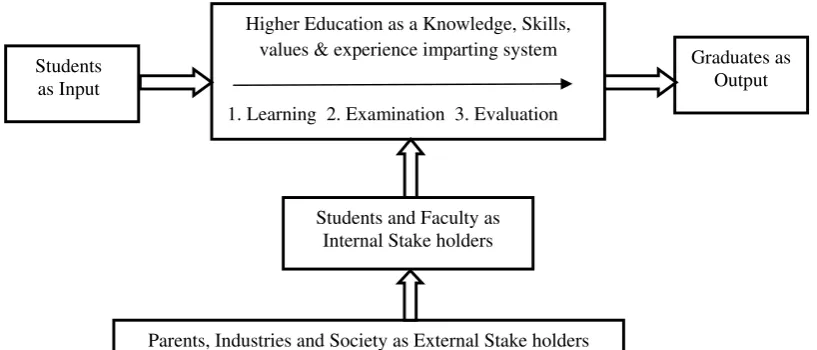
[image:4.595.94.503.358.533.2]Systems analysis is a problem solving technique that dismantles a system into its component pieces for the purpose of studying how well those component parts work and interact to accomplish their purpose. System Model of University is shown in Figure 1.
Figure 1 : University as a System
Government (Public) Universities in India have their own constraint of updating the curriculum due to the long procedure and approvals by many bodies. As a result, the curriculum update get delayed which results in outdated curriculum usage in colleges affiliated to it. Some of the affiliated colleges find their own way to solve this problem by means of add-on courses. The Higher Education Stage model (Aithal P.S., 2015)[4], developed for affiliated colleges which do not have autonomy in deciding their curriculum, helps such institution to ensure the achievement of desired learning outcomes such as emotional maturity, social maturity, business acumen, professionalism and intellectual capabilities. Value added programmes are designed in each semester to accomplish the stated objectives of each stage. Based on University syllabus and value added programmes designed in each semester, the students’ progress is evaluated and monitored to promote the students to the next stage. It is observed that students who undergo
Students as Input
Higher Education as a Knowledge, Skills, values & experience imparting system
1. Learning 2. Examination 3. Evaluation
Graduates as Output
Students and Faculty as Internal Stake holders
training as per stated ‘Stage Model’ would be able to show better performance both in curricular and competitive exams to get better job/higher educational opportunities through enhanced graduate attributes.
The effectiveness of the system can be analysed using various analyzing frameworks. Out of various analyzing frameworks available for analyzing a system, like, SWOT, PESTLE, Porter's Five Forces Model, BCG matrix, Internal Factor Evaluation (IFE) and External Factor Evaluation (EFE) Matrix, Competitive Profile (CPM) Matrix, ABCD Model etc,ABCD analysis framework results in an organized list of a business advantages, benefits, constraints, and disadvantages in a systematic matrix [5]. The entire framework is divided under various issues/area of focus and various business deployment factors affecting the system and analyzed under each issue by identifying suitable critical effective element/s. In thispaper, we have used ABCD framework for evaluating Private University and its business strategy. This study is meaningful in suggesting integrated perspective analyzing business strategy of Private University in the frame of reference of organization issues, Student Progression issues, Faculty development issues, Societal & other stakeholders issues, Governance and Leadership issues, and Issues on Innovations and Best Practices.
A random listing of advantages and limitations of private universities is provided below :
Advantages of Private Universities :
1. Academic Freedom : Scope for innovation
2. Customized Program : Enhanced choice for students 3. Faster technology adoption : Keep updated and efficient 4. Global Reach : Attracting students from far and wide
5. Focus on Research : Creativity and knowledge enhancement 6. Quality through competition : Strive for excellence
7. Contribution to Economic growth : Job creation and value addition 8. Autonomy : Offering administrative freedom
9. New Courses in unique specializations : Adding diversity and relevance 10. Collaborations : Exchange of wisdom
11. Industry supportive curriculum : Employability 12. Examination reforms : Measure of competence 13. Flexibility in timings : Learning made convenient
Limits and Limitations of Private Universities :
1. Permission Constraints : Legal bottlenecks. 2. Initial recognition : Struggle to survive. 3. Investment : Capital intensive.
4. Constraints of Govt. policies : Red tapeism. 5. Expansion : Challenges for growth.
6. Research funds : Deficiency.
7. High quality faculty appointment : Financial commitment. 8. Industry collaboration : Readiness and availability.
9. High competition : Outsmart competitors . 10. Quality : Dilution in standards .
11. Affordability : Fee structure.
13. Image : Takes time to build.
14. Student outlook : High expectations.
III. LITERATURE REVIEW ON ABCD ANALYSIS
Various analyzing frameworks are mentioned in the literature and are used to study a concept, system, idea or strategy in Business management. Various techniques are used to analyze individual characteristics or organizational effectiveness & strategies in a given environment like SWOT analysis, SWOC analysis, PEST analysis, McKinsey 7S framework, ICDT model, Portor's five force model etc. But there is a need for simple but systematic analyzing technique for business models analysis. A consistent method to analyze the structure, behaviour and the dynamics of a business model should allow identifying possible optimizations governing the business models, to assess the impact of innovative changes and to identify critical success factors before the changes are implemented within a particular environment.
Recently Aithal P.S. et. al. (2015) [4] developed ABCD analyzing framework to analyze any business model/concept and to study its effectiveness in providing value to its stake holders and sustainable profit through expected revenue generation. Application of ABCD analysis results in an organized list of a business advantages, benefits, constraints, and disadvantages in a systematic matrix. The entire framework is divided under various issues/area of focus and various business deployment factors affecting the business/concept can be identified and analyzed under each issues by identifying suitable critical effective element. This analyzing technique being simple, gives guideline to identify and analyze the effectiveness of any business model and new concepts developed.
Reshma et. al. (2015a & 2015b) [5 - 6], have analysed the characteristics of "Working from Home" e-business model using 'ABCD Analysis Technique'. Based on various factors which decides the Working from Home system, a model of various factors and their constituent critical elements affecting under organizational objectives, employers point of view, employees point of view, customers/students point of view, environmental/societal point of view and system requirements are derived by a qualitative data collection instrument namely focus group method. It is found that the factors supporting advantages and benefits are more effective compare to constraints and disadvantages of this model, so that working from home model may become more popular from the prospective of employers and employees in the organization in the future.
Recently ABCD analysis framework is used for analysing Black ocean strategy concept [7-8](Aithal et. al. 2015 & Aithal et. al. 2015). The various factors & their constituent critical factors affecting the BOS concept adopted in some of the business organizations for quick relief from the problems are identified for organizational point of view, administrative point of view, employee point of view, operational point of view, business point of view and external issues point of view are determined under the four constructs - advantages, benefits, constraints, and disadvantages.
social/environmental/community engagement issues, Infrastructure And Learning resources, and Issues on Innovations Creativity and Best Practices. The affecting factors under these issues found out using focus group method and the constituent critical elements under each factor are identified. The result supported the logic of using ABCD analyzing technique in any System/concept performance evaluation.
ABCD analysis framework is also used for analysing an innovative Stage Model in higher education system (Aithal et. al. 2015) [10]. In this paper the various features of Stage Model intervention technique are analysed through the ABCD analyzing framework. The results supported the logic of using ABCD analyzing technique for any system/concept performance evaluation.
A general guidelines on using ABCD analysis framework is suggested in the paper “Study on ABCD Analysis Technique for Business Models, Business Strategies, Operating Concepts & Business Systems’ (Aithal 2015) [11], This paper is an attempt to quantify the affecting factors to calculate the scores and hence weightage to the critical constituent elements. Also, ABCD analysing framework is compared with other known analyzing techniques like SWOC, Competitive Profile Matrix (CPM) analysis, EFE & IFE Matrices, BCG analysing frameworks, Porter's Five Forces Model, and PESTLE Analysis.
In this paper, we have studied Private University system in terms of its constituents using ABCD analysis framework. The characteristics of the strategies of Private Universities are evaluated based on identifying and analyzing the advantages, benefits, constraints, and disadvantages under the issues like Organizational Point of view, Students Progression point of view, Faculty development point of view, Societal & other stakeholders point of view, Governance, Leadership point of view, and Issues on Innovations and Best Practices. The various affecting factors on above issues are found out using ABCD framework and the constituent critical elements are identified for each factors using Focus group method. The result supported the logic of using ABCD analyzing technique for any System/concept opportunity and challenge evaluation.
VI. ABCD ANALYSIS OF PRIVATE UNIVERSITY SYSTEM
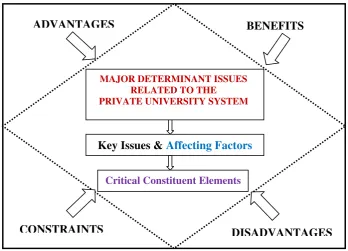
Advantages, Benefits, Constraints and Disadvantages (ABCD) of a System can be used to analyze and understand the model/system in an effective way. As per this analysis technique [Aithal P. S. et. al. (2015) [11], the effectiveness of a business model/concept/system can be studied by identifying and analyzing the advantages, benefits, constraints, and disadvantages by considering various determinant issues like organizational objectives, employers and employees perspective, customer/student perspective and environmental/ social prospective as in the block diagram of determinant issues affecting the private university system and is shown in fig. 2. As per the ABCD framework given by Aithal et. al.(2016) [12], the various determinant issues of private university system are :
(i) Organizational Issues : The affecting factors under key issues like Financial Resources, Organizational Image, Faculty Profile, Academic Programs are determined under the constructs Advantages, Benefits, Constraints and Disadvantages of the System.
(iii) Faculty development Issues : The affecting factors under key issues like Recruitment, Motivation & Retention, Promoting growth, Harvesting results are determined under the constructs Advantages, Benefits, Constraints and Disadvantages of the System.
(iv) Societal & other stakeholders Issues : The affecting factors under key issues like Fulfilling needs. Realizing expectations, Contributing the development, Outreach activities are determined under the constructs Advantages, Benefits, Constraints and Disadvantages of the System.
(v) Governance, Leadership Issues : The affecting factors under key issues like Administration, Direction, Policy formulation, and Academic Leadership are determined under the constructs Advantages, Benefits, Constraints and Disadvantages of the System.
[image:8.595.122.471.290.541.2](vi) Issues on Innovations and Best Practices : The affecting factors under key issues like Curriculum design, Teaching-Learning, Technology Adoption, and Publications and Patent are determined under the constructs Advantages, Benefits, Constraints and Disadvantages of the System.
Figure 2 : Block diagram of issues affecting the Private University System as per ABCD framework.
Each determinant issue has sub-issues called key issues used for analyzing the advantages, benefits, constraints and disadvantages, the four constructs of the framework. The factors affecting the various determinant issues of private university system for each key issue under four constructs are derived by a qualitative data collection instrument namely focus group method [Rogers E. M. and Hunt S. D. (1994) [13], Morgan R. M. and Hunt S. D. (1994) [14]] and are listed in table 1.
Table 1 :Analysis ofPrivate Universities model using ABCD framework.
Determinant Issues
Key Issues Advantages Benefits Constraints Disadvantages
Organizational Financial Viability Smooth Limits to Chances to
BENEFITS ADVANTAGES
DISADVANTAGES CONSTRAINTS
Key Issues & Affecting Factors
Critical Constituent Elements
[image:8.595.69.514.694.732.2]Point of view Resources functioning expansion become sick
Image Reputation Sustainability Time taking Unhealthy
competition Faculty Profile High profile Better quality Huge rewards Financial
commitments
Programs Diversity of
courses New opportunities Predicting future requirements Risk Student Progression point of view
Distinctive curriculum
Curricular innovation
Employability Dependent on various factors
Unable to assure
Affordability Attract talents Capacity utilization
Limits Choice Chances of discrimination Examination &
Evaluation
Ensure transparency
Reward merit Establishing mechanism Conventional thinking Flexible schedule Convenient to requirement
Suited to all Operational viability
Unmanageabilit y
Faculty development point of view
Recruitment Identification of talents
Procurement of faculty
Compensation Availability
Motivation & Retention
Best output Stay longer Monitoring Attrition
Promoting growth Develop capability Quality performance Varying perception Resistance Harvesting results Length of Service
Efficiency Application Developing
indicators Societal &
other stakeholders point of view
Fulfilling needs Generates satisfaction Continued interest Growing expectations Continuous process Realizing expectations
Proves worthy Greater trust Demand for dynamism
Over dependence Contributing to
development
Better economy Improved living All-round development Cascading effect Outreach activities Community benefitted Problems addressed
Time and cost Divert focus
Governance, Leadership point of view
Administration Freedom Transparency Misuse Dilution of
Standards Direction Clarity in vision Focus Unshared gain Limited benefit Policy formulation Articulate policies Promotes growth Not well conceived Discontent Academic Leadership Sharing & Involving Empowered teachers Level of commitment Faculty potential Issues on Innovations and Best Practices Curriculum design Adaptive & creative Student centric Limited experience Over exposure Teaching-Learning Improved pedagogy Student satisfaction
Lack of skills Trial & error
Technology Adoption Integrates technology Promotes learning
Tech-savvy Pro-innovative mind
Publications and Patent
New initiatives Greater recognition Delay to materialize Require considerable efforts
IV. CRITICAL CONSTITUENT ELEMENTS AS PER ABCD MODEL
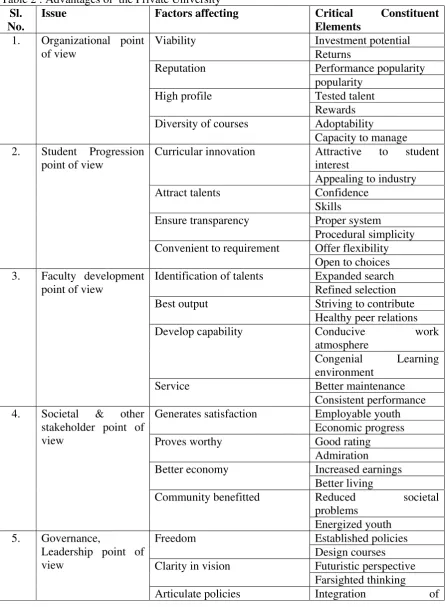
Table 2 :Advantages of the Private University
Sl. No.
Issue Factors affecting Critical Constituent Elements
1. Organizational point of view
Viability Investment potential Returns
Reputation Performance popularity popularity
High profile Tested talent Rewards Diversity of courses Adoptability
Capacity to manage 2. Student Progression
point of view
Curricular innovation Attractive to student interest
Appealing to industry Attract talents Confidence
Skills
Ensure transparency Proper system
Procedural simplicity Convenient to requirement Offer flexibility
Open to choices 3. Faculty development
point of view
Identification of talents Expanded search Refined selection Best output Striving to contribute
Healthy peer relations Develop capability Conducive work
atmosphere
Congenial Learning environment
Service Better maintenance Consistent performance 4. Societal & other
stakeholder point of view
Generates satisfaction Employable youth Economic progress Proves worthy Good rating
Admiration Better economy Increased earnings
Better living
Community benefitted Reduced societal problems
Energized youth 5. Governance,
Leadership point of view
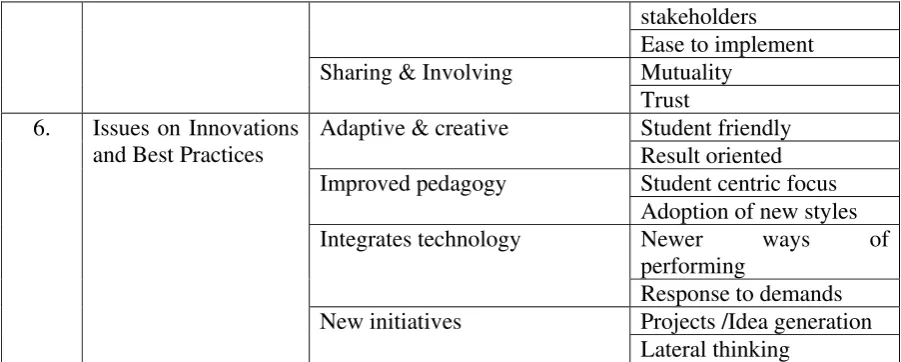
Freedom Established policies Design courses Clarity in vision Futuristic perspective
stakeholders Ease to implement Sharing & Involving Mutuality
Trust 6. Issues on Innovations
and Best Practices
Adaptive & creative Student friendly Result oriented Improved pedagogy Student centric focus
Adoption of new styles
Integrates technology Newer ways of performing
Response to demands New initiatives Projects /Idea generation
[image:11.595.64.515.105.286.2]Lateral thinking
Table 3 :Benefits of the Private University
Sl. No.
Issue Factors affecting Critical Constituent Elements
1. Organizational point of view
Smooth functioning Allocation of funds Freedom
Sustainability Quality Continuous improvement Better quality Utilization of potential
Avenues to perform New opportunities Expanded choices
Extended demand 2. Student Progression
point of view
Employability Acquire employability skills
Demonstrate capability Capacity utilization Growth
Development Reward merit Fair and objective
Motivation
Suited to all Work life balancing
Changing personal requirements
3. Faculty development point of view
Procurement of faculty Conditions of service Congenial workplace Stay longer Positive work culture
Struggling to compete Quality performance Monitor output
Focused on quality
Efficiency Hard work Commitment
4. Societal & other stakeholders point of
view Greater trust Reliability Recognition
Improved living Changing life style Prosperity
Problems addressed Identifying problems Addressing problems 5. Governance,
Leadership point of view
Transparency Welcome criticism Respond to feedback
Focus Set standards Fix targets
Promotes growth Readiness to implement Honesty of purpose Empowered teachers Creative thinking
Continuous learning 6. Issues on Innovations
and Best Practices
Student centric Pace of learning Focus of learning Student satisfaction Better learning
Faster learning
Promotes learning Technology guided learning
Technology induced learning
[image:12.595.64.516.103.441.2]Greater recognition Original contribution Desired efforts
Table 4 :Constraints of the Private University
Sl. No.
Issue Factors affecting Critical Constituent Elements
1. Organizational point of view
Limits to expansion Internal and external factors
Resource crunch Time taking Prove good
Continuous efforts Huge rewards Limits to affordability
Balancing cost
Predicting future requirements Fluctuating job market
Unpredictable student interest
2. Student Progression point of view
Dependent on various factors Aptitude Ambition
Limits Choice Standardization not possible
Un-healthy competitors Establishing mechanism Viable models
Operational viability Suited to requirement Readiness to accept Faculty development
point of view
Compensation High cost
Skepticism of returns Monitoring Softer systems
Reliable feedback Varying perception Positive spirit
Equal opportunity
Application Readiness Devotion
4. Societal & other stakeholders point of view
Growing expectations Unfulfilled needs Changing needs Demand for dynamism Effective leadership
Changing expectations All round development Neglected areas
Low attention Time and cost Consume time
Un-anticipated expenditure 5. Governance,
Leadership point of view
Misuse Incompetence Ignorance
Unshared gain Accumulation of wealth Profit motive
Not well conceived Not fitting to reality Wrong presumptions Level of commitment Unwillingness to take
responsibility Bullying 6. Issues on Innovations
and Best Practices
Limited experience Knowledge gap Training needs Lack of skills Mastery of skills
Personal differences Tech-savvy Generation gap
Training and exposure Delay to materialize Considerable efforts
[image:13.595.63.517.103.688.2]Time consuming
Table 5 :Disadvantages of the Private University
Sl. No.
Issue Factors affecting Critical Constituent Elements
1. Organizational point of view
Chances to become sick Efficiency affected Resource depletion Unhealthy competition Ethical consideration
management Short of own assets Risk No takers for new courses
Experimentation Student Progression
point of view
Unable to assure Job market changes Student attitude Chances of discrimination Merit without means
Un-intentional drawbacks Conventional thinking Wrong mindset
Pessimism
Unmanageability Stress Weak time management 3.
Faculty development point of view
Availability Demand and supply
Attrition Personal preferences Pressure of work
Resistance Built in Prejudices Immune to new ideas
Developing indicators Differential appraisal Bias
4. Societal & other stakeholders point of view
Continuous process Developing hopes Newer ending needs Over dependence Reduced self-reliance
Failure in decision making
Cascading effect Slow to materialize Sectoral dependence Divert focus Primary activity
subsidiary
Dumped with issues 5. Governance,
Leadership point of view
Dilution of Standards Reduced accountability Own convenience Limited benefit Gain not distributed
Not able to keep united
Discontent Lop sided Unsatisfied interest
Faculty potential Limited potential Over expectation 6. Issues on Innovations
and Best Practices
Over exposure Long Exercise Tedious
Trial & error Developing new methods Testing new methods Pro-innovative mind Curiosity
Creativity
Perseverance
VI. CONCLUSION
We have studied Private University as an entity of higher education system, it’s necessity, objectives and prominent features. There is substantive reason to suggest that private university is a long term solution to many far reaching problems in higher education and supports the students’ progress towards enhancing their knowledge, skills, and experience. The system is able to cultivate a partnership particularly with parents, business and the community as a whole to support student learning and progression. The private university system alone can provide to the requirements of higher education especially to innovate and progress. The various stake holders get enhanced support in this kind of a system. The analysis has brought about 192 critical constituent elements which satisfy the success for its existence.
REFERENCES
[1] Rajesh Ranjan, Private Universities in India and Quality of Education, International Journal of Humanities Social Sciences and Education (IJHSSE) Volume 1, Issue 9, September 2014, PP 140-144.
[2] Jeelani S., Ramana Murthy M.V., & Harisingh Naik S., (2014), Private Universities : Challenges and opportunities in Higher Education, International Journal of Emerging Trends & Technology in Computer Science (IJETTCS), Vol. 3, Issue 5, pp. 116 - 121.
[3] Aithal P.S.,& Suresh Kumar P. M., (2016) Innovations in Private Universities : A Case of Srinivas University, International Journal of Management, IT and Engineering, 6 (1) pp. 250-264.
[4] Aithal P. S. & Suresh Kumar P. M., (2015) "Enhancement of Graduate attributes in Higher Education Institutions through Stage Models", IMPACT: International Journal of Research in Business Management, Vol. 3, Issue 3, pp. 121 - 130.
[5] Aithal P. S, Shailashree V. T., Suresh Kumar P. M., (2015) A New ABCD Technique to Analyze Business Models & Concepts, International Journal of Management, IT and Engineering (IJMIE), Vol. 5, Issue 4, pp. 409 - 423.
[6] Reshma, Sridhar Acharya P., Aithal P. S., (2015) "Information Technology Innovations in Office Management - A Case Study, International Journal of Research & Development in Technology and Management Sciences", Vol. 21, Issue 6, pp. 35 - 53.
[7] Reshma, Aithal P. S., and Sridhar Acharya P., (2015) "Relevance of On-line Office Administration through Working from Home in Future Education System", International Journal of Application or Innovation in Engineering & Management (IJAIEM), Volume 4, Issue 4, pp. 345 - 355.
[8] Aithal P. S, Suresh Kumar P. M., (2015) Black Ocean Strategy - A Probe into a New type of Strategy used for Organizational Success, GE International Journal of Management Research, Vol. 3, Issue 8, pp. 45 - 65.
[10] Aithal P. S., Shailashree V. T., & Suresh Kumar P. M., (2016) Analysis of NAAC Accreditation System using ABCD framework, International Journal of Management, IT and Engineering (IJMIE), Volume 6, Issue 1, pp.30 - 44.
[11] Aithal P.S., Shailashree V. T., & Suresh Kumar P.M., (2016) ABCD analysis of Stage Model in Higher Education, International Journal of Management, IT and Engineering (IJMIE), Volume 6, Issue 1, pp. 11-24.
[12] Aithal, P.S., (2016) Study on ABCD Analysis Technique for Business Models, business strategies, Operating Concepts & Business Systems, International Journal in Management and Social Science, 4 (1) pp. 98-115.
[13] [Rogers E. M. and Hunt S. D. (1994) 'Diffusion of Innovation', 1995, The Free Press, NY. [14] Morgan R. M. and Hunt S. D. (1994) The commitment-trust theory of relationship marketing, Journal of Marketing, Vol. 58, (July), pp. 20–38.