Original Article
The effects of spinal anesthesia on ED
50and BIS
50of
etomidate for loss of consciousness: a randomized
controlled, sequential allocation trial
Ningkang Li1*, Fan Yang2*, Yonghai Zhang2, Liyan Zhao1, Di Zhu1, Qinghong Lei2, Hanxiang Ma2
1Department of Anesthesiology, Ningxia Medical University, Yinchuan 750004, P. R. China; 2Department of Anes-thesiology, General Hospital of Ningxia Medical University, Yinchuan 750004, P. R. China. *Equal contributors.
Received June 4, 2018; Accepted December 9, 2018; Epub March 15, 2019; Published March 30, 2019
Abstract: Objectives: The purpose of this sequential study was to investigate the effects of spinal anesthesia on the median effective dosage (ED50) of etomidate for loss of consciousness (LOC) and the BIS value of etomidate for LOC of 50% of patients (BIS50).Methods: A total of 46 patients scheduled for elective gynecological operations were randomly allocated to two groups to receive either etomidate alone (group E, n = 26) or etomidate combined with spinal anesthesia (group ES, n = 20). Patients in the group ES received spinal anesthesia (3 ml of 0.5% hyperbaric bupivacaine) before the injection of etomidate for sedation. The first patient in group E received 0.089 mg·kg-1 of
etomidate, and the first patient in group ES received 0.076 mg·kg-1 of etomidate 15 minutes after spinal
anesthe-sia. The dosage of etomidate required for the next patient was determined by the up-and-down method in the two groups. The ED50 and BIS50 of etomidate for LOC were determined by the Bliss method and the isotonic regression method. The bootstrap approach was used to estimate the 83% confidence intervals (83% CIs) of ED50 and BIS50. Results: The ED50 of etomidate for LOC was 0.103 mg·kg-1 (95% CI, 0.092 to 0.115 mg·kg-1) in group E and 0.082
mg·kg-1 (95% CI, 0.075 to 0.090 mg·kg-1) in group ES by the Bliss method, and the BIS
50 was 59 (95% CI, 55 to 63)
in group E and 69 (95% CI, 62 to 76) in group ES. From the isotonic regression method and the bootstrap approach, the ED50 was 0.105 mg·kg-1 (83% CIs, 0.100 to 0.110 mg·kg-1) in group E and 0.083 mg·kg-1 (83% CIs, 0.080 to 0.087
mg·kg-1) in group ES, and the BIS
50 was 46 (83% CIs, 41 to 48) in group E and 56 (83% CIs, 51 to 62) in group ES.
Conclusion: Patients with spinal anesthesia easily presented with LOC after the injection of etomidate, and spinal anesthesia affected the BIS value of etomidate for LOC.
Keywords: Etomidate, spinal anesthesia, ED50, bispectral index, loss of consciousness
Introduction
The combination of spinal anesthesia with gen-eral anesthesia has many advantages, such as reducing circulatory and respiratory complica-tions, shortening hospital length of stay [1] and potentially decreasing the tumor recurrence rate [2]. Bardia [3] reported that combined epi-dural-general anesthesia (EA-GA) improved the long-term survival rate compared with general anesthesia alone, and thus suggested that EA-GA should be strongly considered in appro-priate patients. Over the past thirty years, many previous studies have demonstrated that neur-axial anesthesia (NA) (including epidural an- esthesia and spinal anesthesia) significantly decreased the hypnotic dosage of midazolam
[4], thiopental [4], propofol [5] and inhalation anesthetics [6, 7], indicating that NA has a direct sedative effect.
given to patients after NA should theoretically decrease, but this has not been demonstra- ted.
The bispectral index (BIS) has been demon-strated to be closely associated with the seda-tive level of drugs that act on the gamma-ami-nobutyric acid-A (GABAA) receptor [12]. Thus, it has been commonly used to assess the depth of anesthesia and to maintain loss of con-sciousness (LOC) [13]. Previous studies had shown that the sedative effect induced by NA could also be well assessed by a BIS monitor [7, 14]. Many factors, including anesthetics, hypoglycemia, and cerebral ischemia affect the measurement of BIS values associated with a particular sedative level induced by a hypnotic [15]. However, the effect of spinal anesthesia on the BIS value of etomidate for LOC is unclear. In this study, we aim to investigate the effect of spinal anesthesia on the median effective dos-age (ED50) of etomidate for LOC and the BIS value of etomidate for LOC of 50% of patients (BIS50). The study tests the hypothesis that spi-nal anesthesia can significantly influence the ED50 and BIS50 of etomidate for LOC.
Methods
This study was approved by the Ethics Com- mittee of the General Hospital of Ningxia Me- dical University (No.2017-151) and registered at ClinicalTrials.gov (NCT03240055). After ob- taining written informed consent, we consecu-tively enrolled fifty-two female patients. The inclusion criteria were age 18-65 years with ASA physical status (ASA PS) I-II and a body mass index (BMI) between 18.0 and 24.5 kg·m-2 who were undergoing elective
gyneco-logical operations to which both general anes-thesia or spinal anesanes-thesia combined with sedation could be applied. The exclusion crite-ria were patients with hearing loss, psychiatric and central nervous system diseases, a history of drug and alcohol abuse, and an allergy or contraindication to bupivacaine and etomidate. The study was conducted at the General Hospital of Ningxia medical university, a tertia-ry hospital in Yinchuan, China. Patients were allocated following simple randomization pro-cedures to one of two groups: group E to receive an etomidate injection alone (n = 26) and group ES to receive etomidate combined with spinal anesthesia (n = 20). Each random number with
a pre-specified intervention (etomidate alone/ etomidate combined with spinal anesthesia) was concealed by a series of sequentially num-bered, opaque, and sealed envelopes. Each patient was assigned a sequentially numbered envelope by another attending anesthesiolo-gist and received a pre-specified intervention.
No premedication was given before surgery. The operating room was kept warm to prevent an increase in EMG activity due to shivering. Ringer’s lactate 500 ml was infused initially for pre-hydration, followed by a colloid or crystal-loid solution infused at the rate of 10 ml·kg-1·h-1.
Routine monitoring of the electrocardiogram (ECG), the mean arterial pressure (MAP), the pulse oximetry saturation (SpO2), and the heart rate (HR) were performed. The bispectral quatro sensor was placed in the forehead as recom-mended by the instructions (Covidien, Man- sfield, MA, USA). Before the initiation of anes-thesia, the MAP, HR, SpO2 and BIS were record-ed as baseline. Patients in group ES receivrecord-ed spinal anesthesia before the injection of etomi-date for sedation. With patients in the right lat-eral decubitus position, the spinal puncture was performed with a 25 gauge pencil spinal needle (Jierui, Shandong, China) at the L3-4 interspace. 3 ml of 0.5% hyperbaric bupiva-caine (Chaohui, Shanghai, China) was injected into the subarachnoid space at a rate of 0.2 mL/s. Cerebrospinal fluid aspiration (0.1 ml) was done to confirm correct needle placement before and after the hyperbaric bupivacaine injection. Then the patients were turned imme-diately to the supine position. The sensory block level was evaluated bilaterally using a pinprick test every 1 min until 15 min after spi-nal anesthesia, and bed tilting (upwards, hori-zontal, or downwards) was performed until a bilateral sensory block level was confirmed to remain at T4-T6. When the block level did not reach T6 within 15 min after spinal anesthesia or when severe complications occurred after spinal anesthesia, the case was excluded fr- om data collection. All anesthesia procedures and drug administration were conducted by a board-certified anesthesiologist who was aw- are of the allocation of each patient. The first patient in group E received intravenously (IV) 0.089 mg·kg-1 of etomidate (Nhwa Pharma-
ceutical, Jiangsu, China), and the first patient in group ES received an IV with 0.076 mg·kg-1 of
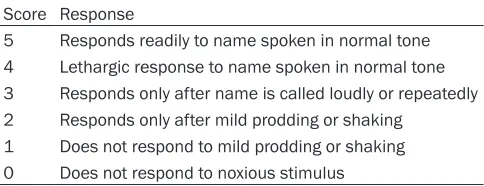
The dosage of etomidate for the next patient from each group was decreased or increased by 15% of the dosage administered to the previ-ous patient, depending on the unconsciprevi-ous- unconscious-ness or consciousunconscious-ness level of the previous patient. The various dosages of etomidate were given to each patient for 20 seconds. The sam-ple size was based on the up-and-down meth-od, in which the testing of different dosages of etomidate continued in consecutive patients until a sample size of seven crossover points from “consciousness” to “unconsciousness” was reached in each group [16]. Patients were excluded from data collection if hypoxemia (SpO2 < 95%) appeared after the administra-tion of etomidate, and they were treated by manually-assisted ventilation. The primary out-comes were ED50 and BIS50 of etomidate for LOC. The conscious state of each patient after the injection of etomidate was assessed at 4-5 second intervals for 3 minutes by one obser- vational investigator who was blinded to the grouping. The minimum BIS values of each patient were recorded during this process. Patients were considered to be conscious if the Modified Observer’s Assessment of Alertness/ Sedation Scale (MOAA/S) (Table 1) was ≥ 3 and considered to be unconscious if the MOAA/S ≤ 2. The secondary outcomes were MAP and HR. The MAP and HR were recorded at l min (T1), 2 min (T2), 3 min (T3), and 5 min (T4) after they were administered an etomidate IV. Bradycardia was defined as HR < 45 beats/min and was treated by atropine 0.5 mg. Hypotension was defined as MAP < 65 mmHg or < 30% of the baseline and was treated by ephedrine 4-6 mg. Statistical analysis was performed using the SPSS ver. 17.0 for Windows (SPSS Inc., IL, USA) and R for Windows (R ver. 3.2.2). Data were expressed as the mean ± SD or the number of cases as appropriate. Continuous data (age, height, weight, saturation, BIS value) were
ana-collects the number of sequential cases of pos-itive (unconsciousness)/negative (conscious-ness) reactions by the sequential allocation trial, and then the effective number (positive number) and invalid number (negative number) of each dosage group are counted. In addition, the logarithm, positive rate and the total num-ber of patients of each dosage group are also calculated. The above data are substituted in the median effective dosage formula to calcu-late the ED50 and 95% CI. BIS50 is also calculat-ed according to this method. For backup and sensitivity analysis, an isotonic regression method based on the pooled adjacent-violators algorithm (PAVA) was used to estimate the ED50 and BIS50, and the 83% CIs was estimated using a bootstrap approach. The isotonic re- gression is a nonparametric statistical method, and the samples do not require normal distribu-tion. The above statistical steps are implement-ed by R for Windows. The method of overlap-ping CIs (83% CIs) was used to compare ED50 and BIS50 between the two groups. If 83% CIs were non-overlapping, the null hypothesis of equal ED50 and BIS50 was rejected at α of approximately 0.05 [17].
Results
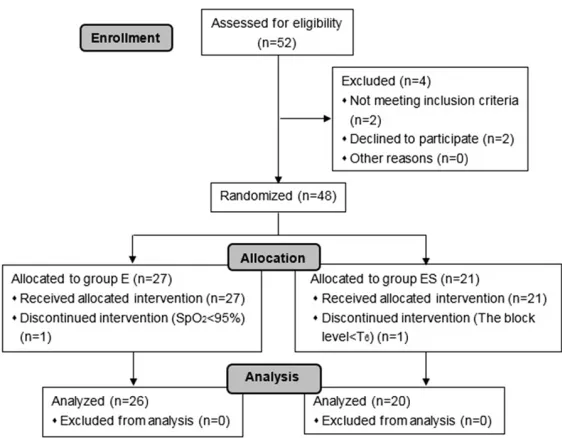
The CONSORT flow diagram of the study is shown in Figure 1. The study was conducted from June 2017 to July 2017. The primary anal-ysis was per-protocol analanal-ysis for the require-ment of the up-and-down method. We assessed fifty-two patients for their eligibility to partici-pate in this study. Two patients did not meet the inclusion criteria, two declined to participate, and then we randomized the remaining forty-eight patients. Twenty-seven patients were allo-cated to group E and twenty-one to group ES. One patient needed oxygen mask inhalation to maintain SpO2 > 95% after being administered an etomidate IV in group E, which would
inter-Table 1. Responsiveness scores of the Modified Observ-er’s Assessment of Alertness/Sedation Scale
Score Response
5 Responds readily to name spoken in normal tone 4 Lethargic response to name spoken in normal tone 3 Responds only after name is called loudly or repeatedly 2 Responds only after mild prodding or shaking
1 Does not respond to mild prodding or shaking 0 Does not respond to noxious stimulus
lyzed between the two groups by the independent Student’s t test or the Mann-Whitney U test. The categorical data (ASA PS) were analyzed between two groups using an χ2 test. A two-sided
[image:3.612.91.333.97.190.2]fere with the patient’s conscious state assess-ment, so this patient was excluded from fur- ther analysis. One patient in group ES was excluded from further analysis because her block level < T6 after spinal anesthesia. The- refore, forty-six patients were included in the analysis. There were no significant differences between the two groups in patient characte- ristics, saturation and BIS measurements at baseline (Table 2).
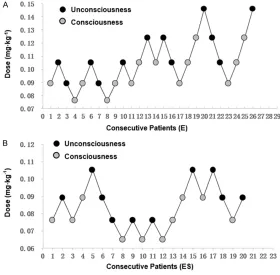
The up-and-down results in consecutive pa- tients are shown in Figure 2. The ED50 of etomi-date were 0.082 mg·kg-1 (95% CI, 0.075 to
0.090 mg·kg-1) and 0.103 mg·kg-1 (95% CI,
0.092 to 0.115 mg·kg-1) in the ES group and E
the ES and E groups were statistically signifi-cant (P < 0.05).
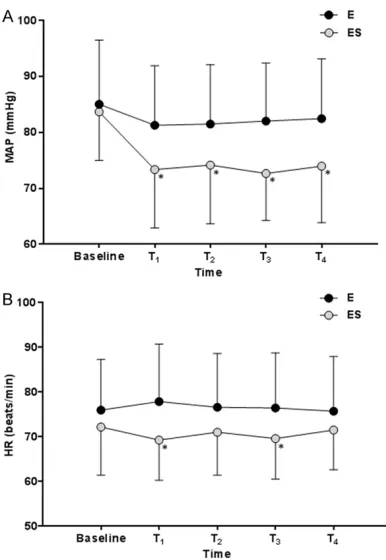
The MAP and HR values are illustrated in Figure 3. At baseline, the MAP and HR values between the two groups were not statistically different (both P > 0.05). The MAP at T1, T2, T3, T4 and the HR at T1, T3 after the administration of etomi-date were significantly decreased in the ES group compared to the E group (all P < 0.05). One patient developed hypotension in group ES and recovered by the injection of ephedrine.
Discussion
Our study demonstrated that spinal anesthesia with bupivacaine decreased the ED50 and affected the BIS50 of etomidate for LOC. Namely, patients with spinal anesthesia were more sen-sitive to etomidate.
[image:4.612.90.371.69.288.2]In the present study, we found that bupivacaine spinal anesthesia with the block level at T4-T6 decreased the ED50 of etomidate for LOC by 20%. This is inconsistent with some previous studies, which had demonstrated that the block level at T7-T9 after spinal anesthesia lead to a 36%-80% decrease in the dosages of thio-pental, midazolam, and propofol when patients were sedated [4, 18-20]. Hodgson and col-leagues [6] found that a thoracic epidural block could decrease the dosage of sevoflurane by 34% when the BIS values were kept at 50. The
Figure 1. CONSORT flow diagram. E, etomidate; ES, etomidate combined with spinal anesthesia.
Table 2. Patient characteristics, saturation and BIS value data
Variable E (n = 26) ES (n = 20) Age (years) 41 ± 9 42 ± 11 Height (cm) 160 ± 4 161 ± 3 Weight (kg) 55 ± 5 56 ± 5 ASA PS (I/II) 17/9 11/9 Saturation (%)* 98 ± 2 97 ± 2 BIS value* 95 ± 3 96 ± 1
The data are represented by mean ± SD or absolute numbers. ASA PS, American Society of Anesthesiologists physical status. BIS, Bispectral Index. *Values obtained at baseline. E, etomidate; ES, etomidate combined with spinal anesthesia.
group by the Bliss method, respectively. The BIS50 for the LOC were 69 (95% CI, 62 to 76) and 59 (95% CI, 55 to 63) in the ES group and E group by the Bliss method, respectively. From the isotonic regression and bootstrap approach, the ED50 were 0.083 mg·kg-1 (83%
CIs, 0.080 to 0.087 mg·kg-1)
and 0.105 mg·kg-1 (83% CIs,
0.100 to 0.110 mg·kg-1) in the
[image:4.612.91.288.365.459.2]previous studies showed that 15min was not long enough for spinal anesthesia to achieve appropriate sedation effects [5, 21]. Also, the study by Kurup [22] and Pollock [23] showed that the sedative effects were most pro-nounced at 34 and 60 minutes after spinal anesthesia, respectively. This might explain why there was an only 20% decrease in the ED50 of etomidate for LOC by the spinal anes-thesia in our study, at which the maximum sed-ative effect did not exert at 15 min after spinal anesthesia. Furthermore, the sedatives stud-ied in previous studies were different from the agent in our study.
In the up-and-down sequential technique, the ideal dosages given to the first patient in each group were as close as possible to the actual ED50 of any study drugs. Considering that the ED50 of etomidate for LOC was 0.105 mg·kg-1 as
determined by a previous study [24], the initial dosage given was 0.089 mg·kg-1 in group E
because the subjects were female, and 0.076 mg·kg-1 in group ES for the sedative effect of
spinal anesthesia.
[image:5.612.89.369.74.349.2]Meanwhile, Kaneda [27] showed that BIS was a reliable monitor for evaluating the depth of anesthesia during etomidate sedation. The mechanisms of etomidate and propofol exerted a sedative effect by the enhancement of the receptor’s affinity for GABAA and may explain why a BIS monitor can be used to detect the depth of anesthesia. In our study, we found that the BIS50 of etomidate for the LOC was influ-enced by spinal anesthesia, and, namely, the extent to which the BIS values decreased was less when the patients were sedated by etomi-date combined with spinal anesthesia than when the BIS values were decreased by seda-tion by etomidate alone. The observaseda-tion was consistent with the findings of an earlier study, in which the BIS values were significantly lower with general anesthesia alone compared with combined epidural-general anesthesia [28]. One possible explanation for this might be that the BIS value only correlated well with the dos-age/concentration of some hypnotics [26] but did not correlate well with spinal anesthesia. In our study, the sedative dosage of etomidate was reduced significantly when combined with
Figure 2. Up-and-down sequential allocation study of etomidate for LOC in the study groups. A. The calculated median effective dosages (ED50) were 0.103 mg·kg-1 for group E. B. The calculated ED
50 was 0.082 mg·kg-1 for
group ES. E, etomidate; ES, etomidate combined with spinal anesthesia.
The sedative effects of spinal anesthesia have been demon-strated over the past 30 years, and it was obvious in the high blockade level [5]. Up to the present, the speculated mech-anism of the sedative effect of spinal anesthesia is con- sidered to be the deafferenta-tion theory [5]. Namely, spinal anesthesia can decrease the transmission of facilitatory se- nsory signals to the reticular activating system, which plays a critical role in regulating wa- kefulness. In addition, there are some other possible mech-anisms that can explain the sedative effect of spinal ane- sthesia, including the systemic general anesthetic effect of ab- sorbed local anesthetics [20, 23] and rostral spreading th- rough the cerebrospinal fluid with a direct effect on the brain [23, 25].
spinal anesthesia, and the BIS value was con-sequently higher. Another possible explanation might be that the BIS was not a sensitive enough indicator to detect the sedative effect within 15 min after the spinal anesthesia. Iida [21] showed that the BIS value was not signifi-cantly decreased within 15 min after spinal anesthesia. Pollock and colleagues [23] report-ed that the BIS value decreasreport-ed only at 60 min after spinal anesthesia. Thus, it is possible that BIS could not detect the sedative effect of the spinal anesthesia in our study as the time point chose to evaluate the BIS value was 15 min after spinal anesthesia. In addition, BIS was used to detect the cortical EEG activity [5, 12], but the action site of the spinal anesthesia was the spinal cord.
Previous study showed that spinal anesthesia had a sedative effect, which could be mea-sured by a new device - the Patient State Analyzer (PSA-4000), a monitor that was more
sensitive to a slight change in the level of con-sciousness [22]. The BIS monitor is a relatively mature technique to evaluate the sedation depth in clinical practice. However, the PSA-400 monitor was not a commonly used device, so the BIS monitor was selected to measure the depth of anesthesia in our study.
Procedural sedation or general anesthesia in- duction of patients after NA by hypnotics are frequently performed in clinical practice. How- ever, the combined anesthesia technique usu-ally causes hypotension [7], especiusu-ally when propofol is used [29]. In the present study, the patients had been sedated by etomidate, and we found that although there was a statistical- ly significant decrease in MAP in the ES group compared to the MAP in the E group, this change had no clinical significance. Moreover, as to the surgical and experimental require-ments, the sensory block level remained at T4-T6 in our study, which had a greater impact on hemodynamics, but only one patient with hypotension was observed among the etomi-date-sedative patients.
All of the patients in our study were female, but Meibohm and colleagues [30] reported that the gender difference did not have a substan-tial effect on pharmacokinetics of a single-dos-age. In addition, noise was unavoidable in the operating room [21], which might influence the precise measurement of the BIS value, which should be measured by a more precise device. But the effect of this confounding factor could be eliminated theoretically by the randomizing procedure in our study. Thirdly, the patients allocated to the intervention group were aware of the allocation, but it could not influence the outcome of the objective measurement we used.
In conclusion, we have investigated the effects of spinal anesthesia on the ED50 and BIS50 of etomidate for LOC in gynecological patients. The results demonstrated that spinal anesthe-sia can reduce the requirement of etomidate for LOC by 20% and affect the BIS value without hemodynamic instability.
Acknowledgements
[image:6.612.90.283.69.349.2]Financial support and sponsorship: The study was supported by the National Natural Science Foundation of China (grant no. 81660198) and
Figure 3. Hemodynamic profiles during the process of the experiment. A. The change of MAP. B. The change of HR. MAP mean arterial pressure; HR heart rate. Baseline before the initiation of anesthesia. T1,
the Key Technology R&D Program of Ningxia (grant no. 2016KJHM59).
Disclosure of conflict of interest
None.
Address correspondence to: Dr. Hanxiang Ma, De- partment of Anesthesiology, General Hospital of Ningxia Medical University, 804 Shengli Street, Yinchuan 750004, Ningxia, P. R. China. Tel: +86-13519591508; Fax: +86-951-4082981; E-mail: [email protected]
References
[1] Segal D, Awad N, Nasir H, Mustafa S, Lowen-stein L. Combined spinal and general anesthe-sia vs general anestheanesthe-sia for robotic sacrocer-vicopexy: a randomized controlled trial. Int Urogynecol J 2014; 25: 369-374.
[2] Green JS, Tsui BC. Impact of anesthesia for cancer surgery: Continuing professional devel-opment. Can J Anaesth 2013; 60: 1248-1269. [3] Bardia A, Sood A, Mahmood F, Orhurhu V,
Mueller A, Montealegre-Gallegos M, Shnider MR, Ultee KH, Schermerhorn ML, Matyal R. Combined epidural-general anesthesia vs gen-eral anesthesia alone for elective abdominal aortic aneurysm repair. JAMA Surg 2016; 151: 1116-1123.
[4] Tverskoy M, Shagal M, Finger J, Kissin I. Sub-arachnoid bupivacaine blockade decreased midazolam and thiopental hypnotic require-ments. J Clin Anesth 1994; 6: 487-490. [5] Ozkan-Seyhan T, Sungur MO, Senturk E,
Karad-eniz M, Basel A, Senturk M, Akpir K. BIS guided sedation with propofol during spinal anesthe-sia: influence of anaesthetic level on sedation requirement. Br J Anaesth 2006; 96: 645-649. [6] Hodgson PS, Liu SS. Epidural lidocaine de-creases sevoflurane requirement for adequate depth of anesthesia as measured by the Bis- pectral Index Monitor. Anesthesiology 2001; 94: 799-803.
[7] Ishiyama T, Kashimoto S, Oguchi T, Yamaguchi T, Okuyama K, Kumazawa T. Epidural ropiva-caine anesthesia decreases the bispectral in-dex during the awake phase and sevoflurane general anesthesia. Anesth Analg 2005; 100: 728-732.
[8] Ray DC, McKeown DW. Etomidate for critically ill patients. Pro: yes we can use it. Eur J Anaes-thesiol 2012; 29: 506-510.
[9] Scorgie B. Etomidate infusion. Its use in anes-thesia for general surgery. Anesanes-thesia 1983; 38: 63-65.
[10] Acar NS, Uzman S, Toptas M, Vahapoglu A, Ak-koc I, Dinc SC. Spinal anesthesia with
hyper-baric bupivacaine: a comparison of hyperten-sive and normotenhyperten-sive patients. Med Sci Monit 2013; 19: 1109-1113.
[11] Hartmann B, Junger A, Klasen J, Benson M, Jost A, Banzhaf A, Hempelmann G. The inci-dence and risk factors for hypotension after spinal anesthesia induction: an analysis with automated data collection. Anesth Analg 2002; 94: 1521-1529.
[12] Park KS, Hur EJ, Han KW, Kil HY, Han TH. Bispectral index does not correlate with ob-server assessment of alertness and sedation scores during 0.5% bupivacaine epidural anes-thesia with nitrous oxide sedation. Anesth Analg 2006; 103: 385-389, table of contents. [13] Panousis P, Heller AR, Burghardt M, Bleyl JU,
Koch T. The effects of electromyographic activ-ity on the accuracy of the Narcotrend monitor compared with the Bispectral Index during combined anaesthesia. Anaesthesia 2007; 62: 868-874.
[14] Doufas AG, Wadhwa A, Shah YM, Lin CM, Haugh GS, Sessler DI. Block-dependent seda-tion during epidural anesthesia is associated with delayed brainstem conduction. Br J An-aesth 2004; 93: 228-234.
[15] Dahaba AA. Different conditions that could re-sult in the bispectral index indicating an incor-rect hypnotic state. Anesth Analg 2005; 101: 765-773.
[16] Wong W, Wallace MS. Determination of the ef-fective dose of pregabalin on human experi-mental pain using the sequential up-down method. J Pain 2014; 15: 25-31.
[17] Payton ME, Greenstone MH, Schenker N. Over-lapping confidence intervals or standard error intervals: What do they mean in terms of statis-tical significance? J Insect Sci 2003; 3: 1-6. [18] Tverskoy M, Fleyshman G, Bachrak L,
Ben-shlo-mo I. Effect of bupivacaine-induced spinal block on the hypnotic requirement of propofol. Anaesthesia 1996; 51: 652-653.
[19] Toprak HI, Ozpolat Z, Ozturk E, Ulger MH, Sagir O, Ersoy MO. Hyperbaric bupivacaine affects the doses of midazolam required for sedation after spinal anesthesia. Eur J Anaesthesiol 2005; 22: 904-906.
[20] Tverskoy M, Shifrin V, Finger J, Fleyshman G, Kissin I. Effect of epidural bupivacaine block on midazolam requirements. Reg Anesth 1996; 21: 209-213.
[21] Iida R, Iwasaki K, Kato J, Ogawa S. Bispectral index is related to the spread of spinal sensory block in patients with combined spinal and general anaesthesia. Br J Anaesth 2011; 106: 202-207.
[23] Pollock JE, Neal JM, Liu SS, Burkhead D, Polis-sar N. Sedation during spinal anesthesia. An-esthesiology 2000; 93: 728-734.
[24] LV HM, Li Y, Zhang W. The influence of sufent-anil on the ED50 and BIS50 of etomidate during induction. (In Chinese). J Clin Anesthesiol 2013; 29: 643-645.
[25] Antognini JF, Jinks SL, Atherley R, Clayton C, Carstens E. Spinal anesthesia indirectly de-presses cortical activity associated with elec-trical stimulation of the reticular formation. Br J Anaesth 2003; 91: 233-238.
[26] Glass PS, Bloom M, Kearse L, Rosow C, Sebel P, Manberg P. Bispectral analysis measures se-dation and memory effects of propofol, mid-azolam, isoflurane, and alfentanil in healthy volunteers. Anesthesiology 1997; 86: 836-847.
[27] Kaneda K, Yamashita S, Woo S, Han TH. Popu-lation pharmacokinetics and pharmacodynam-ics of brief etomidate infusion in healthy volun-teers. J Clin Pharmacol 2011; 51: 482-491. [28] Zhu J, Zhang XR, Yang H. Effects of combined
epidural and general anesthesia on intraoper-ative hemodynamic responses, postoperintraoper-ative cellular immunity, and prognosis in patients with gallbladder cancer: a randomized con-trolled trial. Medicine 2017; 96: e6137. [29] Stowe DF, Bosnjak ZJ, Kampine JP.
Compari-son of etomidate, ketamine, midazolam, pro-pofol, and thiopental on function and metabo-lism of isolated hearts. Anesth Analg 1992; 74: 547-558.