Proposed Paper about Mobile Secured Accessibility
Control System using Android
Hemalatha S1, Sathya A2, Shakila R3, Shruthi C4
1
Professor, 2, 3Final year, Department of Computer Science, Panimalar Institute of Technology
Abstract: Versatile clients are progressively getting to be focuses of malware diseases and tricks. So as to control such assaults begin. Despite the fact that the first applications may not be the malevolent, a deliberate static examination strategy to discover advertisement libraries insert in applications and dynamic investigation technique comprising of three segments identified with activating web joins, recognizing malware and sweep battles, and deciding the provenance of such crusades achieving the client. In the procedure, we convey android based application to screen and confirm the consent of the Android application use in our cell phones. We send our very own application for Android Messaging and voice calling framework to limit the portable SMS and calling framework. We additionally relegate a different way to exchange all the imperative Image and Videos records to an organizer, so that even the allowed application can't get to these envelopes.
Keywords: web joins, sweep battles, Malware Diseases.
I. INTRODUCTION
The greatest danger to the maintainability of the android biological community is advertisement misrepresentation, where a knave's code gets promotions without showing them to the client. Promotion extortion has been broadly considered with regards to web publicizing yet has gone to a great extent unstudied with regards to portable advertising. We venture out examination misrepresentation and other unfortunate conduct in portable promoting. In the first place, we distinguish interesting attributes of versatile advertisement extortion. On Android, whenever at most one application is running in the frontal area, where the application has a UI. Our first perception is that when an application brings promotions while it is out of sight, this is the best bet fake, in light of the fact that the application engineer gets acknowledgment for this promotion impression without showing it to the user.1 Our second perception is that when an application clicks a promotion without client collaboration, it is certainly deceitful.
II. PROPOSED SYSTEM
A methodical static examination philosophy to discover advertisement libraries install in applications and dynamic investigation approach comprising of three parts identified with activating web joins, identifying malware and sweep battles, and deciding the provenance of such crusades achieving the client.
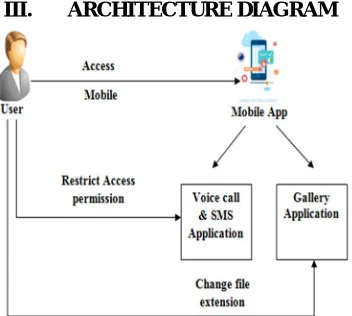
[image:2.612.223.399.261.419.2]III. ARCHITECTURE DIAGRAM
Figure 3.2: architecture for mobile secured accessibility control system.
IV. DIAGRAMS
A. Usecase Diagram
Figure 4.1: usecase diagram for mobile secure accessibility control system
Android Phone
Server Mobile Client
Mobile App
Secred File
A use case could be a list of steps that outline interaction between AN actor (a human United Nations agency interacts with the system or AN external system) and therefore the system itself. Use case diagrams depict the specifications of a use case and model the purposeful units of a system.
These diagrams facilitate development groups perceive the wants of their system, together with the role of human interaction in that and therefore the variations between varied use cases.
A use case diagram would possibly show all use cases of the system, or simply one cluster of use cases with similar practicality.
1) To begin a use case diagram, add an oval shape to the center of the drawing.
2) Type the name of the use case inside the oval.
3) Represent actors with a stick figure near the diagram, then use lines to model relationships between actors and use cases.
B. Class Diagram
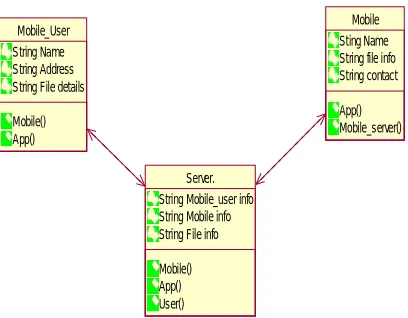
Figure 4.2: class diagram for mobile secure accessibility control system.
Class diagram speak to the static structures of a framework, just as its classifications, qualities, tasks, and articles.
A class chart will indicate process data or structure data inside the sort of execution classifications and coherent classifications, severally.
There might be cover between these two gatherings.
1) Classes are spoken to with a rectangular shape that is part into thirds. The best area shows the classification name, while the center segment contains the class' properties. The base area alternatives the classification activities (likewise alluded to as techniques).
2) Add class shapes to your class graph to demonstrate the connection between those articles. You may need to include subclasses, also.
3) Use lines to speak to affiliation, legacy, variety, and different connections among classes and subclasses.
[image:3.612.205.409.227.386.2]C. Sequence Diagram
Figure 4.3: sequence diagram for mobile secure accessibility control system.
Mobile_User String Name String Address String File details
Mobile() App()
Mobile Sting Name String file info String contact
App() Mobile_server()
Server. String Mobile_user info String Mobile info String File info
Mobile() App() User()
Mobile
Mobile mobile_Usermobile_User ServerServer
App Register
Secred Img/Video
Contect Details
Sequence diagram, otherwise called occasion outlines or occasion situations, represent how forms associate with one another by appearing between changed items in an arrangement. These outlines have two measurements: vertical and flat. The vertical lines demonstrate the grouping of messages and bring in sequential request, and the level components show object occasions where the messages are transferred.
1) To make an arrangement graph, compose the class occurrence name and class name in a rectangular box.
2) Draw lines between class examples to speak to the sender and collector of messages.
3) Use strong pointed stones to symbolize synchrnous messages, open sharpened stones for offbeat messages, and dashed lines for answer messages.
D. Collaboration Diagram
Figure 4.4: Collaboration Diagram for mobile secure accessibility control system.
Communication diagram offer advantages like succession graphs, yet they will offer a superior comprehension of how segments impart and cooperate with one another as opposed to exclusively underlining the grouping of occasions. They can be a valuable reference for organizations, associations, and designers who need to picture and comprehend the physical interchanges inside a program. Have a go at attracting an arrangement chart to:
1) Model the rationale of a modern system, capacity, or task.
2) Identify how directions are sent and got between articles or parts of a procedure.
3) Visualize the outcomes of explicit collaborations between different parts in a procedure.
4) Plan and comprehend the point by point usefulness of a current or future situation.
V. MODULES
A. Android Deployment
Mobile Client is an Android application which created and installed in the User’s Android Mobile Phone. So that we can perform the activities. The Application First Page Consist of the User registration Process. We’ll create the User Login Page by Button and Text Field Class in the Android. While creating the Android Application, we have to design the page by dragging the tools like Button, Text field, and Radio Button. Once we designed the page we have to write the codes for each. Once we create the full mobile application, It will generated as Android Platform Kit (APK) file. This APK file will be installed in the User’s Mobile Phone an Application.
Mobile mobile_
User
Server 1: App Register
2: Secred Img/Video 3: Contect Details
B. Server
The Server is Server Application which is used to communicate with the Mobile Clients. The Server Application can be created using Java Programming Languages. The Server will monitor the Mobile Client’s accessing information and Respond to Client’s Requested Information. The Server will not allow the Unauthorized User from entering into the Network. So that we can provide the network from illegitimate user’s activities.
C. App for SMS and calls
Now a days more numbers apps area there to send the messages , but when we talk about security , those applications are trustless. So , here we implement an application for call and SMS. Through this application the messages will be more secure
D. Image and Video Conversion
Normally every picture, videos and GIF files were stored in gallery on their own format like JPG, Jpeg, avi etc. By this way of saving , user database will easily compromised by the third party. So to avoid those types of attacks we implement a new way storage type like image and video file will not save on their corresponding format instead of it will save as like randomized extensions of user choice. So that third party could not able to access those data.
E. App Access Restriction
VI. CONCLUSION
We have taken a small step to study mobile security and discussed about the third-party access to the app .Our system is implemented in android. It requires no modification to the android operating system or framework as it based on the creation and development of our own application for security purpose. Our proposed frameworks will block all the undesirable application which request that authorization get to the contacts and gallery. In the gallery, the images and videos are saved in their own format like jpeg, gif etc. By this way of saving, third party can access the data easily. To avoid this images and videos file are saved in randomized extensions. There are some trust less applications that access the calls and messages. So to provide security we are developing a own application to store these calls and messages. To control malware and trick assaults on versatile stages it is critical to see how they achieve the client. In order to know these our system can be implemented and could be used.
REFERENCE
[1] IDC: Smartphone OS Market Share 2015, 2014, 2013, and 2012. http://www.idc.com/prodserv/smartphone-os-market-share.jsp, 2015.
[2] Viveca Woods and Rob van der Meulen. Gartner Says Emerging Markets Drove Worldwide Smartphone Sales to 15.5 Percent Growth in Third Quarter of 2015. http://www.gartner.com/newsroom/id/3169417, 2015.
[3] A state-of-the-art survey of malware detection approaches using data mining techniques. Souri , A. & Hosseini, R. Hum. Cent. Comput. Inf. Sci. (2018) 8: 3. https://doi.org/10.1186/s13673-018-0125x.
[4] Management by objectives. Originally published in The 1972 Annual Handbook for Group Facilitators by J. William Pfeiffer & John E. Jones (Eds.), San Diego, CA: Pfeiffer & Company.
[5] The value of banner advertising on the web by Kelvin Kozlen in December 2006.
https://mospace.umsystem.edu/xmlui/bitstream/handle/10355/4557/research.pdf.