Original Article
Relationship between CTLA4 + 49 A/G polymorphism
and susceptibility to type 1 diabetes
mellitus: a meta-analysis
Muhadasi Tuerxunyiming1,2, Muhetaer Muhemaiti3, Weiya Niu2, Qifeng Li1,2
1Xinjiang Institute of Pediatrics, People’s Hospital of Xinjiang Uygur Autonomous Region, Urumqi 830001,
Xinji-ang, China. 2Children’s Hospital of Xinjiang Uygur Autonomous Region, Urumqi 830054, Xinjiang, China; 3
Depart-ment of Pediatrics, People’s Hospital of Xinjiang Uygur Autonomous Region, Urumqi 830001, Xinjiang, China Received April 3, 2019; Accepted July 24, 2019; Epub September 15, 2019; Published September 30, 2019
Abstract: Background: This study aims to investigate the relationship between G/A polymorphism of CTLA4 rs231775 gene and susceptibility to type 1 diabetes (T1DM) in children through Meta-analysis. Material and Methods: We systematically searched the databases of PubMed, Web of Science, CNKI, Wanfang database and VIP database from 1999 to 2017 and analyzed the odds ratio (OR) and 95% confidence interval (CI). RevMan5.3 software was used for meta-analysis. Results: In Total, 19 studies were included in this meta-analysis. We found that rs231775 G/A polymorphisms of the CTLA4 gene was associated with T1DM. However, different ethnic groups had different degrees of correlation under different genetic models. The combined analysis showed that, in all the populations of the T1DM group, the recessive (GG vs GA + AA), the dominant (GG + GA vs AA), the homozygous (GG vs AA) and the heterozygous (GG vs GA) genetic models were significantly different from the control group. However, in the al -lele genetic model (G vs A), there was no statistically significant difference. Besides, the subgroup analysis showed that the rs231775 G/A polymorphism of the CTLA4 gene in the Asian population was significantly different between T1DM and control groups, including the allele, dominant, recessive, and homozygous genetic models, but not the heterozygous genetic model. However, there was no significant difference in the rs231775 G/A polymorphism of the CTLA4 gene between the European and South American populations. Conclusion: The risk ratio in T1DM of the G allele is significantly higher than that of the A allele in the Asian population, suggesting that the rs231775 G allele of the CTLA4 gene may increase the susceptibility of Asian people to T1DM.
Keywords: CTLA4, Meta-analysis, polymorphism, type 1 diabetes, susceptibility
Introduction
Globally, the incidence of type 1 diabetes mel-litus (T1DM) continues to increase. According to a European survey, the incidence of T1DM in children has increased at an average rate of 3.9% per year in recent years, and younger chil-dren have the highest growth rate [1]. It is esti-mated that the number of newly diagnosed chil-dren with T1DM will double by 2020 [2]. Till now, the main treatment of T1DM is insulin therapy, which emphasizes intensive treatment to reduce the risk of related microvascular com-plications [3]. Insulin therapy, however, cannot maintain normal glucose levels in patients and multiple daily injections often leads to poor compliance in children, and hypoglycemia [4]. In China, T1DM mainly manifests as short
sur-vival time and poor glycemic control [5]. The lack of knowledge of diabetes and poor eco-nomic conditions are the main reasons for shorter life expectancy in children with T1DM in China [6].
phocytes that target one of the islet auto-anti-gens [10].
Cytotoxic T lymphocyte associated antigen 4 (CTLA4) is an important T cell regulator, which is mainly involved in T cell mediated immune homeostasis and immune tolerance [11]. It has been reported that CTLA4 gene polymorphisms may affect T cell activity in a number of ways. For example, A/G of CTLA4 rs231775 is a mis-sense mutation identified in recent decades, in which adenine 49 in the first exon region of CTLA4 is replaced by guanine (hereinafter re- ferred to as CTLA4 A49G) [12]. As a result, thre-onine 17 is changed to alanine and the protein activity is changed, which may increase the risk of T1DM [13]. So far, no consensus has been reached on the relationship of CTLA4 A49G with T1DM among different ethnic groups in dif-ferent regions or among difdif-ferent ethnic groups within the same region.
In 2012, there was a meta-analysis of the asso-ciation between the A/G mutation at CTLA4 rs231775 and the susceptibility to T1DM [14], which demonstrated an association between CTLA4 rs231775 polymorphisms and T1DM among children. The CTLA4 A/G allele is a risk gene for T1DM in children.
In this study, we investigated the association of the CTLA4 rs231775 site A/G mutation with susceptibility to T1DM in children more compre-hensively. A subgroup analysis of different eth-nic groups was conducted.
Materials and methods
Literature search
We searched PubMed, Web of Science, CNKI, Wanfang Database, VIP and other databas-
es, as well as hand-searched dissertations to screen the literature on association between the A/G polymorphism of rs231775 in the CTLA4 gene and T1DM. Literature published from 1999 to 2017 were comprehensively searched. The key words for the literature search included type 1 diabetes, CTLA4, rs231775, genetic polymorphism and susce- ptibility.
Inclusion criteria
1) Literature on the relationship between CT- LA4 genetic polymorphisms and susceptibility to T1DM. 2) The languages were Chinese or English. 3) The study design was a case-control study with T1DM patients and healthy controls. 4) Literature with a CTLA4 genotype distribu-tion and related informadistribu-tion, and a comprehen-sive statistical indicator (OR value) directly or indirectly. 5) DNA sequencing method was rea-sonable. 6) T1DM diagnostic criteria was in line with the World Health Organization diabetes diagnostic criteria or the American Diabetes Association medical treatment standards. 7) Control population had no family history of dia-betes and was selected randomly. 8) The gen-der and ages in each group had no statistical difference.
Exclusion criteria
1) Repeated reports with the same population. 2) Diabetes combined with other diseases. 3) Literature on other gene polymorphisms. 4) Literature with small sample sizes. 5) Reviews. 6) Data to calculate the OR value was not avail-able. 7) Literature without control groups or without a case-control study. 8) Hardy-Weinberg equilibrium was not obtained.
Literature quality evaluation
Literature quality was independently evaluated by two investigators using the Newcastle-Ottawa Scale (NOS) (with a total score of 9) [15]. If the two investigators could not reach a consensus, discussion with a third investigator was performed. The evaluations included popu-lation selection, comparability and exposure evaluation, which were all based on the NOS assessment scale.
Data extraction
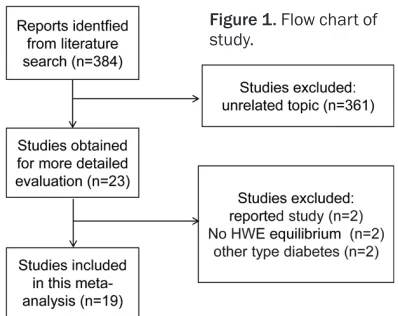
[image:2.612.89.288.71.229.2]The main information extracted from each of the articles included the first author, the year of Figure 1. Flow chart of
publication, the type of study design, the
[image:3.612.93.526.83.327.2]eth-nicity in the study, the sample size of each on of the allele and genotypes between T1DM group and control group. At the same time, a
Table 1: The basic characteristics of the included literature [16-34]
Authors Year designStudy Subgroup Source of controls ScoreNOS T1DM Control Case/control
AA AG GG AA AG GG
Hayashi et al [24] 1999 Case-control Japanese Hospital 7 21 42 54 22 47 72 117 141 Kikuoka et al [28] 2001 Case-control Japanese Hospital 8 6 62 57 34 88 78 125 200 Cinek et al [16] 2001 Case-control Czech Hospital 8 123 125 57 106 133 50 305 289 Fajardy et al [20] 2002 Case-control French Hospital 8 41 76 17 96 146 31 134 273 Mochizuki et al [31] 2003 Case-control Japanese Hospital 6 17 36 44 12 27 21 97 60 Haller et al [22] 2004 Case-control Estonia Hospital 6 18 29 22 50 85 23 69 158 Liang et al [30] 2004 Case-control Japanese Hospital 6 0 10 19 3 27 10 29 40 Mojtahedi et al [32] 2005 Case-control Iranian Hospital 6 21 78 10 146 149 36 109 331 Hauache et al [23] 2005 Case-control Brazilian Hospital 5 42 63 19 30 34 11 124 75 AhmedovG et al [18] 2006 Case-control Azerbaijan Ian Hospital 5 80 58 22 143 103 25 160 271 Baniasadi et al [19] 2006 Case-control North Indians Hospital 6 50 62 18 76 79 25 130 180 Ferreira et al [21] 2009 Case-control Brazilians Hospital 6 52 40 6 44 42 10 98 96 Jung et al [27] 2009 Case-control Korean Hospital 6 24 58 94 13 31 46 176 90 Lemos et al [29] 2009 Case-control Portuguese Hospital 5 82 95 30 111 108 30 207 249 Jin et al [26] 2009 Case-control China Hospital 5 20 155 157 70 239 167 332 476 Philip et al [34] 2011 Case-control Southern India Hospital 5 5 30 18 32 15 6 53 53 Ahmadi et al [17] 2013 Case-control Iranian Hospital 6 25 32 3 67 36 4 60 107 Jin et al [25] 2014 Case-control China Hospital 6 26 194 182 72 241 169 402 482 Mosaad et al [33] 2017 Case-control Egyptian Hospital 7 17 21 2 12 8 0 40 20
Table 2. Meta-analysis results
Genetic model Pooled OR (95% CI) Z value P value Study number Total size Allelic genetic model 1.32 [0.98, 1.78] 1.80 0.07 19 6755 Asia 1.51 [0.99, 2.29] 1.94 0.05 13 4383 Europe 1.10 [0.67, 1.79] 0.37 0.71 4 1857 South America 0.95 [0.40, 2.25] 0.11 0.91 2 515 Recessive genetic model 1.55 [1.12, 2.15] 3.63 0.008 19 4749 Asia 1.73 [1.10, 2.73] 2.36 0.02 13 2978 Europe 1.56 [0.91, 2.67] 1.63 0.10 4 1424 South America 0.82 [0.42, 1.59] 0.60 0.55 2 347 Dominant genetic model 0.52[0.34, 0.79] 3.06 0.002 20 4056 Asia 0.42 [0.24,0.76] 2.89 0.004 13 2774 Europe 0.75 [0.43,1.32] 0.99 0.32 4 627 South America 0.52 [0.34, 0.79] 1.67 0.09 2 168 Homozygous genetic model 1.35 [1.04, 1.77] 2.22 0.03 19 1809 Asia 1.75 [1.15, 2.65] 2.63 0.008 13 1014 Europe 1.24 [0.87, 1.76] 1.20 0.23 4 260 South America 0.82 [0.26, 2.58] 0.33 0.74 2 46 Heterozygous genetic mode 1.60 [1.05, 2.46] 2.17 0.03 19 2820 Asia 1.77 [0.93, 3.34] 1.74 0.08 13 1814 Europe 1.80 [0.89, 3.64] 1.64 0.1 4 797 South America 0.75 [0.37, 1.51] 0.80 0.42 2 179
Notes: OR: odds ratio. CI: confidence interval. Total size: the total number of T1DM cases
and the control group. Allelic genetic model: G allele distribution frequency; Recessive genetic model: GG versus GA + AA. Dominant genetic model: GC + CC versus GG. Homozy-gous genetic model: GG versus AA. HeterozyHomozy-gous genetic mode: GG versus GA.
group, the number of cases of the three ge- notypes (including AA, AG and GG) in the T1- DM group and the con-trol group and the dis- tribution of the control genotypes. If the opin-ions were inconsistent, the two investigators di- scussed to solve the inconsistencies or con-sulted a third investi- gator.
Outcome indicators
[image:3.612.93.400.362.651.2]subgroup analysis of different ethnic groups was performed.
Statistical analysis
Review Manager 5.3 software (Version: 5.3.5, Sun Microsystems Inc.) was used to analyze the original data of the literature. Heterogeneity tests were performed on the included data, and heterogeneity was assessed using I2 (I2 = 0-24%: no heterogeneity; I2 = 25%-49%: moderate heterogeneity; I2 = 50%-74%: high heterogeneity: I2 = 75%-100%: very high het-erogeneity). If I2 < 50%, the fixed effect model was used, and if I2 ≥ 50%, the random effect model was used. A funnel plot was used to evaluate potential publication bias. P < 0.05 was determined as statistically significant difference.
Results
Literature screening process
A total of 384 articles were screened. Among them, 361 articles were excluded after reading the title or the abstract. After reading the full texts, 7 articles were excluded, including 2 arti-cles published repeatedly, 3 artiarti-cles that were not in Hardy-Weinberg equilibrium and 2 arti-cles of cohort research (see the prism flow -chart, Figure 1). Finally, we included 19 articles [16-34] for the Meta-analysis (Table 1).
The basic characteristics of the included literatures
[image:4.612.92.519.72.444.2]The study included 19 articles, with a total of 6358 case subjects (Table 1). There were 2767
T1DM cases and 3591 control cases. The dis-tribution of allele A/G genotype of CTLA4 rs231775 in T1DM and control group is shown in Table 1. These articles were of good quality as assessed by the Newcastle-Ottawa Scale. Among the 19 articles, 13 were data from Asian populations, 4 were data from the European population, and 2 were data from South America populations. The genotypes in all 19 articles met the Hardy-Weinberg equilibrium. Random effect models for all populations
We used random effect models to analyze the results for all populations. The distribution of CTLA4 rs231775 polymorphism between T1DM group and control group was analyzed (Table 2). The results showed that the distribution of the recessive genetic model (OR: 1.55, 95% CI: 1.12-2.15), the dominant genetic model (OR:
0.52, 95%CI: 0.34~0.79) and the homozygous genetic model (OR: 1.35, 95% CI: 1.04-1.77) were significantly different between T1DM group and control group (P < 0.05). However, there was no statistically significant difference in the distribution of allele genetic model (OR: 1.32, 95% CI: 0.98-1.78).
Subgroup analysis from Asia
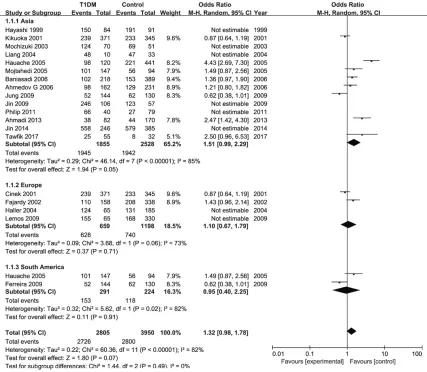
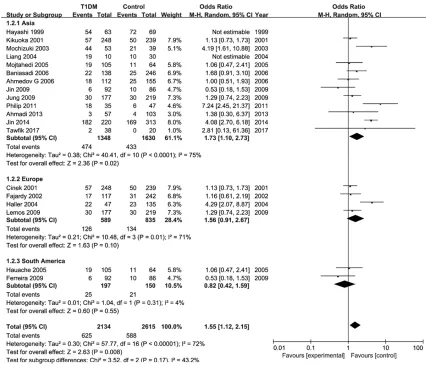
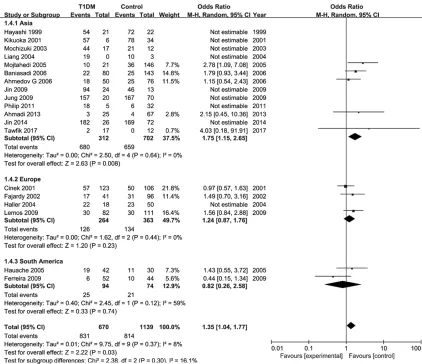
[image:5.612.91.517.70.436.2]In this study, we also conducted a subgroup analysis according to different ethnic popula-tions. In Mongolian populations of East Asia, there were significant differences between T1DM group and control group in the allele genetic model (OR: 1.51, 95% CI: 0.99-2.29) (Figure 2) (Table 2), the recessive genetic model (OR: 1.73, 95% CI: 1.10-2.73) (Figure 3) (Table 2), the dominant genetic model (OR: 0.42, 95% CI: 0.24-0.76) (Figure 4) (Table 2)
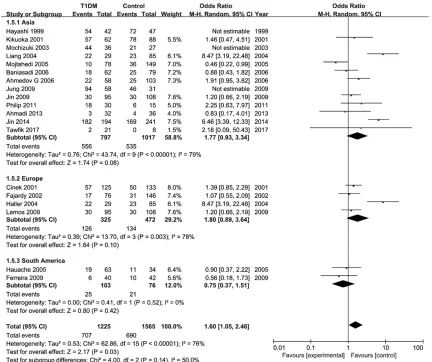
and homozygous genetic model (OR: 1.75, 95% CI: 1.15-2.65) (Figure 5) (Table 2). However, the heterozygous genetic model (OR: 1.77, 95% CI: 0.93~3.34) showed no significant difference (Figure 6) (Table 2). Subgroup analysis showed that the rs231775 A/G polymorphism of the CTLA4 gene in the Asian population was associ-ated with the susceptibility to T1DM.
Subgroup analysis from Europe
In the Caucasian population of Europe, the rs231775 A/G polymorphism of the CTLA4 gene had no relationship with the susceptibility to T1DM. The difference was not statistically significant in all genetic models, including the allele genetic model (OR: 1.10, 95% CI: 0.67 - 1.79) (Figure 2) (Table 2), recessive genetic model (OR: 1.56, 95% CI: 0.91-2.67) (Figure 3) (Table 2), dominant genetic model (OR: 0.75, 95% CI: 0.43-1.32) (Figure 4) (Table 2),
homo-zygous genetic model (OR: 1.24, 95% CI: 0.87-1.76) (Figure 5) (Table 2), and heterozygous genetic model (OR: 1.80, 95% CI: 0.89-3.64) (Figure 6) (Table 2).
Subgroup analysis from South America
Similarly, in Caucasian populations of South America, there was no significant difference in the rs231775 A/G polymorphism of the CTLA4 gene between T1DM and control group. The analyzed gene polymorphisms included the allelic genetic model (OR: 0.95, 95% CI: 0.40-2.25) (Figure 2) (Table 2), recessive genetic model (OR: 0.82, 95% CI: 0.42-1.59) (Figure 3) (Table 2), dominant genetic model (OR: 0.52, 95% CI: 0.34-0.79) (Figure 4) (Table 2), homo-zygous genetic model (OR: 0.82, 95% CI: 0.26-2.58) (Figure 5) (Table 2) and heterozygous genetic model (OR: 0.75, 95% CI: 0.37-1.51) (Figure 6) (Table 2). Thus, the rs231775 A/G
polymorphism of the CTLA4 gene was not relat-ed to the susceptibility of T1DM in the Cau- casian population of South America.
Analysis of publication bias
Using Revman5.3 Meta-analysis software, a funnel plot was generated to evaluate the potential publication bias. If the funnel diagram is asymmetric, it indicates a publication bias, otherwise, there is no publication bias. As shown in Figure 7, the points in the figure were symmetrically distributed on both sides of the midline, which were basically within a 95% CI, indicating no obvious publication bias.
Discussion
T1DM is an autoimmune disease [35]. The clas-sic evolutionary model of T1DM, namely the Eisenbart H model, is constantly being
updat-ed. There is evidence that islet autoimmunity and dysfunction often persist for years before the diagnosis of T1DM [36]. T1DM in children is quite different from T1DM in adults in the occurrence, progression speed and prognosis [37]. Besides, in children, the impact of genetic factors in the development of T1DM is more severe than that in adults.
CTLA4 is located on chromosome 2q33, in which there are many T lymphocyte regulatory genes such as CTLA4, CD28 and ICOS [38]. Since 1996, studies in different countries such as Belgium, Poland, Japan and Africa have reported the widespread existence of CTLA4 rs231775 polymorphisms and found that it may be related to the increased incidence of T1DM [39-41].
[image:7.612.93.515.70.434.2]At present, the relationship between rs231775 A/G polymorphism of CTLA4 and susceptibility
to T1DM in different ethnic groups has been widely re- ported [42]. The meta-analy-sis in this study involved 19 articles on rs231775 polymor-phisms of the CTLA4 gene and susceptibility to T1DM in different ethnic groups, includ-ing 2767 cases of T1DM and 3591 cases of control. The results showed that the rs- 231775 A/G polymorphism locus of the CTLA4 gene was associated with T1DM in dif-ferent ethnic groups, and the correlation degree was differ-ent under differdiffer-ent genetic models. For all the popula-tions, the genetic models of
Figure 6. Forest plot of the T1DM associated gene rs231775 site A/G polymorphism under the heterozygous genetic model (distribution of G allelic frequency of CTLA4 rs231775 gene).
[image:8.612.90.388.493.691.2]the recessive genetic model, the dominant genetic model, the homozygous genetic model and the heterozygous genetic model were sig-nificantly different between the T1DM group and control group. However, in the allele genet-ic model, the difference was not statistgenet-ically significant. The risk ratio of allele G was signifi -cantly higher than that of allele A in the whole population, suggesting that allele G may be the risky allele of T1DM.
We then analyzed the distribution of these genetic models in sub-populations of Asia, Europe and South America, respectively. It was found that the rs231775 G/A polymorphism of the CTLA4 gene in the Asian population was significantly different between T1DM and con -trol groups, including the allele genetic model, dominant genetic model, recessive genetic mo- del, and homozygous genetic model, but not the heterozygous genetic model. This indicates that the risk ratio of allele G is significantly high -er than that of allele A, suggesting that allele G may be a risky allele of T1DM in Asian popula-tions. However, there was no significant differ -ence in rs231775 G/A polymorphism of the CTLA4 gene in the European and South Ame- rican Caucasian populations. This may be caused by racial differences. Further studies are warranted.
This study has several limitations. First, there were only 4 articles on the European popula-tion and 2 articles on the South American pop-ulation. Compared with the Asian population, the sample size of the European population and South American population was relatively small. Therefore, the relationship of the CTLA4 gene with T1DM in European and South Ame- rican populations remains to be further validat-ed by large, case-by-case, case-control or pro-spective studies. Second, the sample size was relatively small.
In conclusion, the rs231775 G allele mutation of the CTLA4 gene may increase the suscepti-bility to T1DM in Asian populations.
Acknowledgements
This work was supported by the Natural Science Foundation of Xinjiang Uyghur Autonomous Re- gion, Xinjiang, China (grant number 2018D01C- 109).
Disclosure of conflict of interest
None.
Address correspondence to: Dr. Qifeng Li, Xinjiang Institute of Pediatrics, People’s Hospital of Xinjiang Uygur Autonomous Region, No.91 Tianchi Road, Tian- shan District, Urumqi 830001, Xinjiang China. Tel: 86-0991-8564289; Fax: 86-0991-8564289; E-mail: [email protected]
References
[1] Rojnic Putarek N, Ille J, Spehar Uroic A, Skrabic V, Stipancic G, Krnic N, Radica A, Marjanac I, Severinski S, Svigir A, Bogdanic A and Dumic M. Incidence of type 1 diabetes mellitus in 0 to 14-yr-old children in Croatia--2004 to 2012 study. Pediatr Diabetes 2015; 16: 448-453. [2] Tsvyatkova D, Storni C. Educational interactive
eBook for newly diagnosed children with T1DM: children’s role in design [C]// interna-tional conference on pervasive computing technologies for healthcare 2015.
[3] Nathan DM, Genuth S, Lachin J, Cleary P, Crof-ford O, Davis M, Rand L and Siebert C. The ef-fect of intensive treatment of diabetes on the development and progression of long-term complications in insulin-dependent diabetes mellitus. New Engl J Med 1993; 329: 977-986. [4] Chan RP, Galas FR, Hajjar LA, Bello CN, Piccio-ni MA, Auler JO Jr. Intensive perioperative glu-cose control does not improve outcomes of patients submitted to open-heart surgery: a randomized controlled trial. Clinics (Sao Paulo) 2009; 64: 51-60.
[5] Bassi D, Arakelian VM, Mendes RG, Caruso FCR, Bonjorno Júnior JC, Zangrando KTL, Oliveira CRD, Haus J, Arena R and Borghisilva A. Poor glycemic control impacts linear and non-linear dynamics of heart rate in DM type 2. Revista Brasileira De Medicina Do Esporte 2015; 21: 313-317.
[6] Branch CMAoD. China type 1 diabetes diagno-sis and treatment guidelines diabetes clinical 2013; 7: 6-27.
[7] Atkinson MA, Eisenbarth GS and Michels AW. Type 1 diabetes. Lancet 2014; 383: 69-82. [8] Wenrui H. Reg III and proinsulin dual gene
in-tervention in type 1 diabetes mellitus and its mechanism. Huazhong University of Science and Technology 2012.
[9] Chen YR and Wang JR. Invariant natural killer T cells mediate regulation in type 1 diabetes mellitus. Journal of Medical Postgraduates 2011.
[11] Tanhapour M, Vaisi-Raygani A, Khazaei M, Ra-himi Z and Pourmotabbed T. Cytotoxic t-lym-phocyte associated antigen-4 (CTLA-4) poly-morphism, cancer, and autoimmune diseases. 2017; 4: 395-412.
[12] Devaraju P, Gulati R, Singh BK, Mithun CB and Negi VS. The CTLA4 + 49 A/G (rs231775) poly-morphism influences susceptibility to SLE in South Indian Tamils. Tissue Antigens 2014; 83: 418-421.
[13] Wang C, Jiang T, Wei L, Li F, Sun X, Fan D, Liu J, Zhang X, Xu D and Chen Z. Association of CTLA4 gene polymorphisms with susceptibility and pathology correlation to pulmonary Tuber-culosis in Southern Han Chinese. Int J Biol Sci 2012; 8: 945-952.
[14] Wu J, Jiao Z and Li R. Association between rs231775 polymorphisms of Cytotoxic T lym-phocyte-associated protein-4 gene and risk for type 1 diabetes in children: a meta-analysis. Acta Medicinae Universitatis Scientiae Et Tech-nologiae Huazhong 2016.
[15] Stang A. Critical evaluation of the newcastle-ottawa scale for the assessment of the quality of nonrandomized studies in meta-analyses. Eur J Epidemiol 2010; 25: 603-605.
[16] Cinek O, Dvínek P, umník Z, Bendlová B, Kolou-ková S, Najderová M and Vavinec J. The CTLA4 + 49 A/G dimorphism is not associated with type 1 diabetes in Czech children. Int J Immu-nogenet 2010; 29: 219-222.
[17] Ahmadi J, Yazdanfar F. Current substance abuse among Iranian university students. Ad-dictive Disorders and Their Treatment 2002; 1: 61-64.
[18] Ahmedov G, Ahmedova L, Sedlakova P and Cinek O. Genetic association of type 1 diabe-tes in an Azerbaijanian population: the HLA-DQ, -DRB1*04, the insulin gene, and CTLA4. Pediatr Diabetes 2006; 7: 88-93.
[19] Baniasadi V, Narain N, Goswami R and Das SN. Promoter region -318 C/T and -1661 A/G CTLA-4 single nucleotide polymorphisms and type 1 diabetes in North Indians. Tissue Anti-gens 2006; 67: 383-389.
[20] Fajardy I, Vambergue A, Stuckens C, Weill J, Danze PM and Fontaine P. CTLA-4 49 A/G di-morphism and type 1 diabetes susceptibility: a French case-control study and segregation analysis. Evidence of a maternal effect. Eur J Immunogenet 2002; 29: 251-257.
[21] Ferreira AC, Gomes KB, Sampaio IB, Oliveira VC, Pardini VC and Godard AL. Type 1 diabetes susceptibility determined by HLA alleles and CTLA-4 and insulin genes polymorphisms in Brazilians. Arq Bras Endocrinol Metabol 2009; 53: 368-373.
[22] Haller K, Kisand K, Nemvalts V, Laine AP, Ilonen J and Uibo R. Type 1 diabetes is insulin
-2221 MspI and CTLA-4 + 49 A/G polymor-phism dependent. Eur J Clin Invest 2015; 34: 543-548.
[23] Hauache OM, Reis AF, Oliveira CS, Vieira JG, Sjoroos M and Ilonen J. Estimation of diabetes risk in Brazilian population by typing for poly-morphisms in HLA-DR-DQ, INS and CTLA-4 genes. Dis Markers 2005; 21: 139-145. [24] Hayashi H, Kusaka I, Nagasaka S, Kawakami
A, Rokkaku K, Nakamura T, Saito T, Higashiya-ma M, Honda K and Ishikawa SE. Association of CTLA-4 polymorphism with positive anti-GAD antibody in Japanese subjects with type 1 dia-betes mellitus. Clin Endocrinol (Oxf) 1999; 51: 793-799.
[25] Jin P, Xiang B, Huang G and Zhou Z. The asso-ciation of cytotoxic T-lymphocyte antigen-4 + 49 A/G and CT60 polymorphisms with type 1 diabetes and latent autoimmune diabetes in Chinese adults. J Endocrinol Invest 2014; 38: 149-154.
[26] Jin P, Xiang B, Lin J, Huang G, Zhou WD, Zheng C, Chao C and Zhou ZG. Correlation between CTLA-4 + 49 A/G and CT60 gene polymor-phisms and type 1 diabetes mellitus compli-cated with thyroid autoimmunity. Zhonghua Yi Xue Za Zhi 2009; 89: 1246-9.
[27] Jung MH, Yu J, Shin CH, Suh BK, Yang SW and Lee BC. Association of cytotoxic T lymphocyte antigen-4 gene polymorphisms and HLA class II alleles with the development of type 1 diabe-tes in Korean children and adolescents. J Ko-rean Med Sci 2009; 24: 1004-1009.
[28] Kikuoka N. Cytotoxic T lymphocyte antigen 4 polymorpism confer susceptibility to type 1 di-abetes in Japanese children : analysis of as-sociation with HLA genotype and autoantibod-ies. Clin Endocrinol (Oxf) 2001; 55: 597-603. [29] Lemos MC, Coutinho E, Gomes L, Bastos M,
Fagulha A, Barros L, Carrilho F, Geraldes E, Re-gateiro FJ and Carvalheiro M. The CTLA4 + 49 A/G polymorphism is not associated with sus-ceptibility to type 1 diabetes mellitus in the Portuguese population. Int J Immunogenet 2010; 36: 193-195.
[30] Liang H, Yagi K, Asano A, Kobayashi J and Ma-buchi H. Association between CTLA-4 + 49 A/G polymorphism and type 1B diabetes in Japa-nese population. Endocrine 2004; 25: 105-109.
[31] Mochizuki M, Amemiya S, Kobayashi K, Ko-bayashi K, Shimura Y, Ishihara T, Nakagomi Y, Onigata K, Tamai S, Kasuga A and Nanazawa S. Association of the CTLA-4 gene 49 A/G poly-morphism with type 1 diabetes and autoim-mune thyroid disease in Japanese children. Diabetes Care 2003; 26: 843-847.
associated with predisposition to type 1 diabe-tes in Iranians. Diabediabe-tes Res Clin Pract 2005; 68: 111-116.
[33] Mosaad YM, Elsharkawy AA, El-Deek BS. Asso-ciation of CTLA-4 (+ 49 A/G) gene polymor-phism with type 1 diabetes mellitus in Egyptian children. Immunol Invest 2012; 41: 28-37. [34] Philip B and Isabel W. Association of cytotoxic T
lymphocyte-associated antigen 4 gene single nucleotide polymorphism with type 1 diabetes mellitus in Madurai population of Southern In-dia. Indian J Hum Genet 2011; 17: 85-89. [35] Lönnrot M, Salminen K, Knip M, Savola K,
Kul-mala P, Leinikki T, Hyypia T, Akerblom HK and Hyoty H. Enterovirus RNA in serum is a risk fac-tor for beta-cell autoimmunity and clinical type 1 diabetes: a prospective study. J Med Virol 2000; 5: 214.
[36] Cooper ME and Rebuck AS. Type 2 diabetes in Asia: like chronic obstructive pulmonary dis-ease, a threat to human health and wellbeing. J Cutan Pathol 2014; 41: 120-122.
[37] Rasa I and Pavlina I. Analysis of diabetes care in type 1 diabetes (T1DM) patients-children and adults in Latvia. Diabetes 2007; 56: A655.
[38] Djilali-Saiah I, Schmitz J, Harfouch-Hammoud E, Mougenot JF, Bach JF and Caillat-Zucman S. CTLA-4 gene polymorphism is associated with predisposition to coeliac disease. Gut 1998; 43: 187-189.
[39] Kim HJ, Jeong KH, Lee SH, Moon JY, Lee TW, Kang SW, Park SJ, Kim YH and Chung JH. Poly-morphisms of the CTLA4 gene and kidney transplant rejection in Korean patients. Trans-plant Immunol 2011; 24: 40-44.
[40] Rodríguez A, Alfaro JM, Balthazar V and Pineda Trujillo N. Association analysis of PTPN22 , CTLA4 and IFIH1 genes with type 1 diabetes in Colombian families. J Diabetes 2015; 7: 402-10.
[41] Saleh HM, Rohowsky N and Leski M. The CTLA4 -819 C/T and + 49 A/G dimorphisms are associated with type 1 diabetes in Egyptian children. Indian J Hum Genet 2008; 14: 92-8. [42] Kumar N, Kaur G, Kanga U, Mehra NK, Neolia
![Table 1: The basic characteristics of the included literature [16-34]](https://thumb-us.123doks.com/thumbv2/123dok_us/1268169.654818/3.612.93.400.362.651/table-basic-characteristics-included-literature.webp)