Ergonomic Analysis of Driver Posture of an
E-Rickshaw
Imran Aslam1, Tasleem Ahmad2, S. Mojahid Ul-Islam3
1
Mtech Student , 2,3Assistant Professor, AL-Falah University, Faridabad
Abstract: The aim of this paper is to find the ergonomic risk related to Indian e-rickshaw and do the needed changes and improvements for the development of a new design of the e-rickshaw which ergonomically useful for its drivers.
The ergonomic risk is calculated by analyzing the different postures gained by the drivers. The tool used for this purpose is RULA (rapid upper limb assessment). A RULA score of 6+ indicates that the changes must be done instantly. So as to minimize the related ergonomic risk some modifications were suggested in the design of e-rickshaw.
The scores of RULA computed after making said modifications in the model generated using Solid Works and inserting mamikin by using H-CAD showed that ergonomic risk is reduced considerably. Though E-rickshaws are environment friendly but hazardous to safety measures for human life and property due to its dimensional drawbacks. This analysis will present you information regarding various postures of drivers available in E-rickshaws which will be eventually helpful for the manufactures to do research and development for the same’
Keywords: Ergonomics, Rapid Upper Limb Assessment (RULA), Three Wheelers Ergonomics, Indian Anthropometry Data; E-Rickshaw, Three Wheeler Seat, Driver Seat Ergonomics ,Posture Analysis, Digital Human Model
I. INTRODUCTION
A. Ergonomics Or Human Factor Engineering
Human factors and ergonomics (commonly referred to as human factors) is the application of psychological and physiological principles to the (engineering and) design of products, processes, and systems. The goal of human factors is to reduce human error, increase productivity, and enhance safety and comfort with a specific focus on the interaction between the human and the thing of interest. It is not simply changes or amendments to the work environment but encompasses theory, methods, data and principles all applied in the field of ergonomics.
B. The International Ergonomics Association defines ergonomics or human factors as follows
Ergonomics (or human factors) is the scientific discipline concerned with the understanding of interactions among humans and other elements of a system, and the profession that applies theory, principles, data and methods to design to optimize human well-being and overall system performance.
C. Electric Rickshaw
The word rickshaw’s origins lie in the Japanese language, and it literally translates to “a human-powered vehicle”. The rickshaw is one of the oldest modes of transport, and was first introduced in the late 19th century. It is used all across the world, but more common in the Asian countries, especially in India and Bangladesh. The various types of rickshaws have also evolved over time with the earliest ones being the pulled-rickshaws. Other variations of the mode of transport include the cycle-rickshaw, the auto-rickshaw and the relatively newer iteration of the e-auto-rickshaws. . Historically, India’s urban as well as rural areas have depended on the various rickshaw types for their travel requirements. Electric rickshaws (also known as TukTuk, e-rickshaw) have been becoming more popular in some cities since 2008 as an alternative to auto rickshaws and pulled rickshaw because of their low fuel cost, and less human effort compared to pulled rickshaws. They are being widely accepted as an alternative to Petrol/Diesel/CNG auto rickshaws. They are 3 wheels pulled by an electric motor ranging from 650-1400 Watts.
D. Anthopmetry
1418
©IJRASET: All Rights are Reservedinformation. In addition, traditional measurements can also be extracted from the 3D models. Therefore, 3D anthropometric data offers an opportunity to improve the quality of the design models and, at the same time, maintain the simplicity of the traditional design schemes where key body dimensions are used. The principle that a product should be comfortable to use for the user is the most universally employed concept in ergonomics. If a product is to be used by only one user, careful measurements of that person's body will yield appropriate dimensional specifications for that product. However, in various fields, where a single product must accommodate a large percentage of the population, the constraints on the design values are usually imposed by the desire to accommodate a sufficient range of the population on the anthropometric measures.
E. Digital Human Models (Dhms) For Indian Anthropometry
An anthropometric model is characterized by the exterior skin model that gives it a realistic appearance as well as by the interior skeletal model.
Three-dimensional manikins are also known as Digital Human Models. These are software representations of humans that enable designers to visualize the effectiveness of a design before a physical prototype is constructed. The DHM programs can be used to assess many design concerns.
For example, automotive companies can utilize DHM to examine if the current seat adjustability will allow a wide range of users to reach all of the needed controls. Being able to do all of this on a computer rather than using a physical prototype, results in faster, igher quality, and more accessible designs that also lower cost. Various software like CATIA, UGS, DELMIA, JACK, RAMSIS, SAFEWORK,HUMAN CAD can be used to reate digital manikins. Digital human models make use of the boundary manikin concept, where statistically extreme cases are used to represent the less extreme cases of a certain population.
II. LITERATURE REVIEW
The Battery Operated Electric Rickshaws is a new mode of transportation introduced in the state of Delhi in 2010. The number of these type of rickshaws has increased from 4,000 in 2010 to approximately 1,00,000 in 2014. These e-rickshaws are a popular mode of transport for short-distance commute within the city, and almost 3,00,000 people in the country rely on it for their livelihood.[Rana et al 2012 a.] showed the role of the battery operated rickshaws in the urban income generation and the employment creation in Bangladesh. It also shows the role of the mode of transport in depressurization of the migration to the capital state of Dhaka. [Rana et al 2012 b.] checks the efficiency of the battery operated rickshaws in Bangladesh, and recommends route fixation and the issuance of driving licenses to increase the efficiency in these areas. The situation in Bangladesh is similar to the one observed in Delhi, as a report estimated that there were more than 50,000 unlicensed battery rickshaws in the cities of Dhaka and Chittagong.
The High Court, in July 2014, rejected writ petitions that sought permission to allow the functioning of these vehicles in the cities, and banned the rickshaws in Dhaka and Chittagong. [Daily Star 2014][Nandhi – I.F.M.R. 2011] studied the financial behavior of the cycle rickshaw pullers in Delhi, and showed the use of case study method to substantiate their findings.
The results were utilized to assess the rickshaw pullers ’strategies and choices in savings as well as to address the challenges faced by them.
The case method has been applied in the study to elucidate the importance of the mode of transport in a social context. The paper makes use of the research conducted to supsssssport the arguments in favor of regularisation of the battery rickshaws in Delhi.The Socio-Economic study aims to check the role of the rickshaws in the employment and income generation in the city, as well as its contribution to poverty alleviation of the drivers by doing a comparative analysis with their previous livelihoods. The technical study is aimed at checking the safety and the efficiency of the vehicles, in order to recommend the most effective policies for manufacturing and functioning of these vehicles.
The variables and parameters have been selected accordingly, to attain the objectives of the study.
The battery-operated e-rickshaws were introduced in Delhi for the Commonwealth Games in 2010, and close to 4,000 rickshaws were supposed to be introduced and regulated by the end of the year. [Telegraph 2010]
The number of such battery rickshaws has increased exponentially in the period between October 2010 and July 2014 with the present number standing close to 1,00,000. In the 4-year period, there have been many attempts to initiate a policy regarding the functioning of these vehicles but there has been no concrete decision on the matter. [Hindu 2014 a.]
Type of rickshaw
Numbers in delhi Initial cost Daily earnings(rs) Rent(rs) Cycle rickshaw 700000(govt figure) 8000-15000
300-450 40-100
Auto-rickshaw
100000(licensed-55,000,4500 in the process after 2011)
150000-300000
700-1200 300-500
E-rickshaw 100000 approximately 600000-140000
550-1000 250-400
A. Socio Economic
The effect of the introduction and the operation of the e-rickshaws on the socio-economic front can be gauged by the data analysis that will be done in this section. The parameters for the sub-aspect of the study are mentioned in this section.While introducing the battery rickshaws, the government aimed to replace the physically taxing cycle rickshaws with thes battery rickshaws. In the case of Hemraj vs. C.P. Delhi (2006), the Delhi High Court said that the cycle rickshaws offended human dignity and the state would make attempts to remove the trade altogether.In this section, it will also be examined whether the introduction of the battery rickshaws has resulted in a successful transition from the cycle rickshaws or not.The parameters used for the social study included relevant benchmarks such as education, previous employment and the salary change with the profession. To understand the significance of the profession in the urban setup, and the reason behind the large influx of the rickshaws, various factors such as job security and independence, change in the social status and living conditions of the drivers were considered and studied. For the subjective questions on status, independence, living conditions and security, the questions had a Yes/No component with an open-ended interpretation. The subjective views, apart from the Yes/No component, were used to create a case study, which would represent a section of the study.The findings from the data, as well as the analysis can provide sound reasoning behind the increasing number of battery rickshaws on the roads. The battery rickshaws can be considered as a serious alternative to the physically taxing cycle rickshaws as well as other relatively physical tasks. From the chart given below, one can see that 37% of the e-rickshaw drivers were either unemployed or cycle-rickshaw pullers before turning to the profession. This helps the government in achieving the respective aims of generating employment, and the initial idea of a transition from the cycle rickshaws to the battery rickshaws. Another 21% were either factory workers or daily wage laborers involved in jobs such as painting or woodworking where the job security is low and the physical work is relatively higher. It was also found that a staggering 89% of the rickshaw drivers saw an increase in their salary.
Table: Educational Qualification Of Drivers EDUCATIONAL
QUALIFICATIONS
PERCENTAGE OF DRIVERS
GRADUATION AND
ABOVE
2%
HIGHER SECONDARY 5%
SECONDARY 19%
PRIMARY 26%
NO SCHOOLING 48%
B. Vehicle Seats
1420
©IJRASET: All Rights are Reservedattribute for the occupants so without considering the comfort expectations of people we cannot judge actual need and cannot establish proper design of auto vehicle seat. [Mike, 2002].Auto vehicle ergonomics is how we make our Vehicles seat ease to use, how our auto vehicle seat designed superior for the use for the occupants. Overall interior designing of auto vehicle seat considered under the vehicle packaging .vehicle packaging deals with the designing of auto vehicle seat regarding the human factor aspect.
III. PROBLEM STATEMENT
A. Driving Postural Problem & Driving Risk
It consist many problem during the continuously driving passenger and driver face the different problem. Sometimes driving would not seem that sitting in a moving vehicle would be dangerous, irrelevant and hazardous to your health .Man factor of driving risk are improper design of seat, long time driving and whole body vibration. During the driving for long time, stress and lower back support ache are numerous complaints reported by means of drivers. Over and over again, it’s a all about the term "tedious driving damage" (TDD) which has been used as a major problem. These damaged in our body take account of foot cramps, lower back pain, inflexible neck, and uncomfortable shoulders from pitiable posture, fatigue, stress, strain, and staying in one position for an comprehensive span of time period. Several epidemiological researches illustrate that specialized drivers of a variety of earth moving auto vehicles, have increased risks for whole body skeleton vibration and disorders in the lower back, neck and shoulders, see review by Griffin (1990). It is however close to guess exposure to WBV as a risk feature in the negative manner among drivers since several researches have indicated an association between revelation to WBV and musculoskeletal symptoms and disorders, first in the lower back in the form of injury [Nishith, 2014].
B. Problems Associated With E-Rickshaw
E-rickshaws are one of the most common means of transportation in India. Small size driver cabin, long handle, type of seat, duration of work are few reasons why auto rickshaw drivers sit awkwardly and are prone to develop musculoskeletal disorders like scoliosis. As auto rickshaw drivers are one of the most vulnerable groups to develop musculoskeletal disorders due to theirworking environment, there exists a need and background for the genesis of this study.
A musculoskeletal disorder is a condition where a part of musculoskeletal system is injured over a period of time. The disorder occurs when the body part is called on to work harder, stretch farther, impact more directly or otherwise functions at a greater level than it is prepared for. The immediate impact may be minute, but when it occurs repeatedly the constant trauma causes damage.The term musculoskeletal disorder identifies a large group of conditions that result from traumatizing the body in either a minute or major way over a period of time. It is the buildup of trauma that causes this disorder. These conditions are often focused on a joint and affect the muscle and bone. However other areas can be strained and their response to that trauma can be an injury.
IV. METHODOLOGY
A survey was conducted to find the ergonomic risk among E-rickshaw drivers; auto-rickshaw drivers remain seated in their seat for several hours and perform tasks that are dynamic in nature. The RULA score for this research came out to be 7 which means the condition of the job is very poor. A survey was conducted to find out the various ergonomic risks for spool lifting, shifting and mounting activity in India.
The design of this vehicle consists of a small cabin for the driver at the front and seats for passengers at the rear. The position of the handlebar and cabin is such that it bound the movement of the driver which leads to discomfort . The space provided for the driver is so small that he is bound to a restricted area and cannot do his movements properly. E-rickshaw drivers have to maintain their position for several hours in a day which may cause musculoskeletal disorders among these drivers. The driver cannot move his legs properly while applying brakes because of the small space provided for the driver. An open-labeled clinical study was conducted on E- rickshaw drivers to evaluate the stress over wrist joints of auto-rickshaw drivers . The changes made to design are an adjustable seat, a design of foot pedal, the introduction of a backrest.
The results of this consideration are reduced the ingress and egress problems, reduces the efforts of the rickshaw puller, reduction of weight of the rickshaw . Thus, the aim of this research paper is to find out the ergonomic risks that the e-rickshaw drivers are subjected to while driving and for evaluation, we have chosen the well-known ergonomic tools RULA (Rapid upper limb assessment). These methods was used by the researcher in the field of ergonomics to find out that a particular posture or process is disadvantageous ergonomically
A. Computational Model
The data used in this Project is collected from observing different postures of an e-rickshaw driver. A 3D model of the e-rickshaw is designed in Solidworks to carry out the ergonomic analysis. In order to find the risk associated with e-rickshaw drivers a well-known ergonomic tool, RULA is used for analysis purpose of e-rickshaw. In the present scenario, e-rickshaw drivers remain seated in their seats for long hours and perform tasks that are dynamic in nature.
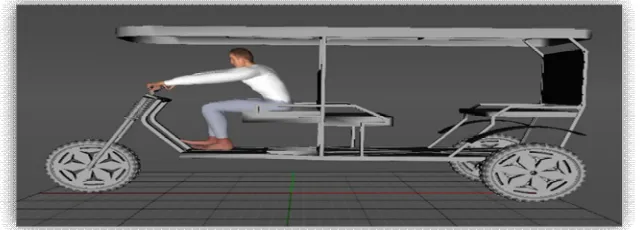
[image:5.612.180.435.321.441.2]Therefore RULA was chosen because it is best suited for seated tasks. Thus RULA was used to evaluate the ergonomic risk associated with the working postures of E-rickshaw drivers. There were two main different postures attained by the erickshaw drivers. E-rickshaw drivers attain two different postures; one is the foot on the surface of the surface and second foot on the brake pedal as shown in figure 2.
Figure 2: E-Rickshaw Driving Posture
There was no use of backrest and the space provided for the driver is very small. This restricts the movements of the driver; a driver cannot make his legs movement properly when pressing the brake pedal.
[image:5.612.147.469.579.694.2]For the analysis purpose, a 3D model of the e-rickshaw is designed in Solidworks. All the parts of the e-rickshaw are designed in Solidworks separately and then the assembly of these parts was done in catia. The dimensions of these parts are taken from the standard dimensions of e-rickshaw. The 3D model of e-rickshaw designed in the catia is shown in figure 2. As shown in the figure the seats are straight, padded benches and straight backrests for the driver and passengers. For the analysis, a manikin was inserted in the 3D model. This manikin is taken from the standard anthropometry data of the Indian population. The analysis is done for the 95 percentile of the total Indian population.
1422
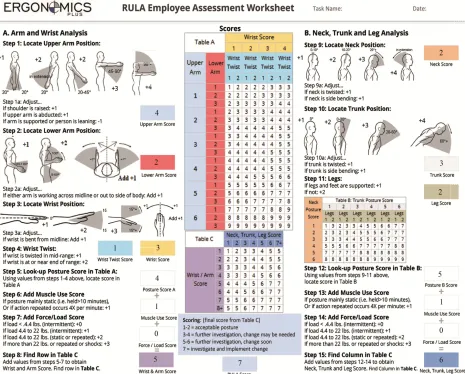
©IJRASET: All Rights are ReservedFigure 3 clearly shows that the backrest is not utilized properly by the driver. Hence there is room for improvement in the coordination between seats, backrest, pedals, and controls. The analysis for this model is done from both right sides and as well as from the left side of the driver. The results of the analysis are shown in figure 4. The final score of the analysis for the e-rickshaw standard model is 7, which means changes should be implemented immediately in the design. There is different score given to every part of the body and a final score is computed from these scores as shown in figure 5. For this standard model of e-rickshaw a score of 7 comes after doing the analysis which means there is a high risk of musculoskeletal disorders in this task.
Figure 4: Rula Score Of Driver Before Modification
The analysis results are shown in above figures and it is clear from the score in figure 4. that the condition of the job is very poor. The analysis score is 7 which means there is a high risk of developing musculoskeletal disorders and should be changed immediately. To minimize the ergonomic risk associated with e-rickshaw drivers a new model of seat is proposed.
V. RESULTS AND DISCUSSION:
The RULA scores are computed for different postures attained by the e-rickshaw driver while applying brakes and when foot on the surface . The scores for standard have been shown in figure 4. The RULA score for each position comes out to be 7 which propose that the ergonomic state of the job is poor and needed modifications should be done as soon as possible. Therefore needed modifications should be done in a small pan of time.
The possibility for enhancements in the present design can be approached from following two directions:
1) Modification in the design of the driver’s seat.
[image:6.612.74.539.159.533.2]A. Design Of The E-Rickshaw Driver Seat
The initial score was coming out to be 7 which mean there is high risk and changes may be needed. Thus to reduce the score a new model is proposed. The dimensions of the model are shown in figure 8.
[image:7.612.93.498.134.224.2]Figure 7: Proposed seat model using Indian Anthropametric data upto 95 percentile.
Figure 8 :The assembly of the e-rickshaw with the proposed seat
The assembly of the e-rickshaw with the proposed seat shown in the figure 3.3 with a human manikin representing 95 percentile of the total Indian population. The analysis was done for both positions of the driver i.e. foot on brake pedal and foot on the surface of e-rickshaw.
[image:7.612.201.405.264.381.2]1424
©IJRASET: All Rights are ReservedB. Design Of Driver Cabin
The space provided for the e-rickshaw driver is very small and restricts the movements of the driver to a small space. Thus restrict the movements of the driver’s legs. This can lead to various musculoskeletal disorders and other injuries. This can lead to various musculoskeletal disorders like back pain, neck pain, Leg pain and trunk pain etc. In order to decrease the chances of musculoskeletal disorders, there is need of proper modification in the design of cabin space.
The modification has been suggested to increase the space of the cabin. The driver’s cabin length has been increased by165mm in a forward direction. By increasing the length of the cabin the space of driver’s cabin is increases and he can easily change his posture.
Figure: Rula Score Of Driver After Modification
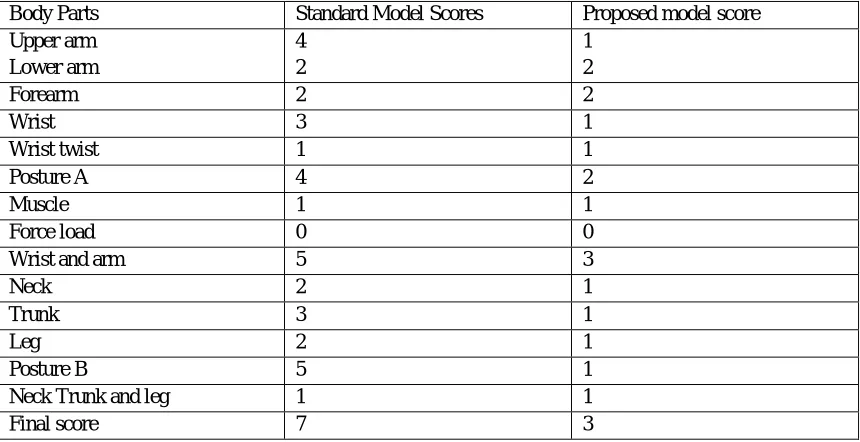
Table 9.1: Comparison of Standard E-Rickshaw with New Proposed Model of E- Ricksha
Body Parts Standard Model Scores Proposed model score
Upper arm Lower arm
4 2
1 2
Forearm 2 2
Wrist 3 1
Wrist twist 1 1
Posture A 4 2
Muscle 1 1
Force load 0 0
Wrist and arm 5 3
Neck 2 1
Trunk 3 1
Leg 2 1
Posture B 5 1
Neck Trunk and leg 1 1
Final score 7 3
It is clearly shown in table 9.1 that analysis score is reduced from 7 to 3 which mean the chances of a musculoskeletal disorder is reduced. These suggested changes reduced the score of RULA analysis relatively as there is the significant decrease in the ergonomic risk involved in this proposed job.
The RULA score for the new proposed model was reduced considerably as compared to the standard model of erickshaw. Comparisons of the standard model with newly proposed models were shown in table the RULA score was reduced considerably at upper arm, forearm wrist, neck and trunk for a new proposed model.
The RULA score for the new proposed model has been reduced from 7 to 3 which shows that there is low risk now as compared to very high risk earlier. The RULA analysis score has been clearly shown that the score at different parts of body reduced considerably.
VI. CONCLUSIONS
Prior to proposing the improvements in the design of e-rickshaw, a thorough study of the working postures of the drivers has been carried out using ergonomic assessment technique RULA. The final score of this method indicates that the e-rickshaw drivers have a high risk of developing musculoskeletal disorders and hence the working position should be modified instantly. In the current study, an attempt has been made to lower the ergonomic risks by proposing modifications in the design of the driver seat and cabin length. new seat model was proposed and the RULA analysis was done. Drastic changes have been made in the dimensions of the driver’s seat by considering anthropometrics of the 95th percentile of the total Indian male population. These changes will allow the driver to attain a comfortable and convenient position while driving. Secondly, some modifications have been made in the dimensions of the cabin which allow the driver to adjust his posture easily and also allow the driver to move his legs easily while driving. The advantages of the said modifications were clearly reflected in the scores that have been remarkably reduced. Hence there is a great scope for carrying out future research work in this field.
A. Recommendations
It is recommended to use the anthropometric measurements of all categories and to develop a single design that is economical, ergonomically fit, structurally stable and equipped with all safety standards and it is an appeal to the Government to establish regulatory framework and manufacturing policies and set a committee of Research and Development in this area to avoid accidents and to safeguard the lives of the common man.
1426
©IJRASET: All Rights are ReservedCharts And Graphs Between Standard Model And New Proposed Model
5 4.4 3 2.8
0 2 4 6
W
RI
ST
…
Ca
te
gor
…
W
RI
ST
…
Ca
te
gor
…
RU
LA
S
CO
RE
COMPARISION
BETWEEN STANDARD
MODEL AND
PROPOSED MODEL
RULA SCORE DECREASING 4 4.4
1
2.
8
RU
LA
S
CO
RE
C O MPA RI S IO N B E T W E E N S TA N D A RD MO D E L A N D
1428
©IJRASET: All Rights are ReservedSTANDA
RD
MODEL
OF E-…
Categor
y 2
PROPOS
ED
MODEL
OF E-…
Categor
y 4
DECREASING
SCORE MEANS
LESS HARM
7
4.4
3
2.8
7
4.4
3
2.8
0
2
4
6
8
F
IN
A
L
R
U
L
A
S
C
O
R
E
REFERENCES
[1] R. S Bridger, 2003, “Introduction to ergonomics”, Taylor and Francis, New York.
[2] Agarwal P. K et al. 2015,”Ergonomic risk assessment and postural analysis of Indian auto-rickshaw drivers using RULA and REBA”, proceedings at musculoskeletal disorders confrence.
[3] Ganesh S. Jadhav et al. October 2014,”Ergonomics evaluation tools RULA and REBA analysis”, proceeding at The national confrence on industrial engineering and technology management, NITIE, Mumbai.
[4] N. A Ansari and Dr M. J sheikh, Jul-Aug 2014,” Evaluation of work posture by RULA and REBA : case study, Journal of civil and mechanical engineering (IOSR-JCME), vol 11, pp. 18-23.
[5] Shashank singh,2014,”A study of the battery operated e-rickshaw in the state of Delhi”, Researching reality summer internship, working paper 323.
[6] Lynn McAtamney and E Nigel Corlett,” RULA: A survey method for the investigation of work related upper limb disorders”, proceedings on applied ergonomics, 1993,24(2), pp. 91-99.
[7] ERGONOMIC ANALYSIS OF ELECTRIC AUTO RICKSHAW USING CATIA (Research Paper) MANISH KUMAR & BHUPINDER SINGH Department of Automobile Engineering, Chandigarh University, Mohali, IndiaReceived: Mar 16, 2018; Accepted: Apr 06, 2018; Published: Apr 28, 2018; Paper Id.: IJMPERDJUN201824 SCOPUS Indexed Journal
[8] A Step-by-Step Guide Rapid Upper Limb Assessment (RULA) Ergonomics Plus Inc. | www.ergo-plus.com About the Author -- Mark Middlesworth, MS, ATC/L, CEES
[9] Asian Workshop on 3D Body Scanning Technologies,Tokyo Japan,17-18 April 2012 Automotive Research association of India. [10] 8th Conference and Expo 2015-Urban Mobility India
[11] HCTL Open International Journal of Technology Innovations and Research (IJTIR) http://ijtir.hctl.org Volume 15, May 2015 e-ISSN: 2321-1814, ISBN (Print): 978-1-62951-974-