Learning nursing through simulation:
towards an expansive model of learning
Elizabeth Anne Berragan
A thesis submitted in partial fulfilment of the
requirements of the University of the West of England,
Bristol for the degree of Professional Doctorate in
Education
Faculty of Arts, Creative Industries and Education,
University of the West of England, Bristol.
TABLE OF CONTENTS
Page
Acknowledgements i
Abstract ii
List of Tables and Figures iv
List of Abbreviations v
Chapter 1: Introduction to the Thesis
The context of the study 1
Simulation and nurse education 2
Research questions 4
The value of narrative case study research 5
Organisation of the thesis 7
SECTION 1. THE LITERATURE
Chapter 2: The evolution of Pre-Registration Nurse Education
Professional nursing and nurse education 10
Graduate nursing 15
Competence and competency: controversy and confusion 16 Strategies to address concerns of competence and fitness
to practice 17
Simulation in nurse education 19
Observed Structured Clinical Examination (OSCE) 22
Learning through simulation 23
Defining and describing simulation for learning 25 The importance of reality, fidelity and authenticity for learning 27
Summary 30
Chapter 3: Conceptualising learning through simulation
Conceptualising professional learning 32
The Carnegie Foundation studies of professional education 34
Pedagogies of formation 36
Pedagogies of interpretation 37
Pedagogies of contextualisation 39
Pedagogies of performance 40
Conceptualising learning in the workplace 42
Activity theory and expansive learning 43
Summary 48
SECTION 2. THE RESEARCH APPROACH AND DESIGN Chapter 4: Methodology
Deciding on the research approach: ‘My Journey’ 51
In search of possibilities 53
Case study methodology 55
Narrative Case Study 59
Limitations of case study 60
Exploring simulation: assessment and learning 61
Data Collection: using interviews 62
Data Analysis: writing and reading narratives 65
Ethical considerations 66
Informed consent 69
Ethical dilemmas 69
Chapter 5: Setting the scene for the case stories: context and methods
Simulation: the institutional context 72
The first year adult nursing OSCE programme 74
Selecting the research participants 78
Collecting data: the interviews 84
Collecting data: using reflective logs and accounts and video
Recordings 88
Analysing the data 90
Presenting narratives of learning through simulation 93
SECTION 3. THE NARRATIVES
Chapter 6: The nurse educators’ and nurse mentors’ narratives
The nurse educators
Helen: simulation as an indicator for learning
and engagement 96
Elaine: simulation as a supportive learning
environment 100
John: simulation as a means of learning for
professional nursing practice 103
Summary 107
The nurse mentors
Val: simulation as a means of identifying
good nurses 108
Gillian: simulation as a means of
developing confidence for good students
and supporting weaker students 111
Kay: simulation as a means of building
Pat: simulation as a means of preparing for the challenges of bearing witness
to human events 119
Summary 124
Chapter 7: The students’ narratives
Successfully becoming nurses
Sally: simulation as a means of building skills for
confident nursing practice 127
Tania: simulation as a means of perfecting skills for
confident nursing practice 130
Mary: simulation as a means of rehearsing skills for
confident nursing practice 134
Struggling or working hard to become nurses
Caroline: simulation as a means of developing confidence
through learning and assessment 137
Nisha: simulation as a means of identifying weaknesses through assessment and developing confidence through
learning 142
Annie: simulation as a means of recognising and
embracing the challenges of learning to be a nurse 146
Clare: simulation as a means of supporting and
encouraging learning through assessment 149
Not becoming nurses
Lynne: simulation as a means of identifying concerns
and challenging confidence 153
Ray: simulation as a means of understanding learning
and challenging reliance upon previous experience 157
Summary 161
SECTION 4. THEORETICAL DISCUSSION
Chapter 8: Simulation: an expansive approach for professional and personal learning in nursing
Simulation and expansive learning for the formation of
nursing identity 171
Simulation and expansive learning for the
interpretation and contextualisation of patient care 173
Simulation and expansive learning for the development
of a competent nursing performance 175
Expansive learning cycles 177
Expansive and restrictive learning environments 179
Struggling and not becoming a nurse:
exploring the barriers and restrictions to simulation learning. 180
Summary 184
Chapter 9: Learning nursing through simulation: towards an expansive model of learning
Outcomes and achievements 185
Implications for nurse education 189
Implications for nursing practice 194
Implications for nursing research 199
Conclusion 200
References 203
List of Appendices
Appendix 1 Participant Information Sheet 244
Appendix 2 Consent Form 247
Appendix 3 Ethical Approval 248
Appendix 4 OSCE Criteria - examples for pulse, 253 respirations and blood pressure and
Acknowledgements
Many writers and researchers finish their acknowledgements by mentioning their spouse and family. I begin mine with heartfelt thanks to Nigel for his constant love, encouragement and understanding; to Andy and Izzy for thoughtfulness beyond their years and allowing me the space and time to study; and to my parents for their support, love and expert proof-reading skills.
I owe a debt of gratitude to my supervisors, and especially to Ann-Marie whose challenges helped me to discover the story that needed to be told, and who helped me to embark upon the process of theorising.
I am also extremely grateful to colleagues who offered support and guidance during my research endeavours.
Abstract
This thesis explores the impact of simulation upon learning for undergraduate nursing students. A brief history of the evolution of pre-registration nurse education and the development of simulation for nursing provide background and context to the study.
The conceptual frameworks used for this study draw upon the work of Benner and Sutphen (2007) and Engeström (1994). Benner and Sutphen’s work highlights the complex nature of situated knowledge in practice disciplines such as nursing. They suggest that knowledge must be constantly integrated within the curriculum through pedagogies of interpretation, formation, contextualisation and performance. These pedagogies present a framework, which enhances the understanding of the impact of simulation upon student learning. Engeström’s work on activity theory, recognises the links between learning and the environment of work and highlights the possibilities for learning to inspire change, innovation and the creation of new ideas. His notion of expansive learning offers nurse education a way of reconceptualising the learning that occurs during simulation. Together these frameworks present an opportunity for nurse education to articulate and theorise the learning inherent in simulation activities.
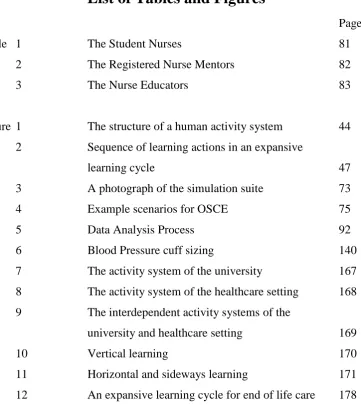
List of Tables and Figures
Page
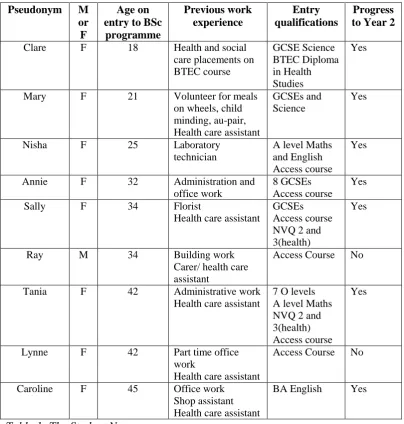
Table 1 The Student Nurses 81
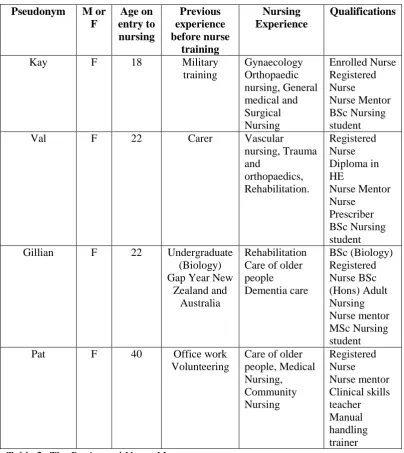
2 The Registered Nurse Mentors 82
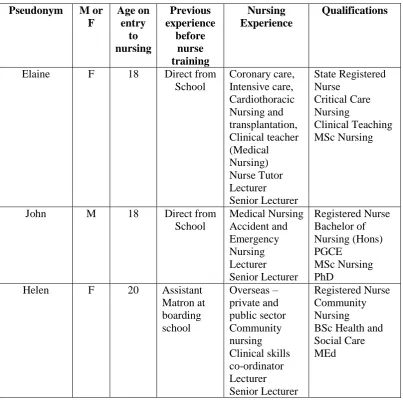
3 The Nurse Educators 83
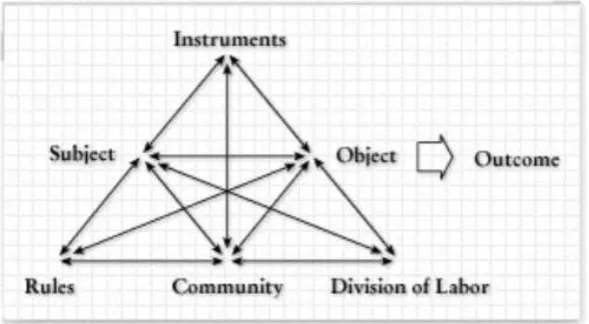
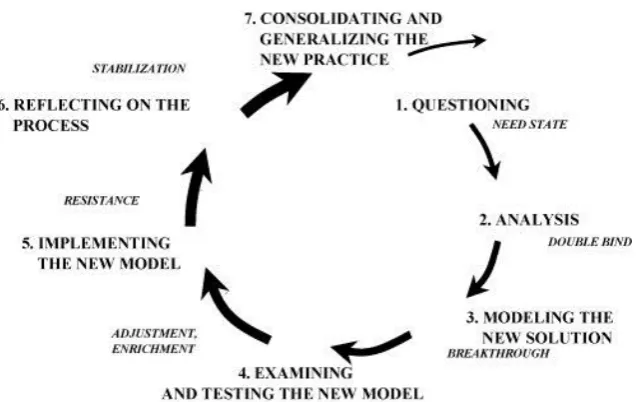
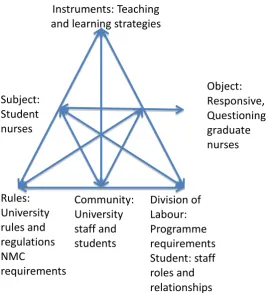
Figure 1 The structure of a human activity system 44 2 Sequence of learning actions in an expansive
learning cycle 47
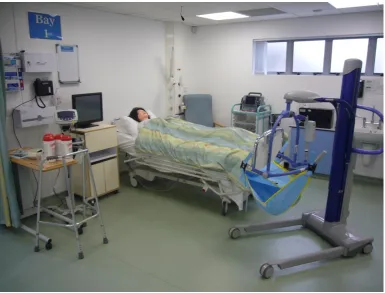
3 A photograph of the simulation suite 73
4 Example scenarios for OSCE 75
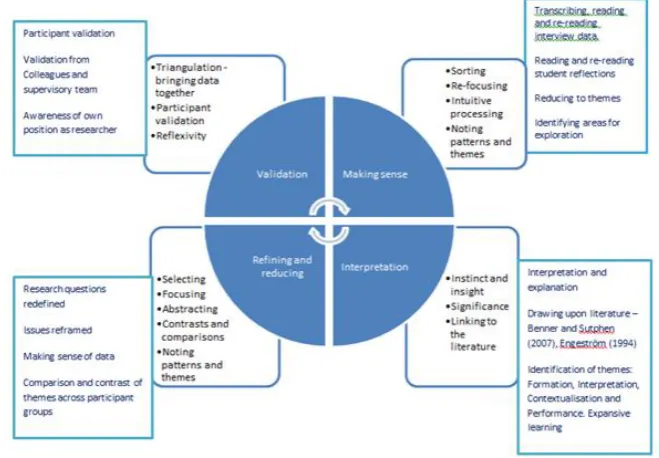
5 Data Analysis Process 92
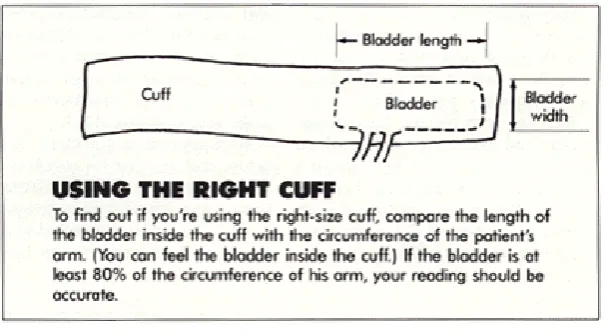
6 Blood Pressure cuff sizing 140
7 The activity system of the university 167
8 The activity system of the healthcare setting 168 9 The interdependent activity systems of the
university and healthcare setting 169
10 Vertical learning 170
11 Horizontal and sideways learning 171
[image:9.595.149.511.125.538.2]List of Abbreviations
ACRM Anaesthesia Crisis Resource Management
BA Bachelor of Arts
BSc Bachelor of Science
BTEC Business and Technology Education Council
DH Department of Health
EN Enrolled Nurse
GCSE General Certificate of Secondary Education
GNC General Nursing Council
HE Higher Education
HEI Higher Education Institution
MaD Making a Difference
MEd Master of Education
MSc Master of Science
NHS National Health Service
NHS REC National Health Service Research Ethics Committee
NMC Nursing and Midwifery Council
NVQ National Vocational Qualification
OSCE Observed Structured Clinical Examination PGCE Post Graduate Certificate in Education
PhD Doctor of Philosophy
RAF Royal Air Force
RCN Royal College of Nursing
RN Registered Nurse
Introduction to the thesis
This study explores the impact of simulation upon learning for undergraduate nursing students. Conducted as a small-scale narrative case study, it tells the unique stories of a small number of undergraduate nursing students, nurse mentors and nurse educators and their experiences of learning through simulation. The students were enrolled on the RN BSc (Hons) Adult Nursing programme at a university in England. The nurse mentors supported the students in practice in a local NHS Hospital Trust. The nurse educators facilitated clinical simulation sessions at university.
The context of the study
required. This, she stated, had occurred as a result of the simulation sessions which had promoted her understanding of nursing practice.
Sometime later, whilst facilitating simulation sessions for nursing students preparing for a practical examination, I felt that they were in agreement with Emily. The simulation sessions appeared to contribute to their confidence and competence in performing the skills of nursing and understanding the implications of their actions. Having been introduced to the work of Patricia Benner (1984) during the early part of my nursing career, I believed that simulation experiences played an important part in the progression of these students from novice nurses to advanced beginners.
This thesis has given me the opportunity to interrogate my assumption that simulation is good; to look closely at what it can and cannot do, highlighting the challenges as well as the benefits. It has enabled me to consider simulation as a means of learning for undergraduate nursing students, gathering data from students, nurse mentors and nurse educators.
Simulation and nurse education
Simulation for nurse education has been defined as the provision of facsimiles of healthcare settings, which contain hospital artefacts to provide students with mock experiences through which to practice clinical nursing activities (Wellard et al., 2007). Barnstable (1997) suggests that it is ‘a method whereby an artificial or hypothetical experience is created that engages the learner in an activity that reflects real life conditions but without the risk-taking consequences of an actual situation’ (p.270). Simulation is a teaching and learning strategy that complements learning in real life situations with real patients. It helps to prepare students and health care professionals for their roles and offers opportunities for conceptual knowledge and skill development.
reproduction of the human patient, was developed for medical students to learn to interpret heart and lung sounds. This built on the work of Asmund Laerdal who developed the ‘Resusci-Anne’ a simulator which revolutionised resuscitation training (Bradley, 2006). Sim One combined computer technology with basic human models (Abrahamson et al., 1969) offering a more sophisticated, accurate and realistic approach to simulation learning (Seropian et al., 2004). Despite the technological advances in simulator design, simulation learning takes many forms and spans a spectrum of sophistication from simple reproduction of body parts through to complex human interactions portrayed by high fidelity simulators (Bradley, 2006). Simulation represents clinical practice through a variety of delivery methods including role-play, case studies, computer software packages, interactive manikins and actors (Moule et al., 2008).
Whilst the concept of simulation is not new, there has been an increase in its use in nurse education both nationally and internationally (Jeffries, 2007; Kaakinen and Arwood, 2009; Warland, 2011; Lasater, 2012). The Nursing and Midwifery Council (NMC), the United Kingdom’s professional body responsible for professional registration and establishing and maintaining standards, have identified standards for the safe use of simulation and its inclusion as a contributory part to practice learning (NMC, 2007a). The development of these standards was influenced, in part, by the perceived variations in the levels of competence of undergraduate nurses upon registration.
Wilford and Doyle, 2006). A further viewpoint in relation to the increased use of simulation in health care education is the need to reduce the growth in clinical negligence claims. This is an international issue and one which continues to cause concern (Henrikson et al., 2008; World Alliance for Patient Safety, 2009). Simulation, according to Warland (2011), offers an approach that enables health care practitioners to practise and develop their skills in managing complex clinical problems in a low risk learning environment, thus decreasing risk for patients.
These factors and others, which are discussed in later chapters, have encouraged nurse educators worldwide to become more innovative in nurse education delivery and the preparation of nursing students for clinical work. Simulation has become an established pedagogy for teaching the fundamental skills of nursing, providing the learner with opportunity to acquire essential skills in an environment closely representing reality (Linder and Pulsipher, 2008). Many research papers highlight the potential for simulation to address the needs and challenges that continue to concern nurse education. Nurse educators sense that simulation is a powerful student learning strategy but there is little published research which objectively demonstrates this (Prion, 2008). The absence of an evidence base may locate simulation in the periphery and it may stagnate without commitment to the development of robust research (Bradley, 2006). More research into simulation and related teaching and learning practices needs to occur if nurse education is to take advantage of the simulation experience (Harder, 2009). My research offers a perspective on simulation and learning. It explores the impact of simulation upon learning for undergraduate nursing students and recognises its limitations.
Research questions
research and the questions that I am seeking to address. The general area of my study is simulation in nursing. The specific focus of the study is learning through simulation for first year undergraduate nursing students. The study seeks to address the following questions:
What is simulation and how has it evolved and developed in nurse
education?
What is the experience of participating in simulation education like for
the student nurse?
What do nursing students learn from simulation?
What do nurse mentors and nurse educators believe that students should
learn from simulation?
What are the implications of learning through simulation for nurse
education, nursing practice and nursing research?
The research presented in this thesis provides valuable evidence in answer to these questions. It presents narratives from a small number of undergraduate nursing students, nurse mentors and nurse educators and highlights their experiences of learning through simulation.
The value of narrative case study research
My research was conducted as a small-scale case study of an undergraduate adult nursing programme that used simulation. Before describing the structure and organisation of my thesis, I want to briefly explain why I chose to carry out the research in this way, and to answer some important questions about case study research in relation to its approach, relevance and generalizability.
make it extremely difficult to understand the experience of simulation and how it impacts upon student learning. The complexities and idiosyncrasies of the simulation experience disappear in graphs and tables demonstrating trends, comparisons and statistical significance. These quantitative results show what tends to happen on the surface rather than what deeper learning may or may not occur as a result of simulation.
Narrative case study research offers a number of advantages, which balance its small scale against the depth of knowledge it can generate (Simons, 2009). In this research, rich data with many dimensions is provided, reflecting the different perspectives on simulation at an experiential level that may often be hidden from view. It offers an holistic understanding of students’, nurse mentors’ and nurse educators’ experiences and views of simulation in the context of their professional (and sometimes personal) lives and situations. Individual narratives also allow readers to experience something of the impact of simulation on learning, enabling connections to be made with personal experiences and conclusions to be drawn, perhaps in contrast to those offered here (Kushner, 2009). It is when these narratives are contextualised and integrated into a theoretical framework, that they become transferable to other instances and offer new perspectives for theoretical understanding (Flyvbjerg, 2006).
Structure and content of my thesis
This thesis is organized into four sections. It is conventional in its structure and written in a logical order, which perhaps belies the non-linear experience that was my research journey. Discussion of my research choices and my ontological, epistemological and axiological positions in later chapters illuminate my realizations and my challenges.
Section 1 consists of two chapters which explore the literature and consider the background and context of simulation for nurse education. In Chapter 2, I present a brief history and evolution of pre-registration nurse education in the United Kingdom focusing upon changes in nurse education from the 1970s to the present day. I consider the move towards graduate only recruitment and highlight the debate regarding competence in pre-registration nurse preparation. Chapter 2 identifies the strategies used within nurse education to address concerns about competence, access to quality placements and the changing health care needs of the population. This provides context and background to the study and enables readers to position simulation within nurse education and consider its potential for learning. Chapter 2 also explores the concept of simulation for learning in relation to reality, fidelity and authenticity.
and offers a different understanding of the learning that takes place as students learn to be nurses.
Section 2 examines my research approach and design, and offers explanation of what I did, how I did it and the rationale for my research choices. Chapter 4 focuses upon methodology and explores my ontological, epistemological and methodological positions, and explains how they led to the research methods that I used. This chapter then progresses to consider the challenges of interviewing and dealing with the research data generated. The thought-provoking subject of how best to represent people’s thoughts and experiences is followed by a discussion of important ethical considerations and the dilemmas that I encountered. Chapter 5 presents the institutional context for the students who participated in the study and gives an account of simulation and OSCE in the first year of the adult nursing programme. This description of simulation provides a more detailed look at its operation and augments discussion of the wider context presented in Chapter 2. The chapter continues by focusing upon the research participants, examining how they were selected for the study and considers how my choice of case study accommodated issues of ‘generalizability’. Discussion and elucidation of data collection methods is followed by explanation in relation to how the narratives of learning through simulation are presented in section 3.
Chapter 7 presents simulation experiences from the students’ perspectives. Their narratives reveal that they approached simulation learning in different ways resulting in a range of outcomes: students who were successfully becoming nurses, those who were struggling or working hard to become nurses and those who were not becoming nurses.
Chapter 2: The evolution of pre-registration nurse
education
This chapter examines the evolution of nurse education in the United Kingdom focusing upon changes in nurse education from the 1970s to the present day, the move towards graduate only recruitment and competence in pre-registration nurse preparation. It highlights the strategies used within nurse education to address concerns about competence, access to quality placements and the changing health care needs of the population. This will provide context and background to the study and enable readers to position simulation within nurse education and begin to determine its potential for student nurse learning.
Professional nursing and nurse education
Nurse education in the 1970s and 1980s was delivered, mainly, in schools of nursing which were situated either in or close to National Health Service (NHS) hospitals. The co-location of schools of nursing and hospitals emphasized the apprentice style approach to nurse training and can trace its roots to the Nightingale reforms (Nightingale, [1859] 1980). This apprentice style approach provided ‘on the job’ training in which student nurses learned their nursing skills as part of the hospital nursing workforce caring for patients. Nursing students were employed by the hospital where they were training. There were some University based degree programmes at this time, but even these generally adhered to the national expectations on nurse training. The General Nursing Council (GNC) oversaw these requirements. Most nursing students undertook state final examinations for the part of the register for which they were undertaking training. Apart from a category of experimental programmes such as some of the degree courses, these examinations were universal and undertaken by all nurses on the same day.
A series of projects and working papers were commissioned and resulted in the eventual recommendations for Project 2000 (UKCC, 1986). Amongst the many recommendations, it was suggested that the number and organisation of nursing and midwifery schools should be reduced and linked with establishments of further and higher education (Department of Health Nursing Division, 1989). Subsequently, there was a period of transition where the old and the new curriculum were run in parallel: the old training type curriculum, with its focus on clinical skills and nursing care of patients mainly in hospitals, and the new curriculum with its focus upon biological sciences, sociological aspects of health and a more rounded view of patient care which included community nursing (Hart, 2004).
Project 2000 was planned and developed to change the philosophy of nurse education from an apprenticeship approach to an education-led approach, leading to a knowledgeable and clinically competent nurse ‘a knowledgeable doer’ (UKCC, 1986). A common foundation programme of 18 months was introduced, which aspired to give all nurses a common introduction to the basic sciences, such as biology, psychology and sociology, as well as nursing care, and to the specific skills required to undertake specialist study for their branch of nursing. This was then followed by an 18-month branch programme. The culmination of these two distinct parts of the nursing programme was to register in a particular area of nursing such as adult nursing, learning disability, children’s or mental health nursing. Practical nursing skills and experience in caring for patients were achieved within clinical placement areas and during classroom skills sessions. The main difference from the previous training programme was that students were now considered to have supernumerary status and were not counted as part of the permanent nursing workforce. They received an educational bursary for their studies and were no longer salaried with the exception of a small number of students who were enrolled on hospital cadet schemes. In each clinical placement, students were to be allocated a mentor, a registered nurse who would support and facilitate their learning in practice.
preparation and would thus be prepared for the demands of nursing in the next century. However, despite the changes implemented through the Project 2000 curriculum, there was significant concern from NHS management and nursing staff that this curriculum was not preparing students to work effectively as registered nurses (DH, 1999). Reduction in time spent in the clinical areas (Farrand et al., 2006) and changes to placement allocations were highlighted as key areas of concern. This perceived reduction on the emphasis of clinical skills and resulting reduction in competence, initially evolved from research which suggested that the classroom setting was not as good as the clinical placement for teaching clinical skills (McAdams et al., 1989; Gomez and Gomez, 1987). Some have argued that such claims were unsubstantiated and that there was no objective evidence that Project 2000 students were any less competent than students who undertook earlier curricula (Lauder et al., 2008). Thus, the teaching of clinical skills was, in the main, left to experience with mentors during nursing practice placements. This resulted in great variation of skills practice and competence between different placements and thus between students.
The late 1990s saw further significant changes in the NHS, many as a result of the publication of the proposals for Making a Difference – Strengthening the Nursing,
Midwifery and Health Visiting Contribution to Health and Healthcare (DH,
1999). The Peach Commission Report (UKCC, 1999) was also published at this time. The Peach report recommendations included:
Recruitment and selection should be a joint responsibility between health care providers and Higher Education Institutions (HEIs).
Practice placements should achieve agreed outcomes, which benefit student learning and provide experience of the full 24 hours per day and 7 days per week nature of health care.
Students, assessors and mentors should know what is expected of them through specified outcomes and competencies which form part of a formal learning contract, give direction to clinical placements and are jointly negotiated between the health care providers and HEI’s.
There should be a period of supervised clinical practice of at least three months towards the end of the pre-registration programme.
Research evaluations of the Project 2000 curricula such as those by Macleod Clarke et al., (1996) and Fulbrook et al., (2000) supported the recommendations of the Peach Commission Report (UKCC, 1999) particularly in relation to clinical skills and competencies. There was a strong influence in bringing nurse education back to a closer relationship with the NHS and its workforce. Consequently, a number of pilot sites were commissioned to implement many of the recommendations of the Peach Commission Report (UKCC, 1999), which were then formally evaluated (Scholes et al., 2004). This pilot site endeavour was called ‘Making a difference’ (MaD) and became compulsory for English
Following the reconfiguration of the UKCC to the Nursing and Midwifery Council (NMC) in 2002, it became the NMC’s responsibility to ensure that the standards for practice were central to the nursing curriculum and to manage the professional register for nurses and midwives. The role of the Quality Assurance Agency for higher education also became relevant with its focus on ensuring benchmarking of outcomes.
The NMC oversees all aspects of nurse education in England but devolves certain functions to bodies in the other UK countries (Watson et al., 2004). The requirements of the NMC regarding the practice content in any programme are wide-ranging and as such, interpreted in different ways across the UK. Universities have some autonomy in designing programmes according to these guidelines and the similarly broad QAA benchmarks. ‘Fitness to practice’, the term used by the NMC to describe pre-registration nursing education requirements for registration, is a guiding concept rather than prescriptive as established in the earlier General Nursing Council requirements, which required specific nursing skills to be achieved by all students, prior to becoming a registered nurse.
In 2006, the Governments in all four UK countries set the policy blueprint for registered nurses. Modernising Nursing Careers (DH, 2006) was one of the most radical and important initiatives in recent years. It outlined the priorities for nursing in four key areas focusing upon a competent and flexible workforce, preparation of nurses to lead a changed healthcare system, updated career pathways and modernising the image of nursing and midwifery careers.
and the academic level of education programmes are all under continuous and widespread scrutiny.
Graduate Nursing
In 2008, the NMC ratified proposals to make nursing an all-graduate profession by 2013 (NMC, 2008a). This means that in line with the other UK countries (and many countries throughout the world), the minimum academic award for pre-registration nursing programmes in England will be a degree. This is a move that has been championed by a number of organisations. The Royal College of Nursing (RCN) (2002) argued that the complexity of nursing requires a level of knowledge and cognitive skills that correspond to degree level education. They also referred to the issue of equivalence between professions whereby non-graduate nurses have less influence with their non-graduate professional colleagues during clinical negotiation and collaboration. As nursing becomes a global profession and nurses opt for international mobility, they need to be prepared for work in a global world (Thorne, 2006). This is consistent with the aim of
Modernising Nursing Careers (DH, 2006) in terms of preparing a competent, flexible workforce. The transferability of the nursing qualification offers graduate nurses the benefit of greater opportunities for work in countries where registration is at graduate level.
discussed later in this chapter, the use of simulation has been seen as one way of achieving this, offering students the opportunity to explore and learn the complexities of competent nursing practice in a safe and controlled environment. It is with competence in mind that I move to explore the extent to which educational programmes in the UK prepare future nurses to achieve the aspirations of the modernisation agenda.
Competence and competency: controversy and confusion
The literature on competency and the assessment of competence in nursing is vast. Accordingly, definitions of nursing competence are numerous but often lack consensus instead offering ambiguity, contradiction and confusion (Bradshaw, 2000; Watson et al., 2002; Cowan et al., 2005). The literature also demonstrates that there is confusion between terms where competence, competency, capability
holistic conception of competence which recognises that ‘nursing practice requires the application of complex combinations of knowledge, performance, skills, values and attitudes’ (Cowan et al., 2005, p.361). In light of this, it is interesting to note that the NMC have changed their definition of competence from a description of the skills required for safe practice (NMC, 2002) to a more detailed definition. The current definition describes competence as an holistic concept and the combination of skills, knowledge and attitudes, values and technical abilities that underpin safe and effective nursing practice (NMC, 2010).
In terms of the preparation of the next generations of nurses, therefore, the situation is extremely complex. Nurse education has a number of issues to address in relation to degree qualification and competence. The mandatory standards (NMC, 2010) to be implemented by 2013, and introduced at a time when entry to the profession becomes degree-only throughout the UK, include requirements for students in all field of nursing (adult, mental health, learning disabilities and children’s nursing) to be educated in caring for people of all ages and also for those with cognitive impairment and learning disabilities. The change is in response to an ageing population, increased prevalence of long-term conditions and the shift in emphasis to care provision outside acute hospitals. In addition, preparation for curriculum changes and continuing concerns over access to quality placement opportunities will mean that health care and education providers must work together to ensure that students are equipped with the skills, knowledge and values that they need to ensure the best possible patient care.
Strategies to address concerns of competence and fitness to
practice
engagement with simulation to contextualise clinical practice learning (McCallum, 2007).
Research undertaken to evaluate this method of skills acquisition found that the use of skills laboratories and simulation offered good opportunities for learning in a safe environment (Nicol and Freeth, 1998; du Boulay and Medway, 1999; Scott, 2001). However, it was noted that it should be included as a complementary approach to learning and should not replace clinical experience in placement (Gomez and Gomez, 1987; McAdams et al., 1989; Jeffries et al., 2002; Morgan, 2006). The laboratory environment was seen to provide a controlled setting in which students could familiarize themselves with the skills of nursing. Clinical skills laboratories and simulation of practice became an important component of nurse education. In 2006, the NMC recognised that this was a key feature of learning for many universities and piloted the Simulation and Practice Learning
Project (NMC, 2007a) across 17 universities and higher education institutions in
the UK. The aim of the project was to find out if a period of practice in a simulated environment for pre-registration nursing students could support the development of the care skills, knowledge and values needed for safe and effective practice. This project followed feedback gathered from the initial phase of the Review of Fitness for Practice at the Point of Registration (NMC, 2004a), which strongly supported the use of simulation and skills rehearsal (Moore, 2005).
The use of simulation has developed as nurse education has evolved. As a strategy to address concerns about clinical competence and as a means of enabling students to develop the skills of nursing, it has many supporters. It is therefore important to look at the evolution and development of simulation within nursing in more detail in order to position it within nurse education and to determine its significance for learning.
Simulation in Nurse Education
Changes in society and developments and revisions to nurse education have altered the way that nursing students learn to care for their patients competently. Simulation experiences are a feature of many nursing curriculum worldwide as educators strive to enable students to develop the complex skills of nursing, and in doing so, begin to integrate theoretical knowledge into practice.
Simulation, a technique that has been used in fields such as aviation and defence since the 1930s (Scherer et al., 2003), is now being used in a variety of ways in nursing education. Simulation takes many different forms and as a consequence there is no universally accepted definition.
In relation to undergraduate nurse education, simulation is described as a representation of a health care setting which may contain clinical equipment and offer an environment where students can practise clinical nursing activities (Wellard et al., 2007). The NMC describe simulation as a teaching approach, which will enable students to practise the required competencies for their programme of study, consolidation of these competencies being achieved in the placement setting (NMC, 2007b). Simulation is being used by universities across the world to enable student nurses to engage with clinically based scenarios, and to relate evidence to clinical decisions, informing clinical competence and confidence in a safe learning environment (Wilson et al., 2005; Moule et al., 2006; McCaughey and Traynor, 2010).
simulation has its origins in the second half of the 20th century. Three distinct movements can be identified which have spurred the development of clinical simulation. Lærdal, a Norwegian publisher and toy manufacturer, working with anaesthetists, developed the Resusci-Anne, the part-task trainer that was to revolutionise resuscitation training through the widespread availability of a low-cost, effective training model (Tjomsland and Baskett, 2002).
The second movement is typically associated with modern simulation and concerns the development of simulators dedicated to the reproduction of aspects of the human patient. The earliest of these was the Sim One, developed by Abrahamson and Denson in the late 1960s (Abrahamson et al., 1969). However, the Sim One failed to achieve acceptance, despite promising early reports of its effectiveness in training. This was largely because the need for anything other than apprenticeship-based training had not yet been defined and, secondly, because the cost of the technology at the time did not permit more than one example to be produced.
Following these early attempts, American researchers focused significant attention on the development of team-based working in realistic simulation environments and incorporated the aviation model of crew resource management into the anaesthesia crisis resource management (ACRM) curriculum, leading to significant developments in simulators for clinical training (Gaba et al., 2001). These simulators and some European counterparts (from Holland, Denmark and the UK) form or have formed the basis for today’s modern moderate to fidelity simulator. They have been at the forefront of the development of high-fidelity simulation. Led by the anaesthetic community, these manikins have been central to the understanding and development of simulation-based learning and training.
Recent advances have made more affordable technologies available. These technologies permit the reproduction of clinical events with sufficient fidelity to enable learners to engage in a realistic and meaningful way. At the same time, reforms in undergraduate and postgraduate health and social care education, combined with political and societal pressures, have promoted a safety-conscious culture where simulation provides a means of risk-free learning in complex, critical or rare situations (Gaba et al., 2001). Furthermore, team-based and inter-professional approaches to learning and health care are believed to be promoted through the simulated learning environment.
Studies evaluating simulation based on students’ perceptions are overwhelmingly positive (Hogg et al., 2006; Johnson et al., 1999; Weller, 2004; Ker et al., 2003; Mole and McLafferty, 2004; Robertson, 2006). Most studies are relatively small yet in a study by Ker et al. (2003), 151 students evaluated a simulation exercise as a powerful learning experience. However, McFetrich (2006) highlighted that most evaluations used observation or self-report satisfaction questionnaires and more evidence of the educational and clinical value of simulators is needed. Several studies have compared simulation with other teaching methods. Simulation was found to be more effective than traditional teaching methods (Yoo and Yoo, 2003; Alinier et al., 2006) and problem-based learning (Steadman et al., 2006). Empirical data reveals that students value simulation as a teaching and learning approach. Studies by Rystedt and Lindstrom (2001), Alinier et al. (2004), Mole and McLaffery (2004) and Schoening (2006) reveal that students who were exposed to this approach found that their learning needs were met and they experienced an increase in confidence and competence. Simulated activities are also considered to have improved safety (Hogg et al., 2006).
theory and practice, but tutors were unsure about how students’ skills centre performance reflected their placement ability. Statements about safety as a benefit of skills laboratory learning were not strongly supported (Freeth and Fry, 2005). Morgan (2006), in a phenomenological study of six first year nursing students’ experiences, identified that skills laboratories provided a controlled environment which helped students link theory to practice and where procedures were taught correctly.
Simulation and Objective Structured Clinical Examination
(OSCE)
As previously stated in the discussion on strategies used to address concerns of competence and fitness to practice, the OSCE offered a mechanism through which simulated clinical nursing could be assessed. The OSCE was found to be a rigorous way of identifying students strengths and weaknesses in clinical nursing practice and was incorporated into the pre-registration nursing curriculum by some universities in order to address some of the difficulties outlined above.
situations such as OSCEs are intrinsically aligned and authentic and should also promote student engagement and the achievement of desired learning outcomes.
Indeed, it is this combination of benefits that have led some to regard the OSCE as the ‘gold standard’ of health professional assessment (Bartfay et al., 2004). However, all such claims need to be carefully appraised before such conclusions are drawn. Furthermore, there are some important disadvantages that are also recognised within the literature. The most frequently cited disadvantage is student stress (McKnight et al., 1987; Bujack et al., 1991a; Stroud et al., 1999; Bartfay et al., 2004). Personal experience endorses this observation. Students clearly find the process enormously stressful; stress which could in turn adversely affect performance. However, studies attest to students valuing the process despite the stress involved (Bujack et al., 1991b; Stroud et al., 1999). Furthermore, both Bujack et al. (1991b) and Bartfay et al. (2004) argue that performing in stressful situations increases the validity of OSCE, in its congruence with the stressful ‘real world’ of clinical nursing practice. Another limitation however, is that of the complex orchestration of simulation, including faculty time, costs, and staffing (Bartfay et al., 2004).
The OSCE is integral to the simulated clinical learning environment. Currently it is used as a means to assess students’ learning outcomes. However, it also has great potential as an aid to learning, directing attention to areas of significance and acting as an incentive for learning (Boud and Falchikov, 2007). In my study of the impact of simulation upon undergraduate student learning, I hope to begin to shed light upon simulation and OSCE and their roles as incentives for learning.
Learning nursing through simulation
There is a predisposition of the nurse education literature towards teaching, as authors are encouraged to market their work for journals, which focus upon teaching and where educational issues are ‘institutionally framed’ (Keen, 2007). Given this disposition, there is the temptation here to explore the teaching paradigm, to discover the influence of different teaching approaches and styles during simulation and their impact upon student learning. Whilst this would provide interesting data in terms of student learning, and a fascinating perspective upon the influence of the facilitator(s) during simulation, this is not the purpose of this study. The focus of this study is to explore features of the learning paradigm in order to determine the impact of simulation upon learning for undergraduate nursing students.
Defining and describing simulation for learning
A recent concept analysis of simulation as a learning strategy in the education of undergraduate nursing students resulted in the following definition:
A dynamic process involving the creation of a hypothetical
opportunity that incorporates an authentic representation of
reality, facilitates active student engagement and integrates the
complexities of practical and theoretical learning with opportunity
for repetition, feedback, evaluation and reflection.
(Bland et al., 2011 p.668)
Bland et al. (2011) highlight the pace at which research into simulation in nursing is evolving and identify a range of antecedents, attributes and consequences as a basis to stimulate further discussion, development and understanding in the field. A number of these features are discussed in this chapter.
Simulation has become an established pedagogy for teaching clinical nursing skills (Berragan, 2011), offering students the opportunity to learn fundamental nursing skills in a safe environment, which closely represents reality (Linder and Pulsipher, 2008). Jeffries (2005) describes it as an active learning strategy where the learner is central to the activity, and the role of the educator is to facilitate learning and encourage students to demonstrate self-motivation and direction. Fiengold et al. (2004) and Lambton (2008) accept the active nature of learning which is offered through simulation. They highlight further opportunities presented by this approach in terms of alternative and complementary responses to the challenge of securing consistent learning opportunities in clinical practice, and the adoption of simulation as an attractive alternative strategy in many universities.
According to Jeffries (2005) simulation is used to facilitate ‘connections between and among concepts and engage students in the learning process’ (p. 99). Leigh (2008) takes this further suggesting that simulation offers a safe learning environment for the translation of classroom knowledge. This notion of translating knowledge is captured by Robinson (2009) who states that the best theoretical or practical approaches to achieving learning outcomes in nursing, depend upon elements such as subject matter, learning style preferences, and multiple other instructor and learner variables. It is this notion of translating theory into practice, and thus enabling students to learn nursing which appears to unite authors in their descriptions of simulation. Macedonia et al., (2003) defend the role of simulation, celebrating its potential for learning how to make sound decisions in unpredictable health care situations that are time-sensitive and require critical thinking and advanced skills.
Simulation is said to require a controlled learning environment where students can take part in activities that reflect the realities of a real and unpredictable nursing environment (Jeffries, 2005). In this environment, according to Wilson et al., (2005), students are supported as they learn the skills of nursing assessment, react to changes in their patient’s health and prioritize each patient’s care needs without exposing real patients to risk (Moule et al., 2006). In comparison to the intensity and pace of the clinical learning environment, learning through simulation takes place at a measured pace in order to meet individual learning needs (Reilly and Spratt, 2007), where activity can be halted in order to explore knowledge and understanding, where feedback can be given and tacit knowledge articulated (Eraut, 2000).
learning to practice (Kneebone, 2003; Hogg et al., 2006; Haigh, 2007; Murray et al., 2008). Prion (2008) highlights the difficulty in obtaining evidence of learning having taken place during simulation, given that such evidence would require the demonstration or observation of change in a learner’s behaviour. Critics of simulation also emphasize the potential for simulation learning to be ‘intimidating’ and even ‘fearsome’ for some learners (Lasater, 2007; Lundberg, 2008), thus inhibiting their ability to learn in this environment. Clearly, if the aim of simulation is to enable students to learn in an environment that authentically mimics the clinical nursing environment, then the essential elements of that environment must be realistic. Consequently, the reality, fidelity and authenticity of simulation learning demand consideration.
The importance of reality, fidelity and authenticity for learning
The literature employs a number of terms to discuss the realism of the simulation experience (Maran and Glavin, 2003; Jeffries and Rizzolo, 2006). The term ‘fidelity’ is often used. However, lack of consistency in the use of the term has led to much confusion (Baxter et al., 2011). Fidelity, simply stated, is the extent to which the appearance and behaviour of the simulation match the simulated system (Farmer et al., 1999). Miller (1953) was the first to make the important distinction between engineering fidelity and psychological fidelity. Engineering, or physical fidelity is the degree to which the training device or environment replicates the physical characteristics of the real task. Increasing the engineering fidelity of the simulator inevitably leads to increases in cost and, beyond certain levels, increasing the fidelity of the training device will produce only small improvements in performance over a simpler device. Psychological fidelity relates to how realistic the participants find the simulation and, subsequently, how they respond.
reality and online simulations in which the term ‘authenticity’ has a greater emphasis and use as researchers strive to programme and develop authentic health care environments in which students can learn (Nelson and Blenkin, 2007; Cant and Cooper, 2010).
According to Reilly and Spratt (2007) in order to be effective, simulation must reflect reality. The aim of simulation is to provide the student with necessary cues in order to suspend disbelief as they become immersed in a realistic clinical situation requiring decision making, problem solving and critical thinking (Reilly and Spratt, 2007). Learning occurs when strategies are used that enable conceptual knowledge to develop contextually in settings reflecting reality (Herrington and Herrington, 2006). According to Harder (2009) well-constructed simulation can provide the contextual environment required to facilitate learning. For simulation to be effective it has to be planned to translate knowledge through action in an authentic context; this is a consistent theme in the literature highlighting the requirement to ensure that simulation authentically represents and imitates real life.
Authentic simulation is said to offer a learner-centred approach to developing knowledge and understanding for nursing (Jeffries, 2007). Studies have revealed that students state that they prefer simulation in comparison to other approaches, suggesting that it enables them to participate and engage in their own learning (Cioffi, 2001; Prion, 2007). Positive attributes such as participation and engagement are often linked to the design of the simulation activity. A well structured and delivered simulation is believed to provide opportunities for increased clinical knowledge, enhanced skill performance and development of critical thinking abilities (Prion, 2008). Harder (2009) suggests that simulations grounded in relevant theory may provide a deeper and richer learning experience.
have continued to develop and build simulation skills centres and skills laboratories that depict actual ward areas (Knight and Mowforth, 1998; Alinier, 2003; Reilly and Spratt, 2007). Simulators have been developed to look more realistic and respond to interventions with more and more realism or fidelity (Maran and Glavin, 2003; McCaughey and Traynor, 2010). The degree to which the simulation depicts the real environment and equipment, within which the student is required to perform is important (O’Neill, 2002). This can play an essential part in making the transition to the real setting as smooth as possible, in order to reduce the reality shock of entering clinical practice (Du Boulay and Medway, 1999). It is when this is not followed that students may be blinded to the benefits of the simulation (Ross, 1988; McAdams et al., 1989). In Mole and McLafferty’s (2004) study, 123 students evaluated simulated acute ward management. Realism of simulation was often questioned and some students considered that the simulated ward lacked realism. In a study by Page and Meerabeau (1996), nurses stated that simulated resuscitation could not mimic the pressures and risks of real situations. With technological advances, increasingly sophisticated simulators are becoming available. These intermediate and high fidelity patient simulators have been evaluated positively, based on students’ perceptions (Bremner et al., 2006; Childs and Sepples, 2006; Schoening et al., 2006; Feingold et al., 2004; Lasater, 2007a). The focus on a realistic patient scenario facilitates the inclusion of clinical and communication skills. This, according to Freeth and Nicol (1998) enables the student to view the patient holistically rather than as an individual problem; therefore a variety of skills may be used together in the context of addressing the patient’s needs. Neary (1994) refers to the adrenaline gap which affects psychological fidelity, since the students are aware that they are not nursing real patients and, therefore, do not feel the same pressure burdens. In contrast, Davis (2005) disagrees with this and actually reports students crying if the patient (simulator) dies. With current technological advances, simulators are reflecting engineering and psychological fidelity far more than the manikins of twenty years ago and moving towards providing a ‘realistic’ educational experience.
capacity. That said, authenticity and fidelity are not conceptually equivalent. Fidelity is important when seeking to replicate the appearance and behaviour of a real situation (Kinney and Henderson, 2008; McCaughey and Traynor, 2010). However, authenticity can be achieved through low fidelity simulation. Whilst authentic representation of clinical practice is important for success in simulation as a learning pedagogy, the level of fidelity required to construct authenticity is less clear (McCaughey and Traynor, 2010).
Summary
A critical view of this literature may suppose that simulation is simply a different teaching strategy and, as some commentators have suggested, an approach to bridge the delivery of theory and practice (Weller, 2004; McCallum, 2007). However, the literature presents compelling reasons for attention to be given to simulation design in relation to the learning opportunities that a good and realistic design may offer. These include consolidation of learning (Hogg et al., 2006), development of competence (Kardong-Edgren et al., 2008), development of confidence (Lundberg, 2008), opportunities for instant feedback (Brigden and Dangerfield, 2008), self–evaluation (Prion, 2008) and the development of critical thinking, clinical reasoning and clinical judgement skills (Lasater, 2007a; Linder and Pulsipher, 2008).
In 1987, Christine Tanner questioned the usefulness of clinical simulations. She asked whether the judgements made were representative of the process, which would be demonstrated in clinical practice. More contemporary evidence suggests that the effectiveness of manikin based simulations for measuring physicians clinical competence remains inconclusive (Tsai et al., 2003). Similarly nurse researchers call for exploration to determine whether the knowledge and skills acquired through simulation are developed and transferred as competence and proficiency in clinical practice (Murray et al., 2008; Harder, 2009; Levitt-Jones, 2012). Although written tests and OSCEs are available during simulated exercises, the perceived abilities and confidence of participants are of no value if higher-level problem solving, decision-making and psychomotor skills are not evident through replication in clinical practice.
Chapter 3: Conceptualising learning through simulation
This study explores the narratives of students’, nurse mentors’ and nurse educators’ experiences and views of simulation in the context of their professional lives and situations. It is when these narratives are contextualised and integrated into conceptual frameworks, that they become transferable to other instances and offer different perspectives to theoretical understanding. In order to progress such understanding this study draws upon two conceptual approaches: Firstly the work of Patricia Benner and Molly Sutphen (2007) that highlights the complex nature of situated knowledge in practice disciplines such as nursing. They emphasize that, in order to facilitate student learning such knowledge cannot be simply divided into categories of cognitive, psychomotor and affective skills (Bloom, 1968b), but must be integrated within the curriculum through pedagogies of interpretation, formation, contextualisation and performance. The first part of this chapter explores the work of Benner and Sutphen who present these pedagogies as a framework, which may enhance the understanding of the impact of simulation upon student learning. The second part of the chapter, and second conceptual approach focuses upon the work of Yrjö Engeström (1994) and his theory of expansive learning which builds upon the ideas from the Russian school of cultural-historical activity theory. His work argues that learning for contemporary workplaces needs to recognise ‘learning as criticism of the given, as well as innovation and creation of new ideas, artefacts and forms of practice’ (Engeström, 1994, p.1). For nurse education this may offer a means of articulating and theorising the learning that occurs during simulation.
Conceptualizing professional learning
In 1984, Patricia Benner published her book, From Novice to Expert: excellence
and power in clinical nursing practice. Benner envisioned that her research and
acquisition and provides a context not only for skill development for nursing but also provides a framework for becoming a nurse.
Benner (1984) bases her model on the idea that theoretical knowledge informs practice:
Providing nursing care involves risks for both nurse and patient, and skilled nursing requires well-planned educational programs. Experience-based skill acquisition is safer and quicker when it rests upon a sound educational base.
(Benner, 1984, p.xix)
Through practice experiences, nursing students apply, adapt, and intertwine theoretical knowledge with practical knowledge to ‘create a process of skill acquisition and development’ (Dillon, 2002, p. 49). Benner (1984), adapting the work of Dreyfus and Dreyfus (1980), distinguishes among five levels of competence: novice, advanced beginner, competent, proficient and expert. Differentiation among the levels is determined by the nurses’ focus of attention, involvement in the situation, and perception of responsibility or accountability (Benner, 1984; Benner et al., 1992; Dillon, 2002).
experiences reflect the appropriate sequence of developing nursing knowledge. Their work is valuable in its endeavour to theoretically ground the development and use of simulations in nursing education.
In more recent work, Patricia Benner and Molly Sutphen (a colleague of Benner and research scholar at the Carnegie Foundation) argue that an interpretative form of rationality is needed to address suffering and human concerns in the world and enable students to learn nursing (Benner and Sutphen, 2007). They contend that the pedagogies of interpretation, formation, contextualisation and performance, used in clergy education, offer a valuable approach for learning nursing. Drawing upon work by Foster et al. (2005) in relation to the education of clergy, Benner and Sutphen (2007) suggest that these pedagogies offer a more interpretative, historical and contextual approach to learning nursing.
The Carnegie Foundation studies of professional education
and action in particular situations (Foster et al., 2005). This resonates with my vision of nursing and the need for student nurses to learn to be self-aware professional practitioners able to contextualise a particular nursing situation and act with integrity and advocacy for their patients.
All of the Carnegie Foundation studies draw upon three high-level ‘apprenticeships’, knowledge, skill and ethical conduct, which they suggest are required for all professional practice. Through these ‘apprenticeships’ Shulman (in Benner et al., 2010) suggests that novices are introduced to the meaning of an integrated practice incorporating all of the dimensions of the profession. It is important to highlight that ‘apprenticeship’ in this context is not used as reference to the historical apprenticeship models of learning adopted by nursing and other professions, where learners were employed to work alongside skilled practitioners as they learned their profession. In the Carnegie studies, apprenticeship is used as a metaphor for the complex embodied, cognitive, skilful, ethical and experiential learning required in practice disciplines (Benner and Sutphen, 2007). The notion of apprenticeship is useful in professional education. Learning a complex practice, in which knowledge is situated and socially embedded, demands practical reasoning, skilled know-how, perceptual acuity, relational and communication skills, and ethical conduct according to Benner et al., (1996). Such an integrated practice is learned in formal programmes and also through experiential practice learning (Lave and Wenger, 1991). Benner and Sutphen’s (2007) use of apprenticeship points to the complex nature of situated knowledge in practice disciplines which cannot be segmented into categories of cognitive, psychomotor and affective skills (Bloom, 1968a). In nursing, according to Benner and Sutphen (2007) knowledge, skill and ethical conduct must be integrated into all teaching and learning situations and can be more fully understood through the pedagogies of interpretation, formation, contextualisation and performance. The work of Benner and Sutphen (2007) offers a conceptual framework for this study; it also has profound implications for nursing in its potential to address theory and practice simultaneously.
undergraduate nursing students. Benner and Sutphen (2007) treat the different pedagogies of education as if they were basically separate, or at least best explored and understood in distinction from each other. For this chapter I have done the same.
Pedagogies of formation
Formation highlights the sets of skills and practices, which form identity, character and perception, and draw attention to ways of being in the world. This ‘professional formation’ assumes that skills and practices as well as attitudes, values and beliefs constitute new possibilities for engaging with different events and situations. Benner and Sutphen (2007) discuss formation in relation to professional socialization thereby suggesting that students are socialized into ‘a coherent and fairly homogenous social status, role performance and set of class values’ (p.106). They go on to highlight the importance of the beliefs, values and attitudes, which are central to the development of professional identity. In addition to these, nursing students also develop a less conscious and deliberate ‘habitus’ of practice (Bourdieu, 1990) that includes an increasing set of skills, expectations and recognition from other nurses, members of the health care team and patients. Habitus, in this context, relates to the learned dispositions, skills and ways of acting and being that are often taken for granted, which are acquired through the activities and experiences of everyday life (Bourdieu, 1990).
knowledge of professional practice. Learning the skills of a practice include learning new perceptual acuities. The student can learn to use these new insights in order to notice and interpret specific events and signs which were previously unfamiliar and not recognised before their education. Similarly, as student nurses begin to learn, they are provided with opportunities to develop new perspectives upon practice which establish new ways of responding, relating and performing in particular nursing situations.
The transformation from novice student nurse to advanced beginner (Benner, 1984) requires clinical nursing experiences that change the student’s capacity to act in complex situations, as well as character skill formation that enables student nurses to begin to respond and relate to vulnerable patients. Students are required to learn skills of perception and action and form what Merleau-Ponty (1969) called a style of comportment in which they learn to adjust to the dynamics and possibilities of a particular situation. The actions and responsibilities of being a nurse form a habitus (Bourdieu, 1990) of skills, expectations, perceptual acuity and nursing actions, which, over time, create the foundation for skilled, embodied nursing practice (Merleau-Ponty, 1969).
Simulation may present an opportunity for student nurses to begin to learn and develop a nursing habitus, enabling students to rehearse the ‘skilled know-how’ required for competent nursing practice. The opportunity to experience and act in complex clinical situations through simulation may enable the student to begin to use the skills and practices of nursing. It may also facilitate the development of an understanding of a clinical situation requiring specific actions whilst fostering the growth of professional identity.
Pedagogies of interpretation
Interpretation occurs as biblical and historical contexts, different theologies, biases and injustices are examined. Interpretation requires critical thinking and deconstruction in order to challenge ‘the taken for granted assumptions’ inherent