IMPLEMENTING A DEPRESSION SCREENING PROTOCOL IN A PRIMARY CARE PRACTICE
Alison Marie Stroh
A Doctorate of Nursing Practice Project submitted to the faculty at the University of North Carolina at Chapel Hill in partial fulfillment of the requirements for the degree of Doctorate of
Nursing Practice in the School of Nursing.
Chapel Hill 2020
Approved by:
Victoria Soltis-Jarrett Leslie Sharpe Schquthia Peacock
©2020 Alison Marie Stroh ALL RIGHTS RESERVED
ABSTRACT
Alison Marie Stroh: Implementing a Depression Screening Protocol in a Primary Care Practice (Under the direction of Victoria Soltis-Jarett)
Background: Major Depressive Disorder (MDD), a life-threatening psychiatric illness, is the most significant global cause of disability, with approximately 300 million people affected (Maurer, Raymond, & Davis, 2018). When the signs and symptoms are unrecognized or left untreated, MDD increases the risk of medical comorbidities, particularly heart disease, stroke, Alzheimer’s disease, obesity, and diabetes (Maurer, Raymond, & Davis, 2018). Untreated MDD also increased the risk of suicide by 0.5-4% compared to the general population, and completed suicides are the 10th leading cause of death in the United States (Maurer, Raymond, & Davis, 2018).
Objective: To assist a midsize patient-centered medical home (PCMH) in North Carolina to integrate and sustain a standardized screening protocol for MDD using the PHQ-9.
Methods: Develop a standardized depression screening protocol algorithm to initiate depression screening in a primary care practice. Measure rate of screening by each provider involved in the project and determine if the subsequent management of the patient with a positive screen was appropriate. Determine if provider satisfaction increased with a standardized protocol for depression screening.
Results: During this quality improvement project, 65 adults aged 18-65, were assessed for the signs and symptoms of depression using the PHQ-9. A total of 107 patients fit the inclusion
the threshold of 10 on the PHQ-9 screening tool and adherence to the implemented protocol was observed. Screening rates for patients between the ages of 18-65 attending either a new patient or yearly physical appointment, approximately 17% of the total patient population at this primary care practice, increased from 1.59% to 60.49%. All three providers that participated in the project acknowledged that their satisfaction with depression screening improved.
Conclusion: This quality improvement project has shown that implementing a depression screening protocol in a primary care setting can improve patient outcomes and improve provider satisfaction.
TABLE OF CONTENTS
LIST OF TABLES……….…vii
LIST OF FIGURES………..viii
LIST OF ABBREVIATIONS……….ix
CHAPTER 1: INTRODUCTION………1
Problem Statement………...2
Local Context………...3
Purpose Statement………3
CHAPTER 2: REVIEW OF LITERATURE………...5
History, Validity, and Reliability……….6
Recommendations for Use………...7
Barriers……….8
Consequences of Unrecognized Depression in Primary Care……….8
Summary and Application……….10
CHAPTER 3: THEORETICAL FRAMEWORK………..11
CHAPTER 4: METHODS……….13
Context………...13
Process………...14
Setting and Population………...14
Data Collection Instruments………..15
Procedures for Project Implementation……….16
Pre-intervention………..16
Intervention………17
Post-intervention………17
Key personnel/Stakeholders………...18
Ethics and Human Subjects Permissions………...19
CHAPTER 5: RESULTS………...20
CHAPTER 6: DISCUSSION……….35
Limitations……….37
Sustainability………..37
Future Study………...38
CHAPTER 7: CONCLUSIONS………39
APPENDIX A: PATIENT HEALTH QUESTIONAIRE (PHQ-9)………...40
APPENDIX B: LIPPITTS CHANGE THEORY………..41
APPENDIX C: MODEL FOR IMPROVEMENT……….42
APPENDIX D: PRE-IMPLEMENTATION SURVEY………43
APPENDIX E: PROVIDER RESOURCES………..47
APPENDIX F: DEPRESSION SCREENING PROTOCOL ALGORITHM………48
APPENDIX G: POST-IMPLEMENTATION SURVEY………..………49
APPENDIX H: UNC-CHAPEL HILL INSTITUTIONAL REVIEW BOARD (IRB)………….52
REFERNCES……….54
LIST OF TABLES
Table 1: Population demographics……….………20
Table 2: DNP project screening demographics……….21
Table 3: Fidelity of screening………23
Table 4: Pre-implementation survey……….….24
Table 5: Post-implementation survey……….……..….26
LIST OF FIGURES
Figure 1: Patient Demographics: Gender……….……….….……28
Figure 2: Patient Demographics: Race……….….…...……….29
Figure 3: Patient Demographics: Age……….………...……30
Figure 4: PDSA 1 Scores………...….….………….….31
Figure 5: PDSA 2 Scores by Provider………...………32
Figure 6: Percentage screened for provider one……….………...………33
Provider 7: Percentage screened for entire project………....………34
LIST OF ABBREVIATIONS CHD Coronary heart disease
CVD Cardiovascular disease EMR Electronic medical record FNP Family nurse practitioner
IHI Institute of healthcare improvement MDD Major depressive disorder
PCMH Patient-centered medical home PDSA Plan, do, study, act
PHQ-9 Patient health questionnaire QI Quality improvement
USPSTF U.S. Preventative services task force
CHAPTER 1: INTRODUCTION
Major Depressive Disorder (MDD), a life-threatening psychiatric illness, is the most significant global cause of disability, with approximately 300 million people affected (Maurer, Raymond, & Davis, 2018). More than 16 million American adults met the criteria for at least one episode of MDD in the last 12 months (Ferenchick, Ramanuj, & Pincus, 2019; Maurer, Raymond, & Davis, 2018). When the signs and symptoms are unrecognized or left untreated, MDD increases the risk of medical comorbidities, particularly heart disease, stroke, Alzheimer’s disease, obesity, and diabetes (Maurer, Raymond, & Davis, 2018). MDD is not only a severe public health problem; it is the most frequent psychiatric disorder reported in the adult
population, with a lifetime prevalence of 20.6% in the United States (Hasin et al., 2018). MDD accounts for approximately 210 billion dollars in healthcare spending per year, which continues to increase annually (Maurer, Raymond, & Davis, 2018).
Untreated MDD also increased the risk of suicide by 0.5-4% compared to the general population, and completed suicides are the 10th leading cause of death in the United States (Maurer, Raymond, & Davis, 2018). In 2014, suicide rates continued to rise in the United States, with over 40,000 deaths from suicide secondary to a diagnosis of depressive disorder (Smithson
& Pignone, 2017). During 2016, approximately 45,000 people died by suicide nationwide, with significant increases in suicide rates in almost every state (Stone et al., 2018). About 50% of completed suicides in adults followed a visit to a primary care physician within the last 30 days (Ferenchick, Ramanuj, & Pincus, 2019). Primary care visits are the most common type of healthcare visit before death, with 75% in the previous year and approximately 45% in the last
month (Jordan, Shedden-Mora, & Löwe, 2018).
Screening for MDD in a primary care setting is a logical, cost-effective plan of action to mitigate this public health crisis. The 9-item Patient Health Questionnaire (PHQ-9) (Appendix A) is a valid and reliable screening tool that objectifies and assesses the extent of depression severity, and has been successfully administered in primary care environments for the past 18 years (Ferenchick, Ramanuj, & Pincus, 2019; Levis, Benedetti, Thombs, & The DEPRESSD Collaboration, 2019). The PHQ-9 is self-administered, quickly scored, and has been extensively researched with consistent findings (Kroenke, Spitzer, & Williams, 2001).Screening all adults in the primary care setting for depression helps to meet the criteria for a Patient-Centered Medical Home (PCMH) and works towards achieving the Quadruple Aim of healthcare (Sandoval, Bell, Khatri, Robinson, 2018). The U.S. Preventative Services Task Force (USPSTF), The American Academy of Family Physicians, The American College of Preventative Medicine, and The Institute for Clinical Systems Improvement all recommend regular screening for depression in primary care for adults (Maurer, Raymond, & Davis, 2018; Siu & and the US Preventative Task Force (USPSTF), 2016; Trangle et al., 2016). Despite these recommendations, the rate of
screening for depressive symptoms in primary care remains less than 2% (Akincigil & Matthews, 2017).
Problem Statement
Access to screening for MDD is limited, despite healthcare policy aimed at increasing coverage and engagement with mental health care professionals. As a result, those with MDD are not obtaining the appropriate screening and management in primary care, which has led to a public health crisis (Jones et al. 2017). Research and recommendations by multiple professional organizations have identified primary care as an appropriate location for utilization of screening
for MDD; however, primary care settings face barriers to implementation.
Local Context
Similar to national trends, North Carolina’s primary care practices have also struggled with the planning and implementation of standardized screening protocols for MDD (Christian, Krall, Hulkower, & Stigleman, 2018). Although behavioral health integration is identified as a best practice, some primary care settings in NC have not been able to implement the screening tools that can increase the recognition, assessment, and management of common mental health disorders. Many clinicians have reported that behavioral health integration is expensive, difficult to sustain, and, subsequently, it is often avoided (Christian, Krall, Hulkower, & Stigleman, 2018). Primary care providers relate that they have limited knowledge and skill in the follow-up assessment and management of MDD (Waitzfelder et al., 2018). In reality, screening, evaluation, and management of MDD in primary care is a less expensive way to address this public health crisis. Standardized screening for MDD in primary care is also a gateway to achieve and maintain the distinction of a Patient-Centered Medical Home (PCMH) (Christian, Krall, &
Stigleman, 2018).
Purpose Statement
The purpose of this quality improvement (QI) project was to assist a midsize patient- centered medical home (PCMH) in North Carolina and to integrate and sustain a standardized screening protocol for MDD using the PHQ-9. Outcome measures include fidelity of the screening protocol, including the number of positive screens compared to baseline. Outcome measures also include patient outcomes, including determining if appropriate management of the patient with a positive screen was initiated. In addition to identifying the barriers to using the PHQ-9 screening tool, this project also identified the needs and concerns of the health care
providers as they navigate this process in the workflow. Data regarding improved provider satisfaction was gathered by the administration of a survey before and after implementation of the screening and management protocol. Improved provider satisfaction and improved patient outcomes are two of the four critical results of the Quadruple Aim (Sandoval, Bell, Khatri, Robinson, 2018).
CHAPTER 2: REVIEW OF LITERATURE
This review of literature focuses on articles that were published between 2015 and 2019 and also includes a hallmark study published in 2001 that depicts the development of the PHQ-9.
Databases used included PubMed, CINAHL, and PsycINFO. The search terms used were “Care, Primary Health” OR “Health Care, Primary” OR “Primary Healthcare” OR “Healthcare,
Primary” OR “Primary Care” OR “Care, Primary” OR "primary health care" OR “Physician, Primary Care” OR “Primary Care Physician” OR “Primary Care Physicians” AND "depressive disorder, major" OR "depressive disorder" OR “major depressive disorder” OR "depression" OR
“depression” AND “Patient Health Questionnaire 9” OR “PHQ-9” OR “PHQ Patient Health Questionnaire” OR “Primary Care Evaluation of Mental Disorders”. The initial search yielded 1,896 articles related to Major Depressive Disorder (MDD) and the Patient Health
Questionnaire-9 (PHQ-9) in primary care. Limiters used in this literature search include articles written in English and only focused on adult patients ages 18 to 65. After analyzing the first 1,896 articles, and removing duplicates, the compilation was narrowed down to 23 articles which focus on the use of the PHQ-9 in primary care, relevant barriers associated with the use of the PHQ-9, and recommendations for implementing the PHQ-9. This literature review will present and discuss the following subsections: (a) history, validity, and reliability of the PHQ-9; (b) recommendations for the use of the PHQ-9; (c) barriers to implementation of standardized depression screening in primary care; and (d) consequences of unrecognized or untreated depression in primary care.
History, Validity, and Reliability
The use of the PHQ-9 as a screening tool for MDD has been extensively tested and established as a valid and reliable tool (Kroenke, Spitzer, & Williams, 2001). The PHQ-9 is used for recognizing the presence and severity of symptoms of depression in primary care settings in the United States (Kroenke, Spitzer, & Williams, 2001). In 2001, a hallmark study in the United States involving 6,000 patients, determined that the PHQ-9 had both sensitivity and specificity of 88% when using a threshold of 10 or higher (Kroenke, Spitzer, & Williams, 2001). In this study, the internal reliability of the PHQ-9 in primary care was a Cronbach’s α of 0.89, and the area under the curve (AUC) of the PHQ-9 was 0.95 (Kroenke, Spitzer, & Williams, 2001). In 2016, a meta-analysis was conducted of 40 studies and found the overall sensitivity of the PHQ-9 was
“81.3% (95% CI, 71.6-89.3)” and an overall specificity of “85.3% (95% CI, 81.0-89.1)”
(Mitchell, Vadegarfar, Gill, & Stubbs, 2016). The results of these studies demonstrated that the PHQ-9 was not a diagnostic instrument but rather a screening tool to be used to identify the signs, symptoms, and severity of MDD (Mitchell, Vadegarfar, Gill, & Stubbs, 2016).
Several countries in Europe, including Spain and Latvia, and Asian countries, including Japan, have also tested the validity and reliability of the PHQ-9 in primary care. These countries, however, have more variability in the cutoff points between mild and moderate depression. Two studies in Latvia reported on the validity of the PHQ-9 in primary care using cutoff points of 8 and 10. These studies found the sensitivity of the PHQ-9 to be 75%-86.5%, specificity to be 79%-89%, and Cronbach’s α to be 0.81-0.84, respectively (Rancans, Trapencieris, Ivanovs, &
Vrublevska, 2018; Vrublevska, Trapencieris, & Rancans, 2018). In Spain, a study was conducted comparing two cutoff points of 10 and 12 and the subsequent effect on reliability. These
researchers found a sensitivity of 0.95-0.84 and specificity of 0.67-0.78, respectively (Muñoz-
Navarro et al., 2017). Studies conducted in Japan used cutoff points 10 and 11, yielding a sensitivity of 90.5%-76% and specificity of 76.6%-81%, respectively (Muramatsu et al., 2018;
Suzuki, Kumei, Ohhira, Nozu, Okumura, 2015).
The PHQ-9 has also shown to be valid and reliable when screening patients with comorbid medical diseases and illnesses such as diabetes, coronary heart disease, HIV, and hypertension. According to Trangle et al., (2016), there is research that found that the PHQ-9 is a better tool for assessing depression in patients who have other chronic conditions. A study using the PHQ-9 on patients with comorbid diabetes found that at a cutoff point of 10 or higher, Cronbach’s α was 0.87 for patients with diabetes and 0.82 for patients without diabetes (Janssen et al., 2016). Another study screened for depression in patients with comorbid coronary heart disease (CHD) using a cutoff of 10 or higher, found a “sensitivity of 84%, a specificity of 82%, and AUC of 0.88” (Van der Zwaan et al., 2016). Finally, patients with comorbid HIV and hypertension found that at a cutoff of 9, sensitivity was 51%, specificity was 94%, and the area under the curve (AUC) was 0.85 and 0.86, respectively (Bhana, Rathod, Selohilwe, Kathree, &
Petersen, 2015). Collectively, these studies demonstrate the strength of the PHQ-9 screening tool for depression alone and in conjunction with comorbid illnesses.
Recommendations for Use
The U.S. Preventative Services Task Force (USPSTF) and the American College of Physicians recommend screening for depression in primary care (Siu & and the US Preventative Task Force (USPSTF), 2016; O’Conner et al., 2016; Crowley & Kirschner, 2015). The American College of Preventative Medicine and The Institute for Clinical Systems Improvement also recommended screening for depression in primary care for adults who have not already been screened or during routine visits (Maurer, Raymond, & Davis, 2018; Trangle et al., 2016). While
these institutions recommend screening for depression in primary care, they do not outline screening intervals or the use of a particular screening tool (Maurer, Raymond, & Davis, 2018).
The use of the PHQ-9 as a screening instrument has been recommended based on a meta- analysis of 40 studies (Mitchell, Vadegarfar, Gill, & Stubbs, 2016).
Barriers
There are several barriers to primary care settings implementing the PHQ-9 cited in the literature. These barriers include lack of time to implement and score the PHQ-9, lack of
provider education and comfort using the screening tool, and patient resistance to completing the PHQ-9 (Waitzfelder et al., 2018). Willborn et al. (2016) found that the PHQ-9 guidelines for use were not clear, and despite the need for identification of depressive symptoms and severity of symptoms, they postulate that there are no known consequences for not screening for depression.
Many providers have also identified concern for using a screening tool that identifies depressive symptoms when they are unable or uncomfortable initiating and managing treatment options.
Other barriers include billing codes and reimbursement, as well as difficulty implementing or integrating screening into the current workflow (Akincigil & Matthews, 2017). In a study aimed at examining the use of the PHQ-9 for screening in patients with diabetes, patients who already carried the diagnosis of MDD were much more likely to be screened using the PHQ-9 than patients without a prior diagnosis of depression (Barnacle, Strand, Werremeyer, Maack, & Petry, 2016). These findings suggest clinicians used the tool to manage the symptoms rather than to screen for depression and severity in patients.
Consequences of Unrecognized Depression in Primary Care
There are many unfortunate consequences of unrecognized MDD in primary care. While the U.S. Preventative Services Task Force (USPSTF) decided that there was inadequate evidence
to screen specifically for suicidality in adults in a primary care setting, suicide has been linked to MDD and is included as a question on the PHQ-9 (Siu & and the US Preventative Task Force (USPSTF), 2016). Increased severity of depression, as determined by screening using the PHQ- 9, is associated with an increased risk of suicide (Ferenchick, Ramanuj, & Pincus, 2019).
Ferenchick, Ramanuj, & Pincus (2019) also found that almost 50% of those who completed suicide had a primary care visit inside the last month before their death. Unrecognized depression in the primary care setting can increase the risk of suicide, which necessitates screening with the PHQ-9, as it includes suicidal ideation.
Unrecognized and untreated MDD can also exacerbate comorbid chronic medical conditions and lead to decreased patient outcomes and increased mortality. In particular, comorbid cardiovascular disease (CVD), heart failure, and coronary heart disease (CHD) are associated with worsening outcomes secondary to unrecognized depression. Comorbid CHD, diabetes, and depression led to an increased risk of mortality and decreased quality of life (Van der Zwaan et al., 2016). A study in a Latvian primary care clinic found that patients with MDD were 2.08 times more likely to have comorbid CVD (Ivanovs, Kivite, Ziedonis, Mintale,
Vrublevska, & Rancans, 2018). In a study of 425 patients, those with depression and heart failure were 2.02 times more likely to die and 1.42 times more likely to be hospitalized for cardiac complications (Jani, Mair, Roger, Weston, Jiang, Chamberlain, 2016). Screening for MDD with the PHQ-9 in the primary care setting can improve outcomes for patients who also suffer from cardiovascular disease (Ivanovs, Kivite, Ziedonis, Mintale, Vrublevska, & Rancans, 2018; Jani, Mair, Roger, Weston, Jiang, Chamberlain, 2016).
Summary and Application
The PHQ-9 is a valid and reliable tool for the screening and severity rating of MDD in a
primary care setting (Ferenchick, Ramanuj, & Pincus, 2019; Levis, Benedetti, Thombs, &
The DEPRESSD Collaboration, 2019; Kroenke, Spitzer, & Williams, 2001). Numerous studies have shown that the PHQ-9 has high sensitivity and specificity at a threshold of 10 or greater, indicating moderate to severe depression. Although various professional associations, including the U.S. Preventative Services Task Force (USPSTF), advocate for the use of screening for depression in primary care, screening rates remain low because of the barriers presented. The benefit of using the PHQ-9 for screening for MDD in primary care far outweighs the risk.
Primary care providers should be encouraged to utilize this tool to identify patients who could take advantage of the treatment of MDD to improve patient outcomes.
This literature review demonstrates that the PHQ-9 is a valid and reliable tool that needs to be used to screen for MDD in a primary care setting to mitigate the public health crisis that the US is experiencing. Education and a standardized screening protocol based on evidence-based research can improve primary care providers' utilization of the PHQ-9 to screen for the presence and severity of MDD. Screening using the PHQ-9 would lead to early recognition, potentially swift treatment, and ongoing management of MDD in primary care.
CHAPTER 3: THEORETICAL FRAMEWORK
The implementation of a standardized screening protocol for Major Depressive Disorder (MDD) using the PHQ-9 in primary care requires a model of change that will guide the project and ensure sustainability. Lippitt’s Change Theory (Appendix B), developed in 1958 as an extension of Lewin’s Theory of Change, outlines a detailed plan for initiating change in an organization (Lippitt, Watson, & Westley, 1958). Lippitt’s Change Theory has been proven in the field of healthcare and is frequently used in nursing because it fits in parallel with the
“nursing process elements of assessment, planning, implementation, and evaluation” (Mitchell, 2013). Most change theories focus on the change implemented or the organization where the change will take place. Lippitt, however, focuses on the people who will be affected by the change and the person who will implement the change, the change agent (Wagner, 2018).
“Lippitt’s Change Theory separates into seven phases:
1. Diagnose the problem
2. Assess motivation and capacity for change 3. Assess change agent’s motivation and resources 4. Select progressive change objective
5. Choose the role of the change agent 6. Maintain change
7. Terminate the helping relationship.”
(Lippitt, Watson, & Westley, 1958; Mitchell, 2013).
This proposal, particularly the review of literature, serves as the first phase of Lippitt’s Change Theory. This proposal has identified several possible “diagnoses” or problems that may influence or impact the introduction of a screening tool for depression to primary care practices.
The problem is that barriers to screening for MDD using the PHQ-9 in primary care prevent the systematic use of a screening protocol and can harm patient outcomes. For phase two, the focus will be to assess the identified primary care practice’s level of motivation to implement screening tools such as the PHQ-9, improve patient outcomes, and continue to meet the requirements for a Patient-Centered Medical Home (PCMH). In phase three, an external change agent was
identified as the graduate student facilitating this process. As the change agent, I assisted this practice to serve their patients better by using the ample resources at my disposal for completing this project. This proposal also served as phase four of Lippitt’s Change Theory in which a detailed plan was developed to outline implementation. Phases five through seven of Lippitt’s Change Theory took place throughout the actual implementation of the project.
In combination with Lippitt’s Change Theory, this project will also use The Model for Improvement (Appendix C), which was developed by The Associates in Process Improvements and used by the Institute of Healthcare Improvement (IHI) (Silver et al., 2016). This proposal served as the answers to the first three questions of The Model for Improvement, “what are we trying to accomplish?”, “How will we know a change is an improvement?” and “what changes can we make that will result in improvement?” (Langley et al., 2009). The final phases of Lippitt’s Change Theory took place during the implementation of the project, and were guided by the Plan, Do, Study, Act (PDSA) cycles of the Model for Improvement (Langley et al., 2009).
CHAPTER 4: METHODS
This quality improvement (QI) project was designed to create a standardized depression screening protocol for adults ages 18-65 in a primary care setting using the PHQ-9. Quantitative data was collected from compliance rates to measure fidelity, which was calculated by
comparing the number of positive screens to baseline. Data regarding the management of the patient with a positive screen was also collected, as well as provider surveys used to determine if the protocol increased provider satisfaction (appendix D; appendix G). This project focused on the implementation of the PHQ-9 as a standard depression screening protocol for adult patients, ages 18-65, that were new to the practice or obtaining their yearly physical.
Context
The primary care practice in which this project was conducted reported challenges with implementing a depression screening protocol because of time constraints and lack of buy-in from staff. Before the project implementation of this depression screening protocol, the providers at this practice only used depression screening tools on patients who verbalized depressive symptoms to determine severity. The patients were given the PHQ-9 screening tool to be completed in front of the provider during that visit. On observation, the lack of a standardized depression screening protocol led to a gap in care in which patients who may be positive for depressive symptoms were not being adequately screened, assessed, and managed. Provider reports from the surveys conducted, indicated that screening for depression during the
appointment mentioned above had led to time constraints and frustration towards a consistent screening protocol. Therefore, this standardized depression screening protocol aided this primary
care practice by maximizing time and increasing the opportunity to address underlying MDD in their adult patient population.
Process
This project implemented a standardized screening protocol for depression, using the PHQ-9, to determine the presence of symptoms, and if present, the severity of MDD (Kroenke, Spitzer, & Williams, 2001). All adult patients ages 18-65, at an appointment as a new patient or obtaining a yearly physical, were screened using the PHQ-9. Patients were handed the PHQ-9 by the triage staff who took the patient to the examination room, to be filled out by the patient while waiting for the provider. The PHQ-9 was collected and scored by the provider, who also
conducted a verbal assessment to ensure the appropriate score was obtained. Once the provider had a patient that scored positively on the PHQ-9, the provider was guided to use the depression screening protocol to determine the necessary next steps in management. The outcome of positive scores was discussed between the patient and the provider, and patient-centered management choices were presented as options for the patient to consider. These options included but were not limited to a medical workup, including lab work, medications, specialty referral, or emergency transport for acute safety concerns. PHQ-9 score and management decisions were documented in the EMR by the provider as well as any follow-up interventions.
Setting and Population
This study was conducted in a private primary care practice in North Carolina, which is distinguished as a Patient-Centered Medical Home (PCMH). A PCMH delivers patient-centered care by a multidisciplinary team that is accessible and focused on improved patient outcomes (Sandoval, Bell, Khatri, & Robinson, 2018). Primary care practices within the United States have obtained the PCMH distinction as a means of meeting the goals of the IHI’s Triple Aim and,
subsequently, the IHI’s improved Quadruple Aim (Sandoval, Bell, Khatri, & Robinson, 2018).
Maintaining this designation requires primary care providers to use screening tools to assess possible underlying common mental illnesses, such as depression, in their patient population as a means to provide patient-centered care. Individuals who seek care at this practice primarily use private insurance, with a small proportion of self-pay and Medicare patients. During the time of the project, this practice did not accept Medicaid patients. This practice employs two full-time family nurse practitioners, two part-time family nurse practitioners, one family physician, and various ancillary staff members.
Data Collection Instruments
The screening tool used to implement the standardized screening protocol in this primary care practice was the PHQ-9 (Kroenke, Spitzer, & Williams, 2001). O’Byrne & Jacob (2018), found that the PHQ-9 had the most research and the best performance based on a systematic review of over 50 screening tools for depression. The PHQ-9 shows sensitivity and specificity of 88% at a threshold of 10 or higher (Mitchell, Yadegarfar, Gill & Stubbs, 2016). Data collected from the PHQ-9 screening and the EMR, included the percentage of positive and negative scores, the rate of patients screened, and the interventions used with positive scores.
Providers participated in a pre-project and post-project survey, using Likert scales and open form questions, regarding their ability to recognize symptoms and severity of MDD, comfort in further assessment, and comfort initiating treatment once MDD is recognized.
Provider satisfaction, as it relates to being able to treat those with comorbid mental illnesses such as depression, was also assessed. This survey was developed by the graduate student that
implemented the project, and data was gathered using Qualtrics.
Procedures for Project Implementation Pre-intervention.
A pre-project survey was administered to the providers who agreed to participate in this project before the implementation of the first PDSA cycle (Appendix D). With this survey, educational needs were assessed, and the graduate student provided educational sessions to providers on an as-needed basis. These educational sessions were used to address any gaps in knowledge identified in the survey. Providers were offered resources to promote the practice change process (Appendix E), which included information about various types of antidepressant medications and possible side effects to help guide providers if a medication was warranted based on PHQ-9 and patient preference (LeBlanc et al., 2016). A protocol was given to the providers to use as a guide to decision making based on scores on the PHQ-9 (Appendix F). This protocol was developed by the DNP student and the practice champion and was informed by the Institute for Clinical Systems Improvement Health Care Guideline (Trangle et al., 2016). The cutoff point of 10, which served as the point in which providers must intervene, is the evidence- based cutoff point indicative of a moderate level of depression (Levis, Benedetti, & Thombs, 2019; Kroenke, Spitzer, & Williams, 2001). Providers were instructed on this protocol to follow- up on positive scores with a verbal assessment of mood and suicidality to ensure that a diagnosis was not made solely based on PHQ-9 results (Ferenchick, Ramanuj, & Pincus, 2019). This verbal assessment was also used to ensure that any false positive scores were ruled out to avoid overtreatment and a subsequent increase in healthcare spending (Levis, Benedetti, & Thombs, 2019). The practice protocol for suicidality was discussed and included in the standardized depression screening protocol.
Intervention.
The implementation phase of this project involved two PDSA cycles intending to have providers use the PHQ-9 screening tool on every new patient or patient attending their yearly physical appointment. In the first PDSA cycle, the implementation of the PHQ-9 took place with one provider, the project champion. The provider scored each PHQ-9 questionnaire, and a verbal assessment was completed; then, based on the score, the provider and patient determined how to proceed. All scores greater than or equal to 10, which suggest a moderate to severe depression, were investigated further by the provider to determine the need for treatment. The provider then used the US Preventative Services Task Force (USPSTF) evidence-based practice guidelines to determine the necessary next steps, including the possibility of additional lab work to rule out organic causes, initiation of medication, or the need for specialty referral (Siu & and the US Preventative Task Force (USPSTF), 2016). The first PDSA cycle lasted for three weeks and was then was analyzed for one week. There were no unanticipated problems or concerns to be addressed from the first PDSA cycle to the second PDSA cycle. Several different types of data were collected, including compliance rate to determine fidelity, determination of positive versus negative scores, and interventions provided to the patients with positive scores.
The second PDSA cycle included the implementation of the PHQ-9 screening on every new patient or patient attending their yearly physical appointment, with the addition of two of the part-time FNP’s in the practice. The second PDSA cycle lasted for three weeks and then was analyzed for over two weeks.
Post-Intervention.
After the two PDSA cycles were completed, data collected from completed patient screens, provider pre-project surveys, and the EMR were analyzed, and providers were given a
PHQ-9 for the detection of MDD increased their knowledge and comfort in treating depression within primary care. This survey also included a question to determine the likelihood of
continuation and sustainability of using the PHQ-9 as a standardized screening tool for MDD (Appendix G).
Key personnel/Stakeholders
This practice consists of one family physician, two full-time family nurse practitioners, and two part-time family nurse practitioners, comprising the majority of the stakeholders involved in this project. This practice is co-owned by one of the full-time family nurse
practitioner (FNP) and project champion and the full-time family practice physician. Three of the five providers were willing to participate in this project, all of which were family nurse
practitioners. The part-time FNP that did not participate, refused to complete the pre-project survey and was not open to discussion with the graduate student. The family private physician was resistant to change and quickly approaching her retirement. The physician did not interfere with the project but also refused to complete the pre-project survey or to implement a depression screening protocol.
Evaluation (Data Analysis)
Quantitative data were derived by gathering compliance rates by collecting the number of screening tools completed, divided by the number of eligible patient visits to determine fidelity.
Data were collected before implementation of the project and at the end of each PDSA cycle and were compared. Patient outcome data were obtained by collecting the positive screening rate, or the number of positive screens divided by the number of patients screened. Patient outcome data were also obtained by collecting the number of patients who were appropriately managed using the depression screening protocol. Quantitative patient outcome data were presented with
pre-project and post-project to the providers who took part in the project, and the results were compared to assess for increased knowledge, comfort, and satisfaction of using a standardized screening protocol for depression. Graphical representations of all data were produced for visualization of project outcomes (figures 1-7).
Ethics and Human Subjects Permissions
This quality improvement project was deemed exempt on July 22, 2019, by the UNC- Chapel Hill Institutional Review Board (IRB) (Appendix H).
CHAPTER 5: RESULTS
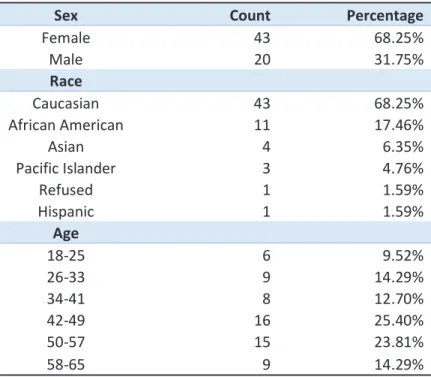
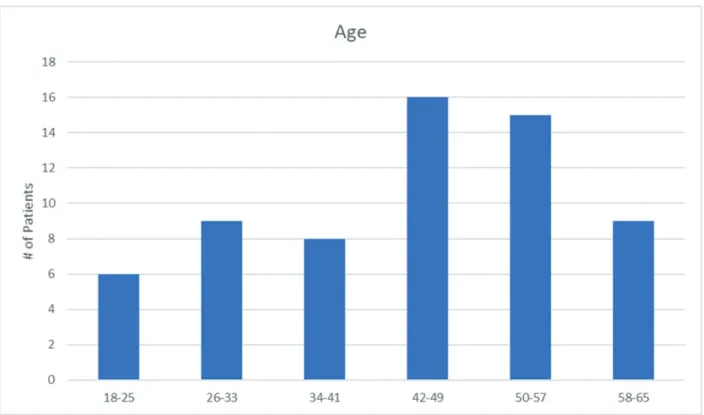
During this quality improvement project, 65 adults aged 18-65, were assessed for evidence of depression using the PHQ-9 (Kroenke, Spitzer, & Williams, 2001). A total of 107 patients fit the inclusion criteria for screening for a screening rate of 60.74%. As a result of screening, 3 patients scored at or above the threshold of 10 on the PHQ-9 screening tool, and adherence to the implemented protocol was observed. Demographic data were gathered over the three weeks before implementation and are presented in Figure 1-Figure 3. Of the demographic population, 68.25% were female, 68.25% were Caucasian, and 49.20% were between the ages of 42-57 (Table 1).
Table 1. Population demographics
Sex Count Percentage
Female 43 68.25%
Male 20 31.75%
Race
Caucasian 43 68.25%
African American 11 17.46%
Asian 4 6.35%
Pacific Islander 3 4.76%
Refused 1 1.59%
Hispanic 1 1.59%
Age
18-25 6 9.52%
26-33 9 14.29%
34-41 8 12.70%
42-49 16 25.40%
50-57 15 23.81%
58-65 9 14.29%
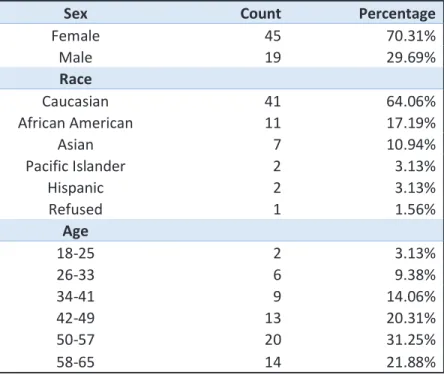
Akincigil & Matthews, (2017), reported similar findings with females representing 63.5% and Caucasian representing 71.0% of the sample population. This study, however, also found that screening rates were not consistent between sex, race, and age, and also found less participation in primary care practices which did not have an electronic health record (Akincigil & Matthews, 2017). Screening rates in this QI project did not find any variance in sex, race, or age on
screening for depression (Table 2).
Table 2. DNP project screening demographics
Sex Count Percentage
Female 45 70.31%
Male 19 29.69%
Race
Caucasian 41 64.06%
African American 11 17.19%
Asian 7 10.94%
Pacific Islander 2 3.13%
Hispanic 2 3.13%
Refused 1 1.56%
Age
18-25 2 3.13%
26-33 6 9.38%
34-41 9 14.06%
42-49 13 20.31%
50-57 20 31.25%
58-65 14 21.88%
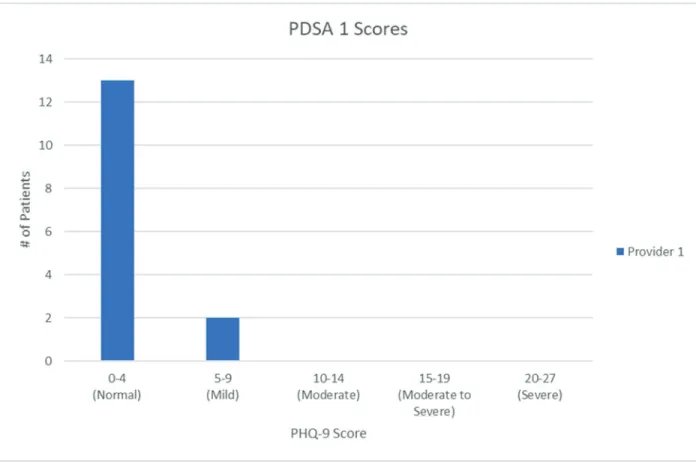
These results are widely representative of the demographics in the town in which this project was conducted. Data was gathered before the implementation of the screening protocol to determine the initial rate of screening for depression. During this time, 63 patients fit inclusion criteria, and one patient was screened at a rate of 1.59%. The first PDSA cycle involved implementation of the depression screening protocol with one provider, 26 patients fit inclusion criteria, 15 were screened, at a rate of 57.69% (Figure 4). The second PDSA cycle implemented the depression
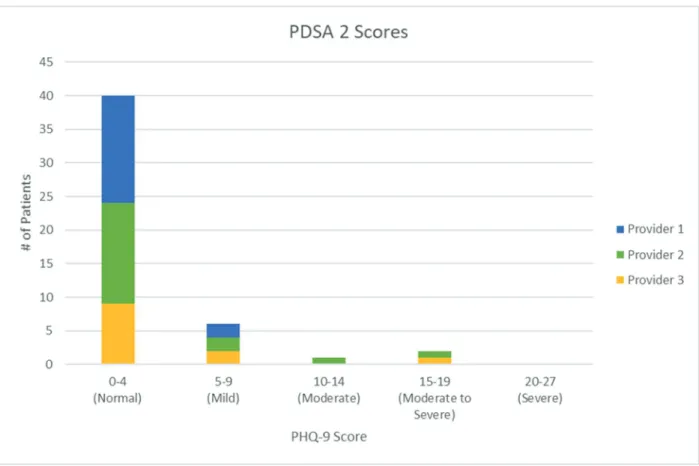
screening protocol with three providers; 81 patients fit inclusion criteria, 49 patients were screened correctly, at a rate of 60.49% (Figure 5). Provider one, which participated in both PDSA cycles, showed a consistent increase in the percentage of patients screened (Figure 6).
Screening rates for patients between the ages of 18-65 attending either a new patient or yearly physical appointment, approximately 17% of the total patient population at this primary care practice, increased from 1.59% to 60.49% (Table 3, Figure 7).
Although only 3 patients scored a positive score above 10, those patients were treated appropriately by all three providers engaged in this project. The patient who scored a 10 on the PHQ-9 screening tool was restarted on psychotropic medication and scheduled for a follow-up in two weeks. The patient who scored a 15 on the PHQ-9 screening tool was referred to a
psychiatric provider the same day and subsequently seen by that provider within one week. This patient had already been prescribed psychotropic medications and held numerous psychiatric and medical diagnoses, which necessitated referral and an increased level of psychiatric care. Finally, the patient who scored an 18 on the PHQ-9 was immediately referred for an increased level of psychiatric care. This patient had been prescribed a subtherapeutic dose of antidepressant medication, being monitored by another provider, so a referral was more appropriate than a medication change. There was also a patient who scored an 8, which was below the threshold of 10, the responses alerted the provider to possible causes of uncontrolled diabetes, and the frequency of monitoring was increased.
Table 3. Fidelity of screening
Pre-implementation First PDSA cycle Second PDSA cycle
# of screening tools completed
1 15 49
# of eligible
patient visits 63 26 81
% screened 1.59% 57.69% 60.49%
Providers were encouraged to use their clinical judgment if screening was not appropriate, and patients were to complete the PHQ-9 voluntarily and were free to decline participation.
Subsequently, some patients fit the screening criteria but were not screened; however, data on the reason for not participating was not collected. Patients with an existing diagnosis of depression were not removed from this project, which could skew data gathered (Levis, Benedetti, &
Thombs, 2019). Data related to the PHQ-9 was not collected as this project looked explicitly at improved screening rates. Although the graduate student was available to provide educational sessions to providers, this was deemed unnecessary by the providers engaged in the project.
These providers were all confident in their ability to assess for, treat, and manage or refer patients with depression and only required assistance with implementing the process into their workflow. During the project, the family physician and a part-time family nurse practitioner (FNP) chose not to participate and were subsequently excluded from each survey.
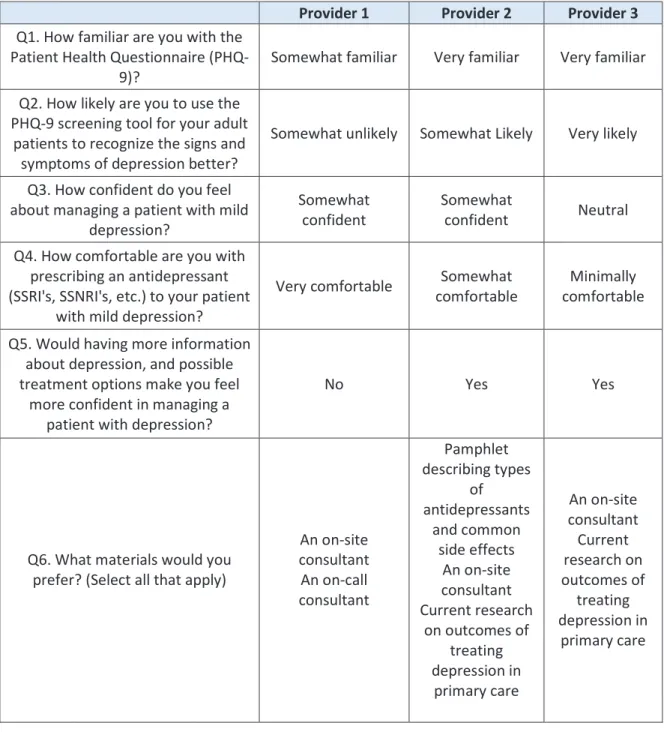
The pre-implementation survey, developed by the DNP student, involved the three providers that participated in the second PDSA cycle of this quality improvement project. This survey indicated that all three providers had at least a moderate comfort level, both in using the PHQ-9 screening tool and managing patients with depression. Two of the three providers
indicated not having the time to implement the depression screening protocol in either 15-minute or 30-minute patient visits. In free text, barriers indicated were concerns about proper
reimbursement and time constraints, both of which were highlighted within the literature review (Waitzfelder et al., 2018; Akincigil & Matthews, 2017) (Table 4).
Table 4. Pre-implementation survey
Provider 1 Provider 2 Provider 3 Q1. How familiar are you with the
Patient Health Questionnaire (PHQ- 9)?
Somewhat familiar Very familiar Very familiar
Q2. How likely are you to use the PHQ-9 screening tool for your adult
patients to recognize the signs and symptoms of depression better?
Somewhat unlikely Somewhat Likely Very likely
Q3. How confident do you feel about managing a patient with mild
depression?
Somewhat confident
Somewhat
confident Neutral Q4. How comfortable are you with
prescribing an antidepressant (SSRI's, SSNRI's, etc.) to your patient
with mild depression?
Very comfortable Somewhat comfortable
Minimally comfortable
Q5. Would having more information about depression, and possible treatment options make you feel
more confident in managing a patient with depression?
No Yes Yes
Q6. What materials would you prefer? (Select all that apply)
An on-site consultant An on-call consultant
Pamphlet describing types
of antidepressants
and common side effects
An on-site consultant Current research
on outcomes of treating depression in
primary care
An on-site consultant Current research on outcomes of
treating depression in
primary care
Provider 1 Provider 2 Provider 3 Q7. Would having a protocol
established to assist you with the management of patients with positive PHQ-9 scores make you
more comfortable?
No Unsure Yes
Q8. Do you know how to handle, based on practice protocol, a patient who is actively suicidal and
an imminent risk to themselves?
Yes Unsure Yes
Q9. I have enough time to incorporate the PHQ-9 screening in
my new patient and yearly visits (30-minute visits).
FALSE FALSE TRUE
Q10. I have enough time to incorporate the PHQ-9 screening in
follow-up visits (15-minute visits).
FALSE FALSE TRUE
Q11. What barriers do you face that impact your ability to implement
the PHQ-9?
"Time during office visit, extra concerns created to address
during office visit, coding concerns to
get proper reimbursement."
Time No response
Q12. Do you have any comments, questions, or concerns that I can
address?
No No response No response
The post-implementation survey, also developed by the DNP student, found contradicting information that indicated that all three providers had time to implement the screening protocol in their 30-minute visits. Additionally, two of the three providers stated that they felt comfortable implementing the protocol in their 15-minute appointments. In free text, two of the three
providers continued to report that time was a barrier to screening for depression; however, one of these providers indicated that it would not deter the use of future screening. All three providers acknowledge that their satisfaction with depression screening improved, and all three stated they would continue to use the depression screening protocol in practice. These results were similar to
the findings in a cluster-randomized research study, which found that patient and provider satisfaction increased with the use of a decision aid and shared decision making between patient and provider (LeBlanc et al., 2016) (Table 5).
Table 5. Post-implementation survey
Provider 1 Provider 2 Provider 3 Q1. After participating in this
quality improvement project, how likely are you to continue to use the
PHQ-9 screening tool for your adult patients to recognize the signs and
symptoms of depression?
Very Likely Somewhat likely Very likely
Q2. After participating in this project, how confident do you feel about managing a patient with mild
depression?
Very confident Very confident Neutral
Q3. After participating in this project, did having a step by step
protocol of interventions for patients who obtained a positive
score using the PHQ-9 screening tool make you feel more confident?
No Yes Yes
Q4. After participating in this project, do you still think it would be more beneficial to have an on-
site or on-call consultant?
No Yes No
Q5. Did the protocol established in this project increase your knowledge of interventions for a patient with a positive score using
the PHQ-9 screening tool?
No Unsure Yes
Q6. After participating in this project, do you feel you have enough time to incorporate the PHQ-9 screening tool in visits with
new patients and yearly physicals (30-minute appointments)?
Yes Yes Yes
Q7. After participating in this project, do you feel you have enough time to incorporate the PHQ-9 screening tool in 15-minute
Yes No Yes
Provider 1 Provider 2 Provider 3
Q8. After participating in this project, what barriers did you face
when screening for the signs and symptoms of depression using the
PHQ-9?
"A few select patient reviews of
symptoms increased and caused the office visit to get out of hand. So, I have to
proceed knowing this is a risk. But it
isinfrequent enough not to deter me from continuing to screening patients."
"time"
"None, I use this
tool frequently."
Q9. After participating in this project, does the protocol
established increase your satisfaction with screening for
depression in primary care?
Yes Yes Yes
Figure 1: Patient Demographics: Gender
Figure 2: Patient Demographics: Race
Figure 3: Patient Demographics: Age
Figure 4: PDSA 1 Scores
Figure 5: PDSA 2 Scores by Provider
Figure 6: Percentage screened for provider one
Figure 7: Percentage screened for the entire project
CHAPTER 6: DISCUSSION
This quality improvement project was aimed at implementing a depression screening protocol to assist healthcare providers with the identification of the signs and symptoms of depression in primary care patients. The aims of this project included improving patient outcomes with appropriate screening and interventions for positive PHQ-9 scores, enhanced screening rates to meet criteria for patient-centered medical home (PCMH), and improving provider satisfaction by creating a process that easily fits into the normal flow of patient care.
The screening rate for depression using the PHQ-9 dramatically increased, and the protocol developed was used appropriately for every positive score above the predetermined cut off point of 10 or higher. Also, all three family nurse practitioners (FNP) reported increased satisfaction with depression screening using the implemented protocol and planned to continue its use after the project completed.
The screening and handling of depression are arduous in the primary care setting.
Researchers have previously identified that differentiating the signs and symptoms of depression are challenging to uncover because they may be related to an organic cause, present as comorbid with other complex psychiatric disorders, or comorbid with chronic medical illnesses, and can include acute emergencies such as suicidal ideation. This quality improvement project
demonstrated that implementing a depression screening protocol, for new adult patients and adult patients attending their yearly physical appointments, provided treatment and referral options guided by workflow triggered by positive PHQ-9 scores. Overall, this protocol improved patient outcomes and provider satisfaction by quickly and easily identifying patients with signs and
symptoms of depression. These patients had improved outcomes based on obtaining either increased monitoring, treatment, or referral for a psychiatric disorder from a trusted provider.
Provider satisfaction improved by integrating the screening protocol to increase patient screening and subsequently increase reimbursement. Providers were also more satisfied with the improved ability to provide holistic patient-centered care to their patients.
Lippitt’s change theory and the Institute of Healthcare Improvement’s (IHI) Model of Improvement guided this quality improvement project by providing a framework for the implementation of the depression screening protocol in this primary care practice. The PDSA cycles were of particular importance; the first cycle provided positive results and subsequently provided increased buy-in from the additional providers in the office. My role as the change agent was to provide a combination of on-site and on-call consultation to assist if needed.
Although there were positive scores in the moderate to severe range, a consultation was not utilized, as the providers were able to use the screening protocol to confidently and appropriately manage these patients.
This project demonstrated to the nurse practitioners who participated, as well as those providers who did not participate, that implementing a screening protocol can be successfully done without a significant impact on their regular workflow. The positive results of this project have led to the nurse practitioners involved to look to expand the number of patients screened, which would have a more substantial impact on their entire patient population. The providers learned from this project that they can efficiently work to the full scope of practice as a family nurse practitioner and can be confident in their assessment skills, knowledge base, and time management skills.
Limitations
There were several limitations in this quality improvement project. This project implemented a depression screening protocol in a primary care practice that does not accept Medicaid patients and is located in an affluent town in North Carolina. Practices that serve Medicaid patients or that are located in rural areas may face different barriers to implementation, decreasing the potential generalizability of this project. Stakeholder buy-in was also a limitation to this project, which narrowed the ability to use the depression screening protocol across the entire practice. Time continued to be a barrier to the providers who did implement this protocol;
however, providers found value in using the screening protocol regardless of the time constraint.
This project was limited by the number of patients who scored at or above the cut off value of 10. Since there were so few positive scores, it is difficult to know if the protocol would have continued to increase provider satisfaction if there were more positive screens and patients needing complex management. This primary care practice is also very well established and is relatively small, with the same people working day to day. It would be difficult to determine if the results would remain the same in a larger, less established primary care practice with more employees. Finally, all three providers who participated in this project already felt comfortable managing a patient with depression. New providers may be less comfortable with these patients and may be hesitant to screen for depression or might need additional education on possible interventions for a positive score.
Sustainability
The depression screening protocol developed in this quality improvement project is easily sustainable within the practice in which it was implemented. The PHQ-9 is a free instrument that is open to the public and can be printed from the internet at no cost. The practice where this
project took place has updated their EMR, making it easier to find the PHQ-9 screening tool to increase ease of documentation and to ensure proper reimbursement better. With the appropriate education, this depression screening protocol could be used in other primary care practices and could be changed to serve that patient population better.
Future Study
Additional research on implementing screening protocols in primary care settings is needed to improve overall patient healthcare nationwide. Updating electronic medical records to contain a section for screening tools that the practice uses, including automatic updates when screening should be completed, would be a beneficial next step to improve sustainability. Long- term studies of outcomes for patients who are identified and treated for depression based on a screening tool result should be conducted to determine the real benefit of screening in primary care. The use and implementation of a screening protocol have been shown by this project to be quickly successful, but additional research to support the sustainability needs to be conducted to improve the chances of continuing to provide holistic care using screening tools in primary care.
CHAPTER 7: CONCLUSIONS
This quality improvement project has shown that implementing a depression screening protocol in a primary care setting can enhance patient results and improve provider satisfaction.
The PHQ-9 screening tool is a free, reliable, and validated tool for screening for depression in primary care. The depression screening protocol developed in this project could be expanded in the current primary care practice to target a higher percentage of patients. The protocol could also be modified for other primary care practices and utilized to improve patient outcomes and provider satisfaction. Using this standardized depression screening protocol meets the
recommendation by The U.S. Preventative Services Task Force (USPSTF), The American College of Physicians, The American College of Preventative Medicine, and The Institute for Clinical Systems Improvement (Siu & and the US Preventative Task Force (USPSTF), 2016;
O’Conner et al., 2016; Crowley & Kirschner, 2015; Maurer, Raymond, & Davis, 2018; Trangle et al., 2016). Research has shown that when the signs and symptoms of depression are
unrecognized or left untreated, MDD increases the risk of medical comorbidities such as heart disease, Alzheimer’s disease, stroke, obesity, and diabetes (Maurer, Raymond, & Davis, 2018).
This protocol can also help to decrease suicide rates and to decrease overall health care spending (Maurer, Raymond, & Davis, 2018). Overall, the findings in this quality improvement project support the significance of screening for depression in primary care, and the development of a standardized protocol can decrease the barriers faced.
APPENDIX A: PATIENT HEALTH QUESTIONNAIRE (PHQ-9)
APPENDIX B: LIPPITT’S CHANGE THEORY
Elements in the nursing process
(Pearson)
Lippitt
“Assessment” “Phase 1: Recognize the issue.”
“Phase 2: Assess motivation and ability to change.”
“Phase 3: Assess the resources necessary for the change and the motivation of the change agents.”
“Planning” “Phase 4: Select the objective of change.”
“Phase 5: Choose a suitable role of the change agent in the process of change.”
“Implementation” “Phase 6: Maintain change.”
“Evaluation” “Phase 7: Terminate the helping relationship.”
(Lippitt, Watson, & Westley, 1958; Mitchell, 2013).
APPENDIX C: MODEL FOR IMPROVEMENT
(Langley et al., 2009).
APPENDIX D: PRE-IMPLEMENTATION SURVEY
Depression Screening in Primary Care
Q1 How familiar are you with the Patient Health Questionnaire (PHQ-9)?
1 (1) 2 (2) 3 (3) 4 (4) 5 (5)
Very familiar
o o o o o
Not familiarat all
Q2 How likely are you to use the PHQ-9 screening tool for your adult patients to recognize the signs and symptoms of depression better?
1 (1) 2 (2) 3 (3) 4 (4) 5 (5)
Very likely
o o o o o
Not at alllikely
Q3 How confident do you feel about managing a patient with mild depression?
1 (1) 2 (2) 3 (3) 4 (4) 5 (5)
Very
confident
o o o o o
Not at allconfident
Q4 How comfortable are you with prescribing an antidepressant (SSRI's, SSNRI's, etc.) to your patient with mild depression?
1 (1) 2 (2) 3 (3) 4 (4) 5 (5) 6 (6) 7 (7)
Very
comfortable
o o o o o o o
Not at allcomfortable
Q5 Would having more information about depression, and possible treatment options make you feel more confident in managing a patient with depression?
o
Yes (1)o
No (2)o
Unsure (3)Q6 What materials would you prefer? (Select all that apply)
Pamphlet describing types of antidepressants and common side effects (1)
An on-site consultant (2)
An on-call consultant (3)
Current research on outcomes of treating depression in primary care (4)
Q7 Would having a protocol established to assist you with the management of patients with positive PHQ-9 scores make you more comfortable?
o
Yes (1)o
No (2)o
Unsure (3)Q8 Do you know how to handle, based on practice protocol, a patient who is actively suicidal and an imminent risk to themselves?
o
Yes (1)o
No (2)o
Unsure (3)Q9 I have enough time to incorporate the PHQ-9 screening in my new patient and yearly physical visits (30-minute visits).
o
True (1)o
False (2)Q10 I have enough time to incorporate the PHQ-9 screening in follow-up visits (15-minute visits).
o
True (1)o
False (2)Q11 What barriers do you face that impact your ability to implement the PHQ-9?
________________________________________________________________
________________________________________________________________
________________________________________________________________
________________________________________________________________
________________________________________________________________
Q12 Do you have any comments, questions, or concerns that I can address?
________________________________________________________________
________________________________________________________________
________________________________________________________________
________________________________________________________________
________________________________________________________________
APPENDIX E: PROVIDER RESOURCES
APPENDIX F: DEPRESSION SCREENING PROTOCOL ALGORITHM
PHQ-9 screening for new patients and
yearly physicals
PHQ-9 score less than or equal to 9
PHQ-9 score greater than or equal to 10
Verbal assessment by provider
Treatment/referral:
deferred to provider
Document score and any intervention
initiated
Continue yearly screening, unless otherwise indicated
Verbal assessment by provider
Patient positive for suicidality and acute
risk to self
initiate lab/medical workup to rule out potential medical
causes
Initiate medication to target symptoms
Refer to mental health provider
Document score and any intervention
initiated
Screen with PHQ-9 on next visit
Follow practice crisis protocol
Document score and any intervention
initiated
Screen with PHQ-9 on next visit
If score is less than 10 , continue yearly screening, unless otherwise indicated
If score is less than 10 , continue yearly screening, unless otherwise indicated
APPENDIX G: POST-IMPLEMENTATION SURVEY
Depression Screening in Primary Care Follow- up
Q1 After participating in this quality improvement project, how likely are you to continue to use the PHQ-9 screening tool for your adult patients to recognize the signs and symptoms of depression?
1 (1) 2 (2) 3 (3) 4 (4) 5 (5)
very likely
o o o o o
not at alllikely
Q2 After participating in this project, how confident do you feel about managing a patient with mild depression?
1 (1) 2 (2) 3 (3) 4 (4) 5 (5)
Very
confident
o o o o o
Not at allconfident
Q3 After participating in this project, did having a step by step protocol of interventions for patients who obtained a positive score using the PHQ-9 screening tool make you feel more confident?
o
Yes (1)o
No (2)o
Unsure (3)Q4 After participating in this project, do you still think it would be more beneficial to have an on-site or on-call consultant?
o
Yes (1)o
No (2)o
Unsure (3)Q5 Did the protocol established in this project increase your knowledge of interventions for a patient with a positive score using the PHQ-9 screening tool?
o
Yes (1)o
No (2)o
Unsure (3)Q6 After participating in this project, do you feel you have enough time to incorporate the PHQ-9 screening tool in visits with new patients and yearly physicals (30-minute appointments)?
o
Yes (1)o
No (2)o
Unsure (3)Q7 After participating in this project, do you feel you have enough time to incorporate the PHQ-9 screening tool in 15-minute appointments?
o
Yes (1)o
No (2)o
Unsure (3)Q8 After participating in this project, what barriers did you face when screening for the signs and symptoms of depression using the PHQ-9?
________________________________________________________________
________________________________________________________________
________________________________________________________________
________________________________________________________________
________________________________________________________________
Q9 After participating in this project, does the protocol established increase your satisfaction with screening for depression in primary care?
o
Yes (1)o
No (2)o
Unsure (3)APPENDIX H: UNC-CHAPEL HILL INSTITUTIONAL REVIEW BOARD (IRB)
contact the above IRB before making the changes.
CC:
Leslie Sharpe, School of Nursing
Lisa Miller , School of Nursing Deans Office