warwick.ac.uk/lib-publications
Manuscript version: Author’s Accepted Manuscript
The version presented in WRAP is the author’s accepted manuscript and may differ from the
published version or Version of Record.
Persistent WRAP URL:
http://wrap.warwick.ac.uk/79556
How to cite:
Please refer to published version for the most recent bibliographic citation information.
If a published version is known of, the repository item page linked to above, will contain
details on accessing it.
Copyright and reuse:
The Warwick Research Archive Portal (WRAP) makes this work by researchers of the
University of Warwick available open access under the following conditions.
Copyright © and all moral rights to the version of the paper presented here belong to the
individual author(s) and/or other copyright owners. To the extent reasonable and
practicable the material made available in WRAP has been checked for eligibility before
being made available.
Copies of full items can be used for personal research or study, educational, or not-for-profit
purposes without prior permission or charge. Provided that the authors, title and full
bibliographic details are credited, a hyperlink and/or URL is given for the original metadata
page and the content is not changed in any way.
Publisher’s statement:
Please refer to the repository item page, publisher’s statement section, for further
information.
arXiv:1506.02697v1 [math.PR] 24 May 2015
Group-Walk Random Graphs
Agelos Georgakopoulos
∗Mathematics Institute, University of Warwick, CV4 7AL, UK
Abstract
We introduce a construction that gives rise to a variety of ‘geometric’ finite random graphs, and describe connections to the Poisson boundary, Naim’s kernel, and Sznitman’s random interlacements.
1
Introduction
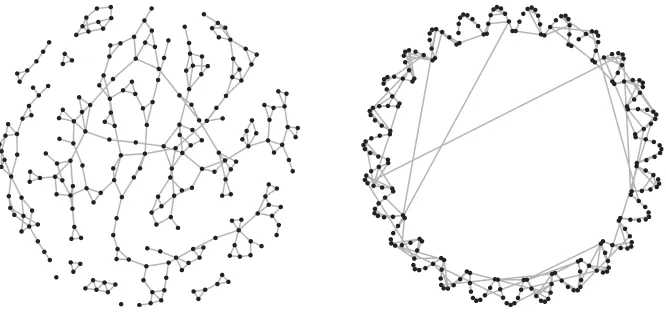
[image:2.595.131.464.434.591.2]The purpose of this paper is to introduce a new construction of ‘geometric’ finite random graphs, called Group-Walk Random Graphs (GWRGs from now on) and describe the rich connections to other objects, including the Poisson boundary, Naim’s kernel, and Sznitman’s random interlacements. GWRGs do not only yield new interesting examples of random graphs, but as we will argue, they can be thought of as a tool for studying groups.
Figure 1: A sample GWRG produced by computer simulation by A. Janse van Rens-burg. The host graph is a ternary tree, andn= 5.
We start by introducing the simplest special case of GWRGs. LetGbe an infinite homogeneous tree, rooted at a vertexo, called the host graph; we will later allow G to be an arbitrary locally finite Cayley graph, or even a more general graph. Let Gn :=G[{v ∈V(G)|d(v, o)≤n}] be the ball of radius n ∗Supported by EPSRC grant EP/L002787/1. This project has received funding from the
centered ato, and define the boundary∂Gn to be the set{v∈V(G)|d(v, o) =
n} of vertices at distance exactlynfromo.
We construct a random graphRn as follows. The vertex set of Rn is the deterministic set ∂Gn. The edge set of Rn is constructed according to the following process. We start an independent simple random walk in Gn from each vertexv∈∂Gn, and stop it upon its first return to∂Gn, lettingv† denote
the vertex in∂Gn where this random walk was stopped. We then put an edge in Rn joiningv to v† for eachv∈∂Gn.
We could stop the construction here and declareRn to be our GWRG, but it is more interesting to consider the following evolution: let R1
n := Rn, and
fori= 2,3, . . .letRi
n be the union ofRni−1 with an independent sample ofRn1; or in other words, Ri
n is the random graph obtained as above when we start i independent particles at each vertex in∂Gn.
An important observation from [13] is that these random graphs Ri n have the following scale-invariance property. LetC, Dbe twobranchesof our treeG, where a branch is a component of G\efor some edge e. Then, for any fixed i, we have
Observation 1.1 ([13]). The expected number of edges of Ri
n from branch C
to branch D converges as n→ ∞. The limit is always >0, and it is finite if and only ifC∩D=∅.
[image:3.595.143.430.428.663.2]This might at first sight look surprising, as the number of vertices of Ri n inside each of C, D grows exponentially with n, yet no rescaling is involved in Observation 1.1.
Figure 2: Computer simulations of GWRGs with 3 repetitions (coded by different colours) for different host graphs by C. Midgley.
host graph is any infinite graph. Then Observation 1.1 has a generalisation, but in order to formulate it we need the Poisson boundary P: instead of the ‘branches’ of Observation 1.1 we have to talk about subgraphs ‘converging’ to a measurable subset of P. This is explained in greater detail in Section 2, where we also elaborate more on the general construction of GWRGs and their variants.
The construction of GWRGs was motivated by a measure space introduced in [13], called the effective conductance measure, which is closely related to the Poisson boundary. It is a generalisation of effective conductance for electrical networks, and it is important for the study of Dirichlet harmonic functions on infinite graphs. More details about this measure are given in Section 3.
I expect that GWRGs can unify many existing models of geometric ran-dom graphs, while introducing new ones, and offer new tools for analysing them including the Poisson boundary, as well as the notion of graphons [5]. Con-versely, GWRGs provide an additional tool for indirectly studying groups, just like random walks; see Section 8.3 for more.
The study of random graphs is currently one of the most active branches of graph theory. By far the most studied random graph model is that of Erd˝os & Renyi (ER) [8], in which every pair of vertices is joined with an edge with the same probability, and independently of each other pair.
In recent years, many models ofgeometric random graphs have been emerg-ing [14, 18]. The idea now is to embed the set of vertices (possibly randomly) into a geometric space —usually the euclidean or hyperbolic plane, and their higher dimensional analogs— and then to independently join each pair of ver-tices with a probability that decays as the distance between the verver-tices in the underlying space grows.
One advantage of these geometric random graphs compared to the ER model is that they can approximate real-life networks much more realistically, but they are also of great theoretical interest given the impact of the ER model. A disadvantage is that there is an infinity of such models, obtained by varying the underlying geometry, the way the points are embedded, and the connection probability as a function of distance, and no canonical choice is available.
I like thinking of GWRGs as geometric random graphs, where the underlying geometry is a Cayley graphGof an arbitrary finitely generated group. Although there is a huge variety for the underlying ‘geometry’, the construction is in a sense canonical, and many tools for their analysis are available and are discussed here.
This paper is written in survey style although the material reviewed is quite new and partly under development, the main aim being to make the open prob-lems of the project accessible to other researchers willing to get involved. A lot of the material is drawn from the paper [13] which is still in progress. New here is the definition of GWRGs and some observations about them.
2
The general construction of GWRGs
generalises, which will lead us to the definition of the effective conductance measure.
The construction ofRi
n can be repeated verbatim, except that the number of particles we start at a vertexv∈∂Gnin roundiis equal to the vertex degree
dGn(v) ofv in the ballGn; the reason will become apparent later. However, we
could instead of starting exactlydGn(v) particles atvin roundi, start a random
number of particles following some distribution with expectation dGn(v), the
most natural candidate being the Poisson distribution; the following discussion remains valid for this variant of GWRGs.
Observation 1.1, which is easy to prove in the case of trees, now becomes a substantial theorem, but in order to formulate it we need to involve the concept of the Poisson boundary ofGto extend the above notion of branch in the correct way.
The Poisson boundary of an infinite (transient) graph G is a measurable, Lebesgue-Rohlin, spaceP =P(G), endowed with a family of probability mea-sures{µv|v∈V(G)}, such that every bounded harmonic functionh:V(G)→ R can be represented by integration on P: we have h(v) = R
Pˆhdµv(η) for a
suitable boundary function ˆh:P →R. This can be thought of as a discrete ver-sion of Poisson’s integral representation formula h(z) = R1
0
1−|z|2
|e2πiθ
−z|2ˆh(θ)dθ =
R1
0 ˆh(θ)dνz(θ), recovering every continuous harmonic function h : D → R in terms of its boundary values ˆh : S1 → R, except that we replaced D with a transient graph.
Triggered by the work of Furstenberg [10] who introduced the concept, the study of the Poisson boundary of Cayley graphs has grown into a very active research field; see [9] for a survey including many references. Although there is a straightforward abstract construction of the Poisson boundary P(G) of any Cayley graph, given a concrete G it is desirable to identify P(G) with a geometric boundary. This pursuit can however be very hard, although some general criteria are available.
As an example, we remark that the Poisson boundary of a regular tree can be identified with its set of ends, and the Poisson boundary of a regular tessellation of the hyperbolic plane can be identified with its circle at infinity. More generally, the Poisson boundary of any non-amenable, bounded-degree, Gromov-hyperbolic graph coincides with its hyperbolic boundary [1, 2]. The Poisson boundary of an 1-ended bounded-degree planar graph can be identified with a circle [11].
Now back to Observation 1.1, lettingGbe an arbitrary transient graph, we consider measurable subsets X, Y of P(G). One can associate with these sets sequences of vertex sets (Xn)n∈N,(Yn)n∈N, where Xn, Yn ⊆∂Gn in the above
notation, such that for random walk onGfrom any starting vertex, the events of converging to X and visiting infinitely many of the Xn coincide up to a set of measure zero, and similarly for Y and the Yn. The first statement of Observation 1.1 generalises:
Theorem 2.1 ([13]). The expected number of edges ofRi
n from Xn toYn
con-verges as n→ ∞.
they have positive measure: any lamplighter graph over a transient graph has this property [13].
In order to understand why Theorem 2.1 (or Observation 1.1) is true, it is helpful to consider the well-known relationship between random walks and electrical networks as introduce by Doyle & Snell [7]. Think ofGnas an electrical network with boundary nodes ∂Gn, at which we impose a constant potential
v(b) = 1 for every b ∈ ∂Gn. This Dirichlet problem has the unique trivial solutionv(x) = 1 for every x∈ V(Gn). Now, the aforementioned relationship tells us that the solution to any such Dirichlet problem can be obtained as follows: we start dGn(b)v(b) random walk particles at each boundary nodeb,
and stop them upon their first re-visit to∂Gn. Then lettingv(x) be the expected number of visits to xby all those particles divided by the degree d(x) solves the Dirichlet problem [12]. But as our Dirichlet problem has constant boundary values, we then expectd(x) visits to each interior vertexx. This implies that if we startdGn(b) random walkers at each vertexb∈∂Gn, stop them upon their
first re-visit to ∂Gn, and observe the parts of their trajectories inside Gm for
m < n, then the situation we observe will be similar as if we had performed the
same process onGminstead ofGn. This is the central observation for the proof of Theorem 2.1.
Theorem 2.1 will be crucial in the next section.
3
The effective conductance measure
C
Theorem 2.1 relates our GWRGs to the Poisson boundary, but in fact the con-nection is more intricate. Before elaborating on this, we recall Douglas’ classical formula
E(h) =
Z 2π
0
Z 2π
0
(ˆh(η)−ˆh(ζ))2Θ(η, ζ)dηdζ,
expressing the (Dirichlet) energy of a harmonic function h on the unit disc D in the complex plain from its boundary values ˆh on the circleS1 = ∂D. The physical intuition here is thatE(h) is the power dissipated by a circular metal plate, on the boundary circle of which some potential is imposed by an external source or field.
A discrete variant of this formula is the following, expressing the energy dissipated by a finite electrical network with a set B of boundary nodes, in terms of the voltages at B and certain ‘effective conductances’ relative to B
(see [13] for details).
E(h) =P
a,b∈B(h(a)−h(b)) 2
Cab. (1)
In [13] we prove the following statement, providing a general formula for the Dirichlet energy of harmonic functions on a graph, which is similar to Douglas’ formula
Theorem 3.1 ([13]). For every transient graph G, there is a measure C on
P(G)2 such that for every harmonic function h : V(G) → R with boundary
function ˆh, the energyE(h)equals
D(ˆh) :=R2
P
ˆ
This measure C, which we call the effective conductance measure, can be thought of as a continuous analogue of effective conductance in a finite electrical network due to the similarity of the above formula with (1); in the next section we will elaborate more on this.
The construction ofC is based on Theorem 2.1: we set the valueC(X, Y) to be the limit value returned by that theorem, and apply Caratheodory’s extension theorem to show that this defines a measure on P(G)2. This explains the relationship between GWRGs and C, and also my motivation in introducing the former.
4
Doob’s formula and Naim’s kernel
Theorem 3.1 was motivated by a similar result of Doob [6], which generalises Douglas’ formula to arbitrary Green spaces. I will refrain from repeating the definition of Green spaces here, which can be found in [6], and suffice it to say that they generalise Riemannian manifolds. In a sense, our Theorem 3.1 is a discrete version of Doob’s result. But rather than working with the Poisson boundary (which first appeared the year after Doob’s paper [10]) Doob worked with the Martin boundary, which is closely related to the Poisson boundary (the latter can be defined as the support of the former, but the former is also endowed with a topology). Moreover, Doob’s approach to the effective conduc-tance measure was different to ours: rather than working with the measure, Doob was working with its density, namely the Naim kernel. Let me explain this further, as it will be of interest later.
Naim [17] introduced the formula
Θ(x, y) := G(x, y)
G(x, o)G(o, x)
where G(·,·) denotes Green’s function, and x, y are points of a Green space
X. The same formula however makes perfect sense when x, y are points of a transient graphG, in which caseG(x, y) denotes the expected number of visits toy by random walk fromx.
Naim proved that Θ(x, y) can be extended to pairs of points {η, ζ} in the Martin boundary ofX, by taking a limit
Θ(η, ζ) :=limx→η,y→ζΘ(x, y). (2) The convergence of this limit is only clear when one ofx, yis fixed and the other converges to a pointη in the boundary, as it reduces to the well-known conver-gence of the Martin kernelK(x, y) := GG((x,yo,y)) [22]. The two-sided convergence is a puzzling fact, and in fact is not true everywhere but ‘almost everywhere’: the exact statement proved by Naim [17] is too technical to state here precisely. It involves Cartan’s fine topology. As far as I know, this convergence has not been proved for graphs; we will return to this issue below.
y if the Green function Gis defined with respect to random walk killed at the boundary.
Doob’s formula for the Dirichlet energy of a harmonic functionhonX, with boundary extension ˆhonM(X) reads
D(ˆh) :=
Z
M(X)2
ˆ
h(η)−hˆ(ζ)2Θ(η, ζ)dµo(η)dµo(ζ).
Notice the similarity to the formula of Theorem 3.1 and Douglas’s (1).
As we show in [13], our effective conductance measureC is absolutely con-tinuous with respect to the square of harmonic measure µo on P, and so we can define a kernel Θ′ onP2by the Radon-Nykodym derivative ∂C
∂µ2o(η, ζ). The above discussion suggests that Θ′ should coincide with Θ if Θ can be defined
by a limit similar to (2). Now instead of trying to imitate Naim’s proof of the convergence of (2), which is rather technical, we propose the following
Problem 4.1. Let G be a transient graph and o ∈ V(G). Let (xn)n∈N and
(yn)n∈Nbe independent simple random walks fromo. Thenlimn,m→∞Θ(xn, ym)
exists almost surely.
This is seemingly easier than trying to prove the convergence of (2), since for example it is easier to prove the Martingale convergence theorems than Fatou’s theorem. If it is true, then one could further ask
Problem 4.2. Let G be a transient graph and o ∈ V(G). Let (xn)n∈N and
(yn)n∈Nbe independent simple random walks fromo, andX, Y measurable
sub-sets of P(G). Then C(X, Y) = Elimn,m→∞µxn(X)µyn(Y)Θ(xn, ym), where C
denotes the effective conductance measure.
The factors µxn(X), µyn(Y) in the above limit essentially ‘condition’ the
random walks to converge toX, Y respectively. This last problem is motivated by our expectation that Θ′= Θ.
5
Random interlacements
Recall that we defined C(X, Y) as the limit of the expected number of edges of our GWRG R1
n fromXn to Yn. In doing so, we were only interested in the starting and finishing vertices of our random walks, ignoring the exact trajec-tories inside the host graphG. In this section we remark that the distributions of these trajectories converge, in a certain sense, to the intensity measure of the Random Interlacement model as introduced by Sznitman [19] for G=Zd and generalised to arbitrary transientGby Teixera [20].
Given a transient graph G, the Random Interlacement on G is a Poisson point process on the space of 2-way infinite trajectories in Gmodulo the time shift. It is governed by aσ-finite measure ν on (W∗,W∗), where W∗ denotes
the set of equivalence classes of 2-way infinite walks in G with respect to the time shift, and W∗ is the canonical sigma-algebra on W∗. We remark that
this measureν can also be obtained from the process we used to construct our GWRG R1
n as follows (the original definition of Sznitman will be given below). Let C be a cylinder set of W∗ defined by a finite walk Z, i.e. is the set
process from the definition of R1n, that is, a collection of particles performing random walk starting at∂Gn and stopped upon the first revisit to∂Gn, with
d∂Gn(x) particles started at eachv∈∂Gn. We set
µ(C) := limnE{# of trajectories inPn containingZ as a subwalk}, (3) and extend µ to a measure on (W∗,W∗) using e.g. Caratheodory’s extension
theorem. It turns out [13] that
µ=ν
An interesting consequence of this is the following relation between the effec-tive conductance measure Cand the Random Interlacement intensity measure,
ν
Corollary 5.1. For every two measurable subsetsX, Y ofP(G), we have
C(X, Y) =ν(W∗
XY),
whereW∗
XY denotes the set of elements ofW∗ all initial subwalks of which meet
infinitely manyXn (as defined in Section 2) and all final subwalks of which meet
infinitely many Yn.
In order to explain why this is true we need to recall the definition of the intensity measure ν from [20].
To begin with, given a finite subset K of V(G), we define the equilibrium measure eK onK by
eK(x) =1x∈KcxPx[A| random walk does never return toK ],
wherecxis the vertex degree ofx.
Letπ∗be the canonical projection from the set of 2-way infinite walksW to
W∗. Thenν is defined as the unique measure on (W∗,W∗) satisfying, for every
finite subsetK ofV(G),
1W∗
K·ν=π
∗◦Q
K. (4)
(Another way to state this formula isν(1W∗
K·A) =QK(π
∗−1(A)), whereπ∗−1(A) returns those walks in theπ∗-preimage ofAthat enterKat time 0 for the first
time.)
Here,QKis a finite measure on the spaceWKof 2-way infinite walks meeting
K, given by the formula
QK[(X−n)n≥0∈A, X0=x,(Xn)n≥0∈B] =Px[A|no return toK]eK(x)Px[B], whereA, Bare measurable subsets of the spaceW+of 1-way infinite walks. Let me explain whyν coincides withµas claimed above. The main idea is to think of the equilibrium measure eK(x), which is proportional to the probability of escaping K, as the probability for a random walker coming from ‘infinity’ to enter K at x; this intuition is justified by the reversibility of our walks, and coming from infinity can be made precise using the process used to construct GWRGs (andµ).
To make this more precise, letGn denote the ball of radiusnaroundo, and suppose that K⊂V(Gn) for some K⊂V(G). LetG∗
fromGby contracting the complement ofGn into a single vertex∗n. Then the reversibility of our random walk implies that, for everyx∈K, lettingPy denote the law of a random walk X0, X1, . . . Xτ from y stopped the first time τ >0 whenXτ∈K∪ {∗n}, we have
cxPx[Xτ=∗n] =c∗nP∗n[Xτ =x].
Now note that, by the transience ofG, the limit as ngoes to infinity of the left hand side converges to eK(x), while the limit of the right hand side is closely related to our definition ofµ.
Random interlacements have been studied extensively, and have found inter-esting applications in the study of the vacant set for random walk on discrete tori []. This connection to the Poisson boundary has apparently not been observed before.
6
Graphons
Graphons were recently introduced [5] as a notion of limit for sequences of dense finite graphs, and they have already had a seminal impact on combinatorics. Formally, a graphon is a symmetric, measurable function w: [0,1]2→[0,1].
Every graphon naturally gives rise to a family of random graphsGn on n vertices for everyn∈N: we samplenindependent, uniformly distributed points from [0,1] to be the vertices ofGn, and join verticesx, ywith probabilityw(x, y). Graphs sampled this way are dense, i.e. have average degree of order n. But a variant of the above sampling method introduced in [4] produces sparse graphs.
Now note that formally, our effective conductance measureC is similar to a graphon, as it is a measure on a square. In particular, we can sample a random graph from it. We expect these graphs to be closely related to our GWRGs.
Problem 6.1. Show that for every (transient) Cayley graphG, the sequence of corresponding GWRGs converges to a sparse graphon in the sense of [4].
7
Simulation data
Computer simulations on GWRG for certain concrete host graphsG, performed by Chris Midgley [16], suggest that certain properties are heavily influenced by
G, while convergence withnis fast enough that simulation data can help make explicit predictions.
In most simulations the host graph was the 2 or 3-dimensional grid Z2 or Z3, the infinite binary treeT2, a hyperbolic planar graphT◦ obtained from the binary tree by adding a cycleCnjoining the vertices at distancenfrom the root for everyn, and the lamplighter graphLoverZ.
The outcomes of these simulations, with 10,000 random graphsR1
ngenerated in each case forn up to 8 (where the exponential growth ofT◦ and Lbecome
computationally demanding), suggest the following.
• The number of isolated vertices of R1
components ofR1n. The corresponding leading coefficients are very similar (possibly converging to the same number) when G is Z2 or T◦, slightly different whenG=L, and very different whenG=Z3.
• The expected diameter of the largest connected component ofR1 n seems to be proportional to log(|∂Gn|).
In a further experiment of [16] on the infinite binary treeT2, random graphs
Ri
n were generated for 2 ≤ n ≤ 8 for all values of i until the first time that
Ri
n becomes connected. The data suggest (quite clearly) that the average time
i till connectedness is roughly 0.26n, i.e. linear in n. (The exact outcome was
i= (0.26±0.003)k+ (0.90±0.02) with an adjustedR2value of 0.9993.)
8
Further Problems
8.1
Dirichlet harmonic functions
LetG be a graph on which all harmonic functions with finite Dirichlet energy are constant; the class of such graphs is denoted byOHD. By Theorem 3.1, we can introduce the following trichotomy for such graphs:
(i) P(G) is trivial (in other words,Ghas the Liouville property), or
(ii) P(G) is not trivial, and C(X, Y) =∞ for every two measurableX, Y ⊆ P(G), or
(iii) none of the above holds, but the integral of Theorem 3.1 is infinite for every boundary function ˆh.
Recall that the property of being in OHD is quasi-isometry invariant for graphs of bounded degree [21], and therefore, given a group Γ, it is independent of the choice of the Cayley graph of Γ. A well-known open problem asks whether the Liouville property too is independent of the choice of the Cayley graph of Γ. The above trichotomy suggests the following refinement of that problem for groups inOHD
Problem 8.1. Let G be a Cayley graph in OHD. Do all finitely generated
Cayley graphs of the group of G have the same type with respect to the above trichotomy?
We remark that Cayley graphs of all three types exist: Z3 is of type (i), lamplighter graphs over any transient Cayley graph are of type (ii) [13], while all tessellations of hyperbolic 3-spaceH3 are of type (iii).
8.2
GWRGs
None of the results suggested by the simulations of Section 7 have been proved rigorously, and it would be interesting to do so, especially if the methods involved can be applied to large families of host graphs. Results on the expected number of components or isolated vertices ofR1
n could be within reach.
G(under some restriction, e.g.Gbeing vertex-transitive), as well as properties that do depend onGand the dependence can be explained. For example, what can be said about Rn if the hostGis hyperbolic?
Erd˝os Renyi random graphs G(n, p) are known to display a sharp thresh-old for their connectedness at the value p = lnn/n for the presence of each edge. This threshold coincides with the threshold for having an isolated vertex [8]. This motivates the question of whether similar behaviour is observed for GWRGs. To make this more precise, define the random variableτn:= min{i|
Gi
n is connected}. Our first question is how concentratedτnis (we interpret high concentration as a sharp phase transition). The second question is whether the threshold for connectedness coincides with that for absence of isolated vertices: letting τ∗
n := min{i|Gin has no isolated vertices},
Problem 8.2. IslimnEτn= limnEτ∗
n?
This might depend on the host graphG, and the answer might be positive for every ‘nice’ host, e.g. any Cayley graph.
For any host graphG, andn∈N, consider the ball Gn as a random rooted graph G∗n by rooting it at a uniformly chosen vertex in the boundary ∂Gn. Then, as suggested by Gourab Ray (private communication), if G∗
n converges in the local weak sense, then our GWRG Ri
n should converge for every i in the Benjamini-Schramm sense [3]. The relationship between this limit and the host graph could be interesting. (But even ifG∗
n does not converge, it will have sub-sequential limits and the situation is not less interesting.)
A particular case of interest is whereGis the gridZd, and we start particles at ∂Gn according to the Poisson distribution in the construction of Rin. The aforementioned limit coincides then with the long-range percolation model as defined e.g. in [15] (this connection was again noticed by Gourab Ray).
It would be interesting to compare our GWRGs induced by certain simple Cayley graphs, like tessellations of the hyperbolic plane, to other geometric random graphs from the literature:
Problem 8.3. Show that the standard geometric random graph constructions can be obtained as special cases of GWRGs by choosing an appropriate under-lying graph.
8.3
Groups
Our main objective is to understand the interplay between typical properties of GWRGs and their host groups. In particular, we have
Problem 8.4. Which properties of the random graphs are determined by the group of the host graph and do not depend on the choice of a generating set?
A further problem in this vein is
Problem 8.5. Are the properties of transience, Liouvilleness, existence of har-monic Dirichlet functions, and amenability on the host Cayley graph detectable by the asymptotic behaviour of the corresponding GWRGs?
9
Conclusions
We introduced a construction of ‘geometric’ random graphs (GWRGs), and es-tablished strong links to the Poisson boundary of their host graphs, the effective conductance measure and Naim’s kernel, and to random interlacements. This project will be successful if we can exploit these connection in order to make conclusions about one of these objects by studying the other. Another major aim is to relate GWRGs to existing models of geometric random graphs. Last but not least, we would like to understand the effect of various properties of the host group on the typical graph-theoretic properties of GWRGs.
Acknowledgement
I am grateful to Christophe Garban for suggesting the connection to Random Interlacements, which gave rise to Section 5, and to A. Janse van Rensburg and C. Midgley for their simulations. I would like to thank Remco van der Hoffstad for triggering Problem 8.2.
References
[1] A. Ancona. Negatively Curved Manifolds, Elliptic Operators, and the Mar-tin Boundary. The Annals of Mathematics, 125(3):495, 1987.
[2] A. Ancona. Positive harmonic functions and hyperbolicity. In Potential Theory Surveys and Problems, volume 1344 ofLecture Notes in Mathemat-ics, pages 1–23. 1988.
[3] I. Benjamini and O. Schramm. Recurrence of distributional limits of finite planar graphs. Electronic Journal of Probability, 6, 2001.
[4] C. Borgs, J. T. Chayes, H. Cohn, and Y. Zhao. An Lp theory of sparse graph convergence I: limits, sparse random graph models, and power law distributions. Preprint 2014.
[5] C. Borgs, J.T. Chayes, L. Lov´asz, V.T. S´os, and K. Vesztergombi. Conver-gent sequences of dense graphs I: Subgraph frequencies, metric properties and testing. Advances in Mathematics, 219(6):1801 – 1851, 2008.
[6] J. L. Doob. Boundary properties of functions with finite Dirichlet integrals.
Ann. Inst. Fourier, 12:573–621, 1962.
[7] P. G. Doyle and J. L. Snell. Random Walks and Electrical Networks. Carus Mathematical Monographs 22, Mathematical Association of America, 1984.
[8] P. Erd¨os and A. R´enyi. On random graphs I. Publ. Math. Debrecen, 6:290– 297, 1959.
[9] A. Erschler. Poisson-Furstenberg Boundaries, Large-scale Geometry and Growth of Groups. InProceedings of the ICM, pages 681–704, 2010.
[11] A. Georgakopoulos. The boundary of a square tiling of a graph co-incides with the poisson boundary. To appear in Invent. Math., DOI 10.1007/s00222-015-0601-0.
[12] A. Georgakopoulos. Electrical networks from the mathematical viewpoint. Lecture notes. In preparation.
[13] A. Georgakopoulos and V. Kaimanovich. In preparation.
[14] Remco Van Der Hofstad. Random graphs and complex networks. Lecture Notes, 2013.
[15] Newman C. M. and Schulman L. S. One Dimensional 1/|ji|sPercolation Models: The Existence of a Transition fors≤2. Commun. Math. Phys., 104:547–571, 1986.
[16] C. Midgley. Random graphs from groups, 2014. Undergraduate research project. University of Warwick.
[17] L. Na¨ım. Sur le rˆole de la fronti`ere de R. S. Martin dans la th´eorie du potentiel. Annales Inst. Fourier, 7:183–281, 1957.
[18] Mathew Penrose. Random Geometric Graphs. Oxford University Press, 2003.
[19] A.-S. Sznitman. Vacant set of random interlacements and percolation.
Annals of Mathematics, 171(3):2039–2087, 2010.
[20] Augusto Teixeira. Interlacement percolation on transient weighted graphs. 14:1604–1627, 2009.
[21] C. Thomassen. Resistances and currents in infinite electrical networks.
J. Combin. Theory (Series B), 49:87–102, 1990.