warwick.ac.uk/lib-publications
Original citation:
Sheik, Al Tariq, Maple, Carsten, Watson, Tim, Alhagagi, Hassam, Sohrabi Safa, Nader and Lee,
Sang-Woo (2017) A threat based approach to computational offloading for collaborative
cruise control. In: The Second International Conference on Internet of Things, Data and
Cloud Computing (ICC 2017), University of Cambridge, United Kingdom, 22-23 March 2017.
Published in: ICC '17 Proceedings of the Second International Conference on Internet of
things and Cloud Computing ISBN 9781450347747. doi:
10.1145/3018896.3056792
Permanent WRAP URL:
http://wrap.warwick.ac.uk/87343
Copyright and reuse:
The Warwick Research Archive Portal (WRAP) makes this work by researchers of the
University of Warwick available open access under the following conditions. Copyright ©
and all moral rights to the version of the paper presented here belong to the individual
author(s) and/or other copyright owners. To the extent reasonable and practicable the
material made available in WRAP has been checked for eligibility before being made
available.
Copies of full items can be used for personal research or study, educational, or not-for profit
purposes without prior permission or charge. Provided that the authors, title and full
bibliographic details are credited, a hyperlink and/or URL is given for the original metadata
page and the content is not changed in any way.
Publisher’s statement:
"© ACM, 2017. This is the author's version of the work. It is posted here by permission of
ACM for your personal use. Not for redistribution. The definitive version was published in :
ICC '17 Proceedings of the Second International Conference on Internet of things and Cloud
Computing ISBN 9781450347747
http://dx.doi.org/10.1145/3018896.3056792
A note on versions:
The version presented here may differ from the published version or, version of record, if
you wish to cite this item you are advised to consult the publisher’s version. Please see the
‘permanent WRAP url’ above for details on accessing the published version and note that
access may require a subscription.
A Threat Based Approach to Computational Offloading
for Collaborative Cruise Control
Al Tariq
Sheik
Cyber Security Center, WMG University of Warwick CV4 7AL Coventry,U.KT.sheik@
warwick.ac.uk
Carsten
Maple
Cyber Security Center, WMG University of Warwick CV4 7AL Coventry,U.KCM@warwick.
ac.uk
Tim Watson
Cyber Security Center, WMG University of Warwick CV4 7AL Coventry,U.KTW@warwick.
ac.uk
Hussam
Alhagagi
Cyber Security Center, WMG University of Warwick CV4 7AL Coventry,U.KH.Alhagagi.1
@warwick.ac.
uk
Nader Sohrabi
Safa
Cyber Security Center, WMG University of Warwick CV4 7AL Coventry,U.KN.sohrabi-safa@warwick
.ac.uk
Sang-Woo
Lee
Information Security Research Division ETRI 34129 Daejeon, South Korea[email protected]
ABSTRACT
The interaction between discrete components of Internet of Things (IoT) and Intelligent Transportation Systems (ITS) is vital for a collaborative system. The secure and reliable use of Cruise Control (CC) with Cloud and Edge Cloud to achieve complete autonomy for a vehicle is a key component and a major challenge for ITS. This research unravels the complications that arise when Adaptive Cruise Control (ACC) is incorporated into a collaborative environment. It mainly answers the question of where to securely compute Collaborative Cruise Control’s (CCC) data in a connected environment. To address this, the paper initially reviews previous research in the domain of Vehicular Cloud, ITS architecture, related threat modelling approaches, and secure implementations of ACC. An overview application model for CCC is developed for performing a threat analysis with the purpose of investigating the reasons why a vehicle suffers collision. Through the use of interviews, the research analyses and suggests the location of computational data by creating a taxonomy between the Edge Cloud, Cloud and the On-board Unit (OBU) while validating the model.
Keywords:
Collaborative Cruise Control; Connected Autonomous Vehicles; Secure Intelligent Transportation System; Threat Modelling; Vehicular Cloud Computing;1.
INTRODUCTION
IoT is a technological revolution, albeit one at its beginning stages which involves collaboration between sensors collecting data to predict and suggest a timely action for achieving a task, especially in an autonomous vehicle. It utilises the internet extensively, supported by Cloud and Edge-Cloud (i.e. fog computing) technology. There has been an estimation of 100
Permission to make digital or hard copies of all or part of this work for personal or classroom use is granted without fee provided that copies are not made or distributed for profit or commercial advantage and that copies bear this notice
and the full citation on the first page. Copyrights for components of this work owned by others than ACM must be honored. Abstracting with credit is permitted. To copy otherwise, or republish, to post on servers or to redistribute to lists, requires prior specific permission and/or a fee. Request permissions from [email protected].
ICC '17, March 22 2017, Cambridge, United Kingdom
© 2017 ACM. ISBN 978-1-4503-4774-7/17/03...$15.00
DOI: http://dx.doi.org/10.1145/3018896.3056792
billion devices that would be connected to the internet by 2025 [1]. The internet would be a medium, responsible for a large amount of data which requires secure and reliable transmission, storage, processing and reception of data. Although there are various advantages with IoT, it further adds severity to the infrastructure if appropriate risk and threat analysis procedures are not performed respectively for each application.
ITS utilises the concepts that are involved in the IoT when major decisions are to be handled in the Cloud. In the past, transportation was the vital connecting power that helped in the advancement of technologies. Similarly, the advent of communication technologies was another major influential force that helped humanity boost its efficiency and capabilities. This interdependency between these two fields contributed to the development of autonomous technologies for the automotive industry. The amalgamation of these two fields of technology has given birth to numerous forms of Connected Vehicles (CV) programmes across Europe and the US which would mainly rely on the significant use of Cloud technologies in the near future and opening many gateways and opportunities in the domain of IoT [2].
CCC is a vital technology for autonomous driving and ITS and it is important to identify the different types of data for CCC that can be classified either as in cloud or on-board for computation while considering the communication latency, security, accuracy and reliability of the data for different vehicular applications. To be more specific, this study answers the question: Where should we securely compute Collaborative Cruise Control data in a Cloud Based Connected Vehicular System?
802.11x, WiMAX, 3G, 4G/ LTE and potentially 5G. Moreover, this paper will further set foundations for future work on establishing a taxonomy of data by raising questions for CCC and other vehicular applications.
In order to achieve this goal, the following four objectives have been formulated: Firstly, a review will be conducted on the existing research in the domain of vehicular cloud ITS and implementations of ACC, Cooperative ACC (CACC) and CCC, and the different threat analysis procedures. Secondly, a threat analysis is performed after building a conceptual overall data flow and on-board model for CCC. Thirdly, the critical data is analysed based on the latency, computation, location, accuracy and security, and we classify where the data could be processed (cloud/on-board) based on the feedbacks received from the academics and engineers with automotive and cyber security backgrounds. Finally, the accuracy of the developed model is verified and the outcomes discussed based on the analysis of the critical data.
The remainder of this paper is organised as follows. Section 2 carries out the literature review mentioned in first objective. Section 3 illustrates a proposed model in detail. Section 4 highlights the validation process of the model. Finally, Section 5 concludes the study and describes its findings while raising further questions concerning the data computation by providing a basis for future work.
2.
BACKGROUND AND RELATED WORK
2.1
Vehicular Cloud
Vehicles consist of numerous embedded systems such as Electronic Control Units (ECUs) which are responsible for coordination among many functions in a vehicle such as its acceleration, brakes, airbags etc. [3]. These functions do not require high computational power compared to data intensive applications such as traffic light detection, image recognition, and facial and voice recognition, none of which it is efficient to implement on the vehicle’s OBU due to the limitations present in the computational power on-board [4]. Moreover, there is an increase in demand for computationally driven applications [5]. This raises a concern about software updates corresponding to the hardware components on-board as vehicles have higher longevity. These issues can be addressed by offloading the vehicles computation to the cloud. Therefore, the cloud facilitates the idea of offloading, but it brings along various consequences.
There are two main types of Cloud for vehicles: conventional cloud and edge cloud (fog computing). Yan and Xu [6] connected the use of cloud computing and IoT in order to provide a secure economic platform with two cloud services. Using this, a three-layered architecture is developed providing an application for intelligent parking cloud service and mining vehicular maintenance data. The conventional cloud can be classified into three broad categories based on the different services they offer: Platform as a Service (PaaS), Infrastructure as a Service (IaaS) and Software as a Service (SaaS) [4], [6], [7]. In addition to this, authors in [8] have also proposed deployment models which provide public, community, private and hybrid cloud services. These can be inferred from Figure 1.
According to [6] and [9], edge cloud is an emerging technology that is designed to hold dynamic information which exchanges
data with the conventional clouds based on the requirements of the applications such as services in infotainment, geo-distribution, location awareness and low latency applications. However, this is not the case with conventional clouds as interoperability, batch processing, real-time sensing and proximity to the vehicle are the limitations that would render it unable to cater to the needs of vehicles with latency-sensitivity applications.
[image:3.595.317.543.165.291.2]Similarly, the ITS cloud architecture (Figure 2) consists of three abstract layers: cloud layer, communication layer and end-user layer showing the use of the conventional clouds and edge cloud as previously mentioned [10]. The architecture is proposed for use with correspondence applications such as emails, web service applications, cloud backup, business applications, research applications and load balancing capability but has not addressed the use of computationally intensive and safety critical applications.
Figure 2: ITS Cloud [10].
[image:3.595.318.545.430.642.2]The implementation of these applications through the use of different types of vehicular clouds was explained by [6], [8], [10]. However, secure implementation ensuring Confidentiality Integrity and Availability (CIA) model was not addressed from a security point of view. Moreover, a secure data taxonomy for computational offloading related to the above mentioned applications was not acknowledged either in the ITS cloud architecture or others. On the other hand, the authors did not consider authorisation and authentication nor did they consider security as a parameter in the theoretical frameworks. In addition, trust relationships between the clouds were discussed
briefly, concluding that there is a vital necessity for a balanced security.
Nevertheless, the lack of security measures mentioned above are discussed by the authors in [4] and they envisioned the use of three different vehicular cloud scenarios. These cloud scenarios include Mobile Vehicular Cloud, Mobile Personal Cloud, and Mission Oriented Mobile Cloud. Considering these cloud environments, the author has raised concerns for privacy and security protection, sensing, filtering aggregation of data, and secure management of contents based on trust management. Moreover, the author has also discussed about the use of vehicles sensors for environmental sensing, urban surveillance, route management for vehicular traffic management. These proposals have raised questions concerning how the data can be transferred to the cloud which leads us to the Section 2.2.
2.2
Offloading Vehicular Services and Data
to the Cloud
[image:4.595.319.537.451.625.2]Offloading provides a means of migrating the execution of computationally and data intensive tasks from OBU to the cloud. The authors in [5] have proposed the framework, as shown in Figure 3, for the use of cloud computing in vehicles. This enables the functions (modules) to decide what kind of tasks can be offloaded to the Cloud. This requires consideration of different parameters (input and output data size) of the application and cost incurred such as latency, network downlink, uplink speeds and execution time. Furthermore, they proposed a decision making process with the help of model execution time ratio (E) which considers offloading of applications only if E<1. The proposed framework was validated with road experiments by using an Android based Mobile device (Nexus 5) and Carnegie Melon University's (CMU) private cloud server to verify two applications: on-board hand gesture recognition and traffic lights and road sign recognition. Their experiment, with the use of cloud computing, showed a threefold increase in average response time compared to the on-board local computation irrespective of the vehicle’s speed.
Figure 3: Distribution of Application Modules between Cloud and OBU [5].
Offloading with clouds often has trade-offs in terms of communication costs and latencies which could get counterbalanced by the efficiency of the computation. The
author’s work [5] is complemented by work [11] where the author proposes an execution prediction mechanism by comparing the benefits and efficiency of three different application’s computational offloading processes in different environments. These applications include face detection, voice recognition and DroidFish (an Android alternative of a chess engine). However, the authors in [11] designed and illustrated the use of IC-Cloud system architecture as shown in Figure 4, which introduces the connectivity predictor, a parameter that predicts the future connectivity with the help of signal strength and historical signal information.
Another significant parameter, the offload controller, relies on an execution predictor and a connectivity predictor to decide if the task should be offloaded. As a result, the authors proposed three ways to reduce uncertainties: lightweight connectivity prediction, execution prediction and application trackers. These predictions are used in a risk controlled way to offload tasks.
[image:4.595.56.284.503.698.2]The authors in [5] and [11] have both demonstrated experimental validations and showed that computational offloading and decision making process is possible with the use of the mentioned frameworks. The authors in [11] have proposed an IC-Cloud architecture. This concept plays an important role in influencing the decision making process for vehicles. However, both the studies did not consider security as a parameter to ensure Confidentiality, Integrity and Availability (CIA) during the offloading process which could further add latency due to the extended computation associated with encryption or other alternatives. Despite the drawback, the demonstrations and experiments play a vital role because further research on this concept would provide vehicular applications with the ability to offload data to a cloud environment in a secure manner.
Figure 4: Overview model of IC-Cloud Architecture [11].
2.3
ITS Architecture
2.4
Threat Modelling Approaches
A threat model helps us to understand and identify different ways and parameters in which a software application or a system architecture can be attacked. It helps a threat analyst discover an anomaly with a system or an application in a structured manner and then provide questions to address the motivations of idealized attackers [13]. It will be useful for issues in a systematic manner while understanding the security requirements to model better system architectures and models for CCC by addressing the issues that other techniques would not address. Threat modelling is vital for CCC as it is one of the main functions in ITS. It is time and data critical to set the vehicle in motion in a synchronous fashion while being aware of the environment to ensure safety for the drivers, pedestrians and the surrounding vehicles. Streamlining the characters of threats to CCC, the system-centric approach is the appropriate threat model to use. This is because vehicles coordinate and interact as a group of embedded systems which are vulnerable and requires a systematic mitigation. The system-centric/asset-centric approaches can be explained with the help of the following four approaches: Microsoft’s threat modelling (STRIDE/DREAD) [13], TRIKE [14], OCTAVE [15] and Composite Threat Modelling [16].
The use of STRIDE/DREAD is mainly oriented to software and business. However, the applicability of this model is wide and flexible enough that it can be used for vehicular systems. Alternatively, the author in [14] points out that although the benefits are in terms of accountability and integration the major drawback of the approach is its lack of the theoretical underpinning which thereby makes it unable to support academic work. Since the research is a qualitative study on CCC systems and its academic nature mainly relies on past theoretical works, this makes the methodology difficult to use for threat modelling.
TRIKE’s in-depth methodology that involves the use of the different models (requirements, implementation, threat, risk) is tedious and difficult to alter to the needs of CCC. In addition, the tool restricts the use of the methodology as it is not as flexible as STRIDE, which any user can understand the methodology. Furthermore, TRIKE has a different approach
where the models, distinct in nature when compared to STRIDE, involves a collective approach. Moreover, TRIKE’s goals are mainly aligned to meet the needs of a stakeholder which is of stark contrast to the objectives of the research. Considering these requirement, the study has overlooked TRIKE as well and has decided to adopt an alternative approach.
Although OCTAVE is one of the approaches suggested by the Society of Automotive Engineers in 2016 (SAE), for its stable and robust threat analysis on vehicles, this study has not adopted the model. This is because the OCTAVE approach is mainly applicable for industries and organisations reliant on manufacturing vehicles. The approach undergoes an exhaustive testing of the developed model during the longitudinal phase of testing. Considering this cross-sectional study, it is much more inclined towards the use of a composite threat modelling approach, due to its simplicity.
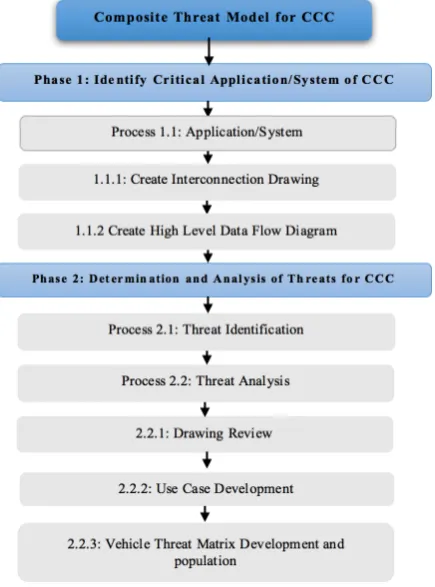
Composite threat modelling, from an automotive point of view, is built according to the needs of a modern automotive vehicle and is an amalgamation of STRIDE/DREAD, TRIKE threat modelling and Application Security Framework (ASF) [17]. In the Composite model process, as shown in Figure 6, it can be observed that each step aligns with the objectives stated in the research for classifying the CCC’s data by analysing its criticality. In addition, Phase 1 helps in identifying priority applications for analysis, which requires a working knowledge of a specific component/system and how it relates to other components/systems. This is achieved by analysing the interconnection diagrams through considering all the data paths and potential attacks. By contrast, Phase 2 involves two main processes: Threat Identification and Threat analysis. The former is a continuous process in which the threats are identified from multiple sources such as vulnerability database, information sharing from industries etc. The latter involves the study of entry points and access methods with the help the of use case elements such as STRIDE to create a Vehicle Threat Matrix.
3.
PROPOSED APPLICATION MODELS
This section provides details of the changes to the proposed models discussed in Section 2.1, 2.2 and 2.3 while applying the same to the composite threat modelling approach mentioned in Section 2.4 due its ease and convenience, and its characteristics for vehicles. In addition, it would adapt to identify the reasons behind the collision for a vehicle while developing the use case. This section is organised based on Figure 6, considering Phase 1 and Phase 2 respectively. Section 3.1, 3.2 and 3.3 correlates Phase 1 with CCC by applying the modified ITS architecture in Figure 7. Phase 2 is discussed in Section 3.4, which highlights the threat identification and analysis.
3.1 Modified ITS Architecture
As Figure 7 illustrates, the ITS architecture is incorporated within four key modules to the facilities layer. Based on the work of the authors of [5], [11], the proposed ITS architecture model uses the concepts connectivity predictor, execution predictor, offload controller and online placement framework module.
[image:5.595.52.285.79.317.2]in this layer that the CCC/ CACC module is incorporated as a traffic safety application in the modified ITS architecture.
Figure 7: Modified ITS Architecture.
The facilities layer is mainly responsible for the transmission and reception of data and messages. This layer is modified with an offloading controller which uses data and information from a connectivity predictor and an execution predictor as proposed by the authors of [5], [11].
The offloading controller is responsible for periodically profiling the data associated with a module within an application that is considered to be safe to be offloaded. For offloading to be considered, the data size, network latency and execution time are the significant parameters [5]. Since the
strength of the signal depends on the traffic density and interference, the offloading process is dynamic in nature. Moreover, the offloading controller is further informed by the connectivity predictor and execution predictor. The connectivity predictor keeps track of the strength of the signal in the form of network states and historic connections. The execution predictor accumulates the information from the CACC application and then calculates the execution time for each of the modules.
Once the offloading controller is informed by the connectivity predictor and execution predictor, the online placement framework makes dynamic run-time decisions concerning which task or module should be offloaded based on the Execution Time Ratio, as proposed by authors in [5].
3.2
Modified
CVRIA
Overall
Flow
Architecture.
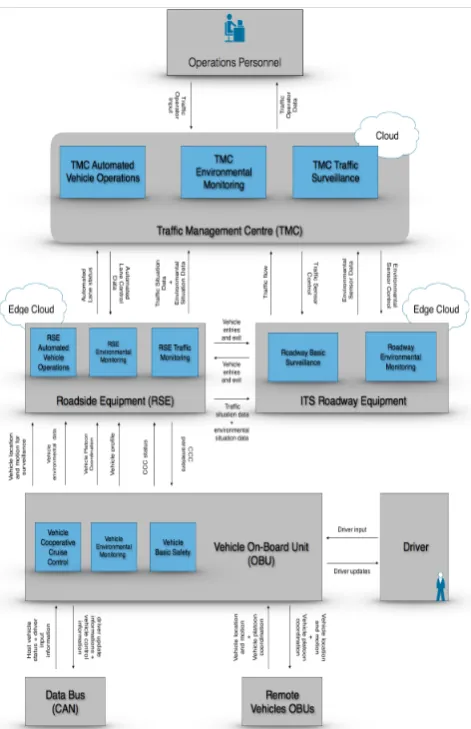
The Modified ITS Architecture is associated with an OBU of a vehicle in Figure 8 and is applied for CCC. The modified Connected Vehicle Reference Implementation Architecture (CVRIA) gives an overall flow diagram and considers two key components: the data centre’s cloud and its edge cloud. This proposed advancement functions to distribute the computational data for CCC.
The modified CVRIA architecture incorporates the use of cloud technology into the data centre and the edge cloud with the vehicle. For proper functioning of the CCC there are many entities that interact with each other. These entities involved are as follows:
3.1.1
Operations Personnel
These are the people who are stationed at the Traffic Management Centre (TMC) who are responsible for control of traffic control systems, surveillance systems, incident management systems, work zone management systems and travel demand management systems. Moreover, they are responsible for governing and controlling the Traffic Operator inputs to the TMC. These inputs would vary depending on the deployment and positon of the job (CVRIA, 2016) [17].
3.1.2
Traffic Management Centre (TMC)
The TMC is in charge of controlling and monitoring road traffic, road construction and unexpected changes. It is a main centre that supervises highway, rural and suburban roads, along with managing and informing the traffic in different areas by regularly communicating and updating its system using Roadside Equipment (RSE) and ITS Roadway equipment.
The TMC receives traffic flow information and environment sensed data from the ITS Roadside Equipment while it transmits processed traffic sensor and environmental sensor control data back to the same source. In addition, the TMC sends processed automated lane control data to the RSE after receiving the sensed lane status. The RSE also sends the relevant traffic situation data along with environmental sensed data.
[image:6.595.55.281.446.629.2]In Figure 8, the TMC is further modified to provide Cloud services classified as a Platform as a Service (PAAS) (Section 2.1) such that it offers a variety of cooperative services and is not restricted to only providing traffic information but also hazardous location, lane change warning and parking warning to the vehicles directly. This is made possible by collecting information from both the RSE ITS Roadway Equipment and Figure 6: Composite threat modelling approach for
vehicles for further processing and continuous transmission of updates to the respective entities.
Figure 8: Overall Data Flow Diagram of CCC.
3.1.3
ITS Roadway Equipment
The ITS Roadway Equipment is present all over the roads and functions to sense, monitor, manage and controls the traffic along the road. This entity regularly updates the roadside equipment and the TMC. It includes many physical devices such as [17]:
• Traffic detectors
• Sensors that monitor the surroundings such as the weather, road condition and the environment.
• CCTV cameras • Traffic signals
• Video and image processing systems • Dynamic message signs
• Lane automation system
• Barrier systems that regulates traffic to different roads such as tunnels and bridges
• Work zone systems such as detour ahead signs with zone surveillance for traffic monitoring and driver warning
3.1.4
Roadside Equipment (RSE)
The RSE is in-charge of sending CCC control parameters and receiving messages from vehicles such as the vehicle’s environmental data, location and motion data, platoon and coordination data and CCC status. The transmission and reception of messages between vehicles is achieved through
Dedicated Short Range Communication (DSRC) such as IEEE 802.11p.
The RSE not only supports the functioning of applications for vehicles but also communicates with other RSEs along with ITS Roadway equipment. It also updates the ITS Roadway equipment with entry and exist messages for the relevant vehicles, along with traffic situations, which are sent parallel to the TMC [18].
3.1.5
Vehicle OBU
The vehicle’s OBUs are where all the safety critical functions take place after sensing the environment and processing it. This is where the ITS architecture is proposed to be instated from Section 2.2. The proposed ITS architecture when placed on vehicles with its offloading and online placement framework, would help transfer computational intensive tasks to the distributed components in the environment. These could be from neighbouring vehicles, RSEs, or from direct interactions with the cloud. The vehicle’s OBU’s provides the vehicle with computation, storage, and processing capabilities. The vehicle consists of communication technologies for V2V and V2I functionalities.
3.1.6
Remote Vehicle’s OBU
This is the neighbouring vehicle that the host vehicle communicates with in order exchange each other’s location and motion data along with platoon information. This information includes speed, acceleration, position, yaw rate, brakes and time. The remote vehicle can be a car, truck, motorbike or even a speciality vehicle [18].
3.1.7
Data Bus
The vehicle’s data bus such as CAN, LIN, Ethernet/IP, FelxRay and MOST are the communication channels present on-board, comprising the ITS architecture, to help transmit data to and from the ECU governing the physical assets of a vehicle. This can be observed further in Figure 9.
3.3
Overall On-board Data Flow Diagram
for CCC
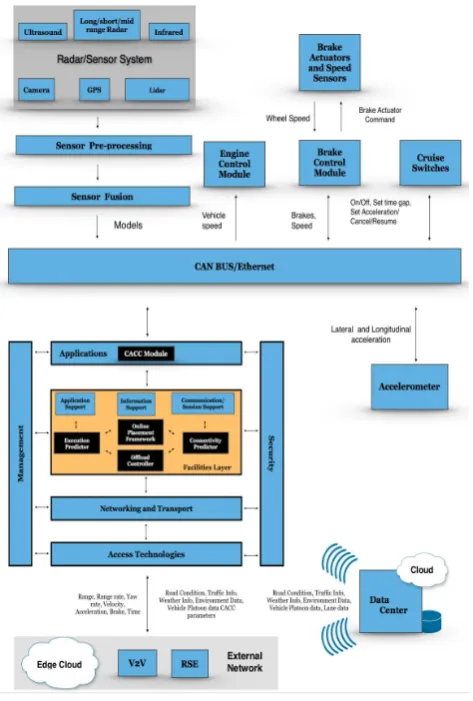
The overall on-board data flow diagram of CCC has been illustrated in Figure 9. This illustration is important in order to perform a threat analysis upon CCC application.
The main components of the CCC are the Radar and Sensor systems. These are comprised of Radar based systems (long range radar and short/mid-range radar), Ultrasound sensors, Camera systems, Lidar systems and GPS systems. The workings of these sensors are beyond the scope of this study. However, the sensed data from these sensors are pre-processed and fused to form a multi-object detection from different sensors. Fusion of data is mandatory for overcoming the errors from different sensors [18]. These sensors also include the wheel sensors, yaw rate sensors and other motion sensors that are vital for a vehicle’s movement [19].
Figure 9, comprises of V2V and V2I communication. The vehicle also communicates with the data centre which provides cloud services. Moreover, the vehicle is in contact with the edge cloud, which keeps its source of immediate information available. With the help of Figure 9 a threat model can be constructed and visualised.
Figure 9: Overall on-board data flow diagram for CCC
3.4
Threat Modelling of CCC
Based on Phase 2 from Figure 6, a threat analysis shown in Figure 10 and 11 is performed considering the assets belonging to CCC as shown in Figure 9. A description of the assets is beyond the scope of this paper. The threat analysis considers the asset’s respective inputs, processes and outputs [20]. Using this, the threats are modelled to prevent a collision.
One of the ways to achieve this is by maliciously gaining access to the Electronic Control Unit (ECU) of a vehicle which can enable an adversary to eventually gain complete control of a vehicle [3]. Through external communication and in-direct access, a vehicle is vulnerable to numerous attacks, as illustrated in Figure 11. This could harm the critical operations such as acceleration and is therefore riskier to be offloaded. Most of the vulnerabilities are present at the software level, as stated by the authors in [21]. The critical data for the vehicle include it’s velocity, acceleration, GPS coordinates, and the vehicle’s sensor data, along with Personally Identifiable Information (PII), Vehicle ID, Engine performance and diagnostic information.
[image:8.595.310.558.72.395.2] [image:8.595.56.293.143.494.2]Figure 10: On-board Threat analysis of CCC
Figure 11: Threat analysis of CCC based on external communication.
4.
MODEL VALIDATION
[image:8.595.313.544.385.631.2]the proposed model is derived from the inclusion of comparative analysis and the Delphi method. In addition, the quality of the model was improved by feedback from experts in this domain in two separate rounds.
Table 1. Information of participants
Partici-pant
No.
Role Experience
(yrs) Interview Mode
P1 Lead Engineer in Automotive
systems 4 In-person
P2 PhD Researcher in Human Machine Interface for Autonomous Vehicles
1 In-person
P3 PhD Researcher in Automotive Intrusion Detection System
1-2 In-person
P4 Associate Professor in
Autonomous Vehicles 5 In-person
P5 Engineering Doctorate in ITS 1 In-person
P6 Principle Fellow (Cyber security
in Vehicles and IoT) 20 In-person
P7 PhD researcher in Autonomous
Vehicles 5 In-person
P8 Post-Doctoral Research
Associate: Vehicular Cloud 10 Skype
P9 Reverse Engineer for Vehicles, CEO, Network security Engineer
5-6 Skype
P10 Assistant Professor: Experimental automotive Engineering
5 In-person
The participants were chosen based on their experience and reputation in the fields of automotive and cyber security. Ten participants were chosen for the interviews from the UK and other international countries based on their automotive experience. In order to maintain anonymity, the participants are referred to as P1, P2, P3, P4, P5, P6, P7, P8, P9 and P10.
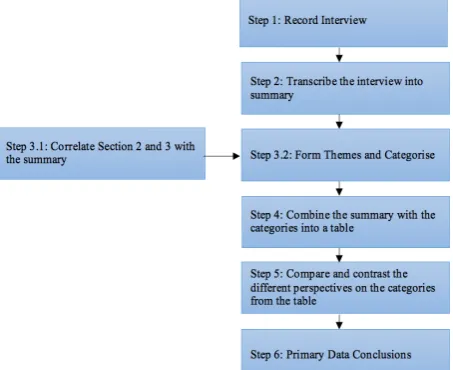
[image:9.595.316.541.193.355.2]Form Figure 12, it can be seen that the analysis was divided into 6 steps. Step 1 demonstrates that the interview was recorded. Step 2 involves the transcription process where the interview was summarized in the form of tabulation. The literature reviews in Section 2 are correlated with the summaries formed in Step 3. Next, Step 4 combines the summaries with the formulated themes.
Figure 12: Flow Chart for Interview Analysis.
Step 5, as mentioned in Figure 12, is involved in the process of comparing and contrasting the different perspectives based on themes which help us form conclusions concerning the primary data collected for the purpose of validation from the participants. Figure 13 illustrates the themes that are formed for addressing the research gaps and locating the data storage and computation for CCC. The themes are framed in a broader perspective from Step 1, in order to understand the opinions of Collaborative Vehicles, ITS and Vehicular Cloud, and narrows down to Step 10 for data taxonomy. Finally, Step 11 validates the model and addresses the issues.
Figure 13: Classification of themes for validation of Application Model.
5.
CONCLUSION AND FUTURE WORK
Different Vehicular Cloud and Edge Cloud implementations are identified for the collaborative framework of ITS. Thus the ITS architecture is identified but does not consider a secure data taxonomy. Next, a critical analysis of threat modelling approaches is conducted for vehicles to identify the impact caused by harmful data. Overall dataflow of CCC and an overall OBU diagram for CCC are created and a threat analysis is performed. Based on the results, a discussion is formulated for the purpose of creating a data taxonomy for CCC.
According to the research gaps, interviews are conducted to gain feedbacks from the experts. With the help of the primary data collected, a preliminary analysis is performed to identify the critical operations and data for CCC while correlating CCC’s overall models. This helped form primary data conclusions. Later, an analysis was performed on the literature in order to gain an insight into creating a data taxonomy. This brought to attention the critical question of who would be responsible for the data being computed, if offloaded. However, considering the safety-criticality of the function, the objective has successfully classified critical data and operations such as image and sensor recognition to be computed on-board, fundamental value added services such as location oriented events to the edge cloud and strategic decisions such as map data to the vehicular cloud.
[image:9.595.58.285.542.727.2]raised a major concern for the standardisation of ITS architecture for a further reliable development in the domain, in order to integrate automotive manufacturers and governments in the development of ITS.
However, trust being a major factor for vehicles to make decisions, further research is required to determine the level of trust needed for data being transmitted between different collaborative entities. This is because an adversary can alter any critical data and encrypt it in an authentic manner, before transmitting it to the neighbouring vehicles. This has brought innovative answers from the participants, some of which contribute towards the development of a concept of web-of-trust among vehicles, or of maintaining web-of-trust if the vehicles happen to travel in the same road segment and communicate with the RSU regularly. In addition, different levels of automation require different levels of data administration. However, autonomous vehicles require stable communication and robust security to monitor and maintain the vehicle as it is exposed to numerous acts of human interference. Due to these issues, further research is necessary to determine the level of security corresponding to different levels of automation.
Finally, ITS is exposed to different types of vehicles, each-with different communication capabilities. Because of these issues, extensive research is needed in order to determine which standards are required to support secure interoperability between the ITS technologies among the heterogeneous vehicles. Looking at collaborative vehicles from a broader perspective, this research has determined the computation of CCC’s data. However, further study of how this data can be used for different applications and who will hold responsibility for the data also needs to be addressed.
6.
ACKNOWLEDGEMENT
This work is partially conducted under international technology R&D collaboration program which is supported by the Ministry of Trade, Industry & Energy (MOTIE) and Korea Institute for Advancement of Technology (KIAT) (N0001710).
7.
REFERENCES
[1] V. A. F. Almeida, D. Doneda, and M. Monteiro, ‘Governance Challenges for the Internet of Things’, IEEE Internet Comput., vol. 19, no. 4, pp. 56–59, 2015.
[2] P. Papadimitratos, A. La Fortelle, K. Evenssen, R. Brignolo, and S. Cosenza, ‘Vehicular communication systems: Enabling technologies, applications, and future outlook on intelligent transportation’, IEEE Commun. Mag., vol. 47, no. 11, pp. 84–95, 2009. [3] K. Koscher, A. Czeskis, F. Roesner, S. Patel, T.
Kohno, S. Checkoway, D. McCoy, B. Kantor, D. Anderson, H. Shacham, and S. Savage, ‘Experimental security analysis of a modern automobile’, Proc. - IEEE Symp. Secur. Priv., pp. 447–462, 2010. [4] M. Gerla, ‘Vehicular cloud computing’, Ad Hoc Netw.
Work. 2012 11th Annu. Mediterr. Ad Hoc Netw. Work., pp. 152–155, 2012.
[5] A. Ashok, P. Steenkiste, and F. Bai, ‘Enabling Vehicular Applications using Cloud Services through Adaptive Computation Offloading’, Proc. 6th Int. Work. Mob. Cloud Comput. Serv. ACM, pp. 1–7, 2015. [6] W. He, G. Yan, and L. Da Xu, ‘Developing vehicular data cloud services in the IoT environment’, IEEE Trans. Ind. Informatics, vol. 10, no. 2, pp. 1587–1595, 2014.
[7] H. Abid, L. T. T. Phuong, J. Wang, S. Lee, and S. Qaisar, ‘V-Cloud: vehicular cyber-physical systems and cloud computing’, Proc. 4th Int. Symp. Appl. Sci. Biomed. Commun. Technol., p. 165, 2011.
[8] E. Qin, Y. Long, C. Zhang, and L. Huang, ‘Cloud computing and the internet of things: Technology innovation in automobile service’, Int. Conf. Hum. Interface Manag. Inf., vol. 8017 LNCS, no. PART 2, pp. 173–180, 2013.
[9] F. Bonomi, R. Milito, J. Zhu, and S. Addepalli, ‘Fog Computing and Its Role in the Internet of Things’, Proc. first Ed. MCC Work. Mob. cloud Comput., pp. 13–16, 2012.
[10] S. Bitam and A. Mellouk, ‘ITS-Cloud: Cloud Computing for Intelligent Transportation System’, Int. J. Soft Comput. Eng., vol. 2, no. 3, pp. 568–572, 2012. [11] C. Shi, P. Pandurangan, K. Ni, J. Yang, M. Ammar, M. Naik, and E. Zegura, ‘IC-Cloud: Computation Offloading to an Intermittently-Connected Cloud Cong’, 2013.
[12] R. Bossom, R. Bringolo, T. Ernst, K. Evensen, A. Frotcher, E. Hofs, J. Jaaskelainen, Z. Jeftic, P. Kompfner, T. Kosch, I. Kulp, A. Kung, A.-K. Mokaddem, A. Schalk, E. Uhlemann, and C. Wewetzer, ‘D31 European ITS Communication Architecture: Overall Framework Proof of Concept Implementation’, Information Society Technologies, 2009.
[13] A. Shostack, Threat Modelling: Designing for security. 2014.
[14] P. Saitta, B. Larcom, and M. Eddington, ‘Trike v. 1 Methodology Document’, 2005.
[15] C. Alberts, A. Dorofee, J. Stevens, and C. Woody, Introduction to the OCTAVE Approach, no. August. Pittsburgh, 2003.
[16] C. McCarthy, K. Harnett, and A. Carter, ‘Characterization of Potential Security Threats in Modern Automobiles A Composite Modeling Approach’, Washington DC, 2014.
[17] CVRIA, ‘Connected Vehicle’, Aug-2016. [Online]. Available:
http://www.iteris.com/cvria/html/about/connectedveh icle.html. [Accessed: 02-Aug-2016].
[18] Texas Instruments Inc., ‘Paving the way to self-driving cars with advanced driver assistance systems’, 2015.
[19] C. Nowakowski, S. E. Shladover, and D. Cody, ‘Cooperative Adaptive Cruise Control : Testing Drivers ’ Choices of Following Distances’, California PATH, 2011.
[20] M. Zhao, Advanced Driver Assistant System: Threats, Requirements, Security Solutions (White Paper). Intel Labs, 2015.
![Figure 2: ITS Cloud [10].](https://thumb-us.123doks.com/thumbv2/123dok_us/9451723.452373/3.595.317.543.165.291/figure-its-cloud.webp)
![Figure 4: Overview model of IC-Cloud Architecture [11].](https://thumb-us.123doks.com/thumbv2/123dok_us/9451723.452373/4.595.56.284.503.698/figure-overview-model-of-ic-cloud-architecture.webp)
![Figure 5: ITS architecture [2], [12].](https://thumb-us.123doks.com/thumbv2/123dok_us/9451723.452373/5.595.52.285.79.317/figure-its-architecture.webp)