Fourth Periodic Report
on the Work of the NESF
Contents
Foreword by the Taoiseach Mr. Bertie Ahern T.D. 4
Executive Summary 7
Section I Introduction 19
Section II Lone Parents 29
Section III Re-Integration of Prisoners 47
Section IV Equality Issues 67
Section V Early School Leavers 83
Section VI Equity of Access to Hospital Care 105
Section VII Conclusions 123
Annex 1 Terms of Reference and Constitution of the NESF 152
Annex II Membership of the NESF 153
Annex III List of NESF Publications 156
List of Boxes, Tables and Figures
Box 1 NESF 2001-2003 Work Programme 25
Box 2 NESF Report No. 20 on Lone Parents 31
Box 3 NESF Report No. 22 on the Re-integration of Prisoners 50 Box 4 NESF Report No. 23 on A Strategic Framework
for Equality Issues 69
Box 5 NESF Report No. 24 on Early School Leavers 85 Box 6 NESF Report No. 25 on Equity of Access to Hospital Care 108
Box 7 Approaches to Public Management 145
Box 8 Challenges to Promoting Social Cohesion 148
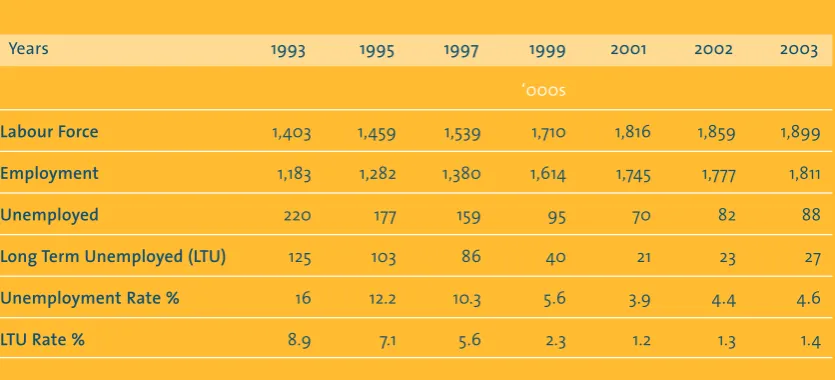
Table 1 Widening Market Income Shares in selected OECD Countries 76 Table 2 Irish Labour Force Trends, 1999-2003 125 Table 3 Unemployment Blackspots, at Electoral
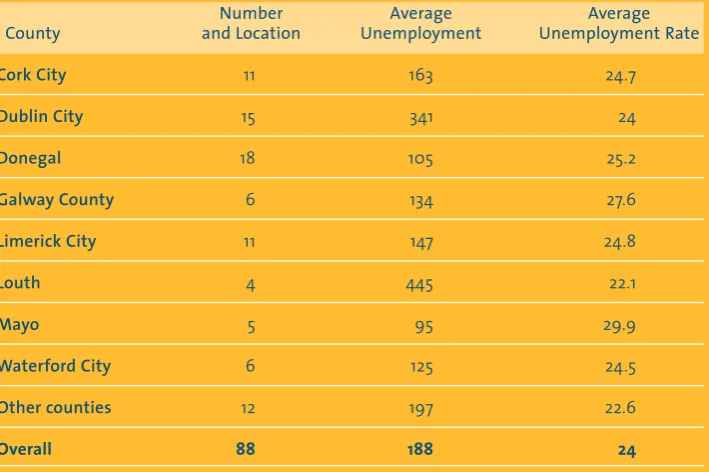
Division Level by County, in 2002 126
Table 4 Numbers (‘000s) Participating on
Active Labour Market Programmes 128
Table 5 National Employment Action Plan:
Summary of Referral Results, 2001-2003 131 Table 6 Tax Revenue as % of GDP for selected
OECD Countries and for GDP/GNP in Ireland 137 Table 7 Effective Tax Rates of the Top 400 Earners, 1999-2000 138
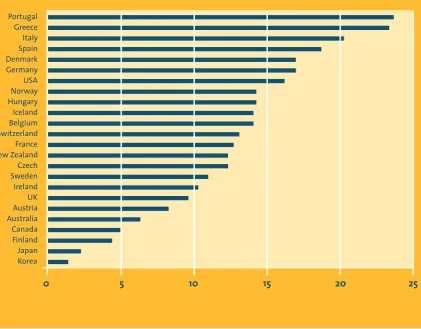
Figure 1 Main Social Partnership Institutions 22 Figure 2 Role of the NESF in the Policy Design Process 24 Figure 3 Income Inequality : Gini Coefficients
in Selected EU Countries 75
Figure 4 A Framework to Address Early School Leaving 97
Figure 5 Educational Disadvantage League 98
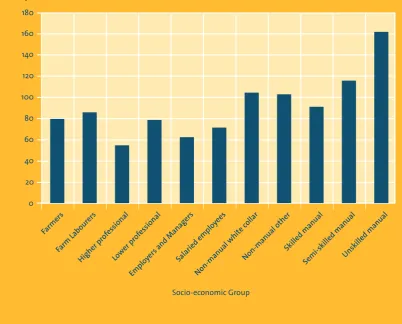
Figure 6 Distribution of the GMS GP Services in the Dublin Area 105 Figure 7 Government Expenditure on Health in EU Countries, 2002 115 Figure 8 Standardised mortality rates by socio-economic group 116
Figure 9 Social Spending Reduces Poverty 133
Foreword by the Taoiseach
The Fourth Periodic Report documents the National Economic and Social
Forum’s valuable work over the period 2001 – 2003 in carrying out its mandate
of monitoring and analysing the implementation of specific measures and
programmes identified in social partnership arrangements, especially those
concerned with the achievement of equality and social inclusion.
Government reaffirmed this role when reconstituting the Forum and renewing
its mandate in 2003. The particular focus in the Forum’s work on joined-up and
integrated approaches to policymaking and implementation across Departments
and State Agencies and seeking to define policy outcomes is influential. It is
essential that Government has such input into policy development and an
assess-ment of how programmes have performed to date.
In particular, in providing a forum for discussion and debate by elected politicians
and many of the main interest groupings in our society, the NESF brings together
a very wide range of experiences and perspectives with a view to understanding
more fully process and policy implementation issues. As well as the assessments
in the individual thematic areas, the common findings and lessons are instructive
for policy development in the future. The work in seeking to establish a new
dynamic balance in the policy design process that requires mobilising people in
new ways, encouraging experimentation and different approaches, identifying
successful pilot initiatives and establishing how best these can be accepted and
mainstreamed at national level will also be informative.
Bodies like the NESF can provide us with valuable advice on policy measures, how
best to target resources to those most in need and at the same time help to
advance our shared ambitions for a more inclusive society. Progress is, of course,
not all the time dependent on more resources and in many instances better
results can be achieved if we pool our experiences collectively and manage these
resources more effectively. The challenge for Government is to continue to make
real progress in implementing its social policy agenda. The NESF will have an
important advisory role to play through its own programme of work as well as by
providing further opportunity to engage individuals and groups for their views
on policy developments and implementation issues. I am happy that Government
agreed to expand the Forum’s role to give it a stronger role in facilitating public
consultation on policy matters to be referred to it from time to time by
Government. The intention is to give individuals and members of the community,
voluntary and other sectors an opportunity to express and discuss their views
and experience on selected issues. It is important that the voices of all are heard
and I look forward to seeing how this new aspect of the work develops. For
example, last year’s NAPS Social Inclusion Forum was able to contribute to the
National Action Plan against Poverty and Social Exclusion 2003–2005.
On behalf of the Government, I wish to thank the Chairperson, Dr. Maureen
Gaffney, the Deputy Chairperson, Ms. Mary Doyle, the Members of the NESF and
the Secretariat for their hard work, commitment and contribution to the work of
the NESF over the last three years.
Bertie Ahern T.D.
Taoiseach
1 This is the latest in a series of periodic reports which the NESF prepares from time to time for the purposes of reviewing implementation and follow through, mainly by Government Departments and State Agencies, on the reports that it has undertaken over a particular period of time in its work cycle.
2 In keeping with its mandate from the Government, the NESF’s project work evaluates and identifies barriers to the effectiveness of policy
interventions, looks at alternative options and seeks to generate new ideas for the successful implementation of policies, both at national and local levels. In providing a forum for discussion and debate by elected politicians and many of the main interest groupings in our society, the NESF brings together a very wide range of experiences and perspectives with a view to understanding more fully process and policy implementation issues.
3 A particular focus of its work is on: (i) joined-up and integrated approaches to policy-making and implementation across Departments and State Agencies, (ii) seeking to define policy outcomes(rather than the more traditional emphasis given to the level of resources allocated to specific programmes), and (iii) providing a stronger voice for local commu-nities and marginalised groups. The NESF also backs up its findings with evidence-based material wherever possible. For this purpose, it draws on research findings and pilot initiatives, both here at home as well as in other EU countries, and also from the work of international bodies such as the EU, the OECD and the World Health Organisation. From time to time it commissions its own research, holds public consultation meetings in different parts of the country and generates new data from surveys that it conducts.
4 The present report deals with the work that was published by the NESF1
over the period 2001-2003 and attempts to assess the impact of this on Government policies and programmes. The NESF’s main conclusions are summarised below under the main policy themes and recommendations covered in these reports.
7
1The NESF’s publications comprise two types of documents, namely Reports and Opinions. Compared to its Reports, Opinions are shorter
Section II: Lone Parents
5 Some progress has been made on the recommendations in areas such as data collection and research, the provision of accommodation and community facilities and localisation in the payment of the One-Parent Family Payment (OFP).
6 Another issue highlighted in the report was the need for user-friendly information for lone parents on public services and, in this regard, the OFP information guide produced by the Department of Social and Family Affairs, in conjunction with lone parent organisations, is a welcome development. So too is the progress that has been made in the development of procedures and guidelines for Medical Card holders.
7 However, much greater progress is needed in other areas that were highlighted in the NESF report and these were supported in a recent OECD report. These include financial supports, access to social services and a better integration of provisions and the removal of barriers to participation by lone parents in education, training and employment. The new ‘Gateway for Women’ programme launched by FÁS is a positive step forward. Another key concern is the availability and affordability of childcare and of family-friendly policies.
8 Childcare costs impose a severe burden on lone parents. Relative to wage levels, these costs are more than double those elsewhere, which helps to explain why unemployment is also highest among lone parents here. At this stage, it is unlikely that this country will meet the childcare targets for 2010 that were set by the Barcelona European Council. The OECD has also called for a re-think of our policies on lone parents. However, the cutbacks in the 2004 Estimates may make it more difficult for lone parents to enter the labour market and may also lead to greater child poverty. But as against this, a number of improvements have been made in the Family Income Supplement and in the delivery of the Family Services Project and the Employment Support Service.
9 Greater progress is required to address the needs of non-resident fathers. These were singled out for attention by the NESF in its report which recommended that greater levels of support for those who have ongoing and regular contact with their children should now be given greater policy priority.
Section III: Re-Integration of Prisoners
10 The NESF welcomes the progress made in implementing the main thrust of its report and wishes to congratulate the Department of Justice, Equality and Law Reform and the Prison Service for this, particularly the recruitment of a Director of Regimes, the establishment of implementation structures and of outreach services such as accommodation and income maintenance and the publication of an information leaflet for those leaving prison. The
commitment to include prisoner integration in future Prison Business Plans and the inclusion of prisoners in social inclusion strategies, such as the NAPS, and developments in relation to meeting the accommodation needs of prisoners on release are also positive steps. The NESF also welcomes the recent statement by the Minister for Finance that having a criminal record need not necessarily prevent a person being appointed to a position in the Civil Service. The research recommendations by the Law Reform Commission in this area should be given priority.
11 However, the NESF is concerned at the pace of change in some instances, such as the system of Positive Sentence Management which has not yet come on stream. One option here would be to run a pilot project to demonstrate the value of and potential Exchequer savings from such an approach. It would be important in this that the voluntary sector’s expertise is called upon. Restorative justice approaches remain under-developed, as do post-release family supports.
12 While the Council of Europe’s report, following the visit here by its Committee for the Prevention of Torture and Inhuman Treatment or Punishment, identified positive aspects of our system, nevertheless, concerns were also raised and these need to be addressed by the authorities here.
13 The objective of this report was to join up policy design and agreement on the one hand with policy implementation on the other, using models of implementation to achieve this linkage. The indications are that real progress has been achieved. Now that the foundation work is nearing completion, it is hoped that the pace of progress will increase and that Positive Sentence Management will soon become a reality and that the remaining recommendations, such as restorative justice approaches and post-release family supports, will be addressed.
Section IV: Equality Issues
14 The NESF acknowledges the important progress made in recent years with the passage of major new legislation in the areas of employment and equal status, and the establishment of new institutions and mechanisms such as the Equality Authority, the Office of the Director of Equality Investigations, the National Disability Authority, the Human Rights Commission and most recently the enactment of the Equality Act 2004.
15 However, there are major challenges to be tackled in this area, as evidenced by the levels of income inequality and relative poverty in our society (these are among the highest levels in the EU), the striking inequalities in access to public services such as education and health -which are referred to in other Sections of the report - and the range and volume of discrimination cases that were outlined in the recent 2003 Annual Report of the Equality Authority. The increases in public service charges and more restrictive conditions for some schemes will hit the poor and the less well-off members of our society the hardest.
16 The social partnership agreement, Sustaining Progress, contains
important commitments to mainstreaming and equality proofing in policy-making and services provision in the public sector and the NESF looks forward to its recommendations being taken into account in implement-ing the actions set out in the equality framework of that agreement.
17 Steady progress has been made by Departments in following up on some of the NESF recommendations – such as equality proofing the National Employment Action Plan and the National Anti-Poverty Strategy; reviewing the extension of the equality legislation to include socio-economic status, trade union membership, criminal conviction and political opinion (this should also include a re-examination of the exemptions allowed under the 2000 Equal Status Act); developing policy mainstreaming in the public sector; and the collection of new statistics on equality issues which will be helpful for policy development and imple-mentation purposes.
18 The pilot projects on equality proofing should be published and the results widely disseminated throughout the public sector. At this stage, it would be timely for an overall review to be carried out on the progress made in implementing the equality dimensions of the Strategy Statements of Government Departments and Offices. The progress made in
developing gender equality in the Civil Service could also now serve as a benchmark in other equality areas while the preparation of national action plans on racism and on equality for women could also be usefully deployed in the other areas covered by our equality legislation.
Section V: Early School Leavers
19 Reasonable progress has been made by the Department of Education and Science in implementing the recommendations that were made by the NESF. Of particular note is the greater focus now being placed on the early
childhood years and also the review of educational disadvantage initiatives that is currently being undertaken by the Educational Disadvantage Committee. Education expenditure needs to be concentrated on the early years and the increase in per capitaspending at primary level in the 2004 Estimates is, therefore, welcome.
20 The NESF attaches special importance to this as well as to the parallel review that was undertaken by the OECD on early childhood education provision. Given the ad hocway that different schemes were introduced in recent years, there is confusion and possible overlap between them and a real need, therefore, for rationalisation and better integration to be introduced in the system. Early school leaving has also to be linked in with an integrated lifelong learning framework, the development of flexible second-chance learning opportunities and greater recognition by our educational system of the accreditation of prior learning.
21 Looking to the future, the NESF would be hopeful that some of its outstanding recommendations will be taken into account particularly when the above report by the Educational Disadvantage Committee has been completed. As highlighted in its own report, educational disadvantage, given its close links to poverty, has to be tackled on a multi-dimensional basis. In this regard the NESF welcomes the emphasis in the NAPS to tackling the root causes of poverty and seeking ‘to ensure that all young people leave the educational system with an adequate education and related qualifications to support their full participation in the economy, in employment and in society’.
22 Finally, the NESF also welcomes the priority given to tackling educational disadvantage in Sustaining Progressand to the commitment given there that the framework set out in its own report will be taken into account in the implementation of policy initiatives in this area.
Section VI: Equity of Access to Hospital Care
23 The NESF welcomed the Government’s 2001 Health Strategy which it saw as an important advance in its forthright commitments to tackling the problem of equity in access to hospital care for public patients.
However, the recent increases in hospital charges and raising the threshold for the drugs payments scheme will hit poor people hardest and it is now clear that the target of eliminating hospital lists by 2004 will not be met.
24 The difficulties in our health system are most in evidence in the closure of hospital beds that had been designated for public patients, while access by private patients is largely unaffected. The National Treatment Purchase Fund (NTPF) is welcome, but it is difficult to reconcile this with the closure at the same time of hospital beds. We now have one of the lowest ratios of acute hospital beds per head of population in the OECD. The NESF’s proposal that data on ‘waiting times’should also reflect time spent before seeing a specialist has not been acted on. The fixing by the NTPF of a 3-month deadline for hospital treatment is a positive development. Publication of the legislation on rights of access to services should be given greater priority.
25 The decision to establish the Health Services Accreditation Board allays to some extent one of the NESF’s concerns on risks to the undermining of standards in public hospitals. The NESF also welcomes the comprehensive steps taken to developing the partnership approach as the basis to addressing the changes and challenges that are needed at all levels in the system. However, more needs to be done in having a fully-established and resourced Community and Voluntary Sector (CVS) Unit in the Department and in the development of a ‘partnership approach’ for this Sector. But this will help only if the public system is adequately resourced and financed.
26 Lack of resources is no longer the stumbling block that it used to be – with the substantial increases in recent years our spend on health, in terms of share of GNP, is now above the EU average while in per capita terms we are the eighth highest. Further investments will be difficult to justify without major management changes to achieve better value for money, greater effectiveness in the use of budgetary allocations and a review of all options (including that of a comprehensive social insurance system) on how the system is financed. While there has been critical comment on the delays in implementing the Programme of Reforms (dealing with the Brennan and the Prospectus reports) that were announced by the Government in June 2003, these have now been addressed with major institutional changes such as the establishment of the interim Health Services Executive, the Health Information and Quality Authority and related structures. These will be underpinned by a significant legislative programme that is expected to be in place early next year.
27 The Government’s Health Services Reform Programme provides a unique opportunity to achieving greater equity for the most vulnerable groups in our society. For this purpose, fundamental structural changes to the public-private mix in our public hospitals is needed. In this regard, the NESF again repeats its call for an independent study of the alternative models and structures that are successful in other countries in providing more equitable access to their health care systems.
Section VII: Overall Conclusions
28 This concluding section highlights a number of policy issues under the following thematic headings:
— NESF’s Evolving Role;
— Overall Policy Impact of the NESF;
— NESF’s Structures and Working Methods;
— Future Policy Challenges; and
— EU Issues.
29 Although the NESF’s reports considered in this present periodic report deal with different policy issues, nevertheless, a number of common findings and lessons emerge which are of general interest and instructive for policy purposes in the future. The more notable of these are:
— avoid uniform “one size fits all approaches” to policy-making as social problems nowadays are getting more complex and require more flexible responses that are tailor-made to individual needs and circumstances;
— encourage and reward innovation and have established channels to feed back and disseminate the results of successful pilot initiatives;
— seek to ensure that policies are evidence-based and draw on the best available research, best practice and international experience;
— management structures should ensure that policy-making and implementation becomes more transparent, participative, with access to and sharing of information and openness to new ideas, together with more effective delivery and consultative mechanisms;
— monitoring and evaluation should be built-in features of all programmes and policy measures, and the results published for wider debate by the public at large;
— targets and policy outcomes should be defined clearly for the customer and better value for money should be secured in relating these in turn to the allocation and input of staff and resources;
— team-based and inclusive approaches at all levels in the system and with full involvement of front-line staff; and
— more widespread use of joined-up and integrated ‘whole of govern-ment’ approaches, given that many social problems are complex and require coordinated policy responses to tackle more effectively the underlying root causes, as these cannot be resolved by Departments acting on their own; this was more than evident in some of the issues covered in this report, such as lone parents, prisoners, early school leavers and healthcare.
In this regard, it is significant to note that the PA Consulting Group’s Evaluation of the SMI2
identified the ‘challenge of implementation’ and the failure to develop adequate mechanisms to tackle cross-departmental/ cutting issues as the main themes to emerge from its review. This is also an important area of attention in other administrations e.g. the Cabinet Office in the UK3
.
30 In a recent report4
, which draws on international experience, a group of senior Irish public servants put forward a number of recommendations to improve this country’s capacity and capability to manage and deliver more effectively on cross-cutting issues as part of the next stage of the SMI reform process.
31 To help move this forward, the group suggests that a limited number of policy themes be selected for priority attention (referred to as ‘strategic results areas’), the involvement in this of the various stakeholders -namely the Government, the Oireachtas, Ministers and the Civil Service -
Executive Summary 13
2Evaluation of the Progress of the Strategic Management Initiative/Delivering Better Government, Modernisation Programme, 2002.
3Wiring It Up, a Performance and Innovation Unit Report, 2000, (http://www.cabinet-office.gov.uk/innovation).
4
and that this work should be subject to parliamentary scrutiny and systematic evaluation. The NESF wishes to add its support to these proposals and to add three comments:
— equality and social inclusion issues should be built into the strategic results areas that would be prioritised for attention;
— the social partners should also be added as one of the stakeholders and;
— partnership institutions such as the NESF should also be given a role in this process.
32 Important progress has been made in recent years in addressing data deficiencies and moving towards more evidence-based methods, as a basis for the design and delivery of more effective public policies. Nowhere is this more necessary than in the social policy area where we still have incomplete information and knowledge on the nature of problems and factors involved, the needs of clients, the targeting of and impact of interventions, what policies and programmes work best and who should be consulted and involved in this process and how. There is also a pressing need to generate new ideas and thinking and, for this purpose, to
synthesise and link in more fully with research work and best inter-national practices.
33 But this work tends to be undertaken on an ad hocbasis and the NESF considers that this should now be moved forward and developed on a more structured basis. The Steering Group under Sustaining Progressis uniquely placed to play a lead role in this. For this purpose, it is suggested that a research panel might be established with the involvement of bodies such as the ESRI, the Universities, NESDO, the Combat Poverty Agency, the Equality Authority and the Office for Social Inclusion. In the UK, for example, the Strategy Unit in the Cabinet Office has been given the task of promoting and supporting the development of evidence-based policy making (http://www.strategy.gov.uk).
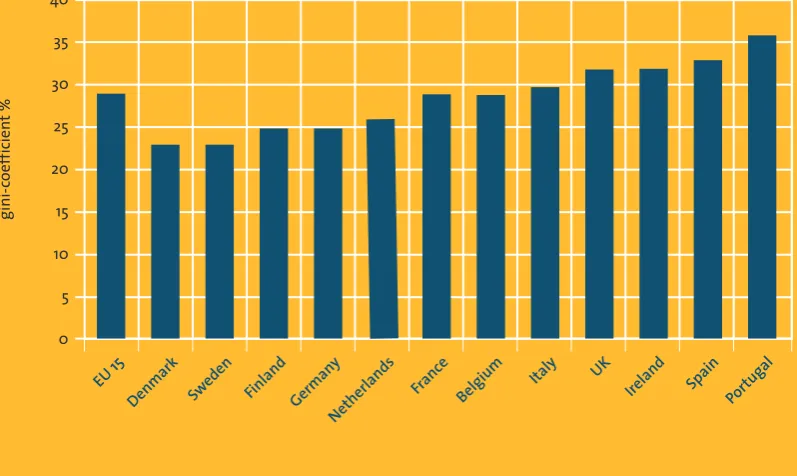
34 Despite the remarkable economic progress made in recent years we still have one of the highest levels of income inequality in the EU5
. We now have the resources to tackle this more decisively than was the case in the past, but what is required is a greater understanding and agreement of the determinants and the relationships between economic and social progress in our society. Forfás has put this succinctly6
:“Economic dynamism and social progress go hand in hand. An innovative, enterprising economy offers the best opportunity to construct a fair and inclusive society in which all can contribute to and benefit from rising prosperity”.At international level, a recent ILO report has highlighted the need for more inclusive debates and for greater emphasis to be given to developing the social dimension of globalisation7
.
14 NESF Report No. 30
5The Social Situation in the European Union 2003, European Commission (Brussels, 2003).
6Forfás Annual Report 2002 (May, 2003).
7
35 The slowing-down in our economy since 2001 will require harder choices to be made in establishing priorities in the allocation of resources, on financing issues and who pays, ensuring greater equity in access to resources and opportunities for everybody and in the process seeking to build a more cohesive, vibrant and inclusive society. The NESF has played a role in giving poverty and social inclusion issues a higher priority on the agenda of policy-makers and in successive social partnership agreements in recent years. Associated with this, it has also played a role in having the community and voluntary sector accepted as a new pillar to social
partnership back in 19968
.
36 Governments and elected political representatives have, of course, the duty and the democratic mandate to take final decisions on policy matters9
. But the quality and effectiveness of these can be enhanced by consulting with and taking account of the views of advisory bodies such as the NESF which, because of its wide-ranging membership, has the capacity and expertise to assess the impact of policies on those most directly affected.
37 Similarly, the recently-established Community and Voluntary Fora at local authority level have a valuable role to play in involving communi-ties in decisions by State bodies and agencies at local levels, including also the work of the County/City Development Boards and that of the Local Authority Strategic Policy Committees. The gains to be got from further developing the role of these Fora were highlighted in the NESF’s most-recently published report10
.
38 At international level, the importance and value of social partnership and engagement with civil society in the policy-making process has been highlighted succinctly by the OECD11
:
‘Engaging the public in policy-making is a sound investment and a core element of good governance. It allows governments and international organisations to tap wider sources of information, perspectives and potential solutions and improves the quality of the decisions reached. In addition, it allows the public to understand the basis of government policy decisions, whether they are taken at the national or international level. In this way, it contributes to building trust in government and international co-operation, raising the quality of democracy and strengthening civic capacity’.
The NESF is fully supportive of and subscribes to the above sentiments.
39 The present social partnership agreementSustaining Progress 2003-2005contains important commitments to building a fairer and inclusive society and to ensuring ‘that people have the resources and opportunities to live life with dignity and have access to quality services that underpin life chances and experiences’.This will involve major challenges and
Executive Summary 15
8Post PCW Negotiations – A New Deal?, NESF Opinion No. 4 (August, 1996).
9In her Opening Address last July at the MacGill Summer School, the Tánaiste, Mary Harney TD, stressed that social partnership is not
meant to limit the scope of political debate and political ideas or to replace decision-making by the Dáil and by the Government.
10The Policy Implications of Social Capital, NESF, October 2003.
choices in having the programmes and policies in place to deliver on these objectives and the NESF, whose new membership has recently taken up office, will seek to play its full part in contributing to this process.
40 Finally, the new National Economic and Social Development Office (NESDO) could play a key role in undertaking a proposed review of social partnership, both its strengths and its weaknesses, with a view to identifying options for its further development and enhancement in the future.
Acknowledgements
41 Lastly, the NESF wishes to record its appreciation to all those Departments and Agencies who assisted in the preparation of this report. A list of those involved, together with the abbreviations used in the text of the report, is as follows:
— D/ES :Department of Education and Science,
— D/ETE:Department of Enterprise, Trade and Employment,
— D/EHLG:Department of the Environment, Heritage and Local Government,
— D/F: Department of Finance,
— D/FA:Department of Foreign Affairs,
— D/HC:Department of Health and Children,
— D/JELR:Department of Justice, Equality and Law Reform,
— D/SFA:Department of Social and Family Affairs,
— D/CRGA:Department of Community, Rural and Gaeltacht Affairs,
— D/T:Department of the Taoiseach,
— CSO:Central Statistics Office, and
— FÁS:Foras Áiseanna Saothair.
Aims of the Periodic Reports
1.1 The NESF publishes these reports from time to time in order to:
— outline the work it has undertaken over a particular period of time;
— identify and comment on what follow-up action has been taken by the Government on its recommendations;
— revise and/or add to these recommendations, as may be necessary with the passage of time and also in the light of its consultations with Government Departments; and
— draw any other conclusions with a view, in particular, to enhancing its work methods and its policy input to the Government’s decision-making processes.
Structure of the Periodic Report
1.2 The present report deals with the work undertaken by the NESF under its 2001- 2003 Work Programme. Each Section of the report deals with an individual NESF Report or Opinion12
in the following sequence:
— outline of the main features and recommendations;
— follow-up action taken by Government on these recommendations; and
— the NESF’s overall conclusions, including in some cases revised or further policy recommendations to Government.
NESF’s Reconstitution
1.3 The NESF was originally established by the Government in 1993 for the purposes of contributing to the formation of a wider and more inclusive national consensus on major policy issues such as long-term
unemployment, disadvantage and inequality in our society. A particular focus of its work was to develop initiatives to combat unemployment.
19
Introduction
12The NESF’s publications comprise two types of documents, namely Reports and Opinions. Compared to its Reports, Opinions are shorter
1.4 In December 1997, the NESF published an important report13
as an input to the review that was underway at that time by the Government on the social partnership institutions. That report centred on a number of key institutional reforms, relating essentially to the National Economic and Social Council (NESC) and the National Economic and Social Forum (NESF), that were accepted and on this basis the Government decided to:
— revise the terms-of-reference for both the NESF and the NESC to ensure that their activities are more fully complementary;
— change the membership of both bodies to reflect more fully the various strands of the social partnership process; and
— place these bodies on a statutory basis14
and, in that context, to facilitate better co-operation and sharing of support services between these bodies.
1.5 The impact of these decisions as they relate to the NESF over the 1998-2002 period of its work, which is covered in this report, is outlined in the following paragraphs.
NESF’s Current Mandate
1.6 The work of the NESF is now more closely focused on the detailed monitoring of initiatives taken in the context of national social partnership agreements, especially with regard to social exclusion and equality. This is particularly aimed at ensuring that the views and experiences of all those affected by these measures are more fully and effectively taken into account in the policy design and implementation stages15
.
1.7 In renewing its mandate last year, the Government decided to expand the NESF’s working methods so as to give it a stronger role in facilitating discussion and dialogue. What is envisaged here is an expansion of its present role where, for example, the NESF convenes as part of the NAPS institutional structures, the annual meeting of the NAPS Social Inclusion Forum.
NESF’s Membership
1.8 The widening of the NESF’s membership in 1998 involved the addition at that stage of a Fourth Strand which includes representatives of a number of Government Departments, Local Government (General Council of County Councils, Association of Municipal Authorities and the Association of County and City Managers) as well as a number of Independent Members.
20 NESF Report No. 30
13A Framework for Partnership – Enriching Strategic Consensus through Participation, NESF Report No.16 (December 1997).
14The National Economic and Social Development Office, Bill 2002 will place the NESC, the NESF and the NCPP on a statutory basis has now
passed the second stage in the Dáil.
15
1.9 In parallel with the negotiations on Sustaining Progress,and arising from a commitment in the Agreed Programme for Government,a review of participation in social partnership was carried out last year. As a result of this, the community and voluntary pillar was expanded. The individual membersare: CORI, ICTU Centres for the Unemployed, the INOU, the National Youth Council of Ireland, Protestant Aid and the Society of Saint Vincent de Paul. The strand membersrepresent: Older People, Disability, Housing, Children, Rural, Local/Voluntary and Care and are: the Irish Senior Citizens Parliament, Age Action Ireland, the Disability Federation of Ireland, the Irish Council for Social Housing, the National Association of Building Cooperatives, and Children’s Rights Alliance, Irish Rural Link, The Wheel, and the Carer’s Association. The strand reflects the dominant policy interests of the organisations but is not confined to issues relating only to that interest.
1.10 The representation of the community and voluntary strand in the NESF is wider than that of the community and voluntary pillar of social partner-ship and the Government agreed that this should continue. The revised composition of the community and voluntary strand of the NESF reflects this and the changed composition of social partnership (see Annex II to this report).
1.11 The addition of the new groups mentioned above will enhance the status and diversity of the NESF’s work and can be considered in the context of governance and new public management where the emphasis is on participation, deliberation, decentralisation and innovation (Scott and Trubek, 2002)16
. A recent publication from the OECD17
breaks new ground in identifying key competencies that are essential for personal and social development in modern complex societies and the NESF will, in due course, be returning to the issues raised there.
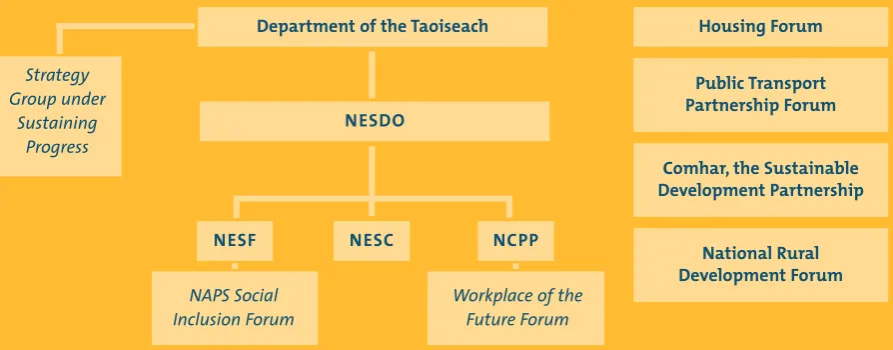
1.12 The principal social partnership institutions now are the NESC, the NESF and the National Centre for Partnership and Performance (NCPP). The Government agreed last year to the continuation of the NESC, NESF and the NCPP for a period of three years, and that the NESF would continue with its remit in relation to equality and social inclusion. As already mentioned, it was also agreed to expand the NESF working methods to give it a stronger role in facilitating discussion and dialogue.
1.13 Social partnership institutions also include other participative structures (see Figure 1 below) such as Comhar, the Housing Forum and the NAPS Social Inclusion Forum. The membership of these latter bodies can include representation from groups outside social partnership with an expertise in a particular area. Involvement in these fora is determined by the nature of the issue or task involved and is primarily a matter for individual
Departments or managing authorities involved.
Introduction 21
16European Law Journal, Volume 8, No. 1 (March, 2002).
22 NESF Report No. 30
18Public Audit and Accountability Regimes, IPA/CIPFA Conference, Dublin, December 2003.
19The Adaptive State: strategies for personalising the public realm, Demos, December 2003 (www.demos.co.uk).
20
For an example of the innovative work in this area, see Creating Public Value, Professor Michael Moore, School of Government, Harvard University.
1.14 Given the complexities of modern-day living, policy responsibilities have to be increasingly shared nowadays between Government Departments at central level but also between the centre and local levels with Local Authorities and State Agencies and other bodies. In a recent address18
the Comptroller and Auditor General raised the issue of how the risk-averse culture of civil servants may act against the national interest. He went on to express concern lest any reports from his Office, in the current climate, might discourage public managers from taking risks in the interests of innovation and improvements and to explain that, as far as he is concerned, the important thing to ensure is that public servants are not prevented from “doing the right thing at the right time in the right way”.
1.15 More generally across OECD countries, the quality of public services is increasingly a topic for major political debate. Reforms in this area are seen to require building up adaptive capacity and of ‘thinking outside the box’ by all public sector organisations at every level in the system19
. Here, the challenge is how to harness this to the creation of public value20
[image:22.595.67.514.139.314.2](in areas such as fairness, equity and responsiveness) and the provision of persona-lised services that respond better to and are shaped more by individual needs. This will entail new structures of governance, decentralisation to local levels with the centre focusing more on system-wide innovation, and greater risk-taking and experiential learning, and more resourcing and accountability in the public sector.
Figure 1
Main Social Partnership Institutions
Department of the Taoiseach
NESDO
NESF
NAPS Social Inclusion Forum
Workplace of the Future Forum
NESC NCPP
Housing Forum
Public Transport Partnership Forum
Comhar, the Sustainable Development Partnership
National Rural Development Forum Strategy
Group under Sustaining
NESF’s Structures and Working Arrangements
211.16 Notwithstanding the changes that were outlined above, the NESF remains the largest and most representative of the social partnership institutions22
. One of its continuing and distinctive features is that it includes elected members of the Oireachtas (both Dáil and Seanad) across all the main Political Parties, including Government as well as the Opposition Parties. This has been added to with the inclusion of elected members of the Local Authorities.
1.17 With its independent Chairperson and Secretariat, the NESF now works through the following structures:
— Plenary Sessionsof the NESF’s full 62 Members which debate,inter alia, the Work Programme and Reports / Opinions prepared by its Project Teams and / Ad HocGroups; these Sessions are normally held in Dublin Castle, with the media, outside experts, officials and invited guests in attendance; Ministers and Opposition Spokespersons may also be invited to attend and participate at these Sessions;
— A Management Committee(which includes 3 representatives from each of the NESF’s 4 Strands) meets on a regular basis to keep under review the NESF’s overall effectiveness and functioning; its more specific functions include formal adoption of the NESF’s Work Programme and of the Reports / Opinions in the light of previous debates at Plenary level as well as deciding on organisational and procedural issues;
— Ad HocWorking Groupswhich are established from time to time, either on the initiative of the full NESF meeting in Plenary Session or of its Management Committee, to consider specific issues; and
— Project Teamswhich are the main bodies involved in the preparation of Reports; their membership comprises balanced representation, usually not more than three, from each Strand, with particular account taken to ensure representation by the local and/or specialised elements of the national social partnership organisations.
1.18 Reflecting the decisions taken by the Government at end-1997 to establish closer institutional relations between the NESC and the NESF23
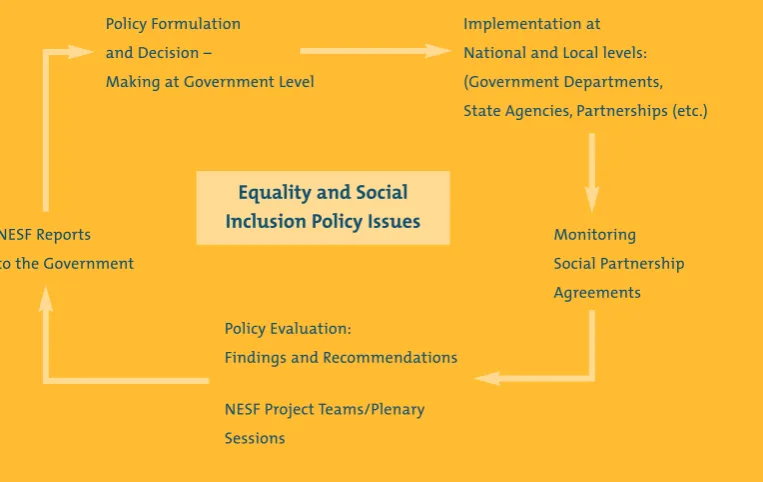
, particularly with a view to getting each body to focus on distinct parts of the policy-loop (policy-making, implementation and monitoring), Project Teams represent the major reform introduced by the NESF since that date. In essence, the work of these Teams is specifically directed at:
— evaluating the effectiveness of policies;
— identifying corrective action and / or timely changes to ineffective policies; and
— improving policy-making by better informing and influencing the reshaping of strategic policy analysis and formulation.
Introduction 23
21Details of these arrangements are given in Annex IV of the report.
22A full list of the current Members of the NESF is given in Annex II to this report and its publications to date are listed in Annex III.
23
The NESF’s role in the policy design process is illustrated in Figure 2 below.
1.19 The work of the Project Teams is specifically geared to solving problems, addressing particular policy issues and bringing an “added value”
dimension to bear on policy-making through identifying, where possible, new thinking and alternative options. The Teams also seek to ensure that their recommendations are
— specific and actionable (both in their content and to whom they are addressed), are
— supported by underlying analysis, are costed where this is feasible and are also prioritised.
[image:24.595.86.468.184.425.2]24 NESF Report No. 30
Figure 2
Role of the NESF in the Policy Design Process
Equality and Social Inclusion Policy Issues NESF Reports
to the Government
Monitoring
Social Partnership
Agreements Policy Formulation
and Decision –
Making at Government Level
Policy Evaluation:
Findings and Recommendations
NESF Project Teams/Plenary
Sessions
Implementation at
National and Local levels:
(Government Departments,
1.20 The Teams are also assisted from time to time by outside experts and may appoint Project Leaders to provide impetus and direction to their work. Another novel feature is that the Teams occasionally hold local consultations with various interests and focus groups throughout the country as well as invite written submissions from the public to assist them in their work.
1.21 Finally, the NESF’s reports are submitted to Government, usually with a short delay to allow time for their consideration and the issuing of a Press Statement setting out the Government’s reactions to a particular report’s policy findings and recommendations. Following this, the reports are published and circulated also to the Houses of the Oireachtas, Government Departments, and State Agencies as well as to other interest groups concerned in the private and community and voluntary sectors.
NESF Work Programme
1.22 The main policy themes that were included in the NESF’s 2001 - 2003 Work Programme are outlined in Box 1 beneath.
Introduction 25
Main Policy Themes p Lone Parents
p Re-integration of Prisoners
p Equality Issues
p Early School Leavers
p Equity of Access to Hospital Care
p Training for Older Workers
p Equality Issues for Lesbian, Gay and Bisexual People
p Social Capital
p Equality Issues for Older People
p NAPS Social Inclusion Forum
Box No. 1
24Equality Proofing Issues, NESF Report No.10 (February, 1996).
1.23 The NESF’s reports on Older Workers, Lesbian, Gay and Bisexual People, Social Capital and Older People were published more recently and, accordingly, it was decided to hold over and deal with these in the next Periodic Report. This will allow more time for Government Departments to consider their responses and the follow-up action they envisage taking on the recommendations in these reports.
1.24 A planned report on income adequacy was held over until such time as the Social Welfare Benchmarking and Indexation Group, established under the provisions of the Programme for Prosperity and Fairness,had reported. Eventually, it was decided not to proceed with this, given that the policy issues were subsumed in the negotiations that led to the new successor social partnership agreement,Sustaining Progress.
1.25 One of the immediate tasks of the in-coming NESF membership, which has recently taken up office, will be to draw up and agree a new Work Programme covering the period 2004-2006. As part of this process particular regard will be taken of the ten Special Initiatives in Sustaining Progressthat impact on poverty and social exclusion.
1.26 An on-going concern by the NESF in implementing its Work Programme is to ensure that:
— a problem-solving approach is adopted and targeted at responding to specific questions and aimed at resolving implementation difficulties in specific policy areas;
— duplication is avoided with other bodies and an “added value” dimension is brought to bear in its work processes;
— the work is prioritised so as to link in with and influence the Govern-ment’s own decision-making timetable as well as, in some instances, inputting into the negotiations on national social partnership agreements; and
— all work topics and reports take into account major policy framework documents such as the National Anti-Poverty Strategy and commit-ments given on social inclusion and equality, including in the latter context the NESF’s own report on Equality Proofing24
.
NESF’s Financing
1.27 The NESF is under the aegis of the Department of the Taoiseach and its activities are funded through an annual Grant-in-Aid from that Department. Its Annual Accounts are audited by the Comptroller and Auditor General.
Introduction
2.1 This report highlighted the rise of almost 50 % in the number of lone parents with children under 15 years of age who are potentially at risk of poverty. Over the period 1981-2001, the number of lone parents on the Social Welfare One-Parent Family Payment (OFP) increased from 12,500 to just over 73,000, a six-fold increase. More recent figures in the Third Volume of the 2002 Census of Population showed that the number of one-parent families has increased by one-fifth over the last 5 years.
2.2 Key findings of the report were:
— the number of younglone parents (those in the under 25 age group) has been declining relatively in recent years, and almost 60 % of lone parents are now concentrated in the 25-39 age group;
— participation by lone parents in the labour force (at about 35 %) is well below that in other countries e.g. in Finland the rate is 65 %;
— almost half of lone parents have only primary level education, and they make up less than 2 % of those on mainstream training; and
— lone parents are still marginalised in our society and need a wide range of supports to access public services at local level.
2.3 Against this background the main focus of the report was on:
— Enhanced delivery and quality of public services, notably
c Housing and accommodation,
c Income supports,
c Health and personal services.
— Improved access for lone parents to
c Education,
c Training,
c Employment.
29
Lone Parents
2.4 Other barriers highlighted in the report were the need for more family-friendly arrangements, more childcare facilities and greater integration between the income tax and social welfare systems so as to encourage fuller participation by lone parents on government programmes.
2.5 In the course of the report’s preparation, a series of local hearings was organised with groups such as lone parents who are in receipt of social welfare payments, local statutory providers (namely, investigation officers and information officers from the Department of Social and Family Affairs, community welfare officers, public health nurses and social workers from the Health Boards and Local Authority Housing Offices). Consultations were also held with lone parent organisations and non-resident fathers and individuals who work with or have an interest in lone parent issues in a number of locations throughout the country.
2.6 A novel feature of the work, which informed the report’s conclusions and recommendations, was the research that the NESF commissioned into the barriers and challenges that lone parents face in attempting to find a job. Another notable aspect was the consultations with non-resident fathers on their experience in becoming a father, how they view this role, frequency of contact with the child, links between maintenance and access and goals of family policy, given the changing family structures that make up our society nowadays. The recent 2002 Census of Population showed that the traditional family, consisting of a married couple with or without children now comprises only 49% of homes.
Follow-up Action by Government Departments on
NESF Report No. 20
2.7 The report contained a comprehensive set of recommendations to address the needs of lone parents under a number of core headings, namely:
— Statistical coverage and research,
— Access to and delivery of public services,
— Education, training and work issues,
— Cohabitation and social welfare issues, and
— Issues relating to non-resident fathers.
2.8 A summary of the recommendations under each of these headings, together with the action taken by Government Departments is outlined in Box 2 below.
Lone Parents 31
Box No. 2
NESF
Report No. 20 on Lone Parents
The Quarterly National Household Survey (QNHS) now includes a breakdown on lone parents.
The Families Research Programme was established in 1999 to assist in the funding of research projects on the development of public policies. Some 14 projects have been sponsored to-date. Relevant projects include “Family Formation in Ireland trends, data needs and implications” by the ESRI and Family Well-being: What makes a difference? by Dr. Kieran Mc Keown for the Céifín Centre.
The CSO piloted a question on number of children parented for the 2002 Census. Increasing marital breakdown and births outside marriage presented difficulties and based on feedback received it was decided not to include this question. A module on the family in the QNHS is, however, planned for 2004.
Will be considered as part of the planned review of the operation of income support arrangements for lone parents. Being progressed in the context of the National Employment Action Plan 2003-2005.
The accommodation needs of all applicants for local authority housing, including lone parents, are assessed on an individual basis and it is increasingly the case that the size of accommodation is more closely in relation to the size of the household being housed. This is reflected in the increasing number of 2 bed houses being provided by local authorities.
The last assessment of local authority housing needs carried out in March, 2002 indicated there were 14,039 households consisting of one adult and one child on waiting lists, representing 29% of 2.37 Greater coverage of lone
parenthood should be included in the official statistics that are collected regularly including the Census of Population and the Quarterly National Household Survey [CSO].
2.38 A programme of research should be developed and supported by the Department of Social and Family Affairs to provide better information to inform the policy debate on lone parenthood and family formation issues [D/SFA].
2.38 A reformulation of the unit of analysis in official statistics should also be considered by the National Statistics Board so that non-resident parents and families within families are more fully taken account of
[CSO/National Statistics Board].
2.38 A system of tracking lone parents should be devised in conjunction with the main delivery agencies and data gathered on programme participation and completion
[D/SFA].
3.30 Lone parents’ particular
accommodation needs in relation to social housing should be considered in the design, development and allocation by local authorities of a range of housing sizes and types that take account of the changing make-up of families [D/EHLG].
Action Taken by Departments NESF’s Recommendations
Data Issues
Access to and Delivery of Public Services
households on local authority waiting lists. Local authorities are continually exhorted by the Department to ensure that the design of new local authority housing developments should closely match the range of needs in any particular area. The Department’s Design Guidelines for Social Housing provide guidance to local authorities on this in greater detail.
Local authorities have been asked to review their approach to all housing needs, including those of lone parents, in a strategic manner and to develop new five year Action Plans that will govern the delivery of all social and affordable housing measures over the five-year period 2004-2008. These plans will help local authorities in identifying priority needs and providing a coherent and
co-ordinated response across all housing services.
Since the Government Strategy on Homelessness was published in 2000, there has been an improvement in the quality and range of accommodation for the homeless. Bed and breakfast/emergency accommodation for those with children is not regarded as suitable in the long term. However, this accommodation, particularly in the Dublin area, includes access to cooking and laundry facilities and access is unrestricted during the day, with reasonable late night closures. The aim is to provide more transitional accommodation and settlement programmes to enable people to move back into the community.
Current funding on the provision of accommodation and related services for homeless persons has increased from c31.7 million in 2001 to c51million in 2004.
The Residential Tenancies Act, 2004 was enacted in July 2004. It provides for legislative reforms of the private rented sector as recom-mended by the Commission on the Private Rented Residential Sector and accepted by the Government. The Act introduces a significant measure of security of tenure for tenants, specifies minimum obligations applying to landlords and tenants and provides for the establishment of a Private Residential Tenancies Board to resolve disputes arising in the sector, to operate a system of tenancy registration and to undertake monitoring, research information and policy advice. The Act restricts rents to market level and also contains provisions relating to procedures for the termination of tenancies, including gradated notice periods linked to the duration of a tenancy.
Commission recommendations accepted by Government for fiscal reforms in the private rented sector were already implemented in the 2001 and 2002 Finance Acts.
3.19 Bed and breakfast emergency accommodation for families with children should provide
adequate facilities for laundry and cooking [D/EHLG].
3.21, The Commission on the Private
3.23 Rented Sector recommendations should be implemented; in particular, the Private Residential Tenancies Board should be set up as a matter of priority to look at rent levels and to check on malpractice by landlords. We recommend that the Board particularly addresses the discrimination by some landlords against lone parents on Rent/Mortgage Interest Supple-ment and that it play a role in enforcing standards and implementing rent reviews
[D/EHLG].
Action Taken by Departments NESF’s Recommendations
Lone Parents 33
This is already the case. The maximum level of rent which a person may incur and still qualify for a rent supplement is determined by each Health Board and is set by reference to local property considerations.
It is now common practice for community facilities to be provided in new housing developments. In some instances, these include crèche facilities. The Department is prepared to fund these facilities as part of the capital funding for local authorities. There is now wide acceptance across all local authorities on the need for these facilities.
The Housing Management Initiatives Grant Scheme, which was initiated in 1995, provides assistance to local authorities for practical pilot projects. Some c4m has been paid to-date under the Scheme. Projects approved include staff and tenant training in estate management, research support, production of tenant handbooks and the employment of tenant liaison officers.
A new initiative whereby local authorities will meet the long -term housing needs of Social Welfare Allowance Rent Supplement recipients was approved by Government on 6 July 2004.
Under the new arrangements, local authorities will progressively assume responsibility, over a time-frame of 3 years, for accommoda-ting rent supplement recipients of 18 months continuous duration, assessed as having long-term housing need, excluding asylum-seekers (or other non-nationals who do not have leave to remain in the State permanently) and those in receipt of rent supplement as a "back to work" incentive. The total number currently involved is estimated as around 19,000 nationally out of an overall total of some 58,000 rent supplement recipients.
Local authorities will use a range of measures, including a new public/private rental initiative to meet long-term housing needs of rent supplement claimants through private rented accommodation, involving arrangements to: (a) secure long-term availability of existing accommodation, both units currently subsidised under the SWA scheme and other accommodation, and (b) develop additional accommodation through new-build PPP projects which would be financed, developed and operated on a long-term basis by the private sector but made available exclusively for households designated by local authorities.
The new arrangements are being introduced on a phased basis from September 2004 and will be expected to benefit a significant 3.25 The review of the Supplementary
Welfare Allowance (SWA) reasonable rent limits which determine the maximum amount payable through the Rent / Mortgage Interest Supplement should take account of rents charged in the market, particularly in larger urban areas
[D/SFA].
3.30 Provision should be made by local authorities within housing estates for community support facilities [D/EHLG].
3.33 The Joint Public/Private Rental Accommodation for Persons on the Rent Subsidy Initiative should be introduced by the Department of the Environment, Heritage and Local Government, and once implemented, should be monitored in order to establish its relevance for lone parents [D/EHLG].
number of lone parents – over 20% of recipients of rent supplement are in receipt of One Parent Family Payments.
The new arrangements will, in effect, see an extension of the social housing role of local authorities through direct engagement with the private rented sector, bringing an added element of innovation to social housing provision. The welfare-based rent supplement scheme will provide short-term income support.
See the response to 3.33 above.
Review of income support arrangements for lone parents as per the commitment in the Department of Social and Family Affairs Statement of Strategy is to commence in Autumn 2004.
The last major re-appraisal of maintenance issues within the Department took place at the time of the OFP expenditure review in 2000. Maintenance issues are kept under continuous review within the Department.
A Working Group has recently completed a review of those schemes. Any future changes will be considered in light of this review.
A general information booklet (SW54) on SWA was updated in May 2003. More detailed guidelines in respect of Exceptional Needs Payments are also currently available in booklet form. It is proposed to draw up more detailed user-friendly guidelines in relation to rent and mortgage supplement.
3.34 Direction should be given at the highest political levels to the Planning Group on a new Local Authority Based Rental Scheme to ensure that its work on supply issues addresses the currently unmet needs of many lone parents [D/EHLG].
3.35 The OFP should be benchmarked and uprated taking into account the findings of the Partnership for Prosperity and Fairness Working Group on Indexing Adequacy [D/SFA].
3.38 Issues with regard to
maintenance should be reviewed by the Department of Social and Family Affairs on a regular basis
[D/SFA].
3.40 Back to School Clothing and Footwear Allowances should be paid automatically to recipients of means-tested payments
[D/SFA].
3.41 User-friendly guidelines should be developed for SWA by the Department of Social and Family Affairs, in particular, in relation to Rent/Mortgage Interest Supplement and Exceptional Needs Payments [D/SFA].
Action Taken by Departments NESF’s Recommendations
Lone Parents 35
Family Services Project (FSP) and Employment Support Service (ESS) officers (called Facilitators) now assist people generally who are most marginalised and distant from the labour market rather than responding on the basis of particular categories such as long-term unemployed, disabled or lone parents. In addition to this support and activation role, Facilitators also have a key remit in the provision of quality information and referral to customers.
The Family Support Agency is responsible for Family and
Community Services Resource Centres which also provide services to support families experiencing difficulties.
The Family Services Project has been expanded and is now operational in all ten of the Department’s regions. In addition, the FSP and ESS have merged to form the newly established Social and Family Support Service (see note on Facilitators above).
The localised administration of the OFP is being implemented with 11 offices completed at end June 2004. Six of these are in the Dublin area with the others located in Galway, Limerick, Longford, Sligo and Waterford. These offices are accepting all new applications for OFP for their catchment areas. It is intended to localise a further 7 offices by year end.
Teams from each of the offices have been afforded two weeks training by staff from the Pension Services Offices of the Department.
Social, Personal and Health Education (SPHE) and Relationships and Sexuality Education (RSE) enable students to develop skills and competence to learn about themselves and others and to make informed decisions about their health, personal lives and social development.
Networking grants are now the responsibility of the Department of Community, Rural and Gaeltacht Affairs. Under the grants scheme, OPEN is funded to provide peer support to lone parents.
3.9 ‘Family Services Workers’ should
3.46 be appointed by the Depart-ment of Social and Family Affairs to work with families, especially lone parent house-holds at particular periods of crisis and to liaise with different statutory agencies[D/SFA].
3.44 The Family Services Project should be extended to other areas; its focus on lone parent families should continue. The Family Services Workers should be located in the Family Services Project and Family Resource Centre structures, where available [D/SFA].
3.47 The administration of the OFP should be localised and
3.48 The Department of Social and Family Affairs local office staff should receive training on issues relating to lone parenthood. This training should be developed in partnership with lone parent organisations[D/SFA].
3.50 A programme of support is needed at both schools and community levels to ensure that both young men and women have access to the range of information that they require regarding relationships, sexuality and parenting issues [D/ES].
3.56 A budget line should be provided by the Department of Social and Family Affairs for the development of peer support networks for lone parents as a matter of priority
[D/SFA].
Lone parents are one of the target groups for the RAPID/CLÁR programmes and are part of the consultation process in each of the designated areas.
Approximately 270 new routes or over 1000 services have been introduced in rural areas and further services will be launched before the end of the year.
The Department of Education and Science is communicating with VECs to verify the funding needed for childcare up to December 2003. The Department and the IVEA have initiated a review of childcare for participants on Youthreach, VTOS and Traveller Training to explore means of reducing costs in this area. There has been no change in the limit of c63.40 (£50).
FÁS has strengthened its Social Inclusion Unit, and a core function of the Unit is to identify and, where relevant, mainstream lessons learned from pilot initiatives for specific targeted groups. 3.57 RAPID area implementation
teams in urban areas and CLÁR teams in rural settings should consult with lone parents as a matter of priority [D/CRGA].
3.61 The valuable learning from community-based transport initiatives should be transferred to more rural areas [D/CRGA].
4.13 Greater flexibility needs to be applied in the reimbursement of childcare costs for those participating in programmes; in particular, community projects rather than individual
participants should be given responsibility by the main delivery agencies to vouch for childcare costs. We also recommend that the £50 limit currently being applied to a range of initiatives be increased to keep pace with rising childcare costs [D/ES].
4.7 Within each Government Department, an official should be designated responsibility for identifying mainstreaming perspectives and the lessons learned in pilot initiatives. In particular, the newly-established National Employment Services Advisory Committee should play a role in mainstreaming the learning from valuable pilot labour market programmes
[D/ETE].
Action Taken by Departments NESF’s Recommendations
36 NESF Report No. 30
Lone Parents 37
In April 2003, the Minister announced funding for the creation of 270 childcare places and support for 50 existing places. The Equal Opportunities Childcare Programme is currently supporting over 45,000 childcare places through grant assistance.
County/city childcare committees have developed and are implementing five year strategic plans to develop childcare appropriate to the needs of their own area. The National Childcare Co-ordinating Committee has responsibility for central planning. In April 2003, the Minister stated that he would welcome further applications from community-based groups who are in a position to establish new childcare services offering both full day care and other services to address the needs of parents.
This Project, together with 3 other Teenage Parenting Projects, in Galway, Limerick and Tallaght (Barnardos), will be funded under the School Completion Programme (SCP) from 2004. The projects will be linked with existing SCP projects in these areas; they are currently funded under the Children at Risk Fund, which only commits funding on an annual basis.
The SCP