Improving a symbolic parser through partially supervised learning
Éric Villemonte de la Clergerie
INRIA - Rocquencourt - B.P. 105
78153 Le Chesnay Cedex, FRANCE
Abstract
Recently, several statistical parsers have been trained and evaluated on the dependency version of the French TreeBank (FTB). However, older symbolic parsers still exist, including FRMG, a wide coverage TAG parser. It is interesting to compare these different parsers, based on very different approaches, and explore the possibili-ties of hybridization. In particular, we explore the use of partially supervised learning tech-niques to improve the performances of FRMG to the levels reached by the statistical parsers.
1 Introduction
Most stochastic parsers are trained and evaluated on the same source treebank (for instance the Penn Tree-Bank), which, by definition, avoid all problems re-lated to differences between the structures returned by the parsers and those present in the treebank. Some symbolic or hybrid parsers are evaluated on a treebank specifically designed for their underlying formalism, possibly by converting and hand-correcting the tree-bank from some other annotation scheme (as done in (Hockenmaier and Steedman, 2007)). Besides the cost of the operation, an issue concerns the compar-ison with other parsers. By contrast, the most prob-lematic case remains the evaluation of a parser on an unrelated treebank and scheme (Sagae et al., 2008).
This situation arose for French with the recent emergence of several statistical parsers trained and evaluated on the French TreeBank (FTB) (Abeillé et al., 2003), in particular under its dependency version (Candito et al., 2010b) represented in CONLL for-mat (Nivre et al., 2007). On the other hand, older parsing systems still exist for French, most of them
not based on statistical approaches and not related to FTB. For instance, FRMG is a wide coverage sym-bolic parser for French (de La Clergerie, 2005), based on Tree Adjoining Grammars (TAGs), that has already participated in several parsing campaigns for French. It was important to be able to compare it with statisti-cal parsers on their native treebank, but also possibly to extend the comparison for other treebanks.
A first necessary step in this direction was a conver-sion from FRMG’s native dependency scheme into FTB’s dependency scheme, a tedious task highlight-ing the differences in design at all levels (segmen-tation, parts of speech, representation of the syntac-tic phenomena, etc.). A preliminary evaluation has shown that accuracy is good, but largely below the scores reached by the statistical parsers.
Section2provides some background about FRMG. We expose in Section 3 how partially supervised learning may be used to improve its performances. Section 4 briefly presents the French TreeBank and several other corpora used for training and evaluation. Evaluation results are presented and discussed in Sec-tion5 with a preliminary analysis of the differences between FRMG and the other statistical parsers.
2 FRMG, a symbolic TAG grammar
FRMG (de La Clergerie, 2005) denotes (a) a French meta-grammar; (b) a TAG grammar (Joshi et al., 1975) generated from the meta-grammar; and (c) a chart-like parser compiled from the grammar. As a parser, FRMG parses DAGs of words, built with SX -PIPE(Sagot and Boullier, 2008), keeping all potential segmentation ambiguities and with no prior tagging. The parser tries to getfull parsescovering the whole sentence, possibly relaxing some constraints (such as number agreement between a subject and its verb); if not possible, it switches to arobust modelooking for a sequence ofpartial parsesto cover the sentence.
All answers are returned as shared TAG deriva-tion forests, which are then converted into depen-dency shared forests, using the anchors of the elemen-tary trees as sources and targets of the dependencies. Some elementary trees being not anchored, pseudo empty words are introduced to serve as source or tar-get nodes. However, in most cases, by a simple trans-formation, it is possible to reroot all edges related to these pseudo anchors to one of their lexical child.
Finally, the dependency forests are disambiguated using heuristic rules to get a tree. The local edge rules assign a positive or negative weight to an edge e, given information provided by e (form/lemma/category/. . . for the source and target nodes, edge label and type, anchored trees, . . . ), by neighbouring edges, and, sometimes, by competing edges. A few otherregional rulesassign a weight to a governor nodeG, given a set of children edges form-ing a valid derivation from G. The disambiguation algorithm uses dynamic programming techniques to sum the weights and to return the best (possibly non-projective) dependency tree, with maximal weight.
Several conversion schemes may be applied on FRMG’s native dependency trees. A recent one re-turns dependency structures following the annotation
scheme used by the dependency version of the French TreeBank and represented using the column-based CONLL format (Nivre et al., 2007). The conver-sion process relies on a 2-stage transformation system, with constraints on edges used to handle non-local edge propagation, as formalized in (Ribeyre et al., 2012). Figure1illustrates the native FRMG’s depen-dency structure (top) and, on the lower side, its con-version to FTB’s dependency scheme (bottom). One may observe differences between the two dependency trees, in particular with a (non-local) displacement of the root node. It may be noted that FTB’s scheme only considers projective trees, but that the conversion pro-cess is not perfect and may return non projective trees, as shown in Figure1for thep_objedge.
Let’s also mention an older conversion pro-cess from FRMG dependency scheme to the EASy/Passage scheme, an hybrid con-stituency/dependency annotation scheme used for the first French parsing evaluation campaigns (Paroubek et al., 2009). This scheme is based on a set of 6 kinds of chunks and 14 kinds of dependencies.
3 Partially supervised learning
The set of weights attached to the rules may be seen as a statistical model, initially tailored by hand, through trials. It is tempting to use training data, provided by a treebank, and machine learning techniques to im-prove this model. However, in our case, the “anno-tation schemes” for the training data (FTB) and for FRMG are distinct. In other words, the training de-pendency trees cannot be immediately used as oracles as done in most supervised learning approaches, in-cluding well-known perceptron ones. Still, even par-tial information extracted from the training data may help, using partially supervised learning techniques.
disam-par qui a -t-elle voulu que ces deux livres et ce DVD lui soient rendus _ ?
by whom did she want that these two books and this DVD to-her be returned _ ?
prep pri aux cln v que det adj nc coo det nc cld aux v S _
P PRO V CL V C D A N C D N CL V V PONCT
preparg
N2
Infl subject
S
csu
det N
subject
N2 det
coord3 preparg
Infl S2 void root
p_obj obj
aux_tps suj
root obj
det mod
suj coord det
dep_coord a_obj aux_pass
obj
[image:3.595.60.542.103.294.2]ponct
Figure 1: Sample of disambiguated FRMG output, without conversion (top) and with FTB conversion (bottom)
biguation process. Again, by iterating the process, one can hopefully get an excellent oracle for the learning component, useful to get better models.
model
oracle
[image:3.595.61.272.400.472.2]train parsing disamb learning
Figure 2: Parsing and partially supervised learning with imperfect oracles
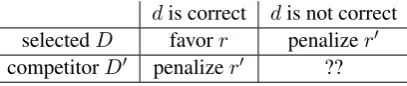
The minimal information we have at the level of a wordw is the knowledge that the its incoming de-pendencydproposed by conversion is correct or not, leading to 4 situations as summarized in Table1.
dis correct dis not correct selectedD favorr penalizer0 competitorD0 penalizer0 ??
Table 1: Handling weight updates for rules
For the FTB conversion, whendis correct, we can generally assume that the FRMG incoming depen-dencyD for w is also correct and that disambigua-tion is correct in selecting D. We can then con-sider than any edge disambiguation ruler applicable on D should then be favored by (slightly)
increas-ing its weight and rules applyincreas-ing on competitors of D should see their weight decrease (to reinforce the non-selection ofD).
On the other hand, whendis not correct, we should penalize the rules r applying on D and try to favor some competitorD0 ofD (and favor the rulesr0 ap-plying toD0). However, we do not know which com-petitor should be selected, except in cases where there is only one possible choice. By default, we assume that all competitors have equal chance to be the correct choice and favor/penalize in proportion their rules. If we have n competitors, we can say that it is a bad choice not to keepD0 in 1
n cases (and should favor rules r0) and it is a bad choice to keep D0 in n−1 n cases (and should penalize rulesr0). So, practically, the dependencyD0 falling in the problematic case is distributed between the keep/bad case (with weight 1 n ) and the discard/bad case (with weight n−1
n ). These proportions may be altered if we have more precise information about the competitors, provided by an or-acle (as hinted in Figure2), weights, ranks, or other el-ements. For instance, if we known thatdis not correct but has the right dependency label or the right gover-nor, we use this piece of information to discard some competitors and rerank the remaining ones.
[image:3.595.65.269.586.629.2]FTB dependencyd. Maybe FRMG is incomplete and has no correct source dependencyD. Finally, maybe d(with target wordw) derives from some source de-pendencyDw0 for some other target wordw0. We
as-sume that these cases remain limited and that improv-ing edge selection for the easy cases will then guide edge selection for the more complex cases.
The learning algorithm could be used online, ad-justing the weights when processing a sentence. How-ever, we have only implemented an offline version where the weights are updated after considering all training sentences (but discarding some long sen-tences and sensen-tences with low accuracy scores).
More formally, given the parses for the training sen-tences, for any edge disambiguation rulerand value tuplevfor a feature templatef, we compute the num-bernr,f=vof occurrences ofrin contextf = v, and keepokr,f=vthe number of occurrences where the edge was selected and it was a correct choice. Similarly, but taking into account the above-mentioned redis-tribution, we compute discardokr,f=v, keepbadr,f=v, and discardbadr,f=v.
These figures are used to compute an adjustment δr,f=v added to the base weight wr of r for context f=v, using Eq (1), whereθdenotes atemperature:
(1) δr,f=v=θ.ar,f=v.
discardbadr,f=v ifar,f=v>0 keepbadr,f=v otherwise
The ar,f=v factor is related to the direction and force of the expected change1, being positive when se-lecting an edge thanks tortends to be a good choice, and negative otherwise (when the edge should rather be discarded), as expressed in the following formula:
ar,f=v=
keepok keepok+ keepbad−
discardok discardok+ discardbad The last factor in Eq (1) is the number of edges whose status (selected or discarded) should ideally change.
The process is iterated, reducing the temperature at each step, and we keep the best run. At each iteration, the edges found to be correctly kept or discarded are added to an oracle for the next iteration.
1It may be noted that the interpretation ofa
r,f=vmay some-times be unclear, when bothkeepokr,f=vanddiscardokr,f=vare low (i.e., when neither keeping or discarding the corresponding edges is a good choice). We believe that these cases signal problems in the conversion process or the grammar.
We use standard features such as form, lemma, pos, suffixes, sub-categorization information, morphosyn-tactic features, anchored TAG trees for words (depen-dency heads and targets, plus adjacent words); and de-pendency distances, direction, type, label, and rank for the current dependency and possibly for its par-ent. For smoothing and out-of-domain adaptation, we add aclusterfeature attached to forms and extracted from a large raw textual corpus using Brown cluster-ing (Liang, 2005). It may noted that the name of a disambiguation rule may be considered as the value of arulefeature. Each feature template includes the label and type for the current FRMG dependency.
It seems possible to extend the proposed learning mechanism to adjust the weight of the regional rules by considering (second-order) features over pairs of adjacent sibling edges (for a same derivation). How-ever, preliminary experiments have shown an explo-sion of the number of such pairs, and no real gain.
4 The corpora
The learning method was tried on the French Tree-Bank(Abeillé et al., 2003), a journalistic corpus of 12,351 sentences, annotated in morphology and con-stituency with the Penn TreeBank format, and then automatically converted into projective dependency trees, represented in the CONLL format (Candito et al., 2010a). For training and benchmarking, the tree-bank is split into three parts, as summarized in Table2.
Cover. Time (s)
Corpus #sent. (%) Avg Median
FTB train 9,881 95.9 1.04 0.26 FTB dev 1,235 96.1 0.88 0.30 FTB test 1,235 94.9 0.85 0.30 Sequoia 3,204 95.1 1.53 0.17 EASyDev 3,879 87.2 0.87 0.14
Table 2: General information on FTB and other corpora
annotated following the EASy/Passage scheme for evaluation campaigns (Paroubek et al., 2006).
Table2shows that coverage (by full parses) is high for all corpora (slightly lower forEASyDevbecause of the mail and speech sub-corpora). Average time per sentence is relatively high but, as suggested by the much lower median times, this is largely due to a few long sentences and due to a large timeout.
5 Results and discussions
Table3shows evaluation results for different versions of FRMG on each corpus. OnFTBandSequoia, we use Labelled Attachment Scores (LAS) without tak-ing into account punctuation, and, onEASyDev, F1-measure on the dependencies2. Theinitsystem corre-sponds to a baseline version of FRMG with a basic set of rules and hand-tailored weights. The+restrversion of FRMG adds restriction rules, exploiting attach-ment preferences and word (semantic) similarities ex-tracted from a very large corpus parsed with FRMG, using Harris distributional hypothesis3. This version shows that unsurpervised learning methods already improve significantly the performances of a symbolic parser like FRMG for all corpora. The+tuning ver-sion of FRMG keeps the restriction rules and adds the partially supervised learning method. We observe large improvements on the FTB dev and test parts (be-tween 4 and 5 points), but also onSequoia(almost 3 points) on different styles of documents. We also get similar gains onEASyDev, again for a large diversity of styles, and, more interestingly, for a different anno-tation scheme and evaluation metric.
The bottom part of Table 3 lists the accuracy of 3 statistical parsers on FTB as reported in (Candito et al., 2010b). The Berkeley parser (BKY) is a constituent-based parser whose parses are then con-verted into FTB dependencies (using the same tool used to convert the FTB). MALT parser is a greedy transition-based parser while MST (maximum span-ning tree) globally extracts the best dependency tree from all possible ones. We see that FRMG (with
tun-2F1-measures on chunks are less informative.
3We used a 700Mwords corpus composed of AFP news, French Wikipedia, French Wikisource, etc.. The attachment weights are used for handling PP attachments over verbs, nouns, adjectives, but also for relatives over antecedents, or for filling some roles (subject, object, attribute). Similarities between words are used for handling coordination.
FTB other corpora
system train dev test Sequoia EASy init 79.95 80.85 82.08 81.13 65.92 +restr 80.67 81.72 83.01 81.72 66.33 +tuning 86.60 85.98 87.17 84.56 69.23
BKY – 86.50 86.80 – –
MALT – 86.90 87.30 – –
MST – 87.50 88.20 – –
Table 3: Performances of various systems on French data
system emea-test ftb-test loss BKY (evalb) 80.80 86.00 5.20 FRMG+tuning (LAS) 84.13 87.17 3.04
Table 4: Evolution for an out-of-domain medical corpus
ing) is better than BKY on the test part (but not on the dev part), close to MALT, and still below MST. Clearly, tuning allows FRMG to be more competitive with statistical parsers even on their native treebank.
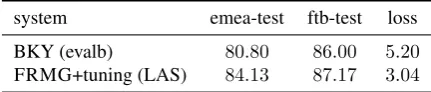
We do not have results for the 3 statistical parsers on theSequoiacorpus. However, (Candito and Sed-dah, 2012) reports some results for Berkeley parser on constituents for the medical part ofSequoia, listed in Table4. The metrics differ, but we observe a loss of 5.2 for BKY and only of 3.04 for FRMG, which tends to confirm the stability of FRMG across do-mains, possibly due to the constraints of its underlying linguistically-motivated grammar (even if we observe some over-fitting on FTB).
[image:5.595.303.519.255.301.2]not available through the other features.4
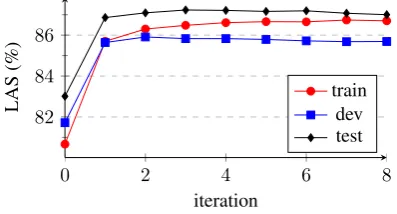
As suggested in Figure 2, the oracle built by the learning component on FTB train may be used dur-ing disambiguation (on FTB train) by settdur-ing a very high weight for the edges in the oracle and a very low weight for the others. The disambiguation process is then strongly encouraged to select the edges of the or-acle (when possible). Iterating the process, we reach an accuracy of 89.35% on FTB train, an interesting first step in direction of a FRMG version of the FTB5.
0 2 4 6 8
82 84 86
iteration
LAS
(%)
[image:6.595.67.266.251.358.2]train dev test
Figure 3: LAS evolution on FTB train per iteration
One reason still explaining the differences between FRMG and the statistical parsers arises from the con-version process to FTB annotation scheme being not perfect. For instance, FRMG and FTB do not use the same list of multi-word expressions, leading to prob-lems of mapping between words and of dependency attachments, in particular for complex prepositions and conjunctions. The segmenter SXPIPEalso recog-nizes named entities such asCommunauté européenne (European Community),5 millions, orMardi prochain (next Tuesday) as single terms whereas FTB adds in-ternal dependencies for these expressions. During the conversion phase, most of the missing dependencies are added leading to an accuracy of 75.38% on the specific dependencies in FTB train (around 3.5% of all dependencies), still largely below the global accu-racy (86.6%). There are also 1259 sentences in FTB train (12.7%) where FRMG produces non-projective trees when FTB expects projective ones.6
4However, it is clear that some disambiguation rules are re-dundant with the other features and could be discarded.
5The problem is that the treebank would have to be re-generated to follow the evolution of FRMG.
6It does not mean that so many FRMG trees are non-projective, just that the conversion builds non-projective trees, be-cause of edge movement. A quick investigation has shown that many cases were related to punctuation attachment.
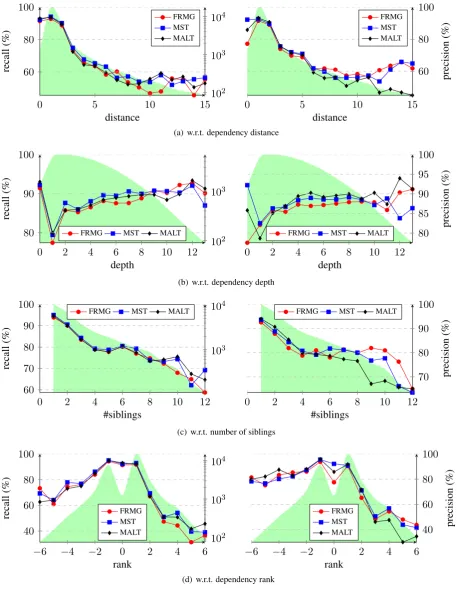
Then, following (McDonald and Nivre, 2007), we tried to compare the performance of FRMG, MST, and MALT with respect to several properties of the de-pendencies. Figure4(a)compares the recall and preci-sion of the systems w.r.t. the distance of the dependen-cies (with, in background, the number of gold depen-dencies). We observe that all systems have very close recall scores for small distances, then MST is slightly better, and, at long distance, both MST and MALT are better. On the other hand, FRMG has a much better precision than MALT for long distance dependencies. One may note the specific case of null distance de-pendencies actually corresponding to root nodes, with lower precision for FRMG. This drop corresponds to the extra root nodes added by FRMG in robust mode when covering a sentence with partial parses.
As shown in Figure 4(b), the recall curves w.r.t. dependency depths are relatively close, with FRMG slightly below for intermediate depths and slightly above for large depths. Again, we observe a preci-sion drop for root nodes (depth=0) which disappears when discarding the sentences in robust mode.
In Figure4(c), we get again a lower recall for large numbers of sibling edges with, surprisingly, a much higher precision for the same values.
Figure4(d)compares recall and precision w.r.t. de-pendency rank7, with again the lower precision due to the extra root nodes (rank=0) and again a lower recall and higher precision for large absolute ranks.
More generally, FRMG tends to behave like MST rather than like MALT. We hypothesize that it reflects than both systems share a more global view of the de-pendencies, in particular thanks to the domain locality provided by TAGs for FRMG.
distance
recall
(%)
102
103
104
0 5 10 15
60 80 100
FRMG MST MALT
distance
precision
(%)
0 5 10 15
60 80 100 FRMG MST MALT
(a) w.r.t. dependency distance
depth
recall
(%)
102 103
0 2 4 6 8 10 12
80 90 100
FRMG MST MALT
depth
precision
(%)
0 2 4 6 8 10 12
80 85 90 95 100
FRMG MST MALT
(b) w.r.t. dependency depth
#siblings
recall
(%)
103 104
0 2 4 6 8 10 12
60 70 80 90 100
FRMG MST MALT
#siblings
precision
(%)
0 2 4 6 8 10 12
70 80 90 100 FRMG MST MALT
(c) w.r.t. number of siblings
rank
recall
(%)
102 103 104
−6 −4 −2 0 2 4 6
40 60 80 100
FRMG MST MALT
rank
precision
(%)
−6 −4 −2 0 2 4 6
40 60 80 100
FRMG MST MALT
[image:7.595.64.522.113.710.2](d) w.r.t. dependency rank
50 60 70 80 90 root
suj deobj aobj ats mod det coord
1,235 2,017 288
360
345 7,645
5,195 832
recall (%)
labels
[image:8.595.56.281.105.296.2]FRMG MST MALT
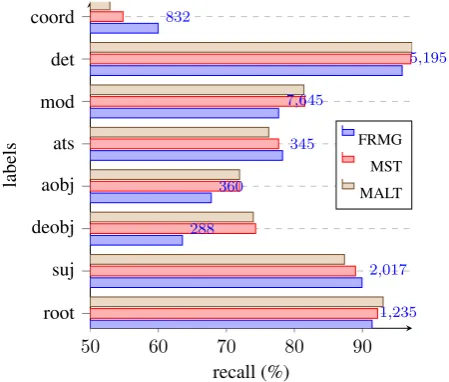
Figure 5: System comparison w.r.t. dependency labels
the other hand, FRMG has a better recall for subjects, possibly because the grammar accepts a large range of positions and realization for subjects.
6 Conclusion
We have presented a new partially supervised learn-ing approach exploitlearn-ing the information of a train-ing treebank for tuntrain-ing the disambiguation process of FRMG, a symbolic TAG-based parser. Even consid-ering minimal assumptions for transferring oracle in-formation from the training treebank, we strongly im-prove accuracy, allowing FRMG to be on par with statistical parsers on their native treebank, namely the French TreeBank. Even if the gains are important, several extensions of the learning algorithm have still to be explored, in particular to build and exploit better oracles, and to incorporate more higher order features, such as sibling features.
The approach explored in this paper, even if tried in the specific context of FRMG, is susceptible to be adapted for other similar contexts, in particular when some imperfect annotation conversion process takes place between a disambiguation process and a training treebank. However, some work remains be done to get a better characterization of the learning algorithm, for instance w.r.t. perceptrons.
We are aware that some of the data collected by the learning algorithm could be used to track problems
either in the conversion process or in FRMG gram-mar (by exploring the cases where neither selecting or discarding an edge seems to be a good choice). We would like to fix these problems, even if most of them seem to have very low frequencies. The con-version process could also be improved by allowing some non-deterministic choices, again controlled by probabilistic features. However, it is not yet clear how we can couple learning for the disambiguation process and learning for the conversion process.
More investigations and comparisons are needed, but some hints suggest that an underly-ing lunderly-inguistically-motivated grammar ensures a better robustness w.r.t. document styles and domains. On the other hand, the evaluation shows that the choices made in FRMG to handle lack of full coverage using partial parses should be improved, maybe by using some guiding information provided by a statistical parser to handle the problematic areas in a sentence.
References
Anne Abeillé, Lionel Clément, and François Toussenel. 2003. Building a treebank for French. In Anne Abeillé, editor,Treebanks. Kluwer, Dordrecht.
Marie Candito and Djamé Seddah. 2012. Le corpus sequoia: annotation syntaxique et exploitation pour l’adaptation d’analyseur par pont lexical. In TALN 2012-19e conférence sur le Traitement Automatique des Langues Naturelles.
Marie Candito, Benoît Crabbé, and Pascal Denis. 2010a. Statistical french dependency parsing: treebank con-version and first results. In Proceedings of the 7th Language Resources and Evaluation Conference (LREC’10), La Valette, Malte.
Marie Candito, Joakim Nivre, Pascal Denis, and Enrique Henestroza Anguiano. 2010b. Benchmarking of statis-tical dependency parsers for french. InProceedings of COLING’2010 (poster session), Beijing, China. Éric de La Clergerie. 2005. From metagrammars to
fac-torized TAG/TIG parsers. InProceedings of IWPT’05 (poster), pages 190–191, Vancouver, Canada.
Julia Hockenmaier and Mark Steedman. 2007. CCGbank: A corpus of CCG derivations and dependency structures extracted from the penn treebank. Computational Lin-guistics, 33(3):355–396.
Percy Liang. 2005. Semi-supervised learning for natu-ral language. Master’s thesis, Massachusetts Institute of Technology.
Ryan T. McDonald and Joakim Nivre. 2007. Characteriz-ing the errors of data-driven dependency parsCharacteriz-ing models. InEMNLP-CoNLL, pages 122–131.
Joakim Nivre, Johan Hall, Sandra Kübler, Ryan McDonald, Jens Nilsson, Sebastian Riedel, and Deniz Yuret. 2007. The CoNLL 2007 shared task on dependency parsing. InThe CoNLL 2007 shared task on dependency parsing. Patrick Paroubek, Isabelle Robba, Anne Vilnat, and Chris-telle Ayache. 2006. Data, Annotations and Measures in EASy, the Evaluation Campaign for Parsers of French. InProceedings of the 5th international conference on Language Resources and Evaluation (LREC’06), Gênes, Italie.
Patrick Paroubek, Éric Villemonte de la Clergerie, Sylvain Loiseau, Anne Vilnat, and Gil Francopoulo. 2009. The PASSAGE syntactic representation. In7th International Workshop on Treebanks and Linguistic Theories (TLT7), Groningen, January.
Corentin Ribeyre, Djamé Seddah, and Éric Villemonte De La Clergerie. 2012. A Linguistically-motivated 2-stage Tree to Graph Transformation. In Chung-Hye Han and Giorgio Satta, editors,TAG+11 - The 11th International Workshop on Tree Adjoining Grammars and Related Formalisms - 2012, Paris, France. INRIA.
K. Sagae, Y. Miyao, T. Matsuzaki, and J. Tsujii. 2008. Challenges in mapping of syntactic representations for framework-independent parser evaluation. In Proceed-ings of the Workshop on Automated Syntatic Annotations for Interoperable Language Resources at the First Inter-national Conference on Global Interoperability for Lan-guage Resources (ICGL’08), Hong-Kong, January. Benoît Sagot and Pierre Boullier. 2008. SXPIPE 2 :
On Different Approaches to Syntactic Analysis Into Bi-Lexical Dependencies
An Empirical Comparison of Direct, PCFG-Based, and HPSG-Based Parsers
Angelina Ivanova
♠, Stephan Oepen
♠♥, Rebecca Dridan
♠, Dan Flickinger
♣, and Lilja Øvrelid
♠♠University of Oslo, Department of Informatics
♥Potsdam University, Department of Linguistics
♣Stanford University, Center for the Study of Language and Information
{ angelii|oe|rdridan|liljao }@ifi.uio.no, [email protected]
Abstract
We compare three different approaches to pars-ing into syntactic, bi-lexical dependencies for English: a ‘direct’ data-driven dependency parser, a statistical phrase structure parser, and a hybrid, ‘deep’ grammar-driven parser. The anal-yses from the latter two are post-converted to bi-lexical dependencies. Through this ‘reduction’ of all three approaches to syntactic dependency parsers, we determine empirically what perfor-mance can be obtained for a common set of de-pendency types for English, across a broad va-riety of domains. In doing so, we observe what trade-offs apply along three dimensions, accu-racy, efficiency, and resilience to domain vari-ation. Our results suggest that the hand-built grammar in one of our parsers helps in both ac-curacy and cross-domain performance.
1 Motivation
Bi-lexical dependencies, i.e. binary head–argument relations holding exclusively between lexical units, are widely considered an attractive target representa-tion for syntactic analysis. At the same time, Cer et al. (2010) and Foster et al.(2011), inter alios, have demonstrated that higher dependency accuracies can be obtained by parsing into a phrase structure rep-resentation first, and then reducing parse trees into bi-lexical dependencies.1 Thus, if one is willing to accept pure syntactic dependencies as a viable inter-face (and evaluation) representation, an experimental setup like the one ofCer et al.(2010) allows the ex-act experimental comparison of quite different parsing approaches.2 Existing such studies to date are lim-1This conversion from one representation of syntax to an-other is lossy, in the sense of discarding constituency information, hence we consider it a reduction in linguistic detail.
2In contrast, much earlier work on cross-framework compari-son involved post-processing parser outputs in formandcontent, into a target representation for which gold-standard annotations were available. In §2below, we argue that such conversion in-evitably introduces blur into the comparison.
ited to purely data-driven (or statistical) parsers, i.e. systems where linguistic knowledge is exclusively ac-quired through supervised machine learning from an-notated training data. For English, the venerable Wall Street Journal (WSJ) portion of the Penn Treebank (PTB;Marcus et al.,1993) has been the predominant source of training data, for phrase structure and de-pendency parsers alike.
2 Related Work
Comparing between parsers from different frame-works has long been an area of active interest, rang-ing from the originalPARSEVALdesign (Black et al.,
1991), to evaluation against ‘formalism-independent’ dependency banks (King et al., 2003; Briscoe & Carroll, 2006), to dedicated workshops (Bos et al.,
2008). Grammatical Relations (GRs;Briscoe & Car-roll,2006) have been the target of a number of bench-marks, but they require a heuristic mapping from ‘native’ parser outputs to the target representations for evaluation, which makes results hard to interpret.
Clark and Curran(2007) established an upper bound by running the mapping process on gold-standard data, to put into perspective the mapped results from their CCG parser proper. WhenMiyao et al. (2007) carried out the same experiment for a number of dif-ferent parsers, they showed that the loss of accuracy due to the mapping process can swamp any actual parser differences. As long as heuristic conversion is required before evaluation, cross-framework com-parison inevitably includes a level of fuzziness. An alternative approach is possible when there is enough data available in a particular representation, and con-version (if any) is deterministic. Cer et al. (2010) used Stanford Dependencies (de Marneffe & Man-ning, 2008) to evaluate a range of statistical parsers. Pre- or post-converting from PTB phrase structure trees to the Stanford dependency scheme, they were able to evaluate a large number of different parsers.
Fowler and Penn (2010) formally proved that a range of Combinatory Categorial Grammars (CCGs) are context-free. They trained the PCFG Berkeley parser on CCGBank, the CCG annotation of the PTB WSJ text (Hockenmaier & Steedman,2007), advanc-ing the state of the art in terms of supertaggadvanc-ing ac-curacy, PARSEVAL measures, and CCG dependency accuracy. In other words, a specialized CCG parser is not necessarily more accurate than the general-purpose Berkeley parser; this study, however, fails to also take parser efficiency into account.
In related work for Dutch, Plank and van Noord
(2010) suggest that, intuitively, one should expected that a grammar-driven system can be more resiliant to domain shifts than a purely data-driven parser. In a contrastive study on parsing into Dutch syntactic dependencies, they substantiated this expectation by
showing that their HPSG-based Alpino system per-formed better and was more resilient to domain varia-tion than data-driven direct dependency parsers.
3 Background: Experimental Setup
In the following, we summarize data and software re-sources used in our experiments. We also give a brief introduction to the DT syntactic dependency scheme and a comparison to ‘mainstream’ representations.
DeepBank HPSG analyses in DeepBank are man-ually selected from the set of parses licensed by the English Resource Grammar (ERG;Flickinger,2000). Figure 1 shows an example ERG derivation tree, where labels of internal nodes name HPSG construc-tions (e.g. subject–head or head–complement:
sb-hd_mc_c and hd-cmp_u_c, respectively; see below
for more details on unary rules). Preterminals are labeled with fine-grained lexical categories, dubbed ERG lexical types, that augment common parts of speech with additional information, for example argu-ment structure or the distinction between count, mass, and proper nouns. In total, the ERG distinguishes about 250 construction types and 1000 lexical types.
DeepBank annotations were created by combin-ing the native ERG parser, dubbed PET (Callmeier,
2002), with a discriminant-based tree selection tool (Carter,1997;Oepen et al.,2004), thus making it sible for annotators to navigate the large space of pos-sible analyses efficiently, identify and validate the in-tended reading, and record its full HPSG analysis in the treebank. Owing to this setup, DeepBank in its current version 1.0 lacks analyses for some 15 percent of the WSJ sentences, for which either the ERG parser failed to suggest a set of candidates (within certain bounds on time and memory usage), or the annotators found none of the available parses acceptable.3 Fur-thermore, DeepBank annotations to date only com-prise the first 21 sections of the PTB WSJ corpus. Following the splits suggested by the DeepBank de-velopers, we train on Sections 0–19, use Section 20 for tuning, and test against Section 21 (abbreviated as
WSJbelow).4
3Thus, limitations in the current ERG andPETeffectively lead to the exclusion of a tangible percentage of sentences from our training and testing corpora. We discuss methodological ramifi-cations of this setup to our study in §9below.
ex-sb-hd_mc_c
hdn_bnp-pn_c
aj-hdn_norm_c
n-nh_v-cpd_c
w_hyphen_plr
n_-_pn_le
Sun-v_pas_odlr
v_np_noger_le
filled
n_sg_ilr
n_-_pn_le
Mountain View
hd-cmp_u_c
v_vp_did-n_le
didn’t
hd-cmp_u_c
v_n3s-bse_ilr
v_np*_le
impress
hdn_bnp-qnt_c
w_period_plr
n_-_pr-me_le
[image:12.595.122.459.105.274.2]me.
Figure 1: Sample HPSG derivation: construction identifiers label internal nodes, lexical types the preterminals.
Sun- filled Mountain View didn’t impress me.
n_-_pn_le v_np_noger_le n_-_pn_le v_vp_did-n_le v_np*_le n_-_pr-me_le
root
sb-hd aj-hdn
n-nh hd-cmp hd-cmp
Figure 2: Sample DT bi-lexical dependencies: construction identifiers are generalized at the first underscore.
DT Dependencies As ERG derivations are grounded in a formal theory of grammar that explic-itly marks heads, mapping these trees onto bi-lexical dependencies is straightforward (Zhang & Wang,
2009). Ivanova et al. (2012) coin the term DT for ERG Derivation Tree-Derived Dependencies, where they reduce the inventory of some 250 ERG syntactic rules to 48 broad HPSG constructions. The DT syntactic dependency tree for our running example is shown in Figure2.
To better understand the nature of the DT scheme,
Ivanova et al. (2012) offer a quantitative, structural comparison against two pre-existing dependency stan-dards for English, viz. those from the CoNLL de-pendency parsing competitions (Nivre et al., 2007) and the ‘basic’ variant of Stanford Dependencies. They observe that the three dependency representa-tions are broadly comparable in granularity and that there are substantial structural correspondences be-tween the schemes. Measured as average Jaccard sim-ilarity over unlabeled dependencies, they observe the strongest correspondence between DT and CoNLL (at a Jaccard index of0.49, compared to0.32for DT and Stanford, and0.43between CoNLL and Stanford). posed to its developers until the grammar and disambiguation model were finalized and frozen for this release.
Ivanova et al. (2013) complement this comparison of dependency schemes through an empirical asses-ment in terms of ‘parsability’, i.e. accuracy levels available for the different target representations when training and testing a range of state-of-the-art parsers on the same data sets. In their study, the dependency parser ofBohnet and Nivre(2012), henceforthB&N, consistently performs best for all schemes and output configurations. Furthermore, parsability differences between the representations are generally very small.
Based on these observations, we conjecture that DT is as suitable a target representation for parser compar-ison as any of the others. Furthermore, two linguistic factors add to the attractiveness of DT for our study: it is defined in terms of a formal (and implemented) theory of grammar; and it makes available more fine-grained lexical categories, ERG lexical types, than is common in PTB-derived dependency banks.
Cross-Domain Test Data Another benefit of the DT target representation is the availability of com-paratively large and diverse samples of additional test data. The ERG Redwoods Treebank (Oepen et al.,
[image:12.595.138.439.305.363.2]addi-Name Sentences Tokens Types
DeepBank
Train 33,783 661,451 56,582 Tune 1,721 34,063 8,964
WSJ 1,414 27, 515 7,668
Red
w
oods CBSC 608864 11,65313,696 3,5884,925
VM 993 7,281 1,007
[image:13.595.72.262.105.202.2]WS 520 8,701 2,974
Table 1: Sentence, token, and type counts for data sets.
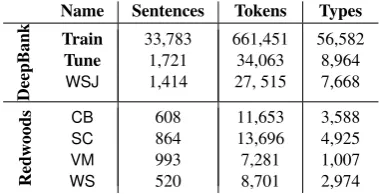
tionaltestingdata. In other words, we do not attempt parser re-training or adaptation against this additional data, but rather test our WSJ-trained parsers on out-of-domain samples from Redwoods. We report on four such test corpora, viz. (a) a software advocacy essay, The Cathedral and the Bazaar(CB); (b) a subset of the SemCor portion of the Brown Corpus (SC;Francis & Kucera,1982); (c) a collection of transcribed, task-oriented spoken dialogues (VM;Wahlster,2000); and (d) part of the Wikipedia-derived WeScience Corpus (WS; Ytrestøl et al., 2009). Table 1 provides exact sentence, token, and type counts for these data sets.
Tokenization Conventions A relevant peculiarity of the DeepBank and Redwoods annotations in this context is the ERG approach to tokenization. Three aspects in Figure1deviate from the widely used PTB conventions: (a) hyphens (and slashes) introduce to-ken boundaries; (b) whitespace in multi-word lexical units (likead hoc,of course, orMountain View) does not force token boundaries; and (c) punctuation marks are attached as ‘pseudo-affixes’ to adjacent words, re-flecting the rules of standard orthography.Adolphs et al.(2008) offer some linguistic arguments for this ap-proach to tokenization, but for our purposes it suffices to note that these differences to PTB tokenization may in part counter-balance each other, but do increase the types-per-tokens ratio somewhat. This property of the DeepBank annotations, arguably, makes English look somewhat similar to languages with moderate inflec-tional morphology. To take advantage of the fine-grained ERG lexical categories, most of our experi-ments assume ERG tokenization. In two calibration experiments, however, we also investigate the effects of tokenization differences on our parser comparison.
PET: Native HPSG Parsing The parser most com-monly used with the ERG is calledPET (Callmeier,
2002), a highly engineered chart parser for unification grammars. PET constructs a complete parse forest,
using subsumption-based ambiguity factoring (Oepen & Carroll, 2000), and then extracts from the forest n-best lists of complete analyses according to a dis-criminative parse ranking model (Zhang et al.,2007). For our experiments, we trained the parse ranker on Sections 00–19 of DeepBank and otherwise used the default configuration (which corresponds to the envi-ronment used by the DeepBank and Redwoods devel-opers), which is optimized for accuracy. This parser, performing exact inference, we will callERGa.
In recent work,Dridan(2013) augments ERG pars-ing with lattice-based sequence labelpars-ing over lexi-cal types and lexilexi-cal rules. Pruning the parse chart prior to forest construction yields greatly improved efficiency at a moderate accuracy loss. Her lexical pruning model is trained on DeepBank 00–19 too, hence compatible with our setup. We include the best-performing configuration ofDridan(2013) in our ex-periments, a variant henceforth referred to asERGe. Unlike the other parsers in our study,PETinternally operates over an ambiguous token lattice, and there is no easy interface to feed the parser pre-tokenized in-puts. We approximate the effects of gold-standard to-kenization by requesting from the parser a 2000-best list, which we filter for the top-ranked analysis whose leaves match the treebank tokenization. This approach is imperfect, as in some cases no token-compatible analysis may be on the n-best list, especially so in theERGe setup (where lexical items may have been pruned by the sequence-labeling model). When this happens, we fall back to the top-ranked analysis and adjust our evaluation metrics to robustly deal with to-kenization mismatches (see below).
B&N: Direct Dependency Parsing The parser of
Bohnet and Nivre (2012), henceforth B&N, is a transition-based dependency parser with joint tag-ger that implements global learning and a beam search for non-projective labeled dependency parsing. This parser consistently outperforms pipeline systems (such as the Malt and MST parsers) both in terms of tagging and parsing accuracy for typologically diverse languages such as Chinese, English, and German. We apply B&N mostly ‘out-of-the-box’, training on the DT conversion of DeepBank Sections 00–19, and run-ning the parser with an increased beam size of 80.
gen-Unary Rules Preserved Unary Rules Removed
Labels Long Short Mixed Long Short
Cycles 5 6 5 6 5 6 5 6 5 6
Gaps 2 5 0 0 11 19 3 3 0 0
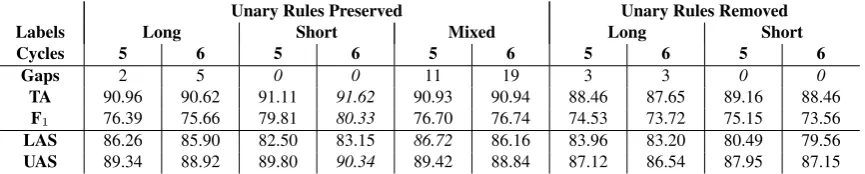
[image:14.595.76.509.105.192.2]TA 90.96 90.62 91.11 91.62 90.93 90.94 88.46 87.65 89.16 88.46 F1 76.39 75.66 79.81 80.33 76.70 76.74 74.53 73.72 75.15 73.56 LAS 86.26 85.90 82.50 83.15 86.72 86.16 83.96 83.20 80.49 79.56 UAS 89.34 88.92 89.80 90.34 89.42 88.84 87.12 86.54 87.95 87.15 Table 2: Tagging accuracy,PARSEVALF1, and dependency accuracy forBerkeleyon WSJ development data.
erative, unlexicalizedphrase structureparser that au-tomatically derives a smoothed latent-variable PCFG from the treebank and refines the grammar by a split– merge procedure. The parser achieves state-of-the-art performance on various standard benchmarks. In §4
below, we explain how we adapt ERG derivations for training and testing withBerkeley; for comparison to the other parsers in terms of DT dependency accu-racy, we apply the converter ofIvanova et al. (2012)
toBerkeleyoutputs. For technical reasons, however,
the optional mapping from ERG to PTB tokenization is not applicable in this setup, and hence our experi-ments involvingBerkeleyare limited to ERG tokens and fine-grained lexical categories.
Evaluation Standard evaluation metrics in depen-dency parsing are labeled and unlabeled attachment scores (LAS, UAS; implemented by the CoNLL
eval.plscorer). These measure the percentage of
to-kens which are correctly attached to their head token and, for LAS, have the right dependency label. As as-signment of lexical categories is a core part of syntac-tic analysis, we complement LAS and UAS with tag-ging accuracy scores (TA), where appropriate. How-ever, in our work there are two complications to con-sider when usingeval.pl. First, some of our parsers oc-casionally fail to return any analysis, notablyBerkeley
andERGe. For these inputs, our evaluation re-inserts the missing tokens in the parser output, padding with dummy ‘placeholder’ heads and dependency labels.
Second, a more difficult issue is caused by occas-sional tokenization mismatches in ERG parses, as dis-cussed above. Sinceeval.plidentifies tokens by their position in the sentence, any difference of tokeniza-tion will lead to invalid results. One optokeniza-tion would be to treat all system outputs with token mismatches as parse failures, but this over-penalizes, as potentially correct dependencies among corresponding tokens are also removed from the parser output. For this reason, we modify the evaluation of dependency accuracy to
use sub-string character ranges, instead of consecutive identifiers, to encode token identities. This way, tok-enization mismatches local to some sub-segment of the input will not ‘throw off’ token correspondences in other parts of the string.5 We will refer to this character-based variant of the standard CoNLL met-rics as LAScand UASc.
4 PCFG Parsing of HPSG Derivations
Formally, the HPSG analyses in the DeepBank and Redwoods treebanks transcend the class of context-free grammars, of course. Nevertheless, one can prag-matically look at an ERG derivation as if it were a context-free phrase structure tree. On this view, stan-dard, off-the-shelf PCFG parsing techniques are ap-plicable to the ERG treebanks. Zhang and Krieger
(2011) explore this space experimentally, combining the ERG, Redwoods (but not DeepBank), and massive collections of automatically parsed text. Their study, however, does not consider parser efficiency.6.
In contrast, our goal is to reflect on practical trade-offs along multiple dimensions. We therefore focus
onBerkeley, as one of the currently best-performing
(and relatively efficient) PCFG engines. Due to its ability to internally rewrite node labels, this parser should be expected to adapt well also to ERG deriva-tions. Compared to the phrase structure annotations in the PTB, there are two structural differences evi-dent in Figure1. First, the inventories of phrasal and lexical labels are larger, at around 250 and 1000, re-spectively, compared to only about two dozen phrasal categories and 45 parts of speech in the PTB. Second, ERG derivations contain more unary (non-branching) 5Where tokenization is identical for the gold and system out-puts, the score given by this generalized metric is exactly the same as that ofeval.pl. Unless indicated otherwise, punctuation marks are included in scoring.
6Their best PCFG results are only a few points F
Gaps Time TAc LASc UASc Berkeley 1+0 1.0 92.9 86.65 89.86
B&N 0+0 1.7 92.9 86.76 89.65
[image:15.595.63.276.105.159.2]ERGa 0+0 10 97.8 92.87 93.95 ERGe 13+44 1.8 96.4 91.60 92.72
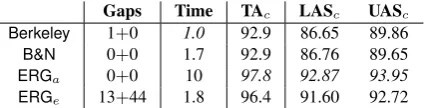
Table 3: Parse failures and token mismatches (‘gaps’), effi-ciency, and tagging and dependency accuracy onWSJ.
rules, recording for example morphological variation or syntacto-semantic category changes.7
Table 2 summarizes a first series of experiments, seeking to tune the Berkeley parser for maximum ac-curacy on our development set, DeepBank Section 20. We experimented with preserving unary rules in ERG derivations or removing them (as they make no dif-ference to the final DT analysis); we further ran ex-periments using the native (‘long’) ERG construction identifiers, their generalizations to ‘short’ labels as used in DT, and a variant with long labels for unary and short ones for branching rules (‘mixed’). We re-port results for training with five or six split–merge cycles, where fewer iterations generally showed infe-rior accuracy, and larger values led to more parse fail-ures (‘gaps’ in Table2). There are some noticeable trade-offs across tagging accuracy, dependency accu-racy, and coverage, without a single best performer along all three dimensions. As our primary interest across parsers is dependency accuracy, we select the configuration with unary rules and long labels, trained with five split–merge cycles, which seems to afford near-premium LAS at near-perfect coverage.8
5 In-Domain Results
Our first cross-paradigm comparison of the three parsers is against the WSJ in-domain test data, as summarized in Table 3. There are substantive dif-ferences between parsers both in terms of coverage, speed, and accuracy.Berkeleyfails to return an analy-sis for one input, whereasERGecannot parse 13 sen-tences (close to one percent of the test set); just as the 44 inputs where parser output deviates in tokenization from the treebank, this is likely an effect of the lexi-cal pruning applied in this setup. At an average of one 7Examples of morphological rules in Figure 1 include
v_pas_odlrandv_n3s-bse_ilr, for past-participle and non-third person singular or base inflection, respectively. Also, there are two instances of bare noun phrase formation:hdn_bnp-pn_cand
hdn_bnp-qnt_c.
8A welcome side-effect of this choice is that we end up using native ERG derivations without modifications.
second per input,Berkeleyis the fastest of our parsers;
ERGais exactly one order of magnitude slower. How-ever, the lexical pruning ofDridan (2013) in ERGe leads to a speed-up of almost a factor of six, mak-ing this variant ofPET perform comparable toB&N. Maybe the strongest differences, however, we observe in tagging and dependency accuracies: The two data-driven parsers perform very similarly (at close to 93% TA and around 86.7% LAS); the two ERG parsers are comparable too, but at accuracy levels that are four to six points higher in both TA and LAS. Compared to
ERGa, the fasterERGevariant performs very slightly worse—which likely reflects penalization for missing coverage and token mismatches—but it nevertheless delivers much higher accuracy than the data-driven parsers. In subsequent experiments, we will thus fo-cus only onERGe.
6 Error Analysis
The ERG parsers outperform the two data-driven parsers on theWSJdata. Through in-depth error anal-ysis, we seek to identify parser-specific properties that can explain the observed differences. In the following, we look at (a) the accuracy of individual dependency types, (b) dependency accuracy relative to (predicted and gold) dependency length, and (c) the distribution of LAS over different lexical categories.
Among the different dependency types, we observe that the notion of an adjunct is difficult for all three parsers. One of the hardest dependency labels is
hdn-aj(post-adjunction to a nominal head), the
rela-tion employed for relative clauses and preposirela-tional phrases attaching to a nominal head. The most com-mon error for this relation is verbal attachment.
It has been noted that dependency parsers may ex-hibit systematic performance differences with respect to dependency length (i.e. the distance between a head and its argument;McDonald & Nivre,2007). In our experiments, we find that the parsers perform compa-rably on longer dependency arcs (upwards of fifteen words), withERGaconstantly showing the highest ac-curacy, andBerkeleyholding a slight edge overB&N
as dependency length increases.
Figure 3: WSJ per-category dependency accuracies on coarse lexical head categories: adjective, adverb, conjunc-tion, complementizer, determiner, noun, preposiconjunc-tion, lexi-cal prepositional phrase, punctuation, verb, and others.
(2012) show that choosing conjunctions as heads in coordinate structures is harder to parse for direct de-pendency parsers (while this analysis also is linguisti-cally more expressive). Our results confirm this effect also for the PCFG and (though to a lesser degree) for
ERGa. At the same time, conjunctions are among the lexical categories for whichERGamost clearly out-performs the other parsers.BerkeleyandB&Nexhibit LAS error rates of around 35–41% for conjunctions, whereas theERGaerror rate is below 20%. For many of the coordinate structures parsed correctly byERGa but not the other two, we found that attachment to root constitutes the most frequent error type—indicating that clausal coordination is particularly difficult for the data-driven parsers.
The attachment of prepositions constitutes a noto-rious difficulty in syntactic analysis. Unlike ‘stan-dard’ PoS tag sets, ERG lexical types provide a more fine-grained analysis of prepositions, for example rec-ognizing a lexicalized PP likein full, or making ex-plicit the distinction between semantically contenful vs. vacuous prepositions. In our error analysis, we find that parser performance across the various prepo-sitional sub-types varies a lot. For some preposi-tions, all parsers perform comparatively well; e.g.
p_np_ptcl-of_le, for semantically vacuous of, ranks
among the twenty most accurate lexical categories across the board. Other types of prepositions are among the categories exhibiting the highest error rates, e.g.p_np_i_lefor ‘common’ prepositions, tak-ing an NP argument and projecttak-ing intersective mod-ifier semantics. Even so, Figure3shows that the at-tachment of prepositions (pandpp) is an area where
ERGa excels most markedly. Three frequent
prepo-Gaps TAc LASc UASc
CB
Berkeley 1+0 87.1 78.13 83.14
B&N 0+0 87.7 77.70 82.96
ERGe 8+8 95.3 90.02 91.58
SC
Berkeley 1+0 87.2 79.81 85.10
B&N 0+0 85.9 78.08 83.21 ERGe 11+7 94.9 89.94 91.26
VM
Berkeley 7+0 84.0 74.40 83.38
B&N 0+0 83.1 75.28 82.86 ERGe 11+42 94.4 90.18 91.75
WS
Berkeley 7+0 87.7 80.31 85.09
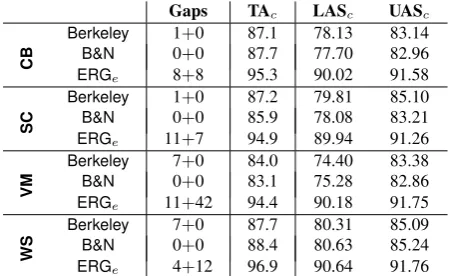
[image:16.595.300.526.105.243.2]B&N 0+0 88.4 80.63 85.24 ERGe 4+12 96.9 90.64 91.76
Table 4: Cross-domain coverage (parse failures and token mismatches) and tagging and dependency accuracies.
sitional lexical types that show the largest ERGa advantages are p_np_ptcl-of_le (history of Linux),
p_np_ptcl_le (look for peace), and p_np_i_le (talk
about friends). Looking more closely at inputs where the parsers disagree, they largely involve (usages of) prepositions which are lexically selected for by their head. In other words, most prepositions in isolation are ambiguous lexical items. However, it appears that lexical information about the argument structure of heads encoded in the grammar allowsERGato anal-yse these prepositions (in context) much more accu-rately.
7 Cross-Domain Results
Lexical Types PTB PoS Tags Gaps LASc UASc LASc UASc
WSJ
B&N 0+0 88.78 91.52 91.56 93.63
ERGe 13+9 92.38 93.53 92.38 93.53
CB ERGB&Ne 08++04 81.5690.77 86.1892.21 84.5490.77 88.5392.21
SC ERGB&Ne 110++00 81.6990.13 86.1191.86 85.1790.13 88.8591.86
VM ERGB&Ne 100++00 77.0091.55 83.7393.08 82.7691.55 88.1193.08
[image:17.595.56.278.107.230.2]WS ERGB&Ne 04++00 82.0991.61 86.1792.62 84.5991.61 88.4192.62
Table 5: Coverage and dependency accuracies with PTB tokenization and either detailed or coarse lexical categories.
Wikipedia text (WS; previously unseen data for the ERG, just as for the other two), for example, both tag-ging and dependency accuracies are around ten points higher, an error reduction of more than 50%. From these results, it is evident that the general linguistic knowledge available in ERG parsing makes it far more resilient to variation in domain and text type.
8 Sanity: PTB Tokenization and PoS Tags
Up to this point, we have applied the two data-driven parsers in a setup that one might consider somewhat ‘off-road’; although our experiments are on English, they involve unusual tokenization and lexical cate-gories. For example, the ERG treatment of punc-tuation as ‘pseudo-affixes’ increases vocabulary size, whichPET may be better equipped to handle due to its integrated treatment of morphological variation. In two concluding experiments, we seek to isolate the ef-fects of tokenization conventions and granularity of lexical categories, taking advantage of optional out-put flexibility in the DT converter of Ivanova et al.(2012).10 Table 5 confirms that tokenization does make a difference. In combination with fine-grained lexical categories still,B&Nobtains LAS gains of two to three points, compared to smaller gains (around or below one point) forERGe.11 However, in this setup Conversely,SChas hardly had a role in grammar engineering so far, andWSis genuinely unseen (for the current ERG and Red-woods release), i.e. treebankers were first exposed to it once the grammar and parser were frozen.
10As mapping from ERG derivations into PTB-style tokens and PoS tags is applied when converting to bi-lexical dependencies, we cannot easily includeBerkeleyin these final experiments.
11When converting to PTB-style tokenization, punctuation marks are always attached low in the DT scheme, to the imme-diately preceding or following token, effectively adding a large group of ‘easy’ dependencies.
our two earlier observations still hold true: ERGe is substantially more accurate within theWSJ domain and far more resilient to domain and genre variation. When we simplify the syntactic analysis task and train and testB&N on coarse-grained PTB PoS tags only, in-domain differences between the two parsers are fur-ther reduced (to 0.8 points), butERGestill delivers an error reduction of ten percent compared toB&N. The picture in the cross-domain comparison is not qual-itatively different, also in this simpler parsing task, with ERGe maintaining accuracy levels comparable toWSJ, whileB&Naccuracies degrade markedly.
9 Discussion and Conclusion
Our experiments sought to contrast state-of-the-art representatives from three parsing paradigms on the task of producing bi-lexical syntactic dependencies for English. For the HPSG-derived DT scheme, we find that hybrid, grammar-driven parsing yields supe-rior accuracy, both in- and in particular cross-domain, at processing times comparable to the currently best direct dependency parser. These results corroborate the Dutch findings ofPlank and van Noord(2010) for English, where more training data is available and in comparison to more advanced data-driven parsers. In most of this work, we have focussed exclusively on parser inputs represented in the DeepBank and Red-woods treebanks, ignoring 15 percent of the original running text, for which the ERG andPETdo not make available a gold-standard analysis. While a parser with partial coverage can be useful in some contexts, obviously the data-driven parsers must be credited for providing a syntactic analysis of (almost) all inputs. However, the ERG coverage gap can be straighfor-wardly addressed by falling back to another parser when necessary. Such a system combination would undoubtedly yield better tagging and dependency ac-curacies than the data-driven parsers by themselves, especially so in an open-domain setup. A secondary finding from our experiments is that PCFG parsing
with Berkeley and conversion to DT dependencies
Acknowledgments
We are grateful to our colleagues Emily M. Bender, Francis Bond, Rui Wang, and Yi Zhang for many helpful discussions and suggestions, as well as to our three anonymous reviewers for insightful comments. This work is in part funded by the Norwegian Re-search Council through its WeSearch project. Large-scale experimentation is made possible through access to the ABEL high-performance computing facilities at the University of Oslo, and we are grateful to the Sci-entific Computing staff at UiO, as well as to the Nor-wegian Metacenter for Computational Science, and the Norwegian tax payer.
References
Adolphs, P., Oepen, S., Callmeier, U., Crysmann, B., Flickinger, D., & Kiefer, B. (2008). Some fine points of hybrid natural language parsing. In Pro-ceedings of the 6th International Conference on Language Resources and Evaluation. Marrakech, Morocco.
Black, E., Abney, S., Flickinger, D., Gdaniec, C., Grishman, R., Harrison, P., . . . Strzalkowski, T. (1991). A procedure for quantitatively comparing the syntactic coverage of English grammars. In Proceedings of the workshop on speech and natu-ral language(p. 306 – 311). Pacific Grove, USA. Bohnet, B., & Nivre, J. (2012). A transition-based
system for joint part-of-speech tagging and labeled non-projective dependency parsing. InProceedings of the 2012 Joint Conference on Empirical Methods in Natural Language Processing and Conference on Natural Language Learning (p. 1455 – 1465). Jeju Island, Korea.
Bos, J., et al. (Eds.). (2008). Workshop on cross-framework and cross-domain parser evaluation. Manchester, UK.
Briscoe, T., & Carroll, J. (2006). Evaluating the ac-curacy of an unlexicalised statistical parser on the PARC DepBank. InProceedings of the 21st Inter-national Conference on Computational Linguistics and the 44th Meeting of the Association for Compu-tational Linguistics(p. 41 – 48). Sydney, Australia. Callmeier, U. (2002). Preprocessing and encoding
techniques in PET. In S. Oepen, D. Flickinger, J. Tsujii, & H. Uszkoreit (Eds.), Collaborative language engineering. A case study in efficient grammar-based processing (p. 127 – 140). Stan-ford, CA: CSLI Publications.
Carter, D. (1997). The TreeBanker. A tool for super-vised training of parsed corpora. InProceedings of the Workshop on Computational Environments for Grammar Development and Linguistic Engineering (p. 9 – 15). Madrid, Spain.
Cer, D., de Marneffe, M.-C., Jurafsky, D., & Man-ning, C. (2010). Parsing to Stanford Dependen-cies. Trade-offs between speed and accuracy. In Proceedings of the 7th International Conference on Language Resources and Evaluation(p. 1628 – 1632). Valletta, Malta.
Clark, S., & Curran, J. R. (2007). Formalism-independent parser evaluation with CCG and Dep-Bank. In Proceedings of the 45th Meeting of the Association for Computational Linguistics(p. 248 – 255). Prague, Czech Republic.
de Marneffe, M.-C., & Manning, C. D. (2008). The Stanford typed dependencies representation. In Proceedings of the COLING Workshop on Cross-Framework and Cross-Domain Parser Evaluation (p. 1 – 8). Manchester, UK.
Dridan, R. (2013). Ubertagging. Joint segmentation and supertagging for English. In Proceedings of the 2013 Conference on Empirical Methods in Nat-ural Language Processing(p. 1 – 10). Seattle, WA, USA.
Flickinger, D. (2000). On building a more efficient grammar by exploiting types. Natural Language Engineering,6 (1), 15 – 28.
Flickinger, D., Zhang, Y., & Kordoni, V. (2012). DeepBank. A dynamically annotated treebank of the Wall Street Journal. InProceedings of the 11th International Workshop on Treebanks and Linguis-tic Theories(p. 85 – 96). Lisbon, Portugal: Edições Colibri.
Foster, J., Cetinoglu, O., Wagner, J., Le Roux, J., Nivre, J., Hogan, D., & van Genabith, J. (2011). From news to comment. Resources and bench-marks for parsing the language of Web 2.0. In Proceedings of the 2011 International Joint Con-ference on Natural Language Processing (p. 893 – 901).
Fowler, T. A. D., & Penn, G. (2010). Accurate context-free parsing with Combinatory Categorial Grammar. InProceedings of the 48th Meeting of the Association for Computational Linguistics(p. 335 – 344). Uppsala, Sweden.
Gildea, D. (2001). Corpus variation and parser perfor-mance. InProceedings of the 2001 Conference on Empirical Methods in Natural Language Process-ing(p. 167 – 202). Pittsburgh, USA.
Hockenmaier, J., & Steedman, M. (2007). CCG-bank. A corpus of CCG derivations and dependency structures extracted from the Penn Treebank. Com-putational Linguistics,33, 355 – 396.
Ivanova, A., Oepen, S., & Øvrelid, L. (2013). Sur-vey on parsing three dependency representations for English. InProceedings of the 51th Meeting of the Association for Computational Linguistics (p. 31 – 37). Sofia, Bulgaria.
Ivanova, A., Oepen, S., Øvrelid, L., & Flickinger, D. (2012). Who did what to whom? A contrastive study of syntacto-semantic dependencies. In Pro-ceedings of the sixth linguistic annotation work-shop(p. 2 – 11). Jeju, Republic of Korea.
King, T. H., Crouch, R., Riezler, S., Dalrymple, M., & Kaplan, R. M. (2003). The PARC 700 Depen-dency Bank. In Proceedings of the 4th Interna-tional Workshop on Linguistically Interpreted Cor-pora(p. 1 – 8). Budapest, Hungary.
Marcus, M., Santorini, B., & Marcinkiewicz, M. A. (1993). Building a large annotated corpora of En-glish: The Penn Treebank.Computational Linguis-tics,19, 313 – 330.
McDonald, R. T., & Nivre, J. (2007). Characterizing the errors of data-driven dependency parsing mod-els. InProceedings of the 2007 Joint Conference on Empirical Methods in Natural Language Process-ing and Conference on Natural Language LearnProcess-ing (p. 122 – 131). Prague, Czech Republic.
Miyao, Y., Sagae, K., & Tsujii, J. (2007). To-wards framework-independent evaluation of deep linguistic parsers. InProceedings of the 2007 Work-shop on Grammar Engineering across Frameworks (p. 238 – 258). Palo Alto, California.
Nivre, J., Hall, J., Kübler, S., McDonald, R., Nilsson, J., Riedel, S., & Yuret, D. (2007). The CoNLL 2007 shared task on dependency parsing. InProceedings of the 2007 Joint Conference on Empirical Meth-ods in Natural Language Processing and Confer-ence on Natural Language Learning(p. 915 – 932). Prague, Czech Republic.
Oepen, S., & Carroll, J. (2000). Ambiguity packing in constraint-based parsing. Practical results. In Pro-ceedings of the 1st Meeting of the North American Chapter of the Association for Computational Lin-guistics(p. 162 – 169). Seattle, WA, USA.
Oepen, S., Flickinger, D., Toutanova, K., & Manning, C. D. (2004). LinGO Redwoods. A rich and dy-namic treebank for HPSG. Research on Language and Computation,2(4), 575 – 596.
Petrov, S., Barrett, L., Thibaux, R., & Klein, D. (2006). Learning accurate, compact, and inter-pretable tree annotation. InProceedings of the 21st International Conference on Computational Lin-guistics and the 44th Meeting of the Association for Computational Linguistics(p. 433 – 440). Sydney, Australia.
Plank, B., & van Noord, G. (2010). Grammar-driven versus data-driven. Which parsing system is more affected by domain shifts? In Proceedings of the 2010 Workshop on NLP and Linguistics: Finding the common ground(p. 25 – 33). Uppsala, Sweden: Association for Computational Linguistics.
Pollard, C., & Sag, I. A. (1994).Head-Driven Phrase Structure Grammar. Chicago, USA: The Univer-sity of Chicago Press.
Schwartz, R., Abend, O., & Rappoport, A. (2012). Learnability-based syntactic annotation design. In Proceedings of the 24th International Conference on Computational Linguistics. Mumbai, India. Wahlster, W. (Ed.). (2000). Verbmobil. Foundations
of speech-to-speech translation (Artificial Intelli-gence ed.). Berlin, Germany: Springer.
Ytrestøl, G., Oepen, S., & Flickinger, D. (2009). Ex-tracting and annotating Wikipedia sub-domains. In Proceedings of the 7th International Workshop on Treebanks and Linguistic Theories (p. 185 – 197). Groningen, The Netherlands.
Zhang, Y., & Krieger, H.-U. (2011). Large-scale corpus-driven PCFG approximation of an HPSG. In Proceedings of the 12th International Conference on Parsing Technologies(p. 198 – 208). Dublin, Ire-land.
Zhang, Y., Oepen, S., & Carroll, J. (2007). Effi-ciency in unification-based n-best parsing. In Pro-ceedings of the 10th International Conference on Parsing Technologies (p. 48 – 59). Prague, Czech Republic.