Exploring the U s e of Linguistic Features in D o m a i n and Genre
Classification
M a r i a W o l t e r s ' and M a t h i a s K i r s t e n 2
1Inst. f. Kommunikationsforschung u. Phonetik, Bonn; [email protected]
2German Natl. Res. Center for IT-AiS.KD-, St. Augustin; mathias.kirsten~gmd.de
A b s t r a c t
The central questions are: How useful is information about part-of-speech fre- quency for text categorisation? Is it fea- sible to limit word features to content words for text classifications? This is examined for 5 domain and 4 genre clas- sification tasks using LIMAS, the Ger- m a n equivalent of the Brown corpus. Be- cause LIMAS is too heterogeneous, nei- ther question can be answered reliably for any of the tasks. However, the re- sults suggest t h a t both questions have
to be examined separately for each task at hand, because in some cases, the ad- ditional information can indeed improve performance.
1
I n t r o d u c t i o n
The greater the amounts of text people can ac- cess and have to process, the more i m p o r t a n t effi- cient methods for text categorisation become. So far, most research has concentrated on content- based categories. But determining the g e n r e of a text can also be very important, for example when having to distinguish an EU press release on the introduction of the euro from a newspaper c o m m e n t a r y on the same topic.
The results of e.g. (Lewis, 1992; Yang and Ped- ersen, 1997) indicate t h a t for good content clas- sification, we basically need a vector which con- tains the most relevant words of the text. Using n-grams hardly yields significant improvements, because the dimension of the document represen- tation space increases exponentially. But do word- based vectors also work well for genre detection? Or do we need additional linguistically motivated features to capture the different styles of writing associated with different genres?
In this paper, we present a pilot study based on a set of easily computable linguistic features,
namely the frequency of part-of-speech (POS) tags, and a corpus of G e r m a n , LIMAS (Glas, 1975), which contains a wide range of different genres. LIMAS is described briefly in Sac. 3, while sections 2 and 4 motivate the choice of features.
The text categorisation experiments are described in Sec. 5.
2
L i n g u i s t i c C u e s t o G e n r e
2.1 W h a t is genre?
The term "genre" is more frequent in philology and media studies than in m a i n s t r e a m linguistics (Swales, 1990, p.38). When it is not used synony- mously with the terms "register" or "style", genre is defined on the basis of
non-linguistic
criteria. For example, (Biber, 1988) characterises genres in terms of a u t h o r / s p e a k e r purpose, while text types classify texts on the basis of text-internal criteria. Swales phrases this more precisely: Genres arecollections of communicative events with shared communicative purposes which can vary in their prototypicality. These communicative purposes are determined by the discourse c o m m u n i t y which produces and reads texts belonging to a genre.
sis (Martindale and MacKenzie, 1995), and quan- titative stylistics (Pieper, 1979). For the last step, classification, we need a robust statistical method which should preferably work well on sparse and noisy data. This aspect will be discussed in more detail in section 5.
In their paper on genre categorization, (Kessler et al., 1997) take a somewhat different approach. They classify texts according to generic facets. Those facets express distinctions that "answer to certain practical interests" (p. 33). The "brow" facet roughly corresponds to register, and the "narrative" facet is taken from text type theory, while the "genre" facet most closely correspond to our usage of the term.
2.2 C h o i c e o f f e a t u r e s
There are two basic types of features: ratios and frequencies. Typical ratios are the type/token ra- tio, sentence length (in words per sentence), or word length (in characters per words). More elab- orate ratios which have been found to be useful in quantitative stylistics (Ross and Hunter, 1994) are e.g. the ratio of determiners to nouns or that of auxiliaries to VP heads.
The most common features to be counted are words, or, more precisely, word stems. While most text categorisation research focusses on con- tent words, function words have proved valuable in authorship attribution. The rationale behind this is that authors monitor their use of the most frequent words less carefully than that of other words. But this is not the reason why function words might prove to be useful in genre analy- sis. Rather, they indicate dimensions such as per- sonal involvement (heavy use of first and second person pronouns), or argumentativity (high fre- quency of specific conjunctions). Content anal- ysis counts the frequency of words which belong to certain diagnostic classes, such as for exam- ple aggressivity markers. The frequency of other linguistic features such as part-0f-speech (POS), noun phrases, or infinitive clauses, has been ex- amined selectively in quantitative stylistics. In his comparative analysis of written and spoken genres in English, Biber (Biber, 1988) lists an impressive array of 67 linguistically motivated features which can be extracted reliably from text. However, he sometimes relies heavily on the fixed word order of English for their computation, which makes them difficult to transfer to a language with a more flex- ible word order, such as German. (Karlgren and Cutting, 1994) reports good results in a genre clas- sification task based on a subset of these features, while (Kessler et al., 1997) show that a prudent selection of cues based on words, characters, and
ratios can perform at least equally well.
In our paper, we explore a hybrid approach. Starting from the classical information retrieval representation of texts as vectors of word frequen- cies (Salton and McGill, 1983), we explore how performance is affected if we include
function word frequencies. For example, texts which aim at generalisable statements may contain more indefinite articles and pronouns and less definite articles.
POS frequencies. (This essentially condenses information implicitly available in the word vector.) For example, nominal style should lead to a higher frequency of nouns, whereas descriptive texts may show more adjectives and adverbials than others.
Note that we do not experiment with sophisti- cated feature selection strategies, which might be worthwhile for the POS information (cf. Sec. 4). POS frequency information is the only higher- level linguistic information which is encoded ex- plicitly. Most current POS-taggers are reliable enough (at least for English) for their output to be used as the basis for a classification, whereas robust, reliable parsers are hard to find. Another source of information would have been the posi- tion of a word in a sentence, but incorporating this would have lead to substantially larger feature spaces and will be left to future work. Seman- tic classes were not examined, because defining, building, fine-tuning, and maintaining such word lists can be an arduous task (cf. e.g. (Klavans and Kan, 1998)), which should therefore only be un- dertaken for corpora with both well-defined and well-represented genres, where inherently fuzzy class boundaries are less likely to counteract the effect of careful feature selection.
3 T h e L I M A S c o r p u s o f G e r m a n Since our focus is on genre detection, we decided not to use common benchmark collections such as Reuters 1 and OHSUMED 2 because they are rather homogenous with respect to genre.
LIMAS is a comprehensive corpus of contem- porary written German, modelled on the Brown corpus (Ku~era and Francis, 1967) and collected in the early 1970s. It consists of 500 sources with around 2000 words each. It has been completely tagged with POS tags using the MALAGA sys- tem (Beutel, 1998). MALAGA is based on the
STTS tagset for G e r m a n which consists of 54 cat- egories (Schiller et al., 1995). The corpus has at- ready been used for text classification by ( v o n d e r Grfin, 1999).
Since the corpus is rather heterogeneous, we de- fined two sets of tasks, one based on the full cor- pus (CL), the other based on all texts from the categories law, politics, and economy (LPE) (104 sources in all). In the L P E experiments, empha- sis was on searching for good parameters for the various learning algorithms as well as on the con- tribution of POS and punctuation information to classification accuracy. The experiments on the complete corpus, on the other hand, focus more on composition of the feature vectors.
3.1 G e n r e C l a s s e s
LIMAS is based on the 33 m a i n categories of the Deutsche Bibliographie ( G e r m a n bibliogra- phy). Each of the bibliography's categories is rep- resented according to its frequency in the texts published in 1970/1971, so t h a t the corpus can be considered representative of the written G e r m a n of t h a t time (Bergenholtz and Mugdan, 1989). Furthermore, the corpus designers took care to cover a wide range of genres within each subcat- egory. As a result, groups of more than 10 doc- uments taken from LIMAS will be rather hetero- geneous. For example, press reports can be taken from broadsheets or tabloids, they can be com- mentaries, news reports, or reviews of cultural
events.
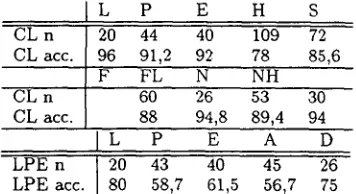
M a n y of the m a i n categories correspond to d o m a i n s such as "mathematics" or "history". A l t h o u g h not evident f r o m the category label, genre distinctions can also be quite important for d o m a i n classification, because s o m e d o m a i n s have developed specific genres for c o m m u n i c a t i o n within the associated c o m m u n i t y . There are three such d o m a i n categories in our experiments, poli- tics (P), law (L), and economy (E). Two further categories are academic texts from the humani- ties (H) and from the field of science and technol- ogy (S). In the L P E corpus, this distinction is col- lapsed into "academic" (A), the set of all scholarly texts in the corpus. Four categories are based on g e n r e only. On one hand, we have press texts (N), and more specifically NH, press texts from high quality broadsheets and magazines, on the other hand, fiction (F) and FL, a low-quality subset of F. For LPE, we defined a category D consisting of articles from quality broadsheets. Table 1 gives an overview of the categories and the number of documents in each category for each corpus. In all subsequent experiments, we assume as base- line the classification accuracy which we get when
L P E H S
CL n 20 44 40 109 72 CL acc. 96 91,2 92 78 85,6
F FL N NH
CL n 60 26 53 30
CL acc. 88 94,8 89,4 94
L P E A D
LPE n 20 43 40 45 26
LPE acc. 80 58,7 61,5 56,7 75
Table 1: N u m b e r of documents n in each category and classification accuracy a c c . if each d o c u m e n t is judged n o t to belong to t h a t category.
all documents are assigned to the m a j o r i t y class. The baselines are specified in Tab. I.
4 V a l i d a t i n g t h e F e a t u r e s
If the frequency of POS features does not vary significantly between categories, adding such in- formation increases both r a n d o m variation in the d a t a as well as its dimensionality. To check for this, we conducted a series of n o n - p a r a m e t r i c tests on CL for each POS tag.
In addition, binary classification trees were grown on the complete set of documents for each category, and the structure of the tree was subse- quently examined. Classification trees basically represent an ordered series of tests. Each tree node corresponds to one test, and the order of the tests is specified by the tree's branches. All tests are binary. The outcome of a test higher up in the tree determines which test to perform next. A d a t a item which reaches a leaf is assigned the class of the m a j o r i t y of the items which reached it during training. The trees were grown using recursive partitioning; the splitting criterion was reduction in deviance. Using the Gini index led to larger trees and higher misclassification rates. Since the p r i m a r y purpose of the trees was not prediction of unseen, but analysis of seen data, they were not pruned. There were no separate test sets.
[image:3.596.307.485.87.184.2]down to the next integer, so that all features whose frequency does not deviate greatly from the mean have a value of 0. Z-scores were computed on the basis of all documents to be compared. This makes sense if we view style as deviation from a default, and such defaults should be computed relative to the complete corpus of documents used, not relative to specific classification tasks. R e s u l t s : In general, only 7 of all 54 tags show significant differences in distribution for more than half of the categories, and the actual differ- ences are far smaller than a standard deviation. However, for most tasks, there are at least 15 POS tags with characteristic distributions, so that in- cluding POS frequency information might well be beneficial.
The four most important content word classes are VVFIN (finite forms of full verbs), NN (nouns), ADJD (adverbial adjectives), and ADJA (attributive adjectives). Importance is measured by the number of significant differences in dis- tribution. A higher incidence of VVFIN char- acterises F,
FL,
andNL,
whereas texts from academia or about politics and law show signif- icantly less VVFIN. The difference between the means is around 0.2 for F and FL, and below 0.1 for the rest. (Numbers relate to the z-scores). Note that we cannot claim that more VVFIN means less nouns (NN): scholarly texts both show less VVFIN and less NN than the rest of the cor- pus. For adjectives, we find that academic texts are significantly richer in ADJA (differences be- tween 0.02-0.04), while FL contains more adver- bial adjectives (difference 0.04).But function words can be equally important in- dicators, especially personal pronouns, which are usually part of the stop word list. They are sig- nificantly less frequent in academic texts and cat- egories E, L, NH, and P, and more frequent in fiction, NL, and R. Again, all differences are at or below 0.1. A lower frequency of personal pronouns can indicate both less interpersonal involvement and shorter reference chains.
Other valuable categories are, for example, pronominal adverbs (PAV) and infinitives of auxil- iary verbs (VAINF), where the difference between the means usually lies between 0.2 and 0.4 for sig- nificant differences. (We restrict ourselves to dis- cussing these in more detail for reasons of space.) Pronominal adverbs such as "deswegen" (because of this) are especially frequent in texts from law and science, both of which tend to contain texts of argumentative types. The frequency of infini- tives of auxiliaries reflects both the use of passive voice, which is formed with the auxiliary "war-
den" in German, and the use of present perfect or pluperfect tense (auxiliary "haben'). In this cor- pus, texts from the domains of law and economy contain more VAINF than others.
The potential meaning of common punctuation marks is quite clear: the longer the sentences an author constructs, the fewer full stops and the more commata and subordinating conj unctions we find. However, the frequency of full stops is dis- tinctive only for four categories: L, E, and H have significantly fewer full stops, NL has significantly more. We also find significantly more commata in fiction than in non-fiction, Possible sources for this are infinitive clauses and lists of adjectives.
With regard to the trees, we examined only those splits that actually discriminate well be- tween positive and negative examples with less than 40% false positives or negatives. We will not present our analyses in detail, but illus- trate the type of information provided by such trees with the category F. For this category, PPER, KOMMA, PTKZU ("to" before infinitive), PTKNEG (negation particle), an~t PWS (substi- tuting interrogative pronoun) discriminate well in the tree. In the case of PTKZU and PTKNEG, this difference in distribution is
conditional,
it was not observed in the significance tests and surfaced only through the tree experiments.5 T e x t C a t e g o r i s a t i o n E x p e r i m e n t s For our categorisation experiments, we chose a relational k-nearest-neighbour (k-NN) classifier, RIBL (Emde and Wettschereek, 1996; Bohnebeck et al., 1998), and two feature-based k-NN algo- rithms, learning vector quantisation (LVQ, (Ko- honen et al., 1996)), and IBLI(-IG) (Daelemans et al., 1997; Aha et al., 1991). The reason for choosing k-NN-based approaches is that this al- gorithm has been very successful in text categori- sation (Yang, 1997).
We first ran the experiments on the LPE- corpus, which had mainly exploratory character, then on the complete corpus.
In the LPE-experiments, we distinguished six feature sets: CW, CWPOS, CWPP, WS, WS- POS, and WSPP, where CW stands for content word lemmata, WS for all lemmata, POS for POS information, and PP for POS and punctuation in- formation.
word lemmata. Punctuation was included in con- ditions WS, WSPOS, FW, and FWPOS, but not in CW and CWPOS. In addition to feature type, we also varied the length of the feature vectors.
In the following subsections, we outline our gen- eral method for feature selection and evaluation and give a brief description of the algorithms used. We then report on the results of the two suites of experiments.
5.1 F e a t u r e S e l e c t i o n
The set of all potential features is large - there are more than 29000 lemmata in the LPE corpus, and more than 80000 in the full corpus.
In a first step we excluded for the L P E corpus, all lemmata occuring less than 5 times in the texts, and for the CL corpus, all l e m m a t a occurring in less than 10 sources, which left us with 4857 lem- mata for L P E and 5440 l e m m a t a and punctuation marks for CL. We then determined the relevance of each of these lemmata for a given classifica- tion task by their gain ratio (Yang and Pedersen, 1997). From this ranked list of lemmata, we con- structed the final feature sets.
5.2 T h e A l g o r i t h m s
RIBL: RIBL is a k-NN classification algo- rithm where each object is represented as a set of ground facts, which makes encoding highly structured d a t a easier. T h e underlying first- order logic distance measure is described in (Emde and Wettschereck, 1996; Bohnebeck et al., 1998). Features were not weighted be- cause using Kononenko's Relief feature weight- ing (Kononenko, 1994) did not significantly af- fect performance in preliminary experiments. The input for RIBL consists of three relations lemma(di,lemma,v), pos(di,POS-Tag,v), and doc- ument(all), with di the document index and v the standardised frequency, rounded to the next inte- ger value. In the CL experiments, the lemma tag covers both real lemmata and punctuation marks, in LPE, punctuation marks had a separate pre- cidate. Relations with a feature value of 0 are omitted, reducing the size of the input consider- ably. For these features, a true relational repre- sentation is not necessary, but that might change for more complex features such as syntactic rela- tions.
I B L : IBL stores all training set vectors in an instance base. New feature vectors are assigned the class of the most similar instancc. We use the Fuclidean distance metric for determining nearest ncighbours. All experiments were run with (IBL- IG) or without (IBL) weighting the contribution
of each feature with its gain ratio.
LVQ: LVQ also classifies incoming d a t a based on prototype vectors. However, the prototypes are not selected, but
interpolated
from the training data so as to maximise the accuracy of a nearest- neighbour classifier based on these vectors. Dur- ing learning, the prototypes are shifted gradually towards members of the class they represent and away from members of different classes. There are three main variants of the algorihm, two of which only modify codebook vectors at the deci- sion boundary between classes.5.3 L P E - E x p e r i m e n t s 5.3.1 P r o c e d u r e
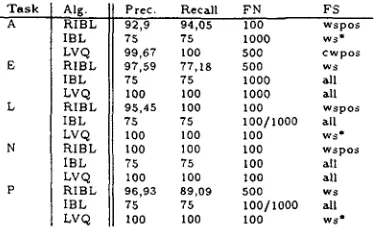
From the complete set of documents, we con- structed three pairs of training and test sets for training the feature classifiers. The test sets are mutually disjunct; each of them contains 5 posi- tive and 5 negative examples. The corresponding training sets contain the remaining 95 documents. For RIBL, test set performance is determined us- ing leave-one-out cross validation. Feature vectors contained either 100,500, or 1000 l e m m a features. On the basis of test set performance, we deter- mined precision, recall, and accuracy. Instead of determining recall/precision breakeven point as in (Joachims, I998) or average precision over differ- ent recall values as in (Yang, 1997), we provide both values to determine which type of error an algorithm is more susceptible to. Tab. 2 summa- rizes the results.
5.3.2 A l g o r i t h m - s p e c l f i c r e s u l t s
Condition IBL-IG resulted in significantly higher precision (+0.5%) than IBL, but lower re- call and accuracy (difference not significant). T h e number of neighbouring vectors was also varied (k = 1,3, 5, 7). For precision, recall, and accuracy, best results were achieved with k = 3. A pure nearest-neighbour approach led to classifying all examples as negative. The number of neighbours k was also varied for RIBL. Contrary to 1BL, it performs best for k = 1.
T a s k Alg. A R I B L
I BL LVQ E FtlBL
I B L LVQ L I:tIBL
I B L LVQ N R I B L I BL LVQ P I:tIBL
I B L LVQ
P r e c . RRecall F N FS 92,9 94,05 I 0 0 w s p o s
75 75 I 0 0 0 ws* 9 9 , 6 7 I00 500 c w p o s 97,59 77,18 500 w s 75 75 10O0 all 100 100 1000 all 95,45 I00 I 00 w s p o s
75 75 I 0 0 / I 0 0 0 all I 0 0 I00 I 00 w s *
I 0 0 I00 100 w s p o s
75 75 I00 all 100 I00 I 0 0 all 96,93 89,09 500 w s
75 75 1 0 0 / 1 0 0 0 all I 0 0 I00 I 0 0 w s =
Table 2: Test set performance averaged over all runs for each task and for the best combination of feature set and number of features, precision and recall having equal weight.
Key:
all: ws/wspos/wspp/cw/cwpos/cwpp, cw*: cw/cwpos/cwpp, ws*: ws/wspos/wspptors are assigned proportionally to each class and deteriorates with the number of codebook vectors, a clear sign of overfitting.
LVQ achieves a performance ceiling of 100% precision and recall on nearly all tasks except for genre task A. The low average performance of IBL is due to bad results for k = 1; for higher k, IBL performs as well as LVQ. Overall, performance de- creases with increasing number of features. IBL is rather robust regarding the choice of feature set. LVQ tends to perform better on data sets derived from both content and function words, with the exception of task A. Because of the ceiling effect, it almost never matters if the additional linguistic features are included or not. Recall is significantly better than precision for most tasks.
RIBL shows the greatest variation in perfor- mance. Although it performs fairly well, Tab. 2 shows differences of up to -5% on precision and -23% on recall. Overall, ws-based feature sets outperform cw-based ones. Performance declines sharply with the number of features. POS fea- tures almost always have a clear positive effect on recall (on average +28%, cw* and +16%, ws*), but an even larger negative effect on precision (- 38%, cw* and -39%,ws*), which only shows for 500 and 1000 lemma features. Lemma and POS fre- quency information apparently conflict, with POS frequency leading to overgeneralization. Maybe semantic features describe the class boundaries more adequately. They may be covered implic- itly in large vectors containing lemmata from that class. For 100 lemmafeatures, where the represen- tation is extremely sparse, we find that including POS information does indeed boost performance, especially for the two genre tasks, as we would have predicted.
5.4 C L E x p e r i m e n t s 5.4.1 P r o c e d u r e
In this set of experiments, RIBL and IBL were both evaluated using leave-one-out cross valida- tion. The performance of LVQ is reported on the basis of ten-fold cross validation for reasons of computing time. Training and test sets were also constructed somewhat differently. The test set contained the same proportion of positive ex- amples as the training set. If we had balanced the test set as above, this would have resulted in 4 pairs of sets instead of 10, and much smaller test sets, because some classes, such as L, are very small. This problem was not so grave for the LPE experiments because of the ceiling effect and the small size of the complete data set, therefore, we did not rerun the corresponding experiments. Furthermore, the number of codebook vectors for LVQ was now varied between 10, 50, 100, and 200 in order to take into account the increased train- ing set sizes.
5 . 4 . 2 R e s u l t s
The results on the larger corpus differ substan- tially from that on the smaller corpus. It is far easier to determine if a text belongs to one of the three major domains covered in a corpus than to assign a text to a minor domain which covers only 4% of the complete corpus. If the class itself is not considerably more homogeneous (with respect to the classifier used) than the rest of the corpus, this will be a difficult task indeed. Our results sug- gest that the classes were indeed not homogeneous enough to ensure reliable classification. The rea- son for this is that LIMAS was designed to be as representative as possible, and consequently to be as heterogeneous as possible. This explains why we never achieved 100% precision and recall on any data set again. In fact, results became much worse, and varied a tot depending mainly on the type of classifier and the task. Again, if classes are very inhomogeneous, any change in the way sim- ilarity between data items is computed can have strong effects on the composition of the neighbour- hood, and the erratic behaviour observed here is a vivid testimony of this. We therefore chose not to present general summaries, but to document some typical patterns of variation.
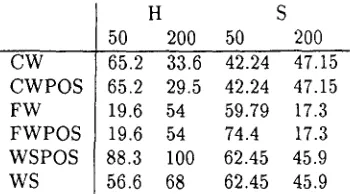
[image:6.596.75.263.100.214.2]CW C W P O S FW F W P O S WSPOS WS
H S
50 200 50 200
65.2 33.6 42.24 47.15 65.2 29.5 42.24 47.15 19.6 54 59.79 17.3 19.6 54 74.4 17.3 88.3 100 62.45 45.9 56.6 68 62.45 45.9
Table 3: Average LVQ results (precision) for cate- gories H and S, 50 codebook vectors, even initial- ization.
For RIBL, restricting the size of the relevant neighbourhood to 1 or 2 gives by far the best re- sults in terms of both precision and recall, but not in terms of accuracy - the negative effect of false positives is too strong.
IBL is also sensitive to the size of the neigh- bourhood; again, precision and recall are highest for k--1. For this size, incorporating information gain into the distance measure leads to a clear de- crease in performance.
O v e r a l l p e r f o r m a n c e : Unsurprisingly, perfor- mance in terms of precision and recall is rather poor. Average LVQ performance under the best parameter settings in terms of precision and re- call only improves on the baseline for two genres: H (baseline 78%, accuracy for feature set WSPOS 88%) and FL (feature sets CONT and CONTPOS, baseline 94%, accuracy 95%). Under matched conditions (same genre, same feature set, same number of features, optimal settings), IBL and RIBL both perform significantly worse than LVQ, which can interpolate between data points and so smooth out at least some of the noise. For exam- ple, IBL accuracy on task H is 69,1% for both WS and WSPOS, while accuracy on FL never much exceeds 92% and thus remains just below baseline. RIBL performs best on FL for condition CWPOS, but even then accuracy is only 90%.
Size o f F e a t u r e V e c t o r : The number of fea- tures used did not significantly affect the perfor- mance of IBL. For LVQ, both precision and re- call decrease sharply as the number of features increases (average precision for 50 lemma features 29.5%, for 200 24.8%; average recall for 50 9.1%, for 200 7.1%). But this was not the case for all genres, as Tab. 3 shows. The categories H and S are chosen for comparison because they are the largest. For H, the precision under conditions CW and C W P O S decreases, all others increase; for S, it is exactly the other way around.
C o m p o s i t i o n o f f e a t u r e v e c t o r s : Another lesson of Tab. 3 is that the effect of the com- position of the feature vectors can vary depend- ing both on the task and on the size of the fea- ture vector. The dramatic fall in precision for condition FWPOS, category S, shows that very clearly. Here, additional function word i n f o r m a - tion has blurred the class boundaries, whereas for H, it has sharpened them considerably. Because of the large amount of noise in the results, we would be very hesitant to identify any condition as op- timal or indeed claim that our hypotheses a b o u t the role of POS information or content vs. func- tion words could be verified. However, what these results do confirm is that sometimes, comparing different representations might well pay off, as we have seen in the case of task H, where W S P O S indeed emerges as optimal feature set choice.
6 C o n c l u s i o n
In this paper, we examined different linguistically motivated inputs for training text classification al- gorithms, focussing on domain- and genre-based tasks.
The most clear-cut result is the influence of the training corpus on classifier performance. If we want general-purpose classifiers for large genres or collections of genres, "small" representative cor- pora such as LIMAS will in the end provide too little training material, because the emphasis is on capturing the extent of potential variation in a language, and less on providing sufficient num- bers of prototypical instances for text categorisa- tion algorithms. In addition, genre boundaries are notoriously fuzzy, and if this inherent variability is compounded by sparse data, we indeed have a problem, as Sec. 5.4 showed. Therefore, fur- ther work into genre classification should focus on well-defined genres and corpora large enough to contain a sufficient number of prototypical docu- ments. In our opinion, further investigations into the utility of linguistic features for textcategoriza- tion tasks should best be conducted on such cor- pora.
Our results neither support nor refute the hy- potheses advanced in Sec. 2. However, note that in some cases, the additional non-content word information did indeed improve performance (cf. Tab. 3), so that such representations should at least be experimented with before settling on con- tent words.
A c k n o w l e d g e m e n t s
[image:7.596.79.254.78.175.2]comments. All statistical analyses were con- ducted with R (http://www.ci.tuwien.ac.at/R). Oliver Lorenz added the POS tags to LIMAS.
R e f e r e n c e s
D. Aha, D. Kibler, and M. Albert. 1991. Instance-based learning algorithms. Machine
Learning, 6:37-66.
H. Bergenholtz and J. Mugdan. 1989. Zur Kor- pusproblematik in der Computerlinguistik. In I. B£tori, W. Lenders, and W. Putschke, edi- tors, Handbuch Computerlinguistik. deGruyter, Berlin/New York.
B. Beutel. 1998. Malaga User
Manual. http://www.linguistik.uni- erlangen.de/Malaga.de.html.
D. Biber. 1988. Variation across Speech and
Writing. Cambridge University Press, Cam-
bridge.
U. Bohnebeck, T. Horvath, and S. Wrobel. 1998. Term comparisons in first-order similarity mea- sures. In Proc. 8th Intl. Conf. Ind. Logic Progr.,
pages 65-79.
W. Daelemans, A. van den Bosch, and T. Weijters. 1997. IGTtree: Using trees for compression and classification in lazy learning algorithms. AI
Review, 11:407-423.
W. Emde and D. Wettschereck. 1996. Relational instance based learning. In Proc. 13th Intl.
Conf. Machine Learning, pages 122-130.
R.I. Forsyth and D. Holmes. 1996. Feature~ finding for text classification. Literary and Lin-
guistic Computing, 11:163-174.
R. Glas. 1975. Das LIMAS-Korpus, ein Textkor- pus f/it die deutsche Gegenwartssprache. Lin-
gustische Berichte, 40:63-66.
G. Herdan. 1960. Type-token mathematics: a
textbook of mathematical linguistics. Mouton,
The Hague.
D. Holmes. 1998. The evolution of stylometry in humanities scholarschip. Literary and Linguis-
tic Computing, 13:111-117.
T. Joachims. 1998. Text categorization with Sup- port Vector Machines: Learning with many rel- evant features. Technical Report LS-8 23, Dept. of Computer Science, Dortmund University. ,I. Karlgren and D. Cutting. 1994. Recognizing
text genres with simple metrics using discrimi- nant analysis. In Proc. COLING Kyoto.
B. Kessler, G. Nunberg, and H. Schiitze. 1997. Automatic classification of text genre. In Proc.
35th A CL/Sth EACL Madrid, pages 32-38.
J. Klavans and Min-Yen Kan. 1998. Role of verbs in document analysis. In Proc. COLING/ACL Montrdal.
T. Kohonen, J. Kangas, J. Laaksonen, and K. Torkkola. 1996. LVQ-PAK - the learning vector quantization package v. 3.0. Technical Report A30, Helsinki University of Technology. I. Kononenko. 1994. Estimating attributes: Anal- ysis and extensions of relief. In Proc. 7th Europ.
Conf. Machine Learning, pages 171 - 182.
H. Ku~era and W Francis. 1967. Frequency anal- ysis of English usage: lexicon and grammar.
Houghton Mifflin, Boston.
D. Lewis. 1992. Feature selection and feature ex- traction for text categorization. In Proc. Speech
and Natural Language Workshop, pages 212-
217. Morgan Kaufman.
C. Martindale and D. MacKenzie. 1995. On the utility of content analysis in author attribution: The Federalist. Computers and the Humanities,
29:259-270.
U. Pieper. 1979. Uber die Aussagekraft statistis- chef Methoden fi~r die linguistische Stilanalyse.
Narr, Tfibingen.
D. Ross and D. Hunter. 1994. p-EYEBALL: An interactive system for producing stylistic de- scriptions and comparisons. Computers and the
Humanities, 28:1-11.
G. Salton and M.J. McGill. 1983. Introduction
to Modern Information Retrieval. McGrawHill,
New York.
A. Schiller, S. Teufel, and C. Thielen. 1995. Guidelines ftir das Tagging deutscher Textcor- pora mit STTS. Technical report, IMS Stuttgart/Seminar f. Sprachwiss. Ttibingen. J. Swales. 1990. Genre Analysis. Cambridge Uni-
versity Press, Cambridge.
A. yon der Gr/in. 1999. Wort-, Morphem- und Al- lomorphhgufigkeit in dom~nenspezifischen Kor- pora des Deutschen. Master's thesis, Insti- tute of Computational Linguistics, University of Erlangen-Ntirnberg.
Y. Yang and J. Pedersen. 1997. A comparative study on feature selection in text categorization.
In Proc. 14th ICML.