Faculty of Behavioral, Management
and Social Sciences (BMS)
“How to develop physical activity
programs for elderly to facilitate their
motivation to follow physical activity
recommendations?”
A Social Determination Theory – based approach
Supervisors:
Internal supervisor: Dr. M. E. Pieterse
Internal supervisor: Dr. C. H. C. Drossaert
External supervisor: Dr. ir. Jan Willem van -`t Klooster (Roessing Research &
ThivvyaGugathas (s1095722)
M. Sc. Thesis Health Psychology
Acknowledgements
This paper was written towards the degree “Master of Science”. I wish to acknowledge my
appreciation to my supervisors Dr. M. E. Pieterse, Dr. C. H. C. Drossaert and Dr. ir. Jan Willem van -`t Klooster. As supervisors they worked closely with me during the whole process of writing my thesis. They have made a significant contribution with their constructive feedback to the quality of my master thesis. Their feedback helped me especially to write the master thesis in a structured way and their constant reminder not to write so many run on sentences (e.g. like this run on sentence), helped me to write a good readable thesis.
I would also like to thank Roessingh Research and Development center for providing me with the opportunity to conduct my master thesis at their facility. The expert knowledge from the
employees helped me to improve my study.
Last but not least, I want to thank my incredible family and friends for all their advice and support. They always take their time to support me with continuous encouragement through the process of writing the thesis.
Thivvya Gugathas
Abstract
Background: A decline of functional ability is often associated with increasing age. To maintain physical functioning, physical activity is a solution. Despite the physical, social and mental health benefits that physical activity provides for elderly, many elderly do not act according to the recommended guideline.
Objective: The aim of the present study is to develop a prototype that facilitates the motivation to be physically active and to follow physical activity recommendations. Based on the literature, the self – determination theory (SDT) is identified as a suitable framework for the development of a physical activity program.
Method: The study was conducted in three phases. First, semi - structured interviews were held with 14 German elderly to get a better understanding of the determinants of physical activity behavior of the respondents and user requirements for the prototypes. Then, the information gathered from the first phase was translated into functional requirements of the prototype in combination with high SDT components in one prototype and low SDT components in another prototype. To evaluate the two prototypes, a usability study in a cross – over design with German 10 elderly was carried out.
Results: The system usability score for the prototypes were good and showed that the interface design
is appreciated by the elderly in the sample. 9 from 10 respondents preferred the SDT (+) prototype over the SDT (–) prototype. Autonomy – supportive features like having multiple choices were evaluated extremely positively by the respondents. There were mixed results for the strategy of guilt – inducing language in the SDT (-) prototype. Some respondents pointed out that the guilt – inducing message about the risk of inactivity was perceived motivating, but only in combination with positive feedback. In this study, the competence component seemed to have the most decisive contribution. Practical guidance is one of the main factors to choose for the SDT (+) prototype. The feature of collecting stars is mainly positively valued and is described as a feature that enhances the interactivity of the program and the motivation use to use the program to be physically active. The results of this study showed that the relatedness – supportive strategy praise can be useful when developing a physical activity program.
Samenvatting
Achtergrond: Een functionele achteruitgang is vaak geassocieerd met toenemende leeftijd. Om fysieke werking te ondersteunen is lichamelijke activiteit een oplossing. Ondanks de fysieke, sociale en mentale gezondheid, gaan ouderen niet de aanbevolen richtlijnen volgen.
Doel: Het doel van dit onderzoek was het ontwikkelen van een prototype dat de motivatie verhoogd om fysiek actief te zijn en adviezen met betrekking tot lichamelijke activiteiten te volgen. Volgens literatuur is de ‘Self-determination theory (SDT)’ een passende raamwerk voor de ontwikkeling van een lichamelijke activiteits program.
Methode: De studie was opgedeeld in drie verschillende fasen. Ten eerste worden semi - gestructureerde interviews met 14 Duitse ouderen afgenomen om een betere begrip van de determinanten van lichamelijke activiteit of van de gebruikers-behoefte voor de prototype te
ontvangen. Daarna zijn de verzamelde resultaten uit de eerste fase vertaald naar functionele behoeften voor de prototype. In een prototype zijn SDT ondersteunende componenten verwerkt en in de andere zijn SDT niet-ondersteunende componenten verwerkt. Om de twee prototypen te evalueren wordt er een gebruikersevaluatie in een cross-over design met 10 Duitse ouderen afgenomen.
Resultaten:
De ‘system usability score’ voor beide prototypen waren goed. 9 van 10 respondenten gaven de
voorkeur aan de SDT (+) prototype tegenover de SDT (-) prototype. Autonomie ondersteunende strategieën zoals het hebben van meerdere opties zijn positief geevalueerd door de respondenten. Er zijn niet eenduidige resultaten voor de strategie van schuld veroorzakende taalgebruik in de SDT (-) prototype. Enkele respondenten gaven aan dat de schuld veroorzakende boodschap over de risiken van lichamelijke inactiviteit motiverend waargenomen wordt maar alleen in combinatie met positieve feedback. In dit onderzoek heeft de competentie onderdeel de meest bepalende contributie. Praktijk ondersteuning is een van de hoofd factoren om voor de SDT (+) prototype te kiezen. De optie om sterren te verzamelen is meestal positief geevalueerd. Volgens de respondenten wordt de interactiviteit van het programma en de motivatie om het programma te gebruiken om lichamelijk actief te zijn verhoogd. Uit de resultaten kwam uit dat ook lof een nuttig strategie voor het ontwikkelen van een lichamelijke activiteitenprogramma is.
Conclusie: Deze studie levert een eerste benadering hoe een prototype ontwikkeld kan worden op
Table of contents:
Chapter 1: Introduction and aim of this study ... 1
1.1 Functional decline in elderly population & rising health care costs ... 1
1.2 Frailty in elderly ... 1
1.3 Physical activity recommendation for elderly ... 2
1.4 Motivators and barriers of physical activity in elderly ... 3
1.5 Self – determination theory as a theoretical framework to explain physical (in)activity ... 4
1.6 Physical activity interventions for elderly with the risk of functional decline ... 6
1.7 Aim of the research and research questions ... 7
Chapter 2: Method ... 9
2.1 Structure of the study and ethical issues ... 9
2.2 Phase 1: Needs assessment ... 10
2.2.1 Participants ... 10
2.2.2 Materials: ... 11
2.2.3 Data analysis... 12
2.3. Phase 2: Prototypes development ... 13
2.3.1 Procedure: ... 13
2.3.2 Materials: ... 13
2.3.3 Data analysis... 13
2.4 Phase 3: Usability testing of the prototypes ... 13
2.4.1 Participants: ... 13
2.4.2 Material: ... 15
2.4.3 Data analysis: ... 15
Chapter 3: Results ... 17
3.1 Results of the interviews: ... 17
Expectations and wishes regarding a physical activity program ... 22
3.2 Results of the prototype development: ... 24
3.3 Results of the usability study of the prototypes ... 30
Chapter 4: Discussion: ... 36
4.1 Reflection: ... 36
4.2 Strong points of the study ... 38
4.3 Limitations of the study ... 39
4.4. Implications for future research ... 40
4.5 Conclusion ... 40
6. Appendices ... 46
Appendix A: Study information & informed consent: ... 47
Appendix B: Semi – structured interview ... 50
Appendix C: Mock – ups of the two prototypes ... 57
Appendix D: Persona + Use – case scenario ... 67
Appendix E: Protocol for usability study ... 70
Chapter 1: Introduction and aim of this study
1.1 Functional decline in elderly population & rising health care costs
The fastest growing age group of the western world population is elderly (> 65 years). In the
Netherlands, 2.5 million of the population in 2010 was aged (above) 65 years and it is expected that in 2020 3.4 million of the population in Netherlands will be elderly (CBS, 2007). Elderly from this decade have a higher life expectancy compared to life expectancy of elderly in past decades (Moran, Cauwenberg, Hercky – Linnewiel, Cerin, Deforche & Plaut, 2014; Nelson et al., 2007). A decline of functional ability is often associated with increasing age. This could entail that prospective, more people are going to be institutionalized. Much of the health care costs occur due to the patient’s loss of
functional independence and the probability to suffer accidents or develop other problems rise with age (Cochrane, Munro, Davey, Nicholl, 1998). Therefore functional independence could have an impact on health care costs which would increase as well. For this reason, it is necessary to support elderly to maintain an adequate physical functioning that helps them to live longer independently (Van Holle, van Cauwenberg, Deforche, van de Weghe, Bourdeaudhuij & van Dyck, 2015).
1.2 Frailty in elderly
Even though chronological and biological age correlates, two individuals who are in the same
chronological age may differ in their health and functional status. According to Costello, Kafchinski, Vrazel and Sullivan (2011) the concept of frailty tries to give an explanation for the heterogeneity in elderly. Among elderly frailty frequently turns up with ageing. Frailty is the state in which a higher vulnerability for adverse health outcomes due to the decline of bodily functions is detectable. Elderly with frailty are at an enhanced risk e.g. fall accidents, less mobility, less independence, hospitalization or reduced longevity (Collard et al., 2012). According to a systematic review by Collard et al. (2012) including 21 cohorts with 61 500 participants, nearly 10.7 % of adults between 65 – 74 years are frail and 41.6 % of the participants show indications of pre-frailty. Moreover, nearly 30 – 40% of elderly (> 65 years) will experience a fall within a year and the severity and incidence rate of falls increase with age (Paterson et al., 2007).
The described impact of ageing can be reduced by encouraging elderly in doing physical activity (Nelson et al., 2007). With an individually adjusted exercise program, it is possible to
strengthen the muscles or to do a balance retraining. In the case that an elderly has motor deficits (e.g. weak legs), an activity can be adjusted to minimize impairment (e.g. weight training or doing exercises while sitting). In order to exercise and maintain global balance skills, elderly might perform exercises in distinct environments and under different conditions (Paterson et al., 2007).
It is important to consider that elderly often pursue a different goal when doing physical activity than younger age groups. Thus, they have a different intrinsic motivation. The pursued goal is less about aspects like prevention of disease or increase life expectancy but more to do an activity that helps them to cope with ageing (e.g. maintain muscle strength). Physical activity messages should therefore highlight the point of successful ageing, because elderly live often with one or more chronic conditions and the message of preventing disease might have a lesser impact on elderly (Paterson et al., 2007).
As mentioned above, in order to maintain adequate physical functioning, physical activity is a solution. Physical activity is a broad term that is often defined “as any bodily movement” that needs energy expenditure (WHO, 2013). According to several studies, physical activity has the potential to improve not only physical health but also mental health and health – related quality as well. These improvements are also detectable in “previously sedentary and chronically diseased older adults”
(Moschnyl, Platen, Klaaßen – Mielke,p.1, Trampisch & Hinrichs, 2011; Nelson et al., 2007; Physical Activity Guidelines Advisory Committee, 2008). Regular physical activity slows down physiological changes that are related to ageing and it can lead to an improved longevity, a lower probability of developing disabilities or a lower risk at chronic diseases of ageing. Furthermore, it can help in maintaining independence which means that elderly are less dependent on assistance in performing activities of daily life (Singh, 2002; Paterson, Jones & Rice, 2007).
1.3 Physical activity recommendation for elderly
The recommendation for physical activity is different for the various age groups. The “Nederland’s
The total of 150 minutes can be spread throughout the week e.g. a half an hour of moderate – intensity activity 5 times a week. An aerobic activity should be at have a minimal duration of 10 minutes and it is recommended that “muscle – strengthening activities, involving major muscle groups should be
done on 2 or more days a week” (WHO, 2011). When elderly are not able to reach the
recommendation because of their health condition, it is recommended that they should try to be as physically active as possible (WHO, 2011).
Physical activity provides physical, social and mental health benefits for elderly. However, many elderly people do not act according to the recommended guideline. According to the WHO (2013), physical inactivity is the fourth leading risk factor for global mortality. In western countries, 60 – 70 % of the elderly aged 65 years and above does not comply with the recommended physical activity (30 min/ 5 days a week). In 2012, only 68.6 % of people aged 55 or older fulfill the criteria for physical activity in the Netherlands due to the NNGB (A/N: this statistic might also include elderly who are limited by their health). This statistic of physical inactivity is also similar to the physical activity pattern in Germany for this age group. In a national survey in 2009 in Germany, it was found that 72.8 % of older women and 65.3 % of older men (aged 65 years and above) don’t reach the recommended level of physical activity. In addition to that, nearly half of the respondents stated that they did not engage in any sporting activities (women: 48.2%, men: 52.8% did not engage in any physical activities at moderate – intensity) (Moschnyl et al., 2008).
1.4 Motivators and barriers of physical activity in elderly
In focus group interviews with 31 older adults (> 60 years), Costello et al. (2011) explore the individual perception of physical active and inactive older adults regarding physical activity and exercises. The results show that health concerns, socialization, the programming, accessibility (cost, convenience, safety), fun and encouragement from the physician are motivators according to the focus group. Some respondents started to exercise in order to stay healthy and/or to combat the effects of ageing. Older adults who were physically active often highlighted the social aspect of exercising in a group as a motivator. The exercise staff that provides education and knowledge and also personal encouragement was also often cited as a motivator. The answers about motivators of the physically inactive group were nearly similar. For them physical activity has to be fun, purposeful and social. But compared to the physical active group of older adults, the physically inactive group named more barriers (e.g. lack of motivation, lack of self – discipline, being intimidated by the speed in gym facilities and being afraid to slow others down) (Costello et al., 2011).
1.) Physiological barriers are barriers that relate to someone’s physical body. An often cited barrier to physical activity is poor health e.g. balance disorders, vision problems, osteoporosis or decreased strength)
2.) Psychological barriers are barriers that inhibit physical activity due to mental or behavioral characteristics (Wallace & Lahti, 2005). Examples for psychological barriers are e.g. thinking that they already active enough , time constraints , misconceptions about physical activity, lack of knowledge about health benefits, lack of interest (Brawley, Rejeski, & King 2003; Schutzer & Graves, 2004).
3.) Environmental barriers are barriers that include aspects within someone’s physical or
economic context (Wallace & Lahti, 2005). Examples of this category are bad weather, lack of transportation, no place to sit down or rest during the physical activity (Schutzer & Graves, 2004). Furthermore, low socioeconomic statuses are also often named as environmental barriers in the lack of exercise description by physicians, (Schutzer & Graves, 2004).
1.5 Self – determination theory as a theoretical framework to explain physical (in)activity From a health perspective, it is a critical issue to understand how elderly can be motivated to change their life style and do more physical activity. If the elderly has the motivation to be physically active, the probability increases that the actual behavior would correspond with their intention to be
physically active.
A theory that is occupied to explore the motivation of individuals to behave in a particular way is the self – determination theory by Ryan and Deci (1985). This theory is suitable as a guiding framework to explore the motivation of elderly for physical activity. One of the strengths of SDT is that this theory includes the intrinsic motivation into its framework. External rewards have a decreasing influence with time and especially intrinsic motivation is relevant with regard to the longtime aim of maintaining physical activity (Ryan & Deci, 2007). This framework “has received research attention and support in predicting physical activity (Fortier, Duda, Guerin & Teixeira, 2012, p.1). It can be used to obtain a better insight into the choices elderly make with regard to physical activity.
According to the SDT, individuals have 3 basic psychological needs that are innate and crucial for health and well – being. These three needs are: autonomy (“degree to which elderly feel volitional e.g. initiator of their own behavior), competence (“degree to which one feels capable to achieve their goals”) and relatedness (“degree to feel relatedness with a group e.g. connection and sharing with
others in their age group”) (Grodesky, Kosma & Solmon, 2006).
In the context of developing a physical activity program, it can be suggested that elderly would be more prone to be physically active if these three needs are fulfilled. Theory – based interventions can provide a better understanding in the process of behavior change and can be a supportive factor in the development of a successful intervention (Lonsdale, Hall, Williams,
McDonough, Ntoumanis, Murray & Hurley, 2012). According to Lonsdale et al. (2012), the provider of a patient e.g. has to consider the perspective of a patient, and has to provide relevant information and opportunities for choice. Furthermore it has to encourage the patient to be responsible for their own health behavior without to judge or coerce the patient.
A study of Silva, Vieira, Coutinho, Minderico, Matos, Sardinha and Teixeira (2009) show that women (M=37.6 years, SD=7.1) in the SDT grounded intervention has an increased weight loss and higher levels of physical activity/ exercises compared to women in the control group (general health education program). Situations that support feelings of autonomy and competence lead to an enhanced intrinsic motivation (Williams & Deci, 2009). Williams and Deci (2009) point out that a given
physical activity can be considered as interesting by an individual. However, the activity controlled by a coach who orders or puts pressure on the individual, would result in the loss of interest. When others around the individual give constant negative feedback this will negatively affect the motivation of the individual. They also point out that challenges that are too difficult can lead to feelings of
incompetence and disengagement. Many physical activities use a combination of intrinsic and extrinsic motivation to sustain physical activity behavior (Williams & Deci, 2009). Also the need for relatedness has to be fulfilled. Gagné, Ryan and Bargmann (2003) point out that female gymnasts are more motivated and willing to follow practices, when they have a feeling of relatedness (e.g. cared by others within the domain of action), autonomy and competence during the practice.
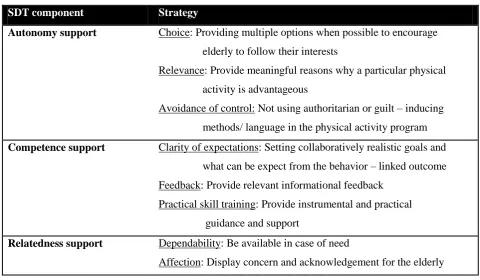
Table 1. Strategies to support SDT (Silva et al. (2014)
SDT component Strategy
Autonomy support Choice: Providing multiple options when possible to encourage elderly to follow their interests
Relevance: Provide meaningful reasons why a particular physical activity is advantageous
Avoidance of control: Not using authoritarian or guilt – inducing methods/ language in the physical activity program
Competence support Clarity of expectations: Setting collaboratively realistic goals and what can be expect from the behavior – linked outcome Feedback: Provide relevant informational feedback
Practical skill training: Provide instrumental and practical guidance and support
Relatedness support Dependability: Be available in case of need
Affection: Display concern and acknowledgement for the elderly
1.6 Physical activity interventions for elderly with the risk of functional decline
There are several interventions that aim to support elderly to prevent functional decline. One Dutch program is Perssillaa. The aim of the project is to support older adults with a self- management module that encourage them to train in their home environment or at a Perssillaa point where older adults have the opportunity to be physically active at a location in their neighborhood. Many of the interventions that are offered to older adults are facility – based and not home – based. The barrier of transportation might inhibit older adults to use the offered intervention (Schutzer & Graves, 2004). Perssillaa offers older adults to view the instructions of the exercises digital in a video with verbal instructions. This provides visual guidance instead of only giving written instructions. In addition to that, Perssillaa uses personalization at the different levels of the program and not only at the beginning which makes the module different from other physical activity moduls.
The physical module of Perssillaa is an evidence – based home exercise program. It is based on the exercises of Otago. This program intends to prevent falls by older adults (Campbell et al., 2005). The Otago exercise program is a programm with a trained instructor that individually tailor strength and balance retraining.
In order to support elderly to be physically active, the program LIFE (“Living Independently Functioning Older adults”) is being developed. LIFE is a home - based self – management program.
who are at risk of functional decline, various modules. These modules will contain personalized tips, recommendations and suggestions how they can develop or maintain a healthy behavior and prevent functional deterioration. In order to restrict functional decline, activities of the program will be tailored to the needs of the target group. The activities will be delivered preventive instead of being delivered to the target group after the functional decline has been progressed to the extent that elderly have to be hospitalized. A main aspect of the concept of the program LIFE is letting elderly choose between the various provided services and letting them make their own decisions (RRD, 2015).
1.7 Aim of the research and research questions
It is necessary to support elderly to maintain an adequate physical functioning that helps them to live longer independently (Van Holle et al., 2015). In order to maintain adequate physical functioning physical activity (PA) is a solution. Despite the physical, social and mental health benefits that physical activity provides for elderly, many elderly do not act according to the recommended guideline. In order to change physical activity behavior among elderly, who do not comply with physical activity guidelines, it is necessary to develop physical activity programs that meet the needs of the target group. According to the literature, self – determination theory (SDT) can be a useful framework for the development of a physical activity program. Silva et al. (2014) propose some SDT – supporting strategies. These strategies may be useful in the developing process of a physical activity
program with well – grounded physical activity recommendations.
Therefore the aim of this study is to provide a first approach on how to develop a prototype of a physical activity program that is based on the elderly needs and the concept of the self –
determination theory. The study will be carried out in cooperation with the Roessingh Research Development center (RRD) in Enschede. The results of this study aims amongst others to support the development of the program LIFE.
This leads to the specific research question of this study which is: “How to develop physical activity programs for elderly to facilitate their motivation to follow physical activity
recommendations?” The results of this study can provide a starting point for the future development of
physical activity programs.
To approach this aim, this study is divided in three sub questions:
(1) What are motivators and barriers of physical activity behavior in elderly?
elderly in the target group from fulfilling the recommendation of physical activity. This is done through preliminary interviews. The experiences elderly made in the past can be used as a guiding point for the development of the prototype. This is necessary to develop a prototype with adequate exercises and that considers the wishes of the elderly. Therefore, physical activity behavior could be facilitated in a substantiated manner.
(2) How can physical activity programs be matched to the needs of the target group (when considering SDT)?
The self – determination theory will serve as an overall theoretical framework (explaining how to motivate target group to initiate PA) because as earlier said this motivational theory does also focus on intrinsic motivation. External rewards have a decreasing influence with time and especially intrinsic motivation is relevant with regard to the longtime aim of maintaining physical activity (Ryan & Deci, 2007). Based on the results of the first sub question, two low – fidelity prototypes (see chapter 2) will be developed. One prototype will consider SDT – strategies that might affect the motivation to use the program. The other prototype will be similar in terms of the interface design but will use reversed SDT strategies.
(3) What do elderly think of the developed prototypes of the physical activity program?
Chapter 2: Method
2.1 Structure of the study and ethical issues This chapter abstracts the methods and techniques which were used. In this study a user centered
design (UCD) was chosen. This means that the needs, interests, expectations and motivation of the intended users (elderly) were central in the process. The UCD approach has the advantage that by involving end users in the development process, user satisfaction, usage and the quality of care can be enhanced (Gemert – Pijnen, Peters, Ossebard, 2013). Through considering user feedback in the development process on what they expect from a physical activity advice, the end product can be adjusted early in the development process.
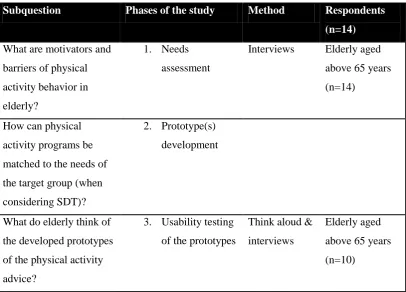
[image:15.595.68.475.493.785.2]The study was conducted in three phases. During the first phase (needs assessment), individual interviews were held with 14 elderly to get a better understanding of the determinants of their physical activity behavior (e.g. motivators and barriers of PA) and what they expect from a physical activity program. In the second phase of the study, information gathered from the first phase was translated into functional requirements of the prototype in combination with high SDT components in one prototype and low SDT components in another prototype. In the third phase of the study, it was explored how the two prototypes were received by the respondents of the target group. It was studied to what extent the different features of the SDT components were relevant for the physical activity program and what implications were in general important when developing a physical activity advice.
Table 2. Structure of the study
Subquestion Phases of the study Method Respondents (n=14) What are motivators and
barriers of physical activity behavior in elderly?
1. Needs assessment
Interviews Elderly aged above 65 years (n=14)
How can physical activity programs be matched to the needs of the target group (when considering SDT)?
2. Prototype(s) development
What do elderly think of the developed prototypes of the physical activity advice?
3. Usability testing of the prototypes
Think aloud & interviews
Ethical issues
The study procedure was approved in advance by the ethical commission of the University of Twente. All of the participants were informed in detail about the study and the procedure. Before the interview started, the participants were allowed to ask any questions related to the study and to give informed consent if…:
1.) …all their questions were answered 2.) … allowance to audiotape the interviews 3.) …to participate on the study
For privacy protection, all the data were processed anonymously.
2.2 Phase 1: Needs assessment
2.2.1 Participants
The target group in this study was elderly aged above 65 years who are at risk of functional decline, but are still able to do activities of daily living on their own. Elderly were recruited through
convenience sampling. To get a representative overview of physical activity behavior in elderly, in this research 7 men and 7 women participated on the interviews (M= 69.43 years; SD= 3.82). There were 3 inclusion criteria:
- Respondents have to be older than 65 years, because as earlier explained they represent an important risk group for physical inactivity (Revised from Gregg et al., 1996). Elderly in this age group require “more than any other age group […] adequate fitness levels to help them maintain independence” (Revised from Gregg et al., 1996).
- Respondents should be able to do daily activities on their own.
- Respondents should be able to understand and speak German, because the interviews will be conducted in German. As earlier said physical inactivity among elderly is a global problem. Physical activity behavior among elderly should therefore be promoted at the (inter)national population level.
If participants didn’t fulfill these three criteria’s, they were excluded from the sample.
Procedure:
- Characteristics of the target group; their experiences with physical activity programs and their technical skills
- If the motivators and barriers stated by the respondents were in common with the literature and if possible motivators/ barriers were overlooked.
- What their physical functioning is and what exercises were appropriate when developing the two prototypes. In the case that most of the respondents have knee problems, exercises that are straining the knees would not be adequate.
- What respondents in the target group expect from a physical activity advice and program
The participants who were interested to participate on the intervention got visited at their home. The interviews were taken in the natural environment of the respondents to limit the burden of
transportation for the elderly. Prior to the interview, the respondents were informed again about the intervention and were asked if they had any questions and to obtain permission to be recorded [see 2.6: ethical issues]. After all questions were answered, the respondents were asked for informed consent. Furthermore, it was pointed out that the respondents can stop the interview at any time.
The interview started with questions about general demographical data and questions about their current physical activity behavior, motivators and barriers of physical activity, experiences with physical activity advices and what they expect from a good PA advice and about their technical skills. A screenshot of the program “Perssillaa” was shown as an example (see Appendix B) and respondents
gave their opinion about the example and what changes they would make. The interviews lasted between 20 – 35 minutes.
2.2.2 Materials:
Interview schedule
The interview schedule consisted mainly of open questions about general demographical data, questions about physical activity behavior, motivators and barriers of physical activity, experiences with physical activity advices and what they expect from a good physical activity advice and about their technical skills. During the interview, the screening site ReQuest was used to assess the SF – 36 Physical Functioning Subscale (PF – 10) and two questionnaires with items about motivators and barriers were presented to the respondents. The list with items was presented after the open questions were asked about personal motivators and barriers that inhibit elderly to be physically active (see Appendix B).
PF – 10
&Keysor, 2011). This information was necessary to find adequate exercises for the prototype that matches the physical functioning state of the target group. The PF – 10 consisted of 10 items. The responses were rated on a 3 – point Likert – scale (limited a lot, limited a little or not limited at all). The respondents were asked to rate the items based on their current health state. The PF – 10 has been applied for different target groups, including elderly. The answers of the respondents were summed to produce raw scores that were afterwards transformed to a score between 0 – 100. A higher score indicated a health status that limited the respondent less in basic activities. It took less than 10 minutes to fill in the questionnaire (White et al., 2011).
Questionnaire about motivators & barriers
The list of items about motivators was based on a study of Rasinaho et al. (2006). A list of 16 items about possible motivators were presented to the respondents in a 3-point Likert scale (don’t agree, partly agree, agree). It took 3 -5 minutes to fill in the questionnaire. The list of items about barriers was based on a study of Moschnyl et al. (2011). The respondents were presented a list of 7 items on a 3- point Likert scale (doesn’t agree, partly agree, agree). The list of items was used to round up the open questions about motivators and barriers that were asked beforehand. The information about motivators and barriers were used to explore the role of the three psychological needs of the SDT theory.
Example of an exercise from the physical activity program “Perssillaa” A screenshot of the program “Perssillaa” was shown to the respondents (see Appendix B). This
screenshot was used in order to show the respondents an example of an existing physical activity module. It was chosen for the example of the exercise “Moving the head” because it was an exercise
that was easy to understand and follow (Appendix B).
2.2.3 Data analysis
For the qualitative analysis of the interviews deductive coding was used. A deductive way of identifying themes is “driven by the researcher’s theoretical or analytical interest in this area”
(Braun & Clarke, p.12, 2006). The interviews were written down as a transcript. Within the
2.3. Phase 2: Prototypes development
2.3.1 Procedure:
The interviews of phase 1 provided information about which values and wishes regarding physical activity the prospective users considered as important. SDT categories were used as a result classification for the development of the prototypes. These outcomes were now translated into functional requirements. This study used the strategies of Silva et al. (2014) as a theoretical framework and 2 low – fidelity prototypes were developed. The advantage of a low – fidelity
prototyping is that the main features were worked out in the prototype but not in detail. It turned out to be an effective way to find faults in the developed system (Walker, Takayama & Landay, 2002). One prototype considered SDT supporting strategies and the other prototype was similar in terms of the interface design but without the SDT components. In the prototype, the received feedback was
considered and suitable SDT strategies and persuasive features and behavioral change techniques were applied. The mock –ups for the prototype were made by the researcher with the program Balsamiq. This program allows user to create mock -ups in a quick way on a whiteboard through providing different user interface elements. This way of prototyping is fast and it is easy to create a graphical user - interface that conveys the most relevant features (Guilizzoni, 2010).
2.3.2 Materials:
- Strategies of Silva et al. (2014) as a theoretical framework (see chapter 1.5)
2.3.3 Data analysis
For the qualitative analysis of the interviews deductive coding was used. Within the transcripts, it was analyzed what the respondents identify as functional requirements of a physical activity program. Therefore a coding scheme was made. The transcripts were coded by one researcher. The coding scheme consisted of three main categories: autonomy – related, competence – related and relatedness – related and different labels were identified within the categories. The quotes of the respondents were afterwards assigned into the different labels.
2.4 Phase 3: Usability testing of the prototypes
2.4.1 Participants:
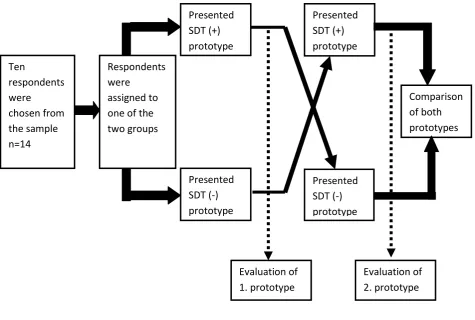
design is that the prototypes are evaluated within the same respondents which reduced the risk of between subject variability. This approach was more suitable for the comparison of the two
prototypes. Also fewer respondents were required (Mills, Chan, Wu, Vail, Guyatt & Altman, 2009). In addition to that, it was assumed that if all the respondents saw first the SDT (+) version, the answers for the SDT (-) prototype might be affected by the impression of the first prototype.
[image:20.595.61.537.188.508.2]
__________________________________________________________________________________
Figure 1. Cross – over design of usability study
Study procedure
For the evaluation of the two prototypes, they were presented to ten elderly. The elderly were visited again at their home. Based on the earlier steps, two personas and use – case scenarios were developed (Appendix D). Personas were fictional representations of the target group. They were used as an interaction design technique (Pruitt & Grudin, 2003). The scenarios were used to help the user to better imagine how the use of the technology could look like (Pommeranz, Brinkman, Wiggers, Broekens & Jonker, 2009).
The personas and the prototypes with the use – case scenarios were presented to the respondents. The female respondents were presented the persona of Marianne and the male respondents the persona of Frank. The respondents were guided through the usability testing by Ten
respondents were chosen from the sample n=14
Respondents were
assigned to one of the two groups
Presented SDT (+) prototype
Presented SDT (-) prototype
Presented SDT (+) prototype
Presented SDT (-) prototype
Evaluation of 1. prototype
Comparison of both prototypes
means of scenarios that pose typical tasks they could encounter when using the program. In the usability study the respondents were asked to make use of the think – aloud method. This method contains that the respondents should verbalize their thoughts during testing the prototype (Ericsson & Simon, 1993). After testing each prototype, the respondents were asked to fill in the system usability scale (SUS) for the tested prototype. They were also asked to answer in a closure interview questions about their experience with working with the prototype and what they like or dislike about the
prototype and what they would like to change. The evaluation lasted between 40 - 55 minutes.
2.4.2 Material:
Protocol for usability study
The protocol for the usability study was developed beforehand (Appendix D). The protocol consisted of the persona and the use – case scenarios and the open questions of the closure interview regarding the evaluation of the prototypes. The open questions were about:
- the experience to work with the prototype - the design of the prototypes
- their opinion of the physical activity advice and the three different feedback versions they got after the exercise
- the comparison of the two prototypes and what the decisive factor was for their preference
System usability scale (SUS)
The system usability scale is a tool to measure the usability of a system and consisted of 10 items. After testing a prototype, the respondents were asked to rate on a 5- point Likert scale the different items of the system usability scale. The scale ranges from strongly agree (5) to strongly disagree (1). For example, the respondent has to rate on the 5 – point Likert scale the item: “I think that I would need the support of a technical person to be able to use this system.” or “I think that I would use this system frequently”. The system usability score (SUS) ranged from 0 – 100. A higher score indicates a
better system usability (Brooke, 2011).
2.4.3 Data analysis:
Data analysis of system usability score (SUS)
Half of the items in the SUS were positive items (positive worded) and the other half were negative items (negative worded).
- The scores were then summed up and multiplied with 2.5 to get the total SUS (Brooke, 2011).
Data analysis of usability tests:
Chapter 3: Results
In order to answer the research question, the result section was divided to three sections. In the first part of the result section, the results of the interviews were presented. In the second part of the result section, the development of the two prototypes was presented. The used strategies were summarized in table 6. In the third part of the result section, the results of the usability testing were presented.
3.1 Results of the interviews:
The information gained in the interviews was necessary as a starting point for the development of the prototypes. It gave an insight into the physical activity behavior of respondents in the target group, their physical condition, their technical skills and what respondents in the target group expected from a physical activity program. The results of the physical condition e.g. helped to estimate what physical activities were suitable for the prototype.
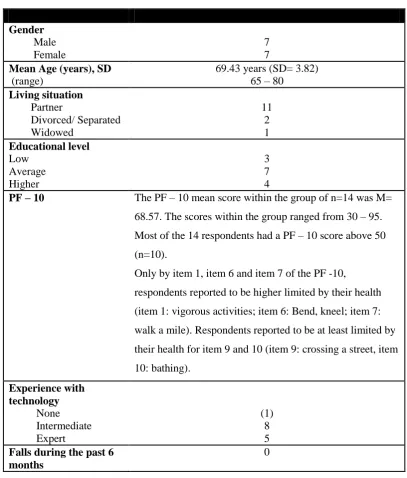
The elderly who participated in the interviews were all German. In total, 14 respondents (7 men and 7 women) participated on the interviews. The mean age of the respondents was 69.43 years (SD= 3.82) and range from 65 to 80 years. All respondents lived at their own home. Most of the respondents live together with their partner together; one man was divorced; one woman was a widow; the husband of one woman lived in a special – care home due to his health condition. Three of the respondents had a low educational level, seven had an average educational level and four of them had a higher educational level. Except one man, all respondents were now in pension.
The PF – 10 (physical functioning subscale of SF 36) showed that in general respondents in the sample had not many difficulties with daily activities. The PF – 10 mean score within the group of n=14 was M= 68.57. The scores within the group ranged from 30 – 95. Most of the 14 respondents had a PF – 10 score above 50 (n=10). The physical functioning was only limited by their health concerning item 1 (vigorous activities), item 6 (bend & kneel) and item 7 (walk a mile). In these activities
respondents reported to be limited by their health. These results of the PF – 10 were considered when developing the prototype. The choice of exercises is adjusted to these limitations (e.g. the shown exercise will not put additional burden to the knees).
Furthermore, all respondents had some experience with using a computer and a mobile phone. Except for one man (80 years), everyone knew how to use a computer and mobile. Women stated that in the beginning, it was difficult to learn how to use the computer and mobile, but often their
grandchildren gave them detailed (written) step – by step descriptions. With their guidance it was less difficult for her to handle the system. Respondents expected from the system that the content is
Table 3. Demographical data of the respondents in the interview Gender Male Female 7 7 Mean Age (years), SD
(range)
69.43 years (SD= 3.82) 65 – 80
Living situation Partner Divorced/ Separated Widowed 11 2 1 Educational level Low Average Higher 3 7 4
PF – 10 The PF – 10 mean score within the group of n=14 was M= 68.57. The scores within the group ranged from 30 – 95. Most of the 14 respondents had a PF – 10 score above 50 (n=10).
Only by item 1, item 6 and item 7 of the PF -10,
respondents reported to be higher limited by their health (item 1: vigorous activities; item 6: Bend, kneel; item 7: walk a mile). Respondents reported to be at least limited by their health for item 9 and 10 (item 9: crossing a street, item 10: bathing). Experience with technology None Intermediate Expert (1) 8 5 Falls during the past 6
months
0
Motivational factors regarding physical activity
One reason to held preliminary interviews was to get further knowledge of the physical activity experiences of the respondents and if the named motivators were related to the constructs of the self – determination theory. The interviews showed that the constructs of the self – determination theory were recognizable when respondents talked about motivators and experiences regarding physical activity. This shows that the SDT can be useful as a framework when developing a physical activity program/service. The motivational factors were categorized into three categories and different labels (see table 3).
The first category was motivational factors that were autonomy – related. This category was most important for respondents. Many respondents (n= 9) mentioned that living independently was a main reason for trying to be physically active. Health – related factors that were named by the elderly were e.g. to stay healthy, to be mobile or to reduce pain (e.g. back pain) through doing physical activity.
A second category was motivational factors that were competence – related. Four respondents stated that a motivational factor for them was the competitive conduct. For example, when they saw that they were able to do the same exercises as younger people. Six respondents mentioned that especially the experience of success, after doing an exercise, was motivating. They felt a positive change and reduced pain.
A third category was motivational factors that were relatedness – related. Some respondents (5 women, 1 man) stated that physical activity helped people in their age to stay part of the society and to meet other people and not become too lazy when they had so much free time after getting
pensioned.
[image:25.595.66.536.472.785.2]The gained information about motivators was afterwards as best as possible considered in the development of the prototypes e.g. respondents mentioned that one motivator was to reduce back pain. This motivator was considered in the choice of exercises that were offered in the prototype (more information were given in chapter 3.2).
Table 4. Motivational factors
Category Label Citation
Autonomy – related - Living independently
- Stay healthy
“My motivation is that […] I can care for myself and be independent. I don’t want to become a burden to my children” (Male, 67 years)
“The things we do are exhausting enough. I sometimes go swimming or go bicycling […]. These are the activities, we want to keep up in order to feel healthy” (Female, 65 years)
“If you rest, you rust” (Female, 70 years)
Competence – related - Competitive conduct (able to do the same exercises as younger people)
- Experience success after doing an exercise
„I like to set goals in the evening for the next day” (Female, 68 years).
“I set goals and I do everything to achieve them. This gives me a positive feeling” (Female, 68 years)
- Guidance For special exercises for the back I would first need guidance” (Female, 69 years)
Relatedness – related - Be part of the society
“My motivation to be physically is that I want to stay a part of the society […]. That’s very important for me.” (Female, 65 years)
“Spend time with my husband. To do together activities like bicycling […]. We are both in pension now, so we want to try to spend more time together” (Female, 69 years)
“Meet friends and do something together. That’s better than staying home and sing the blues” (Male, 67 years)
“Help my wife. She has health issues and I want to support her” (Male, 69 years)
“I don’t care if I do the activities with someone else or alone” (Male, 69 years)
“It depends from the activity if I like to do them in a group or alone. E.g. bicycling is an activity that I would prefer to do alone.” (Female, 69 years)
Barriers regarding physical activity
The barriers that inhibited elderly from being physically active were also explored. As the
motivational factors, many different barriers were mentioned by the respondents. The barriers that were mentioned can be categorized in the categories physical barrier, psychological barrier and environmental barrier.
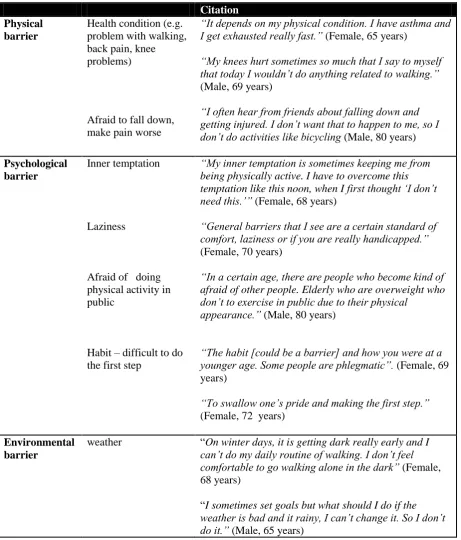
Physical barriers that were mentioned were caused by their current health condition (e.g. problem with walking, back pain, knee problems). Next to physical barriers, many different
psychological barriers were indicated by the respondents. The most frequently named barrier was the feeling of an inner resistance (named by nine respondents). Different factors contributed to the construct “inner resistance”: laziness, not being able to fulfill the social norm when doing physical
As it is shown above, different barriers needed to be considered when developing a physical activity program. The results were helpful to find suitable strategies for the prototype that decreased barriers for the users. For example, the fear that they were overstrained can be considered in the development of the prototype by offering the users multiple levels of difficulty that range from easy to difficult. Another example to consider the environmental barrier “weather” was to offer a physical activity that could be done at home.
Table 5. Barriers
Citation Physical
barrier
Health condition (e.g. problem with walking, back pain, knee problems)
Afraid to fall down, make pain worse
“It depends on my physical condition. I have asthma and I get exhausted really fast.” (Female, 65 years)
“My knees hurt sometimes so much that I say to myself that today I wouldn’t do anything related to walking.” (Male, 69 years)
“I often hear from friends about falling down and getting injured. I don’t want that to happen to me, so I don’t do activities like bicycling (Male, 80 years)
Psychological barrier
Inner temptation
Laziness
Afraid of doing physical activity in public
Habit – difficult to do the first step
“My inner temptation is sometimes keeping me from being physically active. I have to overcome this temptation like this noon, when I first thought ‘I don’t need this.’” (Female, 68 years)
“General barriers that I see are a certain standard of comfort, laziness or if you are really handicapped.” (Female, 70 years)
“In a certain age, there are people who become kind of afraid of other people. Elderly who are overweight who don’t to exercise in public due to their physical
appearance.” (Male, 80 years)
“The habit [could be a barrier] and how you were at a younger age. Some people are phlegmatic”. (Female, 69 years)
“To swallow one’s pride and making the first step.” (Female, 72 years)
Environmental barrier
weather “On winter days, it is getting dark really early and I can’t do my daily routine of walking. I don’t feel comfortable to go walking alone in the dark” (Female, 68 years)
Expectations and wishes regarding a physical activity program
Respondents shared their experience about physical activity programs. Some of the respondents had participated on rehabilitation courses or went to some sport courses in the past but none of the
respondents tried so far a digital physical activity program. They did not know if there were any digital physical activity programs for their age group in Germany and how such a program could look like. Therefore one screenshot of the Dutch physical activity program “Perssillaa” was shown (Appendix
B). This gave the respondents an insight how a physical activity program could look like and gave them the possibility to share their thoughts about it. The citations of the respondents can be grouped into the broad concepts of the SDT constructs (autonomy, competence, relatedness).
Autonomy: Most of the respondents (n=10) stated that the possibility of having a choice
between different options was important but only if the options were related to their health condition. Some users liked the idea that exercises were decided beforehand, but other users found it important that decisions were co – determined because then they would feel more motivated to do a certain exercise.
Competence: Users sometimes did not see the sense in a special exercise e.g. during a gym
course where everyone in the course did the same exercise. The usefulness of the exercises in the course was not always explained. According to six users the guidance/ instructions in such courses was sometimes not clear. They made the experience that sometimes instructions given in a gymnastic course were not comprehensible formulated and they had difficulties to follow the instructions. It was stated by some respondents, that with increasing age, it was difficult to do all kind of exercises and that they wanted to physical activities that were not difficult. Other respondents liked to be challenged by an activity.
Relatedness: 5 out of 7 women stated that meeting other people during a physical activity was
motivating. One woman stated that she did not care if she did an activity on her own. Sometimes it depended on her mood if she wanted to have other people around. Another woman did not like to do group activities because she felt exposed. She felt uncomfortable because she was not as sportive as other women her age. Relatedness is also for one female respondent dependent from the chosen exercise [“If you do dry and boring exercises, I prefer to exercise in a group (…). But bicycling or
other exercises I like to do by myself. It depends from the exercise and the situation.”]. For male
respondents in the sample, it did not matter if they did exercises with others or not. But if they could choose, they liked to do exercise alone or only within a small group of people they knew.
Table 6. Expectations regarding a physical activity program
Category Label Citation
Autonomy – related The possibility of having a choice
“I would like to be offered different exercises” (Female, 68 years)
“An exercise that is especially chosen for you might be useful because they would be
appropriate for your own condition.” (Male, 65 years)
“[…] I am limited in my health due to my knee problems and back pain and don’t have much choice in what activities I do. It depends on my current health state.” (Male, 69 years)
“It’s important that decisions are co-determined because you don’t like every exercise. If you co – determine the exercise, the probability is higher that you will actually follow the exercise. Exercises I don’t like, I would postpone or I won’t do it.” (Male, 68 years)
Competence – related Users sometimes don’t see the sense in a special exercise
Guidance
Relevance of feedback/ advice
Level of difficulty
“In the spinal exercises course […]are exercises that don’t help me at all and some that seem useful”. (Female, 69 years)
“I would like to be offered […] exercises but only if the exercises are proven in real life to be successful. This is really important to know in our age.” (Female, 68 years)
“I don’t do any particular sport. […] Before I do it [the exercise] wrong, I’ll leave it as it is.” (Male, 66 years)
“Maybe you can suggest some good exercises or a program. Then I would consider it. I have enough time. That would be nice.” (Male, 65 years)
“I participated twice on a yoga course. We were in a room and the therapist showed us how to do the exercise. I really liked that.“ (Female, 69)
“Actually, it’s not important. My feedback is that I see for myself that the exercise helped my body and that I feel better.” (Female, 69)
“I like to do easier exercises, you know? I can’t do everything. I’m already 80 years old.” (Male, 80 years)
„I don’t know. I don’t have any experience. I don’t do any exercises. “ (Male, 65 years)
„It was good to see, even though it might sound egoistic, that I am not that stiff and was able to do the exercise. This was really a good feeling. […]This feeling of acknowledgement was great. To see what I am capable of.“ (Female, 69 years)
Relatedness – related Dependent from the exercise and mood if users want to do an activity together with someone else
“Sometimes I do exercises alone and sometimes together with a friend. After doing a physical activity together, we like to drink a cup of coffee and talk. That’s nice. Then you have besides the training, also the social facet. “(Female, 71)
“For me, it is not of relevance. I do exercises by myself.” (Male, 69 years)
„If you do dry and boring exercises, I prefer to exercise in a group […].But bicycling or other exercises I like to do by myself. It depends from the exercise and the situation.” (Female, 69 years)
3.2 Results of the prototype development:
The aim of this study was to explore how physical activity programs should be developed for elderly to facilitate their motivation to follow physical activity recommendations. Based on the needs assessment and the expectations regarding the physical activity program, two prototypes were now developed.
Interface design:
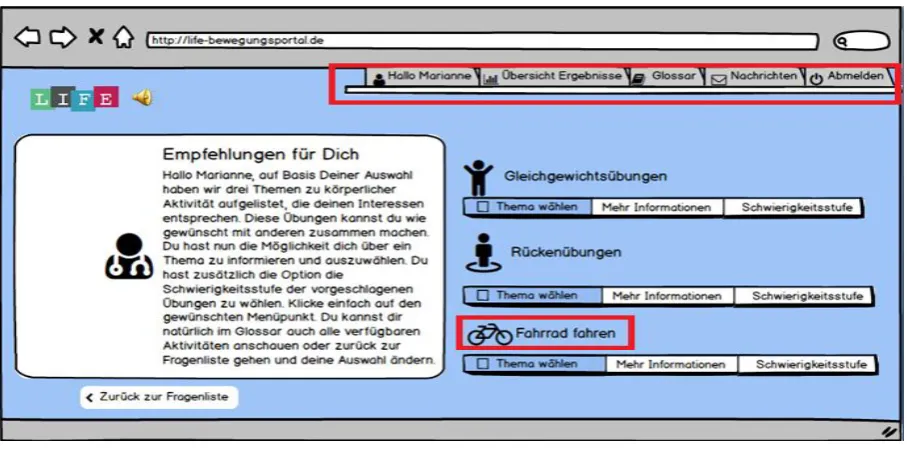
next to the bicycle activity. Elderly are also offered the possibility to rate an exercise (“rate this exercise and give 1 to 5 stars) in both prototypes.
[image:31.595.73.527.116.341.2]__________________________________________________________________________________
Figure 2: Screenshot of SDT (+) prototype
Persuasive features and SDT strategies:
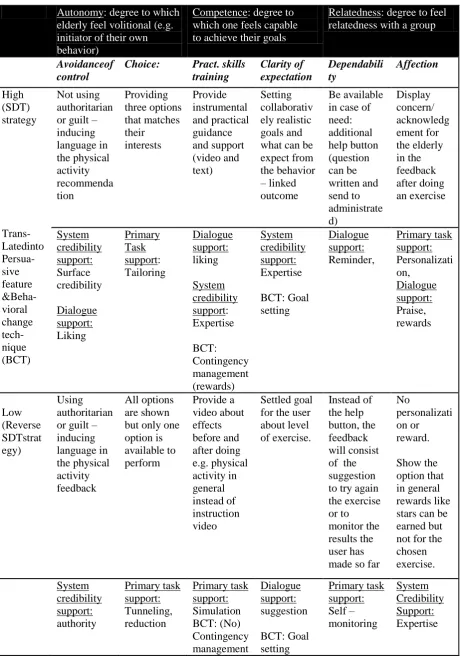
In table 6 the chosen SDT strategies and persuasive features and behavioral change techniques for the prototypes were presented. For the SDT (+) prototype, it was mainly chosen for the strategies
developed by Silva et al. (2014). Furthermore suitable persuasive features or behavioral change technique were added. In the SDT (-) prototypes it was mainly attempted to reverse the SDT (+) strategies.
the process and provided only one physical activity which was based on the preference of the user (primary task support: tunneling, reduction).
To support the competence of the user, two SDT – strategies were used. One was to provide the user with instrumental and practical guidance and support. The other was to set (collaborative) realistic goals and earn stars. In the SDT (+) prototype was an additional bottom with the headline “click for more information” provided. This option provided them with meaningful reasons why a
particular physical activity is advantageous for their health (strategy: clarity of expectation). The users were also provided a practical guidance video that showed how the exercise for the back has to be carried out (strategy: practical skill training). It was expected that this would led users to feel a sense of competence. In addition to that, it was possible to set collaboratively realistic goals. The SDT (+) prototype contained 3 levels of difficulty and the system gave a recommendation what level would be appropriate. By providing 3 levels of difficulty (easy, average and difficult), the user knew if he would be capable to achieve his goal (strategy: clarity of expectation/ BCT: goal setting).
They also earned stars by being physically active. In case they collected a specific amount of stars, new videos/ activities would be provided to the user (BCT: intercontigency management). They got three stars when they completed a physical activity, 1.5 stars when they started with a physical activity and pause with the physical activity. The other 1.5 stars they would get, when they continued and finished the activity. They got 1 star if they at least tried the physical activity, even though they decided to stop with the physical activity. The SDT (–) prototype also provided a video, but this video contained background information about back pain and what the processes were that led to the state. It gave an insight of the effects before and after physical inactivity (Primary task support: simulation). The instructions of the exercise were written down right to the video, but the exercise was not performed in the video. Therefore, the video gave less practical guidance than the video in the other prototype. In the SDT (–) prototype were also not different levels of difficulty available. In the SDT (– ) prototype the user did not get a star for the back pain exercise.
Table 7. Combination of persuasive elements and SDT strategies
Autonomy: degree to which elderly feel volitional (e.g. initiator of their own behavior)
Competence: degree to which one feels capable to achieve their goals
Relatedness: degree to feel relatedness with a group
Avoidanceof control
Choice: Pract. skills
training Clarity of expectation Dependabili ty Affection High (SDT) strategy Trans- Latedinto Persua-sive feature &Beha-vioral change tech-nique (BCT) Not using authoritarian or guilt –
inducing language in the physical activity recommenda tion Providing three options that matches their interests Provide instrumental and practical guidance and support (video and text) Setting collaborativ ely realistic goals and what can be expect from the behavior – linked outcome
Be available in case of need: additional help button (question can be written and send to administrate d) Display concern/ acknowledg ement for the elderly in the feedback after doing an exercise System credibility support: Surface credibility Dialogue support: Liking Primary Task support: Tailoring Dialogue support: liking System credibility support: Expertise BCT: Contingency management (rewards) System credibility support: Expertise BCT: Goal setting Dialogue support: Reminder, Primary task support: Personalizati on, Dialogue support: Praise, rewards Low (Reverse SDTstrat egy) Using authoritarian or guilt –
inducing language in the physical activity feedback All options are shown but only one option is available to perform Provide a video about effects before and after doing e.g. physical activity in general instead of instruction video Settled goal for the user about level of exercise. Instead of the help button, the feedback will consist of the suggestion to try again the exercise or to monitor the results the user has made so far
Examples of the two developed prototypes (The mock - ups of the entire prototypes were shown in Appendix C):
SDT (+) version. Recommendation page:
[image:34.595.73.529.155.432.2]__________________________________________________________________________________
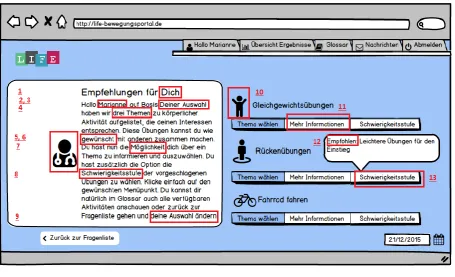
Figure 4: Screenshot of the recommendation page in the SDT (+) prototype
- SDT + A: Abbreviation for self – determination construct supporting autonomy - SDT + C: Abbreviation for self – determination construct supporting competence - SDT + R: Abbreviation for self – determination construct supporting relatedness
1.) SDT + R strategy: affection. User is addressed directly. Dialogue support: Liking. 2.) SDT + R strategy: affection. User is addressed directly. Dialogue support: Liking 3.) Primary task support: Tailoring. User is reminded that the advice is based on his interests he
stated in the screening test
4.) SDT + A strategy: Choice. User is shown that he has different choices and can select the one he preferred most, Primary task support: tailoring
5.) System credibility support: surface credibility. User sees an icon of a doctor
6.) SDT + A strategy: avoidance of control. User is reminded that the offered advice is given based on the wishes of the user. Therefore the user knows that he is in control of the situation 7.) SDT + A strategy: Avoidance of control. User is shown that he chooses what to do next. 8.) SDT + C strategy: Clarity of expectation, system credibility support: expertise. User is
9.) SDT + A strategy: Avoidance of control. User is reminded that he can change his choices he made in the screening if he wants to do that
10.) SDT + A strategy: Choice. User is shown three different exercises
11.) SDT + C strategy: Provide instrumental support & system credibility support: Expertise. User has the possibility to get more information
12.) SDT + C strategy: Clarity of expectation & dialogue support: suggestion of level of exercise
13.) SDT + C strategy: Clarity of expectations through providing a suggestion. User can collaboratively set realistic goals when choosing between different levels of exercises
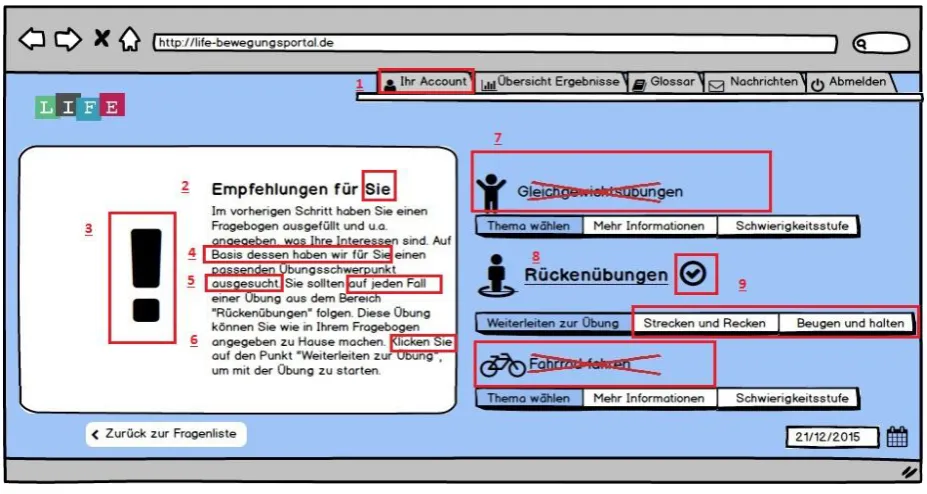
Example of the recommendation in the SDT (–) prototype:
[image:35.595.71.535.276.523.2]__________________________________________________________________________________
Figure 5: Screenshot of the recommendation page in the SDT (+) prototype
- SDT – A: Abbreviation for self – determination construct oppressing autonomy - SDT – C: Abbreviation for self – determination construct oppressing competence - SDT – R: Abbreviation for self – determination construct oppressing relatedness
Important differences to the SDT (+) prototype:
1.) SDT – R strategy: Low affection. User is not directly addressed 2.) SDT – R strategy: Low affection. User is not directly addressed
4.) SDT – A strategy: Low choice: Pointed out that system has decided what exercise would be appropriate according to the screening the user filled in, Primary task support: tunneling, reduction. System reduces effort to choose between several options.
5.) SDT – A strategy: Low choice. Pointed out that user should do definitely the suggested exercise because it fits the screening and interests of the user
6.) SDT – A strategy: Low avoidance of control. User gets more strictly guidelines how to go further. Directly addressed to the exercise
7.) SDT – A strategy: Low choice. Users see that there were three different kinds of exercises but there was already made a choice by the system which exercise is appropriate. User can only choose the advised exercise.
8.) SDT – C strategy: Low clarity of expectations. Users has not the possibility to get more information about the effect of the exercise
9.) SDT – A strategy: Low choice. User is offered with two exercises. Primary task support: tunneling
3.3 Results of the usability study of the prototypes
In table 7, the demographics of the respondents of the usability study were presented. The two developed prototypes were evaluated by ten respondents (M= 69.1 years; SD= 4.51). Two of the respondents had a low educational level, six respondents had an average educational level and two of the respondents had a higher educational level. The respondents were asked about their technology skills prior in the interviews. The technology skills were slightly different within the group. Most of the respondents had average technology skills (n=6, they know how to use a computer), one
respondent had higher technology skills and was more experienced and three respondents had low technology skills.