0
Learning together.
Developing a descriptive interaction
pattern model of online learning networks.
Master thesis Communication Studies
Veerle Boon (s1010719)
First supervisor: Dr. S.A. de Vries (Communication Studies) Second supervisor: Dr. E. Constantinides (Business Administration)
Specialization: Marketing Communication
University of Twente
1
Management summary
The rapid development of Web 2.0 applications has enabled new possibilities for interaction between companies and their customers (O’Hern & Rindfleisch, 2008; Sawhney, Verona, & Prandelli, 2005). Customers are becoming more empowered and are having an increasingly important role in value creation, which also influences the educational institutions. Participating in (online) learning networks can have many positive effects, such as more engagement, higher grades or more satisfaction with learning (Zhao & Kuh, 2014).
This research has studied the concept of interaction patterns in online learning networks. The central research problem of this thesis is therefore to develop a descriptive interaction pattern model of online learning networks, as described by the question: “What are the main components of interaction patterns in online learning networks?”. A second study has been conducted to empirically test part of this model, namely to answer: “What are the characteristics of five specific interaction patterns in online learning networks?”.
In the theoretical framework an extensive elaboration of literature related to interaction was discussed. First the definitions, types and contexts of interaction patterns were discussed, followed by literature specific to online learning networks and the outcomes of these interaction processes. This overview of literature forms the foundation for the first study, namely the development of a new model encapsulating all components related to interaction patterns in online learning networks (as shown in figure 16). This includes the channels, interaction activities and indicators of interaction level. Also, the outcomes or learning network goals of the process are added, in order to visualize all steps of the interaction process.
2 In conclusion, this master thesis makes several contributions. Firstly, a new descriptive model was developed aimed at distinguishing the components of interaction patterns in online learning networks. Furthermore, the empirical Q-sort study revealed the perceived importance of interaction activities for five specific interaction patterns. In addition to academic contributions, this research also gives insights in the many components of interaction patterns and the outcomes of interaction by students working together. Educational institutions could use this as a framework when structuring their classes.
Keywords: interaction patterns, learning networks, model development, Q-sort, learning benefits
“Tell me and I will forget; Show me and I may remember; Involve me and I will understand.”
3
List of contents
Preface ... 5
1. Introduction ... 6
1.1 Customer and consumer empowerment ... 6
1.2 New ways of participation and innovation ... 7
1.3 Collaboration and interaction ... 7
1.4 Research problem ... 8
2. Theoretical framework ... 10
2.1 Definitions of network types ... 10
2.2 Motivation ... 11
2.2.1 Diffusion of Innovations Model ... 11
2.2.2 Technology Acceptance Model (TAM) and the Unified Model of Acceptance and Use of Technology (UMAUT) ... 12
2.3 Interaction ... 13
2.3.1 Definition ... 14
2.3.2 Interaction patterns ... 15
2.3.3 Types of interactions ... 16
2.3.4 Interaction patterns in online learning networks ... 188
2.4 Outcomes of interaction in ALNs ... 211
3. Methodology ... 26
3.1 Study 1: Model development ... 26
3.2 Study 2: Q-sort method ... 26
4. Results ... 27
4.1 Model development ... 27
4.1.1 Influencers of interaction ... 27
4.1.2 Components of interaction patterns ... 29
4.1.3 Outcomes: learning network goals ... 30
4.1.4 Conceptual model ... 31
4.2 Q-sort ... 33
4.2.1 General focus of interaction patterns ... 33
4.2.2 Specific interaction activities per interaction pattern ... 34
4
5. Discussion ... 38
5.1 Theoretical questions ... 38
5.2 Model development study ... 38
5.3 Q-sort study ... 39
5.4 Limitations and recommendations for future research ... 40
6. Conclusion ... 411
6.1 Conclusions ... 41
6.2 Practical implications ... 41
References ... 42
Appendices ... 49
Appendix 1: Glossary ... 49
Appendix 2: rubric for assessing interactive qualities in distance courses (Roblyer & Wiencke, 2003) ... 53
5
Preface
In front of you, you find my master thesis for Communication Studies at the University of Twente. I am proud to present it to you after a long period of intensive work and
determination. The process of writing this thesis started off with many deliberations with my two supervisors on how to combine this thesis with one for my master Business
Administration. I’m very glad that eventually together we found a way to view the topic of this study from two different perspectives and in this way add value to the research.
I would like to make use of this opportunity to thank the people who helped me complete the thesis process. First of all, I would like to express special thanks to my supervisors Dr. Sjoerd de Vries and Dr. Efthymios Constantinides. Finding a way to combine the theses and develop a suitable research proposal was not easy, but I have always appreciated that you were patient and took the time to make it work. Thank you for your help, directions and support throughout the year. Also, my gratitude goes out to Wouter Vollenbroek, who was like a third supervisor to me. You not only helped me on the content of my thesis, but also made working in our room in the Cubicus together a lot more fun. Furthermore, I would like to thank the students of the two courses that participated in my research for providing me with sufficient data.
Finally I would like to thank my friends and roommates for putting up with me and providing me with necessary distractions. And last, but most definitely not least, I would like to thank my family. Thank you for all your support, patience and for helping me stay motivated. I really could not have done this without you!
Veerle Boon
6
1. Introduction
The rapid development of technology has impacted our society in many ways. A shift has occurred from the traditional Web 1.0 to the interactive Web 2.0. Web 2.0 can be defined as “a collection of open-source, interactive and user-controlled online applications expanding the experiences, knowledge and market power of the users as participants in business and social processes” (Constantinides & Fountain, 2008). These online applications include blogs, social networks, (content) communities, forums and content aggregators and in each of these channels the creator is of great importance. The internet has made it possible to have a dialogue between companies and customers and extends the reach and scope of these interactions (O’Hern & Rindfleisch, 2008; Sawhney, Verona, & Prandelli, 2005). For marketing practitioners, it has provided new media channels and ways to communicate, but has also led to a decline of the effect of traditional marketing tools.
1.1 Customer and consumer empowerment
The behavior of customers also changes as Web 2.0 makes them more confident and able to become involved. In other words, customers are becoming empowered (Constantinides & Fountain, 2008; Medeiros & Needham, 2008). It allows stakeholders, media and organizations to all interact in new ways (Ihator, 2001). With their increasing power, customers are also becoming more critical, less trustworthy of marketing and more individualistic. The customer journey and the way they make decisions changes. In order to engage with customers, the focus of the company must shift. The traditional company-centric view created value inside the firm and without interaction between the company and the customers to do so (Constantinides, Brünink, & Lorenzo-Romero, 2015; Prahalad & Ramaswamy, 2004a). Products and services are therefore designed to meet the assumed needs of customers (Eggers & Macmillan, 2015) and most product failures can be attributed to a firm’s inability to identify and satisfy these needs (Füller, Faullant, & Matzler, 2010; Kristensson, Matthing, & Johansson, 2008; O’Hern & Rindfleisch, 2008).
Nowadays scholars believe organizations must adapt to a more consumer-centric perspective and that value is created by collaboration between the customer and the company (Auh, Bell, McLeod, & Shih, 2007; Prahalad & Ramaswamy, 2002). This is related to a service-centered logic that also follows an outside-in perspective (Payne, Storbacka, & Frow, 2008). This logic states that relationships should be built to involve customers in new product developments and that value is co-created with the consumers, who become operant resources (Prahalad & Ramaswamy, 2004b; Vargo & Lusch, 2004). Consumers are increasingly having an active dialogue with companies and are playing an important role in creating value (Prahalad & Ramaswamy, 2000; Sanders & Stappers, 2008).
7 1.2 New ways of participation and innovation
“The need to innovate is greater than ever” and is the only way to create value through profitable growth (Prahalad & Ramaswamy, 2003, p. 27). Innovation has changed from a closed to a more open and collaborative process (Chesbrough, 2003; Prahalad & Ramaswamy, 2004b). The increasing empowerment of customers due to technological development and the insight that customers are a powerful source of competence, has also influenced the way in which companies manage their innovations (Hoyer, Chandy, Dorotic, Krafft, & Singh, 2010; Prahalad & Ramaswamy, 2004b). New product development (NPD) is of growing importance to sustain competitive advantage and differentiate (Griffin, 1997; Song & Adams, 1993), however NPD initiatives often fail due to lack of insights in the needs of the customers and consumers (O’Hern & Rindfleisch, 2008; van Kleef, van Trijp, & Luning, 2005). The success of NPD is dependent on information regarding the customer needs and information on how to meet those needs (Thomke & von Hippel, 2002). Instead of depending on firms to satisfy their needs, customers are now able to actively engage in the development process, which has many benefits for the customer and the firm (O’Hern & Rindfleisch, 2008; Thomke & von Hippel, 2002). User involvement in value creation, will allow firms to discover the needs of their customers and also strengthen their own core competencies, making customers an essential part of innovation and NPD (Füller & Matzler, 2007; Kristensson et al., 2008; von Hippel, 2005). This underlies the need for organizations to embrace Web 2.0 capabilities that allow them to interact with their customers.
1.3 Collaboration and interaction
It is clear that the internet has had a great impact on the process of collaborative innovation and customer participation in general (Lewis, Pea, & Rosen, 2010). Firms can choose to engage with customers actively, market one-to-one or include them in their processes (Constantinides & Fountain, 2008). However, this is not only used for commercial innovation, but also has a big role in knowledge exchange for other purposes, for example in educational institutions. Knowledge co-creation is a process where knowledge is not only shared, but also jointly generated and enhanced (Kangas, 2010). By enabling interactions and participation without the restraints of space and time, web technologies can enhance collaborative learning greatly (Cecez-kecmanovic & Webb, 2000). This way, communities are defined in terms of social relationships, rather than in terms of space (Hiltz & Wellman, 1997).
8 1.4 Research problem
In conclusion, the collaborative and interactive nature of the internet has empowered people and facilitated the growing interest in online interaction. This is, as stated in the last paragraph, not only interesting in a business context, but also for knowledge institutions such as the University of Twente. Most research that has been done on this topic focuses solely on motivators for interaction or the benefits it has. This research however will focus on clarifying the confusing concept of interactions patterns. Furthermore it will develop a model for the components of interaction patterns in online learning networks and determine the characteristics of specific interaction patterns. This will add to the literature on interaction patterns and the model can in fact be used in future research on the subject. It also has a practical relevance as it enables educational institutions to understand the role interaction plays in their courses and how to use it to the fullest. Specific interaction patterns can now be recognized and course staff will have a clearer view of all the factors that are of influence.
The central research problem of this question is therefore to develop a descriptive interaction pattern model of online learning networks. To achieve this, the following sub questions will be researched:
Firstly a few theoretical questions will be tackled in chapter 2;
What types of communities and online networks are there?
What is interaction and how can it be measured?
What are the outcomes of the interaction process in online learning networks? Followed by the development of models to determine these questions:
“What are the main components of interaction patterns in online learning networks?”
“What are the characteristics of five specific interaction patterns in online learning networks?”
This report will entail a model development and model testing study. Based on an extensive theoretical research, a practically useful model will be developed to describe interaction pattern in online learning networks. A second study will be conducted to test part of this model, namely the interaction activities. Their relation to five interaction patterns will be tested using a Q-sort method. It will also be validated by cross-referencing it with the results from the Business Administration thesis. This way, it will be able to say whether this model is appropriate to research this type of data.
10
2. Theoretical framework
After sketching the context and situation, this chapter will extensively discuss the main theories and models related to the research problem. These will form the foundation for the models that will be developed in this research.
2.1 Definitions of network types
There is a great amount of different definitions used in literature to name a collective group of interacting people. Before analyzing any (online) learning network, it is important to know what it should be called. A glossary with an overview of the definitions discussed here are also gathered in Appendix 1.
Firstly, the difference between a community and a network must be addressed. A community involves the affect-laden social relationships of a group of individuals that share a set of values, norms and meanings and which have emerged over a longer period of time (Etzioni, 1996). They are based on the notion that working together has more effect than individual attempts, especially as the members act both as the provider and consumer of information (Varlamis & Apostolakis, 2009). In the context of education, two community types have been found to be most relevant; the community of practice and the learning community (Varlamis & Apostolakis, 2009). A community of practice is “a ‘tightly knit’ group that has been together long enough to develop a cohesive community with relationships of mutuality and shared understandings” (Lindkvist, 2005, p. 1189). According to Wenger, a community of practice consists of three parts: mutual engagement; joint enterprise; and a shared repertoire (Wenger, 1998). Knowledge and learning are natural aspects of communities (Hiltz & Goldman, 2004; Swan & Shea, 2004). A (online) knowledge or learning community is a group of people jointly improving the knowledge in the field of the community by being in frequent social interaction (de Vries, Bloemen, & Roossink, 2000; Varlamis & Apostolakis, 2009). It consists of learning actors, learning processes, learning modes and learning tools (Secundo & Grippa, 2010).
11 2.2 Motivation
Before reviewing how interaction occurs in learning networks, it is important to also look at the motivators of interaction. The following three models below of Rogers (1983), Davis, Bagozzi & Warshaw (1989) and Venkatesh, Morris, Davis & Davis (2003) provide a description of the way people assess whether to interact using a new technology or other innovation. A collection of the main factors in these models will be used as the framework for the model, as described further in chapter 4.
2.2.1 Diffusion of Innovations Model
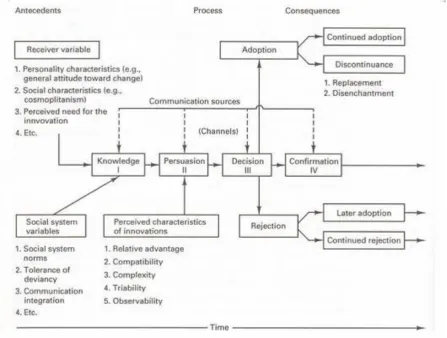
[image:12.595.74.522.343.681.2]The Diffusion of Innovations model describes the process through which a person decides whether or not to adopt an innovation. It states a person should first know of it, then be persuaded by it, make a decision to use it and finally confirm this. In this research the receiver variables have been added as moderators, but the main focus lies on the individual’s perceptions of the innovation characteristics that predict adoption; relative advantage, compatibility, complexity, triability and observability (Rogers, 1983). The model is portrayed in figure 1:
Figure 1: Diffusion of Innovations model (Rogers, 1983)
12 Rogers (1983) furthermore states that compatibility is the degree to which an innovation is seen as consistent with values/beliefs, previously introduced ideas or needs. Complexity refers to how difficult the innovation seems to be to understand and use. This has a negative effect on the rate of adoption. The fourth characteristic described by Rogers is triability and is defined as “the degree to which an innovation may be experimented with on a limited basis” (Rogers, 1983, p. 15). By being triable, the innovation becomes less uncertain to the adopter. Finally, observability is the degree to which the results of an innovation are visible to others. This helps to give the adopters an idea of what the innovation actually entails and it is positively related to the rate of adoption.
2.2.2 Technology Acceptance Model (TAM) and the Unified Model of Acceptance and Use of Technology (UMAUT)
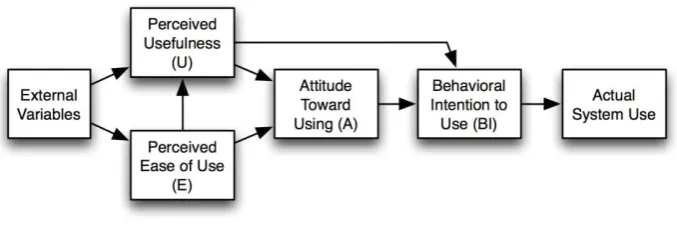
[image:13.595.129.468.416.529.2]The two other models that are of great importance in the context of motivations to accept new technologies, are the Technology Acceptance Model (Davis et al., 1989) and the Unified Model of Acceptance and Use of Technology (Venkatesh et al., 2003). The first (TAM) is an adaptation of the Theory of Reasoned Action (TRA) of Azjen & Fishbein (1980). This theory states that the behavioral intention of a person is determined by this person’s attitude and subjective norm regarding the behavior. This theory was adapted by specifically focusing on the user acceptance of information systems. TAM therefore consists of two main concepts: the perceived usefulness and perceived ease of use (see figure 2 below).
Figure 2: Technology Acceptance Model (Davis et al., 1989)
Perceived usefulness involves the prospective user’s benefits by using the technology. This is comparable to the relative advantages of the model by Rogers. On the other hand, perceived ease of use refers to the expected effort related to using the new technology. This can be compared to the complexity and compatibility concepts of Rogers. Just as the TRA model, TAM states that the actual use is influenced by behavioral intention. However, TAM adds the perceived usefulness and perceived ease of use as influencers of attitude.
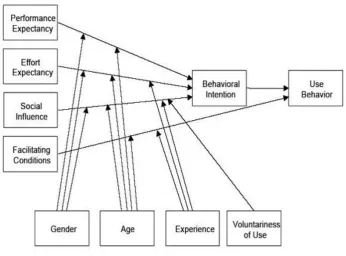
13 Figure 3: Unified Model of Acceptance and Use of Technology (Venkatesh et al, 2003)
The performance expectancy is defined as the degree to which an individual believes that using the system will give him/her advantages and benefits. This is very similar to the perceived usefulness of the TAM model. The effort expectancy is comparable to the perceived ease of use described above. Social influence is the degree to which an individual feels pressured by others to use the new system and facilitating conditions include the degree to which the individual feels supported in using the system. These two concepts can be related to the perceived encouragement concept of TAM. Furthermore, the four items below the model (gender, age, experience and voluntariness of use) have inspired the moderators to the conceptual model of this research.
2.3 Interaction
14 2.3.1 Definition
Interaction is a broad concept that has been studied extensively by many researchers from various fields of study. The most used definition is by Wagner (1994): “interactions are reciprocal events that require at least two objects and two actions. Interaction occurs when these objects and events mutually influence one another” (p. 8). A broader definition states that interaction involves “a created environment in which both social and instructional messages are exchanged among the entities in the course and in which messages are both carried and influenced by the activities and the technology resources being employed” (Roblyer & Wiencke, 2003, p. 81). The role of an actor in a network is dependent on their centrality and interaction with others (Brass, 1985). People are known to usually interact more with peers who have similar attitudes, values and experiences. Interaction can take the form of exchange, interplay or mutual influence (Jensen, 2005).
Interaction and interactivity are sometimes used interchangeably (Gilbert & Moore, 1997; Su, Bonk, Magjuka, Liu, & Lee, 2005), however Wagner (1994, 1997) states that they are distinct and should be referred to accordingly. Interactivity can be defined as the extent to which the communicator and his/her audience respond to each other’s communication needs (Ha & James, 1998). Interaction is an exchange and interplay of individuals and groups in which they influence each other, or in other words “reciprocal events requiring two objects and two actions”. This focuses on the behavior of people, while interactivity on the other hand, focuses more on characteristic of the technology systems. The terms are very related though, for example in distance education, technologies with high interactivity are necessary to allow high interaction between people and groups (Roblyer & Wiencke, 2003). However, in general interaction is seen as more process-oriented and interactivity is more feature-oriented (Su et al., 2005).
In the context of media channels, interactivity is more often used, as this entails interactions between human-human, but also human-machine or human-channel (Jensen, 2005). Interactivity is said to consist of five dimensions: playfulness, choice, connectedness, information collection and reciprocal communication (Ha & James, 1998). Therefore, interactivity of participants is shown to increase when they perceive a greater control over the environment, find the communication to be responsive and/or they perceive the communication goal is in fact to exchange information (Downes & McMillan, 2000).
15 giving each participant their own responsibility (Roschelle & Teasley, 1995; Smith, 1996). These definitions and those of many other relevant concepts in this context, are gathered in the glossary of Appendix 1.
2.3.2 Interaction patterns
The concept of interaction involves many different processes and even though it is a challenging problem, this can best be analyzed by distinguishing patterns (Dustdar & Hoffmann, 2007; Liu & Tsai, 2008; Verginadis, Apostolou, Papageorgiou, & Mentzas, 2009). Instead of simply referring to networks of people, researchers should research the specific patterns in these networks (McElroy, 2002). Organizations can be viewed as social groups with relatively stable patterns of interactions that evolve over time (Tichy, Tushman, & Fombrun, 2015). The social network approach has a basic assumption that “the social structure of any complex system consists of stable patterns of repeated interactions connecting social actors to one another” (de Vries, 2003). As these patterns change over time participants in networks can develop different roles or interests during the collaborative process (de Laat, Lally, Lipponen, & Simons, 2007). This also underlines the importance of clear models to conduct research on this topic.
In this study, more specifically, patterns of interaction will be analyzed. A pattern can be seen as an abstract description of a structure existing in a body of data (Biuk-Aghai, Simoff, & Debenham, 2005). Pattern languages can arise from the need for a way of understanding or even controlling a complex system, but also as a necessary design tool to build something coherent (Salingaros, 2000). The most frequently used definition of a pattern describes it as a re-usable solution to address a frequently occurring (architectural) problem (Alexander, Ishikawa, & Silverstein, 1977). A pattern is intended to help interpret and act upon processes and it is a dynamic, every-changing concept (de Laat et al., 2007; Schuler, 2008). It mainly consists of five parts; name, problem, context, solution and discussion (Schuler, 2008). A pattern language is a “network of patterns that call upon one another and help us remember insights and knowledge about design” (Alexander et al., 1977). Pattern languages tackle the complexity of any environment or system and encapsulate human experience (Papageorgiou, Verginadis, Apostolou, & Mentzas, 2009; Salingaros, 2000).
16 reason for failure of new ways of education can be related to a lacking ability to engage students by relying too heavily on traditional instructional methods (Alavi & Dufner, 2004).
2.3.3 Types of interactions
It is not only important to examine the amount of interaction, but also specifically what the nature of these interactive patterns are (Gerber, Grund, & Grote, 2008). Three conceptual frameworks have been found to form the basis of the discussion regarding interactions (Roblyer & Wiencke, 2003; Wagner, 1994);
interactions as an instructional exchange. This includes the three factors described in the next paragraph; learner-content, leaner-instructor and learner-learner (Anderson & Kuskis, 2007; Moore, 1989). This type of research is mainly interested in the members involved in the exchange and their roles.
Interactions as communication facilitated by networks of computers. Here the focus lies on (a)synchronous computer-mediated communication that enables communication between people who are not in each other’s spatial proximity (Wagner, 1994).
Interactions as social and psychological connections. Here learning is portrayed as a way of problem solving by collaborating with other peers (Gilbert & Moore, 1997).
A slightly different division into groups was made by Verginadis et al (2010). Here methods or approaches to determine the patterns were the distinctive feature.
Service interaction patterns. In this setting, parties each have their own interaction process and need to interact with others according to certain pre-agreed rules (Barros, Dumas, & Hofstede, 2005). The separate types of patterns are defined by the number of parties involved (bilateral versus multilateral), the number of exchanges between two parties involved in a given interaction (single- versus multi-transmission) and whether the receiver is necessarily the same as the sender of the request (round-trip versus routed interactions)
Collaborative interactive applications methodology. Here pattern based techniques are used to create conceptual models of collaborative systems
Interaction patterns from social network analysis. This is a popular approach using the social network analysis method to detect interaction patterns in a network (Dustdar & Hoffmann, 2007)
Action patterns in virtual collaboration. Here action patterns are obtained by using data mining (Biuk-Aghai et al., 2005)
17 (Rensen, 2013). Markerink (2016) extended this research to social customer relationship management (CRM) patterns. She found that such a pattern consists of a context, goal (listening, talking, energizing, embracing or supporting), interface, interactions (the same as Rossing et al, 2001), values, touch points and customer motivations (for example entertainment, information, identity, interaction).
The role of actors in a network is dependent on their centrality and interaction with others (Brass, 1985). People are known to usually interact more with peers who have similar attitudes, values and experiences. Three types of interaction in online web-based knowledge environments are distinguished; academic, collaborative and social (Jung, Choi, Lim, & Leem, 2003). Their study has shown that the social group had the highest grades, while the collaborative group was most satisfied with the learning experience. Both of these groups were more active than the academic group.
18 Figure 4: types of online discussion on the group project (Kwon et al., 2014)
2.3.4 Interaction patterns in online learning networks
An online community is defined as a group of people who are committed to a mission and who meet frequently via social interaction, because it is mutually beneficial to them (de Vries et al., 2000). These online communities are characterized by six aspects; clear user roles, a general goal, loyalty by the members, frequent social interaction, mutual benefits and an online meeting place. The social interactions are specified per type of online community. The social interactions in a study community for example will be focused on documentation, a forum and sending/receiving email, while in a social community this will include more chatboxes, newsgroups or interactions focused on entertainment (de Vries et al., 2000). Online communities tend to be larger, more dispersed in space and time and more dense than offline communities (Hiltz & Wellman, 1997). They also have members with more heterogeneous social characteristics, but still more homogenous attitudes.
19 environments (Mcisaac, Blocher, Mahes, & Vrasidas, 1999; Shearer, 2003) and is therefore an important research issue. Within the context of educational environments, the first systematic definition of interaction types was developed by Moore (1989). As will be described more extensively below, he distinguishes interactions between learner-content, learner-instructor and learner-learner. Some other researchers also include a fourth type; learner-interface (Sabry & Baldwin, 2003; Wanstreet, 2006) or learner-system (McMillan, 2006). When relating this to the community of inquiry model of online learning, many similarities can be seen with the three overlapping elements of this model. It could be said that cognitive presence represents interaction with content, teaching presence is interaction with teachers and social presence covers interaction among students (Garrison & Archer, 2003; Swan, 2001). This is also in accordance with the main factors that influence the satisfaction of students with learning in an asynchronous online environment; clarity of design, interaction with instructors and active discussion among course participants (Swan, 2001).
The clearest and most often referenced description of interaction types, distinguishes three main types of educational interactions; content, instructor and learner-learner (Anderson & Kuskis, 2007; Moore, 2008). Below there will be a further elaboration on these different concepts.
Learner-content interaction
Learner-content (or learner-information) interaction is the type of interaction with the highest frequency and is therefore generally also perceived as most useful by students (Sabry & Baldwin, 2003). In its most traditional form, this involves written text, but nowadays content is also shared with students via multimedia channels to improve interaction (Moore, 1989). Specifically in distance education, sometimes learner-content is the primary way of education for students (Shearer, 2003). Also, the audience in this context is not always a passive receiver of the information, but can fulfil the role of active co-creator (McMillan, 2006). Therefore it is of great importance that the content is presented to the student in a suitable and interactive manner.
Learner-instructor interaction
20 This type of interaction can take several forms, such as one, many-to-one and one-to-many (Sabry & Baldwin, 2003). The important role of the teachers interactions are underlined by some researchers by even including teacher-teacher and teacher-content interaction patterns (Anderson & Kuskis, 2007).
Learner-learner interaction
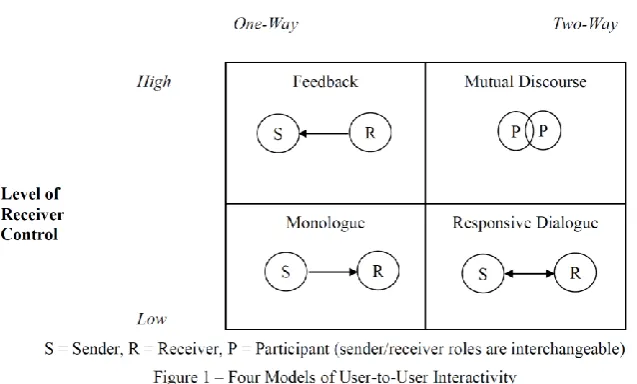
[image:21.595.130.449.363.555.2]This third type of interaction involves inter-learner interactions, “alone or in group settings, with or without the real-time presence of an instructor” (Moore, 1989, p. 2). This can include exchanging information, ideas and dialogue (Mcisaac et al., 1999) and can be both asynchronous or synchronous (Sabry & Baldwin, 2003). This way of interacting is the largest category in educational interaction literature (Wanstreet, 2006) and learner-learner interaction is seen as one of the most critical success factors for online educational environments (Anderson & Garrison, 1998; Sabry & Baldwin, 2003; Selim, 2007; Swan, 2002). In a study of types of user-to-user interactivity, a distinction is made between four types, dependent on the direction of communication and level of receiver control, as illustrated below in figure 5 (McMillan, 2006);
Figure 5: Four models of user-to-user interactivity (McMillan, 2006)
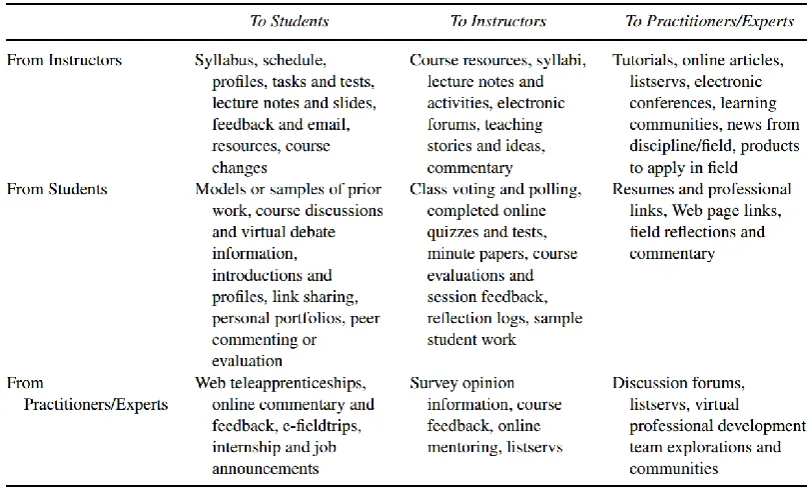
21 Figure 6: E-learning communication flows (Bonk & Dennen, 2007)
Some researchers distinguish a difference between students’ interaction related to the task at hand (group regulation) and socio-emotional interaction more oriented towards the members of the group (Howell-Richardson & Mellar, 1996; Kwon et al., 2014). Both are necessary in order for the interactions of the group to be successful. Next to task patterns and communication patterns, de Moor also distinguishes goal pattern, information patterns and meta patterns (de Moor, 2009).
2.4 Outcomes of interaction in ALNs
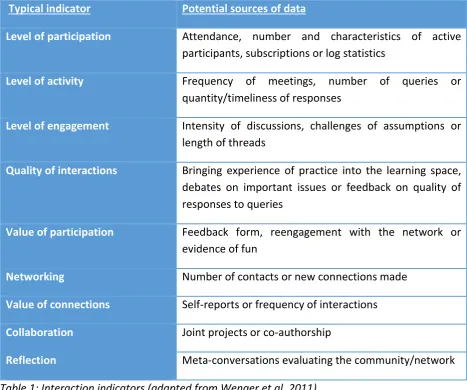
22 Interaction among students typically results in higher achievement and greater productivity, more caring, supportive, and committed relationships, and greater psychological health, social competence, and self-esteem (Smith, 2005). Sims (Sims, 2003) names engagement, communication, conversation and control as the main benefits of interactive learning. A way to assess the interactive qualities in distance courses, is introduced by Roblyer & Wiencke (2003), as portrayed in Appendix 2. A similar determination of indicators of interaction to measure value creation is shown below (Wenger et al., 2011):
Typical indicator Potential sources of data
Level of participation Attendance, number and characteristics of active participants, subscriptions or log statistics
Level of activity Frequency of meetings, number of queries or quantity/timeliness of responses
Level of engagement Intensity of discussions, challenges of assumptions or length of threads
Quality of interactions Bringing experience of practice into the learning space, debates on important issues or feedback on quality of responses to queries
Value of participation Feedback form, reengagement with the network or evidence of fun
Networking Number of contacts or new connections made
Value of connections Self-reports or frequency of interactions
Collaboration Joint projects or co-authorship
[image:23.595.71.539.199.589.2]Reflection Meta-conversations evaluating the community/network
Table 1: Interaction indicators (adapted from Wenger et al, 2011)
23 qualities are seen as highly interactive. This is also the case when the technology enables two-way exchanges and instructional activities require and promote students to collaborate.
Four critical success factors (CSFs) of online learning have been identified and measured. Firstly, the instructor characteristics, which is perceived as the most critical factor by students (Selim, 2007). Instructors should be enthusiastic regarding e-learning and should be able to understand and use the technology (Allen et al., 2007). This technology (the second CSF) should be easy to use and accessible (Cheawjindakarn et al., 2012). Thirdly, the students should be competent, aware of the possibilities and motivated. Finally, the educational institution should support this type of education and establish the necessary environment.
The most used method to articulate interactions in online learning environments, is conducting a social network analysis (Aviv, Erlich, Ravid, & Geva, 2003; Dawson, 2010; de Laat et al., 2007; Nuankhieo, Tsai, Goggins, & Laffey, 2007). The measures that provide the most relevant information regarding the activity of the actors in the network and the network structure, include the network density, centrality degree, network centralization (difference between the number of links for each node divided by maximum possible sum of differences) and reciprocity (one or two-way). Also the distinction between strong and weak ties can give interesting insights in the network (Ahuja, 2000). A social network analysis gives a clear understanding of the group activities and can help teachers to see how/if all students participate (de Laat et al., 2007). For this research a question was added to the survey in order to draw and analyze the network structure. However, when reviewing the results it became clear that as these courses made use of project groups already, there was little to no interaction with students outside these groups. To further examine these processes, a more in-depth study must be conducted.
Asynchronous learning networks (ALNs) have many advantages over face-to-face interactions, such as more convenient interaction and more time spent on composing contributions. However, such a network also raises coordination problems. It decreases the immediacy of communication, can be more demanding for participants or can lead to an overload of useless information (Hiltz & Goldman, 2004; Hiltz & Wellman, 1997). Research found that students only have a slight preference for a live course when compared to distance learning environments (Allen et al., 2007). The three most important factors to maximize interactivity in ALN’s include (Hiltz & Turoff, 2002);
- promoting instructor-student interaction by establishing trust - developing collaborative learning activities
- generate active participation with appropriate software
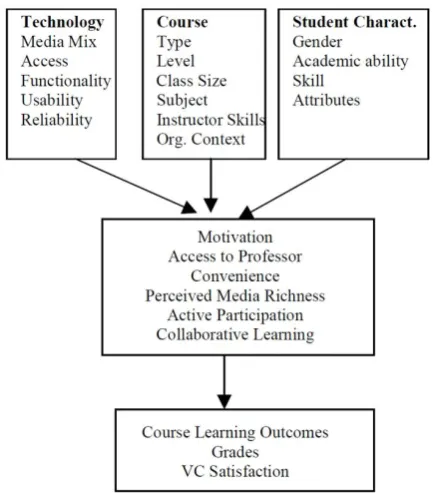
24 The way that teachers decide to structure their class determines the way students interact with each other, which in turn largely influences the outcomes of the learning process (Johnson & Johnson, 1987). Teachers can choose to structure their lessons competitively, individualistically and cooperatively, as also shortly addressed in paragraph 2.2. For the first group the interaction pattern that is most dominant is oppositional, while for cooperative learning it is promotive (Johnson & Johnson, 1987). Individualistic learning does not entail any interaction patterns whatsoever. The model below shows the separate factors that are of influence in a virtual classroom study; (Benbunan-Fich & Hiltz, 2002).
Figure 7: Conceptual model of the virtual classroom study (Benbunan-Fich & Hiltz, 2002)
The study showed that students using a ALN system earned equal or better grades and equal or better perceptions of learning outcomes than the students using a traditional face-to-face course (Benbunan-Fich & Hiltz, 2002). Also, graduate students showed to be more likely than undergraduate students to perceive course outcomes from an ALN to be positive. When comparing ALN courses with traditional face-to-face ones, the learning process showed little differences in collaboration or media sufficiency (Fjermestad et al., 2004). However, on the topic of interactions there did not seem to be a consensus. The majority of the positive effects of ALN were related to an increase in communication and increased student participation. Other learning outcomes included a feeling of achievement, development of new competencies, more positive attitudes, higher self-esteem and a better relationship with both their classmates and the school/personnel (Johnson & Johnson, 1987).
25 All these advantages however can also turn into disadvantages. A lot of information can for example lead to an overload and a lack of overview. Increased participation can also lead to some group members becoming dominant and/or others to fear negative valuation and therefore withdrawal from group discussions (Alavi & Dufner, 2004; Harasim et al., 1995). All learning outcomes from this research are shown below;
Figure 8: Conceptual model of the virtual classroom study (Alavi & Dufner, 2004)
26
3. Methodology
Two studies have been conducted using two different methods. Firstly, a model has been developed in order to ensure scientific relevance. Afterwards, a Q-sort method was applied to further describe part of this model and test its practical relevance. These results are also cross-referenced with the survey results of the Business Administration master thesis, as described in paragraph 1.4.
3.1 Study 1: Model development
The first sub question that will be analyzed is: “What are the main components of interaction patterns in online learning networks?”. In order to answer this, all literature described in the previous chapter will be combined to develop a reliable model. This model will show all components related to interaction patterns in online learning networks and can be used to monitor interactions. It will give a clear overview of all related factors.
3.2 Study 2: Q-sort method
The second sub question in this research is: “What are the characteristics of five specific interaction patterns in online learning networks?”. Therefore the main interaction activities from the first model were tested in the second study to determine how they relate to the five interaction patterns. These five interaction patterns were already used in the Business Administration thesis and are groupwork, sharing knowledge, finding knowledge, collaboration and social interaction. A method fitting for this type of research, is the Q-sort method. This method is derived from the factor analysis and strives to organize and analyze subjectivity (Cross, 2005; Stephenson, 1953). It is a suitable method to study opinions, attitudes or experiences of people and can be applied to an array of subjects (Jedeloo & Staa, 2009; McKeown & Thomas, 1988). During the Q-sort process, the participant is asked to rate words or statements on a card using a Likert-scale. The places where the cards can be put are structured as a normal distribution and are fixed, which forces the participant to show a preference and not stay neutral. Other benefits of this method are that it combines qualitative and quantitative data, and that less respondents are needed in comparison to for example a survey (Doody, Kearney, Barry, Moles, & O’Regan, 2009; Jedeloo & Staa, 2009) .
27
4. Results
The results of the data-analysis will be elaborated on in this chapter. The main data for the model development is derived from an extensive literature review, and additional data was collected from students using a Q-sort method.
4.1 Model development
In this research a conceptual model has been developed to describe interaction patterns in online learning networks. There are various components in this model that will be explained further in this paragraph. The main structure of the model was based on the model by Markerink (2016).
4.1.1 Influencers of interaction
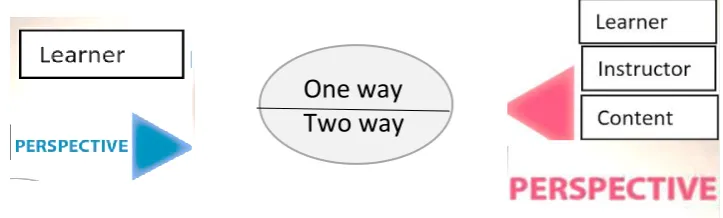
First of all, there are different perspectives that influence interaction patterns in online learning networks. In an educational context, the focus is on the learner as the main actor. The learner can interact with content, another learner or the instructor (Anderson & Kuskis, 2007; Moore, 2008). Depending on the perspective that is applicable, the way of interacting also changes. For example, interaction between a learner and another learner occurs quite differently from interaction with a teacher. This interaction can furthermore be one-way or two-way, depending on whether or not the interactee responds.
[image:28.595.122.484.454.563.2]Therefore the perspective of interaction and direction were included in the model as follows:
Figure 9: interaction actor perspective and direction
The first influencers of the interaction process, are the motivators of the learner. By this the factors are meant that influence the choice of the learner to engage in interaction. Three main motivators have been included in this research. These are derived from the models described in paragraph 2.2. First, the perceived ease of use as described in the Technology Acceptance Model (Davis et al., 1989) is one that should be included. This is very comparable to the effort expectancy named in the Unified Model of Acceptance and Use of Technology (Venkatesh et al, 2003). Rogers (1983) describes this in his model by using the terms perceived complexity and compatibility. Furthermore, the perceived usefulness is included by Davis et al (1989). This is comparable to the relative advantage of Rogers (1983) and the performance expectancy in
28 the model by Venkatesh et al (2003). The final concept that is included as a learner motivator of interaction in the conceptual model, is perceived encouragement. This is an important factor in the model by Venkatesh et al (2003). These learner motivators are included in the model as shown in figure 10.
Figure 10: learner motivators
On the side of the receivers of interaction, the critical success factors that influence their ability to interact should be added. Many different success factors are described in the theoretical framework, however for this model the factors are based on the research by Selim (2007). For the learner and the teacher/ instructor this includes their competence and characteristics. Also for the content its accessibility and understandability is of influence. Finally, the online learning is affected by the support from the educational institution itself. All these factors are displayed in the model:
Figure 11: Critical success factors for online learning Critical success factors for
online learning: - Learner competence - Teacher characteristics - Accessible and understandable content/technology - Institutional support
Learner motivators - Perceived ease of use - Perceived usefulness - Perceived
[image:29.595.204.380.484.653.2]29 4.1.2 Components of interaction patterns
Next the model focuses on the interaction patterns themselves. These consist of three main elements. First of all, the channels. The channels included here are similar to the ones in the Business Administration master thesis and are partially based on the study by Liotsios & Demetriadis (2010). The following main types of channels are distinguished and added to the model, as shown in figure 12. Of course there are many other channels that could be added. However, in order to keep the model suitable for students working together in an educational context, the choice has been made to choose the channels most important for their situation.
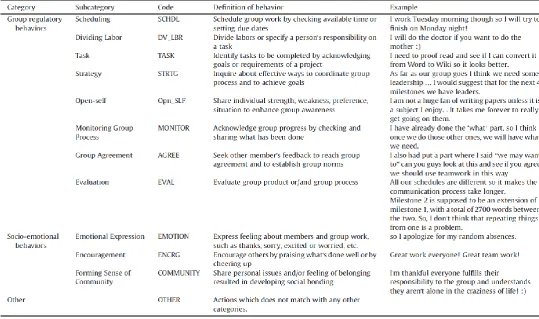
[image:30.595.335.450.317.605.2]Within this context, certain activities are conducted during interaction. In general, two main patterns are distinguished: interactions aimed at group-regulation and social interactions (Kwon et al., 2014). Kwon et al (2014) abstract different interaction activities that occur within this specific type of pattern, as is illustrated in figure 13 below. This is also the main focus of the Q-sort research that will be introduced in paragraph 4.2.
[image:30.595.72.179.325.473.2]Figure 12: interaction channels
Figure 13: interaction activities
The third and final factor included in the interaction patterns of this model, are the indicators of interaction. These indicators refer to data streams that can be used to monitor the level of interaction occurring (Wenger et al., 2011). They are a crucial element of this model, as they allow a researcher to determine how value is created during the interaction process. The details on these indicators were discussed earlier in Table 1. They have been adapted for the conceptual model as follows:
Channels E-mail Blackboard Storage (Dropbox, Google Drive) Social media Face-to-face Interaction activities
Group Social
Schedule Express emotion Divide Encourage Task Sense of
30 Figure 14: Interaction indicators
In conclusion, the used channels, specific activities and indicators together make up the interaction patterns as described in this model.
4.1.3 Outcomes: learning network goals
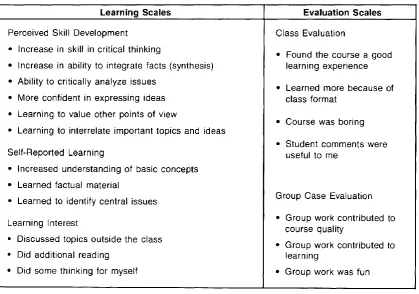
The last element in the model, are the outcomes of the interaction. These are defined here as the learning network goals. Many outcomes of interaction in an (online) learning network both positive and negative, have been discussed earlier. These include grades, satisfaction and participation. The decision was made to use the elements described by Alavi & Dufner (2004), as they are specific to the context of group work.
These elements are added to the model as displayed in figure 15.
Figure 15: interaction outcomes: learning network goals
Furthermore, the influence of interaction patterns on outcomes is not only one-way. When viewing the outcomes as learning network goals, these can also have an effect on the type of interaction patterns that occur. Therefore the arrow in the model is directed both ways.
Indicators
Level of participation Level of activity Level of engagement Quality of interactions Value of participation Value of connections
Outcomes: learning network goals
Skill development Self-reported learning
Learning interest Satisfaction Blackboard
Storage (Dropbox, Google Drive) Social media
[image:31.595.163.407.517.642.2]31 4.1.4 Conceptual model
32
33 of the data-analysis will be elaborated on in this chapter.
After developing a model that illustrates the components of interaction patterns in online learning networks, this second study will focus on the interaction activities. The five main interaction patterns in educational contexts used in the Business Administration thesis are groupwork, sharing knowledge, finding knowledge, collaboration and social interaction. The Q-sort strived to determine which interaction activities were most important in each of these interaction patterns. This way it will be easier to recognize typical pattern characteristics.
In order to be able to relate this study to the context of education, only students from the University of Twente participated (n=12). Their demographics are shown below:
Age mean 22 years
Gender 33,33% male 66,67% female
[image:34.595.72.450.286.391.2]Nationality 83,33% Dutch, 16,67% German
Table 2: Demographics of participants (n=12)
As this is a relatively small group of participants, the results should be seen as a pre-test to test the concept before executing future research. Also, for this reason only a selection of data-analysis has been conducted, as a factor analysis for example was not of enough added value.
4.2.1 General focus of interaction patterns
[image:34.595.71.565.588.688.2]The results from the Q-sort analysis show the perceived importance of all eleven tested interaction activities on the interaction patterns. Also, these activities can be combined to their main groups: group-regularity interaction activities versus social interaction activities. Table 3 contains the mean scores for each interaction pattern.
Groupwork Sharing
knowledge
Finding
knowledge Collaborate Social Total
Group-regulatory 0,31 -0,21 0,36 0,26 -0,34 0,08
Social -0,53 0,56 -0,17 -0,61 0,97 0,04
34 This table shows that generally the group-regulatory activities are seen as more important for the interaction patterns of working together. As one participant said:
“Both group-regulatory and social interactions are important, but when I think of group work, I believe the group-related activities are more important. They are a necessary aspect
of working together, while social interactions are helpful, but not necessary”.
[image:35.595.75.475.273.491.2]Social interactions were only seen as more important for the patterns “sharing knowledge” and “social”. Logically, particularly social activities had a very high mean score for the social interaction pattern. This is for example shown by the Q-sort below. The participant rated all the social activities (numbers 9, 10 and 11) as very important, while all group-regulatory activities scored a lot less.
Figure 17: Q-sort of social interaction pattern
4.2.2 Specific interaction activities per interaction pattern
To specify the characteristics that are most important to certain interaction patterns, the eleven interaction activities have been analyzed. As can be seen in table 4, there were many differences between the five interaction patterns that were tested. Especially the scores for groupwork and social differed substantially from the general mean scores of each activity.
35
Groupwork Sharing
knowledge
Finding
knowledge Collaborate Social Total
Schedule 0,92 -1,00 -1,17 0,33 -0,50 -0,28
Divide 1,25 -0,83 -0,83 0,08 -1.00 -0,27
Task 1,08 -0,42 0,00 0,92 -1,00 0,12
Strategy -0,08 0,08 0,08 0,92 -0,75 0,05
Open-self -0,33 0,75 0,75 -0,17 0,83 0,37
Monitor 0,42 -0,33 0,08 0,25 -0,25 0,03
Agree -0,42 0,08 0,08 0,25 0,17 0,03
Evaluate 0,33 0,00 -0,33 -0,50 -0,25 -0,28
Emotion -0,58 0,42 0,00 -0,33 1,08 0,12
Encourage 0,00 0,58 0,50 -0,17 0,25 0,23
Sense of
[image:36.595.74.566.65.427.2]community -1,00 0,67 0,58 -0,33 1,58 0,30
Table 4: mean scores of interaction activities per interaction pattern
The activities assigned to the sharing knowledge and finding knowledge interaction patterns showed relatively similar results, as can be concluded from their mean scores in table 4. The results of both these interaction patterns showed that the activities open-self, encourage and sense of community were most important. When sharing knowledge with others, it is perceived as important to create a space where this is accepted and welcomed. This can be done by these three activities. This is also shown by the following quote:
“When working together with others, I do not feel comfortable asking others for information or sharing my opinion if I don’t feel accepted or appreciated in the group”.
36 Next is the interaction pattern of collaboration, which can for example entail rewriting a document together or having a brainstorm session. The activities identifying a task and thinking of an effective group strategy were clearly given a higher score for the collaboration interaction pattern than the mean. Apparently the respondents believe having a plan and a clear strategy are important for collaborating effectively. As collaboration is viewed as a very group-regulatory interaction pattern, all three social interactions and the group-activity evalue, which concerns evaluating the group product and/or process, were rated significantly lower. In contrast to what is often stated in literature, the social aspect of collaboration is not seen as very important in these results. A filled-in Q-sort of a respondent that clearly agreed with this perspective is displayed below:
Figure 18: Q-sort of collaboration interaction pattern
The final interaction pattern that was included in the research, was social interaction. When working together in a group, the interactions that occur are not exclusively related to the task at hand, but can also include chatting informally. As already mentioned, the social interaction activities were rated as very important for this pattern. Especially expressing emotion and creating a sense of community are considered to be desirable interaction activities. Also the group-regulatory activity of open-self was scored high, as this relates to sharing personal characteristics as well. The activities with the lowest scores, were divide, task and strategy. These are not as important when the goal is to interact in a social manner. An interesting point was made by one respondent, underlining the importance of with whom the interaction takes place;
37 4.3 Relation to the Business Administration thesis
The five interaction patterns related to working together in a learning network, were derived from the Business Administration master thesis that was executed simultaneously with this thesis. The results described above can partially be cross-referenced with the results from this other thesis. Table 6 below portrays how much the separate channels were generally used for the purpose of interacting in the five main ways.
Mean scores
Black-board
Dropbox Google Docs
Face book
SM FB
Whats-app
Face-to-face
Total
Groupwork 3,11 2,98 2,30 4,50 2,33 1,65 4,73 4,11 3,21
Share knowledge 3,12 1,76 2,45 4,11 2,86 1,38 4,38 4,09 3,02
Find knowledge 2,78 3,24 2,14 3,63 2,97 1,92 3,89 3,66 3,03
Collaborate 2,94 2,01 2,50 4,52 2,31 1,37 4,22 4,13 3,00
Social 2,28 1,38 1,41 1,99 3,50 1,31 4,76 4,29 2,62
[image:38.595.22.527.183.412.2]Total 2,85 2,27 2,16 3,75 2,79 1,52 4,40 4,06
Table 6: General channel use: interaction patterns (n=104)
This shows various similarities with the results from the Q-sort study. For example, the interaction pattern groupwork made use mostly of the channels WhatsApp, Google Docs, face-to-face and e-mail. In the Q-sort study the group-regulatory activities were found important for this interaction pattern. More specifically, scheduling, dividing labor and task identification received high scores. These type of activities can be done easily by the means of WhatsApp, face-to-face and e-mail as well, although these channels are used often for the majority of the channels and therefore are not that distinctive. However, WhatsApp and face-to-face are suitable for social interactions as well, which were not deemed important in the Q-sort study for this interaction pattern.
38
5. Discussion
In chapter one the research problem and its related research questions were introduced. Following, in chapter two an extensive theoretical framework has been presented and from this the conceptual model was derived in chapter four. Furthermore, a Q-sort was conducted as additional data.
5.1 Theoretical questions
In the theoretical framework a clear distinction has been made between the different types of communities and networks and their definitions. Also a glossary was added in Appendix 1 with an overview of the different terms used in literature. Then an overview was presented of the main models relating to interaction motivators. This showed the importance of motivating participants in order to engage in interaction.
Then an extensive elaboration of literature related to interaction was discussed. Interaction and interaction patterns are terms that are used often, but remain ambiguous. Therefore first the definitions were discussed, followed by the different types of interactions that can be distinguished and their contexts. After reviewing the general application of the concept of interaction patterns, the literature specific to online learning networks was introduced. This included the three main types of interacting in educational contexts, finally followed by the possible outcomes of interacting and their indicators.
5.2 Model development study
A model development study was conducted in order to identify the main components of interaction patterns in online learning networks. By combining many different theoretical principles and specifying the model to an educational context, a new descriptive model was created. Paragraph 4.1 describes the process in which all aspects of the model were designed and applied.
Firstly, the different objects a learner can interact with were added as perspectives. Also a notion was made that this interaction can be both one- or two-way. Then the factors that influence the motivation of the learner were reviewed. From the three main models described in paragraph 2.2, three main motivators were derived. These were perceived ease of use, perceived usefulness and perceived encouragement. All these three concepts influence whether a learner will in fact engage in interactions. On the side of the receivers of interaction, their motivators were added. These include four critical success factors that affect their ability to interact. These factors were learner competence, teacher/instructor characteristics, accessible and understandable content and support from the educational institution.
39 Facebook or Twitter) and face-to-face. In all these channels, specific activities can be undertaken to engage in interaction. These interaction activities can in general be divided into group-regulatory interaction activities (schedule, divide, task, strategy, open-self, monitor, agree and evaluate) and social interaction activities (express emotion, encourage and sense of community). The same interaction activities were also incorporated in the Q-sort study. The final factor making up for interaction patterns, were the indicators of interaction level. These indicators help to determine to what extent the pattern that occurs is in fact of an interactive nature. The indicators added to the model include level of participation, level of activity, level of engagement, quality of interactions, value of participation and value of connections. Lastly, the outcomes of the interaction were added as a component. In other words, these outcomes can be referred to as the learning network goals. The specific goals added to the model are skill development, self-reported learning, learning interest and satisfaction. The interplay between the interaction patterns and these outcomes is considered to be two-way, as the intended goals can also affect the interaction patterns that occur and vice versa.
5.3 Q-sort study
The second study that was conducted for this research, focused on part of the conceptual model described previously. The characteristics of five specific interaction patterns in online learning networks were examined by testing how important certain interaction activities were for these patterns. 12 students from the University of Twente participated following a Q-sort method. They were asked to rate the interaction activities according to their level of importance to the five interaction patterns.
The results showed that in general the group-regulatory interaction activities were perceived as more important than the social interaction activities. The interaction pattern groupwork scored particularly high on the group-regulatory activities and the social interaction pattern scored high on the social activities, which could be expected. When specifying the eleven different interaction activities of the research, many differences between the interaction patterns were distinguished. For the pattern “groupwork” the respondents claimed they found the strict task-oriented activities, such as scheduling and dividing labor to be more important than activities related to a sociable atmosphere. The interaction patterns “sharing knowledge” and “finding knowledge” displayed striking similarities regarding the scores given to the interaction activities. The results from both these two interaction patterns showed that the activities open-self, encourage and sense of community were most important.
40 Finally, a short recap was given of the results regarding these interaction patterns from the Business Administration thesis. There were many similarities between both studies. For example channels with mainly sociable applications was used most often for social interaction patterns. This is comparable to the results as described above in the Q-sort study.
5.4 Limitations and recommendations for future research
This research also had some limitations that could be reduced in future research. First of all regarding the first study where a descriptive model was developed. Although this model combines many theories and can have both academic and practical value, it was in fact not validated in this research. Part was included in the Q-sort study, but it would have added value if the whole model was used to examine interaction patterns. By executing this in future research, the usability of the model can be increased.
41
6. Conclusion
6.1 Conclusions
This master thesis has made several contributions that will be summarized here. Firstly, an extensive theoretical review has been conducted. The many different terms used in literature result in a confusing and inconsistent collection. This research made an effort to determine the main definitions used and how they are distinct from each other, so future research can use of this to structure their own research. The concept of interaction patterns is extensively researched and described.
The first study concerned the development of a new descriptive model, aimed at distinguishing the components of interaction patterns in online learning networks. Building on the extensive theoretical basis, the model incorporates all aspects related to interaction patterns in an educational context. This includes different actors, motivating factors, critical success factors, specific channels, interaction activities, indicators and finally the outcomes of this process, namely the learning network goals. The model answers the research question:
“What are the main components of interaction patterns in online learning networks?”
The second study focused on part of this model. Using a Q-sort method, respondents revealed the perceived importance of interaction activities for five specific interaction patterns. This way, the characteristics of the patterns could further be distinguished and many interesting insights could be derived from this data. In general, the Q-sort study added valuable data to the developed model and answers the question:
“What are the characteristics of five specific interaction patterns in online learning networks?”
Finally, a cross-reference was made to the Business Administration thesis that was written simultaneously to this thesis. As both studies focused on the same interaction patterns, various similarities between the results could be found, adding relevance to the researches. 6.2 Practical implications