http://wrap.warwick.ac.uk/
Original citation:Lindsay, Geoff, Davis, Hilton, Strand, Steve, Cullen, Mairi Ann, Band, Susan, Cullen, Stephen Michael, Davis, Liz, Hasluck, Chris, 1947-, Evans, Raymond John, 1952- and Stewart-Brown, Sarah L. (2009) Parent support advisor pilot evaluation : final report. Department for Children, Schools and Families. (DCSF-RR151).
Permanent WRAP url:
http://wrap.warwick.ac.uk/46069
Copyright and reuse:
The Warwick Research Archive Portal (WRAP) makes this work by researchers of the University of Warwick available open access under the following conditions. Copyright © and all moral rights to the version of the paper presented here belong to the individual author(s) and/or other copyright owners. To the extent reasonable and practicable the material made available in WRAP has been checked for eligibility before being made available.
Copies of full items can be used for personal research or study, educational, or not-for-profit purposes without prior permission or charge. Provided that the authors, title and full bibliographic details are credited, a hyperlink and/or URL is given for the original metadata page and the content is not changed in any way.
A note on versions:
The version presented in WRAP is the published version or, version of record, and may be cited as it appears here.
Research Report No
DCSF-RR151
Parent Support Advisor Pilot Evaluation
Final Report
Geoff Lindsay
1, Hilton Davis
2, Steve Strand
1, Mairi Ann Cullen
1,
Sue Band
1, Stephen Cullen
1, Liz Davis
1, Chris Hasluck
3,
Ray Evans
1, and Sarah Stewart-Brown
41
Centre for Educational Development, Appraisal and Research
(CEDAR) University of Warwick
2
Kings College, London
3Institute of Employment Research, University of Warwick
4Medical School, University of Warwick
The views expressed in this report are the authors’ and do not necessarily reflect those of the Department for Children, Schools and Families.
© University of Warwick 2009
ISBN 978 1 84775 518 6
CONTENTS
Executive Summary 3
1. Introduction 18
1.1 The purpose of the Parent Supper Adviser pilot 18 1.2 The role of the Training and Development Agency 18
1.3 Background 20
1.4 The Study 28
2. The Early Stage of Development of the Parent Support Adviser 34
2.1 Becoming a PSA 34
2.2 Initial Training 35
2.3 Models of PSA Practice 40
2.4 Influences on role development 41
2.5 Management and supervision 46
2.6 Early evidence of impact 47
2.7 Parent perspectives 50
2.8 Resultant changes 57
2.9 Conclusions 62
3. The PSA Role in Practice 64
3.1 The organization of PSAs 64
3.2 The relative benefits of different models and flexibility 69
3.3 PSAs’ experience of the different models 74
3.4 PSAs and the LA structure for parent support 80
3.5 Line managers’ responsibilities 83
3.6 Managing the PSA workload 90
3.7 Working with fathers and male carers 103
3.8 Budget-holding PSAs 110
3.9 Working with the Third Sector 113
3.10 Training 116
3.11 Evidence for impact 126
3.12 Reality v expectations 139
3.13 Concerns about the PSAs’ work 141
3.14 Sustainability 143
3.15 Conclusions 147
4. Survey of PSAs’ Line Managers 149
5. Analysis of LAs’ Parent Database 160
5.1 Background 160
5.2 Models of working 164
5.3 Parent characteristics and referral route 166
5.4 Pupil characteristics 168
5.5 PSAs’ practice and its impact 178
5.6 Conclusions 185
6. Analysis using the National Pupil Database 186
6.1 Introduction 186
6.2 Methodology 186
6.3 Results 187
7. Conclusions 197
7.1 Main Findings 201
7.2 Detailed Findings 202
7.3 Recommendations 212
References 215
Appendices 219
EXECUTIVE SUMMARY
Parents are fundamental to the development of their children. The government has set an ambitious aim in its Children’s Plan ‘to make England the best place in the world for children and young people to grow up’. The Children’s Plan recognizes that parents need help and support to support their children’s development. Also, and importantly, parents need support for themselves as parents. Parenting is complex and challenging, made more so by the changing nature of our society. Parents from disadvantaged backgrounds face even more challenge. However, the government recognizes the need to support parents, ‘to do more to back parents and families’.
Supporting parents may take many forms and have different aims. These include actions to improve parents’ abilities to know about, access and exercise their rights and entitlements. Parents may be involved in order to improve services, for example by providinga parental perspective, and some parents may require support to undertake such a role. Parents may also benefit from support to enable them, in turn, to support their children’s development. In addition, support may be designed to help parents as parents not specifically as agents of change for the children but more for their own sakes: even so, such support may have
positive knock on effects on their children.
This report presents the evidence of the evaluation of the Parent Support Adviser Pilot. This was a DCSF funded programme over the period September 2006 - July 2008 at a cost of £40 million in DCSF grant payments to 20 local authorities (LAs). Authorities were funded to employ PSAs, for their training and for the infrastructure to support the development of the service. The DCSF worked with the Training and Development Agency for Schools (TDA): the DCSF was the lead department for the policy and financial framework, the TDA allocated funding to LAs and worked with authorities to develop the PSA role, including an initial training package and the Support Work in Schools (Parent Support) level 3 qualification. The TDA also took the lead in disseminating practice.
The main aims of the study were to examine the characteristics of the PSA service that was developed during the pilot and the evidence for its effectiveness. The study drew upon a range of evidence from the four phases of the study: i) from a database designed to collect data on all parents supported by PSAs; ii) interviews with LA strategic leads (n = 20
interviews), PSA co-ordinators (n = 24), PSAs (n = 245 in total over three phases), line managers (144 at two phases), other professionals (23) and parents (n = 105); a survey of line managers during the final phase (n = 603, a response rate of 51.8%). Finally, data on attendance and number of pupils identified as having behavioural, emotional and social difficulties (BESD) were used to compare schools with a PSA and those without this support.
This is the final report of the evaluation; details of the two interim reports are provided at the end of the Executive Summary. The report provides an overview of the whole study but focuses mainly on evidence gathered during the final phase of the pilot and analysis of School Census data available by spring 2009.
Main findings
• The pilot represented a successful collaboration between the Department for Children, Schools and Families and the Training and Development Agency for Schools
introducing a new professional, the Parent Support Adviser (PSA) into the workforce.
• The grant available to the 20 local authorities supported the recruitment and employment of 717 PSAs providing support to parents of children in 1167 schools.
• The PSAs developed a range of practices that provided support primarily to parents, with some support also directed at children.
• Budget holding was a successful arrangement allowing PSAs to provide small amounts of money to support parents.
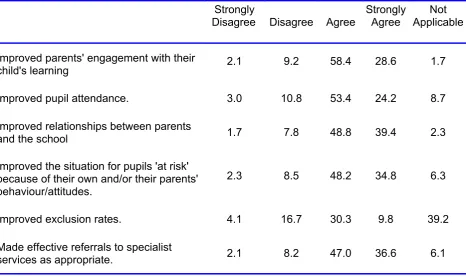
• Impact was judged as positive by over eight out of ten line managers for a range of outcomes including the improvement of parents’ engagement with their child’s learning, improved relationships between parents and the school and improved pupil attendance.
• Over nine out of ten parents rated their PSAs highly in terms of different aspects of their support style - they felt respected, listened to and understood - and in helping them to feel more confident to tackle problems and feel better about themselves.
• The proportion of persistent absentees decreased by almost a quarter in secondary schools with a PSA
• It is not possible to state how many parents were supported during the pilot because PSA practices varied and much work was either with groups of parents or not formally recorded, but the numbers are substantial - over 20,000 were formally recorded by 18 LAs and we estimate support was also provided to several times as many parents overall.
• These are early days in the development of the PSA, but the evidence from the pilot is very encouraging and supports a government policy of funding the PSA role across all LAs.
Detailed findings
General findings
• The PSA pilot was successful in delivering 717 PSAs to work in 1167 schools.
• 91% of PSAs were female; 91% were White British with the remaining tenth made up of parents from a wide range of minority ethnic groups; and 55% came from an
educational background, with the proportion in any LA having previously worked in the same school varying from between 10-20% in some LAs up to about 90% in others.
• PSA practices varied both within and between LAs making it impossible to calculate the numbers of parents provided with support across the pilot.
• ‘Casework’ with individual parents involving systematic support that could be long-term and intensive was recorded for 20,721 parents across 18 LAs.
• But PSAs also carried out work with many more parents in less formal settings where parents’ details could not practically be recorded. Examples of other parent interactions include coffee mornings, transition information sessions, and contact with parents when dropping off or collecting their children.
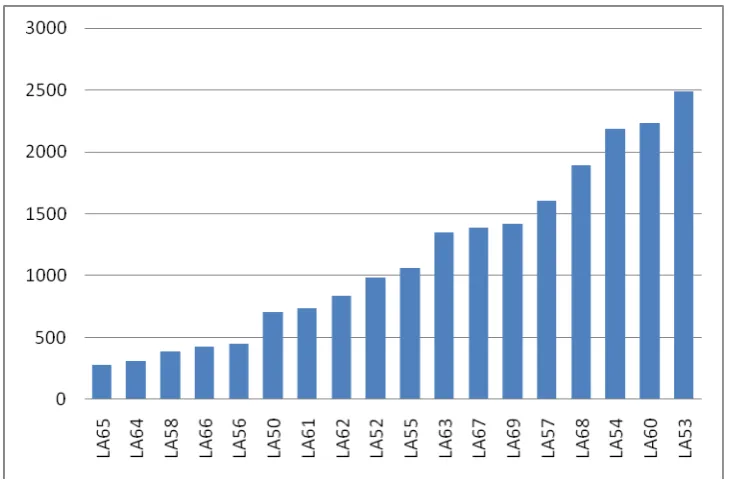
• The pattern of PSA work indicated by this crude distinction between casework and more informal/less intensive and sustained activities was considerable: from 282 to 2488 parents individually recorded by different LAs.
• The initial three models of service delivery were superseded with PSAs adopting greater variety of practice being evident by the end of the pilot.
• Overall, a high level of satisfaction with PSAs was indicated by their line managers.
• The PSA pilot was an example of effective collaboration between the DCSF and TDA in delivering a major policy initiative.
Training
• The initial training programme for PSAs was developed by the Training and
Development Agency for Schools (TDA) and formed the basis for LAs’ training. This comprised five generic modules utilising Children’s Workforce Development Council (CWDC) materials developed for the national pilot of level 3/4 induction training for children’s workforce practitioners, comprising the core which was delivered over four days plus two PSA role-specific modules covered in two days.
• The training was well structured, appropriate and, within the constraints of the time available, provided a good basis for the PSAs.
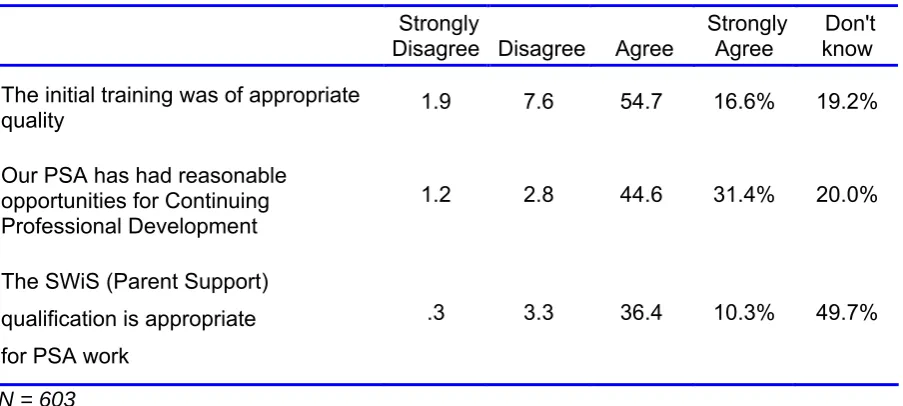
• In the period after its occurrence PSAs were generally positive about the initial training: of those interviewed 96% rated it useful including 45% who rated it very useful.
• Similarly, PSAs’ reflections on their initial training towards the end of the pilot were also generally very positive; a perspective shared by their line managers.
• Professional training is typically a substantial process over a period of one to two years minimum and typically involves supervised practice as well as taught sessions. The PSA initial training therefore could only be a beginning and PSAs’ development relied both on their prior experience and subsequent support.
• The TDA, working with PSAs and others, has addressed this by developing a qualification at level 3 as part of the Support Work in Schools (SWiS) suite of qualifications. This became available in January 2008. Three qualification bodies (CACHE, Edexcel and OCR) currently offer the SWiS (Parent Support) qualification.
• PSAs and line managers were generally positive about the opportunity for continuing professional development and the production of the SWiS (Parent Support) in principle and demand for the SWiS (Parent Support) was high: over 90% of PSAs, especially at Diploma level.
• There was, however, evidence of some early confusion and misunderstandings among PSAs and co-ordinators concerning the TDA’s intentions and expectations, including the level of qualification (level 3 rather than level 4).
• The TDA also organized a series of regional conferences for PSAs and co-ordinators which provided opportunities for sharing expertise over the course of the pilot. These were not part of the present evaluation but informal observations when members of the CEDAR team attended indicated these were well purposeful, informative and well regarded by participants.
• Over the summer of 2008 and beyond the period of the pilot the TDA also organized a Development and Advisory Group for functional mapping of the PSA role and the linking to occupational standards, involving representatives of TDA, PSAs and those with qualifications expertise. This worked very effectively and has produced
recommendations for action that will take effect after the end of the pilot.
Organisation of PSAs
• The initial three models for PSAs’ work were:
o Model 1: Based in a single primary or secondary school, working solely with early
intervention and preventative support for parents and pupils, including work on supporting parents at key transition points for their child.
o Model 2: Operating across a cluster of primary and secondary schools, focusing
on offering parenting support courses and classes and one-to-one support for parents across the cluster.
o Model 3: Operating in one school (like Model 1) but also with a role supporting
pupils who have been or are likely to be excluded.
• Support for parents, as recorded in the LA database, was provided mostly by PSAs designated Model 2:
o Model 1: 36.4% parents
o Model 2: 49.7% parents
o Model 3: 13.9% parents
• PSAs developed practice that differed between LAs, and deviated from these three models in relation to four dimensions:
o Structural - one school versus working across more than one school
o Functional – the TDA-defined Models 1, 2 and 3
o Line management - school-based versus non-school-based
o Locational - school-based versus non-school-based PSAs
• Structural
o Working across more than one school was valued as less costly, facilitating the
sharing of good practice and more equitable.
o Drawbacks included travel time, potential for conflicting demands from different
schools, loss of immediacy of response to parents, and increasing the time needed to build up trust.
• Functional
o The functions associated with each model were valued by schools but not their
separation into distinct PSA roles, leading to a tendency to merge into a generic PSA role.
• Line management
o Where line management was school-based, the managers (usually head
teachers or a senior colleague) typically gave a strong steer to the role,
influenced by the school’s needs and priorities as well as those of parents. In this case, a major focus was the improvement of pupils’ behaviour and
attendance.
o Line management external to the school tended to focus the PSA role clearly on
supporting parents including increasing their capacity to support their children: a subtle but important distinction.
• Location
o A major benefit of PSAs being based in a school was easy accessibility to
parents. Conversely, this could lead to pressure to become engaged in other work within the school.
o PSAs based in an area or locality office benefitted from access to and support
from other professionals working with children and families but with reduced accessibility to parents.
• Overall, most PSAs were school-based and this system worked well especially once they had become established and valued.
Line managers’ responsibilities
• The most common line management structure comprised the head teacher or other member of the school’s senior management team.
• Other arrangements included line management by a third sector body; a locality manager; a third sector body in partnership with a named link person in the school; a senior PSA managing an area PSA team; and an LA’s Parent Partnership Service sharing line management with school-based line managers.
• Time allocated to line management varied, influenced by factors such as the perceived competence and needs of the PSA.
• Discussion of role-related issues and concerns was common and valued where it occurred (e.g. confidentiality, risk assessment)
• Unlike health and social care, education does not have a tradition of supervision. In the early phase of the pilot, professional supervision, as opposed to line management was limited and the two were generally conflated. By Phase 2, 57% of PSAs interviewed reported the level of professional support they received was ‘about the right amount’ but 30% said they would appreciate more and 4% ‘a lot more’.
• The provision of supervision and professional support continued to be patchy by the end of the pilot and remained an area of concern.
Parent and child characteristics
The following data are taken from the CEDAR database and represent ‘casework’ with parents. Substantial numbers of parents are known to have been supported through less formal, less intensive and briefer interventions as well as group work.
Parents
• PSAs worked mainly with mothers (86.1%).
• Over half of the parents (54.6%) were married or had a partner; 42.3% were in a single parent household. PSAs also worked with grandparents (2.0%), carers (0.8%) and corporate carers (0.4%).
• Most referrals came from the school (68%) but a fifth (22%) were self referrals by the parent with a variety of agencies making up the rest.
Children
• The majority of the target children of the parents supported were male but the percentages (56%: 44%) indicated a relatively small gender difference.
• There was a wide child age range from nursery to 17+ but 99% were in the range reception to Year 11; 64% were attending primary schools and 36% were attending secondary schools.
• More than half (55%) of the pupils were eligible for a free school meal, over three times the national average of 17%.
• The majority of pupils were White British (79.3%) with children from a wide range of minority ethnic groups making up the other fifth.
• A high proportion of the pupils had special educational needs (SEN) of whom 8.7% had statements or were in the process of a statutory assessment, three times the national average of 2.8%. A total of 25% were at School Action Plus or above, involving an agency external to the school, compared with 8% nationally.
• Among those with an identified SEN, the most frequent was behavioural, emotional and social difficulties (45%) compared with the national average of about 23%. The next most common was moderate learning difficulties (25%).
• The most frequent area of parental concern about their child at the time of referral of the parent was behaviour difficulties (27%) followed by attendance/punctuality (26%). Friendship/social/self esteem issues accounted for a further 12%, well being (either health or drugs) 7%, and child protection 4%. Concerns about achievement accounted for only 5%.
• The main concern differed depending on the referral route.
o Schools were more likely than parents to identify attendance/punctuality as their
main concern (30% vs 11%).
• Comparing main concerns by referring agency:
o Behavioural difficulties was the most common reason in almost all cases.
Attendance was the main concern for the education welfare service (74%).
Both parents (17%) and voluntary/community agencies (22%) also had relatively high levels of concern about referral for friendship/social/self esteem issues.
o A small number of pupils (129 or 0.8%) had been permanently excluded prior to
PSA involvement; a higher proportion (1,159 or 7%) had received a fixed term exclusion prior to PSA involvement.
o During the course of a parent’s involvement with a PSA 171 (1.1%) pupils were
permanently excluded and a further 1,246 (7.9%) received at least one fixed term exclusion.
PSA practice with parents
• PSAs undertook a wide range of activities at the start of the pilot, many designed to develop parent awareness and a sense of trust.
• PSAs carried out work that was focused on specific parents and was captured in the database information but also a variety of work that was not recorded in the database. The latter might reflect groupwork, relatively brief interactions and, in one LA in
particular, a philosophy that eschewed the notion of what was seen as individual casework (this LA did not provide any database returns that could be included in the analysis).
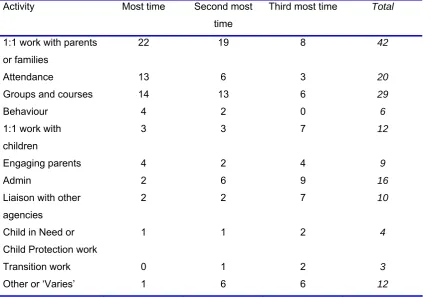
• Of the work that could be quantified, most was with parents
o Almost half (49%) of all PSA work with parents was undertaken on a 1:1 basis o A small proportion was with a child (11%) or the family as a whole, also 11%.
Signposting (directing the parent to other appropriate services) was 7%
Formal parent training programmes: 4%
Informal parent groups: 3%
Drop-ins/surgery: 2%
• Fewer than half (48%) reported work with a child. Of these:
o 1:1 work was the most common (73%) o A fifth provided groupwork (21%)
o Child and parent/family work was also provided (5%)
• Overall, the most common activity was
o Providing 1:1 support for parents (74% of line managers rating this ‘often’ or
‘frequent’)
o Early intervention with parents (68%)
o Providing preventative support for parents (67%) o Making links with other agencies (63%)
o Over half of the line managers (55%) reported their PSA was often available in
the playground or from drop-ins.
Fathers
• Only 18% of line managers reported that the PSA worked ‘often’ or ‘frequently’ with fathers or male carers.
• Interviews with co-ordinators suggested that there was little evidence of a planned approach to engaging father / male carers, although some PSAs took individual initiatives. Three LAs stood out as providing specific, focussed work.
• There was recognition of the lack of PSA support for father /male carers across the pilot and the difficulties in engaging this group, including typical work patterns for men, cultural attitudes to child care and the prevalence of single parent families headed by mothers.
Budget holding PSAs
• About a quarter of PSAs were budget holders. The funds available varied up to £3000 per year. Access to this budget allowed flexibility to provide small sums to parents for a wide range of reasons including transport costs enabling parents to travel to job
interviews and children to hospital appointments, purchasing places on parenting courses, single low value but necessary items, funding parents to engage in school activities, and paying for a house clean for a parent who had mental health problems and was not cleaning the house.
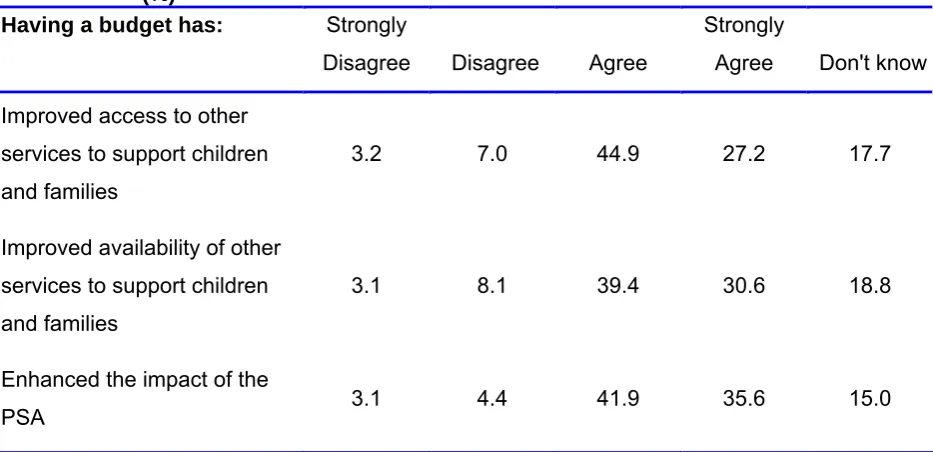
• Budget holding PSAs were valued by those line managers that had access to the service:
o 72.1% considered they improved access to other services to support children
and families.
o 70% considered they improved availability of these services
o And 77.5% judged that being budget holders increased the PSA’s impact.
• Budget holding was popular also with PSA co-ordinators and PSAs reported that even relatively small budgets could be very helpful and improve their effectiveness.
Third sector
• Across the pilot LAs, PSAs were engaged with the Third Sector in many ways, including: one LA where a third sector organisation managed the PSA service; using services including counselling, churches, a sexual abuse agency; work with fathers through Fathers Plus; parenting courses and access to charities such as Banardos, Parentline Plus and Homestart.
The impact of PSAs’ work
Stakeholders
Evidence for the impact of PSAs’ work was derived from the survey of line managers, interviews with parents, PSAs and PSA co-ordinators, PSAs’ perspectives and analyses of the National Pupil Database.
• Line managers generally had a very positive perception of their PSA’s impact, judging it to have:
o Improved parents’ engagement with their child’s learning: 88.5% of line
managers
o Improved pupil attendance: 84.9%
o Improved relationships between parents and the school: 90.3%
o Improved the situation for pupils ‘at risk’ because of their own and/or parents’
behaviour / attitudes: 88.6%
o Made effective referrals to specialist services as appropriate: 89.0%
• There were no statistically significant differences in ratings of PSAs’ impact by school phase (primary vs secondary) or type of PSA work (single school vs cluster).
• Benefits were judged by line managers to have been above initial expectations:
o Benefits for parents: 51.9% above vs 9.8% below expectations
o Benefits for pupils were lower but still substantial: 39.8% above vs 15.5% below
o Value for money was also judged positively: 47.7% above vs 16.2% below
expectation.
• PSAs considered that their aims with individual parents were at least mostly met in almost two thirds of cases:
o Completely met in 40% of cases
o Mostly met or better in 63% of cases
o Partly met or better in 87% of cases
o Not at all met in just 12% of cases
• There was also substantial qualitative evidence from parents, line managers and PSA Co-ordinators about the PSAs’ positive impact on parents and/or children, for example:
‘It was like a weight lifted off my shoulders. I got my confidence back and parenting skills.’ (Parent)
‘I was so depressed and crying every day and couldn’t cope. She [the PSA] has given me back my confidence.’ (Parent)
Me and my little boy were not getting on very well at all at the beginning. We had a lot of issues and it has got 100% better. It really has.’ (Parent)
‘His behavior has improved and she has given us the tools.’ Parent)
‘There has been a huge improvement in attendance. We were up with national averages last summer, which is amazing considering [this LA] is one of the lowest authorities [for attendance] and we were at the bottom of them all’ (Line Manager)
‘….. my son was missing a lot of school because I had a marriage breakdown….. this year my son has got 100% attendance. Coming up from 70- something [per cent] 100% is really good.’ (Parent)
National Pupil Database
The LA database was designed to capture large scale quantitative data as a powerful means to identify changes in attendance rates. However, LAs did not enter attendance data
consistently. Consequently, an analysis was conducted using the National Pupil Database comparing attendance in schools with a PSA contrasted with non-PSA schools between 2005/06 to 2007/08.
• Schools with PSAs were more likely to have higher scores on factors known to be associated with lower levels of attendance, and these differences persisted over the period 2005/06 to 2007/08. Using 2007/08 data, pupils in PSA schools were statistically more likely than those in non-PSA schools to be:
o Entitled to a free school meal: 22.2% v 16.8% primary; 15.7% v 14.2%
secondary.
o In high deprivation neighborhoods: 36.5% v 26.1% primary; 26.6% v 24.1%
secondary.
o In schools with a higher proportion of White British pupils: 75.2% v 73.8%
primary; 81.5% v 77.8% secondary.
• To compare relative impact of schools with PSAs contrasted with non-PSA schools we compared each school against its own baseline to measure improvement over the three years:
o The decrease in persistent absentees in PSA secondary schools was
substantial, down from 8.5% in 2005/06 to 6.6% in 2007/08 - a drop of 1.9 percentage points representing a reduction of almost a quarter (22.3%). The drop in non-PSA schools was smaller, from 7.0% to 5.4% a drop of 1.6 percentage points. As a result the absolute gap in percentage of persistent absentees between PSA and non-PSA secondary schools reduced from 1.5 to 1.2 percentage points.
o Absence rates decreased for both primary schools (6.4% to 6.2%) and more
particularly secondary schools (9.3% to 8.3%); however, similar reductions were found for non-PSA schools (5.9% to 5.6% primary; 8.5% to 7.5% secondary).
These results reflect only one aspect of the PSA role, unlike the perspectives of head teachers, for example, which provide overall judgments. Also, PSAs varied in their focus on attendance: for some this was a major issues but for others it was one of many areas of work.
Parents’ perspectives
Parents’ perspectives of their PSAs were derived from 105 interviewees during Phase 2. The sample mostly comprised parents who their PSA thought would regard the PSA’s support as having ‘worked well’ (n = 69), or ‘worked ok’ (n = 26) plus 10 thought by PSAs to rate their support as having ‘worked not so well’. Hence, there is a potential positive bias in these judgements.
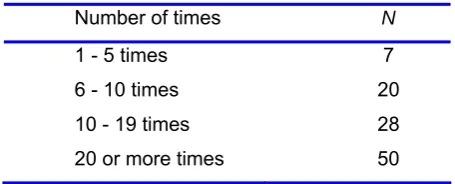
• Parents had experienced a wide range of contacts with the PSA, from 1-5 times (7%) to 20 or more times (47%).
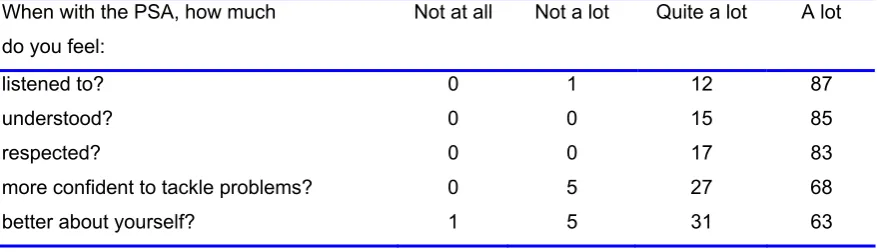
• Parents rated their PSAs highly, stating they felt:
o Being listened to: 99% ‘quite a lot’ or ‘a lot’ o Understood: 100%
o Respected: 100%
o More confident to tackle problems 95% o Better about themselves: 94%
• Parents provided extensive and wide ranging examples of how PSAs had helped them and also of how they personally had changed, and how their children had improved.
Recommendations
Main recommendations
• The government should continue to provide funds to support the PSA service.
• The PSA service should be rolled out across the remaining local authorities with a priority for PSAs to serve parents in greatest need.
• The TDA should continue to collaborate with the DCSF with particular responsibility for initial training and professional development.
• Budget holding should be expanded to become the norm for all PSAs.
• Organisation of PSA services should be locally determined to meet local needs.
• The benefits of variation between PSAs’ modes of working to meet locally determined needs should be retained but a clearer determination of the central role of individual PSAs and a PSA service should be developed.
• PSAs should continue to be a service primarily for parents, supporting parents as parents and engaging in work that is determined on the basis of professional judgement negotiated and agreed with parents
• Further research should be carried out to explore whether the positive impact indicated in this study is maintained or even enhanced when a national roll out is implemented.
Specific recommendations
Funding and organisation
• Funding should continue to support the PSA services in the 20 pilot LAs.
• Funding should be allocated to the remaining LAs.
• The main mechanism should be funding through extended schools.
• Local authorities should have a strategic plan to develop the PSA service as part of their implementation of the Children’s Plan.
• PSAs should be managed and supported locally but there should also be coordination and support at the LA level to assist the development of the PSA service.
• Budget-holding should be developed with the ultimate aim that all PSAs should hold a budget.
• Appropriate accountability systems for budget holding should be developed locally, supported by a national system of guidance. These should address methods of accounting, criteria for expenditure and the flexibility delegated to PSAs.
• PSAs should continue to develop a clear identity as a professional available for parents to support them in their parenting role.
• This should be undertaken in close collaboration with a designated school or small number of schools.
• PSAs have a role in assisting the development of children but this should be
undertaken primarily through parents; activities should primarily be aimed at parents rather than children.
Training and development
• The TDA should keep the initial training programme under review and amend in the light of the experience of the pilot and subsequent PSA developments.
• The TDA should continue the provision of conferences for PSAs and co-ordinators to support the development of the roll out across the rest of the country.
• The TDA should continue to support the development and provision of the Support Work in Schools (Parent Support) qualification for PSAs and implement the proposals of the Development Advisory Group to use the PSA functional map to guide the development of future qualifications and to inform the future review of occupational standards.
PSA Practice
• PSAs should receive professional supervision and support in addition to line management.
• PSA practice and priorities should be determined locally with the school(s) playing a major role.
• The three models of practice initially identified for the pilot provide a useful guide but a more flexible and generic role should be the main approach for future development.
• Line managers and PSAs need to establish appropriate practice that takes into account the need for PSAs to respect parallel confidentiality on the one hand and the need for head teachers (and others with appropriate responsibilities) to have legitimate access to necessary knowledge. This issue extends beyond child protection arrangements, for which there will be clear guidance, and concerns other sensitive issues that can arise in PSAs’ practice.
Future developments
• A system of continuing provision of initial training will be necessary for new PSAs replacing those who leave the job.
• The development of the PSA role will need to be considered as an integral part of the Children’s Workforce.
• LAs should set up and implement a monitoring system of PSA practice that allows data to be collected to examine the effectiveness of the service. This should take account of other data systems within the LA and the needs and impact of other services, including the local primary care trust, to optimise its development and usefulness.
• The roll out of PSAs across all LAs should be systematically evaluated. This should include an examination of
o How LAs use the lessons learned from the pilot;
o The implementation of the PSA service on a lower budget than during the
pilot;
o The further development of the PSA role as both individual PSAs and LA
services as a whole develop greater experience and expertise;
o And the overall effectiveness of the service.
References
Lindsay et al (2007) Parent support adviser pilot: First Interim report from the evaluation. Research Report DCSF-RWO2O.
http://www.dfes.gov.uk/research/data/uploadfiles/DCSF-RW020.pdf
Lindsay et al (2008b) Parent support adviser pilot: Second Interim report from the evaluation. Research Report DCSF-RWO.
http://www.dfes.gov.uk/research/data/uploadfiles/DCSF-RR037.pdf
1. INTRODUCTION
1.1
The purpose of the Parent Support Adviser pilot
The Parent Support Adviser (PSA) pilot was a government initiative which funded 20 local authorities (LAs) (total grant £40 million) to employ and train PSAs. The pilot ran from
September 2006 to July 2008. A total of 717 PSAs were recruited supporting parents in 1167 schools.
The original plan (H M Treasury and DfES, 2005) had been to fund about 600 schools with a grant of £20 million. LAs were funded at different levels to support at least 20, 30 or 40 PSAs to reflect their populations and needs. In most cases LAs exceeded the specified levels of provision supporting almost double the number of PSAs envisaged.
The PSA pilot was intended to introduce and develop a new school support worker role. Similar roles had been developed in the past and were currently in operation in some LAs but this was the first large scale, centrally led initiative for this kind of role. At the start of the pilot the three models of PSA practice envisaged were:
• Model 1: Based in a single primary or secondary school, working solely with early intervention and preventative support for parents and pupils, including work on supporting parents at key transition points for their child.
• Model 2: Operating across a cluster of primary and secondary schools, focusing on offering parenting support courses and classes and one-to-one support for parents across the cluster.
• Model 3: Operating in one school (like Model 1) but also with a role supporting pupils who have been or are likely to be excluded.
In addition, it was intended that some PSAs would be budget-holders, able to make purchases of small equipment and services, for example.
1.2
The role of the Training and Development Agency
The evaluation did not encompass the work of the TDA as such. However, it is important to stress here the central role of the TDA in guiding and supporting the development of the PSA role and in disseminating information.
The pilot was implemented jointly by the Department for Children, Schools and Families (DCSF) and the Training and Development Agency (TDA). The DCSF was the lead department for the policy and financial framework. The TDA allocated funding to local authorities (LAs) and worked with authorities to develop the PSA role. The TDA developed an initial training package for local authority trainers to customize and use with their newly-appointed PSAs as part of their induction and provided a series of conferences for PSAs and PSA authority leads to support continuing professional development. Furthermore, in
consultation with national stakeholder partners, the TDA developed a level 3 ‘parent support’ qualification through its Support Work in Schools (SWiS) qualification pathway for PSAs – this qualification is hereafter referred to as SWiS (Parent Support). This is available as a certificate or diploma, the latter being broader in scope and including optional units in subjects such as helping to meet parents’ needs as well as coverage of basic skills and knowledge needed to provide effective support for parents, which is covered in the
certificate. PSAs were encouraged to undertake the qualification and funding was offered to
support uptake. Over 80 per cent of PSAs have elected to take the qualification, almost all at diploma level (TDA 2008). The TDA has also completed a map of the functions of PSAs as established through the pilot in order to inform the future development of qualifications.
The TDA monitored the development of PSA services, for example by collecting workforce profile data and supported the dissemination of practice. Throughout the pilot TDA organized a series of conferences around the country so that each was relatively local for a small number of LAs’ PSAs as well as national conferences for PSA Strategic Leads and Co-ordinators. The nature of these changed as the pilot progressed but they provided
opportunities for PSAs, Strategic Leads and Co-ordinators to share practice and learn from each other.
It is important to stress again that this was essentially a new role albeit one that had similarities with roles previously developed in various LAs - for example, family liaison officers and home-school support workers. Also, there was overlap between the PSA role and that of other current practitioners, especially education welfare officers, that needed to be navigated to optimize complementary and minimize inefficient overlap and potential conflict. This is taken up in Section 3. The initial training programme was brief and just that - initial. As they started work in 2006 PSAs were trying out ideas supported by their line managers and colleagues, creating a role within the parameters of the model to which they had been appointed. As will be seen in this report, the role that was developed varied both between and within LAs as PSAs individually and collectively developed their practice. The conferences mentioned above, therefore, were very useful in providing fora for wider
discussion and the consideration of good practice, with an emphasis on practical application.
Growing out of these activities and the TDA’s involvement in bringing together and
disseminating practice came substantial resource packs. The TDA published two of these during the pilot. Each is an important source of examples of PSA practice from which other PSAs can learn and adapt to their own situations.1,2
1.3
Background
1.3.1 The PSA role
The Parent Support Adviser (PSA) pilot was a programme that formed part of a broader government initiative concerning parents, particularly those of children at risk of developing behavioural, emotional or social difficulties (BESD). Children who develop BESD during their early years are also at enhanced risk of their educational development being compromised, later mental health problems and early entry into crime. The importance of parents in the development of their children has been shown by research and recognized in government policy as parents have the fundamental role in their children’s development. This recognition has energised attempts to get parents involved in education and to enhance their
understanding and skills as parents, especially those of children ‘at risk’.
Initiatives to support parents may be conceptualized on a parent-child continuum. At one end of this continuum, support is provided to parents where they are the primary client. This may be concerned with, for example, improving satisfaction and self esteem as a parent. At the other pole the parent is viewed essentially as the agent for effecting change in the child, for
1 TDA (2007) Parent support adviser: Resource Kit 1.
http://www.tda.gov.uk/about/publicationslisting/TDA0414.aspx?keywords=PSA+Resource+Kit+1 2 TDA (2008) Parent support adviser: Resource Kit 2
http://www.tda.gov.uk/about/publicationslisting/TDA0514.aspx?keywords=PSA+Resource+Kit+2
example improved school attendance or reduced behavioural problems. This distinction may be considered an inherent tension in the PSA pilot: was it for the benefit of parents or their children, or both? In fact the intention was that this new role would support parents and have a positive outcome also for their children. The 2005 report by H M Treasury and the
Department for Education and Skills Support for Parents :The Best Start for Children announcing the £20 million investment in the new Parent Support Advisers (actually Parent School Advisers in this section) noted that:
‘This new, preventative role will support children and families where there are early signs that they could benefit from additional help. Recognising the importance of working in partnership with parents to improve children’s lives, the first response will be to involve parents in identifying appropriate support for the child and family. This could include a parenting programme, mentoring for the parent or child or one to one tuition for the child. The pilots will need to consider the most effective means of enabling Parent School Advisers to have sufficient leverage over, and ensure delivery of, the additional services children and their families might need.’ (para 3.38)
This same document also links the PSA role with another policy imperative, Extended Schools:
‘Extended Schools are not, however, just about activities for children. They will sit at the heart of the community providing parent support, employment advice and other services. Chapter 3 sets out how the Government will pilot a new type of role in schools - a Parent Support Adviser - to provide support to children and their parents at the first sign of need.’ (para 5.40)
The government’s Respect Action Plan (Respect Task Force, 2006) made a commitment to the further development of a number of parenting services, with an emphasis on those parents deemed to need most help to develop and maintain their parenting skills. The development of a new profession of PSAs and the support for rolling out of parenting
programmes (Lindsay et al, 2008) were two significant elements in the government’s plans.
In October 2005 The Practitioners’ Group on School Behaviour and Discipline chaired by Sir Alan Steer presented a wide-ranging report (Steer, 2005). A key element concerned support for parents. The report recommended that:
‘all schools should establish by September 2007 a Pupil Parent Support Worker (PPSW) or other staffing structure to deliver this function.’ (Recommendation 3.8.5b).
The Practitioners’ Group did not suggest that every school needed a specific individual, rather that this was one option and some schools might prefer staff to share the functions they advocated. Nevertheless, the report was influential in the government’s decision to introduce PSAs. Interestingly, the removal of ‘pupil’ from the title raises the issue which was highlighted above and which has resonated throughout our study of the pilot: is the PSA only for parents? or primarily for parents? The views of the Steer Report can be seen as strongly related to the development of the PSA role (see especially Steer, 2005, paragraphs 203-212).
The new role of Parent Support Adviser (PSA) was announced in the Chancellor's pre-budget report, Support for Parents: The Best Start For Children (HM Treasury and Department for Education and Skills, 2005). This document placed PSAs within the Government's strategy to improve the life chances of children and young people and to deliver equality of opportunity, a strategy guided by:
‘three underpinning principles: rights and responsibilities: supporting parents to meet their responsibilities to their children; progressive universalism: support for all, with more support for those who need it most; and prevention: working to prevent poor outcomes for children, young people and their parents from developing in the first place.’ (p1).
Chapter 3 of Support for Parents draws on a range of research to illustrate the importance of government and public services, such as schools, working in partnership with parents, because of the influence mothers and fathers have on a child's life chances. For example, Sammons and Sylva (2005) found that parental involvement at primary school had a greater effect on a child's learning than differences associated with schools. The chapter also set out steps already taken by the Labour Government since 1997 to address the needs of parents, including provisions to improve work-life balance, universal support for families (such as the development of a Children's Centre in every community by 2010) and targeted support for those who need it most (Sure Start local programmes, Children's Centres, the Parenting Fund and, for a minority of parents struggling to act as responsible parents, Parenting Orders and Contracts). Finally, noting the ‘strong demand from parents for more and earlier support if that support can be non-stigmatising and recognise them as experts in bringing up their own children’ (p29), the new role of PSA was announced as a means of informing longer term developments focused on early intervention and prevention, especially Extended Schools.
The government’s later publication The Children’s Plan: Building Brighter Futures (Department for Children, Schools and Families, 2007) also stressed the importance of parents but noted that many parents need support in their parenting role, recognizing also that it is parents not the state that bring up children. The Children’s Plan was published about half way through the PSA pilot when interim evidence was available. The Children’s Plan committed to provide support for parents including expanding the PSA service and funding two expert parenting advisers in every local authority.
Models of PSA working envisaged
The PSA role was to be developed within local authorities (LAs) to suit local needs, but was expected to include two main modes of working, namely single school working and cluster working. Additionally, a small number of PSAs were designated budget holders, able to commission and purchase goods such as small equipment and services. However,
fundamental to the role was an expectation that PSAs would provide support to parents in and around school settings.
PSAs working in single schools were expected to focus on early intervention and
preventative support for parents and pupils, encompassing: a) immediate support for parents of children showing signs of social, emotional, health or behavioural issues; b) contacting parents on the first day of school absence and reinforcing the importance of attendance at school; c) supporting mothers and fathers to engage with school staff by encouraging attendance at parents evenings but also by acting as an advocate for parents who find coming in to school hard; d) encouraging parents from all sections of the school community to volunteer for school-related activities, including the Parent Teacher Association (PTA); and e) developing the Extended Schools agenda around adult and community learning and family learning.
Cluster working was expected to involve a PSA working across a number of schools but focusing on commissioning and/or delivering parenting support courses and one-to-one parenting support. As with single school PSAs, this PSA role might also include supporting parents to enable their children in making the transition from primary to secondary school. This resource would be more thinly spread than the single school model and would have the
added complexity of working in and with different institutions, each with its own priorities and culture, a common challenge to support services in LAs. The role would be facilitated where existing meaningful clusters were in operation whether informal or more structured, as with federations of schools (Lindsay et al 2005). PSAs working in this mode were expected to be more highly qualified.
A small number of PSAs were also invited to be budget holders. Their budgets could be used to meet needs of individual parents (for example, by providing day-to-day items); to fund additional places within existing local family support services or to commission new local provision in response to parents’ expressed wishes. This would require the addition of another set of (financial) skills to the requirements for PSAs.
Other policy initiatives
During the development of the PSA pilot there were other important policy developments that had direct implications for the initiative. By 2010 all schools are expected to provide access to a core offer of extended services, including parenting support. PSAs were expected to make a key contribution to this developing policy through the parenting support element of the core offer. The lessons learned during the pilot and during the Parenting Early
Intervention Pathfinder (Lindsay, et al 2007; 2008) contributed to the development of this policy agenda - see also Ofsted (2008).
Also relevant to the pilot were the general policy statements regarding parents and children. In March 2007, about six months into the pilot, the DCSF published Every Parent Matters which described the department’s support for the development of services to parents. The Children’s Plan (DCSF, 2007) sets out strategic objectives for the provision of children’s services over the next ten years. Central to the Children’s Plan was the principle:
‘government does not bring up children - parents do - so government needs to do more to back parents and families.’
These various policy strands were related and all had an impact on the development of the PSA pilot which was proceeding over this period. Furthermore, the evaluation, fed into the policy development as it proceeded, with interim reports presenting emerging evidence which was influenced by policy development (See Section 7).
Early identification
Early identification was an important element in the programme as this would provide the basis for early intervention. However, early identification although frequently a focus of aspiration is not unproblematic. Unlike some physically based developmental difficulties such as profound hearing impairment, socio-emotional development is fundamentally influenced by both within child and external factors including parenting and schooling. The present PSA pilot represented a recognition of this, hence the focus on influencing and supporting
parents. Although the programme was not only concerned with children who may develop or be at risk of developing behavioural, emotional or social difficulties (BESD), this was an important element. Consequently, the pilot required that account be taken of the greater challenges posed by attempting to identify children at risk in this domain, (e.g. Lindsay, 1984; Lindsay & Desforges, 1998; Lindsay & Lewis, 2003; Papadopoulou, Dimitrakaki, Davis, et al, 2005).
One of the options open to PSAs was to attempt to engage parents in parenting
programmes. Our own research, as well as that of others, had indicated important elements in such programmes (Davis et al, 2002a; Davis, et al., 2002b; Barlow et al, 2002; Barlow et al, 2003; Davis & Tsiantis, 2005), and the effectiveness of a number of different programmes
(Barlow & Stewart-Brown, 2000, 2001; Barlow et al, 2002). At the start of the PSA study (2006) the evidence for the generalisability from small-scale studies to large-scale roll out of parenting programmes was limited (Moran et al, 2004). Since then our evaluation of the Parenting Early Intervention Pathfinder (PEIP; Lindsay et al, 2008) has provided evidence that the three parenting programmes studied (Incredible Years, Triple P and Strengthening Families, Strengthening Communities) could be rolled out on a large scale with success. Following the evaluation of the PEIP the government decided to fund a further roll out across all 150 LAs in England, the Parenting Early Intervention Programme (2008-2011). One of the roles expected to be fulfilled by PSAs was to support the delivery of parenting programmes. This could be carried out by signposting parents to programmes or by the PSA acting as a group facilitator, which required specific training in the relevant programme. This role was initially seen as one to be carried out by cluster based (Model 2) PSAs.
1.3.2 Complexities and tensions
The complexities and tensions inherent in the relationship between parents and schools has been a theme of educational research and policy for many years (see for example Stillman & Maychell, 1986; Adler, Petch, Tweedie, 1989; Johnson, 1990; Arrowsmith, 1990; Green, 1990; MacBeth & Munn, 1990). Recent Government policy, including Supporting Parents and the creation of PSAs, encompasses at least five themes / agendas around the role of parents in education, not all of which sit easily together, particularly given that PSAs were to be expected to work with parents on any or all of them, in any combination. The five themes/agendas are:
• Responsibilities / conformity: Parents are expected to be responsible for ensuring that their children attend school and behave. In this context, parenting classes to support attendance and behaviour are seen as helpful (Hallam et al., 2004) and LAs have been encouraged to provide high quality parenting provision (DfES, 2005) but also parenting contracts, parenting orders and parenting notices may be used to ensure compliance (DfES, 2004). The Parenting Early Intervention Pathfinder was a major government initiative to fund the development of parenting programmes in 18 LAs which started at the same time as the PSA pilot (September 2006) - see below.
• Equality of opportunity: Parents are recognised as crucial in ensuring that the next generation have raised aspirations, achievements and prosperity (HM Treasury and DfES, 2005). On the other hand, it is recognised that not all parents adopt parenting styles that foster positive outcomes for their children and so, for example, the DCSF committed to invest £70 millions to fund new measures related to parenting, including a National Academy of Parenting Practitioners and early intervention pathfinders for parents of children at risk of involvement in anti-social behaviour mentioned above (COI/Respect Task Force, 2006).
• Reduction / elimination of relative child poverty: The importance of parents being in work is emphasised as the main way in which children are lifted out of poverty; thus, parents not in paid employment are encouraged and supported to gain skills, including through adult and community learning (ACL) and family learning, to improve their employability. This was a key aim of Sure Start local programmes and was also emphasised in Supporting Parents.
• choice/driving school improvement: The Education White Paper, Higher Standards, Better Schools for All (HM Government, 2005) was, at that time, the latest in a long line of policy documents from both Labour and Conservative governments that have sought to increase the influence of parents in local schooling.
• Democratic citizenship: Parents are viewed as citizens who are actively encouraged to participate in consultations and decision-making about local services, including local schools (HM Government, 2005).
At the start of the study it was not clear what skills, training, experience or professional backgrounds staff appointed as PSAs would have. What was clear was that the roles they were to take on were likely to be subject to tension and conflicting demands as they sought to support parents, not all of whom would share the values of the school. This was predicted from the experiences of staff who have worked in rather similar roles developed previously for much the same purposes (e.g. Beresford, 1992, Walmsley, 1996; Tett, 2001).
1.3.3 Conclusions
The support of parents as parents was a major government policy when the PSA pilot was set up. However, of at least equal importance was to provide support to parents in order to prevent or reduce behavioural, emotional and social difficulties in children. The PSA pilot, implemented in 20 LAs across the country between September 2006 and July 2008, was a large scale attempt to address these issues by the introduction of a new profession (the PSA). Developed by the Department for Children, Schools and Families (DCSF) (the Department for Education and Skills (DfES) at the start of the project) in collaboration with the Training and Development Agency (TDA), it was also an example of inter-departmental collaboration. The DCSF took the lead policy role but the TDA undertook the lead in
developing the PSA role, providing initial training of PSAs and in-service support. Later the TDA also developed a qualification for PSAs (Support Work in Schools - Parent Support). In the summer of 2008 the TDA completed a map of the functions of PSAs, as developed in the pilot, against which National Occupational Standards could be mapped to see if functions are wholly or partly reflected in those Standards or gaps exist. This will inform the future
development of qualifications.
This is the final report of the evaluation of the PSA pilot 2006-08. As indicated above, the approach taken included the provision of interim reports to the DCSF and TDA over the period of the pilot. Most of this final report was produced in August 2008 but completion was delayed until March 2009 to allow additional analyses, not originally planned, of the National Pupil Database, Over the period of the pilot government has developed apace its policy on parenting support and evidence from this evaluation has been used in the policy
development. In November 2007 emerging findings led to the decision to support a national expansion of the PSA programme from the 20 LAs in the pilot to all 150 LAs in England. A total of £102.5 million was identified as an investment from 2008-11 through the Standards Fund, to be routed through the Extended Schools - Sustainability strand of the Standards Fund allocation. However, this substantial sum represents a lower level of funding than that provided to the pilot LAs, a fact noted with concern by Sir Alan Steer (2008).
This report, therefore, is the third in a series. The 1st Interim Report (Lindsay et al, 2007)3 reported on the early stages of the pilot. The 2nd Interim Report (Lindsay et al, 2008b)4 reported on the middle phase of the study. The present, final report focuses mainly on the evidence collected during the final phase of the study but also draws upon the earlier reports as appropriate. After presenting the evidence we draw conclusions about the pilot and also make recommendations for action.
3 Lindsay et al (2007)
Parent support adviser pilot: First Interim report from the evaluation. Research Report
DCSF-RWO2O. http://www.dfes.gov.uk/research/data/uploadfiles/DCSF-RW020.pdf
4 Lindsay et al (2008b)
Parent support adviser pilot: Second Interim report from the evaluation.Research Report
DCSF-RWO37. http://www.dfes.gov.uk/research/data/uploadfiles/DCSF-RR037.pdf
1.4 The
Study
1.4.1 Aims and design
The six aims of the study were as follows:
Aim 1 To collect data on the PSA service.
Aim 2 To examine the effects of different ways of working on parental engagement, pupil attendance and pupil behaviour.
Aim 3 To examine the effectiveness of the PSA service.
Aim 4 To examine the relative impact of different delivery approaches.
Aim 5 To examine the cost effectiveness of each delivery approach.
Aim 6 To examine the specific impact budget-holding PSAs have on access to and availability of the additional services children and families might need.
The study was designed to gather both quantitative and qualitative information. Furthermore, the design allowed for data collecting across all 20 LAs and more focused data collection across 12 case study LAs from which samples of participants were identified. The study made use of large scale datasets, a survey of all schools and interviews with a large number of interviewees.
The study was designed in three phases:
• Phase 1 (April - June 2007) was the early, setting up period. At this time PSAs were recruited, trained and ‘finding their feet’ as they began work in this new role.
• Phase 2 (November 2007 - January 2008) investigated the pilot when it had been in operation for about a year - although the pilot had started in September 2006, the time needed for recruitment and training meant that operations generally did not get
underway until about the new year in 2007.
• Phase 3 comprised two elements. First, a final set of interviews were held over the period (April to May 2008). Second a survey of all schools was also undertaken.
In addition, each LA was required to complete a cumulative database of PSA casework from the beginning of the pilot until the end of June 2008. The cumulative data over the pilot were then aggregated and analysed.
1.4.2 The 12 case study LAs
Twenty local authorities (LAs) were identified by the DCSF and TDA largely on the basis of socioeconomic deprivation but also looking to a mix of conditions such as LA / school size and an urban / rural mix, with at least one LA from each region. Some data were collected from all 20 LAs.
A sample of 12 LAs were selected as case studies for more intensive investigation. These were selected mainly to ensure a reasonable mix by urban/rural and geographic location. In addition, the two LAs also involved in the Parenting Early Intervention Pathfinder and the one LA included in the Time to Talk early pregnancy prevention programme (both also evaluated
by CEDAR)5,6 were specifically selected. This was to enable examination of the interaction of these initiatives in the relevant LAs.
Samples of interviewees
Interviews were held over the period of the pilot with key persons during each of the three phases.
Table 1 - Interviews by phase of study
Phase
Pre- 1 2 3
Strategic leads 20
PSA co-ordinator - - - 24
PSAs - 97 69 79
Parents - - 105 -
Line managers - 85 - 59
Other professionals - 23 - -
The strategic leads had responsibility for policy leading to the implementation of the pilot - all were interviewed. The operational leads (PSA co-ordinators) were senior LA officers
responsible for implementing the pilot. All operational leads were interviewed at the end of the pilot (stage 3) - N = 24 as some LAs had more than one in this role. Each PSA co-ordinator in the 12 case study LAs was asked to identify 5-10 PSAs at Phase 1. This was at a time when the PSAs had either not started to work or had just begun. LAs’ PSA
co-ordinators were asked to select the sample from across the LA so as to reflect the models of delivery. These PSAs provided the sample for Phases 2 and 3 also.
Parents were selected by the PSAs in the sample. PSAs were each asked to propose three parents: one where the PSA thought their support had ‘worked well’; one where the PSA thought it had ‘worked ok’; and one where the PSA thought the support had ‘worked not so well’. From the parents proposed, the fieldworker for that LA selected up to 10 parents per LA, aiming for an overall sample across levels of outcome, types of problems, school phases and PSA models. The actual sample (N = 105) was biased towards those likely to have more positive views because firstly, PSAs identified more of these; secondly, those parents, where PSAs had indicated the work hadn’t gone so well, often did not keep interview appointments (repeatedly) and / or did not return calls. The achieved sample was:
• 69 parents for whom PSAs considered their support had ‘worked well’.
• 26 parents for whom PSAs considered their support had ‘worked ok’.
• 10 parents for whom PSAs considered their support had ‘worked not so well’
5 Lindsay, G., Davis, H., Strand, S., Band, S., Cullen, M.A., Cullen, S., Hasluck, C., Evans, R., & Stewart-Brown,
S. (2008). Parenting early intervention pathfinder evaluation DCSF-RW054
6 Lindsay et al (2008)
Evaluation of the Time to Talk Community Programme (in press)
This provides an unbalanced sample: however, importantly, the range does include those where PSAs thought the work had not gone well. It should also be stressed that many of the parents interviewed, who worked well with skilled, approachable PSAs, did not present as being easy for professionals to engage.
Line managers were proposed by the LA’s PSA co-ordinator with a remit to represent the range of types of school and method of delivery by PSAs in that LA. Of the 85 selected in Phase 1, 71 were school-based and 14 were locality or cluster managers. These line managers were followed up at Phase 3.
In Phase 1 only, 23 ‘other professionals’ were also interviewed including representatives from health and education including the following roles: head of a Children’s Centre; head of Family Learning (Literacy, Language and Numeracy), Advisory Teacher of Family Learning, School Counsellor, LA Manager for Admissions and Attendance, Education Welfare Officer (EWO) and school nurse.
Procedure
Interviews were carried out using a semi-structured format comprising main questions followed up, as necessary, with probes to explore issues in depth. This method provides a balance between the benefits of a relatively informal ‘conversation’ which encourages flow and the need to ensure consistent coverage of the themes under investigation at the time. Although mainly qualitative in design some interviews also included quantitative questions e.g. use of rating scales. We have found these useful to include in large scale interview studies to provide some data which allows estimation of the size / weight of opinions as well as richer qualitative information. Interview schedules (nine in total) were bespoke for each interviewee group for each phase. Most interviews were face-to-face, typically carried out in the school or PSA’s centre (in a private room), but telephone interviews were also carried out. (Interview schedules are available from CEDAR)
All interviewees were provided with information about the project and were assured of confidentiality. All gave informed consent. LAs have been allocated a code number (e.g. LA54) at random. Similarly, within each LA’s interviewee group, each interviewee was allocated a code at random. Examples of codes are for PSA - LA50/PSA13.
1.4.3 Survey
Sample
A questionnaire was sent to all 1165 schools in the PSA database provided by TDA for completion by line managers of the PSAs. The survey achieved a response rate of 51.8% which is very high for such surveys. Most line managers (75.8%) were from primary schools with 19.5% from secondary schools, comparable to the proportions in the pilot. The
respondents also aligned closely with the numbers of PSAs in each LA. Details of respondents are provided in Section 4.
Questionnaire
A questionnaire (Appendix A) was designed specifically for this study. It investigated the views of the PSAs’ line managers about their work. Distributed for completion during the period May to June 2008, the survey gained line managers’ views towards the end of the pilot. The questionnaire collected data on PSAs’ engagement with different elements of the role, their training, impact, and the benefits of the PSA being a budget-holder. In addition line managers were asked whether the PSA post would be retained after the pilot and whether they would recommend other schools not in the pilot to fund a PSA.