doi: 10.3389/fmicb.2020.00227
Edited by:
Federica Giacometti, University of Bologna, Italy
Reviewed by:
Marilyn Warburton, United States Department of Agriculture (USDA), United States Venkataramana M., Independent Researcher, Hyderabad, India *Correspondence: Rajeev K. Varshney [email protected] †Present address: Rakesh Kumar, Department of Life Sciences, Central University of Karnataka, Gulbarga, India
Specialty section:
This article was submitted to Food Microbiology, a section of the journal Frontiers in Microbiology Received:07 August 2019 Accepted:30 January 2020 Published:03 March 2020 Citation: Soni P, Gangurde SS, Ortega-Beltran A, Kumar R, Parmar S, Sudini HK, Lei Y, Ni X, Huai D, Fountain JC, Njoroge S, Mahuku G, Radhakrishnan T, Zhuang W, Guo B, Liao B, Singam P, Pandey MK, Bandyopadhyay R and Varshney RK (2020) Functional Biology and Molecular Mechanisms of Host-Pathogen Interactions for Aflatoxin Contamination in Groundnut (Arachis hypogaea L.) and Maize (Zea mays L.). Front. Microbiol. 11:227. doi: 10.3389/fmicb.2020.00227
Functional Biology and Molecular
Mechanisms of Host-Pathogen
Interactions for Aflatoxin
Contamination in Groundnut (
Arachis
hypogaea
L.) and Maize (
Zea mays
L.)
Pooja Soni1, Sunil S. Gangurde1, Alejandro Ortega-Beltran2, Rakesh Kumar1†,
Sejal Parmar1, Hari K. Sudini1, Yong Lei3, Xinzhi Ni4, Dongxin Huai3, Jake C. Fountain5,
Samuel Njoroge6, George Mahuku7, Thankappan Radhakrishnan8, Weijian Zhuang9,
Baozhu Guo10, Boshou Liao3, Prashant Singam11, Manish K. Pandey1,
Ranajit Bandyopadhyay2and Rajeev K. Varshney1*
1International Crops Research Institute for the Semi-Arid Tropics, Hyderabad, India,2International Institute of Tropical
Agriculture, Ibadan, Nigeria,3Oil Crops Research Institute, Chinese Academy of Agricultural Sciences, Wuhan, China,4Crop
Genetics and Breeding Research Unit, United States Department of Agriculture – Agriculture Research Service, Tifton, GA, United States,5Department of Plant Pathology, University of Georgia, Tifton, GA, United States,6International Crops
Research Institute for the Semi-Arid Tropics, Lilongwe, Malawi,7International Institute of Tropical Agriculture, Dar es Salaam,
Tanzania,8Indian Council of Agricultural Research – Directorate of Groundnut Research, Junagadh, India,9Oil Crops
Research Institute, Fujian Agriculture and Forestry University, Fuzhou, China,10Crop Protection and Management Research
Unit, United States Department of Agriculture – Agricultural Research Service, Tifton, GA, United States,11Department
of Genetics, Osmania University, Hyderabad, India
Aflatoxins are secondary metabolites produced by soilborne saprophytic fungus
Aspergillus flavusand closely related species that infect several agricultural commodities including groundnut and maize. The consumption of contaminated commodities adversely affects the health of humans and livestock. Aflatoxin contamination also causes significant economic and financial losses to producers. Research efforts and significant progress have been made in the past three decades to understand the genetic behavior, molecular mechanisms, as well as the detailed biology of host-pathogen interactions. A range of omics approaches have facilitated better understanding of the resistance mechanisms and identified pathways involved during host-pathogen interactions. Most of such studies were however undertaken in groundnut and maize. Current efforts are geared toward harnessing knowledge on host-pathogen interactions and crop resistant factors that control aflatoxin contamination. This study provides a summary of the recent progress made in enhancing the understanding of the functional biology and molecular mechanisms associated with host-pathogen interactions during aflatoxin contamination in groundnut and maize. Keywords: Aspergillus flavus, aflatoxin contamination, host-pathogen interactions, molecular mechanisms, QTLs, groundnut, maize
INTRODUCTION
Aflatoxins are teratogenic, carcinogenic and immunosuppressive secondary metabolites produced by several Aspergillus section Flavi species (Frisvad et al., 2019). The most common aflatoxin-producing species is A. flavus (Amaike and Keller, 2011) but, A. parasiticus, A. nomius, and other species may be important causal agents of contamination in some areas/years (Diedhiou et al., 2011;Probst et al., 2014;Kachapulula et al., 2017;Kumar P. et al., 2017). Aflatoxin-producing fungi contaminate several agricultural commodities such as groundnut, maize, cottonseed, wheat, rice, tree nuts, and chili peppers (Doster et al., 2014; Khan et al., 2014; Kumar P. et al., 2017; Sarma et al., 2017; Ezekiel et al., 2019).
Aflatoxin remains in food and feed even after cooking and drying of the crop because of its heat and freeze stable nature. There are four major types of aflatoxins, namely, AFB1, AFB2, AFG1, and AFG2 which are discernible based
on their blue and green fluorescence under UV light and migration rate. AFB1, the most potent and toxic, is associated
with hepatocellular carcinoma (Liu and Wu, 2010). Consuming contaminated commodities may have chronic and/or acute effects that may lead to mortality (Sarma et al., 2017). In addition to the large array of negative health effects of the toxins, the contamination of crops results in large economic losses to farmers and to countries because of produce rejected by markets seeking aflatoxin-compliant crops (Wild and Gong, 2010; Bryden, 2012). For instance, India could export only 800,000 tons each year despite being 2nd largest groundnut producer in the world, and aflatoxin contamination being one of the major reason behind low export (Suneja, 2019). In semi-arid and arid regions of the United States, and tropical and sub-tropical Asia and Africa, aflatoxin contamination of agricultural products occurs frequently (Cotty et al., 2008; Razzaghi-Abyanehed, 2013; Bandyopadhyay et al., 2016). In such affected areas, mitigation of contamination is necessary to protect the health of consumers, maintain crop competitiveness, and to harness the full potential of crops to ensure food and nutritional security.
Deploying pre- and post-harvest genetic resistance in new crop varieties together with good agricultural practices may provide a permanent solution to this problem (Ayalew et al., 2017; Meseka et al., 2018). In this context, it is imperative to explore and deploy all possible resistance mechanisms/methods to control aflatoxin accumulation in the field followed by best practices in the entire value chain. In the case of groundnut, three different types of resistance mechanisms, namelyin vitro seed colonization (IVSC), pre-harvest aflatoxin contamination (PAC), and aflatoxin production (AP) have been reported, which are inherited independently (Nigam et al., 2009). In addition, genetic resistance is modulated by high soil temperature and moisture stress which promote higher rates of fungal infection and contamination. To achieve stable genetic resistance against A. flavus infection, we believe all three mechanisms should be examined and integrated to effectively provide resistance under field conditions, during harvest, and throughout storage (see Pandey et al., 2019).
Groundnut and maize are among the most aflatoxin-prone crops. Both are commonly exposed to Aspergillus infection during pre- and post-harvest stages (Guo et al., 2008). For example in Ghana, these two crops that are considered as staples are frequently infected byAspergillusspecies, with unsafe aflatoxin levels (Samson et al., 1981; MoFA, 2011;Agbetiameh et al., 2018). In Ghana, as in any other country, aflatoxin-resistant varieties are not commercially available. In addition, farmers typically do not follow good agricultural practices; so contamination begins in the field and may continue until the crops are consumed. Therefore, farmers and traders must receive training and information on good agricultural practices such as timely sowing and irrigation, ensuring adequate dry field conditions before harvest, timely harvesting, and post-harvest management strategies to limit aflatoxin contamination (Dorner, 2004; Jaime-Garcia and Cotty, 2004;Hell et al., 2008; Florkowski and Kolavalli, 2013; Bandyopadhyay et al., 2016). Although some success has been achieved, good management practices are neither very cost effective nor always practical for the resource-poor farmers, or are not effective in reducing aflatoxin content below tolerance thresholds if not used as part of a holistic aflatoxin management strategy. Climate change and frequent extreme weather events, hot and dry conditions, and erratic rainfall have become more pronounced, allowing aflatoxin-producing fungi to thrive, exacerbating the frequency and severity of contamination events (Chen et al., 2015). Heat and drought stresses are the most important abiotic stresses that predispose crops to Aspergillus infection and also affect crop productivity.
A promising strategy is the field application of atoxigenic A. flavus strains to reduce aflatoxin content in crops. In the United States and several African countries, driven primarily by USDA-ARS and IITA, respectively, the application of carefully selected atoxigenic A. flavus strains as biocontrol agents has consistently reduced aflatoxin contamination in commercially produced crops and allowed farmers to enter domestic and international premium markets (Cotty et al., 2007;Dorner, 2009; Mehl et al., 2012; Doster et al., 2014; Bandyopadhyay et al., 2019;Ortega-Beltran and Bandyopadhyay, 2019;Schreurs et al., 2019; Senghor et al., 2019). When applied at the right stage, treated crops accumulate over 80% less and sometimes even 100% less aflatoxin than non-treated adjacent crops. In addition, when biocontrol is used as a centerpiece of a holistic aflatoxin management strategy, lower aflatoxins accumulate in treated crops at harvest and throughout storage (Bandyopadhyay et al., 2019). Research groups in Italy, Argentina, China, Thailand, and Australia have conducted extensive work on biocontrol in addition to the United States and Africa (Alaniz Zanon et al., 2013, 2016; Mauro et al., 2015; Pitt et al., 2015). Although significant progress has been made, there are many countries where the biocontrol technology has not yet been developed and in the meantime other aflatoxin management strategies need to be employed.
In rainfed areas where farmers are subjected to unavoidable biotic and abiotic stresses that influence aflatoxin accumulation, it is paramount to conduct comprehensive genetics and genomics studies for a better understanding of the genetic behavior, genetic
architecture, and molecular mechanisms that govern different types of aflatoxin resistance in groundnut and maize. Several genetic mapping studies conducted in both groundnut and maize have concluded that aflatoxin resistance is a quantitative trait and has complex genetic behavior with high G×E interaction (Chen et al., 2015; Pandey et al., 2019). Hence, by dissecting host-pathogen interactions during fungal infection by aflatoxin producers and aflatoxin contamination, important host-specific, resistance-related genes/proteins/pathways/resistant factors can be characterized in both groundnut and maize. This study focusses on the current status of resistance and molecular mechanisms in these two major crops using different omics approaches such as genetics, genomics, transcriptomics, and proteomics in addition to emphasizing on host-pathogen interactions. We also discuss the research gaps in global efforts to understand resistance mechanisms and translational genomics in developing aflatoxin-resistant groundnut and maize varieties to provide safe products to consumers as well as safeguard the multibillion-dollar industries associated with both crops.
GENERAL CHARACTERISTICS OF
AFLATOXIN-PRODUCING FUNGI
Aspergillusis a diverse genus of fungi that contains more than 200 species (Samson, 1992). Among those that produce aflatoxin, the agriculturally important species belong to section Flavi (Frisvad et al., 2019). Within section Flavi,A. flavus andA. parasiticus are the most common causal agents of aflatoxin contamination and are associated with a large number of crops (Pildain et al., 2008; Probst et al., 2014). A. flavus produces B aflatoxins and A. parasiticusproduces both B and G aflatoxins. SomeA. flavus strains cannot produce aflatoxin due to deletions or defects in the aflatoxin biosynthesis gene cluster (Chang et al., 2005; Adhikari et al., 2016).A. flavusstrains may also produce other toxic compounds such as sterigmatocystin, cyclopiazonic acid, kojic acid,β-nitropropionic acid, aspertoxin, aflatrem, gliotoxin, and aspergillic acid (Hedayati et al., 2007); however, their incidence and frequency in field crops and toxicity to humans and animals are not clear.
Based on sclerotia size,A. flavus can be classified into two groups, L and S morphotypes. L morphotype produces few, large sclerotia (>400µm), abundant conidia, and variable aflatoxin levels while S morphotype produces few conidia, abundant small sclerotia (<400µm), and consistently high aflatoxin levels (Cotty, 1989). Some L morphotype strains do not produce aflatoxin due to lesions in the aflatoxin gene cluster and are known as atoxigenic (Chang et al., 2005; Adhikari et al., 2016). In nature, A. flavus produces primarily asexual spores (conidia) (Amaike and Keller, 2011). The fungus lives in the soil as conidia and the sclerotia, aggregates of hyphae that serve as survival structures that germinate to form saprophytically growing mycelia. Conidia are carried by wind or insects to host tissues, where they germinate and infect both aerial and subterraneanly grown organs of agronomically important crops (Cotty, 2001;Amaike and Keller, 2011); hence, insects may act as vectors during crop infection. Sclerotia allow aflatoxin producers
to survive in extreme environmental conditions (Wicklow et al., 1993;Payne, 1998). Certain strains ofA. flavus– both aflatoxin producers and atoxigenic strains – have higher adaptation and increased competitiveness in diverse cropping systems (Mehl and Cotty, 2011; Atehnkeng et al., 2016; Agbetiameh et al., 2019). Further, sexual reproduction has been reported to occur inA. flavus,A. parasiticus, andA. nomiusunder highly artificial laboratory conditions (Horn et al., 2009a,b) and also in the field after the release of A. flavus sclerotia incubated for 6 months (Horn et al., 2014). However, the significance of sexual reproduction in nature needs further studies.
FACTORS AFFECTING TOXIGENICITY
AND AFLATOXIN CONTAMINATION
Different biotic factors such as fungal virulence, host susceptibility, insect damage, and abiotic factors such as soil moisture, temperature, high humidity, and mechanical damage while attempting inter-cultivation practices significantly influence A. flavus invasion and aflatoxin accumulation in groundnut (Asis et al., 2005). In maize, hot and dry environments (>32◦
C and >70% RH), drought conditions and damage to kernel seed coat compromise predispose the crop to aflatoxin contamination. Under drought conditions, drought-tolerant varieties accumulate lower aflatoxin levels compared to non-drought-tolerant varieties. High grain moisture increases post-harvest molding and aflatoxin contamination. Hence, proper drying of grains after harvest to 7% moisture level in groundnut and 12% moisture level in maize is ideal to prevent fungal growth (Liang et al., 2009). Temperature is also an important factor as A. flavus thrives well in a wide range of temperatures between 10 and 40◦
C. However, the optimum temperature range for high AP byA. flavusis 25–30◦
C (Gqaleni et al., 1997). Storage conditions largely influence aflatoxin in crops. Storing pods/grains in jute bags provides favorable conditions for A. flavus growth. Jute bags can easily absorb moisture because of high porosity which favors rapid growth and multiplication of molds. Purdue Improved Crop Storage (PICS) bags that rely on the principle of hermetic storage have been used to preventA. flavusinfestation and aflatoxin contamination during storage (Sudini et al., 2015; Danso et al., 2018, 2019; Walker et al., 2018). Although aflatoxin contamination is more severe in the field during pre-harvest stage, contamination may increase during post-harvest if management practices such as transportation and storage are deficient. Hence, integrated management of aflatoxin contamination during pre-harvest, post-harvest and storage is necessary to reduce aflatoxin contamination and aflatoxin exposure.
GENETICS OF RESISTANCE
MECHANISMS
The mechanisms of resistance to infection and reduced AP are quantitative in nature (Warburton and Williams, 2014). In groundnut, the mechanisms include resistance to infection in
the pod wall, resistance to seed invasion and colonization of seed coat, and resistance to AP in cotyledons. At the time of infection, aflatoxin producers have to penetrate the pod wall and then the seed coat to reach the cotyledons, from which they derive nutrients and produce aflatoxin. In groundnut, resistance to pod infection is attributed to pod shell structure, while resistance to seed invasion and colonization are mostly physical and attributed to seed coat thickness, density of palisade cell layers, and the presence of wax layers (Upadhyaya et al., 2002). In the case of maize, resistance mechanisms include good husk coverage, presence of proteins inhibiting fungal growth (Moore et al., 2004; Chen et al., 2010) wax, and cutin layers (Russin et al., 1997; Gembeh et al., 2001). Maize with kernel integrity intact and a living embryo typically accumulates less aflatoxin (Brown et al., 1993).
Generation mean analysis in maize has shown that additive and dominant gene action are important for resistance to AP (Campbell et al., 1997; Busboom and White, 2004). Diallele mating designs were used to study the inheritance of resistance to both Aspergillus ear rot and aflatoxin accumulation. These two studies reported that general combining ability had a greater effect on aflatoxin resistance in maize than specific combining ability, suggesting that additive gene effect is more important than dominant gene effect (Darrah et al., 1987; Gorman et al., 1992).
A resistant inbred of maize Oh516 was developed from the cross (B14 × L97) × B14 at Ohio State University and the hybrid derived from testcross Oh516 × B73 showed resistance toA. flavusinfection and low aflatoxin concentration in grain (Campbell and White, 1995). The resistant inbred lines from testcross Oh516 × B73 were not significantly different from the inbred lines developed from the testcross Tex6 × B73 (Paul et al., 2003). F1 crosses developed with
inbred lines Oh516 or Tex6 had lower aflatoxin concentration in grain than crosses without Oh516 or Tex6. The F1 cross
Oh516×Tex6 had the lowest aflatoxin concentration in grain of all F1 crosses. These findings indicate that the resistance
mechanism is quantitative in nature and may be governed by multiple genes.
Types of Resistance Mechanisms
Groundnut has three types of resistance mechanisms, i.e., IVSC, PAC, and AP (Nigam et al., 2009; Figure 1). Similarly, in maize, the resistance is a sum of (1) prevention of fungal infection; (2) prevention of subsequent growth of the fungus after infection; and (3) inhibition of aflatoxin biosynthesis after infection (Williams et al., 2015). The extent of aflatoxin contamination varies with geographical location, cultural and agronomic practices, storage and processing period.
In groundnut, the majority of contamination occurs in the field. Hence in the context of developing aflatoxin-resistant groundnut cultivars, host resistance for PAC is a preventive approach that is economical and easy to disseminate. Such strategy does not require extra resources for farmers, leaves no chemical residues as a result of fungicide usage, and is an alternative for areas/nations where atoxigenic biocontrol measures are not available (Garrido-Bazan et al.,
2018). ICRISAT has been deploying genetics and genomics approaches to understand resistance mechanisms and identify resistant genes/haplotypes to amalgamate all the three resistance mechanisms into a single genetic background in groundnut using genomics-assisted breeding (GAB) (Pandey et al., 2019). In addition to genetic resistance in groundnut and maize, reduced aflatoxin accumulation will require multidisciplinary approaches such as the use of biocontrol agents, good harvesting practices, appropriate drying, and optimal post-harvest storage (Logrieco et al., 2018). In the long run, the development of new breeding lines using introgression of validated quantitative trait loci (QTLs), single nucleotide polymorphism (SNPs) associated with resistance at the pre-harvest and/or post-pre-harvest stages, optimized markers for marker-assisted selection (MAS), marker-assisted recurrent selection (MARS), and genomic selection (GS), can help the farming community grow crop varieties that may accumulate less/minimal aflatoxin.
Physical and Chemical Barriers to
Infection
In groundnut, seed coat thickness and its permeability confer resistance against A. flavus infection as a seed coat is the outermost layer that acts as a physical barrier (LaPrade et al., 1973). Smaller hila, a more compact arrangement of palisade-like layer of testa, and thicker waxy surface contribute to resistance against A. flavus infection (Taber et al., 1973). It has been reported that higher wax and cutin deposits in groundnut lead to resistance to A. flavus invasion and AP in resistant genotypes than in susceptible genotypes (Liang et al., 2003b). Hence, the seed coat, wax, and cutin are effective physical barriers to pathogen invasion and colonization. Groundnut testa is a rich source of tannins that inhibit A. flavusinfection. 5-7-dimethoxyisoflavone (Turner et al., 1975) and tannins (Sanders and Mixon, 1979) have been reported as important inhibitors of A. flavus infection. In groundnut, tannins inhibit A. parasiticus growth by arresting mycelial growth and reducing AP (Sanders and Mixon, 1979). The basic composition of testa also contributes to the resistance to invasion. A study on protein profiling in a panel of 15 groundnut genotypes revealed that resistant genotypes had higher trypsin content and activity than susceptible genotypes (Liang et al., 2003a).
In maize, trypsin, ribosome-inactivating protein (RIP), and zeamatin act as inhibitors to the infection of A. flavus and A. parasiticus, and many other fungi (Chen et al., 1998). Resistance to colonization results from a variety of physiological, biochemical, and molecular factors at different levels of infection. Elevated levels of chitinases pCh2 and pCh11 were reported in the aleurone layer of maize in damaged grains colonized by A. flavus (Moore et al., 2004). Hence, breeding to strengthen physical features such as thick testa and chemical barriers such as thick cutin and lignin layers can inhibitA. flavusinfection and aflatoxin contamination. Similarly, improving the aleurone layer of maize with high chitinase and trypsin inhibitor can reduce aflatoxin accumulation.
FIGURE 1 |Aflatoxin resistance mechanisms in groundnut. IVSC,in vitroseed colonization; PAC, pre-harvest aflatoxin contamination; AP, aflatoxin production.
Constitutive and Induced Resistance
Mechanisms
Host plant resistance to biotic stresses has been characterized into two categories, i.e., constitutive and induced resistance. Phytoanticipins confer constitutive resistance while phytoalexins contribute to induced resistance (VanEtten et al., 1994). Secondary metabolites are known to be involved in controlling several immune responses, e.g., callose deposition and programed cell death (Piasecka et al., 2015). Phytoanticipins are antimicrobial metabolites (Pedras and Yaya, 2015). For instance, the groundnut plant produces a variety of phenylpropanoids, such as p-coumaric acid, caffeic acid, ferulic acid, methoxycinnamic acid, and mucilagin A, a phenylpropanoid-polyketide-isoprenoid. These metabolites have been known to have antifungal activities against both A. flavus andA. parasiticus(Sobolev et al., 2006). These phenylpropanoids are likely to function as phytoanticipins in specific groundnut plant tissues (Pedras and Yaya, 2015). Phenylalanine ammonia lyase (PAL) which is a precursor of lignin and phytoalexins, has increased rapidly and reached maximum levels in resistant groundnut genotypes than in susceptible ones (Liang et al., 2001). In the case of membrane lipid peroxidation, the level of malondialdehyde (MDA) increased by 8-fold 2–3 days after inoculation (DAI). Moreover, the generation of O2−,
H2O2,and lipoxygenase (LOX) also increased markedly at the early stage after infection in groundnut (Liang et al., 2002). Resveratrol is an antifungal secondary metabolite or phytoalexin compound found in groundnut seeds (Wang et al., 2015). In resistant genotypes, resveratrol levels increased by 30-fold on the third DAI (Liang et al., 2006). In contrast, the resveratrol level remained unchanged even on the 4-DAI in susceptible
genotypes. Plants have several inducible defense responses to pathogens, such as lignification, cell wall cross-linking, phytoalexins, hypersensitive response, production of reactive oxygen species (ROS), and pathogenesis-related (PR) proteins (Liang et al., 2006).
In maize, the first line of defense in response to A. flavus results in the activation of expression of transcriptional factors such as WRKY that confer resistance against pathogens (Skriver and Mundy, 1990). WRKY transcription factors were found to be significantly upregulated byA. flavusinfection in developing maize kernels of resistant maize line TZAR101 (Fountain et al., 2015). ZmWRKY53 is highly expressed in response to a necrotrophic pathogen and also regulates chitinase and peroxidase gene expression. Lignin cross-linking in the cell wall contributes to the resistance toA. flavusinfection. For instance, lessA. flavusgrowth was observed in Mp313E, a maize line that has high cross-linked lignin compared to the susceptible line SC212 (Magbanua et al., 2013). For breeding aflatoxin resistance, the genetic transformation or introgression of resistance genes and transcription factors such as WRKY, PAL, and LOX genes can improve groundnut and maize varieties and reduce the burden of aflatoxin contamination.
GENOMIC REGIONS CONTROLLING
AFLATOXIN RESISTANCE
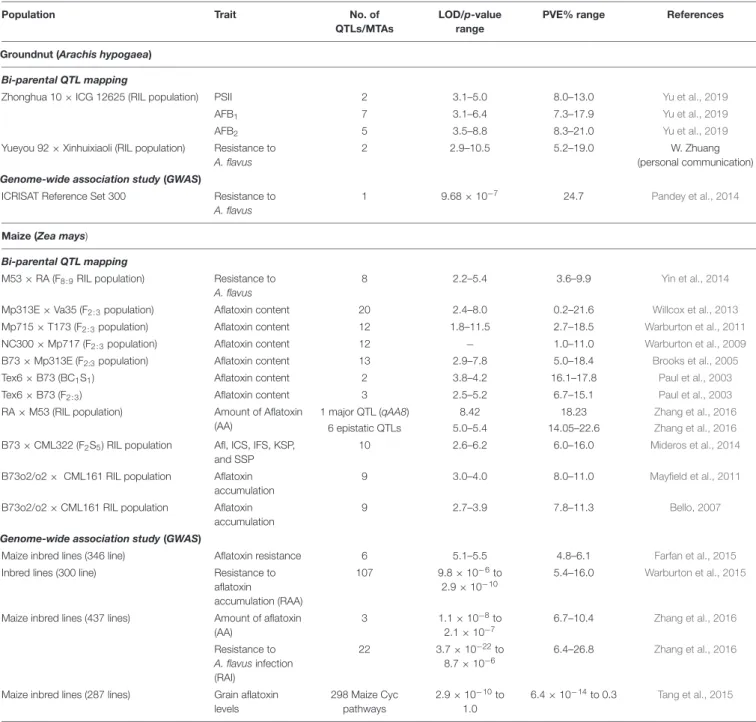
Several QTL mapping studies have been performed leading to discovery of genomic regions for aflatoxin resistance in groundnut and maize (Table 1). Each QTL mapping experiment in groundnut has had at least one QTL with phenotypic
TABLE 1 |Key bi-parental QTL mapping and GWAS studies for discovery of genomic regions controlling aflatoxin contamination in groundnut and maize.
Population Trait No. of
QTLs/MTAs
LOD/p-value range
PVE% range References
Groundnut (Arachis hypogaea) Bi-parental QTL mapping
Zhonghua 10×ICG 12625 (RIL population) PSII 2 3.1–5.0 8.0–13.0 Yu et al., 2019
AFB1 7 3.1–6.4 7.3–17.9 Yu et al., 2019
AFB2 5 3.5–8.8 8.3–21.0 Yu et al., 2019
Yueyou 92×Xinhuixiaoli (RIL population) Resistance to
A. flavus
2 2.9–10.5 5.2–19.0 W. Zhuang
(personal communication) Genome-wide association study(GWAS)
ICRISAT Reference Set 300 Resistance to
A. flavus
1 9.68×10⁻⁷ 24.7 Pandey et al., 2014
Maize (Zea mays) Bi-parental QTL mapping
M53×RA (F8:9RIL population) Resistance to A. flavus
8 2.2–5.4 3.6–9.9 Yin et al., 2014
Mp313E×Va35 (F2:3population) Aflatoxin content 20 2.4–8.0 0.2–21.6 Willcox et al., 2013
Mp715×T173 (F2:3population) Aflatoxin content 12 1.8–11.5 2.7–18.5 Warburton et al., 2011
NC300×Mp717 (F2:3population) Aflatoxin content 12 − 1.0–11.0 Warburton et al., 2009
B73×Mp313E (F2:3population) Aflatoxin content 13 2.9–7.8 5.0–18.4 Brooks et al., 2005
Tex6×B73 (BC1S1) Aflatoxin content 2 3.8–4.2 16.1–17.8 Paul et al., 2003
Tex6×B73 (F2:3) Aflatoxin content 3 2.5–5.2 6.7–15.1 Paul et al., 2003
RA×M53 (RIL population) Amount of Aflatoxin (AA)
1 major QTL (qAA8) 8.42 18.23 Zhang et al., 2016
6 epistatic QTLs 5.0–5.4 14.05–22.6 Zhang et al., 2016
B73×CML322 (F2S5) RIL population Afl, ICS, IFS, KSP,
and SSP
10 2.6–6.2 6.0–16.0 Mideros et al., 2014
B73o2/o2× CML161 RIL population Aflatoxin accumulation
9 3.0–4.0 8.0–11.0 Mayfield et al., 2011
B73o2/o2×CML161 RIL population Aflatoxin accumulation
9 2.7–3.9 7.8–11.3 Bello, 2007
Genome-wide association study(GWAS)
Maize inbred lines (346 line) Aflatoxin resistance 6 5.1–5.5 4.8–6.1 Farfan et al., 2015
Inbred lines (300 line) Resistance to
aflatoxin
accumulation (RAA)
107 9.8×10⁻⁶to
2.9×10⁻¹⁰
5.4–16.0 Warburton et al., 2015
Maize inbred lines (437 lines) Amount of aflatoxin (AA) 3 1.1×10⁻⁸to 2.1×10⁻⁷ 6.7–10.4 Zhang et al., 2016 Resistance to A. flavusinfection (RAI) 22 3.7×10⁻²²to 8.7×10⁻⁶ 6.4–26.8 Zhang et al., 2016
Maize inbred lines (287 lines) Grain aflatoxin levels 298 Maize Cyc pathways 2.9×10⁻¹⁰to 1.0 6.4×10⁻¹⁴to 0.3 Tang et al., 2015
BC1S1, selfed backcross population; PSII, percent seed infection index; AFB1, aflatoxin B1; AFB2, aflatoxin B2; IVSC, in vitro seed colonization; RIL, recombinant inbred
lines; Chr, chromosome; LOD, logarithm of odds; ICS, infection on silk tissue; IFS, infection frequency on silk tissue; KSP, sporulation on developing kernels; SSP, sporulation on silk tissue; Afl, aflatoxin accumulation.
variation explained (PVE)>10% and reaching up to>20% in some cases. Interestingly in maize, some QTLs were mapped on same genomic regions in different mapping populations which indicated that there are some genes underlying similar function in different studies (Warburton and Williams, 2014; Parish et al., 2019).
In groundnut, very few genetic mapping studies have been reported for aflatoxin resistance. Individual QTLs were identified for AFB1, AFB2, and (percent seed infection index;
PSII) using a recombinant inbred line (RIL) population Zhonghua 10 × ICG 12625 by Yu et al. (2019). The study identified two QTLs for PSII, one on chromosome A03 with 8.0% PVE and another on chromosome A10 with 13.0% PVE. Seven QTLs were identified for AFB1 (Aflatoxin
B1) resistance, of which two major QTLs were detected
on chromosomes A07 and B06 with 17.9 and 16.3% PVE, respectively. Similarly, five QTLs were identified for resistance to AFB2, of which chromosomes A07, B05, B06, and B07
recorded higher PVEs of 12.2, 11.1, 21.0, and 14.5% PVE, respectively. Two consistent QTLs for AFB1 (Aflatoxin B1)
and AFB2 (Aflatoxin B2) and one for PSII were identified
(Yu et al., 2019). Genetic mapping using a groundnut RIL population Yueyou 92 × Xinhuixiaoli for IVSC identified two major QTLs on chromosomes A03 and B04 with LOD of 10.5 and 2.9 and 19.0 and 5.1% PVE, respectively (W. Zhuang, personal communication). Similarly, genome-wide association studies using a groundnut reference set identified a marker associated with IVSC explaining 24.7% PVE (Pandey et al., 2014). One groundnut MAGIC population using eight genotypes possessing resistance to Aspergillus infection and reduced aflatoxin accumulation has been developed at ICRISAT for genetic dissection of component traits.
In the case of maize, major effect QTLs were identified in crosses Tex6 × B73 (F2:3) and Tex6 × B73 (BC1S1) on
chromosomes 3, 4, 5, and 10 with 6.7–17.8% PVE (Paul et al., 2003). Another study (Brooks et al., 2005) conducted in F2:3
-derived maize populations reported two major effect QTLs for aflatoxin resistance in B73 × Mp313E population that were significant across environments. Other studies in maize have identified one stable QTL in NC300 × Mp717 population which was stable across years. Warburton et al. (2009), three major effect QTLs explaining PVE ranging from 12.1–21.6% in Mp313E × Va35 population (Willcox et al., 2013); small effect QTLs in M53 × Mo17 population (Yin et al., 2014), and single QTL explaining 18.5% PVE in Mp715 × T173 population (Warburton et al., 2011). Similarly, QTL for log aflatoxin accumulations were detected on chromosomes 1, 3, 4, and 9, explaining a total of 17% PVE; while QTL for aflatoxin were detected on chromosomes 3, 4, and 8, explaining a total of 15% PVE in RIL population B73o2/o2×CML161 (Mayfield et al., 2011). In fact, the same population (B73o2/o2×CML161) was used earlier (Bello, 2007). QTLs affecting aflatoxin from both parents; however, the favorable alleles for the QTL detected by Bello (2007) were derived mainly from CML161 (Mayfield et al., 2011). In earlier aflatoxin QTL studies, Brooks et al. (2005) evaluated their germplasm in four environments, Paul et al. (2003) used two environments, and Warburton et al. (2009) used four environments. All these studies reported few significant QTLs detected in more than one environment. Warburton et al. (2009) reported the most, with one QTL present in all four environments and one QTL detected in two environments. However, Mayfield et al. (2011) reported three QTLs one on each of chromosomes 1, 4, and 9, across multiple years and environments. In another study by using the B73×CML322 population, ten QTLs with 6.0–16.0% PVE were found using two QTL mapping methods, six of which were located on the same chromosome segments using both approaches (Mideros et al., 2014). By using various sources of near-isogenic lines (NILs) for selected loci, the resistance QTL located in bin 4.08 was confirmed using a NIL pair. Furthermore, the meta-analysis of QTLs using data from 12 populations indicated that the QTL in bin 4.08 has been reported in four mapping populations. The study showed that the largest-effect QTL, located in bin 4.08, is a good candidate for further characterization and use.
In addition to bi-parental QTL mapping studies, many diverse association panels have been used for genome-wide association study (GWAS) leading to the identification of markers/genomic regions for aflatoxin resistance in maize. For instance, Farfan et al. (2015) identified 6 MTAs for aflatoxin resistance with 4.79–6.06% PVE. In another study (Warburton et al., 2015), GWAS analysis using 300 maize inbred lines identified 107 SNPs associated with aflatoxin accumulation in one or more environments in the association panel. Similarly, in another study using an association panel of 437 maize inbred lines,Zhang et al. (2016) identified 3 MTAs for AA and 22 MTAs for resistance toA. flavusinfection (RAI). In a comprehensive GWAS analysis undertaken byTang et al. (2015), 298 maize Cyc pathways were reported to be associated with resistance mechanisms, 17 of the pathways reported high enrichment scores of false discovery rate (FDR) < 0.2, of which the jasmonic acid biosynthesis pathway seems to be a major one for aflatoxin resistance. While these studies are informative, comprehensive efforts are required to perform high resolution GWAS in maize and especially in groundnut so that candidate genomic regions/genes can be identified and validated for breeding applications.
MOLECULAR BASIS OF AFLATOXIN
RESISTANCE MECHANISMS
Identification of Resistance-Associated
Proteins
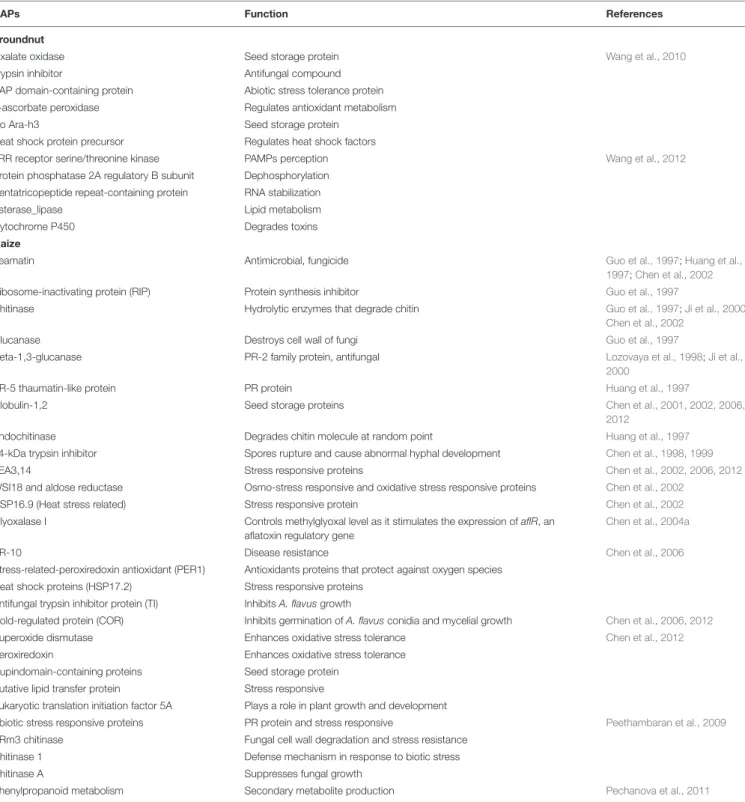
Proteomics approaches have identified several plant proteins involved in host-pathogen interaction and in controlling resistance to fungal invasion and toxin production in both groundnut and maize. For instance, in groundnut, a 2D-based proteomics study identified pathways/proteins including resistance-associated proteins (RAPs) which were associated with pre-harvest aflatoxin resistance under drought stress conditions (Wang et al., 2010). That study highlighted the role of iso Ara-h3, oxalate oxidase, PII protein, trypsin inhibitor, SAP domain-containing protein, CDK1, L-ascorbate peroxidase, RIO kinase, and heat shock proteins in reducing aflatoxin accumulation at pre-harvest aflatoxin resistance. Later, Wang et al. (2012) identified several RAPs in groundnut which were key controllers of pathways such as immune signaling, PAMP perception, cell wall responses, and detoxification. The study on effect of H2O2
-derived oxidative stress on A. flavus isolates discovered a sub-set of genes that control fungus pathogenicity, mycelial development, and manage ROS production (Fountain et al., 2018).
In maize, several proteomic approaches have been used to understand the molecular mechanisms involved in host-pathogen interaction and resistance to AP. For instance, RIP and zeamatin were present in higher concentrations in germinating maize kernels and led to decreased aflatoxin levels in susceptible maize kernels and thereby inhibited the growth of A. flavus under imbibed conditions (Guo et al., 1997). A similar study has indicated the importance of fungal cell wall degrading enzymes,
particularly isoforms of beta-l,3-glucanase and chitinase, which are induced in maturing kernels in response toA. flavusinfection and also in maturing uninfected kernels (Lozovaya et al., 1998; Ji et al., 2000). Importantly, antifungal proteins chitinase and zeamatin appear to be associated with the host first and second layer of resistance (Guo et al., 1997), and their constitutive expression in maize can provide resistance against A. flavus. Grains of resistant maize genotypes can accumulate inhibitory proteins such as 22 and 28kDa which restrict the growth of the fungus as they are associated key resistant proteins like PR-5 thaumatin-like proteins and zeamatin (Huang et al., 1997; Moore et al., 2004). In another study, the proteome analysis of resistant maize genotypes identified a constitutive expression of 14-kDa trypsin inhibitor that can cause spore rupture and abnormal hyphal development inA. flavus(Chen et al., 1998). Also, the trypsin inhibitor produced by maize can inhibit fungal-amylase activity that limits pathogen access to the host food resource (starch) which in turn restrict fungus mycelial growth and sclerotia development (Woloshuk et al., 1997; Chen et al., 1998, 1999).
A proteomic examination of maize seeds has identified several groups of proteins associated with the embryo and endosperm that were significantly upregulated upon A. flavus infection. These proteins were grouped into four categories: storage proteins, water stress-related proteins, PR proteins, and antifungal proteins (Chen et al., 2002, 2004b, 2006, 2007, 2012). Storage proteins globulin 1 and 2, water stress responsive related proteins WSI18, aldose reductase, late embryogenesis abundant (LEA; LEA3 and LEA14) and heat stress related proteins (HSP16.9) impart kernel resistance (Chen et al., 2002). Further, glyoxalase I (GLX-I; EC 4.4.1.5), a stress-related protein, directly controls methylglyoxal levels, an aflatoxin inducing substrate, thereby contributing to lower aflatoxin levels in resistant maize genotypes (Chen et al., 2004b). The RAP involves maize PR-10, which exhibits ribonucleolytic and antifungal activities (Chen et al., 2006, 2007); and the genes of encoding PR proteins are usually highly expressed in resistant genotypes (Chen et al., 2007). A United States–Africa collaborative project identified resistant maize inbred lines (Menkir et al., 2006, 2008; Meseka et al., 2018). The project reported the development of 52 BC1S4 lines from crosses between five African maize
inbreds and five temperate aflatoxin-resistant lines followed by the identification of RAPs related to antifungal, stress-related, storage or regulatory protein categories (Chen et al., 2012). Resistant inbred lines of maize are known to express higher levels of chitinase and proteins associated with phenylpropanoid metabolism pathways (Peethambaran et al., 2009; Pechanova et al., 2011).
Using multiple approaches in groundnut and maize have led to the identification of several moderate/low/high resistant lines for A. flavus infection and reduced aflatoxin contamination. These advances have facilitated the development of aflatoxin-resistant transgenic groundnut (Sharma et al., 2018) and maize (Thakare et al., 2017); and it is expected that in the coming years, farmers may have access to superior and aflatoxin-resistant varieties. However, the release of transgenic cultivars is dependent on their acceptance by regulators in
the target countries. To date, the use of transgenic maize is accepted only in South Africa and Sudan in Africa. A summary of different proteomic studies in maize and groundnut is provided in Table 2. Cumulatively, these studies enhance our knowledge of target proteins in order to identify protein encoding resistance genes in response to aflatoxin contamination in these crops.
Identification of Candidate Genes
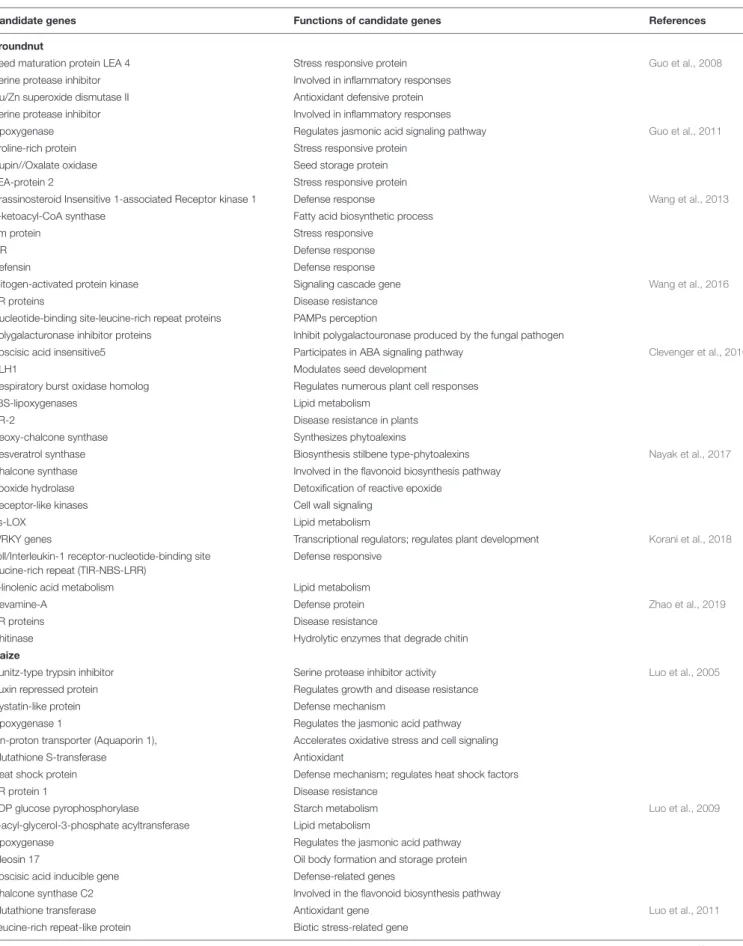
Functional genomics provides new insights into a wide number of candidate genes associated with resistance to aflatoxin contamination in both groundnut and maize (Table 3). In the case of groundnut, transcriptomics studies have identified candidate genes, pathways, and the regulatory networks for the three resistance mechanisms of aflatoxin accumulation (IVSC, PAC, and AP). Earlier efforts to identify resistance/differentially expressed genes in groundnut were based on EST or microarray-based techniques (Luo et al., 2005;Guo et al., 2011;Wang et al., 2013). The gene expression profiling approach was deployed by Luo et al. (2005) in A13 drought-tolerant and pre-harvest aflatoxin-resistant groundnut genotypes in which a cDNA microarray containing 384 unigenes was selected from two cDNA libraries. Overall, the microarray-based screening approach identified defense responsive (Kunitz-type trypsin inhibitor, auxin repressed protein, cystatin-like protein), signaling component (ethylene-responsive protein, calcium-binding protein), ion-proton transporter (aquaporin 1), stress proteins, and secondary metabolites (lipoxygenase 1) resistance genes in groundnut in response to A. parasiticus infection under drought stress (Luo et al., 2005).
To understand the molecular mechanism of host-mediated resistance, a separate study was conducted inAspergillusresistant (GT-C20) and susceptible (Tifrunner) genotypes of groundnut which identified 52 highly and 126 moderately expressed genes (Guo et al., 2011). This study reported several important genes including lipoxygenase, lea-protein 2, proline-rich protein, cupin//Oxalate oxidase, among others, in response to A. flavus infection. Some studies have suggested the possible involvement of LOX pathway in the production of jasmonic acid which plays hormone-like regulatory and defense-related roles in plants (Royo et al., 1996; Kolomiets et al., 2001; Yan et al., 2013; Ogunola et al., 2017).
Studies have reported that LOX genes also play a major role in plant defense mechanisms, growth, and developmental processes (Kolomiets et al., 2001, 2018;Gao et al., 2008;Park and Kolomiets, 2010). In this emerging field, more investigations are needed on host-pathogen cross-talk communication that fungi use to exploit the plant host in order to meet their biological needs (Christensen and Kolomiets, 2011). Some LOX genes have been shown to play an important role in plant defense resistance and in mediating fungal colonization and toxin production (Battilani et al., 2018).
A microarray study representing 36,158 unigenes was used to identify genes associated with aflatoxin resistance in groundnut (Wang et al., 2013), providing insights into the co-regulation of multiple pathways such as host defensive
TABLE 2 |List of key proteins and their functions associated with resistance to aflatoxin contamination in groundnut and maize.
RAPs Function References
Groundnut
Oxalate oxidase Seed storage protein Wang et al., 2010
Trypsin inhibitor Antifungal compound
SAP domain-containing protein Abiotic stress tolerance protein
L-ascorbate peroxidase Regulates antioxidant metabolism
Iso Ara-h3 Seed storage protein
Heat shock protein precursor Regulates heat shock factors
LRR receptor serine/threonine kinase PAMPs perception Wang et al., 2012
Protein phosphatase 2A regulatory B subunit Dephosphorylation Pentatricopeptide repeat-containing protein RNA stabilization
Esterase_lipase Lipid metabolism
Cytochrome P450 Degrades toxins
Maize
Zeamatin Antimicrobial, fungicide Guo et al., 1997;Huang et al.,
1997;Chen et al., 2002
Ribosome-inactivating protein (RIP) Protein synthesis inhibitor Guo et al., 1997
Chitinase Hydrolytic enzymes that degrade chitin Guo et al., 1997;Ji et al., 2000;
Chen et al., 2002
Glucanase Destroys cell wall of fungi Guo et al., 1997
Beta-1,3-glucanase PR-2 family protein, antifungal Lozovaya et al., 1998;Ji et al.,
2000
PR-5 thaumatin-like protein PR protein Huang et al., 1997
Globulin-1,2 Seed storage proteins Chen et al., 2001, 2002, 2006,
2012
Endochitinase Degrades chitin molecule at random point Huang et al., 1997
14-kDa trypsin inhibitor Spores rupture and cause abnormal hyphal development Chen et al., 1998, 1999
LEA3,14 Stress responsive proteins Chen et al., 2002, 2006, 2012
WSI18 and aldose reductase Osmo-stress responsive and oxidative stress responsive proteins Chen et al., 2002
HSP16.9 (Heat stress related) Stress responsive protein Chen et al., 2002
Glyoxalase I Controls methylglyoxal level as it stimulates the expression ofaflR, an aflatoxin regulatory gene
Chen et al., 2004a
PR-10 Disease resistance Chen et al., 2006
Stress-related-peroxiredoxin antioxidant (PER1) Antioxidants proteins that protect against oxygen species Heat shock proteins (HSP17.2) Stress responsive proteins
Antifungal trypsin inhibitor protein (TI) InhibitsA. flavusgrowth
Cold-regulated protein (COR) Inhibits germination ofA. flavusconidia and mycelial growth Chen et al., 2006, 2012
Superoxide dismutase Enhances oxidative stress tolerance Chen et al., 2012
Peroxiredoxin Enhances oxidative stress tolerance
Cupindomain-containing proteins Seed storage protein Putative lipid transfer protein Stress responsive
Eukaryotic translation initiation factor 5A Plays a role in plant growth and development
Abiotic stress responsive proteins PR protein and stress responsive Peethambaran et al., 2009
PRm3 chitinase Fungal cell wall degradation and stress resistance
Chitinase 1 Defense mechanism in response to biotic stress
Chitinase A Suppresses fungal growth
Phenylpropanoid metabolism Secondary metabolite production Pechanova et al., 2011
responses including carbohydrate biosynthesis/metabolism, transmembrane transport, coenzyme A biosynthesis, oxidation-reduction, proteolysis metabolism, etc., during aflatoxin resistance. Modern approaches such as RNA-seq have been used to identify host resistance associated pathways in different crops including maize and groundnut. For instance, in case of groundnut, an integrated IVSC and RNA-seq approach
that analyzed the four different stages of infected seed samples from J11 (resistant) and JL24 (susceptible) identified 4,445 differentially expressed unigenes (DEGs) that were involved in multiple pathways such as defense-related, PR or metabolic pathway targeting genes provided a more solid understanding of cross-talk between host-pathogen interactions (Nayak et al., 2017).
TABLE 3 |A summary of some transcriptomics studies to identify candidate genes involved in aflatoxin contamination in groundnut and maize.
Candidate genes Functions of candidate genes References
Groundnut
Seed maturation protein LEA 4 Stress responsive protein Guo et al., 2008
Serine protease inhibitor Involved in inflammatory responses
Cu/Zn superoxide dismutase II Antioxidant defensive protein
Serine protease inhibitor Involved in inflammatory responses
Lipoxygenase Regulates jasmonic acid signaling pathway Guo et al., 2011
Proline-rich protein Stress responsive protein
Cupin//Oxalate oxidase Seed storage protein
LEA-protein 2 Stress responsive protein
Brassinosteroid Insensitive 1-associated Receptor kinase 1 Defense response Wang et al., 2013
3-ketoacyl-CoA synthase Fatty acid biosynthetic process
Em protein Stress responsive
TIR Defense response
Defensin Defense response
Mitogen-activated protein kinase Signaling cascade gene Wang et al., 2016
PR proteins Disease resistance
Nucleotide-binding site-leucine-rich repeat proteins PAMPs perception
Polygalacturonase inhibitor proteins Inhibit polygalactouronase produced by the fungal pathogen
Abscisic acid insensitive5 Participates in ABA signaling pathway Clevenger et al., 2016
BLH1 Modulates seed development
Respiratory burst oxidase homolog Regulates numerous plant cell responses
13S-lipoxygenases Lipid metabolism
PR-2 Disease resistance in plants
Deoxy-chalcone synthase Synthesizes phytoalexins
Resveratrol synthase Biosynthesis stilbene type-phytoalexins Nayak et al., 2017
Chalcone synthase Involved in the flavonoid biosynthesis pathway
Epoxide hydrolase Detoxification of reactive epoxide
Receptor-like kinases Cell wall signaling
9s-LOX Lipid metabolism
WRKY genes Transcriptional regulators; regulates plant development Korani et al., 2018
Toll/Interleukin-1 receptor-nucleotide-binding site leucine-rich repeat (TIR-NBS-LRR)
Defense responsive
α-linolenic acid metabolism Lipid metabolism
Hevamine-A Defense protein Zhao et al., 2019
PR proteins Disease resistance
Chitinase Hydrolytic enzymes that degrade chitin
Maize
Kunitz-type trypsin inhibitor Serine protease inhibitor activity Luo et al., 2005
Auxin repressed protein Regulates growth and disease resistance
Cystatin-like protein Defense mechanism
Lipoxygenase 1 Regulates the jasmonic acid pathway
Ion-proton transporter (Aquaporin 1), Accelerates oxidative stress and cell signaling
Glutathione S-transferase Antioxidant
Heat shock protein Defense mechanism; regulates heat shock factors
PR protein 1 Disease resistance
ADP glucose pyrophosphorylase Starch metabolism Luo et al., 2009
1-acyl-glycerol-3-phosphate acyltransferase Lipid metabolism
Lipoxygenase Regulates the jasmonic acid pathway
Oleosin 17 Oil body formation and storage protein
Abscisic acid inducible gene Defense-related genes
Chalcone synthase C2 Involved in the flavonoid biosynthesis pathway
Glutathione transferase Antioxidant gene Luo et al., 2011
Leucine-rich repeat-like protein Biotic stress-related gene
TABLE 3 |Continued
Candidate genes Functions of candidate genes References
ABI3-interacting protein 2 A transcription factor of the abscisic acid signal transduction pathway that plays a role in seed development
Beta-1,3-glucanase Classified in PR-2 family of PR proteins, antifungal
Zeamatin-like protein Antimicrobial, fungicide
PR genes PR genes
Phosphoglycerate dehydratase 1 Plays a role in catalysis Luo et al., 2010
Heat shock protein 90 Signal transduction and stress responsive
Glycine−rich protein Stress responsive and signaling
Cytochrome P450 Degrades toxins
Ethylene-responsive element binding factor Regulates jasmonic acid signaling pathway
9-oxylipins Suppresses aflatoxin biosynthesis pathway Fountain et al., 2013
Lipoxygenase-3 (LOX3) Regulates jasmonic acid signaling pathway
PR proteins Disease resistance
NUP85-like genes Transports RNA, R-proteins and macromolecules from the nucleus to
the cytoplasm
Kelley et al., 2012
Heat shock protein (HSP101) Molecular chaperone protein
Molecular chaperones Plays a role in protein folding
Cinnamoyl-CoA Synthesizes lignin compounds
PR-4 Antifungal proteins play a role in pathogenicity Dhakal et al., 2017
Leucine-rich repeat family protein Highly conserved region for disease resistance genes
DEAD-box RNA helicase Defense-related signaling
Fructose-1,6-bisphosphatase Carbohydrate metabolism
Plant receptor protein kinases (RPK) Senses pathogen signals and accelerates defense
Cysteine proteinase inhibitor Stress responsive
PR-1, PR-4, PR-5, PR-10 Disease resistance-related genes
CC-NBS-LRR Conserves disease resistance genes Shu et al., 2017
LRR-RLK Conserves disease resistance genes
Thaumatin- like protein Regulates host defense mechanism
Chitinase Hydrolytic enzymes that degrade chitin
Likewise, an RNA-seq-based approach was deployed in groundnut to identify genes that confer resistance during PAC (Clevenger et al., 2016). The study was able to associate the role of abscisic acid (ABA) signaling pathway during drought stress-induced aflatoxin contamination and/or PAC, and also revealed the role of genes from the fatty acid metabolism, cell wall restructuring and morphology, sugar metabolism and nitrogen metabolism pathways during A. flavus contamination in soil. Recently, Zhao et al. (2019) suggested the role of hevamine-A protein in groundnut during Phevamine-AC resistance. Hevamine-A protein is an enzyme with chitinase activity that is also coordinated with PR proteins and can directly inhibit the growth ofA. flavus(Zhao et al., 2019).
Post-harvest aflatoxin contamination can take place during drying, storage or transportation due to increase in humidity and/or insect damage, thereby promoting A. flavus infection. To understand the post-harvest resistance mechanism, Wang et al. (2016) performed global transcriptome profiling in the grains of resistant (Zhonghua 6) and susceptible (Zhonghua 12) genotypes of groundnut and identified 30,143 DEGs, of which 842 were defense-related genes, including mitogen-activated protein kinase, PR proteins, leucine-rich repeat receptor-like kinases transcription factors, nucleotide-binding site-leucine-rich repeat proteins, polygalacturonase inhibitor proteins, and
ADP-ribosylation factors in response to AP byA. flavus. A recent study by Korani et al. (2018) provides new insights into post-harvest resistance mechanism in response toA. flavusinfection by comparing the seed transcriptome of resistant (ICG 1471) and susceptible (Florida-07) groundnut cultivars. The study identified 4,272 DEGs and showed the importance of WRKY TFs, heat shock proteins and TIR-NBS-LRR in providing resistance. Further, this study also showed the altered expression of genes associated with protein processing in the endoplasmic reticulum, spliceosome mediated protein degradation and α-linolenic acid metabolism.
In maize, gene expression analysis of inbred line Tex6 identified 8,497 positive array spots including genes related to disease resistance (chitinase, zeamatin-like protein, endochitinase B precursor, PR-1;4;5), stress responsive (heat shock proteins, auxin responsive factor-1, D-type cyclin), ROS scavenger (glutathione S-transferase, superoxide dismutase), and defense-related genes, as well as storage protein genes and lipid metabolism genes (Luo et al., 2009). Further, Luo et al. (2010) have shown that jasmonate and abscisic acid biosynthetic and signaling pathways play crucial roles in drought-induced A. flavus infection and accumulation of aflatoxin in maize. The transcriptomic study of resistant maize (Eyl25) with susceptible (Eyl31) lines identified 530 DEGs
including defense-related genes; beta-1,3-glucanase, zeamatin-like protein, trypsin inhibitor, and PR genes (Luo et al., 2011). Fountain et al. (2013)have highlighted the role of WRKY TFs in conferring resistance to Aspergillus infection and subsequently in reduced PAC in maize genotype. The transcriptomic study of maize kernels in two resistant inbred lines (Mp313E and Mp04:86) and two susceptible inbred lines (Va35 and B73) under artificial inoculation conditions identified NUP85-like genes in resistance (Kelley et al., 2012). The NUP85-like protein is a major part of nuclear pore complex (NPCs) and is involved in the transportation of RNA, R-proteins, and other macromolecules from the nucleus to the cytoplasm (Cheng et al., 2009; Garcia and Parker, 2009). A few more genes like heat shock protein (HSP101), metallothionein-like protein (MTLP), lecithin cholesterol acyltransferase (LCAT)-like gene, Prenylated Rab PRA1 proteins, molecular chaperones, and detoxification proteins were found to be highly expressed in resistant maize inbred line Mp313E. Some genes including a nuclease-phosphatase domain superfamily protein, a cinnamoyl-CoA, a heat shock protein HSP18a, and few significantly mapped genes like lysine-rich RNA binding domains, large and small ribosomal units had significantly higher expression in susceptible line Va35 than in resistant line Mp313E (Kelley et al., 2012).
Climate change has a devastating impact on mycotoxin production and fungal infection. Functional genomics tools have shown the impact of elevated CO2 levels on aflR gene (an
aflatoxin biosynthetic regulatory gene) inA. flavus(Gilbert et al., 2016). A cDNA library of Mp715 (resistant inbred) and B73 (susceptible inbred) was designed to differentiate expression patterns for aflatoxin accumulation in maize, and those cDNA clones were mapped onto the maize genome by in silico mapping (Dhakal et al., 2017). This study identified 267 unigenes related to stress tolerance, metabolism, disease resistance, PR-4, and leucine-rich repeat family protein. A comparative study of maize kernels infected with A. flavus and F. verticillioides identified several candidate genes such as PR-1, 10,4,5,10.1; chitinase, CC-NBS-LRR, LRR-RLK, and Thaumatin-like proteins that showed temporal expression patterns during infection/stress (Shu et al., 2017). Several environmental/external factors affect the expression of transcripts, thus influencing the colonization ofA. flavusand subsequently toxin production. For instance, the antifungal fumigant benzenamine affects aflatoxin biosynthesis, development, and virulence inA. flavusby downregulating the LeaAregulatory factor, thus acting as a fumigant againstA. flavus (Yang et al., 2019).
Transgenic Approaches for Resistance
to
A. flavus
Infection and Aflatoxin
Contamination
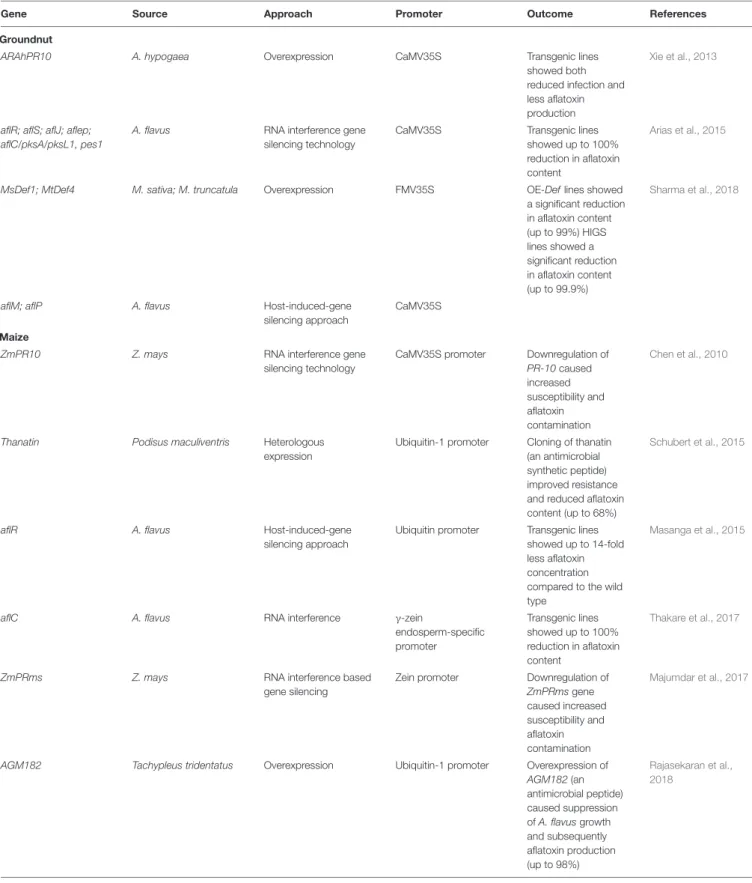
Several transgenic approaches including expressing protein/enzyme that can reduce fungal infection or degrade the toxin have been deployed in groundnut and maize to mitigate aflatoxin contamination (Table 4). In groundnut, very few reports on transgenic approaches are available substantiating the importance of host genes like PR anddefensin (Xie et al., 2013; Arias et al., 2015). A study (Sharma et al., 2018) has
shown that the overexpression of Medicago defensin genes-MsDef1 and MtDef4.2 reduced Aspergillus infection as well as AP in susceptible groundnut variety JL 24. The study also demonstrated a host-induced gene silencing (HIGS) mediated silencing of aflatoxin biosynthetic pathway regulatory genesaflM andaflPto inhibit AP. Notably, both OE−Def and HIGS lines showed remarkably reduced levels of aflatoxin B1ranging from 1
to 20 ppb compared to the wild type cultivar that accumulates up to>4,000 ppb.
Various studies on maize provide insights into using transgenic approaches and the knowledge of precise engineering strategies to improve food safety. A key approach is RNA interference (RNAi), a technology that limits the transcription of a target gene. This approach has been deployed to silence RAP genes (PR-10, GLXI, TI) in maize to identify the key role of RAPs in host resistance mechanism againstA. flavusinfection (Chen et al., 2004a, 2010). RNAi Pr10 silencing construct was introduced in maize plants showing increased susceptibility to A. flavus colonization and aflatoxin accumulation (Chen et al., 2010). Notably, PR-10 was involved in enhancing plant stress tolerance and severe suppression of their PR protein encoding genes drastically increased susceptibility to A. flavus infection (Xie et al., 2010;Majumdar et al., 2017). Recently,aflCandaflRgenes were targeted that encode the enzyme inAspergillus aflatoxin biosynthetic pathway to develop aflatoxin-free transgenic kernels (Masanga et al., 2015; Thakare et al., 2017). Also, thanatin, a growth inhibitor of A. flavus, was overexpressed in maize, reducing aflatoxin contamination and increasing resistance by three to four-fold resistance (Schubert et al., 2015).
In a recent study, expression analyses of polyamine (PA) metabolism/transport genes duringA. flavus-maize interaction showed significant increase in the expression of arginine decarboxylase (Adc) and S-adenosylmethionine decarboxylase (Samdc) genes in the maize host and PA uptake transporters in the fungus (Majumdar et al., 2018). This study suggested that future studies targeting spermidine biosynthesis in A. flavus, using RNAi-based host-induced gene silencing approaches, may be an effective strategy to reduce aflatoxin contamination in maize and possibly in other susceptible crops. In contrary,Gressel and Polturak (2018)report that RNAi technology can’t help post-harvest AP as it may have only limited utility when the grain has been dried. However, the dormant state of seeds is usually alleviated during post-harvest storage conditions or under low moisture conditions and cannot accelerate the production of hpRNAs/siRNAs (Majumdar et al., 2017). Even in the post-transcriptional state, RNAi negatively regulates gene expression and does not produce any protein or enzyme in the host plant (Majumdar et al., 2017). Fakhoury and Woloshuk (1999) produced a mutant strain (101) ofA. flavuswhich was defective in theα-amylase activity. Theα-amylase enzyme is crucial in A. flavus as it is involved in the degradation of the host’s carbohydrate reservoir which is an essential energy source for fungus growth and reproduction, as well as AP. Therefore, anα-amylase inhibitor protein (AILP) that inhibits α-amylase activity was expressed in the host; this reduced fungus growth and subsequent AP (Fakhoury and Woloshuk, 2001; see Chen et al., 2015). Recently, a transgenic maize line expressingAGM182
TABLE 4 |A summary of some overexpression, RNAi and host-induced gene silencing studies in groundnut and maize.
Gene Source Approach Promoter Outcome References
Groundnut
ARAhPR10 A. hypogaea Overexpression CaMV35S Transgenic lines
showed both reduced infection and less aflatoxin production
Xie et al., 2013
aflR; aflS; aflJ; aflep; aflC/pksA/pksL1, pes1
A. flavus RNA interference gene silencing technology
CaMV35S Transgenic lines
showed up to 100% reduction in aflatoxin content
Arias et al., 2015
MsDef1; MtDef4 M. sativa; M. truncatula Overexpression FMV35S OE-Deflines showed a significant reduction in aflatoxin content (up to 99%) HIGS lines showed a significant reduction in aflatoxin content (up to 99.9%) Sharma et al., 2018
aflM; aflP A. flavus Host-induced-gene silencing approach
CaMV35S Maize
ZmPR10 Z. mays RNA interference gene
silencing technology
CaMV35S promoter Downregulation of
PR-10caused increased susceptibility and aflatoxin contamination Chen et al., 2010
Thanatin Podisus maculiventris Heterologous expression
Ubiquitin-1 promoter Cloning of thanatin (an antimicrobial synthetic peptide) improved resistance and reduced aflatoxin content (up to 68%)
Schubert et al., 2015
aflR A. flavus Host-induced-gene
silencing approach
Ubiquitin promoter Transgenic lines showed up to 14-fold less aflatoxin concentration compared to the wild type
Masanga et al., 2015
aflC A. flavus RNA interference γ-zein
endosperm-specific promoter Transgenic lines showed up to 100% reduction in aflatoxin content Thakare et al., 2017
ZmPRms Z. mays RNA interference based
gene silencing
Zein promoter Downregulation of
ZmPRmsgene caused increased susceptibility and aflatoxin contamination Majumdar et al., 2017
AGM182 Tachypleus tridentatus Overexpression Ubiquitin-1 promoter Overexpression of
AGM182(an antimicrobial peptide) caused suppression ofA. flavusgrowth and subsequently aflatoxin production (up to 98%) Rajasekaran et al., 2018
which encodes a tachyplesin1-derived synthetic peptide (an antimicrobial peptide) was developed that exhibited reduced fungal growth and a significant reduction in aflatoxin level
(76–98%) compared to the control (Rajasekaran et al., 2018). Characterization of these candidate genes through a transgenic approach would be important in safeguarding food commodities.
Managing Aflatoxin Contamination:
Similarities Between Groundnut and
Maize
Pre- and post-harvest management strategies largely predict the extent to which Aspergillus fungi invade seeds and exacerbate AP (Hell et al., 2008). Most post-harvest management practices like rapid drying of groundnut in-shell and maize ears coupled with appropriate storage conditions are crucial for reducing infection and toxin accumulation. During initiation stage, host-pathogen interactions occur in the cell wall where NBS-LRR receptors, oxylipins, and elicitors play an important role. This is followed by a change in ion flux across the plasma membrane and the activation of a number of genes that lead to changes in the plant’s cell wall. It activates various PR-related proteins, phytoalexins-like compounds and TFs which play an important role in defense mechanism. In addition, at the environmental level, PAC is largely exacerbated by drought stress and insect damage in groundnut and maize (Guo et al., 2008; Hell et al., 2008). Attempts to characterize resistance due to the physical barriers suggested that pod shell may serve as a barrier toA. flavus infection when the kernels are stored in-shell in the case of groundnut (Liang et al., 2006; Nigam et al., 2009). Similarly, in maize, a tight husk and non-upright ear act as a barrier to the entry of spores and keep the ear dryer, resulting in an unfavorable environment for fungal growth (Warburton and Williams, 2014). Such physical barriers are considered non-desirable traits since they pose serious challenges while threshing or dehulling.
In groundnut and maize, cross-talk communication between the pathogen and host plant is the first critical step toward the rapid activation of defense mechanisms in host plants. Functional and biological composition of resistance mechanisms in maize and groundnut using integrated approaches have led to the elucidation of the roles of several genes, PR-10, chitinase, 14-kDa trypsin inhibitor, zeatin and beta-1,3-glucanase, lipoxygenase, ROS, and stress responsive proteins (such as late embryogenesis abundant protein (LEA14), catalase, glutathione S-transferase, superoxide dismutase, heat shock proteins) which play a vital role in regulating resistance and in cross-kingdom interactions between host plants and Aspergillusspecies in groundnut (Luo et al., 2005;Chadha and Das, 2006;Liang et al., 2006;Wang et al., 2010;Guo et al., 2011;Kumari et al., 2011;Nayak et al., 2017) and maize (Guo et al., 1997;Chen et al., 1998, 1999, 2001, 2002, 2004b, 2006, 2007, 2012;Lozovaya et al., 1998;Ji et al., 2000;Moore et al., 2004; Magbanua et al., 2007; Pechanova et al., 2011;Pegoraro et al., 2011;Roze et al., 2013;Fountain et al., 2014, 2016;Hawkins et al., 2015;Ogunola et al., 2017).
METABOLOMICS UNDER
A. flavus
INFECTION AND AFLATOXIN
RESISTANCE
Metabolomics is an emerging field that represents the complete set of metabolites in a biological cell, tissue, organ or organism. It provides an instantaneous snapshot of the “physiological state” of an organism (Ramalingam et al., 2015;Kumar R. et al., 2017).
Metabolites are small molecules that are directly involved in growth, development, and reproduction processes.
To understand the aflatoxin resistance mechanism at the metabolite level, some metabolome studies in response to A. flavus infection have been conducted in maize. For instance, metabolome profile under A. flavusinfection showed significant induction and higher expression of polyamine (PA) biosynthesis genes in maize-resistant lines TZAR102, MI82 than in susceptible line SC212. Higher expression of spermidine (Spd), spermine (Spm), and diamine putrescine (Put) along with their increased catabolism in the resistant lines than in the susceptible line indicate that polyamines play an important role inA. flavusresistance (Majumdar et al., 2019). In addition, higher concentrations of amino acids such as glutamate (Glu), glutamine (Gln), andγ-aminobutyric acid in susceptible maize line SC212 showed that these amino acids favor A. flavus infection. In a similar study byFalade et al. (2018), metabolites were analyzed at R3 (milk), R4 (dough), and R5 (dent) stages of cob development underA. flavusinfection (4 doses). The study showed that grain colonization decreases with increasing kernel maturity from milk-, dough-, and dent-stage kernels, with approximately 100%, 60%, and 30% colonization, respectively. However, aflatoxin levels increase with increased doses at dough and dent stages. This shows that initial stages of cob development (milk and dough) are more susceptible than the maturity stage (Falade et al., 2018). A study on aflatoxin accumulation in grains of 120 maize hybrids showed that higher concentrations of beta-carotene (BC), beta-cryptoxanthin (BCX), and total provitamin A had significantly less aflatoxin accumulation compared to that in hybrids with lower carotenoid concentration. Hence, breeding for increased carotenoid concentration can increase aflatoxin resistance in maize to help combat aflatoxin contamination as well as malnutrition (Suwarno et al., 2019). In short, metabolites significantly influence A. flavus infection and can be used as biomarkers for screening resistant and susceptible maize genotypes.
MOLECULAR BIOLOGY OF
A. flavus
FOR AFLATOXIN PRODUCTION AND
RESISTANCE
The genome of the toxigenic strain ofA. flavuscontains∼12,000 genes involved in the synthesis of secondary metabolites, with more than 56 gene clusters contributing to the production of secondary metabolites, including aflatoxin (Rokas et al., 2007). The aflatoxin biosynthesis gene cluster includes 25 genes spanning approximately 70 kb of DNA (Yu et al., 2004). The aflatoxin gene cluster resides on chromosome 3, next to the telomeric region comprising of pathway-specific regulatory genes as well as surrounded by four sugar-utilization genes at the distal end (Yu et al., 2000). Some regulatory genes (e.g., aflR and aflS) are reported to be essential for the production of aflatoxin after infection, and they work in conjunction with several other regulators/factors such as VelB/VeA/LaeAcomplex,CreA transcription factor, among others. While theaflRgene encodes