The Alignment of Strategic Objectives within the context of
Temporary Multi-Organisations
Amos Peter Haniff
Submitted for the degree of Doctor of Philosophy
Heriot-Watt University
School of Energy, Geoscience, Infrastructure and Society
January 2017
The copyright in this thesis is owned by the author. Any quotation from the thesis or use of any of the information contained in it must acknowledge this thesis as the source of
ABSTRACT
Current research investigating the alignment of projects with organisational strategy has predominantly focused on formation and implementation of strategic objectives within the boundary of a single, permanent organisation. Within the construction industry, the temporary organisation, created by the client organisation to deliver the project, is formed from multiple organisations that are brought together, under contractual conditions, to engage in a single endeavour. This creates a situation whereby multiple strategic objectives, and hence, multiple perceptions of project success, are pursued at anyone time. The research, forming this thesis, investigates how the varied organisations that comprise a Temporary Multi-Organisation (TMO) seek to align multiple strategic objectives within the context of a single construction project, and realise project success. In achieving this aim, the study exposes a number of ambiguities and difficulties organisations face when seeking to realise strategic objectives through a TMO.
Four cases of recently complete construction projects within the public sector were selected for empirical study. Qualitative data collected from interviews with actors across organisations participating in each TMO, was supported by secondary data comprising of project documentation from each case. The study finds that the strategy of the TMO, which evolves to realise project success, is guided by the varied strategic objectives of organisations participating in the project, and is influenced by the environmental conditions, procurement strategies, client complexity and leadership style of the client project manager, which together, influence the strategic behaviour of the TMO.
This research contributes to theories of strategic fit and the theory of temporary organisations through a model of strategic alignment within the context of a TMO that explains the complex interactions, which occur when multiple organisations engage within a single construction project. The research also contributes to the understanding of project success through a model of identifying the varied and competing success criteria within a TMO. Finally, the research contributes to leadership theory, through analysis of leadership styles within the context of a TMO.
DEDICATION
For Lisa, Qasim and Safia… Daddy’s home. xxx
ACKNOWLEDGEMENTS
I wish to thank my supervisors Professor Stephen Ogunlana, Dr. Graeme Bowles and Dr. John Sanders for their guidance, constructive feedback, encouragement and patience, throughout the dissertation process. I would also like to thank the numerous organisations and participants for their support and contribution towards the research in this thesis. Without their agreement, time, and providing and allowing access to data, this study would not have been possible.
There are also a significant number of other people to whom I owe my gratitude. I am unable to acknowledge them all personally, but I am eternally grateful to my colleagues, family and friends for their support, valuable advice and words of encouragement over the years, in particular, at times of frustration. I also wish to offer a special thanks to all my fellow writers at Professor Rowena Murray’s writing retreat. Your help and advice was invaluable.
TABLE OF CONTENTS
ABSTRACT ... ii DEDICATION ... iii ACKNOWLEDGEMENTS ... iv DeCLARATION STATEMENT ... v TABLE OF CONTENTS ... vi LISTS OF FIGURES ... xiLISTS OF TABLES ... xii
LIST OF RELEVEANT PUBLICATIONS BY THE CANDIDATE ... xiii
LIST OF ABBREVIATIONS ... xiv
CHAPTER 1 INTRODUCTION ... 1
1.1 Introduction to thesis ... 1
1.2 Background to study ... 1
1.2.1 Temporary organisations ... 3
1.2.2 Temporary multi-organisations ... 3
1.2.3 Strategic alignment of projects... 4
1.3 Research problem ... 5
1.3.1 Current studies of strategic alignment of projects... 5
1.3.2 Strategic alignment of projects within the construction industry... 6
1.3.3 Project success ... 8
1.3.4 Problem statement ... 8
1.4 Research significance ... 8
1.4.1 Contribution to temporary organisational theory ... 8
1.4.2 Contribution to theories of strategic fit ... 9
1.4.3 Contribution to understanding of project success ... 9
1.5 Research aims and objectives... 10
1.6 Methodology ... 10
1.7 Structure of thesis ... 11
1.8 Conclusion to chapter ... 14
CHAPTER 2 THE STRATEGIC CONTEXT OF PROJECTS ... 15
2.1 Introduction to chapter ... 15
2.2 The nature of strategy... 15
2.2.1 Chaffee’s three models of strategy ... 15
2.2.2 Mintzberg’s five P’s for strategy ... 17
2.3 Strategic fit and alignment ... 18
2.4 The strategic hierarchy ... 20
2.5 Streams of project management research ... 23
2.5.1 Quantitative stream of project management research ... 23
2.5.2 Human resource stream of project management research... 24
2.5.3 Strategic stream of project management research ... 24
2.6 Project success criteria ... 25
2.7 The strategic alignment of projects ... 29
2.7.1 Hierarchy of project objectives ... 30
2.7.2 Project strategy ... 34
CHAPTER 3 TEMPORARY ORGANSITIONAL FORMS ... 37
3.1 Introduction to chapter ... 37
3.2 Temporary organisational forms ... 37
3.3 Theory of temporary organisations ... 39
3.3.1 Time ... 39
3.3.2 Task ... 41
3.3.3 Team ... 42
3.3.4 Transition ... 44
3.4 Leadership of temporary organisations ... 45
3.5 Types of temporary organisations ... 48
3.6 Temporary multi-organisations ... 53
3.6.1 Client complexity with the TMO ... 56
3.6.2 TMO procurement strategy in the construction sector ... 57
3.7 Project governance ... 62
3.8 Research gaps and research questions... 65
3.9 Conceptual Model ... 67
3.10 Conclusion to chapter ... 69
CHAPTER 4 RESEARCH METHODOLOGY ... 70
4.1 Introduction to chapter ... 70
4.2 Research philosophy ... 70
4.2.1 Ontological assumption ... 72
4.2.2 Epistemological assumption ... 73
4.2.3 Assumptions about human nature ... 76
4.2.4 Methodological assumptions ... 77 4.2.4.1 Action research... 78 4.2.4.2 Ethnography ... 79 4.2.4.3 Grounded Theory ... 79 4.2.4.4 In-depth surveys ... 80 4.2.4.5 Case study ... 80 4.2.5 Axiological assumptions ... 82 4.3 Research Design ... 82
4.3.1 Overview of Research Design ... 83
4.3.2 Establishing case study type ... 86
4.3.3 Selecting between single and multiple case studies... 88
4.3.4 Unit of analysis ... 89
4.3.5 Validity and Reliability ... 91
4.4 Data Collection... 92
4.4.1 Number of case studies ... 92
4.4.2 Case study selection ... 93
4.4.3 Case study protocol ... 96
4.4.4 Instrumentation Choice ... 97
4.4.5 Semi-structured interviews ... 98
4.4.6 Interview design ... 99
4.4.7 Within-case sampling ... 101
4.4.8 Documents and archival records ... 103
4.5 Data Analysis ... 103
4.5.1 Data reduction - Computer assisted data analysis ... 105
4.5.2 Data Reduction – Template analysis ... 106
4.5.3 Data display and conclusions ... 108
4.6 Research Ethics ... 110
4.6.1 Harm to participants ... 110
4.1.1 Maintenance of privacy ... 112
4.6.3 Confidentiality ... 112
4.7 Conclusion to Chapter ... 112
CHAPTER 5 FINDINGS: WITHIN-CASE ANALYSIS ... 114
5.1 Introduction to chapter ... 114
5.2 Case A – New Student Residence ... 116
5.2.1 Background to the case ... 116
5.2.2 Client organisation’s strategic objectives... 118
5.2.3 Business level strategies ... 118
5.2.3.1 Department of Student Services strategy ... 119
5.2.3.2 Department of Hospitality Services strategy... 119
5.2.3.3 Department of Estates strategy ... 119
5.2.4 TMO strategic objectives ... 120
5.2.5 Procurement process ... 121 5.2.6 Governance structure ... 122 5.2.7 Client behaviour ... 123 5.2.8 Supply chain ... 124 5.2.9 TMO strategy ... 125 5.2.9.1 Time ... 125 5.2.9.2 Team ... 126 5.2.9.3 Task ... 127 5.2.9.4 Transition ... 128 5.2.10 Project success ... 128
5.2.11 General findings from Case A... 131
5.2.11.1 Organisational strategy... 131
5.2.11.2 Mechanisms to maintain alignment ... 131
5.2.11.3 TMO strategic behaviour ... 132
5.2.11.4 Project success ... 132
5.3 Case B – New Four-lane Carriageway ... 134
5.3.1 Background to the case ... 134
5.3.2 Client organisation’s strategic objectives... 136
5.3.3 TMO strategic objectives ... 137
5.3.4 Procurement processes ... 138 5.3.5 Governance structure ... 139 5.3.6 Client behaviour ... 139 5.3.7 Supply Chain ... 140 5.3.8 TMO Strategy ... 141 5.3.8.1 Time ... 141 5.3.8.2 Team ... 142 5.3.8.3 Task ... 143 5.3.8.4 Transition ... 143 5.3.9 Project Success ... 144
5.3.10 General findings from Case B ... 147
5.3.10.1 Organisational strategy... 147
5.3.11 Mechanisms to maintain alignment ... 147
5.3.11.1 TMO strategic behaviour ... 148
5.3.11.2 Project Success ... 148
5.4 Case C – New Laboratory and Office Facility ... 150
5.4.1 Background to the case ... 150
5.4.2 Client strategic objectives ... 152
5.4.3 TMO strategic objectives ... 153
5.4.5 Governance Structure ... 154 5.4.6 Client behaviour ... 155 5.4.7 Resistance to change ... 156 5.4.8 TMO Behaviour ... 157 5.4.8.1 Time ... 157 5.4.8.2 Team ... 158 5.4.8.3 Task ... 158 5.4.8.4 Transition ... 159 5.4.9 Project Success ... 159
5.4.10 General Findings from Case C ... 162
5.4.10.1 Organisational Strategy ... 162
5.4.10.2 Mechanisms to maintain alignment ... 162
5.4.10.3 TMO strategic behaviour ... 163
5.4.10.4 Project success ... 163
5.5 Case D – New Tourist Visitor Centre ... 165
5.5.1 Background to case ... 165
5.5.2 Client Strategic Objectives ... 167
5.5.3 TMO Strategic Objectives... 169
5.5.4 Procurement processes ... 170 5.5.5 Governance processes ... 171 5.5.6 Client Behaviour ... 172 5.5.7 TMO Strategy ... 173 5.5.7.1 Time ... 173 5.5.7.2 Team ... 173 5.5.7.3 Task ... 174 5.5.7.4 Transition ... 175 5.5.8 Project Success ... 176
5.5.9 General Findings from Case D ... 179
5.5.9.1 Organisational Strategy ... 179
5.5.9.2 Mechanisms to maintain alignment ... 179
5.5.9.3 TMO Strategic Behaviour ... 180
5.5.9.4 Project Success ... 181
5.5.10 Conclusion to Chapter ... 181
CHAPTER 6 CROSS-CASE ANALYSIS AND DISCUSSION ... 184
6.1 Introduction to chapter ... 184
6.2 Case Study Characteristics ... 185
6.3 Hierarchy of Strategic Objectives ... 187
6.3.1 Hierarchy of Strategic Objectives within each case study ... 187
6.3.2 Cross-case synthesis of strategic objectives ... 190
6.3.3 Alignment of strategic objectives... 192
6.4 Governance of temporary organisations ... 193
6.4.1 Cross-case synthesis of procurement strategies ... 193
6.4.2 Project Governance Structure ... 195
6.4.3 Client Complexity ... 198
6.5 Leadership of Temporary Multi-Organisations ... 199
6.6 TMO Strategy ... 201 6.6.1 Time ... 201 6.6.2 Task ... 203 6.6.3 Team ... 204 6.6.4 Transition ... 205 6.7 Project Success ... 208
6.7.1.1 Tension 1: Between project objectives ... 209
6.7.1.2 Tension 2: Between completion of tasks ... 211
6.7.1.3 Tension 3: Between TMO member organisations ... 212
6.7.1.4 Tension 4: Between organisations and TMO actors ... 213
6.7.1.5 Tension 5: Between stakeholders within the client organisation ... 213
6.7.2 Dimensions of project success ... 214
6.8 Model of strategic alignment within a TMO... 217
6.8.1 Model development ... 218
6.8.2 Discussion of model ... 218
6.8.2.1 Strategic drivers ... 219
6.8.2.2 Project success criteria ... 220
6.8.2.3 Procurement strategies ... 220
6.8.2.4 Governance mechanisms ... 221
6.8.2.5 Environmental influences... 221
6.8.2.6 TMO Strategic objectives ... 222
6.8.2.7 TMO Behaviours ... 223
6.8.2.8 Project success ... 223
6.8.3 Benefits of the model ... 224
6.9 Summary and conclusion to chapter ... 225
CHAPTER 7 CONCLUSION ... 227
7.1 Introduction to chapter ... 227
7.2 Review of aims and objectives ... 227
7.2.1 Objective 1: Alignment of strategic objectives ... 227
7.2.2 Objective 2: Effectiveness of governance mechanisms ... 230
7.2.3 Objective 3: TMO Strategy ... 231
7.2.4 Objective 4: Perceptions of project success ... 232
7.3 Theoretical Contribution ... 233
7.3.1 Contribution to theories of strategic fit ... 234
7.3.2 Contribution to perception of project success ... 234
7.3.3 Contribution to the theory of temporary organisations ... 235
7.3.4 Contribution to project leadership ... 237
7.4 Contribution to practice... 237
7.5 Limitation ... 238
7.6 Further research ... 239
7.7 Final conclusions ... 240
LIST OF REFERENCES ... 243
APPENDIX A – INTERVIEW GUIDE ... 262
APPENDIX B – CASE STUDY REGISTER ... 263
APPENDIX C – DATA SOURCE LOGS ... 264
C.1 Case Study A - Data Source Log ... 265
C.2 Case Study B - Data Source Log ... 266
C.3 Case Study C - Data Source Log ... 267
C.4 Case Study C - Data Source Log ... 268
APPENDIX D – INITIAL TEMPLATE ... 269
APPENDIX E – FINAL TEMPLATE ... 270
APPENDIX F – THEMATIC MATRICES ... 272
F.1 Case Study A – Thematic Matrix... 273
F.2 Case Study B – Thematic Matrix ... 275
F.3 Case Study C – Thematic Matrix ... 277
LISTS OF FIGURES
Figure 1.1: Structure of thesis ... 14
Figure 2.1: Planning hierarchy. Source: Mintzberg (1994) ... 22
Figure 2.2: Relative importance of success dimensions. Source: Shenhar et al. (2001) ... 28
Figure 2.3: The Hierarchy of Objectives, Strategies and Projects. Source: Archibald (1987) ... 31
Figure 2.4: The Hierarchy of Objectives, Strategies and Projects. Source: Morris and Jamieson (2005). Adapted from Turner (1999) ... 32
Figure 2.5: Hierarchy of Strategic Objectives. Source: Haniff & Fernie (2008) ... 33
Figure 3.1: Contrasting organizational forms. Source: Modig (2007) ... 48
Figure 3.2: Four types of inter-organizational projects. Source: Adapted from Jones and Lichtenstein (2008) ... 49
Figure 3.3: Framework of project business: Four distinctive management areas. Source: Artto and Kujala (2008) ... 51
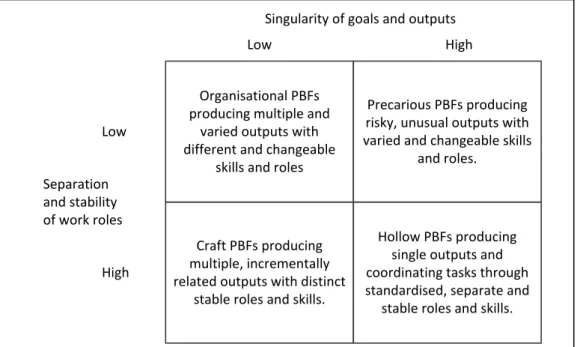
Figure 3.4: Types of Project Based Firms (PBFs). Source: (Whitley, 2006) ... 52
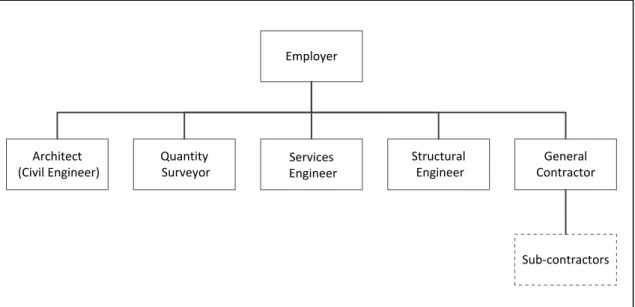
Figure 3.5: TMO configuration in traditional, general contracting. Source: Adapted from Murdoch and Hughes (1997) ... 58
Figure 3.6: The vicious circle of construction procurement. Source: (Curtis et al., 1991) ... 59
Figure 3.7: TMO configuration in Design and Build. Source: Adapted from Murdoch and Hughes (1997) ... 60
Figure 3.8: TMO configuration in construction management. Source: Adapted from Murdoch and Hughes (1997) ... 60
Figure 3.9: TMO configuration in management contracting. Source: Adapted from Murdoch and Hughes (1997) ... 61
Figure 3.10: Conceptual model of strategic alignment of TMOs ... 68
Figure 4.1: The subjective – objective dimensions: Source: Burrell and Morgan (1979) ... 71
Figure 4.2: Overview of the research design ... 85
Figure 4.3: Basic Types of Design for Case Studies. Source: Adapted from Yin (2014) ... 90
Figure 5.1: Within-case analyses chapter structure ... 114
Figure 5.2: Case study A - TMO Structure ... 117
Figure 5.3: Causal network diagram Case Study ... 130
Figure 5.4: Case Study B - TMO Structure ... 136
Figure 5.5: Case Study B, Causal Network Diagram ... 146
Figure 5.6: Case study C - TMO Structure ... 151
Figure 5.7: Causal Network Diagram - Case Study C ... 161
Figure 5.8: Case D TMO Structure ... 167
Figure 5.9: Causal Network Diagram Case D... 178
Figure 6.1: Process of Cross Case Analysis ... 184
Figure 6.2: Transformational process from temporary to permanent organisation ... 207
Figure 6.3: Model of project success within a TMO ... 209
Figure 6.4: Strategic value of project success over time... 215
LISTS OF TABLES
Table 3.1: Characteristics of transformational and transactional leaders. Source:
Adapted from Bass (1990) ... 46
Table 3.2: Points for research into the client role in construction management. Source: Adapted from Cherns and Bryant (1984) ... 55
Table 4.1: Network of Basic Assumptions Characterizing The Subjective - Objective Debate within Social Science. Source: Morgan and Smircich (1980) ... 72
Table 4.2: Research Methodology. Source: Adapted from Remenyi et al. (1998) ... 78
Table 4.3: Components of Case study design. Source: Yin (2014) ... 83
Table 4.4: Process of theory building from case study research. Source: Eisenhardt (1989b) ... 84
Table 4.5: Definitions and Examples of Case Study Types. Source: Adapted from Baxter and Jack (2008)... 87
Table 4.6: Cases, units of analysis and embedded units of analysis. ... 90
Table 4.7: Validation and reliability tactics applied within the research ... 92
Table 4.8: Summary of cases studies forming the research ... 95
Table 4.9: Summary of case study protocol ... 96
Table 4.10: Triangulation methods pursued in data collection stage ... 98
Table 4.11: Participant groups for data collection ... 102
Table 4.12: Number of interviews within each case data ... 102
Table 4.13: Secondary data types used in study... 103
Table 4.14: Comparison of data models of data analysis. Source: Creswell (2007) ... 104
Table 4.15: Summary of initial coding set ... 108
Table 5.1: Case studies informing the research... 115
Table 5.2: Structure of each case study report ... 115
Table 5.3: Case A: time-ordered display of key events ... 116
Table 5.4: Case B: Summary of key events ... 135
Table 5.5: Case C: Summary of key events ... 150
Table 5.6: Case D: Summary of key events ... 166
Table 6.1: Summary of Case Study Characteristics ... 185
Table 6.2: Hierarchy of strategic objectives within a TMO ... 189
LIST OF RELEVEANT PUBLICATIONS BY THE CANDIDATE
Haniff A.P. & Fernie, S (2008) Projects: Where strategies collide. In Proceedings of the CIB 2008 Conference “Transformation through Construction” 15-18 November 2008, Dubai
Haniff, A.P & Ogunlana, S (2015) Strategic alignment within a TMO: Perceptions of project success. In Proceedings of ARCOM 31st Annual Conference. University of
Lincoln 7th-9th September 2015
Haniff, A.P & Ogunlana, S (2015) ‘Towards a Theory of temporary multi-organizations: Implications for project success’ in Proceedings Paper for the Engineering Project Organization Society. University of Edinburgh 24th-26th June 2015
LIST OF ABBREVIATIONS
APM Association for Project Management
CDM Construction Design and Management coordination CGI Computer Generated Imagery
HMO House in Multiple Occupation ID Interpretation Design
JMC Joint Main Contractor JVC Joint Venture Contractor MC Management Consultant M&E Mechanical Engineering
OGC Office of Government and Commerce PBF Project Based Firm
PM Project Management
PMC Project Management Consultant PMI Project Management Institute QS Quantity Surveyor
SBU Strategic Business Unit
TRPM Technical Services Project Management TMO Temporary Multi-Organisation
CHAPTER 1
INTRODUCTION
1.1 Introduction to thesis
Current research into the alignment of projects with organisational strategy has predominantly focused on the formation and implementation of strategic objectives within the boundary of a single organisation. Within the construction industry, the temporary organisation, created by a client organisation to implement the construction project, is formed from multiple organisations that are brought together to engage in a single endeavour. This creates a situation whereby multiple strategic objectives, and hence, multiple perceptions of project success, are pursued at any one time. The research within this thesis sets out to investigate how varied organisations that comprise a Temporary Multi-Organisation (TMO) seek to align multiple strategic objectives within the context of a single construction project, and realise project success. In pursuit of this aim, the research explores the complex interactions, processes, influences and constraints that occur when multiple organisations engage within a construction project.
This introductory chapter provides the background to the field of study, summarising the theoretical perspectives considered within the research and the purpose of the study. This is followed by an explanation and statement of the research problem addressed within the thesis. The significance of the research, including contribution to theory, is discussed. A statement of the research aims and objectives is presented, together with a brief overview of the research methodology. The chapter concludes with an outline of the structure of the thesis, demonstrating how the aims and objectives of the research are achieved.
1.2 Background to study
The significant growth in project management across different industries has seen projects become an integral component of an organisation’s strategic operations. This wider adoption of project organising has not only generated new business practices, but also challenges the common perceptions of project success. Projects are no longer perceived as endeavours to provide tangible products or results. Rather, projects are now viewed as vehicles for business transformation, continuous improvement, organisational change, value creation and implementation of strategic objectives (Winter et al., 2006a; Winter et al., 2006b; Maylor, 2001). Traditionally, a project was
deemed successful if it achieved the project scope within the predetermined schedule, budget and quality constraints (Oisen, 1971). Within the strategic management domain, a project is successful when it enables the realisation of an organisations, long-term, strategic aspirations (Shenhar et al., 2001).
Central to the discussion of projects to implement organisational strategy, is the concept of strategic fit. This considers the degree of alignment that exists between the competitive environment and organisational conditions (Ginsberg and Venkatraman, 1985). Within the project environment this involves either, ensuring that projects, selected for implementation, fit with the strategic objectives of the organisation (Cooper et al., 1999; Aalto, 2000; Meskendahl, 2010), or that the project management processes are appropriately aligned to realise the organisations business strategy (Milosevic and Srivannaboon, 2006; Joshi et al., 2003).
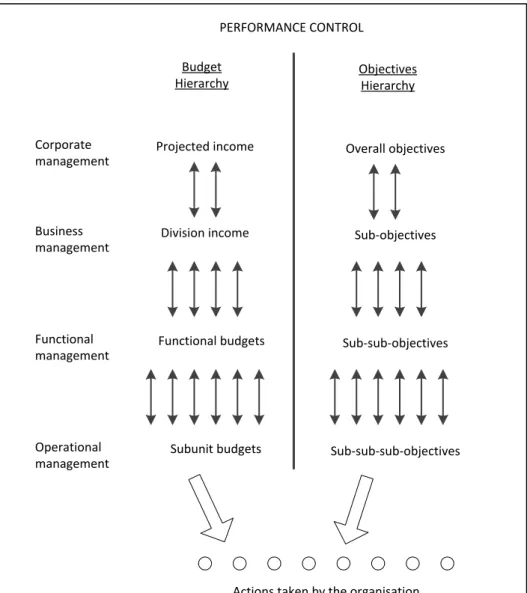
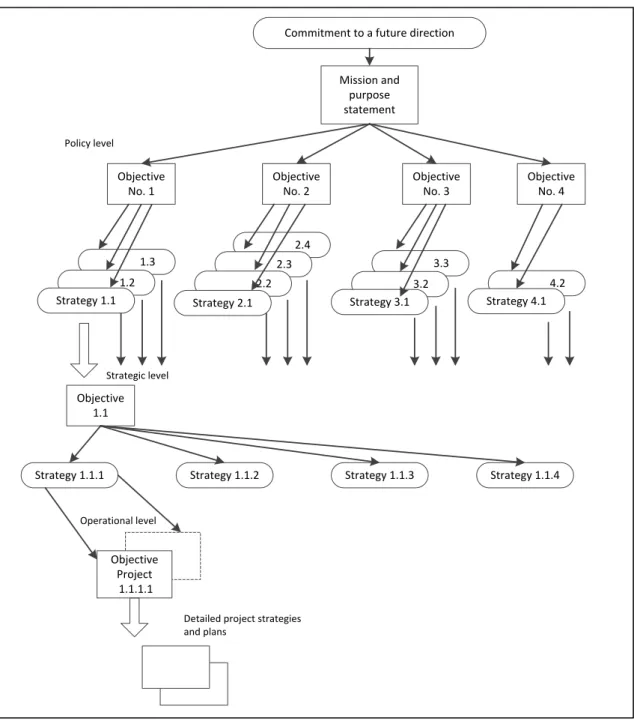
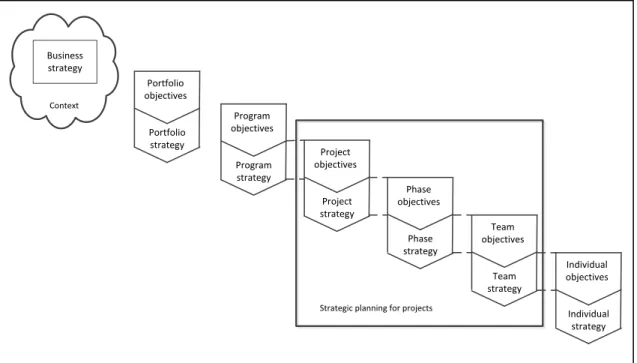
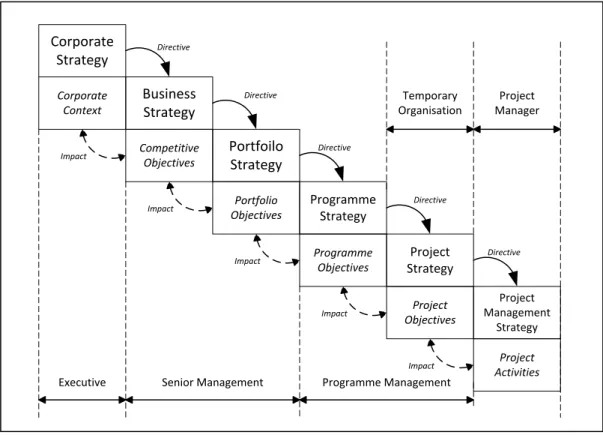
Following Hofer and Schendel’s (1978) suggestion that strategy be constrained by the upper level within a strategic hierarchy, the proposition is made that alignment of a project with an organisation’s strategic objectives is achieved by setting strategy at the corporate level and cascading down through strategic and operational levels, to be implemented as projects (Archibald, 1988; Youker and Brown, 1998). Kerzner (2001) presents a hierarchy illustrating how corporate strategic plans flow horizontally across strategic business units to support plans and budgets. Whereas, Morris and Jamieson (2004) show how organisations position their programmes and projects to achieve strategic objectives.
However, it is recognised that strategy occurs at differing levels in an organisation, and that each level will have its own, distinctive and often competing, strategic intentions (Turner, 1999; Haniff and Fernie, 2008; Morris and Jamieson, 2005). Subsequently, stakeholders at each level of a strategic hierarchy are likely to focus on the unique strategic objectives developed in response to the specific environmental conditions in which it competes. As the filtering of strategic objectives from the corporate to the project level involves a number of complex interactions, processes, customers and varied strategic constraints, it is proposed that organisational strategies formulated at the corporate level will be subject to incremental, internal and external influences before, and during, implementation as a project.
1.2.1 Temporary organisations
The strategic stream in project management research has also renewed interest into project organisational structures and how they are coordinated to achieve project success. Whereas during the 1970’s, research focused on organisational behaviour and matrix organisations (Knight, 1976), more recent research has concentrated on the examination of projects as temporary organisational forms (Lundin and Soderholm, 1995; Jacobsson et al., 2015; Bakker, 2010; Turner and Muller, 2003). Termed to reflect their transitory nature, the dominant discourse makes the assumption that temporary organisations are formed within the organisational boundary of a permanent organisation to manage complex organisational tasks (Turner and Muller, 2003; Packendorff, 1995; Goodman and Goodman, 1976).
A consistent theme within the literature has been on defining the characteristics of a temporary organisation and justifying their existence (Miles, 1964; Bennis and Slater, 1968; Goodman and Goodman, 1976; Miles, 1977; Soderlund, 2004a; Jacobsson et al., 2015). Lundin and Soderholm (1995) present a theory of temporary organisations demarcating between permanent and temporary organisational behaviour. Developed as an opposing model to Cyert and March’s (1963) behavioural theory of the firm, Lundin and Soderholm (1995) identify four concepts of limited time of the project, the task that must be accomplished, the team that is formed around that task, and the transition as a result of the task, which determines the behaviour of temporary organisational actors.
1.2.2 Temporary multi-organisations
Following Lundin and Soderholm’s (1995) much cited framework, there has been a growth of studies exploring intra-organisational temporary systems (Bakker, 2010; Turner and Muller, 2003; Jacobsson et al., 2015). Conversely, discourse on temporary systems involving inter-organisational relationships has not received the same attention. Instead, the assumption is made that many of the propositions underpinning Lundin and Soderholm’s (1995) basic concepts apply to all temporary organizational types. However, within the construction industry, the temporary organisation is not formed within the boundaries of a single parent organisation. Rather, it operates within an environment of overlapping organisational boundaries where multiple organisations simultaneously seek to ensure their own organisational strategies are realised through a single project. Within a construction project, the composition of the temporary system typically consists of multiple firms, each making representation on a single endeavour.
Defined by Cherns and Bryant (1984: 181) as a “temporary multi-organisation”, typical membership includes consultants, contractors, sub-contractors and suppliers, with a client system that is itself organisationally complex. Not only do these actors participate in the project, but as key stakeholder, also have significant influence over project related decisions (Cleland, 1998).
It is the fundamental differences between inter and intra-organisational types that have implications for the pursuit of strategic alignment and the measurement of project success. Firstly, actors within TMOs are brought together under contractual conditions to provide specific elements of management, services or resources to deliver a facility on behalf of a client body. Hence, much of the research into TMO relationships focuses on procurement strategies (Lizarralde et al., 2011). Secondly, the inter-organizational nature of TMOs often results in actors having different levels of expertise, overlapping areas of responsibilities and disparate strategic objectives (Jones and Lichtenstein, 2008). Thirdly, engagement in a construction project is over different points in time and changes throughout the project lifecycle as specific organisational services or resources are required (Cherns and Bryant, 1984). Consequently, actors within a TMO are never fully integrated, either within or between organisations involved in a construction project (de Blois and Lizarralde, 2010).
1.2.3 Strategic alignment of projects
The most important distinction with regards to the strategic alignment of projects, concerns the degree of autonomy a project has in relation to the client organisation (Lampel and Jha, 2004). The dominant discourse within the literature makes the assumption that temporary organizations are subordinate to a single parent organisation and will serve as an ‘obedient servant’ to the parent organisation, as its most important stakeholder (Artto et al., 2008). The notion is that strategic objectives formulated at the upper levels of the strategic hierarchy are fixed for the subordinate, temporary organisation to implement as directed. Alignment within this context is measured on how well the project management process supports the parent organisation’s strategy (Srivannaboon, 2006). In contrast, within any given construction project, there exists a number of organisations that are guided by their own strategic objectives, organisational structure, individual set of stakeholders and own rationale for participating in the TMO, from which varied perceptions of project success will be measured. Consequently, it is unlikely that the activities of the TMO will be constrained to the strategic directives of a
single parent organisation. Instead, it is proposed that the TMO will be in a state of compromise and negotiation as it seeks to align the project with multiple organisational strategies.
In considering the argument above, this thesis sets out to address an important gap in construction management research, by investigating how individual organisations, that comprise a TMO, seek to align multiple strategic objectives through a single construction project. In considering the complex interactions that occur between organisations within a TMO and the complexity of strategy itself (Hambrick, 1983; Mintzberg et al., 1998), it is proposed that alignment of an organisation’s corporate strategy with the implementation of a construction project will not be as prescriptive as current literature assumes. Instead, project success will be subjective and will follow a complexity of strategic influences.
1.3 Research problem
This thesis identifies three related problems that are addressed through the research, leading to a problem statement in Section 1.3.4. The first considers the limitations of current studies into the strategic alignment of projects. The second considers the nature of the construction industry, in respect to the alignment of strategic objectives. The third problem considers the difficulty in reaching agreement on project success, when multiple organisations engage in a single construction project.
1.3.1 Current studies of strategic alignment of projects
As previously discussed, the dominant discourse explores the strategic alignment of projects within the intra-organisational context (Milosevic and Srivannaboon, 2006; Skulmoski and Hartman, 2000; Ritson et al., 2012). Of the models that have been developed explaining how strategic objectives are implemented through a project, focus has been on the inherent constraints within a single organisational hierarchy (Morris and Jamieson, 2004; Turner, 1999). More often, implementation of strategy is seen as a deliberate process where strategy is articulated at a higher level of an organisation and realised at the project level, through operational detail and tactical adjustment (Archibald, 1988; Youker and Brown, 1998). However, within a project environment the strategic plan is rarely acted upon in a prescriptive manner as models suggest and most strategic actions manifest themselves in a more, haphazard, process (Hauc and Kovac, 2000).
The underlying assumption made within a strategic hierarchy is that strategy involves clear communication of strategic intentions and objectives, against which line managers devise their own operating targets and plans (Snow and Hambrick, 1980). Consequently, the strategy implementation process is entrusted to the organisations internal systems and procedures (Mintzberg and Waters, 1985; Hrebiniak and Joyce, 1985), and in the form of projects becomes the responsibility of the project manager, who typically has little involvement in the strategy formation process (Pellegrinelli and Bowman, 1994). It is this gap between formulation and implementation that is considered to be the main deficiency in most strategic planning processes (Grundy, 1998). Also, because such a separation hinders the rapid implementation of business strategies and ignores emergent influences (Crawford, 2005).
Mintzberg (1994) proposes that strategies emerge over time, rather than being a deliberate course of progression. Although, most projects follow some form of strategic planning process, strategy may not be realized in a ridged or formal manner as the higher levels of the hierarchy assumes (Mintzberg and Waters, 1985; Morris and Jamieson, 2004). Typically, the realisation of strategy is subject to external forces (Porter, 1985) and internal influences (Rumelt, 1974). As such, strategic objectives developed at one point in time, at a specific hierarchical level, will be subject to incremental deviations in response to external and internal pressures at each stage of the strategic hierarchy. Despite this, current models demonstrating how organisational strategy is translated through a project, do not take into consideration external or emergent strategic influences.
1.3.2 Strategic alignment of projects within the construction industry
In comparison to temporary organisations within an intra-organisational context, there has been relatively little research considering the strategic alignment of projects within the construction industry. Previous studies have investigated the competitive strategies of construction organisations through business level and project management processes (Tan et al., 2012; Meredith and Chinowsky, 2000; Budayan et al., 2015), but studies investing the pursuit of the strategic aspirations of multiple organisations participating in a single construction project remain sparse. Unlike projects operating within single organisational boundary, the TMO operates in an environment of overlapping organisational boundaries, where multiple strategic hierarchies converge. Within the construction industry, a single construction project represents a strategic investment for
a number of organisations. This not only includes the investment decision of the client to develop a facility as part of a wider organisational strategy, but also the strategic decisions of the consultants and contractors to commit recourses to a specific project in order to achieve specific competitive advantages.
Current research within TMOs tend to focus on formal procurement strategies and contractual relationships, as mechanisms to maintain alignment with the client’s strategic objectives (Lizarralde et al., 2011). But, even in themselves, procurement systems provide strong evidence of the predominance of the single project perspective (Blismas, 2001). Whereas, procurement strategies provide formal conditions of responsibility of each organisation participating in the project, they do not determine the strategic behaviours of individual TMO actors. As a result of the uncertainty, high risk and problems associated within a project environment (Lau and Rowlinson, 2011), coupled with the partial engagement of TMO actors over time (Cherns and Bryant, 1984), behaviours within the TMO are likely to evolve and change over the duration of the project.
This creates difficulties for the notion of strategic alignment within the context of a TMO. At the operational level of any given construction project there exist a significant number of stakeholders in the form of the project team, who differentiate in terms of skills, professional body and loyalty to ones own firm (Walker, 2007). Moreover, the consequences of fragmentation between parties has been discussed by Latham (1994) and confirmed in Egan’s (1998) report, which views the construction industry as:
“…typically dealing with the project process as a series of sequential and largely separate operations undertaken by individual designers, constructors, and suppliers who have no stake in the long-term success of the product and no commitment to it” (Egan, 1998: 13)
TMO actors develop personal conflict of allegiances, not only to the client, but also to their employer, professional body and bounded rationality (Cyert and March, 1963). As each team member is commonly employed by different organisations there does not exist one organisational strategy, rather there exists a number of strategies, all being pursued at any one time.
1.3.3 Project success
A further difficulty deriving from procurement processes is that success of the project is constrained to the efficiency of the TMO in delivering the project within time, cost and quality objectives as stated in the conditions of contract. Whereas, efficiency in managing projects may contribute to project success, it does not necessarily result in the project being successful (De Wit, 1988). This is due to the subjective nature of success (Pinto and Slevin, 1988), and the notion that varied stakeholders within a construction project have different opinions on what constitutes an effective project and make assessment on varied, often subjective, criteria (Freeman and Beale, 1992; Belassi and Tukel, 1996).
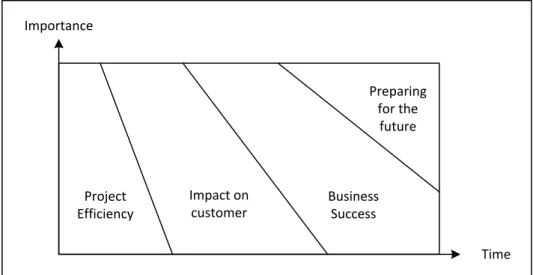
In considering the multiple stakeholders that have an interest in a construction project, there is a high likelihood that there will be a difference in the perception of project success within and between organisations participating in the project. Whereas, members of the temporary organisation are likely to measure success on the efficient implementation of project processes, members of the parent organisation are likely to measure success on the contribution the project makes to the individual levels within the client hierarchy, and to the long-term strategic objectives of the business (Shenhar et al., 2001; Baccarini, 1996).
1.3.4 Problem statement
Therefore, the research problem addressed in this thesis is stated as follows:
The construction industry presents a situation where multiple organisations seek to align multiple strategic objectives through a single a project. Consequently, the realisation of organisational strategy, and project success, will be influenced by factors internal and external to the TMO.
The literature review, methodology, data collection and data analysis within this thesis, are designed to address the research problem, as stated.
1.4 Research significance
Through investigation into the strategic alignment of a TMO, this thesis contributes to theory and research in the following areas:
1.4.1 Contribution to temporary organisational theory
Since publication of Lundin and Soderholm’s (1995) seminal paper introducing a theory of temporary organisations, there has been a number of studies exploring the temporary
organisational form within the intra-organisational context (Bakker, 2010; Janowicz-Panjaitan et al., 2009; Bechky, 2006). In contrast, research into the inter-organisational context of temporary organisations has been relatively sparse. This is despite Cherns and Bryant’s (1984) publication defining the basic characteristics of a TMO and providing guidance for research into the temporary organisational form, being introduced into the literature eleven years before Lundin and Soderholm’s (1995) theory of temporary organisations. Through empirical study, this research examines the unique strategic behaviours of TMO actors within the themes of time, task, team and transition, thereby extending knowledge of temporary organisations to greater consideration of inter-organisational implications. At the same time, TMO characteristics, as defined in Cherns and Bryant’s (1984) pilot study, are empirically examined.
1.4.2 Contribution to theories of strategic fit
Current models of alignment explain how strategy is set at the corporate level of a parent organisation and implemented by a temporary organisation created within the organisational boundaries of a single organisation. In contrast, within any given construction project there exist a number organisations that are influenced by their own strategic objectives, organisational structure, individual set of stakeholders and strategic rationale for joining the TMO. To date, a definitive model explaining how multiple organisations align strategic objectives through a single construction project has not been presented within the literature. It is argued that within the context of a construction project, strategic alignment will be significantly more complex than within an intra-organisational context. This is not only as a result of the increased number of stakeholders, but also the intra-inter originations relations (Lizarralde et al., 2011), the complexity of the client system (Cherns and Bryant, 1984), environment conditions (Porter, 1980), the varied perceptions of project success (De Wit, 1988), and the strategic behaviours of actors within a temporary organisation (Lundin and Soderholm, 1995).
1.4.3 Contribution to understanding of project success
The third contribution to theory concerns the perceptions of project success. Despite the abundance of studies investigating the success of projects, there are actually limited studies considering how success of a construction project supports the strategic objectives of a client organisation. Most studies considering project success tend to focus on success factors that need to be in place for success to be realized, with less
research into the criteria on which success should be measured (Ika, 2009). Based on the proposition that strategy occurs at different levels within an organisation (Hofer and Schendel, 1978), and that varied stakeholders will have different perspectives of project success (De Wit, 1988), this thesis makes contribution to theory, by identifying the varied perceptions of project success within the context of a construction project, and establishing how these link to the realisation of strategic objectives.
1.5 Research aims and objectives
In considering the research problems established in Section 1.3, and the contribution to theory affirmed in Section 1.4, the aim of this thesis is to investigate how varied organisations within a temporary multi-organisation seek to align multiple strategic objectives through a single construction project, and realise project success. This will be explained through a theoretical model of strategic alignment within the context of a TMO, as an alternative to models explaining strategic alignment within the context of a single organisation. To address this aim, the following research objectives of the study are pursued:
Objectives 1: Explore how multiple organisations within a TMO align varied strategic objectives through a single construction project.
Objective 2: Examine the effectiveness of mechanisms implemented to maintain alignment of strategic objectives.
Objective 3: Explore the strategy of the TMO in the pursuit of the varied organisational strategies inherent within a TMO
Objective 4: Explore the linkages between project success and the intended strategic objectives of TMO actors.
1.6 Methodology
The research within this thesis can be characterised as exploratory within the context of construction management and strategy. The aims and objectives of the research are presented in Section 1.5 and an outline and structure of the thesis is presented in Section 1.7. The research questions informing the study were developed from gaps identified within the current literature, presented in Chapter 3. The methodology and research
approach designed to address the research questions and research objectives are detailed in Chapter 4.
A multiple case study design, using replication as the underlying logic (Yin, 2014; Eisenhardt, 1989b) was developed to provide the empirical data to achieve the aims and objectives of the thesis. Cases studies were selected through purposeful sampling using pre-defined criteria. Four case studies, comprising of recently completed construction projects within the public sector and used to provide data for the research. Data within each case study was formed from a combination of collection methods, which included semi-structured interviews, archives and documentation. Triangulation was achieved through multiple sources of evidence. Interviews were conducted at the micro level between actors within each TMO and at the macro level between organisations participating within the TMO, including key stakeholders within the client organisations. To ensure reliability, all interviews were professionally transcribed and managed using NVivo computer assisted qualitative data analysis software, for coding and analysis.
1.7 Structure of thesis
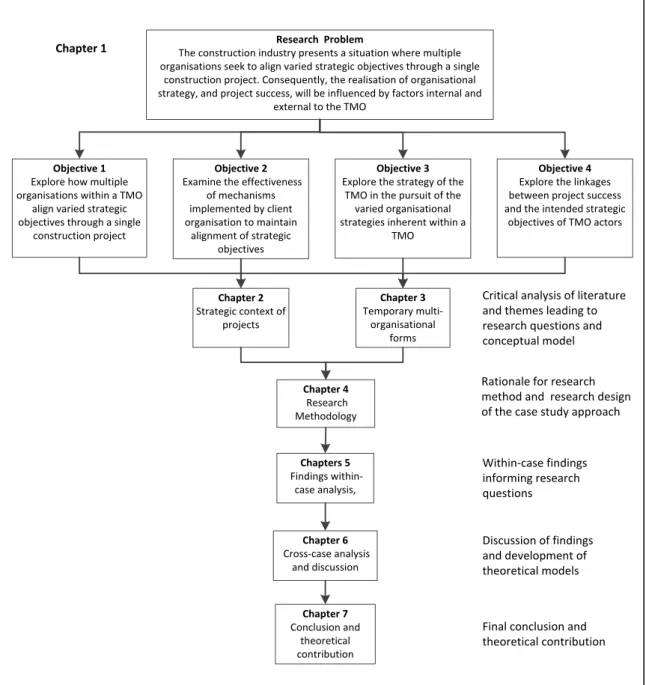
The structure of the thesis, identifying the purpose of each chapter is illustrated in Figure 1.1. An outline of each chapter is as follows:
Chapter 1 provides the background to the field of study, summarising the theoretical perspectives considered within the research and the purpose of study. Research aims and objectives are justified through a discussion of the research problems addressed within the thesis and the contribution the research makes to theory.
Chapter 2 provides the first of two chapters forming the critical analysis of literature and themes explored within the research. This, first chapter positions projects within the context of organisational strategy and provides a review of the extant literature contributing to the strategic alignment of projects. The review includes an overview of the main theoretical models of strategy and examination of the different perspectives to strategic fit from within the strategic management literature, including the concept of the hierarchy of strategic objectives. To position the study within the contemporary literature, a short history of project management research is
presented, introducing the strategic stream of project management research. This is followed by a critique of current models explaining the strategic alignment of projects and an introduction to the concept of project strategy.
Chapter 3 provides a review of the extant literature on temporary organisational forms that are created to implement organisational strategy through projects. In particular, the review focuses on the behaviour of temporary multi-organisations within the construction industry. The chapter presents a review of the early discourse on temporary systems from within the organisational behaviour literature, before providing a critique of Lundin and Soderholm’s (1995) basic concepts that contribute to the theory of temporary organisations. Variations of temporary organisational forms are explored before defining a TMO. Following Cherns and Bryant’s (1984) study, the issues of client complexity within the context of the construction industry are discussed. The examination of TMOs concludes by investigating the role of procurement strategies and governance mechanisms in the strategic alignment of projects. Finally, a discussion of research gaps, research questions and a conceptual model, to guide the methodology of the study, is presented.
Chapter 4 describes the rationale for the research method pursued within this study. This includes a discussion of the philosophical assumptions that influence the methodological choice. Justification for the case study research approach is provided, along with a detailed description of the research design guiding the data collection and analysis. The methods of data collection utilised within the research are discussed with an explanation of the instruments used to analyse the collected data, and from which conclusions are drawn from the findings. Finally, the principle of ethical research relevant to the thesis are considered and discussed.
Chapter 5 is the first of two chapters reporting the empirical findings and analysis from the collection of data. Through a process of within-case analysis, this chapter offers an in-depth investigation into each of the four cases. For the purpose of replication logic, each case is segmented in specific themes, which are used to address the research questions of the study. These include the structure of the TMO, an examination of the strategic objectives, mechanisms implemented to maintain alignment of strategic objectives, internal and external influencing factors, an
examination of the project strategy, and an enquiry into the varied stakeholder perception of project success.
Chapter 6 discusses the findings through the process of cross-case analysis, based on the a priori themes identified within literature review and a posteriori themes emerging from the findings. Themes are explored and examined in relation to the research objectives of the study. Two important models, developed from the analysis, are presented to address the aims of the thesis. The first is a model of project success identifying the varied perceptions of project success within a TMO, and the implications for strategy alignment. The second is a model of strategic alignment within the context of a TMO, which explains the complex interactions, internal and external influences, and the strategic behaviours of TMO actors, that determine the strategy of the TMO in pursuit of project success and realisation of strategic objectives.
Chapter 7 presents the final conclusions of the research. This chapter begins with a review of the aims the study and an explanation of how each of the research objectives were achieved. A discussion of the theoretical and practical contributions is also presented. In reflecting upon the limitations of the study, recommendations for future research are proposed.
Figure 1.1: Structure of thesis
1.8 Conclusion to chapter
This introductory chapter provides the general context of the thesis, summarising the theoretical perspectives considered within the research and justification for the study. The research aims and objectives are stated, with an outline of the structure providing guidance as to how the aims and objectives of this thesis will be achieved. The following chapters develop the theoretical context through a review of the literature and the development of conceptual diagram to guide the methodology of the study.
Chapter 4 Research Methodology Chapter 2 Strategic context of projects
Critical analysis of literature and themes leading to research questions and conceptual model Chapters 5 Findings within-case analysis, Chapter 3 Temporary multi-organisational forms Chapter 6 Cross-case analysis and discussion Chapter 7 Conclusion and theoretical contribution Research Problem
The construction industry presents a situation where multiple organisations seek to align varied strategic objectives through a single
construction project. Consequently, the realisation of organisational strategy, and project success, will be influenced by factors internal and
external to the TMO
Objective 1
Explore how multiple organisations within a TMO
align varied strategic objectives through a single
construction project
Objective 2
Examine the effectiveness of mechanisms implemented by client organisation to maintain alignment of strategic objectives Objective 3
Explore the strategy of the TMO in the pursuit of the
varied organisational strategies inherent within a
TMO
Objective 4
Explore the linkages between project success and the intended strategic
objectives of TMO actors
Rationale for research method and research design of the case study approach
Discussion of findings and development of theoretical models
Final conclusion and theoretical contribution Within-case findings informing research questions
CHAPTER 2
THE STRATEGIC CONTEXT OF PROJECTS
2.1 Introduction to chapter
This chapter is the first of two forming the critical analysis of literature and themes explored within the study. The chapter positions projects within the context of organisational strategy and provides a review of the extant literature contributing to the strategic alignment of projects. The review commences with an overview the main theoretical models of strategy. This is followed by examination of the different perspectives to strategic fit from within the strategic management literature. The concept of the hierarchy of strategic objectives is then introduced. The second part of the chapter provides a summary of the evolution of project management and the move towards implementing strategy through projects, before presenting a critique of current models of strategic alignment of projects. Finally, the chapter concludes by introducing the concept of project strategy, exposing the challenges of aligning projects with organisational strategy.
2.2 The nature of strategy
A significant number of scholars find a lack of consensus for the definition of ‘strategy’ within the literature (Hofer and Schendel, 1978; Chaffee, 1985; Bourgeois, 1980; Shirley, 1982). Hambrick (1983) proposes that this lack of consistency is due to two factors; firstly, that strategy is multidimensional in character, and secondly, strategy is situational and varies by industry. Chaffee (1985) also suggests that the lack of consensus regarding a definition is due to the pluralistic nature of strategy and the fact that various models exist to explain the concept. To explore the varied perspectives, the review draws a comparison between Chaffee’s (1985) three models of strategy and Mintzberg’s (1987) classification.
2.2.1 Chaffee’s three models of strategy
Chaffee (1985) suggests that the term ‘strategy’ refers to three mental models of ‘linear’, ‘adaptive’ and ‘interpretive’. The focus of the ‘linear’ model is on long term strategic planning. This focus on planning is also inherent in Chandler’s (1962) definition as “the determination of the basic long-term goals of enterprise and the adoption of courses of action and the allocation of resources necessary to carry out these goals” (Chandler, 1962: 13). Within this perspective, strategy consists of
decisions, actions and plans delivered in a sequential and hierarchical process. Chaffee (1985) advises that it is this model that forms the foundations of strategic planning where conceptually, managers at every level of the hierarchy must agree on a detailed, integrated plan of action for the coming year (Lorange and Vancil, 1976). This is despite Mintzberg’s (1994) observation that the commitment required at each level of the hierarchy, together with the lack of flexibility required by strategic thinkers, resulted in a shift away from strategic planning by the mid 1970’s.
The ‘adaptive’ model is characterised by Hofer (1973) as being “concerned with the development of a viable match between the opportunities and risk present in the external environment and the organisations capabilities and resources for exploiting these opportunities” (Hofer, 1973: 3). Within this perspective the organisation is expected to define its relationship to its environment in the pursuit of objectives (Bourgeois, 1980). This requires constant monitoring of the external environment and making simultaneous internal changes. Therefore, the key premise of the ‘adaptive’ model is that strategy should favourably ‘match’ the business with its environment (Andrews, 1971; Porter, 1980; Hatten and Schendel, 1977). However, whereas the ‘adaptive’ model assumes that the organisation must change with the environment, Miles and Snow (1978) argue that strategy is relatively fixed and therefore constrains the organisation in its response to environmental changes. Despite this, the ‘adaptive’ model goes someway towards explaining the complexity of the changing environment and is consistent in current models of strategy formation (Lynch, 2006; Pearce and Robinson, 2003; Grant, 2005).
The third model in Chaffee’s (1985) definition is the ‘interpretative' strategy. This view is based on the social contract that portrays the organisation as a collection of cooperative agreements entered into by individuals with free will. Within the ‘interpretative’ model, strategy becomes a mental process where the organisation’s existence relies on its ability to attract enough individuals to cooperate in mutually beneficial exchange. In contrast to the adaptive model where the environment is defined, the ‘interpretative' model manages the environment through symbolic actions and communication. Therefore, within this context, strategy becomes an organisational wide activity and is dependant on the motivation of stakeholders to believe and act in ways that are expected, in order to produce favourable results for the organisation. This
is in contrast to the ‘linear’ model where strategy is predetermined by senior management.
2.2.2 Mintzberg’s five P’s for strategy
Mintzberg (1987) presents five dimensions of strategy, which he refers to as the “Five P’s”. These are defined as ‘plan’, ‘ploy’, ‘pattern’, ‘position’ and ‘perspective’. Strategy as a ‘plan’, aligns with Chaffee’s (1985) ‘linear’ model, in that strategy setting involves a deliberate conscious set of guidelines that determine decisions for the future (Mintzberg, 1978). As a ‘plan’, Mintzberg (1987) proposes that strategy can also be a ‘ploy’ defined as a specific manoeuvre intended to outwit an opponent or competitor. The third dimension in Mintzberg’s (1987: 12) framework is strategy as a “pattern in a stream of decisions”, which aligns with Chaffee’s (1985) ‘interpretive’ model. This dimension considers the resulting behaviour of strategy over time. For Mintzberg and Waters (1985), most manifestations of strategy are implicit, fragmented and fluid. A distinction is drawn between deliberate strategies, as those realised as intended, and emergent strategies, which are realised despite, or in the absence of, intention. Mintzberg and Waters (1985) argue that for a strategy to be realised as intended, at least three conditions need to be satisfied. First, there must exist precise intentions of the organisation articulated in a specific level of detail. Second, there must be effective control mechanisms in place to ensure that the intentions are indeed organisational. Third, strategic intentions must be realised exactly as intended, and that no external force could have interfered with them. Therefore, in accepting that organisational strategies emerge unintentionally, it is proposed that the only way of defining strategy is to analyse the strategic actions and results after the event (Mintzberg, 1978).
Mintzberg’s (1987) ‘position’ dimension supports Chaffee’s (1985) ‘adaptive’ model, in that strategy involves locating the organisation within the external environment and seeking a match between the internal and external context (Hofer and Schendel, 1978). Mintzberg (1987) affirms that a ‘position’ can be predetermined through a ‘plan’ or ‘ploy’, but realised through a pattern of behaviour and deployment of resources. Whereas, the ‘position’ dimension considers the external environment, the ‘perspective’ dimension considers the internal environment of the organisation. This includes the internal structures, culture and processes.
Successful implementation of strategy within Chafee’s (1985) ‘adaptive’ model and Mitzberg’s (1987) ‘position’ and ‘perspective’ dimensions are dependant on alignment either between the internal and external environment or within the organisation. This is discussed further in the following section.
2.3 Strategic fit and alignment
The concept of strategic fit has become a central theme within the strategic management literature. Examination of the literature reveals different terms used to define the principle. These include ‘congruence’, ‘match’, ‘consistency’ and ‘alignment’. As a core construct of contingency theory, the basic proposition of strategic fit is that the degree of alignment between organisational and environment conditions has a significant effect on performance (Ginsberg and Venkatraman, 1985). Fry and Smith (1987) advise that, if conditions or organisational components ‘fit well’ then the organisations functions effectively. In contrast, if components ‘fit poorly’ the converse will apply.
Despite the general agreement within the literature regarding the notion of fit, there remains criticism regarding clarification of the concept (Venkatraman and Camillus, 1984; Van de Ven, 1979). This can partially be attributed to the fact that differing views exist of how fit should be achieved and which organisational components or conditions need to be aligned. A review of the literature finds at least three different perspectives to explain the domain of fit. The first perspective focuses on strategy formulation and sees fit as alignment between strategy and the external environment. Fundamental to strategic management, the concept of strategic fit involves aligning organisational resources with environmental opportunities and threats (Andrews, 1971; Chandler, 1962). Drawing on industrial organisation economics (Bain, 1950), Porter (1980) identifies five key industry forces that need to be recognised by the organisation when devising strategy. Whereas, Hatten and Schendel (1977) determined the need to formulate differential strategies through strategic groups within specific industries. Also, in considering the product life-cycle growth rate, Hambrick et al. (1982) studied the relationship between strategy and relative market share.
The second perspective focuses on strategy implementation, and sees fit as alignment between strategy and internal elements. Strategic alignment is achieved by tailoring internal administrative and organisational mechanisms in line with organisational
strategy, with almost no direct reference to external influences (Venkatraman and Camillus, 1984). The dominant theme in this perspective is the strategy-structure relationship. This follows Chandler’s (1962) proposition that a change in strategy requires change in all organisational activities so that the structure of the organisation fits with the new strategic objectives. The salient factor within the strategy-structure perspective is that the strategy is articulated at the outset and alignment is achieved by adapting mechanisms and structure to the articulated strategy (Ansoff, 1965). In considering diversification strategy, Rumelt (1974) related the fit between strategy and structure on performance. Lenz (1980) also found combinations of strategy and structure on high performance firms differed from combinations associated with low performance firms.
However, Venkatraman and Camillus (1984) caution that strategy implementation is more than a fit between strategy and structure. Norburn and Miller (1981) propose a fit between strategy and reward systems. Schwartz and Davis (1981) argue for the need to ensure alignment between strategy, organisation and culture. Whereas, Waterman Jr. (1982) argued for alignment among the seven internal elements of strategy, structure, systems, style staff, skills and subordinate goals, as presented within the McKinsey 7-S framework (Waterman Jr. et al., 1980).
The third perspective takes an integrated approach, where strategic management involves both strategy formulation and implementation, covering both organisational and environmental decisions. Central to this theme is the proposition that there must be alignment between the context, strategy and structure (Galbraith et al., 1986; Venkatraman and Camillus, 1984). Models such as Miles and Snow’s (1978) attempt to specify a relationship between structure, strategy and process by proposing that firms should develop relatively stable patterns of behaviour in order to accomplish alignment with environmental conditions. Nadler and Tushman (1980) take a total systems approach and suggests that fit occurs when each organisational components needs, demands goals and objectives are aligned with other components needs, demands goals and objectives. In considering the ability to realise the value of technologies, Henderson and Venkatraman (1993) present a model of alignment between the market, structure and IT processes. From a management perspective, Chorn (1991) proposes that strategic fit rests on the alignment between the four ‘logics’ of the competitive situation, strategy, culture and leadership. More recently, Carmeli et al. (2010) explores how leadership