INTERNATIONAL MONETARY FUND
Anti-Money Laundering and Combating the Financing of Terrorism (AML/CFT)— Report on the Review of the Effectiveness of the Program
Prepared by the Legal Department (in consultation with other departments)
Approved by Sean Hagan May 11, 2011
Contents Page
Executive Summary ...3
I. Introduction and Background ...4
II. Review of Experience ...6
A. Assessing Compliance with the FATF Standard ...6
Scope of the AML/CFT standard ...8
Cooperation and burden sharing ...11
The FATF‘s International Cooperation Review Group (ICRG) ...12
B. Technical Assistance in the area of AML/CFT ...13
Transition to External Financing for TA ...13
Relationship between assessments and TA...17
III. The AML/CFT Program—The Road Ahead ...17
A. Risk-focused AML/CFT Assessments ...18
B. Treatment of AML/CFT Issues in Modular Stability Assessments and Article IV Surveillance...27
Background, Cases, Analytical, and Conceptual Work ...27
Modular Financial Stability Assessments ...33
Article IV Surveillance ...34
IV. Resource Implications ...37
V. Issues for Discussion...41
Text Boxes 1. The Financial Action Task Force (FATF) ...6
2. The AML/CFT Assessment Methodology...10
3. Technical Assistance on the Regulation of Trade in Precious Metals and Stones ...11
4. IMF AML/CFT TA to Thailand ... 16
5. The Criteria for Identifying the Principles to be Assessed under a Risk-focused, Financial- Sector ROSC ...21
6. Applying International Risk-Management Standards to AML/CFT ...23
2
Figures
1. AML/CFT Staff and Expert Time, FY 2006–FY 2011 (person years) ...38 2. Cost of AML/CFT Technical Assistance ...39 Annexes
1. Jurisdictions‘ Compliance with the AML/CFT Standard ...42 2. Technical Assistance on AML/CFT ...56 3. The Fund Staff‘s Approach to Conducting National Money Laundering or Financing of
Terrorism Risk Assessment ...63 4. Integrating AML/CFT into Modular Stability Assessments and Article IV Surveillance ...80
EXECUTIVE SUMMARY
The Fund’s Anti-Money Laundering and Combating the Financing of Terrorism (AML/CFT) program has significantly contributed to the international community’s response to money laundering and the financing of terrorism. This paper reviews how the Fund‘s AML/CFT program has evolved during the past five years and discusses how the Fund could move forward in this area.
The past five years have witnessed significant changes to the Fund’s AML/CFT technical assistance program. It is now being delivered more strategically than in the past and is almost exclusively funded by external resources. Its central pillar is now the AML/CFT Topical Trust Fund.
AML/CFT assessments have been, and continue to be, an important part of the ROSC and FSAP programs, and rely on close cooperation and coordination with other key players, notably the Financial Action Task Force (FATF) and the World Bank. For the purposes of the FSAP and ROSC programs, the Fund and Bank make use of unique burden-sharing arrangements under which they rely upon assessments conducted by other assessor bodies; these burden-sharing arrangements have generally worked well. Moreover, FSAP policy currently requires that all full FSAPs and FSAP updates incorporate a full AML/CFT assessment; in contrast to other standards that form part of the ROSC program, there is no framework for targeted, risk-focused assessments. The comprehensiveness of the FATF standard and the associated methodology have demonstrable benefits (e.g., by assessing institutional arrangements and effectiveness) but also pose challenges both with respect to jurisdictions‘ compliance (which has been generally low) and the assessment process (which has been relatively time consuming and expensive).
Moving forward, the paper sets out considerations that would form the basis of a way forward in two important areas.
Adopt a targeted (risk-focused) approach to AML/CFT ROSCs. Such an approach
would allow for the conduct of partial AML/CFT assessments focusing on the areas where there is the greatest risk of money laundering or terrorist financing taking place without detection or sanction. The introduction of such a framework would align AML/CFT ROSCs with ROSC policy for other standards. The Executive Boards of the Fund and the Bank could also consider revising the current policy requiring all FSAPs and FSAP updates to include an AML/CFT component; abandoning this mandatory link would further align AML/CFT ROSC policy with practices vis-à-vis other standards and would facilitate a more cost-effective approach to AML/CFT assessments. However, it may signal a withdrawal from the importance that the Executive Boards of the Fund and the Bank have placed on their respective
institutions‘ contributions to this area over the past several years. To the extent that the Executive Boards of the Fund and the Bank were to support a move towards targeted, risk-focused ROSCs and/or a revised policy on linking AML/CFT
assessments to the FSAP, staff of the two institutions would seek to reach agreement with FATF and other stakeholders in the AML/CFT community on the operational
4
implications, which would subsequently be presented to the Executive Boards of the two institutions for approval.
Establish criteria that would be taken into account in determining when AML/CFT
issues may pose risks to the stability of a member’s domestic financial system or to
external stability. These criteria would take into account the member‘s circumstances,
including the relative importance of AML/CFT versus other issues to external and financial stability issues, as well as the risk that AML/CFT issues could have
important spillover effects on other members. These considerations would be used to guide staff in its Article IV surveillance, as well as in deciding whether to include AML/CFT issues in a modular financial stability assessment.
I. INTRODUCTION AND BACKGROUND
1. Over the past decade, the Fund has contributed significantly to the efforts of the international community to combat money laundering and terrorist financing.1The
Fund‘s AML/CFT program now encompasses assessments under the ROSC program of countries‘ compliance with the AML/CFT standard established by the Financial Action Task Force (FATF, see Box 1), the examination of AML/CFT issues in the context of Article IV surveillance, the provision of technical assistance, and research and policy development. 2. The Fund’s AML/CFT program has evolved gradually in line with the
international community‘s response to money laundering and terrorist financing and a growing recognition of the importance of these issues for the Fund.2The evolution of the
Fund‘s AML/CFT program can be traced through a series of Executive Board decisions,3 the
principal features of which are as follows:
1 Money laundering (ML) refers to activities intended to conceal or disguise the origins of the proceeds of
crime; terrorism financing (TF) involves the raising and processing of funds to supply terrorists with resources to carry out their attacks. While the phenomena differ in key ways, they often exploit the same vulnerabilities in financial systems that allow for an inappropriate level of anonymity and nontransparency in the execution of financial transactions. Left unchecked, ML and TF enable criminals to amass wealth, power, and influence, which in turn undermine the rule of law and have a corrosive, corrupting effect on society and the economic system. AML/CFT controls, when effectively implemented, mitigate the adverse effects of criminal economic activity and promote integrity and stability in financial markets.
2 At the time the Fund first considered contributing to international AML/CFT issues in 2000, the important link
between financial market integrity and financial stability had already been underscored in the Basel Core Principles for Effective Supervision and in the Code of Good Practices on Transparency in Monetary and Financial Policies. ―Financial abuse‖—which was understood to encompass money laundering, financial fraud, tax evasion and avoidance, circumvention of exchange restrictions, connected-party lending, and stock manipulation—was recognized to have potentially negative consequences for a country‘s macroeconomic performance, impose welfare losses, and negative cross-border externalities. See paragraph 15 of ―Financial
System Abuse, Financial Crime, and Money Laundering–Background Paper,‖
(http://www.imf.org/external/np/ml/2001/eng/021201.pdf).
3
World Bank policy on AML/CFT issues has evolved in a broadly similar manner. Indeed, many of the Board papers on AML/CFT policy over the past ten years have been joint products of Fund and Bank staff. As noted below, while the present paper has been issued by Fund staff alone, the proposal set out in paragraphs 30–44 on
In April 2001, following a request from the IMFC, the Executive Board decided that the Fund would play a role in combating money laundering through the provision of technical assistance and the conduct of surveillance under Article IV.
In November 2001, the Executive Board agreed to expand the Fund‘s work to cover the problems of terrorist financing through the provision of technical assistance and the conduct of Article IV surveillance.
In 2002, the Executive Board approved the Fund‘s involvement in the conduct of assessments of country‘s compliance with the FATF AML/CFT standard.
Specifically, the Board agreed to adopt, subject to certain conditions, the FATF standard for the purposes of the ROSC program and to launch a twelve-month pilot program of AML/CFT assessments.
In 2004, the Executive Board decided to make AML/CFT assessments a regular feature of the ROSC program and endorsed the revised FATF standard for this purpose.4 The Board also affirmed the principle that all FSAPs and FSAP updates be
accompanied by an AML/CFT assessment.
In 2006, the Executive Board reaffirmed the principle that every FSAP and FSAP update be accompanied by an AML/CFT assessment and specified modalities under which this principle would be implemented.
3. It has been five years since the Executive Board last reviewed the Fund’s
AML/CFT policy. While the AML/CFT program has enjoyed a number of successes over that period, it has also faced challenges. The purpose of this paper is to review experience with the AML/CFT program and to set out a way forward. It first reviews experience in two of the principal areas of the AML/CFT program—AML/CFT assessments and technical assistance—before discussing potential changes to the program in the area of ROSCs, ―modular‖ stability assessments under the FSAP, and bilateral surveillance under Article IV.
risk-focused AML/CFT assessments is a joint proposal of Fund and Bank staff and will be presented in a Bank staff paper that will be issued to the Bank‘s Executive Board in parallel to the present paper.
4 This requirement also applied to the conduct of assessments under the Fund‘s Offshore Financial Center
(OFC) program. The OFC program was formally incorporated into the FSAP program in 2008. See IMF Executive Board Integrates the Offshore Financial Center Assessment Program with the FSAP, PIN 08/82, July 9, 2008.
6
II. REVIEW OF EXPERIENCE
4. This section reviews the Fund‘s experience with: (A) assessments of countries‘ compliance with the FATF standard and (B) the provision of technical assistance.
A. Assessing Compliance with the FATF Standard
5. AML/CFT assessments are an important part of the joint Bank/Fund ROSC and FSAP programs.5
Since 2004, the Fund has conducted detailed assessments of 34 countries6
against a comprehensive, uniform methodology. These assessments have generated 30
5As noted in IMF Executive Board Reviews the Quality and Consistency of Assessment Reports for Anti-Money
Laundering and Combating the Financing of Terrorism and the Effectiveness of Coordination, PIN 06/72,
June 30, 2006: ―Directors noted that the April 2006 IMFC Communiqué called for ―continued actions by all countries to develop strong programs on anti-money laundering and combating the financing of terrorism, and continued support for comprehensive assessments of these programs within the context of the Financial Sector Assessment Program.‖ Most Directors agreed that every FSAP and OFC assessment (including updates) should continue to incorporate a full AML/CFT assessment.‖
6 Covering assessment missions completed between December 2004 and January 2011.
Box 1. The Financial Action Task Force (FATF)
Membership and network. The FATF was established by the G-7 in 1989. Its membership has grown from 14 countries at its inception to 34 jurisdictions at present. The FATF is complemented by eight FATF-style regional bodies (FSRBs) whose membership comprises an additional 146 jurisdictions.
Recommendations. The FATF‘s 40+9 Recommendations constitute the international standard for AML/CFT. They encompass a broad range of issues including the regulation of services provided by financial institutions and nonfinancial businesses and professions, cross-border movements of currency, the transparency of legal entities, substantive and procedural criminal law, institutional capacity, sanctions, and domestic and international cooperation.
Peer Review, Transparency, and Follow-up. The FATF pioneered the
practice of requiring its members to undergo periodic ―mutual evaluations‖ or peer reviews respecting their implementation of its standard, the publication of the results of the reviews, and the regular discussion of jurisdictions‘ progress in addressing deficiencies. These practices have been followed by other international bodies such as the Financial Stability Board (with respect to implementation of the BCP, IOSCO, and IAIAS principles).
ROSCs,7 of which 27 have been published. The World Bank, the FATF, and the FSRBs have
together conducted an additional 152 assessments that have produced 140 published detailed reports and 23 ROSCs. In their totality, these reports provide a comprehensive baseline of public information on AML/CFT regimes worldwide.
6. The current framework for the conduct of these assessments differs from the rules governing ROSCs in other areas in at least three important respects.
FSAP policy requires that every full FSAP and FSAP update incorporate a full AML/CFT assessment.8 Under FSAP policy, AML/CFT assessments should, to the
extent possible, be conducted within 18 months before or after the relevant FSAP mission and should be conducted approximately every five years.
While the ROSC program itself is entirely voluntary, most Fund members are required to undergo a full AML/CFT assessment approximately every five years and to publish the results by virtue of their membership in FATF or one of the eight FATF-style regional bodies (FSRBs).9
The AML/CFT program incorporates unique burden-sharing arrangements under which the Fund and the World Bank, for the purposes of the FSAP and ROSC programs, make use of assessments prepared, not only by Fund and Bank staff, but also by FATF and the FSRBs, which represents a significant leveraging of the Fund resources allocated to the assessment program. For the purposes of their own ―mutual evaluation‖ exercises, FATF and the FSRBs make use of assessments prepared by the Fund and the Bank.10
7. These rules and arrangements reflect two important features of the AML/CFT program, in particular, in the area of assessments. It is deeply integrated into another program that focuses on members‘ financial sectors—the FSAP. Moreover, it forms part of a broader effort within the international community to combat money laundering and terrorist financing. As such, it relies heavily on close cooperation and coordination with other key players in the AML/CFT community—in particular, FATF and the World Bank.
7 Four additional ROSCs are pending completion of their associated detailed assessment reports. 8
As discussed in greater detail in Section III B below, this requirement does not apply to modular financial stability assessments that are conducted on a voluntary basis or on a mandatory basis in the context of Article IV surveillance.
9 Only 22 Fund members are not part of the FATF/FSRB network. 10
These burden-sharing arrangements have been in place since July 2002 when the Fund began its 12-month pilot program of AML/CFT assessments. The ROSCs that are produced by other assessor bodies are, in each case, subject to a pro forma review by Fund staff.
8
8. The Fund’s experience with the AML/CFT assessment program points to several important lessons. They relate to three issues: (i) the comprehensiveness of the FATF standard and the assessment process; (ii) burden-sharing arrangements with other assessor bodies; and (iii) the use of Fund assessments in the context of FATF initiatives to deal with ―non-cooperative jurisdictions.‖ Each of these is reviewed below.
Scope of the AML/CFT standard
9. The FATF standard and the associated assessment methodology are comprehensive and exacting. As money laundering and terrorist financing can occur through many different avenues in different sectors of the economy, the standard itself has become equally broad in scope, and broader than standards in other areas that relate to relatively discrete areas of the economy (e.g., banking regulation, the fiscal sector). The scope and depth of AML/CFT assessments also reflect the natural evolution of the FATF‘s peer review process, which over twenty years, has prompted the gradual expansion and refinement of the standard.
10. The comprehensive nature of the standard sets a high benchmark both with respect to country compliance and the assessment process.
Compliance by countries with the standard is low. Of the 161 countries assessed using the current methodology from 2004 to April 2011, full compliance with any principle was rare, occurring in only 12.3 percent of the cases.11 Countries achieved
the second highest score, largely compliant, only 25.5 percent of the time.
Compliance is expensive. To achieve relatively high levels of compliance, countries must invest in building institutions and promote active interagency coordination and international cooperation. It is, therefore, not surprising that relatively high levels of compliance have been achieved by countries with higher per capita income levels and more well-developed frameworks for financial regulation and fighting corruption.12
In contrast, compliance by many emerging market and low-income countries is impeded by a relatively poor understanding of AML/CFT best practices, inadequate budgets for training staff, and the absence of important preconditions (e.g., rule of law, transparency, and good governance) for the effective implementation of AML/CFT measures.
The assessment process itself requires a significant commitment of time and resources, both for the country being assessed and for the assessors (see Box 2).
11
For a complete analysis of global compliance with the AML/CFT standard, see Annex 1.
12
The analysis of global compliance with the AML/CFT standard reveals an absence of correlation, however, between a given country‘s compliance with the standard and its contribution to global drug production, consumption, and trafficking, a crime known to generate significant proceeds that need laundering. See also, C. Verdugo, ―Compliance with the AML/CFT International Standard: Lessons from a Cross-Country Analysis,‖ Working Paper (forthcoming).
The conduct of an AML/CFT assessment is significantly more expensive than ROSCs in other areas.13 To examine the 285 criteria set out in the FATF assessment
methodology, assessor bodies must engage in long missions, extensive interviews with a broad range of representatives of the official and private sectors (both financial and nonfinancial), and protracted follow-up discussions.14 The detailed assessment
reports, upon which ROSCs are based, often exceed 300 pages.15 Nevertheless, the
burden-sharing arrangement with other assessor bodies reduces the cost per
assessment to the Fund, and developed countries—in the context of the recent review of the ROSC program—rated the AML/CFT ROSC as the most useful of all the ROSCs.16
The AML/CFT methodology focuses not just on formal compliance, but also the extent to which the standard is effectively implemented in the relevant country.
This focus on effectiveness is a key driver of the low scores and the resource requirements, but also makes the assessments meaningful in ways that a less costly desk review could not accomplish.
13
See 2011 Review of the Standards and Codes Initiative, Appendix II, para. 4, (http://www.imf.org/external/np/pp/eng/2011/021611.pdf).
14 Fund and Bank staff do not participate in the FATF and FSRB follow-up processes, however, which occur
after the reports have been concluded.
15
As part of the burden-sharing arrangements with the FATF and FSRBs, assessor teams also present Fund assessment reports to the FATF and FSRB plenary meetings for purposes of their peer evaluation programs.
10
The comprehensive nature of the methodology does not always allow assessors to focus on issues that are of the greatest relevance for particular countries. Under current policy, all AML/CFT assessments must be comprehensive and cannot be targeted to the circumstances of individual countries. While this approach was appropriate during the first round of assessments, its usefulness is gradually diminishing. Moving forward, it may force assessors to revisit issues that have already been covered and that may be of limited relevance for a particular country. Moreover, re-examining such issues may divert attention away from more important issues that would benefit from a deeper examination. For example, where a country has a small banking sector with a strong record of compliance but also has
nonfinancial firms (e.g., trust and company service providers) that present significant vulnerabilities, it would appear appropriate to devote relatively little attention to the
Box 2. The AML/CFT Assessment Methodology
The AML/CFT assessment methodology involves an assessment of countries‘ compliance with the FATF AML/CFT standard.
Compared with assessments of other standards and codes, AML/CFT assessments are time consuming and costly for both the assessors and the authorities.
Assessment missions take up to 2 ½ weeks on site and, in the case of the Fund, typically involve teams of 4–6 assessors. Pre-and post-assessment work has taken on average 17 weeks of staff work per assessor.
IMF assessments cost, on average, some $310,000. In contrast, data ROSCs, i.e., the second costliest ROSC, cost, on average, $225,000. However, factoring in the assessments prepared by the other AML/CFT assessor bodies under the existing burden-sharing arrangements, the cost of an AML/CFT ROSC to the Fund (some $112,000) is closer to the average cost for all ROSCs.
AML/CFT assessors must address some 285 criteria and interview officials from many agencies of the government and the private sector (e.g., finance ministry, regulators, customs, law enforcement, prosecutors, financial sector, lawyers, notaries, and casinos).
Assessors review the effectiveness of implementation in addition to the degree to which countries have codified the standard through law, regulation, and administrative procedures.
Detailed assessment reports often exceed 300 pages in length, plus appendices. The recent report on France exceeded 600 pages.
first area and a great deal of attention to the latter.17 The current methodology,
however, requires both areas to be fully covered.
Cooperation and burden sharing
11. The burden-sharing arrangements between the Fund, the World Bank, the FATF, and the FSRBs for conducting AML/CFT assessments have generally worked well. Assessors apply a common methodology and the IMF, World Bank, and FATF have collaborated closely in developing and implementing technical assistance and training programs for assessors and assessed country officials. Assessment reports provide a sound basis for follow-up technical assistance, and the involvement of multiple assessor bodies has enriched the ongoing discussion on possible improvements of the standard and the
assessment methodology.
12. At the same time, burden sharing has given rise to difficulties related to the poor quality of the reports prepared by some assessor bodies. While all assessments examine the same issues, there have been notable differences in the quality of the reports. A study prepared by an independent panel at the request of the Executive Boards of the Fund and the
17 An interesting example of this problem concerns the FATF standard‘s recommendations governing the
regulation of trade in precious metals and stones. In some poorer developing countries with rudimentary banking systems, trade in precious metals and stones can form an important conduit through which money laundering can take place that may give rise to risks that are more serious than those which may arise through the banking system. The Fund has provided technical assistance on these issues to a number of countries in Africa (See Box 3).
Box 3. Technical Assistance on the Regulation of Trade in Precious Metals and Stones
Fund staff recently undertook a risk-focused AML/CFT technical assistance project targeting countries that produce and trade in precious stones and metals in Sub-Saharan Africa. Dealers in precious stones and metals, a relatively recent addition to the list of designated
professions that should be incorporated into a country‘s AML/CFT regime, constitute a particularly relevant category in this region, where precious mineral exports account for a high share of total exports and formal financial systems are underdeveloped. The trade in precious minerals has been linked to illicit financial flows, corruption, drug trafficking, arms smuggling, and the financing of terrorism.
Better regulation and oversight of the precious minerals sector would be very effective in helping countries in Sub-Saharan Africa to combat money laundering and terrorism financing and should also strengthen revenue collection and improve the fiscal positions of the countries in question. After having raised awareness in 13 countries through two regional workshops, the project is now turning to direct and tailored technical assistance to countries of the region.
12
Bank in 2006 pointed to these differences and, while noting the high quality of the reports produced by Fund staff and some other bodies, pointed to significant weaknesses in other cases.18 In the context of the most recent review of AML/CFT policy in 2006, the Executive
Board expressed concern with these problems but recognized the need for the Fund to continue to rely on reports from other assessor bodies, given prevailing budgetary conditions.19 In response to these concerns, and in cooperation with the World Bank and several of the FSRBs, Fund staff has continued to help strengthen the FSRBs by training their assessors, providing comments on their assessment reports, participating in their plenary meetings, and preparing the authorities of countries about to undergo an assessment. Staff has also provided pre-assessment training to officials from 31 countries over the past five years. Many of the relevant assessor bodies have made significant progress in strengthening the quality of their assessments. Nevertheless, improving the quality and consistency of assessment reports remains a work in progress.
The FATF’s International Cooperation Review Group (ICRG)
13. The FATF currently engages in the International Cooperation Review Group or ―ICRG" process to identify and engage with jurisdictions considered ―to pose a
significant risk to the international financial system.‖ This initiative is a ―non-cooperative jurisdiction-type‖ (―NCJ‖) process that applies to FATF members and nonmembers alike. It makes use of Fund and Bank ROSCs in assessing countries‘ compliance with the FATF standard, and it applies both positive and negative incentives to encourage countries to strengthen their AML/CFT regimes. The FATF has issued a series of public statements expressing concern about significant deficiencies in AML/CFT regimes of a small pool of jurisdictions.
14. As explained in the recent review of the Standard and Codes Initiative,20
NCJ processes like the ICRG present challenges to the cooperative and voluntary nature of the ROSC program. In particular, the use of Fund and Bank ROSCs in a process that involves the application of coercive elements may undermine the cooperative nature of the relationship between the Bank and the Fund and their members, as well as the ROSC‘s voluntary approach.
15. Since the ICRG’s inception, Fund and Bank staff have sought to ensure that the ICRG process is conducted in a manner that respects the principles underlying the
18 See Anti-money Laundering and Combating the Financing of Terrorism—Review of the Quality and
Consistency of Assessment Reports and the Effectiveness of Coordination (Box 1,
http://www.imf.org/external/np/pp/eng/2006/041806r.pdf).
19
SeeIMF Executive Board Reviews the Quality and Consistency of Assessment Reports for Anti-Money
Laundering and Combating the Financing of Terrorism and the Effectiveness of Coordination, PIN 06/72,
June 30, 2006.
20
See 2011 Review of the Standards and Codes Initiative,
(http://www.imf.org/external/np/pp/eng/2011/021611.pdf), and IMF Executive Board Concludes Review of
ROSC program.21 Fund and Bank staff have participated in the ICRG process as observers and, with the relevant member countries‘ consent, have provided information on Fund and Bank TA to countries under scrutiny and their efforts to strengthen their AML/CFT regimes. At the same time, Fund and Bank staff have not participated in the issuance of public
statements or the application of coercive measures against countries under review. 16. In response to concerns expressed by Fund and Bank staff, the FATF has designed the ICRG process in a manner that respects the ROSC principles. While the FATF makes use of Fund and Bank ROSCs in the process, it does not issue public statements about a jurisdiction‘s deficiencies before engaging in dialogue with the jurisdiction‘s officials both to confirm facts and to provide them with an opportunity to outline their plans to
address the deficiencies. The statements themselves differentiate between jurisdictions that have committed to an action plan and those that have not. The public statements are designed to encourage rapid progress toward compliance with the FATF standard, but they also
recognize the commitments that jurisdictions have made to improve their position. 17. Moving forward, Fund staff, in coordination with Bank staff, will continue to engage with the ICRG process as long as it continues to respect the voluntary and cooperative principles underlying the ROSC program. In this connection, Fund staff will implement the guidance recently provided by the Fund and Bank Boards in the context of the review of the Standards and Codes Initiative for engagement in NCJ processes.22 In
particular, Fund staff will continue to monitor developments in the ICRG and to play a ―good offices‖ role in providing relevant information on member countries under review as
described above, while refraining from participation in those aspects of the process that are coercive in nature.
B. Technical Assistance in the area of AML/CFT
18. Technical assistance (TA) has always been an important component of the Fund’s work in the area of AML/CFT. The assessment and technical assistance programs have been mutually reinforcing. The past five years have witnessed significant changes to the Fund‘s TA program and offer important lessons with respect to (i) the role of external
financing and (ii) the relationship between AML/CFT assessments and TA.
Transition to External Financing for TA
21 Fund staff‘s interventions in FATF on the ICRG process have followed Board guidance with respect to the
non-cooperative countries and territories (NCCTs) initiative undertaken by the FATF between 1999 and 2006. In 2002, the Executive Board conditioned the Fund‘s involvement in AML/CFT assessments and cooperation with the FATF on the suspension of the NCCT initiative. Then, in 2004, in the context of the decision to make AML/CFT assessments a regular part of the ROSC program, Directors agreed on the importance of continuing collaboration with the FATF and welcomed the fact that the FATF had no plans to conduct a further round of the NCCT exercise.
22See2011 Review of the Standards and Codes Initiative,
(http://www.imf.org/external/np/pp/eng/2011/021611.pdf), and IMF Executive Board Concludes Review of
14
19. Over the past three years, the model underlying the IMF’s AML/CFT TA program has undergone a complete transformation. While the Fund‘s AML/CFT TA has
historically been financed primarily through internal resources, this approach was abandoned in FY2008 and was replaced with a new framework under which almost all of the Fund‘s AML/CFT TA would be financed with external resources.
20. The central pillar of this new approach was the establishment of the AML/CFT Topical Trust Fund (TTF) in FY2009. The TTF was the first topical trust fund established by the Fund and has been followed by similar trust funds in the areas of tax policy and administration and managing natural resource wealth. The AML/CFT TTF is a multi-donor trust fund that is designed to provide the Fund with a pool of resources to finance virtually all of its AML/CFT TA. The TTF is supported by twelve donors23 who have pledged
$25,274,610 for five years of operations through FY2014. The donors comprise a steering committee that meets annually and provides strategic guidance to Fund staff, reviews and approves the TTF work and financial plans, and facilitates cooperation among donors and other AML/CFT TA providers. The TTF‘s five-year program document, annual meetings, and regular reviews of progress and performance promote results-based management and accountability by Fund staff and recipient countries.24
21. With the establishment of the TTF, the AML/CFT TA program has been adjusted to ensure that it focuses on areas where the Fund’s comparative advantage results in specific, value-adding contributions to global AML/CFT efforts. Specifically, the allocation of AML/CFT TTF resources is directed toward medium-term capacity building and follows a four-pronged prioritized strategy:
Focusing on systemically-important countries, middle-income countries, and countries with significant ML or TF risks;25
Focusing on areas related to the Fund‘s core competencies, i.e., overall system design, financial sector regulatory issues, law reform, good governance, and institution building;
Striking the appropriate balance between bilateral programs for systemically-important members and regional approaches; and
23 Canada, France, Japan, Korea, Kuwait, Luxembourg, the Netherlands, Norway, Qatar, Saudi Arabia,
Switzerland, and the United Kingdom.
24 A more detailed description of the TA projects financed under the TTF is set out in Annex 2. 25
A country‘s income level per se is not relevant to the decision about whether to provide TA, but the Fund‘s focus on systemically-important engagements will tend to result in the allocation of a significant proportion of resources to emerging and middle-income economies whose financial systems have outpaced their AML/CFT capacity.
Enhancing TA delivery through: (i) long-term planning with emphasis on fostering closer relationships with country officials and area departments; (ii) developing regional and country strategies; (iii) maximizing the use of external resources; (iv) combining staff expertise with short- and long-term field experts to optimize skill mixes and realize savings on travel cost; and (v) implementing strict quality control measures.
22. The AML/CFT TTF—and support from other external sources—demonstrates the advantages that external financing offers for Fund TA in the AML/CFT area. The TA program financed by the TTF has already had a number of early successes including an important project in Thailand, which has received high-level political support (Box 4). External financing has provided an important ―market test‖ that demonstrates the value that the international community attaches to Fund TA in this area.
23. Of course, challenges remain in meeting demand, designing programs, and focusing on Fund priorities and results in TA programs. One risk associated with external financing is that priorities set by the donors may not always align with those of the Fund. It is also important to donors that the Fund itself continues to demonstrate an internal
commitment to the program. At present, Fund staff has almost no internal resources to respond to requests for TA, even where such TA may be necessary to support broader Fund initiatives in a member country (e.g., related to a Fund-supported program). The Fund‘s interests may be better protected through the setting aside of a small pool of resources that would ensure that these requests could be promptly met. Moreover, although the donor community provides financing support for some of the Fund‘s analytical work on AML/CFT, they do expect the Fund itself to support these initiatives.
16
Box 4. IMF AML/CFT TA to Thailand
The Kingdom of Thailand has a significant economy and a well-integrated financial sector, but it demonstrated poor compliance with the international AML/CFT standard during a 2007 FSAP. The FATF‘s International Cooperation Review Group (ICRG) has identified Thailand as a country with strategic AML/CFT deficiencies. Following the FSAP, the Thai authorities asked the Fund to enter into a 3–5 year strategic partnership to enhance the performance and capacities of its Anti-Money Laundering Office (AMLO) and other primary AML/CFT-related agencies.
After securing financial support from the externally-financed AML/CFT TTF, the Fund entered into the strategic partnership with Thailand in April 2009 to address the
deficiencies identified by the assessment and respond to concerns raised by the ICRG. The overall objective of the program is for Thailand to establish a comprehensive AML/CFT legal, regulatory, and institutional framework (including laws, regulations, guidelines, and training of personnel) to comply with AML/CFT standards.
The program represents a significant investment by the TTF; it has been designed around a high-level Master Implementation Plan (MIP) endorsed by the Thai Cabinet and involves a series of modules delivered by a core project team of experts operating peripatetically, complemented by specialized expertise to address specific issues, and overseen by HQ staff. The program has been structured to take into account the absorptive capacity and consensus-oriented culture of the Thai authorities, the resource capacity of Fund staff, and the timetable for implementation of the MIP.
The MIP and the 3–5 year TA program of planned TTF modules was officially launched by the Minister of Justice at a national seminar convened by the Thai authorities on October 28–29, 2009 and attended by over 50 key agencies and private sector
stakeholders, which helped secure broad national commitment. In December 2010, the Cabinet formally endorsed a detailed National AML/CFT Strategy that articulates detailed objectives, timelines, and responsible parties across the full range of measures required for an effective AML/CFT regime. The TA program has also helped the authorities prepare comprehensive draft legislation on AML and CFT and to respond to the FATF ICRG process. Training of personnel is underway and Fund staff is
Relationship between assessments and TA
24. Experience over the past five years has highlighted the synergies that can be realized between AML/CFT assessments and the provision of TA. Along with the World Bank, the Fund is the only global institution that has a permanent staff of assessors and a global reach that facilitates conducting assessments and providing TA. Assessment experience develops technical expertise in the standard that is highly useful to members seeking to improve their compliance, whereas TA experience develops practical and comparative perspectives that inform assessments. Of the 34 assessments conducted by the Fund since 2004, 5 of them have led to follow-up technical assistance relationships.The Fund (together with the World Bank) is also unique, among other AML/CFT actors, in its ability to link AML/CFT to the broader macroeconomic, financial sector stability and development imperatives currently confronting the international community.
25. Fund staff has conducted cross-country analysis to support global TA and assessment effortsas well as the Fund’s surveillance. During the past several years, research has been conducted on the economic effects of AML/CFT measures on remittance flows, the freezing of terrorist assets, the confiscation of the proceeds of crime, financial intelligence unit operations, suspicious transaction reporting, and AML/CFT regimes for nonfinancial businesses and professions.26
III. THE AML/CFT PROGRAM—THE ROAD AHEAD
26. Against this background, the question arises: how should the Fund move forward with its AML/CFT program? The challenges described above call for a fresh perspective—and perhaps a new approach—in several areas to ensure that the AML/CFT program continues to effectively contribute to the global response to the evolving threat posed by ML/TF, and to coordinate well with the rest of the international community (in particular, the FATF).
27. Questions also arise as to how the Fund’s assessment work could be better
integrated into bilateral surveillance under Article IV. Since 2001,27 the Fund has
endeavored to ensure appropriate coverage of AML/CFT issues in the context of
surveillance.At the time of the last review of AML/CFT policy in May 2006, the Executive Board noted its expectation that the Fund would continue to monitor significant financial
26
Fund staff have published handbooks on terrorism financing, financial intelligence units, and asset forfeiture and confiscation; produced a survey of suspicious transactions guidelines issued by various FIUs; compiled compendia of AML/CFT laws; reviewed country practices on designated nonfinancial businesses and professions (DNFBPs); and developed spreadsheets and databases for the statistical analysis of countries‘ performance against FATF recommendations. Based on its research, Fund staff have engaged in developing TA programs aimed at improving the risk-targeting of AML/CFT regimes to maximize the utility and effectiveness of government and public-sector spending in this area.
27IMF Executive Board Discusses Money Laundering, PIN 01/41, April 29, 2001, on AML, expanded to CFT
on November 12, 2001. IMF Board Discusses the Fund’s Intensified Involvement in Anti-Money Laundering
18
sector problems arising from money laundering or terrorism financing activities through Article IV consultations.28 This has generally taken place and, during the period covered by
the 2004 to the 2009 consultation cycles, about 50 percent of Article IV staff reports referred to AML/CFT.29
However, this coverage has been somewhat haphazard, has focused on compliance rather than risk, and has not fully reflected the efforts in the Fund to focus Article IV surveillance on the issues of greatest importance.
28. This section, therefore, proposes possible changes in the policy framework in two broad areas: (A) the introduction of a risk-focused approach to AML/CFT assessments under the ROSC program and (B) the more effective integration of AML/CFT issues into ―modular‖ stability assessments under the FSAP, and bilateral surveillance under Article IV. The discussion of a risk-based approach to AML/CFT assessments has been formulated jointly by staff of the Fund and the Bank and is being presented jointly for consideration to the Executive Boards of the two institutions.30
A. Risk-focused AML/CFT Assessments
29. Given that about 80 percent of Fund members have already undergone a full AML/CFT assessment, the question arises whether future assessments of these members should take a more flexible, tailored approach. FATF itself is considering a move towards a more targeted approach. FATF/FSRB members have almost universally expressed the view that the next round of AML/CFT assessments should be more focused on key areas and less resource intensive. Consensus is building toward an assessment process that will concentrate on (i) areas where countries have a record of poor compliance, (ii) key
28
IMF Executive Board Reviews the Quality and Consistency of Assessment Reports for Anti-Money
Laundering and Combating the Financing of Terrorism and the Effectiveness of Coordination, PIN 06/72,
June 30, 2006: ―In any case, it is expected that the Fund would continue to monitor significant financial sector problems arising from money laundering or terrorism financing activities through other vehicles, such as assessments of other financial sector standards, Article IV consultations, and participation in FATF and regional fora.‖
29 Inclusion of AML/CFT issues ranged from short factual footnotes, to comprehensive references in the
Article IV Annex on Fund relations, or full sections in policy discussions. In 2004, approximately two-thirds of Article IV Staff Reports contained references to AML/CFT issues. Between 2005 and 2007, references to AML/CFT in Article IV Reports had stabilized at around 50 percent (see tables in Appendix I). More recently, following the 2007 Surveillance Decision, references to AML/CFT in Article IV Reports has declined to about 40 percent.
30 Specifically, the discussion that follows in paragraphs 31–41 will be presented separately by Bank staff in a
paper to the Bank‘s Executive Board. In relation to conditionality, staff does not propose any change to the current policy. Since 2002, 16 programs have included structural conditions related to AML/CFT consistently with the 2002 conditionality guidelines and the Guidance to IMF staff on the 2002 conditionality guidelines (as revised on January 25, 2010). AML/CFT conditionality will continue to be included in such circumstances where it would be critical for the achievement of macroeconomic program goals.
or core31 areas of the standard or where thestandard has been amended, and/or (iii) areas
where individual countries face particular risks, either domestic or cross border.32
30. A strong case can be made for the Fund and the Bank to move towards a targeted, risk-focused approach in the conduct of their AML/CFT assessments. Under this approach, both institutions would dispense with the requirement that every AML/CFT assessment take the form of a full assessment and, rather, would allow the Bank and the Fund, where appropriate, to engage in more targeted and focused assessments. The scope of the assessment and the choice of areas that would be examined would be based upon the circumstances of the country whose framework was being assessed. More specifically, the Fund and the Bank would continue to insist that a member undergo a comprehensive assessment against the full AML/CFT standard—but only once. Subsequent assessments of the member‘s compliance with the AML/CFT standard would be based upon an analysis of the relevant risks and, in most cases, would take the form of a partial update.33 Given that the
vast majority of countries have already been assessed under the current standard, the frequency of full AML/CFT assessments conducted by the Bank and the Fund would be expected to diminish over time.
31. This approach would bring the Fund and the Bank AML/CFT assessment programs in line with the ROSC policy for other standards. Over the past two years, the Bank and Fund have moved towards targeted, risk-focused assessments for all existing standards other than AML/CFT.34 Under the current policy for financial sector ROSCs, a
member‘s first assessment against a particular assessment must be comprehensive. However, subsequent assessments are targeted to the most important areas that are chosen on the basis of criteria that Fund and Bank staff have developed in cooperation with the relevant standard
31 The FATF standard recognizes 16 Recommendations as being ―key‖ and ―core.‖ The ―core‖
Recommendations are those related to the criminalization of ML and TF (Recommendation 1, Special
Recommendation II), customer identification/record-keeping requirements (Recommendations 5, 10), and STR reporting (Recommendation 13 and Special Recommendation IV). The ―key‖ Recommendations are those related to international cooperation and mutual legal assistance (Recommendations 35, 36, 40, Special Recommendations I and V), freezing and confiscation (Recommendation 3 and Special Recommendation III), financial secrecy (Recommendation 4), adequate regulation and supervision (Recommendation 23), and functional FIU (Recommendation 26).
32 In October 2010, FATF held a preliminary discussion on specific areas where processes and procedures could
be reviewed, including the possibility of conducting more focused and risk-based compliance assessments. Further discussions on assessment processes and procedures will resume after October 2011. The next round of mutual evaluations is not likely to be launched before late 2012.
33 Full reassessments could still be done, either because a risk analysis suggests that it should be done, or—
subject to available resources—because a member had specifically requested it.
34
In September 2009, the Executive Board decided to allow risk-based ROSCs to be conducted for the banking, insurance, and securities supervision standards (see Revised Approach to Financial Regulation and Supervision
Standards Assessment in FSAP Updates (http://www.imf.org/external/np/pp/eng/2009/082809D.pdf). More
recently, in March 2011, the Executive Board decided to extend this approach to all ROSCs other than AML/CFT (see IMF Executive Board Concludes Review of Standards and Codes Initiative, PIN 11/38, March 22, 2011).
20
setters (see Box 5). These criteria, in particular, focus on principles that (i) reflect significant weaknesses identified in previous assessments, (ii) are associated with key areas of risk, (iii) are new or have been significantly revised since the last assessment, or (iv) have been affected by material changes in the member‘s supervisory framework.
32. A risk-focused approach to AML/CFT assessments would be more effective and would allow the Bank and the Fund to focus on what matters most with respect to each member. It would avoid the need for staff and the authorities to waste resources assessing principles that, under the previous assessments, have been identified as posing little ML/TF risk for the relevant member. At the same time, it would free up resources that would allow the Fund and Bank to focus greater attention on issues that present the most serious risks for the member. Given the large number of full assessments that have already been completed by the international community, the Bank and the Fund have in place an extensive record of countries‘ AML/CFT systems and their weaknesses. This material would be of great assistance in identifying the areas that should be covered in a risk-focused assessment for a particular country.
Box 5. The Criteria for Identifying the Principles to be Assessed Under a Risk-Focused, Financial-Sector ROSC
With the exception of the AML/CFT standard, Fund policy now permits the Fund, in certain circumstances, to conduct targeted, risk-focused assessments of countries‘ compliance with financial sector standards. In identifying the principles to be assessed, the mission team will take into account the relevant risks and vulnerabilities in the country in question and will focus on:
Principles1 where significant weaknesses in implementation were found during the previous assessment.
Principles associated with key areas of risk or development identified by an earlier or ongoing FSAP, bilateral surveillance missions, or country work.
Principles connected to key areas of risks or regulatory gaps identified during regional or multilateral surveillance.
Principles that have been significantly revised (or newly established) by the standard setters since the last assessment.
Principles affected by material changes in the structure of financial supervision or in laws and regulations.
Principles that deal with institutions, products, or markets that have experienced significant growth or activity since the last FSAP.
____________________
1 In the FATF context, ―principles‖ refer to FATF Recommendations.
22
33. While a risk-focused approach for AML/CFT assessments could follow the criteria that are currently in place for other risk-based ROSCs, it could also focus more closely on the specific risks presented by ML/TF issues. Many of the criteria under
existing ROSC policy identify cases where compliance with the relevant standard is weakest. The criteria for AML/CFT assessments could build on this approach but place less emphasis on cases of weak compliance per se and more emphasis on cases where such weak
compliance is most likely to lead to significant ML and TF activities not being detected or sanctioned. The fact that a country has a poor record of compliance in a particular area of its AML/CFT framework does not necessarily mean that it represents a high risk for ML or TF activities. Poor compliance would lead to substantial ML or TF activity only if conditions in that country were such that a large volume of ML or TF were likely to take place through that channel.
34. There are compelling reasons why the criteria for AML/CFT assessments may need to be more exacting and formulated in a manner that ―filters out‖ more areas of the
standard than may be necessary with respect to other ROSCs. In particular, the broad scope of the AML/CFT standard compared to other standards may require the exercise of greater rigor in eliminating less important areas and in ensuring that assessment will target the issues related to the most significant risks. Thus, the choice of areas to be covered would need to consider the likelihood that significant money laundering or terrorist financing will actually take place.
35. Staff in the Fund and the Bank are working on a methodology for understanding and assessing money laundering and terrorist financing risks.While some aspects of the methodology are not yet fully elaborated, and Fund and Bank staff are continuing to
experiment with different approaches in the context of technical assistance, staff from both institutions agree that international risk management standards should be applied in assessing the threats, vulnerabilities, and consequences that may arise from a particular money
laundering or terrorist financing event (see Box 6). 35 Staff from both institutions are also
contributing to ongoing discussions within FATF working groups that are also examining these issues, and—despite the inherent difficulties in assessing ML and TF risks—a broad consensus is emerging to continue working along the lines outlined by Fund and Bank staff.
Box 6. Applying International Risk-Management Standards to AML/CFT
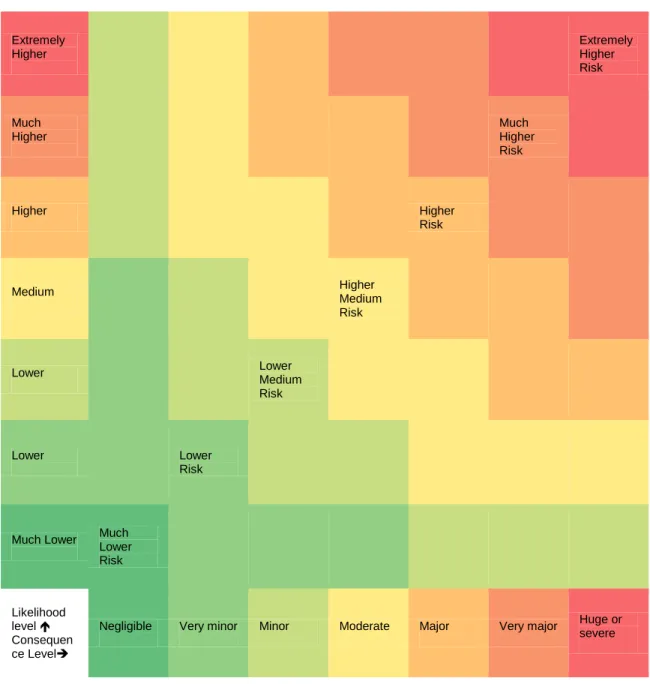
Fund and Bank staffs’ ML/TF risk-management frameworks seek to focus on mitigating the risks that flow from substantial ML or TF occurring. Under this framework, an assessment of ―risk‖ takes into account the likelihood of an event occurring and the consequences that will ensue if it occurs. In
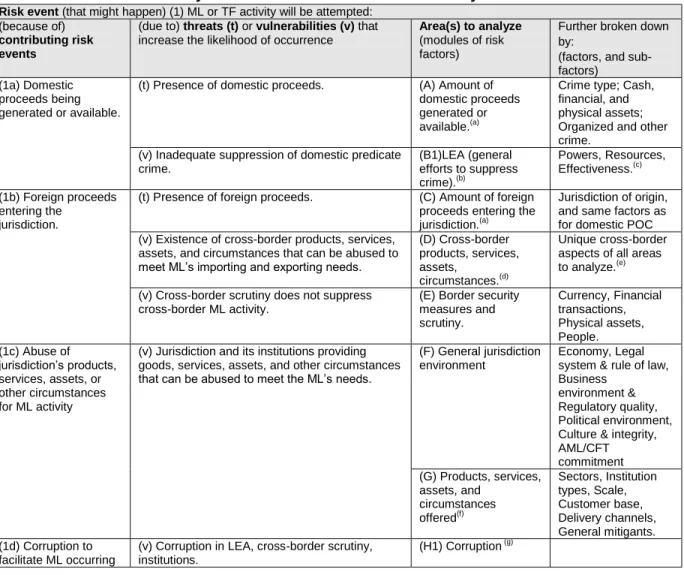
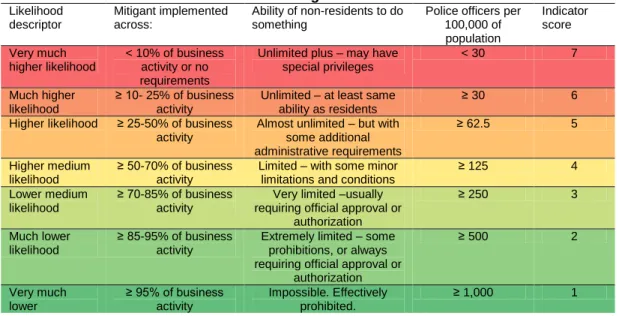
determining the likelihood of an event occurring, the framework examines the threat that derives from the pool of illegally-acquired assets that need laundering or processing, and the vulnerabilities associated with relevant financial markets and AML/CFT controls. An assessment of consequences examines the various social, economic, and political outcomes that result from the occurrence of ML or TF risk events.
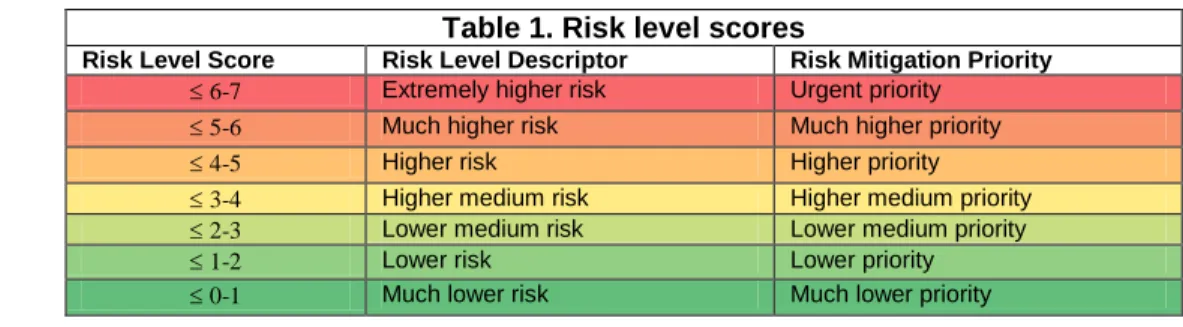
Applying risk-management principles to ML or TF is complex due in large part to the lack of sufficient data or information about past ML or TF events. Accordingly, an assessment of ML or TF risk needs to rely on a semi-qualitative, risk-scoring system that focuses on the key ML or TF risk events. These events are:
ML or TF is attempted:
o Due to a co-existence of substantial amounts of proceeds of crime or of terrorist funds that need processing; and
o Products, services, assets, or other circumstances that meet the launderer‘s or terrorist financier‘s needs; and
The perpetrator of the ML or TF is not caught:
o if it is attempted, ML or TF will not be detected by the authorities (either directly or as a result of the efforts of businesses that are required to make suspicious reports); or
o if it is detected, ML or TF will not be investigated by the authorities; or
o if investigated, the perpetrator will not be prosecuted; or
o if prosecuted, the perpetrator will not be convicted; or The perpetrator of the ML or TF is not sanctioned:
o if convicted, the perpetrator will not be punished adequately, or
o if punished, the perpetrator will not be deprived of his assets.
The relevance of any given consequence will vary depending on the objectives of a given risk-management exercise. The methodology currently under development by Fund staff focuses on the consequence of ML or TF being conducted without detection or sanction.
24
36. Implementing a risk-focused approach to AML/CFT assessments would present operational challenges.36 First, in order to protect the integrity of the ROSC process, a
methodology for choosing the principles selected for reassessment would have to be developed in cooperation with the FATF and FSRBs.37
Rather than examining a member‘s compliance with a defined set of FATF Recommendations in every case,AML/CFT assessors would have to develop a deeper understanding of the economies (including the criminal and underground economies) they would assess and, on this basis, identify the areas that merit detailed examination in advance of the mission. Assessors would also have to determine whether measures adopted by assessed countries would be effective in addressing AML/CFT risks. For these purposes, an assessment would presumably need to be preceded by consultations with the relevant member and with other assessor bodies. As such, a risk-focused approach may or may not result in significant savings for the Fund and the Bank, but would help improve the quality of the assessments and the usefulness of the advice provided to members.
37. Another challenge for this review is to consider the delivery mechanisms for AML/CFT assessments and, in particular, the nature of the link between these assessments and the FSAP program. As noted above, current policy requires that FSAP assessments (except those undertaken on a modular basis) incorporate a full AML/CFT
assessment. Staff‘s proposal for risk-focused AML/CFT updates would involveachange in
that policy to allow for partial, targeted AML/CFT assessments under some circumstances (as is already the case with all other financial sector standards). However, it raises the question whether the mandatory link between FSAPs and AML/CFT assessments should be retained. There are two options in dealing with the AML/CFT standard in the context of FSAPs.
38. In the first option, the Fund and the Bank would apply to AML/CFT the same targeted approach used for all other financial sector standards in FSAPs. AML/CFT assessments—full or targeted, as necessary—would be required to be conducted in the context of an FSAP only if staff determined that such an assessment was relevant for the member in question (notably, if the risks of AML/CFT occurring in that jurisdiction are substantial). This is essentially the approach taken with all other financial sector standards. The scope of any such assessment would be based upon the particular risk and compliance
36 In addition to those directly noted, other issues of particular interest to the Fund are whether and how
AML/CFT assessments might relate to safeguards assessments, and whether and how assessments might be linked to Article IV consultations. The latter issue is addressed in the next section of the paper.
37See IMF Executive Board Reviews Experience with the Financial Sector Assessment Program, Options for
the Future, and Complementary Reforms in Surveillance and the Assessment of Standards and Codes, PIN 09/123, September 29, 2009; Financial Sector Assessment Program After Ten Years—Experience and
Reforms for the Next Decade (http://www.imf.org/external/np/pp/eng/2009/082809B.pdf; and Revised
Approach to Financial Regulation and Supervision Standards Assessments in FSAP Updates
(http://www.imf.org/external/np/pp/eng/2009/082809D.pdf). The Board agreed that a methodology should be negotiated with the standard setter.
profile presented by a given jurisdiction and the joint methodology among assessor bodies envisioned above.38
39. This option would establish consistency in the approach taken on all standard assessments in the context of the FSAP and allow for a more efficient and strategic allocation of scarce resources. It would be in line with recent trends in the FSAP/ROSC programs towards greater flexibility and the efforts of the Fund and the Bank to customize the scope and depth of coverage of an FSAP towards the circumstances of individual
members.39 FSAP stability modules and mandatory stability assessments under Article IV are
not subject to the mandatory link, although their coverage of financial stability issues is identical to that undertaken by the Fund team in the context of ―full‖ joint Fund-Bank FSAPs. Moreover, this option would recognize that regular AML/CFT assessments are now the norm for the vast majority of IMF members, given the conditions attached to membership of the FATF and similar regional bodies. It would, nevertheless, not preclude AML/CFT issues receiving extensive treatment in the context of an FSAP whenever justified by the relevant risks. However, it may be seen as implying a withdrawal by the Bank and the Fund from AML/CFT issues and the attention that they have received in the FSAP context. 40. In the second option, the Fund and the Bank would maintain the current
requirement that all FSAPs incorporate an AML/CFT assessment. If the member had not been previously assessed under the current AML/CFT standard, a full assessment would be required. In other cases, provision would normally be made for a targeted, risk-focused assessment.40
The current policy on timing of assessments would continue to apply—that is, there would continue to be a requirement that the assessment take place within 18 months preceding or following the date of the FSAP or FSAP update mission. However, the current requirement that full reassessments be conducted every five years would be replaced with an
38 The burden-sharing and mutual recognition system would be maintained and stand-alone ROSCs could still
be conducted.
39
See IMF Executive Board Reviews Experience with the Financial Sector Assessment Program, Options for
the Future, and Complementary Reforms in Surveillance and the Assessment of Standards and Codes,
PIN 09/123, September 29, 2009, ―Directors supported conducting partial risk-based ROSC updates, following an initial comprehensive assessment. Selected principles of financial sector regulation and supervision standards would be reassessed based on the risk profiles and needs of individual countries.‖ See also IMF Executive
Board Discusses Integrating Stability Assessments into Article IV Surveillance, PIN 10/135, September 27,
2010, for a further step toward flexibility of the FSAP program, as ―Executive Directors endorsed the move toward a more risk-based approach to financial sector surveillance by focusing mandatory financial stability assessments on members with systemically important financial sectors.‖ Similarly, there has been a broad shift in the last few years toward a more risk-based approach to Fund surveillance, under which its scope, content, and intensity is more flexible and tailored to country needs and circumstances.
40
Except in those rare cases where, as noted above, there were compelling reasons to conduct another
comprehensive assessment. As noted, the requirement that an AML/CFT assessment be conducted as part of an FSAP does not apply to ―modular‖ stability assessments.
26
approach under which the length of time since the last assessment would be one factor in determining the scope of an assessment.41
41. This option would have the advantage of signaling the Fund’s and the Bank’s
continuing commitment to the international community’s efforts to combat money laundering and terrorist financing. It would recognize that the FSAP framework has provided an effective mechanism through which to ensure that AML/CFT issues are
addressed in member countries on a consistent basis, and would acknowledge that significant progress still needs to be made in strengthening AML/CFT frameworks. However, this option would retain the unique status of the AML/CFT standard among all other components of financial surveillance and all other financial sector standards. Under this option, the
differential treatment that AML/CFT assessments receive with respect to FSAPs and modular stability assessments would also be maintained: while an AML/CFT assessment is required for every FSAP/FSAP update, no similar requirement would apply to modular stability assessments.
42. Under either option, the Fund and the Bank would retain the existing burden-sharing arrangement with other assessor bodies but would need to ensure that assessments are conducted in a consistent manner. While there have historically been inconsistencies in the quality of the assessments being conducted by different assessors, a targeted approach runs the risk of creating inconsistencies arising in the coverage of different assessments. To continue with the current rules on the mutual recognition of assessments and, in particular, the policy under which the Fund and Bank would treat mutual assessments conducted by other bodies as ROSCs, the Bank and Fund would need to be satisfied that such assessments do cover the relevant issues. That is, different assessor bodies may have
different views on the risks presented by a particular member‘s framework and may choose to assess different recommendations. These challenges may be effectively addressed through the formulation of clear criteria and a methodology for the assessment of risks and for the choice of principles to be assessed. It would also be important to rely upon the mechanisms and working arrangements among the various assessor bodies that have been established over the past six years—including joint consultations.
43. If the Boards of the Bank and the Fund approve in principle moving to targeted, risk-focused AML/CFT assessments, staff from the two institutions will discuss with FATF and the FSRBs the modalities of implementation. FATF itself will be discussing the feasibility of a risk-focused approach over the course of the next year and Bank and Fund staff intend to participate actively in these discussions. Similarly, following guidance from the Executive Boards with respect to the nature of the relationship between AML/CFT assessments and FSAPs and FSAP updates, Fund and Bank staff would discuss operational implications with external stakeholders. To the extent that a consensus was to emerge in favor of a revised approach, Fund and Bank staff would return to their respective Executive Boards with a specific proposal for consideration. At that time, the operational details would
41 Thus, if five years had passed since the last full assessment, a full reassessment may or may not be