802.11 A RP B GP 4 BO OTP C IF S/SM B DHCP DH CP v6 D iam ete r D NS D VM R P EA P ESTP Finger FTPG RE G TP v0 GT Pv1 H .24 8 H .32 3 H SR P HTT P IC MP ICMPv6 IGMP IKEv 2 IM A P4 IP se c IP v4 I Pv6 IS -IS IS AK MP /IK E i SC SI K er b er os L ACP LDAP v3 LPDMGCP Modbus M PL S/LD P M ST P N FS N TP O SPF v2 O SPF v3 PIM -D M/S M PO P3 P PP oE R A D IUS RIP RIPn g Rl ogin R STP RSVP RTCP RTP R TSP SC TP Sig Com p S IP S M TP S N M Pv 1 S NM Pv2 c SN MPv 3 S RTP SS H1 SS H2 STP Su nR PC S ys lo g TA C A CS+ TCP Tel net T FTP T LS/SS WPA2 V RR P X .50 9 XM L A IF F A U A M R I M Y M P3 VO C W AV CA B GZ IP J AR LH A Z IP A2D P A VRC P B IP BP P D UN FA X FT P H CR P H FP H SP IrM C Sy nch L2CA P OP G PNM R AS T IF F W BM P W M F X BM X PM A VI M O V M PE G1 M PEG 2 Introduction
Building Security into Systems Differences in Test Coverage False Positives and Negatives White-box vs. Black-box Testing Static vs. Dynamic
Vulnerability Management
Fuzzing and Static Code Analysis in the SDL and BSIMM Models Combining Fuzzing and Static Analysis
Conclusion
1
2
3
4
5
6
7
8
9
10
CODENOMICON Ltd. | [email protected] | www.codenomicon.com
codenomicon whitepaper:
Building Secure Software using
Fuzzing and Static Code Analysis
building security into systems
2
1
introduction
The increased complexity of new technologies and faster software release cycles are making traditional reactive security solutions ineffective. Instead, more adaptable, preemptive product security testing is needed. Moreover, for example, due to agile development and outsourcing, the software development process itself is also becoming more complicated further increasing the need for more effective product security practices. The Building Security In Maturity Model (BSIMM) and Microsoft’s Security Development Lifecycle (SDL) concept combine preemptive security testing with the SDLC models. Fuzzing and static code analysis are both a natural part of these secure development best practices, because they promote building security into systems proactively, instead protecting vulnerable systems and reacting to security issues. In this whitepaper, we describe how fuzzing and static code analysis can be used as complementary methods to ensure the
security and robustness of your software.
All Vulnerabilities are Exploitable
attackers need to find vulnerabilities in a device or a system in order to devise an attack against it. basically, any crash-level bug can be exploited to attack a system or an application. attackers send unexpected inputs to a system, and if they can get an abnormal response from the system, they continue to refine their inputs until they get the system to behave the way they want. sometimes bugs can be exposed by simple individual inputs, and sometimes attackers have to communicate with longer message sequences with the system, in order to gain access to the deeper protocol layers. in some cases, vulnerabilities can even be triggered by events like heavier than normal use or maintenance. therefore, the best way to ensure the security of your systems is to build security into it by finding and fixing these critical bugs before they become security vulnerabilities. the goal of both fuzzing and static code analysis is to produce better quality software by finding vulnerabilities in the code before deployment. Vulnerabilities Enable Attacks
vulnerabilities are not created, when a system is being attacked; they enable attacks. vulnerabilities are implementation errors that are introduced into the code, when the programmer makes a mistake. they become vulnerabilities, once the software is released exposing the software for attacks. security researchers, security companies and hackers discover some of the vulnerabilities, and if they choose to report the findings, they can enable software developers to create patches for the found vulnerabilities. However, other vulnerabilities still exist in the code waiting to be exposed. these unknown vulnerabilities are called zero-day vulnerabilities. software vendors are unaware of their existence, thus there are no ready patches for them. once a zero-day vulnerability is triggered, the developers race against the clock to get it fixed, before irrevocable damage is done to the company’s sales or reputation.
OPEN INTERFACE
BUGS
SYSTEM UNDER TEST
OPEN INTERFACE
FEEDS
ATTACK
SURFACE
BUGS
SYSTEM UNDER TEST
OPEN INTERFACE
BUGS
SYSTEM UNDER TEST
OPEN INTERFACE
FEEDS
ATTACK
SURFACE
BUGS
SYSTEM UNDER TEST
3
differences in test coverage
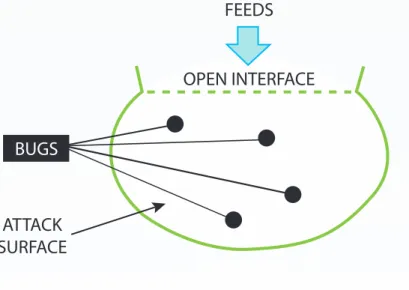
Figure 1a. Static Code Analysis Coverage
Figure 1b. Fuzzing Coverage Testing Entire Systems with
Static Code Analysis
static code analysis tools identify problematic pro-gramming practices and risky code structures. the purpose of the code review is to ensure that secure coding policies are being followed. static code analysis is an efficient process for identifying many common coding problems. it examines the entire source code looking for syntactic matches of com-mon coding problems using patterns and rules. the more advanced tools adopt a multi-layered approach to source code analysis, combining syn-tactical and semantic analysis with other forms of analysis. these include searching for architectural clusters or spaghetti code, analyzing dependencies and coupling, threading issues and metrics. all of these can relate to the security of a system. Figure 1a illustrates that static analysis tools can find bugs in the entire software, but not all the issues it finds are critical or exploitable.
Testing Open Interfaces by Fuzzing
Fuzzing, on the other hand, is a form of attack simulation, in which unexpected data is fed to the system through an open interface, and the behavior of the system is then monitored. if the system fails, for example, by crashing or by failing built in code assertions, then there is a bug in the software. similar to advanced code analysis tools, more advanced fuzzing tools also test multiple lay-ers. it is important that the fuzzers can genuinely interoperate with the tested system. only this way can they access the deeper protocol layers and test the system more thoroughly. in contrast to static analysis, fuzzing can only find bugs, which can be accessed through an open interface, as illustrated by Figure 1b. However, all the found issues are criti-cal and exploitable.
False Positives and negatives
the problem with static analysis is that it also reports bugs that the software does not contain, namely false positives. be-cause it is impossible to test the entire system, test tools have to make a number of approximations, which leads to inac-curacies. False positives are troublesome, because checking them consumes valuable resources. thus, some tools have adopted heuristic or statistic approaches. the advantage of these approaches is that they can reduce the amount of false positives without compromising test coverage. in effect, it can improve a tools ability to catch critical vulnerabilities. in fuzzing, there are no false positives: every bug is discovered as a result of a simulated attack. thus, they are all real security threats. simple fuzzing techniques rely on random mutation to create test cases. the coverage of mutation based Fuzzers is limited and thus they only find some of the vulnerabilities the software contains. yet, this is better than performing no fuzzing at all, because these are the vulnerabilities the attack-ers would also find. more sophisticated fuzzing techniques improve coverage by using protocol specifications to target protocol areas most susceptible to vulnerabilities. this type of optimized test generation also reduces the amount of test cases needed without compromising test coverage.
White-box vs. black-box
testing
Performing static code analysis on software requires source code access. thus static code analysis is essentially a solu-tion for sell-side companies producing their own software, whereas fuzzing can be black-box, grey-box or white-box testing. therefore, it not only provides solutions for compa-nies developing software, but also for compacompa-nies, which out-source their code development. companies with their own software development processes can get the best advantage from security testing by integrating fuzzing and source code analysis into their software development process. thus, they can find vulnerabilities at the earliest possible moment. the earlier vulnerabilities are found, the easier and cheaper it is to fix them.
Fuzzing is also a quick verification method for third-party developed code. companies with outsourced code develop-ments can integrate fuzzing into their sourcing processes and mitigate risks by checking their systems before deployment. this type of testing can also take the form of interoperability testing. moreover, by fuzzing their outsourced software com-ponents, the companies can ensure that the price matches the quality and also provides them with tools for price nego-tiation. in addition, fuzzing can be used by end-users of the software without any access to source code, providing an au-tomated means of quality assurance for later steps in product life-cycle.
static vs. dynamic
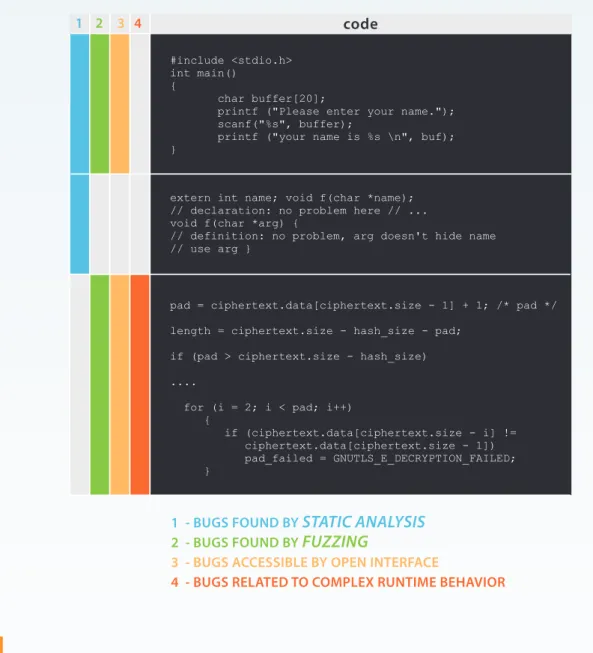
static code analysis is a good method for improving the general software quality level. a major difference between static code analysis and fuzzing is the intrusiveness of the testing method. static code analysis can only be performed off-line. as its name suggests, static code analysis is performed on static code, which is not being executed during test. While this has the benefit of full test coverage, it cannot easily provide a test verdict for complex problems and therefore will result in a lot of false positives. Fuzzing, on the other hand, needs to be executed against executable code. it can find vulnerabilities that are triggered by complex runtime behavior. such vulnerabilities are not necessarily visible in the static code. Fuzzing can be performed against live systems. However, because fuzzing is an intrusive method of testing and will most probably crash the target system, it is recommended that you at least start testing in a separate environment, for example a virtualized environment or a test lab. Figure 2 illustrates the differences between the testing techniques by comparing the types of bugs they find.
4
5
vulnerability management
Crisis Management is Expensive
in traditional vulnerability management, most of the costs arise from patch deployment. this not only holds for the vendor-side, but also for the user-side. Patch-deployment is always carried out as a crisis management process. software developers race against the clock in an attempt to first find and verify the vulnerabilities, and then deploy workarounds or patches for their customers. often the quality of these patches cannot be vouched for. For example, if there is a buffer overflow vulnerability,
Being Prepared Pays off
in order to improve the security of the software they use, com-panies need to move away from reacting to somebody else’s security discoveries to proactively finding vulnerabilities. in reactive security, patches are usually implemented in later stages making the whole process more costly. by detecting attack vectors and discovering zero-day vulnerabilities pro-actively you can stay ahead of the industry and propro-actively protect yourself against zero-day weaknesses. Fuzzing can also be used to test around patches to verify their quality. but #include <stdio.h>
int main() {
char buffer[20];
printf ("Please enter your name."); scanf("%s", buffer);
printf ("your name is %s \n", buf); }
extern int name; void f(char *name); // declaration: no problem here // ... void f(char *arg) {
// definition: no problem, arg doesn't hide name // use arg }
pad = ciphertext.data[ciphertext.size - 1] + 1; /* pad */ length = ciphertext.size - hash_size - pad;
if (pad > ciphertext.size - hash_size) ....
for (i = 2; i < pad; i++) {
if (ciphertext.data[ciphertext.size - i] != ciphertext.data[ciphertext.size - 1]) pad_failed = GNUTLS_E_DECRYPTION_FAILED; }
1 - BUGS FOUND BY STATIC ANALYSIS 2 - BUGS FOUND BY FUZZING
3 - BUGS ACCESSIBLE BY OPEN INTERFACE
4 - BUGS RELATED TO COMPLEX RUNTIME BEHAVIOR
Figur e 2: Bu gs D isc ov er ed b y F
uzzing and Static C
ode A
nalysis
to your services and systems in one big security push, thus reducing the amount of downtime needed.
Identifying Vulnerabilities
there are open source tools available for both fuzzing and static code analysis. However, in addition to their testing ca-pabilities, their reporting capabilities are also limited com-pared to more advanced commercial solutions, which not only enable better test coverage and faster test runs, but also provide extensive test case documentation, which makes the repair process easier. For example, they commonly utilize common Weakness enumeration (cWe), which is an industry standard, to describe the vulnerabilities. this significantly fa-cilitates the process of identifying and prioritizing the found vulnerabilities.
Fixing Zero-Day Vulnerabilities
if you find critical zero-day vulnerabilities in your own code, the most critical question is how widely employed and how public your product is. if you use open source projects, then the whole process is public, also to potential hackers, who will seize the opportunity to create exploits. after you release a patch, it is a race between your end users employing your update and the attackers seeking to exploit it. you might, for example, consider launching a pre-warning system, at least for your most critical customers, so they know to expect any major security updates. if you find issues in third party soft-ware, the important thing is to notify the vendor, so that they can fix the problem and to protect your own systems. in both cases, it is always advisable to contact your local cert organi-zation, which will assist you in the disclosure process.
Fuzzing and static code
analysis in the sdl and
bsimm models
Security Perspective
While the sdl defines the product security process for soft-ware developers, the bsimm model looks at security from a quality perspective. it depicts an organizational maturity model that helps companies benchmark their product secu-rity practices to state-of-the-art practices in the industry. the bsimm model stresses the importance of static code analy-sis, because it ensures that secure coding policies are being followed. Protocol fuzzers, on the other hand, are essential, because they encapsulate an attacker’s perspective. bsimm is a product security checklist listing different activities that you might want to include in your own processes, but it does not enforce any activity over others.
Development Lifecycle Phases
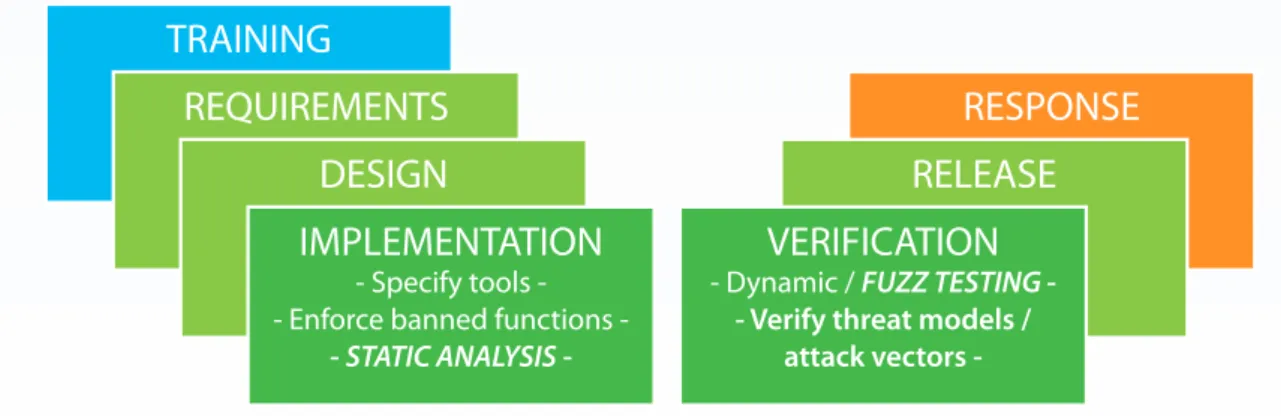
one big difference between the bsimm and the sdl model is that, unlike the sdl model, the bsimm model does not at-tempt to place any of the security practices in a certain phas-es of the sdlc. in the sdl model, static code analysis is used in the implementation phase and fuzzing in the verification phase, as can be seen in Figure 3. However, both assessment methods can also be used in other lifecycle phases as well.
Figure 3: Static Analysis and Fuzzing in the SDL
TRAINING
RESPONSE
REQUIREMENTS
DESIGN
IMPLEMENTATION
Specify tools Enforce banned functionsSTATIC ANALYSIS
-RELEASE
VERIFICATION
Dynamic / FUZZ TESTING-- Verify threat models / attack vectors
-8
the verification phase, where fuzzing is used to test the ro-bustness of the system before the release. However, fuzzing can be used throughout the development process from the moment the first software components are ready and even after the release. in fact, the earlier you start fuzzing the eas-ier and cheaper it is to fix the found vulnerabilities. similarly, the earlier you start using static code analysis the better the results you can achieve. some advanced approaches even enable you to perform static code analysis directly after the code has been written in a development environment.
combining Fuzzing and
static analysis
Complementary Testing Methods
static code analysis covers the entire source code, which makes it a very exhaustive form of testing. especially, when testing larger scale systems, the amount of found bugs makes it difficult to determine which bugs are actually critical is dif-ficult. therefore, static code analysis can be a very slow and time consuming process. Fuzzing helps streamline the test-ing process by focustest-ing the testtest-ing effort on the most criti-cal interfaces. Fuzzing is a risk-based testing approach. it is a very representative method for testing software robustness, because it targets the problems attackers would also find. However, some bugs, like problems in error handling when the disc space is full, are triggered through an external inter-face, yet they are easier to discover with static code analysis, because testing them by fuzzing would require a vast amount of test cases in several different test configurations.
Use Cases for Fuzzing and Static Code Analysis
Fuzzing and static code analysis can be combined easily. When a new type of vulnerability is found by fuzzing, the fin-gerprint of the vulnerability can be taught to the static code analysis tools. this will help in potentially eliminating similar mistakes in other branches of the code that might not be ex-posed to attacks at the moment, but can become critical in future releases of the same software. also, when a vendor re-leases a patch, you can use fuzzing to test around the patch to test its effectiveness. the benefits from using both fuzzing and static code analysis are derived from the differences in the testing technologies.
conclusion
the purpose of proactive testing is to find vulnerabilities, be-fore somebody else finds them and exploits them. by inte-grating fuzzing and static analysis into your software develop-ment process, you can discover flaws at the earliest possible moment. the earlier the bugs are discovered the cheaper and easier it is to fix them. you can actually gain time and save money through preemptive security and robustness testing. instead of, racing against the clock to get your system to work again and spending valuable resources in calming down an-gry customers, you can discover flaws and create patches for them proactively, before any problems occur. Furthermore, if vulnerabilities are fixed early on during the software devel-opment process, then there simply will not be any time for anyone to devise an attack.
Proactive testing is not just about protecting systems against attacks. cleaning up your code also serves another purpose. namely, it improves the quality of your software. as a white-box testing technique, static code analysis can be used to improve the quality of in-house software developments, but fuzzing can also be used as an auditing tool to verify the qual-ity of outsourced code development. the costs of bad Qual-ity of service (Qos) and downtime can be considerable to your company reputation and sales. by ensuring the quality of your software you can also avoid other liability problems. and, most importantly, by building the security into your sys-tem, you can be sure that it is really secure and not just coated with security.
static code analysis and fuzzing are complementary in many aspects. While code analysis is static, fuzzing is dynamic. stat-ic analysis is white-box testing, while fuzzing is mainly black-box testing. these two methods complement each other by finding vulnerabilities that could not have been found using just one method. static analysis can easily find bugs, which would require vast amounts of feeds to uncover with fuzzing. Fuzzing, on the other hand, can find bugs that reveal them-selves when the code is executed, for example vulnerabilities in dynamic libraries or bugs created by the code compiler or hardware setup. overall, using multiple testing methods im-proves the test coverage as both the bsimm and sdl models advocate.