THE EFFECT OF AN EXPERIMENTAL APPROACH ON THE DEVELOPMENT OF SPEECH-LANGUAGE THERAPY STUDENTS’ VERBAL REFLECTIVE PRACTICE SKILLS IN A
GROUP SETTING A thesis
submitted in partial fulfilment of the requirements for the Degree
of
Master of Science in Speech and Language Sciences in
the University of Canterbury by
Lydia J. Keast University of Canterbury
List of figures……… 1 List of tables……….. 2 Acknowledgements……….. 3 Abstract………. 4 1. Introduction……… 5 1.1 Background……… 5
1.2 Clinical education in tertiary education……… 6
1.2.1 Clinical education in speech-language therapy……….. 6
1.3 Reflective practice………. 7
1.4 Theories and models in reflective practice relevant to speech-language therapy……… 8
1.5 Development of student reflective practice skills………. 10
1.6 Methods of reflective practice………... 13
1.6.1 Methods of reflective practice in speech-language therapy… 14 1.7 Verbal reflective practice in group discussion……… 17
1.8 Assessment of reflective practice skills……….. 20
1.8.1 Assessment of written reflective practice………. 22
1.9 Speech-language therapy and verbal reflective practice……… 32
1.10 Summary and aims……… 32
1.11 Research question………. 33
1.12 Hypothesis………. 33
2. Method……….. 35
2.1 Participants……….. 35
2.2 Procedures……… 36
2.2.1 Group dynamics development (Phase 1)……….. 36
2.2.2 Intervention phase (Phase 2)………. 37
2.2.3 Development of reflective practice questions and activities for discussion………... 38
2.2.4 Training of CEs………. 41
2.3 Measures……….. 42
2.3.1 Transcription of reflective practice group discussions………. 43
2.3.2 Coding of reflective practice group transcriptions……… 43
2.3.3 Number of on-and off-topic statements……… 44
2.3.4 VAS questionnaire……… 44
2.4.1 Analysis of transcription/reflective practice statements……. 46
2.4.2 On- and off- topic statements……….. 47
2.4.3 VAS questionnaire analysis………. 47
2.4.4 Reliability……… 47
3. Results………. 49
3.1 Development of verbal reflective practice skills……… 49
3.2 Student perceptions of verbal reflective practice……… 52
3.3 CE perceptions of verbal reflective practice……… 59
4. Discussion………. 63
4.1 Development of verbal reflective practice skills………. 63
4.2 Student perceptions of verbal reflective practice……… 68
4.3 CE perceptions of verbal reflective practice……… 74
4.4 Clinical implications……… 78
4.5 Limitations………... . 80
4.6 Future directions……….. . 82
4.7 Conclusion………... . 85
Appendix A: Ethics Committee Approval
Appendix B: Student Participant Information and Consent Sheets
Appendix C: CE Participant Information and Consent Sheets
Appendix D: McAllister & Lincoln (2004) Prompts Mapped to Plack et al. (2005) Codes
Appendix E: Schedule of Structured Activities in Experimental Practice Condition
Appendix F: Standard Practice CE Guidelines
Appendix G: Experimental Practice CE Guidelines
Appendix H: Experimental Practice Instructions for Structured Activities
Appendix I: Student Participant VAS Questionnaire on Reflective Practice
List of Figures
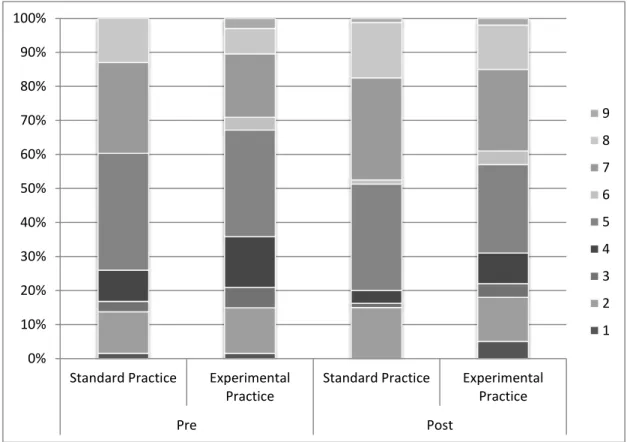
Figure 1. Percentage of various elements present pre and post intervention for both
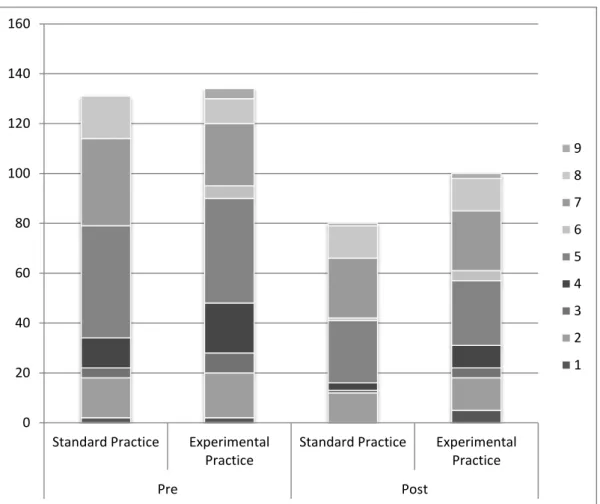
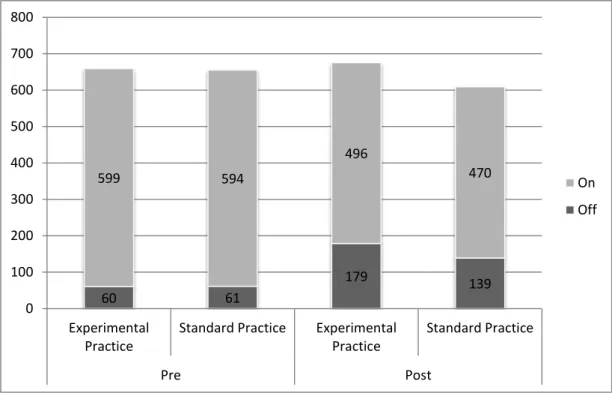
conditions………. 51 Figure 2. Total counts of elements pre and post intervention for both conditions………... 52
Figure 3a. Mean student score for standard practice group representing perception of
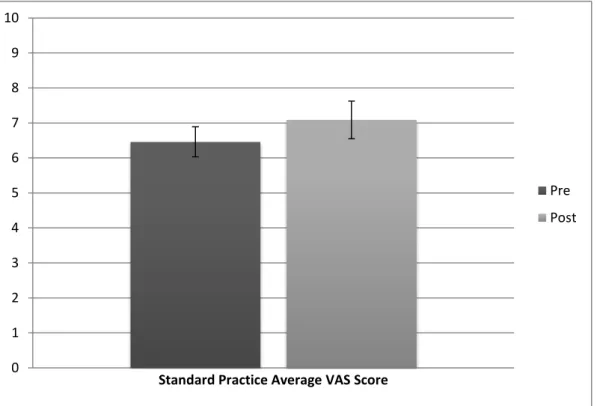
reflective practice pre and post intervention. Error bars denote standard error……… 53
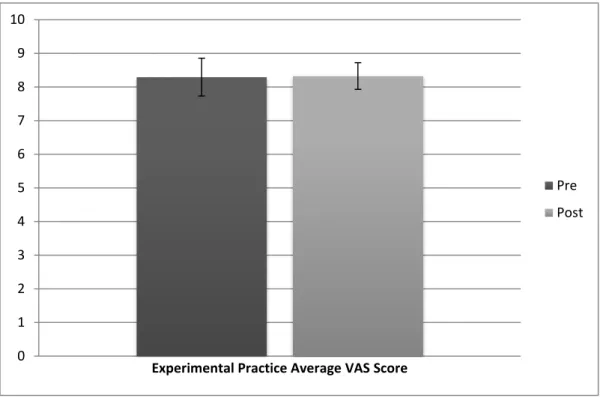
Figure 3b. Mean student score for experimental practice group representing perception of reflective practice pre and post intervention. Error bars denote standard error……… 53
Figure 4. Comparison of number of on/off-topic statements pre and post intervention…... 58
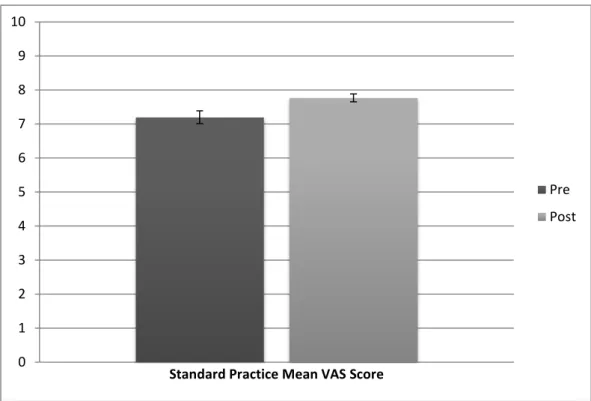
Figure 5a. Mean VAS score for standard practice CEs representing perception of reflective practice pre and post intervention. Error bars denote standard error……….. 60
Figure 5b. Mean VAS score for experimental practice CEs representing perception of
List of Tables
Table 1. Prompts to Guide Students’ Reflection on Clinical Practice……….. 15
Table 2. Details of Coding and Rating Systems Used to Assess Written Reflection……… 23
Table 3. Studies Assessing Verbal Reflective Practice Skills……… 29
Table 4. Reasoning and Learning Competency Units and Elements……….. 31
Table 5. Breadth Elements of Reflection with Codes………. 39
Table 6. Activities with Brief Description……….. 40
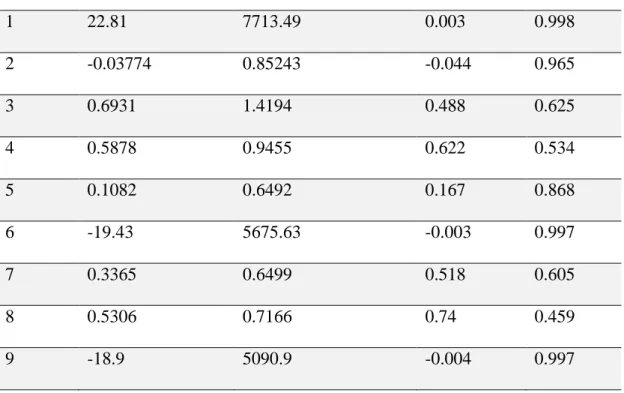
Table 7. Analysis of Individual Elements………... 50
Table 8. Student VAS Questions with Pre and Post Intervention Difference of Mean Response for Each Condition………... 55
Acknowledgements
The author wishes to express sincere appreciation to Gina Tillard, Kate Cook and Associate Professor Megan McAuliffe for the opportunity to undertake this study, and their assistance and continued support in the preparation of this manuscript. Gina, thank you for your time and patience, and your listening ear regardless of the topic; Kate, for pushing me to continually improve and expand, never accepting sub-par; and Megan, for your continued support from near and far. Thank you to the students and CEs involved who made this study possible. In addition, thank you to Daniel Gerhard for statistical consulting and assistance with data analysis. Finally, a special thanks to Hasan Cheema for going above and beyond your official title, giving additional support with statistical components, consistent
Abstract
The aim of the current study was to investigate the development of speech-language therapy students’ verbal reflective practice skills within group settings. Student and clinical educator perceptions of reflective practice were also documented. Participants were students in the third year of the undergraduate Bachelor of Speech and Language Pathology
programme (n = 27), and clinical educators (n = 6). A two-condition, non-randomised, pre-test post-pre-test design was employed with six groups (three in a standard practice condition and three in an experimental practice condition). Participants took part in weekly reflective practice groups over a period of six weeks, in which discussion centred on students’ clinical experiences. At two time points, pre- and post-intervention, discussions were transcribed and coded. Additionally, both students and clinical educators completed a questionnaire designed to examine perceptions of reflective practice. Statistical analysis of degree of change across the pre- and post- intervention time points was undertaken, including comparisons between the standard and experimental practice conditions.
There was no difference in the development of students’ verbal reflective practice skills either across time or between groups. However, pre- and post-intervention comparisons showed a significant change in student perceptions of reflective practice both across time and between conditions. Clinical educators exhibited statistically significant enhancements in their perceptions of reflective practice groups within the standard practice condition; however this was not the case in the experimental practice group. No significant differences in
perceptions of clinical educators were detected between conditions. The lack of development of reflective practice skills detected over time was an unexpected finding, as previous
literature has documented that reflective practice skills do develop over time. Limitations of the current study were the small sample size and use of non-validated questionnaires to assess perceptions of reflective practice. Implications for clinical practice are discussed.
1. Introduction
1.1 Background
Reflective practice has become increasingly popular in the area of clinical education. Many professions such as medicine (Mamede & Schmidt, 2004), nursing (Dubé &
Ducharme, 2014; Johns, 1995; Teekman, 2000), occupational therapy (Kinsella, 2001; Wainwright, Shepard, Harman & Stephens, 2010), physiotherapy (Clouder, 2000; Dunfee, Rindflesch, Driscoll, Hollman & Plack, 2008; Plack, Driscoll, Blissett, McKenna & Plack, 2005) and speech-language therapy (Hill, Davidson & Theodoros, 2012) have reported on the use of reflective practice in education of students and practitioners. Reflective practice may occur in written or verbal form. Written forms may include the use of journals (Chabon & Lee-Wilkerson, 2006) and reflective essays or summaries (Schaub-de Jong,
Cohen-Schotanus, Dekker & Verkerk, 2009), while verbal forms may include discussions with peers (Baxter & Gray, 2001), mentors (Higgs & McAllister, 2007), and supervisors (Geller & Foley, 2009). Some argue that reflective practice should be structured in order to guide the process (Johns, 2002) while others suggest that structure inhibits students’ creativity and freedom to express their own thinking (Heath, 1998).
As a part of the clinical education process, it is standard practice for speech-language therapy students at the University of Canterbury to engage in reflective practice. This is completed on a regular basis through written reflections, journals, and online-discussions, as well as verbal discussions with supervisors, peers or wider groups. While much is known about the development and assessment of written reflective practice (e.g., Hill et al., 2012; Cook, Tillard & Wyles, 2014), minimal research has examined the assessment of verbal reflective practice skills within group settings in clinical education, particularly for speech-language therapy. This project was undertaken to assess the development of speech-speech-language
therapy student verbal reflective practice skills over time within group discussion. The use of structure through activities and prompts was examined for its influence on student reflective practice skills.
1.2 Clinical education in tertiary education
Clinical education is a continually expanding and developing field within professions such as medicine, nursing, audiology, social work, physiotherapy, occupational therapy, and speech-language therapy. Clinical education is defined as “a conversation between
professionals aimed at promoting learning, reflective practice and improving patient safety and the quality of patient care” (Halpern & McKimm, 2009). Within the broader practice of clinical education is clinical supervision, a necessary component of the educational process. Clinical supervision may be defined in a number of ways (e.g., see Bernard & Goodyear, 2009; Milne, 2007 for others); however, all definitions contain key concepts such as the relationship between professionals, the promotion of learning and development, the focus on the practice context, and the aim to improve patient or client population. The terms clinical education and clinical supervision are used interchangeably in the field of speech-language therapy (American Speech and Hearing Association, 2008). For the purposes of the current thesis, the term ‘clinical education’ will be used, referring to the process that students undergo in which they receive guidance and education from more experience clinicians in order to promote learning and development of clinical skills.
1.2.1 Clinical education in speech-language therapy
Clinical education is a vital part of students’ academic and professional development in the field of speech-language therapy (McAllister & Lincoln, 2004). Students experience a variety of clinical placements across the course of their degree, and journey through the stages of professional development from novice to entry-level clinician (McAllister, Lincoln,
Ferguson & McAllister, 2013). Effective clinical education is essential to this process. The American Speech and Hearing Association (ASHA) (2008) state that clinical education is an essential and distinct area within speech-language therapy, to educate students and continue the professional growth of speech-language therapists. It has been suggested that there are four generic goals of clinical education (McAllister and Lincoln, 2004). The four goals are: “continuous development of clinical knowledge and skills, development of knowledge and skills in education, development of personal and interpersonal knowledge and skills, and development of cognitive skills,” (p. 2). To achieve these goals, clinical education can involve a variety of activities that are specific to the practice setting in which it is taking place. The needs and expectations of the students and clinical educators, and the constraints of the practice setting should all be taken into account (ASHA, 2008). Hence, methods and activities of clinical education may vary to meet the needs of the students and constraints of the practice setting. In summary, clinical education is an important component in the field of speech-language therapy and may take various forms to meet the needs of the students, supervisors and practice context. One activity commonly found in the area of clinical education is that of reflective practice (e.g., Kember et al., 2000; Niemi, 1997; Wong, Kember, Chung and Yan, 1995).
1.3 Reflective practice
Reflective practice involves ‘learning through and from experience, new insights, examining assumptions, being self-aware, critically evaluating, and life-long learning,’
(Finlay, 2008). Reflective practice has been the subject of discussion among many health care professions, including nursing (Dubé & Ducharme, 2014; Johns, 1995; Teekman, 2000), medicine (Mamede & Schmidt, 2004), occupational therapy (Kinsella, 2001), and
physiotherapy (Clouder, 2000; Dunfee et al., 2008), and has been recognised as a valuable tool to develop clinic decision making in each of these professions. In the field of
speech-language therapy, McAllister and Lincoln (2004) have defined reflective practice as “the means by which learners can make sense of and integrate new learning into existing knowledge” (p. 125). The term “reflective practice” is used in the current thesis,
acknowledging that other similar terms exist, such as “critically reflective dialogues” (de Groot, Endedijk, Jaarsma, van Beukelen & Simons, 2013), and “critical reflection”
(Brookfield, 1995). Reflective practice is an important aspect of clinical education that may serve to meet the goals of clinical education, incorporate the contextual aspects of an individual’s experience, and develop reasoning skills and professional autonomy (Kinsella, Caty, Ng & Jenkins, 2012; McVey & Jones, 2012; Wainwright et al., 2010).
Within clinical education, students are encouraged to regularly engage in reflective practice in which they reflect on clinical experiences. In this context, the purpose of reflective practice is to encourage incorporation of contextual elements and personal beliefs and values into professional decision making (Hill et al., 2012; Somerville & Keeling, 2004). Reflective practice is also intended to assist students in synthesising classroom knowledge with their clinical practice (Dunfee et al., 2008). It is proposed that reflective practice is not merely re-visiting an experience, or debriefing how an experience felt, instead it should be done with the intent to learn from the experience, and to take new understanding and perspective into future situations (Dewey, 1933). It is clear that across disciplines the process of reflective practice is seen as a vital component of developing clinical knowledge and skills.
1.4 Theories and models in reflective practice relevant to SLT
While numerous theoretical approaches to reflective practice exist (e.g., see Boud, Keogh & Walker, 1985; Dewey, 1933; Habermas, 1972, 1974; Kolb, 1984; Schön, 1983, 1987), consistent across these theories is that reflective practice involves: “1. reviewing experience; 2. critical analysis; and 3. reflective outcomes” (Koole, Dornan, Aper,
Scherpbier, Valcke, Cohen-Schotanus & Derese, 2011, p. 7). Common elements within theories also include the combination of theory with practical experience, the intention to learn from experience, the challenging of thoughts and beliefs, problem-solving, and critically questioning the experience (Arygyris and Schön, 1974; Dewey, 1933; Habermas, 1972; 1974; Schön, 1983, 1987). Additional to these common elements, each theory contains unique components that contribute to a broader understanding of reflective practice.
Reflective practice can involve reflecting while in the midst of an experience, reflecting on the experience after the fact and reflecting for an experience that is yet to occur (Killion & Todnem, 1991; Schön 1983). This process may centre on the individual (Dewey, 1933), challenging “espoused theories” versus “theory-in-use,” that is, those theories and beliefs individuals say that they abide by in their work versus what they actually do (Argyris and Schön, 1974). Additionally, reflective practice may incorporate a social aspect that takes the process further than just the implications for the individual (Habermas, 1972). It has also been suggested that reflective practice involves the context of the experience (Meizrow, 1990) such as alternative perspectives, specific strategies available for use, and pre-existing beliefs and biases. Comparison of theories reveals a focus on the processes of reflective practice (e.g., Dewey, 1933; Schön, 1983), and outcomes which can include practical solutions that consider both the individual and wider society (Habermas, 1972; Morrison, 1995).
Within the profession of speech-language therapy, there are inconsistent views regarding reflective practice. A recent review of reflective practice in speech-language therapy by Caty, Kinsella and Doyle (2014) revealed that of 20 papers that described the theoretical basis of reflective practice, 15 (75%) referred to the work of Schön in their
descriptions. Other references made were to Kolb (1984) and Boud et al. (1985), overlapping these works with the concept of reflective practice. Both Kolb’s experiential learning cycle
and Boud et al.’s reflective learning theory describe stages that the individual moves through following an experience. Both require that the individual reflects on the experience followed by a re-evaluation, which may involve attending to associated feelings, and thinking about the concepts involved in the experience. Following these steps, the individual reaches a conclusion that is carried forward into future situations. In both examples, the experience being reflected on is transformed to create further knowledge (Boud et al., 1985; Kolb, 1984). In addition, Kolb’s theory suggests that effective learning takes place only on completion of each step. Boud et al.’s process has been criticised as being too retrospective, in that the primary focus is on past actions, leaving little room for in the moment reflection and can also lead to introspective reflection. (Finlay, 2008)
The findings of Caty et al. (2014) suggest that Schön’s (1983, 1987) theory of reflective practice has been the most widely applied in the field of SLT. The works of Meizrow (1990), and Killion and Todnem (1991) were a valuable addition to that of Schön and therefore form the basis of understanding for this study. In summary it is evident that reflective practice has a well-documented theoretical base in the literature. With the increasing number of professions utilising reflective practice and drawing on various definitions, theories, and models of learning, it is only fitting that the process of developing student reflective practice skills be examined.
1.5 Development of student reflective practice skills
Reflective practice can help to develop students’ clinical skills through improved reasoning and decision-making (McAllister & Lincoln, 2004; Wong et al., 1995). A clinical educator’s role is to assist learners to competently navigate clinical situations (Wong et al., 1995), and reflective practice can assist in this process. It has been established that students’ reflective practice skills develop over time (Davies, 1995; Durgahee, 1996; Johns, 1995;
Smith, 1998; Wong, Loke, Wong, Tse, Kan & Kember, 1997). There are four key stages of reflective practice development commonly described in the literature: (1) pre-reflection or non-reflection, (2) surface reflection; describing the experience, (3) pedagogical reflection; incorporation of theory or reorientation to factual knowledge, and (4) critical reflection; incorporation of multiple aspects to holistically reflect on the experience (e.g., Day, 1993; Farrell, 2004; Handal & Lauvas, 1987; Jay & Johnson, 2002; Larrivee, 2008; Plack et al., 2005; Taylor, 1987). Each stage moves the individual from acceptance to questioning of information and critical analysis of experiences.
The first stage, pre-reflection or non-reflection (Larrivee, 2008; Plack et al., 2005), encompasses those individuals who are not yet reflecting on practical experiences. Reactions to events at this stage are purely reflexive, without concentrated thought on alternative options. Often in this stage, individuals view other people or events as the cause of problems, failing to take into account their role and influence in the situation (Larrivee, 2008). Finally, individuals at this stage struggle to question their knowledge and behaviours and are limited in their ability to adapt practice to the needs of those around them. Individuals at this level are in need of support and teaching to begin reflecting on experiences.
The second stage of development is surface or descriptive reflection (Jay & Johnson, 2002, Larrivee, 2008; Plack et al., 2005). This stage is characterised by a focus on actions or skills, and how these impacted on the individual achieving their goals. Individuals at this stage fail to see the wider implications of experiences, instead describing experiences as standalone events. However, there is some level of awareness at this stage that practice needs to be accommodated for those who need it. At this stage of development, individuals are focusing on the technical aspects of their experiences (e.g., Day, 1993; Farrell, 2004; Plack et al., 2005; Schön, 1983; Valli, 1997), while underlying values, beliefs, and assumptions are not being explored.
The third stage represented in the literature is pedagogical reflection (Larrivee, 2008). Within the literature, the label for this stage has varied, from theoretical (Day, 1993) or deliberative (Valli, 1997), to comparative (Jay & Johnson, 2002), and conceptual (Farrell, 2004). At this stage, individuals begin to incorporate theory and belief with the view to provide quality practice. Individuals at the pedagogical reflection stage begin to encompass the theories involved in chosen approaches and link theoretical knowledge to practice. This focus on the link between theory and practice increases the individual’s consistency in
practice, as their rationale for practice is bolstered by theoretical knowledge (Larrivee, 2008). At this stage, the influence of context and personal beliefs are not yet incorporated into reflective practice.
The fourth stage of development is critical reflection (Larrivee, 2008; Plack et al., 2005). Critical reflection incorporates a wider range of factors such as moral and ethical implications of practice, and the effect these have on those receiving the services of the individual. Those who critically reflect recognise external factors such as the social and political environment in which they practice. Critical reflection has also been referred to as personalistic (Valli, 1997) or intrapersonal (Day, 1999). These two alternative terms highlight the aspects of self-awareness and self-assessment involved at this stage of reflection, as the individual who is reflecting beings to focus on their beliefs and practices. At this stage, the individual begins to integrate their own personal beliefs into professional practice, while challenging assumptions and biases. This reflection on self leads the individual to examine how their background, beliefs, assumptions, and cultural and familial upbringing impact on their practice (Larrivee, 2005). At this stage, the individual is able to reflect on their own practice while also remaining aware of the external factors influencing practice (Larrivee, 2008).
Several models for reflective practice have been established, such as Gibbs’ Reflective Cycle (1988) constructed from Kolb’s (1984) experiential learning cycle. This model suggests that theory and practice are caught in an endless cycle and has been adopted within the nursing profession as a method of facilitating reflective practice (Wilding, 2008). However, in the field of teaching, Zeichner and Liston (1996) argue that individuals should think more critically about the quality of their practice rather than simply answering
questions or following the steps of a cycle. Opinions such as this have led to the development of more comprehensive models, such as that of Jay and Johnson (2002) who also divide reflective practice into three stages (descriptive, comparative and critical) with specific inclusion of alternative perspectives.
Although the use of models for reflective practice has been criticised as a hindrance to reflective practice that imposes too much structure and can act as a prison of thought (Johns, 2005), explicit teaching of high level reflective practice (critical reflection) may in fact help individuals to reach a balanced understanding of their experiences through reflection, improved thinking, and self-assessment (Smith, 2011). Despite the lack of standardised approaches to reflective practice or one ‘right’ way to reflect, the use of a reflective model such as Gibbs’ (1998) can stimulate and structure the process of reflective practice
(McDougall & Comfort, 2013). McDougall and Comfort (2013) further explored the use of models to state that it does not matter necessarily what model is used as it should simply act as a guide to the processes occurring. They concluded by highlighting the importance of following through with the whole process of the chosen model, as this is what provides rich reflective practice.
1.6 Methods of reflective practice
Different approaches to reflective practice are used throughout various professions. In medicine (e.g., Niemi, 1997), physiotherapy (e.g., Clouder, 2000; Williams & Wessel, 2004),
and nursing (e.g., Bulman, Lathlean & Gobbi, 2012; Epp, 2008) there have been reports of written and verbal reflective practice, using methods such as learning logs, semi-structured interviews/discussions, reflective journals, and group presentations. The use of written reflection has largely been reported with positive outcomes in student perceptions and learning (e.g., Clouder, 2000; Epp, 2008; Niemi, 1997). Reflective journals have been implemented successfully and have been shown to develop students’ learning and reflective practice (Epp, 2008; Morrison, 1996). Other reports suggest that students feel uncomfortable with certain methods of reflective practice, such as being asked questions by supervisors in the moment (Clouder, 2000). While this may develop skills for reflection in action, students may feel that they are put on the spot, causing feelings of stress and uncertainty. Research involving interviews or discussion has reported positive outcomes, however outcome measures more often examine students’ perceptions rather than verbal reflective practice skills specifically (e.g., Boenink, Oderwald, de Jonge, van Tilburg & Smal, 2004). Literature has also mentioned the use of prompts such as leading questions or headings to structure reflective practice. For example, Jay and Johnson’s (2002) model of reflection structures the process so individuals examine the experience descriptively, comparatively, and critically. These three components are supported with prompting questions which are used to assist the development of reflective practice skills.
1.6.1 Methods of reflective practice in speech-language therapy
Methods of written reflective practice in speech-language therapy include reflective journals (e.g., Chabon & Lee-Wilkerson, 2006; Hill et al., 2012) and reflective essays or summaries (e.g., Schaub-de Jong et al., 2009). A review of 42 papers by Caty et al. (2014) revealed that the use of written reflective practice was more common with students (14 papers, 33%) compared with practicing clinicians (4 papers, 10%). Reflective practice through group discussions included reflection with peers (Baxter & Gray, 2001), and others
including mentors (Higgs & McAllister, 2007) and supervisors (Geller & Foley, 2009). Caty et al. noted a trend in the literature towards the use of small groups for discussion, the context of reflective practice that this study focuses on.
Caty et al. (2014) noted that various materials have been used to facilitate discussion in the small group context such as case studies (Johnston & Banks, 2000), details of clinical practice (Fronek, Kendall, Ungerer, Malt, Eugarde & Geraghty, 2009), feedback on
performance (Bruce, Parker & Herbert, 2001) and shared stories (O’Halloran, Hersh,
Laplante-Levesque & Worrall, 2010). Although the use of prompts such as leading questions or headings for writing to structure reflective practice has been reported in other literature, Caty et al. did not report on any studies utilising prompts or structured activities for reflective practice in the field of speech-language therapy. The use of tools, prompts or activities to guide the reflective process may support reflective practice (Cook et al., 2014; Jay & Johnson, 2002). McAllister and Lincoln (2004) provide written prompts to assist students when reflecting on clinical practice. An adapted version of these which incorporates the impact of students’ biases and assumptions (Plack et al., 2005) is currently used at the University of Canterbury to support students’ written reflections (see Table 1 for the adapted version).
Table 1. Prompts to Guide Students’ Reflection on Clinical Practice
- What was your overall impression of the session?
- What things went well during the session and what did you learn from these? - What things went wrong during the session and what did you learn from these? - What emotions can you remember feeling during the session?
- Did you observe or think about client emotions or behaviours during the session - Did you observe or think about any of your own emotions or behaviours during the
session?
- What theoretical knowledge did you use or could you have used during this session? - What past experiences did you use or could you have used during this session? - What do you need to learn or find out about before the next session?
- What impact do you feel your own assumptions, values, beliefs or biases may have had on the session or observation?
McAllister & Lincoln (2004); Plack et al. (2005)
Previously undergraduate speech-language therapy students at the University of Canterbury have used assisting prompts or questions within games to guide reflective group discussion. It is thought that students have shown high levels of enjoyment, effective turn-taking and dialogue, and maintenance of topic when using these games and prompts. Multiple studies (Feinstein, 2001; Keys & Biggs, 1990; Wolfe & Crookall, 1998) support the use of simulations or games for learning. It has been suggested that games provide a level of engagement and flow that can have a positive effect on the learning process
(Csikszentmihalyi, 2002). Games also facilitate interaction, collaboration and learning with peers (Ruben, 1999) and can also promote relationship building and peer learning (Gee, 2003). In addition, students are more likely to learn and have fun when they are engaged in an activity (Mastergeorge, 2009). The importance of cohesion and collaboration with peers in group discussion is explored further in section 1.7.
There is some disagreement on the benefit of structure on the development of reflective practice skills. It has been suggested that structure may inhibit creative thinking (Johns, 2005), and can transform reflective practice into a methodical process with
“checklists that students work through in a mechanical fashion without regard to their own uncertainties, questions and meanings” (Boud & Walker, 1998, p. 193). Despite views that oppose the use of structured reflective practice, there is support in the clinical education literature for the implementation of structure. The use of structure to guide reflective practice may be beneficial to individuals who are reluctant to engage in the process. Johns (1994)
suggests that some practitioners are unresponsive to new ideas, passively resisting change. He states that “these practitioners will be unable to reflect” (Johns, 1994, p. 27) and may either engage in reflective practice with passive compliance or will reject the exercise entirely. With guidance, these practitioners can be challenged to open their eyes to their own behaviour, beliefs, and understandings with adequate support. The use of structured activities that vary from one occasion to the next may reduce the routine nature of reflective practice, and thus reduce the negative feelings or ‘non-learning’ (Gray, 2007) associated with compulsory reflective practice felt by many students. There is support in the literature for the use of prompts to guide reflective group discussions, however based on the opposing opinions of structured reflective practice in the literature, the balance of structure and freedom of thought is important to maintain. It is proposed that prompts or activities to guide reflective group discussion should be designed with these views in mind.
1.7 Verbal reflective practice in group discussion
Reflective group discussions may serve to assist student reflective practice through the incorporation of peer opinions, comments and perspectives. Reflective practice groups can be described as a combination of self-evaluation and peer learning, through supervisory conferences. The specific aim of these supervisory conferences or discussions is to facilitate reflective practice (McAllister et al., 2004). Reflective group discussion allows individuals to learn from one another and provides the opportunity to deeply examine experiences,
stimulating curiosity and effective learning (Trognon & Batt, 2012). Reflective practice groups bring about a solidarity among students that has been reported to contribute more to professional development “than any other single aspect of their training or clinical
For group discussion to be successful, various components are required such as trust, perceived benefit for energy expenditure, motivation for individuals to engage in the process, and adequate time (Finlay, 2008; Quinn, 1998/2000; Thorpe, 2003). When sufficient support and trust is present in groups there is the potential for honest dialogue with the use of a
common language to express clinical practice and high-quality learning within group contexts (Bulman, 2008; Schaub-de Jong, Schönrock-Adema, Dekker, Verkerk & Cohen-Schotanus, 2011). Forsyth (2014) described the stages of group development that most groups pass through. The first stage is forming, where members become familiar with one another. The following stages are storming, norming and performing, where the group establishes and navigates differences in procedures, opinions and processes, finds cohesion and balanced relationships, ideas and communication, and performs at a high level of achievement. Finally, adjourning occurs where the group is terminated and/or tasks are completed. To move
effectively through these stages, a group must have a minimum level of cohesion which leads to better member satisfaction and improved group productivity (Forsyth, 2014). Group cohesion is impacted by multiple factors such as social cohesion, task cohesion, perceptions of cohesion and emotional cohesion. When adequate group cohesion is present, the group is able to support self-insight, is a safe environment, and encourages self-regulation (Schaub-de Jong et al., 2011). A facilitator is often involved and responsible for supporting and guiding the processes within a group setting (Kienle & Ritterskamp, 2007). The methods involved in the facilitation of group discussion have been well documented, with resources and literature available on the methods and strategies involved for facilitation (e.g., Brookfield, 2005; Collison, Elbaum, Haavind & Tinker, 2000; Kienle & Carsten Ritterskamp, 2007; Loughran, 2002). Literature highlights the importance of effective facilitation in achieving positive group outcomes, and guiding students to reach their own conclusions. It has been noted that when an effort is made by the facilitator to stimulate meaningful discussion, students are
more likely to participate and contribute on-topic statements (Mastergeorge, 2009). It is important that the components necessary for successful groups such as trust, time, cohesion, safety, and effective facilitation are present, in order to achieve the purpose of the group.
Group reflective practice involves the interaction of multiple perspectives and
opinions of those involved while personal reflective practice has been criticised as being ‘too individualistic’ (McDougall & Comfort, 2013). Without the input of alternative perspectives found in groups, personal reflective practice may limit the scope of reflective practice itself therefore reducing changes in behaviours and beliefs (Clouder, 2000). McDougall and Comfort suggest when an individual reflects it is easy to avoid or limit analysis of personal assumptions and feelings while reflective practice within a group increases the possibility that these ideas will be challenged to encourage new understanding. Reflective practice may be improved through group collaboration as behaviours or patterns that are deeply ingrained can limit the critical nature of self-perception. Analysis of behaviours or patterns within a group is a collaborative and cooperative endeavour, which may lead to increased learning
(Osterman & Kottkamp, 1993). Student responses have indicated positive attitudes toward group discussion (McGrath & Higgins, 2005; Schaub de Jong et al., 2009). Reflective practice groups have been reported as worthwhile experiences that help students to link theory and practice (McGrath & Higgins, 2005). Students have also reported that group meetings help them to gain insight into personal and professional behaviours, as personal awareness is increased and students question who they are and why they behave as they do (McKinlay & Ross, 2008; Schaub de Jong et al., 2009). Another study reported that small-group discussion “led to small-group problem solving, the validation of students’ experiences and values, [and] discussion of the origin and nature of negative behaviours and attitudes” (Seymour & Watt, 2015, p. 518).
In summary, there is support for the use of group discussion in reflective practice as a tool in clinical education. The interaction of peers allows for the exchange and comparison of beliefs and behaviours, perspectives and opinions, and creates a new sense of personal
awareness for those involved.
1.8 Assessment of reflective practice skills
Evaluation is essential in all educational processes (McGrath & Higgins, 2005). In order to truly determine the effectiveness of an exercise, there must be some form of
assessment or evaluation (Koole et al., 2011). Commonly reflective practice is assessed either by an external observer or through self-assessment (Koole et al., 2011). Assessment measures can involve direct observation of the individual’s reflective practice skills in practice, or examination of individuals’ reasoning processes or perceptions of reflective practice skills (e.g., Cook et al., 2014; Duke & Appleton, 2000; Wong et al., 1995). The current study intends to directly observe and assess speech-language therapy students’ verbal reflective practice skills within group discussion.
Koole et al. (2011) identified four problems associated with the assessment of reflective practice: “inconsistent definitions of reflection, lack of standards to determine (in) adequate reflection, factors that complicate assessment, internal and external factors affecting the assessment of reflection.” (Koole et al., 2011, p. 1). Koole et al. suggested that when assessing reflective practice, there must be consensus among those involved about what is expected in reflective practice. The validity of the assessment procedure must also be carefully monitored, as assessor of reflective practice is only doing so through their interpretation of the processes and behaviours being assessed (Koole et al., 2011). Both Bourner (2003) and Plack et al., (2005) have suggested that the content and process of reflective practice be seen separately. The content of reflective practice is subjective in
nature, while the process is often more general. Bourner suggests that behaviours such as an individual’s ability to formulate goals and other observable behaviours should be used to assess an individual’s reflective practice. Approaching assessment in this way may increase the validity of the process. Another aid to increasing validity of assessment is the
incorporation of information about the event being reflected on. (Koole et al., 2011) It is important to establish the preceding events of reflective practice in order to assess the full scope. Structuring reflective practice may provide the means to draw out information on student behaviours such as goal setting, and may also create opportunities for those reflecting to further discuss the events being reflected on.
Alternatively, students could self-assess their level of reflective practice, which in turn may encourage students by motivating them to influence their situations (Leach, Neutze & Zepke, 2001). The use of self-assessment might also be advantageous in that assessment is completed introspectively by the reflector themselves. This method removes the external observer, and allows direct report from the individual reflector on a process that only they are privy to (Koole et al., 2011). Conversely, this method may introduce further questions of validity as it is unclear whether the assessment is measuring the individual’s ability to reflect or ability to introspect (Kruger & Dunning, 1999).
When assessing reflective practice, it is important to be critical of the method used for assessment. Various problems exist in the area of assessment (Koole et al., 2011) such as inconsistent understanding of reflective practice, questions of validity of assessment measures, and reliability between markers. It is clear that caution should be taken when assessing reflective practice however with adequate guidelines assessment can and should be completed.
1.8.1 Assessment of written reflective practice
Written reflective practice has been commonly evaluated via coding or rating of written reflections. A variety of coding systems exist (see Table 2 for details). While different, they share a common set of literature on which they are based. These methods are effective in establishing the levels of reflection present in written reflection (Wong et al., 1995; Kember, 1999; Plack et al., 2005; Hill et al., 2012). Other studies have reported reliable assessment of levels of reflection as well as the development of reflective practice skills over time (Duke & Appleton, 2000; Cook et al., 2014).
Table 2. Details of Coding and Rating Systems Used to Assess Written Reflection
Author of
coding/rating system
Study population Theory and methodology followed
Coding/rating subcategories Reliability
of coding system Wong et al. (1995) Registered nurses in a post-registration study Boud et al. (1985) Meizrow (1990) Elements of reflection: Attending to feelings Integration Validation Appropriation Outcome of reflection Overall level of reflection: Non-reflector Reflector Critical reflector Coefficient = 0.88 Kember et al. (1999)
Nursing, OT, PT & Radiotherapy students Meizrow (1990) Wong et al. (1995) Habitual action Understanding Reflection Critical reflection Cronbach alpha = 0.74
Duke & Appleton (2000) Registered nurses in a post-registration study Schön (1983) Boud et al. (1985) Johns (1995) Description Focus Analysis of feeling Analysis of knowledge Analysis of contextual influences
Implications for practice Implications for learning Action planning Clarity of writing Referencing of sources Self-evaluation Not reported
Synthesis Boenink et al. (2004) Undergraduate medical students Schön (1983, 1987)
Overall reflection score: Oversimplified
Limited/restricted More than 1 perspectice but unbalanced
More perspectives, some balance
Differentiated balancing A fully balanced approach
Mention of perspectives: Not at all Once Extensively 0.53-0.94, Pearson’s r Plack et al. (2005) Physiotherapy students Boud et al. (1985) Schön (1987) Meizrow (1990) Breadth of reflection: Reflection in action Reflection on action Reflection for action Content Process Premise Returns to experience Attends to feelings Reevaluates Depth of reflection: Nonreflection Reflection Critical reflection Breadth: ᶲcoefficient not determined Depth: ᶲcoefficient = 0.74
(2012) therapy students (1985) Schön (1987) Meizrow (1990) Plack et al. (2005) Reflection in action Reflection on action Reflection for action Content Process Premise Returns to experience Attends to feelings Reevaluates Non-reflection Reflection Critical reflection reference Cook et al. (2014) Speech-language therapy students Boud et al. (1985) Schön (1987) Meizrow (1990) Plack et al. (2005) Hill et al. (2012) Breadth of reflection: Reflection in action Reflection on action Reflection for action Content Process Premise Returns to experience Attends to feelings Reevaluates Depth of reflection: Nonreflection Emerging reflector Reflection
Emerging critical reflector Critical reflection Breadth: Average percent agreement Inter-rater = 72% Intra-rater = 94% Depth: not reported
The coding system used by Duke and Appleton (2000) to assess the
development of written reflective practice skills over time was reported as a reliable method of assessment. This study revealed important aspects of reflective practice and the development of skills over time. They found that skills such as “analysis of
knowledge and contextual influences on care, and action planning” (Duke & Appleton, 2000, p. 1565) achieved lower grades, suggesting that these skills were more difficult to achieve. Duke and Appleton also reported significant improvement in some skills over time: the description of practice, the analysis of feelinds, the knowledge of the context of care, the synthesis of description and analysis and the raising of implications for practice with reference to knowledge (Duke & Appleton, 2000.). These findings support prior literature that suggested that higher levels of reflection are more difficult to achieve, that is, students will find it difficult to achive the full breadth of reflectice practice skills, and that overall reflective practice may vary in depth (Powell, 1989; Day, 1993; Wong et. al., 1995). The results of Duke and Appleton also support the notion that reflective practice skills develop over time (Davies, 1995; Durgahee, 1996; Smith 1998; Wong et al., 1997), however it was noted that development of skills suggesting critical reflection was less evident. The authors suggest that higher level skills take a longer time to develop, and that other factors such as quality of mentor or influence of dialogue may be factors in the development of these skills.
The use of coding schemes is not without its challenges. Inconsistent agreement across raters is common (Wong et al., 1995; Kember, 1999; Plack et al., 2005) as raters are required to interpret discussion of an experience rather than statements directly about reflective practice or the reflective process. This means that statements being coded often do not fit neatly under one subcatergory or code (Wong
et al., 1995). Other difficulties in achieving high rater reliability involved raters interpretations of the significance of statements. Raters more often disagreed about the significance of statements rather than a misunderstanding of the coding categories (Kember, 1999). Conversely, raters using the coding scheme defined by Plack et al. (2005) perceived codes differently to one another, each rater applying codes to statements based on different understandings of what was required for the code to be applicable. Despite this difficulty, Plack et al. reached an acceptable level of inter-rater reliability for seven of the nine breadth elements coded.
The Plack et al. (2005) coding system built on theories of reflective practice (e.g., Boud et al., 1985; Meizrow, 1990; Schön, 1987) and earlier coding schemes (e.g., Wong et al., 1995) to include elements such as reflection in action (Schön, 1983). It assesses a broad range of reflective practice skills (breadth of reflection) and has been used to reliably assess reflective practice skills in written reflection of physiotherapy (Plack et al., 2005) and speech-language therapy students (Hill et al., 2012). The elements coded through this scheme are able to be split into low level and high level skills. A student presenting the very lowest level skills such as return and attends to feelings would represent a non-reflector or descriptive reflector. The remaining low level skills (reflection on action, reflection for action, and process) are commonly expected to be present and represent a certain capacity for reflection for example a student showing evidence of reflection (Plack et al., 2005), or pedagogical reflection (Larrivee, 2008). High level skills are those considered more critical,
encompassing a wider range of skills such as reflection in action, inclusion of multiple perspectives (content), examination of self (premise), and comparison to other
experiences (re-evaluates). An individual that shows evidence of high level skills would be classed showing critical reflection for their overall reflection (depth of
reflection) (Cook et al., 2014; Hill et al., 2012; Plack et al., 2005). As the current study chose to apply the coding system to verbal reflective practice within a group discussion setting, only breadth of reflective practice was measured to avoid the influence of differing reflective practice skills within a group. By organising the elements from low level to high levels of reflective practice skill, the assessment of overall depth as rated by Plack et al. and Hill et al. (2012) was not viewed as necessary. Rather, this could be inferred by assessing the range of elements evident within a group. This coding scheme has also been used to reliably assess development of reflective practice skills over time (Cook et al., 2014). This study used guiding questions and constructive feedback alongside the coding scheme to assess the development of speech-language therapy students written reflective practice skills. This study found that guidance of reflective practice through constructive feedback on the process of reflection (not content) promoted development of students’ reflective practice skills. Based on the results of previous literature, this study aimed to apply the Plack et al. coding procedure to measure the breadth and development of reflective practice in verbal discussion.
1.8.2 Assessment of verbal reflective practice
There is limited data available in the literature regarding procedures for assessment of verbal reflective practice skills. Furthermore, research to date has been largely qualitative (de Groot et al., 2013; Wainwright et al., 2010). See Table 3 for a detailed description of current approaches. In each method, the purpose of coding is to identify the breadth and/or depth of reflective practice skills that individuals possess. It is possible to assess the level of verbal reflective practice skill and its development over time (Boyd, 2008; de Groot et al., 2013; Wainwright et al., 2010).
Table 3. Studies Assessing Verbal Reflective Practice Skills
Author Study population Theoretical base Assessment method Subcategories of coding scheme Boyd
(2008)
Dental students Schön (1983) Boud et al. (1985) Dewey (1933) King & Kitchener (1994)
Written reflections Interviews
Pre-reflective thinking: (3 stages) Quasi-reflective thinking:
(2 stages)
Reflective thinking: (2 stages)
Wainwrigh t et al. (2010) Novice and experience physiotherapists Schön (1983, 1987) Atkins & Murphy (1993)
Observation of clinical practice Interviews
Reflection in action (RIA)
Reflection on specific action (ROSA)
Reflection on professional experience (ROPE) de Groot et al. (2013) Practicing veterinarians Critically reflective dialogues
Critical opinion sharing Research utilisation Openness about mistakes Challenging groupthink
While there has been some research on assessment of verbal reflective practice skills, qualitative and quantitative research in this area is lacking. A method of
assessing verbal reflective practice skills is necessary, as the use of group discussion is increasing (Caty et al., 2014). Current methods have used original coding schemes that have not been replicated, or have been poorly defined. A reliable assessment method for written reflections such as Plack et al. (2005) should be applied to verbal reflection within a group setting to explore how verbal reflective practice skills develop in this context.
1.8.3 COMPASS ®
An additional tool available to assess observable reflective practice skills is COMPASS® (McAllister et al., 2013). COMPASS® is a psychometrically validated assessment tool used in Australia and New Zealand to assess the development of speech-language therapy students’ clinical skills. The assessment consists of four professional competency units, and seven Competency-based Occupational Standards (CBOS) units which form an overall clinical competency. Each unit contains between three to eight individual elements, which are expected skills within that unit. The purpose of COMPASS® is not only to assess students’ competency but also to structure teaching and establish goals to further skill development. Students are expected to move from novice, to intermediate to entry-level in each competency by the end of their formal training. Students self-assess their competency at element or competency levels by marking a VAS scale. Clinical educators also use the VAS scale to judge observable behaviours at element or competency levels. Assessment relies on individual, subjective judgement however the format and scoring process operate on a shared understanding of the competencies, ensuring reliability and validity.
Two professional competency units within COMPASS® (McAllister et al., 2013) specifically relate to students’ components of reflective practice. The
Reasoning and Learning competency unit consist of elements that describe processes either involved in or prompted by effective reflective practice (see Table 4). A
students’ ability to demonstrate these elements can indicate the level of their reflective practice skills. For example, a student who is marked at a novice level for the element “reflect on performance” (McAllister et al., 2013) would likely require moderate support of the clinical educator suggesting low reflective practice skill level in this area. It is suggested that the novice, intermediate and entry-level stages of
development map to the depth of reflection component found in Plack et al.’s (2005) coding system: non-reflection, reflection, and critical reflection. It is reasonable to assume that as students move from novice, to intermediate, to entry-level in the Reasoning and Learning competencies that they would increase the depth of their reflective practice. Additionally, the Plack et al. elements (see Table 2) used to assess breadth of reflective practice can be mapped to the elements in the Reasoning and Learning competencies.
Table 4. Reasoning and Learning Competency Units and Elements
Professional Competency Unit
Elements
Reasoning Use effective thinking skills to ensure quality speech pathology practice
Integrate collaborative and holistic viewpoints into professional reasoning
Use sound professional reasoning strategies to assist planning for all aspects of service management
Learning Reflect on performance
Structure own learning/professional development Demonstrate an effective attitude to learning Be able to change performance
McAllister et al., 2013
These specific professional competency units are considered to be indicative of students’ reflective practice skills. It is proposed that student ratings on the Reasoning and Learning competency units may provide a guide to assess student reflective practice skills for this study.
1.9 Speech-language therapy and verbal reflective practice
There is minimal literature on verbal reflective practice specific to the field of speech-language therapy. Most recently, Hill et al. (2012) and Cook et al. (2014) have applied Plack et al.’s (2005) coding scheme to assess speech-language therapy
students’ written reflective skills. Due to the paucity of literature on assessment of verbal reflective practice skills over a wide variety of fields such as nursing (McGrath & Higgins, 2005), physiotherapy (Wainwright et al., 2010), dentistry (Boyd, 2008) and veterinary health (de Groot et al., 2013) this study attempted to apply a reliable method of speech-language therapy student written reflection to speech-language therapy student verbal reflection.
1.10 Summary and aims
The purpose of clinical education is to develop the skills required of
competent clinicians. Reflective practice skills have been shown to develop over time in a range of fields (e.g., Cook et al., 2014; Davies, 1995; Durgahee, 1996; Smith, 1998; Wong et al., 1997) however there is limited research specific to the area of
verbal reflective practice development, especially so in the field of speech-language therapy. Literature to date has largely focused on written reflective practice, methods to encourage or prompt written reflection (Chabon & Lee-Wilkerson, 2006; Hill et al., 2012; Schaub-de Jong et al., 2009), and the assessment of writing. Some research has examined verbal reflective practice through interviews (Boyd, 2008) or group
discussions (de Groot et al., 2013). Of the assessment literature available, the majority of research is qualitative in nature therefore the contribution of quantitative data would add to the understanding of reflective practice skills. Further research is required on how to facilitate and reliably assess verbal reflective practice skills in particular.
1.11 Research question
Does the use of structured activities within reflective practice groups develop students’ reflective practice skills to a greater extent than the current standard practice approach?
1.12 Hypotheses
(1) The use of an experimental practice approach will develop reflective practice skills to a greater extent than the standard practice approach, evidenced by a greater increase of high level reflective elements.
(2) Student perceptions of reflective practice will improve more in groups in the experimental practice condition compared to those in the standard practice condition, as reflected by: (a) a greater increase in group response scores on a reflective practice questionnaire, and (b) an increase in on-topic statements and a decrease in off-topic statements.
(3) Facilitators of reflective practice groups using an experimental practice approach will report better perceived outcomes than facilitators using the standard practice approach, evidenced by higher response scores on an online questionnaire using a VAS.
2. Method
2.1 Participants
A total of 33 individuals (31 female, 2 male) participated in the current study. Twenty-seven were students in the third year of the undergraduate Bachelor of Speech and Language Pathology programme, and six were postgraduate students undertaking the MSc in Speech and Language Sciences programme, completing a clinical
education pathway. The undergraduate students involved in the study were required to participate in reflective practice groups as a part of a 300-level clinical paper but did not receive a grade for participation nor from data taken from the group discussions. Post-graduate students were also required to participate as facilitators of reflective practice groups, as a part of a post-graduate clinical paper. The Post-graduate students were qualified speech therapists, training to become Clinical Educators (CEs), and referred to as such for the purpose of the study. Participation in reflective practice groups is standard practice and mandatory in order for undergraduate and
postgraduate students to complete respective clinical papers. Undergraduate students were undertaking various clinical placements working with children and adults at the University of Canterbury Speech and Hearing Clinic and in the field, for the duration of data collection. This study was reviewed and approved by the Educational Human Ethics Committee of the University of Canterbury, New Zealand (see Appendix A). Student participants were provided an information sheet regarding the purposes of the study and provided written consent to participate (see Appendix B). CE participants were also provided an information sheet regarding the purposes of the study and provided written consent to participate (see Appendix C).
2.2 Procedures
Reflective practice groups took place at the University of Canterbury Speech and Hearing Clinic, within clinic rooms which allowed audio-visual recordings to be made. Each clinic room was the same size and set up with the same furniture layout, consistent across weeks. Groups were facilitated by post-graduate students (CEs) trained to facilitate the groups in accordance with the protocols of the study. A CE was present in all reflective practice groups and facilitated the group within a clearly defined and limited role. No CEs who were researchers for this study were involved in facilitation of groups in order to prevent conflict of interest.
This study utilised a mixed design. A two-group, non-randomised, pre-test post-test design was employed with six groups (three who engaged in experimental practice, three who did not). The study comprised of two phases - an initial phase of group dynamics development, and an intervention phase.
2.2.1 Group dynamics development (Phase 1)
Students were equally distributed into groups based on level of reflective skills to ensure balance. COMPASS® (McAllister et al., 2013) clinical competencies in reasoning and life-long learning were the chosen assessment measures. COMPASS® is used throughout the degree to assess a number of clinical competencies that
students should develop throughout their training. Assessment scores from the
students’ most recent COMPASS® assessment were used to determine groups. Scores on the Reasoning and Learning competencies were used to distribute students with high or low levels of skill in these competencies evenly across groups. This approach was adopted to minimise the impact of pre-existing reflective practice skills on results, by avoiding the presence of groups with multiple skilled (critical reflector) or
unskilled (non-reflector) individuals. Groups contained no more than five students each, in accordance with the suggestion of Duke and Appleton (2000) that groups should contain no more than ten students. Once groups of equitable ability were established, these groups were randomly assigned to the experimental practice (structured activities) or standard practice (unstructured discussion) condition. All students engaged in a six week block of group discussion centred on articles related to clinical issues. The use of articles for discussion in reflective practice groups is part of standard practice. The initial phase of six group discussion sessions over six weeks acted as a settling in period in which group cohesion and development occurred (Forsyth, 2014). These six weeks of discussion prior to commencement of the study period allowed for rapport building and establishment of group dynamics prior to commencement of the intervention phase, or the ‘forming, storming and norming’ stages of group development as described by Forsyth (2014).
2.2.2 Intervention phase (Phase 2)
Phase 2 involved weekly reflective practice groups conducted over a period of six weeks. Group discussion during this phase centred on students’ clinical
experiences. The groups ran for approximately one hour, a portion of which became the data collected for the current study. The average portion of discussion transcribed was 30:01 (minutes:seconds), ranging from 18:48 to 40:18. Groups were run
according to Brookshire’s (2003) session organisation format in order to ensure this time period, and consistency of group execution. This format is used by students and clinicians within the Department of Communication Disorders to organise client sessions and this provided a familiar structure for students and CEs alike. It has been designed to set the client at ease as they enter into a session, provide success at key times (such as the beginning and end of a session), and to give the session a repeated
structure that is easy for both the client and therapist to follow (Brookshire, 2003). Students allocated to the standard practice approach participated in reflective practice groups as per the current approach used by the University of Canterbury Department of Communication Disorders. This approach involved the facilitation and engagement in discussion by students and with support from a CE. Discussions integrated previous experiences and knowledge in an effort to assist with problem solving case
management and team based queries as they arose. Students allocated to the experimental practice approach were provided structured activities through which discussion was facilitated. Structured activities were accompanied by questions developed from prompts for reflection (McAllister & Lincoln, 2004), specifically structured to increase and enhance the breadth of reflective statements, as defined by Plack et al., (2005). At conclusion of reflective practice groups at Weeks 2, 4, and 6 students also completed a VAS questionnaire. Full details of the questionnaire and administration are included in sections 2.3.4 and 2.3.5.
2.2.3 Development of reflective practice questions and activities for discussion
Structured activities and questions/prompts were developed to provide a framework for reflective discussion and enhance development of reflective practice skills. Six activities were developed in total, which were intended to prompt reflective statements from students, enhance discussion, and improve student perceptions of reflective practice within the group setting.
Question/prompt development: Each activity contained seven
questions/prompts, mapped to the codes for breadth defined by Plack et al., (2005) (see Table 5 for codes). In initial development of questions, the prompts to assist
written reflection by McAllister et al., (2004) were mapped to Plack et al.’s codes (see Appendix D for prompts mapped to codes). The nature of the prompts was such that they could be adapted for use in dialogue to guide verbal discussion. The method of mapping of McAllister & Lincoln’s prompts to Plack et al.’s codes for breadth of reflection was adopted from the Cook et al. (2014) study on written reflection and was used as a starting point from which to develop questions for verbal reflection. Six variations of each question/prompt were developed with the intent to elicit the same type of reflective statements across the six weeks. A full list of the questions/prompts can be found in Appendix E. These questions were reviewed by project supervisors, and then given to University CEs (paid clinical staff of the Department of
Communication Disorders) who had previous experience analysing written reflections with the Plack et al. system. University CEs were asked to group questions and assign what breadth code they felt the statement best fit under. Following review of
questions, this was repeated in collaboration with the project supervisors until consensus was reached to ensure that questions were eliciting the correct type of statement. The questions/prompts were written in a format that all students were able to contribute an answer to and clear protocols were developed to ensure that students did not feel that they were restricted in their responses nor did they have to respond if they could not.
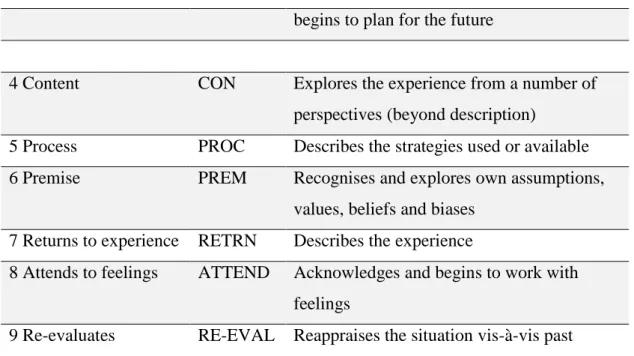
Table 5. Breadth Elements of Reflection with Codes
Element of reflection Code Brief definition
1 Reflection in action RIA Occurs while in the midst of an action; on the spot decisions
2 Reflection on action ROA Occurs after the action has been completed 3 Reflection for action RFA Occurs before being faced with the situation;
begins to plan for the future
4 Content CON Explores the experience from a number of perspectives (beyond description)
5 Process PROC Describes the strategies used or available 6 Premise PREM Recognises and explores own assumptions,
values, beliefs and biases 7 Returns to experience RETRN Describes the experience
8 Attends to feelings ATTEND Acknowledges and begins to work with feelings
9 Re-evaluates RE-EVAL Reappraises the situation vis-à-vis past experiences
Adapted from Plack et al. (2005)
Structured activity development: CEs in the experimental practice group facilitated the session using a different structured activity across six weeks; all three experimental practice groups followed the same order of activities, having been provided an activity schedule (see Appendix F) prior to commencement of the study. Activities were reviewed by project supervisors, and piloted by eight second year and four fourth year BSLP students. Following pilot of activities, minor reviews were made to activity instructions until agreement of terminology and protocol was reached. Final reviews aimed to maximise the flow of activities and extent to which these would be understood by students. Table 6 lists the final activities with a brief description. Each activity involved student turn-taking following which, a student would read out a question to the group.
Table 6. Activities with Brief Description
Activity Name Brief Description
music played on an iPad. When the music stopped, the student holding the parcel would unwrap a layer to reveal a question Weekly Items Weekly Items were seven physical items such as a mirror,
magnifying glass and glitter that each related to a specific question.
Board Game Board Game involved moving game pieces along a board of multiple coloured squares. Each colour related to a specific question.
Dice Roll Dice Roll involved taking turns to roll an 8-sided dice. Each number correlated to a specifi