Via Sapientiae
Via Sapientiae
College of Science and Health Theses and
Dissertations College of Science and Health
Spring 6-14-2019
Chasing the white whale: Capturing the relation between parent
Chasing the white whale: Capturing the relation between parent
educational involvement and student socioemotional difficulties
educational involvement and student socioemotional difficulties
over time
over time
Samantha Irene Reaves
DePaul University, [email protected]
Follow this and additional works at: https://via.library.depaul.edu/csh_etd
Part of the Clinical Psychology Commons, and the Community Psychology Commons
Recommended Citation Recommended Citation
Reaves, Samantha Irene, "Chasing the white whale: Capturing the relation between parent educational involvement and student socioemotional difficulties over time" (2019). College of Science and Health Theses and Dissertations. 304.
https://via.library.depaul.edu/csh_etd/304
This Dissertation is brought to you for free and open access by the College of Science and Health at Via Sapientiae. It has been accepted for inclusion in College of Science and Health Theses and Dissertations by an authorized administrator of Via Sapientiae. For more information, please contact [email protected].
Chasing the white whale: Capturing the relation between parent educational involvement and student socioemotional difficulties over time
Proposal for Dissertation Presented to
The Department of Psychology DePaul University Samantha Irene Reaves
Table of Contents
Abstract………3
Introduction (Publication version)………...4
Does Parent Educational Involvement Influence Child Socioemotional Outcomes?...5
Does Child Socioemotional Functioning Predict Parent Educational Involvement?... 7
Current Study………...9 Method……….9 Participants………..9 Measures………11 Procedures………..12 Analyses……….13 Results………14 Discussion………..16 References………..22
Figures and Tables……….28
Appendix A. Full Literature Review and References………....33
Appendix B. Measures………...67
Appendix C. Original Data Analysis Plan, Results, and Summary………...77 ii
Abstract
Early childhood socioemotional difficulties are of increasing concern due to their impact on later functioning, particularly in the academic environment. A large body of research highlights the relation between parent educational involvement and student academic success such that more involvement is associated with better grades, retention, and graduation. It is praised by the research community and policymakers as a protective factor for those students at risk for poor outcomes. An under-researched area of the parent educational involvement literature is the construct’s relation to student socioemotional functioning, which also affects success in the academic environment and predicts long term functioning. A handful of studies document parent educational involvement is associated with less externalizing and internalizing difficulties in longitudinal studies with preschoolers (Fantuzzo, McWayne, Perry, & Childs, 2004; Goldberg & Smith 2017). However, less information is known about whether and how child socioemotional functioning influences parent educational involvement. This study seeks to longitudinally investigate these associations, evaluating parent educational involvement as a predictor of later child socioemotional difficulties, and socioemotional difficulties as a predictor of later parent educational involvement. Participants were low-income, predominantly Latinx preschoolers (n =69) and their primary caregivers. Regression analyses revealed a significant negative
association between baseline home-school conferencing and later child difficulties (ß = -.20, p <.05), after controlling for child age and gender, and initial socioemotional functioning.
Additionally, child socioemotional difficulties predicted later home-based involvement (ß = .23, p <.05), after controlling for initial levels of parent educational involvement and marital status. Results suggest promoting positive home-school communication may curb later socioemotional concerns. In addition, findings highlight child functioning influences parent educational
involvement, and socioemotional problems may act as an invitation for parents to increase their educational involvement at home. Cultural considerations and the implications for research and policy are discussed, including strategies for developing regular positive communication that may be viable for ethnic minority low-income families.
Chasing the white whale: Capturing the relation between parent educational involvement and student socioemotional difficulties over time
Parent educational involvement is lauded by parents, school personnel, and policy makers as an important piece of children’s educational success, which has often been documented
through associations with academic achievement. However, definitions of educational success increasingly integrate socioemotional competencies as key components of school readiness (Blair & Raver, 2015), and the significance of early socioemotional problems is now well recognized by education and public health experts. Epidemiological studies show nine to fourteen percent of children aged 0 to 5 in the United States experience emotional or behavioral problems (Brauner & Stephens, 2006), resulting in significant impairment, family stress (Repetti, Taylor, & Seeman, 2002), and poor academic achievement or school failure (Sabol & Pianta, 2012). Understanding associations between parent educational involvement and child socioemotional functioning may be particularly important for low income, Latinx children, because of increased risk for socioemotional deficits at school entry (Tough, 2013) and difficulty capitalizing on known protective factors, such as parent educational involvement (Arnold, Zeljo, Doctoroff, & Ortiz, 2008; Desimone, 1999; Williams & Sánchez, 2013). Enhancing parents’ earliest interactions with school systems may set them up for a positive educational involvement trajectory, and prevent or reduce child socioemotional difficulties.
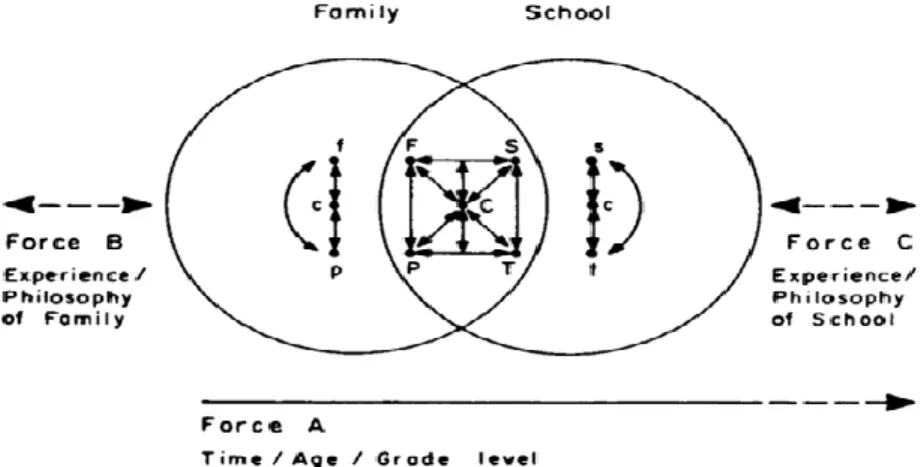
Epstein’s conceptual framework (Figure 1) can be used to understand family and school relations. The theory includes history, child development, and the shifting relationships between key stakeholders (parents, children, and teachers). Epstein (1987) posits there are overlapping spheres between home and school that are influenced by several external factors including time (e.g. grade level and social conditions at the time the child is in school), the experience of the
family (e.g. previous relations with schools, beliefs and attitudes regarding school involvement), and the experience of the school and its personnel (e.g. dedication to involving parents). This framework highlights the importance of children to the home-school dynamic and transactional associations between child, family, and schools. Further, the model posits active partnerships between the two systems enhances child well-being, proposing protective functions for parent educational involvement (Grolnick & Raftery-Helmer, 2015).
Does Parent Educational Involvement Influence Child Socioemotional Outcomes?1
Parent Educational Involvement can be defined as “parents’ behaviors in home and school settings meant to support their children’s educational progress” (El Nokali, Bachman, & Votruba-Drzal 2010, p. 989). It is a robust predictor of student academic outcomes for children in early childhood education settings (Ma, Shen, Krenn, Hu, &Yuan, 2016) and across school grades (Jeynes, 2007; Toper, Keane, Shelton, & Calkins, 2011; Wang & Sheikh-Khalil, 2014). Although less frequently studied, a handful of studies document parent educational involvement predicts better child socioemotional functioning from preschool through high school and among Caucasian and African American children (Downer & Mendez, 2005; El Nokali et al., 2010; Farver, Xu, Eppe, & Lonigan, 2006; Powell, Son, File, & San Juan, 2010). Specifically, parent educational involvement is associated with reduced child externalizing problems both
concurrently and prospectively (Baker, 2013; Domina, 2005; Fantuzzo, McWayne, Perry, & Childs, 2004).
Home-based involvement (e.g. reading to the child, educational outings, discussing school, etc.) predicts later reductions on teacher-reported child conduct problems, hyperactivity, and inattention/passivity among low-income, urban African American preschoolers attending
Head Start centers (Fantuzzo et al., 2004). In addition, Goldberg and Smith (2017) found parent-reported school-based involvement predicted fewer internalizing difficulties two years later when controlling for baseline difficulties in a preschool sample. Results mirror the cross-sectional findings of a study with older children that documented correlations between more home- and school-based involvement and less hyperactivity and better social skills (McWayne, Hampton, Fantuzzo, Cohen, & Sekino, 2004). Despite increased barriers to parent educational involvement among Latinx families, home-based involvement is associated cross-sectionally with social competence among preschool aged children (Farver et al., 2006) and first graders (Valdez, Shewakramani, Goldberg, & Padilla, 2013)
The relation between home-school conferencing and child socioemotional outcomes is less well understood. In their longitudinal study with African American preschoolers, Fantuzzo and colleagues (2004) found parent-reported home-school conferencing was associated with less teacher-reported child conduct problems 6 months later. In contrast, Goldberg and Smith (2017) found home-school conferencing in preschool did not predict later internalizing difficulties and Serpell and Mashburn (2012) found attending conferences was not a significant predictor of child outcomes during preschool and at kindergarten entry. Unexpectedly, they found higher frequency of parent-teacher phone calls during preschool predicted more problem behaviors and lower social competence during preschool and at kindergarten entry (Serpell & Mashburn, 2012). However, their measure captured both successful and unsuccessful attempts at communication (missed calls) initiated by parents or teachers. It is possible a higher frequency of calls indicated a lack of conferencing (e.g. failed contacts), which may lead to worsening behavioral problems, since the problematic behavior is never resolved. Based on these conflicting results, further
research is needed to disentangle the relation between home-school conferencing and socioemotional difficulties for preschoolers.
Does Child Socioemotional Functioning Predict Parent Educational Involvement?
Conceptual models of family-school relationships (Epstein, 1987), and developmental psychopathology models propose evocative effects of child maladaptation on parenting (Pearl, French, Dumas, Moreland, & Prinz, 2014; Williams et al., 2009) and suggest child
socioemotional functioning also shapes parent educational involvement. Children who are defiant evoke more negative responses from parents, such as ineffective discipline, a permissive discipline style, and less positive parenting and satisfaction (Burke, Pardini, & Loeber, 2008; Pearl et al., 2014). Children’s internalizing problems also predict later parenting difficulties (e.g. ignoring misbehavior, lack of confidence in parenting; Williams et al., 2009).
On the other hand, specifically pertaining parent educational involvement, Hoover-Dempsey and Sandler’s (1995) model posits children’s invitations for parent educational
involvement are key predictors. These invitations may be implicit (e.g. difficulties with school or homework requiring the parent’s involvement for a resolution) or explicit requests (e.g. asking parents to attend field trips). Green, Walker, Hoover-Dempsey, and Sandler (2007) found child explicit invitations for involvement were predictive of home-based and school-based
involvement, even after accounting for socioeconomic status and maternal education supporting children are active participants in the home-school relationship.
Cross-sectional studies report mixed findings regarding the associations between children’s socioemotional functioning and parent educational involvement at home. Grolnick, Benjet, Kurowski, and Apostoleris (1997) reported mothers participated in more home-based involvement activities with children they perceived as less difficult (e.g. more obedient and less
controlling). In contrast, Downer and Mendez (2005) reported preschoolers’ negative emotional intensity was associated with more father involvement in home-based educational activities among low-income, African Americans. Sample differences (predominantly low-income African-American fathers vs. economically diverse white mothers) may explain the different findings of these two studies; most the children in Grolnick and colleagues’ (1997) study also lived in two-parent households, and mothers may have reported less involvement with difficult children because they sought additional assistance from a co-parent at home.
However, cross-sectional research does not clarify the directionality of associations. To address this gap, one longitudinal study tested the effect of child socioemotional problems on later parent educational involvement. Hoglund and colleagues (2015) investigated three types of models (transactional, child effects only, and parent effects only) to describe the relation between individual dimensions of parent educational involvement (homework assistance, conferencing, and school-based involvement) and aggressive behavior in a two-year longitudinal study. The best fitting model included child socioemotional functioning effects on parent educational involvement activities; specifically, aggressive behaviors in the fall of 3rd grade significantly
predicted more caregiver homework assistance in the spring of 3rd grade. Models with
parent-to-child or transactional effects were not a good fit for the data. This study suggests parent-to-child characteristics impact parent educational involvement for a diverse population of elementary school-aged children However, no other published studies investigate the transactional relation between educational involvement and socioemotional functioning, which suggests additional research is needed to explore these relationships, especially for younger children and those experiencing internalizing difficulties.
Current Study
Theory suggests parent educational involvement and child socioemotional outcomes are intrinsically connected (Epstein, 1987). Research has documented home-based educational involvement longitudinally predicts fewer socioemotional problems for preschoolers (Fantuzzo et al., 2004; Goldberg & Smith, 2017) and young children (El Nokali et al., 2010). However, findings are mixed regarding the effects of home-school conferencing activities on child socioemotional outcomes, and reflect methodological differences on the measurement of conferencing (i.e. phone contact vs attendance at conferences; Serpell & Mashburn, 2012). On the other hand, little research has evaluated the effects of socioemotional problems on
educational involvement using longitudinal methods, but preliminary research suggests
children’s behavior can serve as invitations for parent educational involvement (Hoglund et al., 2015). Moreover, studies have infrequently focused on young Latinx children, a growing population in the United States with unique cultural and linguistic characteristics that may influence their attitudes towards and involvement with schools.
The current study had two aims. The first aim of the study was to investigate whether parent educational involvement activities, specifically based involvement and home-school conferencing predict later socioemotional functioning during prehome-school within a low-income, Latinx population. The second aim of our study was to explore whether child socioemotional difficulties during preschool influence later parent educational involvement among low-income Latinx caregivers.
Method
Participants
participated. Families were recruited from three sites of a large provider (approx. 600 children) of Head Start services in the Chicago area where most of the staff was bilingual (English and Spanish). The sites served neighborhoods that were predominantly Latinx: flyers were sent home with all children in all classrooms, and research staff attended parent meetings at the centers to present information about the study and were available on-site to answer questions and enroll participants. All children who attended preschool at the centers could participate unless they (1) already had a sibling participating in the study or (2) had an Autism Spectrum Disorder or Cognitive Impairment diagnosis.
The present sample includes children who participated in baseline and follow-up data collection (8 months later). Twenty families enrolled in the study but only completed the first wave of data collection, so they are not included in the present study. Parents chose not to participate due to scheduling difficulties, because their child no longer attended the center, or they could not be reached. There were some noted differences between this study’s sample of 71 parent-child dyads and the 20 families that did not participate in the follow up data collection. For example, non-participating families were less likely to be Latinx than participating children (X2 (4, N = 89) = 13.31, p <.05; 65% vs 92.8% Latinx) and parents (X2 (4, N = 91) = 11.02, p
<.05; 65% vs. 91.5%) and of higher income (52.6% made above $30,000 vs 27%; F (1,83) = 4.451, p < .05). In addition, the caregivers’ country of origin was more diverse for
non-participating families (X2 (5, N = 91) = 12.45, p <.05). There were no significant differences in
group means for child age or gender, or parental marital status, level of education completed, or employment status. Two participants were removed from further data analyses due to significant missing data on one of the key measures, therefore, the final sample size was 69.
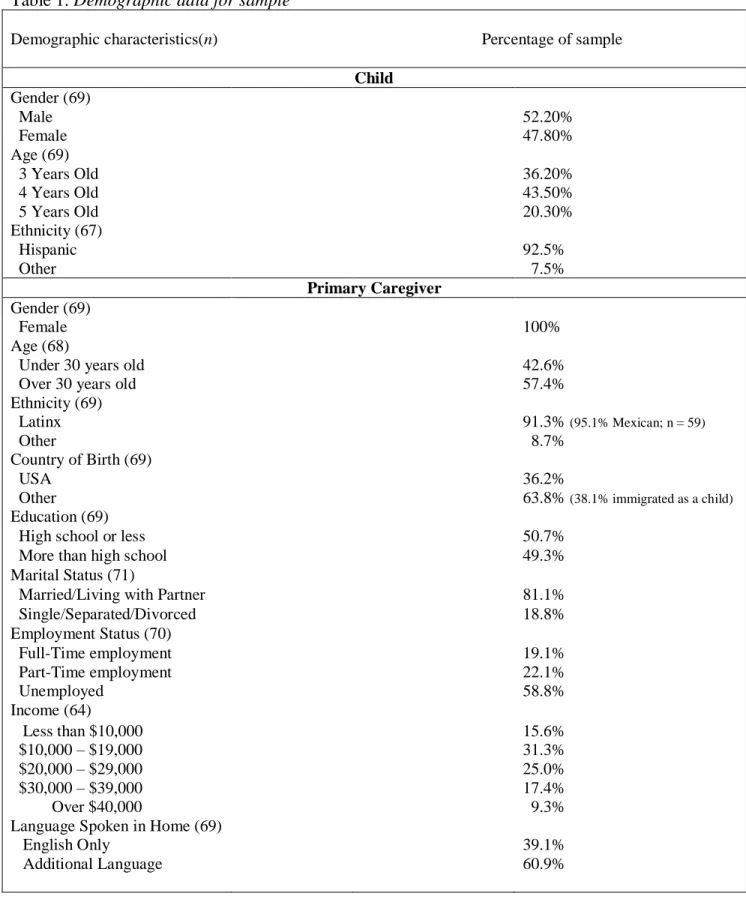
Table 1. Children were 3 to 5 years and 8 months old (M = 3.89, SD = .73) Most were Latinx (92.5%) and half the children were male (52.2%). Primary caregivers were 100% female, and mostly biological mothers. One primary caregiver was an adoptive mother. Primary caregivers were mostly Latino (91.3%). Additionally, many caregivers were immigrants (63.7%) and the majority identified as Mexican (94.9%). Half of the primary caregivers completed high school or less (50.7%). Most families made less than $30,000 per year (71.9%) and spoke another
language in the home besides English (61%).
Measures2
Demographics. A questionnaire created for the study, which gathered information about the child’s age, gender, and ethnicity as well as information on the caregiver’s age, education, ethnicity, immigration history (i.e. country of birth, age moved to the United States, if
applicable), income and employment (i.e. full-time, part-time, or unemployed), and languages spoken in the home.
Child Behavior Checklist Parent-Report Form (CBCL-PRF, Achenbach & Rescorla, 2001). CBCL-PRF is a 100-item questionnaire assessing parental reports of behavioral and emotional problems, which yield a total score, broadband internalizing and externalizing scales, and eight subscales. Caregivers rate their child’s behavior on a 3-point Likert scale (0=Never true, 1=Sometimes True, 2=Often True). It is a measure with excellent internal consistency and test-retest reliability (Weiss, Goebel, Page, Wilson, & Warda, 1999). Validity is supported through correlations with the Behavior Assessment System for Children (BASC) scales (r = .38. to 88) and a high percentage of correct classification of referred versus non-referred children
(80–85%; Achenbach & Rescorla, 2001). For this study, the raw total scores were used and internal consistency was acceptable: Year 1 α = .76 and Year 2 α = .81.
Family Involvement Questionnaire Short Form (FIQ-SF, Fantuzzo et al., 2013). The FIQ-SF based on the Family Involvement Questionnaire (Fantuzzo, Tighe, & Childs, 2000). It is a 21-item questionnaire that assesses three domains of parent involvement in education: Home-Based involvement (e.g., I spend time with my child working on reading/writing skills, I talk with my child about how much I love learning new things), School-Based involvement (e.g., I volunteer in my child’s classroom, I attend parent workshops or training offered by my child’s school), and Home-School Conferencing (e.g., I talk to my child’s teacher about classroom rules, I talk to the teacher about how my child gets along with his/her classmates in school). Items are rated using a 4-point frequency scale (1= Rarely, 2 = Sometimes, 3 = Often, 4 = Always). This questionnaire was designed specifically for early childhood education (pre-k, kindergarten, 1st grade) and was normed with urban, low-income, minority populations (Fantuzzo, Tighe, & Childs, 2000). The measure is reliable (α > .80, Fantuzzo et al., 2013; Bulotsky-Shearer, Bouza, Bichay, Fernandez, & Gaona Hernandez, 2016). Also, it demonstrates concurrent validity through correlations with parental satisfaction with the preschool program (Fantuzzo et al., 2013). Subscale scores were calculated by adding the relevant 7 items together to form a total score for each subscale, and the home-based involvement and parent-teacher conferencing subscales were used. The measure demonstrated strong internal consistency in our sample: home-based involvement Year 1 α = .85, home-school conferencing Year 1 α = .92, home-based involvement Year 2 α =.87, and home-school conferencing Year 2 α = .91.
Procedures
survey packets were sent home to all parents at the three centers in the winter of 2015 and fall of 2016. Survey packets included several measures of their child’s functioning (externalizing and internalizing difficulties, parent-child relationship, trauma exposure) and parental information (acculturation, parent-school involvement, stressful life events, psychopathology). Parents were offered the option to complete the questionnaire on their own or with an interviewer (via phone or in-person); only one parent decided to complete the questionnaire with assistance. Parents returned completed packets to the confidential bins at the centers or mailed them to the principal investigator’s research office.
Participating families were invited to a follow up assessment (T2) approximately 8 months later. Parents were contacted via telephone, email, and letters sent home with their children or directly mailed to their homes. Children who were no longer enrolled at the
preschools were still invited to complete the assessment. Primary caregivers completed a survey packet during the in-person interview after completing interactive activities with their children. For the purposes of this study, selected questionnaires were used from the primary caregiver surveys, at both time points, to explore the relation between child socioemotional difficulties and parent educational involvement.
Data Analyses
To evaluate whether the data met key assumptions for regression analyses, including a linear relationship, normality, independence, and homoscedasticity, scatterplots of the variables’ relationship and their variances, as well as the Durbin-Watson statistic and histograms were used. Hierarchical regressions were used for hypothesis testing. Parental education-level, income, and marital status were examined as possible covariates to include in the regression models. Demographic variables were not associated with child socioemotional problems. Marital
status was associated with Home-based Involvement and controlled for in the model where this was the outcome.
To test the relation between baseline (T1) parent educational involvement and later (T2) socioemotional difficulties, child age and gender were entered as covariates to control for age and gender effects on raw CBCL scores. Baseline socioemotional difficulties were entered in block 2. Block 3 included baseline parent educational involvement (Home-Based Involvement and Home-School Conferencing).
To determine if baseline (T1) socioemotional difficulties predict later (T2) parent educational involvement variables, two independent regressions were estimated: one for Home-Based Involvement and one for Home-School Conferencing. In block one, covariates were entered (parent marital status). Baseline educational involvement dimensions (Home-Based Involvement or Home-School Conferencing) were entered in block 2. Block 3 included baseline socioemotional difficulties.
Results
Data was consistent with the assumptions necessary for regression analyses. Outliers (>3SD from the mean) were winsorized to reduce the potential influence of extremely high values. Less than 2% of the data were missing. Mean substitution at the person-level was used for those item scores.
Descriptive statistics and bivariate correlations for all included variables are presented in Table 2 and 3. Most caregivers reported high levels of involvement, which were close to the maximum score of 28. The average score for home-based involvement (M = 22.72) and school conferencing scales (M = 22.7) reflects items were typically rated as happening “often,” based on the frequency scale used at baseline. The Child Total Problem Score was well within the
normative range (M = 16.62, T1; M = 15.25, T2) at both time points. Contrary to expectations, parent educational involvement and child socioemotional functioning were not significantly correlated.
Parent Educational Involvement as a Predictor of Later Socioemotional Functioning
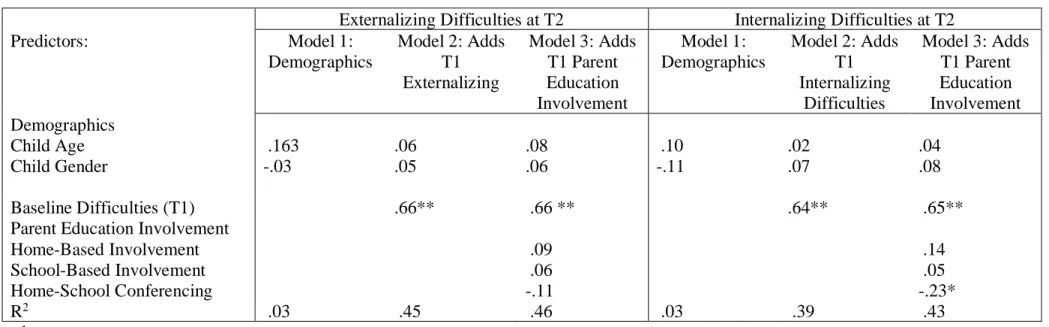
Home-based and Home-School Conferencing were investigated as predictors of later Total Problems when controlling for child age and gender, as well as T1 Total Problems. The regression model predicted 53% of variance in T2 socioemotional functioning. The first and second step of the model explained 50% of variance. Adding Home-Based Involvement and Home-School Conferencing significantly improved model fit (r2= .53; F (5,62) = 14.19, p
<.001) and contributed a 3% increase in variance explained; suggesting educational involvement had a small effect on child problems. Home-School Conferencing was the only significant predictor of later functioning (ß = -.20, p < .05; Table 4), suggesting that increases in
conferencing activities predict fewer parent-reported child difficulties later, above and beyond the effects of initial child socioemotional problems.
Socioemotional Functioning as a Predictor of Later Parent Educational Involvement
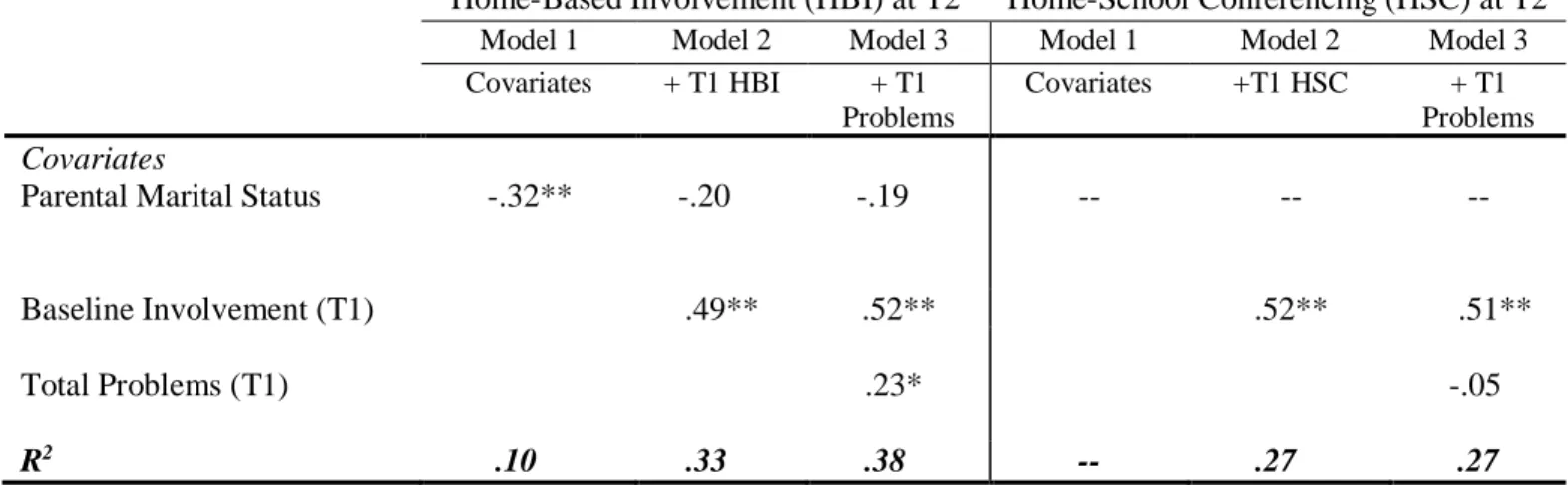
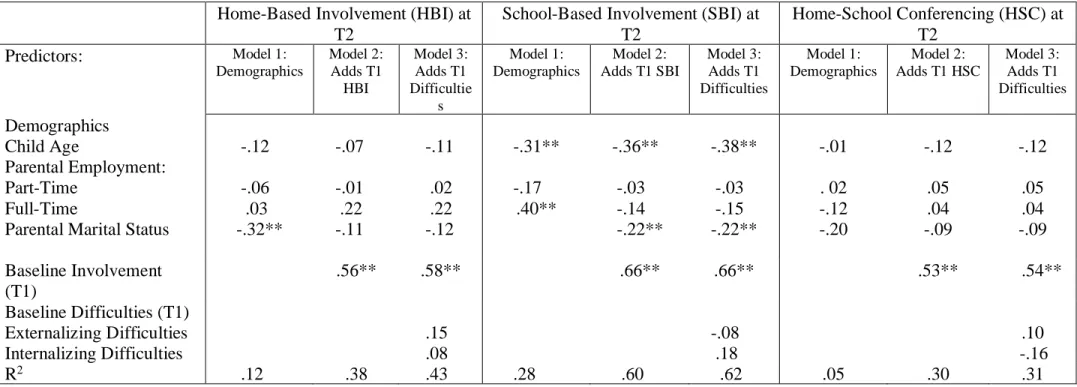
Socioemotional functioning was investigated as a predictor of later parent educational involvement when controlling for significant covariates (i.e. marital status for Home-Based Involvement) and initial levels of involvement. The regressions explained 38% of variance in home-based involvement and 27% of variance in home-school conferencing. Adding Total Problems significantly improved model fit (r2= .38; F (3,65) = 13.11, p <.001) and contributed a
5% increase in variance explained, suggesting a small effect. Total Problems were a predictor of later home-based involvement (ß = .23, p < .05; Table 5), with more child difficulties predicting more frequent parent home-based involvement 8 months later, above and beyond previous
educational involvement levels. However, child difficulties were not a significant predictor of Home-School Conferencing (Table 5).
Discussion
This study investigated the relation between parent educational involvement and student socioemotional functioning among a sample of low income Latinx preschoolers. Results provide evidence that more home-conferencing activities enhance child socioemotional functioning using a longitudinal design and controlling for initial levels of child socioemotional problems. In contrast, home-based involvement was not a significant predictor of later child functioning. Results also showed more child socioemotional difficulties predicted increases in home-based involvement eight months later, but did not influence parent-school conferencing. The results point to the protective effects of parent-teacher communication and highlight the importance of considering child-level characteristics when investigating barriers or facilitators to parent educational involvement.
The current study contributes to the inconclusive literature on home-school conferencing. We found more frequent home-school conferencing activities predicted decreases in child
problems as reported by parents. The results replicate previous cross-sectional findings with elementary school aged African American children (Brody & Flor, 1998), as well as longitudinal findings with African American preschoolers (Fantuzzo et al., 2004) and extend finding to Latinx preschoolers. Although other longitudinal studies have found parent-teacher contact does not predict changes in child socioemotional functioning, or is associated with later increases in problem behavior and low social competence, methodological differences between these studies can inform the kinds of communication between parents and schools that may be most fruitful. Goldberg and Smith (2017) found neither parent-reported (and initiated) negative contact with
the school about child performance nor teacher reported (and initiated) negative contact with parents help ameliorate internalizing difficulties among adopted preschoolers. Further, Serpell and Mashburn (2012) reported attending conferences was not a significant predictor of child outcomes, but higher frequency of parent-teacher phone calls (attempted and completed) during preschool predicted more problem behaviors and lower social competence during preschool and at kindergarten entry. In contrast, the measure of home-school conferencing used in our study includes a broader range of behaviors (i.e. discussing the child’s accomplishments, school rules, and daily routine with the teacher) and may capture not only the quantity, but the quality of communication.
More frequent and positive communication about the child may lead to better teacher and parent awareness of potential issues they would otherwise have difficulty identifying. Often, teachers are have a more difficult time identifying and reporting internalizing difficulties when compared to externalizing difficulties (Abikoff, Courtney, Pelham, & Koplewicz, 1993). In contrast, parents provide valid reports of internalizing difficulties for young children (De Los Reyes et al., 2015; Youngstrom, Loeber, & Stouthamer-Loeber, 2000). Additionally, frequent communication with the school may make parents aware of difficulties with peers and
adjustment to the school environment, providing parents with more information to address the source of difficulties. Our findings suggest increasing positive interactions between parents and teachers (as opposed to solely initiating contact because of problems) may be useful to
decreasing later difficulties. Future research that clarifies the specific factors or characteristics of home-school communication, and the processes via which it contributes to child socioemotional health can inform school programming and prevention/intervention efforts and help schools and parents maximize limited resources.
Surprisingly, home-based involvement, a robust predictor of socioemotional and academic functioning in previous research, was not a significant predictor of child
socioemotional functioning in our sample. However, previous studies that found this association often used teacher ratings of child emotional and behavioral difficulties (Fantuzzo et al., 2004; Powell et al., 2010), and the two studies that used parent reports of child behavior did not find an association cross-sectionally (McWayne et al., 2004) or longitudinally (El Nokali et al., 2010). Parents and teachers may report child behaviors differently based on the context of their
observations and their expectations (Stanger & Lewis, 1993). Teachers’ exposure to a classroom of students may influence socioemotional ratings and provide a more accurate representation of socioemotional functioning, particularly externalizing difficulties (Eiraldi, Mazzuca, Clarke, & Power, 2006). It is also possible the operationalization of home-based involvement in our study did not capture the activities most salient to Latinx families, such as activities that foster the social and moral development of their children (McWayne et al., 2013).
A second goal of this study was to explore the potential of child socioemotional
difficulties to influence later parent educational involvement. Child difficulties predicted more parent educational involvement in the home 8 months later, controlling for initial levels of child educational involvement. This finding is consistent with Hoglund and colleagues’ (2015)
longitudinal finding that aggressive behaviors predicted more homework assistance, an aspect of home-based involvement, among third, and fourth graders. Findings are also consistent with other cross-sectional studies that found connections between home based involvement and children's behavior (Downer & Mendez, 2005; Grolnick et al., 1997). A possible explanation, using Hoover-Dempsey and Sandler’s (1995) model, is that child difficulties function as an invitation to increase involvement.
However, in contrast with Hoglund and Colleagues’ (2015) findings, child difficulties did not predict changes in home-school conferencing activities. It is possible the low levels of
socioemotional difficulties in our sample influenced our results. Eiraldi and Colleagues (2006) suggest parents seek treatment and support when their children’s behavior is impairing, and that threshold may be higher for minority families (Roberts, Alegria, Roberts, & Chen, 2005); therefore, the low-level difficulties displayed by most children in our sample may not act as an invitation that leads to shifts in parental behavior in the school setting, especially among a cultural group that may be hesitant to engage school personnel due to perceived barriers and the stigma attached to socioemotional difficulties (Nadeem et al., 2007). Additional studies need to replicate the effects of child socioemotional problems on parent involvement and continue to evaluate bidirectional associations between educational involvement and child socioemotional outcomes among children with different levels of clinical severity.
Implications
Our findings suggest home-school conferencing may be useful in curbing future
socioemotional difficulties for low-income, Latinx preschoolers. Fortunately, this is a relatively flexible dimension of parent educational involvement and does not necessarily need to be conducted in school or in person, which may be important for families with little time or transportation difficulties. Programming geared toward increasing positive conversations between staff and families around socioemotional functioning may improve parent-teacher relationships and student-teacher relationships, and reduce stress in both environments. Establishing social media pages, newsletters, automated text messages, or other forms of communication may be helpful in increasing the communication between the two systems and decreasing barriers to participation; using more engagement strategies is associated with higher
involvement (Calzada et al., 2015). Previous research highlights additional strategies that can be adopted to enhance the involvement of Latinx and immigrant parents with schools, including school initiated contact (Ramirez, 2003), schools’ appreciation for parents’ cultural values, and having staff that share parent’s cultural identity (Calzada et al., 2015).
Additionally, the results suggest parents may adjust their behavior at home in response to socioemotional difficulties without increasing their direct involvement with school personnel. School personnel may not be aware of the changes parents are making to address difficulties and inviting parents to share their perspective could be helpful in promoting positive communication between the two systems and validating parents’ efforts. Providing parents with strategies to try in their home may also be helpful. Universal programs directed at improving children’s school readiness by improving teachers’ classroom management and by delivering a socioemotional curriculum often contain a parent involvement component (e.g. homework for the parent and child to complete together) that has been associated with satisfaction with the programming (Webster-Stratton, Reid, & Stoolmiller, 2008). Extending school-based programming to include parents may be a helpful way to provide parents with strategies to use at home that are consistent with school-based initiatives without targeting individual children.
Limitations
There may be limited generalizability because of the specificity of the demographics of this sample. Many of the families who chose to participate reported high levels of involvement and low levels of socioemotional concerns; therefore, the relations may not be representative of children and families with significant difficulties and barriers to involvement. Also, we did not investigate the potential differences or overlap between general parent involvement and specific educational involvement in the home, which may be difficult to differentiate at this
developmental level. Additionally, although regression analyses had enough power to detect small effect sizes, the small sample size limited our ability to use more advanced statistical techniques akin to Hoglund and colleagues’ (2015) study or test for possible moderators affecting the relationships. Finally, our use of parent-reported data may have shaped the results and limited our ability to make conclusions about behavior across settings and to assess any reporting bias that may have been present due to the social desirability of presenting the child in a favorable light. Despite these limitations, this study´s unique sample and longitudinal
methodology significantly advances our understanding of parent educational involvement and socioemotional functioning among young low-income Latinx children.
Conclusion
Parent educational involvement is praised by many groups, parents included, as an important factor in children’s functioning and success in an academic environment. This study provided evidence that aspects of involvement influence child socioemotional functioning and vice versa. It expanded the literature on these understudied relations by using a longitudinal design and investigating the relation for Latinx young children, a population often left out of the parent involvement literature. Additional research in this area is needed to enhance parent-school communication and better understand parents’ efforts to manage their children´s socioemotional problems through their home involvement, this information can guide culturally relevant
References
Abikoff, H., Courtney, M., Pelham, W. E., & Koplewicz, H. S. (1993). Teachers’ ratings of disruptive behaviors: The influence of halo effects. Journal of Abnormal Child Psychology, 21(5), 519-533 Achenbach, T. M., & Rescorla, L. (2001). ASEBA school-age forms & profiles.
Arnold, D. H., Zeljo, A., Doctoroff, G. L., & Ortiz, C. (2008). Parent involvement in preschool: Predictors and the relation of involvement to preliteracy development. School Psychology Review, 37(1), 74-90.
Baker, C. E. (2013). Fathers’ and mothers’ home literacy involvement and children’s cognitive and social emotional development: Implications for family literacy programs. Applied Developmental Science, 17(4), 184-197.
Blair, C., & Raver, C. C. (2015). School readiness and self-regulation: A developmental psychobiological approach. Annual review of psychology, 66, 711-731.
Bulotsky‐Shearer, R. J., Bouza, J., Bichay, K., Fernandez, V. A., & Gaona Hernandez, P. (2016). Extending the validity of the family involvement questionnaire-short form for culturally and linguistically diverse families from low-income backgrounds. Psychology in the Schools, 53(9), 911-925.
Brauner, C. B., & Stephens, C. B. (2006). Estimating the prevalence of early childhood serious
emotional/behavioral disorders: challenges and recommendations. Public health reports, 121(3), 303-310.
Brody, G. H., & Flor, D. L. (1998). Maternal resources, parenting practices, and child competence in rural, single‐parent African American families. Child Development, 69(3), 803-816.
Burke, J. D., Pardini, D. A., & Loeber, R. (2008). Reciprocal relationships between parenting behavior and disruptive psychopathology from childhood through adolescence. Journal of Abnormal Child Psychology, 36(5), 679-692.
Calzada, E. J., Huang, K. Y., Hernandez, M., Soriano, E., Acra, C. F., Dawson-McClure, S., ... & Brotman, L. (2015). Family and teacher characteristics as predictors of parent involvement in education during early childhood among Afro-Caribbean and Latino immigrant families. Urban education, 50(7), 870-896.
De Los Reyes, A., Augenstein, T. M., Wang, M., Thomas, S. A., Drabick, D. A., Burgers, D. E., & Rabinowitz, J. (2015). The validity of the multi-informant approach to assessing child and adolescent mental health. Psychological Bulletin, 141(4), 858-900.
Desimone, L. (1999). Linking parent involvement with student achievement: Do race and income matter?. The Journal of Educational Research, 93(1), 11-30.
Domina, T. (2005). Leveling the home advantage: Assessing the effectiveness of parental involvement in elementary school. Sociology of Education, 78(3), 233-249.
Downer, J. T., & Mendez, J. L. (2005). African American father involvement and preschool children’s school readiness. Early Education and Development, 16(3), 317-340.
Eiraldi, R. B., Mazzuca, L. B., Clarke, A. T., & Power, T. J. (2006). Service utilization among ethnic minority children with ADHD: A model of help-seeking behavior. Administration and Policy in Mental Health and Mental Health Services Research, 33(5), 607-622.
El Nokali, N. E., Bachman, H. J., & Votruba‐Drzal, E. (2010). Parent involvement and children’s academic and social development in elementary school. Child Development, 81(3), 988-1005.
Epstein, J. (1987). Toward a theory of family-school connections: Teacher practices and parent involvement. In K. Hurrelman & F. Kaufmann (Eds.), Social intervention: Potential and constraints. Berlin: Walter de Gruyer.
Fantuzzo, J., Gadsden, V., Li, F., Sproul, F., McDermott, P., Hightower, D., & Minney, A. (2013). Multiple dimensions of family engagement in early childhood education: Evidence for a short form of the Family Involvement Questionnaire. Early Childhood Research Quarterly, 28(4), 734-742.
Fantuzzo, J., McWayne, C., Perry, M. A., & Childs, S. (2004). Multiple dimensions of family
involvement and their relations to behavioral and learning competencies for urban, low-income children. School Psychology Review, 33(4), 467-480.
Fantuzzo, J., Tighe, E., & Childs, S. (2000). Family involvement questionnaire: A multivariate assessment of family participation in early childhood education. Journal of educational psychology, 92(2), 367-376.
Farver, J. A. M., Xu, Y., Eppe, S., & Lonigan, C. J. (2006). Home environments and young Latino children’s school readiness. Early Childhood Research Quarterly, 21(2), 196-212.
Goldberg, A. E., & Smith, J. Z. (2017). Parent-school relationships and young adopted children’s psychological adjustment in lesbian-, gay-, and heterosexual-parent families. Early Childhood Research Quarterly, 40, 174-187.
Green, C. L., Walker, J. M., Hoover-Dempsey, K. V., & Sandler, H. M. (2007). Parents’ motivations for involvement in children’s education: An empirical test of a theoretical model of parental
involvement. Journal of Educational Psychology, 99(3), 532-544.
Grolnick, W. S., Benjet, C., Kurowski, C. O., & Apostoleris, N. H. (1997). Predictors of parent involvement in children’s schooling. Journal of Educational Psychology, 89(3), 538-548.
Grolnick, W. S., & Raftery-Helmer, J. N. (2015). Core components of family–school connections: Toward a model of need satisfying partnerships. In Foundational Aspects of Family-School Partnership Research (pp. 15-34). Springer, Cham.
Hoglund, W. L., Jones, S. M., Brown, J. L., & Aber, J. L. (2015). The evocative influence of child academic and social-emotional adjustment on parent involvement in inner-city schools. Journal of Educational Psychology, 107(2), 517-532.
Hoover-Dempsey, K. V., & Sandler, H. M. (1995). Parental involvement in children’s education: Why does it make a difference?. Teachers College Record, 97(2), 310-331.
Jeynes, W. H. (2007). The relationship between parental involvement and urban secondary school student academic achievement: A meta-analysis. Urban Education, 42(1), 82-110.
Ma, X., Shen, J., Krenn, H. Y., Hu, S., & Yuan, J. (2016). A meta-analysis of the relationship between learning outcomes and parental involvement during early childhood education and early
elementary education. Educational Psychology Review, 28(4), 771-801.
McWayne, C., Hampton, V., Fantuzzo, J., Cohen, H. L., & Sekino, Y. (2004). A multivariate examination of parent involvement and the social and academic competencies of urban kindergarten children. Psychology in the Schools, 41(3), 363-377.
Nadeem, E., Lange, J. M., Edge, D., Fongwa, M., Belin, T., & Miranda, J. (2007). Does stigma keep poor young immigrant and US-born black and Latina women from seeking mental health care?. Psychiatric Services, 58(12), 1547-1554.
Pearl, A. M., French, B. F., Dumas, J. E., Moreland, A. D., & Prinz, R. (2014). Bidirectional effects of parenting quality and child externalizing behavior in predominantly single parent, under-resourced 25merica 25merican families. Journal of Child and Family Studies, 23(2), 177-188.
Powell, D. R., Son, S. H., File, N., & San Juan, R. R. (2010). Parent–school relationships and children’s academic and social outcomes in public school pre-kindergarten. Journal of School
Psychology, 48(4), 269-292.
Ramirez, A. F. (2003). Dismay and disappointment: Parental involvement of Latino immigrant parents. The Urban Review, 35(2), 93-110.
Repetti, R. L., Taylor, S. E., & Seeman, T. E. (2002). Risky families: family social environments and the mental and physical health of offspring. Psychological Bulletin, 128(2), 330-366.
Roberts, R. E., Alegría, M., Roberts, C. R., & Chen, I. G. (2005). Mental health problems of adolescents as reported by their caregivers. The Journal of Behavioral Health Services & Research, 32(1), 1-13.
Sabol, T. J., & Pianta, R. C. (2012). Patterns of school readiness forecast achievement and
socioemotional development at the end of elementary school. Child Development, 83(1), 282-299.
Serpell, Z. N., & Mashburn, A. J. (2012). Family–school connectedness and children’s early social development. Social Development, 21(1), 21-46.
Stanger, C., & Lewis, M. (1993). Agreement among parents, teachers, and children on internalizing and externalizing behavior problems. Journal of Clinical Child Psychology, 22(1), 107-116.
Toper, D. R., Keane, S. P., Shelton, T. L., & Calkins, S. D. (2011). Parent involvement and student academic performance: A multiple meditational analysis. Journal of Prevention & Intervention in Community, 38(3), 183-197.
Valdez, C. R., Shewakramani, V., Goldberg, S., & Padilla, B. (2013). Parenting influences on Latino children’s social competence in the first grade: Parental depression and parent involvement at home and school. Child Psychiatry & Human Development, 44(5), 646-657.
Wang, M. T., & Sheikh‐Khalil, S. (2014). Does parental involvement matter for student achievement and mental health in high school?. Child Development, 85(2), 610-625.
Webster‐Stratton, C., Jamila Reid, M., & Stoolmiller, M. (2008). Preventing conduct problems and improving school readiness: evaluation of the incredible years teacher and child training programs in high‐risk schools. Journal of child psychology and psychiatry, 49(5), 471-488. Weiss, S. J., Goebel, P., Page, A., Wilson, P., & Warda, M. (1999). The impact of cultural and familial
context on behavioral and emotional problems of preschool Latino children. Child Psychiatry and Human Development, 29(4), 287-301.
Williams, T. T., & Sánchez, B. (2013). Identifying and decreasing barriers to parent involvement for inner-city parents. Youth & Society, 45(1), 54-74.
Williams, L. R., Degnan, K. A., Perez-Edgar, K. E., Henderson, H. A., Rubin, K. H., Pine, D. S., ... & Fox, N. A. (2009). Impact of behavioral inhibition and parenting style on internalizing and externalizing problems from early childhood through adolescence. Journal of Abnormal Child Psychology, 37(8), 1063-1075.
Youngstrom, E., Loeber, R., & Stouthamer-Loeber, M. (2000). Patterns and correlates of agreement between parent, teacher, and male adolescent ratings of externalizing and internalizing problems. Journal of Consulting and Clinical Psychology, 68(6), 1038-1050.
Tables and Figures
Table 1. Demographic data for sample
Demographic characteristics(n) Percentage of sample
Child Gender (69) Male 52.20% Female 47.80% Age (69) 3 Years Old 36.20% 4 Years Old 43.50% 5 Years Old 20.30% Ethnicity (67) Hispanic 92.5% Other 7.5% Primary Caregiver Gender (69) Female 100% Age (68)
Under 30 years old 42.6%
Over 30 years old 57.4%
Ethnicity (69)
Latinx 91.3% (95.1% Mexican; n = 59)
Other 8.7%
Country of Birth (69)
USA 36.2%
Other 63.8% (38.1% immigrated as a child)
Education (69)
High school or less 50.7%
More than high school 49.3%
Marital Status (71)
Married/Living with Partner 81.1%
Single/Separated/Divorced 18.8% Employment Status (70) Full-Time employment Part-Time employment Unemployed 19.1% 22.1% 58.8% Income (64) Less than $10,000 15.6% $10,000 – $19,000 $20,000 – $29,000 $30,000 – $39,000 Over $40,000
Language Spoken in Home (69) English Only Additional Language 31.3% 25.0% 17.4% 9.3% 39.1% 60.9%
* p<.05 ** p<.01
Table 2. Correlations between possible covariate and study variables
1. 2. 3. 4. 5. 6. 7. 8. 9. 10. 11. 12. 1. Child Age T1 1 2. Child Gender T1 -.10 1 3. Highest Level of Education T1 -.22 .06 1 4. Marital Status T1 -.10 .14 -.19 1 5. Employed Part-Time T1 .03 .19 .04 -.11 1 6. Employed Full-Time T1 .00 -.22 .27* -.34* -.25* 1 7. Home-School Conferencing T1 .06 .01 -.20 -.10 .05 -.21 1 8. Home-Based Involvement T1 -.03 -.07 -.06 -.26* .04 -.18 .44** 1 9. Total Problems T1 .18 -.24* .04 .03 -.08 .07 -.06 -.12 1 10. Home-School Conferencing T2 -.08 .01 -.13 -.15 .07 -.06 .52** .37** -.09 1 11. Home-Based Involvement T2 -.08 -.21 .05 -.32** -.03 .16 .36** .54** .16 .52** 1 12. Total Problems T2 .122 -.06 -.05 -.04 -.08 -.10 -.15 -.01 .70** -.06 .05 1
Table 3. Means and Standard Deviations of study variables
Table 4. Standardized Coefficients from regression analyses for Total Problems at Time 2 (T2)
Model 1 Model 2 Model 3
Covariates +T1 Problems + T1 Parent Education Involvement Covariates Child Age Child Gender .12 -.05 .00 .12 .02 .13 Baseline Problems (T1) .72** .73**
Parent Education Involvement Home-Based Involvement Home-School Conferencing .18 -.20* R2 .02 .50 .53 *p<.05 ** p<.01 Year 1 Year 2 Mean SD Mean SD Home-Based Involvement 22.72 3.99 22.46 4.17 Home-School Conferencing 22.74 5.18 21.67 5.41 Total Problems 16.62 12.70 15.25 12.78
Table 5. Standardized Coefficients from regression analyses for Parent Education Involvement at Time 2 (T2)
Home-Based Involvement (HBI) at T2 Home-School Conferencing (HSC) at T2
Model 1 Model 2 Model 3 Model 1 Model 2 Model 3 Covariates + T1 HBI + T1
Problems
Covariates +T1 HSC + T1
Problems
Covariates
Parental Marital Status -.32** -.20 -.19 -- -- --
Baseline Involvement (T1) .49** .52** .52** .51** Total Problems (T1) .23* -.05 R2 .10 .33 .38 -- .27 .27
-- nonsignificant correlation; not included in analysis *p<.05
Figure 1. Epstein’s conceptualization of the home-school connection (Epstein, 1987, p. 131)
Figure 2. Theoretical model of the relation between parent education involvement and child socioemotional functioning. Parent Involvement (T1) Socioemotional difficulties (T1) Parent Involvement (T2) Socioemotional difficulties (T2)
Appendix A
Despite the research associating parent education involvement with positive student outcomes, and the support it receives in the public sphere, it continues to be difficult to promote,
particularly in low-income, urban environments (Arnold, Zeljo, Doctoroff, & Ortix, 2008; Desimone, 1999). Parent education involvement is associated with academic achievement (Wilder, 2014) and students’ motivation for learning (Gonzalez-DeHass, Willems, & Holbein, 2005). The impact of educational involvement on non-academic indicators of success is much less studied, but research has found it is associated with social skills, and internalizing and externalizing difficulties (Fantuzzo, McWayne, & Perry, 2004; El Nokali, Bachman, & Votruba-Drzal, 2010). Socioemotional skills are foundational for future learning (Stafford-Brizard, 2016), and impact attitudes, behavior, and academic performance (Durlak, Weissberg, Dymnicki, Taylor, & Schellinger, 2011); thus, they are increasingly becoming the focus of education policy. Moreover, early socioemotional functioning is associated with later wellbeing in multiple
domains (Jones, Greenberg, & Crowley, 2015).
Parent education involvement is also a protective factor, and has the potential to curb some of the detrimental effects of poverty on student learning (De Civita, Pagani, Vitaro, & Tremblay, 2004). Research with low-income, minority parents suggest that although they view involvement in their children’s education as important, they experience significant barriers to educational involvement (Williams & Sánchez, 2013) and hold different conceptualization of parent education involvement (McAllister, Wilson, Green, & Baldwin, 2005), which may
contribute to difficulties in the home-school relationship. Poverty also strains parents’ resources, including their time, which is a significant barrier to educational involvement. Therefore, the
children who are least likely to experience high parent education involvement also face significant barriers.
A widely used conceptual framework for parent education involvement describes the relation between home and school as overlapping spheres capturing the contributions of parents, children, and the school (Epstein 1987). Much research has documented parent education
involvement is negatively affected by parental risk factors, including limited education, single parenthood, low income, and mental health problems, such as depression. However, the
contributions of child characteristics have been studied empirically much less, but may be a more malleable target of intervention for school programming aiming to enhance parent education involvement and student outcomes. Clinical research has documented a bidirectional relationship between other dimensions of parenting (e.g. rejection, negative affect) and child mental health, including disruptive behaviors (Combs-Ronto, Olson, Lunkenheimer, & Sameroff, 2009; Pearl, French, Dumas, Moreland, & Prinz, 2014), ADHD symptoms (Lifford, Harold, & Thapar, 2007), and internalizing difficulties (Lewis, Collishaw, Thapar, & Harold, 2013), suggesting the
relationship between parent education involvement and children’s socioemotional functioning is likely complex.
On the one hand, parent education involvement may enhance child socioemotional functioning. On the other hand, child socioemotional problems may hinder parent education involvement at school, because of resulting conflict with teachers, and at home, because the children may be difficult to engage in educational activities (e.g. homework completion). To our knowledge, only one study, to date, has explored the longitudinal bidirectional associations between children’s socioemotional functioning and parent education involvement, and this study was conducted with school age children.
This relation may be particularly important for the youngest learners as parent
involvement shifts over time: research finds its effects on GPA, standardized test scores or other indicators of achievement (i.e. teacher-rated academic attitudes) are strongest when children are young (Wilder, 2014). Even though most research focuses on school-aged children and
preschoolers are often excluded from meta-analyses, there is evidencing supporting the
importance of early childhood education environments, both at home and at school, to children’s future success. Enhancing early learning environments at home is associated with higher reading achievement, less retention, and fewer years in special education services at age 14 (Miedel & Reynolds, 1999). Also, investing in early childhood education reduces the achievement gap and reduces social costs (Heckman, 2011). To address this limitation, the present study seeks to evaluate the longitudinal associations between parent education involvement and child
socioemotional difficulties among low income, Latinx preschoolers. This will allow for a better understanding of the relationship between parent education involvement and child
socioemotional problems among Latinx families. In addition, this can inform school efforts to contextualize child functioning within the larger family system and work toward improving outcomes for the youngest learners.
Parent Education Involvement
Broad definitions of parent education involvement capture the activities parents participate in that support their children’s education and “parental participation in educational processes and experiences of their children (Jeynes, 2007, p. 89).” There have been several recent reviews describing the association between parent education involvement and student academic outcomes. In a review of the literature, Fan and Chen (2001) identified 4 commonly evaluated domains of parent involvement: parent-child communication (interest in homework,
assistance with homework, discuss school progress), home supervision (time spent doing homework/ TV, coming home after school, environment conducive to homework), educational aspiration for children (educational expectations, values academic achievement), and school contact and participation (volunteer, attend school events, bidirectional contact). More recently, Jeynes’ (2003, 2005, 2007) meta-analyses built on this work, but added reading regularly to the child and parenting style (extent to which parents demonstrated positive and supportive
parenting) as additional components of parent education involvement. Hill and Tyson (2009) used a similar approach, evaluating the dimensions of home-based involvement, school-based involvement, and academic socialization.
Common dimensions of parent education involvement are highlighted in recent meta-analyses; yet, all the major reviews note the inconsistency in the literature when defining, operationalizing, and measuring parent involvement. Park and Holloway’s study (2013) defined parent involvement as “parents’ interaction with children and schools that are intended to promote academic achievement (p. 106),” and measured it using three dimensions of
involvement: school-based involvement, homework monitoring, and educational expectations. In contrast, other researchers use a more limited interpretation of parent education involvement and define it based on activities parents participate in, excluding parental expectations and attitudes toward education (Sui-Chu & Willms’, 1996). Topor, Keane, Shelton, and Calkins (2010) used a definition of educational involvement explicitly stating the importance of expectations and summarized parent involvement as “activities that parents engage in at home and at school and positive attitudes parents have towards their child’s education, school, and teacher (p. 2).” Others have measured parent involvement as single dimension and do not differentiate between types
(Miedel & Reynolds, 1999). These differences in conceptualization and operationalization often lead to inconsistent findings.
For example, when parent education involvement is broadly defined and considered to be multidimensional, the literature supports a significant relation between it and student outcomes for a diverse group of students, including children in early childhood education settings
(Fantuzzo, McWayne, Perry,& Childs, 2004), elementary school (Toper et al., 2010), middle school (Jeynes, 2007), and high school (Wang & Sheikh-Khalil, 2014), as well as across racial and socioeconomic groups (Lee & Bowen, 2006). Within this conceptualization of parent
education involvement differential relations are noted between certain dimensions of educational involvement and student outcomes. Home-based school involvement such as reading to children, engaging in educational outings, and providing an environment conducive to learning is
consistently a strong predictor of academic success (Fan & Chen 2001) as is educational aspirations (Wilder, 2014). On the other hand, homework supervision, has mixed support with studies supporting no relation (Fan and Chen, 2001), a positive relation (Wilder, 2014), or one that shifts over time depending on grade level (Núñez et al., 2015).
There is mixed support for the effects of school-based involvement as well. Wang and Sheikh-Khalil (2014) found no relation between parent school-based involvement (i.e. attending events and volunteering) and students’ GPAs in high school, but Sebastian, Moon, &
Cunningham (2017) found a negative relation between teacher-initiated parent involvement and student performance. These finding suggest while parent education involvement is an important construct, its relation to student outcomes is complex and changes across age groups and setting (i.e. home vs. school involvement), presumably as the child’s needs for parent education
Meta-analytic support. Despite inconsistencies, the link between parent education involvement and child academic outcomes is well established and has been replicated by multiple meta-analyses. Fan and Chen’s (2001) meta-analysis evaluated the outcomes of 25 studies and found there was a medium effect between parent education involvement and general academic outcomes. Studies in the meta-analysis evaluated child outcomes at different ages, ranging from elementary school to high school age. While none of the studies included outcome data for preschoolers, three studies included baseline data collected when the children were in preschool. For example, Hess, Holloway, Dickson, and Price (1984) found parental reports of preschool involvement predict school readiness and academic achievement in 6th grade. Jeynes
(2003, 2005, 2007) reported similar findings with children and youth of ethnic minority
background and/or living in urban environments. He consistently found a medium effect size for the relation between parent education involvement and academic outcomes for school-aged children (i.e. grades, standardized test scores, teacher ratings on academic behaviors and
attitudes). Hill & Tyson (2009) found a small significant effect for parent education involvement and academic success (i.e. GPA, or standardized reading and math scores) among mostly middle-school African American and Caucasian children after performing a meta-analysis on 25 studies, including just two longitudinal studies. Most recently, Castro and Colleagues (2015) completed a review of 37 studies published between 2000 and 2013. Consistent with previous reviews, the authors found a medium effect size between parent education involvement dimensions and academic skills (i.e. general achievement and performance in specific subjects such as math, reading, science, and the arts) for students in kindergarten to 8th grade.
While the larger literature establishes the relation between parent education involvement and student outcomes, it is limited in its focus on academic indicators. Socioemotional functioning
and approaches to learning are better indicators of success than grades for younger students (Logue, 2007). In Fantuzzo and Colleagues’ study (2004) parent reported parent education involvement dimensions (home-based, school-based, and home-school conferencing) were associated with teacher-reported child learning behaviors (motivation, attention, and attitudes toward learning) and behavioral problems 6 months after baseline for preschoolers. The
relationship between parent education involvement and child socioemotional functioning ranges from small but significant associations (Hoglund, Jones, Brown, & Aber, 2015) to medium effects (Hill and Craft, 2003) reinforcing the importance of understanding how these variables interact with one another.
Theoretical framework. Epstein’s widely used conceptual framework of family and school relations accounts for history, child development, and the shifting relationships between key stakeholders (parents, children, and
teachers; Epstein, 1987, Figure 1 from p. 131). The theory posits there are overlapping spheres between home and school that are influenced by several external factors including time (e.g. grade level and social conditions at the time the child is in school), the
experience of the family (e.g. previous relations with schools, beliefs and attitudes regarding school involvement), and the experience of the school and its personnel (e.g. dedication to involving parents). Imagine a set of linked rings that come together or pull apart depending on the movement of individual rings. For example, if both the family and the current teacher/school
have positive views of parent involvement in education the rings will be brought together and there will be more overlap between the two systems. If one ring is moved further from the other due to differing opinions on involvement or low social pressure for involvement the rings will stretch apart creating little overlap.
In addition to external factors, the relationships within and between the spheres are important as well. There are two levels within the internal structure. At the organizational level, communications between family and schools are described as general interactions affecting many families (e.g. notices of school policies, workshops, opportunities for volunteering in school events, parent advisory boards). Epstein described the relationship between home and school as six categories, with a focus on how schools could build involvement by: supporting parenting practices, communicating, offering volunteering activities, suggesting home-based involvement activities, including parents in decision making at school, and collaborating with the community (Epstein, 1995). The framework also highlights the importance of individual level relationships between: (1) parent – child, (2) parent – teacher, & (3) student – teacher. The “child has the central place in all of the patterns of interaction and influence in this model. We assume that the child’s welfare and interests are the parents’ and teachers’ reasons for interacting. For the child, the school and family policies, parent and teacher interactions, and the child’s
understanding and reactions to these connections, influence academic learning and social development (Epstein, 1987, p. 130).”
Despite the importance of the child in the relation between parents and the school, few studies investigate the role of child characteristics influence on or by parent education
involvement. Hoover-Dempsey and Sandler’s (1995) model of parent education involvement posits student invitations for parent involvement are key predictors of parent education
involvement. These invitations may be implicit (e.g. difficulties with school or homework requiring the parent’s involvement for a resolution) or explicit requests. In a 2007 study,
researchers tested this theoretical model of predictors of parent education involvement including parental motivational belief, invitations for involvement, and perceived life context. Authors analyzed the responses of 853 parents of young children (first to sixth grade). They found child invitations for involvement were predictive of home-based and school-based involvement, even after accounting for socioeconomic status and maternal education (Green, Walker, Hoover-Dempsey, & Sandler, 2007). This led authors to conclude social context (e.g. child and teacher invitations) was a more meaningful predictor of educational involvement than parent
demographic characteristics, which have been more often studied. This theory supports Epstein’s conceptualization of involvement suggesting child-factors are important determinants of the home-school relationship.
Socioemotional Difficulties and Parent Involvement
The significance of early socioemotional deficits and mental health problems is increasingly recognized. The prevalence of emotional and behavioral difficulties for children aged 0 to 5 in the United States is between 9% and 14% (Brauner & Stephens, 2006). Attention-Deficit/Hyperactivity Disorder (ADHD), disruptive behavior problems, and depression and anxiety symptoms are common during early childhood (Egger & Angold, 2006), cause
significant impairment to children, and increase family stress (Repetti, Taylor, & Seeman, 2002). While the literature is limited on the effect of specific mental health difficulties on school
readiness, as it is a relatively new area of research, there is evidence to support its influence on children’s success in the school environment. Luby, Belden, Pautsch, Si, & Spitznagel (2009) found children who met the criteria for Major Depressive Disorder (MDD) had significantly