Rural Wireless Networking in Developing
Countries: ICTP contribution
Marco Zennaro#1, Ryszard Struzak*2, Sandro M. Radicella#3
#The Abdus Salam International Centre for Theoretical Physics
Trieste, Italy
*National Institute for Telecommunications
Wroclaw, Poland
1[email protected] 2 [email protected] 3[email protected]
I. INTRODUCTION
Access to knowledge has become a cornerstone of progress for individuals and for nations. Internet as a cost-effective channel for the dissemination of knowledge and services is a paramount in our days. High-speed (broadband) Internet access can contribute to economic growth and is increasingly being recognized as a policy objective in most countries. It has been accepted that information and communication technologies (ICT) create basic infrastructure, as necessary to economic and social development as postal services, banks, medical centres and schools. However, in 48 of 71 developing countries, only less than 1 per cent of enterprises had broadband Internet connection, according to the UN Information Economy Report 2006 [1].
II. PROBLEM SIZE
Disproportion in the access to ICT infrastructures, or ‘Digital Gap’ exists today not only among countries, but also between urban and rural regions within each country. Whereas centres of large cities offer similar (to some degree) ICT access across the world, the difference between urban and rural areas is immense. This is a serious problem, as about 40 per cent of the world’s population ,more than 2.5 billion people, live in rural and remote areas of developing countries with very limited access to telecommunications. An ITU worldwide survey on rural communications [2] revealed that in 2005, around 800,000 villages remained without any kind of connection to ICTs.
This is about 30 per cent of all villages worldwide, inhabited by 20 per cent of the world’s population.
III. PRIORITIES
We witness a bitter paradox here: 90 per cent of all information is registered in an electronic format and many services are available via broadband Internet only, but more than 80 per cent of the world population has no access to it. No doubt, this limits further social and economic development.
The ITU survey has identified major needs felt by communities. The first eight (in order of importance) are as follows
1. E-health 2. E-education 3. E-administration 4. ICT training 5. E-business 6. E-banking 7. Awareness programmes 8. Basic telephony
In most cases, satisfaction of these needs is possible through broadband access only. To satisfy these needs, a number of mutually interconnected issues must be solved. First is the awareness and knowledge. Second is information infrastructure accessibility via telecommunication networks. Third is information contents availability. In 2007, the UN Commission on Science and Technology for Development [3] has identified major barriers in the development of the global Information Society. Financial constraints and lack of qualified human resources specialized in ICT are among the most
important. Financial constraints call for low-cost technologies. Lacking human resources call for adequate training. These two issues have been in the focus of our activities at ICTP.
IV. HUMAN RESOURCES
To deploy broadband access to global information infrastructure in 800,000 villages mentioned earlier, an army of people trained at various levels is necessary. A crucial question arises: who can train them? The most critical situation exists in Africa. The continent, being a home for 13% of the world population, counts only 0.36% of the world scientists total [4]. During the decade from mid-80s to mid-90s, the continent’s share in the world’s scientific output dropped from 0.5 to 0.3%. While developed regions boast rates of 2 to 5 scientists and engineers per 1,000, in parts of sub-Saharan Africa, the rate is only 1 per 10,000. Government spending on research and development in Africa remains low, hovering at about 0.2% of gross national product (with only South Africa and Seychelles spending 1% or more), while this figure is close to 3% in most industrialized nations. Africa is mentioned here as an example only; other developing regions suffer similar problems. There is no indication that this could change significantly in the near future.
V. AWARENESS AND KNOWLEDGE
The Abdus Salam International Centre for Theoretical Physics (ICTP) has been active in knowledge dissemination, focusing on low-cost technologies and training of young scientists that could diffuse it further in their native regions. The mission of ICTP is to foster advanced studies and research in developing countries. Founded by Abdus Salam (Nobel Laureate in Physics), ICTP operates under a tripartite agreement among two United Nations Agencies, UNESCO, IAEA and the Italian Government. While the name of the Centre reflects its beginnings, its activities today encompass most areas of theoretical and applied sciences. While details have changed with time, the basic relevance of the Centre has remained unchanged. The Centre is an institution where
scientific strengths are combined with a strong dissemination effort.
ICTP embraces a large community of scientists worldwide. It emerged as a focal point of cooperation between the North and South, aiming to help scientists from developing countries to overcome their isolation and contribute to their state-of-the-art research. Since its creation, the Centre has received about 100,000 scientists, half of whom have come from the developing world. Visitors have represented some 170 nations and 40 international organisations. In recent years, more than 5,000 scientists visit ICTP annually to participate in its research and training activities, and to conduct their own research in various fields [5].
VI.LOW-COST ICT TECHNOLOGY KNOW-HOW
Sufficient and sustainable human-resource development is essential to foster the best use of ICT in the education and research sectors.
Rural communications require special technological solutions [6]. We at ICTP are convinced that low-cost technologies, open access, training and know-how transfer are critical for sustainable ICT development in rural areas. Appropriate training is fundamental and the most cost-effective investment. ICTP has been playing a leading role in the field of training in ICT for scientific institutions.
ICTP has pioneered the implementation of web technologies since 1992 helping with the transfer of knowledge to remote areas. It has also contributed to the production of the first Virtual Lab Toolkit of UNESCO, and in 2001 it launched the electronic Journals Delivery Service [7]. That service can reach individual scientists in regions with slow connectivity, using e-mail only or web-to-e-mail gateways. Connectivity in Africa has been monitored in the last years in collaboration with SLAC in the USA (PingER project [8]). As concern the broadband access, the ICTP activities have been focused on the WiFi (802.11) technology.
VII. WIRELESS TRAINING ACTIVITIES
Since 1996, ICTP has established extensive in-situ training programmes on wireless communications technologies to facilitate Internet
access to unconnected academic institutions in remote locations.
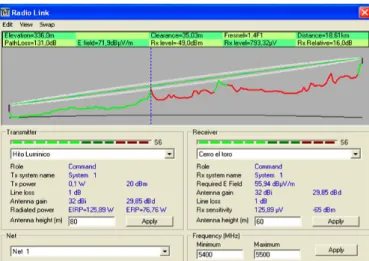
Fig 1a: Preparation for field activities. 20km link path analysis.
Since the initial efforts 17 years ago, ICTP’s Aeronomy and RadioPropagation Laboratory [10] has held some 40 training activities attracting more than 1600 participants, from Africa, Asia, Oceania, Europe and Americas as well as from international organizations. Close collaboration with the International Telecom-munication Union (ITU) Telecommunication Development Bureau (BDT) and with the International Union of Radio Science (URSI) has been developed.
A series of specific ICT activities have been initiated and successfully completed. The following list gives a brief report of the most relevant training activities:
• A series of Colleges, Schools and Workshops were carried out since 1989 in the field of radiopropagation and radio communications, focussed on the needs of scientific communities in Developing Countries.
• In 1995 ICTP started the “Programme of Training and System Development on Networking and Radiocommunications”, to address infrastructure and staff shortfalls in academic and research communities throughout the developing world by offering assistance for the creation of communication networks and the training of technical personnel.
• Starting from 1998, the ICTP offers an annual school focused on wireless networking for
Developing Countries for local area networks in academic campuses. Topics include theoretical and
Fig 1b: Participants to the 2004 activity during the on-the-field day.
practical training on low-cost radio techniques, planning, installation and maintenance of short and medium distance point-to-point digital radio links. The schools have been using modern technologies and teaching techniques. Emphasis is put on hands-on laboratory sessihands-ons and hands-on-the-field practical exercises, see Fig 1. Guided visits to external laboratories and production plants of local telecommunication industries complement the program.
• The Centre started in 2005 the activities of the “ICT Technology Observatory and Training Unit for Developing Countries” in the framework of the agreement between ICTP and ITU BDT. This allowed the participation of officials from National Administrations in addition to those from Academia. The first advanced training course carried out by the Observatory has been the “ICTP – ITU/BDT Project-Based Advanced Training on the Use of Wireless for Campus Networking” in June 2005. The program embraced various elements including project management and financial aspects of wireless networking.
In 2007 the School program included the topic of Wireless Sensor Networking. The potential applications of this technology include water quality monitoring, intelligent irrigation and disaster warning, topics extremely relevant to rural and remote areas. This issue is attracting more and
more attention not only in scientific circles but also in financial ones [9].
In addition to activities held at ICTP in Italy, training has also been given in Developing Countries. For example, in October 2005 in collaboration with the International Institute of Information Technology (I2IT) and ITU/BTD, a Workshop on Wireless Technologies for South Asian Countries has been organized in Pune, India. From 2000 to 2007 the ICTP ARPL has been involved in training activities on the use of wireless for computer networking in Benin, Sudan, Nigeria, Venezuela, India, Cameroon, Ghana, Kenya, Peru to name a few.
VIII. CASE STUDIES
The first pilot project in a Developing Country has been the design and setup of a computer network for education and research at the Obafemi Awolowo University of Ile-Ife (OAUIfe, Nigeria). This was done with the use of spread spectrum radio technology, a novelty at that time and strated with a training of a few scientists from the University at ICTP. Late Prof. G.O. Ajayi, an ICTP Associate, was among them. Before 1996, there was no digital connection at that university. The project brought about the ICTP/OAUIFE computer network by dial-up, with 3 subnets. In 1999, the University acquired a VSAT symmetric connection with a 19.2 kbps, with 8 subnets in the Campus. Two years later, the bandwidth was increased to 64kbps uplink and 128kbps downlink, asymmetric connection. The next year, seven new subnets added with 128kbps uplink, 512kbps downlink and a number of Cyber cafés. Obafemi Awolowo University became a reference point in the field of ICT in Nigeria and Prof Ajayi become the Pioneer Director of the Information Technology and Communications Unit at OAU.
As a next step, the government appointed, Prof. Ajayi, as the Director of the National Information Technology Development Agency of Nigeria established in 2002. The outcome of this project has been of a great value by itself. Even greater value has its impact on training, education and transfer of wireless technologies know-how among numerous students there, with a further multiplying effect. It is worth noting that Prof Ajayi was sharing his
experience as a lecturer at the ICTP schools on radio propagation and wireless networking.
The most recent project took place in Malawi. In collaboration with ICTP, the Department of Electrical Engineering at the Malawi Polytechnic developed a pilot project to establish a wireless network for telemedicine purposes. Four institutions in Malawi are involved: the Malawi Polytechnic, Queen Elizabeth Central Hospital, and the Ndirande and Limbe health dispensaries. The local government of Trieste’s region has donated the equipment. This is the outcome of a “Project-oriented Advanced Training on Wireless Networking” organized at ICTP in 2006.
IX. KNOWLEDGE DISSEMINATION
The knowledge gives tangible results only when disseminated and implemented in practice. With this in mind, the ICTP lecture materials, documentation of laboratory exercises and open source software - prepared for the Wireless Networking Schools have been made freely available through the ARPL website (http://wireless.ictp.it) as soon as in 1996. Since 2007 video recordings of all the lectures and laboratory sessions are also available.
To facilitate further the dissemination of know-how, a Radio Laboratory Handbook was prepared at ICTP for the participants of the 2004 School in paper and electronic versions. The book contains summary of practical information about antenna building, installation, testing and measurements and also some theoretical background. Later, this Handbook was incorporated in a book addressing specifically problems of Wireless Networking in the Developing World, written in English with the participation of external experts. Its electronic version is freely available at http://www.wndw.net. An average of 200 visitors download the book every day, summing to about 100,000 complete downloads up to June 2006. Using online collaborative tools, volunteers are translating the book in other languages. Recently, its Spanish version was released, and the same day the book was downloaded more than 3,000 times. A French edition is also available for free download. Russian, Arabic and Hindi translations are the next to be released.
X. CONCLUSIONS
In the past, voice telephony has been the main option for rural and remote areas. Today, mail, e-commerce, education, health, and tele-medicine, multimedia services have become as important as the voice connectivity, maybe even more important. Training has been identified as a fundamental factor for the sustainability of ICT development and ICTP has been playing a leading role here, in collaboration with other entities.
Without any doubts, universities and research centres are the most appropriate places to start the development and to disseminate knowledge necessary to assure sustainable access to the global information infrastructures in rural areas. It is hoped that ICTP’s assistance will continue to contribute to foster the necessary local capacities in this field. In addition to the development of human resources and the dissemination of low-cost technology, scientists from Developing Counties need to make their voices heard in the policy, regulatory and business circles [10] and the ICTP Associates have a role to play here.
REFERENCES
[1] Information Economy Report 2006, ISBN 92-1-112700-9, 2006
[2] Kawasumi Yasuhiko: Global Survey on Rural Communications; ITU News, 2004, issue 5
[3] Promoting the building of a people-centred, development-oriented and inclusive information society: Progress made in the implementation of and follow-up to the World Summit on the Information Society Outcomes, Doc. E/CN.16/2007/2, 3 April 2007
[4] B. Mve-Ondo, Afrique : la fracture scientifique / Africa : The Scientific Divide , Ed. Futuribles, 2005 [5]
http://www.ictp.trieste.it/~pio/statistics/F&F_200 6.pdf (as of April 26 2007)
[6] New Technologies for Rural Applications- Final Report of ITU-D Focus Group 7 (http://www.itu.int/ITU-D/fg7/pdf/FG_7-e.pdf as of April 26 2007)
[7] http://www.ejds.org (as of April 26 2007) [8] M. Zennaro, E. Canessa, K.R. Sreenivasan, A.A. Rehmatullah, R.L. Cottrell, Scientific Measure of Africa’s Connectivity, MIT Information Technologies and International Development Fall 2006, Vol. 3, No. 1: 55-64.
[9] When everything connects, The Economist, Apr 26 2007
[10] Struzak R: Building Information Infrastructure in Rural Areas; Global Communications, ISBN 0946-393-869, pp. 227-233, 1997