STUDY ON THE END TO END PROCESS MAPPING
OF THE CRIMINAL JUSTICE SYSTEM IN RWANDA
Under the supervision of: Professor Nick Huls
Researchers:
Dr Muyoboke K. Aimé Me Niyibizi Tite CIP Bisangwa Modeste
Acknowledgment
The completion of this study has required more than personal efforts. We are very indebted to the Government of the Republic of Rwanda and especially to members of the Justice, Reconciliation, Law and Order Sectors (JRLOS) for having authorised this research.
A note of thankfulness goes to JRLOS key figures who assisted us with documents or who were very enthusiastic in responding to our interviews. To name but a few, these are, in no particular order, Martin Ngoga, CGP Paul Rwarakabije, Anne Gahongayire, DCGP Mary Gahonzire, CP Christophe Bizimungu, Jean Damascene Habimana, François Regis Rukundakuvuga, Olivier Rukundakuvuga and Victor Mugabe.
We are also very thankful to judges, prosecutors, District Judicial Police Officers, Advocates and Directors of Prisons who welcomed our field researchers and promptly replied to our questionnaire. Words fail us in thanking Professor Nick Huls, the ILPD’s Academic Vice-Rector who had the task of supervising this study and who effectively and efficiently played the role of coach from the beginning of this project. The combination of his expertise and wisdom makes inestimable his contribution to the finalisation of this work.
Last but not least we express our gratitude to ILPD that did its best to ensure that this work is carried out in good conditions. May all those who assisted us in this project find these lines to be our expression of thankfulness.
List of acronyms and abbreviations
AJAR: Association des Juristes Avocats du Rwanda CGP: Commissioner General of Prisons
CID: Criminal Investigation Department CIP: Chief Inspector of Police
CP: Commissioner of Police
DCGP: Deputy Commissioner General of Prisons DJPO: District Judicial Police Officer
DNA: Deoxyribonucleic Acid
EDPRS: Economic Development and Poverty Reduction Strategy EFS: Electronic Filing System
GFTU: Genocide Fugitive Tracking Unit.
ICT: Information and Communication Technology IGP: Inspector General of Police
ILPD: Institute of Legal Practice and Development JPO: Judicial Police Officer
JRLOS: Justice, Reconciliation, Law and Order Sector
JRLOSS: Justice, Reconciliation, and Law & Order Sector Strategy JUDPOL: Judicial Police
KBA: Kigali Bar Association MINIJUST: Ministry of Justice
MPD: Military Prosecution Department NPPA: National Public Prosecution Authority NPS: National Prison Service
OL: Organic Law
RCS: Rwanda Correctional Service RNP: Rwanda National Police UK: United Kingdom
This study was funded by the Government of the Republic of Rwanda through its Justice, Reconciliation and Order Sector, (JRLOS) for the fiscal year 2012-2013. Its main objectives are to describe the Rwandan criminal justice chain and the practical problems that partners face, to analyse the major causes of these problems, both within the institutions and in their interaction in order to formulate concrete short term and long term recommendations for improvement. Researchers first presented an inception report, followed by an interim report that highlighted the theory of the criminal justice chain, the background of the Rwandan criminal justice system and the functioning of the criminal justice chain in Rwanda.
The researchers combined quantitative and qualitative methods and a documentary technique. RESEARCH METHODOLOGY
Documentary technique Researchers referred to the existing legislation, international literature and other available studies on the criminal justice chain Qualitative method Interviews were conducted with key figures of five institutions
working in the criminal justice sector. The interviewees were the Secretary General and the Chief Registrar of the Supreme Court for the Judiciary; the General Prosecutor and the Secretary General in the National Public Prosecution Authority, the Executive Secretary in the Kigali Bar Association; the Commissioner for Criminal Investigation Department in the Rwanda National Police; the Commissioner General, the Deputy Commissioner General and the Director of Research in the Rwandan Correctional Service.
Quantitative method This method was used to collect primary data from medium and bottom managers in the five institutions of the criminal justice chain through questionnaires. Questionnaires were collected from 114 individuals from members of the criminal justice chain and these include 29 District Judicial Police Officers, 12 Prosecutors at the Intermediate Level, 7 National Prosecutors, 33 Judges, 23 Defence Lawyers and 10 Directors of Prisons. These managers are people who receive first hand information and have to communicate the information the partners in the chain.
This survey revealed that the Rwandan criminal justice has gone through a long journey from the colonial era and has been subject of several reforms. The most important one is the judicial reform of 2004 which brought quite a good number of positive changes in the system. Several laws have been enacted, institutions were created or restructured but the practice needs to be improved to meet the legal standards. Below are the summarized results of this research:
a) Lack of important tools of identification of victims and suspects
Any investigation relies on the identification of the suspect and/or the victim in order to be sure that the criminal justice system is dealing with the right person. This requires having tools of identification such as DNA and fingerprint database or at least having a system of Criminal Record Index. Some important databases exist here and there like the one of ID project but the partners in the criminal justice chain are not directly connected to them. The information they can provide is not enough, given the need and importance of identification.
b) Pre-trial detention
Put aside the fact that pre-trial detention may take a long time in some cases, the mindset of some actors within the criminal justice is such that detention is preferred to release for many factors that include the fact that free offenders flee the country, do not appear before the court or do not willingly execute the court’s decision when it amounts to punishment. The public opinion does also not understand the role of the Judicial Police and takes pre-trial detention as a punishment. In some cases, this attitude exists throughout the stages of criminal justice chain.
c) Time it takes to process a case
According to the survey courts take 3 to 6 month to process a case. Before the Supreme Court, it takes four to six years. This time include treatment time, transfer time and waiting time. There are two major reasons: case backlog and the lack of specialised knowledge. The case of backlog is mostly felt in the Supreme Court which, in addition to constitutional cases, appeals from the Military High Court and the Commercial High Court, receives appeals from the five chambers of the High Court. Moreover, there are fields of criminal law that are completely new to the Rwandan legal system. This is the case of financial crimes, computer crimes, intellectual property crimes, etc. The judiciary invested in having its judges in commercial courts trained in that field, the same did not happen in other courts. So far there are some private and isolated initiatives in pursuing Masters Degrees in other fields of law.
A.
RESULTS OF THE SURVEY
1.
IDENTIFICATION OF PERSONS FACING CRIMINAL CHARGES AND THE
d) Adjournments
The study reveals that prosecutors play an important role in the adjournment of cases. Adjournment has increased in the last nine years. The prosecution was responsible for adjournment in 3875 cases for 2012. These cases do not include Supreme Court cases. Leading reasons for adjournment are the fact that investigations were not completed or that prosecutors simply submitted incomplete files.
e) Backlogs
In connection with adjournments and other several causes, the number of backlogs is still high as it appears in the report of the Judiciary of 2012. This has an impact on the rights of detained persons as some cases may take 6 years to be completed while the person is still in detention.
f) Unavailability of advocates
According to this study, unavailability of advocates is a challenge and has an impact on the rights of the accused persons because in most cases their absence leads to several adjournments. This problem is likely to be very serious with cases involving children as offender. The new organic law organising the Supreme Court requires that every party attending the court’s hearings be assisted by an advocate. This means that pro bono advocates have to be appointed. In most cases, these pro bono advocates do not appear. Another problem associated with this is that some advocates registered with the Bar Association do not practice and in some cases they are appointed as pro bono advocates, they never appear and the case is to be adjourned.
g) Delay in releasing inmates after a court order
Courts do not inform correctional services of their decisions on time. This was identified as the leading cause in delaying to release inmates after a court decision. Judgments are not always delivered on the day of pronouncement. Judges justify this delay by arguing that they were still editing copies of judgments. This of course infringes on the right of the inmates and sometimes puts the prisons authorities under pressure of the inmate who is claiming his/her release. Prison authorities said they cannot trust orders of release that chief registrars sent via emails. This poor communication was also mentioned by defence lawyers as being the leading cause in not releasing prisoners on time. Other reasons for delay in releasing the inmate may be that the court decision is not clear; the case file is lost and administrative formalities.
a) Incompleteness of criminal case files
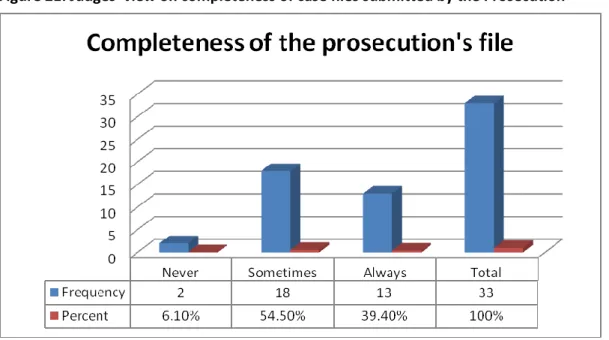
Prosecutors are not satisfied with judicial police’s files. Judges are also not satisfied with case files submitted by prosecutors. Most judges said that files sent to courts are not complete. The two major reasons that lead the prosecution to submit incomplete or not well prepared case files to courts are lack of specialised skills in some emerging crimes as expressed by 26% of respondents and the lack of databases for a fast tracking of information as well as the lack of easy access to forensic a laboratory service.
b) Case management system
Despite initiative that exists in all institutions to create an institutional database, there is no case management system in all institutions. Files are still managed in traditional way. Papers are used in all institutions and handwriting remains the method of recording information in police stations. Court registrars from the High Court to the Primary Tribunal still use handwriting to record pleadings. Judges, prosecutors and defence lawyers still carry with them the physical file when dealing with a case. This happens even at the Supreme Court where some hearing rooms are equipped with IT machines. The use of institutional software has a limited scope even at the headquarter of different institutions. Furthermore, chain partners are not aware of the existence of institutional software and those who are informed on their existence are not necessarily equipped with knowledge to use it. For example the E.F.S. that is praised by the judiciary is criticized to be inefficient and ineffective because at the end, prosecutors and defence lawyers are obliged to reproduces documents that they have sent via E.F.S. The system has also been attacked in court, because judges and parties did not have a common understanding on its functioning.
a) Awareness about the criminal justice chain
Forty six per cent of members of the criminal justice sector simply don’t know there exists a chain and 60 % of those who said they know about it cannot define the concept of criminal justice chain. None of the respondent said the collaboration between chain partners was excellent. For example 90 % of District Judicial Police Officers said it was good whereas 10 % said it was poor.
b) The control and supervision over the Judicial Police by the Prosecution
As per the law, the Judicial Police works under the control and supervision of the Public Prosecution. However, in practice due to the duplication of control over the Judicial Police (Police authorities on one hand and NPPA authority on the other hand), the tendency is that the Judicial police complies more often with instructions from their superiors as it was confirmed by 32% of prosecutors. The fact that members of Judicial Police feel bound by instructions of their superiors was confirmed by the top management of the Prosecution. They suggested the need for restructuring the judicial police.
Besides, the law does not specify measures that the prosecutor may undertake when a judicial police officer fails to comply with his or her instructions as it does specify how the prosecutor exercises his role of controller and supervisor.
c) Exchange of information with chain partners
It has come out that some chain partners don’t actually feel the need to exchange essential information with other partners. Each institution stands alone and few individual members are even
reluctant to release some information. For example 26% of respondents in the prosecution disclosed that there is a poor communication with the Judiciary. Some even said that judges do not respect them.
d) Use of technology in exchanging information with chain partners
The general trend is that there is no electronic exchange of information between partner institutions. For example72% of District Judicial Police Officers said they have never exchanged information with partners in the chain electronically.
According to the survey, the key challenges to the good performance of the criminal justice chain include:
a) Human resource-related challenges These challenges include:
Lack of specialisation in Judicial police due to untimely transfer of Judicial Police officers and recruitment of others to be freshly trained;
Lack of trained experts in some specialised areas such as fingerprints, DNA science, legal medicine, toxicology, ballistics, etc
Lack or insufficient training of judges and prosecutors on some emerging crimes
Unwillingness of members of institutions forming the criminal justice system to exchange information with their partners.
b) Logistical related challenges
The study found that there is lack of easy means of communication inside the individual institution or between members of the criminal justice chain, lack of effective institutional databases, lack of restructuring and automatic communication, insufficient transport facilities, inadequate buildings for some institutions like Police and the correctional services, etc.
c) Dysfunctional structure for the Supreme Court and the Judicial Police
The current structure of the Supreme Court is dysfunctional. The court receives cases from 7 High Courts. In criminal matters, the Supreme court is only able to decide on 400 cases for the 11 months of the judicial year whereas it statistically receives 600 cases from the ordinary High Court alone. The judicial police is also under the command of the Police and under control and supervision of the prosecution. This duplication of command has proven not to effective or efficient.
d) Budget imbalance in the judicial sector
Lack of means of communication and transport are among institutional challenges that the Judicial Police and the Rwanda Correctional Service have mentioned. In addition to this, buildings in which
4.
KEY CHALLENGES TO THE PERFORMANCE OF THE CRIMINAL JUSTICE
these services operate are not old inadequate because they are too old but also underequipped. Their staff also complained about the need for special skills in investigation for the police and in rehabilitation policy for the correctional service.
e) Other challenges
lack of legal framework for the criminal justice chain
Lack of community members’ awareness about the functioning of criminal justice and their role as citizens.
a) Strengthening mechanisms of identifying the right offender This can be achieved by:
Establishing a Criminal Record Index
To link the structure to National Identity Project, and Immigration and Emigration Directorate.
b) Linking the Judicial Police to the DNA and Identity Card data base
Public institutions that record individual identities should foresee that the justice sector will rely on information they are storing for the good administration of justice.
To connect the Judicial Police software to the Identity Card Project, and the Immigration and Emigration Directorate’s software.
To request these projects to record all data with the view of disclosing essential information to the Judicial Police.
c) Reducing case time processing in the criminal justice chain
To establish a standardized check list of requirements for having a complete file at the level of the judicial police and the prosecution
To distinguish complex files from simple files and set up time limit (treatment time, transfer time and waiting time) for simple or ordinary cases.
To set up time limit in distinguishing treatment time, transfer time and waiting time.
To encourage the pronouncement of judgments on the bench for cases that are not complex.
d) Enacting a legislation compelling members of criminal justice chain to exchange information
To enact a piece of legislation organising the JRLOS and laying an obligation over the partner institutions to share essential information in their possession to their partners.
To include the obligation of confidentiality and data protection of IT experts working with the judicial sector in that legislation.
B.
RECOMMENDATIONS
To make the misuse or abuse of judicial information a fault resulting in criminal and tort liability on the side of IT Experts.
e) Training on criminal justice chain and creating the chain culture
To organise training sessions, seminars and workshops about the criminal justice chain
Strengthening the training modules of legal practice courses by adding components of the criminal justice chain.
f) Improving the supervision of the prosecutors over the Judicial Police To train prosecutors on their managerial responsibilities
To specify through legislation measures that the prosecution may take against the Judicial Police in case of failure to discharge correctly their duties or to comply with orders and instructions from the Prosecution.
g) Improving the quality of criminal cases files before they are submitted to the court
To train Public Prosecutors on case preparations given that most of them learnt preparation of case files from their senior peers and have never had prior trainings in these regards.
To include the content of a charge sheet into the code of criminal procedure
To establish a standard checklist of charge sheet that contains general requirements for a complete case file at the level of the judicial police
To encourage a peer review of case files before submitting the case files to the next institution.
h) Establishing an easy way of communication between courts and RCS
To combine the use of internet to exchange information related to scheduling, summons, committal orders, court decisions, etc, with telephone for increasing the accurateness of information
To computerise and network the criminal justice system in taking care of maximum security of information exchanged
i) Insuring electronic file management and electronic communication with partner To establish an electronic Case File Management System in each institution.
To encourage staff to move towards communicating files electronically
To request IT experts to develop a way of sending reliable information within the chain, for example by providing relevant authorities with security codes.
j) Raising public awareness on the good administration of criminal justice
To raise public awareness on the good administration of criminal justice and reduce the population’s indifferent on the commission of crimes.
To extend the system of victim and witness protection to all courts and tribunals.
k) Extending the free telephone line to other criminal justice chain institution
To extend free telephone line to all members of the criminal justice chain whose responsibilities require interaction with chain partners. Alternatively, all these members would form a user group as it is done in local administration.
Training judges, prosecutors, judicial police officers, defence lawyers, and members of the correctional service force to use their institutional database and method of getting or receiving information throughout the chain.
Organising a retreat of the staff from institutions constituting the criminal justice chain in order to reduce negative attitudes towards the functioning of the chain.
The ICT Office in each institution should have a continuous program of training new staff and upgrading the level of judicial staff in ICT.
m) To encourage short trainings
To strengthen and extend ILPD’s mandate in short trainings
To encourage local Law Faculties to organise supplementary short courses on the model of European Summer Schools
To encourage institutions to organise international conferences or support their staff to attend such conferences.
To establish a common or an institutional periodical reviews or journal in which staff can publish critical views on complex cases
a) Increasing the budget for judicial police and Rwanda Correctional Service
To budget for adequate buildings, offices, means of transport and communication for the judicial police and the correctional service
To budget for training judicial police in investigation techniques, management of seized objects, forensic evidences, and the correctional service in rehabilitation
b) Professionalizing and restructuring of the Judicial Police
Changing the current organization of the Judicial Police to enable supervisory role of the Public Prosecution Authority.
Limitation of regular transfers and appointments of Judicial Police Officers which have little to do with criminal investigation (staff mobility).
To establish a single channel of command
To provide Judicial Police with administrative and financial autonomy.
c) Reviewing the structure of the Judiciary
It is important to review the structure of the Supreme Court which is receiving appeals from 7 Courts alongside cases that start from the Supreme Court (Constitutional cases for example)
Cases that are appealed from High Courts should be appealed to another Court of Appeal that would be between the Supreme Court and other High Courts.
The Supreme Court should receive appeals of cases in which there are serious injustices or breach of the law.
d) Specialising Supreme Court judges (while waiting for restructuration)
Without establishing chambers, there could be established specialised bench such the criminal law bench, the succession bench, the business law bench, the land law bench, etc.
Benches that are not having many cases can intervene in other fields on request.
Benches can be established for two years in order to let them function by rotation in order to avoid having benches that establish themselves as Supreme Court’s chambers similar to the former Cour de Cassation, Cour Constitutionnel that hindered the functioning of the court as a whole.
e) Computerization of the criminal justice chain by creating compatible institutional software To transfer the responsibility of developing institutional software to the JRLOS through
its IT Office.
To develop institutional software with the view of maintaining harmony and reducing incompatibility between software in the chain.
f) Computerization of criminal justice chain by connecting institutional software To connect institutional software
To equip the access portal with a system only allowing access to essential information
To equip the institutional software with a system of noticing signals and alerts from the requesting institution
JRLOS IT Office to coordinate all IT offices in different institutions.
JRLOS IT Office to play the role of matching office in charge of connecting different institutions, sending signals and alarms and allocating the Criminal Reference Index.
To launch a pilot test at the level of headquarters first, then at the level of High Courts, then at the level of Intermediate Tribunals before reaching the Primary Tribunals.
To make an action plan for implementation on a period of four to five years
g) To establish a Judicial Information Department
The information is managed by different departments. Thus, the Judicial Information Department should ensure that the Criminal Justice Reference Index is based on the same information.
The Department is managed by the Ministry of Justice.
It will therefore be a requirement to have all parties in the chain use the Criminal Justice Reference Index confirmed by the Department for an efficient and effective exchange of information on suspects and convicted persons.
To organise regular training of IT experts in maintaining the judicial sector’s IT system.
To invest in attracting, maintaining the best experts and avoiding the staff turnover through encouraging measures such as competitive salaries, transport facilities, etc.
Table of content
Acknowledgment ... 2
List of acronyms and abbreviations ... 3
CHAPTER 1: INTRODUCTION AND CONTEXT OF RESEARCH ... 17
1.2. General introduction ... 17
1.2. Context of research ... 18
1.3. Scope of the research ... 19
1.4. Main activities ... 19
1.5. Indicators ... 20
CHAPTER 2: METHODOLOGICAL APPROACH ... 21
2.1. The qualitative approach ... 21
2.2. The quantitative approach ... 22
2.2. 1. Judicial police ... 22
2.2. 2. National Public Prosecution Authority ... 23
2.2. 3. The Judiciary ... 23
2.2.4. Rwanda Correctional Services ... 23
2.2. 5. Kigali Bar Association (KBA) ... 23
CHAPTER 3 THE CHAIN THEORY IN CRIMINAL JUSTICE ... 24
3.1. General overview ... 24
3.2. The Chain concept... 24
3.3. The Computerization of a criminal justice chain. ... 25
3.4. The benefit of computerization in a criminal justice chain ... 27
3.3. Connecting the National Identity Project to the criminal justice chain ... 28
3.4. Connecting biometrics data to the criminal justice chain ... 30
CHAPTER 4: BACKGOUND OF THE CRIMINAL JUSTICE CHAIN IN RWANDA ... 31
4.1. The pre-colonial period ... 31
4.2. The colonial period ... 31
4.3.From independence to the 2003 Constitutional reform ... 32
4.4. The impact of the 2003 constitutional reform and the 2004 judicial reform ... 34
4.5. The judicial sector in figures. ... 35
CHAPTER 5: THE LAYOUT OF THE RWANDAN CRIMINAL JUSTICE CHAIN ... 37
5.1. Understanding the criminal justice chain in Rwanda ... 37
5.2. Areas of interaction in the Rwandan criminal justice chain ... 39
5.2.1. The preliminary investigation phase ... 39
5.2.2.. Reasons leading to poor communication between the police and the prosecution ... 42
5.2.3. Police and Prosecution partnership during the phase of instruction and provisional detention... 46
5.2.4. Prosecution- judiciary partnership during the pre-trial phase ... 48
5.2.5. Prosecution- judiciary partnership during the trial phase ... 51
5.2.6. Judiciary-Judicial Police partnership ... 53
5.2.7. Judiciary- Correctional Services partnership ... 54
5.3. Enforcement of Court decision and rehabilitation ... 57
CHAPTER 6: ASSESSMENT OF THE CRIMINAL JUSTICE CHAIN IN RWANDA ... 60
6.1. Achievements and challenges of individual partner institutions of the Rwandan criminal justice chain ... 60
6.1.1. Rwanda National Police ... 60
6.1.2. The National Public Prosecution Authority ... 64
6.1.3. The judiciary ... 66
6.1.4. Correctional services ... 73
61.5. Kigali Bar Association ... 74
CHAPTER 7: PARTNERSHIP IN THE CRIMINAL JUSTICE CHAIN ... 78
7.1. Strategies to improve partnership in the three key institutions ... 78
7.1.1. Strategies for the Judicial Police ... 78
7.1.2. Strategies for the Prosecution ... 79
7.1.3. Strategies for the judiciary ... 81
7.2. Electronic management of files within institutions ... 81
7.3. Collaboration between partners in the chain ... 83
7.4. Working relations between partner institutions ... 87
List of figures
Figure 1: The criminal justice chain ... 18
Figure 2: Computer networking with a central database ... 26
Figure 3: Computer networking with institutional databases ... 26
Figure 4: The Rwandan criminal justice chain... 38
Figure 5: Awareness about the criminal justice chain ... 38
Figure 6: Understanding the meaning of the criminal justice chain ... 39
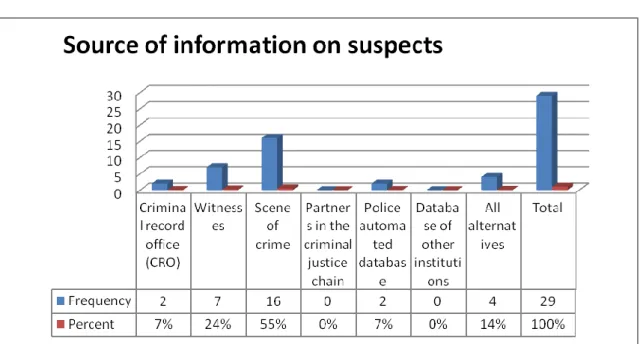
Figure 7: Source of information during the preliminary phase of investigation ... 40
Figure 8: First steps in the criminal investigation process for felonies and misdemeanours ... 41
Figure 9: Feedback on cases submitted to the Prosecutor ... 42
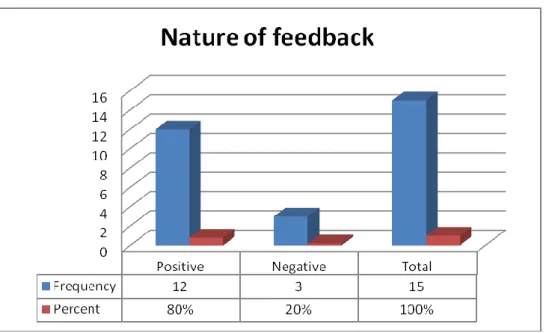
Figure 10: The nature of feedback on cases submitted to the Prosecutor ... 43
Figure 11: The nature of control and supervision ... 44
Figure 12: Reasons behind the police failure to comply with the prosecutor’s instructions ... 45
Figure 13: Police opinion on the frequency of JPO’s failure to meet deadlines ... 46
Figure 14: Prosecutors’ opinion on late submission of judicial police file ... 47
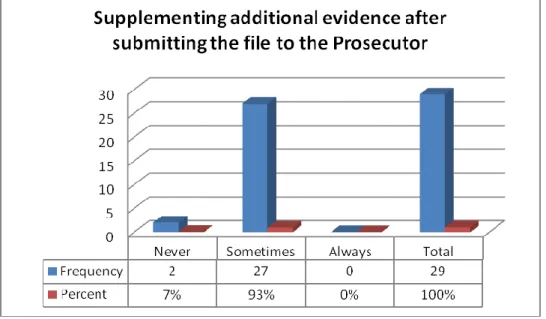
Figure 15: Police opinion on the frequency of submitting additional evidence after submitting the case to the Prosecutor ... 47
Figure 16: Reasons behind late submission of a police’s case file as viewed by the prosecutors 48 Figure 17: Duration of a case processing by the prosecution ... 49
Figure 18: Reasons behind delaying transferring the case file to the court ... 50
Figure 19: Reasons leading to transfer of incomplete or not well prepared files ... 51
Figure 20: Adjournment of cases for the last 9 years ... Error! Bookmark not defined. Figure 21: Reasons that lead to case adjournment in 2012 ... 52
Figure 22: Judges’ view on completeness of case files submitted by the Prosecution ... 53
Figure 23: Opinions of correctional service officers about reasons for inmates not to appear before the court when summoned ... 54
Figure 24: Failure to avail justifying document prior to imprisonment or detention ... 55
Figure 25: The time it takes for an inmate to be released after a court decision ... 56
Figure 26: Reasons leading to late release of inmates after a court decision as viewed by the RCS ... 56
Figure 27: Opinions of advocates on causes leading to late release of inmates after a court decision ... 57
Figure 28: Personal challenges faced by Judicial Police officers ... 62
Figure 29: Insufficient means as a challenge in the judicial police ... 62
Figure 30: Institutional challenges faced by Judicial Police officers ... 63
Figure 31: Opinion of the prosecution about challenges in its working relations with the judicial police ... 65
Figure 32: Opinion of the prosecution about challenges it faces in its working relationship with the judiciary ... 66
Figure 33: Case time processing within the court... 67
Figure 34: Time processing of a criminal case before the Supreme Court ... 68
Figure 35: Causes of delay in processing the case by courts as viewed by advocates ... 68
Figure 37: Lack of means as a challenge in the judiciary ... 70
Figure 38: Institutional challenges faced the judiciary ... 71
Figure 39: Judiciary’s challenge in working with the prosecution ... 71
Figure 40: Judiciary’s challenge in working with the correctional ... 72
Figure 41: Challenges faced by correctional officers ... 73
Figure 42: Challenges faced by advocates in working with judicial police ... 74
Figure 43: Challenges faced by advocates in their working relations with the prosecution ... 75
Figure 44: Challenges in working relationship of advocates with the courts ... 76
Figure 45: Challenges in working relationship of advocates with correctional service ... 77
Figure 46: Adequacy of the time allocated to process a case and submit it to the prosecutor ... 78
Figure 47: Adequate time proposed by JPOs for effective police investigation ... 79
Figure 48: Strategies to improve the quality of the prosecution’s service delivery ... 80
Figure 49: Strategies to improve service delivery within the judiciary ... 81
Figure 50: Case management in the judiciary ... 82
Figure 51: Case files management under the prosecution ... 83
Figure 52: Awareness on the use electronic exchange of information between institutions ... 84
Figure 53: Frequency of electronic exchange of information ... 84
Figure 54: General methods of exchanging information between partners ... 85
Figure 55: Methods of exchanging case related information in the Judiciary ... 86
Figure 56: Rate of collaboration of Judicial Police with other criminal justice chain partners ... 87
Figure 57: Electronic communication between Judicial Police and chain partners... 87
Figure 58: Obstacles to the efficiency of the criminal justice chain ... 88
Figure 59: Advantages of the criminal justice chain computerisation as viewed by members of the Judiciary ... 89
Figure 60: Opinions of the members of the Judiciary about the strategies for the efficiency of criminal justice chain ... 90
1.2. General introduction
[1]. We are in a century where chain co-operation makes headlines on a daily basis. Inconsistent medical expertise, unreliable evidences, wrong identification of suspects are just a few breaking news items in the headlines. Many independent organisations and professionals are required to collaborate in order to achieve a common goal. Faulty cooperation or direct opposition might therefore lead to wrong or unnecessarily delayed decisions at different stages of the chain. Accordingly, the entire chain becomes discredited.
[2]. It follows that the handling of the criminal law process is seen as a chain, a network or both1. The reason is that the chain partners of the criminal justice system are interdependent in their joint efforts to administer the correct sanction to the right person in a cost effective and timely manner. Everywhere the main concern in any system built on a chain or a network is the effective distribution and management of information. Yet, in a social chain such as the criminal justice chain, no one has the power to compel others to co-operate effectively. Without better information strategies, the chain will definitely be confronted with issues that are difficult to resolve.
[3]. Therefore, chain management is the fact of “investigating ways to effectively distribute and obtain information and to efficiently make use of different sources of production and transportation.”2 It is indeed the dynamics of information in the forecasting process. Understanding the chain system drives towards determining methods of coordination and improving system efficiencies. In criminal justice system this would mean fostering capabilities for all its components to work in synergy by exchanging viable information.
[4]. The chain concept is the guiding principle in criminal law for the design of the information architecture. Here is where the difference between the concept of chain and that of network lies. The network concept does not per se provide guidance for the intrinsic interpretation of the co-operation between involved parties. Applied to the criminal justice system, the chain concept becomes more relevant than ever since in criminal law every step is preceded by another step that is not the end but the precondition for the next step. Reintegration means that there has been a sentence, such as imprisonment, imposed through a judicial decision. The judge cannot arrive to that decision if the prosecutor did not file the case to him. The prosecutor will not file a case to the court if he is not satisfied with the proof from the investigating judicial police officer.
[5]. Today, the right to a fair trial also includes legal assistance or representation at all levels of the justice chain. For instance, the United Nations recommends that detainees be provided with legal assistance as soon as they arrested.3 Therefore advocates intervene as defence lawyers all around
1W.L. BORST, “Chain-computerisation in practice: the criminal justice chain”, (2011) 2 Journal of
Chain-computerisation 3.
2Suresh P. Seth and others, Inventory and Supply Chain Management With Forecast Updates, Texas: Springer, 2005, at p. Xiii.
3
UN Doc A/HRC/22/44/Add.2, 11 January 2013, para 73.
the chain. Their method of intervening in a criminal case may fasten or delay communication from one institution to another. Although the defence lawyer’s inadequate intervention is felt at all levels of the chain, today the Supreme Court is the most victim of defence lawyers’ malpractice. In fact since 2012, the Rwandan lawmaker has made it compulsory to be assisted by a defence lawyer in all proceedings performed before the Supreme Court.4 In general the criminal justice chain has the following appearance.
Figure 1: The criminal justice chain
[6]. As it is represented on the chart, the chain appears to be simple. What makes the chain complicated is the number of actors that are involved in the process at each step. Criminal law is enforced by several institutions and hundreds of individuals that are interdependent to each other. Of all these institutions and individuals there is no one who can complete his part without relying on others. Criminal justice systems rely on co-operation.5
[7]. In such a complex field, the chain does not work automatically. Interaction exists because individuals and institutions in which they are operating share values or interests and information. When a comprehensive philosophy is missing, a simple problem at the bottom of the chain would create uneasiness for the entire system. As the saying goes: The force of the chain is determined by its weakest part.
1.2. Context of research
[8]. Effective Coordination of the criminal justice chain is a prerequisite for meeting the EDPRS goal of ‘Sustainable Economic Growth and Social Development”6. In this respect, the Ministry of Justice has established the platform of Justice, Reconciliation, Law and Order (JRLOS) with the main mission of strengthening the rule of law in order to promote good governance and a culture of peace. One of the targets is to reduce time taken from arrest to sentencing.
[9]. The Justice, Reconciliation, and Law & Order Sector Strategy: July 2009 – June 2012 (“JRLOSS”) in Output 1 which is “Universal Access to Quality Justice” provides in the Target 4: Time taken to process criminal case from arrest to sentencing reduced. Processing a case through the criminal justice system involves complex interactions between the different actors in the criminal justice chain. There are weaknesses in the Rwandan criminal justice chain, both within individual institutions and in the interactions between them. A weakness in one institution will have impact on the performance of another. For example court cases can be delayed by the prison service failing to transport a prisoner
4 Article 42 of the Organic Law no 03/2012/OL of 13/06/2012 determining the organization, functioning and jurisdiction of the Supreme Court, O.G., nº 28 of 09 July 2012.
5 Jean Moriceau, Etude sur le fonctionnement de la chaine pénale au Burundi, RCN, Bujumbura, 2011, at p.13 (unpublished).
6
Economic Development and Property Reduction Strategy, 2008-2012, at p.91 ( Section 4.3.2.)
Investigate
Prosecute
Try
Execute
Sentence
to court for hearing, by the prosecutor failing to prepare the case for the trial or a defence lawyer asking for adjournment. Files and documents can be lost or delayed between the institutions. In addition to these general weaknesses, there is a problem of insufficient means (personnel and equipment)7.
[10]. In this context, JRLOS tasked ILPD to conduct a study on the end-to-end process mapping of the criminal justice system in Rwanda. The aim of the study is to describe the Rwandan criminal justice chain and to identify practical problems that the partners (i.e. the police, the prosecution, the judiciary, the prison system and the Bar) face, to analyze the major causes of these problems, both within the institutions and in their interactionsand to formulate concrete short term and long term recommendations for improvement8.
[11]. A qualitative and quantitative description and analysis of the current problems in the criminal justice system of Rwanda, both at the level of the individual institutions (‘chain partners’) and of the chain as a whole, are intended to develop strategies that will enable chain partners:
To deal simultaneously with all the cases that could be pending against a suspect as interrelated instead of as isolated cases
To enable individualized intervention which focuses on effectiveness and efficiency in the administration of criminal justice
To establish a Criminal Justice Reference Index of persons based on personal details of suspects and collection of reference. The reference will indicate which chain institution the concerned suspect is currently dealing with
To avoid or minimise the problem of identity fraud in the criminal justice system
To reduce the time taken to process criminal cases from arrest to sentencing 1.3. Scope of the research
[12]. This research is primarily limited to the enforcement of the code of criminal procedure and the penal code by varied institutions. In this regard, it is unavoidable to consider laws that establish institutions that intervene in the chain and the law governing evidence since these laws are relied on in applying the criminal procedure code or the penal code.
1.4. Main activities
[13]. The study starts by describing the criminal justice system in Rwanda in order to understand where our system is coming from, where we are today and in which direction we are heading to. The analysis of the current criminal justice system focuses on developments and reforms that took place within particular institutions since 2004 and the extent to which those initiatives have driven particular institutions to meet the above stated EDPRS goal. Here an emphasis is on practical problems within each institution and the impact of those problems on partnership between institutions.
7 Justice, Reconciliation, Law & Order Sector Strategy: July 2009–June 2012, at p.38.
8 Terms of Reference for a Study on the End to End Process Mapping of the Criminal Justice System in Rwanda, p.1-2.
1.5. Indicators
[14]. Our criminal justice system is ready for systematic and wide-ranging change in the way it operates and how it achieves its goals. Key indicators for this research include:
Case management system
Data exchange from one institution to another
Time to process the case from one institution to another
Criminal records systems
[15]. We have referred to both qualitative and quantitative methods in carrying out this research. Combining both approaches aimed to reach sound findings because gaps that one method left were filled by the other.
2.1. The qualitative approach
[16]. This method is usually used as an attempt to understand the unique interactions in a particular situation. The purpose of understanding is not necessarily to predict what might occur, but rather to understand in depth the characteristics of the situation and the meaning brought by participants and what is happening to them at the moment. The aim of qualitative research is to truthfully present findings to others who are interested in what you are doing9.
[17]. In this regard, we have used the technique of literature review in conducting a national desktop research that focuses on the analysis laws, reports and cases from partner institutions before reviewing the international literature on criminal justice chain.
[18]. Information that we could not get from documents were obtained through interviews with key figures from partner institutions in the criminal justice chain. We met eight top managers and there was at least one key figure per concerned institution. In the Judiciary, the interview concerned the Chief Registrar and the Secretary General of the Supreme Court. In the National Public Prosecution Authority, we interviewed the Prosecutor General and the Secretary General. In the Bar, we interviewed the Executive Secretary whereas in the Rwanda National Police the interview concerned the Chief of the Criminal Investigation Department. In the Correctional Service, we interviewed the Commissioner General, the Deputy Commissioner General and the Director of Research.
[19]. Although we had intended to meet three persons per institution, meaning an overall of 15 persons, a busy agenda prevented some key figures to respect the appointment they had given. This is the case for the Director of Judicial Police, the Director of International Police, the Director of Forensic Laboratory, the Inspector General of the NPPA, the Inspector General of the Judiciary, the President of the Kigali Bar Association and the Inspector General of Police. However, the eight key figures that we met provided significant insights and meeting them was important for the purpose of this research.
9
Patton, J., Analysis of thinking and research about qualitative methods, New Jersey: Lawrence Erlbaum, 1996, at p.7.
2.2. The quantitative approach
[20]. Quantitative research refers to the systematic empirical investigation of social phenomena via statistical, mathematical or computational techniques10. In this study, quantitative research consisted of collecting primary data through questionnaires from medium and bottom managers in the five institutions of the criminal justice chain. These managers are people who receive first hand information and have to communicate it to chain partners. The following were the guiding themes:
First hand information on a suspect
Time of processing a criminal case within the institution and with others institution
Current case management system and perspectives
Personal, institutional and/or work challenges in exchanging information
Obstacles to the efficiency of the criminal justice chain
Criminal justice chain computerisation
Strategies to improve the exchange of information
[21]. The information required was designed to give a snap-shot of the situation regarding the matters set above. Questions were distributed and collected by three research assistants for approximately 15 days.
[22]. Five different questionnaires, originally drafted in English, were translated into Kinyarwanda. An explanatory note was sent with the questionnaires in order to set the research background to the sampled population. We have primarily used closed-ended questions where respondent was asked to provide an answer from among a list provided by researchers. The advantage of this approach is uniformity of responses. To avoid receiving answers that could be completely irrelevant to the purpose of this study, we opened possibilities for the respondent to complete our list of standardised answers.11This research targeted five institutions.
2.2. 1. Judicial police
[23]. We have one District Judicial Police Officer (DJPO) at every district. The Police Officer coordinates on a daily basis judicial police stations within districts, which constitute the chain’s bottom line. Out of 30 District Judicial Police Officers, 29 or 96.6% responded to the questionnaire.
10 Given, Lisa M., The Sage Encyclopaedia of Qualitative Research Methods, Los Angeles: Sage Publications, 2008, at p.7
11
2.2. 2. National Public Prosecution Authority
[24]. The institution is headed by the Prosecutor General who is assisted by the Deputy Prosecutor General. Out of the two, it currently counts 15 National Prosecutors, 87 Prosecutors at the Intermediate Level including 12 Chief Prosecutors and 60 Primary Level Prosecutors. At all levels, prosecutors are involved in the investigation and regularly interact with the judicial police, courts and the Rwandan Correctional Service. All Chief Prosecutors at the Intermediate Level responded to our questionnaire. At the national level, our sample consisted of 2 prosecutors for each of the five chambers of the High Court and all of them responded to the questionnaire.
2.2. 3. The Judiciary
[25]. The judiciary is a robust institution of the criminal justice chain. The Supreme Court is the highest judicial instance of the land and it is headed by the Chief Justice. The Supreme Court coordinates and oversees the activities of all courts and tribunals while ensuring judiciary independence. Supreme Court has currently 14 judges including its President and Vice President, the High Court has 25 judges that are dispatched in its four chambers, there are 95 judges for the 12 Intermediate Tribunals and 113 judges for the 60 Primary Tribunals. The judiciary is the intersection of the criminal justice chain. The questionnaire was replied by 10 judges from the Primary Tribunal and we had randomly selected two judges in the jurisdiction of each High Court Chamber. All the 12 Presidents of Intermediate Courts responded to our questionnaire as well whereas for the High Court we selected two judges from each chamber and all the ten responded to our questionnaire.
2.2.4. Rwanda Correctional Services
[26]. This service has 13 prison facilities countrywide and one re-education centre for minors. The prisons are involved in criminal justice chain as they work closely with the police, the prosecution and of course the court. Inmates in provisional detention or convicted by courts are managed by the correctional service. We randomly selected 10 directors of prisons by taking two in each province and they all replied to the questionnaire.
2.2. 5. Kigali Bar Association (KBA)
[27]. Advocates play an auxiliary but determinant role in the criminal justice chain. The Bar started with only 37 advocates in 1997 and showed a strong growth in numbers by reaching 740 members today. We selected 24 advocates who are involved in criminal cases on daily basis and all of them responded to our questionnaire.
3.1. General overview
[28]. The information and communication technology (ICT) has become an axiom in today’s life. It is impossible to get a better-informed chain cooperation without computerisation. There is no doubt that the current management of large scale information exchange is less effective than is necessary. We know little about methods of exchanging information at large scale.
[29]. The concern grows more important with regional integration, internationalisation and globalisation. In joining the East African Community, the Great Lakes Economic Community, the Commonwealth etc., Rwanda should expect the internationalisation of domestic criminal justice’s chain and envisage an effective, efficient and lawful exchange of information both inside the country and in the region. In various countries, the international exchange of data on criminal suspects and convicted persons takes place on the basis of administrative data. Fingerprints are sporadically used and sometimes a person is registered under different names or aliases.12
[30]. It is therefore important to understand what the concept of the chain is all about in a criminal justice system, to ensure that the flux of information that is shared between different institution does not ease communication in infringing individual rights to privacy and confidentiality. In this respect the chain computerisation that is the modern method of sharing information should be developed in a way that chain partners only have only access to essential information.
3.2. The Chain concept
[31]. Understanding the chain system drives towards determining methods of coordinating and improving system efficiencies.13 In the criminal justice system, this would mean fostering capabilities for all its components to work in synergy by exchanging viable information.
[32]. However, in a criminal justice chain, several organisations work together without a clear relationship of authority. Cooperation with other organisation consumes a lot of effort, time and money. Therefore, there must be a compelling reason to do it. In principle, parties to a chain cooperate only when a dominant chain problem ,that is a problem that none of the parties can solve alone forces parties to rely on each other. For instance, each party discovers that effective cooperation is the only way to prevent systematic failure of her own organisation and to avoid discredit for the entire chain.
12
W.L. Borst, “Chain-Computarisation in practice: the criminal justice chain” (2011) 2 Journal of Chain Computarisation 7.
13 Suresh P. Seth and others, Inventory and Supply Chain Management With Forecast Updates, Texas: Springer, 2005, at p. Xiii.
[33]. The concept “chain” is a recent phenomenon in criminal justice matters and it is gaining practical significance. On the ground, organisations participate in a large number of different chains. Effective use of the chain has advantages and shortcomings. Chain advances specialisation, increases mutual dependence, meets social demands and increases interaction and cooperation. We shall come back to this. Critics of the chain approach point at the absence of overall authority, limited and unclear shared interest, irrationality and unpredictability at the chain level and the absence of clear rules.14
[34]. There is no doubt that the normal intra-organisational approach cannot solve these problems. There is a need for a fundamentally different way of thinking. The Rwandan criminal justice is facing daily challenges in this regards. For example, few months ago the National Prosecution Authority faced the challenge of moving Leon Mugesera’s file to the court. Forty thousand pages that were sent from Canada15 would mean a collection of 150 bilingual dictionaries and several shelves in the library. Such a file cannot be photocopied in order to be used in a classic way as a file that contains 10 or 20 pages.
[35]. However even small files are still referred to or used in a traditional way. The judge repeats the suspect’s identification that the prosecutor copied from the judicial police’s file. In other words three officials repeat the same thing rather than considering the first record as sufficient. This poses the question of human resource and time management.
[36]. To deal with these concerns requires skills, methods and equipments that not only allow automatic transfer of information but also brings out consciousness of avoiding duplication or repetition to the best. One of the known advantages of automatic transfer of information is to prevent or at least reduce errors and delays, human interference or illegal information dissemination.16 That is where computerization becomes a must in all social sectors and particularly in the criminal justice system.
3.3. The Computerization of a criminal justice chain.
[37]. Chain computerization is different from classic computerization where information is registered and organised in a computer within the organisation. The idea of chain relates to the structuring and automating the communication that is needed for mutual exchange of information within the chain. It is often argued that intra-organisational communication is eased by storing all data available in one large data base.17
14
Jan Gripjpink, “Our Emerging Information Society-The Challenge of Large-Scale Information Exchange in the Constitutional State”, (2005) 21 Computer Law and Security 330.
15
Eric Didier Karinganire, “Mugesera requests for postponement again”, The Rwanda Focus, 19 November 2012.
16Ibidem, at p.332. 17
Figure 2: Computer networking with a central database
CENTRA
[38]. This approach is a fallacy since combining data has nothing to do with communication. Such an approach leads to data management rather than data communication that is sought in the chain. In addition, people with little affinity with the stored information are the one to carry out the management. Data management is often carried out by experts in Information and Communication Technology rather than lawyers. Accordingly, information is not regularly updated and the approach is often conducive to abuse. The management of data from different organisations, although operating in a chain, proves to be unfeasible and impractical.
[39]. Since each organisation has its own registry, what remains is the exchange of information. In other words, information and communication technology should be seen as a means of computerised communication instead of being a tool for automated data collection, storage and processing.18 In fact, what is important is not a government that is efficient in collecting and storing information. The government is competent when it is acting in the right way and takes the right decision on time. This can only be achieved if its organs communicate better. It follows that only computerising chain communication can counterbalance the spoiling effect of data processing and data storage.
Figure 3: Computer networking with institutional databases
18 Jan Grijpink, “Identity Fraud and Biometrics: An Assessment Model for the Use of Biometrics”, (2006) 22 Computer Law and Security 316.
JUPO NPPA Judiciary RCS NPPA JUPO Judiciary RCS CENTRAL DATABASE
[40]. Selective communication systems have proved to be successful and have helped partners in the chain to avoid flawed decisions. This cannot be said of a central data bases. All parties in the chain should collect and manage their own information. At the same time, involved chains need a central access equipped with methods of signals and alerts. Parties in the chain should gain only access to the essential information quickly and when necessary. Essential information may differ within each organisation. For example, the information that the correctional service need from the court may differ from the information it needs from the judicial police. The court may need more information from the prosecutor than the correctional service does. This means that the access mechanism may differ from organisation to organisation or from stage to stage. What is expected from the chain is to supply all information from anywhere in the country and as fast as possible.
3.4. The benefit of computerization in a criminal justice chain
[41]. Generally speaking, chain computerisation is advantageous in several ways. It focuses only on the information that is important to the chain without concentrating on details. The issue to be addressed is to find the right piece of information at the right place within the chain and at the right time in order to avoid a wrong or unnecessarily delayed decision in the chain. Methods of registering and managing that particular information within a specific organisation in the chain is not the concern of the chain since the chain is not intended to make individual institutions dependent on it or to take away their responsibility.
[42]. Furthermore, the chain computerisation is built on the principle that each chain partner assumes that the corresponding partner takes the computerisation process seriously. There is no competition. There is rather complementarity with chain-specific communication. In other words, the chain should be concerned with chain problems rather than with individual organisations. The analysis of information problems and the development of information systems are customarily related to the partner’s internal organisation. It is not the duty of courts to instruct the police on methods of registering and managing their information and vice-versa. This is why chain-computerisation focuses on the essential and indispensable collective information whereas organisations are required to gather, organise and manage substantive data that they need for their daily work. Another advantage is that the critical piece of information will only be availed at the time of taking action or decision. By using the ‘Empty Information Structure’, the chain level will only have access to essential information without much content.
[43]. A well organised chain computerisation will save time as chain partners won’t waste time in recording what others have already recorded. Each institution would also know the length of time it spends per file (treatment, transfer and waiting times). This would help the institution in its planning strategy. If you know the number of files you receive per year, and you can estimate the length of time that it would take to deal with them, then it becomes easy to plan for human resources, finance and equipment. This is the best approach of dealing with backlog of cases.
[44]. With chain computerisation, the quality of work will also be improved. Most judicial police officers except at the Police Headquarter still use handwriting to record suspects or witnesses statements. The quality of handwriting depends much on the writer’s skills in calligraphy. Poor
calligraphy leads to confusion and often misspelling suspects or witnesses names. The handwriting is easily abused. In the case Prosecutor v. Nzabirinda Anicet, the accused claimed that the Prosecutor was relying on irregular evidences because dates which appeared on the medical expertise and witness’ statements were scratched. Dates were very important in this case. The offender was accused of having committed defilement on his niece while visiting his uncle on particular date. The offender argued that if the date of his visit was different from the date on which the crime was committed, then the prosecutor was accusing the wrong person.19 With a computerised system it becomes easy to discover a fraudulent or negligent behaviour for such cases.
3.3. Connecting the National Identity Project to the criminal justice chain
[45]. Researchers of the chain-computerisation have originally focused on the criminal justice system’s ability to administer the right punishment without questioning whether the sanction was executed by the right offender. Chain-computerisation is therefore focusing on accurate and reliable identification of suspects and convicted persons. It follows that the administration of the right penalty requires full and adequate information about the suspect.
[46]. Concerns about fraud identity increased with the growing world insecurity from terrorist groups and organised crimes that are most of the time cross-border crimes. This has led many developed countries to introduce biometric features to identity cards and travelling papers in order to combat fraud. Alongside security concerns, there is also a cultural dimension of identity. In Rwanda, many people bear the same family name whereas they have no common family background. Names such as Ingabire, Umulisa, Uwamahoro, Uwamariya, Uwera and Uwimana are so popular that some universities require students who bear similar names to choose a third one which helps differentiating them.20
[47]. In establishing a national data base for identity cards and in introducing the latest technology for passport, Rwanda foresaw combating identity fraud. [48]. There is no doubt that the SIM card registration process that was initiated by the Rwandan Utility Regulatory Authority in partnership with Rwanda National Police is intended to reduce identity fraud for crimes perpetrated via mobile phones.
[49]. However, in Rwanda identity verification remains an administrative procedure and, in most cases, administrative details have no direct link with the involved person. Courts are regularly facing this problem in sexual or gender-based violence cases to name few. In order to establish the actual age or the family origin of the victim or that of the offender, courts rely on birth certificates that are established by Executive Secretaries of Sectors. These officials only have testimonies of family members or statement of the person requiring the document as the primary source of information. Public officials deliver these administrative documents without necessarily knowing that they would be used as evidences before courts. Alongside unreliable information they receive, few are those
19Prosecutor v. Nzabirinda Anicet, RPAA 0090/011/CS, of 05 April 2013.
20 See for example National University of Rwanda, 2012 Graduation Booklet (unpublished) and Kigali Independent University, 8th Academic Graduation Ceremony, March 2012 (unpublished).