Chapter 1: Introduction
Computer software comes with a licensed agreement stating how it can be used legally. Software piracy occurs when people, intentionally or unintentionally, make copies of the computer software without permission or they load the computer software onto more machines than the licensed agreement says they can. Over the years the amount of money that is lost to software piracy has increased (Business Software Alliance [BSA] & IDC, 2007). In 2006 monetary losses from software piracy increased by $5 billion (BSA & IDC, 2007). Some countries have drastically different piracy rates. For instance the piracy rate in Zambia is 81% and South Africa is 36% (BSA & IDC, 2007). These differential piracy rates imply that there are local contextual factors (i.e. culture) that account for these differences.
Research has tried to account for why some people choose to pirate while others do not and what could cause such different piracy rates. They have offered economic, psychological and cultural explanations. However software piracy is a behaviour and therefore the researcher believes it is important to try to ascertain why this behaviour differs so much between two countries from a psychological perspective (Limayem, Khalifa & Chin, 2004). Most of the previous psychological research has studied single variables, variables without a psychological framework or not at a cross-national level. However, a cross-cross-national framework has been advocated by Gopal and Sanders (1993). Therefore the aim of this research is to use Bandura’s Social Cognitive Theory (SCT) (1984) to explore if previously studied psychological variables can offer any insight into the radically different piracy rates. The SCT is utilised because it has been successfully used in previous software piracy research (e.g. Kuo & Hsu, 2001) and because Bandura (1984) has argued that it has predictive and explanatory power at a cross-national level.
The study will not be able to make any broad generalization since only a student population will be utilised and the sample size will be limited by the scope of the study. However the study will serve as a basis for future research and
recommendations. This study is designed to examine possible cross-national
of Bandura’s SCT model in relation to software piracy. The aim of the study is to see if Bandura’s SCT theory can offer any insight into Zambia and South Africa’s
radically different software piracy rates on a selected sample. To achieve this goal this research report first gives an overview on the current literature in this field. This chapter ends with the research questions that arose as a result of the review. The next chapter addresses the method used to answer the research questions. The results chapter is presented next before a chapter discussing the implications of the findings. The last chapter concludes this research report.
Chapter 2: Literature Review
This chapter addresses the literature on software piracy as a phenomenon and then as a topic of research. In terms of the research on software piracy this chapter first gives an overall perspective of the type of studies conducted in this field and then looks at how anti-piracy campaigns have used these findings to address the problem. The psychological framework for the study is then presented in a concise form before addressing each variable in the model that forms the focus of the research. Each variable is discussed in terms of the psychological framework and the current research findings. This builds up to the end of the chapter where the model for the study is presented along with the research questions.
2.1. Software Piracy
Computer software comes with a licensed agreement that states how the technology can be used legally (Software and Information Industry Association [SIIA], 2007). This is often referred to as the terms and conditions of use. To help ensure that people adhere to these conditions copyright laws are designed to protect this form of
intellectual property (Traphagan & Griffith, 1998). One of the ways this is achieved is by giving the owner of the software the exclusive rights to it (Traphagan & Griffith, 1998). When these laws are breached people can face civil and criminal charges (Chikampu, 2007).
Software piracy and the breach of the copyright laws, intentionally or unintentionally, can occur in numerous ways. The SIIA (2007) has identified ten forms of software piracy that are not necessarily mutually exclusive categories: softlifting, unrestricted client access, hard-disc loading, OEM Piracy/Unbundling, Commercial Use of Non-commercial Software, Counterfeiting, CD-R piracy, Internet Piracy, Manufacturing Plant Sale of Overruns and ‘Scraps’ and Renting. While the specific terms and conditions of the use of software are program specific these categories are only effective when the person’s behaviour breaches the software’s license agreement. The different categories of software piracy are reflective of the fact that software piracy varies in terms of its degrees of intensity. The categories indicate that piracy
can vary from one extreme of sharing the software with a friend (softlifting) to the other extreme of duplicating and selling the unauthorised copies under the pretence that they are legal copies (counterfeiting). Therefore for the purpose of this research software piracy is defined as occurring when people make copies of the computer software without permission or they load the computer software onto more machines than the licensed agreement says they can. Examples of computer software are databases, security packages, PC Games and reference software (SIIA, 2007).
Software Piracy directly harms the firms producing the software (Cooner & Rumelt, 1991). This is because it acts as a disincentive for people to produce innovative technology since they are not guaranteed to benefit from their hard work (Steidlmeier, 1993). This then impacts on the customers as the reduction in profits is passed onto the consumer in the form of higher prices (Cooner & Rumelt, 1991). Not only does it hamper the development of software it also reduces the exportation of the products (Traphagan & Griffith, 1998). This has a negative impact on the wealth of a country since the Software Industry can act as an economic driver (BSA & IDC, 2007). For instance it provides jobs, business opportunities and tax revenues (BSA & IDC, 2007). The software industry also contributes to the world economy by advancing society through technological innovations (BSA & IDC, 2007).
The negative impact software piracy has on peoples’ lives has often led researches to classify this form of behaviour as an immoral and illegal act (Kini, Rominger & Vijayaraman, 2000). Computer software is easy to pirate because it is relatively easy to copy and does not result in a degradation of the quality of the product (Traphagan & Griffith, 1998). Researchers also hypothesise that people pirate computer software because of the high number of personal computers now available (Tang & Farn, 2005).
“Software piracy is one of the most important issues for the development of the software industry” (Tang & Farn, 2005, p. 149). Software companies have responded by either placing preventative or deterrent measures in place (Gopal & Sanders, 1997). Preventative measures are aimed at wearing the pirater down by putting in measures that make it hard to pirate such as coder cards and hardware locks. These controls are aimed at wearing the pirater down to reduce its appeal. However, this has
not been very effective since Goode and Cruise (2006) found that the challenge of overcoming preventative devices was the main incentive for people to use their skill and knowledge to remove the copy protection. This has a detrimental affect on piracy because these people play a pivotal role in distribution of illegal software since it could not occur without this (Goode & Cruise, 2006). Deterrent controls try to encourage people not to pirate software by threatening legal sanctions. Gopal and Sanders (1997) found that only deterrent measures help save a company’s profits. Al-Rafee and Cronan (2006) state that it is evident that these two measures are not effective in combating software piracy since the respective companies are still facing increasing loses.
Software piracy is a common phenomenon. The worldwide average piracy rate was 35% in 2006 (BSA & IDC, 2007). Half of the countries’ surveyed piracy rates were 62% or higher (BSA & IDC, 2007). Although, Zambia and South Africa are
relatively close in terms of geographic location (See Figure 1) their piracy rates are radically different. In 2006 Zambia had the fourteenth highest computer software piracy rate in the world: 81% (BSA & IDC, 2007). According to BSA and IDC (2007, p.2) this equates to a relationship where “for every $1.00 spent on PC
hardware, less than seven cents was spent on legitimate software”. South Africa had the eighteenth lowest piracy rate in the world: 36%. However, this still costs South Africa $225 million in 2006 (BSA & IDC, 2007). These differential piracy rates imply that there may be local contextual factors (i.e. culture) that account for these differences. Before presenting the various explanations the literature offers for these differences the accuracy of the piracy rates must be examined.
The piracy rates in the BSA and IDC (2007) report were calculated as a percentage based on “the total number of units of pirated software” used in the year of study “divided by the total units of software installed” in the same year (BSA & IDC, 2007, p.16). The number of the units of pirated software was obtained by calculating the value of industry losses. The BSA and IDC report (2007) justify equating the two because they state that research has confirmed that a linear relationship exists between piracy rate and software industry revenue. Therefore the BSA and IDC (2007) report appears to believe that their measure of piracy was valid and therefore reliable. However, due to the fact that the reader is not given any statistical information
regarding the significance or the strength of the relationship and the fact that there are a number of extraneous variables in this relationship, the validity and the reliability of the measure is questioned. In terms of units installed this figure was based on a model that was derived from results of “surveys, analyst estimates, spot inventories, and other local research” (BSA & IDC, 2007, p.16). The BSA and IDC (2007) report does not specify exactly where these studies were conducted but only that they were not conducted in every country included in their report. This raises questions around the accuracy of these measurements in terms of their reliability and validity since the model is not based on research done in every country. The report should also provide more information on the exact model so a more critical understanding of the piracy rates can be obtained. The study’s methodology section also makes reference to the fact that the model was based on profiles of the countries in terms of “demographics, computer sophistication and comparisons to like countries” (BSA & IDC, 2007, p.16). This is a very general statement that does not offer any insight into the exact
methodology. This again raises caution around the accuracy of the piracy rates. However, since the piracy rates are so radically different the author believes that large differences still do exist.
2.2. Possible Explanations Offered For Drastic Cross-Nation Differences
Researchers have studied software piracy to try explain why some people pirate software and others do not by focusing on economic, cultural, demographic and psychological reasons.
Economic
Various studies have explored the relationship between software piracy rates and various economic factors. These relationships have been used as explanations for radically different piracy rates. Shin, Gopal, Sanders and Whinston (2004) found that Gross Domestic Product (GDP) per-capita is inversely associated with piracy rates. This is reflected in Zambia and South Africa’s situations since Zambia’s GDP in 2007 per capita was $1,400 and in South Africa it was $10,600 (Central Intelligence
Agency [CIA], 2007). Husted (2000) also found a similar relationship with countries’ Gross National Product (GNP) per capita and income inequality.
Husted (2000) found that GNP and income inequality were significantly negatively related to software piracy rates. This means that he found higher levels of economic development coupled with lower piracy rates and lower levels of economic
development with higher piracy rates. He also found higher piracy rates in countries with low levels of income inequality (the larger the middle class). Husted (2000) explains his findings on the assumption that people who are either very wealthy or very poor do not need to pirate because either they can afford the software or they do not have access to the software. Therefore a large middle class represents a large number of people who are likely to pirate software (Husted, 2000). Husted (2000) based his results on an analysis of archival data collected by different sources (namely the World Bank, BSA and Hofstede). The problem with his method is that he relied on the reliability and validity of these sources without a thorough analysis of them. Although he does refer to Sondergaard’s study (as cited in Husted, 2000) that found that the cultural measures were confirmed and validated he does not present the exact results to allow the reader to draw their own conclusions.
In another study on economic factors Bagchi, Kirs and Cerveny (2006) found that the software piracy rate of a country in 1996 was inversely related to its information technology structure. This is consistent with Gopal and Sanders’ (1998, p.395) finding that piracy rates are inversely “related to the size of the domestic software industry, regardless of the income levels of the country”. These findings suggest that people are more likely to pirate computer software when they do not have access to the originals. However, Bagchi et al. (2006) did not find this relationship to be consistent since in 2001 and 2003 the relationship between the variables was no longer significant. Bagchi et al. (2006) also found that the effect of GDP on a country’s piracy rate varied. For instance they found that it was a significant
predictor of piracy in 1996, where it explained 62% of the variance in piracy rates, but not in 2001 or 2003. They concluded that there had to be other factors involved in determining piracy rates.
Cultural
Economic factors are not the only determinant of software piracy rates. Husted (2000) and Bagchi et al. (2006) concluded that culture plays a vital role in
determining the software piracy rate. In particular Husted’s (2000) study looked at specific aspects of a country’s culture and its relationship to software piracy and found that the degree of individualism expressed in a country was negatively related to the rate of software piracy. This is consistent with Bagchi et al. (2006) who found that collectivism was positively related to the piracy level in a country. Both of these studies rely on Hofstede’s classification of countries. This is problematic since the difference between individualistic and collectivistic countries is not as clear-cut and rather attributes of both sides of the dimension exist within the country. This means that countries should rather been seen as existing on a continuum measuring this dimension. It is also a problematic distinction since Bandura (2002) rejects this tendency to see whole countries as existing on one pole of a dualistic variable since intra-cultural differences are often greater than inter-cultural differences.
Demographic explanations
Researchers have also looked at profiling people who pirate computer software. The most common demographic variables that have been studied are gender and age. Peace (1997), Gopal and Sanders (1997), and Gupta et al. (2004) found that younger people were more likely to pirate than older people. These findings are consistent with Peace’s (1997) finding that younger professionals pirate more frequently than older professionals. However this changes slightly when looking at younger people in terms of graduate versus non-graduate students. This is because Sims, Cheng and Teegen (1996) found that graduate students pirate more than undergraduate students.
In terms of gender, Peace (1997) and Sims et al. (1996) found that women pirate less than men. Sims et al. (1996) found that male students were more likely to pirate software then female students. However, Al-Rafee and Cronan (2006) did not find that a person’s gender influence their attitude towards software piracy.
Psychological factors
The influence of various psychological variables has been studied to try and explain why some people pirate software and why others do not. According to Lian and Yan (2005) software piracy studies that have adopted a psychological approach have focused on two approaches. They either study what factors (e.g. demographic
variables) influence software piracy behaviour or how the factors influence a person’s behaviour through the use of various models e.g. Peace and Galletta (1996) and Glass and Wood (1996). Peace and Galletta’s model (1996) is very comprehensive since it integrates a psychological, economic and criminal aspect software piracy through the integration of three theories: the planned behaviour theory, the expected utility theory and the deterrence theory respectively. However, the model fails to look at the role of self-efficacy (the belief a person has about their own ability to engage in a behaviour) which has been shown to be an important aspect of software piracy (Kuo & Hsu, 2002). Glass and Wood’s (1996) study acknowledges that software piracy should also be considered as a rational and not just ethical decision making process. This approach is consistent with Swinyard, Rinne and Kau’s (1990) finding that software pirating behaviour is not always determined by ethical judgements.
Cross-national studies have also been conducted to try to explore how these
psychological variables differ on a national scale. For example Swinyard et al. (1990) examined the influence of morality on behaviour in an Asian and an American
sample. This study provides a good starting point for examining the moral dimension of software piracy in a cross-nation study. However it looks at psychological
variables (morality, behaviour intentions and attitudes) without a psychological model, which could add depth to their argument. The section on the measures of the psychological variables was also inadequate since no information on the scales’ reliability or validity was provided forcing the reader to question the reliability and validity of the findings. Therefore the purpose of this research is to try to explore previously studied variables in a cross-national setting while using a psychological framework to examine the relationship between these variables in the different contexts using more valid and reliable measures.
This is important because software piracy is behaviour. Therefore to understand the behaviour and why it differs so drastically at a national level we need to examine the possible psychological explanations. Gopal and Sanders (1998) support this type of research method. This approach will also help offer insight for effective anti-piracy strategies.
2.3. Anti-Piracy Strategies
Studies on piracy are crucial because they can help us develop more suitable approaches for anti-piracy strategies and tactics. This has been the aim of most research done in this area (Kini et al., 2003). Various ways of tackling software piracy have been proposed. For instance forming alliances between software companies, ethical codes of conduct, lowering the price of software, utilising psychological persuasion and/or technical mechanisms, and tougher legislation (Siponen &
Vartianinene, 2007). Liang and Yan (2005) classify these approaches into three main strategies used against software piracy.
The first anti-piracy strategy involves technical strategies such as disk copy
measures since they restrict the users’ ability to pirate software. Unfortunately, most of the time they are only temporary as people find means of overcoming them (Liang & Yan, 2005). The next strategy adopted in anti-piracy campaigns uses legislation to act as a deterrent. The three main legal mechanisms are: copyrights (focus on
restricting unauthorised copying and reproduction of the software), patents (give the inventor the right to determine the use, sale and production of the software) and classifying software as trade secrets to protect the developers competitive advantage over others (Liang & Yan, 2005). The third anti-piracy strategy is an educational strategy since its focus is on educating people on the laws around software piracy, changing attitudes favourably, raising moral intensity, increasing ethical standards and informing people on the punishment certainty and severity.
Educational strategies have been the focus of a lot of research implications. Kreie and Cronan (1999) suggest implementing training programs in the workplace in
conjunction with a reporting culture that encourages people to report piracy quickly and the adoption of tougher sanctions. The sanctions they believe should be based on formal codes of conduct, policies and rules. However, Taylor and Shim (1993) found that the presence, absence or uncertainty of a formal business policy against software piracy within the workplace had no effect on the executives’ or academics’
perceptions of the social context and therefore it did not affect their behaviour.
Numerous studies have focused specifically on moral education since they adopt the perspective that software piracy is an unethical behaviour and therefore strategies aimed to target this behaviour should do so within an ethical framework. Based on their research findings Kini et al. (2003) believe that it is necessary to raise the moral levels of people in the fight against piracy rather than having a reward-punishment policy. Logsdon, Thompson and Reid (1994) also believed that people’s perceptions of the moral intensity of software piracy should be increased by highlighting the harm it has on companies and people. Siponen and Vartianinene (2007) suggest
constructing exercises based on ethical dilemmas using findings from the moral literature to allow students in ethics classes to reflect on their decision-making process and the impact their actions would have on other people. They believe that students should scrutinise their decisions using various moral theories.
However, Litsky and Oz (2008) examined the effect of moral education on student’s attitudes. They found that the students started and finished the course with a high likelihood of committing software piracy because they still held positive attitudes towards software piracy at the end of the course. Based on their findings Litsky and Oz (2008) suggest that moral education programs will not work. However, this should be interpreted cautiously since they did not examine the effectiveness of multiple moral education programs and their conclusion is based on the assumption that their measure indicating a participant’s likelihood to pirate is directly related to actual behaviour. Based on these findings it is clear that research on software piracy is crucial to understand how to make anti-piracy campaigns more effective.
2.4. Bandura’s Social Cognitive Theory (SCT) (1984)
To study software piracy and its implications for anti-piracy campaigns Bandura’s Social Cognitive Theory (SCT) (1984) will be adopted as the psychological
framework. This is because Bandura (1984) argues that the SCT is cross culturally applicable because it has the ability to predict and explain human behaviour in various contexts. It has also been utilised in some software piracy studies (e.g. Kuo & Hsu, 2001). This model (Bandura, 1984, p.508) subscribes to a “triadic reciprocal causation” system. The person (cognitive, affective and biological factors), the environment and their behaviour are all “interacting determinants” “of each other” (Bandura, 1984, p.508). Since “software piracy can be conceptualised as a behaviour” (Limayem et al., 2004, p.415) the other variables examined within this study were picked based on the existing software piracy literature and Bandura’s SCT. The aspects of the environment in the triadic reciprocal determination system that this study will address are social norms and national culture (See Figure 2). The aspects of the person that this study will address are: attitudes, intention, moral agency, self-efficacy and perceptions of the social context (motivators and
inhibitors)(See Figure 2). The final element of reciprocal determination, behaviour, will not be directly assessed due to ethical and legal ramifications. This is because as a researcher the author is obligated to protect the participants. However, if the author knows they are engaging in illegal behaviour it raises ethical and legal problems since the author may be obligated to inform authorities of the findings.
Figure 2: The aspects of Bandura’s theory that will be studied. The model is based on Bandura and Wood’s (1989) representation of the relationship between the person, their environment and their behaviour.
Bandura (2002) discusses the complexity of dealing with variables at a cross-cultural level and the problem of losing the intricacies of the variables in simplified cross-cultural comparisons. He rejects the individualistic-collectivistic dualism since he argues that intra-cultural differences can be greater than inter-cultural differences and states that personal orientation is a more important determinant of human behaviour. He also argues against the definition of culture according to geographic location and the problem of electronic acculturation due to “extensive global interconnectedness” (Bandura, 2002, p.283). This is because he believes that ascribing psychosocial attributes to a nation and all its inhabitants is incorrect and inaccurate and is a form of “culturalism” (Bandura, 2002, p.276). However, he does say that the SCT is cross-culturally generally stable and it has explanatory and predictive power. This is the manner in which Bandura’s theory will be used in this context. It will be used to offer insight into possible differences on the dimensions without ascribing these differences to the whole of Zambia and South Africa. It will provide a gauge to whether there are any broad differences on these variables and the relationships between the variables. The juxtaposition of the radically different piracy rates and the analyses of these
variables at a cross-national level offers more insight than purely studying the level of the variables of one sample in one location without having a comparison group. If there are no differences between the groups on these variables the study could be replicated on different samples. It could also suggest that other factors such as GDP per capita and demographic differences are more important in determining software piracy level but this would require further studies.
2.5. The Environment
Bandura’s (1984) theory of triadic reciprocal determination states that a person, their environment and their behaviour mutually influence each other. This is consistent with the literature on software piracy. Therefore this study looks at the effect of two aspects of a person’s environment: their national culture and the social norms.
National Culture
National Culture will be defined in the context of geographic location and on the basis of the two countries’ radically different piracy rates. Zambia and South Africa
provide two extremes in terms of software piracy rates. The separation of Zambia and South Africa into two distinct national cultures is consistent with Triandis’ (1989) definition of subjective culture. Triandis (1989) perceived subjective culture as consisting of a common language and the ability to interact with each other since they live in close proximity to each other within the same time period. The sample will consist of people from the same university who are taught in the same language so it is assumed that they speak a common language. The researcher chose not to utilize other measures of culture because culture is hard to define and examine (Wines & Napier, 1992). Culture has been previously studied in software piracy studies in the traditional sense of the word. It has been studied from the perspective of culture as “those abilities, notions and forms of behaviour persons have acquired as members of society” (Eriksen, 2001, p.3) (e.g. Husted, 2000). Particularly it has been divided into a theoretical dualism, e.g. individualism and collectivism, which Bandura (2002) finds simplistic and contentious. Therefore, this research will be a cross-nation study.
Social Norms
Bandura’s theory (1984) stresses that a person’s social environment, in particular the social norms, plays an instrumental role on their cognitions and their behaviour. Social norms are often referred to as peer norms since they refer to the pressure that stems from an individual’s peers, family, friends and authority figures (Peace, Galletta & Thong, 2003). The importance of social norms in the software piracy literature is recognised in Kuo and Hsu’s (2001) study. In their study they used the term
subjective norms from the Theory of Reasoned Action (TRA) by Ajzen and Fishbein (as cited in Kuo & Hsu, 2001). Subjective norms are the same as social norms since they refer to the individuals’ perceptions of the social pressure to behave in a certain manner (Christensen & Eining, 1991). Limayem et al. (2004) also equated the SCT’s social norms with subjective norms from the TRA.
The effect of social norms on a person’s intention to pirate software has been the focus of numerous studies. For instance Limayem et al. (2004, p. 416)found that the social factors that influence a person’s intention to pirate computer software are “norms, roles, and values at the societal level”. The measures utilised in their study specifically looked at the effect of suggestion from family, friends and colleagues on piracy intention. Therefore although they defined it at the societal level they looked at the affect of an individual’s peer group on their intentions. They found it to be a significant influence on the piracy intentions of Undergraduate business students from a Canadian University. This is consistent with Lau’s study (2006) that also found that peer attitude and behaviour was predictive of people’s software pirating behaviour. Lau (2006) believed that this is because peer acceptance of software piracy influenced a person’s behaviour. This is consistent with the notion of social norms from
Bandura’s (1984) SCT.
Another important study is Tang and Farn’s (2005). They conducted two studies of undergraduate Taiwanese students to establish the effect of interpersonal influences on pirating intention and actual software pirating behaviour. In the first study they found participants’ intentions to be positively affected by group pressure and financial gains but the effect of group pressure was moderated by the financial gains.
Therefore group pressure has a greater influence on a person’s intention when the financial gains are low. In the second study they specifically looked at group pressure in terms of normative and informational influence. According to Tang and Farn (2005) normative influence refers to the influence that stems from the desire to conform to peers’ expectations. Therefore normative influence refers to conforming to the social norm (i.e. what is acceptable behaviour in terms of your reference group’s norms). Informational influence is the influence that stems from accepting information on reality, such as what software to pirate and how it can be achieved, from peers. Based on their results Tang and Farn (2005) concluded that only
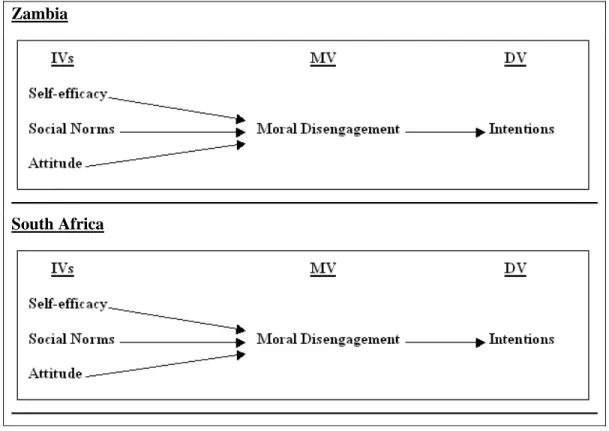
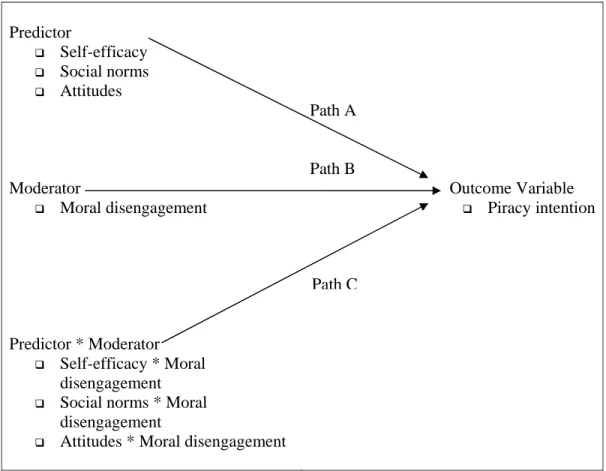
normative influences are a significant determinant of software piracy. Therefore it is the effect of group pressure and group norms that influence an individual’s intentions. They rationalised their findings in terms of Harrington’s (as cited in Tang & Farn, 2005) findings that group pressure helps individual’s rationalise their behaviour and thus deny their individual responsibility. Although not stated specifically, Tang and Farn’s (2005) analysis of the situation suggests that moral disengagement, which is addressed later, may influence the relationship between social norms and piracy intentions.
Peace et al. (2003) conducted a survey on employed adults taking part in part time classes in an American university. Through structural equation modeling they found attitudes, subjective norms and behavioural controls were significant determinants of piracy intention. Subjective norms, they concluded, are “precursors to the intention to illegal copy software” (Peace et al., 2003, p.153). The notion that social norms are significant determinants of a person’s piracy intentions in their own right is supported by Kuo and Hsu’s (2001) finding that subjective norms influence behavioural
intentions and are separate from attitudes. These findings are also supported by Christensen and Eining (1991) and Gupta et al. (2004) who found that pirating software tends to be reflective of a conducive social environment.
Finally, Al-Jabri and Abdul-Gader (1997) specifically referred to Bandura’s SCT model to explain the importance of peer beliefs on piracy intention. In their study they found piracy intention to be significantly related to a peer’s belief in terms of viewing it as acceptable or being indifferent to it. Based on the literature it is evident that researchers are in consensus about the effects of social norms on attitudes
towards piracy, intentions and behaviours. Therefore, in terms of Bandura’s theory and the literature, people are more likely to pirate computer software when the social environment supports their behaviour.
2.6. The Person
Bandura’s theory of triadic reciprocal determination also acknowledges the mutual influence of the person on their behaviour and the environment. This notion is
supported by the literature on software piracy. Therefore, this study will also examine moral disengagement, self-efficacy, perceptions of the social context, attitudes and lastly piracy intentions in terms of software piracy. The section on the perceptions of the social context is unique from the social norms section previously covered because it refers to possible incentives and deterrents offered by the social context. The actual software piracy behaviour is also examined in this section since it is not a separate variable in this study but rather examined through a person’s intentions.
Moral Disengagement
Software piracy has been defined as an illegal and an unethical form of behaviour (Kini et al., 2000). In terms of Bandura’s SCT (2000) moral agency falls under personal factors, in terms of the triadic reciprocal determination model, because it is a form of self-regulation of behaviour (Bandura, Caprara & Zsolnai, 2000). Moral agency can be inhibitive by restraining people from behaving inhumanely or proactive by encouraging people to behave humanely (Bandura, 1999).
Bandura’s SCT (Bandura et al., 2000) says that people adopt a moral standard. This standard can be breached by “selectively engaging or disengaging” using various mechanisms (Bandura et al., 2000, p.58). What this means is that, according to Bandura, people can activate various mechanisms to disengage the self-sanctions they would not experience when breaching their own personal standard. This allows individuals to transgress their moral standards without experiencing any distress caused by social sanctions or self-sanctions (Bandura et al., 2000). Social sanctions refer to a person’s behaviour receiving negative reactions from their social
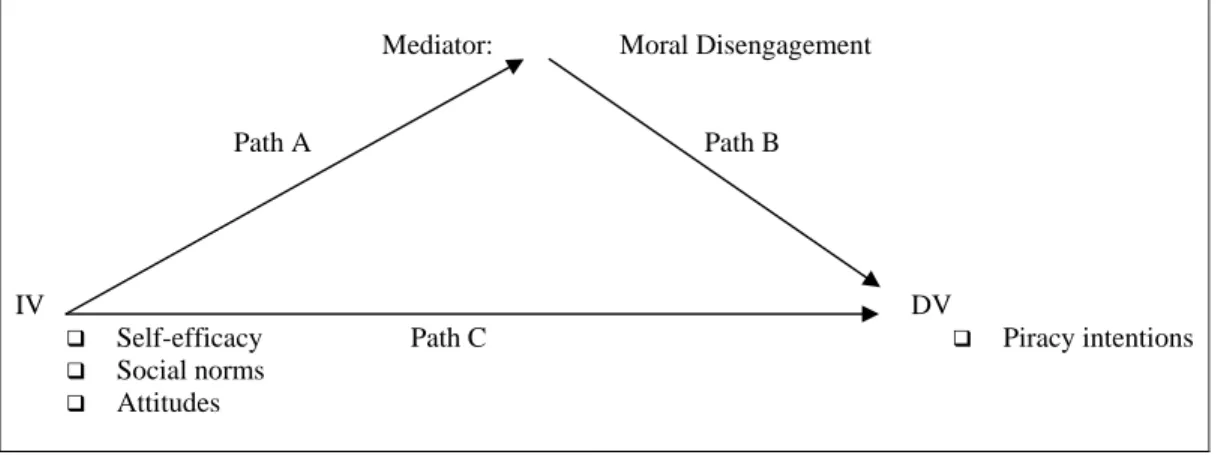
environment. Self-sanctions refer to the internal disapproval they experience if they breach their own standards (Bandura, 1991). Therefore moral conduct is regulated by self and social sanctions. Social influences also shape the moral standards people adopt. This suggests that moral disengagement is likely to moderate the relationship between social norms and piracy intentions.
There are eight mechanisms of moral disengagement (Bandura et al., 2000). (1) Moral justification occurs when people justify their behaviour, they “cognitively redefine” it as being morally or socially correct behaviour (Bandura, 2002, p.103). (2) Euphemistic labelling occurs when the behaviour is classified/named in a manner that reduces personal agency or personal responsibility for it. (3) Advantageous comparisons are made to make the activity appear more neutral. This is achieved by comparing the behaviour to another form of behaviour to make it appear less harmful and even righteous. The first three mechanisms are the most effective in “disengaging moral control” since they involve cognitively restructuring the harmful behaviour and instead perceiving the behaviour as good (Bandura, 2002, p.106).
The next mechanism is known as (4) displacement of responsibility (Bandura, 2000). This is when individuals perceive that their behaviour was caused by a social
influence, e.g. pressure from others, so that they cannot accept responsibility for that action. (5) Diffusion of responsibility is similar but refers to group behaviour when responsibility is dispersed amongst the group members and thus personal
accountability is reduced (Bandura, 2000). The next mechanism allows individuals to (6) disregard or distort the consequences their actions cause others. This process means that self-sanctions will not be activated since the harm being done by the person’s behaviour is not evident to the person. (7) Dehumanisation involves perceiving the person or people who the actions harm as objects and not as human beings thus also reducing the likelihood of the activation of self-sanctions (Bandura, 2000). (8) Attribution of blame is the last mechanism. It involves placing the blame for behaviour on personal circumstances or on other people.
Moral disengagement mechanisms do not work in isolation. Rather they operate together to allow people to breach their own personal standards. Bandura’s theory supports the notion that anti-piracy campaigns are crucial because he (Bandura, 1999,
p.193) states that: “given the many mechanisms for disengaging moral control, civilised life requires, in addition to humane personal standards, safeguards built into social systems that uphold compassionate behaviour and renounce cruelty”. Although Bandura said this in a paper that referred to behaviour that physically harmed others it is still applicable because software piracy involves harming companies and people who develop the software or who are employed by them.
In terms of the literature on the ethical nature of software piracy Liang and Yan (2005) conducted a review on empirical studies published in the last 30 years on software piracy and students. They analysed 150 studies and found three main factors contributing to behaviour: intentions, attitudes and moral intensity. However the research on the ethical nature of software piracy is very contradictory.
Numerous researchers have studied the perceived moral intensity of software piracy. For instance Logsdon et al. (1994) found a low, non-significant relationship between the level of moral development (according to Kohlberg’s theory) and software pirating attitudes among New Mexico students. They believed that this could possibly be because software piracy is not seen as an issue of high moral intensity.
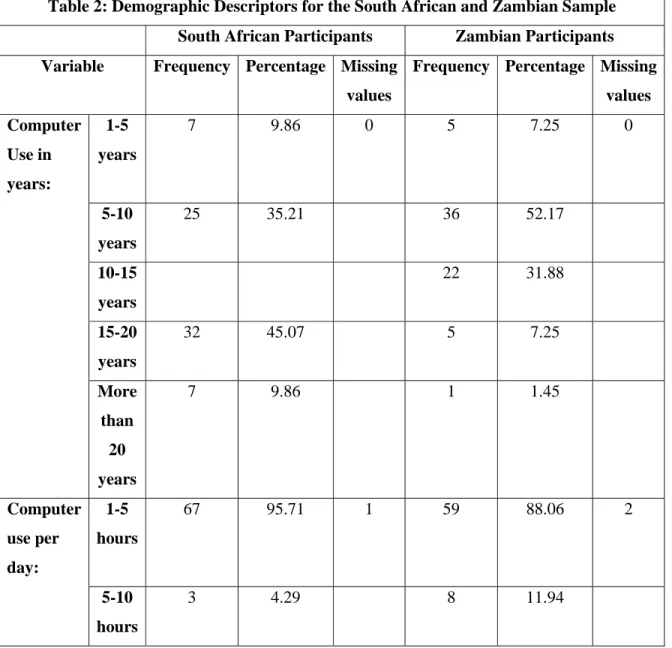
The perception of the moral intensity of the subject has been shown to be linked to demographics variables in an American and a Taiwanese student sample. Kini et al. (2000) utilised Kohlberg’s theory of moral development to study the relationship between demographic variables and moral intensity among an American student sample. While they found very mixed results in terms of the demographic variables that affect moral intensity they found that the use of a computer and experience with computers did not affect the perceived moral intensity of the subject. In a further study Kini, Ramakrishna and Vijayaraman (2003) looked at the effect of demographic variables on moral intensity among a Taiwanese student sample. Again they found very mixed results. However, they found that some demographic variables do affect moral intensity.
The perceived moral intensity of the subject has also been shown to depend on if a person considers himself or herself to be religious. For instance Wagner and Sanders (2001) found that undergraduates in their study who considered themselves to be
religious were more likely to perceive software piracy as unfair and unethical. These people also displayed intentions and behaviours consistent with their moral beliefs. However, the main variables religion, judgement and intention were measured via one item measurements which means that the reliability of these measures can not be ascertained and the author is very cautious about these findings.
Al-Rafee and Cronan (2006) found that moral judgment was not a significant
predictor of attitude. This finding is consistent with Simpson et al.’s (1994) study that found no significant effect of ethical perceptions on behaviour. Logsdon et al. (1994) also believe that software piracy behaviour is not a function of moral judgment alone since they did not find a strong relationship between the level of moral judgment and attitudes towards software piracy. Thus indicating that there are other factors at play and these may help account for all the differences found. This has been the focus of numerous research.
Siponen and Vartiainen (2007) focused on comparing measured moral attitudes toward software piracy and theoretically proposed moral attitudes by computer ethics scholars. To achieve this goal they composed a questionnaire that included a list of reasons, found in previous research, that people pirate software and asked participants to select which reasons for pirating software they supported. For instance they included “software is expensive” and “everyone else does it” (Siponen & Vartiainen, 2007, p.33). The top reason for pirating software based on the 249 survey responses of computer students was that it was expensive, little risk was involved and it was easy. The reason proposed by the scholars was the least favourable.
The reason scholars proposed, that was included in the questionnaire, was that “software cannot be bound by ownership or copyright, because software products are immaterial products” (Siponen & Vartiainen, 2007, p.34). This reason was included in the list and was based on previous research that found that people pirate computer software because it is “intangible and/or non-exclusive” (Ladd as cited in Siponen & Vartiainen, 2007, p.31). Although the sample consisted of people of relatively high educational backgrounds, since they were at University, the phrasing of the scholar’s reason is questionable. This is because in comparison to the other options, such as the examples previously given, the wording is more difficult and the meaning is not as
clear. Also it is not clear how they equated “immaterial” with “intangible” or “non-exclusive”. Since there appears to be two issues involved. Firstly that software cannot be thought of as a concrete object and secondly that it should not be reserved for exclusive use. This illustrates the lack of clarity of this option’s meaning on the questionnaire and this might have affected the sample’s responses to the questionnaire and therefore impacted on the results.
In Siponen and Vartiainen’s research (2007) they also found that half the sample that reported software piracy as an acceptable form of behaviour believed their opinion would change if their income was dependent on software development. A large proportion of the sample, 43.3%, also believed that it was unacceptable behaviour because software piracy is illegal. Only 18.9% said it was unacceptable because it was immoral. Some participants stated that it was unacceptable but still engaged in the behaviour because software is expensive or they cannot afford it or because they believe everyone else was doing it. These justifications offered for their behaviour suggest that these participants were morally disengaging. Other reasons they offered were because of its use, for instance they needed to test it or load it on multiple computers.
Kreie and Cronan (1999) examined possible factors that could influence a person’s ethical decision-making. In particular they looked at whether people perceived software piracy as acceptable and therefore ethical or unacceptable and unethical. They looked at the effect of: personal values, belief system, moral obligation and awareness of the consequences and the social/ personal/ professional/ legal/business environment on ethical decision-making. To achieve this they posed various ethical dilemmas to 307 business students in America. They found that the factors
influencing their judgements vary on a case-by-case basis. One of the five cases addressed software piracy since it involved breeching the copyright terms. The majority of the participants saw pirating software as unacceptable and this was influenced by their perception of their moral obligation, the current legislative environment and awareness of the consequences.
The impact of the current legislation influenced a person’s perception of the ethical nature of pirating software in Kreie and Cronan’s study (1999). However, in
Swinyard et al.’s (1990) cross-cultural study on a student sample from Singapore and American this only occurred when the legislation reflected a person’s cultural values. Swinyard et al. (1990) looked at people’s knowledge of copyright laws, attitudes, behavioural intentions and perceived moral acceptability of the behaviour based on the specific situation. They found that the Singapore sample responded that it was more acceptable than the American sample to copy and keep the software.
The difference in the Singapore and American samples’ acceptance of software piracy was found to be a result of their moral decision-making process. In the American sample the participant’s decision-making process was more influenced by the legislation of piracy than the perceived impact it would have on others. The Singapore sample’s decision-making process was influenced by their perception of what the outcome of their actions would be for their community, family and
themselves. Swinyard et al. (1990) concluded that this is because the Asian sample is behaving illegally one cannot conclude that they are behaving immorally. This is because their cultural beliefs do not support the legislation but rather the human benefits of pirating software. This suggests that moral disengagement could have a different impact on the relationship between self-efficacy, attitudes and social norms on piracy intention. This is because these studies illustrate that in different cultural contexts people’s moral decisions are influenced by different variables.
Bandura’s theory of moral disengagement could help explain why Taylor and Shim (1993) found that business academics differed in terms of attitudes, intentions, social norms and behaviour than business executives. They found that academics held more favourable attitudes towards software piracy and social norms in favour of pirating computer software. Academics also reported higher intentions and actual behaviours to pirate than the business executives. These findings suggest that the academics may have morally disengaged from the act of pirating by not seeing it as unethical and rather seeing it as that everyone else also pirates computer software. This suggests that moral disengagement may act as a moderator between social norms and attitudes and their relationship to piracy intention. This interpretation of Taylor and Shim’s (1993) findings is supported by Litzky and Oz (2008) who specify that moral
disengagement is likely to be a moderator in the relationship between (a) attitudes and behaviour and (b) social norms and behaviour.
Litzky and Oz (2008) examined the impact of ethics education on ethical decision making in terms of information technology specifically they looked at six ethical issues including breaching copyright laws. They found that in only 2 out of the 6 ethical issues presented to the graduate students did the course make a difference. Therefore the ethics course only made a difference in terms of spamming and the violation of free speech but not in terms of the violation of copyright laws. The other three ethical issues were the violation of customer and employee privacy and
exaggeration of information system capabilities. According to Litsky and Oz (2008) there was no change in the likelihood, which was high, of students pirating software after the ethics course because their attitudes had not changed. As previously mentioned Litsky and Oz (2008) base this argument on the assumption that attitudes have a direct impact on the participant’s behaviour. Litzky and Oz (2008) believed that the reason people held positive attitudes towards an immoral and illegal
behaviour can best be explained by Bandura’s theory of moral disengagement. They specifically defined Bandura’s theory as “a type of cognitive distortion that may lead individuals to make decisions that are not aligned with their own internal moral principles” (Litzky & Oz, 2008, p. 73). They suggest that future research should focus on this area since moral disengagement has been shown to have a positive relationship with unethical behaviour. They specify “it would be interesting to explore the role of moral disengagement as a potential moderator of the relationship” (Litzky & Oz, 2008, p. 73).
Self-efficacy
Bandura’s SCT (1991) acknowledges the role cognitive processes have in regulating a person’s behaviour. These cognitive processes illustrate how human behaviour is motivated and regulated by self-influence. People monitor and regulate their
behaviour, for the purpose of this study, based on three main sources of information. Firstly, people judge their behaviour in terms of their personal standards as illustrated previously through moral disengagement. Secondly a person’s behaviour is self-regulated by a person’s perception of their self-efficacy. This refers to a person’s belief in their ability to behave in a particular manner and achieve a particular goal (Bandura, 1991). In this case it refers to a person’s belief in their ability to pirate computer software. Bandura (1977, p.193) puts this more eloquently when he stated
that efficacy expectations refer to “the conviction that one can successfully execute the behaviour required to produce the outcomes” (Bandura, 1977, p.193). Lastly a person’s behaviour is also affected by the perceived outcomes of their behaviour.
Outcome expectations refer to a person’s perceptions of the outcomes that will follow their behaviour. This will be addressed later to illustrate in more detail how these expectations can act as motivators or deterrents (Bandura, 1977). Efficacy
expectations are important because they are a major determinant of the effort, in terms of intensity and duration, put into behaving in a particular manner when there are appropriate incentives even in the face of deterrents (Bandura, 1977). What
Bandura’s theory (1989) says is that behaviour is regulated through the interaction of “self-produced (their belief in their ability to behave in a certain manner) and external sources of information” (incentives and deterrents). Therefore people cognitively process and weigh up the external environment (the sources of incentives and deterrents) and their own perception of their self-efficacy and this affects their behaviour. Self-efficacy is important because if a person has a strong belief in their ability they are likely to intensify and sustain their effort, they will be more motivated in the behaviour in comparison to if they were experiencing self-doubt (Bandura, 1982).
Self-efficacy is based on four sources of information. It stems from a person’s accomplishments in the behaviour, through watching others (Bandura termed this vicarious learning), through verbal persuasion and physiological states (i.e. if they experience distress). Self-efficacy also intensifies when a person engages in the activity successfully (Bandura, 1977). Based on Bandura’s premises this suggests that moral disengagement could moderate the relationship between self-efficacy and piracy intention. This is because if a person is experiencing stress because they are not able to disengage sufficiently then this may affect their piracy intentions.
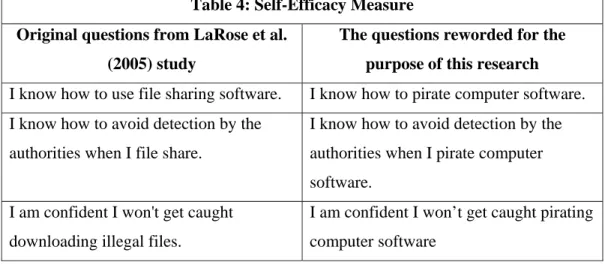
In terms of the software piracy literature Kuo and Hsu (2001) found there to be a significant and positive relationship between self-efficacy and intention. However, Kuo and Hsu (2001) interpreted self-efficacy differently. Based on a close
examination of the scale they developed it is evident that they perceived self-efficacy in terms of pirating behaviour as a person’s belief in their ability to not pirate
software. For instance one of the questions they include in their scale is: “if a
colleague has a software program that you like very much, how confident are you not to ask for an illegal copy of it” (Kuo & Hsu, 2001, p. 306). Their scale was also designed so that high scores reflect a high self-efficacy and therefore a strong belief in a person’s ability not to pirate computer software. Therefore Kuo and Hsu (2001) found that a higher a person’s belief that they will not pirate software the higher their intentions are to not pirate computer software. This is a subtle difference to
Bandura’s (1977) description of self-efficacy as a person’s belief in their ability to engage in a behaviour that will result in specific outcomes. Based on Bandura’s (1977) definition of efficacy it appears that in the case of software piracy self-efficacy refers to a person’s belief in their ability to pirate software. Therefore any future studies on self-efficacy should utilise a better measure of self-efficacy that is representative of Bandura’s (1977) description of the construct rather than Kuo and Hsu’s (2001). This is because Kuo and Hsu’s (2001) study raises questions regarding the validity of the findings of the research since the measure’s construct validity is questionable.
Self-efficacy has been also studied by Peace et al. (2004) as perceived behavioural control. Peace et al. (2004) used the theory of planned behaviour and its reference to perceived behavioural controls, which they defined as a person’s “confidence in his or her ability to successfully carry out the action in question”. Although Peace et al. (2004) utilised the term perceived behavioural control from the Theory of Planned Behaviour examination of their working definition reveals that they were also studying self-efficacy. They also found it to be a significant determinant of piracy intention.
According to Bandura (2002, p.273) the way efficacy beliefs are “developed and structured, the ways in which they are exercised, and the purposes to which they are put, vary cross-culturally”. This is because Bandura (2002, p.273) perceived self-efficacy beliefs to be “complex”, “multifaceted” and “socially structured”. Thus illustrating the importance of examining this variable in a cross-national study.
Perceptions of the social context
The SCT (Bandura, 1984) states that peoples' behaviours are also influenced by their perceptions of the social context. In particular what they perceive to be the likely incentives and deterrents that are attached to certain behaviours. According to the SCT (Bandura, 1986) individuals are motivated to behave in a manner because they have already perceived the possible outcomes of their behaviour. The outcomes act as an incentive to behave in a certain manner. Therefore for the purpose of this study motivators will be defined as incentives that drive people to commit software piracy through symbolic representations of the expected, external outcomes. Al-Rafee and Cronan’s (2006) findings supports the motivating influence of perceived outcomes since they found that a person’s attitude is influenced by their perception of the outcomes of their behaviour when it comes to software piracy.
Bandura (1986) specified eight incentives that motivate us to commit a particular behaviour, such as software piracy. The eight incentives are: primary, sensory, social, monetary, activity, status and power, reinforcement of reciprocal exchange, and self-evaluation incentives and the rewards of personal efficacy (Bandura, 1986). The first incentive suggests that people may be motivated to pirate computer software because it offers (1) the sensory incentive of “sensory feedback” that provides a release of boredom or because it is intrinsically pleasing (Bandura, 1986, p.233). The second type of incentives, (2) primary incentives, do not apply to software piracy since they do not directly fulfil any biological needs (Bandura, 1986). The third type of incentives are related to (3) the social incentives that one may achieve if the act of pirating software is socially rewarded. This incentive is similar to Tang and Farn’s (2005) finding that people are more likely to pirate computer software when there is group pressure to do so. This is because pirating the software will allow them to receive approval from their peers who also engage in the activity. (4) Activity incentives, the fourth category of incentives, are motivating because people engage in a behaviour that is intrinsically rewarded. For instance people may pirate because they enjoy and get value out of pirating software.
The fifth incentive suggests that people may also be motivated to pirate software to avoid losing money or to gain money (Bandura, 1986). Bandura’s (5) financial
incentive is particularly valuable in understanding what motivates people to pirate software since it is a common theme in the literature. For instance Gupta et al.’s (2004) study found that people often cite monetary loss as a reason to pirate. In particular what they found is that people choose to pirate software because they believe that this reduces the financial loss they would incur if the software they bought was not effective, appropriate or up to the correct standard. Gupta et al. (2004) believed that this was the reason that they found that the more money people spent on purchasing software the more they pirated. Al-Rafee and Cronan (2006) also found that people tend to support software piracy because they feel that software is overpriced and therefore pirating will help save them money. In a laboratory experiment conducted on undergraduate students Tang and Farn (2005) found financial gains as a significant determinant of a person’s intention to pirate software. Lau (2006) did an Internet online survey of Chinese University students. He found that monetary benefit was the main reason people pirate software in terms of students looking for cheaper alternatives. It is evident that the literature supports the notion of monetary incentives in terms of software piracy.
The sixth possible incentive for pirating software is based on (6) the acquisition of status or power within an individuals’ community they could receive. The seventh incentive Bandura (1986) referred to as (7) reinforcement or reciprocal exchange. From Bandura’s work (1986) we can infer that people may engage in pirating
software if they believe that the act of supplying another individual with the software will lead to an exchange relationship where the behaviour will be reciprocated at a later stage. The eighth and final incentive to pirating software is in the form of (8) self-evaluative incentives and the rewards of personal efficacy. This occurs when people perceive that their behaviour will lead to an enhanced perception of their self- efficacy.
The SCT (Bandura, 1986) suggests that people may also be deterred from pirating software because of legal, social and self-sanctions. For the purpose of this study deterrents will be defined as the personal, social and legal costs, which restrain people from committing software piracy. (1) Legal sanctions act as deterrents because the person is deterred from behaving in a manner that will result in criminal punishments. Peace (1997) found that the perception of legal sanctions in terms of being caught and
punished varied considerably and this impacts on its ability to act as a deterrent. Only when people believe that they will get caught and that the level of punishment will be high does it act as a deterrent. This perception is affected by the actual probability of punishment. Peace et al. (2004) also found that the perception of punishment severity and uncertainty directly affected a person’s piracy intentions. Specifically if people perceive punishment severity and certainty to be high their intention to pirate software is low. They also found that as an individual’s perception of punishment severity and certainty increases their belief in their ability to pirate software (their self-efficacy) decreases. In terms of the model utilised in this study this would mean that as the two increase a person’s self-efficacy decreases. The second deterrent occurs in the form of (2) social sanctions. This is when a person perceives that their behaviour would be condemned by people within the individuals’ vocational and community life resulting in a loss of livelihood or social status. The last type of deterrents are (3) self-
sanctions. Self-sanctions may deter someone from pirating software if they perceive that the behaviour will lead to “self-condemnation” (Bandura, 1986, p.274).
Incentives and deterrents differ from social norms because the latter refers to the social standards/norms concerned with behaving in a specific manner. Therefore social norms refer to the pressure to behave in a particular manner that stems from a person’s social environment i.e. their friends, peers and significant others. Whereas incentives and deterrents refer to the perception of certain outcomes, e.g. monetary, attached to specific behaviours. The perceptions of the outcomes act as motivators or deterrents to engaging in a particular behaviour.
There are three other important pieces of software piracy research that support a number of Bandura’s incentives and deterrents. These are Lau’s (2006) two phase study, Simpson et al.’s (1994) four factor model and Glass and Wood’s (1996) Equity theory perspective of software piracy. Lau (2006) had a two-phase approach to ascertaining the motivating factors for people to pirate software. In the first phase, as previously mentioned, he distributed an open-ended questionnaire on a Chinese University’s World Wide Web server where volunteers could fill it in. The second aspect of this study involved conducting a content analysis of a Chinese Internet newsgroup’s conversation and 209 Chinese messages posted on USE NET concerning software piracy. Lau (2006) commented that adherence to copyright laws can only be
anticipated if people have easy and timely access to software originals and that they are reasonably priced. He believed that this is because people rationalise their behaviour because of their ‘need’ for the software. Once again this is similar to Simpson et al. (1994) who found that people pirate software because of the associated benefits, in particular the financial gain (financial incentive), the challenge it offers (activity incentive) and the reduction in the acquisition time.
Simpson et al. (1994) conducted their study on Business University students. Based on their findings they developed a four-factor model of determinants of pirating behaviour. Their model stipulates that four factors influence a person’s propensity to pirate: stimulus, social/legal, personal gain and situational factors. Personal gain refers to intrinsic and extrinsic gain derived from pirating software. For instance people are motivated to pirate software because of Bandura’s (1986) monetary and activity incentives. Situational factors refer to the situation such as the ease with which software can be obtained. Stimulus factors are factors that prompt a person to make the decision whether to pirate or not to pirate the software. An example of a stimulus factor would be a sudden need to acquire the software for a class a person is taking. Lastly legal/social factors are concerned with Bandura’s social incentives and legal detterents. For instance if the risk of getting caught is low and the social norm is to pirate then the person is more likely to engage in the behaviour. Simpson et al.’s (1994) study clearly supports a number of Bandura’s incentives and deterrents. The main difference between the two is that in the research a factor analysis grouped the 13 determinants presented to the sample into four main factors and not all of
Bandura’s incentives and deterrents were included in the study. A major downfall of this study is that Simpson et al. (1994) did not provide the reader with adequate working definitions of each construct.
Situational factors were also a significant determinant of software piracy behaviour in Glass and Wood’s (1996) study. Glass and Wood (1996) believed that software piracy is not ethically contentious. They believed that it is rather an issue that can be better understood using Equity theory. Equity theory is based on the notion of social exchange rather than from an ethical decision making perspective. Equity theory states that when people are involved in an exchange relationship they will weigh up their input/ output ratio with the other person’s input/output ratio. The idea behind
the theory is that people are motivated to reduce inequity. In terms of pirating software, individuals will engage in piracy if they perceive the exchange relationship to be equitable. Perception of equity depend on situational variables. In particular people weigh up the cost of the software, if it’s too high their own input off balances the exchange relationship ratio and they will perceive the situation as inequitable and thus not engage in the exchange relationship. In terms of outputs people consider if engaging in the exchange relationship will be helpful to them by paying back a debt or later on, if someone will return the favour at a later date, and if they perceive few negative outcomes such as being caught/ punished or socially unacceptable. Equity theory thus supports social incentives, and legal and social deterrents.
Based on the above review of the literature on incentives and deterrents it is clear that Bandura’s (1986) SCT offers a neater and appropriate framework to study any possible differences between the two samples’ perceptions of the social context. This means that this framework allows the researcher to examine if the participants in the study perceive the incentives or deterrents of software piracy differently.
Attitudes
According to Bandura’s SCT (1984) a person’s cognitions play a vital role in influencing a person’s behaviour. In particular a person’s attitude towards the behaviour is crucial. This is because an attitude is best conceptualised “as a psychological tendency of evaluating a specific entity and generating certain
favourable or unfavourable responses” (Liang & Yan, 2005, p.119). Attitudes can be conceptualised as being favourable or unfavourable towards software piracy. A favourable attitude is one that supports the behaviour whereas an unfavourable attitude is unsupportive of the behaviour. Research in this area has linked attitudes to intentions, behaviours, social norms, the perceived outcomes of the behaviour and the cultural context.
In terms of intentions Peace (1997) conducted a survey on employed professionals, who used computers in their office environment, and were also taking a part time course. His aim was to look at software piracy behaviour within the workplace. He found that an individual’s attitude was the strongest predictor of intention to pirate
computer software in the workplace. This is consistent with Peace et al.’s (2003, p.153) findings that attitudes are “precursors to the intention to illegal copy software”. In particular Peace et al. (2003) found that, when compared to subjective norms and perceived behavioural controls, attitude had the strongest effect on a persons’ intention to pirate software. This is important because Solomon and O’Brien (1990) found that people tend to perceive software piracy as being socially and ethically acceptable.
Christensen and Eining (1991) and Gupta et al. (2004) also found that attitudes and software piracy behaviour were directly related. In particular Gupta et al. (2004), addressed their findings from the opposite viewpoint that participants in their study who perceived pirating as illegal and unethical did not pirate. A person’s attitude towards software piracy has been shown to be affected by the cognitive beliefs they hold about the outcomes of their behaviour and the social norms (Al-rafee & Cronan, 2006). In particular Al-rafee and Cronan (2006) found that piracy attitudes were favourable in terms of software piracy if a person’s significant others supported piracy and if the person perceived their behaviour will lead to positive outcomes. For
instance a person is likely to hold favourable attitudes if the social norms support piracy and the person believes that they will save money by pirating software.
Attitudes towards software piracy have also been shown to differ at a national level. Swinyard, Rinne and Kau (1990) investigated the differences in attitudes towards software piracy between University students at a Singapore University and at an American University. What they found and concluded was that Singapore University students have a favourable attitude towards software piracy, they do not perceive it as immoral, because of their cultural values. They believed that Asian cultures consider copying work as a valuable skill and therefore their values were not in line with copyright legislation. Swinyward et al. (1990, p.656) believe that copyright laws reflect Western values in terms of “the preservation and protection of individual creative effort”. They believe that this explains why their Singapore participants had less favourable attitudes towards copyright laws even though they were more
knowledgeable about the laws. This is important because they also found that their Singapore sample’s behavioural intentions were consistent with their attitudes and significantly higher than the American sample’s intentions to pirate. This is