Walden Dissertations and Doctoral Studies
Collection
2018
Exploring Perceptions of Accountability Practices
Used in Social Services
Tankiya L. Williamson Walden University
Follow this and additional works at:https://scholarworks.waldenu.edu/dissertations Part of theOrganizational Behavior and Theory Commons
This Dissertation is brought to you for free and open access by the Walden Dissertations and Doctoral Studies Collection at ScholarWorks. It has been accepted for inclusion in Walden Dissertations and Doctoral Studies by an authorized administrator of ScholarWorks. For more information, please [email protected].
Walden University
College of Social and Behavioral Sciences
This is to certify that the doctoral dissertation by
Tankiya Williamson
has been found to be complete and satisfactory in all respects, and that any and all revisions required by
the review committee have been made.
Review Committee
Dr. Kimberly Farris, Committee Chairperson, Human Services Faculty Dr. Hilda Shepeard, Committee Member, Human Services Faculty
Dr. Sandra Harris, University Reviewer, Human Services Faculty
Chief Academic Officer Eric Riedel, Ph.D.
Walden University 2018
Abstract
Exploring Perceptions of Accountability Practices Used in Social Services by
Tankiya Williamson
MEd, Troy University, 2006 BS, Troy State University, 2004
Proposal Submitted in Partial Fulfillment of the Requirements for the Degree of
Doctor of Philosophy Human Services
Walden University January 2018
measurements in social service organizations to measure outcome data has increased expectations of efficient outcomes in service delivery. This study addressed the problem of inefficient service delivery in nonprofit human service organizations from the
perspective of direct service staff responsible for service provision. The purpose of this qualitative phenomenological study was to explore how direct service staff in nonprofit organizations perceive their individual contributions to the overall goal of providing efficient quality service. Principal agent theory framed the inquiry regarding how direct service staff working in nonprofit human service organizations perceive the nature and value of using performance measurements as required by law. Data were collected from 5 direct service workers through semi-structured interviews and analyzed for content themes using Ethnograph software. The results of this study indicated direct service workers perceive organizational efficiency related to how well they do their jobs and not overall at the organizational level. In addition, participants identified job training and more open communication with management to understand how organizational level goals would be valued to do their jobs effectively. This study contributes to social change by informing those who develop nonprofit human services policy and practice of the potential for further staff training curriculum and improvements to the organizational accountability culture.
Exploring Perceptions of Accountability Practices Used in Social Services by
Tankiya Williamson
MEd, Troy University, 2006 BS, Troy State University, 2004
Proposal Submitted in Partial Fulfillment of the Requirements for the Degree of
Doctor of Philosophy Human Services
Walden University January 2018
nudges to stay the course. The loyalty and enthusiasm I received year after year proved how committed and excited you all are about what lies ahead for me. I pray there are no boundaries to your lives and that we all live to our greatest potential.
believed I could start and finish this journey in higher education. Especially my mother, who has prayed tirelessly to keep me strengthened and motivated to pursue my dreams.
To Dr. Kimberly Farris, who was encouraging and an extreme resource and source of support in bringing this dissertation together. Thank you for being so diligent in facilitating my process.
To Dr. Hilda Shepeard-your expertise was vital and greatly appreciated. Thank you for completing my dissertation team.
i List of Figures ...v Chapter 1 ...1 Introduction ...1 Background ...4 Problem Statement ...7
Purpose of the Study ...9
Research Question ...9
Theoretical Foundation ...10
Nature of the Study ...13
Definitions...15
Assumptions ...15
Scope and Delimitations ...16
Limitations ...17
Significance...17
Summary ...19
Chapter 2: Literature Review ...20
Introduction ...20
Literature Search Strategy...20
Theoretical Foundation ...20
ii
Nonprofit Accountability Practices... 31
Customer Satisfaction Impact on Performance Standards ... 37
Evaluation of performance measurements in nonprofit organizations. ...43
Focus on Service Quality ...50
Summary ...60
Chapter 3: Research Method ...62
Introduction ...62
Research Design and Rationale ...62
Role of the Researcher ...64
Participant Selection ...66
Instrumentation ...67
Procedure for Recruitment, Participation, and Data Collection ...68
Data Analysis Plan ...69
Issues of Trustworthiness ...71 Ethical Procedures ...72 Summary ...73 Chapter 4: Results ...74 Introduction ...74 Setting ...74 Demographics ...75
iii
Evidence of Trustworthiness...84
Results ...85
Summary ...91
Chapter 5: Discussion, Conclusions, and Recommendations ...94
Introduction ...94
Interpretation of the Findings...94
Limitations of the Study...103
Recommendations ...104
Summary ...105
Implications...106
References ...110
Appendix A: Screener Guide ...122
Appendix B: Recruitment Letter/Email ...123
Appendix C: Interview Protocol ...124
Appendix D: Request for Interview Space ...127
Appendix E: Interview Transcript ...128
Appendix F: Hand Coding ...143
iv
v
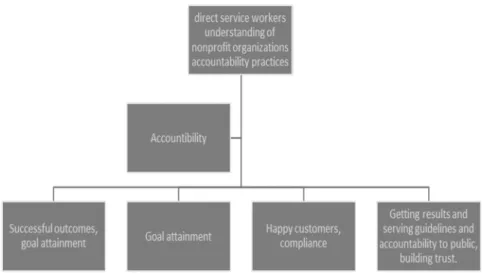
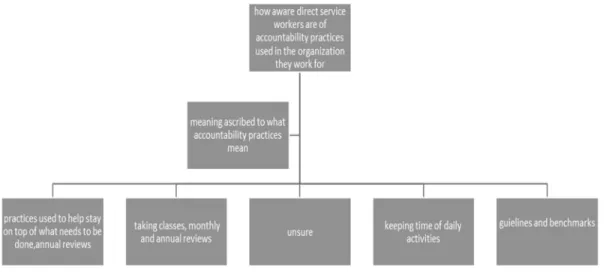
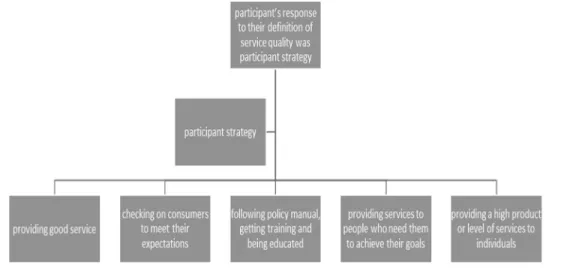
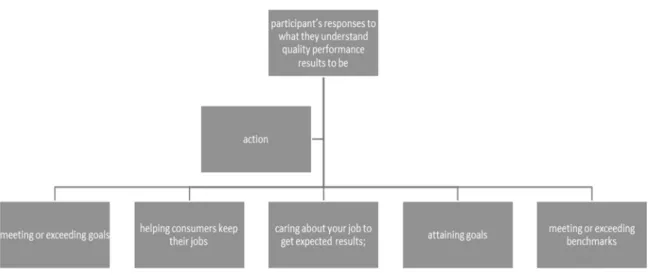
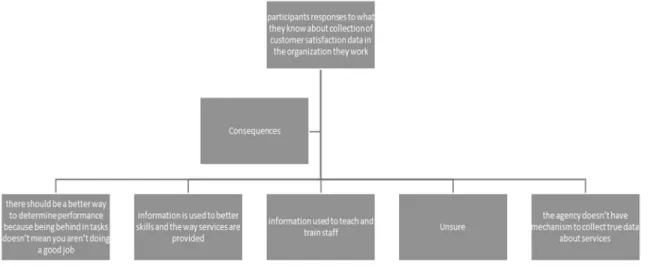
Figure 2. Direct service workers' understanding of accountability practices ... 80 Figure 3. How aware are direct service workers of accountability practices ... 81 Figure 4. Participants’ response to their definition of service quality ... 82 Figure 5. Participants’ response regarding understanding of quality performance results 83 Figure 6. Participants’ responses regarding collection of customer satisfaction data ... 84
Chapter 1
Introduction
Many researchers have focused on performance measurements as a means to address accountability practices used in nonprofit organizations. I argued that an understanding of performance measurements should not only come from theory and reasoning but also from what individuals working in nonprofit organizations think (Acar, Guo, & Yang, 2012). Specifically, I focused on the nonprofit organization employees’ perspectives of those who work directly with customers to provide social service and the use of performance measurements as an accountability tool for measuring service
delivery effectiveness in nonprofit organizations. The Government Performance and Results Act (GPRA) of 1993, a law aimed at monitoring federal organizational performance, requires the use of performance measurements such that nonprofit organizations provide data to Congress in effort to make progress toward improving results and performance, including funded local, state, and nonprofit organizations (GPRA, n.d.).
The goal of this proposed qualitative study was to contribute more information about employees’ perceptions of performance measurements. Additionally, this study was conducted to add to the literature base and show that a greater understanding is needed regarding the nonprofit sector’s use of performance measurements to measure organizational performance. Researchers have found a lack of mutual understanding regarding failure and success in nonprofit organizations in relation to for-profit
organizations (Helmig, Ingerfurth, & Pinz, 2013). As a result of research highlighting poor organizational performance, accountability practices in nonprofit public
administration is a current societal focus (Beeri, Dayan, Vigoda-Gadot, & Werner, 2013). The federal government is making efforts to improve public services in nonprofit human service organizations in modernized countries and the Western world, but few researchers have focused on the results of these efforts (Beeri et al., 2013).
Exploration of nonprofit human service organizations’ management of
performance measurement systems is lacking (Seldon & Sowa, 2011). In this proposed study, emphasis was not only on the need for performance measurements, but also on the employees’ perceptions of those measures. The effectiveness of nonprofit organizations is of concern because those organizations rely heavily on federal government funding (Herman & Renz, 2004). Accountability is challenging for nonprofit organizations in partnership with the government (Alexander, Brudney, & Yang, 2010).
Organizational performance can be assessed through payments for specific services, reporting, and oversight, which suggests that program objectives and goals are used to measure organizational performance (Krauskopf & Chen, 2010). Performance measures used in nonprofit organizations include how well the organizations rank on accreditation reports and in researcher rankings, policy formulation, board involvement, contributions, growth in memberships, and goal setting (Herman & Renz, 2004). Herman and Renz (2004) used focus groups with experienced practitioners to identify effective practices of organizational performance, such as having needs assessments, measuring
the clients’ satisfaction, and developing a mission statement. The authors also noted that effectiveness was not arbitrary and constantly developed and changed based on the nonprofit constituent that was providing the information being reviewed. Within the literature review, employee perceptions regarding how to measure organizational growth by way of measuring client satisfaction and adhering to a mission statement was different than what was actually defined by current policies of accreditation and policy
formulation. Accountability not only impacts organizations, but also those who are seeking help. For this reason, it was worth exploring the concepts and perceptions of those who are on the frontlines of service provision (Herman & Renz, 2004).
Alexander et al. (2010) said that current measures of accountability are too time consuming and complex. Although the public is heavily dependent upon services provided by nonprofit organizations, there is still a lack of universal understanding of accountability (Alexander et al., 2010). Accountability in nonprofits is important because the primary currency of nonprofit organizations is their ability to maintain stakeholder trust (Alexander et al., 2010).
LeRoux and Wright (2010) agreed that performance measurement is seen as one way to restore public trust in nonprofit organizations. LeRoux and Wright (2010) found that few scientific studies exist on how performance information is used in nonprofit organizations. The authors conducted a study to answer the question: Are organizational leaders making strategic decisions promoted by performance measurements? LeRoux and
Wright (2010) concluded that performance measurements can be beneficial with highly trained executive staff, good leadership, and sufficient direction of tasks.
A gap exists in the empirical research regarding the documentation of how frontline employees should best provide services. Since the passage of the GPRA, I did not find research focused on best practices for assessing organizational effectiveness. The proposed study addressed the problem of inefficient service delivery in social service organizations from the perspective of employees who are responsible for service provision. Inefficiency in social service organizations also negatively impacts public confidence in the federal government to provide quality services (Ebrahim, 2010; Tumasjan, Strobel, & Welpe, 2011). The federal government is mentioned in this study because it is responsible for ensuring effective organizational performance (Brass, 2012). This chapter provides the background, problem statement, purpose of the study, research question, theoretical framework, nature of the study, definitions, assumptions, scope and delimitations, and limitations, and concludes with the significance of the study and a summary of the chapter.
Background
Government attempts to reform human service efficiency began in 1949 with the Hoover Commission. Major legislative attempts to reform human service delivery have been made in efforts to make operations efficient and rationalize budgets (Kautz, Netting, Huber, Borders, & Davis, 1997). The service efforts and accomplishments (SEA)
total quality management (TQM) approach, and the National Performance Review are such past reforms that attempted to make operations efficient (Kautz et al., 1997).
Previous efforts such as management by objectives (MBO), planning, programming, and budgeting systems (PPBS), and zero-base budgeting (ZBB) yielded little success in rationalizing budgets (Davis, 2002). What made the GPRA more effective than previous reforms was that the GPRA was law (Davis, 2002).
In addition to the GPRA, the Sarbanes-Oxley Act (SOX) of 2002 provided background on the issue of improving accountability in local government and nonprofit organizations and was enacted as a result of financial fraud at such companies such as Tyco and Enron (Elson & Dinkins, 2009). The SOX specifically resulted in organizations increasing transparency and accountability. Franzel (2014) asserted that quality auditing is a best practice to prevent organizational failures and advance the protection of public interest. Nonprofit organizations have implemented SOX provisions, such as audit committees, to improve business practices (Elson & Dinkins, 2009).
Because the GPRA is the most effective reform in human service delivery and pertains to the performance of programs in human service delivery, it best matches the specific focus of this proposed study on performance measurements. Ongoing program evaluation is key in strategic plans, and performance evaluations are required to provide needed data in order to comply with mandates established by the GPRA (Davis, 2002). A concern articulated in the GPRA was the lack of attention to program results and
al., 1997). The GPRA has other priorities as well, but the focus of the proposed study was on performance measurements.
I also discussed the Government Performance and Results Modernization Act (GPRAMA) of 2010 in the proposed study. This amendment of the GPRA was signed into law in 2010 with a new requirement that organizational performance data be provided not only to Congress and the President but also to the public (Brass, 2012). With the implementation of the GPRAMA, Congress required nonprofits to report performance measurements more frequently in an effort to encourage the federal government to make decisions based on the facts of the data and create closer working relationships between the two parties (Kamensky, 2011). Every 3 years, the GPRAMA (2011) requires agencies to provide descriptive details regarding how organizational objectives are to be met. Lastly, the GPRAMA established how information should be published to the public and also established a performance improvement council to assist with determining how to use information about performance requirements. Although these three policies have addressed organizational performance from a policy standpoint, there is still a gap in the research that ignores employees’ views of accountability
practices. Nonprofit organization failure to understand the nature and value of utilizing performance measurements as required by the federal government from employees’ perceptions is a problem that results in inefficient service delivery. Taylor (2011) and Newcomer, Baradei, and Garcia (2012) argued that inefficient service delivery is likely
the result of nonprofit human service organizations not utilizing performance measures to address public needs.
Problem Statement
The issue of organizational performance is important because more than half of Americans distrust human service programs that have been fashioned to create change in their lives (Ebrahim, 2010; Tumasjan et al., 2011). Also, billions of dollars have been wasted funding ineffective and often harmful programs (Brown, 2011). The lack of research documenting performance measurement systems in nonprofit human service organizations is a criticism (Seldon & Sowa, 2011). In support of Seldon and Sowa’s (2011) stance that management of performance measurement is lacking in nonprofit organizations , Khalil and Adelabu (2012) indicated that staff perceptions about
performance measurements differ from the intended meaning and practice of systems put in place to deliver efficient services in nonprofit organizations. Organizations need institutional reform to develop and engage staff in change processes so they can deliver efficient services (Khalil & Adelabu, 2012).
The lack of empirical evidence regarding the utilization of performance measurements may cause nonprofit human service organizations to continue using inappropriate or ineffective practices and measures to improve organizational
performance. This problem is further magnified by nonprofit organizations’ failure to understand the specific purpose and use of performance measurements (Brown, 2011; Khalil & Adelabu, 2012; Martin & Frahm, 2010; Newcomer et al., 2012; Seldon & Sowa,
2012; Taylor, 2011). The success of individual programs is based on performance indicators identified through the development of strategic plans. Benchmarking, interagency collaborations, data collection improvements, and fiscal accountability are some of the federal performance tools cited in the GPRA (Davis, 2002).
Seldon and Sowa (2011) used a case study design to compare how frontline employees actually perceived and applied the performance management tools laid out by the nonprofit organization’s managers. Staff perceptions about performance measurement differed from management’s intended meaning and practice of the system. Performance management was underutilized in social service organizations, and, when it was utilized, the use of a performance measurement system created positive outcomes for employees (Seldon & Sowa, 2011).
To help improve service efficiency, there is a need for the federal government and nonprofit social service organizations to make sure direct service staff understand the value and utilization of performance measures and their implications regarding customer satisfaction. In an effort to contribute to the nonprofit literature, this proposed study focused on the lived experiences of direct service staff working in organizations that have implemented GPRA requirements to “improve federal program effectiveness and public accountability by promoting a new focus on results, service quality, and customer satisfaction” (GPRA, n.d., sec. 2).
Purpose of the Study
The purpose of the proposed study was to explore perceptions of direct service staff regarding the use of performance measurements in service provision. Specifically, I explored how direct service staff in nonprofit organizations trace their individual
contributions to the overall goal of providing quality service by examining the staff’s understanding of stated accountability and performance measurements and stated policy as well as any discrepancies they may identify as well. The proposed study can contribute more meaningful qualitative information regarding inefficiency in nonprofit human service organizations who have defined performance management systems in place and how individual employees perceive those systems.
After thoroughly reviewing the literature, I found few research studies that examined performance issues specifically from the employees’ perspectives. The
proposed study can contribute to the nonprofit performance literature in several ways, in turn addressing gaps in the current literature that inform nonprofit organizations
regarding efficient service delivery. A research study exploring direct service staff’s interpretations of the intended meaning and practice of performance measurements may influence policy and practice in nonprofit human service organizations.
Research Question
The following research question guided this research study: How do direct service staff working in nonprofit human service organizations understand and perceive the
nature and value of using performance measurements as required by the federal government?
Theoretical Foundation
The theoretical framework used in this study was the principal agent theory. The principal agent theory evolved from the agency theory in the early 1980s (Gauld, 2007). Agency theory, the former name of principal agent theory, resulted from the study of institutional and organizational behavior (Gauld, 2007). Theorists believed that activities performed by organizations or individuals were motivated by their self-interest (Gauld, 2007). To counter the idea that individuals were motivated by self-interests that would ultimately dominate the government and economy, theorists advocated for limits of power for those in governmental positions and organizations (Gauld, 2007). One feature of principal agent theory, performance contracts, assisted with limiting and determining power in organizations. Principal agent theory is important in this study, as it can reveal both to what extent nonprofits are working to improve service delivery based on policies and where improvements may be required in practice.
The performance of nonprofits is a huge focus of the government; therefore, performance is a vital part of government contracts, especially as it relates to the provision of human services (Krauskopf & Chen, 2010). As a contract manager, the government measures the results of human service organizations’ service provision and holds them responsible for performance measurements (Krauskopf & Chen, 2010). Principal agent theory is useful for arranging contractual expectations and performance
measures and has been used in the past to ensure service provision (Gauld, 2007; Kim, 2005; Kraukopf & Chen, 2010) and guarantee accountability (Benjamin, 2010). I used the principal agent theory as the theoretical foundation in this study in order to
understand the problem of inefficiency in nonprofit organizations (Brown, 2011; Martin & Frahm, 2010) and help guide the exploration of whether nonprofits actually comply with performance requirements in addressing public needs (Newcomer et al., 2012; Taylor, 2011).
The research question was developed to identify and narrate the exploration into human service direct service staff’s utilization of performance measurements. This information could be useful for stakeholders seeking to improve service efficiency and make sure direct service staff understand the importance and use of performance
measurements. Structured interviews were used to determine if tasks performed by direct service staff working in human service organizations focused on service quality,
performance results, and customer satisfaction as required by federal performance standards to ensure accountability to clients.
The contractual relationship between nonprofit organizations and the federal government made this theory appropriate as contracts and agreements are implemented to ensure service provision between the two parties. The relational contracts between
principals and agents help to foster an accountability culture as well as the influence of policies and rules involved with contractual agreements (Dubnick & Frederickson, 2010). Focusing on accountability and compliance with performance measurements is especially
relevant since more than half of Americans distrust human service programs that have been developed to create change in the lives of others (Ebrahim, 2010; Tumasjan et al., 2011). Wohlstetter, Datnow, and Park (2008) described the principal agent theory as useful to improve organizational performance because the reporting component, decision making driven by data, of the theory assisted with making decisions that were based on data versus gut instincts. This aspect of the principal agent theory helps to understand why it is important that staff understand the data provided from performance
measurements and the use of the data in human service organizations.
The GPRAMA (2011) required that federal programs provide documentation to the federal government that focused on improving organizational performance. Review of performance data is essential for organizational decisions because the data review
provides information about weaknesses and capabilities, as well as a way to create plans for improvement (Wohlstetter et al., 2008). In order to hold agents accountable for meeting performance measurements, principals require that agents implement certain standards to ensure efficient organizational performance and display transparency. A phenomenological approach was used to study the perceptions of five direct service workers in nonprofit organizations to explore their perceptions, knowledge, and attitudes about accountability practices to determine if tasks performed by direct service staff, in their opinions, focused on service quality, performance results, and customer satisfaction as required by the performance standards. This study also helped to determine if staff understand performance measurements and their intended uses. Given that the principal
agent theory is useful for improving organizational performance and can assist with making decisions based on data, it was useful for guiding this research.
Nature of the Study
The purpose of this qualitative study was to explore the perceptions of direct service staff working in nonprofit organizations to find out if and how they understood and perceived the nature of utilizing performance measurements. Qualitative research is helpful for explaining attitudes and behaviors (Charles, 2013) and, in this case, for providing a way to find out what direct service staff think and know (Reber, 2006). GPRAMA standards were used in the study to document the federal government’s efforts to include accountability measures in nonprofit grant/reporting requirements. This study was focused on federal legislation designed to indicate nonprofit organizations’
accountability practices in the areas of service quality, performance results, and customer satisfaction to improve effectiveness and promote performance standards as a
requirement to ensure accountability to clients. Therefore, a phenomenological emphasis was the best approach for identifying and narrating the perceptions of direct service staff within nonprofit organizations to aid with discerning their perceptions of the utilization of performance measurements (Reber, 2006).
Participants for the study were recruited through GuideStar (year), a website that provides information about nonprofit organizations registered with the Internal Revenue Service (IRS) regarding their finances, programs, governance, reputation, and mission. Using GuideStar, I identified several organizations in Birmingham, Alabama, classified
as nonprofit organizations that range in income from zero to $12,000,000 annually. I only used social service nonprofit organizations with National Taxonomy of Exempt Entities (NTEE) code J30 which represents vocational rehabilitation services. Vocational
rehabilitation services were chosen because they cover many services including job readiness, resume building, job development, supported employment, rehabilitation support, vehicle modifications, and rehabilitation technology assessments, among many others that are consumer driven and require interaction with the public. Only recruiting from nonprofit organizations that provided similar services provided the desired sample of participants for reporting data and reaching saturation.
Using staff directories and company websites, I searched for participants among the organizations identified from GuideStar and made contact with direct service staff by sending letters and emails and making cold calls. As responses were obtained from possible participants, I scheduled time to meet with respondents to discuss the study and obtain a firm commitment. An incentive of a $10 Starbucks gift card was awarded to participants who completed the study.
The goal was to secure five direct service staff members from five different sites to complete the study, one participant serving in the role of a direct service staff member (defined as providing services directly to consumers) and who had been working in a nonprofit organization for at least 3 years. This sample provided enough relevant information and allowed saturation to develop in this phenomenological study.
A large quantity of data were generated from audio taping, interview transcripts, and hand and Ethnograph coding. Once transcripts were complete and hand coded, they were downloaded into Ethnograph for further analysis. After the software generated themes, I reviewed the data again to draw further conclusions and identified direct quotes to use in writing the results section.
Definitions
Accountability: the responsibility of upholding performance to the expectations of another party (Martin & Frahm, 2010).
Ethics climate: Shared employee perceptions of ethical procedures and practices within an organization (Shin, 2012).
Financial accountability: Accountability for receiving and spending organizational funds (Martin & Frahm, 2010).
Performance measurements: Documented information to report on results or outcomes of organizational performance (Patrick, 2013).
Performance goal: A measurable performance target that is measured against an actual achievement in a numerical standards (GPRA, n.d.).
Organizational performance: The total number of consumers served and the number and quality of achieved outcomes (Martin & Frahm, 2010).
Assumptions
It was assumed that understanding how employees perceived accountability practices could answer questions regarding how effective an organization’s efforts are at
influencing organizational performance. Performance measurements are methods to define accountability and guarantee results (Benjamin, 2010). I assumed organizations would find this information valuable in helping them to improve the level of efficiency in their accountability practices. It was also assumed that participants would willingly participate, answer questions truthfully, and have knowledge of organizational accountability practices in order to provide credible answers.
Scope and Delimitations
Although many service delivery models exist, governments are still searching for ways to address service delivery to the public (Khalil & Adelabu, 2012). The problem addressed in this research was the failure of nonprofit organizations to understand and perceive the nature and value of utilizing performance measurements as required by the federal government to improve social service delivery. The scope of this
phenomenological study was limited to five direct services staff employees from five separate nonprofit organizations in the Birmingham, AL area in order to examine the effectiveness of specific performance measurements and determine how best to maximize effective organizational management practices. The five employees used for this study had at least 3 years’ experience in the nonprofit organization in which they worked.
The purpose of the proposed study was to explore how direct service staff in nonprofit organizations trace their individual contributions to the overall goal of providing quality service. The information gathered from the proposed study could possibly clarify how direct service staff comprehension of performance measurements
affects service provision and provide evidence of compliance with legislative law. The choice to explore the perceptions of service staff and not administrative staff was based on wanting to gather unbiased evidence regarding how performance measurement data complies with legislative efforts to improve program effectiveness.
Limitations
Credibility and quality issues may be limitations of this study because the criteria for judging findings will be different depending on the audience (Patton, 2002). Another limitation is that employees may not feel comfortable discussing sensitive performance measurements with an unfamiliar person. Lastly, this research solely focused on
nonprofit organizations, so application to private organizations may differ as the two organizations operate under different governing bodies and with different principles.
Significance
Improving the lives of members in communities begins with accountability, so the significance of the phenomenon, inefficient service delivery in nonprofit organizations, is far greater today than it has been in the past because of the recognized value that social services add in strong communities (Walter & Blythe, 2010). In the human service sector, organizations are required to accept responsibility for the programs they implement (Martin & Frahm, 2011). Unfortunately, billions of dollars have been wasted funding ineffective and often harmful programs (Brown, 2011) and the American people’s trust has been diminished (Ebrahim, 2010; Tumasjan et al., 2011). Implementing effective accountability measures to improve organizational performance may provide information
that can lead to improved service delivery and client care (Stubbs & Achat, 2011). By providing effective organizational management practices to improve performance and results of service delivery, it may be possible to manage and improve organizational missions, programs, and service delivery (Lynch-Cerullo & Cooney, 2011).
I used a phenomenological design to interview direct service staff to discover their perceptions about performance measurement and whether they understood the intended meaning and practice of performance measurement. This study can contribute to the nonprofit performance literature in several ways to address gaps in the current
literature that inform nonprofit organizations regarding efficient service delivery. A research study exploring direct service staff’s interpretation of the intended meaning and practice of performance measurements may influence policy and practice used in
nonprofit human service organizations.
This research has the potential to provide empirical evidence to do several things: (a) Create dialogue about issues surrounding inefficiency in service delivery to encourage further investigation into nonprofit organizations’ implementation of and compliance with federal performance measurements, (b) investigate direct service staff utilization of performance measurements, (c) determine if utilization of performance measurements enhances nonprofit human service organizations outcomes and client satisfaction, (d) assist the federal government and nonprofit organizations with developing training curriculum and improving accountability culture, and (e) ultimately provide data for informed decisions about the use of performance measurements in nonprofit
organizations based on the feedback provided by those who actually work in service delivery.
Summary
I introduced the purpose of the study, which was to explore the effectiveness of accountability practices used at the local level of service delivery. Legislation calls for performance measurements to assist with monitoring organizational performance, but there is a lack of research into the understanding and use of performance measurements in nonprofit organizations (Martin & Frahm, 2010). The background of the study
explained government attempts to reform human service efficiency and current legislative responses to managing nonprofit organizations and provided relevance for the study by providing a gap that exists in current literature. This chapter also included the theoretical framework which names the principal agent theory as the guiding theory for the proposed research. Finally, the nature of the study, scope and delimitations, limitations, and
Chapter 2: Literature Review
Introduction
The purpose of this study was to examine the perceptions of direct service staff who utilize organizational accountability practices and performance measurements which may provide insight regarding the inefficiency in performance and service delivery in nonprofit human service organizations. This chapter provides the literature search strategy, theoretical/conceptual foundation, and literature related to key variables and concepts, and concludes with a summary and conclusion from the literature that transitions to Chapter 3.
Literature Search Strategy
I used various keywords to perform a literature search and accessed several databases in Walden University’s library. Databases included Political Science Complete, Business Source Complete, CINAHL Plus with Full Text, Academic Search Complete, and SocINDEX with Full Text. I selected articles that I determined were the most useful for this proposed study. Keywords used were accountability, principal agent, agency theory, nonprofit organizations, ethics, management, performance measurements, and
leadership. Terms such as effective accountability and nonprofit management were also used.
Theoretical Foundation
Researchers have used the principal agent theory to provide a framework for studying institutional and organizational behavior since the 1980s (Guald, 2007). This
theory explains the principle of mutual agreement between two parties to assume risks in the delivery of public services (Lombard & Morris, 2009) as in the relationship between the federal government and nonprofit human service organizations to provide services to the public. To fulfill its responsibility to citizens, the government enters into agreements via grants and contracts with nonprofit organizations (Patti, 2009). Entering into
agreements and accepting funding from the government requires nonprofits to comply with federal regulations and promotes the need for legislation requiring the reporting of organizational practices (Patti, 2009). Accepting grants and contracts from the
government changed the way nonprofits were allowed to conduct business, and it expanded oversight (Patti, 2009).
The GPRA (n.d.) was created to monitor organizational performance in nonprofits and required these organizations to obtain and submit performance measurement data to the federal government to improve program effectiveness. Performance data are essential for organizational decision-making and for providing information about weaknesses, capabilities, and methods that can be used to create improvement (Wohlstetter et al., 2008). Because performance data have been deemed essential for improving program accountability and effectiveness, the federal government requires nonprofits to provide performance data to ensure effective organizational performance (Brass, 2012).
GPRAMA, an amendment of the GPRA, was signed into law in 2010 with a new requirement that organizational performance data be provided not only to Congress and the president but also to the public (Brass, 2012). With the implementation of the
GPRAMA, Congress required nonprofits to report performance measurements more frequently to encourage the federal government to make decisions that were based on the facts of the data and create closer working relationships between the two parties
(Kamensky, 2011). Wohlsetter et al. (2008) argued that information based on measurable numerical data instead of instincts is useful to improve organizational performance. Therefore, this study used the principal agent theory to focus on the perceptions of direct service staff to learn how they understand and perceive the nature of utilizing
performance measurements as required by the federal government. Wohlstetter et al. (2008) noted:
The principal-agent framework captures an essential feature of work
organizations in which interpersonal relations are viewed as ‘‘webs of contracts’’: one party (the principal) needs a task carried out, lacks the time or expertise to do it personally, and so delegates the task to another (the agent). (p. 241)
However, guaranteeing accountability can be complicated due to the complex nature of principal agent relationships and the interjection of multiple stakeholder expectations of outcomes that are common in nonprofit organizations (Kim, 2005). Such contracts, as the one between the federal government and nonprofit organizations that manage
accountability and relationships, help foster an accountability culture and influence policy (Dubnick & Frederickson, 2010).
The principal agent theory suggested that a contract that defined performance and expectations would assist with obtaining desired outcome measures and developing a
framework for accountability practices within social service nonprofit organizations (Patti, 2009). The contractual relationship between the federal government and nonprofit human service organizations requires nonprofit organizations to comply with federal regulations to improve program effectiveness by promoting focus on results, service quality, and customer satisfaction as required by the agreement (Patti, 2009). This point is significant as it relates to understanding how this theory informs performance
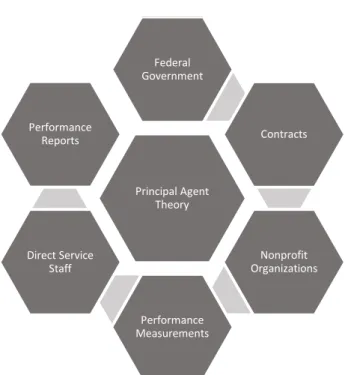
measurements. Figure 1 demonstrates how the federal government uses contracts with nonprofit organizations.
Figure 1. Principal agent theoretical framework.
Principal Agent Theory Federal Government Contracts Nonprofit Organizations Performance Measurements Direct Service Staff Performance Reports
The principal agent theory is useful for arranging contractual expectations and performance measures and has been used in the past to ensure service provision (Gould, 2007; Kim, 2005; Kraukopf & Chen, 2010). As the figure demonstrates, the relational contracts between principals and agents help to foster an accountability culture as well as influence policies and rules that are derived from contractual agreements (Dubnick & Frederickson, 2010). Nonprofit organizations, in turn, use the contract to develop performance measurements to which direct service staff are expected to adhere in order to document and obtain desired results.
Understanding Performance Measurements in Social Services
To understand performance measurements, one must also consider the role of accountability as it relates to efficiency in service provision. Armstrong defines accountability as being responsible to report on how public resources are used and answering for the failure to meet performance objectives (2005). Lynch-Cerullo and Cooney (2011) described accountability in the human service nonprofit sector as “an ongoing process of establishing performance objectives; transforming those objectives into measureable components; and collecting, analyzing, and reporting data on those measures” (p. 366). Nonprofit organizations use performance measurement to assess accountability and that assessment depends on the accuracy of staff’s ability as well as commitment to gather data (Lyncu-Cerullo & Cooney, 2011). Although performance management is closely related to performance measurements, it is distinct because performance management is the use of performance measurements to make
accountability decisions (Lyncu-Cerullo & Cooney, 2011). What is missing and needs to be examined is what individuals working in nonprofit organizations think about the efficiency of performance measurements used in nonprofit organizations to meet performance objectives. An understanding of the efficiency of performance
measurements should come not only from theory and reasoning but also from what individuals working in nonprofit organizations think.
Distinctions have been made between programmatic and fiscal accountability (Romzek, LeRoux, & Blackmon, 2012). Specifically, Romzek et al. (2012) found that accountability arrangements can get lost in governance acts because social service organizations consist of horizontal and vertical structures of responsibility that reflect different levels of accountability. These accountability levels overlap in social service agencies because of interdependency at the individual and organizational levels, and organizational level accountability undermines accountability relationships (Romzek et al., 2012).
Romzek et al. (2012) found that informal accountability, such as behaviors that take place in organizations, is less transparent than formal accountability, such as performance measurements, consequences, and contract terms. Romzek et al. further found that informal accountability can result in greater focus on expectations and behaviors in organizations and suggested studying the phenomenon at multiple organizational levels to explore how informal accountability shapes performance outcomes. Khalil and Adelabu (2012) suggested that researchers continue to explore
accountability and include working professionals who could recommend additional ways to achieve service delivery efficiency.
Past Approaches to Organizational Performance
Researchers have used the principal agent theory to provide a framework for studying institutional and organizational behavior since the 1980s (Guald, 2007). This theory explains the principle of mutual agreement between two parties to assume risks in the delivery of public services (Lombard & Morris, 2009) as in the relationship between the federal government and nonprofit human service organizations to provide services to the public. To fulfill its responsibility to citizens, the government enters into agreements via grants and contracts with nonprofit organizations (Patti, 2009). Entering into
agreements and accepting funding from the government requires nonprofits to comply with federal regulations and promotes the need for legislation requiring the reporting of organizational practices (Patti, 2009). Accepting grants and contracts from the
government changed the way nonprofits were allowed to conduct business, and it expanded oversight (Patti, 2009).
GPRA was created to monitor organizational performance in nonprofits and requires these organizations to obtain and submit performance measurement data to the federal government to improve program effectiveness (Government Performance Results Act of 1993, n.d.). Researchers have found that performance data are essential for
organizational decision-making and providing information about weaknesses, capabilities, and methods that can be used to create improvement (Wohlstetter et al.,
2008). Given that performance data have been deemed essential for improving program accountability and effectiveness, the federal government has required nonprofits to provide performance data to ensure effective organizational performance (Brass, 2012).
GPRAMA, an amendment of GPRA, was signed into law in 2010 with a new requirement that organizational performance data be provided not only to Congress and the president but also to the public (Brass, 2012). With the implementation of GPRAMA, Congress required nonprofits to report performance measurements more frequently to encourage the federal government to make decisions that were based on the facts of the data and create closer working relationships between the two parties (Kamensky, 2011). By focusing on the data, organizational performance would be improved (Wohlsetter et al., 2008. Therefore, this current study used the perspective of the principal agent theory focused on the perceptions of direct service staff to learn how they understood and perceived the nature of utilizing performance measurements as required by the federal government.
Wohlstetter et al. (2008) noted:
The principal-agent framework captures an essential feature of work
organizations in which interpersonal relations are viewed as ‘‘webs of contracts’’: one party (the principal) needs a task carried out, lacks the time or expertise to do it personally, and so delegates the task to another (the agent). (p. 241)
However, guaranteeing accountability can be complicated due to the complex nature of the principal agent relationships and the interjection of multiple stakeholder expectations
that are common in nonprofit organizations (Kim, 2005). Such contracts, as the one between the federal government and nonprofit organizations that manage accountability and relationships, help foster an accountability culture as well as influence policy (Dubnick & Frederickson, 2010).
The principal agent theory suggested that a contract that defined performance and expectations would assist with obtaining desired outcome measures and developing a framework for accountability practices within social service nonprofit organizations (Patti, 2009). The contractual relationship between the federal government and nonprofit human service organizations requires nonprofit organizations to comply with federal regulation to improve program effectiveness by promoting focus on results, service quality, and customer satisfaction as required by the agreement (Patti, 2009). This point is significant as it relates to understanding how this theory informs performance
measurements. Figure 1 demonstrates how the federal government uses contracts with nonprofit organizations. The principal agent theory is useful for arranging contractual expectations and performance measures and has been used in the past to ensure service provision (Guald, 2007; Kim, 2005; Kraukopf & Chen, 2010). As the figure
demonstrates, the relational contracts between principals and agents help to foster an accountability culture as well as influence policies and rules that are derived fromh contractual agreements (Dubnick & Frederickson, 2010). Nonprofit organizations, in turn, use the contract to develop performance measurements to which direct service staff are expected to adhere in order to document and obtain desired results.
Performance Measurements
Since the implementation of GPRA in 1993, government organizations have increasingly focused on performance measurements for evaluating, budgeting, learning, and improving nonprofit organization service delivery (Vandenabelle & Hondeghem, 2008). For GPRA, one of the purposes of performance measurement was to assist organizations in better understanding their outcomes and processes in relation to their current performance (Davis, 2002).
To meet GPRA compliance standards, all nonprofit organizations must provide performance evaluation data (Davis, 2002). The goal of GPRA was to provide an approach to social work based on organizational results by analyzing budgets and services (Davis, 2002). According to standard government performance guidelines, agencies should inform the public of its goals and link those to a strategic plan explaining how those goals will be met (Mikesell, 2011). The literature suggested the government’s primary use of performance data was to ensure the accountability of its contracting relationships (Benjamin, 2010) and assist congress with developing budgets for nonprofit organizations (Khalil & Adelabu, 2012). However, for the past 20 years, many funders and stakeholders have been dissatisfied with the lack of performance measurements in nonprofit organizations mainly because billions of dollars have been wasted on
ineffective programs (Brown, 2011; Martin & Frahm, 2010).
Although performance measurement has been accepted by nonprofit organizations as a necessary practice, there is a lack of empirical evidence regarding how it improves
performance (DeGroff, Schooley, Chapel, & Poister, 2010). Moynihan and Pandey (2010) asserted that the government has neglected to answer the question of how best to use information that is obtained from performance measurements. A discussion of performance measurements is important to understand the progress of the performance measurement movement (Moynihan & Pandey, 2010).
Mikesell (2011) concurred that although GPRA has basic elements that assist with budgeting, the president does not have to consider the legislation or its documentation when making executive budgets. Taylor (2011) concluded that performance
measurements are not used to aid in the budgetary decision-making processes but are used as a facade of efficiency and accountability. He suggested performance
measurements are used more for meeting the demands of external accountability than for improving performance internally (Taylor, 2011). Although research has highlighted the conflicts surrounding the use of performance measurements, it is good practice to push for performance data because learning through evaluative data can promote exploration of what does and does not work in organizations (Newcomer et al., 2012). These findings in the literature suggested there is a need to further explore the effectiveness and
usefulness of performance measurements in nonprofit organizations through conversations with working professionals who could contribute to efficient service delivery.
Nonprofit Accountability Practices
The history of accountability in human services provided an understanding of how performance measurements impacted nonprofit human service organizations. According to the federal government, performance measures are intended to “improve federal program effectiveness and public accountability by promoting a new focus on results, service quality, and customer satisfaction” (Government Performance Results Act of 1993, n.d.). Prior to the accountability concept, society simply accepted the notion that human service organizations were helpful and effective (Martin & Frahm, 2010).
During the 1960s, without the expectation of outcomes, states began contracting nonprofit organizations to provide services for citizens (Martin & Frahm, 2010).
Organizations such as the American Red Cross, Goodwill Industries, Easter Seals, and United Way existed during this time period. Today, nonprofit organizations are
responsible for outputs and outcomes. The accountability movement was set into motion in the 1960-1970 period (Martin & Frahm, 2010). Martin and Frahm (2010) suggested that, during this time, accountability existed but only minimally because private services were accountable to boards of directors whereas public services were accountable to elected officials and public administration.
According to Martin and Frahm (2010), changes in public policy created the need for an increase in nonprofit and government human service organizations contracting. During this time, the Social Security Act provided titles for human services that permitted contracts with private, nonprofit human service agencies. Before the titles existed,
according to the authors, contracts could exist only with other governments. The United States Congress did not place limits on federal funding awarded to organizations that provided services under the Social Security Act, and individual states were allowed to expand services without additional expenses due to federally matched funds (Martin & Frahm, 2010).
The authors also noted that these policies made financial accountability the main concern in order to obtain federal funding. The Social Security Act created significant changes in human services administrative practices (Martin & Frahm, 2010). As in the 1960s, nonprofit organizations adhered to compliance regulations and federal laws in the 1970s in order to continue to receive funding, but they largely ignored accountability to programmatic issues. During the 1970s, what had been the direct delivery of human services from the government shifted to the private sector. Still, during this time, agencies were reimbursed regardless of their performance (Martin & Frahm, 2010). Due to their funding relationship with the federal government, nonprofit human service agencies opposed programmatic accountability. Martin and Frahm (2010) suggested that the backlash of such vigorous opposition caused some stakeholders to question whether the programs were providing results. The question of credibility created the sense that
accountability should include more than fiscal management, yet there was still no serious attention allotted to programmatic accountability during this time frame (Martin & Frahm, 2010).
Reduction in federal funding during the 1980s brought an increased awareness of the need for nonprofit organizations to provide documentation of performance in order to continue receiving federal funding (Martin & Frahm, 2010). As a way for the federal government to determine which organizations were performing well, performance measurement requirements were added to contracts with nonprofit human service organizations (Martin & Frahm, 2010). By the time GPRA was mandated, most human service agencies relied heavily upon federal funds, and that reliance had a huge impact on the decision to initiate performance measurement (Martin & Frahm, 2010). For agencies receiving federal funding, programmatic accountability meant demonstrating
effectiveness and efficiency. At the end of the 1980s, programmatic accountability became theoretically important (Martin & Frahm, 2010).
After this theoretical importance in organizations delivering human services was established, the federal government put several polices into place. Those policies were the National Performance Review, the Government Accounting Standards Board, the Government Performance and Results Act, managed care, and the service efforts and accomplishments reporting initiative (Martin & Frahm, 2010). The focus of the current study was the Government Performance and Results Act (GPRA).
Significance of performance measurements. Since the 1980s, the federal government has increasingly pressured nonprofits to be accountable for contracted services (Martin & Frahm, 2010; Poole, Nelson, Carnahan, Chepenik, & Tubiak, 2000). Not only are organizations required to demonstrate effective outcomes, but they are
required to show that their services are effective (Poole et al., 2000). Since the
accountability movement occurred, performance measurements have had a significant impact on documenting outcomes and accountability in nonprofit human service
organizations. The information provided from performance measurements could be used to identify problems and make strategic planning decisions (Newcomer et al., 2012). For example, the pressure to use performance measurements initially resulted from the Government Performance and Results Act of 1993 (Newcomer et al., 2012). In 1993, the federal government found inefficient efforts from nonprofit organizations to improve programs or pay attention to performance (Kautz et al., 1997). The GPRA revived outcome measurements and program evaluation in nonprofit organizations and called for more training and evaluation as well as for the expansion of evaluation capacity (Carman, Fredericks, & Introcaso, 2008).
Now that the GPRA is law, nonprofit organizations must use “strategic plans, annual performance plans and reports, financial statements, and inspectors’ general reports as evidence in rating these programs’ effectiveness” (Heinrich, 2007, p. 262). The GPRA addressed federal managers’ lack of “efforts to improve program efficiency and effectiveness because of insufficient articulation of program goals and inadequate information on program performance” (Kautz et al., 1997, p. 365). This point highlighted the need for effective leadership that could promote organizational
The GPRA also addressed “congressional policymaking, spending decisions, and program oversight are seriously handicapped by insufficient attention to program
performance and results” (Kautz et al., 1997, p. 365). Today, there are still issues in nonprofit organizations which result in inefficiency, especially as it relates to service quality. Billions of dollars are being wasted funding programs and organizations that are not effective and, at times, even harmful (Brown, 2011).
A new approach to performance measurements in nonprofit organizations.
The historical overview previously discussed provides a roadmap from the past practices to the present, specifically, to the new approach developed to help nonprofit
organizations understand performance measurements. Khalil and Adelabu (2012)
suggested that one way to achieve further efficiency in service delivery was to include the input of professionals working in the field. The perceptions of service providers are important because they are interacting directly with those seeking help. The practice of reviewing the experiences of service providers could help make organizations more aware of the contributions they should be making to the people reliant on their services.
The current study included the assumption that understanding the perceptions of direct service staff regarding the use of performance measurements could offer these organizations a better awareness of the contributions they should be making to the people who rely on their services and determine if current practices are meeting those needs. An understanding of the efficiency of performance measurements should come not only from
theory and reasoning but also from what individuals working in nonprofit organizations think (Acar et al., 2012).
Programmatic accountability. Nonprofit organizations have attracted attention not because of a lack in efficiency or programmatic accountability but a lack in fiscal accountability. The difference in focus given to programmatic and fiscal accountability practices “…creates the potential for administrative arrangements to undermine the very accountability they were designed to enhance” (Romzek et al., 2012, p. 443). Although fiscal accountability is an important component of monitoring organizational
performance, I assert that there should be equity in understanding programmatic
practices. The phenomenon of inefficient service delivery has been widely recognized in nonprofit organizations as a significant topic for developing and influencing business practices (Beeri et al., 2013; Ebrahim, 2010; Geer, Maher, & Cole, 2008; Lynch-Cerullo & Cooney, 2011).
Research has shown that formal accountability is only one piece of managing accountability relationships and efficiency in organizations. Much of the existing literature focused on the formal components of accountability; however, little focus had been on the informal components, such as behaviors that take place after contracts are signed, and obtaining and reporting performance measurements (Romzek et al., 2012). The significant implication of continuing to overlook the importance of informal accountability is understood to play a significant role in ineffective organizational
with President Obama stated, “the ultimate test of our performance management efforts is whether or not the information is used” (Moynihan & Pandey, 2010, p. 850). There is much understanding needed to answer whether the information provided from
performance measurements is used as intended to improve organizational performance. Moynihan and Pandey (2010) developed a survey to gather data from government officials about performance measurements and how this information is used. The
empirical analysis data were comprised of the 2009-2010 rounds of the Texas Superintendent Survey and the Texas Education Agency. Evidence suggested that managers who were supportive of performance measures were more likely to use the information than managers who were not in support of them. Therefore, the research concluded that the use of performance measurement information could be fostered if incentives were involved (Moynihan & Pandey, 2010). Hvidman and Andersen (2013) suggested that freedom in management, goal clarity, and economic incentives were the crux of effective performance management in private organizations and that nonprofit organizations without these same incentives would not achieve the same results.
Customer Satisfaction Impact on Performance Standards
The concepts of transparency and trust have been previously examined as related to nonprofits. For example, Geer et al. (2008) asserted that a lack of transparency and trust had been “troublesome” for nonprofits. The authors asserted there had not been enough research conducted in nonprofit organizations to broaden nonprofit accountability beyond fiscal accountability, even though it affected organizational performance. The
authors conducted an exploratory, mixed methods approach using phone interviews and surveys to propose how nonprofit leaders could use a framework to promote
organizational accountability. The self-rated surveys were mentioned as a limitation for the research findings. The study assessed how commitment to a code of conduct and transformational leadership affected the management of organizational accountability using nonprofit leaders from 325 human service, cultural, health, educational,
environment, and economic development organizations.
The authors had two hypotheses: a) Hypothesis 1 was, “A great level of
accountability results from committing to operate by organizational standards, according to organization leader reports,” b) Hypothesis 2 was. “High level transformational leaders increase accountability. Since the authors were not looking for causality, but instead exploring the strength of the relationship between accountability and leadership, correlational analysis was used” (Geer et al., 2008, p. ?). Using interviews and survey data from nonprofit organizations and their executives, transformational leadership and commitment to standards of operation were assessed. The researchers found that organizations could benefit from using transformational leadership to better foster accountability. In addition, program evaluation could increase organizational accountability, and larger organizations were better at establishing accountability practices. The authors suggested further studies assess specific nonprofit organizations that had implemented operating standards to explore accountability. The authors believed
this study would be a starting point toward nonprofit organizations understanding the criticality of ensuring accountability (Geer et al., 2008).
Governance failures can be caused by information problems; therefore,
establishing trust and transparency is critical. Using the principal agent literature, Prakash and Gugerty (2010) outlined a framework to assist with differentiating programs and reducing problems in organizations. The authors discussed trustworthiness through their development of the theoretical concept of “voluntary regulation programs” (p. 23) as a way for nonprofits to differentiate themselves in a market of less trustworthy
organizations. Prakash and Gugerty stated verification that nonprofits were working to meet their missions and goals would work in the interest of the organizations. Error occurs when staff in nonprofit organizations use resources in a manner that does not serve the expectations of funding principals. Meeting goals outlined in contracts between principals and agents can stabilize the expectations of all participating entities and signal the commitment to provide quality services (Prakash & Gugerty, 2010).
In 2011, Van de Walle and Van Ryzin explained that a lack of trustworthiness was a factor that negatively impacted nonprofit organizations in their attempts to explain implications for using surveys on public services. The authors found there to be a
renewed interest in citizen satisfaction with services that were provided to the public. The data used in this split ballot study came from a 2004 online survey that was used during a civil panel project consisting of 3,592 panelists. University researchers developed the panel for the purpose of representing the U. S. population when participation was needed
in surveys regarding civic and public affairs. This quantitative experiment involved sending surveys to all 3,592 citizens, but only 1,638 responded. Analysis showed that the way questions were ordered affected citizen responses. Based on the findings, the authors asserted that even if citizens did not use public services frequently, they still had opinions about the service that were influenced by more than the quality of services. The research into citizen satisfaction is important because vital decisions regarding service delivery and budgets are based on the opinions of citizens. The authors concluded that this study was relevant because citizen satisfaction scores are becoming popular for use in budget allocation and for motivating service reform (Van de Walle & Van Ryzin, 2011).
Integrity and ethics violations have become common in research because trust is a core value, and people want to have confidence in the political system (Salminen & Ikola-Norrbacka, 2009). Salminen and Ikola-Norrbacka (2009) developed a questionnaire to study citizen trust in the integrity of public administration entities in Finland and how they perceived policy violation. The authors sent an 18-item, 12-page questionnaire to 5,000 citizens between the ages of 25 and 65 years to gauge their sense of how
trustworthy organizations were and how often they considered organizations to be corrupt. Over 2,000 completed surveys were returned. The authors found that, although the regions they studied were different, the conclusion was the same; a lack of trust negatively impacted nonprofit organizations. The authors also noted that citizen opinions were based on perceptions of organizational trustworthiness as citizens related confidence in government officials as basic trust. The trustworthiness of an organization could be