Population Council
Knowledge Commons
Reproductive Health
Social and Behavioral Science Research (SBSR)
2018
Tracing change in female genital mutilation/
cutting: Shifting norms and practices among
communities in Narok and Kisii counties, Kenya
Dennis Matanda
Population CouncilChantalle Okondo
Population CouncilCaroline W. Kabiru
Population CouncilBettina Shell-Duncan
Follow this and additional works at:
https://knowledgecommons.popcouncil.org/
departments_sbsr-rh
Part of the
Demography, Population, and Ecology Commons,
Family, Life Course, and Society
Commons,
Gender and Sexuality Commons, and the
International Public Health Commons
This Report is brought to you for free and open access by the Population Council.
Recommended Citation
Matanda, Dennis, Chantalle Okondo, Caroline W. Kabiru, and Bettina Shell-Duncan. 2018. "Tracing change in female genital mutilation/cutting: Shifting norms and practices among communities in Narok and Kisii counties, Kenya," Evidence to End FGM/C: Research to Help Girls and Women Thrive. New York: Population Council.
TITLE WHITE TEXT
TITLE ON TOP OF
COLOR PATTERN
TRACING CHANGE IN FEMALE GENITAL
MUTILATION/CUTTING: SHIFTING NORMS
AND PRACTICES AMONG COMMUNITIES IN
NAROK AND KISII COUNTIES, KENYA
December 2018
TRACING CHANGE IN FEMALE GENITAL
MUTILATION/CUTTING: SHIFTING NORMS
AND PRACTICES AMONG COMMUNITIES
IN NAROK AND KISII COUNTIES, KENYA
DENNIS MATANDA
POPULATION COUNCIL
CHANTALLE OKONDO
POPULATION COUNCIL
CAROLINE W. KABIRU
POPULATION COUNCIL
BETTINA SHELL-DUNCAN
UNIVERSITY OF WASHINGTON, SEATTLE
The Evidence to End FGM/C: Research to Help Girls and Women Thrive generates evidence to inform and influence investments, policies, and programmes for ending female genital mutilation/cutting in different contexts. Evidence to End FGM/C is led by the Population Council, Nairobi in partnership with the Africa Coordinating Centre for the Abandonment of Female Genital Mutilation/Cutting (ACCAF), Kenya; the Global Research and Advocacy Group (GRAG), Senegal; Population Council, Nigeria; Population Council, Egypt; Population Council, Ethiopia; MannionDaniels, Ltd. (MD); Population Reference Bureau (PRB); University of California, San Diego (Dr. Gerry Mackie); and University of Washington, Seattle (Prof. Bettina Shell-Duncan).
The Population Council confronts critical health and development issues—from stopping the spread of HIV to improving reproductive health and ensuring that young people lead full and productive lives. Through biomedical, social science, and public health research in 50 countries, we work with our partners to deliver solutions that lead to more effective policies, programmes, and technologies that improve lives around the world. Established in 1952 and headquartered in New York, the Council is a nongovernmental, nonprofit organisation governed by an international board of trustees. www.popcouncil.org
The University of Washington is one of the world’s preeminent public universities. Our impact on individuals, our region, and the world is profound— whether we are launching young people into a boundless future or confronting the grand challenges of our time through undaunted research and scholarship. We turn ideas into impact and transform lives and our world.
www.washington.edu
Suggested Citation: Matanda, Dennis, Okondo, Chantalle, Kabiru, W. Caroline and Shell-Duncan, Bettina. 2018. “Tracing Change in Female Genital Mutilation/Cutting: Shifting Norms and Practices among Communities in Narok and Kisii Counties, Kenya.” Evidenceto End FGM/C: Research to Help Girls and Women Thrive. New York: Population Council. This is a working paper and represents research in progress. This paper represents the opinions of the authors and is the product of professional research. This paper has not been peer reviewed, and this version may be updated with additional analyses in subsequent publications. Contact: [email protected]
Please address any inquiries about the Evidence to End FGM/C programme consortium to:
Dr Jacinta Muteshi, Project Director, [email protected]
Funded by:
This document is an output from a programme funded by the UK Aid from the UK government for the benefit of developing countries. However, the views expressed and information contained in it are not necessarily those of, or endorsed by the UK government, which can accept no responsibility for such views or information or for any reliance placed on them.
Table of Contents
List of Acronyms ... iv Acknowledgments ... v Executive Summary ... 1 Introduction ... 4 Background ... 4 Literature review ... 6 Theoretical underpinnings ... 8 Objectives ... 9 Methods... 10 Study design ... 10 Study sites ... 10 Participants ... 12 Instruments ... 13 Procedures ... 13 Data analysis ... 13 Ethical considerations ... 14 Results ... 14FGM/C interventions in Narok and Kisii counties ... 14
General knowledge and understanding of FGM/C ... 20
Decision making on FGM/C ... 21
Changes in FGM/C practices resulting from direct and structural change efforts ... 23
Alterations in norms related to FGM/C ... 27
Reasons for change: the role of direct interventions ... 32
Reasons for change: the role of structural interventions ... 33
Barriers to change in FGM/C norms and practices... 35
Discussion ... 38
Limitations ... 42
Conclusion ... 42
Implications for Programmes and Research ... 43
Programmatic implications ... 43
Research implications ... 45
List of Acronyms
AMREF African Medical and Research Foundation ARP Alternative Rites of Passage
AIDS Acquired Immune Deficiency Syndrome CBO Community-Based Organisation
CVD Community Values Deliberation
DFID Department for International Development DHS Demographic and Health Survey
ESRC Ethics Science and Research Committee FGD Focus Group Discussion
FGM/C Female Genital Mutilation/Cutting HIV Human Immunodeficiency Virus IDI In-Depth Interview
IRB Institutional Review Board
KDHS Kenya Demographic and Health Survey KNBS Kenya National Bureau of Statistics KCA Kikuyu Central Association
MYWO Maendeleo Ya Wanawake Organisation NGO Non-Governmental Organisation
PATH Program for Appropriate Technology for Health PI Principal Investigator
SDG Sustainable Development Goals UN United Nations
Acknowledgments
This report was written by Dennis Matanda of Population Council with co-authorship from Chantalle Okondo and Caroline Kabiru of Population Council, and Bettina Shell-Duncan of University of Washington, Seattle. The study received valuable contributions from Jacinta Muteshi of Population Council who provided technical guidance in the design and implementation of the study. Gerry Mackie of University of California, San Diego, Francis Obare, Chi-Chi Undie and Karen Austrian of Population Council provided valuable comments at the early stages of the study. We are grateful to Grace Mose of Kenyatta University, Stella Wanjau of the Adventist Development and Relief Agency (ADRA) Kenya, and Lanoi Parmuat of Ewang’an Nadede Advocacy Initiative (ENAI-Africa) for their insightful reviews and comments that helped shape this report.
Special thanks to the county governments of Narok and Kisii, non-governmental organisations and community-based organisations working in Narok and Kisii counties for their contribution towards the successful completion of the study. We are indebted to parents/guardians, young people, healthcare workers, community members, community leaders, teachers, and programme implementers who volunteered to participate in the study. We are equally grateful to the data collection team that comprised: Ruth Kwamboka, Hans Otieno, Emmah Kemunto, Martha Bosibori, Pauline Njoki, Ramisi Oyaro, Habil Oloo, Fridah Mosero, Wilkistor Kerubo, Hyline Keya, Nashipae Sakaja, Sarah Khandia, Grace Namunyak, Dorcas Sanaiyan, Janeth Kinyei, Cecilia Pereruan, James Timado, Leah Silanoi, and Isaac Kaitet. The authors also appreciate the support of Joyce Ombeva of Population Council who facilitated the logistics for the study.
This study was funded by the UK Aid from the UK government under the DFID research project “Evidence to End FGM/C: Research to Help Women Thrive”. The study was coordinated and implemented by the Population Council.
Executive Summary
Background
Globally, approximately 200 million women and girls in 30 countries have been subjected to female genital mutilation/cutting (FGM/C). In Kenya, the 2014 Kenya Demographic and Health Survey estimates that approximately 21 percent of girls and women aged 15-49 years have been cut. Nationally, there has been a steady and marked decline in the prevalence of FGM/C. There is, however, great variance in the prevalence of FGM/C across the country, with prevalence remaining high among certain ethnic groups such as Somali, Samburu, Kisii, and the Maasai. There have been numerous efforts, at the policy and programme levels, aimed at ending FGM/C in Kenya. The combined effects of such efforts have, however, yielded mixed outcomes, with the near elimination of FGM/C in certain ethnic groups (i.e., Meru, Kikuyu, and Kalenjin), and resistance in other ethnic groups (i.e., Maasai, Kisii, and Somalis), where the practice remains near universal. Given the sustained interest in implementing a myriad of interventions that have varying implementation processes, understanding how they work, the synergism or convergence of combined strategies, and their effectiveness in aiding abandonment of FGM/C is of paramount importance.
Methods
The study design was cross-sectional using qualitative methods. Data gathering activities included in-depth interviews with community gatekeepers, healthcare workers, government officials, programme implementers, parents/guardians, girls living in the community, and girls living in rescue centres. Focus group discussions were conducted with younger and elder community members. The study also mapped ongoing strategies aimed at addressing FGM/C in each county and observed implementation of intervention events by community programmes in the study sites.
Results
In Narok and Kisii counties, programme implementers used a mix of approaches to encourage community members to abandon FGM/C. Changes in norms and practices that promoted continuation of FGM/C included shifts from FGM/C being practised as a community event with public celebrations to events organized by individual families and conducted in secrecy, the use of health professionals to perform FGM/C as opposed to traditional cutters, changes towards performing supposedly less severe forms of FGM/C, and cutting girls at a younger age.
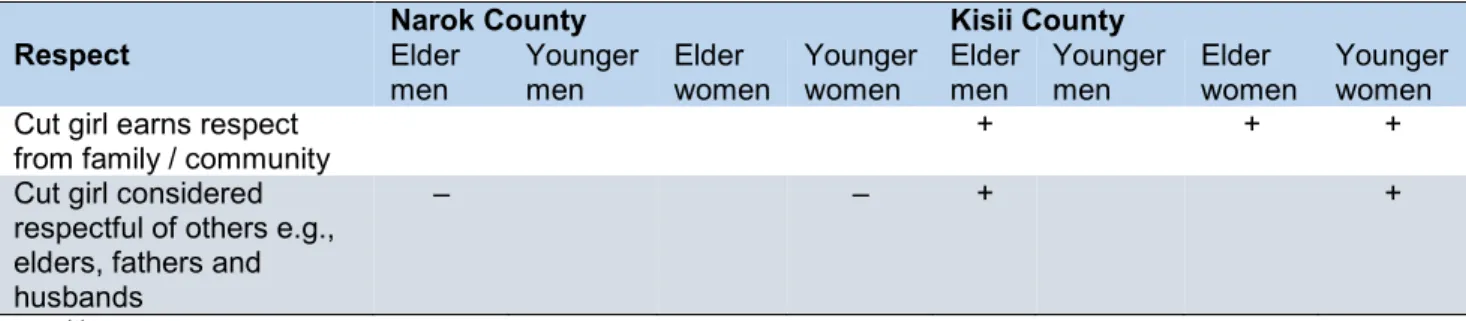
The majority of community members in Narok and Kisii were knowledgeable about the health consequences of FGM/C. There were stark differences in how communities in Narok and Kisii associated FGM/C with “respect" (respect in this context refers to being passive, obedient, unquestioning, and subservient). In Narok, the public perception was that cutting makes girls disrespectful of their seniors while in Kisii, a cut woman was respected and considered respectful of others—pointing to the possibility that FGM/C is apparently more valued in Kisii than in Narok. Some of the challenges that change efforts encounter in their fight against FGM/C included: culture/tradition, beliefs that FGM/C controls a woman’s sexual desire and therefore promotes fidelity in marriage, social sanctions against the uncut, and the practice of supposedly less severe forms of FGM/C on younger girls by health professionals in secret.
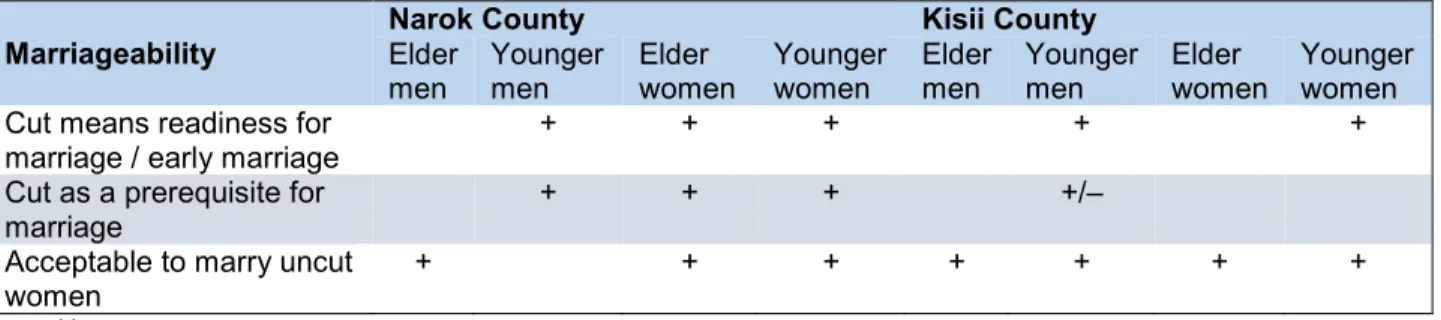
Data from Narok and Kisii have shown that the negative effects of FGM/C in relation to sexuality could have prompted a shift in norms where men are now preferring uncut girls or marrying women from ethnic groups that do not practice FGM/C with the hope of sexual satisfaction in marriage. Across the two sites, there was consensus on the possibility that FGM/C heightens a girl’s chances of being married early, but ambivalence towards FGM/C being a prerequisite for marriage,
especially in Narok. Lack of adequate resources to sustain implementation of FGM/C interventions in target populations could be limiting the impact of interventions to bring about the desired behaviour change.
Discussion
A community’s shift from approving a harmful social norm to adopting a beneficial, new social norm requires changing expectations at the community level as well as at the individual level. Consequently, abandonment of FGM/C in Narok and Kisii will require genuine community discussions, decisions, and commitment. Given that the practice is being done in secret, there are challenges to promoting open community dialogue. A shift to supposedly less severe cuts and younger age at cutting are likely to be a response to the law that prohibits FGM/C in Kenya. Perpetrators of FGM/C seem to be responding to the health consequences of FGM/C narrative by attempting to minimize health risks by procuring services of health professionals.
The association between FGM/C and sexuality has often been linked to the belief that women are naturally promiscuous unless their genitalia is physically altered. Therefore, FGM/C has been used as a tool to suppress female sexual desire in order to uphold virginity at the time of marriage and fidelity after marriage. However, men are increasingly expressing preference to marry a woman who can enjoy marital sexual relations, prompting a shift toward selecting a marital partner from an ethnic group that does not practice FGM/C. It therefore appears that the cut girl has reduced prospects for marriage in contemporary times. These findings bring into question the social norm theory which posits that concerns over marriageability are central to the origin and maintenance of FGM/C. Similar to findings in Senegambia, concerns over marriageability are eroding, but the practice of FGM/C remains upheld by other normative associations.Indeed, more expanded views of social norms now suggest that there can be multiple norms and associated meanings upholding the practice, and they can shift over time.
Programmes addressing FGM/C in Narok and Kisii have been using the health risks narrative in implementing their interventions and to some extent, have been successful in transferring this knowledge to the public. However, it appears that knowledge on the health consequences of FGM/C alone may not lead to abandonment.Across communities that practise FGM/C, one of the factors that underpin the practice relates to culture/tradition. In communities where FGM/C is prevalent, social pressure and the fear of losing social standing for the uncut girl and her family are important factors that sustain FGM/C. The inference from our study findings is that the transition from childhood to adulthood, which involves initiation and processes of socialisation on gender norms and marked by girls undergoing the cut, is apparently more valued in Kisii than in Narok.
This study has clearly shown that even though the study areas are considered hot spots of FGM/C, norms and practices are not static. While there might not be widespread abandonment yet, people are reassessing norms and traditions in light of the current social climate. These changes may provide a useful starting point for intervention programmes that seek to create dialogue and critical reflection on the practice of FGM/C in an effort to accelerate its abandonment.
Implications for programmes and research
Programmatic implications• An emphasis on anintegrative approach in programme implementation with a clear focus on
engaging community members in values deliberation to facilitate community-wide FGM/C abandonment is critical. Intervention efforts need to be coordinated with the aim of ensuring synergy among programmes with overlapping target populations. On value deliberation,
findings show that there is some abandonment accompanied with other changes, such as medicalisation, performing FGM/C at early ages, and in secret. Certainly, there must be a discourse surrounding these changes. The key questions for programmers include what problems are people trying to solve by making these changes and how can interventions build on ongoing changes?
• Programmers must incorporate the human rights approach and address gender norms in programme implementation and not excessively focus on the health risks in efforts to encourage community members to abandon FGM/C. In applying the human rights approach, special attention should be given to the local context, especially on collective rights and the need to work within the frameworks of a cultural context. There is need for anti-FGM/C implementers to engage in addressing the structural gender inequalities related to FGM/C and how it negatively impacts on the entire community, including men.
• Adequate resources need to be allocated to programmes implementing FGM/C interventions,
especially local grassroots organisations.
• Programme activities need to be anchored on a theory of change.
Research implications
• There is need to conduct a quantitative survey to measure communities’ readiness for change.
• Determining communities’ perceptions about the involvement of religious leaders in the fight against FGM/C is imperative, including how best to engage them.
Introduction
Background
Global statistics indicate that at least 200 million women and girls in 30 countries have undergone female genital mutilation/cutting (FGM/C) (UNICEF, 2016). Recent statistics show that approximately 70 million girls aged 0-14 years have been cut or may be at risk of being cut (Shell-Duncan, Naik, and Feldman-Jacobs, 2016). Annually, approximately 3.6 million girls are at risk of FGM/C and the number could rise to 4.1 million by 2050 (UNICEF, 2014). The World Health Organization (WHO) defines FGM/C as “all procedures that involve partial or total removal of the external female genitalia or other injury to the female genital organs for non-medical reasons” (WHO, 2016). The practice is classified into four major types:
• Type I (clitoridectomy) involves partial or total removal of the clitoris (a small, sensitive, and erectile part of the female genitals) and, in very rare cases, only the prepuce (the fold of skin surrounding the clitoris).
• Type II (excision) involves partial or total removal of the clitoris and the labia minora (the inner folds of the vulva), with or without excision of the labia majora (the outer folds of skin of the vulva).
• Type III (infibulation) involves the narrowing of the vaginal opening through the creation of
a covering seal. The seal is formed by cutting and repositioning the labia minora, or labia majora, sometimes through stitching, with or without removal of the clitoris (clitoridectomy).
• Type IV includes all other harmful procedures to the female genitalia for non-medical purposes, e.g., pricking, piercing, incising, scraping, and/or cauterizing the genital area (WHO, 2016).
Many studies have documented the immediate and long-term negative consequences of FGM/C to the health and well-being of girls and women (Alsibiani and Rouzi, 2010; Berg and Denison, 2012; Berg and Underland, 2013; Berg et al., 2014; H. Jones et al., 1999; Kaplan et al., 2011; Kaplan et al., 2013; Morison et al., 2001; WHO, 2000; WHO Study Group on Female Genital Mutilation and Obstetric Outcome, 2006). Globally, FGM/C is recognised as a human rights violation that denies girls and women the opportunity to lead healthy and normal lives. The practice is tied to cultural values and sometimes religious beliefs reflecting deep-rooted, gender-based inequalities (Gruenbaum, 2001; Rajadurai and Igras, 2006). In September 2015, the United Nations set new development goals, the Sustainable Development Goals (SDGs). Under SDG 5, FGM/C is recognised as a form of gender-based violence that derails efforts to achieve gender equality and empowerment of girls and women across the world. One of the key targets (i.e., 5.3) under SDG 5 is the elimination of all harmful practices, such as early/child marriage and FGM/C, by the year 2030 (UN, 2015).
Using nationally representative data from 29 countries (27 countries in Africa, plus Yemen and Iraq), Shell-Duncan et al. conducted an analysis on the prevalence of FGM/C. The authors found out that 15 out of the 29 countries showed no clear evidence of progress while 14 countries (Kenya included) showed a declining trend (Shell-Duncan et al., 2016). Nonetheless, national statistics can mask important inter- and intra-country differences. For example, two out of three women that reported to have been cut live in just four countries (i.e., Egypt, Ethiopia, Nigeria, and Sudan), while within countries, the extent to which FGM/C is practised is greatly associated with the ethnic background of the girl/woman. The synthesis also highlighted an important trend in the age of cutting, with most girls cut before the age of five years. The trend towards cutting girls at a younger age has been partly attributed to knowledge that the practice has been targeted for elimination
through intervention activities, including punitive legislation in some countries; earlier age at cutting in the absence of public ritual is often viewed as a strategy for making the practice less public, and hence, less subject to condemnation or prosecution (Shell-Duncan et al., 2011; UNICEF, 2016). In most countries, FGM/C is performed by traditional practitioners, such as traditional circumcisers and traditional birth attendants with types I and II (i.e., clitoridectomy and excision) being the most common forms of cutting (Shell-Duncan et al., 2016). In some communities there is also an emerging trend towards medicalisation of the practice, where the procedure is performed by medical professionals, such as doctors, nurses, and trained midwives, with the possible intent of reducing potential health risks (Shell-Duncan et al., 2016) on the assumption it will be safer (Njue and Askew, 2004; UNICEF, 2016). In regards to girls at risk of FGM/C, recent statistics show approximately 70 million girls aged 0-14 years have been cut or may be at risk of being cut (Shell-Duncan et al., 2016).
Across countries and diverse cultures, FGM/C persists for a variety of reasons that may include adhering to culture to be accepted in the community, serving as a rite of passage to womanhood, maintaining purity before marriage and fidelity during marriage, and adhering to believed religious obligations (Boyden, Pankhurst, and Tafere, 2012; Boyden et al., 2012; Shell-Duncan and Hernlund, 2000; World Vision UK, 2014). Commonly FGM/C is understood to be a marital strategy, as girls and women who choose not to perform the practice risk being ostracised by their community, and rendered unmarriageable and unable to legitimately bear children (Mackie and LeJeune, 2009). It is important to note that the reasons given for the continuation of FGM/C vary across countries and different cultural contexts and are subject to change over time. Therefore, these reasons represent diverse practices, beliefs, and meanings.
Immediate consequences of FGM/C include severe pain, excessive bleeding, urine retention, and genital tissue swelling (Almroth et al., 2005; Chalmers and Hashi, 2000; Dare et al., 2004; WHO, UNESCO, and others, 2008), while long-term effects can include urinary tract infections, bacterial vaginosis, genital herpes, dyspareunia, and other obstetric complications, such as perineal tearing, obstructed/prolonged labour, Caesarean section, episiotomy, postpartum haemorrhage, extended maternal hospital stay, resuscitation of the infant, and perinatal death (Jones et al., 1999; Kaplan et al., 2013; Larsen and Okonofua, 2002; Morison et al., 2001; WHO Study Group on Female Genital Mutilation and Obstetric Outcome, 2006; WHO et al., 2008). Studies have also linked FGM/C to women’s sexual functioning, whereby women who have undergone FGM/C are more likely to report lack of sexual desire, pain/difficulty during sexual intercourse (dyspareunia), and less sexual satisfaction (Alsibiani and Rouzi, 2010; Berg and Denison, 2012). Additionally, women who experience FGM/C can develop long-lasting psychological impairment that adversely affects their mental health (Al-Krenawi and Wiesel-Lev, 1999; Behrendt and Moritz, 2005; El-Defrawi et al., 2001; Toubia, 1994; WHO et al., 2008).
Given its negative effects on the health and well-being of women and the community at large, FGM/C has been recognised as a global problem and the international community, along with national partners, are working together to implement a variety of programmes and policies geared towards abandonment of the practice. Some of the interventions and strategies that have been implemented include: a rights-based approach; addressing the health complications of FGM/C; alternative incomes for traditional cutters; alternative rites of passage (ARPs); legal and policy measures; religious-oriented approaches; promotion of girls’ education; intergenerational dialogue; community mobilisation; and, supporting girls’ escaping forced marriages and/or FGM/C (28 Too Many, 2013).
In Kenya, ARPs, legal and policy measures, religious-oriented approaches, promotion of girls’ education, intergenerational dialogues, and use of rescue centres have been popular strategies. Notably, rescue centres have been used in Narok, Kajiado, and other areas, but not in Kisii. During
the inception phase of the present study, Population Council mapped and compiled existing FGM/C interventions in Kenya. Key questions include: In what detail do we understand the coverage, operating structures, and procedures used in the implementation of the different FGM/C interventions? What is the feasibility and acceptability of such interventions in the community? To what extent are we certain these popular interventions are facilitating FGM/C abandonment? These are empirical questions that we sought to answer by assessing FGM/C programmes implemented in Narok and Kisii counties.
Literature review
Efforts to accelerate abandonment of FGM/C in Kenya
When developing policies and programmes aimed at abandoning FGM/C, it is important to ensure they are tailored to address the complex social norms and cultural value systems that often shape the meaning and significance of FGM/C in the community. Along with this are the transnational influences and structural factors that may create a supportive, enabling environment for change, or alternatively, pose significant barriers to abandonment (Shell-Duncan et al., 2016). Understanding these factors within a broader historical framework is also essential.Shell-Duncan et al. (2017), have conducted an extensive review of the historical context of FGM/C abandonment programs in Kenya. Their work highlights the long history of activism experienced in Kenya aimed at encouraging abandonment of FGM/C (Shell-Duncan, Gathara, & Moore, 2017). The pre-independence period dating back as early as 1906 is dotted with church-led movements denouncing FGM/C on moral grounds and health concerns that led to colonial administrators restricting the severity of the cutting and mandating medicalisation. These church-led movements were also involved in calling for abandonment of FGM/C among its congregants, with repercussions for those who failed to comply including denying them religious participation or enrolment of their children in mission-run schools. These penalties led to significant backlash from communities that practiced FGM/C in Kenya—the opposition to FGM/C was consequently equated with colonial oppression.
After independence in 1963, the narrative that FGM/C was a symbol of cultural loyalty and defiance against colonialism lacked significance. This led to the revival of Christian, church-led efforts campaigning against FGM/C in the 1970s coupled with government reform efforts. The government reform efforts were majorly precipitated by pressure from local activists and the international community that embraced a renewed global campaign to eliminate FGM/C. The 1980s and 1990s therefore witnessed governmental calls for ending FGM/C, advocacy for prosecution of perpetrators, issuance of presidential decrees, and the implementation of a series of policy directives banning medical professionals from performing FGM/C. Notably, during this period, several attempts to pass formal legislation against FGM/C failed to garner enough support in parliament and were therefore defeated. Efforts to enact legislation against FGM/C were only successful in 2001 when the Children’s Act was passed. The Act gave power to the state to protect children from numerous violations including sexual exploitation and specifically banned early marriage and FGM/C in girls under the age of 18. This legislation was later expanded in 2011 with the adoption of the Prohibition of Female Genital Mutilation Act that criminalised conducting FGM/C on women of any age (Shell-Duncan et al., 2017).
The enactment of laws against FGM/C ignited debate especially with the expanded notion of children’s rights that emerged in Kenya before the passage of the Children’s Act in 2001. As Shell-Duncan and Olungah (2009) argue, the expanded notion of children’s rights was fundamental in aiding the passage of the Children’s Act but the law was equally considered by some as an assault on culture. There was nonetheless a growing consensus that girls have inherent fundamental entitlements that included the right to not be forced to marry early and undergo FGM/C. There was
also a shift in treating these entitlements as merely of private domestic relevance but rather as concerns of the broader community and more so as entitlements that needed to be guaranteed by the state (Shell-Duncan and Olungah, 2009). This shift led to the opening of formal and informal rescue centres to house and protect girls seeking protection from being forced to undergo early marriage and/or FGM/C.
The phenomenon of “girl rescue” informally began in the late 1990s as neighbours, schools, and churches provided shelter to girls seeking protection, especially during “circumcision season” in early December. At first these efforts were largely informal, as neighbours, schools, and churches provided temporary shelter and protection to girls who were at risk of early/child marriage. Since that time, while informal child rescue has continued, formal safe houses have been built in various regions of the country. One that has received the most press is a safe house in Narok called Tasaru Ntomonok, which in the Maasai language means “rescue the woman.” It was founded by former Maendeleo Ya Wanawake Organisation (MYWO) coordinator Agnes Pareiyo, who was honoured for her work at this centre as the “United Nations Kenya Person of the Year” in 2005 and was recently appointed as the chair of the Anti-FGM board in Kenya. Less attention has been drawn to other safe houses in Narok and other parts of the country, founded and run largely by Christian churches. In Narok, within walking distance of Tasaru is another much more low-profile safe house run by the Full Gospel Church. This safe house is fully funded by church members, and there is anecdotal evidence that some girls prefer the church-run safe house to those run and funded by international organisations, despite the former having poorer physical structures. This preference is attributed to the fact that girls have trust in the religious leaders and believe that they have the power of persuasion needed to facilitate reconciliation between rescued girls and their families. The operation of both permanent and temporary safe houses to rescue girls has not become a mainstay fixture throughout regions of Kenya where the practice of FGM/C persists. In Kisii, safe houses are almost non-existent—because the Abagusii values of community would have girls who have escaped reside with relatives.
Many girls who have sought refuge from FGM/C and early marriage come from communities that have hosted a wide range of programmes aimed at eliminating FGM/C. Many of these programmes feature ARPs as at least one possible element of their intervention strategy. Alternative rites of passage were initiated in the 1990s by the Kenyan Women’s Organisation, MYWO, first with funding from Ford Foundation, and later in conjunction with the Programme for Appropriate Technology for Health (PATH). This programme involved a week long “seclusion” in which girls were taught “traditional wisdom” and “family life skills” on topics ranging from personal hygiene to reproductive health to respectful behaviour. At the end of the week, the girls were “initiated” in a ceremony that featured songs, drama, feasting, gift giving, and “circumcision by words” (ntanira na mugambo). Evaluation of these programmes has yielded mixed results. For example, ARPs did not always involve community sensitisation and mobilisation and did not always seek parental consent (Thomas, 2000). Therefore, families were sometimes surprised by the pledges taken by their daughter, and did not necessarily honour these pledges, choosing instead to proceed with FGM/C. In some communities, ARPs were performed in a fashion that did not at all represent the type of ritual traditionally used in that community. In some cases, girls who participated in the programme were ridiculed by peers for having participated in such a programme only in exchange for a T-shirt that says, “Say No to FGM.” Importantly, even though the ARPs played a role in promoting abandonment of FGM/C, the sensitisation activities that accompanied the ARPs were not the sole influencers of behaviour change; other direct and indirect intervention activities in the communities, notably religious approaches and ongoing changes related to girls’ education and women’s rights, may have influenced the observed changes as well (Chege, Askew, and Liku, 2001). External funding for these initial programmes has ended, but ARPs continue to be included in some form in many ongoing intervention programmes run by local non-governmental
organisations (NGOs) and faith-based organisations. Different organisations have borrowed and adapted different approaches when implementing ARPs making it difficult to generalise findings. In addition, little is known about how this popular approach interacts with other FGM/C intervention strategies such as legal and policy measures, religious-oriented approaches, promotion of girls’ education, intergenerational dialogues, and use of rescue centres.
A notable feature of intervention efforts in Kenya is the sheer number of programmes that include elimination of FGM/C as one of their stated goals. The passage of the Children’s Act in 2001 and shifting sentiments about the rights of children sparked a cascade of community-based social movements aimed at ending FGM/C. Women in all sectors of society, privileged by their acknowledged authority regarding the care for and well-being of children, became increasingly active participants in social reform efforts aimed at child protection, including protection from FGM/C and early marriage. The number of new community-based organisations (CBOs) skyrocketed, led primarily by Kenyan women, and many included ending FGM/C as at least one of their stated goals. By 2007, organisers of the National Stakeholders Meeting for FGM/C estimated that at least 400 organisations were working to end FGM/C in Kenya; by 2011 this number rose to more than 550. Thus, in communities where FGM/C rates have remained high, a key feature is the large number of organisations working simultaneously to bring about elimination of FGM/C. Earlier, the Ministry of Gender, Children’s Affairs, and Social Development was mandated with coordinating FGM/C activities. This mission was taken over by the Anti-FGM Board, formed in accordance with regulations outlined in the 2011 Prohibition of FGM Act. Nonetheless, it is not clear whether having a national coordinating agency has resulted in convergence (activities planned and implemented jointly in a county). Studies of multi-sectoral programme implementation have shown that convergence may include cooperation (sharing or exchange of information or resources), coordination (altering one’s activities to achieve a common purpose), collaboration (enhancing one another’s capacity), or integration (sharing resources or merging) (Garrett and Natalicchio, 2010). This study aimed not to evaluate programme implementation and coordination, but to assess how multiple and multi-sectoral strategies aimed at reducing FGM/C are experienced in communities identified as “hot spots” for the continuation of FGM/C, having been targeted by numerous programmes aimed to encourage abandonment of the practice.
Theoretical underpinnings
Understanding alterations in norms and practices of FGM/C through the lens of theory of change
Social norms theory, formerly referred to as the social convention theory, has over the years been used to study health-related behaviours and significantly in the design of interventions aimed at changing normative behaviours or practices at the societal level (Shell-Duncan et al., 2018). Some of the examples where norms perspectives have been used to influence behaviour include eating habits (Rah et al., 2004), alcohol consumption (Campo et al., 2004), safer sex, and sexual assault prevention (Scholly et al., 2005). Of significance to this study is its use to address the practice of FGM/C (UNICEF, 2013). Mackie (1996) pioneered the application of the social norms theory to FGM/C. He suggested that FGM/C was a social norm practiced and entrenched in communities with interdependent expectations regarding marriageability. Further empirical investigations on social norms and expanded views on FGM/C have shown that FGM/C may be held in place not only by norms associated with marriageability, but also by a wide range of norms and associated meanings often linked to ethnic identity, adolescent rites of passage, religion, honour and modesty codes, sexual restraint, and aesthetics and/or hygiene (Mackie and LeJeune, 2009). It is therefore important to consider the local context when applying the social norms theory in order to have a deeper understanding of norms and cultural values associated with FGM/C (Gruenbaum, 2001; UNICEF, 2013).
Social norms theory highlights that decision making regarding FGM/C represents a social coordination issue: the choices and actions of individuals are shaped and constrained by shared social norms that can be locked in place by interdependent social expectations. Sanctions arising from non-conformity make it difficult for those opposed to FGM/C to abandon the practice without incurring costs, such as social ostracisation, poor marriage prospects for their daughters, or reduced access to social support. To avert such costs, behaviour change, it is argued, must be coordinated among people interconnected in social networks – a reference group. A salient feature of the model is that once a critical threshold is attained, it is possible to reach a “tipping point” that produces a behavioural cascade among interconnected individuals (Mackie and LeJeune, 2009). The theoretical underpinnings of strategies for the abandonment of FGM/C relate to social convention theory/social norm theory, which suggests that in communities where FGM/C is widely practiced, no single family would choose to abandon the practice on its own because of the spectre of negative sanctions for non-conformity (Mackie and LeJeune, 2009). Social convention theory describes the state where no family has the incentive to move away from the expectation of cutting as an equilibrium state. The equilibrium state of having no family willing to abandon FGM/C can, nonetheless, shift if all families in a community choose not to cut their daughters and hence cutting will no longer be the social norm. The strategy of an intervention is therefore to convince all families within a reference group to abandon FGM/C and move them at the same time from the equilibrium state of practicing FGM/C to not practicing FGM/C (Mackie and LeJeune, 2009; UNICEF, 2012). To make this possible, FGM/C interventions are encouraged to use intensive community dialogues that enable community members to reflect and deliberate on costs and benefits of FGM/C, question the practice, and potentially reverse the social convention. The process starts with a core group that must mobilise a critical mass of people, to become self-sustaining. Once the critical mass has grown and represents a large proportion of the community, and a tipping point to abandon FGM/C has been established, a recognition of this shift to a new equilibrium state of not cutting is celebrated as a public declaration to mark the ending of the practice of cutting (UNICEF, 2012). All this is done with careful consideration of community values through deliberations. It is anticipated that deliberations about what one should do and what others should do to abandon FGM/C can begin in a small core group, and diffuse in an organised fashion through the remainder of the reference group, until enough members of the community are ready to change (Dagne et al., 2009; Mackie et al., 2012).
We posit that in Kenya, it is likely that dialogue stimulating a critical evaluation of FGM/C arises not from the siloed effects of any single intervention activity, but from synergistic interactions of numerous efforts aimed at encouraging abandonment. This includes legal reform, community-based interventions and programmes such as ARPs, community dialogues, and girls’ rescue programmes, and indirect change efforts such as promotion of girls’ education. A key question, however, is why the pace of abandonment of FGM/C is proceeding relatively slowly in key “hot spots” of the country?
Objectives
• To explore whether and how unprogrammed factors or programmed FGM/C interventions
(ARPs, legal and policy measures, religious-oriented approaches, promotion of girls’ education, intergenerational dialogues, use of rescue centres, and other undocumented approaches) influence community values deliberation in Narok and Kisii counties.
• To assess what changes in FGM/C norms and practices have occurred in Narok and Kisii counties, and identify factors motivating these changes.
• To identify barriers to FGM/C abandonment in these key “hot spots”, and assess how, in light of empirical findings and theoretical models of behaviour change, intervention efforts might be optimised and coordinated to accelerate abandonment.
Methods
Study design
The study design was cross-sectional using qualitative data collection approaches. Data collection activities included: review of ethnographic research, media reports, historiography, and grey literature; in-depth interviews (IDIs) with a wide array of community members and stakeholders; focus group discussions (FGDs) with community members to elucidate patterns of variation in norms associated with FGM/C; and observation of community events, intervention programmes, and workshops.
Study sites
Kisii CountyKisii County is located in the Western part of Kenya bordering Nyamira County to the Northeast, Narok County to the South, and Homa Bay and Migori Counties to the West. The County’s area coverage is about 1,333 square kilometres (km) and is divided into nine constituencies which also form the sub-counties, namely: Kitutu Chache North, Kitutu Chache South, Nyaribari Masaba, Nyaribari Chache, Bomachoge Borabu, Bomachoge Chache, Bobasi, South Mugirango, and Bonchari. The county is densely populated, with a population of about 1,362,779 people in 2017. Most of the land in Kisii County is arable and a majority of the inhabitants engage in agricultural activities (Kisii County Government, 2018).
Kisii County is home to the Abagusii people who predominantly live in both Kisii and the neighbouring Nyamira Counties. The FGM/C prevalence for the Abagusii women aged 15-49 years was estimated to be 84 percent in 2014 (Kenya National Bureau of Statistics [KNBS] and ICF International, 2014). Traditionally, FGM/C was performed around 15 years of age in preparation for marriage, but it is now typically performed on girls aged 5-10 years. The most common form of FGM/C is Type I (Njue and Askew, 2004).
Media reports on FGM/C among the Abagusii highlight strong adherence to culture, the medicalisation of the practice, and the fact that education does not influence whether parents choose to cut their daughters or not. Numerous reports have recorded daughters from elite families being taken to the rural areas where nurses are hired to come and cut their daughters (Standard Digital, 2014b). For example, a media article in November 2014 detailed how one professional Gusii man invited his Nairobi office colleagues to attend the FGM/C celebration of his daughter as this was a sign of great honour and respect, despite the 2011 Anti-FGM Act (Standard Digital, 2014a). One father in particular was quoted as saying “the pain is worth the respect she will earn from the community as a circumcised woman” (Relief Web, 2011).
However, there are also reports of abandonment. In the “Rites of Passage in Africa” video, one traditional circumciser notes that families who actively practice Christianity or are involved in the Seventh Day Adventist church are less likely to ask for their daughters to undergo FGM/C. Further, in April 2018, an article by the Kenya News Agency featured a programme by Fulda Mosocho Project where they reported to have saved 300 children from FGM/C when 90 members of the community (half of them male) graduated from a two-year training to end the practice in Kisii County (Kenya News Agency, 2018). Legal measures have also been prominently featured. However, the outcomes seem to have been mixed (Relief Web, 2011). In one instance, a Gusii woman narrates that she hired a nurse to come to her house and cut 11 girls at her home and
immediately after the cutting, the family had a large gathering to avoid suspicion from local authorities. In contrast, some media reports have recounted women serving three or more-year jail terms for obtaining or performing FGM/C. The women reported that they were either unaware of the law, ignored the government’s warning not to engage in the practice, or suffered intense stigma from the community as a result of not undergoing FGM/C (Kenya Television Network, 2017). How these diverse events are influencing discourses and practices related to FGM/C have yet to be explored.
Narok County
Narok County is situated along the Kenyan Great Rift Valley. The county is vast, covering approximately 17,944 square km with a population of about 850,920 people. The county’s devolved administrative units include six sub-counties, namely: Kilgoris, Narok North, Narok South, Narok East, Narok West, and Emurua Dikirr. The main economic activities in Narok County include tourism and agriculture, especially livestock farming (Narok County Government, 2018).
In 2014, the FGM/C prevalence among Maasai women aged 15-49, who predominantly live in Narok and Kajiado Counties was estimated to be 78 percent (KNBS and ICF International, 2014). The Maasai community are semi-nomadic, pastoral Nilotic people mainly settled in Narok and Kajiado Counties (28 Too Many, 2013). Among the Maasai, FGM/C is practised to mark a girl’s transition to womanhood. The practice enables the young girl to gain respect in the community and prepares her for marriage. She is also educated about her role in society (The Coexist Initiative, 2012). Once per year, FGM/C takes place for all girls in the appropriate age group, usually between the ages of 12 and 14 (prior to marriage), and the celebration is seen as an important rite of passage into womanhood. The procedure is often performed during school holidays and also involves having the girl’s hair shaved as part of the womanhood ritual (28 Too Many, 2013). Type II (excision) FGM/C is the most common type of cutting in the Maasai community (Evelia et al., 2007). Although the Maasai are proud of their culture and have long been described as resistant to outside influence, they have shown willingness to adjust their practices, including using a different blade for each girl to minimise infection (IRIN, 2005) and embracing ARPs (AMREF Health Africa, 2013).
The Maasai tribe tend to get a lot of media coverage due to their distinct way of life and adherence to culture. Coverage of ARP graduation ceremonies is high with these events attended by key national government figures like cabinet secretaries, high-level dignitaries such as US, UK, or EU ambassadors as well as prominent anti-FGM/C advocates. The Tasaru Ntomonok Initiative, founded by Agnes Pareiyo, has received significant press coverage, especially in popular newspapers and television channels in Kenya. Agnes Pareiyo’s sustained efforts to rescue girls from FGM/C, supporting their education even in university, and conducting numerous ARPs has been highlighted. She advocates for cultural education without cutting the girls and intergenerational dialogue that engages elders in the community (The Christian Science Monitor, 2008). Ms. Pareiyo has also been at the centre of tip offs to local authorities aiming to enforce both the 2001 Children’s Act and 2011 Anti-FGM Act. She has been instrumental in reporting local chiefs and traditional circumcisers to the police who apprehend and arraign them in court. However, there is limited reporting on the outcome of the cases. In contrast, a few articles have reported backlash from the community where women have taken to the streets and demonstrated against the 2011 Act. They debate the importance of the practice and the stigma that is associated with not being cut as reasons for why they continue to practise FGM/C. Numerous reports have covered the arrests of women who were caught undergoing FGM/C (Standard Digital, 2017). Media reports seem to be lacking parents’ perspectives on the value ARPs and if girls who have been rescued from FGM/C have reconciled with their families.
A clear highlight among the Maasai is a wealth of youth-led and “home-grown” anti-FGM/C activism. For example, in Narok, CNN covered the story of Kakenya Ntaiya, an FGM/C survivor who was the first young woman in her village to study in the United States. She founded the
Kakenya Centre of Excellence, a boarding school in Narok that enrols girls from needy families with the condition that their parents or guardians will not cut their daughters, or subject them to early marriage and will allow the girls to be trained to become change agents and anti-FGM/C activists (Teen Vogue, 2017). There is also Seleyian Agnes Partoip, the founder and director of the Murua Girl Child Education Programme Narok who founded the Narok Youth End FGM Network, which reaches 220 young people through monthly forums (The Girl Generation, 2017). Amos Leuka of SAFE Maa spoke at a London event in February 2018, marking the International Day of Zero Tolerance for FGM/C, where he highlighted the organisation’s use of traditional songs and storytelling to advocate for ARPs (Thomas Reuters Foundation, 2018). The younger Maasai generation seems more empowered to openly challenge FGM/C and the norms surrounding it and they are willing to speak at the local, national, and global levels. They are using their experiences as insiders to the Maasai culture to demonstrate that FGM/C is no longer a practice they wish to continue or a part of their identity, instead they would rather pursue education and give back to their community. Support for girls’ rights to protection from FGM/C is also reflected in the abundance of rescue centres where girls feel more empowered to ask for help when escaping FGM/C. How these new forms of activism are reverberating within the community remains to be explored.
Participants
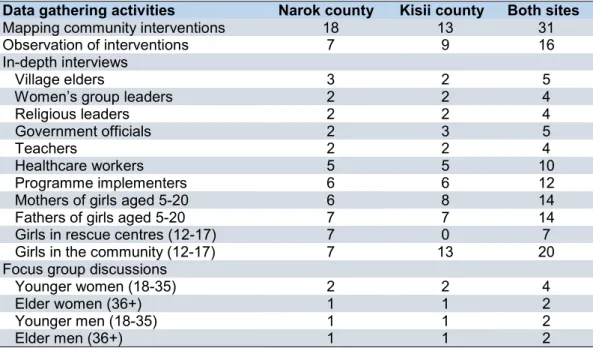
Table 1 summarises the data collection activities and the number of study participants or events. Mapping of community FGM/C interventions involved conducting site visits to organisations implementing FGM/C interventions in the two counties. We used a list of organisations that had attended a consultative meeting during the inception phase of this study and a snowball sampling approach to identify and document FGM/C interventions. A total of 31 organisations/agencies were documented. Organisations implementing FGM/C interventions and their beneficiaries in Narok and Kisii counties formed the subject population for observation of intervention events.A total of 16 events implemented in the catchment population areas were observed.
Table 1. Number of study participants
Data gathering activities Narok county Kisii county Both sites
Mapping community interventions 18 13 31
Observation of interventions 7 9 16
In-depth interviews
Village elders 3 2 5
Women’s group leaders 2 2 4
Religious leaders 2 2 4
Government officials 2 3 5
Teachers 2 2 4
Healthcare workers 5 5 10
Programme implementers 6 6 12
Mothers of girls aged 5-20 6 8 14
Fathers of girls aged 5-20 7 7 14
Girls in rescue centres (12-17) 7 0 7
Girls in the community (12-17) 7 13 20
Focus group discussions
Younger women (18-35) 2 2 4
Elder women (36+) 1 1 2
Younger men (18-35) 1 1 2
Elder men (36+) 1 1 2
Ninety-nine IDIs were conducted with community gatekeepers (village elders and women’s group leaders), religious leaders, government officials, teachers, healthcare workers, programme implementers, parents/guardians of girls aged 5-20 years, and girls living in rescue centres and in
the community. In-depth interview participants were purposively identified based on their knowledge of, and experiences with, FGM/C in the respective communities. We conducted ten FGDs with men and women aged 18 years and older from families that have traditionally practised FGM/C (Maasai and Kisii ethnicity). Each FGD had six to eight participants of the same sex.
Separate FGDS were held for younger (18-35 years) and older (36+ years) participants.
Instruments
Semi-structured interview guides were used in interviews with key informants and during FGDs with community members. The development of IDI and FGD guides was informed by tools used by Shell-Duncan and colleagues (2011) in a study on dynamics of change in the practice of female genital cutting in Senegambia. Observation guides were developed to help research assistants keep track of issues expected to be observed during the implementation of community interventions (Shell-Duncan et al., 2011). All interviews and discussions were recorded using digital voice recorders. Prior to fieldwork, all study tools were pretested and adapted to the local context.
Procedures
Mapping of FGM/C interventions was conducted using the snowball sampling approach. Contacts of programme implementers in Narok and Kisii who had earlier attended the inception meeting for this study were used as the first contacts who then suggested other FGM/C programmes. For IDIs and FGDs, study participants were recruited from the catchment population areas that were reached by various FGM/C programmes in the two study sites. Research assistants, with the help of programme implementers and/or community health volunteers, purposively selected the respondents to participate in the interviews. In-depth interviews and FGDs were conducted in November and early December 2017. Research assistants worked with programme implementers and community members to identify ongoing intervention activities to be observed. Documentation of FGM/C interventions began in September and ended in October 2017. The first phase of observation of FGM/C interventions took place in December 2017 while the second phase was conducted in February and March 2018.
Data analysis
Audio recordings of IDIs and FGDs were transcribed and typed in Microsoft Word and analysed for content using NVivo version 11 software. Interviews conducted in Kiswahili or local languages were directly translated and transcribed into English. In reviewing text data from interviews, inductive analysis was used to identify themes and patterns and construct typologies (Rossman and Marshall, 1995). Codes corresponding to themes and constructs were entered into the database and used to organise data for refined analysis.
An inductive approach was also used to analyse transcripts of FGDs. Beginning with the premise that “coding is analysis” (Miles and Huberman, 1994), we used an iterative process that involved successively more focused rounds of coding text to identify themes or categories. This was followed by writing memos to explore themes and identify relations among themes or categories, and linking themes to building analytical models (Bernard, 2011; Creswell, 2007). A summary document was created for each FGD, identifying the major themes raised, grouped along the lines of advantages or disadvantages of FGM/C. Notations recorded the emphasis placed on each theme (ranging from being a passing remark to a topic that participants deeply explored), as well as the degree of consensus, debate, or disagreement that came about during the discussion. This process served as an analytic approach to discerning the degree to which normative statements and positive or negative associations were shared among participants, debated, or possibly actively contested during the discussion. As recommended by Knodel (1993), we used a team approach to both creating data summaries and identifying themes in an effort to improve reliability
of our analysis. The data analysis team members independently identified topics and patterns, and then met to discuss interpretation of emerging themes and identify “exemplar quotes” – direct quotes from the transcripts that illustrated a concept or theme (Bernard, 2011).
The summaries for each FGD were used to create an “overview grid” following methods of Knodel (1993), and elaborated by Shell-Duncan et al., (2018), allowing comparisons along the lines of break characteristics (younger vs. older, men vs. women, and location of residence: Kisii or Narok county). Basic themes were grouped into overarching themes, and a summary matrix was created for each overarching theme. This matrix recorded variations in themes, direction, and degree of consensus along break characteristics. Analytic memos were created to describe themes that emerged through the analysis, exploring patterns and overarching organizing themes that formed the basis for the interpretation of the results.
Ethical considerations
Ethical approval for the study was obtained from the Population Council’s Institutional Review Board (Protocol 831) and AMREF Ethics and Scientific Review Committee (AMREF-ESRC P380/2017). The Kenya National Commission for Science, Technology, and Innovation granted administrative permission to conduct the research (NACOSTI/P/17/27106/19985). Written informed consent was obtained from participants before conducting the interviews. Potential participants were given an opportunity to decide whether to read, or the research assistant to read for them, the informed consent document and to indicate their willingness to be interviewed by signing the form. Those who could not write were asked to nominate someone to sign on their behalf. For young people aged below 18 years,parent/guardian consent was obtained prior to obtaining individual assent.
Results
This section gives an overview of FGM/C interventions implemented in Narok and Kisii counties and summarises study findings based on the study objectives. It starts by describing the documented FGM/C interventions in Narok and Kisii counties, examines the ability of these interventions to influence community-wide abandonment of FGM/C through community values deliberations, highlights communities’ reactions to the interventions, and documents the experiences of girls living in rescue centres. The section also covers the general knowledge and understanding of FGM/C in the two counties, thedecision making process on FGM/C,changes in FGM/C practices resulting from direct and structural change efforts,alterations in norms related to FGM/C,reasons for the observed changes, andbarriers for change.
FGM/C interventions in Narok and Kisii counties
The first phase of the study involved mapping out the FGM/C interventions that had been implemented or were being implemented in the two counties. The mapping exercise was followed by interviews with key informants and discussions with community members to understand how the different FGM/C interventions had influenced community values regarding FGM/C. The study also observed the implementation process of a few FGM/C interventions in the two counties.
Mapping and observation of FGM/C interventions
The mapping exercise documented a total of 31 organisations/agencies (18 in Narok and 13 in Kisii) spearheading FGM/C interventions in Narok and Kisii. The geographical coverage of the different FGM/C interventions was mixed with the majority implemented in specific sub-counties rather than the whole county. There was limited coordination between the different programmes with overlapping in target areas. The duration of implementation of FGM/C interventions also varied with the oldest organisation starting its activities in 1997 while the newest organisations had
been carrying out interventions for less than a year. Most of the interventions were still ongoing and only a few organisations had completed implementation of their interventions.
The mapping exercise showed that in both Narok and Kisii counties, most of the implementing organisations/agencies did not have a programme dealing solely with FGM/C. Rather, FGM/C interventions were implemented as a component within their broader programme activities. Programme designers were of the view that FGM/C cannot be treated in isolation from other issues affecting the communities in which they were working. There were also limited funding opportunities to focus exclusively on FGM/C. The type of intervention activities varied across organisations/agencies.
In Narok, various organisations implemented a mix of FGM/C interventions that included: community dialogues on FGM/C through use of traditional songs; running rescue centres that provided shelter and education to girls in danger of FGM/C; advocacy against FGM/C through the church; community sensitisation on children’s rights and how FGM/C contravenes these rights; visiting schools and teaching children about their rights and the dangers of FGM/C; conducting dialogue meetings with sub-county teams and engaging the youth; facilitating discussion groups with the help of village elders; reconciliation of runaway girls with their parents/guardians; conducting ARPs; provision of medical care to girls who have undergone FGM/C; and training traditional birth attendants who are later used as FGM/C change agents in the community. In Kisii, organisations/agencies implemented the following: community outreach and church meetings where issues concerning fistula and FGM/C were discussed; conducting ARPS; addressing gender-based violence (including FGM/C) in schools and in the community; facilitating education of the girl child and promotion of human/child rights; use of radio and social media to transmit anti-FGM/C messages; conducting FGDs on FGM/C with opinion leaders, teachers, and parents; carrying out school visits to offer training on FGM/C; disseminating anti-FGM/C messages using puppets, drama, songs, dances, and acrobatics; organising for public declarations of intent not to engage in FGM/C; organising health talks conducted by health professionals on the adverse effects of FGM/C; and liaising with the police to arrest and prosecute FGM/C perpetrators.
Observing the implementation process of some of the FGM/C interventions provided first-hand information on how these interventions facilitated deliberations among community members on values related to FGM/C. Given that most of the FGM/C interventions were a component within a broader programme, evidence on the implementation of FGM/C activities based on a theory of change was scarce. We observed a total of 16 events (9 in Kisii and 7 in Narok) that involved community/organisation sensitisation meetings/workshops, ARP graduation ceremonies, advisory council meetings to introduce programmes, community dialogues, meetings to review project activities at the community level, meetings with local leaders, public declaration ceremonies, and children’s sensitisation workshops. With the exception of four events (two events targeting only children, one event targeting young people and mentors, and one event targeting members of a women's group), all other events were attended by a diverse mix of participants including parents, young people, community leaders, representatives of NGOs, and local administrators (chiefs, county commissioners). Three of the ARP events also had programmes targeting boys.
The topics discussed, and key activities differed by the type of event. The sensitisation events targeting children (two events), organisations (one event), or the wider community (two events) focused on educating participants about FGM/C, its causes and negative effects, anti-FGM/C laws, and the roles of different actors in FGM/C prevention. The sensitisation events targeting children also focused on educating participants on the rights of children. The three review meetings focused on the roles of different actors in FGM/C prevention, the challenges and barriers experienced, and emerging trends in the practice. The advisory council meeting centred on discussions of the roles of different actors in an upcoming programme, which was to focus on promoting children's health,
education, safety, and stability. Similarly, the local leaders meeting focused on the roles of different actors in anti-FGM/C programming and some of the barriers to FGM/C prevention.
During the public declaration event, there were various speeches by different actors on their roles in FGM/C prevention, anti-FGM/C themed entertainment, and an opportunity for all participants to sign a public declaration against FGM/C. During the community dialogues, participants discussed the health effects of FGM/C and changes in the practice. The four ARP ceremonies were preceded by activities held over several days. These activities included training of girls and boys and community sensitisation activities. Training sessions for boys focused on encouraging them to embrace anti-FGM/C campaigns. For girls, the training focused on FGM/C, its harms, the importance of education, building self-esteem, and other life skills. The main event included anti-FGM/C themed entertainment and speeches by different actors on their role in anti-FGM/C prevention. One event also included a march through the local town.
Throughout the observation exercise, we sought to find out how programmes established social networks to spearhead community-wide abandonment of FGM/C, whether there were any sustainability measures put in place to ensure community ownership of the process, and whether there were opportunities for reflections from participants concerning the implementation of the programme. On establishment of social networks, except for one sensitisation event targeting primary school children, all other events brought together different actors involved in FGM/C programming. For most events, the discussions and speeches focused on the roles of different actors in preventing FGM/C. There was limited evidence on the measures put in place to ensure community ownership and sustainability of the intervention activities. However, in at least six of the events, involving community members was viewed as one of the approaches to ensure sustainability. To achieve community ownership, two programmes relied on community volunteers, while another supported the integration of girls rescued from FGM/C in local communities to act as role models—girls who had gone through the rescue centres and were considered successful were used as role models. Several organisations noted that funding was a challenge and limited the reach of the programmes. For two events, participants’ reflections on the programme were not highlighted. For the other events, the comments from different actors largely suggested positive views about the programme as reflected by direct positive feedback or by mutually agreed upon activities.
FGM/C intervention approaches and communities’ reactions
In Narok, a majority of those interviewed were aware of the existence of one or more intervention activities being implemented within their surroundings to influence the community to abandon FGM/C. Community outreach was the most common intervention approach where information was disseminated to community members through public meetings, the church, and schools. Respondents mentioned the existence of rescue centres where girls at risk of early marriage and FGM/C sought refuge. Interventions such as ARPs, legal measures, and intergenerational dialogues were also mentioned.
“Yes, I have seen one from Siyapei although I don’t remember the name clearly, but it was sponsored by the county government. They came here last year when the schools were closing to spread the word. The teachers also participate in this when the schools are closing by reminding everyone not to circumcise the girls. They say that when we close schools, we should not go for girls’ ceremonies but rather adhere to what the government is saying.”
Women’s group leader, IDI, Narok
“Yes, we have seen [Organisation 1, CBO, Narok] usually have alternative rites of passage for girls and also the church [Church 1, Narok] like right now. They teach girls, they
organise seminars for two weeks, they tell them that they have become mature without circumcision. This has really changed things in this community.”
49-year-old mother of girls, IDI, Narok In Kisii, most of the study participants reported being aware of the FGM/C interventions implemented in the community. The interventions were geared towards encouraging the community to stop practising FGM/C and were typically carried out by different organisations. Some participants mentioned that they were aware of ARP interventions in the community but noted that these interventions were not as vibrant as they were initially. Organisations commonly conducted outreach in schools, religious centres, and in the community to create awareness on FGM/C.
“There are some organisations like [Organisation 2, CBO, Kisii]. They work in schools, in churches, telling people about FGM. So, people have captured a lot of information from them.”
16-year-old girl, IDI, Kisii
“They are not so vigorous in our area here now, but a year or two years ago, there was a certain NGO that came and did a campaign for a week, they took some girls…they graduated after one week. It was around December during school holiday the girls were graduating now to adolescents.”
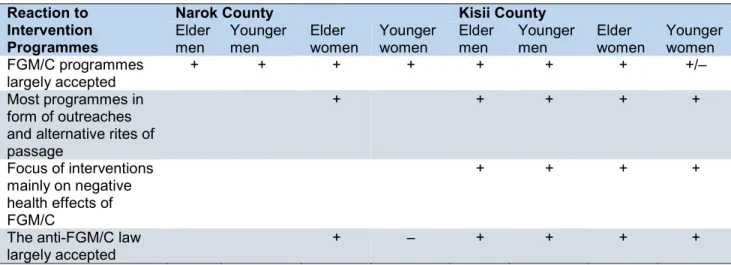
Government official, IDI, Kisii Focus group discussions with elder and younger women and men sought to find out reactions of community members to FGM/C intervention programmes. Table 2 presents a summary of the discussions with community members. Positive consensus as shown in the table means that participants agreed with the statement, while negative consensus means that participants disagreed with the statement.
Table 2. Summary matrix of communities’ reactions to intervention programmes Reaction to
Intervention Programmes
Narok County Kisii County
Elder
men Younger men Elder women Younger women Elder men Younger men Elder women Younger women FGM/C programmes
largely accepted + + + + + + + +/–
Most programmes in form of outreaches and alternative rites of passage + + + + + Focus of interventions mainly on negative health effects of FGM/C + + + +
The anti-FGM/C law
largely accepted + – + + + +
+, positive consensus –, negative consensus +/–, divergent views Blank, theme not raised
In Narok, discussants in all of the group categories agreed that most of the FGM/C programmes were largely embraced by community members. Elder women observed that the most common implementation approaches adopted by FGM/C programmes were conducting outreach in the community to create awareness and organising ARPs to initiate girls into womanhood without being cut. However, there were divergent opinions in relation to acceptability of the anti-FGM/C law. While elder women felt that the law was acceptable in the community and had successfully
deterred families from cutting their daughters, younger women felt that the way the law was being implemented created apprehension among community members and subsequently, was not favoured.Interestingly, older women, who are most likely to be targets of legal action, were not critical of the law, while younger women were disapproving. It is worth noting that enforcement of the law has been most aggressive in Narok, compared to other regions of Kenya. There is a possibility that the implementation of the law could have driven the practice underground in Narok.
“For [Organisation 3, NGO, Narok], the community has liked them because of education opportunities and their programme on the rights of kids. Now, if a parent decides to circumcise, [Organisation 3, NGO, Narok] comes in to assist the child and once they report, the parents get arrested.”
19-year-old male, FGD, Narok
“There is that fear that people in the community normally have towards the courts. There was a time people known in this community committed the offence [FGM/C] and were arrested. That created great fear in the community.”
35-year-old female, FGD, N