Open Research Online
The Open University’s repository of research publications
and other research outputs
Problem- and inquiry-based learning in alternative
contexts: Using museums in management education
Journal Item
How to cite:
Decker-Lange, Carolin (2018). Problem- and inquiry-based learning in alternative contexts: Using museums in management education. International Journal of Management Education, 16(3) pp. 446–459.
For guidance on citations see FAQs.
c
2018 Elsevier Ltd.
Version: Accepted Manuscript
Link(s) to article on publisher’s website:
http://dx.doi.org/doi:10.1016/j.ijme.2018.08.002
Copyright and Moral Rights for the articles on this site are retained by the individual authors and/or other copyright owners. For more information on Open Research Online’s data policy on reuse of materials please consult the policies page.
Problem- and Inquiry-Based Learning in Alternative Contexts: Using Museums in Management Education
Carolin Decker-Lange The Open University
The Open University Business School PuLSE – Public Leadership and Social Enterprise
Walton Hall
Milton Keynes MK7 6AA, United Kingdom Phone: +44 1908 655019
Email: [email protected] and
University of Bremen
School of Business Studies and Economics Wilhelm-Herbst-Str. 5
D-28359 Bremen, Germany
Accepted manuscript.
International Journal of Management Education, 16(3): 446-459.
Acknowledgements. I would like to thank Noëlle Singer, Florian Schrader and René
Beckmann from the University of Bremen for assisting me in developing, implementing and evaluating a PBL/IBL-approach to the project-based modules for Bachelor’s and Master’s students in the topical focus area Management & Entrepreneurship in the Faculty of Business Studies & Economics. I am also grateful to Sunhild Kleingärtner, Ursula Warnke and
Hendrikje Brüning from the German Maritime Museum – Leibniz Institute for German Maritime History in Bremerhaven for their commitment and collaboration. Financial support from the Leibniz Association for a two-day colloquium with students and experts for museum management in the German Maritime Museum in January 2016 is gratefully acknowledged.
Problem- and Inquiry-Based Learning in Alternative Contexts: Using Museums in Management Education
Abstract
This article describes a problem- and inquiry-based approach to teaching business model change, which is embedded in a museum-university partnership in Germany. The students concentrate on business model change in non-profit organisations in the public cultural sector, namely public museums in Germany. In this specific context, publicness implies that governmental bodies are more likely to determine a museum’s strategic actions than market-based factors. Museums are distinct from other organisations, because diverse external stakeholder groups assess the cultural and economic value of their outputs. These outputs generate societal impact and are linked to the policy that a museum endorses. The chosen context enhances the university’s commitment to community service because the students cooperate with a public organisation in its neighbourhood and develop
implementable suggestions for business model change. Overall, the suggested format illustrates that partnerships with museums nurture impactful research and teaching in universities.
Keywords: problem-based learning; inquiry-based learning; museum-university partnership; public organisation; business model change
1. Introduction
Business schools are often blamed for providing management qualifications that drive students to seek for degrees and pursue individual wealth, status, and power (Koris,
Örtenblad, & Ojala, 2017). Students might benefit from the application of knowledge in alternative contexts that require less instrumental logics, but management education rarely goes beyond profit-orientated organisations in the private sector (March, 2007; Reedy & Learmonth, 2009). Based on the example of teaching business model change, this article suggests an approach that combines problem-based learning (PBL) and inquiry-based learning (IBL) and embeds it in the context of a museum-university partnership.
Management education faces many challenges. For instance, the acquisition of
problem-solving skills requires the steady improvement of managerial thinking (Smith, 2005) and a setting in which team players and leaders can evolve (Peterson, 2004). Seminars and lectures must prepare students to pertinent societal needs and “Grand Challenges”. This requires teaching across disciplines and skill development rather the acquisition of content knowledge (Annan-Diab & Molinari, 2017; Coombs & Elden, 2004; Currie, Davies, & Ferlie, 2016; Minocha, Reynolds, & Hristov, 2017; Ungaretti, Thompson, Miller, & Peterson, 2015). However, many teaching approaches in business schools emphasize the production of utility rather than wisdom. Students seize rare opportunities to engage in experiential and reflective activities that stimulate critical thinking and entrepreneurial spirit (Bissola & Imperatori, 2017; Cameron et al., 2009; Koris et al., 2017; Sherwood, 2004). Reasons for this development are the increasing mutual isolation of researchers in business schools and other disciplines and a strong focus on the private sector and profit-orientated strategies in research and teaching (March, 2007). This situation is surprising because many business schools belong to universities, which traditionally engage in science and the production of wisdom.
Teaching approaches should reflect that one of their salient tasks is to stimulate students’ intellectual curiosity (Lazonder & Harmsen, 2016).
This article addresses this issue by providing an example of PBL and IBL in group-based projects in an unfamiliar context. In doing so, it contributes to our understanding of these types of learning in two ways. First, students concentrate on an ill-structured and relevant issue, which requires entrepreneurial thinking, an interpersonal, constructivist process, and active, student-centred learning (Chaharbaghi & Cox, 1995; McKinney, 2014). Specifically, they focus on business model change in public museums, which nurtures thinking across disciplines, because this issue is studied across, for example, strategic management, entrepreneurship, and marketing (Zott, Amit, & Massa, 2011). This feature enhances the effects of the aforementioned requirements.
Second, the chosen context further stimulates cross-disciplinary thinking, because the involved museums focus on either humanities or life sciences. In addition, museums are public organisations. Publicness implies that governmental bodies are more likely to determine a museum’s strategic actions than market-based factors. They are distinct from private organisations, because external stakeholder groups assess the value of its outputs (Alexander, 1996; Arellano-Gault, Demortain, Rouillard, & Thoenig, 2013). Practices that students know from private companies are not necessarily suitable for museums. This feature encourages the transfer of knowledge from one context to another and its adaptation to unfamiliar circumstances.
Overall, both features enhance our understanding of how students contextualize their learning (Carriger, 2016; Sherwood, 2004). By adapting to an unfamiliar context they must question their current wisdom. Moreover, these features increase the likelihood that students engage in collaborative learning, because the chosen issue and context require the
2. Encouraging student-directed learning and scientific inquiry 2.1 Problem- and inquiry-based learning
Approaches promoting student-directed inquiry are well suited for ill-structured, authentic problems. Their solution requires commitment, the engagement in messy processes, and the creation of collective knowledge (Bissola & Imperatori, 2017; McKinney, 2014; Minocha et al., 2017; Peterson, 2004). These conditions are typical for PBL and IBL.
“PBL is an instructional (and curricular) learner-centered approach that empowers learners to conduct research, integrate theory and practice, and apply knowledge and skills to develop a viable solution to a defined problem” (Savery, 2006, p. 12). Students are
confronted with ambiguous, complex and sometimes interdisciplinary problems, which serve as instruments for the acquisition of problem-solving skills instead of the simple application of previously learned knowledge (Chaharbaghi & Cox, 1995; Coombs & Elden, 2004; Garnjost & Brown, 2018; Smith, 2005). Lecturers act as facilitators, coaches, or tutors who support their students in the process of solving a “real world”-problem, rather than deliverers of knowledge who lecture to passive learners (Carriger, 2015; Coombs & Elden, 2004; Ungaretti et al., 2015).
PBL creates an environment, in which students are responsible for their learning process and collaborate with others in small groups (Savery, 2006). It helps students cope with uncertainty and the integration of knowledge from multiple disciplines, functional areas and sources; consider legal and ethical aspects; improve communication, leadership and interpersonal skills, and engage in self-directed continuous learning. It increases student motivation and the development of skills that are useful in their future workplaces (Paladino, 2008; Smith, 2005; Ungaretti et al., 2015). To accomplish these objectives, PBL must involve “placing students in a meaningful context in which they can solve a meaningful problem”
(Sherwood, 2004, p. 537), such as a partner organisation of the university, that provides practice-relevant material (Smith, 2005; Ungaretti et al., 2015).
IBL is a problem- or question-driven approach that integrates inquiry in terms of student-led investigations in order to strengthen the linkages between teaching and research in universities. Forms of inquiry include, for example, literature-based research, data collection, research drawing on questions and methods pre-specified by lecturers, applied research addressing practical issues, simulations, and role-plays (Aditomo, Goodyear, Bliuc, & Ellis, 2013; McKinney, 2014). IBL resembles PBL. Both approaches draw on the
Constructivist approach suggested by John Dewey, according to which learning will take place if learners are actively engaged in the process of developing an understanding of an issue (Carriger, 2015; McKinney, 2014). This active student engagement cannot only be stimulated by a practice-relevant problem in a business context, as PBL suggests. According to IBL, it can also be nurtured by an academic issue that places students in a situation in which they act like scientists and engage in inquiry in a group (Lazonder & Harmsen, 2016; McKinney, 2014).
“The primary difference between PBL and inquiry-based learning relates to the role of the tutor. In an inquiry-based approach the tutor is both a facilitator of learning
(encouraging/expecting higher-order thinking) and a provider of information. In a PBL approach the tutor supports the process and expects learners to make their thinking clear, but the tutor does not provide information related to the problem – that is the responsibility of the learners” (Savery, 2006, p. 16). Lecturers using IBL provide guidance to their students. This includes, for example, heuristics and explanations of when and how to perform an action, prompts that remind students that an action is due, status overviews that reveal the progress made by the students, or scaffolds that involve that the lecturer performs selected parts of an
inquiry. These forms of assistance aim at supporting the students to engage in scientific processes and acquire content knowledge and skills in science (Lazonder & Harmsen, 2016).
2.2 Museums as alternative contexts
Museums are institutions that collect, archive, preserve and exhibit the cultural heritage of a society (DeFillippi, Grabher, & Jones, 2007). For some decades, market-driven thinking has been promoting the idea that museums must act entrepreneurially (Griffin, 2008). Budgetary constraints have led to a reduction of public expenditures for cultural institutions. Museums must find new sources of funding and decrease costs without lowering the quality of their outputs (Warnier & Runfola, 2014). The increasingly intense discussion of the economic and cultural value that museums create has implications for their business models (Eikenberry & Kluver, 2004; Massa, Tucci, & Afuah, 2017; NEMO, 2017).
The Leibniz research museums in Germany are a case in point. They must meet the expectations of diverse stakeholder groups and change their business models accordingly. The Leibniz Association is one of Germany’s major bodies for funding science and research (Edler & Kuhlmann, 2008). It comprises about 80 non-university research institutes, among them eight museums. These are denoted as “research museums”, because they do not only collect and exhibit cultural goods but also carry out research. They maintain high,
internationally valid standards for innovation and scientific rigour. The Leibniz Association reflects the German federal governance system and is funded to equal parts by federal and state governments. It monitors and financially supports the activities of its members. The Senate of the Leibniz Association evaluates the research museums every seven years. In case of underperformance, a museum loses its status as a Leibniz institute, including its access to the funds provided by the Leibniz Association.
A Leibniz research museum is a special type of “alternative organisation” (Reedy & Learmonth, 2009), because it requires the application of management knowledge and skills in
a non-profit organisation in the public sector that pursues two production functions. First, like any other organisation, a museum aims at achieving administrative efficiency. It internally assesses the ratio of output to inputs used for the production of goods and services. Second and in contrast to private organisations, it pursues effectiveness, which is assessed by diverse external stakeholder groups that have evolving, elusive and incongruent goals. Effectiveness means that its outputs generate societal impact and are linked to a specific policy that the museum endorses (Arellano-Gault et al., 2013). These features make a museum distinct from other types of organisations that are usually considered in business schools.
Publicness and distinctiveness foster teaching with impact. First, a museum-university partnership bears the chance that a university-based business school relates its activities to the wider university and its network of partner organisations. This may allow the development of teaching approaches that benefit the public interest (Currie et al., 2016) and encourage
contact of educators from various disciplines (Annan-Diab & Molinari, 2017; March, 2007). Second, the management of external effectiveness is challenging. Museums are less likely to learn from external sources than private organisations. Instead, they tend to use “their own inner knowledge to identify the societal needs to be served and effective outputs to deliver them” (Arellano-Gault et al., 2013, p. 156). Using museums as a context for teaching can change this situation. While the students work on a problem that a museum cannot solve on its own, they produce local evidence (Diez et al., 2014; Kloppenborg & Baucus, 2004). They gain a better understanding of the concepts taught in the business school through
conversations with practitioners. The context may force them to question the applicability of the concepts that they know from previous courses (Minocha et al., 2017). They use
frameworks and methods that are not pertinent in the museum. In turn, the practitioners provide information, question the students’ ideas, and may be inspired to implement novel
ideas from external sources (Alves, Marques, Saur, & Marques, 2007; Anderson, Ellwood, & Coleman, 2017).
3. Case study: Analysing the business models of the Leibniz research museums 3.1 Participants and procedure
The suggested teaching approach is illustrated by two semester-long project-based modules in the Bachelor’s and Master’s programmes of a public university-based business school in Germany, that were offered by the school’s Management Department. In this school, the attendance of project-based modules is compulsory in all programmes. The mission of the university postulates that courses and programmes include the transfer and application of skills and knowledge on science content and processes. The university is also involved in a dense network of partnerships with non-university research institutes in its neighbourhood, bearing the chance to embed teaching approaches in various contexts and stimulate interventions for impact (Anderson et al., 2017). Among the partner organisations is a cultural-historical museum, which is one of eight research museums funded by the Leibniz Association.
Originally, the modules were offered to students enrolled in Business only. However, they attracted an unexpectedly high number of students from Industrial Engineering, a cross-faculty programme combining modules from Business and Engineering. The module in the Bachelor’s programme included 24 students (50% female), among them 20 students specializing in Business and four students enrolled in Industrial Engineering. Most Bachelor’s students were in their third year. The module in the Master’s programme
comprised 13 participants (among them four female students). Seven students specialized in Business and six participants studied Industrial Engineering. The attendance of project-based modules is recommended to students who are close to their final Master’s thesis. However,
many students prefer attending them earlier, because these modules are time-consuming and require substantial personal efforts. Some students think that these investments in time and effort can more easily be made in an earlier stage than at the end of their studies. Therefore, the Master’s students were heterogeneous in terms of age, previous knowledge, and
experience.
I used ethnography for this study (Gray, 2017). This qualitative method seeks to understand the students’ behaviours that reflect their reactions to PBL and IBL in an unfamiliar context. As a researcher I acted as a participant observer (Hammersley & Atkinson, 2007) who designed, organised, and led the project-based modules and simultaneously described and interpreted the students’ behaviours based on observation, documents, surveys, and interviews. My participation helped develop an insider perspective on what was happening in the modules.
To reduce potential biases, I involved two teaching assistants. I also asked a person who had not participated in the modules to evaluate the students’ experiences at the end of the semester. This person was a Bachelor’s student who used this task for his final-year dissertation. The evaluation comprised three steps. First, to learn more about the students’ experiences, they were invited via email to participate in an electronic survey. They received several reminders, leading to an overall response rate of 41%. Second, three students (among them one female) agreed to participate in semi-structured interviews to reflect upon their experiences in more depth. We selected interviewees from different groups who had adopted different approaches to the given task and had achieved different grades. As most students were busy at the end of the semester and had to sit various written exams at that time, the number of interviews was limited. Third, the interviews with the students were
complemented with two interviews with the managing director of the partner museum and an executive of the Leibniz Association responsible for monitoring the activities of the research
museums. The questionnaire items and results as well as the interview guidelines (translated from German into English) are included in the Appendix.
3.2 Principles and ingredients
Following Lavine and Roussin (2012), the research-orientated task that the students performed was not framed as a “problem” because it included aspects that were well structured and unproblematic. Instead and consistent with IBL, it was a research question, which was pre-specified by the lecturer and the directors of the partner museum, namely
How do the business models of the research museums evolve over time, such that on the one hand, the natural and cultural heritage is preserved for future generations and, on the other hand, cultural innovation and new sources of revenue are created? This question was narrowed down for Bachelor’s and Master’s students in different ways, as Table 1 illustrates. It considers the two production functions that public
organisations typically manage (Arellano-Gault et al., 2013) and reflects a form of inquiry that Aditomo et al. denote as Simplified Research: “The tasks mimic research that academics typically conduct, but students are only required to perform some aspects of the data
collection and analysis. The research questions are pre-specified, and methods and analytic frameworks are usually provided through associated lectures and/or readings” (2013, p. 1246).
--- Insert Table 1 about here ---
Accordingly, first, the students gained an overview on research on the selected issue. They used the interdisciplinary business model-concept based on the existing literature (e.g. George & Bock, 2011; Zott & Amit, 2010; Zott et al., 2011) and applied it to museums. They learned how they could collect data on business models to describe them and assess their potential to create and capture value. Second, the students learned to analyse business models. They applied the software package MAXQDA, which is beneficial for the
systematic, computer-aided content analysis of textual data. The students used longitudinal data, which allowed them to observe changes over time. Third, drawing on the insights that they generated, they developed suggestions for the Leibniz research museums.
A PBL/IBL-format and its contextualization in a museum-university partnership requires guidance. The choice of Simplified Research as a form of inquiry is a type of process constraint that limits the comprehensiveness of the task. Throughout the semester, the
students received prompts that reminded them of actions referring to the task. Scaffolds were used to reduce the workload. For instance, the lecturer and the collaboration partners in the museum collected the data and shared them with the students by using the university’s online learning platform. Detailed explanations of theoretical concepts, methods, and the application of the software package MAXQDA were provided. Customized feedback on drafts, initial findings, and presentations was used to make the students’ learning progress visible, keep them engaged, and enhance their experience (Lazonder & Harmsen, 2016; Paladino, 2008). Flexible office hours served the purposes of answering the students’ questions, providing additional explanations or scaffolds, and discussing problems with the data, the chosen method or the software. Frequent email communication with the students and web-based tools complemented these forms of assistance (Paladino, 2008).
A dedicated course site based on the online learning platform contained general information on the module, course outlines and agendas for the sessions, the lecturer’s slides, tutorial handouts, links to the partner organisation and the other Leibniz research museums, helpful material for data analysis with MAXQDA, and links to online tutorials. Each group had its own section on the course site in the online platform that included the data provided for content analysis and additional materials. These group sections could also be used to upload, share, and exchange drafts, submissions, and the presentations for the final colloquium among the group members and the lecturer.
3.3 Workshops, group work, and final colloquium
The organisation of the modules followed the recommendations outlined by Chaharbaghi and Cox (1995) and Peterson (2004). At the beginning of the semester, a syllabus was published on the website of the Management Department and in the online learning platform. Both the syllabus and the first course session helped orient the students. Each module comprised four sessions that required the students’ attendance. The first two sessions were introductory workshops. They were separately held for Bachelor’s and
Master’s students. The third and fourth sessions put the students’ learning outcomes at centre-stage. They were organised as a joint colloquium for Bachelor’s and Master’s students.
The first six-hour session provided an overview on the structures and tasks of the eight research museums in the Leibniz Association and information on the partner museum in the local neighbourhood. The students discussed the challenges that the museums face based on influential political agendas published by the Joint Science Conference (Gemeinsame Wissenschaftskonferenz, GWK) of the German Federal Government and the states (Länder), a leading institution in German science policy. Based on this procedure, the students were familiarized with the selected context. They learned that, like for-profit organisations, museums have business models that holistically describe how they operate. By specifying activity systems, they explain value creation for stakeholders and value capture by the museums (Zott et al., 2011). Activity content describes what areas a museum covers. Activity structure specifies how these areas are linked. Activity governance shows who contributes to the creation and delivery of value and how. These elements are connected by four value propositions: novelty, lock-in, complementarities, and efficiency (Zott & Amit, 2010), which reflect an economic rationality underlying the customers’ requirements to profit-orientated companies (Zott et al., 2011). However, museums are non-profit organisations that heavily rely on public funding. Their stakeholders comprise administrative and governmental bodies,
visitors, companies, foundations, researchers, and donors (Voss, Cable, & Voss, 2000). The perception of value draws on the different and evolving emphases these audiences put on economic and cultural issues (Alexander, 1996; Arellano-Gault et al., 2013; Townley, Beech, & McKinlay, 2009).
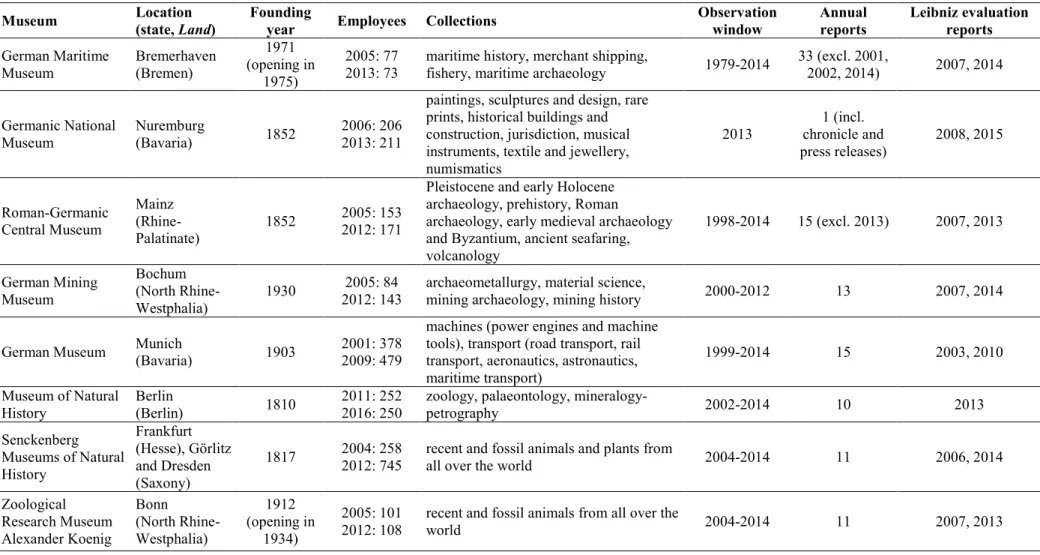
Groups of up to four students were formed. Each group focused on one of the Leibniz research museums based on the pre-specified question. The partner museum provided the students access to comprehensive secondary data on each museum. Table 2 provides an overview on the eight research museums and the secondary data sources available to the students. As a homework, the groups designed schemes for coding the data. Based on the literature and the knowledge acquired in the first session, they developed categories that helped them analyse the design and change of the business models over time.
--- Insert Table 2 about here ---
In the second six-hour session, the groups presented their coding schemes. They received feedback from the lecturer and members of the partner museum and peer feedback from the other groups, which helped them refine their drafts. The second session also introduced the students to computer-aided content analysis with MAXQDA. The students used a version that was valid for 30 days. This period, which was a phase of intense
collaborative and self-directed inquiry, was used to apply the refined coding scheme, write a project report, and prepare a presentation for the final colloquium.
The attendants of the modules were invited to spend a day in the partner museum some weeks later. They talked to practitioners and met the members of the Management Department for a discussion of their initial findings, open issues, and feedback on the revised coding schemes. They exchanged best practices among the groups and compared their initial
findings across the analysed museums. A guided tour with one of the museum’s directors enhanced the students’ curiosity in the “problem”, the context, and their motivation.
The third and fourth sessions were dedicated to the groups’ final presentations of their inquiries. The sessions were organised in the form of a two-day colloquium with the
attendants of the modules in the Bachelor’s and Master’s study programmes, experts from the Leibniz Association and other science organisations in Germany, and members of the eight research museums in the plenary hall of the partner museum. The students presented their results and suggestions for the future development of the business models of the museums. Guest speakers – among them experts from the Leibniz Association, the German Federal Ministry of Education and Research, and other institutions in German science policy – were invited to increase the relevance of learning for the students (Paladino, 2008). A keynote speech by the dean of the business school underlined the commitment of the university to its partnership with the museum.
3.4 Deliverables and assessment
Following Kloppenborg and Baucus (2004), the deliverables and their assessment as well as the submission modes and deadlines throughout the semester were specified in advance, although this may appear inconsistent with PBL and IBL. It was helpful in clarifying student expectations from early on. As recommended by Chaharbaghi and Cox (1995), the assessment was continuous. For the deliverables, all the group members were awarded the same grade assigned to their group. The deliverables differed between the modules in the Master’s and the Bachelor’s programmes.
In the module for the Master’s students, the groups prepared presentations of their preliminary coding schemes. This was the first deliverable. The drafts were presented in the second session. They counted 25% of the final grade. The second deliverable consisted of a project report comprising a maximum of 15 pages. The groups also submitted project files
compiled with MAXQDA, which clarified the procedures that the students had performed. Reports and project files counted 40% of the final grade. The third deliverable was a presentation in the final colloquium. It counted 35% of the final grade.
For the Bachelor’s students, the final grade consisted of two components. The first deliverable was a presentation of a preliminary coding scheme for the business model of one of the Leibniz research museums. Similar to the module for the Master’s students, this deliverable counted 25% of the final group-based grade. The Bachelor’s students prepared a MAXQDA project file that formed the basis of the findings and recommendations included in their final presentations. This deliverable counted 75% of the final grade. The marking
criteria that were similar for Bachelor’s and Master’s students are included in the Appendix.
3.5 The students’ analyses
The analyses revealed that the students were not used to focus on organisations that differed from the typical business organisations that they knew from other courses (March, 2007). For instance, the students had difficulties in accepting that it is no use investing in museum shops. The income that the shops generate is very low and does not suffice to cover the expenses needed to maintain the buildings and carry out the capital-intensive research projects that are typical for Leibniz institutes. Resource scarcity often prevents the research museums from meeting the expectations of influential stakeholder groups. Digitisation is a case in point. Policy-makers, visitors and researchers claim that the research museums
digitise their collections, but the museums lack the necessary funds, which mainly come from public sources. Consequently, they often have difficulties in meeting external stakeholders’ expectations of effectiveness.
The longitudinal analyses revealed that, although the research museums faced similar challenges over time, their responses to them differed. A comparison of the students’ findings referring to the German Maritime Museum, the Germanic National Museum and the German
Museum illustrates this observation. The German Maritime Museum is located in Bremen, an economically weak federal state in Northern Germany. The Germanic National Museum and the German Museum are based in economically prospering Bavaria in Southern Germany. In 2014, the German Museum had a budget of approx. 86 million euros, stemming from various sources of revenue. The much smaller German Maritime Museum, having a budget of about six million euros and suffering from budgetary constraints imposed by the state of Bremen, strongly depends on the inflow of financial resources provided by the Leibniz Association. It is markedly defensive referring to the recommendations of the Leibniz Association and carefully reassesses its activities based on the regular evaluations provided by the Leibniz Association. In contrast, the Germanic National Museum, which was repeatedly criticised for not being fully compliant with the standards of the Leibniz Association, bargains for its business model. Its dependence on the funds provided by Leibniz Association is lower, because it attracted generous donors in the previous years and thus relies on various sources of revenue.
Some groups suggested that the museums changed their names to strengthen their brand equity. They could increase their attractiveness by cooperating with other museums in their neighbourhood and create a local brand involving a cluster of museums. They may use their status as members of the Leibniz Association to create an umbrella brand. They could also implement joint open house presentations of their collections to attract new visitors.
3.6 Learning experience
The continuous assessment revealed different learning outcomes. For example, among the Master’s students, the quality of the deliverables of two groups increased over time. This was surprising, because one of these groups had had a difficult start. It consisted of two students of Industrial Engineering who had missed the first six-hour session and had never been exposed to a PBL/IBL-format. Moreover, they did not like museums. This group
showed an impressive learning curve. Its first deliverable led to grade, which was widely below the students’ expectations. They complained about it. Eventually, they used the information gained in the second six-hour session and the intense feedback discussions for their subsequent deliverables, leading to a very good grade for their project report and an excellent presentation during the final colloquium. Groups that rarely used these learning opportunities, for example, for guidance in refining their coding schemes or revising their content analyses, generally performed worse. Overall, three groups achieved very good or good results. Another group almost failed the module. Throughout the semester, its four members had often complained about the workload. They had repeatedly reported
interpersonal conflicts and unco-operative behaviour, such as withholding information, lack of reliability, or dysfunctional communication.
The grading of the Bachelor’s students’ deliverables was more positive than that of the Master’s students’ submissions. Two groups achieved very good or even excellent grades, four groups performed well, and the deliverables of another group were rated as satisfactory. While two groups showed a positive development between the first and the second
deliverable, the performance of two groups remained stable. Three groups seemed to reduce their efforts after the first deliverable, as indicated by the lower marks for their second deliverables. Surprisingly, the Bachelor’s students, who had relied on a less advanced knowledge base and fewer experiences than the Master’s students had done, used more creative approaches to the pre-specified question than the Master’s students did. Their presentations in the final colloquium contained courageous recommendations for the museums and critical attitudes towards the Leibniz Association and German science policy. The Master’s students tended to be more reluctant to suggest unconventional ideas.
Across the two modules, the deliverables revealed a certain ignorance of the recommended literature. References and in-text citations were used sparsely, although this
had been specified as a marking criterion and the results of the electronic survey reveal mainly positive attitudes towards the use of literature. Possibly, the modules were generally perceived as demanding, leading to a reluctance to read articles and textbooks, although most respondents assessed the required personal effort as adequate in the survey.
The students showed high satisfaction levels referring to the guidance that was provided. They appreciated the syllabus, the information and the group sections in the online learning platform, the supporting documents, the flexible office hours, the feedback
discussions, and the teaching team. Their responses referring to the motivating effect of self-directed inquiry, the regional embeddedness of the projects, and the research museums as project partners led to mixed results. These might be explained by the fact that PBL/IBL is not integrated in the usual business curriculum in this university. A single course will not necessarily enhance the students’ satisfaction or their interest in science if they are not used to this approach (Garnjost & Brown, 2018). With regard to skill development, the students seemed to appreciate their newly acquired skills in computer-aided content analysis, although their usefulness in other contexts was questioned.
In the interviews, the students more openly admitted that they had been unwilling to use the recommended literature than in the survey. They explained this reluctance with the complexity of the data analysis and their difficulties in reading and understanding articles from scientific journals in English language. The interviewees showed different levels of motivation to learn computer-aided content analysis and revealed different strategies to cope with difficulties in applying this method and the recommended software. They generally agreed that content analysis had been useful for the projects. One of them even used it for his Bachelor’s thesis that he was writing at the time of the interview.
Supporting the results of the electronic survey, the interviewees were critical towards the business model-concept developed by Zott and Amit (2010), although they admitted that
its application in a self-directed inquiry had clarified it. They perceived it as complex and difficult to apply in the “real world”. This discomfort might support the view that PBL/IBL “pedagogy is probably not the most efficient way to present basic concepts” (Garnjost & Brown, 2018, p. 128), such as business model change. It also indicates that the students had difficulties in understanding that the publicness and distinctiveness of the museums required an adaptation of the concept to this context.
The interviewees showed an increasing interest in museums but would appreciate the use of a more conventional context in future project-based modules. They enjoyed the group presentations during the final colloquium, because they were perceived as useful in
developing skills in presenting, defending and discussing sometimes-controversial ideas with other students, members of the partner museum, external experts, and guest speakers.
3.7 The museums’ perspective
The interviews with the students were complemented with two interviews with the managing director of the partner museum and an executive of the Leibniz Association. The interview with the executive of the Leibniz Association supported the view that the students had had difficulties in understanding the nature of the Leibniz research museums as public and distinct organisations. According to the executive, the students had not fully captured the characteristics of a Leibniz research museum that distinguishes them from other museums. Their analyses hardly referred to the distinctive combination of science, collection-based research and education. Both the director of the partner museum and the executive of the Leibniz Association thought that the students had not fully understood the particular financing structure of the Leibniz research museums. This led to misinterpretations of the findings referring to the museums’ value propositions and their opportunities for value capture included in the business models that the students outlined in their analyses.
Nonetheless, according to the experts, the analyses provided interesting implications. For example, the idea to organise open house presentations of the museums’ collections was considered for implementation. The suggestion to change the museums’ names to make them more attractive for younger visitors and display their membership in the Leibniz Association was even discussed among members of several research museums and the Leibniz
Association. Both interviewees admitted that they viewed modules of this type as an indirect advertisement leading to the engagement of a young audience and a better understanding of the expectations that students as visitors of museums have.
4. Discussion and Implications
The goal of this article was to provide an example of how the embeddedness of PBL and IBL in an alternative context can promote intellectual curiosity, local impact, interest in science, and cross-disciplinary collaborative student-led projects in management education.
The main limitation is the embeddedness of the format in a very special context. Although the Leibniz research museums in Germany fulfil the tasks of a typical museum, they simultaneously act as non-university research institutes. They are even unique in the German science system, which makes the generalisability of the findings questionable. However, there are similar institutions in other countries, such as the Smithsonian museums in the USA that are suitable for partnerships with universities for collaborative teaching across disciplines. In the future, it would be interesting to implement similar teaching approaches across countries and evaluate their implications for students’ task performance and skill development, thereby considering differences in culture, national science policies, and societal attitudes towards museums.
Another limitation is the time frame. A series of modules according to the principles of PBL and IBL and involving museums over several years would generate insights in the
long-term effects of this initiative on the partner organisations and the museum-university partnership. For example, are those modules suitable to create awareness for the
distinctiveness of public organisations among students? Do they motivate students to pursue a career in science or consider an employment in a cultural organisation? Do their attitudes towards museums and their value for society change? Longitudinal studies involving the observation and systematic evaluation of modules taught over several years would be
beneficial in providing answers. An ethnographic study that typically focuses on a few cases or a single group of people can explore those questions to a limited extent only (Hammersley & Atkinson, 2007).
The format also has benefits. First, for students the museum-university partnership bears the opportunity to discover alternative workplaces. Museums are not only sources of wisdom and pleasure but also potential employers or providers of study-related internships or part-time jobs in cultural management, where an entrepreneurial mind-set is useful. Second, museums can be seen as templates for organisations in the creative industries and stimulate cultural entrepreneurship. Museums are rarely studied, because their activities differ from what is observed in other types of organisations. However, they have become a template for many manufacturing and professional service firms, because the success of products and services increasingly depends on style and creativity instead of practical usefulness
(DeFillippi et al., 2007; Lawrence & Phillips, 2002; Townley et al., 2009). The experiences made in a project-based module embedded in a museum-university partnership increase the students’ employability because they develop an understanding of creative processes and the translation of cultural innovation in practically useful and marketable products and services (Coblence & Sabatier, 2014).
Finally, the described partnership between the university and the museum can be viewed as a template for initiatives that are emerging in many countries. The
Museum-University-Partnership Initiative (MUPI) in Great Britain is a case in point. MUPI ran for two years between October 2016 and 2018. It aimed at fostering collaboration between
universities and museums and intended to increase the public awareness of the museums’ often-underutilised collections and their potential for research and teaching in universities (NCCPE, 2018). The economic value of museums is also increasingly discussed across Europe (e.g. NEMO, 2017). Specialised cross-disciplinary programmes are offered by many universities all over the world, such as a Master’s degree in Anthropology and Museum Practice (e.g. Goldsmiths, University of London), Arts Management and Heritage Studies (e.g. University of Leeds, UK), Cultural Heritage Management and Museology (e.g. University of Barcelona, Spain), Arts and Creative Industries (e.g. London Southbank University, UK), or Museum Management (e.g. University of Hamburg, Germany; University of Tulsa, USA). Those programmes benefit from partnerships with museums, which add the necessary practical skills to enhance the student experience. They can also reduce the mutual isolation of business schools and other faculties.
Overall, the suggested teaching approach traces promising avenues for novel formats in university-based business schools. It may also inspire further teaching innovations that benefit from the embeddedness in an alternative context.
References
Aditomo, A., Goodyear, P., Bliuc, A.-M., & Ellis, R. A. (2013). Inquiry-based learning in higher education: Principal forms, educational objectives, and disciplinary variations. Studies in Higher Education,38(9), 1239-1258.
Alexander, V. D. (1996). Pictures at an exhibition: Conflicting pressures in museums and the display of art. American Journal of Sociology,101(4), 797-839.
Alves, J., Marques, M. J., Saur, I., & Marques, P. (2007). Creativity and innovation through multidisciplinary and multisectoral cooperation. Creativity and Innovation Management, 16(1), 27-34.
Anderson, L., Ellwood, P., & Coleman, C. (2017). The impactful academic: Relational management education as an intervention for impact. British Journal of Management,28(1), 14-28.
Annan-Diab, F., & Molinari, C. (2017). Interdisciplinarity: Practical approach to advancing education for sustainability and for the Sustainable Development Goals. International Journal of Management Education, 15, 73-83.
Arellano-Gault, D., Demortain, D., Rouillard, C., & Thoenig, J.-C. (2013). Bringing public organization and organizing back in. Organization Studies,34(2), 145-167.
Bissola, R., & Imperatori, B. (2017). A rhizomatic learning process to create collective knowledge in entrepreneurship education: Open innovation and collaboration beyond boundaries. Management Learning,48(2), 206-226.
Cameron, M., Turkiewicz, R. M., Holdaway, B. A., Bill, J. S., Goodman, J., Bonner, A., Daly, S., Cohen, M. D., Lorenz, C., Wilson, P. R., & Rusk, J. (2009). Teaching organization theory and practice: An experiential and reflective approach. Journal of Teaching in Social Work, 29(1), 71-84.
Carriger, M. S. (2015). Problem-based learning and management development: Empirical and theoretical considerations. International Journal of Management Education,13, 249-259. Carriger, M. S. (2016). What is the best way to develop new managers? Problem-based learning vs. lecture-based instruction. International Journal of Management Education, 14, 92-101.
Chaharbaghi, K., & Cox, R. (1995). Problem-based learning: Potential and implementation issues. British Journal of Management,6, 249-256.
Coblence, E., & Sabatier, V. (2014). Articulating growth and cultural innovation in art museums. InternationalStudies of Management and Organization,44(4), 9-25.
Coombs, G., & Elden, M. (2004). Introduction to the special issue: Problem-based learning as social inquiry – PBL and management education. Journal of Management Education,28(5), 523-535.
Currie, G., Davies, J., & Ferlie, E. (2016). A call for university-based business schools to “lower their walls”: Collaborating with other academic departments in pursuit of social value. Academy of Management Learning & Education,15(4), 742-755.
DeFillippi, R., Grabher, G., & Jones, C. (2007). Introduction to paradoxes of creativity: Managerial and organizational challenges in the cultural economy. Journal of Organizational Behavior,28, 511-521.
Diez, J., Antonakis, J., Hoffrage, U., Krings, F., Marewski, J. N., & Zehnder, C. (2014). Teaching evidence-based management with a focus on producing local evidence. Academy of Management Learning & Education,13(3), 397-414.
Edler, J., & Kuhlmann, S. (2008). Coordination within fragmentation: Governance in
knowledge policy in the German federal system. Science and Public Policy,35(4), 265-276. Eikenberry, A. M., & Kluver, J. D. (2004). The marketization of the nonprofit sector: Civil society at risk? Public Administration Review,64(2), 132-140.
Garnjost, P., & Brown, S. M. (2018). Undergraduate business students’ perceptions of learning outcomes in problem based and faculty centered courses. International Journal of Management Education, 16, 121-130.
George, G. G., & Bock, A. J. (2011). The business model in practice and its implications for entrepreneurship research. Entrepreneurship Theory and Practice,35, 83-111.
Goldsmiths (2018). MA in Anthropology & Museum Practice. Retrieved from https://www.gold.ac.uk/pg/ma-anthropology-museum-practice/ (6 July 2018). Gray, D. E. (2017). Doing research in the business world. London: Sage.
Griffin, D. (2008). Advancing museums. Museum Management and Curatorship,23(1), 43-61.
Hammersley, M., & Atkinson, P. (2007). Ethnography. Principles of practice. London: Routledge (3rd edition).
Kloppenborg, T. J., & Baucus, M. S. (2004). Project management in local non-profit organizations: Engaging students in problem-based learning. Journal of Management Education 28(5), 610-629.
Koris, R., Örtenblad, A., & Ojala, T. (2017). From maintaining the status quo to promoting free thinking and inquiry: Business students’ perspective on the purpose of business school teaching. Management Learning,48(2), 174-186.
Lavine, M. H., & Roussin, C. J. (2012). From idea to action: Promoting responsible
management education through a semester-long academic integrity learning project. Journal of Management Education,36(3), 428-455.
Lawrence, T. B., & Phillips, N. (2002). Understanding cultural industries. Journal of Management Inquiry,11(4), 430-441.
Lazonder, A. W., & Harmsen, R. (2016). Meta-analysis of inquiry-based learning: Effects of guidance. Review of Educational Research,86(3), 681-718.
Leibniz (2014). Leibniz-Konzeptpapier zur Umsetzung des Bund-Länder-Eckpunktepapier. Provided by the eight Leibniz Research Museums.
Leibniz (2016). Showcasing science: The Leibniz Research Museums. Retrieved from http://www.leibniz-gemeinschaft.de/en/institutes-museums/research-museums/ (29 March 2016).
London Southbank University (2018). Arts and Creative Industries MRes.
http://www.lsbu.ac.uk/courses/course-finder/arts-and-creative-industries-mres (6 July 2018). March, J. G. (2007). The study of organizations and organizing since 1945. Organization Studies,28(1), 9-19.
Massa, L., Tucci, C. L., & Afuah, A. (2017). A critical assessment of business model research. Academy of Management Annals,11, 73-104.
McKinney, P. (2014). Information literacy and inquiry-based learning: Evaluation of a five-year programme of curriculum development. Journal of Librarianship and Information Science,46(2), 148-166.
Minocha, S., Reynolds, M., & Hristov, D. (2017). Developing imaginators not managers – How to flip the business school model. International Journal of Management Education, 15, 481-489.
NCCPE - National Co-ordinating Centre for Public Engagement (2018). Museum university partnerships initiative. Retrieved from https://www.publicengagement.ac.uk/work-with-us/current-projects/museum-university-partnerships-initiative (2 July 2018).
NEMO - Network of European Museum Organisations (2017). Money matters: The economic value of museums. Retrieved from http://www.ne-mo.org/fileadmin/Dateien/public/
NEMo_documents/NEMOAC2016_EcoVal.pdf (3 March 2017).
Paladino, A. (2008). Creating an interactive and responsive teaching environment to inspire learning. Journal of Marketing Education,30(3), 185-188.
Peterson, T. O. (2004). So you’re thinking of trying problem-based learning?: Three critical success factors for implementation. Journal of Management Education,28(5), 630-647. Reedy, P., & Learmonth, M. (2009). Other possibilities? The contribution to management education of alternative organizations. Management Learning,40(3), 241-258.
Savery, J. R. (2006). Overview of problem-based learning: Definitions and distinctions. Interdisciplinary Journal of Problem-Based Learning,1(1), 9-20.
Sherwood, A. L. (2004). Problem-based learning in management education: A framework for designing context. Journal of Management Education,28(5), 536-557.
Smith, G. F. (2005). Problem-based learning: Can it improve managerial thinking? Journal of Management Education,29(2), 357-378.
Townley, B., Beech, N., & McKinlay, A. (2009). Managing in the creative industries: Managing the motley crew. Human Relations,62(7), 939-962.
Ungaretti, T., Thompson, K. R., Miller, A., & Peterson, T. O. (2015). Problem-based learning: Lessons from medical education and challenges for management education. Academy of Management Learning & Education,14(2), 173-186.
University of Barcelona (2018). Cultural Heritage Management and Museology.
http://www.ub.edu/web/ub/en/estudis/oferta_formativa/master_universitari/fitxa/C/M0305/in dex.html (6 July 2018).
University of Hamburg (2018). Museumsmanagement. Retrieved from
https://www.kultur.uni-hamburg.de/vk/studium/studiengaenge/ressourcen/muma-info.pdf (6 July 2018).
University of Leeds (2018). Arts Management and Heritage Studies MA.
https://courses.leeds.ac.uk/g646/arts-management-and-heritage-studies-ma#section1 (6 July 2018).
University of Tulsa (2018). Museum Science & Management.
Voss, G. B., Cable, D. M., & Voss, Z. G. (2000). Linking organizational values to relationship with external constituents: A study of nonprofit professional theatres. Organization Science,11(3), 330-347.
Warnier, V., & Runfola, A. (2014). Why study business models in creative industries? International Studies of Management and Organization,44(4), 3-8.
Zott, C., & Amit, R. (2010). Business model design: An activity system perspective. Long Range Planning,43(2-3), 216-226.
Zott, C., Amit, R., & Massa, L. (2011). The business model: Recent developments and future research. Journal of Management,37(4), 1010-1042.
Table 1. Task specification General question
How do the business models of the research museums evolve over time, such that on the one hand, the natural and cultural heritage is preserved for future generations and, on the other hand, cultural innovation and new sources of revenue are created?
Specification for Bachelor’s students
Please use the business model-concept suggested by Zott and Amit (2010) and analyse the design and change of the business model of the research museum as follows:
1. Which structural decisions regarding activity content, structure and governance were made over time? How and why did the business model change?
2. Analyse the extent to which the business model of the research museum reflects economic and cultural logics. Does the influence of these logics change over time? If so, how? Can you identify critical incidents that triggered change?
Note: The Bachelor students (seven groups of up to four students) analysed the business models and their evolution over time of the German Maritime Museum, the Roman-Germanic Central Museum, the German Mining Museum, the German Museum, the Museum of Natural History, the Senckenberg Museums of Natural History and the Zoological Research Museum Alexander Koenig based on these tasks and questions. Each group focused on a single museum. Two doctoral students provided an analysis of the Germanic National Museum.
Specification for Master’s students 2 groups
Please use the business model-concept suggested by Zott and Amit (2010) and analyse the design and change of the business model of the research museum as follows:
1. Which structural decisions regarding activity content, structure and governance were made over time? How and why did the business model change? 2. How does the research museum create and capture value? Analyse the extent to which the business model of the research museum reflects economic and cultural logics. Does the influence of these logics change over time? Can you identify critical incidents that triggered change?
2 groups
Cultural organisations are increasingly under pressure to create “value”. Their business models are expected to generate economic and cultural value for diverse stakeholder groups.
1. Analyse the intellectual, social and cultural-symbolic capital that the research museum generates.
2. How do conceptions and statements referring to “value” change over time? Which stakeholder groups are addressed? 3. How can these three types of capital be
translated into economic value?
Note: The Master’s students analysed two selected research museums in detail, namely the German Maritime Museum and the Museum of Natural History. The groups consisted of up to four students. Specifically, two groups focused on the German Maritime Museum and two groups referred to the Museum of Natural History.
Table 2. Data on the Leibniz research museums
Museum Location (state, Land)
Founding
year Employees Collections
Observation window Annual reports Leibniz evaluation reports German Maritime Museum Bremerhaven (Bremen) 1971 (opening in 1975) 2005: 77 2013: 73
maritime history, merchant shipping,
fishery, maritime archaeology 1979-2014
33 (excl. 2001, 2002, 2014) 2007, 2014 Germanic National Museum Nuremburg (Bavaria) 1852 2006: 206 2013: 211
paintings, sculptures and design, rare prints, historical buildings and construction, jurisdiction, musical instruments, textile and jewellery, numismatics 2013 1 (incl. chronicle and press releases) 2008, 2015 Roman-Germanic Central Museum Mainz (Rhine-Palatinate) 1852 2005: 153 2012: 171
Pleistocene and early Holocene archaeology, prehistory, Roman
archaeology, early medieval archaeology and Byzantium, ancient seafaring, volcanology 1998-2014 15 (excl. 2013) 2007, 2013 German Mining Museum Bochum (North Rhine-Westphalia) 1930 2005: 84 2012: 143
archaeometallurgy, material science,
mining archaeology, mining history 2000-2012 13 2007, 2014 German Museum Munich
(Bavaria) 1903
2001: 378 2009: 479
machines (power engines and machine tools), transport (road transport, rail transport, aeronautics, astronautics, maritime transport) 1999-2014 15 2003, 2010 Museum of Natural History Berlin (Berlin) 1810 2011: 252 2016: 250
zoology, palaeontology,
mineralogy-petrography 2002-2014 10 2013 Senckenberg Museums of Natural History Frankfurt (Hesse), Görlitz and Dresden (Saxony) 1817 2004: 258 2012: 745
recent and fossil animals and plants from
all over the world 2004-2014 11 2006, 2014 Zoological Research Museum Alexander Koenig Bonn (North Rhine-Westphalia) 1912 (opening in 1934) 2005: 101 2012: 108
recent and fossil animals from all over the
Appendix A1. Survey items and results
Survey Items Students’ responses
1 General questions
1.1 Why did you attend the module?
Group work 7
Assessment form (portfolio comprising several
deliverables throughout the semester) 7
Practical orientation 9
Interest in research 4
Interest in museums 3
No other option 1
Number of credit points 1
Teaching team 7
Schedule 11
Self-directed learning (project-based module) 11 1.2 Did you gather any information regarding the module beforehand (e.g. by using the website of the
Management Department, reading the syllabus, or asking questions during office hours)?
Yes 13
No 2
1.3 To what extent do you agree to the following statements
(1 = I strongly disagree, …, 5 = I strongly agree): 1 2 3 4 5
The syllabus was helpful. 0 0 3 6 6
The files provided via the online learning platform were
well structured. 0 1 1 4 9
The announcements made via the online learning
platform were helpful. 0 1 0 5 9
The group-specific folders in the online learning platform have well supported the performance of the project-related tasks.
0 0 2 4 9
The supporting documents were helpful. 1 0 3 4 7
I have used all available supporting documents. 0 2 1 4 8 The layout and structure of the supporting documents
were appealing. 0 1 3 7 4
The supporting documents were provided via the online
learning platform in a timely manner. 0 1 1 4 9
The literature (textbooks and journal articles in English
language) was useful. 1 1 3 7 3
The literature (textbooks and journal articles in English
language) was easy to read. 0 2 2 6 5
I have used the literature (in English language) to
perform the project-related tasks. 1 1 4 5 4
The number of textbooks and articles (in English
language) was adequate. 0 1 6 4 4
1.4 To what extent do you agree to the following statements
(1 = I strongly disagree, …, 5 = I strongly agree): 1 2 3 4 5 The learning objectives were clearly defined from the
outset of the module. 0 1 5 4 5
The organisation of the module was clear. 0 3 2 4 6
The performance requirements were clear. 0 2 3 6 4
The required investment in personal effort was adequate. 2 0 4 7 2 1.5 To what extent do you agree to the following statements
(1 = I strongly disagree, …, 5 = I strongly agree): 1 2 3 4 5 I learned new skills which are also useful in other
courses at the University. 0 1 3 4 7
I learned skills which I can use in future jobs. 1 1 4 6 3 The use of the software package MAXQDA was helpful. 0 0 5 6 7
The newly acquired skills in using MAXQDA will also
be beneficial in other (future) courses at the University. 1 1 4 4 5 The application of thematic content analysis in this
module was useful. 0 0 2 8 5
I can also apply content analysis in other (future)
courses at the University. 0 0 4 7 4
I acquired skills in writing scientific texts (e.g. theses) in
this module. 0 0 3 6 6
1.6
How did the following aspects affect your interest and engagement? (1 = strong decrease, …, 5 = strong increase)
1 2 3 4 5
Involvement of a partner organisation 1 1 0 6 7
Open office hours (no prior appointment required) 0 1 3 5 6 Two-day colloquium in a museum with experts from
research and practice at the end of the semester 0 1 2 6 6 Opportunity to spend a day in the partner organisation
and exchange knowledge and ideas 0 0 3 9 3
Guest speakers in the two six-hour sessions 0 1 8 6 0
Feedback discussions 0 0 1 8 6
Teaching methods dedicated to enhance student engagement (e.g. group work, discussion rounds, brainstorming)
1 1 6 5 2
Self-directed inquiry 0 2 4 1 8
The regional embeddedness of the project 0 2 3 8 2
Research museums as project partners 0 1 6 8 0
2 The teaching team
2.1 To what extent do you agree to the following statements
(1 = I strongly disagree, …, 5 = I strongly agree): 1 2 3 4 5
The teaching team was engaged. 0 1 0 1 13
The teaching team increased my interest in issues related
to management and organisation. 0 1 0 5 9
The explanations that the members of the teaching team
provided were clear and comprehensible. 0 1 3 5 6
The members of the teaching team provided personal
support for my individual learning process. 0 0 1 4 10 The members of the teaching team were available via
email and for flexible office hours. 0 1 0 0 14
2.2 To what extent do you agree to the following statements
(1 = I strongly disagree, …, 5 = I strongly agree): 1 2 3 4 5
The assessment was fair. 1 0 1 3 10
The assessment was transparent. 0 1 1 5 8
The assessment was explained in a comprehensible
manner in a feedback discussion. 0 0 2 2 11
The teaching team created an environment characterised
by mutual respect. 0 1 1 1 12
3 Overall assessment 1 2 3 4 5
Please evaluate the module on a scale ranging from 1 =
“very good” to 5 = “unsatisfactory”. 7 6 0 2 0
A2. Interview questions
Students Experts from the partner museum and the Leibniz Association
A. Questions on module attendance
1. Why did you decide to attend this project-based module?
2. Who brought this module to your attention, and how and when were you informed about this module?
3. If you had to do it all over again, would you choose this module this time? Why?
B. Questions on the business model-concept
4. What do you think about the business model-concept that took center-stage in the module? Was it useful in subsequent courses? Could you apply it during internships or part-time jobs?
5. Were there any difficulties in understanding the business model-concept and applying it on the Leibniz research museums? If so, how did you cope with these difficulties (both individually and in your group)?
6. Did you perceive the introductory literature provided by the teaching team as helpful? To what extent did you use it? Why?
C. Questions on the use of computer-aided content analysis
7. Are you still using content analysis? Can you apply this method beyond this module?
8. Were there any difficulties in learning how to use the software package MAXQDA?
9. Did you perceive the supporting documents and literature provided by the teaching team as helpful? To what extent did you use them? Why?
D. Questions on group work
10. How do you perceive the performance of your group? (keywords: meetings, atmosphere, work allocation, schedule)
11. Please describe your experiences with self-directed inquiry in your group.
E. Questions on the students’ interest in and understanding of the particularities of museums
12. Did the module increase your interest in museums? 13. Did your attitudes towards museums change over time?
14. Can you envision an employment in the cultural sector in the future? 15. Are the insights that your group generated based on a self-directed inquiry
transferrable to private corporations? Please provide reasons for your answer.
A. Questions on cooperation
1. A project-based module involving management researchers and museums is unusual. Please tell us about your cooperation and its history.
2. Originally, the project-based modules should involve the partner museum of the University. Why were the other Leibniz research museums included at a later point in time?
3. The data provided by the museums was partly confidential. Did you have any reservations about providing the data to the students?
B. Questions on the outcomes of the student-led inquiries
4. How do you perceive the findings of the student-led inquiries? Are they useful for the museums / the Leibniz Association?
5. Did the students meet your expectations? (keywords: content, methods, findings, presentation, novelty of insights)
6. Did the results surprise you?
C. Questions on the impact of the cooperative project-based modules
7. Can the findings be applied in the Leibniz research museums? Why? 8. From your point of view, what is the added value for the students / the
museums / the Leibniz Association?
9. Does the Leibniz Association consider collaborative teaching efforts in its evaluations of the research museums?
D. Questions on future cooperative projects
10. Are you interested in continuing this cooperation?
A3. Marking criteria
Part A. Coding schemes (Bachelor’s and Master’s students)
Weight negative neutral positive
Credits x
weight Formative feedback Criteria: 1 2 3 4 5 CONTENT Argumentative strength (comprehensiveness, theoretical soundness) 5 Structure
(internal consistency, line of argumentation) 4 PRESENTATION Clarity of argumentation (persuasiveness, responsiveness to the audience) 4 Layout
(quality of slide show and any additional materials) 3 16 Total Mark Legend: Credits 76-80 72-75 68-71 64-67 60-60 56-59 52-55 48-51 44-47 40-43 < 40 Mark A+/A B C D E