QUARTERLY REPORT 1 5 April 2011
This publication was produced for review by the US Agency for International Development. It was prepared by the USAID/Tatweer Program, Management Systems International.
IRAQ ADMINISTRATIVE REFORM
PROJECT
QUARTERLY REPORT
APRIL 1– JUNE 30, 2014
THIRD QUARTER – FY 2014
This publication was produced for review by the United States Agency for International
Development. It was prepared by Management Systems International.
IRAQ ADMINISTRATIVE
REFORM PROJECT
QUARTERLY REPORT
APRIL 1 – JUNE 30, 2013
Contracted: AID–267–C–11–0005 Iraq Administrative Reform Project
Management Systems International Corporate Offices
200 12th Street, South Arlington, VA 22202 USA Tel: + 1 703 979 7100
Contracted under AID–267–C–11–0005 Iraq Administrative Reform Project
Please do not circulate this report without due consideration of security issues in Iraq.
DISCLAIMER
The author’s views expressed in this publication do not necessarily reflect the views of the US Agency for International Development or the United States Government.
QUARTERLY REPORT 3
TABLE OF CONTENTS
EXECUTIVE SUMMARY ... 6
Structure of the Quarterly Report ... 8
COMPONENT 1: NATIONAL POLICY MANAGEMENT ... 9
Section One: Highlights ... 9
Section Two: Next Quarter ... 11
Notes ... Error! Bookmark not defined. COMPONENT 2: ADMINISTRATIVE DECENTRALIZATION ... 20
Section One: Highlights ... 20
Section Two: Next Quarter ... 24
Notes ... Error! Bookmark not defined. PROJECT ADMINISTRATION ... 24
Travel and Security ... Error! Bookmark not defined.
Compound Offices and Housing ... Error! Bookmark not defined.
ACRONYMS
AD Administrative Decentralization Component BPA Business Process Analysis
BPP Bureau of Public Policy (Presidency Office - Iraq) CBO Capacity Building Office (USAID)
CoM Council of Ministers
COMSEC Council of Ministers' Secretariat CoI Commission of Integrity
COR Contracting Officer’s Representative/USAID CoR Council of Representatives
CoS Chief of Staff
CSR Civil Service Reform Component
DfID Department for International Development (UK) DG Director General
DPMO Deputy Prime Minister Office ECB Education Capacity Building Initiative FCSC Federal Civil Service Commission FCSI Federal Civil Service Institute GO Governor’s Office GZ Green Zone (See IZ) GoI Government of Iraq
GSP Governance Support Project (USAID) HC High Committee for Civil Service Reform
HR Human Resources
HRD Human Resources Division HRM Human Resources Management
HRMIS Human Resources Management Information System IDMS Iraq Development Management System
INMS Iraqi National Monitoring System
ISRAR Iraq Solutions for Regulatory and Administrative Reform IZ International Zone (See GZ)
MoA Ministry of Agriculture MoC Ministry of Communications MoCH Ministry of Construction & Housing MoCu Ministry of Culture
MoD Ministry of Defense MoEl Ministry of Electricity MoEd Ministry of Education MoEn Ministry of Environment MoF Ministry of Finance MoFA Ministry of Foreign Affairs MoH Ministry of Health
MoHE Ministry of Higher Education MoHR Ministry of Human Rights MoI Ministry of Interior
MoIM Ministry of Industry & Minerals MoJ Ministry of Justice
MoLSA Ministry of Labor & Social Affairs MoMD Ministry of Migration & Displaced MoMPW Ministry of Municipalities &Public Works MoO Ministry of Oil
MoP Ministry of Planning
MoSPA Minister of State for Provincial Affairs MoSWA Minister of State for Women’s Affairs
QUARTERLY REPORT 5 MoST Ministry of Science & Technology
MoT Ministry of Trade
MoTA Ministry of Tourism & Antiquities MoTr Ministry of Transport
MoU Memorandum of Understanding MoWR Ministry of Water Resources MoYS Ministry of Youth & Sport
MSI Management Systems International
NCCIT National Center for Consultancy and Information Technology NDP National Development Plan
NGO Non-Governmental Organization NIC National Investment Commission NPM National Policy Management Component OD Organizational Development
OPD Office of Policy Development (Prime Minister’s Office - Iraq) PAR Public Administrative Reform Committee (See PSM)
PC Provincial Council
PCSC Provincial Civil Service Commission PMI Project Management Institute PMAC Prime Minister’s Advisory Council PMO Prime Minister’s Office
PSM Public Sector Management Committee (See PAR) RFP Request for Proposal
RG Regulatory GuillotineTM
SAB Supreme Audit Board SES Senior Executive Service
SIDA Swedish International Development Agency SoW Scope of Work
SOP Standard Operating Procedures TA Technical Assistance
UNDP United Nations Development Programme
USAID United States Agency for International Development WB World Bank
Executive Summary
The Iraq Administrative Reform Project, herein referred to as USAID-Tarabot, reached many milestones and progressed with partnering entities through support provided to the Government of Iraq in the penultimate quarter of the project. With the completion of several initiatives, the scope of the project will now strive to focus on the sustainability of systems that will significantly impact the lives of Iraqi citizens, and demonstrate our commitment to the strengthening of service delivery in Iraq.
USAID-Tarabot launched the new and fully-automated Citizens Complaint System in partnership with the Council of Ministers’ Secretariat (COMSEC). The system will secure new levels of accountability and transparency from government directorates and offices to the citizens of Iraq through better information sharing. An electronic system, it is designed to handle and respond to citizen concerns by connecting 55 Citizen Affairs Offices in ministries, governorate offices, and other government entities with the Directorate of Public Relations and Citizen Affairs at COMSEC.
In May, COMSEC announced the establishment of the Iraq Center for Excellence within its organizational structure after years of support by USAID-Tarabot and its predecessor project, USAID-Tatweer, to improve the organizational development and performance of Government of Iraq entities. The Center was formally launched in June in a ceremony sponsored by COMSEC, and has since come under its complete ownership, while Tarabot continues to provide technical assistance and support.
A conference was held to mark three years of USAID-Tarabot’s efforts in public policy development and to discuss the role of public policy and its future in Iraq. The event was attended by over 100 participants from ministries and directorates, governorate offices, academia, think tanks, and civil society representatives, and was orchestrated by Tarabot to facilitate links between government policymakers and key stakeholders in the formulation of public policy. Meanwhile, following extensive support by Tarabot, the Ministry of Environment formally established its Department of Public Policy in a ribbon-cutting ceremony. The department is the first of its kind among all Iraqi ministries, and marks the emerging institutionalization of public policymaking in Iraq.
USAID-Tarabot held a ceremony to conclude its Project Management initiative with the Kurdistan Regional Government and to commemorate the achievements of its partnering ministries and participating engineers, who have been actively engaged in Tarabot’s capacity building program. The Project Management initiative is the first of Tarabot’s activities in Kurdistan to be brought to a close, and sets the Kurdistan Ministries of Construction and Housing, Municipality and Tourism, and Electricity on the road to improved implementation of capital investment projects through internationally recognized project management techniques.
QUARTERLY REPORT 7 This quarter saw the completion of the Education Capacity Building initiative and the USAID-Tarabot’s Master Trainers program. To commemorate the participation of staff members from the Ministry of Education, Tarabot held a ceremony for 58 graduates who are now certified as subject matter experts in how to identify, analyze, evaluate, and conduct training programs within the ministry. By enhancing the ability of the ministry to identify its own administrative deficiencies and effectively address them, Tarabot has helped lay the foundations for significant reforms and improvements to Iraq’s education system.
USAID-Tarabot efforts will continue to focus on knowledge transfer and the proper application of systems and procedures, with an eye towards securing the sustainability of project activities and cementing USAID’s legacy in the final months of the project. The Iraq Solution for Regulatory and Administrative Reform (ISRAR) will continue to submit regulatory reform packages, and focus on its establishment as a permanent body within the Government of Iraq to continue to advocate and build networks for regulatory reform. Tarabot will also work to strengthen the managerial and administrative capacity of public policy offices in select ministries and the institutionalization of policymaking procedures to facilitate the implementation of public policies developed with the support of Tarabot. Technical assistance will also be provided to prepare partnering government entities for the assumption of existing initiatives such as the One-Stop-Shop service center, Center of Excellence, project management, and public procurement reform.
Structure of the Quarterly Report
The report closely follows the requirements in the contract scope of work. For each component, we present three sections:
1. Highlights of the quarter’s achievements; 2. Plans for the next quarter; and
3. Accounting for this quarter’s work plan activities and progress toward achieving the PMP deliverable targets, most of which are annual targets.
We also present general project administrative issues regarding security, staffing, facilities, and logistics.
QUARTERLY REPORT 9
Component 1: National Policy Management
Section One: Highlights
Inaugurating the First Ministerial Department of Public Policy in Iraq
On May 28, 2014, following extensive support by USAID-Tarabot, the Minister of Environment, Sergun Lazar Slewa, opened the doors of the new Department of Public Policy in a ribbon cutting ceremony at the ministry. Dignitaries and senior officials from executive offices, USAID, and Tarabot
were in attendance. The event marked the definitive institutionalization of public policy in the Ministry of Environment.
The Department of Public Policy in the
Ministry of Environment is the first of its kind among all Iraqi ministries, and its creation will ensure the legacy of USAID’s efforts in public policy development. USAID-Tarabot has been assisting the Government of Iraq to establish policy development offices in key service ministries and executive offices by developing their capacity to address pressing policy issues in practical and systemic ways, and to introduce tools to translate policy priorities into legislation, and ultimately, changes on the ground.
Sustaining Public Policy in Iraq
For the past three years, USAID-Tarabot has been partnering with Iraqi government entities and universities to support public
policy development in Iraq. In recognition and celebration of these efforts, Tarabot held a conference on the role of public policy and its future in Iraq on June 11, 2014, at Al Nahrain University. The event was attended by over 100 participants including high level ministry and governorate officials and directorate generals,
in addition to academia, think tanks, and civil society representatives. Tarabot’s partners led the conference, and presented their experiences with the project in the receiving of training and consultations in public policy, and lessons learned after three years of cooperation. Plans for the sustainability of public policy offices in the Government of Iraq, and open channels for communication and coordination between policymakers and stakeholders were also discussed.
This event was an important gathering orchestrated by Tarabot to facilitate links between government policymakers and key actors, such as universities and think tanks, in the formulation of public policy. The creation of these linkages will help anchor public policy development as a recognized discipline that is necessary for the future of policymaking in Iraq.
Streamlining Trade Reforms in Iraq
During this quarter, the Council of Ministers’ Secretariat (COMSEC), through official decree to the Prime Minister’s Advisory Council (PMAC), approved the creation of a steering committee to review the regulatory reform packages of the Iraq Solutions for Regulatory and Administrative Reform (ISRAR) initiative. ISRAR also continued to work on its Inward Investment Package, its third regulatory reform package, which reviews legislation that hinders domestic investments and offers recommendations for their reform or elimination.
Policy Development and Adoption
The Office of Policy Development in the Prime Minister’s Office completed and debated several policy papers this quarter, addressing key economic, education, communication, and environmental issues. The Chairman of the Office of Policy Development approved 11 policies developed with the assistance of USAID-Tarabot: 1) Cybercrimes, 2) Postal Service, 3) Invasive Species, 4) Desertification, 5) University Admissions, 6) Management of Ground Water in Iraq, 7) Unemployment in Iraq, 8) the Economics of the Poultry Industry in Iraq, 9) Faculty Rankings in Iraq, 10) Monitoring Budget Execution, and 11) a National Policy for Scientific Research in Iraq. Meanwhile, Tarabot’s efforts to strengthen the management of the Office of Policy Development have resulted in weekly meetings between policy advisors and the managing director of the Office of Policy Development to discuss, plan, evaluation, and assess the policy activities of the Prime Minister’s Office.
This quarter, the Presidency Diwan’s Bureau of Public Policy completed an impact assessment of its “Homeless Orphans” policy, and announced the adoption of two policies: “Brain Gain” and “Homeless Orphans,” both developed in partnership with Tarabot. The Chief of Staff of the Presidency Diwan affirmed his intention to elevate the Bureau of Public Policy to the level of a directorate.
Additionally, policy advisors from the Ministries of Environment, Migration and Displaced, Human Rights, and Labor and Social Affairs under the guidance of Tarabot, have completed their impact assessments of five policies: 1) Homeless Orphans in Iraq, 2) Slums in Baghdad, 3) Violence against Spouses, 4) the Depletion of Gases in the Ozone Layer, and 5) Sewage Pollutants in the Tigris River in Baghdad Province.
Meanwhile, the Council of Ministers adopted the Ministry of Industry and Mineral’s Iraqi Industrial Strategy this quarter. With this step, the Industrial Policy and Reform Unit of the ministry concentrated its efforts on two pillars of its strategic plan, based on the approved strategy: 1) the implementation of the policy for establishing an industrial monitoring and evaluation system and 2) the launching of the Industrial Revival Program for Industrialization. To this end, guidelines and arrangements for the management and operationalization of the monitoring and evaluation system were produced, quantitative indicators and descriptive target scales established, and policy areas for pilot initiatives identified.
QUARTERLY REPORT 11 Throughout this quarter, the Ministry of Electricity worked to institutionalize modern public policymaking through concentrated efforts in three activities according to its strategic plan. These items aim to assist the leadership of the ministry to: 1) formally establish a policy unit within the ministry and strengthen its management, 2) introduce standard policymaking procedures across the ministry, and 3) adopt and implement the energy efficiency policy for the electricity sector in Iraq, developed with USAID-Tarabot’s assistance.
The policy unit of the Ministry of Trade, in-line with its strategic plan, worked on the implementation of its policy for the streamlining of trade agreements in Iraq. Policy unit advisors coordinated the activities of two interdepartmental working groups–the working group for producing a new model for trade agreements and the working group for the establishment of an integrated trade management information system–to produce two policy implementation documents. The first document outlines a comprehensive approach for the management of trade agreements in Iraq and the second document details the strategic plan for the establishment of the trade management information system. Both documents have been approved by the Director General of the Foreign Economic Relations Directorate.
Expanding Knowledge and Networks in Policy Development
A three-day conference was held in Beirut for more than 50 Iraqi policy advisors this quarter organized by USAID-Tarabot and in coordination with the Carnegie Endowment for International Peace in Lebanon. Participants attended sessions on cost-benefit analysis and policy issues pertaining to education, agriculture, water, economics, refugees, and the environment. Advisors hailed from the Prime Minister’s Office, the Presidency Diwan, universities, and the Ministries of Environment, Migration and Displaced, and Human Rights. The presenters were Carnegie experts and professors from the American University of Beirut. The study tour introduced Iraqi policy offices, established through the support of Tarabot over the last three years, to the Carnegie Endowment and expanded the knowledge of Iraqi officials about the role of public policy in government affairs, while providing an opportunity for them to network with a world-renown think tank in research and policymaking.
Section Two: Next Quarter
In the final months of the USAID-Tarabot project, ISRAR will continue to submit regulatory reform packages, starting with its Inward Investment package, to the Steering Committee. Additionally, ISRAR will focus on mechanisms necessary for the establishment of the unit as a permanent body within the Government of Iraq, along with advocacy and networking efforts aimed at building constituency support for reform.
The strengthening of coordination between government entities to ensure policy coherence across the Government of Iraq will be the focus of assistance to COMSEC’s Public Policy Unit and the Prime Minister’s Office of Policy Development. Furthermore, USAID-Tarabot will concentrate on strengthening the managerial and administrative capacity of public policy offices in select line ministries, and the institutionalization of policymaking procedures to facilitate the implementation of public policy papers developed with the support of Tarabot.
Section Three: Work Plan Activities and Performance Indicators
3rd Quarter (April – June) FY 2014 Work Plan Activities
Work Plan ID Activity/Task Name Progress Regulatory Reform
1 Regulatory review
A Deliver third reform package to government for adoption Pending feedback from the private sector before finalizing the package, and submission to GoI. B Provide technical assistance for implementing Phase 1 reforms A High Steering Committee was established by COMSEC to expedite the review of ISRAR recommendations. Office of Policy Development in Prime Minister’s Office (PMO) and Ministries
2 Office of Policy Development (OPD) of the Prime Minister's Office
A Continue to strengthen the management of OPD
NPM team continued to assist OPD to strengthen its management, and to maintain its sustainability. This was done through a series of meetings. OPD advisors worked with the document "Duties, Management, and
Organizational Structure of OPD." Furthermore, OPD held public debates of the policies they drafted. The outcomes of these debates resulted in the OPD Chairmen accepting and approving 11 policies. The OPD is now managed by a Managing Director and Deputy. The PM/OPD website is being populated and managed by advisors under the supervision of the Managing Director.
B Mentor OPD in the conduct of impact assessments of Postal Services, Faculty Ranking, and University Admission policies
NPM team continued to provide technical assistance to OPD advisors on policy impact assessments. The recommendations of these three policies were studied in detail in terms of their impact on Iraqi society.
C Submission of three new policies to PMO
OPD advisors finalized, submitted, and debated more than three policy papers. As a result, the OPD Chairman accepted and approved 11 policies. For a complete list of the policies, please review indicator 2.2.1.
D
Organize an international conference on the role of public policy in government affairs
(Subject to cost-share money from GOI)
Pending cost-share funds from GoI.
3 Assistance to Ministries of Electricity, Trade, Industry and Minerals (economic ministries) in the implementation of public policies
A Finalize assistance in the institutional development of each policy unit
Technical Assistance provided to:
MoE: DGs surveyed on institutionalization of policy making. Recommendations submitted to the ministry leadership. Policy unit ToR reviewed and submitted for formal approval. MoIM: Set of key documents for launching the
Industrial Monitoring and Evaluation System finalized and submitted for approval. Iraqi Industrial Policy Program logical framework finalized and its pilot intervention areas identified. COMSEC approved the Iraqi Industrial Strategy in June 2014, which consists of: Iraqi Revival Program for Industrialization (IRPI), M&E policy, and the Industrial
QUARTERLY REPORT 13 Communications strategy.
MoT: Strategic Plan for the establishment of an Integrated Trade Management Information System produced and submitted for approval. New procedure for managing Trade Agreements produced and submitted for approval. Next stage of the policy implementation plan revised.
The institution of policy units in the Economic Ministries are in place and functional. The establishment of the Industrial Policy and Reform Unit has been approved by the Minister of Industry and Minerals. Official decrees for the creation of public policy offices in the MoE and MoT are forthcoming.
4 Strengthening of Policy Units in the Ministries of Environment, Human Rights, Migration and Displacement, and Labor and Social Affairs (Social Ministries)
A Assist policy units in conducting impact assessments
Several mentoring sessions were conducted for policy advisors representing the MoEn, MoLSA, MoHR and MoMD to finalize impact assessment reports for the following policies:
Homeless Orphans in Iraq, Slums in Baghdad, Violence against Spouses,
Depletion of Gases in the Ozone Layer, and Sewage Pollutants in the Tigris River of Baghdad
Province.
B Finalize assistance in institutional development of each policy unit
Several mentoring sessions were conducted for policy advisors representing MoEn, MoLSA, MoHR and MoMD to set up their work plans. In addition, the Tarabot NPM team attended the opening ceremony for the Public Policy Unit of the MoEn.
Office of Policy Development in President of the Republic's Diwan 5 President's Bureau of Public Policy
A Continue to strengthen management of the Bureau
NPM met with the Chief of Staff of the Presidency Diwan, and two policies, “Brain Gain” and “Homeless Orphans,” were adopted. The Chief of Staff displayed a new organizational chart of the President’s offices, which placed the new Directorate of Public Policy among other Presidential Directorates. Also, the draft document on the Management and Organizational Structure of the Bureau was extensively discussed by the Presidency Diwan.
B Mentor the Presidency Diwan on the conduct of an impact assessment of the "Homeless Orphans" policy Technical assistance provided to Presidency Diwan staff on the conduct of an impact assessment for the "Homeless Orphans" policy
Stakeholders' Policy Coordination
6 Stakeholders' Policy Coordination
A Assist in organizing four workshops for Iraqi think tanks on Institutional Capacity Building
Four workshops on the role of think tanks in the public policy process were delivered to think tanks from Babil, Diwaniyah, and Karbala to build their capacity and enable them to be more active and effective in the policy process. This training program was requested by these think tanks. Seventeen researchers participated in this training program representing 10 research centers in
addition to professors from the University of Babylon.
B Assist in organizing four workshops for Iraqi think tanks on advocacy
Four workshops on the role of think tanks in policy advocacy were delivered to think tanks from Babil, Diwaniyah, and Karbala to build their capacity and to enable them to be more active and effective in advocacy. This training program was requested by these think tanks. Seventeen researchers participated in this training program representing 10 research centers in addition to professors from the University of Babylon.
C Round table between official policy drafters, universities, and think tanks on consultations
The “Sustaining Policy Offices in the Iraqi Government” conference was held in Baghdad on June 11, 2014, to discuss the strengthening of communications between official policy drafters and policy stakeholders. One hundred and two participants attended from the PMO/OPD, PD, COMSEC, MoP, MoT, MoIM, MoE, MoEn, MoLSA, MoHR, MoMD, The private sector, unions, NGOs, think tanks, universities, and USAID also participated...
Interactive discussions were carried out among participants of the conference, fostering new and useful ideas on how to sustain policy offices in the Iraqi government, improve communications and coordination between official policymakers and stakeholders, and to find the policies that best meet the needs of Iraqi citizens. The conference also recommended that Iraqi universities open Policy Research Centers to support the policy process in Iraq.
Public Sector Modernization Committee
7 Public Sector Modernization (PSM) Committee Coordination
A Conduct quarterly coordination meeting with PSM Committee Several meetings were held with the Chairman of PSM and his executive secretary to discuss NPM and OPD issues.
QUARTERLY REPORT 15
3rd Quarter (April – June) FY 2014 Performance Indicator Table
Sub-IR 2.1: Economic Enabling Environment Improved Indicator # Indicator Name
Qtr. 1 FY 2014 (Oct-Dec) 2013 Qtr. 2 FY 2014 (Jan-Mar) 2014 Qtr. 3 FY 2014 (Apr.-Jun) 2014 Status
2.1.1 Number of growth-impairing regulations reformed 0 0 0
More than 1,800 legal instruments were reviewed and recommended for reform. Several completed reforms packages were submitted to PMAC (Nidam, Import-Export Licenses, and Business Registration). The political and security situation have delayed PMAC's acceptance process.
2.1.2
Number of institutional staff, and public, private, and GoI (PMO) stakeholders instructed on the Iraq Solutions for Regulatory and Administrative Reform (ISRAR)
7 10 0 There were no new participants this quarter.
Sub-IR 2.2: Mechanisms for National Policy Development Established Indicator # Indicator Name
Qtr. 1 FY 2014 (Oct-Dec) 2013 Qtr. 2 FY 2014 (Jan-Mar) 2014 Qtr. 3 FY 2014 (Apr.-Jun.) 2014 Status
2.2.1 Number of policies developed by Public Policy
Offices and adopted by GoI 1 1 13
The following policies have been accepted and approved by PMAC:
Postal Services, Cybercrimes, University Admissions,
Revitalization of Scientific Research, Management of Groundwater, Desertification,
Remedies for Curtailing Invasive Species,
Youth Unemployment,
The Economics of Poultry Industries, Faculty Ranking and Promotions, and Following-up the Implementation of
Investment Budget.
Meanwhile the Presidency Diwan office has adopted the following two policies: Homeless Orphans, and Brain Gain.
2.2.2 Number of Public Policy Offices established and
functional 0 0 1
The University of Mosul opened a policy unit within their Regional Research Center
2.2.3 Number of GoI staff trained in public policy 21 44 8 Three male officials and five female officials from the MoEn were trained on public policy processes.
2.2.4
Number of Provincial Councils and non-official stakeholders (universities, NGOs, businesses, media, and private sector) informed about their role in the public policy process
28 34 0 There were no new stakeholders this quarter.
USAID Standard Indicators (F-Indicators) Indicator # Indicator Name
Qtr. 1 FY 2014 (Oct-Dec) 2013 Qtr. 2 FY 2014 (Jan-Mar) 2014 Qtr. 3 FY 2014 (Apr.-Jun.) 2014 Status F 2.1 # of USG-supported public sessions held regarding proposed changes to the country's legal framework
94 93 50
Notes:
1. All indicators not represented in the above tables are year-end performance indicators; status will be given in the annual report.
QUARTERLY REPORT 17
3rd Quarter (April-June) FY 2014 Charts and Tables
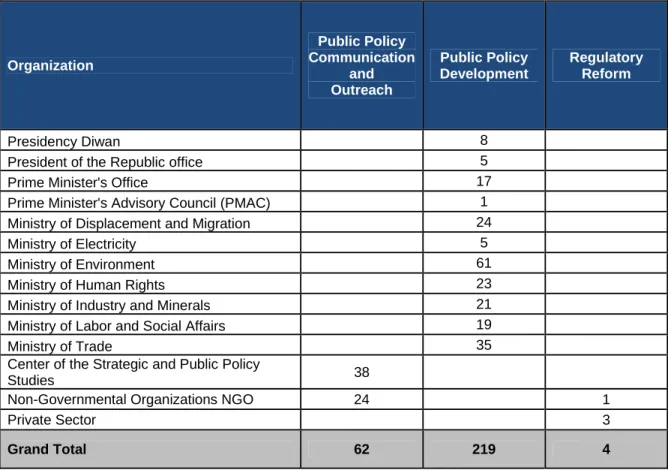
Table 1: Workshops Participants by Organization
Organization Public Policy Communication and Outreach Public Policy Development Regulatory Reform Presidency Diwan 8
President of the Republic office 5
Prime Minister's Office 17
Prime Minister's Advisory Council (PMAC) 1
Ministry of Displacement and Migration 24
Ministry of Electricity 5
Ministry of Environment 61
Ministry of Human Rights 23
Ministry of Industry and Minerals 21
Ministry of Labor and Social Affairs 19
Ministry of Trade 35
Center of the Strategic and Public Policy
Studies 38
Non-Governmental Organizations NGO 24 1
Private Sector 3
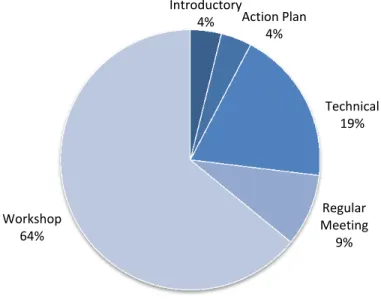
Figure 1: Activities Distribution by Type
Figure 2: Workshop and Meeting Activities by USAID-Tarabot Hubs
Introductory 4% Action Plan 4% Technical 19% Regular Meeting 9% Workshop 64% Tarabot/Hilla 12% Tarabot/Baghdad HQ 88%
QUARTERLY REPORT 19
Figure 3: Workshop and Meeting Participants by Gender
Male 64% Female
Component 2: Administrative Decentralization
Section One: Highlights
Innovating Responsive Government in Iraq
Considering citizens to be clients was the message of the keynote speaker, Dr. Ali Allak, Secretary General of the Council of Ministers, during a conference held at the Al Rashid Hotel on April 14, 2014, to launch the fully-automated Citizens Complaint System. A USAID-Tarabot-supported
initiative, the new electronic system is designed to handle citizens’ complaints by connecting 55 Citizen Affairs Offices in ministries, governors’ offices, and other entities with the Directorate of Public Relations and Citizen Affairs at COMSEC. The project aims to effectively receive and respond to issues and concerns brought forth by citizens.
Alonzo Wind, USAID Deputy Mission Director, spoke about the expanding partnership between USAID and the Government of Iraq, especially with the Council of Ministers Secretariat (COMSEC), citing the Citizens Complaint System as an example. Mohammad Al Tamimi, the Director General of Public Relations and Citizen Affairs, and his technical team gave a live internet demonstration to illustrate the mechanics of the system, and reassured the audience that the system provides safeguards for privacy and a realistic program of response. Through better information sharing and transparency, the new system will enable new levels of accountability from government directorates and offices to the citizens of Iraq, and take citizens’ issues seriously by considering them to be clients, whom they are servicing.
Establishing the Center of Excellence at COMSEC
Following years of effort by the USAID-Tarabot
project and its predecessor, USAID-Tatweer, to improve the organizational development and performance of Iraqi government entitites, the Secretary General of the Council of Ministers’ Secretariat (COMESC), Mr. Ali Al Allak, issued an official statement on May 18, 2014, annoucing the establishment of the Iraq Center for Excellence at COMSEC. Less than a month later on June 4, 2014, Tarabot formally launched the Iraq Center of Excellence with a ceremony sponsored by COMSEC.
QUARTERLY REPORT 21 The event was attended by over 200 participants including deputy ministers, governors, and heads of provincial councils. The Deputy Secretary General of COMSEC, Mr. Obeid Mahal Frayih, stated: “The USAID-Tarabot project had a huge impact on the establishment of the Center of Excellence. It was originally introduced by Tarabot, who have supported us from the first day and continue to do so. The establishment of the Center of Excellence will have a great affect on government entities by upgrading their work to new standards of excellence.”
The Iraq Center for Excellence provides technical assistance to government bodies to improve their management and organizational performance, and to promote and award creativity and leadership in service delivery. In instilling standards by which to measure government performance, the Center provides an organizational management framework for the Government of Iraq, offering tools and guidelines for reform, while providing critical oversight of the public sector. To this end, COMSEC will grant Excellence Awards annually to government entities that have excelled in their capacity development initiatives. The Excellence model has met with great success in the United Arab Emirates, Jordan, and Saudi Arabia. The international success of this model promises improved service delivery for Iraq’s citizens by providing a framework for organizational management that will foster accountability, cooperation, efficiency, and innovation in Iraq’s public sector.
Promoting Procurement Reform in Basrah
On June 26, 2014, the Governorate of Basrah, with the technical support of and in coordination with USAID-Tarabot, hosted a conference on procurement reform under the auspices of the Governor, Dr. Majed Al Nasrawi. The event was attended by more than 250 people, including the Governor, the United States Consul, directors general, representatives from the Provincial Council, and 65 local and international companies. The conference aimed to promote awareness for contractors competing for business opportunities in the governorate, and focused
on a key reform promoted by Tarabot–the use of standard bidding documents in the procurement of large works contracts. Tarabot has been working with a range of Government of Iraq partners to make use of their investment budgets through fair and transparent procurement systems aligned with international standards. To date, Tarabot has assisted the Governorate of Basrah in implementing eight large works contracts using standard bidding documents.
The Governor formally announced the adoption of standard bidding documents at the event, affirming its safeguard of the rights of contractors and the government, while enhancing services and project implementation in the province. The conference sought to familiarize contractors with the process of preparing a proper bid using standard bidding documents, and its role in leveling the playing field for bidders, thereby ensuring fair and open competition. This is USAID-Tarabot’s ninth such conference, and forms a significant part of the procurement reform process led by the Ministry of Planning, in partnership
with Tarabot, to improve the confidence of the private sector in the bidding process and project implementation.
Graduation of Master Trainers from the Ministry of Education
In recognition of participants’ completion of the USAID-Tarabot’s Master Trainers program, and to celebrate the conclusion of Tarabot’s Education Capacity Building initiative, a graduation ceremony was held on June 2, 2014, for 58 staff members from the Ministry of Education. The ceremony marked the realization of Tarabot’s efforts to improve the management and public administrative capacity of the Ministry of Education through the introduction of training management concepts, and the training of a critical mass of ministry staff members in the
development of core area skills in project management, fiscal management and budgeting, information technology, procurement, and leadership and communications. The graduates of Tarabot’s Master Trainer program will now be recognized as subject matter experts in how to analyze, conduct, evaluate, and implement the ministry’s training programs.
Through this program, USAID-Tarabot has introduced critical aspects of the Training Management System to the ministry and laid the groundwork for future training programs in the ministry and its directorates. With this solid footing, the ministry has actively pursued a contract with the World Bank to further efforts achieved with Tarabot in the implementation of this training management program in its Teacher Training Institute and Training Development section. In bolstering the ministry’s public administration systems, Tarabot’s training benefits will extend throughout the ministry and ultimately to the communities it serves, while paving the way for significant reforms and improvements to Iraq’s education system for years to come.
Championing the One-Stop-Shop in Kurdistan
To address the long lines and unclear, complicated procedures that have long plagued service delivery, USAID-Tarabot introduced the One-Stop-Shop service center model to effectively affect citizens’ services in Iraq. To promote this initiative, Tarabot hosted an awareness conference on June 19, 2014, in partnership with the Kurdistan Ministry of Planning, for the Kurdistan Ministry of Health and the Kurdistan Ministry of Justice. The event, in which Tarabot presented the core components of its service center concept and architectural design, was attended by over 100 officials.
The conference and One-Stop-Shop concept were enthusiastically received by attendees, including the Director of Notary Offices for the Kurdistan Ministry of Justice, stating: “I believe the One-Stop-Shop is very important for the Kurdistan Regional Government because it reduces government bureaucracy. Not only the government–but the people–would like to see this kind of process in the region.”
The One-Stop-Shop is founded on three pillars: 1) appropriate physical infrastructure based on international standards, 2) effective and efficient automated systems through business process
re-QUARTERLY REPORT 23 engineering, and 3) public accountability and citizen-oriented services through customer service awareness and training. Currently, USAID-Tarabot is working in partnership with the Kurdistan Ministry of Labor and Social Affairs to establish a One-Stop-Shop service center in Dahuk, which will offer Social Safety Net services. Undergoing necessary renovations to comply with the principles of Tarabot’s architectural design, it is expected to be completed in the coming months. This event is one in a series of awareness conferences to secure the sustainability of the One-Stop-Shop concept in the Kurdistan Regional Government, and to promote its establishment as a means of reforming public administration and improving services.
Celebrating Project Management in Kurdistan
To celebrate the completion of its Project Management initiative with the Kurdistan Regional Government, and to commemorate the achievements of participating ministries, USAID-Tarabot held a closing ceremony on June 22, 2014, in Erbil with 150 participants. Tarabot’s project management initiative is the first of its activities in Kurdistan to be brought to a
close, and marks a major achievement for its ministerial partners, which have been actively engaged in
Tarabot’s capacity building program.
Reflecting upon their work with USAID-Tarabot, ministry leadership and engineers were eager to employ their newly acquired best practices in project management, observing the enormous potential for their application. The Director General of Capital Investment Planning at the Kurdistan Ministry of Planning, Zagros Fattah, remarked: “I believe this [initiative] will have a direct impact on projects in the KRG as our engineers have been enlightened with new project management methods; it has paved the road towards the better management of projects. The Ministry of Planning is committed not only to the implementation of these techniques but to their sustainability, and to have other ministries benefit from them.”
The improved implementation of capital investment projects is a major component of USAID-Tarabot’s efforts in Iraq. In Kurdistan, Tarabot worked to build the capacity of critical service ministries––the Kurdistan Ministries of Construction and Housing, Municipality and Tourism, and Electricity––through the introduction of internationally recognized project management techniques. These tools will enable ministries to better plan and manage projects, and to execute them on schedule and within budget. Additionally, ministerial staff members that have undergone Tarabot’s comprehensive training are now well poised to undergo certification as Project Management Professionals. The foundational concepts and skills required to attain certification are incorporated into all of Tarabot’s management training courses, and the knowledge and skills required to achieve certification make candidates highly valuable in both the public and private sectors.
Section Two: Next Quarter
In the coming quarter, USAID-Tarabot will take an integrated and focused approach with an eye to securing the sustainability of project activities and cementing Tarabot’s legacy. Select activities will continue in eleven provinces, while two initiatives–Decentralization and Planning–have been completed. Tarabot’s efforts will be used to anchor our activities and know-how to partners to ensure that project reforms are deeply rooted and accumulated knowledge properly applied within key Government of Iraq entities. Tarabot will work to prepare our partners in COMSEC to carry on the Project Management, One-Stop-Shop, and Center of Excellence initiatives, as well as the Ministry of Planning in the areas of public procurement reform and the Iraq Development Management System.
Section Three: Work Plan Activities and Performance Indicators
3rd Quarter (April – June) FY 2014 Work Plan Activities
Work
Plan ID Activity/Task Name Progress
1 AD Component-Wide
1.1.1 Coordinate with GoI Public Sector Reform Committees
A Conduct regular meetings with PMAC No meetings were conducted this quarter. B Attend regular meetings of the Higher Committee for Public Administration Reform No meetings were conducted this quarter. 1.1.2 Enhance access to and utilization of cost-share funds by GoI entities
A 100% of allocated cost-share funds spent Ministries are waiting for the passage of the 2014 Budget Law to use remaining rollover funds.
B 100% of 2013 cost-share funds spent Ministries are waiting for the passage of 2014 Budget Law to use remaining rollover funds. 2 Administrative Decentralization Support
2.1 Support to National Level Decentralization Initiatives 2.1.1 Analyze Legislation
A Draft a summary brief containing all pending or passed legislation from this quarter pertaining to Article 45 of Law 21
A draft summary briefing was prepared and submitted to Musherk Najee, a member of the Legal Committee of the Parliament.
B Compile summary briefs into a final report for distribution at the national conference Due to security constraints, a national conference was not conducted; however, the summary briefing was submitted to GSP for distribution.
2.1.2 Coordinate with National Entities
A Carry out quarterly update meeting with relevant national stakeholders A meeting was conducted with members of the Parliament Legal Committee. Technical assistance was provided on some legislative provisions in the amended Law 21.
QUARTERLY REPORT 25 B Finalize DCU closeout conference agenda and arrangements Due to security constraints, a national conference was not conducted.
C Conduct DCU closeout conference, and present progress made and decentralization road map plans for the future
During the hand over meeting with GSP, it was agreed that they will submit roadmaps to the ministries after the conclusion of the remaining stages.
2.2 Support to Decentralize Central Ministry Functions 2.2.1 Follow-up on National Decentralization Efforts
A Carry out three workshops for ministry partners on new legislative and regulatory developments related to Article 45 of Law 21 (Law 21, Budget Law, etc.)
Three workshops were conducted in April 2014 for government officials representing the Ministry Directorates for Health, Environment, and Youth and Sports.
On June 3, 2014, a workshop was conducted in Kirkuk. Eighteen government officials participated, representing Ministry Directorates from Labor and Social Affairs, and Youth and Sports. The implementation of Article 45 was the main subject of discussion.
2.2.2 Develop individual Implementation Plans for Article 45 of Law 21 for partner ministries
A Finalize roadmap documents for implementation of decentralization as mandated by Article 45 for each partner ministry
Roadmaps were finalized for MoA, MoH, MoEd, MoLSA, MoMPW, and MoYS.
B Submit roadmaps to ministry leadership Tarabotcoordinate with ministries for the submission of the roadmaps. handed over all roadmaps to USAID-GSP. GSP will 2.3 Support to Provincial Governments to Participate in the Decentralization Process
2.3.1 Facilitate decentralization process in provinces
A
In coordination with GSP, carry out three workshops with decentralization committees on new legislative and regulatory developments related to Article 45 of Law 21 (Law 21, Budget Law, etc). Work with committees to identify and evaluate functions for decentralization, plan for their implementation, and submit claims for their transfer
Three workshops were conducted in Basrah on April 10, 15, and 20, 2014.
2.3.2 Assist provinces to engage in the decentralization process
A
Assist two provinces, in coordination with line ministries, to develop knowledge transfer and capacity-building plans to accommodate the implementation of Article 45 of Law 21
Tarabot handed this responsibility over to USAID GSP.
3 Project Planning
3.1 Capacity building within ministries in project planning 3.1.1 Enhance capital investment planning for key GoI ministries
A Complete the three phases* of investment planning for four additional ministries Capital Investment Planning training completed through the life of the project for 10 ministries: MoMPW, MoLSA, MoCH, MoA, MoH, MoE, MoTr, MoYS, MoIM, and MoT.
* The phases of investment planning include identifying areas of disconnection between ministries' capital investment projects and NDP goals, multi-year capital investment planning aligned with NDP, and on-the-job training to align planning with the NDP.
B Final midterm investment plans for three ministries completed Mid-term investment plans drafted for MoA, MoLSA, and MoE. 3.2 Support National Development Planning
3.2.1 Support the NDP 2013-2017
A Monitoring report of the NDP is produced MoP is in the process of developing a monitoring report for 2013. 4 Project Management
4.1 Improve capital investment projects management at the ministerial level 4.1.2 Assist in the transfer of modern estimation techniques at the ministerial level
A Propose formal adoption of modern project scheduling and cost estimation systems in one ministry MoE has begun using MS Project on two new projects: 1) Dibis Power Station and 2) the Basrah Electricity Training Center. 4.1.3 Assist to anchor modern project management structures at the ministerial level
A Propose establishment of PMO in one additional ministry
Ministry of Transportation responded to the PMO proposal submitted by Tarabot, and a committee was established to review the proposal. Tarabot is awaiting the acceptance of the proposal by the Ministry of Transportation.
B Develop closeout program of technical assistance to complete transfer of PM functions to established GoI PMOs
Due to Tarabot extension, we have continued to work with PMOs and will be conducting a closeout program in the next quarter (Qtr 4 FY 2014).
C Provide follow-up technical assistance to two established PMOs to anchor PM functions
Project Management Department in MoYS submitted the PMO establishment proposal to the minster for his approval. The State Commission for Buildings sent the final revised structure of the PMO to the MoCH for review and approval.
4.2 Improve capital investment projects management at the provincial level 4.2.1 Assist to enhance impact of modern estimation techniques at the provincial level
A Provide technical assistance to one GO to initiate project schedules and cost estimates on live projects
Karbala GO requested Tarabot assistance in the use of project management tools on their projects, Tarabot delivered assistance on June 9-23, 2014, through a workshop on the areas of scope and time knowledge.
4.2.2 Assist to transfer modern estimation techniques at the provincial level
A Propose formal adoption of modern project scheduling and cost estimation systems in one GO Wasit GO requested of its Cost Estimation Unit staff to use project scheduling and Tarabot assistance in building the capacity cost estimation techniques.
4.2.3 Assist to anchor modern project management structures at the provincial level A Develop closeout program of technical assistance to complete transfer of PM functions to established GO
PMOs
Due to Tarabot extension, we have continued to work with PMOs and will be conducting a closeout program in the next quarter (Qtr 4 FY 2014).
B Provide follow-up technical assistance to two established GO PMOs to anchor PM functions TarabotCost Estimation Unit so it can adopt standardized PMI assisted the Wasit GO to improve the functions of the estimation techniques.
5 Procurement
5.1 Improve procurement processes at the ministerial and provincial levels 5.1.1 Graduate GoI entities that received technical assistance from Tarabot
QUARTERLY REPORT 27 A Technical assistance in procurement finalized for three additional entities, and an action plan provided for the
sustainable implementation of procurement practices
Sustainability Plans for:
Babil, Kirkuk, and Ninawa GO approved, and Anbar, Basrah, and Wasit GO drafted and under
review for approval. 5.1.2 Establish procurement planning at GoI entities
A Procurement plan developed by three additional ministries Procurement plans drafted for Babil, Basrah, Kirkuk, Najaf, Ninawa, and Wasit. The submission of these plans to the MoP is pending the passage of 2014 Budget Law.
5.1.3 Implement standard bidding documents at GoI
A Three GoI entities apply their standard bidding documents with PAU assistance Babil, Basrah, Najaf, Wasit, and the MoCH have applied SBDs for one pilot project. 5.1.5 Develop procurement performance indicators and reporting system
A Procurement performance indicators and reporting system developed by three additional GoI entities with technical assistance from PAU
Ninawa GO developed Procurement Report for March 2014. Babil, Maysan, Muthana, and Wasit completed reports on procurement activities in previous quarters.
6 Iraq Development Management System (IDMS)
6.1 Automate Government Capital Investment Management and Monitoring in Iraq 6.1.1 Operationalize the IDMS at the MoP and GoI entities
A Five additional GOI entities are using IDMS to update the status of their projects' implementation
Tarabot assisted MoP and COMSEC in:
Updating the IDMS by adding a new feature relating to the project code (as requested by MoF)
Updating features for Project Status
Once these updates are completed, COMSEC and MoP will inform GoI entities to operate the IDMS.
7 Center of Excellence 7.2 Establish CoE System
7.2.2 Develop the Center's award assessment toolkit
A Center's award assessment toolkit developed Toolkit developed and approved by COMSEC. 7.3 Operationalize the CoE
7.3.1 Institutionalize the ICEG model
A Finalize ICEG model ICEG Model revised and approved by COMSEC, as it will host the ICEG. 7.3.2 Implementing the ICEG components for the target ministries
A Implementing the ICEG components for the target ministries Comprehensive workshops were conducted in Baghdad from June 4-18, 2014, with representatives from all targeted ministries and provinces.
8 "One-Stop Shop" Service Centers
A Provide technical assistance for architectural design for GoI entities to facilitate implementation Architectural Design, SOP, and ToR submitted to the Ministry of Oil/Baghdad Oil Production and Distribution Company (BOPDC).
8.1.2 Initiate "One-Stop Shop" Outreach Campaign
A Final video montage on implementation of One-Stop-Shop service center developed and delivered Shifted to Qtr4 FY 2014. video footage for the KRG OSS. Tarabot is currently working on the
B 500 copies of the customer service brochure distributed to GoI entities
Customer service brochures were distributed to various GoI entities in:
Baghdad: MoJ/Notary Public Office, MoO/ BOPDC and MoMPW/ Office of the Inspector General and Office of the Minister,
Baghdad MoMPW: Directorate General of Municipalities, Planning, and Sewage,
Erbil: KRG MoLSA,
Diwaniyah Municipality Directorate, Kut Municipality Directorate, Karbala Municipality Directorate, and Najaf Municipality Directorate. 8.1.5 Develop customer service capacity for service center staff
A Technical assistance provided on customer service skills for two additional GoI entities Technical assistance on customer service delivered to officials from MoJ, MoMPW, and MoO/Baghdad Oil Products Distribution Company.
9 Special Program with Kurdistan Regional Government
9.1 Assistance to the Kurdistan Ministry of Labor and Social Affairs to complete their SSN and link it to the national SSN 9.1.1 SSN system implemented and deployed
A First round user acceptance testing process started using sample data Tarabotare currently installing it in a test environment in the KMoLSA. has received the first prototype of the SSN system, and Minor issues have appeared and were sent on to Primus.
B Testing results/issues, if any, reported to software vendor and addressed Testing for the first draft was completed and sent to Primus. Tarabot is waiting for the new version of the system for testing.
C Start the second round of user acceptance testing using sample data Pending software vendor’s delivery of the updated version of the software.
D Initial system acceptance letter generated and release Will be generated after the second round of testing is completed.
E Final SSN system deployed and released at HQ, Erbil, Duhok, Sulymania, and Garmyan
The system will be deployed only at HQ, and the Erbil and Duhok sites. Cost share funds for the remaining sites have not been released yet. They are also missing key equipment and hardware.
QUARTERLY REPORT 29 F Final System Acceptance process started and MoLSA KRG acceptance acquired This can only begin after the final version of the system is deployed.
G Operational system support provided as needed This can only begin after the final version of the system is deployed.
9.1.2 SSN data entry and data migration
A Technical assistance provided as needed on the data migration process This will finish after the final version of the system is deployed. 9.1.3 SSN capacity building
A Technical assistance and on-the-job operational training provided for system users and technical staff at five sites This task is ongoing and will end when the system is fully operational. 9.1.4 SSN hardware support
A Technical assistance provided on hardware installation for five sites as part of operational support This task is ongoing and will end when the system is fully operational.
10 "One-Stop Shop" Service Center - KRG
10.1 Improve the Facilities and Systems of Key KRG Public Services 10.1.1 Implement "One-Stop Shop" Service Center Infrastructure
A Supply, install, and test the Queuing system in Duhok Directorate of SSN MSI HO selected one of the companies to supply, install, and test the Queuing System in Duhok Directorate of SSN. Delivery of the Queuing System is scheduled for Qtr4 FY 2014.
B Opening ceremony for the OSS SC in Duhok Directorate of SSN Shifted to Qtr 4 FY 2014.
10.1.2 Customer Service
A Technical assistance provided on customer service skills for Duhok Directorate of SSN
A Customer Service Workshop was conducted on June 8-10, 2014, with KMOLSA SSN staff of Duhok. Thirty-one individuals participated in the workshop on the basic methodology and tools of customer service, which will be provided to the clients of the One-Stop-Shop Service Center.
11 Project Management KRG
11.1.1 Improve the KRG's regional project management system A Provide two training courses on Time, Cost, and Integrated Change Control practices for relevant
MoP-KRG staff
KMoP does not have enough engineers to design separate training courses.
B Draft agenda developed and arrangements made for Project Management conference in Kurdistan Agenda drafted for USAID – “Implementation of Best Practices in Project Management for the Tarabot conference on Development of Kurdistan.”
11.1.2 Improve project management systems in KRG ministries
A Technical assistance provided on Time, Cost, and Integrated Change Control practices for three KRG ministries
Technical assistance delivered on April 6-10, 2014, to targeted ministry staff (KMoE, KMoCH, and KMoMT) in Dahuk. 11.1.3 Establish project management structures in KRG ministries
A Technical assistance provided to implement PMO restructuring as required A meeting was conducted with the MoP on May 6, 2014, on the establishment of PMOs in KMoEl, KMoCH and KMoMT. 11.1.4 Build capacity of KRG civil servants in the field of project management
A One comprehensive training course carried out on the PMI system and PMP certification process for KRG civil servants from partner ministries and executive bodies
Training course on PM Processes was conducted in Erbil on April 13-24, 2014.
B Mock PMP exam administered to KRG civil servants selected to pursue PMP certification A simulation exam was conducted in Sulaimanyah on May 27, 2014.
12 Ministry of Education Capacity-Building Initiative
12.1 Ministry of Education staff develop skills in core areas of public administration 12.1.7 Master Training
QUARTERLY REPORT 31
3rd Quarter (April - June) FY 2014 Performance Indicator Table
Sub-IR 3.1: Administrative Regulations for Decentralization Implemented Indicator # Indicator Name
Qtr. 1 FY 2014 (Oct-Dec) 2013 Qtr. 2 FY 2014 (Jan-Mar) 2014 Qtr. 3 FY 2014 (Apr-Jun) 2014 Status 3.1.1
Number of regulations and administrative orders issued supporting de-concentration of central ministries activities to Directorates
1 0 0
No regulations were issued during this quarter due to the delay in passage of the 2014 Budget Law. The focus this quarter was on finalizing roadmaps for the implementation of decentralization as mandated by Article 45 for each partner ministry.
3.1.2
Number of regulations and administrative orders issued supporting de-concentration from central ministries to Governor Offices (GOs)
1 0 0
No regulations were issued during this quarter due to the delay in passage of 2014 Budget Law. Focus this quarter was on finalizing the roadmaps for implementation of decentralization as mandated by Article 45 for each partner ministry.
Sub-IR 3.2: Provincial Resource Management for Service Delivery Strengthened
Indicator # Indicator Name
Qtr. 1 FY 2014 (Oct-Dec) 2013 Qtr. 2 FY 2014 (Jan-Mar) 2014 Qtr. 3 FY 2014 (Apr-Jun) 2014 Status 3.2.1 Number of ministries initiating improved organizational structure change
N/A N/A N/A
Status for this indicator ended with Qtr4 FY 2013.
See Note 3 3.2.2 Number of line ministries with Business Process
Systems reengineered N/A N/A N/A
Status for this indicator ended with Qtr4 FY 2013. See Note 4 3.2.3 Number of GoI counterparts working towards establishing internal quality management unit(s)
N/A N/A N/A
Status for this indicator ended with Qtr4 FY 2013.
See Note 3 3.2.4
Number of GoI entities utilizing the IDMS to manage and monitor their capital portfolio
0 0 0
Once the updates of the system are completed, COMSEC and MoP will inform GoI entities to operate the IDMS.
3.2.5
Number of GoI entities applying excellence program for improving government performance
0 3 4
COMSEC, MoTr, University of Basrah and Karbala GO will began applying the excellence program for improving government performance.
3.2.6 Number of One-Stop-Shop service centers
implemented 0 0 0
MoO/ Baghdad Oil Production and Distribution Company (BOPDC) is studying the option of using their Operation & Maintenance Budget to establish the One-Stop-Shop. All activities have stopped for the sites of MoJ, MoMPW, and MoLSA pending the passage of the 2014 budget. However, Tarabot is continuing training with the staff of these sites.
3.2.8
Number of GoI entities that have applied Project Management practices to their Capital Investment Projects
1 3 1 Ministry of Electricity used MS Project on two projects designed in Basrah and Dibis.
3.2.9
Number of GoI entities that have improved procurement processes or systems
1 0 0
No new ministries or provinces have demonstrated improved procurement processes during this quarter. The same previously reported ministries and provinces have continued to improve their procurement processes.
3.2.10
Number of Provincial Education Directorate staff trained in five core areas of Public Administration
78 41 0 There were no new participants this quarter. This indicator was completed at the end of June 2014.
3.2.11
Number of Ministry of Education graduates from Training of Trainer (ToT) level course
60 28 0 This indicator was completed at the end of June 2014.
3.2.12
Number of Ministry of Education graduates from Master Trainer-level Course
N/A 0 57
Representing 34 males and 23 females. This indicator was completed at the end of June 2014.
QUARTERLY REPORT 33 USAID Standard Indicators (F-Indicators)
Indicator # Indicator Name
Qtr. 1 FY 2014 (Oct-Dec) 2013 Qtr. 2 FY 2014 (Jan-Mar) 2014 Qtr. 3 FY 2014 (Apr-Jun) 2014 Status F 3.2 # of Sub-national entities receiving USG assistance that improve their performance
10 33 22 Representing new provincial ministry directorates.
F 3.3 # of administrators/ officials trained with USG
support 69 24 0
This indicator was completed at the end of June 2014.
Notes:
1. All indicators not represented in the above tables are year-end performance indicators; status will be given in the annual report.
2. The numbers reported are for individuals and not participants.
3. Per USAID instructions, beginning FY 2014, indicators 3.2.1 and 3.2.3 are reported under Indicator 3.2.5.
3rd Quarter (April-June) FY 2014 Charts and Tables
Table 1: Workshops Participants by Organization
Organization Automation Center of
Excellence
Decentralization
Procedure IDMS Planning Procurement
Project Management Service Centers Improvement Council of Ministries Secretariat(COMSEC) 30 3 National Investment Commission(NIC) 1 Ministry of Agriculture 4 13 22 2 8 Ministry of Communications 14 2
Ministry of Construction and
Housing 20 25
Ministry of Culture 2
Ministry of Defense 2
Ministry of Displacement and
Migration 43 3
Ministry of Education 2 18 2
Ministry of Electricity 5 10 28
Ministry of Environment 9 6
Ministry of Finance 3 6
Ministry of Foreign Affairs 2
Ministry of Health 29 14 200 26
Ministry of Higher Education &
Scientific Research 59
Ministry of Human Rights 24
Ministry of Industry and Minerals 9 20
QUARTERLY REPORT 35
Organization Automation Center of
Excellence
Decentralization
Procedure IDMS Planning Procurement
Project Management Service Centers Improvement Ministry of Justice 6 21
Ministry of Labor and Social Affairs 53 64 10 14
Ministry of Municipalities and Public Works 4 40 18 22 Ministry of Oil 16 25 22 Ministry of Planning 12 3
Ministry of Science & Technology 7
Ministry of Tourism and Antiquities 7
Ministry of Trade 18 2 9
Ministry of Transportations 66 10
Ministry of Water Resources 12 5
Ministry of Youth and Sports 16 11 3
Ministry of Construction and Housing/ KRG 23
Ministry of Electricity/ KRG 33
Ministry of Labor and Social Affairs/KRG 13 32
Ministry of Municipality and Tourism/ KRG 29
Babil Governorate Office 11 4 18 Baghdad Governorate Office 5
Basrah Governorate Office 7 40 6 Dhi-Qar Governorate Office 3 2 3 1 Diwaniya Governorate Office 8 9
Diyala Governorate Office 4 8 Karbala Governorate Office 16 25
Organization Automation Center of Excellence
Decentralization
Procedure IDMS Planning Procurement
Project Management
Service Centers Improvement
Kirkuk Governorate Office 2
Maysan Governorate Office 13 15 11
Muthanna Governorate Office 8 3 5
Najaf Governorate Office 2 8 14
Ninawa Governorate Office 3 6 12
Wasit Governorate Office 10 8 107
Baghdad Provincial Council 19
Basrah Provincial Council 1
Kirkuk Provincial Council 1
Wasit Provincial Council 2
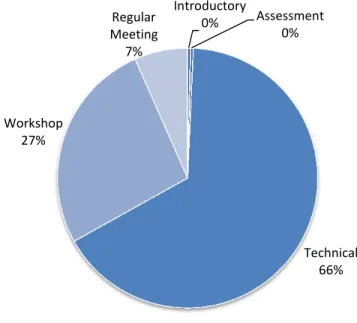
Figure 1: Activities Distribution by Type
Figure 2: Workshop and Meeting Activities by Tarabot Hubs
Introductory 0% Assessment 0% Technical 66% Workshop 27% Regular Meeting 7% Tarabot/Baghdad HQ 47% Tarabot/Hilla 21% Tarabot/Basrah 17% Tarabot/Kirkuk 10% KRG Office 5%
Figure 3: Workshop and Meeting Participants by Gender
Male 69% Female