Title Page
Learning Online for Teaching Online:
A Formative Program Evaluation of a Hybrid Faculty Training Program
by Meiyi Song
B. A., Guangdong University of Foreign Studies, 2002 M. S. Ed., University of Pennsylvania, 2004 M. A., California State University at Monterey Bay, 2009
Submitted to the Graduate Faculty of the School of Education in partial fulfillment
of the requirements for the degree of Doctor of Education
University of Pittsburgh 2019
Committee Membership Page
UNIVERSITY OF PITTSBURGH SCHOOL OF EDUCATION
This dissertation was presented by
Meiyi Song
It was defended on April 1, 2019 and approved by
Dr. Carol Washburn, Director, Center for the Scholarship of Teaching and Learning in Nursing, School of Nursing
Dr. Elaine Wang, Instructor, Administrative and Policy Studies Dr. Kelliann Davis, Associate Professor, Health and Physical Activity
Copyright © by Meiyi Song 2019
Learning Online for Teaching Online:
A Formative Program Evaluation of a Hybrid Faculty Training Program Meiyi Song, Ed.D.
University of Pittsburgh, 2019
A growing trend in higher education is the increasing number of online course offerings. It is imperative for postsecondary institutions to provide faculty development programs that support faculty in online teaching. For the purpose of preparing faculty to teach online, the University of Pittsburgh offers a semester-long hybrid course in which they assume the role of online students, experience engagement strategies, receive instructor and peer feedback, and apply what they learn to their teaching. I am the designer and facilitator of this course. And I conducted a formative program evaluation to understand the overall usefulness of the course, the benefits of enabling faculty to be learners in a hybrid course, as well as what they learned and applied in their teaching traditional and online courses.
The findings showed that the participating faculty from the first two iterations found it useful and appreciated their role as learners in the course. They reported that they developed empathy and realistic expectations for online students. As a group, they applied in their teaching almost all of the important course design principles and notions taught in the course, and they reported that they used a wide range of technology as well.
This formative program evaluation sheds light on design choices for preparing faculty to teach online and what seemed to be essential to include as content in a faculty development program for online teaching. Enrolling interested faculty members in a hybrid or online course on how to teach online seemed to be a good way to help faculty develop empathy and realistic
expectations for students in an online learning environment, and to enable faculty to apply important course design principles, pedagogical strategies, and technology use in their teaching. Additionally, this formative program evaluation also revealed evidence of some course design concepts, strategies, and instructional technologies that were quickly adoptable by the participants, indicating that those concepts, pedagogical strategies, and technologies should be included in professional development initiatives for online teaching.
Key Words
Online teaching, hybrid, faculty development, faculty professional development
Definition of Terms Distance Education:
The Higher Education Opportunity Act of 2008 defines distance education as “education that uses one or more of the technologies to deliver instruction to students who are separated from the instructor and to support regular and substantive interaction between the students and the instructor, synchronously or asynchronously” (p. 122). Although the term ‘distance education’ encompasses other forms of education such as correspondence learning, it is often used interchangeably with ‘online education’ as nowadays distance education is delivered via the internet. For the sake of simplicity, ‘distance education’ and ‘online education’ are used interchangeably in this dissertation.
This term refers to traditional classes with no online components typically as defined by the Sloan Consortium, which was renamed as the Online Learning Consortium (OLC), a leading professional organization for advancing online learning by providing professional development (Allen, Seaman & Garrett, 2007).
Hybrid Course:
By OLC’s definition, it refers to a course that blends online and F2F delivery. Substantial proportion, i.e., 30% to 79%, of the content is delivered online (Allen, Seaman & Garrett, 2007). The faculty professional development program for online teaching, which is the focus of this dissertation, is hybrid.
Online Course:
An online course is one that is delivered through the internet (Price, 2008; Hao & Borich, 2010). However, the portion of the course content delivered online varies as determined by higher education institutes and organizations. The OLC characterizes an online course as “A course where most or all of the content is delivered online. Typically have no face-to-face meetings” (Allen, Seaman & Garrett, 2007, p. 5). Another definition specifies that this term refers either a fully online course or a hybrid online course—students complete some activities online and some on the traditional campus (Simon, Sinclaire, Brooks, & Wilkes, 2009). For the sake of simplicity, online course refers to both fully online and hybrid course in this dissertation.
Table of Contents 1.0 Introduction ... 1 1.1 Problem Area ... 2 1.2 Problem of Practice ... 4 1.3 Inquiry Questions ... 5 1.4 Demonstration of Excellence ... 6 1.5 Stakeholder Analysis ... 6 1.5.1 Faculty ... 7
1.5.2 Departments and Schools ... 11
1.5.3 Students and Parents ... 13
1.5.4 The University of Pittsburgh and Its Teaching Center ... 15
1.5.5 The Author ... 16
1.6 The Pathway ... 17
1.6.1 Pathway Format ... 17
1.6.2 Pathway Participants ... 19
1.7 Chapter Summary ... 19
2.0 Literature Review and the Design of the Pathway ... 21
2.1 Background of Online Teaching ... 21
2.2 Literature Converges on Three Main Roles for Online Instructors ... 22
2.3 Barriers to Teaching Online ... 26
2.4.2 Faculty Development Topics ... 33
2.4.3 Faculty Development Initiatives for Online Teaching Vary ... 35
2.4.4 Faculty as Adult Learners Are Often Overlooked ... 44
2.4.5 Transformational Learning Needed for Online Instructors ... 46
2.5 Design Principles and Features of the Pathway ... 48
2.6 Chapter Summary ... 58
3.0 Methodology ... 60
3.1 Inquiry Setting ... 60
3.2 The Participants ... 62
3.3 Research Design ... 63
3.4 Instruments and Data Collection ... 65
3.5 Data Analysis ... 68
3.6 Trustworthiness ... 69
3.7 Chapter Summary ... 70
4.0 Findings and Discussion ... 72
4.1 Usefulness of the Pathway ... 72
4.2 Faculty’s Role as Online Learners in the Pathway ... 76
4.2.1 Experienced engagement strategies and practical Blackboard functions ... 76
4.2.2 Developed strategies for online learning as students ... 79
4.2.3 Developed empathy and realistic expectations for students ... 79
4.2.4 Transferred knowledge to teaching ... 80
4.3 Knowledge Learned and Applied ... 81
4.3.2 Themes under Cognitive Presence ... 83
4.3.3 Themes under Teaching Presence ... 85
4.3.4 Technology Use ... 87
4.3.5 What Participants Realized ... 92
4.4 Discussion ... 94
4.4.1 Usefulness of the Pathway ... 94
4.4.2 Faculty as Online Learners in the Pathway ... 94
4.4.3 Learned and Applied Pedagogical Strategies and Technology ... 96
4.5 Chapter Summary ... 97
5.0 Conclusions ... 99
5.1 Conclusions ... 99
5.2 Recommendations for Future Pathway Iterations ... 103
5.3 Implications ... 105
5.4 Limitations ... 108
5.5 Recommendations for Future Research ... 109
Appendix A Course Information of the Hybrid/Online Teaching and Learning Pathway ... 112
Appendix B Learning Activities and Practices Based on the CoI ... 113
Appendix C Inquiry Questions, Evidence, and Analysis of Evidence ... 114
Appendix D Mid-Point Survey ... 117
Appendix E Upon-Completion Survey ... 118
Appendix F One-Term-Later Survey... 120
Appendix H Interview Protocol ... 123 Bibliography ... 125
List of Tables
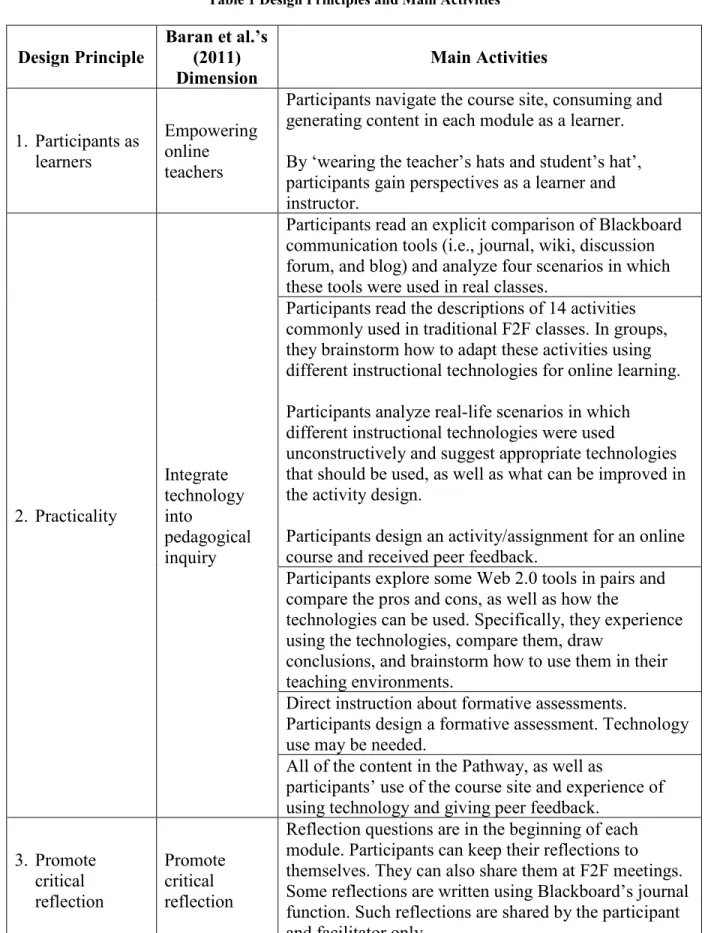
Table 1 Design Principles and Main Activities ... 51
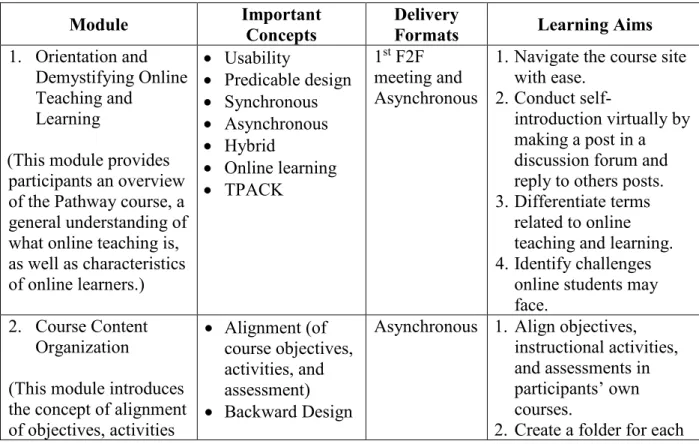
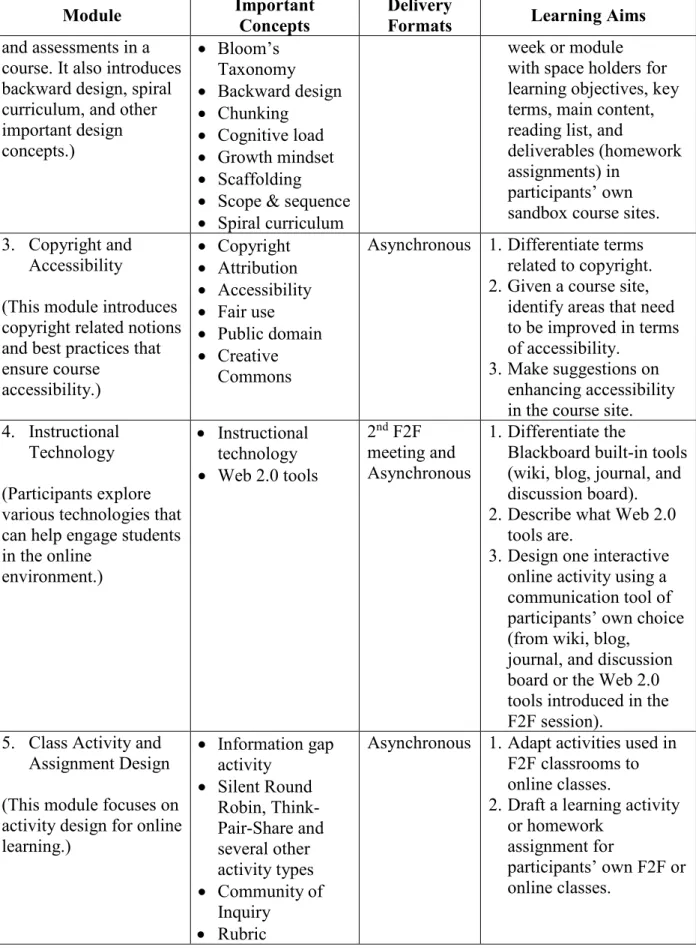
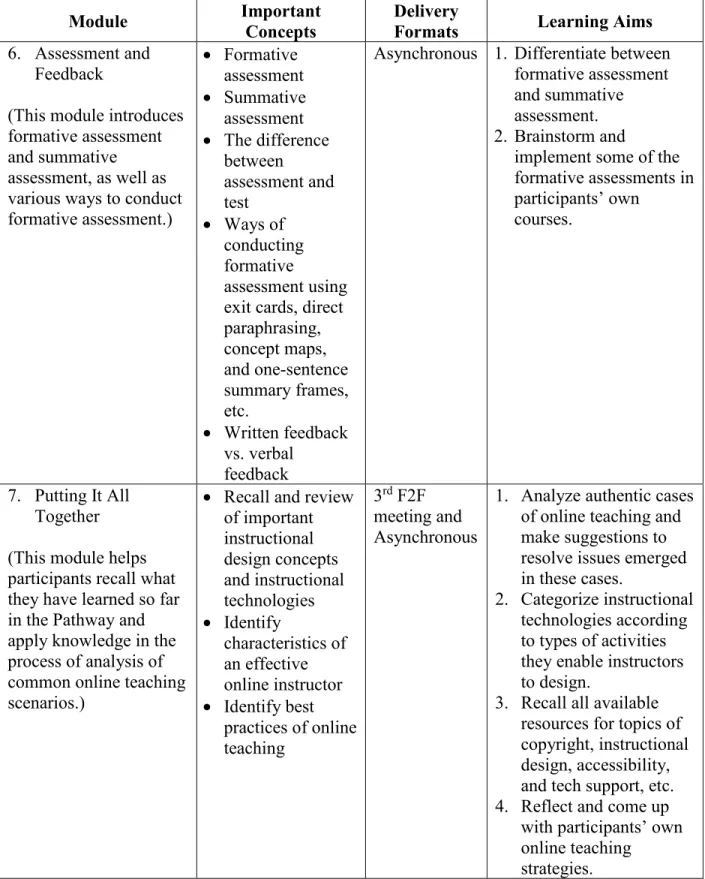
Table 2 Modules, Important Concepts, and Learning Aims of the Pathway ... 55
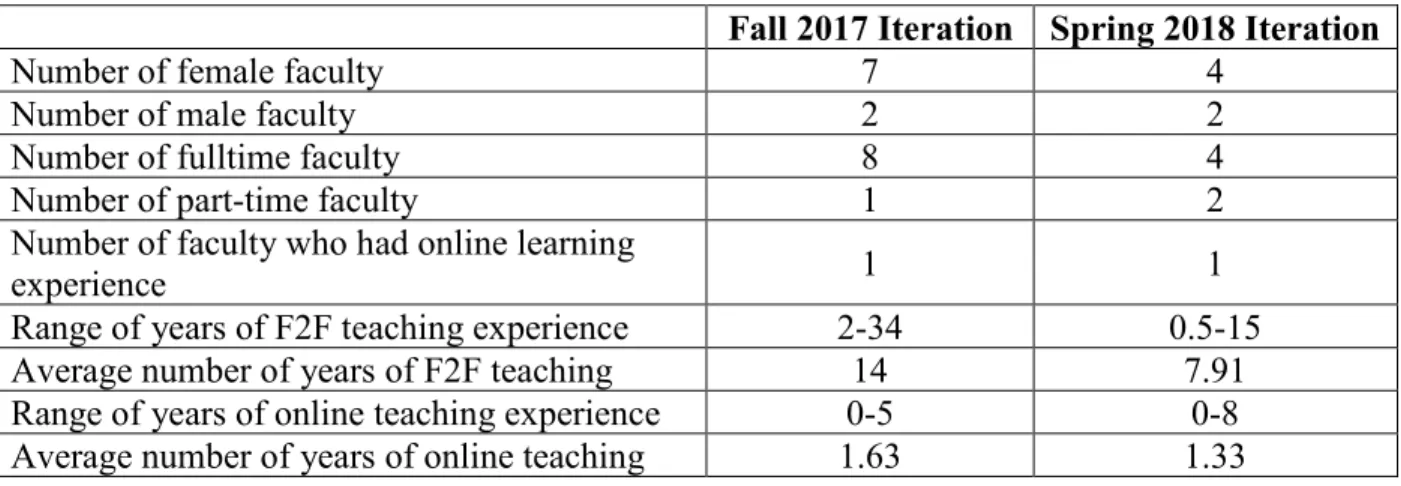
Table 3 The Participating Faculty Who Completed the Pathway ... 62
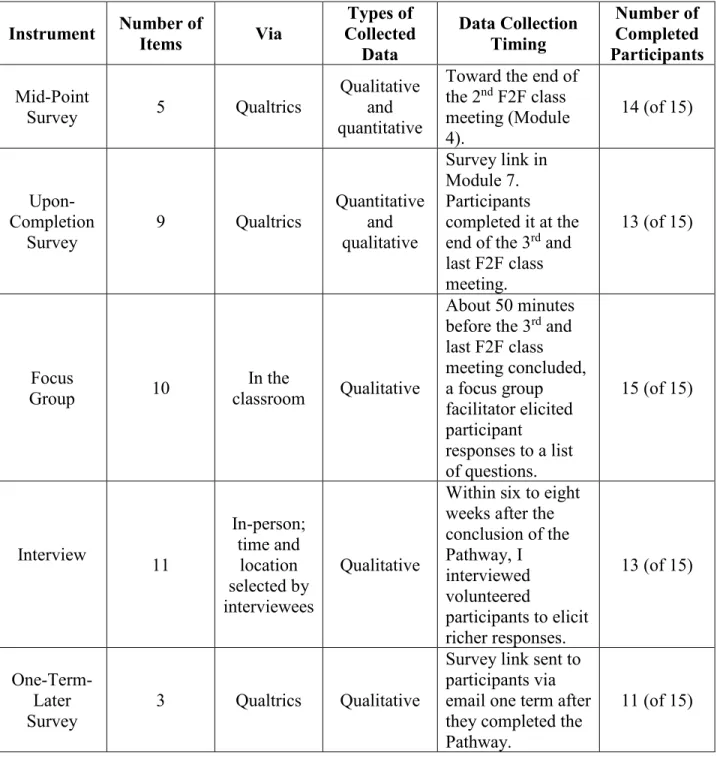
Table 4 Instruments and Completion Statistics ... 67
Table 5 Comparison of Ratings on Overall Quality and Importance of the Incentive ... 74
Table 6 Emerged Themes According to the Three Types of Presence in the CoI Framework .... 82
Table 7 What the Participants Learned and Applied in Terms of Social Presence ... 83
Table 8 What the Participants Learned and Applied in Terms of Cognitive Presence ... 84
Table 9 What the Participants Learned and Applied in Terms of Teaching Presence ... 85
Table 10 Participants’ Technology Use in Their Own Courses ... 87
List of Figures
Figure 1 The Community of Inquiry Framework ... 8
Figure 2 The TPACK Framework ... 11
Figure 3 Kolb’s Experiential Learning Model ... 49
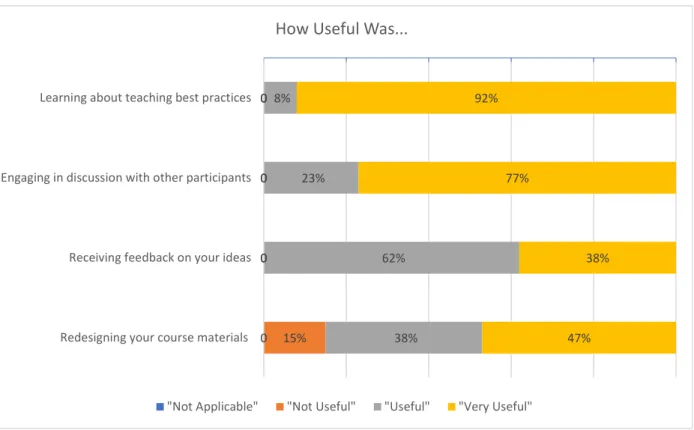
Figure 4 Summary of Ratings on Usefulness from the Upon-Completion Survey ... 73
Figure 5 Reported Changes on Teaching by Category ... 91
1.0 Introduction
The availability of online courses has rapidly increased in recent years, resulting in growing numbers of online students, especially students who have fulltime or part-time jobs and cannot otherwise attend classes in person (Allen & Seaman, 2016). Higher education institutions benefit from the growth of online courses and programs as they generate revenue amid funding cuts (Tugend, 2016). However, support and preparation for instructors to be ready to teach online remains to be improved. Faculty training for online teaching is crucial in preparing instructors to teach online. In terms of faculty development, various formats are available, such as one-on-one consultations, workshops, and seminars. These formats, due to their varied characteristics and lengths, can meet faculty’s various needs.
Through this dissertation in practice, I aimed to evaluate the usefulness of the Hybrid and Online Teaching and Learning Pathway (Pathway hereafter; also referred to as ‘course’ or ‘hybrid course’ throughout this dissertation) that I designed and facilitated in the University Center for Teaching and Learning (the Teaching Center) at the University of Pittsburgh (Pitt). The Pathway is a voluntary, semester-long, hybrid faculty professional development course, whose goal is to empower and prepare faculty to teach online by centering them as online students in the Pathway. Details of the Pathway are provided toward the end of this chapter. The design principles used to guide the design of the Pathway are explained in the next chapter.
1.1 Problem Area
Hybrid and fully online courses are increasingly prevalent in higher education (Allen & Seaman, 2016). This increase is deliberate as higher education institutions offer hybrid or fully online programs to generate revenue in an attempt to mitigate declining enrollments (Marcus, 2017) and state funding cuts (Tugend, 2016). In fact, the combination of the steady decline in enrollment and funding cuts have presented a crisis to higher education institutions (Shiffman, 2009). Decreasing state funding continues to threaten higher education a decade after the recession in 2008 (Mitchell, Leachman, Masterson, & Waxman, 2018). As university leaders search for strategies to generate revenue, they find that online education programs can reach potential students who are not otherwise able to take classes, due to the convenience and accessibility of online courses. Online courses can help enhance marketability of working individuals without impacting their work schedules, especially during economic downturns (Mueller, Mandermach, & Sanderson, 2013). Universities are motivated to provide online education programs or increase the number of them to better meet the needs of these individuals. By extending their reach of students who otherwise are unable to attend classes, universities are able to alleviate the stress caused by declining enrollments.
The growing number of online courses necessitates an increase in the number of instructors. Furthermore, it requires instructors who can teach online well because student retention relies on creating a quality online learning experience. However, faculty are not necessarily familiar with how to teach online courses. Even experienced, successful F2F teachers do not necessarily teach well online. In some cases, instructors volunteer to adapt their traditional F2F course to an online format. In other instances, they are required to create new courses to teach online. Training for online teaching is rarely required in higher education. In fact, institutions may lack systematic
support for faculty who teach online.
Maxson (2017, p. 45) noted, “There can be no discussion of online quality without addressing the quality of the faculty who facilitate online instruction.” This statement captures the importance of faculty development for online instructors. Yet, such efforts often can be limited and ineffective. A workshop, which is a common format, is usually not extensive and does not provide faculty with opportunities to practice using the newly learned knowledge. In terms of content, it is more often focused on technology, rather than pedagogy (Baran, Correia, & Thompson, 2011; Taylor & McQuiggan, 2008;). The narrow focus on technology is not surprising because it is necessary for faculty to know how to use current technology to teach courses online, a new medium that is drastically different from the traditional classroom. The deficit in instructors’ technological knowledge is perhaps more observable than that in pedagogical knowledge. Another drawback of workshop-type faculty online teaching training programs is that they are likely to be one-size-fits-all. Workshops do not usually allow faculty to delve deeper into issues presented due to the limited time that workshops are allotted. Participants’ prior experience and skill levels are often not given enough consideration in the design and implementation of the programs (McQuiggan, 2011). For common formats and topics of faculty development programs, see the next chapter.
To sum up, professional development for online instructors is of great importance in that instructors are the ones who design and implement online courses, which can generate revenue to alleviate an institution’s financial stress. However, if faculty do not apply the online teaching strategies to better meet the needs of online students, student satisfaction is likely to decrease (Barczyk, Buckenmeyer, & Feldman, 2011), causing online course enrollment to decline, which has adverse impacts on the institution’s bottom line. Preparing faculty members for online teaching
is, therefore, a critical component of faculty development.
To better support faculty in online teaching, the format and content are key elements to consider. Understanding faculty’s perception as online learners in a course that teaches them how to teach online is helpful in determining whether such format is a useful to them. What faculty learn from online teaching training programs and apply to their own teaching are necessary aspects for examining the utility of such programs.
1.2 Problem of Practice
As mentioned earlier in this chapter, professional development for online instructors is of great importance in that instructors are responsible for designing and facilitating online courses that help higher education institutions reach a larger student population and generate more revenue. Thus, helping faculty to teach online is an important aspect of faculty development at a university like Pitt. This dissertation in practice describes a formative evaluation of the usefulness of the Pathway that I designed and facilitated at the Teaching Center at Pitt. The Pathway is a semester-long faculty development course that prepares faculty to teach online. Its goal is to help instructors who are new to online teaching or those who would like to strengthen their online teaching to develop design and facilitation strategies for online teaching, using appropriate instructional technology.
To better support faculty in online teaching, the format and content are key elements to consider. Because the Pathway is centered around the idea of making participating faculty as students in the learning process in a hybrid course, which is uncommon in faculty development, it is beneficial to investigate the benefit of the faculty’s the role as students in the Pathway. How
useful the participating faculty found the Pathway and their role as learners was examined in this study. Additionally, it is important to understand what the faculty participants learned and implemented in their courses, since the main purpose of the Pathway is to empower faculty to teach online. Through this dissertation, I aimed to understand these aspects in the Pathway offered at Pitt. The first (Fall 2017) and second (Spring 2018) iterations were included in this study. I consider this also an action research study because I am the designer and facilitator of the Pathway, and I investigate its usefulness for the purposes of improving it for future participants. Iterative improvements are necessary in enhancing program quality. Hence, the findings of the investigation will inform the improvement of the Pathway one iteration at a time.
1.3 Inquiry Questions
This dissertation in practice addresses the following inquiry questions: 1) To what extent did the participating faculty find the Pathway useful?
2) How did participating in the Pathway as online learners contribute to faculty’s learning about online teaching?
3) What did the participants learn in terms of pedagogical strategies and technology use in the Pathway that they applied to their face-to-face (F2F) and online teaching? The first inquiry question addressed the participating faculty’s overall satisfaction of the Pathway. The second and third inquiry questions were designed to investigate two aspects of the participants’ learning—their perceived value of being learners in the hybrid course on how to teach online, and the specific knowledge they learned from the Pathway and applied in their own F2F and online courses.
1.4 Demonstration of Excellence
Pitt has no policy with regard to instructors’ training for online teaching. At the time of the design of the Pathway, no needs analysis was conducted because designing and operating the Pathway resulted from a directive within a short timeframe. However, the findings can inform the Teaching Center, where groups of faculty members would benefit from the Pathway, and shed light on what worked or what didn’t in terms of facilitating faculty’s preparation for online teaching.
Faculty development for online teaching is an area that needs further exploration. Other higher education professionals, particularly faculty developers would be interested in the format, content, and results of faculty development programs that aim to empower faculty to teach online. The Pathway has the potential to serve as a model for training faculty to teach online in other higher education institutions. The findings of this study will contribute to the exploration of practical and effective faculty development programs for online teaching.
1.5 Stakeholder Analysis
This dissertation in practice is of importance for several reasons and key stakeholders are concerned with the Pathway’s purpose (training faculty to teach online) and success. The following paragraphs provide analysis of the different stakeholders, namely, faculty, students and parents, departments and schools, Pitt and its Teaching Center, and me as the designer, facilitator, and evaluator of the Pathway.
1.5.1 Faculty
More than 6.3 million students in the United States enrolled in at least one online course— that is more than 31% of the entire student population (Seaman, Allen, & Babson Survey Research Group, 2018). Although there are no specific statistics that reveal the number of online courses offered at Pitt, my consultation experiences in the past five years lead me to conclude that most departments include online course offerings in their programs.
Faculty typically have the power to design and make changes to their online courses, so their stakes in them are high. Faculty members are often assigned to teach an online course or adapt one from the F2F format. For example, Lovvorn, Barth, Morris, and Timmerman (2009) found that in a small institution, online instructors were chosen because they were willing to teach online, rather than because they were suited for the task. A small number of instructors come to Pitt’s Teaching Center for assistance, and an even smaller number of them seek assistance on teaching online. For instance, Pitt Online is a division of the Teaching Center, which provides graduate-level professional programs commensurate with those offered to students on the Oakland campus. Instructional designers at Pitt Online offers guidance and thorough support to faculty who would teach in those online programs. They typically work with faculty on a one-on-one basis from the beginning of the course planning stage until the completion of course development. They continue to be available for consultation and problem-solving after the course is launched. The total number of faculty assisted by Pitt Online over the course of its ten years of existence is in excess of 200. Additionally, Pitt Online instructional designers and instructional technologists have also interacted with dozens of other administrative faculty over this ten-year period to plan and manage aspects of course development (L. Kearns, personal communication, April 1st, 2019).
(University of Pittsburgh Office of Institutional Research, 2019).
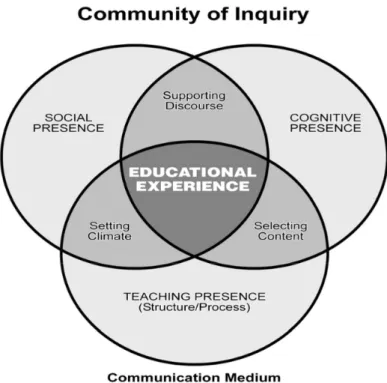
Lovvorn et al. (2009) recognized that one of the most challenging aspects of online teaching was how to develop online teaching expertise. It is challenging to design and facilitate an online course successfully. The Community of Inquiry (CoI) model (Garrison, Anderson, & Archer, 2000) in Figure 1 (Garrison, 2007, p. 62) illustrates three types of presence that need to be balanced in an online course. They are cognitive presence, teaching presence, and social presence (Garrison, 2007). Making these three types of presence work in tandem is what makes online courses different from traditional courses and difficult for faculty to design and implement (Garrison, 2007; Song & Won, 2013). More detailed explanation of these three types of presence is in the next chapter.
Figure 1 The Community of Inquiry Framework
Very often, instructional technologies, such as Web 2.0 (second generation of the World Wide Web) tools (e.g., VoiceThread, Popplet, Linoit, and many others) that engage learners in collaborative learning and sharing, can be used to help achieve the three types of presence. These
Web 2.0 tools reap the benefit of the second generation of the World Wide Web, which allows users to collaborate and generate content virtually, whereby encouraging sharing and collaboration in learning. However, based on my observation over the years working as an instructional designer and faculty consultant, faculty members are mostly only aware of the existence of Blackboard— also known as CourseWeb at Pitt and is the Learning Management System (LMS) Pitt uses—and use it merely as a repository of course materials. Blackboard’s built-in blogs, wikis, journals, and discussion forums are either underused because they are unknown to faculty or misused because their functions were unclear to faculty.
Quality online courses often emulate the F2F instructional setting with the balanced presence of the three forms of interaction: learner-instructor, learner-content, and learner-learner (Garrison, 2007). As one might conclude, to build and implement a quality online course requires in-depth knowledge and experience of curriculum design, activity design, and course facilitation that foster online learning. Some faculty may be aware of the aforementioned challenges in online courses. They recognize that in some programs, the students enrolled may be very different from traditional students in that they may have fulltime or part-time jobs and have family to take care of. In other words, studying is not their only priority. Those students’ time dedicated to studying for online courses might not be as much as what the faculty have expected, so they may perceive a need to simplify the course content. On one hand, the simplification approach may be less appealing to faculty members who hold high standards and take pride in optimizing students’ potential. On the other hand, because online courses are more challenging to design and teach, faculty members, especially those preparing for tenure promotion, may not want to spend the time required to effectively teach an online course.
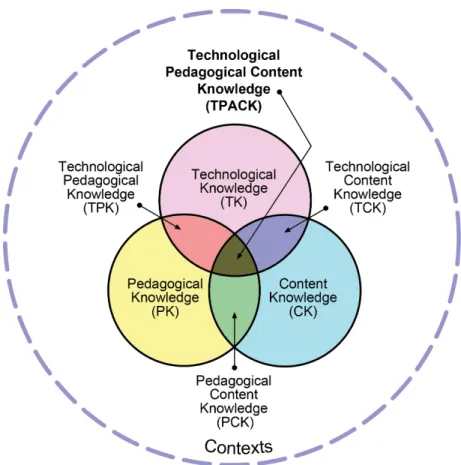
which illustrates the interplay of pedagogical knowledge and content knowledge, the TPACK framework in Figure 2 (mkoehler, 2011) provides a way to categorize the different types of knowledge involved in successful online teaching. Content knowledge, pedagogical knowledge, and technological knowledge are three necessary primary forms of knowledge for online instructors. Content knowledge (CK) refers to the knowledge of the subject matter to be taught. Pedagogical knowledge (PK) is the pedagogical approach to teaching the subject matter. Technological knowledge (TK) refers to the knowledge of technology, including identifying technologies that can be used for teaching. The TPACK framework emphasizes the intersection of these three forms of knowledge—pedagogical content knowledge (PCK), technological content knowledge (TCK), and technological pedagogical knowledge (TPK), as well as technological pedagogical content knowledge (TPACK). As illustrated in this framework, online instructors need TPACK knowledge (Koehler & Mishra, 2009). Faculty may be experts in their own fields, but they may lack technological knowledge or pedagogical knowledge that enable them to teach content knowledge in their fields. The Pathway offers an opportunity for participating faculty to acquire TPK that enables them to effectively teach online. Details of the Pathway are in the latter part of this chapter.
Most faculty would like to improve their teaching, but, like at many universities, the current structure of incentives at Pitt motivates them to prioritize research, rather than teaching (McMurtrie, 2019). Faculty, especially fulltime faculty, are evaluated mostly based on research publications and grants they are able to bring in. Hence, it is logical for faculty, especially those who aim to get tenured, to devote more time on research and publication than to develop their own instruction or participating in professional development. For adjunct faculty (also referred to as ‘casual’, ‘part-time’, or ‘sessional’), they may have to work two or more jobs to make a living
because they are not necessarily gainfully employed, limiting their time to focus on improving their online teaching knowledge and skills. Nevertheless, what is taught in the Pathway may motivate adjunct instructors to participate because the training may be helpful in their search for a fulltime teaching position.
Figure 2 The TPACK Framework
1.5.2 Departments and Schools
University department heads and school administrators see the need for online offerings as a way to address the ever-growing student population. On the other hand, online courses can reach groups of students who may not otherwise be able to enroll due to their busy schedules and proximity to higher education institutions. This is also a way to increase the student population. In
addition, as a strategy to increase revenue, online course offerings are available to international students, most of whom rely on personal and family funds (Institute of International Education, 2018), as opposed to student loans. Departments may use online programs to give them a competitive edge. For example, the University of Southern California has a large and robust online nursing program. Pitt’s School of Nursing looked to that program and started to convert a small number of traditional courses to the hybrid format in order to help the nursing program to be up-to-date and keep up with other universities’ nursing programs, especially those offering online learning options. An online program may serve as a flagship program for a school, which could help boost name recognition by both students and employers.
As previously stated, the challenges of designing and facilitating an online course may be daunting, but departments or schools are often unaware of the time and effort needed in the design and facilitation process. Faculty may perceive that the online format is only a format change and that as long as the content is put in the LMS like Blackboard, the course is ready for delivery. This view is problematic in that courses that may not be best taught online could be chosen for instructors who are ill-prepared to teach online, giving them little time and room to adjust course goals, materials, and activities to better fit the online format. Administrators may also underestimate the challenges, such as the need for faculty support and professional development for online teaching, the necessity of appropriate technology, and the amount of effort and time needed for preparation and facilitation of a hybrid or online course. Hence, instructors may not be well-prepared and may not be given enough time and resources to adapt, develop, and facilitate online courses. Ideally, department and school administrators should be aware of the challenges of implementing online courses and what it takes to prepare faculty members to be ready for online teaching. The Pathway may be welcomed by departments and schools that are aware of those
challenges and experiencing a difficult time helping online faculty to develop online teaching competence.
1.5.3 Students and Parents
Students are the ‘end users’ of online courses, for they are the consumers of the knowledge taught in those courses. Therefore, they have a lot at stake in the success of online courses or programs. They benefit from a well-designed and well-facilitated online course because the knowledge learned in the course can potentially teach them how to think and prepare them for the job market. Some of the courses may fulfill general education requirements. For working students, online programs allow them to receive education that does not impact their work schedules (Mueller et al., 2013).
Parental attitudes toward online learning tend to be generally positive (Bailey, Barton, & Mullen, 2014). Many parents may be paying full or at least part of the tuition for their children. With the rising costs for tuition, room and board, pressure on them and their children has never been greater. In their eyes, whatever their children get from online courses should prepare them to join the workforces. Getting a professional job for their children will increase the chance of recuperating their own investments in the future.
It is important to recognize that not every student is prepared well to take an online course. Learning in an online course provides advantages in the flexibility of time, space, and learning tools, but it may also be challenging to students who lack self-discipline, motivation, and time management skills. Some of the students may also lack technology skills to study in an online environment. Due to high tuition costs, many students may need to take a part-time job. Most
non-job, family, as well ascivic and community duties. They must see value in taking an online course because their time and financial resources may be very much limited. If their learning experience in the course is not satisfactory, they may hold low opinions of online learning, which is not conducive in that they may lag behind or drop out completely. In their view, their return of investment is low.
Students who have never studied in an online course or program may feel disorientated because of the delivery format and nature of interaction with instructors and classmates are drastically different from that of traditional F2F courses. They may feel overwhelmed and isolated because they typically would not interact with the instructor or classmates the same way they do in traditional courses (Brown, 1996; Song & Yuan, 2014; Wegerif, 1998). Those feelings may come as a surprise to students, which can demotivate them in the pursuit of knowledge in an online environment. Student counseling may not be available to help them face learning challenges since they are often not on campus. Or, there may not even be such service to support them in online learning at all.
If an online course is well designed and facilitated, students will feel less overwhelmed and their learning experiences can be constructive. Improvements in the instruction and design of online courses should lead to better online learning experiences and outcomes for students. If students are able to meet the learning goals of an online course, their parents may consider their investment worthwhile. It is unknown the extent to which parents share with other parents their children’s online learning experience, but they are likely to recommend good online programs to others, if their children’ learning experience is satisfactory. This underscores the importance of professional development programs like the Pathway that are designed to help instructors develop quality online courses.
1.5.4 The University of Pittsburgh and Its Teaching Center
Pitt is an R1 (research-oriented) institute and faculty have many demands on their time. It is possible that more time spent on professional development for online teaching may be perceived as less time spent on research and innovation, which may pose a challenge to faculty who are evaluated according to multiple criteria.
One of Pitt’s strategic planning goals is to extend its global reach. Pitt also emphasizes on excellence in delivering education to students. Helping online faculty to become proficient in online teaching is in line with both goals. The success of its online offerings may contribute to increasing Pitt’s name recognition internationally. Hopefully, the emphasis on excellence in education will translate into recognition of faculty’s teaching efforts and professional development in online teaching. A potential loss at risk would be the perceived lessened time spent on research, if instructors participate in the Pathway, which lasts a semester.
At Pitt, most faculty who learn to teach online receive training in the form of consultation from instructional designers within one of two structured programs: Pitt Online, which is previously mentioned in the section about faculty, or through Pitt’s College of General Studies, where courses have been offered at a distance for more than 30 years. Both programs require faculty to work one-on-one with an instructional designer from the Teaching Center throughout the development or revision of their courses. Neither program offers a semester long experience where the instructor is placed in the role of the student with other faculty members. Aside from those two programs, there are other online graduate courses offered at Pitt. However, few online instructors seek assistance from the Teaching Center.
Additionally, the Teaching Center offers 90-minute workshops on best practices of online teaching and technology use, teaching and learning consultants like me who help solve teaching and learning (F2F and online) problems, class observations and analysis, focus groups, workshops about F2F and online pedagogies and instructional technologies, as well as books and articles about such topics. However, the faculty who fully utilize the center are the minority. Faculty are often unaware of the many services that the center offers to faculty. Some adjunct faculty, for instance, assumed that the services are available to only tenure-track instructors. Other faculty may simply not have much time for extensive consultation.
For consultations, faculty members typically see the consultants one at a time on an as-needed basis. Although each course tends to be unique, teaching online requires almost the same set of foundational knowledge and skills. Some technological and pedagogical knowledge can be imparted to faculty in the format of a workshop, but in reality, attendance has been low. Some workshops had just a handful of participants and some had to be cancelled due to low enrollment. A possible remedy could be the Pathway, which is an online course that is in the hybrid format. Faculty who choose to enroll meet (primarily F2F but with video conference options) three times during the course, and they work asynchronously on various tasks that allow them to build a sandbox practice course site on Blackboard. This approach is designed to allow the Teaching Center to reach more faculty members at one time and help them transfer knowledge learned in the Pathway into practice.
1.5.5 The Author
I have been an instructional designer and faculty developer for more than a decade, advising faculty on curriculum design and course development, including online course
development. Since earning a graduate degree from a hybrid instructional design program, I have taught faculty online courses on curriculum design, how to teach online, and other subjects. I am intimately familiar with challenges and strategies of teaching online. As a teaching and learning consultant at the Teaching Center, I designed and facilitated the Pathway in 2017. I am also the investigator who evaluated its usefulness. In a sense, this dissertation is not only a program evaluation, but also an action research study.
1.6 The Pathway 1.6.1 Pathway Format
Since the Pathway was designed to help faculty develop online teaching strategies and many faculty do not have formal training on teaching (Elliott, Rhoades, Jackson, & Mandernach, 2015), and do not have experience with online teaching or learning (Lawler & King, 2000), it made sense to use a hybrid format to enable them to experience learning in a hybrid environment. Some faculty development professionals have taken a similar approach to enable future teachers and in-service instructors experience online learning to develop online teaching skills (Duncan, 2005; Journell, et al., 2013; Wilson & Stacey, 2004). For instance, Duncan (2005) described an online course for Canadian preservice teachers. Journell et al. (2013) wrote about a ten-week hybrid course with five F2F sessions for doctoral students in a K-12 teacher education program. Both of these courses were designed to put preservice teachers in the shoes of online students and learn how to teach online. At the very least, having an opportunity to learn a subject matter online allows faculty to get a sense of what online learning feels like, as it “can enable and inspire instructors to
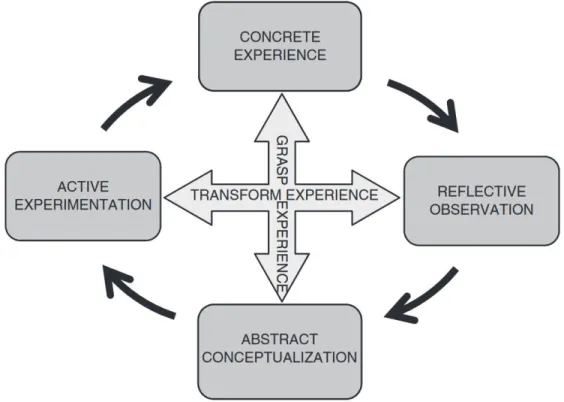
acquire radically new and different understandings of pedagogy, as well as transform practices entrenched in university traditions that are less effective in promoting higher-order learning” (Kreber & Kanuka, 2006, p. 125). After studying why some Carnegie Mellon University’s faculty members resisted using technology and making changes, Smith & Herckis (2018) argued that “Faculty who construct their models of good teaching based on their own experiences as students often explicitly or implicitly seek to recreate these personal experiences in their role as faculty” (p. 21). The coursedesign principles and student engagement strategies included in the Pathway can be useful for faculty’s development of models of good teaching and fundamental teaching skills applicable in both F2F and online environments. Participants access online course content asynchronously and complete activities that allow them to communicate with each other either synchronously or asynchronously.
The Pathway is offered at the beginning of the fall and spring terms, which typically starts in the second week of the term. It is 14 weeks long and has seven bi-weekly modules. Three F2F class meetings take place on Pitt’s Oakland campus at the beginning (Module 1), mid-point (Module 4), and the end (Module 7) of the Pathway. Remote participants from other campuses like Johnstown, PA can join the F2F meeting virtually via web conferencing platforms. The Pathway can be viewed as a hybrid academic course with module assignments that simulates real online learning. Participants’ experience as online learners in this hybrid program could empower them to understand challenges their online students might face, what would and would not work in terms of teaching practices in an online course, as well as how to communicate with students effectively in an online environment. Hence, the Pathway is also referred to as a ‘course’ throughout this dissertation. Appendix A shows details of the course structure and content of each module. Design principles of the Pathway are discussed in the next chapter.
Ideally, participating faculty’s learning experience can inform them on how to teach online in the future. The goal is for them to use online teaching strategies learned in the Pathway and their learning experience from the viewpoint of online students to form a framework to develop online teach strategies. Such teaching strategies would enable their students to have enhanced learning experiences.
1.6.2 Pathway Participants
The maximum number of participants allowed in one iteration is 12 based on available resources at the Teaching Center. The Pathway is open to all fulltime and part-time faculty at Pitt. Faculty from regional campuses are encouraged to participate since web conferencing platforms can be used to enable them to join the F2F sessions. Upon successful completion of the Pathway, all participating faculty would receive a certificate of completion, and their department chair would be notified, too. For fulltime and part-time faculty whose contract is shorter than 12 months, they would receive a $300 stipend upon completion of all deliverables of the Pathway in addition to the certificate of completion.
1.7 Chapter Summary
This chapter started with the trend of growing numbers of online courses in education and the need for TPACK for online faculty, which call for faculty development programs for online teaching. The current dissertation in practice, which can be considered as both a formative program evaluation and action research, was situated in such backdrop. The usefulness of Pitt’s Teaching
Center’s Pathway whose aim is to help prepare faculty to teach online is the focus of this dissertation in practice as it is important to the main stakeholders analyzed in this chapter. The three inquiry questions were designed to address the overall usefulness of the Pathway, explore the benefits of participating faculty’s role as learners in the Pathway, as well as identify what pedagogical strategies and technologies the faculty participants of the first two iterations (Fall 2017 and Spring 2018) learned and applied in their own F2F and online courses.
2.0 Literature Review and the Design of the Pathway
The purposes of this formative program evaluation were to evaluate the overall usefulness of the Pathway, understand the contribution of faculty’s role as online learners, and understand what participating faculty learned from the Pathway and applied in their teaching. Although there are studies that document barriers that deter faculty from teaching online, as well as faculty’s online teaching experiences (Conceição, 2006; Conrad, 2004; Shafer, 2000; Torrisi & Davis, 2000; Whitelaw, Sears & Campell, 2004), little research has been conducted on effective formats of online faculty development programs and what participating faculty members learned and applied in their teaching. Thus, this program evaluation bridges a gap in the literature on preparing faculty for online teaching.
This literature review situates the problem of practice in a broader perspective of the growing trend of online course offerings in higher education, what online teaching entails, faculty’s barriers and experience of teaching online, as well as faculty development for online teaching. The design of the Pathway was based on the current literature of online teaching and faculty development. A discussion of the design rationale is at the end of this chapter.
2.1 Background of Online Teaching
With the advancement of technology, online courses have become increasingly common. In fact, it is part of the college experience in that students are likely to take at least one hybrid course during their study (Sener, 2010). Learners, especially adult learners, are attracted to the
flexibility online formats afford (Cavanagh, 2012; Lotti, 2011; Mason, 2006; Park, 2007). The demand has been driving the increasing number of online courses offered (Allen & Seaman, 2016). In the past ten years, online enrollment has been increasing by double-digit percentage points since 2016 (Allen & Seaman, 2016). The trend of online teaching in higher education is growing in response to great demands. In a recent study, more than 60% of surveyed higher education institutions reported online offerings (Bailey et al., 2014). Many courses are in either hybrid or fully online format as a way to reach students who may not be in the same location as the institute, among which many are non-traditional students. While higher education institutions enjoy the revenue online courses or programs generate, faculty are in the center of the changes online instruction entail, as well as the challenges online instruction pose to their assumptions of teaching and learning (Wiesenberg & Stacey, 2008). Instructors may be pressured to teach online and challenged to teach in an unfamiliar medium (the internet) that is very different from what they have been used to, especially when they have never learned or taught online at all.
2.2 Literature Converges on Three Main Roles for Online Instructors
Instructors recognize that teaching in an online environment differs from teaching F2F courses in that teaching online is unfamiliar and their roles change (Conceição, 2006, Conrad, 2004; Diekelmann, Schuster, & Nosek, 1998; Morris, Xu, & Finnegan, 2005). Baran et al. (2011) conducted a literature review on online teacher roles and found that online teaching required that faculty function in various areas. For example, online instructors play their roles in these four different areas: pedagogical (facilitate learning), social (facilitate relationship building among group members), managerial (establish procedures for discussion and develop activities), and
technical (use technology and learning interface) (Berge, 1995, as cited in Baran et al., 2011). Palloff and Pratt (1999) also recognized these roles, which entail that online instructors need to not only be subject matter experts who know how to teach the subject, but also use technology to facilitate teaching and learning, as well as manage the course materials and students’ learning.
Coppola, Hiltz, and Rotter (2002, as cited in Baran et al., 2011) believed that a virtual professor in a synchronous learning environment had changing roles in affective, cognitive, and managerial domains, which means that they need to be able to address affective aspect of learning, present knowledge and help students learn, and manage the virtual class space and course materials. Apart from academic support in students’ handling with cognitive and intellectual issues in the course, instructors also need to offer support in the affective aspect of learning. Goodyear, Salmon, Spector, Steeples, and Tickner (2001, as cited in Baran et al., 2011) described an online instructor as a process facilitator, counselor/adviser, assessor of learning progress, researcher, content facilitator, technologist, designer, and administrator/manager.
Garrison, Anderson, and Archer (2000) further delineated online instructors’ function in the three areas of social, cognitive, and teaching practice. As introduced in the CoI model in Chapter One, Garrison et al. (2000) proposed three areas that warrant online instructors’ attention: teaching presence, social presence, and cognitive presence. Teaching presence refers to course structure and facilitation of students’ construction of knowledge by the instructor. Social presence is understood as a positive online learning atmosphere that supports learners to reach their learning objectives within the community. This is usually created by the instructor’s fostering trust and interpersonal relationships (Garrison, 2007). Cognitive presence is concerned with how students co-construct experience and knowledge collaboratively, rather than individually in an online learning community, through analysis of content, questioning, and challenging assumptions
(Garrison et al., 2000). Learner’s discussions and reflections through quality communication with each other are crucial in their learning (Garrison, 2007). To achieve these three types of presence, it is necessary to use technology pedagogically due to the online nature of courses. In other words, online instructors must pay attention to students’ affective factors and help students to bond with each other, design and structure the course to present content knowledge, and facilitate students’ collaborative learning and co-construction of knowledge.
The CoI framework illustrates specific and necessary aspects that need to be considered in the design and facilitation of a hybrid or fully online course. If it is not properly designed, an online course can be overtly text-heavy (Song & Yuan, 2015). If it is not facilitated well, learners may feel they are isolated and learning on their own. Based on the CoI framework, Song and Won (2013) shared specified activities they did under the three types of presence when facilitating a 16-week online faculty development course, which had two methods of delivery—asynchronous learning with Blackboard and synchronous instruction through Adobe Connect, a web conferencing platform. Both the asynchronous and synchronous learning incorporated all three types of presence, providing a meaningful classroom experience in an online environment. Appendix B shows the learning activities and practices in that course based on the CoI framework.
To be successful, online course instructors should consider the three types of presence (Garrison, et al., 2000; Song & Won, 2013; Song & Yuan, 2015). However, it may be challenging to reexamine their role as an instructor. They will realize that they need to pay close attention to course design and details, and be more facilitative and supportive in their students’ learning. Due to the increased student responsibility and participation in the online learning environment (Barker, 2003; Gallant, 2000; Jaffee, 2003), faculty’s role as a subject matter expert who passes on knowledge to students expands. For instance, McQuiggan (2011) articulated the multiple roles as
the following: curriculum/content developer, facilitator of students’ learning. Song and Yuan (2014), and Moor (1989) considered instructors as instructional designer who deliberately design opportunities for learner-learner, learner-content, and learner-instructor interaction. Online teaching does not entail only going into a classroom and lecture; rather, it involves offering technical and non-technical student support, administration, and tutoring students (McQuiggan, 2011). The multitude of responsibilities placed on faculty may be a barrier for them to explore the new task of teaching online.
The aforementioned models and research studies converge on three main roles as online instructors, as reflected in the CoI framework: 1) design, organize, and manage the course online, 2) use technology pedagogically to help students establish bonds, and 3) facilitate co-construction of knowledge in a community of learning in which they support each other’s learning as a coherent group; this also include supporting students’ affective side of learning.
The complexity of instructor roles, online course design, and facilitation is often unknown to faculty. Instructors know little about the new medium they are entering, and rely heavily on F2F experiences and their own pedagogy (Conrad, 2004). In Conrad’s (2004) study, five interviewed instructors who taught in an online program at a Canadian university reflected that they perceived their roles mainly as deliverers of content. The results of the study showed the instructors had little awareness of issues like the role of community in an online learning environment, collaborative learning, and learners' social presence.Cobb (2014) asserted that faculty learned to teach online from real examples and contextualized product-focused presentations, through the overall experience of professional development, and by engaging others. The reality of teaching online and the realization of their role changes may make them feel they are novice teachers again (Diekelmann et al., 1998; Gallant, 2000; King, 2002; Lawler, King, & Wilhite, 2004). They may
feel their identity as an expert challenged, resulting in resistance to attempting to teach online (McQuiggan, 2011). The next section presents an analysis of faculty barriers to online teaching.
In designing the Pathway, I highlighted online instructors’ functions in ensuring the three types of social, teaching, and cognitive presence working in tandem by including the CoI framework into Module 2. While the participating faculty learn about the CoI framework, they may experience my facilitation of the Pathway, which demonstrates how to achieve these three types of presence. Their learning experience in the Pathway, in turn, may help inform them on how to teach online.
2.3 Barriers to Teaching Online
Despite the prevalence of and demand for online courses or programs, many instructors are hesitant to teach online for several reasons. First, their impression of online education may be negative. For example, in Allen & Seaman’s (2016) national study, only 29.1% of all surveyed chief academic officers reported that their faculty “accept the value and legitimacy of online education” (p. 6), perhaps due to unfamiliarity with it.
Second, instructors realize preparation for online courses can be labor-intensive (Choi & Park, 2006; Hinson & LaPrairie, 2005) and requires attention to detail (Hinson & LaPrairie, 2005). Compared to F2F courses, online classes require significantly more time spent on all areas of online courses (Cavanaugh, 2005). For instance, Cavanaugh (2005) reported that an F2F courses required 62 total hours, while an online course required 155. Given the nature of online courses, everything, including handouts, needs to be planned and prepared ahead of time; this differs from teaching a F2F course in which a certain degree of spontaneity is allowed (Conceição, 2006;
Diekelmann et al., 1998). To some instructors, this may be a deterrent as they know online teaching requires tremendous amount of planning, development, and organization of materials done ahead of time. To faculty who are already busy, this is a challenge as they simultaneously juggle different priorities, such as research, grant application, academic publishing, and teaching.
Third, online teaching does not necessarily provide faculty with the same type of contact with their students, so it may not be as appealing to faculty who value F2F time with students (Conrad, 2004; Diekelmann et al., 1998). The online delivery format may also result in reduced human interaction, which concerns some faculty members (Ward, Peters, & Shelley, 2010). Additionally, online teaching requires more learner participation (Jaffee, 2003), and it enables a shift of instructional approach from teacher-centeredness to learner-centeredness (Barker, 2003; Conceição, 2006; Conrad, 2004; Gallant, 2000; Hinson & LaPrairie, 2005; Jaffee, 2003; Tallent-Runnels et al., 2006). What this shift entails is that learners need to take more responsibilities of their own learning and instructors assume the role of a guide to learners (Barker, 2003; Gallant, 2000) or a facilitator of students’ learning (Institute for Higher Education Policy, 2000; Jolliffe, Ritter, & Stevens, 2001; National Education Association, 2000; Palloff & Praff, 1999, 2001; Shearer, 2003;). Instructors may find it difficult to motivate online students and facilitate communication in an online environment (Choi & Park, 2006).
Fourth, faculty’s perception of online learning is mixed (Felege & Olson, 2015). Allen and Seaman (2013) reported that 77% of surveyed academic leaders believed online learning was as effective as or better than F2F learning, whereas 23% viewed it to be inferior to F2F learning. They also found that the educators at institutions that had online course offerings were much likelier to hold a positive view toward online learning than those at institutions that do not offer online courses (Allen & Seaman, 2013). Some instructors hold the belief that online learning is not
appropriate for traditional-aged students (O’Quinn & Corry, 2002). In 2000, The National Education Association (NEA) surveyed its higher education members. A total number of 402 distance faculty and 130 traditional faculty responded to the survey that focused on their perception of and attitude toward distance education. The findings showed that 50% of the faculty had negative or uncertain feelings towards online learning. Faculty concerns included lack of standards of online courses (Institute for Higher Education Policy, 2000; NEA, 2000). The quality of online course can be inferior to that of traditional F2F courses because student interaction is usually decreased in online courses (Dooley & Murphrey, 2000; Jones & Moller, 2002). This is not to say that online courses are inferior to traditional F2F courses by default. It is uneasy to design and implement a good online course due to the many factors and areas elaborated in the previous section about instructor roles in an online course. It is worth noting that the concerns about the quality of online courses arise from instructors who have never taught online before (Betts, 1998; Dooley & Murphrey, 2000; Jones & Moller, 2002; O’Quinn & Corry, 2002; Schifter, 2000). These instructors believe that online teaching would sacrifice course quality, consequently they would rather not teach online. Dooley and Murphrey (2000) found that faculty were also concerned about misinformation available online and would rather not risk being perceived as having similar content online. Perhaps some of thefaculty who hold negative perceptions of online teaching and learning have never taken an online course or their prior online learning experience was not satisfactory. Ulmer, Watson, and Derby (2007) found significant difference in perceived value of distance education between faculty with and without teaching experience in distance education.
In addition to faculty’s negative perception of online teaching and learning, their resistance to change (Berge, 1998; Parisot, 1997; Smith & Herckis, 2018; Wingo, Ivankova, & Moss, 2017) and resistance to using technology (Smith & Herckis, 2018) may also deter them from teaching
online. In Berge’s (1998) study, 20% of the surveyed faculty were reluctant or unable to cope with changes online teaching often requires, which includes using technology. These faculty members often had not integrated technology in their traditional F2F courses, so teaching an online course is a daunting task to them.
Finally, what may be inhibitors for faculty to teach online are concerns about unclear copyright policies and intellectual property rights (Berge, 1998; Dooley & Murphrey, 2000; O’Quinn & Corry, 2002), lack of time for preparation, lack of scholarly respect in tenure application process and promotion, lack of training in how to teach online (Baldwin, 1998; Bonk, 2001; Lee, 2001; Northrup, 1997; O’Quinn & Corry, 2002; Parisot, 1997). Institutional support also plays a role in motivating faculty to attempt to teach online. When they feel the presence of institution support, they are more motivated and dedicated to online teaching (Lee, 2002; Lloyd, Byrne, & McCoy, 2012). Betts’ (1998) study showed that faculty were more likely to engage in online teaching when administration eliminated inhibiting factors, such as heavy workload and lack of technical support and release time, among others. Ideally, both administrators and faculty need to understand the value of distance education and need to participate in professional development programs that focus on it (Betts, 1998).
The above-mentioned factors are important to consider when supporting faculty who may have negative perceptions of teaching online. I took these factors into consideration in the design and content of the Pathway. As shown in Table 2 on page 55, the modules focusing on demystifying online teaching and learning, copyright and accessibility, and instructional technology use are intentionally provided to enable clearer understanding of these crucial aspects of online course design and facilitation. The literature shows that faculty members who have not experienced online teaching or learning are likely to misunderstand that online courses are inferior.
Letting faculty assume the role of students in the Pathway may help them gain first-hand experience of learning online and establish their own views of online teaching and learning.
2.4 Faculty Development Initiatives Vary in Format and Focus
Prior to the beginning of the 20th century, faculty development was only concerned about character development and other personalities, but the focus later shifted to instructional skills and aptitude because faculty were considered subject matter experts (Gaff & Simpson, 1994). Sabbaticals, conferences, travel and research grants, as well as fellowships were designed to help faculty stay up to date in their fields (Gaff & Simpson, 1994). In the past few decades, greater attention has been paid to instructional effectiveness in higher education and remains the focus of faculty development (Baiocco & Dewaters, 1995; Meyer, 2014), which gave rise to faculty development that focuses on teaching skills (Baiocco & Dewaters, 1995).
In the 1980’s, higher education institutions began to establish teaching centers or instructional development centers (Lawler & King, 2000), some of which are also called center for teaching excellence. No matter what they are called, they all provide faculty development opportunities. Faculty development, educational development, instructional development, professional development, and academic development are sometimes used interchangeably (Amundsen & Wilson, 2012; Poole & Iqbal, 2011). They all refer to the support higher education institutes provide in order to improve teaching quality and learning experience (Kearns, 2015). Faculty development programs are ubiquitous at most higher education institutes (Elliott et al., 2015), and they are usually optional and in-person (Calderon, Ginsberg & Ciabocchi, 2012; Daly & Dee, 2009; Elliott et al., 2015; Grant, 2004; Hixon et al., 2011; Hornum & Asprakis, 2007;
Kane, 2003; Kukulska-Hulme, 2012; Lackey, 2011; Meyer, 2014; Meyer & Murrell, 2014; Ragan, Bigatel, Kennan & Dillon, 2012; Vaill & Testori, 2012).
Since most faculty, who had extensive training in their discipline, have little or no training on pedagogy for imparting their expertise to students, the value of professional development is intensified in higher education (Elliott et al., 2015). The prestigious professional organization in the United States called Professional Organizational Development Network (2017) denotes that faculty development programs offer opportunities to faculty to develop as teachers and scholars. Central to the professional development offerings or efforts is viewing faculty as primarily teachers, as opposed to researchers. Professionals involved in providing professional development experiences to faculty are called professional developers, instructional designers, or teaching and learning consultants. Their expertise is often in curriculum design, instructional design, observation, and workshop design and facilitation. Their responsibilities often involve providing support to faculty in the said areas.
For smaller institutions that may not have teaching centers, there may be faculty members who have dual appointments as instructors in their home department and as faculty developers who organize professional development events or efforts. Individual schools or departments within the institution may also have faculty who are interested in and qualified to support professional development.
2.4.1 Faculty Development Programming Formats
In general, faculty professional development programs or initiatives can be categorized according to format and focus (Elliott et al., 2015), which are various (Kennedy, 2016). Common
meetings in which participants share concerns and solve problems (Hornum & Asprakis, 2007). The format can be further divided into the following modes of learning: online, F2F, synchronous, asynchronous, and recurring (Elliott et al., 2015). F2F faculty development includes workshops, seminars, conferences, mentoring, consultations, and others (Boucher et al., 2006; Hixon, et al., 2011). From my own experience in faculty development in two higher education institutions, a teaching center typically offers professional development in the forms of one-on-one consultations, observation and feedback sessions, workshops, panel discussions, seminars, and book discussions. Additionally, faculty development can also include faculty learning communities, which typically consist of a group of six to 15 trans-disciplinary faculty engaging in a collaborative semester- or year-long program in which they discuss a focus related to teaching and learning (Cox & Richlin, 2004).
Felder and Brent (2010) asserted that the limited research suggested a preference for F2F faculty development. Elliott et al. (2015) reasoned that the majority of studies on faculty development focused on programs that targeted on-campus faculty. The research conducted between 1963 and 1980 showed that the most common types of faculty professional development activity were workshops and seminars (Levinson-Rose & Menges, 1981). Consistent with Levinson-Rose & Menges’ (1981) findings, Maxwell and Kazlauskas (1992) observed that workshop was the primary format and lamented that faculty participation was low. One of the reasons might be when the researchers conducted their studies, web conferencing platforms on which synchronous or asynchronous faculty development programming rely were not as sophisticated and ubiquitous as they are now. Another important reason might be faculty’s limited time, as it is the greatest barrier to participating in professional development programs (Dailey-Hebert, Mandernach, Donnelli-Sallee, & Norris, 2014; Steinert, McLeod, Boillat, Meterissian,
Elizov, & Macdonald, 2009 as cited in Elliott et al., 2015).
As a common F2F format, the one-shot workshop has been criticized for its unpopularity among in-service instructors (Kennedy, 1998). For example, Smylie (1989) found that in-service programs in the form of workshop were ranked last by instructors among 14 possible sources of learning. In contrast, the following were the top-rated sources of learning in the study: instructors’ own classroom experiences, consultation with other teachers, independent study, and observations of other teachers. The content of one-shot workshops is usually predetermined. Due to the set time allotted to the workshop and its predetermined content, one-shot workshops are typically inflexible. To overcome drawbacks of the one-shot workshop, researchers and policy analysts made several recommendations: 1) longer in-service teacher professional development programs, 2) engage instructors in identifying training content rather than imposing the content to them, 3) schedule interspersed meetings with classroom practice instead of concentrated meetings, and 4) allow instructors to work in groups, as opposed to in isolation (Kennedy, 1998). With the help of technology, asynchronous learning allows geographically-dispersed faculty to participate in online discussions, self-paced workshops, web-based tutorials, recorded discussions, and other formats (Elliott et al., 2015). The literature reveals that applied, collaborative engagement is critical to the success of faculty development programming, but it offers little guidance on its format (Elliott et al., 2015).
2.4.2 Faculty Development Topics
In terms of the topics of professional development for faculty, different scholars found different topics at different times. Levinson-Rose & Menges’ (1981) study of faculty development
methods and strategies. Kennedy (1998) identified the following four: general teaching practices, subject-specific teaching practices, curriculum and pedagogy, and how students learn. Lawler & King (2000) contended that faculty development had been focused on these three areas: teaching effectiveness, adaptation to new student populations, and learning technology. Elliott et al. (2015, p. 162) identified these five areas: practical pedagogical techniques, theoretical approaches (e.g., transformative learning), institution expectations such as LMS training, specific faculty population (e.g., new faculty training), and disciplinary content (e.g., critical thinking in particular disciplines). Even though Levinson-Rose & Menges’ (1981), Lawler and King (2000), Kennedy (1998) and Elliott et al. (2015) identified slightly different foci, the overlapping area is pedagogy.
Maxwell and Kazlauskas (1992) found that general teaching skills were often emphasized, but faculty were more attracted to “disciplinary knowledge and specific teaching tasks” (p. 356). After surveying the faculty completed workshops on active learning and technology, Wilhite, DeCosmo, and Lawler (2006) drew a similar conclusion that faculty were more concerned with immediately applicable examples in their own disciplines than with generalized teaching methodology, even though general teaching strategies are usually applicable in teaching regardless of subjects. They are less motivated to attend faculty development programs if they do not find relevance or perceive that they can immediately apply the knowledge (Elliott et al., 2015).
As for the quality and effectiveness of professional development programs, scholars found that the evaluation of these programs did not usually go beyond the satisfaction level of the programs themselves, so they did not generate data to inform subsequent decisions (Centra, 1976; Elliott et al., 2015; Levinson-Rose & Menges, 1981). Within the realm of F2F faculty development, Felder and Brent (2010) argued that programs that promoted interactive exploration and created group collaboration could lead to program success, and that problem-solving and