ZAMBIA
William Zulu
Dissertation presented for the degree of Doctor of Philosophy (PhD) in Practical Theology at
Stellenbosch University
SUPERVISOR: PROF. KAREL TH. AUGUST
DECLARATION
By submitting this dissertation electronically, I declare that the entirety of the work contained therein is my own original work, that I am the sole author thereof (save to the extent explicitly otherwise stated), that reproduction and publication thereof by Stellenbosch University will not infringe any third party rights and that I have not previously in its entirety or in part submitted it for obtaining any qualification.
Signature... Date...
COPYRIGHT
All rights reserved. No part of this dissertation may be reproduced, stored in any retrieval system or transmitted in any form or by any means, electronic, mechanical, photocopying, recording or otherwise for scholarly purposes, without the prior written permission of the author or the University of Stellenbosch on behalf of the author.
Copyright © 2012 Stellenbosch University All rights reserved
ABSTRACT
Agriculture is the main stay for Zambia‟s economic growth and for enhancing household food security. But small holder farmers living in rural areas of Zambia are not able to command food resources because of their low per capita productivity to grow and store food to provide for their families throughout the year. The two three months prior to harvest (January, February and March) are the period of sufficient national deprivation for many rural households in Zambia. This scenario has created a serious food insecurity problem among most households living in rural Zambia as they cannot afford descent meals a day. Maposa community is one of the communities that is food insecure due to a range of factors which include poor agriculture practice, lack of farm inputs and civic awareness on matters that affect their livelihood. The Reformed church in Zambia (RCZ) has been implementing a food security project in Maposa community on the Copperbelt of Zambia from 2007 to 2010 whose main objective of this project is to empower household farmers with agriculture skills so that they can be able to produce food on a more sustainable way to feed their families.
This study therefore, offers an ecclesiological evaluation of the Maposa Food Security Project implemented. Ecclesiological evaluation in this case implies using the Biblical theological perspective to assess the tools RCZ used in this food security.
In addition, it is important to note that Reformed Church in Zambia (RCZ) belongs to an ecumenical body called the Council of Churches in Zambia (CCZ). The Council of Churches in Zambia (CCZ) is an organ that unites all Christian Churches in Zambia and advocates on behalf of member churches all matters related to church registration and also provides guidelines to member churches how to implement community development programmes in line with the governments development plans on national building such as (5th National Development plan and vision 2030). Furthermore, Reformed church in Zambia (RCZ) and other CCZ member churches feed into the annual report of the Council of Churches in Zambia which meets once every year. Though this evaluation is focussed on the Maposa food security project implemented by Reformed Church in Zambia (RCZ), the Council of Churches in Zambia cannot be isolated since it is the mother body of all Christian Churches in operating in Zambia.
The results of this research will be shared with both Reformed Church in Zambia (RCZ) and the Council of Churches in Zambia (CCZ).
The researcher believes that the outcome of this research will help in improving the performance of both the Reformed Church in Zambia (RCZ) and the Council of Churches in Zambia (CCZ) as they participate in transformational development.
This study therefore, investigated the following four areas of transformational development in the food security project:
Participation: to assess whether the farmer beneficiaries in the project have been
involved in the planning of the food security project, have identified their own priorities for the project or have used their own resources to exercise control over their own economic, social and cultural development.
Capacity building: to assess how the food security project implemented by RCZ has
strengthened the capacity of the local people. This includes the transfer of skills through training for purposes of equipping people to engage in their own development.
Local resource mobilization: to assess the community‟s participation in the
mobilization of their own resources in the project implementation.
Sustainability: to assess the long term viability of this food security project beyond the
support of the RCZ.
This study is answering the research question, „How can the church and its context participate in a practical way in transforming communities where there is poverty and food deficit?‟ This research argues that if the church can effectively participate in transformational development through the promotion of sustainable agriculture and food production, the majority of the people living in the rural areas of Zambia can be economically empowered and become food secure all year round. Poverty in this rural area is as a result of inability of households to meet basic needs such as food, shelter and clothing.
OPSOMMING
Landbou is die steunpilaar van Zambië se ekonomiese groei en die versterking van huishoudelike voedselsekerheid. Weens hul kleiner per kapita produktiwiteit is kleiner huur-boere in landelike gebiede egter nie in staat om voedselbronne in stand te hou nie, dit wil sê om genoeg kos vir ʼn jaar vir hul gesinne te produseer en stoor nie. Die twee of drie maande voor oestyd (Januarie, Februarie en Maart) is ʼn tydperk van tekort in baie landelike huishoudings in Zambië. Hierdie scenario het ʼn ernstige voeselsekerheidprobleem geskep vir die meeste gesinne in landelike Zambië, wat nie drie etes ʼn dag kan bekostig nie. Die Reformed Church in Zambia (RCZ) het daarom van 2007 tot 2010 ʼn voedselsekerheidprojek gevestig in Maposa-gemeenskap in die Koperbelt in Zambië met die doel om huishoudings met voedsekerheid te bemagtig deur die bevordering van goeie landbou-praktyke.
Hierdie studie bied dus ʼn evaluering van Maposa Food Security Project wat deur die RCZ geïmplementeer is. Die RCZ is ʼn lid van die ekumeniese liggaam die Council of Churches in Zambia (CCZ). Die CCZ is ʼn liggaam wat alle Christelike kerk in Zambië verenig en namens kerklike lede kwessies oor kerk-registrasie verdedig en ook riglyne verskaf oor hoe kerklike lede gemeenskapsontwikkelingsprogramme moet implementeer wat belyn is met die regering se ontwikkelingsplanne vir nasionale bou (5th National Development Plan, Vision 2030). Die RCZ en ander CCZ lede het dus ook inspraak in die jaarverslag van die CCZ.
Die doel van die studie is ʼn evaluering van die bydrae wat die RCZ gemaak het tot die aanspreek van die voedselsekerheidprobleem in landelike gemeenskappe as agent en katalisator van transformerende gemeenskapsontwikkeling. Die doel van die Maposa-projek is om huishoudelike voedselsekerheid te versterk by lede van die gemeenskap as ʼn maatreël tot ekonomiese bemagtiging.
Die studie het die volgende areas van transformerende ontwikkeling in die voedselsekerheidprojek ondersoek:
Deelname: om te assesseer of die boere-begunstigdes in die projek betrokke was by die beplanning van die voedselsekerheidprojek, hul eie prioriteite vir die projek geïdentifiseer het of hul eie bronne benut het om beheer uit te oefen oor hul eie ekonomiese, sosiale en kulturele ontwikkeling.
Kapasiteitbou: om te assesseer hoe die voedselsekerheidprojek wat deur die RCZ
geïmplementeer is, die kapasiteit van plaaslike mense versterk het. Dit sluit in die oordra van vaardighede deur opleiding met die doel om mense toe te rus om hulself te ontwikkel.
Plaaslike bron-mobilisasie: om die gemeenskap se deelname in die mobilisasie van hul
eie bronne in die projek se implementering te assesseer.
Volhoubaarheid: om die langtermyn-volhoubaarheid van hierdie voedselsekerheid
buiten die steun van die RCZ te assesseer.
Die studie beantwoord die navorsingsvraag: „Hoe kan die kerk en die kerk se konteks prakties deelneem aan transformasie waar daar armoede en voedseltekort is?‟ Die navorsing betoog dat as die kerk effektief kan deelneem aan transformerende ontwikkeling deur die bevordering van volhoubare landbou en voedselproduksie, kan die meerderheid mense in die landelike gebiede in Zambië ekonomies bemagtig word en heeljaar voedselsekerheid geniet. Armoede in dié landelike gebied is die gevolg van ʼn onvermoë van huishoudings om te voorsien in basiese behoeftes soos kos, behuising en klerasie.
Die navorsing-struktuur is:
Hoofstuk 1 dien as ʼn inleiding tot die navorsingsproses. Dit bied ʼn padkaart waarvolgens die hele studie sistematies aangebied word. Dit is ʼn raamwerk vir transformerende gemeenskapsontwikkeling en noem maniere waarop teologie prakties aangewend kan word.
Hoofstuk 2 gee ʼn oorsig van ʼn regverdige en volhoubare voedselsisteem. Daar word betoog dat, indien arm landelike gemeenskappe voedselsekerheid wil behaal, sal
regerings en ander rolspelers betrokke moet raak by ontwikkelingsbeleide en programme om ʼn regverdige voedselstelsel te bevorder waar voedsel geredelik beskikbaar en vir almal toeganklik is. Verder word maniere bespreek om landbou te verbeter om voedselsekerheid te bereik in arm landelike gemeenskappe. ʼn Oorsig van die voedselsekerheidstelsel in Zambië word ook in dié hoofstuk gebied.
Hoofstuk 3 bespreek landbou en voedselproduksie in Zambië. Die doel van die hoofstuk is om ʼn oorsig te gee van landbou in verhouding tot huishoudelike voedselsekerheid veral in die landelike gemeenskappe in Zambië, wat hoë vlakke van voedselonsekerheid ervaar.
Hoofstuk 4 kyk na die Bybelse en teologiese perspektief van landbou en voedselproduksie. Dit bied ʼn oorsig van Bybelse lering oor landbou en voedselproduksie deur te kyk na landbou en voedselproduksie vanuit beide Ou Testamentiese en Nuwe Testamentiese perspektiewe. Die doel is om te ontdek hoe boerdery vanuit ʼn teologiese oogpunt op die huidige landboustelsel toegepas kan word om voedselproduksie te verhoog.
Hoofstuk 5 bied ʼn teologiese ekklesiologiese raamwerk van voedselsekerheid soos gevind in Hoofstuk 4 om vir die RCZ en die CCZ riglyne te bied vir hul poging om betrokke te raak by transformerende gemeenskapsontwikkeling deur die voedselsekerheidprojek in Maposa-gemeenskap en elders.
Hoofstuk 6 bied riglyne vir die bemagtiging van huishoudings deur voedselsekerheid: Lesse van Maposa-gemeenskap. Dié riglyne vorm die basis vir die implementering van ʼn ekklesiologie van voedselsekerheid deur die RCZ, die CCZ en Zambië in geheel. Hoofstuk 7 is ʼn opsomming van die navorsingswerk soos bespreek in Hoofstuk 2 tot 6.
DEDICATION
This dissertation is dedicated to my late parents, Alaida Mwanza (Zulu) and Bernard Zulu, who both passed on in January 2008. Special tribute goes to my mother who introduced me to this journey of faith in the early 1980s. I am so grateful to both of my parents. May the souls of both of them rest in the eternal peace of God Almighty. I give Glory and Honour to God Almighty!
ACKNOWLEDGEMENTS
I am greatly humbled that the long journey of intensive study has finally come to its logical conclusion. I give praise and honour to God Almighty for strengthening me, giving me the wisdom and patience to complete this project successfully.
I give thanks to my supervisor and mentor, Prof. K.T. August for providing quality time in guiding me during the time of study. May God continue to bless him abundantly for the good work done. ‘Dzikomo – Sante sana.’
I would also like to thank the office of the Dean of the Faculty of Theology for the HOPE/OSP Bursary, the Christian Reformed World Missions in the United States of America and the Dutch Reformed Church in South Africa for the financial support. Without their support this project would have been abandoned midway. „Dzikomo kwambiri, asante sana, natasha, baie dankie.’ Many thanks to RCZ Diaconia, the department I am working under, the board and staff, for encouragement and support during the many years of study.
My sincere thanks go to the Reformed Church in Zambia, my dear church, for its leadership. „Abale munandidalitsa kwambiri, kopanda cilolezo canu maphunziro awa sindikada malidza.’ I am so thankful to you all, brothers, for your support. You supported me all the way until the completion of this study. God bless you. I am also grateful to the CCZ Secretariat for allowing me to study their documents and for taking time to answer my questions. Many thanks also to the farmer groups for supporting me during the interviews and focus group discussions. It was a pleasure working with you while I gathered the needed data.
My special thanks go to my dear wife, Brenda, a co-worker, a mother and a friend indeed. Thank you, dear, for supporting me all the way. At times it was difficult to leave you behind to deal with the financial constraints. I remember you smiling, however, telling me, „Honey, don‟t give up your studies. The Lord will take care of us.‟ To my children: thank you for your understanding and endurance during my long
absence from home due to studying. I am so grateful for your care and continued support. I am indebted to you all.
‘MWAKOMA NONSE ABALE MWA YESU’ – You are all wonderful in Jesus‟ name! AMEN.
DEFINING OF TERMS
Poverty: This is an inability of households to meet basic needs such as food, shelter and clothing.
Household: This is a group of persons who normally eat and live together. These people may or may not be related by blood, make common provision for food and other essentials for living. A household may comprise several members and in some cases may have only one member.
Empowerment: In its broadest sense, empowerment is the expansion of freedom of choice and action. It means increasing one‟s authority and control over resources and decisions that affect one‟s life. As people exercise real choice, they gain increased control over their lives.
Participation: This is a process through which stakeholders influence and share control over development initiatives and the decisions and resources which affect them.
Development: This is the gradual growth of something so that it becomes more advanced, stronger. In other words, development means becoming better or to start to have a skill, ability or stronger.
Sustainability: In a general sense sustainability means steady state. It implies continuity or to be continued for a long time.
Transformation: This implies a complete change of something or to change the form of something.
Food security: Is generally described in terms of access by all people at all times to sufficient food for active, healthy lives. Food security depends not only on how much food is available, but also on the access that people have to food.
Conservation farming: This is a farming approach which has the main aim of making more efficient use of the soil, water and biological resources and natural processes through improved soil, water and plant nutrient management.
Agricultural productivity: Is a measure of agricultural output that can be produced with given levels of input.
Land quality: refers to the ability of land to produce goods and services that are valued by humans. This ability derives from inherent/natural attributes of soil, water, climate,
topography, vegetation and hydrology as well as produced attributes such as infrastructure and proximity to population centres.
Land degradation: refers to changes in the quality of soil, water and other attributes that reduce the ability of land to produce goods and services that are valued by humans. (Source of all definitions: Oxford advanced Dictionary 2010)
LIST OF GRAPHS AND TABLES
Graph 1 – Rain pattern in Sahel in Sudan region Graph 2 – Rain pattern in Southern Africa
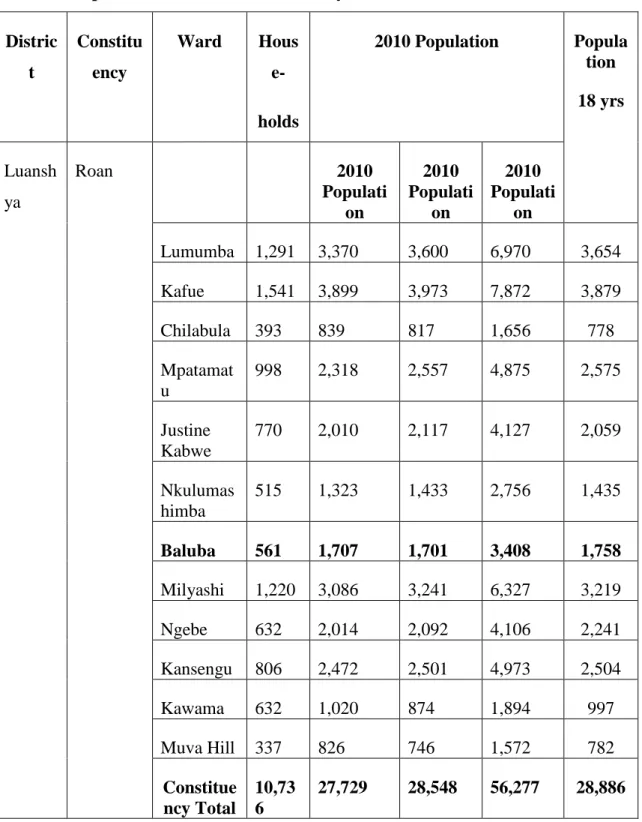
Table 1 – Zambia index of agriculture production Table 2 – Population distribution of Maposa community
Table 3 – Percentage distribution of people by gender and age in Maposa area Table 4 – Focus group members
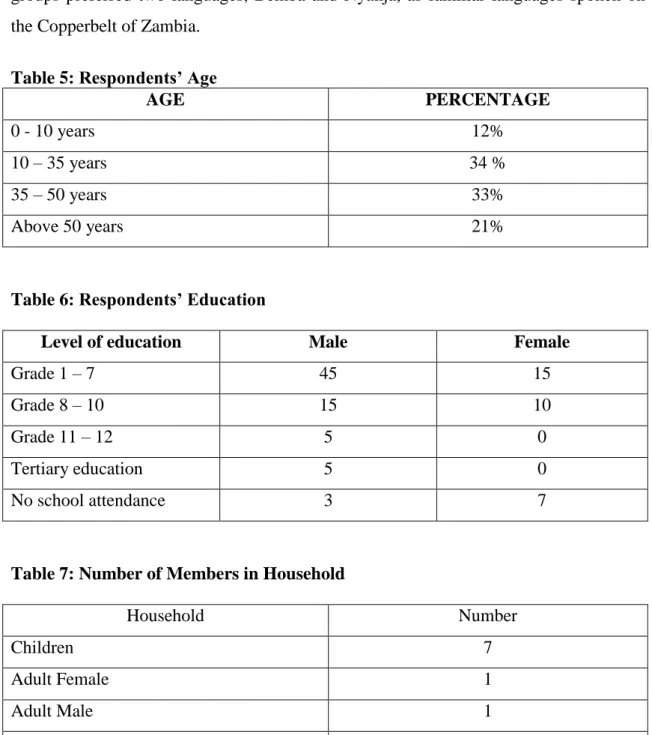
Table 5 – Respondents‟ age
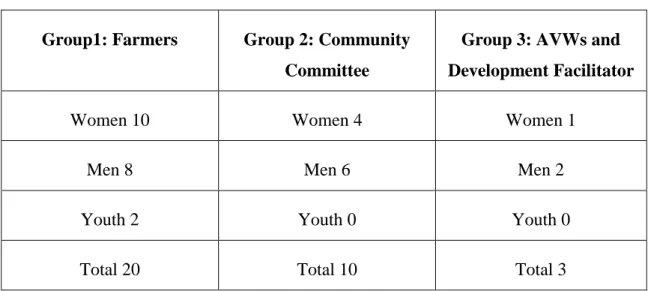
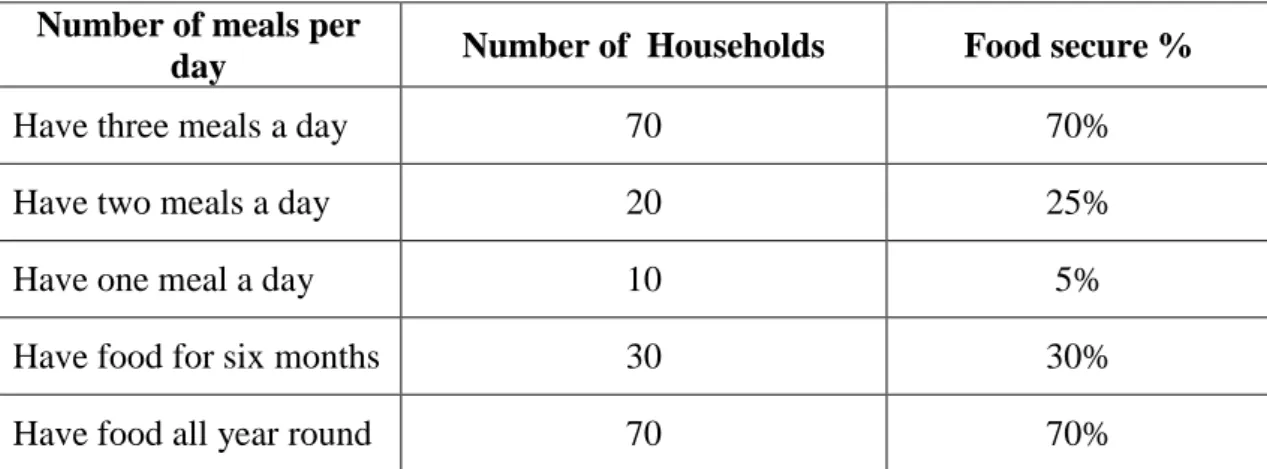
Table 6 – Respondents‟ level of education Table 7 – Number of members in a household Table 8 – Household food security
Table 9 – Livelihood improvement through farming
Table 10 – Summary of the household food security review Table 11 – Wealth ranking
TABLE OF CONTENTS DECLARATION ... i COPYRIGHT ...ii ABSTRACT ... iii OPSOMMING ... v DEDICATION ... viii ACKNOWLEDGEMENTS ... ix DEFINING OF TERMS ... xi
LIST OF GRAPHS AND TABLES ... xiii
TABLE OF CONTENTS ... xiv
ABBREVIATIONS AND ACRONYMS ... xxi
ABBREVIATIONS OF BIBLE BOOKS ... xxiii
MAPS ... xxiv
MAP 1: LOCATION OF MAPOSA COMMUNITY. ... xxiv
CHAPTER 1 ... 1
INTRODUCTION AND LAYOUT OF THE RESEARCH ... 1
1.1 PRELIMINARY REMARKS ... 1
1.1.1 BACKGROUND AND RATIONALE ... 1
1.2 MOTIVATION ... 4
1.3 PROBLEM STATEMENT ... 6
1.4 OBJECTIVE/GOAL OF THE STUDY ... 7
1.5 HYPOTHESIS ... 8
1.6 RESEARCH OBJECTIVES ... 9
1.7 DELIMITATION ... 9
1.9 METHODOLOGY ... 10
1.10 LITERATURE REVIEW ... 11
1.11 STRUCTURE OF CHAPTERS ... 18
CHAPTER 2 ... 20
A JUST AND SUSTAINABLE FOOD PRODUCTION SYSTEM ... 20
2.1 INTRODUCTION ... 20
2.2 A JUST AND SUSTAINABLE FOOD SYSTEM ... 21
2.3 DEFINING AGRICULTURE SUSTAINABILITY ... 23
2.4 HISTORY OF THE TERM FOOD SECURITY ... 32
2.5. GENERAL FOOD SECURITY SITUATION IN SUB-SAHARAN AFRICA .. 34
2. 6. PARTICIPATION IN THE FOOD PRODUCTION SYSTEM ... 38
2.7 FOOD PRODUCTION AND FOOD SECURITY ... 39
2.8 FAMINE IN RELATION TO FOOD SECURITY ... 40
2.9 AN INTEGRATED UNDERSTANDING OF FOOD PRODUCTION ... 41
2.10 FOOD PRODUCTIVITY POTENTIAL ... 43
2. 11 FOOD PRODUCTION INDICATORS ... 45
2.11.1 Monetary indicators‟ of productivity ... 46
2.11.2 Multi-cropping ... 46
2.12 THE USE OF MASS MEDIA IN FOOD PRODUCTION ... 47
2.13 CONSERVATION FARMING ... 49
2.13.1 Composting ... 51
2.13.2 Soil Conservation ... 51
2.13.3 Uses of Vetiver Grass System ... 52
2.13.4 Agro Forestry Farming System ... 53
2.13.5 Soil Stabilisation ... 53
2.14 FOOD STORAGE ... 54
2.15 CONSTRAINTS TO FOOD SECURITY ... 62
2.15.1 Defining drought ... 62
2.15.2 Rain patterns in Africa ... 63
2.15.3 Drought in Zambia ... 63
2.15. 4 Sothern Africa Region ... 64
2.15.5 HIV/AIDS and Food Security ... 65
2.16 CONCLUSION ... 66
CHAPTER THREE ... 68
AGRICULTURE AND FOOD PRODUCTION IN ZAMBIA ... 68
3.1 INTRODUCTION ... 68
3.2 THE AGRICULTURE SYSTEM IN ZAMBIA ... 68
3.3 TYPE OF CROP GROWN IN ZAMBIA ... 68
3.4 AGRICULTURE ROLE IN ECONOMIC GROWTH AND POVERTY REDUCTION ... 70
3.5 THE AGRICULTURAL PRODUCTION SYSTEM IN ZAMBIA ... 70
3.6 THE ZAMBIAN FOOD SECURITY SITUATION ... 71
3.7 THE POLITICAL ECONOMY AFFECTING FOOD PRODUCTION ... 73
3.8 THE CURRENT FOOD PRODUCTION AND SECURITY STATUS ... 75
3.9 THE IMPACT OF POPULATION ON HOUSEHOLD FOOD SECURITY. .... 75
3.10 ZAMBIAN SOCIO ECONOMIC POLICY ON FOOD PRODUCTION... 76
3.11 AGRICULTURE AND FOOD PRODUCTION AFTER COLONIALISM ... 77
3.12 THE THREAT OF GMO‟s TO SUSTAINABLE AGRICULTURE ... 78
3.13 CONCLUSION ... 80
CHAPTER 4 ... 82
FOOD SECURITY VIEWED FROM THE BIBLICAL THEOLOGICAL PERSPECTIVE ... 82
4.2 THE THEOLOGICAL ECCLESIOLOGICAL PERSPECTIVE OF FOOD
SECURITY ... 83
4.3 FAMINE THROUGH THE BIBLICAL HISTORY ... 84
4.3.1 The Link of Famine to Food Insecurity ... 85
4.3.2 Famine as portrayed in Amos‟ Israel ... 86
4.4 THE OLD TESTAMENT VIEW OF FOOD SECURITY ... 88
4.4.1 The Old Testament and Land Use ... 91
4.4.1.1 The Jubilee (Land Usage) ... 92
4.4.1.2 Paradigmatic Interpretation of the Jubilee ... 93
4.4.1.3 Exegetical Outline of Leviticus 25 on Land Usage ... 93
4.4.1.4 Israel‟s land use and her relationship with God ... 99
4.5 FARMING AND FOOD PRODUCTION AMONG THE ISRAELITES ... 100
4.5.1 Crop Growing and Religious Festivals ... 101
4.5.2 Crop Rotation ... 101
4.6 INTERPRETATION OF FOOD AND AGRICULTURE IN THE NEW TESTAMENT ... 103
4.6.1 The Subject of Food in the New Testament ... 103
4.6.1.1 Food and Grace ... 104
4.6.1.2 Food and Hope ... 104
4.6.1.3 Food and Work ... 104
4.6.1.4 Food and Faith ... 105
4.6.2 Agriculture and its Setting in the History of the New Testament ... 105
4.7 FARMING GOD‟S WAY ... 109
4.7.1. History of Farming God's Way ... 109
4.7.2 The Technology behind Farming God‟s Way ... 110
4.8 AN ECCLESIOLOGY OF FOOD SECURITY ... 112
4.9 CONCLUSION ... 113
CHAPTER 5 ... 115 A THEOLOGICAL ECCLESIOLOGICAL FRAMEWORK OF FOOD SECURITY115
5.1 INTRODUCTION ... 115
5.2 A THEOLOGICAL FRAMEWORK OF FOOD SECURITY ... 116
5.2.1 The theology of food ... 116
5.2.2 Life sustenance ... 116
5.2.3 Equity ... 117
5.2.4 Justice ... 117
5.2.5 Dignity and self-worth ... 118
5.2.6 Freedom ... 118 5.2.7 Participation ... 118 5.2.8 Cultural Fit ... 119 5.2 9 Spiritual transformation ... 120 5.2.10 Reciprocity ... 120 5.2.11 Ecological soundness ... 120
5.3 BIBLE EVIDENCE FOR SUPPORTING THE NOTION OF FOOD ... 121
5.4 TODAYS AGRICULTURE ... 124
5.5 AN ECCLESIOLOGY OF FOOD SECURITY ... 124
5.6 REFORMED CHURCH IN ZAMBIA IN CONTEXT OF ITS DIACONAL WORK ... 129
5.6.1 RCZ Diaconia Department (RCZDD) ... 130
5.7 EVALUATION FRAMEWORK FOR THE FOOD SECURITY PROJECT... 130
5.7.1 Theoretical overview of the case study methodology ... 131
5.7.2 The qualitative perspective of the case study ... 135
5.7.3 Engaging Farmers, AVW‟s and the Community Committee in the Food Security Review ... 136
5.7.4 The Food Security Project Review ... 137
5.7.5 An overview of the Copperbelt Province of Zambia ... 139
5.7.6 Demography of Luanshya district and Maposa community ... 145
5.7.7 Situation analysis of the study Maposa community ... 149
5.8 CONCLUSION ... 150
GUIDELINES FOR EMPOWERING HOUSEHOLDS THROUGH FOOD
SECURITY: LESSONS FROM MAPOSA COMMUNITY ... 151
6.1 INTRODUCTION ... 151
6.2 FARMING PRACTICE ... 152
6.2.1 Promotion of Sustainable Agricultural Practices: ... 152
6.2.2 Provision of adequate number of goats. ... 153
6.2.3 Provision of training in agro-forestry with credit support for the purchase of agro-shrubs: ... 153
6.2.4 Grain storage facilities management. ... 153
6.2.5 Establishment of Savings Schemes to teach farmers Small Business Group Dynamics: ... 153
6.2.6 Securing land tenure security ... 153
6.3 EDUCATION AND FOOD SECURITY ... 155
6.4 WATER AVAILABILITY FOR AGRICULTURE ... 158
6.5 SHELTER ... 159
6.6 EVALUATION OF THE RCZDD FOOD SECURITY PROJECT ... 160
6.6.1 Semi-Structured Focus Group Discussions and Individual Interviews ... 161
6.6.2 Data Collection ... 162
6.6.3. Data Analysis ... 165
6.7 SUMMARY OF PROJECT ACHIEVEMENT ... 169
6.7.1 Major Achievements of the Maposa food security project ... 169
6.8 CONCLUSION ... 171
CHAPTER 7 ... 173
SUMMARY, CONCLUSION AND RECOMMENDATION ... 173
7.1 SUMMARY ... 173
7.1.1 Chapter 2 ... 175
7.1.2 Chapter 3 ... 176
7.1.3 Chapter 4 ... 177
7.1.5 Chapter 6 ... 182
7.2 RECOMMENDATIONS ... 184
7.2.1 CHANGE OF PROJECT MANAGEMENT SYSTEM ... 184
7.2.2 CHANGE OF VALUE SYSTEMS ... 185
7.2.3 CHANGE OF ATTITUDES ... 185
7.2.4 CHANGE OF CONGREGATIONAL ECCLESIOLOGIES ... 186
7.3 CONCLUSION ... 186
BIBLIOGRAPHY ... 189
APPENDICES ... 211
SECTION A: REFORMED CHURCH IN ZAMBIA (RCZ) ... 211
APPENDIX 1: RCZ COMMUNITY DEVELOPMENT STRUCTURE ... 211
APPENDIX 2: RCZ NEEDS ASSESSMENT TOOL ... 212
APPENDIX 3: SWOT ANALYSIS ... 216
APPENDIX 4: LEARNING POINTS ... 217
APPENDIX 5: RCZDD ANNUAL REPORT (2010) ... 219
APPENDIX 6: BRIEFING NOTES DURING THE PLANNING MEETING ... 229
SECTION B: FIELD QUESTIONNAIRES ... 231
APPENDIX 7: SEMI STRUCTURED QUESTIONNAIRE... 231
APPENDIX 8: FOCUS GROUP DISCUSSION... 242
APPENDIX 9: CASE STUDY GUIDE ... 247
SECTION C: GENERAL ... 255
APPENDIX 10: SUCCESS STORY OF A WIDOW FARMER ... 255
APPENDIX 11: MILLENNIUM DEVELOPMENT GOAL‟S (MDG‟S) ... 256
APPENDIX 12: GRAIN STORAGE ... 257
ABBREVIATIONS AND ACRONYMS
AIDS Acquired Immune Deficiency Syndrome
AVW Agriculture Volunteer Worker
BCM Bwana Mkubwa mines
BSAC British South Africa Company
BSA British South Africa
CCNR Christian Council of Northern Rhodesia
CCZ Council of Churches in Zambia
CF Conservation Farming
CFSAM Crop & Farm Supply Assessment Mission
CSO Central Statistics Office
CRWRC Christian Reformed World Relief Committee
PCSC Parents Community School Committee
DRC Democratic Republic of Congo
DRC Dutch Reformed Church
EU European Union
FAO Food and Agricultural Organization
FGD Focus Group Discussion
FEWSNET Famine Early Warning SYSTEM Network
FISU Federation of International Scientific Union
FRA Food Reserve Agency
GART Golden Valley Research Trust
GMC General Missionary Conference
GRZ Government of the Republic of Zambia
HIV Humane Immune Virus
ICRC International Conversion on the Rights of the Child IFAD International Fund for Agriculture Development
IFC International Finance Corporation.
IFPRI International Food Policy Research Institute
LCM Luanshya Copper Mine
MDG‟s Millennium Development Goals
MMD Movement for Multi-Party Democracy
MOH Ministry of Health
NAIS National Agricultural Information Service
NCM Nchanga Copper Mines
NEPAD New Partnership for Africa‟s Development
NGO Non-Governmental Organization
NIV New International Version
OFDA Office of Foreign Disaster Assistance
OFS Orange Free State
PLA Participatory Learning Action
RAMCOZ Roan Antelope Mining Corporation of Zambia
RCSA Regional Centre for Southern Africa
RCZDD Reformed Church in Zambia Diaconia Department
RCZ Reformed Church in Zambia
RDC Residence Development Committee
ROCS Reformed Open Community Schools
SADC Southern Africa Development Community
SARPN Southern Africa Regional Poverty Network
SWOT Strength Weakness Opportunity Threat
USAID United States Agency for International Development
UN United Nations
UNESCO United Nations Education Scientific and Cultural Organization
UNICEF United Nations International Children Emergency Fund
UNIP United National Independence Party
WCED World Commission on Environmental Development
WFP World Food Program
WHO World Health Organization
ABBREVIATIONS OF BIBLE BOOKS Gen Genesis Ex Exodus Lev Leviticus Num Numbers Deut Deuteronomy Kgs Kings Job Job Ps Psalms Prov Proverbs Is Isaiah Jer Jeremiah Ezek Ezekiel Hos Hosea Amos Amos Zech Zechariah Mt Matthew Mk Mark Lk Luke Acts Acts Jas James Pe Peter Rev Revelation
MAPS
MAP 1: LOCATION OF MAPOSA COMMUNITY.
MAP 2: INCIDENCE OF POVERTY IN ZAMBIA
Source: Living Conditions Monitoring Survey 2006.
MAP 3: HOUSEHOLDS WITH ONE HECTARE OF LAND OR LESS
MAP 4: PERCENTAGE - UNDERNOURISHED PER COUNTRY
CHAPTER 1
INTRODUCTION AND LAYOUT OF THE RESEARCH
1.1 PRELIMINARY REMARKS
This chapter presents the outline of the research: A creative tension between spirituality and physical needs: a theological ecclesiological evaluation of the food security program for the Council of Churches in Zambia.
Various schools of thought have contributed to a better understanding of the magnitude and nature of the global food problem. Many people feel optimistic that provision for future dietary needs will be made through the means of technological breakthroughs to increase food production. The general view is that food supplies, especially of the low income groups, are threatened by the alarming environmental degradation caused by practices such as the unnecessary cutting off of trees, cultivation along river banks and by global warming in general.
In the face of these perceptions and motivated by the national interest in food security, the church and other non-governmental organizations have, as a priority on their agenda, put into place food security measures for the Zambian people. In this regard, this research study has been designed in such a way as to investigate the measures that have been put into place.
1.1.1 BACKGROUND AND RATIONALE
The background and the rationale for this research is the worsening economic situation in Zambia since the 1970‟s affecting the majority of people‟s living standards as most of them are wallowing in poverty (UNZA 2002: 61). Worse still, the drop in copper prices at the London metal exchange during the 1980‟s has worsened the situation especially on the copperbelt as mines were shut down and people thrown out of employment (Soko 2010: 36). This situation is posing to be a very big challenge to the
church in Zambia. The following brief synopsis aims to offer a perspective on the prevailing situation in Zambia.
Zambia has been experiencing economic and social problems resulting in deterioration of living standards and conditions for most of the people. Incomes continue to decline, human survival in Zambia has become more and more difficult. Most people have been affected in the areas of food security, health, sanitation, education and employment (UNZA 2002: 61).
The government of Zambia has recognized that the present poverty levels are quiet high. In 1991, 69.7% of all Zambians were living below the poverty line with expenditure below the level to provide for basic needs as reported by (UNZA 2002). Rural poverty is more prevalent, deeper and more severe than urban areas. The incidence of poverty and food insecurity in 1996 was at 82.8 % for rural areas and 46% for urban areas. Turning to severity of poverty, the figures were 36.5% for the rural areas and 19.4% for urban areas in the same year. Rural poverty is more prevalent in remote provinces and is especially severe in the more remote districts within the provinces (UNZA 2002: 61).
The highest incidences of rural poverty is found in Western Province (94%) followed by North Western and Luapula Provinces (92%). However, these provinces only account for 20% of the rural poor due to their low population densities (CSO, 1996). From the time when Zambia received independence in 1964, the country has been dependent on copper exports as its major foreign exchange earner. The situation has remained the same until today. It is the legacy of colonial power; in the case of Zambia, the British government. Apart from copper exports, no other areas of economic growth, such as agriculture, were developed (Lombard & Tweedie 1974).
The earnings from the copper exports were used to subsidize basic commodities such as food supplies, health facilities, education and transport. This situation created a syndrome of dependency on the government. Because life in urban areas offered greater financial potential, most people from rural areas flocked into urban areas in search of free education, cheaper transport, free medical services and subsidized food supplies. When copper prices dropped in the 1980s, the government ran into trouble because it
had no money to provide cheaper social amenities to its citizens. This led to heavy borrowing from the World Bank and the International Monetary Fund and, as a result, the country sank even further into economic problems and the people became more impoverished (Soko 2010: 36f and Valdes 1993).
Furthermore, the economic programs designed by the government during the period of 1968 to 1991 were guided by the Zambian philosophy of humanism and did not yield any results. In the late 1980s the government was under pressure from the donor community who persuaded it to shift to a free market economy. This resulted in the privatization of government-owned companies. Many people lost their jobs because the new owners of the privatized companies could not absorb the whole work force. Many graduates from colleges and the university could also not be employed by either government or private companies. This situation led to a serious increase in poverty levels.
In addition, the HIV/AIDS pandemic has worsened the situation in the country. Most households are either infected or affected by the pandemic and this has made many families vulnerable to abject poverty. Instead of earning an income, bread winners spend their time nursing their sick relatives or burying their beloved ones who pass on. As a result the poor continue to become poorer.
The other contributing factor to food insecurity in the country has to do with the changing weather patterns which most small scale farmers fail to read. At times, the rains start early, for example in October, and then stop by the end of January. At times, the rainfall is too heavy, causing floods and destroying crop fields. In some cases, the traditional seeds planted by small scale farmers, fail them (GART 2010).
Amidst all these challenges, the Church in Zambia has tried to initiate community development programs to improve people‟s living standards but not in unified way to have a huge impact. The problem is that each denomination has been providing support to communities in their own small way as such the contribution of the church is not having a significant bearing in communities where the church is represented. This research therefore is proposing a coordinated way of community development work by CCZ in order to enhance church relevance in transforming communities through sustainable development programs in Zambia. This is a call for CCZ to initiate dialogue
between denominations so the church in Zambia becomes a united force in addressing the social challenges that the poor rural households are facing.
In the light of the inadequacy of food security, this thesis argues that the Christian theology needs to engage transformational development in sustainable food production in order to enhance household food security from a theological ecclesiological perspective. The Church in Zambia should be visibly seen promoting the new values for community support by appropriating a food security framework within their ecclesiastical structures. This ecclesiastical appropriation ought to be extended to the local communities and the nation at large.
1.2 MOTIVATION
The central motivating factors in undertaking this study are firstly, to enhance my understanding of transformational development that addresses poverty in general. I also want to explore and understand how development that comes within the individual and local community enhances livelihood improvement. Secondly, I want to widen my knowledge on the issue of sustainable food production that enhances food security in order for me to effectively and efficiently discharge my duties as a community development worker within the Reformed Church in Zambia and beyond.
As a Director of Diaconia Department of the Reformed Church in Zambia, it has always been my desire to work towards improving people‟s living standards. Ministry to the people who are socially challenged requires passion, commitment, love and sacrifice and dependence on God in order to make a contribution to people‟s well being. This is a call to a life in the service of God.
My interest in community development work started way back in 2000 when I was a congregation minister in Kabushi congregation in Ndola on the Copperbelt province. Due to high levels of poverty in the community as a result of unemployment, the HIV/AIDS pandemic and lack of food which was affecting even church members, ministers from different denominations came together and formed a group to address the social challenges which people were facing in order to provide support for their livelihoods. The goal of the pastors was to mobilise resources from their own
congregations in order to support members of the community in general. This worked very well for the group as it received support from the Churches and the local government and individual donors. In 2004, I was called to serve another congregation in the Northern part of the Copperbelt in a town called Chililabombwe. I had thought shifting from Kabushi congregation to this new place marked the end of community service. My thanking was proved wrong because during my induction, a senior government official attended this welcoming service. A few weeks later, I received a letter informing me that I was selected to be part of the District Development Coordinating Committee (DDCC). The DDCC is the highest development coordinating committee of any district in Zambia. Members who make up this committee are the Directors of companies and senior government officials within the district. It is from here that I was exposed to serious development issues that take place in the district. I served in this committee for two years as the only clergy until the RCZ appointed me Director of the Diaconia Department in 2006.
Serving in this capacity has exposed me to many social challenges affecting people and thus needs serious interventions by both government and the church. The church‟s community development approach is cherished more by communities than those advanced by non church organizations.
In addition, when I obtained a Masters Degree at Stellenbosch University in
development studies it became an added value to my calling to service the vulnerable people as was able to provide service to the community from an informed mind. The Masters Degree became the basis to enrol for PhD program in 2008 to enable me widen my knowledge in transformational development.
This research therefore, serves as a theological framework for an Ecclesiological evaluation for the food security program within the Reformed Church in Zambia (RCZ) and the Council of Churches in Zambia (CCZ) at large. This Ecclesiological evaluation will be based on the biblical interpretation of food, food production and land use. Chapter 4 of this research will provide the basis for an ecclesiological framework for food security for the Reformed Church in Zambia (RCZ) and the Council of Churches in Zambia (CCZ) in general.
According to August (2006: 15) the idea of transformation development is not posed as an alternative development strategy but as a Christian framework for looking at human and social change
.
A transformational development from a theological ecclesiological perspective is proposed in this study as an approach based on local peoples participation, capacity building and local resource mobilization to enhance sustainable livelihood. This Theological and ecclesiological framework is believed to be the suitable tool to livelihood improvement in communities challenged with high levels of poverty and food shortage in Zambia.
The final product of this research project will serve as a manual for sustainable agricultural development strategies for the Reformed Church in Zambia (RCZ) and the Council of Churches in Zambia (CCZ) as they engage in transformational development within the Zambian context. The research is intended to serve as a resource material and a contribution to transformational development from an Ecclesiological perspective within the Zambian perspective and beyond.
The result of this research is intended to meaningfully contribute to the Zambian community by offering it theological insights on the subject food, food production and land care as a strategy to livelihood improvement among the rural poor communities.
1.3 PROBLEM STATEMENT
Population growth and stagnant agricultural production are contributing to an emerging structural deficit of food crops in Maposa community on the copperbelt province of Zambia. Finding ways of effectively coping with this emerging food deficit is critical for fostering economic growth, reducing poverty, and enhancing food/nutrition security for small holder farmers living in this part of the country.
Addressing this challenge requires the government of Zambia placing agriculture and the associated processes of food production, trade, processing, and consumption at the forefront of the economic development strategy for the nation and the church also playing its pivotal prophetic role in transforming communities through evangelism and promotion of sustainable agriculture to enhance household food security.
Zambia is in a unique position to not only leverage agriculture as an engine for poverty reduction and improved nutrition, but to become the breadbasket of southern Africa. Despite these unique endowments, agricultural growth in Zambia remains stagnant, poverty rates in rural Zambia remain stubbornly high, at 80% of the population, and incidences of stunting, malnutrition, and wasting continue to disproportionately affect rural Zambians (Sitko 2011).
Fostering improvements in the production and marketing of the food crops that are of the greatest importance to small-scale farmers and the urban poor provides the best vehicle for stimulating economic growth and poverty reduction in Zambia. Yet, supporting small-scale farmers to earn more from agriculture and for urban consumers pay less for their food does not immediately translate into improvements in the nutritional status of Zambians.
This thesis therefore, attempts to contribute to the search for options that would ensure sustainable agriculture and food production amongst the poor rural small holder farmers in Maposa community of Zambia from an ecclesiological perspective.
1.4 OBJECTIVE/GOAL OF THE STUDY
The objective of this study was to answer the question, ‘How can the church and its context participate in a practical way in transforming communities where there is poverty and food deficit? Therefore, the objective of this study is outline as follow:
To examine to what extent the Reformed church in Zambia has been involved in livelihood improvement for the rural poor communities in Maposa community. To conduct a SWOT analysis for Reformed Church in Zambia and its diaconal
ministry.
To assess effectiveness, efficiency, relevance, impact and sustainability of the food security project.
To make recommendations to the Reformed Church in Zambia (RCZ) and the Council of Churches in Zambia (CCZ).
1.5 HYPOTHESIS
This research has been undertaken in full view of the food insecurity situation among the small scale farmers living in Maposa community on the copperbelt of Zambia. Given the level of poverty in Zambia where incomes are far below the poverty datum line, the food insecurity affecting most rural households like Maposa community is a serious problem requiring urgent attention. With a great endowment of natural resources, agriculture is one of the leading critical sectors with greatest possibility for generating economic growth and increasing food security if well managed in Maposa community and Zambia in general.
Small scale farming which represents a large potential resource for increased agricultural production and poverty reduction is underutilized in this part of the country. However, realization of this potential will require an enabling policy environment by the government of Zambia. This food insecurity among the rural community like Maposa as pointed out above; require participation of all civil society organizations in Zambia to supplement the efforts of government in addressing hunger. National Church bodies in Zambia such as the Evangelical Church of Zambia (EFZ), the Council of Church in Zambia (CCZ) and the Catholic Episcope Conference (ZEC) should be seen working together in the community to enhance community development through the promotion of food security. The researchers‟ argument is that participation in addressing hunger by individual churches is well come but the impact on the community and the nation at large is very minimal. The presupposition of this research is that the church in Zambia must unite their efforts in addressing the food insecurity problem in the rural areas of Zambia.
According to August (2010: 48) says the basis and motivation for the churches role in development is its relationship with and it‟s calling by God. The Church in contrast with the secular agencies with altruistic goals involves herself in the community development out of a deep concern for humanity and in obedience to Gods plan. The
church has different perspectives on history. The church knows about Gods intention for the world, which was set in motion at creation already. It will reach its ultimate consummation in the return of Jesus Christ and the future He will bring to the world: the consummated kingdom of God.
In view of the above, Reformed Church in Zambia (RCZ) has been working with the farmer households in Maposa community from 2007 promoting sustainable agriculture practice and provision of farm inputs as a measure towards realization of household food security. This research therefore, investigates the mechanism implored by the Reformed Church in Zambia in the food security project in Maposa community to improve upon agriculture production from an ecclesiological evaluation perspective.
1.6 RESEARCH OBJECTIVES
The specific objectives of this research are,
(i) To examine to what extent the church in Zambia has succeeded in meeting its short and long term goals of helping people improve their livelihood through agriculture and household food security.
(ii) To identify strengths and weakness in the church‟s programs for food production by looking at the participation and empowerment of its beneficiaries. (iii) To assess the effectiveness, efficiency, relevance, immediate impact and
sustainability of the food production program.
(iv) To make recommendations the RCZ and CCZ in general regarding future actions.
1.7 DELIMITATION
This research is limited to the Zambian context of agriculture and food security. It is limited to the Reformed Church in Zambia in the context of its community development interventions. It is also limited to the Council of Churches in Zambia (CCZ) which also embraces the work of the Reformed Church in Zambia (RCZ) as one of the founder and participating member of the Council of Churches in Zambia (CCZ). Furthermore, this
study is also limited to the Christian understanding of food production that enhances food security and the role of the church to empower rural poor households in sustainable agriculture and food production.
1.8 STUDY RELEVANCE
It is envisaged that the product of this research would be a resource for practicing transformation development in the Reformed Church in Zambian (RCZ) and the Council of Churches in Zambia (CCZ) in general. This work is an attempt to contribute to the search for a life enhancing framework for rural development that aims at improving the livelihoods of people through the promotion of sustainable agriculture. The result of this research is anticipated to serve as a foundation from which the church in Zambia can participate in transformational development through the promotion of sustainable agricultural to enhance household food security in the rural Zambia.
Moreover, the work will also serve as a theological framework of engaging the church to participate efficiently and effectively as a change agent and catalyst in transformational development from an Ecclesiological perspective.
1.9 METHODOLOGY
The methodology used includes a literature study and case study. Focus group discussions are used as a tool to access required data. In the first place, the literature study will cover both primary data sources and secondary data sources. A historical survey of the Council of Churches in Zambia (CCZ) with a special focus on its member church, the Reformed Church in Zambia (RCZ0, will be conducted. Vital documents on agriculture production and food security will be critically studied and analyzed.
As the focus of this research will be on a case study, the empirical research methodology through qualitative data collection method will be used to acquire firsthand information from the field. Mouton (2001: 98) defines empirical field research as that part of the process that involves going into the field to gather data. Empirical research is actually the doing stage of the research. The field work as applied to this
research, therefore, signifies that the researcher physically entered the field, met with stakeholders to gather data and/ or information relevant to the research. Structured and unstructured interviews will be conducted to gather data in a much broader perspective. It is expected that this research methodology will offer positive results that will contribute to academic enhancement, church relevance and serve as a tool within the framework of the household food security issues in the Zambian context.
1.10 LITERATURE REVIEW
Freudenberger (1976: 21ff) and Likanty (1990), have extensively looked at the causes of food shortages in Africa. They argue that food shortage exists as a result of colonial legacy, resource abuse and agricultural exploitation. In fact, colonial masters used mechanisms of food production which are not workable in Africa. For example, they trained the workforce to concentrate on the cultivation of non-edible crops such as cotton and tobacco. These crops continue to be planted in Zambia and elsewhere in Africa. This practice has resulted in resource abuse, like the careless cutting down of trees for construction of burns, firewood for curing tobacco and extensive mechanism for tobacco production. This analysis is also supported by Dodge (1977) and can be suitably applied to this study.
Berck (1993: 19), Oyer (1984) and Lewanika (2003) all argue that despite ample production and large food surpluses in developing countries, hundreds of millions of people still struggle for their daily bread. These scholars point out that there is food insufficiency, especially in Africa where most people can hardly afford to have three meals a day.
Both FAO (2000) and IRIN (2009) estimate that one out of every eight people in the world suffers from chronic malnutrition.
The World Bank estimates that almost 400 million people suffer from a severe food deficiency and an addition 350 million people cannot afford even the minimum nutrition required for livelihood (World Bank, 1986). This is currently the Zambian experience where most people in the remote parts of the country are starving due to non-availability of food (Mkandawire: 1991: 37).
According to the World Bank report of 1986, it was projected that the years ahead would witness the hunger problem getting worse rather than better. In 1980 the US presidential commission on world hunger warned that “a major crisis of global food supply of even more serious dimensions than the present energy crisis appears likely within the next 20 years” (World Bank 1986). 16 years down the line, this projection is becoming a reality as most countries in the Sub Sahara Africa have food deficits almost every year and its people wallowing in abject poverty as noted by Mkandawire (1991). According to Mkandawire (1991: 37), on the average, Southern Africa Development Coordinating Community (SADCC) countries produce 90% of the regions food needs. Zambia is one of the deficit countries as far as food availability is concerned.
De Wet and Schoeman (1992:1) also point out that there is a serious food shortage in the Sub-Saharan Africa. He describes the situation as alarming as many people try to survive without having enough food to sustain their living.
Denninger et al. (1996:3) like other scholars also argues that the problem of food insecurity would appear most intractable in Sub-Saharan Africa, where the number of people who suffer from hunger has increased by 46% since 1970 to 175 million in 1995. The part of the African population that falls below the poverty line could be as high as 50%. Food security therefore, requires sufficient production and the supply of adequate nutritional quality that can be accessed by households and individuals. It needs to be sufficient to provide for adequate feeding to ensure normal growth at young age and an active and healthy life at an adult and old ages. The African food security has therefore been a much debated and studied issue in development.
Michael (1995:1ff) has highlighted the various ways of improving food security from the grass roots up to the national level. Although some of his hypotheses would have little benefit for a small holder farmer, he has tried to look at the basic methods of food production such as gardening which the church in Zambia has not fully explored to empower the rural poor households. These types of options have been neglected by the church in Zambia.
On the other hand, Mike (1998:1ff) argues from the perspective of food processing as the only alternative to food security. He does not explore about how rural small holder farmers can be able to process food so that it stays fresh for longer and does not go to waste.
Kuyper (1991: 24) gives a different view of food security. He claims that the church has been too slow to address the issue of food crises in its entirety. Kuyper‟s weakness is that he does not give an alternative answer to how the church could have acted faster. He leaves the argument hanging in the air.
Booty (1982: 13) focuses on one of the true tasks of the church, namely that of being a servant. According to him, the church is the community in the world that serves God and His creation. Booty continues by saying that without service, the church ceases to fulfill the task for which it was created. Booty is mindful of the mission of the church. He states that Jesus‟ ministry is holistic (Booty 1982: 18). He reflects on Matthew 25, which teaches that „the ministry of service hinges on food provision, drink, clothing and shelter‟. His dictums are realistic in the sense that he includes the servant hood of the church. The church as a servant should shoulder the challenge to offer service to those in need of physical food. In this case, the church should have a clear vision and an engaging mission statement for it to be relevant in this day and age.
Gelder (2000: 23) argues that the church is a unique community of God. The church is created by the Spirit. Every ecclesiology needs to account for the development character of the church as the creation of the Spirit. The Church therefore needs to demonstrate a new lifestyle before the world, one that breaks the cycle of anger, reaction and revenge that characterizes the world‟s practices. This is the essence of the church. The core of this lifestyle is to be Christian service. Christians are to serve both fellow believers and those who do not believe in Christ, even when they are hostile and abusive. This view of the church as the body of Christ is also advanced by Gibbs (2001).
Aarflot (1988) in agreeing to the views of both Gelder (2000) and Gibbs (2001) stresses the fact that the church should remain the church in this world as it is the Voice and Mission of the people of God. Therefore, the church in the world should, under no
circumstances, change its status to suit that of the world. It should rather remain the Church of Jesus Christ.
Coetzee (1987) in his work „Development for people‟ seeks to provide a theoretical and empirical framework within which the holistic human purpose of the total development effort can be situated. Coetzee contributes to the construction of the social projects which aims at people and their needs. Coetzee‟s view is very relevant to this study on food security.
Kung (1995) in his book the „The Church‟ argues that the modern church does indeed have a task to fulfill in modern society. In order to do this successfully, it must return to the place from which it proceeded, must return to its origins, to Jesus, to the gospel. This means moving forward to a new future that has God in mind for mankind. This is a general task for the church at large. Nonetheless, it contributes to the strengthening of the role of Zambian churches in social transformation.
Moltmann (1978), in his book „The Church in the Power of the Spirit‟, like Kung, argues that the church has a specific mission in the modern world. Unlike Kung who tends to be historical in his exposition of the Church, Moltmann feels that if the church is to make any meaningful contribution to community development in the modern society, it needs situate itself between the already and the yet to come. That is to say the church should fulfill its mission in the context of the kingdom of God as a present reality and as an event aimed at the future. This approach gives balance to this research in that not only should one emphasize life in the now, but life in the future when all things will be restored in full by means of divine cosmic intervention.
Sachs (2004: 226ff) argues that the end of poverty will require a global network of cooperation among people who have never met and who do not necessarily trust one another. One part of the puzzle is relatively easy. Most people in the world, with a little bit of prodding, would accept the fact that schools, clinics, roads, electricity, ports, soil nutrients, clean drinking water are the basic necessities not only for a life dignity and health, but also for economic productivity. They would also agree the fact that the poor need help to meet their basic needs but they might be skeptical about whether an effective intervention is possible.
Cathie et al. (1987) indicates that food security is a very general idea which embodies a number of different concepts regarding the underlying causes of the food problem in developing countries. The different concepts to the underlying causes of food problem such as the global economy, droughts, floods and the HIV/AIDS are explored in this study.
Sugden and Samuel (1987: 25f) write that transformation is a joint enterprise between God and humanity. It involves a transformation of all areas of human life, such as sustenance, equity, justice, dignity and freedom, participation, reciprocity, ecological soundness and hope. This view is also supported by Klinken (1989). This theory is very much relevant to this study.
In addition, Lovin (2000) and Hyens (1987) argue that moral learning ultimately happens in the church. The church is a platform that shapes one‟s existence into a Christ like life and one‟s being into a true image of God.
Furthermore, Nudge (1998) in agreement with both Lovin (2000) and Hyens (1987), notes that the church is actually a moral community reflecting the life of Christ in the world. This links closely with the focus of this research as it investigates the ecclesiological contribution of the church in Zambia in a holistic manner.
August (2010: 48) also says that the basis and motivation for the churches role in development is its relationship with and it‟s calling by God. The Church in contrast with the secular agencies with altruistic goals involves herself in the community development out of a deep concern for humanity and in obedience to Gods plan. The church has different perspectives on history. The church knows about Gods intention for the world, which was set in motion at creation already. It reaches its ultimate consummation in the return of Jesus Christ and the future He will bring to the world: the consummated kingdom of God. This is the focus of this study as it reflects on the fact that the church should do development out of its sense of God‟s concern for humanity and in obedience to God‟s plan.
While Kothari and Minogue (2002) indicates that people have always been agents of their own development; at times working alone, at other times through collective endeavor. This being the case, the church in Zambia should exercise caution when it comes to empowering people because people are agents of their own development. In addition to what others have written about the church, Dutchrow (1995) argues that the church must always strive for a new economic system of life in the world and society. The new economy must be life sustaining such as: the lives of all fellow creatures on the earth need to be sustained through the satisfying of their basic needs, the needs of all fellow creatures on earth and the needs of future generations. This theory can be suitably applied to this study.
According to Atkinson (1995: 151) much research has been carried out on rural food security in general, but little has been done on food security from the ecclesiological perspective. This analysis makes this study very relevant from the Zambian perspective. The arguments of both Bosch (1991) and Guder (1998: 13) regarding the purpose of the church is very important as both indicate that the church is to be of service to the mission Dei, representing God in and over against the world, pointing to God, and holding up its calling before the eyes of the world. The compassion of God is the motivating power of his mission into the world. This study encourages the church in Zambia to be a mission church providing service to the Zambian people, especially those who experience food insecurity.
Hendricks (2004: 33) furthers the argument of Bosch by saying that a missional praxis theology practices theology by first focusing on the local particular issues with the purpose of doing something about the reality and problems that confront the faith community, as well as society. This should be the focus of the Church as the community of Jesus Christ.
It is imperative for the church to participate in community transformative action so that local and national poverty, low self-esteem and other issues affecting the body of Christ and the surrounding communities are addressed. This calls for the church to exercise the
power of servant leadership as pointed out by both Green Leaf (1988) and McKee (1990).
According to Bragg (1987: 39) transformative action means taking what is and turning into what it could be. In the sense of community development, Bragg believes that transformation is theologically more fitting than mere development because it comes with sound development and shows Gods active role in human development. The transformation, to which the Bible inspires humans, is transformation of both individuals and communities. This kind of transformation allows people to relate to God, fellow human beings, nature and themselves.
Transformation viewed from a theological perspective involves a life sustenance that addresses people‟s basic needs, equity, justice, dignity and self-worth, freedom, participation, reciprocity, culture fit, ecological soundness, hope and spiritual transformation (Myers 1999: 95).
These are some of the important works of scholars that have been reviewed to form a firm academic background for this research. As noted already, these are general works written mainly for other contexts. For this reason, there is great need for research to be done on the specific topic of food security in the context of the Council of Churches in Zambia through its participating member church (RCZ). This study attempts to fill this academic gap. It is hoped that more researchers will, in future, be motivated to further analyze the issues that this study will raise.
If the church in Zambia is to enhance its participation in community development on a more fundamental level, the contribution outlined above is what they should offer. They need to be prepared to move beyond intra (church stewardship) to extra (church stewardship with focus) to significantly affect positive changes regarding the country‟s societal household food security.
This thesis is a humble attempt to contribute to the search for a life affirming, life enhancing and life preserving framework for empowering households with effective agricultural practices and food security in Zambia. The emphasis of this study will be
principle based. Relevant principles will, in other words, be used to analyze, interpret and evaluate the development phenomenon.
Unless people are challenged at the level of their beliefs, there will be no desired change in agriculture practices to ensure food security for the rural poor households in Zambia. It is important to act now, rather than later. This research has been outlined as follows:
1.11 STRUCTURE OF CHAPTERS
Chapter1 serves as an introduction to the whole research process. It provides the road map according to which the whole work is presented in a systematic way. It is a frame work for transformational community development. It introduces ways in which theology could be practically applied.
Chapter 2 gives an overview description of a just and sustainable food system. In this chapter it is argued that, if poor rural communities were to become food secure, governments and other stakeholders would have to engage themselves in developing policies and programmes to promote a just food system where food is readily available and accessible to everyone. This chapter further discusses ways of improving farming among the rural poor communities to achieve food security.
Chapter 3 discusses agriculture and food production in Zambia. The aim of this chapter is to present an overview of agriculture in relation to the household food security especially amongst the rural communities in Zambia which experience high levels of food insecurity.
Chapter 4 discusses the biblical and theological perspective of agriculture and food production. It presents an overview of Bible teachings on agriculture and food production by looking at agriculture and food production from both the Old Testament and the New Testament perspectives. This is aimed at discovering theologically how farming was practised from the theological point of view thereby; apply it to the current agriculture system to enhance food production.
Chapter 5 presents a theological ecclesiological framework of food security as discussed in Chapter 4 in order to guide the Reformed Church in Zambia (RCZ) and the Council of Churches in Zambia (CCZ) in their guest to participate in transformational development through the food security project in Maposa community and elsewhere.
Chapter 6 presents guidelines for empowering households through food security: Lessons from Maposa community. These guidelines will form the basis for the implementation of an ecclesiology of food security by Reformed Church in Zambia (RCZ), the Council of Churches in Zambia (CCZ) and Zambia in general.