Cryotherapy of 2 weeks versus 3 weeks interval
for Common warts
Received: 7/7/2011 Accepted: 5/8/2012
Intiha Mohamed Almosuly * shadan Hassan Mohammed *
Background and objective: Cryotherapy with liquid nitrogen is a widely used method for treatment of common warts by dermatologists. Traditionally, when treating warts, liquid ni-trogen is applied at intervals of 3 weeks. This study was designed to compare the efficacy, and time to clearance of 2-week and 3-week interval cryotherapy of patients attending the department of dermatology and venereology at Rizgary Teaching Hospital in Erbil City.
Methods: In This comparative study 80 immunocompetant patients, age range 10-55 years with common warts on the hands and/or feet were enrolled from November 2008 through May 2009. Patients were randomized to receive cryotherapy at interval of either 2 or 3 weeks. All patients allocated to have liquid nitrogen applied with a cryo-spray technique. Cure rates were evaluated in both groups after 3 months and after 6 treatments.
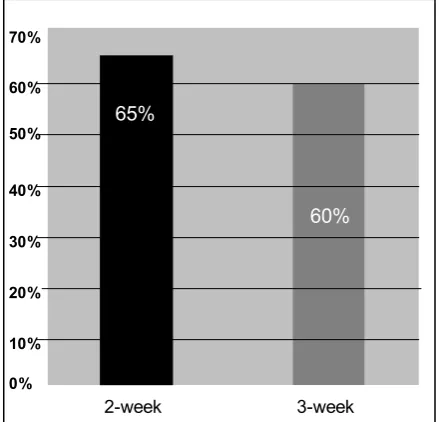
Results: 72 patients completed the study. The mean times for clearance of all warts in both groups were 9 weeks in every 2-week treatment group and 14 weeks in every 3-week treatment group. The mean numbers of treatment sessions required to achieve clearance were similar in each group (4.5 and 4.7 treatment sessions) for 2- and 3- week interval groups respectively. Cure rates at 3 months were 64% in the 2-week interval treatment group and 45% in the 3-week group. After 6 treatment sessions cure rates were similar for both groups; 65% and 60% for 2- and 3- week interval groups respectively. Morbidity was slightly greater in the 2-week interval treatment group.
Conclusion: Cryotherapy of common warts is effective and the percentage of cure is related to the number of treatments received, and independent from the period between treatments.
Keywords: : Cryotherapy, Common warts.
Abstract
* Department of Medicine/ Dermatology, College of Medicine, Hawler Medical University, Erbil, Iraq. Introduction
Cryotherapy is a widely used treatment mo-dality in dermatology. The application of graded degrees of cold to the skin may be used to treat a variety of benign skin growths, such as warts, pre-cancerous le-sions such as actinic keratoses, and malig-nant lesions such as basal cell and squamous cell cancers. The technique is
also known as cryosurgery 1. The goal of
cryotherapy is to freeze and destroy tar-geted skin growths while preserving the
surrounding skin from injury 2. The
tech-nique is straightforward and reproducible, making cryosurgery an attractive option for many commonly encountered benign skin
conditions 3. The general advantages of
cryotherapy are its ease of uses; usually require no anesthesia, low cost, and good
cosmetic results 4, 5. Various methods have
been devised in the use of cryotherapy and they include: the spray freeze technique,
thedipstick applicator technique, the
cryo-probe method, and the thermo-coupler
method 6. The mechanism of treatment
after re-epithelialization 7,2. The process
may have to be repeated three or more times and almost not tolerated by very
young children 8. Freezing with liquid
nitro-gen is accompanied by a stinging, burning pain that peaks during thawing
approxi-mately 2 minutes after treatment 9. The
post treatment lesion usually requires no dressing. A small blister sometime hemor-rhagic, scarring, and dyspigmantation, is
complications of cryotherapy 10.11. Adverse
effects are usually minor and for a short
period of time12.
Common warts (CW) are benign skin
tumors caused by double-strandedDNA
viruses called human papillomaviruses. It appears as firm, rough keratotic papules on the skin surface and may be single or
grouped papules 13. Viral warts represent
one of the most common diseases of the
skin 14. Despite the fact that the lesions are
often self-limiting, some studies have sug-gested spontaneous wart clearance rates at 2 years, their unsightly appearance
justi-fies treatment and patients often seek it 15.
Several treatment modalities exist, among the available medical and destructive therapeutic options for cutaneous warts, none is uniformly effective or virucidal, but Cryotherapy is one of the most common
and effective treatments for CW 15, 16.
any of the following: (1) Pregnancy; (2) Treatment of the warts in the past by any modality; (3) Immunodeficiency (related to cancer chemotherapy, systemic corticos-teroid therapy, transplant status, etc); (4) Patients who had history of keloid forma-tion; (5) Cold sensitivity or history of vascular diseases. Patients were randomly
divided into two groups: Group A: 40
patients were treated with cryotherapy at
interval of 2 weeks (± 2 days). Group B: 40
patients were treated with cryotherapy at interval of 3 weeks (± 2 days). All patients with a clinical diagnosis of CW were allocated to have liquid nitrogen spray technique applied for each lesion with spray gun. The spray gun was held perpendicular to the wart at a distance of 1-2 cm and spread from the center to include the edge of the warts for a
10-secound sustained freeze-thaw cycle main-taining a 2-mm margin (white freezing front) onto the surrounding normal skin, and then allowed to thaw. Both Groups were treated until their warts had cleared, or they had been withdrawn from the study. The wart was considered to be cured when
there was no visible wart tissue, and complete cure was defined as complete
clearance of all warts. Cure rate was assessed after 3 months of treatment, as
each of the group would have received different numbers of treatment sessions. Cure rate of each group after receiving up
to 6 treatments was also assessed. Patients received no treatment for the
warts other than cryotherapy throughout the study. The number of warts at each visit prior to treatment was counted, and the clinical evaluation was performed by the treating physician as well as another dermatologist at baseline and at each visit, until complete clearance of all warts or a maximum of 6 treatment sessions. At each subsequent visit, patients were asked whether they had suffered from pain or blistering after the treatment. No
analge-sics other than acetaminophen were required for some cases. Inflamed warts were treated, others adverse sequelae
Methods
(hypo and hyperpigmentation, infection, scar formation, etc) were assessed at the target wart site and in the surrounding area. All patients who missed to follow-up were excluded from the study.Data were analyzed by using the Statistical Package for Social Science (SPSS, Version 16.0). Microsoft Excel Worksheet was used to illustrate the results as tables and graphs. P-value of less than 0.05 was accepted as significant
A total of 80 immuncommpetant patients
with CW (44 male, 36 female) were enrolled and treated with liquid nitrogen
cryotherapy. 72 patients were completed the study (39 male and 33 female). They
were divided into two groups (37 patients in Group A, and 35 patients in Group B).
Their age ranged from 10-55 years with mean 21.4 ± 2.66 years. The number of warts on the hands and/or feet varied from 1 to 12 with a mean number of warts per patient 5.2 ± 1.4 warts. The duration of CW before treatment ranged from 2 to 24 months. The mean duration of warts prior to attendance was 7 ± 1.5 months. The size of the CW ranged from 2-15 mm in
diameter mean 4.6 ± 2.2 mm. Eight (11%)
patients were withdrawn before they had completed their treatment .The mean times to clearance of warts in each group were 9 weeks in every 2- week and 14 weeks in every 3- week group respectively (P < 0.05). The mean numbers of treatment
required to achieve clearance were similar
in each group (4.5 and 4.7 treatment sessions) for every 2- and 3-week treatment groups respectively (P >0.05).
Cure rates were evaluated after 3 months of the initiation of treatment and after 6 treatment sessions, and correlated with the frequency of sessions. After 3 months 23 (64%) of patients had cleared in group treated every 2-weeks, while 16 (45%) of patients of those treated every 3- weeks, Figure 1.
Figure 1: Cure rates for each of the groups
after 3 months (P < 0.05).
After 6 treatment sessions cure rates were similar for both groups; 24 (65%) of pa-tients (P > 0.05) for 2-week group and 21 (60%) of patients (P > 0.05) for 3- week
group, Figure 2.
Figure 2: Cure rates for each of the groups after 6 treatments Session (P > 0.05).
Both pain and hemorrhagic blistering oc-curred more commonly in those patients treated at 2- week intervals. Pain alone was recorded in 21 (56.7%) patients who
Results
0% 10% 20% 30% 40% 50% 60% 70%
2-week 3-week
45% 64%
0% 10% 20% 30% 40% 50% 60% 70%
2-week 3-week
Figure 3: Bar chart represents the percentage of cryotherapy adverse events for the
twotreatment groups (more than one adverse event observed in single patient) (P > 0.05).
were received treatment every 2-week, and 16 (45.7%) of those who were received
treatment every 3-week (P<
0.05).Hemorrhagic blistering was noted in 7 (18.9%) of patients attending every 2-week, and 4 (11.4%) of those attending every 3-week (P < 0.05). Treatment-related dyspig-mentation adverse events were confined to the application site and included; hypopig-mentation in 5 (13.5%) and 4 (11.4%) of patients treated every 2-week or 3-week respectively (P >0.05). Hyperpigmentation occurred in 4 (10.8%) of patients attending
every 2- week and 3 (8.5%) of those
at-tending every 3- week (P > 0.05). Secon-dary infection was a problem in 2 (5.4%) patients treated at 2- week intervals and 1 (2.8%) patients treated at 3- week inter-vals (P >0.05). Recurrences of warts (doughnut warts) occurred in 2 (5.4%) of patients treated at 2-week intervals and 3(8.5%) of those treated at 3-week inter-vals (P >0.05). No instances of scarring or nerve damage were reported in both groups, Figure 3.
Discussion
Cryotherapy is a widely used treatment modality in dermatology. Viral warts are
common dermatological disease1. In this
comparative study 80 immunocompetant patients with CW were enrolled. 72 patients completed the study, while eight patients were withdrawn before they had completed their treatment; five of these patients were due to failure to attend and three patients because of pain. Treatment was carried out by spray rather than with cotton wool buds or cryoprobe, as this is the standard method used in our department. The two groups in this study were similar with re-gard to demographic data. Therefore, there is no reason to suppose that the methods of treatment or cure rate resulted in any bias. In our study the mean time for wart clearance was 9 weeks for every 2-week and 14 weeks for every 3-week treatment in comparison to the mean times to
clear-ance of warts17(9.5 and 15 weeks) in every
2-week and 3-week groups respectively, concluded that warts cleared faster with
pain Hemorrhagic
blister
Hypo pigmentation
Hyper pigmentation
Infection Recurrence
2– weeks 3– weeks
60%
50%
40%
30%
20%
10%
more frequent treatment. The mean num-bers of treatment sessions required to achieve clearance were similar in each group (4.5 and 4.7 treatment sessions) for every 2- and 3-week group respectively. Our results were slightly lower than the mean numbers of treatments required to achieve clearance in each group (4.75 and
5.3 treatment sessions)17, but slightly
higher than the result of different study (3.1 and 3.5 treatment sessions) in which they were also similar for 2- and 3- week
inter-vals18. Percentage of cures at 3 months for
2- and 3-week interval treatments were 64% and 45% and obviously, the cure rate for the 2- week interval treatments was greater than that of 3-week interval treat-ments (P < 0.05). However, the cure rates were higher than those who concluded cure rates after 3 months of 66%, 47%, and
30% for 1, 2, and 3 week intervals 17. Our
cure rates were lower than those who showed (8% for 2 week and 75% for 3
week) 18. The Patients in the latter study
were randomized to receive cryotherapy at 2, 3, and 4 week intervals with the percent-age of cures at 3 months 78%, 75% and 40% respectively. Possible explanations include differences in the patient popula-tions, and differences in the predominant
wart virus strains or combination of both19.
Percentages of cure up to six treatments were also statistically analyzed. After 6 treatments, cure rates were similar for both groups: 65% for every 2-week group and 60% for every 3-week group. Cure rates were comparable to 8% for every 2-week
group, and 44% for every 3-week group17.
Percentage of cures in the 2- week interval groups were upper than in the 3-week in-terval group, although the difference fell
short of statistical significance. In this current study we found a higher incidence
of pain and hemorrhagic blistering in the 2 weeks interval group. Pain alone was recorded in 56.7% of patients attending every 2-week, and 45.7% of those attend-ing every 3-week. A study showed 29% for
2- week interval and 7% for 3 week 17;
while the incidence of pain in our study was
much higher than reported previously, and that is because the patients were asked whether or not had pain directly after their previous treatment session, while pain
as-sessed in the following visit17. Hemorrhagic
blistering was noted in 18.9% of patients
attending every 2- week, and 11.4% of
those attending every 3-week. This is higher than those who showed 7%, 0%
respectively17 and this may be because we
used aggressive cryotherapy for 10-
sec-ond sustained freeze, while traditional
freeze maintaining of ice around each wart
were used17. Despite the fact that more
pain and blistering are induced with aggressive approach, a reduction in num-ber of treatments which is painful as well, is worth while. Treatment-related dyspig-mentation adverse events were confined to the application site and included; hypo and hyperpigmentation. Hypopigmentation was slightly higher than hyper pigmentation in both groups. This may be due to greater sensitivity of melanocyte to cold injury. A secondary infection was most commonly seen in patient with warts on the dorsum of the foot and that is because these areas are covered, more subjected to trauma, and delay in wound healing. Recurrences of warts at the periphery of a blister were slightly higher in patients treated at 3-week intervals. No instances of scarring or nerve damage were reported in both groups.
1. Gibbs S. Local treatment for cutaneous warts. In: Williams H, Bigboy M, Diepgen T, Herxheimer A, Naldi L, Rzany B (editors). Evidence Based Der-matology. 1st ed. London. BMJ books, 2003; Pp
423-30.
2. Ashish C. Bahatia. Operative procedures. Manual of Dermatologic Therapeutics, Arndt, Kenneth A; Hsu, Jeffrey T.S. 7th ed. Lippincott Williams &
Wil-kins, 2007; 251-3.
3. Thai KE, Sinclair RD. Cryosurgery of benign skin lesions. Australas J Dermatol, Nov, 1999; 40 (4):175-84.
4. Kuflik EG, Gage AA. The five-year cure rate achieved by cryosurgery for skin cancer. J Am Acad Dermatol, Jun, 1991; 24(6 Pt 1):1002-4. 5. Keogh-Brown MR, Fordham RJ, Thomas KS,
analysis of wart treatment. Br J Dermatol, Apr, 2007; 156(4):687-92.
6. Kuwahara RT. Cryotherapy.eMedicine, 2007. ( A c c e s s e d m a y 2 1 , 2 0 0 9 , a t h t t p : / / www.emedicine.com/surg/topic 342 . htm.) 7. Kuflik EG. Cryosurgery updated. J Am Acad
Der-matol, Dec, 1994; 31(6):925-44.
8. Torrelo A. What's New in the Treatment of Viral Warts in Children. Pediatric Dermatology, 2002; 19; 3: 191–9.
9. Rasi A, Soltani-ArabshahiR, Khatami A. Cryother-apy for anogenital warts: factors affecting thera-peutic response. Dermatol Online J, 2007; 13 (4): 2.
10. Berman B. & Weinstein A. Treatment of warts.Dermatol Ther, 2000; 13 (3): 290-304. 11. Bartell H. and Tyring S.K.Viral Diseases. In: Ali
A. editor.dermatology: A Pictorial Review. New York. McGraw- Hill, 2007; Pp 253- 69.
12. Ramsey K, Ragan C and Dheansa B. Adverse effects of over the counter cryotherapy. Burns, 2007; 33(4):533-4.
13. Tirgar T, Hajian K, Seifollahpour L. Warts dis-ease in scalp, face and extrimities in guidance school girls. Journal of Babol University of medical sciences, 2003; 5(4):1-6.
14. Stulberg DL, Hutchinson AG. Molluscum Conta-giosum and Warts. Am Fam Physician, 2003; 67 (6):1233-40.
15. Sterling JC, Handfield-Jones S, Hudson PM. British Association of Dermatologists. Guidelines for the management of cutaneous warts. Br J Der-matol, Jan, 2001; 144(1):4-11.
16. Thomas KS, Keogh-Brown MR, Chalmers JR, Fordham RJ, Holland RC, Armstrong SJ, et al. Effectiveness and cost-effectiveness of salicylic acid and cryotherapy for cutaneous warts. An eco-nomic decision model. Health Technol Assess, Aug, 2006; 10(25): iii, ix-87.
17. Bourke JF, Berth-Jones J, Hutchinson PE. Cryotherapy of common viral warts at intervals of 1, 2 and 3 weeks. Br J Dermatol, 1995; 132: 433-6.
18. Bunney MH, Nolan MW, Williams DA. An assess-ment of methods of treating viral warts by com-parative treatment trials based on a standard de-sign. Br J Dermatol, Jun, 1976; 94:667-79. 19.Berth-Jones J, Bourke J, Eglitis H, Harper C, Kirk