The Effect of a PARA Rubber Ball Training Program on
the Hand and Arm Strength and the Hand-Eye
Coordination of Older Adults
Rangsarit Jamrern1, Chatkamon Singnoy1,*, Pimsiree Suwanna2, Voranuch Somsongkul3, Aatis Prajitr4, Rutteera Ditwichairut4, Warumpa Suwannarat5, Siriorn Sakdivilaiskul6
1
Faculty of Sport Science, Burapha University, Thailand 2
Department of Materials Science, Faculty of Science, Kasetsart University, Thailand 3
Department of Industrial Chemistry, Faculty of Applied Science, King Mongkut’s University of Technology North Bangkok, Thailand 4
Sirindhorn National Midical Rehabilitation Institute, Thailand 5
Faculty of Abhaibhubejhr Thai Traditional Midicine, Thailand 6
Academic Service Centre Burapha University, Thailand
Abstract
The purpose of this study was to design, develop, and apply a PARA rubber ball training program, and to investigate the efficiency of the program on the hand and arm strength and the hand-eye coordination of the elderly. This study is divided into two parts. Part 1 develops the program by reviewing the literature on exercise gerontology. Nine exercises were designed after two cycles of expert suggestion and modification. The index of the item-objective congruence was 0.81. Part 2 studied the efficiency of the program with 30 female volunteer participants aged 60-70 years old. All participants were members of the Ban Banglamung Social Welfare Development Center for Older Persons in Chonburi Province. The measurement tools included a hand grip dynamometer, for hand and arm strength tests; throwing the ball upwards and catching the ball with 2 hands over a period of 30 seconds, to test hand-eye coordination; and the electromyography test, for 3 arm muscles (extensor digitorum, palmaris longus, and brachioradialis). The research method was experimental and involved a one group pretest-posttest design for eight weeks. The data analysis used t-tests. The results found that the participants' average arm and hand strength and hand-eye coordination increased dramatically, p<0.05. The average electromyography test of hand muscle groups also increased, p<0.05. In conclusion, a PARA rubber ball is a new and interesting piece of exercise equipment that can help improve hand strength when applied in training programs. Therefore, a PARA rubber ball training program is effective in developing hand and arm muscle strength, which subsequently affects daily life activities.Keywords
PARA Rubber Ball Training Program, Hand and Arm Strength, Coordination, Older Adult1. Introduction
At present, Thailand is moving towards an aging society. Because current scientific developments in public health and medical technology have improved, the population experiences greater longevity, thus increasing the elderly portion of the population. In 2016, Thailand had a population 64.4 million. Moreover, the total 9.8 million were 60 years old or older (15.2%). Then, Thailand had reached the status of an aged society and the elderly population is increasing rate of 4% per year. Thailand becomes an aged society and it
* Corresponding author:
[email protected] (Chatkamon Singnoy) Published online at http://journal.sapub.org/health
Copyright©2019The Author(s).PublishedbyScientific&AcademicPublishing This work is licensed under the Creative Commons Attribution International License (CC BY). http://creativecommons.org/licenses/by/4.0/
is estimated that the year 2019 will be the first time that the elderly population is more than the children population. The Ministry of Public Health expected Thai seniors to increase by five hundred thousand people per year: clearly an aging society [5,8].
When entering old age, physical performance and fitness will decline, due to the deterioration of the body’s structure especially the nervous system, the skeletal system, and the muscle system which affects the efficiency and well-being of the elderly. In the changes in the nervous system, the relationship between the brain and muscles is lost, leading to poor balance, a slow-motion feeling, and so on. In the musculoskeletal system, a lack of exercise will cause quicker deterioration of this system, leading to a reduction of muscle mass and subsequent muscle weakness. The lessened contraction ability of muscles decreases muscle tension.
joints, or easily-breakable bones. As Jittapankul and Wivatvanit [6] said, increasing age produces dramatic physical changes, which lead to decreased performance, muscle weakness, quick fatigue, poor balance, and coordination deterioration. The most common problems in the general older adult population are accidents, slips, and falls.
Maneeprom, Taneepanichskul and Panza [10] recruited people 76.4±9.6 years of age for a study about the risk factors of falling. Their result found that a majority of participants had hypertension, and 81.3% were at risk of fall due to medication, which included using ≥4 medications such as sedatives, hypnotics, seizure medications, and antihypertensives. Walking (53.1%) was found to be the most common form of physical activity among participants, and 37.5% of the participants used walking assistance devices, typically a cane (25%). In this study, falls were reported among 64.1% of physically-active elderly at risk of fall. 43.8% of participants had at least one fall experience. Most of the falls happened outside of the home. The main causes of falls were stumbling (39.0%) and loss of balance (39.0%). The majority of cases (70.7%) had a fall when walking. The consequence from a fall was pain (31.7%), and more than half (51.2%) of the participants did not receive any medication for it.
Recently, it was found that people over 65 years of age will experience a fall, and in many cases, they will fracture a hip or sustain another potentially life-threatening injury. Common changes in aging skeletal muscles include a reduction in muscle mass by 25-45%, which is sometimes severe enough to cause ‘‘sarcopenia disease’’.
The diminished muscle strength of the aging hand has been attributed to decreasing muscle mass; a dramatic decrease in muscle mass is prominent in elderly adults in hand muscle groups. This is accompanied by a substantial loss of muscle fibers and their length, which contributes significantly to loss of action potential. Carmeli, Patish and Coleman [3] claim that elderly people often experience difficulties with hand functioning and manual dexterity in tasks requiring a fine, precise grip, and loss of hand strength can also affect simple everyday actions.
Functional ability seems to stay unchanged until 65 years of age, after which it declines gradually. Deterioration in hand function occurs as a result of both normal aging and disorders that are frequently encountered in elderly people, such as osteoporosis, osteoarthritis, and rheumatoid arthritis. Ideally, hand assessment should identify the specific patterns needed for specific tasks, and treatment approaches should specifically address the problems contributing to hand dysfunction.
Paksa [9] explains that muscle strength is the ability of muscles to lift or pull things, and it decreases with advancing age. The strength of the hand and arm muscles supports the coordination between the nervous system and the muscles. Meanwhile, hand-eye coordination involves a small bundle of muscles that is used in daily life tasks, such as picking things up, catching, etc. It is a necessary and very important
part of the activities of movement in the daily life of everyone at all ages.
Thus, we need to develop arm and hand strength in the aging population to improve their quality of life. Arm and hand strength may be improved by resistance training, such as weight-bearing training, elastic balls, medicine balls, etc. Moreover, coordination can be developed by throwing and catching small objects. Programs are available to not only improve arm and hand strength but also to provide a variety training methods, depending on the purpose of the study. Srimamad [13] said that in strengthening in the arms, the hands, and the hand-eye coordination, a variety of practices exist.
In this study [11] designed PARA rubber balls as a new type of exercise equipment. This research on developing a PARA rubber ball received funding for developing products from rubber. In Thailand’s rubber crisis, the amount of rubber produced is greater than the amount needed by current commercial products. This research project developed the formulation and production process to reduce the risk of allergies from low-protein latex in the rubber and from catalysts. The catalyst maintains the image with a low risk of allergic reactions. In addition, the image stabilizer catalyst is a substance that does not contain nitrosamines, a main cause of cancer. The process of producing rubber bubbles is not complicated; the research proposed the AA-D formula, with low-protein content without nitrosamines. The product is a PARA rubber ball in 3 levels of density that make up the index of ‘pressed hardness’. In terms of testing the properties of the ball’s spherical density, a work hardness index of yellow =19.47 - 155.77 Newton, green = 21.21 - 196.53 Newton, and red = 23.17 - 219.86 Newton was found. This rubber ball is similar to other products in the market, but the advantage is in the different levels of intensity, where one can use more power to squeeze it. Additionally, this ball is more environmentally friendly, as it does not produce residue and it is made from natural materials.
The PARA rubber ball is a small round ball made of natural rubber, meant to be repeatedly squeezed, thus helping to strengthen the muscles in the hands and wrists. Squeezing the rubber ball stimulates the muscles of the fingers, hands, and wrists. It also helps the muscles relax: gripping and releasing patterns reduce stress and tension.
Ball squeeze exercises can be used to strengthen the thumb and finger muscles. The thumb flexion is strengthened by pressing the thumb into the ball as it is held in the palm of the hand with the other fingers. The pinch between the thumb and the index finger will increase when the ball is caught between the fingers and the hands while squeezing the sides of the ball at the same time. Clutching (squeezing or pressing) the thumb and four fingers will strengthen muscles by repeating this exercise for each finger. Therefore, exercise using rubber balls will help keep the muscles in the fingers, hands, and arms strong.
elderly people with problems with their hand and finger joints, or with numb hands and fingers, the muscles of the hand weaken. Arm, hand, and finger manipulation may be done with a PARA rubber ball. Therefore, the researchers are interested in applying a PARA rubber ball training program that trains hand and arm strength and hand-eye coordination in the senior population.
2. Research Methodology
This research and development investigation took place in two stages. The first part involved designing and developing
a PARA rubber ball training program, and the second stage examined the effects of a PARA rubber ball training program
on the hand and arm strength and the hand-eye coordination of elderly adults. The research design used one group (pre-test/post-test design), and the sample was a small volunteer population. The participants were 30 female volunteers who were 60-80 years old and lived in the Ban Banglamung Social Welfare Development Center for Older Persons in Chonburi Province.
Part 1 of our study designed and developed a PARA rubber ball training program. First, a literature review was conducted to examine previous exercise programs for older adults with chronic conditions. The literature included a review of reports and research, websites, and interviews with elderly people who live in the Ban Banglamung Social Welfare Development Center for Older Persons in Chonburi Province. The review found that the elderly population struggles with arm and hand weakness and with finger lock; because the arms and hands are weak and shake, they can't pick up or catch anything in everyday life.
The subsequent exercise program included exercises with
a PARA rubber ball to improve arm and hand strength as well as coordination. The validity and reliability of the tests were checked by an expert.
Part 2 of our study examined the effects of a PARA rubber ball training program on arm and hand strength and on hand-eye coordination. Participants exercised with a PARA rubber ball for eight weeks (3 times/week). The participants were recruited via volunteer sampling. The physical effects were tested in the first week. A researcher explained and demonstrated the PARA rubber ball training program and provided a trainer for the entire program schedule. The participants exercised in a group and were tested at four weeks.
Kasetsart University Review Board approved the research ethics (KUREC-HS 61/002, date of approval 2 April 2018). Measurement
1. The arm and hand strength was tested by a hand grip dynamometer (Grip-D model T.K.K.5401), used before and after the program. The unit was used Kilogram /body weight.
2. The hand-eye coordination was tested by watching the participants repeatedly toss the ball from hand to hand
from waist level to just over their head and catch it with the other hand, and counting the number of repetitions over a 30 second period. The reliability was .86.
3. Hand and arm muscle strength was tested 3 times by squeezing the PARA ball in the palm with the electromyography (EMGmodel BTS FREEMG300). Electrodes were placed on the right extensor digitorum, the right palmaris longus, and the right brachioradialis muscle groups. The unit was used microvolt (uV).
Research Analysis
The means were compared by t-test.
3. Results
8 exercises of a PARA rubber ball training program were designed in two cycles with 3 experts (3 sports scientists); after testing for content validity, suggestions, and modification, the final program consisted of 9 exercises. The program followed FITT principles (Frequency, Intensity, Time, and Type). The number of repetitions was increased by 2 every two weeks. The programs included a hand warm-up and cool-down period before and after the exercise, respectively, each lasting 5 minutes. The program showed good validity and reliability.
Table 1. PARA rubber ball training program for squeezing
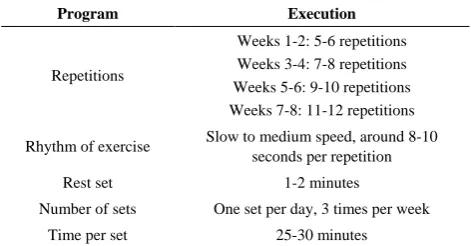
Table 2. PARA rubber ball training program
Program Execution
Repetitions
Weeks 1-2: 5-6 repetitions Weeks 3-4: 7-8 repetitions Weeks 5-6: 9-10 repetitions Weeks 7-8: 11-12 repetitions
Rhythm of exercise Slow to medium speed, around 8-10 seconds per repetition
Rest set 1-2 minutes
Number of sets One set per day, 3 times per week
Table 3. Hand-eye coordination training program
Week Program
1 Toss the ball and catch with same hand
2 Toss the ball and catch with the two hand
3 Toss the ball rebounding the wall and catch with two hands
4 Toss the ball to partner
5 Toss the ball and catch with other hand
6 Toss the ball and catch with two hands
7 Toss the ball into the loop target
8 Toss the ball into the high loop target
1. Arm and hand strength and throwing the ball for 30 seconds, 8 weeks
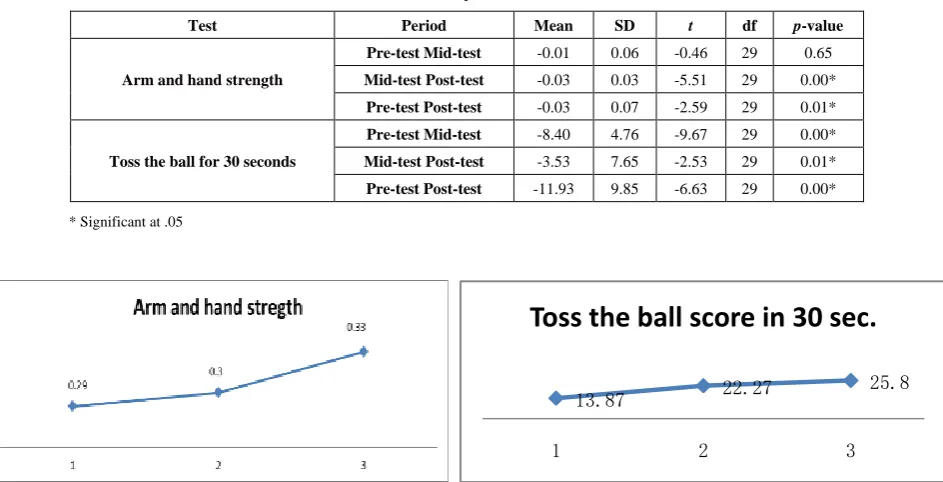
Table 4. Shows average data of the arm and hand strength and toss the ball for 30 seconds over 8 weeks
Group
Arm and hand strength (n=30)
Toss the ball for 30 seconds (n=30)
Pre-test Mid-test Post-test Pre-test Mid-test Post-test
Exp. 𝐗 0.29 0.30 0.33 13.87 22.27 25.80
S.D. 0.09 0.11 0.12 6.08 5.64 10.24
Table 4 shows that the average arm and hand strength in the pre-test = 0.29±0.09 kg/body weight, in the mid-test = 0.30±0.11 kg/body weight, and in the posttest = 0.33±0.12 kg/body weight. Moreover, for throwing the ball for 30 seconds, the average score was 13.87±6.08 seconds in the pre-test, 22.27±5.64 seconds in the mid-test, and 25.80±10.24 seconds in the post-test.
From table 5 show the comparison of test means for squeezing the ball and throwing the ball for 30 seconds over the 8 weeks. Between week 1 and week 8 and between week 4 and week 8, a significant difference was found, p<.05. However, the difference between week 1 and week 4 was not significant for squeezing the ball. However, throwing the ball for 30 seconds wassignificant (p<.05) in all periods.
Table 5. Comparison of result
Test Period Mean SD t df p-value
Arm and hand strength
Pre-test Mid-test -0.01 0.06 -0.46 29 0.65
Mid-test Post-test -0.03 0.03 -5.51 29 0.00*
Pre-test Post-test -0.03 0.07 -2.59 29 0.01*
Toss the ball for 30 seconds
Pre-test Mid-test -8.40 4.76 -9.67 29 0.00*
Mid-test Post-test -3.53 7.65 -2.53 29 0.01*
Pre-test Post-test -11.93 9.85 -6.63 29 0.00*
* Significant at .05
13.87 22.27 25.8
1 2 3
2. The EMG test for arm and hand strength in hand muscles
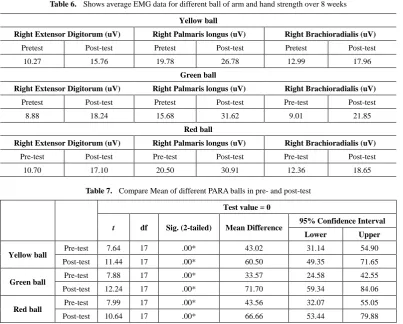
Table 6. Shows average EMG data for different ball of arm and hand strength over 8 weeks
Yellow ball
Right Extensor Digitorum (uV) Right Palmaris longus (uV) Right Brachioradialis (uV)
Pretest Post-test Pretest Post-test Pretest Post-test
10.27 15.76 19.78 26.78 12.99 17.96
Green ball
Right Extensor Digitorum (uV) Right Palmaris longus (uV) Right Brachioradialis (uV)
Pretest Post-test Pretest Post-test Pre-test Post-test
8.88 18.24 15.68 31.62 9.01 21.85
Red ball
Right Extensor Digitorum (uV) Right Palmaris longus (uV) Right Brachioradialis (uV)
Pre-test Post-test Pre-test Post-test Pre-test Post-test
10.70 17.10 20.50 30.91 12.36 18.65
Table 7. Compare Mean of different PARA balls in pre- and post-test
Test value = 0
t df Sig. (2-tailed) Mean Difference 95% Confidence Interval
Lower Upper
Yellow ball Pre-test 7.64 17 .00* 43.02 31.14 54.90
Post-test 11.44 17 .00* 60.50 49.35 71.65
Green ball Pre-test 7.88 17 .00* 33.57 24.58 42.55
Post-test 12.24 17 .00* 71.70 59.34 84.06
Red ball Pre-test 7.99 17 .00* 43.56 32.07 55.05
Post-test 10.64 17 .00* 66.66 53.44 79.88
From table 7 shows that the average frequency obtained from the arm muscle measurements indicated greater strength in squeezing the ball. All 3 ball colors had an average increase in frequency of EMD data, with significant pretest-posttest differences (p<.05).
4. Discussion
This study shows dramatic changes in the strength of the hand and arm muscles of the elderly. The testing data show that moving and exercising the fingers with rubber balls helps develop finger control in the elderly for catching and throwing. Finger exercise training with a rubber ball develops strength in the arm muscles and hand tendons for squeeze ability, and throwing and catching a ball improves hand-eye coordination. These help to improve quality of life for the elderly, because many daily tasks related to hand management require strong control, quick movement, and stability.
Keen et al. [7] reported, on average, a 20% reduction in force fluctuation during low-level index-finger abduction contractions after strength training with muscle contractions of the same type. The reduction in force fluctuation for the group in our study was, on average, about 27%.
It should be cautioned that it is inappropriate to compare
the results of the two studies. First, in their study, the training and test tasks involved the same type of muscle contractions (index finger abduction). Thus, a more direct link may have existed between the training-induced adaptations in the central and peripheral nervous systems and the performance of the test task, or the improvement in steadiness may have been a specific effect of the training effect on the test task. The training (ball-rolling) and test (finger-pinch) tasks in our study were quite different. No direct link exists between the two; thus, the improvement in pinch force steadiness may result from improved overall hand function as a result of the training.
Second, pure finger abduction is a manual task that does not seem to be used frequently during activities of daily living; therefore, more improvement may be allowed for this isolated abduction task. However, the finger pinch task is used for multiple types of manipulations each day. It can be considered a highly ‘trained’ task that allows limited room for training-induced improvements.
movement improves the ability to maintain stable clamping force and finger pinch gestures, including quickly picking up and moving small objects as well as controlling the desired force.
Arm strength, as total clamping force, is an important index of muscle strength. It requires a minimum grip capacity of 9 kg to get the desired hand function. Reducing the strength and ability to pick up and hold will reduce self-care and quality of life. Therefore, the strength of picking up and holding is important to maintaining daily activities. The ability to hold and perform daily activities decreases with age and with progression of dementia, but knowledge of and understanding about the relationship between strength and activity in everyday life (such as eating, bathing, etc.) is important.
Ball squeezing produces increased finger flexion. The effect of this reinforced activity involving the long finger flexors is increased wrist and finger flexion, to the possible detriment of developing or facilitating wrist extensor activity. A persistent overuse and predominance of a flexed posture of the hand may lead to difficulty performing the release phase of the grasp [4].
In this study, the repetitive hand exercises demonstrated not only improved grip strength but also improved functional performance [2]. Thus, exercise with a PARA rubber ball improved the strength of the index finger and thumb flexors and increased the hand grip strength; the hand-squeezing exercise with the ball caused a statistically significant increase in grip strength.
Human manual function is largely reflected by skillful use of the fingers in grasping, lifting, and manipulating objects between the thumb and one of the four fingers (finger pinch). Age-related changes in manual function therefore cause deterioration in the control of finger pinch. Enhancing control of finger pinch through training could, to a certain extent, improve both the quality of life and the capacity for independent living in elderly individuals.
Hand function—especially the ability to sustain a steady pinch, a critically important function in hand manipulation—also deteriorates with age. Training with squeezing finger movements improves the ability to maintain a steady pinch force and finger-pinch posture, as well as to quickly move small objects with a finger grip. The training program induced a positive change in the excitability of motoneurons in muscles that are important to controlling finger pinch. These improvements could potentially allow elderly people to lead a more independent life, given the importance of finger pinch in everyday tasks requiring manual dexterity [11]. The exercise and resistance exercise have some effect on improvement on hand function and grip strength in elderly population [1,14].
In general, squeezing a ball has been used with stroke patients: “the effects of ball squeezing on recovery in the hemiplegic hand, ball-squeezing was common among our stroke patients and was supported, and often actively encouraged, by nursing and medical staff. It may be possible to use the ball squeezing therapy also be helpful” [4].
Future research should be applied to exercise programs with rubber balls to design their use in exercises accompanied by music, to make the exercise more fun. Moreover, applying this program to the general elderly and creating group exercises is another topic for further research. In conclusion, a PARA rubber ball is a new, interesting exercise equipment to help strengthen hand ability when applied to a training program. Therefore, a PARA rubber ball training program is effective in developing and strengthening hand and arm muscles, which subsequently has a positive effect on daily life activities.
ACKNOWLEDGEMENTS
We would like to thank the National Research Council of Thailand for funding this project.
REFERENCES
[1] Anandhi, D., Gokila, D., and Sivakumar, VPR. (2018). Comparison of Tasks Exercise Versus Resistance Exercise to Improve Grip Strength and Hand in Elderly. Journal of Physiotherapy Research. 2:1-5.
[2] Butefisch C, Hummelsheim H, Mauritz KH. Repetitive training of isolated movements improves the outcome of motor rehabilitation of the centrally paretic hand. Journal of Neurology Science 1995; 130:59-68.
[3] Carmeli, E., Patish, H., and Coleman, R. (2003). The Aging Hand. Journal of Gerontology: MEDICAL SCIENCES, 58(2), 146–152.
[4] Horgan, F., Moore, A., Crowe, N., and O’Keeffe, S. (1999). Ball-squeezing among stroke patients. Age and Ageing, 28(3): S43.
[5] Institute for Population and Social Research, Mahidol University. (2017). Situation of the Thai Elderly. Cited in https://op.mahidol.ac.th/ra/2017/11/25/pr-01/.
[6] Jitapunkul, S., & Wivatvanit, S. (2009). National Policies and Programs for the Aging Population in Thailand. Ageing Int, 33, 62-74, doi:10.1007/s12126-
[7] Keen, D.A., Yue, G.H., Enoka, R.M. (1994). Training-related enhancement in the control of motor output in elderly humans. Journal Applied Physiology. 77: 2648-2658.
[8] National statistical office (2008). Report on the 2007 survey of the older persons in Thailand. Bangkok: National Statistical Office, Thailand.
[9] Paksa, W. (2010). Effects of Body Weight and Elastic Training on Seniors' Leg Strength. Master of Science degree in Sport Science, Srinakharinwirot University.
[11] Suwanna, P., Somsongkul, Ditwichairut, D., Suwannarat, V., V., Jamrern, R., Singnoy, C., Prajitr, A., & Sakdivilaiskul, S. (2017). Full Report Natural Rubber Ball for Health Science Applications. National Research Council of Thailand. [12] Ranganathan, V.K., Siemionow, V., Sahgal, V., Liu, J.Z., &
Yue, G.H. (2001). Skilled Finger Movement Exercise Improves Hand Function. Journal of Gerontology. 56(8), M518–M522.
[13] Srimamad, S. (2000). Scientific Principles of Coaching. Bangkok, Chulalongkorn University.