International Journal of Sciences
Case Study
(ISSN 2305-3925)
Volume 2, Issue Apr 2013
http://www.ijSciences.com
Mandoga Edward (Correspondence) +263 773 451 332
Adapting to Social Change through
Re-engineering the Teacher Training
Programme
Mandoga Edward
1
, Zenda Tonderai
2
1
Department of Education, Bindura University of Science Education, Box 1020 Bindura, Zimbabwe 2
Mutare Teachers’ College, P.O Box 3293 Mutare, Zimbabwe
Abstract: In this research, an endeavour is made to highlight the experience of lecturers at one institution in
response to changes brought about by curriculum re-engineering. In a quest to realign itself with changing professional trends in the education sector, Mutare Teachers’ College (MTC) in Zimbabwe transformed its curriculum from being largely content based to competence and skills based. This was achieved through rebranding the curriculum to give more emphasis to teaching methodology than content in its teacher training programme. The discussion is based on an analysis of data collected through questionnaires and interviews
from a sample of twenty out of 104 lecturers. The study revealed that the majority of lecturers perceived emphasis on teaching methodology as being significantly related to good performance of the students on teaching practice. On the basis of this observation, the study recommends instituting a more sustained implementation plan to ensure that there is a total buy-in of the new thrust from all lecturers.
Keywords: Re-engineering, rebranding, teaching methodology, synchronisation, teaching practice curriculum
change
Introduction and background to the study
The world over, a number of countries are transforming their educational systems and curricular from being content based to child-centred and skills based. Curriculum re-engineering is a contentious term which can be used differently in different contexts. It can encompass aspects of innovation, changing, rebranding or reviewing the curriculum. In this study, a holistic approach to curriculum design and implementation will be taken. There is a general agreement among researchers however that curriculum re-engineering endeavours to empower the student to make them relevant and adaptive to the ever changing socio- economic environment.
In Zimbabwean tertiary institutions, curriculum re-engineering is carried out to as response to the socio-economic developments as well as meeting certain benchmarks in terms of quality assurance as demanded by education authorities from time to time. Tertiary institutions are obliged to meet the Zimbabwe Council of Higher Education (ZIMCHE) threshold in terms of quality assurance. Quality assurance is an ongoing process of evaluating the quality of a higher education system, institutions or programme. (Gwati,nd). Curriculum re-engineering is also a market driven exercise which responds to the demands of the consumer
ministry which is the Ministry of Education Art Sport and Culture (MoEASC).
Broadly speaking from the current educational perspective, curriculum re-engineering is done as a way of responding to the surge for the adoption of
21st century teaching methodologies. Proponents
of the 21st century teaching methodologies decry content based and traditional model of teaching in preference to competence and skills based curriculum. In this curriculum students use technology in collaborative inquiry based learning environments. The teachers will be willing and able to use technology and power to assist them in transforming knowledge and skills into products and new information. (21st century teaching).
http://www.ijSciences.com Volume 2, Issue Apr 2013
38
curriculum which was more responsive to themarket demands (Mandoga Zenda Mhishi, 2012). The rebranding of the curriculum at Mutare Teachers College in Zimbabwe in 2010 thus involved a substantial change in the nature of the working practices of lecturers. Not only was there an adjustment to the content to be taught but the roles of lecturers and students were transformed (Sieminski, Sandy, 2010).The change was largely informed by Osborne’s (1989) observation that lecturers who adopt student-centred, culturally responsive approaches are constantly evaluating and readjusting their teaching and learning practices.
The process involved the choosing and adapting of content, instructional materials, and evaluation instruments to reflect and respond to the rich and complex diversity of the students. The fundamental character of the switch to methodology, and the subsequent move away from a content based curriculum, provide a distinctive context for exploring lecturers’ responses and adaptations to this dramatic and rapid change. Understanding these is important if we are to grasp the factors shaping the implementation of curricular policies, and their effects.
This case study attempts to enhance understanding of the important factors which influence curriculum change by interrogating how the curricular reforms came about at the institution, and how lecturers responded to them on the basis of data from questionnaires and interviews.
Literature Review
Rebranding a curriculum that is responsive to the changes in society at tertiary level is a complex process requiring lecturers’ willingness to adapt and change. It also requires appropriate support services to help their efforts (Adrian Holliday n.d). Curriculum rebranding is not just about revisiting the content or learning formats, it challenges lecturers to become guides and mentors in a transformed and enhanced teaching and learning process. It is critical to note that if a lecturer is to create and maintain change, he or she must have a recognized, legitimated, and rewarding role in creating the change. (Wiley Online Library 1991) Carl, (2005) opined that lecturers are principal role-players in the process of curriculum change. The success of any curriculum implementation exercise and the quality of the graduates it produces therefore to a large extent hinges upon the role of the lecturer.
The curriculum must bring a solution to the factors that are propelling the change and lectures must act as change managers. Giving the lecturer a new curriculum or suggesting changes in their way of operation without their legitimate input may not
result in the desired outcomes. It has to be noted that smooth and successful curriculum change is extremely difficult and time consuming. This means that it cannot be completed without potential implementers that are the lecturers becoming personally involved. The lecturers must accept the change on their own terms and according to their own constructs of reality.
While many systems currently mandate change from above, research has shown the futility of involving the key stakeholders and implementers at the end of the process. College lecturers have complained in the past that they were not sufficiently consulted in the early stages in terms of curriculum re-engineering despite the fundamental role they are expected to play in the actual implementation. This study therefore reviews the changes made with regard to the curriculum at Mutare Teachers’ College, taking into cognisanse the experiences and reflections of the lecturers.
Research questions/sub problem
(a) Do lecturers appreciate emphasis on teaching methodology as opposed toemphasising on teaching content?
(b) What are the lecturers’ perspectives pertaining to challenges associated with curriculum re-engineering?
(c) Does emphasis on teaching methodology at college level improve the student teacher’s performance on teaching practice?
Justification of the Study
Many colleges and universities across the globe are transforming their curricula because they realise the importance of keeping abreast with current trends. An educational institution is a social system serving the society therefore changes in the society will definitely provoke a restructuring of the curricular. Humphrey, (1998) notes that from the American perspective, curriculum change or curriculum re-engineering affords the students an opportunity to appreciate the complexity and the diversity of the American society. This move is underpinned by the understanding that diversity courses teach students skills they will need to succeed in the 21st century.
http://www.ijSciences.com Volume 2, Issue Apr 2013
39
This development prompted key educationstakeholders to intensify the need for inclusiveness in the schools although the concept had been adopted long back.
Through the integration of Information and Communication Technology (ICT) and adoption of inclusive education policies into the curriculum at Mutare Teachers College, it was envisaged that students would be able to teach at any school using modern teaching technology as well as relating and teaching well in an inclusive set up. Broadly speaking the curriculum sharpened the students skills of participating in the highly cyber world and in the changing geo-political environment. Curriculum re-engineering is therefore very crucial if educational institutions are to survive in the ever changing social climate.
Limitations of the study
The study sought to find out how lecturers viewed the re-engineering exercise with regard to the curriculum. It has to be noted that re-engineering a curriculum is a process not an event. Equally so, the results and impact of a re-engineering process may not be decipherable over a very short period of time. Coming up with authentic results from such an exercise might require a longer period of assessment. By focusing on the performance of students over a period of two years after the re-engineering exercise, the research was not able to make an exhaustive study of the impact of the change in the design of the curriculum.
Research Design
A case study was adopted as a research design for this study because it allows the investigation to retain the holistic and meaningful characteristics of real life events. Yin (2003a) defines a case study as an empirical inquiry that investigates a contemporary phenomenon within its real life context. Curriculum re-engineering is a continuous process premised on relevancy and consumer demands. The ‘how and why’ questions which are key to every re-engineering process are best answered using the case study.
Quantitative and qualitative approaches were employed for data analysis and interpretation. Content analysis which allows for both quantitative and qualitative operations with data was employed.
Berelson (1952) assets that, content analysis as a research tool is used to determine the presence of concepts or themes within texts such as interviews, speeches, discussions or conversations. The summative approach which involves counting and comparisons of content and interpretation of context was used in this study. Data was gathered using the questionnaire and the interview as research tools. Data from the research instruments was subjected to content analysis with case summarises used to establish trends among data. Case summarises and statistical analysis of data was done using the SPSS.
Population and sampling
The college has a staff compliment of one hundred and four lecturers constituted as seventy two male and thirty two females. Twenty lecturers were randomly selected to participate as respondents and eighteen of them managed to respond to the questionnaire. Interviewees were drawn from the management committee that comprises the six heads of departments, the vice principal and the principal. At the time of conducting the interviews one HOD and the vice principal were not present and so six interviewees were interviewed.
Challenges of the former model and the re-engineering objectives
http://www.ijSciences.com Volume 2, Issue Apr 2013
40
Table 1: Benchmarks
Benchmark Frequency Percentage
Standard lesson plans 6 33.3
Standard schemes 2 11.1
Participatory methodologies 6 33.3
None 4 22.2
The American Heritage Dictionary of English Language (2009) defines a benchmark as a standard by which something can be measured or judged. The re-engineering process had to be evaluated against the benchmarks. Of interest however is an observation that 22.2% of the respondents believed that no benchmarks were set for the curriculum re-engineering process.
Weller (1998) argues that curriculum re-engineering fails due to lack of shared ownership
of case values, realistic and achievable goals. Table 1 reveals a clear lack of consensus on the intentions of the re-engineering process.
Curriculum re-engineering
The question on ‘What really was re-engineered?’ in the curriculum is pertinent to this study. Table 2 shows case summaries from questionnaire findings on what respondents felt was done to re-brand or re-engineer the curriculum.
Table 2: The re-branded curriculum
Aspect Frequency Percentage
Emphasis on methodology 11 61.1
Synchronised teaching of methodology 5 27.8
Workshops 2 11.1
Curriculum development may follow several models one of which is Tyler’s model which is premised on four basic questions;
What is the purpose of the education?
[OBJECTIVES]
What educational experiences will attain the purposes? [CONTENT]
How can these experiences be effectively organised? [ORGANIZATION]
How can we determine when the purposes are met?
[EVALUATION]
Table 2 indicate that the re-engineering process centred on reorganization of the curriculum in relation to emphasis without a shift in the objectives and the content. Content analysis on data obtained from interviews reveal that in 2010 the first year intake was subjected to a composite methodology examination. There was a modification in the assessment process to reflect the reorganization of the curriculum. The interview with the principal was most revealing as he pointed out that the re-engineering process also encompassed the introduction of professional ethics
in the Professional Development syllabus, staff development workshops for lecturers and a deliberate shift to use of 21st century methodologies which hinge on extensive use of ICTs. The reorganization of the curriculum ensured that methodology was allocated more time and that its teaching was synchronized. Synchronization was critical to ensure that there were no overlaps particularly in Professional Development studies and Theory of Education. Teaching of methodology became systematic in that lead lectures on common skills such as scheming and lesson planning were consolidated during the teaching of subject based methodology. The head of department for Professional Development Studies applauded this approach, which he said ensured the development of uniform teaching skills before deployment of students for teaching practice.
Impact of the re-engineering process
http://www.ijSciences.com Volume 2, Issue Apr 2013
41
Table 3: Effects of model on TP performanceFrequency Percent Valid Percent
Cumulative Percent
Valid Very Significantly 1 5.6 5.6 5.6
Significantly 1 5.6 5.6 11.1
Yes 8 44.4 44.4 55.6
Not Significantly 3 16.7 16.7 72.2
No 5 27.8 27.8 100.0
Total 18 100.0 100.0
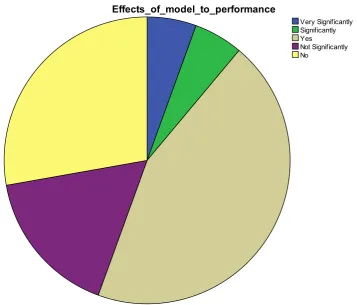
Table 3 reveals that 55.6% of the respondents believed that emphasis on methodology positively impacted on the performance of students on teaching practice. The re-engineering process was therefore a success story, however it is important to note that 27.8% of the respondents are of the perception that the model had no impact on the performance of students.
Fig 1: Effects of model on TP performance.
Interview results were varied on the success of the re-engineering process. It was apparent from the interview results that the model was not evaluated, maybe this study provides that evaluation. The principal conceded that curriculum change is evolutionary and as such some of the envisaged changes were taking effect now for example
http://www.ijSciences.com Volume 2, Issue Apr 2013
42
Challenges
Table 4 summarises the challenges given by respondents who responded to the questionnaire.
Table 4: Challenges
Challenge Frequency Percentage
Inadequate buy-in 12 66.7
No implementation plan 4 22.2
Inadequate time for supervising students on TP 2 11.1
Resistance to change can frustrate the best change management plans. Table 4 shows lack of buy-in of the re-engineering process as the major challenge. The lecturing staff could have developed inertia due to institutionalizing the traditional way and finding no justification for the proposed rebranding. Interview results reveal that inertia was not only on the part of the lecturing staff but the principal is alleged to have barely embraced the change. One interviewee claims that there was a clear lack of political will on the part of the
administration for the implementation of the model. Students also failed to embrace the change process particularly the introduction of participatory approaches because to them lecturers are suppose to lecture and not involve them in the generation of knowledge. Change generally fails at the implementation stage. Table 4 indicates that 22.2% of the respondents felt that there was no implementation plan in place to ensure a successful re-engineering of the curriculum.
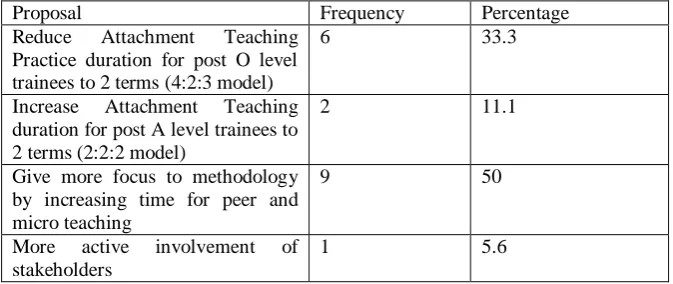
Table 5: indicates some crucial proposals that need serious consideration to improve the current training model.
Proposal Frequency Percentage
Reduce Attachment Teaching Practice duration for post O level trainees to 2 terms (4:2:3 model)
6 33.3
Increase Attachment Teaching duration for post A level trainees to 2 terms (2:2:2 model)
2 11.1
Give more focus to methodology by increasing time for peer and micro teaching
9 50
More active involvement of stakeholders
1 5.6
Graduates from the training system should have subject content equivalent to first year university level. It is with this realization that post O – level trainees need to be subjected to rigorous content coupled with a lot of methodology hence the proposal that they engage in a 4:2:3 model that is four terms of taught courses, two terms teaching practice and three terms back for taught causes. One interviewee proposed that the post O – level trainees must have a four year training program that will follow the 3:3:3 model that is three terms on campus for taught courses, three terms on teaching practice and three terms back on campus for the final hurdle. The second and forth year of training are for teaching practice with second year focusing on implementation of skills while the forth year is for internal and external teaching practice assessment. The 2:2:2 model, that is, two terms of taught courses on campus, two terms out on teaching practice and two final terms on campus
http://www.ijSciences.com Volume 2, Issue Apr 2013
43
Conclusion
The study notes that teachers need not be subject specialists only but should have the attitude and ability to impact positively on the instructional environment. The ideal training model should respond to content enrichment and development of requisite attitude and abilities in student teachers. It is also noted that development of routine skills
which are critical in the instructional environment such as voice projection, teacher positioning, recognizing individual differences, conflict resolution, mentoring and decision making are critical elements engrained in the re-engineering model. Against this background the college should mount more staff development workshops to ensure that there is a total buy- in of the thrust by all lecturers.
References
(Adrian Holliday n.d).
Berelson, B. R. (1952) Content Analysis in Communication Research. New York: Free Press.
Bryman, A. (2004) Social Research Methods. (2nd Ed). New
York: Oxford University Press.
Carl, A. (2005) The “voice of the teacher” in curriculum development:
A voice crying in the wilderness? South African Journal of Education 2005 EASAVol 25(4)223–228.
Gwati, l.C.K (n.d) Legal framework
for qualityassurance in Zimbabwe. Microsoft powerpoint
accessed 24 March 2013..www.msu.ac.zw/news/
Humphreys, D. (1998) Diversity and The College Curriculum: How Colleges & Universities Are Preparing Students For a Changing World.
http://www.ibe.unesco.org/Curriculum/Rpack/change.htm accessed 24 March 2013
Mandoga, E Zenda, T& Mhish, M (2012).Curriculum rebranding: Analysing the impact of emphasizing on teaching methodology as a way of improving teaching practice: A case of Mutare teachers’ College in Zimbabwe. International Journal of Current Research
Vol. 4, Issue 08, pp. 178-182. August, 2012.
Mutare Teachers College prospectus (2011) Mutare, Zimbabwe. www.mtc.ac.zw
Sieminski, S. (2010). Adaptations to major curriculum change: the case of Further Education lecturers. PhD thesis, The Open University.
The American Heritage Dictionary of English Language (2000). (4th Ed). Houghton Mifflin Company.
Weller, D. L. (1998) “Unlocking the Culture for Quality Schools: Re-engineering” International Journal of Education Management. Vol.12. No. 6. pp 250 – 259.
Wiley Online Library. (1991) Science education.