Geschke Center
Master's Projects and Capstones Theses, Dissertations, Capstones and Projects
Summer 8-13-2017
Creating A Culture of Mobility: A Quality
Improvement Project
Vincent K. Samuel
Follow this and additional works at:https://repository.usfca.edu/capstone
Part of theNursing Commons
This Project/Capstone is brought to you for free and open access by the Theses, Dissertations, Capstones and Projects at USF Scholarship: a digital repository @ Gleeson Library | Geschke Center. It has been accepted for inclusion in Master's Projects and Capstones by an authorized administrator of USF Scholarship: a digital repository @ Gleeson Library | Geschke Center. For more information, please [email protected]. Recommended Citation
Creating A Culture of Mobility: A Quality Improvement Project.
Vincent Samuel
Table of Contents
Pages
Clinical leadership theme ………. 4
Statement of the problem ………. 5 - 6 Project overview ………... 6 - 7 Literature review ………... 7 - 9 Rationale ………... 9 - 10 Methodology ………. 10 - 14 Timeline ……… 14 - 15 Expected result ………. 15
Nursing relevance ………. 15 - 16 References ………. 17 - 18 Appendix ………... 19
A Return of investment ………. 19
B Evaluation table ……… 20 - 23 C Driver diagram ………. 24
D Cause and effect ……… 25
E Run chart ………. 26 - 27 F Timeline ……… 28
G Stakeholder analysis ………. 29
H SWOT analysis ………. 30
I Change theory ………... 31
Table of Contents
Pages
K Banner mobility assessment tool (BMAT) ... 33
L Johns Hopkins evidence based appraisal tool ... 34 - 36
M PDSA and SDSA cycle ... 37
Creating A Culture of Mobility: A Quality Improvement Project.
Clinical leadership theme
The Clinical Nurse Leader (CNL) is a mastered prepared nurse educated to provide a
clinical leadership at the microsystem level to maintain inter-disciplinary collaborative processes
that lead to integrated, high-quality care (Bender, Connelly, Glaser & Brown, 2012). In March
2016, the CNL of the medical/surgical unit (7 South) recognized that unit performance for the
patient ambulation was 54%, below the organizational target of 65%. A team from the
microsystem was formed and charged with developing a new approach to ambulating patients
that would improve the process for ensuring that patients avoid the complications of immobility.
The team understood that creating a set of strategies and tactics alone was not enough to create a
change in the approach to patient mobility within the care team. Changing the culture of mobility
required shifting current thoughts, practices, and approaches of the team related to patient
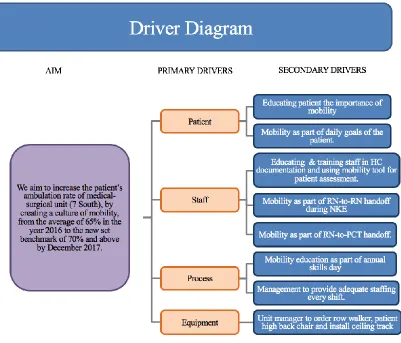
mobility within the microsystem (see Appendix C). The CNL applied competencies in nursing
leadership and clinical outcomes management to facilitate a process to create a culture of
mobility and to improve quality outcomes for patient ambulation within this microsystem
(AACN, 2007). The author met with the unit manager to use CNL tools and to motivate staff in
developing the unit culture based on use of feedback and a focus on learning and improving
quality, and to support a change in culture related to mobility. With the support from the unit
manager, the CNL developed a plan using CNL theory of horizontal leadership practices to
initiate change, using a new approach to implement change and engage staff in the work of
Statement of the problem
Prolonged immobilization of patients results in functional decline, increases the risk of
hospital-acquired pneumonia (HAP), and length of stay (LOS) (Drolet et al., 2013; Pashikanti &
Von Ah, 2012; Stolbrink et al., 2014). In postoperative surgery patients, there is convincing
evidence that suggests that patients should not be kept in bed after surgery and early mobilization
is a key to better patient outcomes (Castelino et al., 2016). Ambulation, as a part of the nursing
care for the hospital patient, has often been overlooked and has been identified as a missed
component of care (Kalisch BJ, 2006). Early ambulation is one of the most effective nursing care
interventions to prevent complications of immobility that can begin within twenty-four hours of
a patient’s hospitalization (Pashikanti & Von Ah, 2012). The development of standards of care
for mobility in hospitalized adults results in positive patient outcomes (Padula, Hughes, &
Baumhover, 2009). These studies were the guiding principle for the CNL to initially develop a
mobility tool to monitor mobility compliance (see Appendix J).
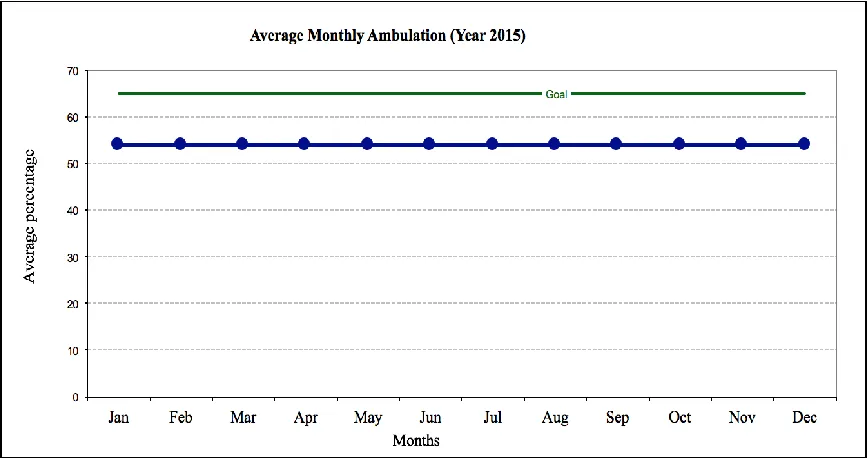
The average ambulation score was 54% of the patients ambulated on the medical-surgical
unit (7 South) in the year 2015, below the benchmark of 65% (see Appendix E, Figure E.1). The
direct impact of low ambulation score was the increase in patient’s length of stay. Recognizing
the need for some intervention, the CNL used the Model for Improvement (MFI) from Institute
of Healthcare Improvement (IHI), Kotter’s eight steps for successful change, and extensive
literature review to design the mobility quality improvement project. The CNL led the
improvement team to study the current process of patient ambulation, discover the gap in the
current process, and develop solutions. The team was successful in improving the ambulation
patient’s average length of stay was reduced to three days and below. The new mobility target set
by the Organization is 70% for 2017.
It is vital for a microsystem to provide high-quality patient care as well as to develop
practice and a framework for implementing the newest evidence based practice. Implementing
evidence based practice change can be achieved by creating a culture of democracy, innovation,
and support for staff to explore good practice and initiate change.
Project overview
The quality improvement theme of the project is based on the IHI’s quadruple aim;
improving the patient experience of care, reducing the per capita cost of health care, improving
the patient care experience, and the experience of the provider. The early patient mobility project
is expected to help patients to achieve a speedy recovery, reduce their length of stay, prevent
hospital-acquired infection (HAI), improve patient and family satisfaction, and improve the care
and experience of the providers bringing meaning to what they do in the medical field.
The aim of this project is to increase the patients’ ambulation rate of the medical-surgical
unit (7 South), by creating a culture of mobility, from the average of 65% in the year 2016 to the
new set benchmark of 70% and above by December 2017. The process begins with mobility
assessment of the patient upon admission. The process ends by ensuring that patients ambulate
as appropriate to maintain and restore their highest level of mobility. By working on this
process, the unit expects (1) to reduce physical outcomes that include fatigue, pain, deep vein
thrombosis; (2) to improve psychological outcomes that include depression, satisfaction, anxiety,
and comfort; and (3) to support social outcomes that include independence and quality of life. It
(2) patient and family satisfaction, (3) reduce cost per admission, (4) mortality rate, and (5) staff
satisfaction (Kalisch, Lee, & Dabney, 2013).
Literature review
The search for evidence was initiated by developing a population, intervention, and
outcome (PIO) question. In a hospitalized adult medical-surgical unit (P), creating a mobility
culture (I) will increase the unit’s ambulation rate and decrease patient’s length of stay (O) (see
Appendix B). Based on the PIO question, an electronic data search was conducted in the
Cochrane Database, CINAHL, Pub Med and Ovoid using following terms: early ambulation,
mobility protocol, and the length of stay. Search criteria were set to include English only,
research that included a report of outcomes related to inpatient mobilization, and published
between 2006 to 2016. The search yielded twenty-six articles of which eleven met search criteria
and six articles are selected for the literature review. The selected articles were evaluated using
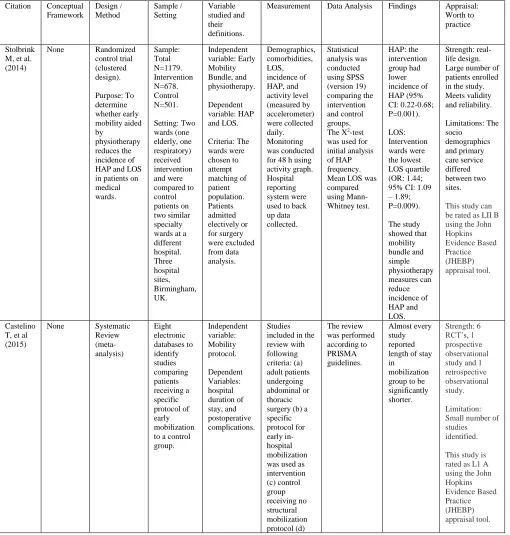
Johns Hopkins Evidence-based Practice (JHEBP) research evidence appraisal tool (see Appendix
L).
Stolbrink et al. (2014) conducted a randomized control trial (clustered design) to
determine whether early mobility aided by physiotherapy reduced the incidence of
hospital-acquired pneumonia (HAP) and length of stay (LOS) in patients on medical wards. The study
was conducted in two matched wards in a hospital with one receiving “early mobility bundle”
(Stolbrink et al., 2014). Patients in the experimental unit who received “early mobility bundle”
significantly reduced the incidence of HAP and LOS. This study can be rated as LII B using the
JHEBP research appraisal tool.
Castelino et al. (2016) conducted a systematic review on the effect of early mobilization
were selected using meta-analysis that included six randomized controlled trials and two
observational prospective studies. Almost all the studies reported that the LOS in mobilized
patients was significantly shorter (Castelino et al., 2016). This study is rated as L1 A using the
JHEBP appraisal tool.
Kalisch, Lee, and Dabney (2014) conducted a literature review on current evidence
research on the outcomes of mobilizing hospitalized adults. After an extensive search, they
identified thirty-six studies for inclusion in the review. Their findings generated four themes of
the effect of inpatient mobilization (1) positive physical outcomes, (2) positive psychological
outcomes, (3) positive social outcomes, and (4) and positive organizational outcomes (Kailisch,
Lee, & Dabney, 2014). This study is rated as LV A using the JHEBP appraisal tool.
Padula, Hughes, and Baumhover (2009) conducted a nonequivalent control group design
study to determine the impact of nurse driven mobility protocol on functional decline. The study
was conducted in the two units of The Miriam Hospital that were equal in size, similar patient
population and nursing staff composition. The nurses in treatment unit were trained to use
Geriatric Friendly Environment through Nursing Evaluation and Specific Intervention for
Successful Healing (GENESIS) into their model of nursing care delivery. The result of the study
confirmed the hypothesis as patient had a shorter length of stay (4.96 days treatment vs 8.72
days’ control). This study is rated as LII A using the JHEBP appraisal tool.
Kalisch (2006) conducted a qualitative study to determine nursing care regularly missed
on medical-surgical unit and reasons for missed care. She interviewed 200 nursing staff in 25
focus groups. The result of this study revealed that ambulation, one of the important element of
nursing care, was missed on a regular basis. This study is rated as LIII A using the JHEBP
explore the relationship between nurses’ attribution of responsibility for ambulating hospitalized
patients and their decision about whether to ambulate. It was a descriptive, secondary analysis of
data gathered for a parent study. The study found that the nurses who claimed responsibility for
ambulating patients were more likely to get patients up to ambulate. This study is rated as LIII C
using the JHEBP appraisal tool.
Rationale
The mission statement of the medical-surgical unit is “Highest level of care” that aligns
with the mission of the organization, which is to provide high-quality, affordable health care
services and to improve the health of its members and the communities it serves. The largest
population of the unit are patients over the age 65, who have a greater risk of complication from
immobility. The primary diagnosis of patients on the unit includes pneumonia, CHF, altered
mental status, COPD, sepsis, dementia, GI bleed, alcohol withdrawal, comfort care, and acute
renal failure. Patients with these diagnoses are at risk for prolonged immobility. The average
length of stay of the patients is between three to four days and the census per day is between 23 –
26 patients.
The ambulation data for 2015 of average 54%, created a sense of urgency to develop a
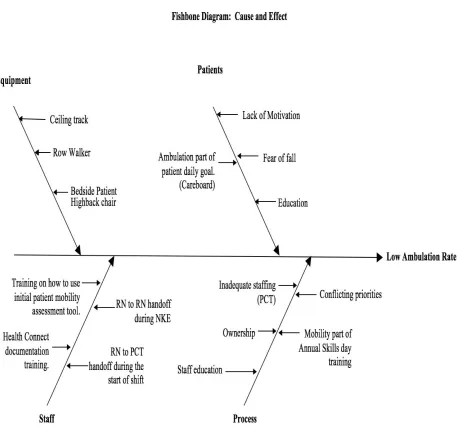
change process. When the process of ambulation was analyzed, the following barriers to patient
ambulation were identified; inadequate staffing, unit culture, unavailability of walking aid, lack
of time to encourage the patient (see Appendix D). The literature review provided convincing
evidence supporting creating a mobility protocol, that helps to mobilize patients early during
their admission, promotes the reduction in the incidence of HAI and improves LOS (Stolbrink et
al, 2014). Strengths, weaknesses, opportunities, and threats (SWOT) analysis was done to
improvement, and to identify the threats (see Appendix H). A stakeholder analysis was
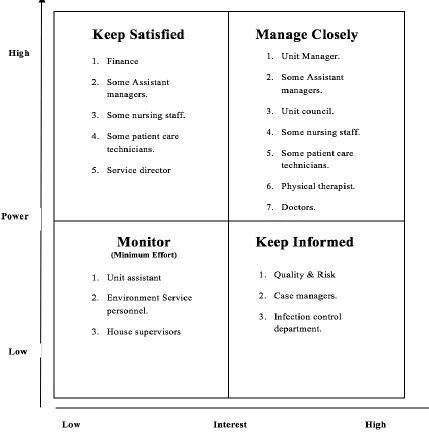
performed to determine which department and individuals would be impacted by this quality
improvement project (see Appendix G). An individual goal for various stakeholders to resolve
barriers to mobilization was agreed upon along with clear role expectations. A mobilization tool
(see Appendix J) was created with at least 80% buy-in from all stakeholders, which included unit
managers, nursing staff, and patient care technicians.
A driver diagram is set up to plan the process (see Appendix C). The unit team became
convinced that change is necessary and the CNL assured them of strong leadership and visible
support from the manager. A clear vision is created with the understanding of ‘why’ it is
important. A target percentage of daily ambulation rate of 70% and greater is agreed upon to be
achieved in the set time frame. It is also decided to celebrate short-term wins with the staffs and
present them with regular data that tracks performance data. Once the success is achieved, it was
agreed to build on the successful change and sustain it.
It is projected that cost for staff education and hands-on training for this project will be
$ 2,400. The primary benefit of this project is decrease in length of stay of the patients. If an
average of one patient in a month reduces their LOS by one day, it represents a total revenue of
$42,000 per year based on the cost of patient of $3,500/day. The secondary benefits of this
project will be reducing hospital acquired pneumonia and patient satisfaction. The project is
expected to generate an initial annual saving of US$ 39,600 (see Appendix A). The profit is
calculated without considering the secondary benefits. The analysis of return on investment
(ROI) supports the rationale to approve this project (see Appendix A).
The CNL utilized the IHI Model for Improvement (MFI) as a framework to guide the
mobility project. The assessment of the clinical microsystem is the first step in the improvement
journey. The microsystem assessment of the medical-surgical unit was completed using
Dartmouth Microsystem Assessment tool (Institute for Healthcare Improvement, 2016), a
structured method of inquiring into the anatomy of a clinical microsystem developed by
Dartmouth-Hitchcock Medical Center (Nelson, Batalden, & Godfrey, 2007).
The unit currently has a total of 70 staff members that include 45 full-time and part-time
RNs (of which three are MSN, forty are BSN, two are ADN, and four medical-surgical certified),
eleven per-diem RNs, eleven patient care technicians, and three unit assistants. The process of
care starts with admission when admitting nurse and the manager on duty welcome the patient
and the family members to the unit. Multidisciplinary rounds occur every morning shift where
the team of doctors, together with the primary nurse, case manager, and patient discuss the
concerns of the past and the plan of care. At the start of each shift, the staff meets for a huddle to
listen to the important announcements and spend few minutes on reflection. The team also has
unit committees for falls, safety, best practices, grasp, skin surveillance, policy and procedure
committee, wellness, pain management, infection control, and unit based team, who are part of
the unit council. These committees meet monthly to review and discuss plans for optimizing
patient care and safety. The staff and the management use Yapp (which is a web-based mobile
app), staff bulletin board, and monthly newsletter as the means of communication. Unit nurse
leaders use direct staff rounding to access the needs of the staff and to emphasize the quality
improvement projects of falls and daily ambulation that the unit is focusing.
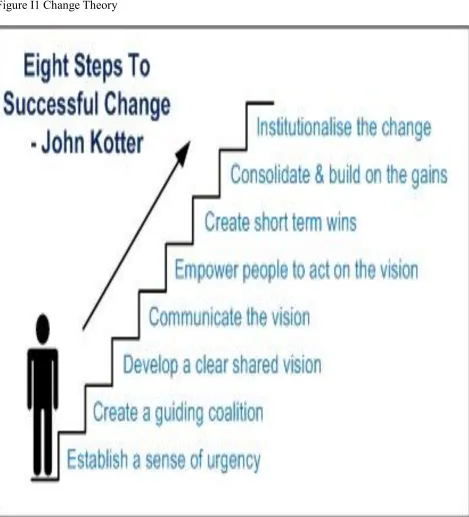
Kotter’s 8-Steps change model is used as a framework to guide in developing
identification of the problem to planning, implementation, evaluation, building successful change
and then sustaining it (Kotter, 2014). Creating a mobility protocol is implementing a new
practice, and it is important that nursing staff is engaged in current data analysis on ambulation,
recognize the problem, do driver diagram analysis and determine the cause, and prepares
strategies to address them. Kotter’s 8-Steps change model provides a clear path in creating this
successful quality practice of mobility protocol (see Appendix I).
Using Kotter’s model, a project plan was developed in collaboration with the unit staff
who were early adopters of the need for change. The plan included a vision for staff to follow
that challenges existing behavior, particularly negative interactions; encouraged staff to
contribute to decisions; support access to clinical knowledge and individual skills development,
and was designed to sustain efforts through reward and recognition of desired behavior.
The first plan-do-study-act (PDSA) cycle included educating and training PCTs in the
correct documentation of ambulation in health connect (see Appendix M). Proper documentation
of ambulation in the electronic medical record (EMR) was monitored and validated by the CNL.
This process continued for two weeks to establish standardization in the documentation process.
The second PDSA cycle included creation of a mobility documentation tool to be used by the
PCTs. The plan was that PCT would document patient ambulated during the shift on the paper
tool and hand it over to the next shift PCT to continue. The PCTs practiced this process for four
weeks. The ambulation score improved but it was observed that the PCTs were spending too
much time in documentation as they had to fill the paper tool as well in the electronic medical
record. The improvement team decided that since PCT-PCT handoff has become effective, the
paper tool could be discontinued to avoid time spent in double documentation. The third PDSA
mins in-service training on how to use various types of mobility equipment and to use them
accordingly for the patients needing that equipment. The CNL and the unit’s assistant managers
observed PCTs using mobility equipment and validated their skills. The PCTs felt confident
using the equipment, and the patients felt safe using the equipment. It resulted in great
improvement in ambulation score of the unit (see Appendix E, Figure E2).
The unit is moving forward to the standardizing phase of standardize-do-study-act
(SDSA) to ensure continuous improvement and create opportunities for employee empowerment.
The SDSA cycle starts with determining how the current best practice will be standardized in the
daily work of the unit. The CNL will develop and present an education session designed to
describe the current performance and evidence-based best practices to reduce the complication of
immobility. Data will be obtained from the quality department’s MS ambulation statistics,
derived from Health Connect audits, and existing electronic data source for all the patients
admitted during the day and then calculated to the monthly average.
The current goal of the unit is to implement a revised ambulation protocol to meet the
new set target for ambulation of 70% and above by the end of December 2017. The preliminary
efforts resulted in improvement in ambulation rates of 54% in 2015 to 68% in 2016. The project
charter (see Appendix N) is created to describe the performance improvement rationale, goals,
barriers, and anticipated resources to which the team will commit. Building on the success of the
initial efforts, the next phase of this project will focus on meeting with the nursing staff and
coming up with a unified aim to use best practice to create a revised ambulation protocol
designed to increase the patient ambulation rate to 70% and above. The process of this phase will
be to create an educational program for the staff (including new hires) in documenting the right
Appendix K) upon admission and thereafter assessing it every shift; providing training by super
users and physical therapist to use mobility equipment; observations by the CNL to reinforce
new practices and therefore support standardization by participating in daily to-RN and
RN-to-PCT report at the start of every shift; encouraging nursing staff to inform assistant nurse
managers if the patients are not motivated to ambulate so that they can intervene; and to
announce previous day’s ambulation rate at daily huddle and on the bulletin board to see the
daily progress. If SDSA is not working, to meet again with the team to access what is needed to
be modified to achieve success.
To evaluate the performance, it is decided that the CNL will do daily chart audits to make
sure that patient’s current mobility level is documented in Health Connect. Assistant nurse
managers will include in their Nurse Knowledge Exchange (NKE) audits RN and
RN-to-PCT report on patient’s mobility, and care board audits during patient rounding to see if the
patient’s individualized plan includes mobility. The CNL will check daily the ambulation report
(MS Ambulation Statistic) sent by the quality department. The report is useful because it
contains individualized patient data showing if the patient ambulated during the previous day. If
any ambulation intervention is missed, the CNL will audit the patient chart to investigate the
shift that patient did not ambulate and talk with that nurse and PCT. The previous day’s
ambulation score will be announced at daily huddles. There is a commitment made between the
management and the team to celebrate short-term wins with the staff. Finally, if successful, to
continue building on the change and sustain it.
Timeline
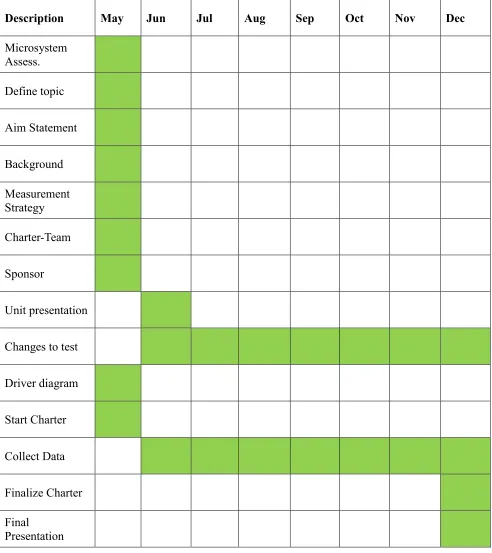
The project was initialized in March 2016 in the medical-surgical unit. The project is in
and making it as a part of new nurse and patient care technician onboarding checklist. It is
expected to be measured and completed by December 2017 (see Appendix F).
Expected result
The mobility project is in the standardizing stage. It is expected that the unit will maintain
the patient average ambulation rate to 70% and above by December 2017. The positive outcomes
of target ambulation rate can be measured with the patient data in decrease in average length of
stay of fewer than three days, and 0% hospital acquired pneumonia.
Nursing relevance
Creating an ambulation program and educating nurses about its positive outcomes on
patients will positively impact nurses’ knowledge and potentially promote ambulation of
patients. It is important for the nurses to understand that patients’ ability to ambulate as a
structured plan of care to accomplish the ambulation goal. Factors impacting nurses’ decision to
ambulate patients includes decreasing the perception of risk to mobilize, enhancing opportunities
to ambulate, and increasing accountability for ambulating (Doherty-King & Bowers, 2011). It is
also important for the nurses to be aware of the importance of including the patient in the
mobility plan to promote their day to day activities. Education of nursing staff about ambulation
should also include safe patient handling since there is always a risk of staff injury due to
improper lifting and transferring, proper documentation, and communication between the team
members.
In summary, the review of the literature supports the benefits of mobilizing hospitalized
patients and the dangers associated with immobilization. It is important that nursing staffs have
knowledge of the dangers of immobility, the importance of mobility, strategies to implement
patient and family members’ satisfaction. This project reiterates the importance of the role of a
CNL in the microsystem, such as that of an outcome manager by synthesizing data and
knowledge for optimal client outcomes; educator by using right principles and information in
educating client and professionals to achieve results; clinician by designing individualizing care
for better patient outcomes; and as team manager by delegating and managing the team for
References
American Association of Colleges of Nursing (AACN). (2007). White Paper on the Education
and Role of the Clinical Nurse Leader. Retrieved on July 16, 2016 from
www.aacn.nche.edu/publications/white-papers/ClinicalNurseLeader.pdf
Bender, M., Connelly, C. D., Glaser, D., & Brown, C. (2012). Clinical Nurse Leader Impact on
Microsystem Care Quality. Quality Nursing Research, 61(5), 326–332.
Castelino, T., Fiore, J., Niculiseanu, P., Landry, T., Augustine, B., & Feldman, L. (2016). The
effect of early mobilization protocols on postoperative outcomes following abdominal
and thoracic surgery: A systematic review. Elsevier Inc., Volume 159(Issue 4), 991–1003.
http://doi.org/10.1016/j.surg.2015.11.029
Doherty-King, B., & Bowers, B. (2011). How nurses decide to ambulate hospitalized older
adults: development of a conceptional model. The Gerontologist, 51, 789-797.
Drolet, A., DeJuilio, P., Harkless, S., Henricks, S., Kamin, E., Leddy, E. A., … Williams, S.
(2013). Move to improve: the feasibility of using an early mobility protocol to increase
ambulation in the intensive and intermediate care settings. Physical Therapy, 93(2), 197–
207. http://doi.org/10.2522/ptj.20110400
Institute for Healthcare Improvement (IHI). Clinical Microsystem Assessment Tool. Retrieved
on June 12, 2016 from
http://www.ihi.org/resources/Pages/Tools/ClinicalMicrosystemAssessmentTool.aspx
Kalisch BJ. (2006). Missed nursing care: a qualitative study. Journal of Nursing Care Quality,
21(4), 306–315 10p.
Kalisch, B.J., Lee, S., Dabney, B.W. (2013). Outcomes of inpatient mobilization: a literature
Kotter, J. (2014, July 31). The 8-Step Process for Leading Change. Retrieved April 29, 2016,
from http://www.kotterinternational.com/the-8-step-process-for-leading-change/
Nelson, E., Batalden, P., & Godfrey, M. (2007). Quality by Design: A Clinical Microsystems
Approach. John Wiley & Sons, Inc.
Padula, C. A., Hughes, C., & Baumhover, L. (2009). Impact of a Nurse-Driven Mobility Protocol
on Functional Decline in Hospitalized Older Adults: Journal of Nursing Care Quality,
24(4), 325–331. http://doi.org/10.1097/NCQ.0b013e3181a4f79b
Pashikanti, L., & Von Ah, D. (2012). Impact of early mobilization protocol on the
medical-surgical inpatient population: an integrated review of literature. Clinical Nurse Specialist
CNS, 26(2), 87–94. http://doi.org/10.1097/NUR.0b013e31824590e6
Stolbrink, M., McGowan, L., Saman, H., Nguyen, T., Knightly, R., Sharpe, J., … Turner, A. M.
(2014). The Early Mobility Bundle: a simple enhancement of therapy which may reduce
incidence of hospital-acquired pneumonia and length of hospital stay. The Journal of
Appendix A
Table A1 Return of investment (ROI)
Description Calculation per month
Calculation per year
Decrease patient length of stay (LOS).
Expected number of days decrease in a month = 1 day.
Expected number of days decrease in year = 12 days.
Improvement cost Cost of staff education and training: No. of staff x time x rate per hour.
60 x 0.5 (30 mins) x $65
= $ 1,950.00
Cost of staff education and training in a year:
$ 1,950 x 1 = $1,950.00
Cost for handout material: $450.00
Total cost for handout material: $450.00
Total annual cost: (1,950 + 450 = $2,400.00)
Calculated revenue
(saving per day LOS: $3,500)
Saving per day reduction on LOS: $3,500.00
Total revenue: No. of day reduced LOS in a year x cost per day
(12 x 3,500 = $42,000)
Calculated Return of
Investment (ROI) Total revenue – Total cost:
(42,000 – 2,400 = $39,600)
Appendix B
Table B1 Evaluation Table
PICO question: In hospitalized adult medical-surgical unit (P), creating a mobility culture (I) will
increase the unit’s ambulation rate and decrease patient’s length of stay (O).
Citation Conceptual Framework Design / Method Sample / Setting Variable studied and their definitions.
Measurement Data Analysis Findings Appraisal: Worth to practice
Stolbrink M, et al. (2014)
None Randomized
control trial (clustered design). Purpose: To determine whether early mobility aided by physiotherapy reduces the incidence of HAP and LOS in patients on medical wards. Sample: Total N=1179. Intervention N=678. Control N=501. Setting: Two wards (one elderly, one respiratory) received intervention and were compared to control patients on two similar specialty wards at a different hospital. Three hospital sites, Birmingham, UK. Independent variable: Early Mobility Bundle, and physiotherapy. Dependent variable: HAP and LOS. Criteria: The wards were chosen to attempt matching of patient population. Patients admitted electively or for surgery were excluded from data analysis. Demographics, comorbidities, LOS, incidence of HAP, and activity level (measured by accelerometer) were collected daily. Monitoring was conducted for 48 h using activity graph. Hospital reporting system were used to back up data collected. Statistical analysis was conducted using SPSS (version 19) comparing the intervention and control groups. The X2-test
was used for initial analysis of HAP frequency. Mean LOS was compared using Mann-Whitney test. HAP: the intervention group had lower incidence of HAP (95% CI: 0.22-0.68; P=0.001). LOS: Intervention wards were the lowest LOS quartile (OR: 1.44; 95% CI: 1.09 – 1.89; P=0.009). The study showed that mobility bundle and simple physiotherapy measures can reduce incidence of HAP and LOS. Strength: real-life design. Large number of patients enrolled in the study. Meets validity and reliability. Limitations: The socio demographics and primary care service differed between two sites.
This study can be rated as LII B using the John Hopkins Evidence Based Practice (JHEBP) appraisal tool. Castelino T, et al (2015)
None Systematic Review (meta-analysis) Eight electronic databases to identify studies comparing patients receiving a specific protocol of early mobilization to a control group. Independent variable: Mobility protocol. Dependent Variables: hospital duration of stay, and postoperative complications. Studies included in the review with following criteria: (a) adult patients undergoing abdominal or thoracic surgery (b) a specific protocol for early in-hospital mobilization was used as intervention (c) control group receiving no structural mobilization protocol (d) The review was performed according to PRISMA guidelines. Almost every study reported length of stay in
mobilization group to be significantly shorter. Strength: 6 RCT’s, 1 prospective observational study and 1 retrospective observational study.
Limitation: Small number of studies identified.
reported 1 of the outcome measure of interest (e) were published in English or French. Kailisch
B, Lee S, & Dabney B (2014)
None Systematic Review
Purpose: To provide a review of literature related to the outcomes of mobilizing adult patients in acute care settings. The electronic databases of MEDLINE (Ovid), CINAHL, and PubMed were accessed. After duplicates were removed, 10,528 titles and abstracts were screened for relevance to inpatient mobilization by the authors, of which, 36 studies were selected for inclusion in this review. 36 studies evaluated with quality scores ranged from 7-11. Of the 36 studies, 27 studies tested interventions, of which 26 studies included control groups in their design. The review was done on studies that met following criteria: (1) empirical research that included a report of outcomes related to inpatient mobilization (2) published in peer review journals between 1999 – 2011 (3) written in English, and (4) whose population consisted of adult inpatients in acute-care hospital settings.
A flowsheet of the search methods is used in determining the articles used in this review. 36 studies were evaluated by the three authors for methodological quality relative to study design, sample size, measurement, and statistical analysis. The various studies suggested physical benefits of inpatient mobilization, including pain relief, less deep vein thrombosis, less incidence of pneumonia, improved in physical function, quality of life, decrease length of stay, and mortality.
Strength: Of 36 studies, 27 studies received scores of 9-11 which was evaluated as strong, and 9 studies showed moderate quality with scores of 7-8.
Limitation: (1) varied sample sizes ranged from 22 – 458 in experimental design studies and from 35 – 532 in nonexperimental design studies. (2) Heterogeneity of samples including patients from stroke, surgery, or ICU units.
This study is rated as LV A using the John Hopkins Evidence Based Practice (JHEBP) appraisal tool Padula CA, et al., (2009)
None Nonequivalent control group design (Quasi-experimental)
Purpose: To determine the impact of a nurse-driven mobility protocol on functional decline in hospitalized older patients. N=50. Two nursing units served as study units, both were equal in size, cared for similar patient population, and were characterized by similar nursing staff composition. (n=25 each). Setting: The Miriam Hospital, Rhode Island. Independent variable: mobility protocol within 48 hrs. of admission.
Dependent variable: functional status and length of stay.
Criteria: Adults 60 years or older admitted with medical diagnoses, LOS of 3 or more days, ability to understand English, without Demographic data collection sheet to get baseline information. Functional status using modified Barthel Index (BI) and the Up and Go test. The SigmaStat statistical program used to calculate difference between treatment and control group using inferential statistic. Functional status scores improved significantly from admission to discharge in the intervention group vs control. Intervention group had significant lower LOS than control (4.96 d treatment vs 8.72 d, P<.001). Strength: Meets validity, reliability, and applicability criteria. Limitation: Lower functional level of the control group may have been caused by other factors like acuity and disease burden not measured in the study.
physical impairment, and cognitively intact and able to participate.
(JHEBP) appraisal tool.
Kalisch B (2006)
None Qualitative study (focused study group interview).
A total of 107 registered nurses, 15 licensed practical nurse, and 51 nursing assistants working in medical-surgical patient care units were interviewed in 25 focus groups. The research questions; (a) what nursing care is regularly missed on medical-surgical units in acute care hospitals? (b) what are the reasons nursing staff giving for not completing these aspects of care?
Focus group interview using a semi-structured design. All interviews were tape-recorded, fully transcribed, and analyzed initially by a research associate. The author then analyzed the interview transcripts independently using NVivo by QRS international, a qualitative analysis software, and applying grounded theory approach by which empirical data are thematically categorized by induction. The result revealed that important elements of nursing care, like, ambulation is being missed on a regular basis in acute care hospitals on medical-surgical units. Strength: All interviews were tape-recorded, fully transcribed, and analyzed initially by research associate and then by researcher. Limitation: The study took place in only two facilities.
This study is rated as L III A using the John Hopkins Evidence Based Practice (JHEBP) appraisal tool. Doherty-King, B. & Bowers, B.J. (2013)
None A qualitative study (descriptive, secondary analysis of data). The parent study was conducted at two hospitals in south Wisconsin, US. Setting A is a 468-bed hospital and setting B is a 300-bed hospital. Thirteen nurses of the twenty-five nurses’ participation were from setting A and the other twelve were from setting B and they had received additional training in care of hospitalized older adults. A descriptive, secondary analysis of data gathered from prior study which explored how nurses decided whether to ambulate hospitalized older adults. This analysis focused primarily on nurses’ attribution of responsibility for ambulating patients and influence on whether nurses ambulated patients. Grounded dimensional analysis which combines the key concepts of grounded theory was used. The study focused on a comparison between nurses who claim ambulation as a specific responsibility within the domain of nursing and those who see ambulation as important while attributing responsibility to other practitioners.
Result of this study suggest that when nurses claim responsibility for ambulating patients, they collaborate with physical therapy to promote progression of patient mobility, keep physicians on track with accurate activity orders, and engage patients in ambulation. In contrast, when nurses attribute the responsibility to others they are more likely to wait and not engage
Limitation: The study was a secondary analysis so conducting theoretical sampling to recruit participants to fill in gaps in analysis was not possible.
patients in ambulation unless directed.
Appendix C
Appendix D
Appendix E
Appendix F
Figure F1 Project Timeline for 2017
Description May Jun Jul Aug Sep Oct Nov Dec
Microsystem Assess.
Define topic
Aim Statement
Background
Measurement Strategy
Charter-Team
Sponsor
Unit presentation
Changes to test
Driver diagram
Start Charter
Collect Data
Finalize Charter
Final
Appendix G
Appendix H
Figure H1 Strengths, weaknesses, opportunities, and threats (SWOT) Analysis
STRENGTHS
➢ Teamwork and collaboration among RNs and PCTs.
➢ Willingness to learn.
➢ Result oriented staff.
➢ Nurse leaders support
➢ Data readily available
➢ Major equipment available.
➢ Support from Physical Therapists.
WEAKNESSES
➢ Medical devices, such as drains, chest tubes, and IV lines.
➢ Staffing inadequacy.
➢ Not enough patient chair in patient rooms.
➢ Staff fear of patient falling.
➢ Lack of patient motivation.
➢ Frequent float RN and PCTs.
OPPORTUNITIES
➢ Education
➢ Increased accountability and responsibility of staff
➢ Bringing awareness.
➢ Increased patient-centered care and quality of care
➢ Increased patient and staff satisfaction
➢ Making mobility as the unit’s culture.
THREATS
➢ Noncompliance
➢ Patient falls
➢ Increase in HAPU
Appendix I
Appendix J
Appendix K
Appendix L
Appendix M
Figure M1 PDSA and SDSA cycle
PDSA & SDSA CYCLE
Aim: To increase patient’s ambulation rate to 70% and above by December 2017.
A P S D
A P S D
A S S
D
Creating a culture of mobility
SDSA Cycle 1: How current best practice can be standardize.
PDSA cycle 3: Train PCTs to use mobility equipment.
PDSA cycle 2: Using mobility documentation tool.
PDSA cycle 1: Training and educating PCTs to do right ambulation documentation in Health Connect.
A S P
Appendix N
Figure N1 Project Charter
Introduction
The mission statement of medical-surgical unit (7-South) is “Highest level of care” that
aligns with the mission of the organization, which is to provide high-quality, affordable health
care services and to improve the health of its members and the communities it serves. While
performing the micro-system assessment of the unit, it was discovered that the average age
distribution of patient admitted is 12% for patients in the range of 19 - 50 years of age, 26% in
the range of 51 – 65 years of age, 28% in the range of 66 – 75% years of age, and 34% in the
range of 76 and above years of age. The primary diagnosis of patients on the unit includes:
pneumonia, CHF, altered mental status, COPD, sepsis, dementia, GI bleed, alcohol withdrawal,
comfort care, and acute renal failure. The average length of stay of the patients is between three
to four days and the census per day is between 23 – 26 patients. Patients of this unit are
discharged to a variety of settings that include home (32%), home with home health nurse and
physical therapist (28%), skilled nursing facility (30%), and other hospitals and rehab centers
(10%).
The unit currently has a total of 70 staff members that include 45 full-time and part-time
RNs (of which three are MSN, forty are BSN, two are ADN, and four medical-surgical certified),
eleven per-diem RNs, eleven patient care technicians, and three unit assistants. The process of
care starts with admission when admitting nurse and the manager on duty welcome the patient
and the family members to the unit. Multi-disciplinary rounds occur every morning shift where
concerns of the past and the plan of care. Discharge process is done in coordination with the case
manager.
At the start of each shift, every working team member meets for a huddle to listen to the
important announcements and spend few minutes on reflection. The team also has unit
committees for falls, safety, best practices, grasp, skin surveillance, policy and procedure
committee, wellness, pain management, infection control, and unit base team, who are part of the
unit council. These committees meet monthly to review and discuss plans for optimizing patient
care and safety. The staff and the management use Yapp (which is a web-based mobile app), staff
bulletin board, and monthly newsletter as the means of communication. Unit nurse leaders use
direct staff rounding to access the needs of the staff and to emphasize the quality improvement
Improvement Theme
The improvement theme is based on the IHI’s quadruple aim: improving the
patient experience of care (early mobility will help patient with speedy recovery, reduce length
of stay (LOS), and prevent hospital acquired infection (HAI); reducing the per capita cost of
health care (the project will result in saving from reduced LOS, early recovery, and patient’s
satisfaction), improve the care and experience of the providers as a happy and satisfied patient
Global Aim
The medical-surgical unit (7 South) aim to improve the patient ambulation score for
patients on the unit. The process begins with mobility assessment of the patient upon admission
in the unit. The process ends by ensuring patient ambulation as appropriate to maintain and
restore the patient to the highest level of mobility. By working on this process, we expect (1) to
reduce physical outcomes that include fatigue, pain, deep vein thrombosis, etc.; (2) to improve
psychological outcomes that include depression, satisfaction, anxiety, and comfort; and (3) to
support social outcomes that includes independence and quality of life. It is important to work on
the project as we have identified that it improves (1) length of stay, (2) patient and family
satisfaction, (3) reduce cost per admission, (4) mortality rate, and (5) staff satisfaction.
Specific Aim
We aim to increase the patients’ ambulation rate of medical-surgical unit (7 South), by
creating a culture of mobility, from the average of 65% in the year 2016 to the new set
Background
Prolonged immobilization of patients results in functional decline, increases the risk of
hospital-acquired pneumonia (HAP), and length of stay (LOS) (Drolet et al., 2013; Pashikanti &
Von Ah, 2012; Stolbrink et al., 2014). In postoperative surgery patients, there is convincing
evidence that suggests that patients should not be kept in bed after surgery and early mobilization
is a key to better patient outcomes (Castelino et al., 2016). Ambulation, as a part of the nursing
care for the hospital patient, has often been overlooked and has been identified as a missed
component of care (Kalisch BJ, 2006). Early ambulation is one of the most effective nursing care
interventions to prevent complications of immobility that can begin within twenty-four hours of
a patient’s hospitalization (Pashikanti & Von Ah, 2012). The development of standards of care
for mobility in hospitalized adults results in positive patient outcomes (Padula, Hughes, &
Baumhover, 2009). The unit had the average ambulation score of 54% in the year 2015, and an
Clinical Problem
The review of the literature provides convincing evidence that creating a mobility
protocol, that helps to mobilize patients early during their admission, can reduce the incidence of
HAI and improving LOS in medical patients. Using Kotter’s 8-Steps change model, the Clinical
Nurse Leader (CNL), as a change agent and outcomes manager, will develop and present an
education session designed to describe the present performance and evidence based best
practices to reduce the complication of immobility.
An individual goal for various stakeholders to resolve barriers to mobilization is agreed
upon with clear role expectations. A revised mobilization protocol will be created with at least
80% buy-in from all the stakeholders, which include unit managers, nursing staff, physical
therapist, and patient care technicians. The team needs to be convinced that change is necessary
and will be assured of strong leadership and visible support from everyone. A clear vision will be
created with the understanding of ‘why’ ambulation is important. A target percentage of daily
ambulation rate of 70% and greater will be agreed upon. To evaluate the performance, daily
ambulation score will be announced at the following day huddles. Commitment to celebrate
short-term wins with the staffs will be assured. Finally, if successful, to continue building on the
Family of Measures
Measures Data source Target
Outcome measure
• Monthly average percentage of
in-patient ambulation.
• Monthly Hospital-acquired
pneumonia (HAP).
• Monthly average length of stay
(LOS) of a patient in the unit
Quality Department: MS Ambulation Statistics.
Quality Department (existing automated data source)
Quality Department (existing automated data source)
70% and above
0%
3 days
Process measures
• Patient assessed for the level of ambulation during admission and thereafter every shift by primary RN.
• Previous day’s ambulation rate.
Health Connect Audit
Quality Department: MS Ambulation Statistics.
100%
70% and above.
Balancing measure
• Number of patient fall and hospital-acquired pressure ulcer (HAPU) per month.
Quality Department (existing automated data source)
Team Composition & Sponsors
Manager, Assistant Nurse Mangers, nurses, physical therapist, and patient care
technicians (PCT).
Population criteria
Measurement Strategy
Data will be obtained from Quality department’s MS Ambulation Statistics, Health
Connect audit, and existing automated data source for all the patients admitted during the day
and then calculated to the monthly average.
Data definition
Data element Definition
Ambulation Patient activity three times a day to the level or more as recorded on health connect during admission.
Hospital-acquired
pneumonia (HAP) Patient developing pneumonia 48 hours after admission. Length of stay The average length of stay of the patient in the unit per month.
Falls The number of patients falls/day.
Hospital-acquired
pressure ulcer (HAPU) The number of patients developed pressure sore after 24 hours of admission in the unit
Measure description
Measure Measure definition Data collection source Goal Ambulation Percentage of patient ambulated
per day
Quality Department: MS Ambulation Statistics
65%
RN-PCT documentation
N= number of activity level documented.
D= number of patients assigned
Health Connect Audit 100%
Hospital-acquired pneumonia (HAP)
The number of patients acquired pneumonia during their stay in unit per day.
Quality Department: Existing automated data source
0
Length of stay
(LOS) Average length of stay of patients in the unit Quality Department: Existing automated data source
3 days
Falls The number of patients fall per day in the unit.
Quality Department: Existing automated data source
0
Hospital-acquired pressure ulcer (HAPU)
The number of patients developed pressure sore after 24hrs of admission in the unit.
Quality Department: Existing automated data source
0
The current goal of the unit is to implement a revised ambulation protocol to meet the
new set target for ambulation of 70% and above by the end of December 2017. The preliminary
efforts resulted in improvement in ambulation rates of 54% in 2015 to 68% in 2016. Building on
the success of the initial efforts, the next phase of this project will focus on meeting with the
nursing staff and coming up with a unified aim to use best practice to create a revised ambulation
protocol to help to increase the patient ambulation rate to 70% and above. The process of this
phase will be to create an educational program for the staff (including new hires) in documenting
the right level of activities of the patient, using mobility tool, upon admission and thereafter
assessing it every shift; provide training by super users and physical therapist to use mobility
equipment; CNL to observe mobility being part of daily RN-to-RN and RN-to-PCT report at the
start of every shift; encourage nursing staff to inform assistant nurse managers if the patients are
not motivated to ambulate so that they can intervene; and to announce previous day’s ambulation
rate at daily huddle and on the bulletin board to see the daily progress. If the small test of change
Lessons Learned
- To be successful in today’s healthcare delivery system, a leader needs to actively pursue
collaboration with peers and other healthcare professionals.
- Servant leader delegates authority to engage staff, praises and celebrates staff successes,
focuses on staff not self, provides opportunities for staff development and learning, and is
committed to the organization.
- Before implementing a solution and changing a process, it is important to understand the
current system by using microsystem assessment tool.
- We cannot implement whole system change without testing and measuring small
incremental changes.
- A good aim statement can help to motivate people about the project as being something
measurable and achievable.
- Once you start the project, it is important to maintain the relationship and engagement
with the team by having meetings with a purpose, actions and outcomes of the project.
CNL Competencies
The clinical nurse leader accesses the current microsystem and researches evidence-based
outcomes to identify specificareas of improvement in a microsystem. The CNL then applies
variousstrategies for implementing the desired change process that will result in achieving the
desired quality and patient outcomes. Some of the key CNL competencies utilized in this project
are of:
- Clinician: designing and coordinating individualized care for better patient outcomes.
- Outcome Manager: synthesizing data and knowledge for optimal client outcomes.
- Educator: using right principles and information in educating client and professionals to
achieve results.
- Information manager: by using information system and putting knowledge at the point of
care.
- Risk anticipator: by doing system review to improve quality of client care delivery.