Muhammad Tayyab Ansari
1, Muhammad Haneef
1, Ghulam Murtaza
2Solid Dispersions of Artemisinin
in Polyvinyl Pyrrolidone and Polyethylene Glycol
Stała dyspersja artemizyniny w poliwinylopirolidonie
i glikolu polietylenowym
1 Faculty of Pharmacy, Bahauddin Zakariya University, Multan, Pakistan
2 Department of Pharmaceutical Sciences, COMSATS Institute of Information Technology, Abbottabad, Pakistan
Abstract
Background. Artemisinin (ARMN), a sesquiterpene lactone with an endoperoxide bridge (C-O-O-C), is an active anti-malarial moiety for drug-resistant malaria, which is spreading by 15% per annum in Pakistan. A few phar-macokinetic studies have indicated that ARMN is incompletely absorbed after oral intake due to poor dissolution characteristics in the intestinal fluids.
Objectives. To prepare ARMN formulations by physical mixing, solid dispersion and lyophilized dispersion tech-niques, using polyvinylpyrrolidone (PVP) and polyethylene glycol (PEG) in various proportions, to improve the pharmaceutical properties of the drug and to characterize the formulations’ physicochemical properties.
Material and Methods. Solid dispersions of ARMN in mixtures of biopolymers – i.e., PVP and PEG – were pre-pared by three different methods and their pharmaceutical properties were evaluated. Different molecular weights of PVP (K30 and K25) and PEG (PEG6000 and PEG4000) were used in different drug-to-carrier ratios (1 : 9, 2 : 8, 3 : 7, 5 : 5 and 6 : 4). X-ray diffraction (XRD) and Fourier transform infrared spectroscopy (FTIR) were used to evaluate drug/carrier interactions in the solid state. The dissolution rate and equilibrium solubility were compared with corresponding physical mixtures.
Results. Based on the XRD results, pure artemisinin showed a completely crystalline structure. Solid dispersions of ARMN showed more amorphous structures than physical mixtures. Improvement in the drug dissolution rate was observed for solid dispersion formulations compared to physical mixtures. The dissolution rate and equilibrium solubility were enhanced as the polymer content increased. The lyophilized solid dispersions showed the highest dissolution as compared to all the other formulations. The order of decrease in dissolution rate was LYO > SD > > PM > Pure ARMN. This may be due to the nature and extent of the physical interaction between the drug and the carrier. This work indicates that the rate of artemisinin dissolution can be increased substantially by formulat-ing it as a solid dispersion in PVP K30 usformulat-ing the lyophilization method. The addition of superdisintegrants such as PEG to the solid dispersions played an important role in the enhancement of the dissolution rate and thus in the preparation of fast-dissolving ARMN tablets (Adv Clin Exp Med 2010, 19, 6, 745–754).
Key words: solid dispersion, artemisinin, PVP, PEG.
Streszczenie
Wprowadzenie. Artemizynina (ARMN), lakton seskwiterpenowy z mostkiem endonadtlenkowym (C-O-O-C) jest aktywną grupą funkcyjną przeciw lekoopornej malarii, która rozprzestrzenia się w Pakistanie o 15% rocz-nie. Niektóre badania farmakokinetyczne wykazały, że ARMN po podaniu doustnym nie jest w pełni wchłaniana z powodu słabej rozpuszczalności w płynach jelitowych.
Cel pracy. Przygotowanie preparatu ARMN za pomocą mieszania fizycznego, stałej dyspersji i technik liofilizo-wanej dyspersji, z użyciem poliwinylopirolidonu (PVP) i glikolu polietylenowego (PEG) w różnych proporcjach. Poprawa właściwości farmaceutycznych leku i scharakteryzowanie właściwości fizykochemicznych preparatu.
Materiał i metody. Stałą dyspersję ARMN w mieszaninach biopolimerów, tj. PVP i PEG, przygotowano 3 różnymi metodami i oceniono ich właściwości farmaceutyczne. Użyto różnych mas cząsteczkowych PVP (K30 i K25) i PEG (PEG6000 i PEG4000) w różnych stosunkach lek–nośnik (1 : 9, 2 : 8, 3 : 7, 5 : 5 i 6 : 4). Za pomocą dyfrakcji rentge-nowskiej (XRD) i spektroskopii fourierowskiej (FTIR) oceniono interakcje lek–nośnik w stanie stałym. Porównano szybkość rozpuszczania i równowagę rozpuszczalności z odpowiadającymi im mieszaninami fizycznym.
Adv Clin Exp Med 2010, 19, 6, 745–754 ISSN 1230-025X
ORIGINAL PAPERS
Wyniki. Na podstawie badań XRD stwierdzono, że czysta artemizynina miała strukturę całkowicie krystaliczną. Stałe dyspersje ARMN wykazały bardziej amorficzne struktury niż mieszaniny fizyczne. Poprawę szybkości roz-puszczania leku zaobserwowano w przypadku preparatów stałej dyspersji w porównaniu z mieszaninami fizycz-nymi. Szybkość rozpuszczania i równowaga rozpuszczalności były lepsze w miarę wzrastania zawartości polimeru. Liofilizowane stałe dyspersje rozpuszczały się najlepiej w porównaniu z innymi preparatami.
Wnioski. Tempo rozpuszczania w porządku malejącym to LYO > SD > PM > czysta ARMN. Tak może być ze względu na charakter i zakres fizycznych interakcji między lekiem a nośnikiem. Praca ta wskazuje, że szybkość roz-puszczania artemizyniny można zwiększyć, łącząc ją jako stałą dyspersję w PVP K30 metodą liofilizacji. Dodanie znakomitych dezintegratorów, takich jak PEG, do stałych dyspersji odegrało ważną rolę w poprawie szybkości rozpuszczania, a tym samym w przygotowaniu szybko rozpuszczającej się tabletki ARMN (Adv Clin Exp Med 2010, 19, 6, 745–754).
Słowa kluczowe: artemizynina, stała dyspersja, poliwinylopirolidon, glikol polietylenowy.
Malaria is vector-borne and is one of the major killer diseases in the world, causing an estimated one to two million deaths annually [1]. Recently it has been observed that malarial cases occur throughout the year in the Sindh Province [2, 3]. The clinical symptoms of malaria are varied and non-specific, but commonly include fever, fatigue, malaise, headache, myalgia and sweating. Anemia is a common complication due to hemolysis; and in falciparum malaria, serious complications such as acute renal failure, pulmonary odema and cere-bral dysfunction can occur [4]. Antimalerial drugs are commonly administered orally; however, these agents may be given parenterally for a quick ther-apeutic effect, followed by oral treatment [5].
Antimalarial drugs can be categorized accord-ing to the stage of the parasitic life cycle they impact. Blood schizonticidal agents like artemesinins ared-erived from Qinghaosu, obtained from Artemisia annua (also called sweet wormwood), used to treat acute malarial attack [5]. Various semi-synthetic drugs such as artemether, artesunate and arteether have been chemically derived from artemisinin. These drugs have been converted to oral, rectal and parenteral formulations [6]. Artemisinin is li-pophilic in nature, thus can only be given orally [7]. However, the solubility of lipophilic drugs can be improved by preparing solid dispersions [8]. Solid dispersion involves the fine or molecular dis-persion of lipophilic drugs in hydrophilic carrier substances, which results in the enhanced solubil-ity of the drugs due to solubilization, particle size reduction or conversion into amorphous nature [8, 9]. Lyophilization is also used for enhancing drug solubility by molecular dispersion. It involves dissolving the drug with the carrier in a co-solvent, followed by their freezing and sublimation [10].
The current study was conducted to prepare artemisinin formulations as physical mixtures, solid dispersions and lyophilized dispersions, to improve the pharmaceutical properties of the drug.
Material and Methods
Material and Apparatus
Artemisinin was purchased from Alchem, In-dia; polyvinylpyrrolidone (PVP)-K25 and K30 and polyethylene glycol (PEG)-4000 and 6000 were obtained from Fluka Chemicals Limited (USA). Methanol, acetone, potassium bromide and silica gel were procured from Merck (Germany). Other chemicals used were starch (Rafhan, Pakistan), lac-tose (DMV international, Netherlands), primogel (Yung-Zip Chemicals, Taiwan) and magnesium stearate (Royal Tiger Products, Taiwan).
The apparatus used included a lyophilizer and Rotavapor (Buchi, Japan), a pump (Vacuum brand, Germany), a tablet hardness machine (Curio, Pak-istan), an oven (Ney, Germany), a water deionizer (Waterman, Pakistan) and a single punch com-pression machine (Curio, Pakistan).
Methods
Artemisinin and PVP K30, artemisinin and PVP K30 and K25, artemisinin and PVP K30 and PEG4000 and artemisinin and PVP K30 and PEG6000 were weighed in the ratios 1 : 9, 2 : 8, 3 : 7, 5 : 5 and 6 : 4, and were formulated by the follow-ing methods:
1. The Physical Mixture Method. 2. The Solid Dispersion Method. 3. The Lyophilization Method.
The Physical Mixture Method
transferred to well dried bottles and stored at 25°C in a desiccator.
The Solid Dispersion Method
Precisely weighed amounts of the drug and polymers were transferred to 500 ml round flasks in the given ratios (1 : 9, 2 : 8, 3 : 7, 5 : 5 and 6 : 4), to which 100 ml of methanol was added. The flasks were fixed on the flask shaker (Yellow Line OS10 Basic) and shaken at 150 rpm for 24 hours at room temperature. Then the flasks were at-tached to the rotary evaporator to evaporate the methanol (approximately 75 ml). These mixtures were then transferred to petri dishes and placed in desiccators containing silica gel for drying. Once the drying was complete, the mixtures were gently ground, passed through a sieve (80 µm diameter), transferred to well dried bottles and stored at 25°C in desiccators.
The Lyophilization Method
The procedure is the same as described for the solid dispersion method up to the attachment to the rotary evaporator for complete evaporation of the methanol. At that point 100 ml of distilled water was added, the preparations were shaken well and placed in an electronic deep freezer at –60°C. Freeze drying was performed with the help of a lyophilizer. When these mixtures were com-pletely dried, they were ground gently and passed through a sieve (80 µm diameter). These mixtures were then transferred to well dried bottles and kept at 25°C in a desiccator.
Tablet Preparation
by Wet Granulation
Artemisinin tablets were prepared by the granulation method, by homogenous mixing of 200 g of starch and lactose along with the active ingredient. A slurry was prepared by mixing 50 g of starch in 100 ml of deionized water. Deionized water (150 ml) was boiled in a stainless steel con-tainer and added to the aforementioned mixture. The burner flame was reduced and the paste was gently stirred for 3 to 5 minutes. The prepared paste was added to the mixed powder of starch and lactose. Mixing was carried out for 20 to 30 minutes. The prepared grains were passed through a sieve (mesh size 8) and dried in a hot air drier for 35 minutes. The half dried granules were passed through a sieve (mesh size 20) and then dried for 15 minutes at 70°C. When the moisture content of the granules was less than 1%, they were preserved in a polythene bag. The different
gran-ule preparations were mixed thoroughly with 5% of primogel as a disintegrant, magnesium stearate as a lubricant and 120 mg artemisinin to get ho-mogenous mixtures, which were compressed into tablets by a single punch machine in a controlled humidity area (relative humidity less than 40%). The different tablet formulations were labeled properly and stored in sealed bottles.
Dissolution Studies
Drug release was measured using a dissolu-tion paddle apparatus (Galvano Scientific, Paki-stan). The dissolution medium (500 ml) con-sisted of water (90% v/v), ethanol (10% v/v, to increase drug solubility maintaining sink con-ditions during dissolution) and sodium lauryl sulphate (0.1% w/v) and was stirred at 50 rpm and 37°C. For every dissolution experiment, an amount of formulation equivalent to 120 mg of artemisinin was used. At predetermined time intervals, 5 ml samples were taken after fil-tration through cellulose acetate filter (Sarto-rius AG, Goettingen, Germany) with 0.45 µm pore size, and were replaced with the same vol-ume of fresh medium. The alkali reactions of filtered dissolution samples were tested and ana-lyzed spectrophotometrically at 290 nm [11, 12].
FTIR Analysis
Fourier transform infrared spectroscopy (FTIR) of all formulations was conducted by the KBr method [13] with 0.5–1% of sample in 200 mg KBr discs, using a FTIR spectrophotometer (Shimadzu, Japan). The scanning range was 450–4000 cm–1.
X-Ray Diffraction
An X-ray diffraction study of the pure drug, biopolymers and their preparations was conducted using a D8 Discover (Bruker, Germany) to assess the effect of the dispersion techniques on the crys-tallinity of the drug. The scanning of samples was done in the 8–70° diffraction angle range under the following conditions: Cu-K∞ radiation 1.5406 A°
(source), 4°/min scan speed, scintillation detector, primary slit 1 mm, secondary slit 0.6 mm.
Tablet Hardness Testing
Solubility Equilibrium
For equilibrium solubility studies, an excess quantity of the prepared formulations was added to a vial containing 5 ml of water at 37°C and 25°C. The vial was placed in a shaker at 37°C and 25°C at 100 rpm with a controlled room temperature. After seven days, the sample was filtered through a 0.45 μm millipore filter (Acrodisc GF syringe filter, Pall Life Sciences, USA) and 1 ml of each solution was diluted to 10 ml with distilled water. Diluted samples were assayed spectrophotom-eterically at 290 nm using a Shimadzu 1600 UV-Visible spectrophotometer (Shimadzu, Japan). In solvent comparison studies, a control experiment was performed on ARMN without PVP to confirm any degradation in various solvents.
Results and Discussion
Artemisinin-PVP and -PEG solid dispersions were formulated at ratios of 1 : 9, 2 : 8, 3 : 7, 5 : 5 and 6 : 4 for drug: PVP K30, drug:PVP K30 and K25, drug:PVP K30 and PEG6000 and drug:PVP K30 and PEG4000.
Drug Content
The ARMN content in all preparations was determined by UV analysis. The drug contents ranged between 95.8% and 99.5% of the theoreti-cal values.
Dissolution Studies
The calibration curve for pure artemisinin was prepared using methanol as the solvent due to poor solubility in water (Figs. 1, 2). The curve shows linear (coefficient of determination = R2 =
= 0.9991, Y-equation Y = 0.0503X + 0.0308) be-havior between artemisinin concentration and UV absorbance. The concentration of artemisinin in physical mixtures and solid dispersions were calculated using a standard curve. The ultimate pharmaceutical performance of different solid dispersions was investigated by determining their dissolution profile. Dissolution study sampling was done at 0, 10, 20, 30, 40, 60, 120, 180, 240, 300, 360, 480 and 600 minutes.
The dissolution profiles of physical mixtures, solid dispersions and lyophilized solid dispersions in all formulations exhibited an improvement in the dissolution behavior of formulated artemisinin as compared to pure artemisinin. The lyophilized
solid dispersions showed the highest dissolution among all the formulations. The order of decrease in dissolution rate was LYO > SD > PM > Pure ARMN. This may be due to physical interaction between drug and carrier.
According to the dissolution study, drug re-leases from physical mixtures were higher than from the pure drug. Solid dispersions exhibited a better dissolution rate than physical mixtures due to the increase in drug wetability. Overall, the drug release of the formulations made by the lyophilization method delivered high drug release followed by solid dispersion, physical mixture and pure drug, in that order. When drug release was compared among formulations with pure biopo-lymers and mixtures of biopobiopo-lymers, it was found that the drug release pattern of solid dispersions of ARMN : PVP K30 offered better drug release than solid dispersions of ARMN: PVP K25 and K30, ARMN : PVP K30 and PEG4000 and PVP K30 and PEG6000. This means that PVP K30 is the best drug carrier as compared to mixtures of biopolymers. When drug release was compared among mixtures of biopolymers, ARMN: PVP K25 and K30 showed better drug release, followed by ARMN: PVPK30 and PEG4000 and PVPK30 and PEG6000, in that order.
FTIR Spectra
The FTIR spectra of pure artemisinin showed characteristic bands at 3379 cm–1 (O-H stretching
vibrations), 2947 cm–1 (Fermi resonance of the
sym-metric CH3 stretch with overtones of the methyl
bending modes), 1093 cm–1 (C-O stretching), 876
cm–1 (O-O-C stretching in boat/twist form) and
825 cm–1 (O-O stretching in boat/twist form). It
indicates the properties of the O-O-C component, respectively representing the 1,2,4-trioxane ring.
The FTIR spectra of pure PEG4000 exhibited characteristic peaks indicating the specific mode of the molecules. The characteristics signals were at 3427 cm–1(N-H stretching), 2887 cm–1(C-H
stretching vibration), 1643 cm–1(C = C Stretching)
and 1281 cm–1(C-N stretching vibrations).
The FTIR spectra of pure PVP K25 exhibited characteristic peaks associated with specific struc-tural characteristics of the molecules. The spectrum of pure PVP K25 presented characteristics signals at 3444 cm–1 (O-H stretching vibrations), 2924 cm–1
(C-H stretching vibrations), 1659 cm–1 (C = O
Car-bonyl stretching), 1374 cm–1 (C-H bending) and
1290 cm–1 (C-N stretching vibrations).
Fig. 1. The effect of PVP K30 (A, B, C) and PVP K25+K30 (D, E, F) contents and the method of preparation on disso-lution behavior (A and D = physical mixtures; B and E = solid dispersions; C and F = lyophilized dispersions)
Ryc. 1. Wpływ zawartości PVP K30 (A, B, C) i PVP K25 + K30 (D, E, F) i sposobu przygotowania na rozpuszczalność. (A i D = mieszaniny fizyczne, B i E = stałe dyspersje, C i F = liofilizowane dyspersje)
Fig. 2. The effect of PVP K30+PEG6000 (G, H, I) and PVP K25+PEG4000 (J, K, L) contents and the method of prepara-tion on dissoluprepara-tion behavior (G and J = physical mixtures; H and K = solid dispersion; I and L = lyophilized dispersions)
Fig. 3. The FTIR spectra of pure constituents
Ryc. 3. Widma FTIR czystych składników
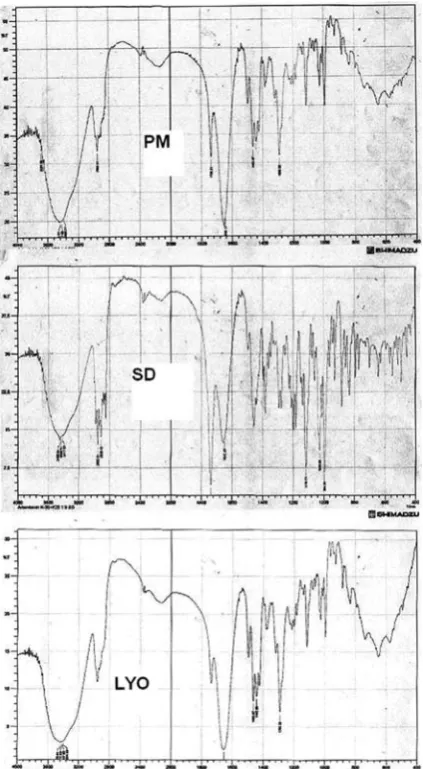
Fig. 4. FTIR spectra of a physical mixture (PM), solid dispersion (SD) and lyophilized solid dispersion (LYO) of ARMN-PVP K30 at a 1 : 9 ratio
Ryc. 4. Widma FTIR mieszaniny fizycznej (PM), stałej dyspersji (SD) i liofilizowanej stałej dyspersji (LYO) z ARMN-PVP K30 w stosunku 1 : 9
analysis indicated a difference in intermolecular hydrogen bonding interaction at N-H or O-H be-tween ARMN: PVP and PEG among solid disper-sions. The FTIR spectra of the solid dispersions showed that the interaction of artemisinin in PVP and PEG was enhanced with an increase in poly-mer content, with the maximum in SDs of PVP K30 at the ratio of 1 : 9. The presence of N-H and C = O peaks in addition to artemisinin peaks in the spectra of solid dispersions indicated a stronger interaction between the drug and the carrier. The shifting of O-H and C-H stretching vibrations in FTIR spectra revealed red shifting and blue shift-ing of the carbonyl group in the fshift-ingerprint region, indicating interaction among artemisinin and the biopolymers. The extent of the interaction varied depending on the nature and molecular weight of the carriers and on the drug-carrier ratio. As the ratio of the biopolymer (PVP and PEG) to the drug (ARMN) increased, this indicated that high bio-polymer binding to the drug improves the phar-maceutical quality.
X-ray Diffraction
Fig. 5. FTIR spectra of a physical mixture (PM), solid dispersion (SD) and lyophilized solid dispersion (LYO) of ARMN-PVP K25 and K30 at a 1 : 9 ratio
Ryc. 5. Widma FTIR mieszaniny fizycznej (PM), stałej dyspersji (SD) i liofilizowanej stałej dyspersji (LYO) z ARMN-PVP K25 w stosunku 1 : 9
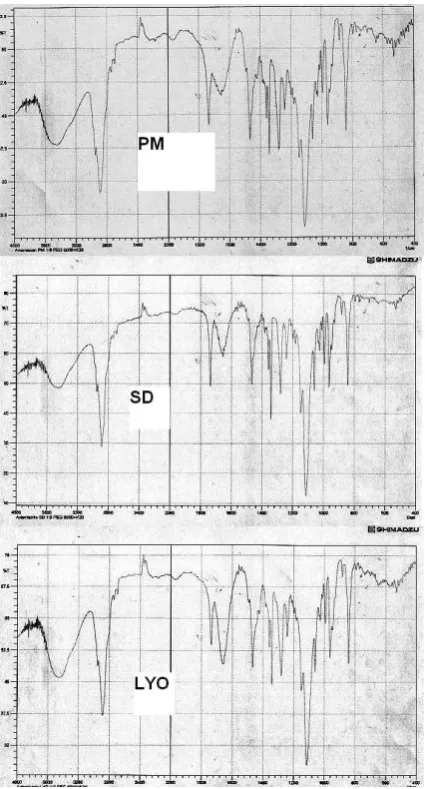
Fig. 6. FTIR spectra of a physical mixture (PM), solid dispersion (SD) and lyophilized solid dispersion (LYO) of ARMN-PVP K30 and PEG4000 at a 1 : 9 ratio
Ryc. 6. Widma FTIR mieszaniny fizycznej (PM), stałej dyspersji (SD) i liofilizowanej stałej dyspersji (LYO) z ARMN-PVP K30 i PEG4000 w stosunku 1 : 9
PEG4000 (1 : 9). The extent of the interaction varied depending on the nature and molecular weight of the carriers and on the drug-carrier ratio. As the ratio of biopolymer (PVP and PEG) to the drug (ARMN) in-creased, this indicated that high biopolymer binding to the drug improves the pharmaceutical quality.
Solubility in Equilibrium
Studies at 37°C
Pure Artemisinin
Artemisinin was found to be poorly soluble in water after seven days of shaking in deionized water at 37°C. Pure artemisinin was 1.04 µg/ml soluble in water at 37°C.
Artemisinin-PVP K30 Preparations
Lyophilized solid dispersions released the high-est amount of artemisinin among all the prepara-tions. Physical mixtures of artemisinin showed en-hanced solubility with an increase in PVP content from 5.642 to 13.147 µg/ml (from a ratio of 6 : 4 to 1 : 9). Solid dispersions released comparatively higher concentrations of artemisinin in water as compared to physical mixtures, i.e. 6.593–15.974 µg/ml. Lyophilized solid dispersions showed the highest solubility, i.e. 7.933–17.245 µg/ml.
Artemisinin-PVP K30
and K25 Preparations
prepara-Fig. 7. FTIR spectra of a physical mixture (PM), solid dispersion (SD) and lyophilized solid dispersion (LYO) of ARMN-PVP K30 and PEG6000 at a 1 : 9 ratio
Ryc. 7. Widma FTIR mieszaniny fizycznej (PM), stałej dyspersji (SD) i liofilizowanej stałej dyspersji (LYO) z ARMN-PVP K30 i PEG4000 w stosunku 1 : 9
tions. Physical mixtures of artemisinin showed en-hanced solubility with an increase in PVP content from 4.559 to 11.444 µg/ml (from a ratio of 6 : 4 to 1 : 9). Solid dispersions released comparatively higher concentrations of artemisinin in water as com-pared to physical mixtures, i.e. 5.097–12.985 µg/ml. Lyophilized solid dispersions showed the highest solubility, i.e. 6.025–14.833 µg/ml.
Artemisinin-PVP K30
and PEG4000 Preparations
Lyophilized solid dispersions released the highest amount of artemisinin among all the prep-arations. Physical mixtures of artemisinin showed enhanced solubility with an increase in PVP con-tent from 3.927 to 9.966 µg/ml (from a ratio of 6 : 4 to 1 : 9). Solid dispersions released comparatively
higher concentration of artemisinin in water as compared to physical mixtures, i.e. 4.391–11.795 µg/ml. Lyophilized solid dispersions showed the highest solubility, i.e. 5.027–13.632 µg/ml.
Artemisinin-PVP K30
and PEG6000 Preparations
Lyophilized solid dispersions released highest amount of artemisinin as compared to all other preparations. Physical mixtures of artemisinin showed enhanced solubility with an increase in PVP content from 4.533 to12.413 µg/ml (from a ratio of 6 : 4 to 1 : 9). Solid dispersions released comparatively higher concentration of artemisinin in water as compared to physical mixtures, i.e. 5.615– 14.534 µg/ml. Lyophilized solid dispersions showed the highest solubility, i.e. 6.318–16.162 µg/ml.
Solubility in Equilibrium
Studies at 25°C
Pure Artemisinin
Artemisinin was found to be poorly soluble in water after seven days of shaking in deionized water at 25°C. Pure artemisinin was 0.97 µg/ml soluble in water at 25°C.
Artemisinin-PVP K30
Preparations
Lyophilized solid dispersions released the high-est amount of artemisinin among all the prepara-tions. Physical mixtures of artemisinin showed en-hanced solubility with an increase in PVP content from 5.678 to 13.602 µg/ml (from a ratio of 6 : 4 to 1 : 9). Solid dispersions released comparatively higher concentrations of artemisinin in water as compared to physical mixtures, i.e. 6.517–16.434 µg/ml. Lyophilized solid dispersions showed the highest solubility, i.e. 6.663–17.453 µg/ml.
Artemisinin-PVP K30
and K25 Preparations
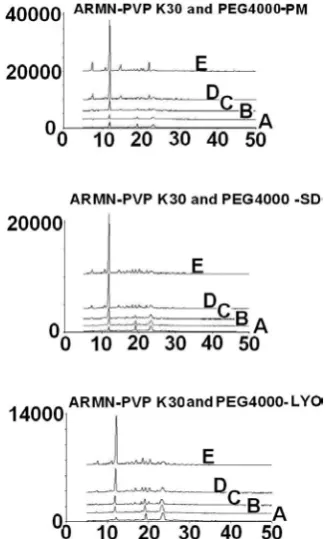
Fig. 10. X-ray diffraction patterns of physical mixtures (PM), solid dispersions (SD) and lyophilized solid disper-sions (LYO) of ARMN-PVP K30 and PEG4000 at ratios of 1 : 9 (A), 2 : 8 (B), 3 : 7 (C), 5 : 5 (D) and 6 : 4 (E)
Ryc. 10. Widma dyfrakcji rentgenowskiej mieszaniny fizycznej (PM), stałej dyspersji (SD) i liofilizowanej stałej dyspersji (LYO) z ARMN-PVP K30 i PEG4000 w sto-sunku 1 : 9 (A), 2 : 8 (B), 3 : 7 (C), 5 : 5 (D) i 6 : 4 (E)
Fig. 11. X-ray diffraction patterns of physical mixtures (PM), solid dispersions (SD) and lyophilized solid dispersions (LYO) of ARMN-PVP K30 and PEG6000 at ratios of 1 : 9 (A), 2 : 8 (B), 3 : 7 (C), 5 : 5 (D) and 6 : 4 (E)
Ryc. 11. Widma dyfrakcji rentgenowskiej mieszaniny fizycznej (PM), stałej dyspersji (SD) i liofilizowanej stałej dyspersji (LYO) z ARMN-PVP K30 i PEG6000 w sto-sunku 1 : 9 (A), 2 : 8 (B), 3 : 7 (C), 5 : 5 (D) i 6 : 4 (E)
Fig. 8. X-ray diffraction patterns of physical mixtures (PM), solid dispersions (SD) and lyophilized solid dis-persions (LYO) of ARMN-PVP K30 at ratios of 1 : 9 (A), 2 : 8 (B), 3 : 7 (C), 5 : 5 (D) and 6 : 4 (E)
Ryc. 8. Widma dyfrakcji rentgenowskiej mieszaniny fizycznej (PM), stałej dyspersji (SD) i liofilizowanej stałej dyspersji (LYO) z ARMN-PVP K30 w stosunku 1 : 9 (A), 2 : 8 (B), 3 : 7 (C), 5 : 5 (D) i 6 : 4 (E)
Fig. 9. X-ray diffraction patterns of physical mixtures (PM), solid dispersions (SD) and lyophilized solid dis-persions (LYO) of ARMN-PVP K30 and K25 at ratios of 1 : 9 (A), 2 : 8 (B), 3 : 7 (C), 5 : 5 (D) and 6 : 4 (E)
Artemisinin-PVP K30
and PEG4000 Preparations
Lyophilized solid dispersions released the high-est amount of artemisinin among all the prepara-tions. Physical mixtures of artemisinin showed en-hanced solubility with an increase in PVP content from 3.792 to11.962 µg/ml (from a ratio of 6 : 4 to 1 : 9). Solid dispersions released comparatively higher concentration of artemisinin in water as com-pared to physical mixtures, i.e. 5.103–13.814 µg/ml. Lyophilized solid dispersions showed the highest solubility, i.e. 6.015–15.374 µg/ml.
Artemisinin-PVP K30
and PEG6000 Preparations
Lyophilized solid dispersions released the highest amount of artemisinin among all the prep-arations. Physical mixtures of artemisinin showed enhanced solubility with an increase in PVP
con-tent from 4.854 to12.17 µg/ml (from a ratio of 6 : 4 to 1 : 9). Solid dispersions released comparatively higher concentration of artemisinin in water as compared to physical mixtures, i.e. 5.207–14.534 µg/ml. Lyophilized solid dispersions showed the highest solubility, i.e. 5.831–15.041 µg/ml.
Equilibrium solubility was enhanced with increases in polymer content in all samples. Ly-ophilized solid dispersions (ARMN-PVPK30) showed the highest solubility in water, followed by solid dispersions and physical mixtures, in that order.
The authors concluded basing on this work that the rate of artemisinin dissolution can be in-creased substantially by formulating it as a solid dispersion in PVP K30 using the lyophilization method. The addition of superdisintegrants such as PEG to the solid dispersions played an impor-tant role in the enhancement of the dissolution rate. This study has also paved the way for the for-mulation of fast-dissolving tablets of artemisinin using the lyophilization dispersion method.
References
Attara
[1] n A, Barnes KI, Curtis C: The global fund and medical malpractice in malaria treatment. Lancet 2004, 363, 237–240.
Rowland M, Durrani N, Hewitt S, Sondrop E:
[2] Resistance of falciparum malaria to chloroquine and sulfadoxine-pyrimethamine in Afghan refugee settlements in western Pakistan: Survey by the general health services using a simplified in vivo test. Trop Med Int Health 1997, 2, 1049–1056.
Vector borne diseases in Pakistan, Country report of Pakistan. Khartoum, Sudan 2003, 1–11.
[3]
Bradley D, Brannister B:
[4] Guidelines for malaria prevention in travellers from the United Kingdom for 2001. Common Dis Publ Health 2001, 84–101.
Sweetman S:
[5] Martindale:The Complete Drug Reference. Royal Pharmaceutical Press, London.
Woodrow CJ, Haynes RK, Krishna S:
[6] Artemisinin. Postgrad Med J 2005, 81, 71–78.
Famin O, Ginsburg H:
[7] Differential effects of 4-aminoquinoline-containing antimalarial drugs on hemoglobin digestion in plasmodium falciparum-infected erythrocytes. Biochem Pharmacol 2002, 63(3), 393–398.
Min-Young Heo, Zong-Zhu Piao, Tae-Wan Kim, Qing-Re Cao, Aera Kim, Beom Jin Lee:
[8] Effect of solubilizing
and microemulsifying excipients polyethylene glycol 6000 solid dispersion on enhanced dissolution and bioavail-ability of ketokonazole. Arch Pharm Res 2005, 28 (5), 604–611.
Sethia S, Squillante E:
[9] Solid dispersion of carbamazepine in PVP by conventional solvent evaporation and super-critical methods. Int J Pharm 2004, 272, 1–10.
Emara LH, Badr RM, Elbary AA:
[10] Improving the dissolution and bioavailability of nifedipine using solid disper-sions and solubilizers. Drug Dev Ind Pharm 2002, 28(7), 795–807.
Van Nijlen T, Brennan K, Van den Mooter G, Blaton N, Kinget R, Augustijns P:
[11] Improvement of the
dissolu-tion rate of artemisinin by means of supercritical fluid technology and solid dispersions. Int J Pharm 2003, 254 (2), 173–181.
USP30-NF25, 2007. The official compendium of standards. The United States Pharmacopoeial Convention.
[12]
Address for correspondence:
Ghulam Murtaza Tel.: 0092-0314-2082826 E-mail: [email protected]
Conflict of interest: None declared