R E S E A R C H
Open Access
Add-on histamine receptor-3 antagonist for
allergic rhinitis: a double blind randomized
crossover trial using the environmental
exposure unit
Michelle L North
1,2, Terry J Walker
2, Lisa M Steacy
2, Barnaby G Hobsbawn
2, Richard J Allan
3, Frances Hackman
3,
Xiaoqun Sun
4, Andrew G Day
4and Anne K Ellis
1,2,5*Abstract
Background:Oral antihistamines that target the histamine receptor–1, such as fexofenadine, offer suboptimal relief of allergic rhinitis-associated nasal congestion. Combinations with oral sympathomimetics, such as pseudoephedrine, relieve congestion but produce side effects. Previous animal and human studies with histamine receptor-3 antagonists, such as PF-03654764, demonstrate promise.
Methods:Herein we employ the Environmental Exposure Unit (EEU) to conduct the first randomized controlled trial of PF-03654764 in allergic rhinitis. 64 participants were randomized in a double-blind, placebo-controlled 4-period crossover study. Participants were exposed to ragweed pollen for 6 hours post-dose in the EEU. The primary objective was to compare the effect of PF-03654764 + fexofenadine to pseudoephedrine + fexofenadine on the subjective measures of congestion and Total Nasal Symptom Score (TNSS). The objectives of our post-hoc analyses were to compare all treatments to placebo and determine the onset of action (OA). This trial was registered at ClinicalTrials.gov (NCT01033396).
Results:PF-03654764 + fexofenadine was not superior to pseudoephedrine + fexofenadine. In post-hoc analyses, PF-03654764 + fexofenadine significantly reduced TNSS, relative to placebo, and OA was 60 minutes. Pseudoephedrine + fexofenadine significantly reduced congestion and TNSS, relative to placebo, with OA of 60 and 30 minutes, respectively. Although this study was not powered for a statistical analysis of safety, it was noted that all PF-03654764-treated groups experienced an elevated incidence of adverse events.
Conclusions: PF-03654764 + fexofenadine failed to provide superior relief of allergic rhinitis-associated nasal symptoms upon exposure to ragweed pollen compared to fexofenadine + pseudoephedrine. However, in post-hoc analyses, PF-03654764 + fexofenadine improved TNSS compared to placebo. Side effects in the PF-03654764-treated groups were clinically significant compared to the controls.
Keywords:Allergic rhinitis, Environmental exposure unit, Fexofenadine, PF-03654764, pseudoephedrine, H3receptor, H1receptor, Ragweed, Nasal congestion, Decongestant
* Correspondence:[email protected]
1Department of Biomedical and Molecular Sciences, Queen’s University, Kingston, Ontario, Canada
2Allergy Research Unit, Kingston General Hospital, Kingston, Ontario, Canada Full list of author information is available at the end of the article
Introduction
Allergic rhinitis is characterized by IgE and histamine-mediated symptoms such as rhinorrhea, sneezing, nasal pruritus, congestion, and aggravation of comorbid asth-ma [1]. Histamine interacts with 4 receptor subtypes, designated, H1, H2, H3and H4. Antihistamines affecting
the H1 receptor are widely used for acute relief of
al-lergic rhinitis [2]. These agents, including fexofenadine, effectively reduce sneezing and rhinorrhea, but have limited effectiveness against congestion [3-6]. Conges-tion may be mediated by dilataConges-tion of venous capa-citance vessels and extravascular plasma leak [7]. As vascular tone is under sympathetic neural control, trad-itional antihistamines have been combined with sym-pathomimetic decongestants such as pseudoephedrine [8,9]. However, due to side effects such as insomnia and hypertension, these agents are contraindicated in those with cardiovascular problems [8-11]. The de-velopment of H3 receptor antagonists as
deconges-tants may represent a significant advance in available treatments.
Animal models demonstrated that H3receptor
antago-nists inhibit nasal congestion in combination with antihis-tamines that target the H1receptor [12-15]. Activation of
the prejunctional histamine H3receptors modulates
sym-pathetic control of nasal vascular tone and resistance [15]. Oral administration of molecules that interfere with both the H1 and H3 receptors significantly attenuated total
nasal symptoms, and nasal blockage, relative to placebo, but did not provide greater relief than cetirizine [16]. Thus, the present study was targeted towards examining a specific H3 receptor antagonist using an alternate active
control, pseudoephedrine + fexofenadine, which is known to relieve congestion.
PF-03654764 is a potent and specific H3 receptor
an-tagonist, with >1000-fold selectivity for the H3 receptor
over the other histamine receptor subtypes [17]. A previ-ous clinical trial employing a nasal ragweed bolus after administration of PF-03654746 (an H3 receptor
anta-gonist with similar structure to PF-03654764) + fexofe-nadine demonstrated significantly reduced congestion, compared to placebo [11]. However, PF-03654764 has never been tested in a randomized controlled trial of al-lergic rhinitis, or in the Environmental Exposure Unit (EEU), which better approximates real life by delivering the allergen in the ambient air [18,19]. Therefore, our primary objective was to compare the effect of PF-03654764 + fexofenadine to pseudoephedrine + fexofe-nadine, on subjective measures of allergen-induced congestion and Total Nasal Symptom Score (TNSS) in the EEU, a sensitive, specific and reproducible metho-dology for allergen challenge. An exposure period of 6 hours post administration of study medication also en-abled us to assess the onset of action.
Methods
Additional experimental details are available in an online data supplement
All study procedures were approved by the Queen's Uni-versity Health Sciences and Affiliated Teaching Hospitals Human Research Ethics Board and all participants pro-vided written informed consent before undergoing any study-specific procedures. This trial was registered at ClinicalTrials.gov (NCT01033396).
Participant selection and enrollment
Exposure to ragweed pollen in the EEU is a well-tolerated, well-validated and reproducible method to elicit symp-toms in a cohort of individuals with ragweed-induced al-lergic rhinitis [18]. Study participants were recruited from an existing database of potential research participants in the Allergy Research Unit, Kingston General Hospital, through posters placed throughout Kingston, Ontario, and the Queen’s University campus, as well as through local radio, and newspaper advertisements. The study was con-ducted out of ragweed season. Briefly, exclusion criteria included asthma requiring more than 3 uses per week of short acting inhaled β-agonists and severe hypertension. Blood pressure (BP) was measured at screening, pre and post-study period (pollen exposures), and follow-up.
Dose selection
Doses of fexofenadine (60 mg) and pseudoephedrine (120 mg) were based on commercially available prepara-tions. Previous drug-drug interaction (DDI) studies were not performed with PF-03654764. However, the similar H3 receptor antagonist, PF-03654746 was administered
in combination with fexofenadine by Stokes et al. [11]. Pharmacokinetic drug interaction studies demonstrated low potential of PF-03654764 to inhibit activities of CYP 1A2, 2B6, 2C8, 2C9, 2C19, 2D6, and 3A4 based on IC50 values >30 μM versus the projected clinically efficacious concentration of 2.3 nM [20]. Nevertheless, participants were asked to abstain from grapefruit-related citrus fruits from 7 days prior to the first dose until collection of the final pharmacokinetic blood sample. The oral dose of 5 mg PF-03654764 was chosen to yield a mean max-imum plasma concentration of 14 ng/mL, approximately 10 × Ki (10 times the binding affinity of PF-03654764 for the H3receptor). This dose had previously been
Priming visits
During a maximum of five priming visits, study partici-pants were exposed to a target concentration of 3500 ± 500 grains/m3 of ragweed pollen (Ambrosia
artemisii-folia, Greer Laboratories, Lenoir, North Carolina) for up to 3 hours, while recording their symptoms at baseline and every 30 minutes thereafter. Symptom score end-points consisted of a four point (0 – 3) self-reported scale (definitions provided in Additional file 1: Table S4), for each of the following symptoms: congestion, snee-zing, nasal itch, rhinorrhea. Total nasal symptom score (TNSS) was the sum of the scores for sneezing, nasal itch and rhinorrhea (maximum score of 9). Participants who did not achieve a TNSS equal to or greater than 4 and a congestion score equal to or greater than 2 at the 90-minute time point during at least one priming visit were excluded from the study to ensure medication ef-fects would be discernible.
Study periods
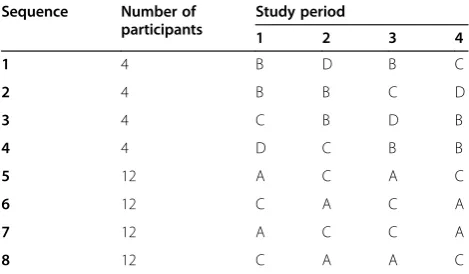
The first study period took place within 12 days of prim-ing and periods were separated by 2-weeks. Participants were exposed to a target concentration of 3500 ± 500 grains/m3of ragweed pollen for eight hours (−2H to 6H, with administration of medication at 0H). Participants were not randomized until rhinitis symptoms were veri-fied just prior to dosing (TNSS≥4 and a congestion score≥2 at the 90-minute time point). To maintain par-ticipant and investigator blinding, three pills, identical in appearance, were dispensed from three pairs of bottles (active vs placebo for each of three active treatments). Participants were allocated to a treatment sequence using a computer-generated randomization schedule (Table 1). The allotment of participants to different treatment se-quences was not equal in order to give more power to the primary comparison (fexofenadine + pseudoephedrine vs. fexofenadine + PF-03654764).
Statistics
The sample size was calculated based on mean score from hour 2 to hour 6 for congestion and TNSS, and a Bayesian interpretation of the results, assuming a non-informative prior and a within-subject standard deviation of 0.7. The primary efficacy analyses used sequences 5–8 and included all participants randomized who received at least one dose and who had at least one post-dose meas-urement. A mixed effect model was used, with participant as a random effect, period/treatment as fixed effects and baseline covariates. Baseline was calculated as the mean of the last two pre-treatment symptom scores (−0.5H and 0H). The baseline covariates were:
Baseline mean = mean pre-dose value for each participant across the four periods
Baseline difference = the difference between the pre-dose value at a given period and the participant’s baseline mean
Differences between treatment means, standard errors (SE), and two-sided 90% confidence intervals (CI) are presented.
In general, Studentized residuals are preferable to stan-dardized residuals for purposes of outlier identification, and values of 3 or greater (or −3 or less) may be consid-ered outliers [21]. Therefore, to avoid the situation where an extreme data point can be highly influential in the ana-lysis, data points that met these criteria were excluded, and when this occurred, all data from the participant was removed. These exclusion criteria were decided upon a
prioriin advance of study commencement.
The criteria used for evaluation of the efficacy and non-inferiority of PF-03654764 + fexofenadine against conges-tion compared to existing treatment were:
Criteria 1: At least 80% sure that PF-03654764 + fexofenadine has a greater than 0.15 point reduction in congestion compared to pseudoephedrine + fexofenadine (for efficacy).
Criteria 2: At least 80% sure that PF-03654764 + fexofenadine was non-inferior to pseudoephedrine +
fexofenadine, using a non-inferiority margin of −1.
Post-Hoc analyses
The investigator’s site undertook post-hoc analyses to compare all groups to placebo. Mean symptom scores were calculated by taking the least-squares mean be-tween 2H and 6H. Methods above were used for the post-hoc ANCOVA, except all groups were included to compare to placebo. Onset of action (OA) was calculated for treatments found to significantly relieve symptoms, defined as the median onset of a clinically important reduction (0.5 symptom score units from baseline for
Table 1 Sequences of study treatment administrations
Sequence Number of participants
Study period
1 2 3 4
1 4 B D B C
2 4 B B C D
3 4 C B D B
4 4 D C B B
5 12 A C A C
6 12 C A C A
7 12 A C C A
8 12 C A A C
A: PF-03654764 capsule (5 mg) + fexofenadine capsule (60 mg) + placebo capsule. B: PF-03654764 capsule (5 mg) + placebo capsule + placebo capsule. C: placebo capsule + placebo capsule + fexofenadine (60 mg)/pseudoephedrine (120 mg) capsule.
congestion; 1.0 for TNSS) across all participant study pe-riods. All post-hoc analyses were conducted under the auspices of the investigator site. Graphing was performed using Prism Version 4.0c (GraphPad Inc., La Jolla, CA). All other statistical analyses were carried out using SAS Version 9.3 (SAS Institute Inc., Cary, NC).
Results
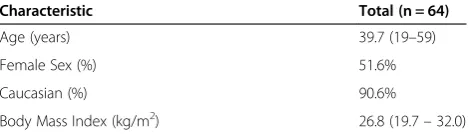
Demographic data on the participants in this study are presented in Table 2. All participants had a minimum 2 year history of allergic rhinitis to ragweed. The partici-pants self-reported being diagnosed with allergic rhinitis by a physician between 6 and 56 years prior to en-rolment in the study (mean duration 25.3 years). The average pollen concentrations determined via Rotorod® samplers in the EEU were 2913 ± 216 grains/m3 for priming visits and 3348 ± 103 grains/m3 for treatment visits.
Symptom time-course
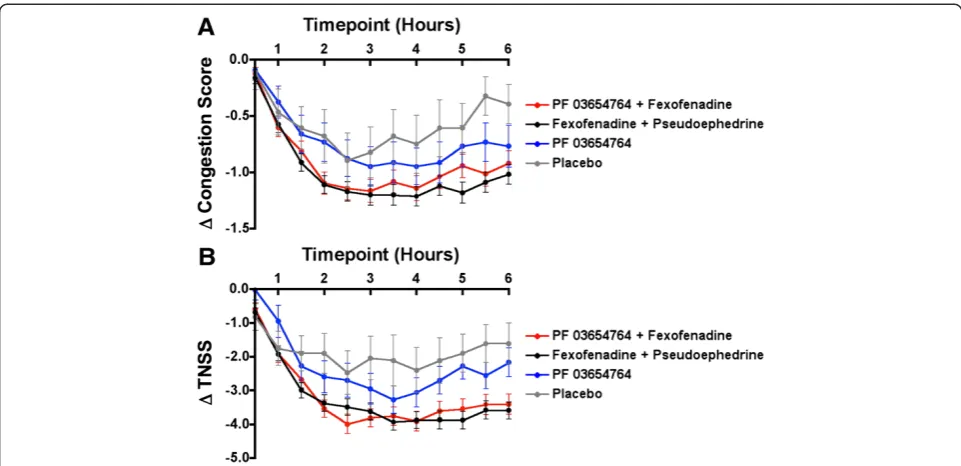
During each study period, participants developed ragweed-induced symptoms of allergic rhinitis during the 2 hours prior to treatment (−2H to 0H). The effectiveness of the different treatment arms against congestion and total nasal symptom scores (TNSS) over time can be visualized as the post-treatment change from baseline (Figure 1).
Primary efficacy analysis
The primary efficacy analysis employed treatment se-quences 5–8 to compare PF-03654764 + fexofenadine to fexofenadine + pseudoephedrine. Six and nine participant-treatment periods were lost due to discontinuations, illnesses and contraindicated medication use in the PF-03654764 + fexofenadine and fexofenadine + pseu-doephedrine groups, respectively. The exclusion of two outliers further reduced the PF-03654764 + fexofenadine group by four participant treatment periods. Thus, Table 3 presents the primary efficacy analyses derived from a total of 86 and 87 participant treatment periods, in the PF-03654764 + fexofenadine and fexofenadine + pseudo-ephedrine groups, respectively. PF-03654764 + fexofe-nadine was not effective in reducing nasal congestion compared to pseudoephedrine + fexofenadine (i.e., Criteria 1 was not met). However, PF-03654764 + fexofenadine
was shown to be non-inferior to pseudoephedrine + fexo-fenadine with respect to TNSS (i.e., Criteria 2 was met).
Post-Hoc efficacy analysis
The investigator’s site undertook a post-hoc analysis, that was not part of the pre-specified statistical plan, to compare the treatments of interest to placebo. The sam-ple size difference in the fexofenadine + pseudoephedrine group reflects the addition of participants from se-quences 1–4. In the placebo group 16 participants were assigned to treatment but one never received placebo, as they were assigned to sequence 2 and dropped out of the study after study period 2. In the PF-03654764 group 16 participants were randomized but one discontinued during period 2 in sequence 4 and thus never received PF-03654764 during the following two periods (3 and 4). One participant in sequences 1–4 was excluded as an outlier according to the pre-specified exclusion criteria, reducing the sample sizes for placebo and PF-03654764 to 14 and 28, respectively. Pseudoephedrine + fexofena-dine significantly reduced congestion and TNSS, com-pared to placebo (Table 4). PF-03654764 alone did not have a significant effect on symptoms. In the post hoc mixed model, the combination of PF-03654764 with fex-ofenadine significantly improved TNSS, but not conges-tion (Table 4).
Onset of action
The median onset of action for pseudoephedrine + fexo-fenadine regarding congestion and TNSS was 60 minutes and 30 minutes, respectively. The median onset of action for PF-03654764 + fexofenadine against TNSS was 60 minutes.
Adverse events
There were no serious adverse events (SAEs). Systolic BP increases from baseline≥30 mm Hg were experienced by 2/61 and 1/15 participants receiving fexofenadine + pseudoephedrine and placebo, respectively. Increases in diastolic BP ≥30 mm Hg were experienced by 1/47, 4/61, 1/15 participants receiving PF-03654764 + fexo-fenadine, fexofenadine + pseudoephedrine and placebo, respectively. Out of the 64 participants who were ran-domized, four, two, one, and zero discontinued during treatment with PF-03654764 + fexofenadine, pseudo-ephedrine + fexofenadine, PF-03654764, and placebo, re-spectively. Two participants, both receiving PF-03654764 + fexofenadine, discontinued due to AEs that were consid-ered to be treatment-related. As mentioned above, one participant never received placebo and one never received PF-03654764, thus sample sizes for both of those groups are fifteen participants for AE analysis. Three participants slated to receive fexofenadine + pseudoephedrine were never treated due to discontinuations in previous study
Table 2 Participant demographic data
Characteristic Total (n = 64)
Age (years) 39.7 (19–59)
Female Sex (%) 51.6%
Caucasian (%) 90.6%
Body Mass Index (kg/m2) 26.8 (19.7–32.0)
sessions. The incidence of AEs, both all causality and treatment-related, was greater in the PF-03654764-alone and PF-03654764 + fexofenadine groups, compared to the placebo and pseudoephedrine + fexofenadine groups (Table 5). The most common treatment-related AEs were insomnia, headache and nausea (Table 6).
Discussion
In this study we examined the combination of the H3
receptor antagonist, PF-03654764, and the H1 receptor
antihistamine, fexofenadine, for the first time as a poten-tial treatment for allergic rhinitis. This investigational treatment was not superior to established treatment. In
Figure 1Time-course of change in symptom scores post-treatment.Exploratory visualization of the change in symptom scores (Δto baseline) are shown forA)Congestion, andB)Total Nasal Symptom Score (TNSS) from time of drug administration (0 hours) to 6 hours post-treatment. Lines and error bars represent the raw means and standard errors of the means for each of the treatments over time. It includes all participant study periods in which a participant was administered a treatment and remained in the EEU for the entire study period (excludes those periods where a participant discontinued the study without completing the visit). The y-intercept represents baseline, defined as the mean of the last two pre-treatment symptom scores (−0.5H and 0H). Samples sizes were; n = 86, 96, 28 and 14 for PF-03654764 + fexofenadine, fexofenadine + pseudoephedrine, PF-03654764, and placebo, respectively.
Table 3 Mixed model ANCOVA of mean congestion and TNSS scores (2–6 hours)
Difference (test–reference) Sequences 5–8: congestion
N Adjusted mean SE Adjusted mean SE 90% CI Prob<−0.15 PF-03654764 86 1.58 0.106 0.07 0.080 (−0.06, 0.20) 0.0035
+ fexofenadine
Pseudoephedrine 87 1.51 0.107
+ fexofenadine Sequences 5–8: TNSS
N Adjusted Mean SE Adjusted Mean SE 90% CI Prob NI PF-03654764 86 3.81 0.288 −0.08 0.233 (−0.46, 0.31) 1.000
+ fexofenadine
Pseudoephedrine 87 3.89 0.289
+ fexofenadine
The primary analysis consisted of a mixed effects ANCOVA with period and treatment fixed effects and subject random effect, employing sequences 5–8 to compare PF-03654764.
post-hoc analyses we demonstrated that PF-03654764 + fexofenadine significantly reduced Total Nasal Symptom Score (TNSS), relative to placebo. Although this study was not powered to conduct statistical evaluations of safety, the incidence of adverse events (AEs) was greater in PF-03654764-treated groups, compared to existing treatment or placebo.
Nasal congestion
The primary objective of this study was to compare the effect of PF-03654764 + fexofenadine on allergic rhinitis-induced nasal congestion to a commercially available dose of fexofenadine + pseudoephedrine. Neither PF-03654764 nor the PF-03654764 + fexofenadine combination was ef-fective at reducing congestion. Additionally, these treat-ments did not meet the decision criteria for superiority over existing therapy. While PF-03654764 was not signifi-cantly better than placebo, the combination with fexofena-dine was significantly better than PF-03654764 by itself on TNSS, and the combination of PF-03654764 with fexo-fenadine was significantly better than placebo on TNSS.
This posits the question of whether the results are due to the fexofenadine and not PF-03654764. Dose adjustment studies would be able to address this issue and determine if changes in oral dose of PF-03654764 affect the outcome of the experiment. In Stokes et al. there was a clear dose-dependent phenomenon with a very similar H3 receptor
antagonist, and it would be interesting to see if a similar pattern exists with PF-03654764.
H3receptor antagonists and nasal congestion
A previous clinical study investigated dual H1/H3
recep-tor interference in an environmental challenge chamber [16]. Both nasal blockage and TNSS were improved, compared to placebo, but the treatment similarly failed to prove superior to existing treatment, in that case, cetirizine, an H1 receptor antihistamine [16]. As that
study employed a non-specific molecule, and an active control that is not effective against congestion, this study was targeted towards examining a specific H3 receptor
antagonist using an alternate active control, pseudo-ephedrine + fexofenadine.
Table 4 Post-Hoc analysis of mean symptom scores (2H–6H)
Treatment N Parameter Mean ± SE 95% Confidence interval Adj. p-value to placebo Placebo 14 Congestion 2.00 ± 0.18 (1.64, 2.36) N/A
TNSS 5.51 ± 0.50 (4.53, 6.49) N/A
PF-03654764 28 Congestion 1.90 ± 0.15 (1.59, 2.20) 0.939
TNSS 4.84 ± 0.42 (4.00, 5.67) 0.186
PF-03654764 + fexofenadine 86 Congestion 1.58 ± 0.10 (1.39, 1.78) 0.138
TNSS 3.63 ± 0.27 (3.10, 4.16) 0.001
Pseudoephedrine + fexofenadine 97 Congestion 1.50 ± 0.09 (1.31, 1.68) 0.034
TNSS 3.70 ± 0.25 (3.20, 4.20) 0.003
Mean symptom scores for congestion and Total Nasal Symptom Score (TNSS) were calculated by taking the least squares mean between 2H and 6H post-treatment. Standard error (SE) of the mean and 95% confidence intervals were also calculated for each post-treatment. N = number of participant study periods on each treatment. Groups were compared using a mixed model ANCOVA and the Tukey-Kramer adjustment was used to control for multiple comparison.
Table 5 Summary of treatment-emergent adverse events by participant
Adverse Event (AE) PF-03654764 + fexofenadine (N = 48)
PF-03654764 (N = 15)
Pseudoephedrine + fexofenadine (N = 61)
Placebo (n = 15)
All Causalities
Number of AEs 116 39 30 3
Participants with AEs 36 (75) 12 (80) 18 (29.5) 3 (20)
Participants with severe AEs 23 (49) 6 (40) 4 (6.6) 0
Participants discontinued due to AEs 2 (4.2) 1 (6.7) 0 0
Treatment-Related
Number of AEs 83 30 11 0
Participants with AEs 22 (45.8) 11 (73.3) 6 (9.8) 0
Participants with severe AEs 17 (35.4) 6 (40.0) 2 (3.3) 0
Participants discontinued due to AEs 2 (4.2) 0 0 0
Recently, Stokes et al. employed acoustic rhinometry to measure changes in minimum nasal cross-sectional area and nasal volume after treatment with PF-03654746 + fexofenadine (an H3 receptor antagonist with a similar
structure to PF-03654764) [11]. The treatment significantly reduced subjective congestion scores, compared to pla-cebo, but improvements in rhinometry measurements were not detected [11]. Those results may be explained in view of the disconnect between perception of nasal air-flow and congestion and physical characteristics of intrana-sal space. However, since our primary objective was to see the efficacy on congestion, the non-significant re-sponse to H3 antagonism to measured vascular
con-gestion in humans is important. As 5 mg of PF-03654764 yields a plasma concentration of approximately 10 × Ki (10 times the binding affinity of PF-03654764 for the H3
receptor), effective H3 receptor antagonism should have
been achieved in our study. However, Stokes and col-leagues employed a similar but distinct H3antagonist to
the one used herein, with a relatively higher dose (up to 30 × Ki) [11].
Experimental allergen challenge methods
Major differences between our protocol and Stokeset al. may also drive some of the differences in our findings. Timing of symptom development in relation to drug ad-ministration and the allergen challenge method employed are key. Stokes et al. investigated prophylactic potential, performing the nasal allergen provocation post-drug ad-ministration at the time that the drug serum concentra-tion was estimated to be maximal [11]. Ours is the first study to examine the potential for specific H3receptor
an-tagonists torelievepre-existing allergy symptoms induced by inhalation of allergen in the ambient air. We adminis-tered the study drug after 2 hours of allergen exposure, followed by an additional 6 hours of post-drug allergen ex-posure and symptom recording and were able to report the onset of action against allergic rhinitis symptoms for the first time. The advantages and disadvantages of differ-ent methods of allergen challenge for evaluating novel therapeutic preparations have been discussed elsewhere [18,22]. In brief, nasal allergen provocation tests have the advantage of focusing on a smaller number of participants
Table 6 Incidence of most frequent treatment-related adverse events (≥5% per treatment, by participant)
Adverse Event (AE) PF-03654764 + fexofenadine (N = 48)
PF-03654764 (N = 15)
Pseudoephedrine + fexofenadine (N = 61)
Placebo (N = 15)
Insomnia 10 (20.8) 5 (33.3) 3 (4.9) 0
Headache 9 (18.8) 3 (20.0) 1 (1.6) 0
Nausea 9 (18.8) 4 (26.7) 1 (1.6) 0
Dysgeusia 5 (10.4) 0 1 (1.6) 0
Hot flush 4 (8.3) 1 (6.7) 1 (1.6) 0
Nightmare 4 (8.3) 0 0 0
Abnormal Dreams 3 (6.3) 0 0 0
Dizziness 3 (6.3) 1 (6.7) 2 (3.3) 0
Malaise 3 (6.3) 0 0 0
Night Sweats 3 (6.3) 3 (20.0) 0 0
Tachycardia 3 (6.3) 0 0 0
Diarrhea 2 (4.2) 1 (6.7) 0 0
Palpitations 2 (4.2) 1 (6.7) 1 (1.6) 0
Fatigue 1 (2.1) 1 (6.7) 0 0
Hallucination 1 (2.1) 2 (13.3) 0 0
Upper abdominal pain 0 1 (6.7) 0 0
Feeling Jittery 0 1 (6.7) 0 0
Feeling of body temperature change 0 1 (6.7) 0 0
Cognitive disorder 0 1 (6.7) 0 0
Migraine 0 1 (6.7) 0 0
Parosmia 0 1 (6.7) 0 0
Anxiety 0 1 (6.7) 0 0
Hyperhidrosis 0 1 (6.7) 0 0
at a time, enabling the collection of data such as acoustic rhinometry. However, as Stokeset al.reported no signifi-cant effect on minimum nasal cross-sectional area or nasal volume [11], the present study did not evaluate that out-come. Instead, we employed the EEU to allow larger num-bers of study volunteers to be simultaneously exposed to standardized ambient levels of ragweed pollen, providing the recognized advantage of a more natural mode of aller-gen exposure [18]. Ragweed alleraller-gen was chosen, as it is one of the most common aeroallergens that naturally induces allergic rhinitis symptoms in our study popula-tion, and the level of exposure in the EEU was consistent with peak seasonal levels [23,24]. European annual mean pollen counts of ragweed are as high as 7800 grains/m3 [3,25]. Although ragweed pollen is not as common in the United States, weed pollens do reach as high as 2900 grains/m3 [3,26] and tree pollen is known to reach over 8000 grains/m3[3,27]. It was recently demonstrated that there is a high degree of concordance between allergic symptoms induced on exposure to pollen in an envir-onmental exposure unit and those experienced during the natural season [28]. An outpatient study during rag-weed season may have achieved similar efficacy results, but could not have been used to evaluate the onset of action [18].
Onset of action
The time to onset of action for PF-03654764 + fexofena-dine has not previously been reported. In this study we report that it is 60 minutes for clinically important im-provement in TNSS. For fexofenadine + pseudoephed-rine we determined a 60 minute onset of action against congestion, and a 30 minute onset of action against TNSS. We previously found that fexofenadine alone pro-vided clinically important relief from allergic rhinitis symptoms at 60 minutes [29]. The onset of action for fexofenadine + pseudoephedrine has been previously re-ported by Berkowitz et al. to be 45 minutes [30]. Dif-ferences in reported onset of action likely result from timing of diary card collection and the symptoms in-cluded in composite scores. Overall, the onset of action is remarkably consistent between environmental expos-ure unit studies, and the slower onset of action against congestion compared to TNSS may reflect a lag in the subjective perception of nasal fullness compared to the decline in number of sneezes and other symptoms.
Adverse events
In this study PF-03654764-treated groups exhibited a higher incidence of AEs, compared to pseudoephed-rine + fexofenadine or placebo. Previously, Stokeset al. re-ported greater AEs in participants treated with the similar H3 receptor antagonist, PF-03654746 [11]. Many of the
AEs in this study are consistent with those reported
by Stokes et al., including insomnia, hallucination and feeling jittery [11]. H3 receptors have been
demon-strated in the central nervous system, where they re-gulate other neurotransmitters (e.g. acetylcholine and norepinephrine) [17,31]. Additionally, PF-03654764 is believed to be fully central nervous system penetrant, which may also help to explain the finding of increased AEs and their nature. It was envisioned that the com-bination of a novel H3receptor antagonist with an
es-tablished antihistamine may provide relief with a superior safety profile for those who are contraindicated to treat-ment with sympathomimetic agents [11,17]. Another H3
receptor antagonist with a lesser penetrance into the cen-tral nervous system may exhibit a more favorable safety profile, or even increased efficacy against allergic rhinitis symptoms.
Limitations
A limitation of this study is that we are unable to make a direct comparison between fexofenadine and the fe-xofenadine + PF-03654764 combination. A fefe-xofenadine monotherapy treatment was not included in this study, as the primary goal of the trial was to assess the effects of fexofenadine + PF-03654764 vs. the existing combina-tion therapy of fexofenadine + pseudoephedrine. In future studies it would be interesting to include a fexofenadine monotherapy group so that the effect difference could be compared to H3antagonist monotherapy to assess
syner-gistic/antagonistic effects.
Also of note, it has recently been demonstrated that common antihistamines may not act as simple antago-nists, but rather as inverse agoantago-nists, stabilizing inactive forms of the H1and H2receptors [32-34]. Inverse
agon-ism describes the ability of certain“antagonists”to reduce the activity of receptor systems that are active in the ab-sence of agonists [35]. However, whether inverse agonism is essential or clinically important for antihistamines has not been clarified yet [35]. Thus far, the published litera-ture indicates that PF-03654764 is a potent and specific H3 receptor antagonist [17]. However, other H3 receptor “antagonists”have recently been shown to exhibit inverse agonist activity [36]. Further biochemical and pharmaco-logical studies are needed to understand the mechanism of action in detail.
Conclusions
In conclusion, we demonstrated that the H3receptor
an-tagonist, PF-03654764, plus the H1 receptor antagonist,
Additional file
Additional file 1:Supplementary Methods.
Abbreviations
AE:Adverse event; ANCOVA: Analysis of covariance; BP: Blood pressure; CI: Confidence interval; EEU: Environmental exposure unit; Ki: Binding affinity; MMRM: Mixed model repeated measures; OA: Onset of action; PF-03654764: Trans-N-ethyl-3-fluoro-3-[3-fluoro-4-(pyrrolidinylmethyl) phenyl] cyclobutanecarboxamide; SAE: Serious adverse event; SE: Standard error; TNSS: Total nasal symptom score.
Competing interest
The authors declare that they have no conflicts of interest. RJA and FH were employees of Pfizer Ltd., United Kingdom, at the time of study conduct.
Authors’contributions
MLN carried out data analysis and interpretation, graphing and preparing figures, drafting the article. TW was involved in the conception and design of the study and carried out the collection of data with regards to pollen exposure and pollen levels during the challenges, analysis and interpretation of pollen data. LMS was involved in the conception and design of the study with regards to ethics, measures and endpoints, and carried out data collection. BGH was involved in the conception and design of the study with regards to logging symptom score data, data collection, security and export for statistical analysis. RJA was involved in the conception and design of the study with regards to study drug and major endpoints and carried out interpretation of data. FH was involved in the conception and design of the study with regards to statistics, and carried out data interpretation and statistical analysis of the primary outcomes. XS carried out post-hoc statistical analysis. AGD was involved in the conception and design of the study with regards to post-hoc statistical analysis, and carried out interpretation of data. AKE was involved in the conception and design of the study with regards to pollen exposure, clinical outcomes, symptom scores, and carried out the collection and interpretation of data. All Authors contributed to revising the manuscript for important intellectual content and gave their final approval of the version to be published.
Acknowledgments
The authors would like to thank the large number of study doctors, nurses and support staff of the environmental exposure unit (EEU). This study was supported by Pfizer, UK. MLN was supported by the John Alexander Stewart Award, Department of Medicine, Queen’s University, a Canadian Allergy and Immune Diseases Advanced Training Initiative (CAIDATI) Award, AllerGen N.C. E., and an Ontario Ministry of Research and Innovation Award.
Author details
1Department of Biomedical and Molecular Sciences, Queen’s University, Kingston, Ontario, Canada.2Allergy Research Unit, Kingston General Hospital, Kingston, Ontario, Canada.3Pfizer Ltd., Sandwich, UK.4Clinical Research Centre, Kingston General Hospital, Kingston, Ontario, Canada.5Division of Allergy and Immunology, Department of Medicine, Queen’s University, Doran 1, Kingston General Hospital, 76 Stuart Street, Kingston, ON K7L 2 V7, Canada.
Received: 17 April 2014 Accepted: 15 June 2014 Published: 3 July 2014
References
1. Bousquet J, Van Cauwenberge P, Khaltaev N:Allergic rhinitis and its impact on asthma.J Allergy Clin Immunol2001,108:S147–S334. 2. Phan H, Moeller ML, Nahata MC:Treatment of allergic rhinitis in infants
and children: efficacy and safety of second-generation antihistamines and the leukotriene receptor antagonist montelukast.Drugs2009, 69:2541–2576.
3. Simons FE:Comparative pharmacology of H1 antihistamines: clinical relevance.Am J Med2002,113(Suppl 9A):38S–46S.
4. del Cuvillo A, Mullol J, Bartra J, Davila I, Jauregui I, Montoro J, Sastre J, Valero AL:Comparative pharmacology of the H1 antihistamines.J Investig Allergol Clin Immunol2006,16(Suppl 1):3–12.
5. Nathan RA:The burden of allergic rhinitis.Allergy Asthma Proc2007,28:3–9.
6. Nathan RA, Meltzer EO, Derebery J, Campbell UB, Stang PE, Corrao MA, Allen G, Stanford R:The prevalence of nasal symptoms attributed to allergies in the United States: findings from the burden of rhinitis in an America survey.Allergy Asthma Proc2008,29:600–608.
7. Djukanovic R, Wilson SJ, Howarth PH:Pathology of rhinitis and bronchial asthma.Clin Exp Allergy1996,26(Suppl 3):44–51.
8. Chervinsky P, Nayak A, Rooklin A, Danzig M:Efficacy and safety of desloratadine/pseudoephedrine tablet, 2.5/120 mg two times a day, versus individual components in the treatment of patients with seasonal allergic rhinitis.Allergy Asthma Proc2005,26:391–396.
9. Moinuddin R, DeTineo M, Maleckar B, Naclerio RM, Baroody FM:
Comparison of the combinations of fexofenadine-pseudoephedrine and loratadine-montelukast in the treatment of seasonal allergic rhinitis. Ann Allergy Asthma Immunol2004,92:73–79.
10. Empey DW, Young GA, Letley E, John GC, Smith P, McDonnell KA, Bagg LR, Hughes DT:Dose–response study of the nasal decongestant and
cardiovascular effects of pseudoephedrine.Br J Clin Pharmacol1980,9:351–358. 11. Stokes JR, Romero FA Jr, Allan RJ, Phillips PG, Hackman F, Misfeldt J, Casale
TB:The effects of an H3 receptor antagonist (PF-03654746) with fexofenadine on reducing allergic rhinitis symptoms.J Allergy Clin Immunol2012,129:409–412. 12 e1-2.
12. McLeod RL, Mingo GG, Kreutner W, Hey JA:Effect of combined histamine H1 and H3 receptor blockade on cutaneous microvascular permeability elicited by compound 48/80.Life Sci2005,76:1787–1794.
13. McLeod RL, Mingo GG, Herczku C, DeGennaro-Culver F, Kreutner W, Egan RW, Hey JA:Combined histamine H1 and H3 receptor blockade produces nasal decongestion in an experimental model of nasal congestion. Am J Rhinol1999,13:391–399.
14. Varty LM, Gustafson E, Laverty M, Hey JA:Activation of histamine H3 receptors in human nasal mucosa inhibits sympathetic vasoconstriction. Eur J Pharmacol2004,484:83–89.
15. Varty LM, Hey JA:Histamine H3 receptor activation inhibits neurogenic sympathetic vasoconstriction in porcine nasal mucosa.Eur J Pharmacol 2002,452:339–345.
16. Daley-Yates P, Ambery C, Sweeney L, Watson J, Oliver A, McQuade B:The efficacy and tolerability of two novel H(1)/H(3) receptor antagonists in seasonal allergic rhinitis.Int Arch Allergy Immunol2012,158:84–98. 17. Wager TT, Pettersen BA, Schmidt AW, Spracklin DK, Mente S, Butler TW,
Howard H, Lettiere DJ, Rubitski DM, Wong DF, Nedza FM, Nelson FR, Rollema H, Raggon JW, Aubrecht J, Freeman JK, Marcek JM, Cianfrogna J, Cook KW, James LC, Chatman LA, Iredale PA, Banker MJ, Homiski ML, Munzner JB, Chandrasekaran RY:Discovery of two clinical histamine H(3) receptor antagonists: trans-N-ethyl-3-fluoro-3-[3-fluoro-4-(pyrrolidinylmethyl)phenyl] cyclo-butanecarbox amide (PF-03654746) and trans-3-fluoro-3-[3-fluoro-4-(pyrrolidin-1-ylmethyl)phenyl]-N-(2-methylpropyl)cyc lobutanecarboxamide (PF-03654764).J Med Chem2011,54:7602–7620.
18. Day JH, Ellis AK, Rafeiro E, Ratz JD, Briscoe MP:Experimental models for the evaluation of treatment of allergic rhinitis.Ann Allergy Asthma Immunol 2006,96:263–277. quiz 77–8, 315.
19. Ellis AK, Ratz JD, Day AG, Day JH:Factors that affect the allergic rhinitis response to ragweed allergen exposure.Ann Allergy Asthma Immunol 2010,104:293–298.
20. Pfizer:PF-03654764 Investigator's Brochure.InInternal clinical and non-clinical studies.2009.
21. Norusis MJ:SPSS 11.0 Guide to Data Analysis. Chapter 22: Analyzing Residuals. New Jersey: Prentice Hall; 2002.
22. Akerlund A, Andersson M, Leflein J, Lildholdt T, Mygind N:Clinical trial design, nasal allergen challenge models, and considerations of relevance to pediatrics, nasal polyposis, and different classes of medication. J Allergy Clin Immunol2005,115:S460–S482.
23. Day JH, Briscoe MP:Environmental exposure unit: a system to test anti-allergic treatment.Ann Allergy Asthma Immunol1999,83:83–89. quiz 9–93. 24. Ellis AK, Steacy LM, Walker T:Clinical Validation of Controlled Grass Pollen
Challenge in the Environmental Exposure Unit (EEU) [abstract].J Allergy Clin Immunol2012,129:AB112.
25. Deak AJ, Makra L, Matyasovszky I, Csepe Z, Muladi B:Climate sensitivity of allergenic taxa in Central Europe associated with new climate change related forces.Sci Total Environ2013,442:36–47.
27. Dellavalle CT, Triche EW, Bell ML:Spatial and temporal modeling of daily pollen concentrations.Int J Biometeorol2012,56:183–194.
28. Jacobs RL, Harper N, He W, Andrews CP, Rather CG, Ramirez DA, Ahuja SK: Responses to ragweed pollen in a pollen challenge chamber versus seasonal exposure identify allergic rhinoconjunctivitis endotypes. J Allergy Clin Immunol2012,130:122–7 e8.
29. Day JH, Briscoe MP, Welsh A, Smith JN, Clark A, Ellis AK, Mason J:Onset of action, efficacy, and safety of a single dose of fexofenadine
hydrochloride for ragweed allergy using an environmental exposure unit.Ann Allergy Asthma Immunol1997,79:533–540.
30. Berkowitz RB, Woodworth GG, Lutz C, Weiler K, Weiler J, Moss M, Meeves S: Onset of action, efficacy, and safety of fexofenadine 60 mg/
pseudoephedrine 120 mg versus placebo in the Atlanta allergen exposure unit.Ann Allergy Asthma Immunol2002,89:38–45.
31. Weisler RH, Pandina GJ, Daly EJ, Cooper K, Gassmann-Mayer C:Randomized clinical study of a histamine H3 receptor antagonist for the treatment of adults with attention-deficit hyperactivity disorder.CNS Drugs2012, 26:421–434.
32. Smit MJ, Timmerman H, Alewijnse AE, Leurs R:From histamine H2 receptor regulation to reclassification of H2 antagonists; inverse agonism as the basis for H2 receptor upregulation.Receptors Channels1998,5:99–102. 33. Bakker RA, Wieland K, Timmerman H, Leurs R:Constitutive activity of the
histamine H(1) receptor reveals inverse agonism of histamine H(1) receptor antagonists.Eur J Pharmacol2000,387:R5–R7.
34. Wu RL, Anthes JC, Kreutner W, Harris AG, West RE Jr:Desloratadine inhibits constitutive and histamine-stimulated nuclear factor-kappaB activity consistent with inverse agonism at the histamine H1 Receptor.Int Arch Allergy Immunol2004,135:313–318.
35. Monczor F, Fernandez N, Fitzsimons CP, Shayo C, Davio C: Antihistaminergics and inverse agonism: potential therapeutic applications.Eur J Pharmacol2013,715:26–32.
36. Wieland K, Bongers G, Yamamoto Y, Hashimoto T, Yamatodani A, Menge WM, Timmerman H, Lovenberg TW, Leurs R:Constitutive activity of histamine h(3) receptors stably expressed in SK-N-MC cells: display of agonism and inverse agonism by H(3) antagonists.J Pharmacol Exp Ther 2001,299:908–914.
doi:10.1186/1710-1492-10-33
Cite this article as:Northet al.:Add-on histamine receptor-3 antagonist for allergic rhinitis: a double blind randomized crossover trial using the environmental exposure unit.Allergy, Asthma & Clinical Immunology
201410:33.
Submit your next manuscript to BioMed Central and take full advantage of:
• Convenient online submission
• Thorough peer review
• No space constraints or color figure charges
• Immediate publication on acceptance
• Inclusion in PubMed, CAS, Scopus and Google Scholar
• Research which is freely available for redistribution