Cellular Differentiation
Potency
Stem Cells
Cellular Differentiation
Process of producing specialized cells
Specialized cells have physical and chemical
differences that allow them to perform a function that is different than other cells
All specialized cells come from pre-existing
Proliferative Potential: Potency
A cell’s potential
to differentiate
Levels of
Totipotent
Capable of giving rise to any and all cell types
Somatic cells
Germ cells
Placenta
Can form a whole organism / embryo Totipotent cells:
zygote – fertilized egg
Pluripotent
Capable of giving rise to many cell types
Somatic cells
Germ cells
Can not develop into an organism because
incapable of producing placenta
Blastocyst
Differentiation begins
Inner cell mass: becomes the embryo and
some extraembryonic tissue
(Outer) Trophoplast: becomes the placenta
Multipotent
Can give rise to multiple, but limited number
of lineages
Committed to produce specific cell types and
thus specialization potential is limited to one or more cell lines
Adult / Tissue / Somatic stem cells: found in
Types of Adult Stem Cells
Lineage Differentiated cells
Hematopoietic RBC, WBC, platelets etc.
Intestinal Cells on lining of large and small intestine
Neural Astrocyte, oligodendrocytes, neurons
Mesenchymal
bone, cartilage, fat, cells that support the formation of blood, and fibrous connective tissue
Unipotent
Terminally Differentiated
Cells that are unable to divide Example: neurons, adipocyte,
cardiomyocyte, skeletal muscle cells, skin cells
Stem cell division. A – stem cells;
B – progenitor cell; C – differentiated cell;
1 – symmetric stem cell division; 2 – asymmetric stem cell division; 3 – progenitor division;
4 – terminal differentiation
http://en.wikipedia.org/wiki/File:Stem_cell_division_and_differentiation.svg
Stem Cells
Unspecialized /
undifferentiated cell
Has the potential of becoming
a specialized cell with a specific function
Property of self-renew for long
periods of time (immortal)
Formed during the
development of the embryo
Stem cell division.
A – stem cells
Types of Stem Cells
Embryonic stem cells
Totipotent or pluripotent
Adult / Tissue / Somatic stem cells
Exist within specialized tissue
Able to differentiate into certain types of cells
Comparing Potency
Potency Type of stem cell Location of cells
Totipotent Embryonic stem cell Zygote, morula
Pluripotent Embryonic stem cell Blastocyst
Multipotent Adult / Tissue /
Somatic stem cell
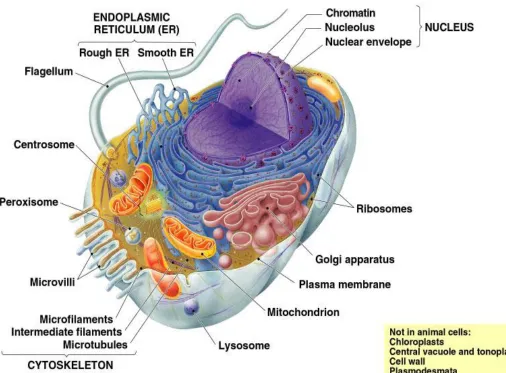
The “typical” animal cell
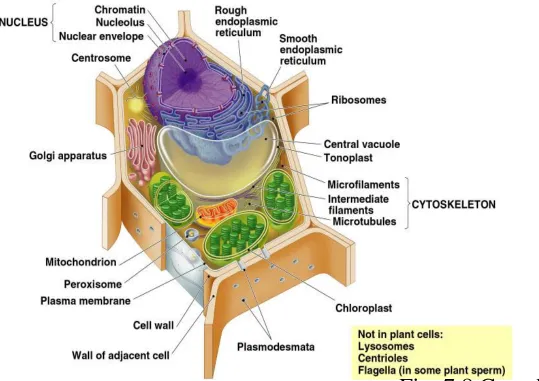
The “typical” plant cell
Specialized Cells
Differentiation not only affects function but
also structure
Cells physically look different from each
other
Complex organisms contain many different
types of cells that perform different functions
Specialized cells have physical and chemical
Specialized Plant Cells:
Specialized Plant Cells:
Specialized Plant Cells:
Specialized Animal Cells:
Specialized Animal Cells:
skin cells
Specialized Animal Cells:
muscle cells Cross-section:
bundles of muscle fibres
Longitudinal
section: striations
Specialized Animal Cells:
gametes (sperm & egg)Specialized Animal Cells:
Specialized Animal Cells:
Specialized Animal Cells:
fat cells (adipocytes) Large, central
droplet of fat pushes the
nucleus to one side.
Specialized Animal Cells:
Specialized Animal Cells:
nerve cell (neurons)
Specialized Animal Cells:
Specialized Animal Cells:
Specialized Animal Cells:
Tissue Types
A collection of similar cells that perform a
specialized function
4 major types:
Muscle Tissue
Bundles of long cells
Capable of shortening or contracting Function: movement
Muscle Tissue
Classified based
on 3 cell types
Type Example Control Fatigue
Resistance
Cardiac Heart Involuntary Very
Skeletal Limbs Voluntary Not
Smooth Organs that contract (e.g. stomach,
Tissue Types
A collection of similar cells that perform a
specialized function
4 major types:
Neurons that interact with each other Conduct electrical impulses
Communicates within the body Example: brain
Tissue Types
A collection of similar cells that perform a
specialized function
4 major types:
Tissue Types
Connective Tissue
Function: structural support, insulation Example: bone, cartilage, fat, blood
Cells are held together by a liquid / solid / gel
Types of Connective Tissue
Tissue Types
A collection of similar cells that perform a
specialized function
4 major types:
Epithelial Tissue
Thin sheets of tightly packed cells lining
organs
Classification:
Number of cell layers: simple, stratified
Classification of Epithelial Tissue
Classification
of Epithelial
Tissue
Types of Epithelial Tissue
Epithelial Tissue Location & Function
Location Function
Simple Squamous
• Blood vessels
• Air sacs in lung
• reduce friction
• absorption of nutrients/oxygen
• secretion of waste and CO2 Simple
Cuboidal
• Kidney
• Glands
• Secretion and reabsorption of water, ions, other small molecules Simple
Columnar
• Digestive tract • Absorption of nutrients
• Secretion of mucous Stratified
• Squamous
• Cuboidal
• Columnar
• Skin
• Mouth, esophagus, larynx
• Sweat, salivary, mammary glands
• Bladder, urethra, ureter
• Vagina
• Protection against abrasion
Simple Columnar Epithelial Cells:
Digestive tract (ileum)