ISSN
1392-2785
ENGINEERING
ECONOMICS.
2005.
N
O5
(45)
THE
ECONOMIC
CONDITIONS
OF
ENTERPRISE
FUNCTIONING
Activity of Economic Interest Groups in the EU Institutions
Andrius Guzavi
č
ius, Andrius Nikitinas, Vaidas Gaidelys
Kauno technologijos universitetas
K. Donelai
č
io g. 73, LT-44029, Kaunas
An economic subject participating in the activity of
economic groups and supplying access goods can choose
one of the strategies that could influence the institutions
of the European Union. The choice of strategies is
condi-tioned by the participation of the subject in economic
activity and the comparative analysis of the results of the
economic costs and benefit obtained. The economic costs
of the access goods supplied by economic interest groups
and the impact goods supplied by the European Union
administration institutions and the comparison of their
profitability precondition the rationality of the strategy
choice of an economic subject.
The results of the analysis of economic costs allow
to more exactly evaluate access goods supply
consider-ing the main three access goods types and four types of
the main suppliers of access goods. The function of the
supply of access goods by economic interest groups is
defined as the dependence of impact goods quantity on
the quantity of access goods. This function is dependent
on the kind of an economic interest group. The article
presents the main four types of economic interest
groups, that allows to more precisely evaluate the
sup-plied impact goods with respect to economic and social
costs.
The article presents the analysis of the results of
for-eign and Lithuanian researchers as well as the activity of
economic interest groups and the evaluation of the
bene-fits of the access goods supplied by different EU
admini-stration institutions. Distinguishing the European Union
Parliament, Commission and the Board as the main
gov-erning institutions as well as taking into account decision
making algorithm, it has been possible to more precisely
evaluate the profitability of the commodities supplied by
economic interest groups. The analysis results obtained
by the authors of this article in the field of
interrelation-ship of the European Parliament and national groups of
economic interests have revealed the influence of these
two groups in representing national and common
Euro-pean economic interest.
Keywords:
economic interest groups, commodity supply
and demand function, lobbyism commodities.
Introduction
Work actuality.
In profit seeking business
enter-prises priority is given to the economic interests of
indi-viduals. A business enterprise in influenced by the
ex-ternal environment which in its turn is influenced by the
enterprise itself. The enterprise is especially influenced
by legislative environment. An economic subject can
influence business environment very insignificantly,
however, the unity of economic subjects, i. e. economic
interest groups can increase their power and their
influ-ence on strategic decisions made and realized by
econo-mic subjects. Econoecono-mic interest groups are treated as a
mediating chain between policy and economy. It is
un-der its influence that business enterprise benefit is
in-creased.
After having entered the EU, the functions of the
na-tional legislative and law implementing government have
changed on both national and international scale. The EU
managing institutions become the object of economic
interest groups and their lobbyist activity. In the EU
eco-nomic interest groups are under study in both theoretical
and practical level.
During the recent 40 years the influence made by
economic interest groups on the country’s economic
environment has been in the focus of attention. In the
6-th decade 6-the formation of economic interest groups was
analysed (Olson, 1965; Buchanan, Tullock, 1962), in the
eighth decade rent seeking theories made their influence
(Colander, 1984; Moe, 1980). Rent seeking theory
in-cludes the analysis of interest representation
effective-ness and resource distribution. In the 9 th decade
re-search included the influence of interest groups on
na-tion growth and recession (Olson, 1982; Elster, 1989;
Holmstorm, Tirole, 1989; Morris, 1999). Van
Schen-delen (1994), Bennett (1997) carried out empiric
search of the European Union interest policy. Later
re-search embraced the influence of economic interest
groups on the regional development of countries as well
as on the policy of European environmental safety and
on the economic growth of developing countries
(Pletcher).
The issue.
Participating in a collective activity and
seeking to influence the EU administration institutions as
well as basing on the analysis of the benefit obtained and
costs, an economic subject has to choose one of the
strategies having influence on the EU administration
in-stitutions and evaluate commodity supply and to forecast
their demand.
Aim of the research
is to generalize the functions of
the supply and demand of commodities supplied by
eco-nomic interest groups.
Research tasks:
strategies influencing the EU administration
insti-tutions;
•
To formulate the function of the commodities
sup-plied by economic interest groups;
•
To generalize the demand of the commodities
sup-plied by economic interest groups.
Research object
– economic interest groups.
Research methods
– the comparative and structural
as well as the qualitative and quantitative analysis of
sci-entific economic literature, graphical modelling and
logi-cal analysis.
The choice of the strategy of an economic
subject
Every enterprise is to understand the following aspects:
at what level it is going to seek to influence the EU
deci-sions, i. e. at national or the EU level; whether it is going to
act alone or through the association; whether it is going to
act itself or through the mediation of the third persons; i. e.
political consultants or legislative enterprises. This depends
on the enterprise size and financial capacity, enterprise
mar-ket strategy and on the national legislation conjuncture, i. e.
the state influence.
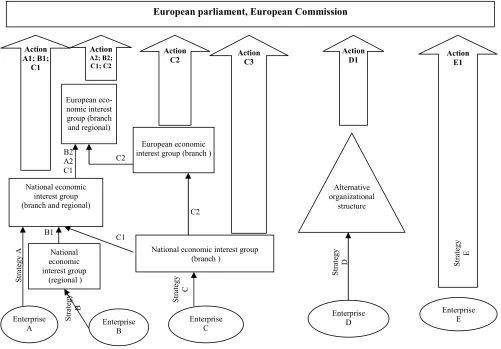
Figure 1. Economic interest groups influence on the EU administration institutions
The enterprise choosing different lobbistic strategies
gets different benefit and undergoes different costs.
Evaluating the benefit obtained and costs under gone, the
enterprise can choose the following strategies (Figure 1):
•
Strategy A. The enterprise belongs directly to a
national economic interest group which in its turn
directly influences the EU administration
institu-tions (influence A) or under the mediation of a
European economic interest group (influence A2).
•Strategy B. The enterprise is taking part in the
ac-tivity of a national economic interest group.
Enter-prise interests are represented by one, two or three
mediators (influence B1 or B2, mediating
institu-tions – national economic interest group and
Euro-pean economic interest group).
•
Strategy C. Using this strategy the enterprise
real-izes its economic interests through one or two
me-diators (influence C2 and C3, mediating
institu-tions – national branch economic interest group
and European economic interest group).
•
Strategy D. the enterprise cooperates with
alterna-tive organizational structures (influence D1).
•Strategy E. the enterprise directly influences the
EU administration institutions (influence E1). The
most effective influence could be produced by big
enterprises able to mobilize resources (financial,
human, decision making) and to directly influence
the EU administration structures separately. This
could be witnessed by the examples of the
compa-nies “Philips”, “Unilever”, “Fiat”, “Volvo”.
EnterpriseA
Enterprise C
Enterprise D
Enterprise E National economic
interest group (branch and regional)
National economic interest group (branch )
National economic interest group
(regional )
European economic interest group (branch ) European
eco-nomic interest group (branch and regional)
European parliament, European Commission
Alternative organizational
structure
Enterprise B
St
ra
te
gy
A
St
ra
te
gy
B
B1 B2 A2 C1
St
ra
te
gy
C
C1
C2 C2
Action A1; B1;
C1
Action A2; B2; C1; C2
Action
C2 Action C3
Action
D1 Action E1
St
ra
te
gy
D Stra
te
gy
Function of access goods supplied by economic
interest groups
The EU governing institutions and their effective
functioning are ensured by economic information dealing
with both national and European problems. Solving some
specific problems of an industry branch, the EU
bureau-crats become dependable on expert information supplied
by business structures. The demand function of the EU
governing institutions is defined as a demand of some
access goods. According to Broscheid and Coen, 2003;
Crombez 2002, access goods supplied by an economic
in-terest group can be distributed into (Figure 2):
•
experts information, especially preparing
legisla-tive regulation means of the EU economic sector;
•
information dealing with European economic
pro-blems and the demand as well as interests of the
economic sector in the EU domestic market;
•information related to national economic problems
and the needs and interests of the economic sector
in the national market.
The supply function of access goods is defined as the
dependence of impact goods on access goods. The
sup-pliers of access goods could be distributed into the
fol-lowing classes according to business economic
informa-tion resources:
•
European economic interest groups;
•national economic interest groups;
•business enterprises;
•
alternative organizational structures.
Figure 2. Demand and supply of access goods in European administration
The difference between the resources possessed by
small and big firms allows the latter firms to supply
quality access goods presenting expert information. If
the firms activity is more oriented to the domestic
mar-ket, it can supply objective information related to
natio-nal problems. Big firms functioning in the internationatio-nal
market can supply information dealing with European
economic problems. On the other hand, it is difficult for
them to supply information because the part of the
mar-ket taken by those firms in European marmar-ket is rather
small. Economic interest groups cannot supply
qualita-tive expert information because their resources are
lim-ited and the range of the problems to be solved is much
more wider (Greenwood, Webster, 2000). European
economic interest groups because of their
multifunc-tionality can be far from the real situation in the market
with respect to an individual market. On the other hand,
European economic interest groups uniting a large
num-ber of business enterprises have a rather objective
infor-mation about common European economic problems.
Alternative organizational structures having limited
re-sources at their disposal and mediating while
repre-senting foreign interests can supply a limited amount of
access goods.
impact access Demand for Access goods Supply of Access goods European Association (EA)Exp ert k no wl ed ge ( E K ) impact access D S
National Association (NA)
impact access
D S Business enterprise (BE)
impact access
D S Alternative structure (AS)
impact access Demand for Access goods Supply of Access goods Info rma ti o n a b o u t th e Eu ro pe an En co m p as ss in g Int eres t (I E E I) impact access D S impact access D S impact access D S impact access Demand for Access goods Supply of Access goods Info rma ti o n a b o u t th e na ti o n a l E n co m p a sssi n g Int eres t (IDE I) impact access D S impact access D S impact access D S I1 E E I2 A1 A2 I3
A3 E A4 E
I4
I1 I2 I3 I4
A1
A2 A3 A4
A1
A2 A3 A4
I1 I2 I3 I4
E E
E
E
E
Demand of access goods supplied by economic
interest groups
The activity of economic interest groups in the
Euro-pean Union is regulated by laws issued by the people
working in the Parliament Board and Commission which
should have closer relation with the economic situation in
all the countries members. The EU institutions and their
relationship with economic interest groups is vitally
im-portant in order to increase the EU laws effectiveness in
the market. Seeking for more precise definition of
eco-nomic interest groups and their influence mechanism,
there are presented the main solutions taken according to
the EU managerial principles:
1.
Work groups, commission expert committees
pre-pare suggestions. Working out these prepositions,
economic interest groups take an active part.
Thus it is important for the commission and its
committees to get the expert information supplied
by the enterprises belonging to economic interest
groups.
2.
Suggestions are sent to Commission, then the
di-rectorates and later the Commission collegiate
level where there are presented already worked out
official communiqués of the Commission, i. e.
leg-islation acts presented to the Board and all the
member countries. At this stage of decision
mak-ing an important role is played by the information
given by national associations and related to the
national economic problems and to the interests
and demands of economic sectors in the national
market.
3.
If the procedure requires, the Communiqué is also
presented to the Parliament. The Board invites the
work groups of member countries and they can
in-troduce changes. Work groups discuss the
sug-gestion for several times, then the legislation act is
passed to the Committee of Board representatives
which deals only with practical interior questions.
When everything is agreed, legislation act is
moved to the ministers’ Board for the acception.
Usually the legislative act comes into power on the
20th day after its announcement. If the legislation
act states that the Commission is to accept a
regu-lation or directive for the implementation of the
act, the Commission issues the act which explains
how the legislation act is to be realized. The
es-sence of this document is to specify the ways of its
implementation in member countries in order not
to realize it in some different ways. The questions
dealing with financial problems are to be solved
through specially established committee.
4.
Although the Commission is given the right to
ini-tiate legislative acts, the European Parliament gets
more and more rights and powers in the field of
legislation acts. At this stage of decision making
economic interest groups can have the greatest
in-fluence on presenting the information related to
European economic problems and the needs and
interests in the EU market. On the other hand, at
this stage of legislation issues the need for
infor-mation is not large. The Parliament needs only
business information which could make the
sug-gestions more accurate and which helps to
evalu-ate the necessity of these proposals for the EU
economy (Kohler-Koch, 1997).
5.
The representatives of the states have the final say,
i. e. Minister Board consisting of the ministers of
all countries. 10 – 20 percent of the EU legislation
acts are being voted, others are accepted according
to a common agreement. Legislation act is
cor-rected as long as the decision which suits all the
member countries is achieved, although the act
could be accepted by the majority of votes.
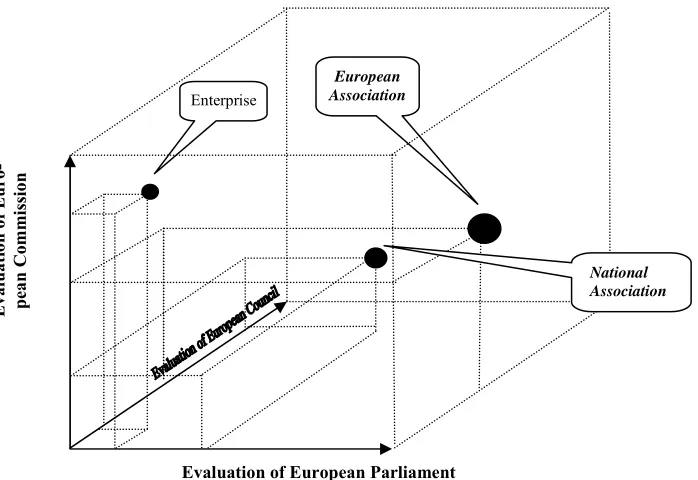
Figure 3. Evaluation of economic interest group activity
European Association
Evaluation of European Parliament
E
valu
at
ion of
E
u
ro
-pe
an C
omm
is
si
on
The difference of access goods depends on the
de-mand of the EU administration institutions (Figure 3).
The EU Commission values the information presented
by experts while the Board needs the information
re-lated to national economic problems and the demands
and interests in the national market. The European
Par-liament because of its multinational composition has to
accept compromise decisions useful to all the EU
mem-bers, therefore in this case the most necessary is the
formation related to European economic problems,
in-terests and demands in the EU domestic market. On the
other hand, the European Parliament members are
dele-gated EU Parliament differ from country to country
(Bowler, Farell, 1993), however, in all cases there exists
a very close link with national voters (Hansen, 1991).
Thus the European Parliament needs the information
related to national economic problems as well as to the
demands and interests in the national market (Bouwen,
2002). There are some researches which express a
nega-tive approach to the existence of strong links between
national economic interest groups and the European
Par-liament members (Antina, 1990; Raiuno, 1997; Kreppel,
1999; Hix, 2001). There even exists the view that the
members of the European Parliament pay their attention
to the decisions of the same ideological party. On the
other hand, the elections to the European Parliament are
held in the member countries, therefore the political
support of economic interest groups during elections is
very important.
Conclusions
1.
A business enterprise seeking its economic
inter-ests realization can choose one out of five authors
strategies influencing the European Union
gov-erning institutions.
2.
The choice of the strategies influencing the
Euro-pean Union governing institutions is conditioned
by access goods economic and social costs and the
comparison of benefit from impact goods.
3.
The supply function of economic interest groups
and their access goods delivery are defined as the
dependence of the quantity of impact goods on the
amount of access goods.
4.
The function of access goods supply depends on
the type of an economic interest group and is
dif-ferently valued by the EU governing institutions.
5.This research singles out four types of the main
economic interest groups. This allows to more
precisely evaluate impact goods with respect to
their economic and social costs.
6.
The demand of the European Union governing
in-stitutions for access goods supplied by economic
interest groups in different and is differentiated
according to the benefit for the EU institutions.
7.The analysis results of the European Parliament,
Commission and Board as the main governing
in-stitutions as well as decision making algorithm
study has made it possible to more exactly
evalu-ate the benefit of access goods supplied by
eco-nomic interest groups.
8.
The analysis of the European parliament and
na-tional interest groups and their interactions in
sup-plying access goods has revealed the influence of
national economic interest groups and the
Euro-pean parliament when the Parliament members
represent national or common European economic
interests.
References
1. Attina, F. The voting behaviour of the European Parliament members and the problem of the Europarties // European Journal of Political Research, 1990, Vol. 18, p. 557−79.
2. Bennett, R.J. The impact of European Economics Integration on Business Associations: The UK Case // West European Politics, 1997, Vol. 20, No 3.
3. Bouwen, P. Corporate Lobbying in the European Union: The Logic of Access // Journal of European Public Policy, 2002, Vol. 9, No 3.
4. Bowler, S. Legistlator Shirking and Voter Monitoring: Impacts of European Electoral System upon Legislator-Voter Relationships / S.Bowler, D.M.Farell // Journal of Common Market Studies, 1993, Vol. 31, No 1 p. 45−69.
5. Broscheid, A. Insider and outsider lobbying of the European Com-mission: An informational model of forum politics / A.Broscheid, D.Coen // European Union Politics, 2003, Vol. 3, No 2.
6. Buchanan, J.M. The Calculus of Consent / J.M.Buchanan, G.Tullock. Ann Arbor. University of Michigan Press, 1962.
7. Campbell, A.L. Federalism and the politics of old-age care in Ger-many and the United States / A.L.Campbell, K.J.Morgan // Com-parative political studies, 38 (8): 2005, p. 887−914.
8. Colander, D.C. Neoclassical Political Economy. Cambridge, 1984, p. 1−13.
9. Crombez, C. Information, Lobbying and the Legislative Process in the European Union // European Union Politics, 2002, Vol. 3, No 1.
10. Eising, R. The access of interest groups to EU institutions // Poli-tische vierteljahresschrift, 2004, 45 (4), p. 494.
11. Elster, J. Nuts and Bolts for the Social Sciences. Cambridge: Cam-bridge University Press, 1989.
12. Fink-Hafner, D. Is consultation everything? The influence of interest groups on parliamentary working bodies in Slovenia / D.Fink-Hafner, A.Krasovec // Sociologicky casopis − czech sociological review, 2005, 41(3), p. 401−421.
13. Gordon, S.B. All votes are not created equal: campaign contributions and critical votes // Journal of politics, 2001, 63 (1), p. 249−269. 14. Greenwood, J. Are EU Business Associations Governable? /
J.Greenwood, R.Webster // European Integration Online Papers, 2000, Vol. 4, No 3.
15. Hansen, J.M. Gaining Access, Congress and the Farm Lobby, 1919−1981. Chicago and London: The University of Chicago Press, 1991.
16. Hansen, W.L. The logic of private and collective action / W.L.Hansen, N.J.Mitchell, J.M.Drope // American journal of politi-cal science, 2005, 49 (1), p. 150−167.
17. Hix, S. Legislative Behaviour and Party Compensation in the Euro-pean Parliament: An Application of Nominate to the EU // Journal of Common Market Studies, 2001, Vol. 39, No 4, p. 26.
18. Holmstorm, B. The Theory of the Firm / B.Holmstorm, J.Tirole. Handbook of Industrial Organization, Vol. I, Amsterdam: North-Holland, 1989. P. 61−133.
19. Horowitz, S. Explaining regional economic policies in China: interest groups, institutions, and identities, Communist and post-communist studies / S.Horowitz, C.Marsh. Oxford, 2002. P. 115−132.
Parliament // European Integration Online Papers, 1997, Vol. 1, No 9. 21. Kreppel, A. Coalition Formation in the European Parliament /
A.Kreppel, G.Tsebelis // Comparative Political Studies, 1999, Vol. 32, No 8, p. 933−66.
22. Lohmann, S. Information, access and contributions: a signalling model of lobbying // Public Choice, 1995, Vol. 85, p. 267−84. 23. Mahoney, C. The power of institutions − State and interest group
activity in the European Union // European union politics, 2004, 5 (4), p. 44−466.
24. Moe, T.M. The Organization of Interests. Incentives and the Internal Dynamics of Political Interest Groups. Chicago and London: Univer-sity of Chicago Press, 1980.
25. Morris, M.W. Social psychological obstacles in environmental con-flict resolution / M.W.Morris, S.K.Su // American behavioral scien-tist, 1999, 42 (8), p. 1322−1349.
26. Olson, M. The Logic of Collective Action. Cambridge, MA: Harvard University Press, 1965.
27. Olson, M. The Rise and Decline of Nations. New Haven: Yale Uni-versity Press, 1982.
28. Pletcher, J. The politics of liberalizing Zambia’s maize markets // World development 2000, 28 (1), p. 129−142.
29. Rakner, L. The pluralist paradox: the decline of economic interest groups in Zambia in the 1990s // Development and change, 2001, 32 (3), p. 521−543.
30. Rantala, T. Conceptions of democracy of key informal interest groups in Finnish forest policy // Towards the sustainable use of Europe’s forests − forest ecosystem and landscape research: sci-entific challenges and opportunities, 2004, (49), p.145−153. 31. Raunio, T. The European Perspective, Transnational party groups in
the 1989−1994 European Parliament. Aldershot, Brookfield USA, Singapore, Sydney: Ashgate, 1997.
32. Sopoci, J. Economic interest groups in Slovak politics in nineties // Sociologia, 2001, 33 (6), p. 535−548.
33. Van Schendelen, M.C. National Public and Private EC Lobbying. Aldershot – Brookfied USA – Hong Kong-Singapore-Sydney: Dat-mouth Publisching Company, 1994.
Andrius Guzavičius, Andrius Nikitinas, Vaidas Gaidelys
Ekonominių interesų grupių veikla ES institucijose Santrauka
Pelno siekiančioje verslo įmonėje prioritetas teikiamas eko-nominiams individų interesams. Verslo įmonę veikia išorinė aplinka, kuriai savo ruožtu įtaką daro ir pati verslo įmonė. Ypačįmonę veikia teisinė aplinka. Tiesiogiai šią verslo aplinką ekonominis subjektas gali paveikti nežymiai, tačiau, ekonominiams subjektams susijungus į ekonominę interesų grupę, gerokai išauga galia jų daromos įtakos strateginius ekonominius sprendimus priimantiems ir juos į gyven-dinantiems ekonominiams subjektams. Ekonominės interesų grupės traktuojamos kaip tarpinė grandis tarp politikos ir ekonomikos. Jos dėka didinama verslo įmonių gerovė.
Lietuvai įstojus į ES, pasikeitė ir nacionalinės įstatymų leidžia-mosios bei įstatymų vykdančiosios valdžios funkcijos ir nacionaliniu, ir tarptautiniu mastu. ES valdančiosios institucijos tampa ekonominių interesų grupių lobistinės veiklos objektu. ES šalyse senbuvėse eko-nominių interesų atstovavimo problemos tiriamos teoriniu ir praktiniu lygmeniu.
Per pastaruosius 40 metų ekonominių interesų grupių daroma įtaka šalies ekonominei aplinkai sulaukė didelio dėmesio. 20 a. 6-tajame dešimtmetyje pradėti ekonominių interesų grupių forma-vimosi logikos teoriniai tyrimai 8-ajame dešimtmetyje lėmė rentos siekimo teorijos sukūrimą, apimančią interesų atstovavimo efekty-vumo ir resursų paskirstymo analizę. Vėlesni tyrimai apėmė eko-nominių interesų grupių daromą įtaką šalių regioniniam vystymuisi, Europos aplinkosaugos politikai bei besivystančių šalių ekonominei plėtrai.
Ekonominis subjektas, dalyvaudamas ekonominės interesų
gru-pės veikloje ir teikdamas prieigos prekę, gali pasirinkti vieną iš poveikio darymo Europos Sąjungos valdymo institucijoms strategijų. Strategijos pasirinkimą sąlygoja subjekto dalyvavimo kolektyvinėje veikloje ekonominių kaštų ir gaunamos naudos palyginamosios anal-izės rezultatai. Ekonominių interesų grupių teikiamų prieigos prekių ekonominių kaštų ir Europos Sąjungos valdančiųjų institucijų teikia-mų lobizmo prekių naudingumo palyginimas lemia ekonominio sub-jekto strategijos pasirinkimo racionalumą.
Kiekviena įmonė turi nuspręsti, kokiu lygmeniu sieks paveikti ES priimamus sprendimus – nacionaliniu ar ES; veiks viena ar per asociaciją; veiks pati ar tarpininkaujant tretiesiems asmenims – politi-kos konsultantams ar teisininkųįmonėms. Tai priklauso nuo įmonės dydžio ir finansinio pajėgumo, įmonės strategijos rinkoje ir nuo na-cionalinės teisėkūros konjunktūros – valstybės daromos įtakos.
Darbe pateikiami ekonominių kaštų analizės rezultatai leidžia tiksliau įvertinti prieigos prekių pasiūlą atsižvelgiant į tris pagrindin-ius prieigos prekių tipus bei keturis pagrindinius prieigos prekės teikėjų tipus. Ekonominių interesų grupių teikiamų prieigos prekių pasiūlos funkcija apibrėžiama kaip lobizmo prekių kiekio priklauso-mybė nuo prieigos prekių kiekio, ši funkcija priklauso nuo ekonomi-nės interesų grupės rūšies. Darbe išskiriami keturi pagrindiniai eko-nominių interesų grupių tipai leidžia tiksliau įvertinti siūlomas lo-bizmo prekes ekonominių bei socialinių kaštų atžvilgiu.
Turimų išteklių skirtumas tarp smulkių ir stambių firmų pastaro-sioms leidžia teikti kokybiškas prieigos prekes pateikiant ekspertinę informaciją. Jei firmos veikla labiau orientuota į vidaus rinką, ji gali teikti objektyvią informaciją, susijusią su nacionalinėmis problemo-mis. Didelės firmos, veikiančios tarptautinėje rinkoje, gali teikti in-formaciją, susijusią su europinėmis ekonominėmis problemomis; kita vertus, teikti objektyvią informaciją joms sudėtinga, nes firmų uži-mama rinkos dalis bendroje Europos rinkoje dažnai nėra didelė. Eko-nominės interesų grupės negali pateikti kokybiškos ekspertinės in-formacijos, nes jų ištekliai yra riboti bei spręstinų problemų ratas kur kas platesnis nei stambios įmonės. Europinės ekonominės interesų grupės dėl savo daugiafunkciškumo gali būti nutolusios nuo realios situacijos rinkoje individualios firmos atžvilgiu. Kita vertus, europi-nės ekonominės interesų grupės, apimdamos gausias verslo įmones, turi pakankamai objektyvią informaciją apie bendrus Europos eko-nominius reikalus. Alternatyvios organizacinės struktūros, disponuo-damos ribotais ištekliais bei tarpininkaudisponuo-damos atstovaujant svetimiems interesams, skirtingai nei įmonės ar ekonominės interesų grupės, prieigos prekių gali pateikti ribotai.
Šiame straipsnyje, vadovaujantis užsienio ekonomistų mok-sliniais darbais bei Lietuvos ekonominių interesų grupių pateiktais duomenimis, apibendrinami prieigos prekės paklausos analizės rezul-tatai, remiantis skirtingų ES valdančiųjų institucijų prieigos prekių teikiamo naudingumo įvertinimu.
Ekonominių interesų grupių veikla Europos Sąjungoje reglamen-tuojama įstatymais, leidžiama ir skatinama, kad žmonės, dirbantys Parlamente, Taryboje ir Komisijoje, būtų kuo artimiau susiję su realia ekonomine situacija visose šalyse narėse. ES institucijoms ryšys su ekonominėmis interesų grupėmis yra gyvybiškai svarbus, kad ES įstatymai didintų efektyvumą rinkoje. Pateikiamų prieigos prekių skirtingumas priklauso nuo ES valdančiųjų institucijų paklausos. Siekiant tiksliau apibrėžti ekonominės interesų grupės daromos įtakos mechanizmą, pateikiami pagrindiniai sprendimų priėmimo ES valdymo organuose principai:
pakeisti tam tikrą teisės akto formuluotę; darbo grupėse šis pasiūlymas svarstomas kelis kartus, tada teisės aktas patenka į nuolatinį Tarybos atstovų komitetą, kuriame sprendžiami daugiau praktiniai, vidaus rinkos klausimai. Kai viskas sud-erinama, teisės aktas pakeliamas į Ministrų Tarybos lygį ir čia priimamas. ES Komisija labiau vertina ekspertų teikiamą informaciją, tuo tarpu Tarybai reikalingesnė informacija, susijusi su nacionalinėmis ekonominėmis problemomis bei ekonominio sektoriaus nacionalinėje rinkoje poreikiais ir in-teresais.
2. Nors ES pagrindinęįstatymų leidybos iniciatyvos teisę turi Komisija, Europos Parlamentui palaipsniui suteikiama vis daugiau teisės aktų leidybos galių. Šiame sprendimų priėmimų etape ekonominės interesų grupės didžiausiąįtaką gali daryti pateikdamos informaciją, susijusią su europinėmis ekonominėmis problemomis bei ekonominio sektoriaus ES vidaus rinkoje poreikiais ir interesais. Kita vertus, šiame įstatymų leidybos proceso etape ekspertų teikiamos informa-cijos poreikis nėra didelis. Parlamentui reikalinga tik da-lykinė informacija, patikslinanti Komisijos teikiamus teisė -kūros pasiūlymus bei padedanti įvertinti šių pasiūlymų nau-dingumą ir reikalingumą ES ūkiui. Europos Parlamentas dėl savo multinacionalinės sudėties turi priimti visai ES naudin-gus kompromisinius sprendimus, todėl šiuo atveju reikalingi-ausia yra informacija, susijusi su europinėmis ekonominėmis problemomis bei ekonominio sektoriaus ES vidaus rinkoje poreikiais ir interesais. Kita vertus, Europos Parlamento
nariai deleguojami iš skirtingų ES valstybių. Skirtingose ES valstybėse ES parlamentarų išrinkimo schemos skiriasi, bet visada išlieka glaudus ryšys su nacionaliniais rinkėjais. To-kiu atveju Europos Parlamentui reikalinga ir informacija, susijusi su nacionalinėmis ekonominėmis problemomis bei ekonominio sektoriaus nacionalinėje rinkoje poreikiais ir in-teresais. Stipraus ryšio buvimą tarp nacionalinių ekonominių interesų grupių ir Europos Parlamento narių iš dalies paneigia užsienio autorių darbuose pasitaikanti nuomonė, kad Europos Parlamento nariai, darydami politinius sprendimus, atsižvelgia į panašios politinės ideologijos partijos interesus. Kita vertus, rinkimai į Europos Parlamentą vykdomi valsty-bėse narėse, todėl nacionalinių ekonominių interesų grupių politinė parama rinkimuose yra labai svarbi.
Europos Sąjungos Parlamento, Komisijos bei Tarybos kaip pa-grindinių valdančiųjų institucijų išskyrimas bei sprendimų priėmimo algoritmo Europos Sąjungos valdančiosiose institucijose analizės rezultatai leido tiksliau įvertinti ekonominių interesų grupių teikiamų prieigos prekių naudingumą. Darbo autorių atliktos Europos Parla-mento ir nacionalinių ekonominių interesų grupių sąveikos teikiant prieigos prekes analizės rezultatai atskleidė nacionalinių ekonominių interesų grupių daromos įtakos Europos Parlamentui nevi-enareikšmiškumą, Parlamento nariams atstovaujant nacionaliniams ar bendriems Europos ekonominiams interesams.
Raktažodžiai: ekonominės interesų grupės, prieigos prekės pasiūlos ir pak-lausos funkcija, lobizmo prekės.